
Looking back at the start of the 2025/2026 Bundesliga campaign, it seemed as if the season had already derailed for Borussia Mönchengladbach after just three matchdays.
After a hefty 0-4 loss at home against Werder Bremen, manager Geroardo Seoane was relieved from his duties and Eugen Polanski was named interim boss for the next couple of games.
After taking over, Polanski, a former Bundesliga midfielder and Poland international, didn’t immediately look like a permanent solution for the club.
Even with their new manager, the team continued their winless streak for five more games, losing to FC Bayern and trailing by five at half-time at home to Eintracht Frankfurt.
Off the pitch, even more chaos ensued, with CSO Roland Virkus stepping down after the bad start to the season and an eventful summer break, which saw him earn the ironic nickname „Don Rollo“ in Germany, because midfielder Florian Neuhaus drunkenly badmouthed his boss on his vacation to Mallorca.
Still winless after October, things turned around in November for the club.
Eugen Polanski managed his team to three straight convincing wins, regaining form and slowly climbing out of the hole they’d found themselves in just a couple of weeks back.
In this Borussia Mönchengladbach tactical analysis, we will take a look at what tactical changes Eugen Polanski made to turn things around, how he uses his players to the best of their abilities and what we can expect from his tactics and team going forward in the season.
Borussia Mönchengladbach Build Up
Borussia Mönchengladbach had a lot of problems under Seoane over the course of his tenure, but looking back at the start of the season, the team was just not a Bundesliga-level side, lacking pretty much everything, especially intensity.
Eugen Polanski had a lot of work in front of him when he took over, so the fact that it took a bit of time for him to finally get positive results is not surprising, but still not great.
One of the biggest problems was the play in possession from Gladbach.
While it didn’t look bad, and their players showed a lot of technical quality even in the darkest times, they never consistently played through the first line of press, which often led to them losing the ball close to their goal.
This led to a lot of dangerous situations and a lot of goals conceded, so their defensive struggles were directly tied to their struggle in the build-up.
Eugen Polanski decided to change things up in that regard for Gladbach, implementing a more vertical approach while also committing more players to the areas around the ball.
This allowed Gladbach to maintain more ball security and numerical advantages near the ball to play through the first line of their opponents’ press.

Gladbach now heavily involve their goalkeeper in the build-up, creating a numerical advantage in the first line.
Their back-three is in a rather interesting shape ever since Eugen Polanski took over as well.
The central defender is always pushing forward a bit, right into the space behind the opponents’ attackers.
This helps the goalkeeper to have more space and allows him to find the central defender behind the first line of press with simple passes if the press is not well coordinated.
The two outside centre-backs are in a very wide shape, creating a lot of horizontal spacing for Polanski’s men in the first line of play.
They often switch between their goalkeeper and their central defender, and, with their wide positions, the two outside centre-backs can move forward with their first touch and quickly dribble past the press.
Gladbach try not to attract the press more than necessary, another change made compared to their play under their former coach.
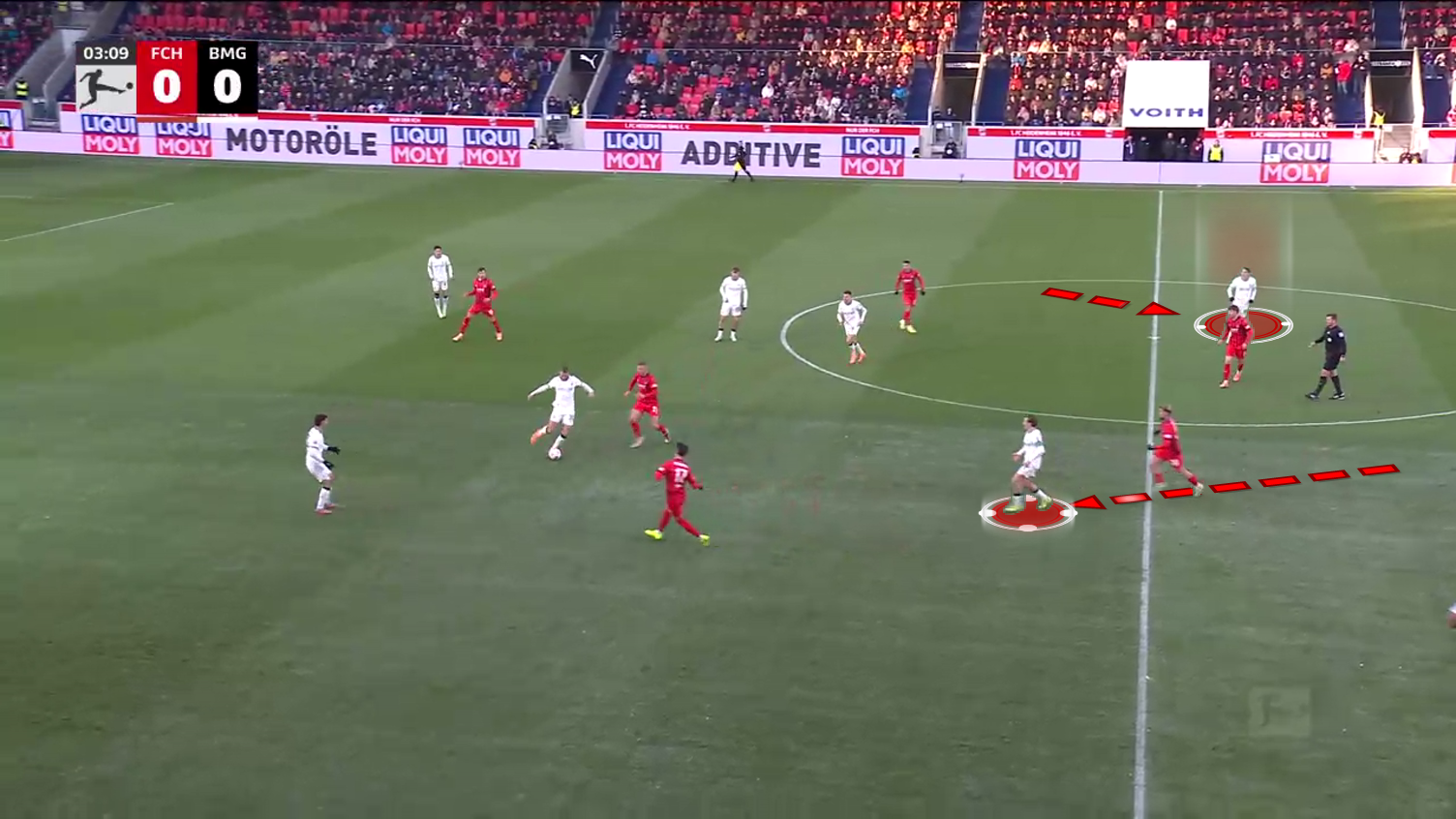
From then on, Gladbach have undergone significant changes compared to the first couple of games this season as well.
Eugen Polanski is a fan of a very vertical approach and tries to get his players to play line-breaking passes into the half-spaces to progress the ball.
The two key players to achieve that are his two central midfielders playing in the half-spaces, Neuhaus and skipper Rocco Reitz.
They use the same pattern of play pretty much all the time: the near side of the two drops back towards the ball, and the far side midfielder pushes forward diagonally.
This allows the centre-backs to often find solutions with passes into the half-spaces, creates near-sided triangles and sometimes even opens up the dangerous diagonal pass towards the far-sided half-space.
What’s really interesting is that this means the midfielders of Polanski need to be able to play in different roles at all times.
While Yannick Engelhardt is the holding midfielder most of the time, the other two midfielders alternate between playing as an additional holding midfielder, a central midfielder, or even an attacking midfielder.
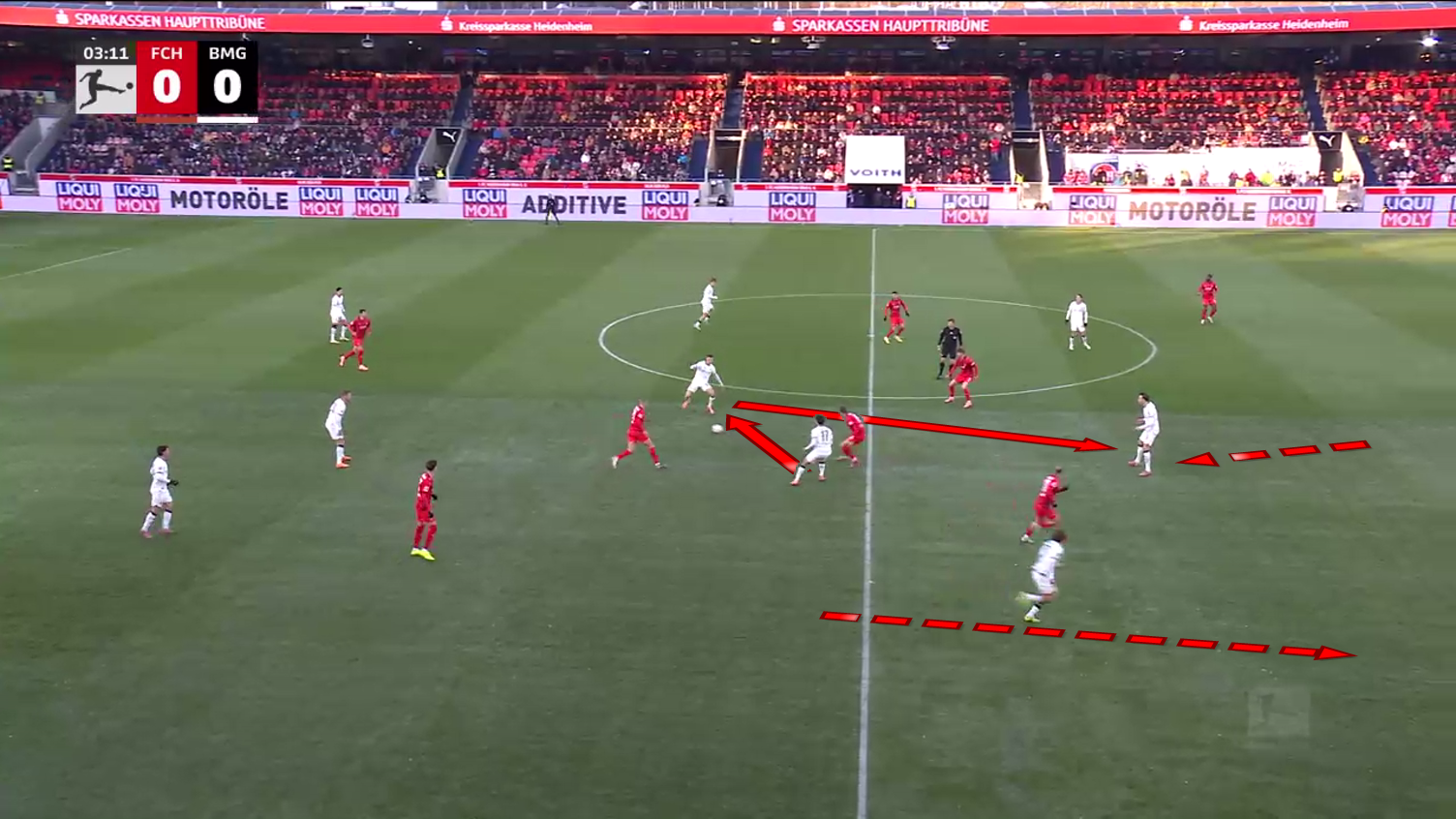
Eugen Polanski wants his men to play vertical from here on out.
We can see Rocco Reitz moving from the central areas towards the wing, opening up a passing lane for one of the attackers behind him.
Gladbach now find the vertical pass and can play a lay-off to Engelhardt in the central area of the field, who instantly plays another vertical pass towards Haris Tabakovic, who now also drops back a couple of steps to be able to receive between the lines as well here.
Tabakovic plays another lay-off towards the player who received the first pass, so it’s kind of like climbing stairs for Gladbach.
Now, they have a player running right towards the backline with three players making additional runs, creating a lot of dynamics.
Eugen Polanski’s approach has allowed his men to create way more dynamically than they had earlier in the season, and they cut through the press very quickly.
Getting The Stars Involved
Another key factor for Eugen Polanski over the last couple of weeks was his star players.
This might sound rather obvious, but Polanski has done a really good job at getting his best players involved more efficiently over the last three wins compared to his first couple of weeks in his tenure as an interim coach.
In the seven games Polanski has been on the sidelines for the club so far, three players stand out, and even more so in their last couple of victorious games.
Rocco Reitz and Franck Honorat have been looking exceptional over the month of November, playing to the highest of their capabilities and being heavily involved in the games.
Especially when Gladbach build up on the second line, Polanski lets the individual class of his best players dictate the flow of the game more than other coaches in the Bundesliga midfield.
Reitz usually plays as the right central midfielder in Eugen Polanski’s 3-5-2 formation, while Honorat plays as the second striker next to Tabakovic.
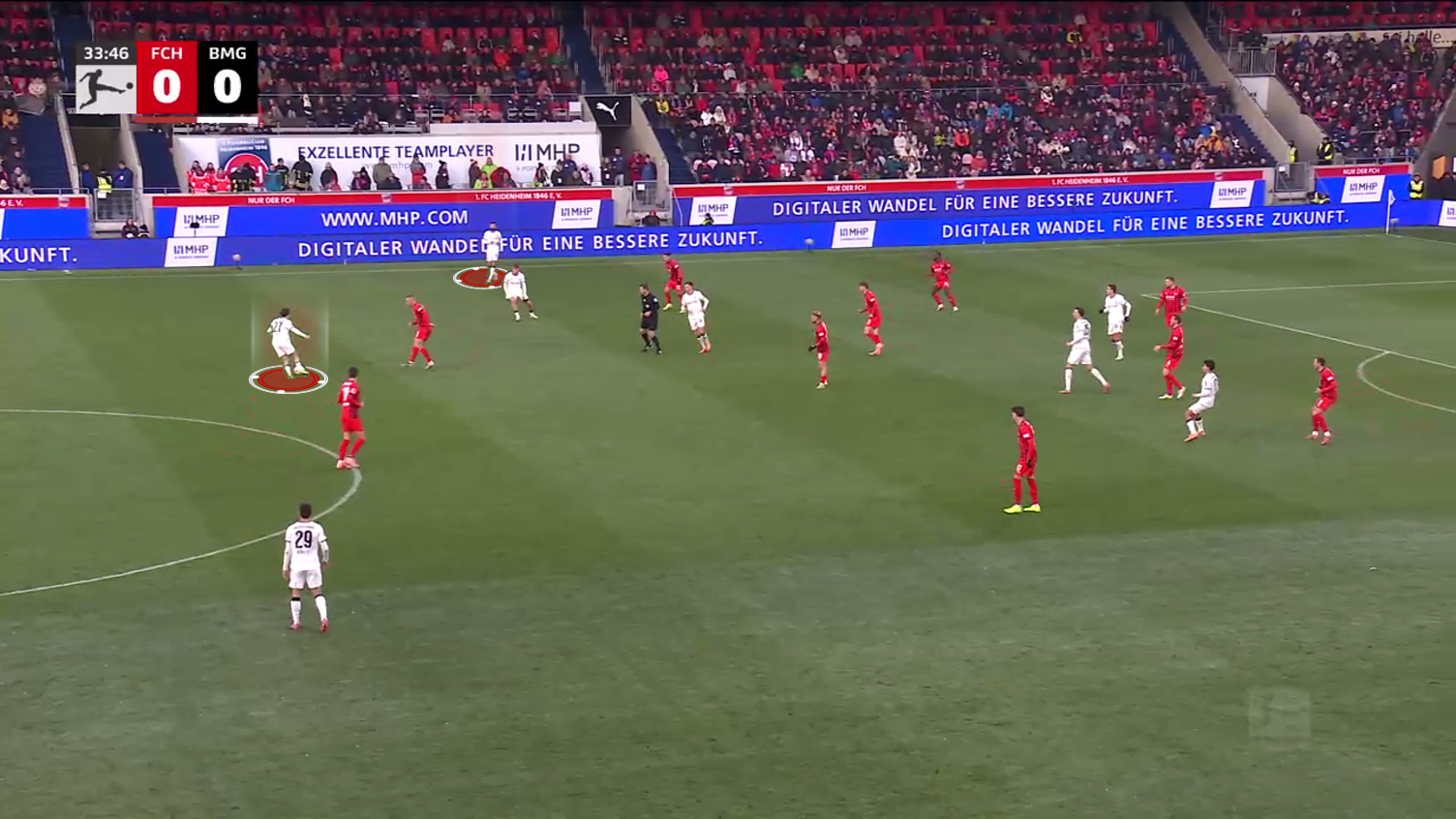
Here, we can see how much freedom their manager grants these two players.
Reitz is allowed to roam all over the pitch, and he is found everywhere you can think of.
He runs around, always creating chaos, always trying to get into a position to take responsibility and receive the ball.
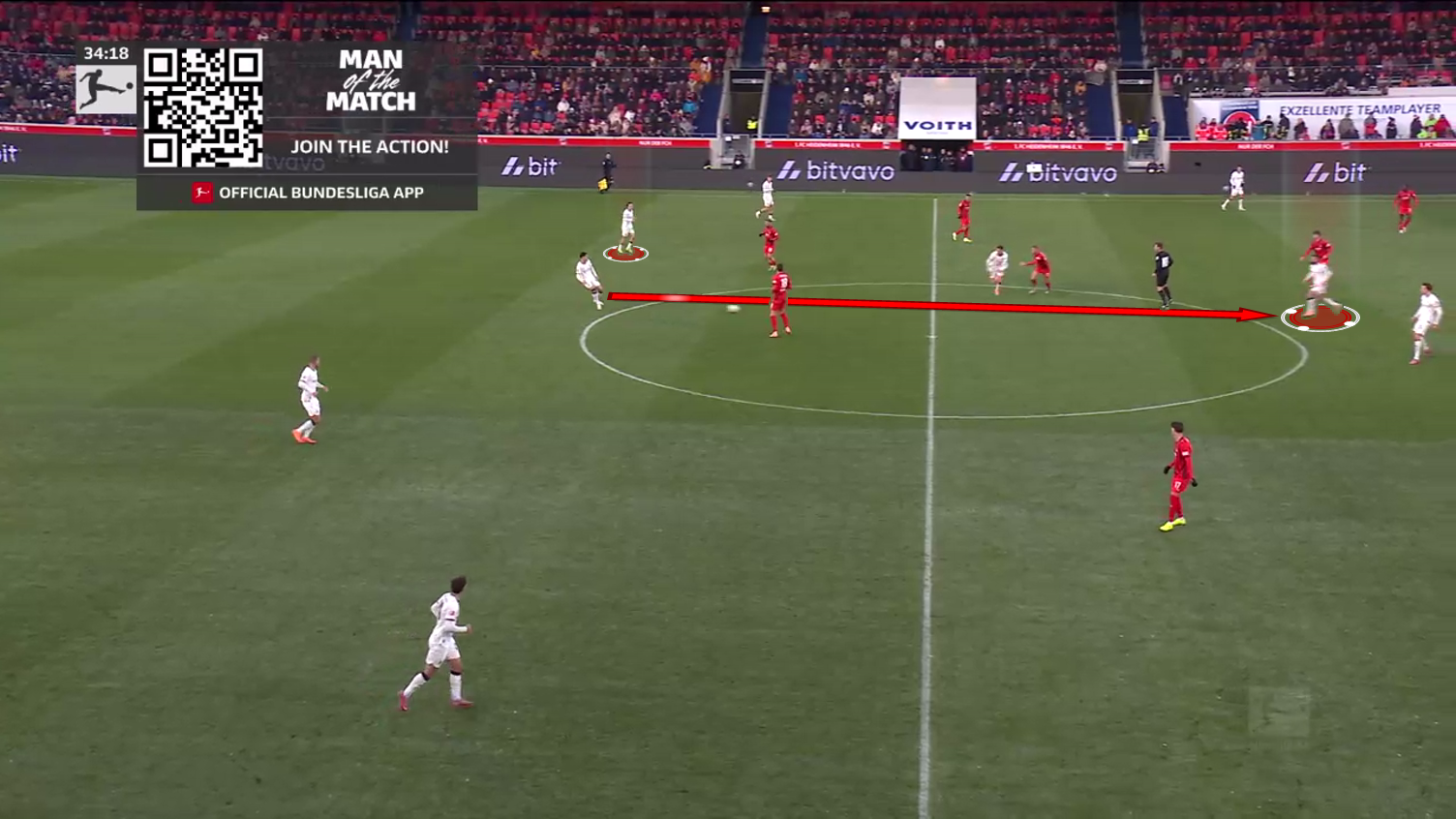
In this case, Reitz dropped back in the holding midfielder position to give the game more structure and progress the ball himself instead of relying on his teammates.
Honorat is always in the attacking line, but he is allowed to roam as much as he wants as well.
This creates a lot of problems for opposing backlines: are they following him aggressively with their defenders and trying to man-mark him, or are they forced to switch him, which makes him hard to account for?
Here, the Frenchman is positioning himself on the left wing, overloading the near side.
Looking at another situation, just a couple of seconds later, the situation the opposing defence has to face is completely different all of a sudden.
Reitz is now dropping back into the backline, which drags one midfielder out of position and overloads the first line of play, creating a numerical advantage near the ball and a lot of open space.
Honorat is back in the centre now, but drops back into attacking midfield, right where Reitz dragged his marker out of his position.
This allows him to receive another vertical pass in open space and get behind the midfield again.
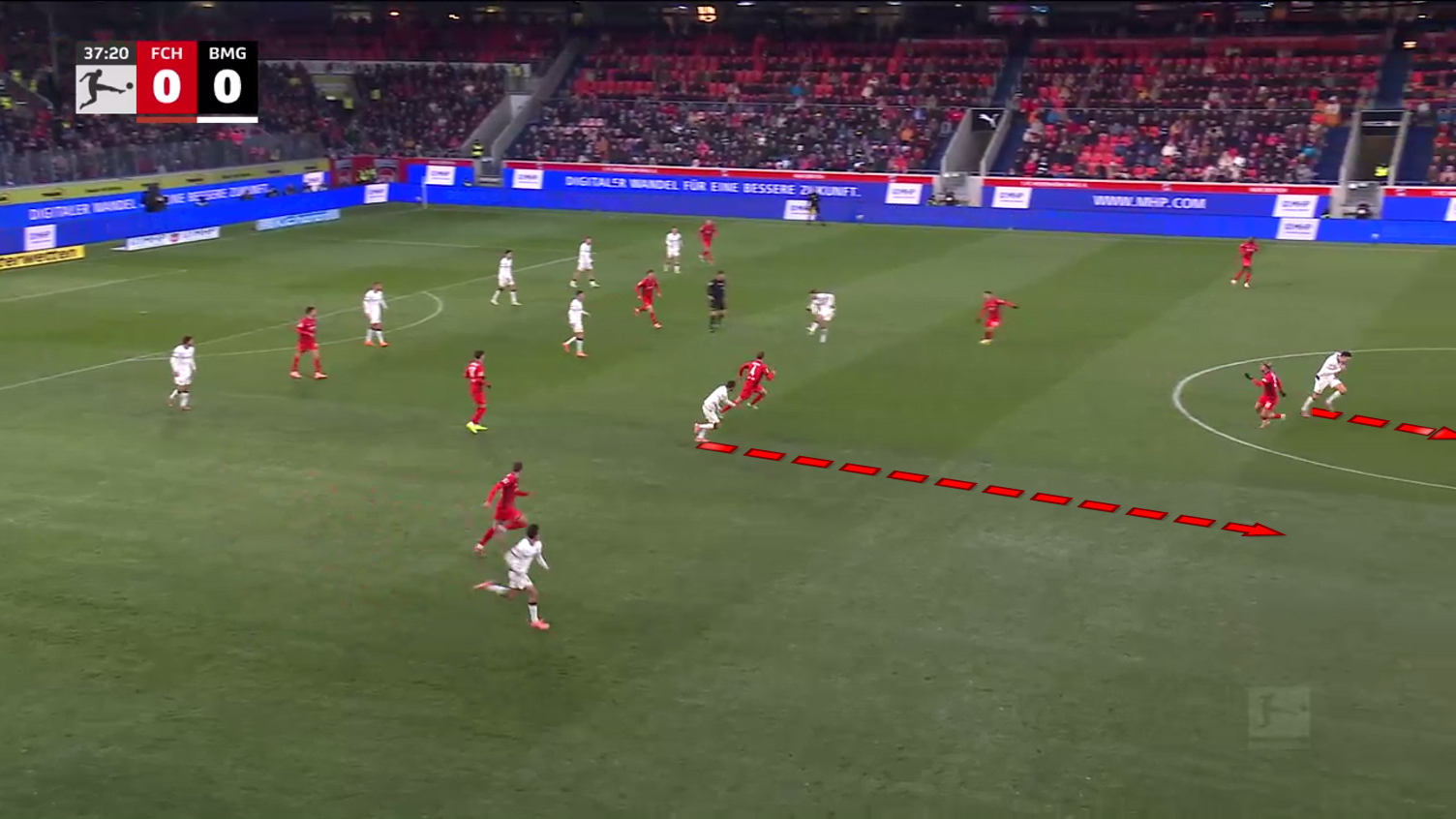
Another of Honorat’s biggest strengths is his pace, and Eugen Polanski is using it.
Not only is Honorat very fast, though, striker Tabakovic is quicker than he looks, too.
The moment Gladbach win the ball or have a chance to play a long ball over a high backline, they get them running.
Both Honorat and Tabakovic are always trying to provide runs behind the defenders in these situations, and Gladbach often play vertical passes into their paths.
Honorat managed to decide the game against FC Köln by being released into open space multiple times and winning penalties for his team.
Tabakovic has scored seven goals in seven games for Eugen Polanski and four goals in the last three games.
Sprints & Intensity
Which brings me to my last point in this article, and the thing that was most impressive about Gladbach since their derby against Köln.
Eugen Polanski managed to get his team to play very intense football.
They now show a lot of willpower, make many runs, and, in the end, play fast-paced football on the counter, showing great intensity in the counterpress.
This is a huge turnaround from the start of the season, when the team looked lost and unfit on the pitch.
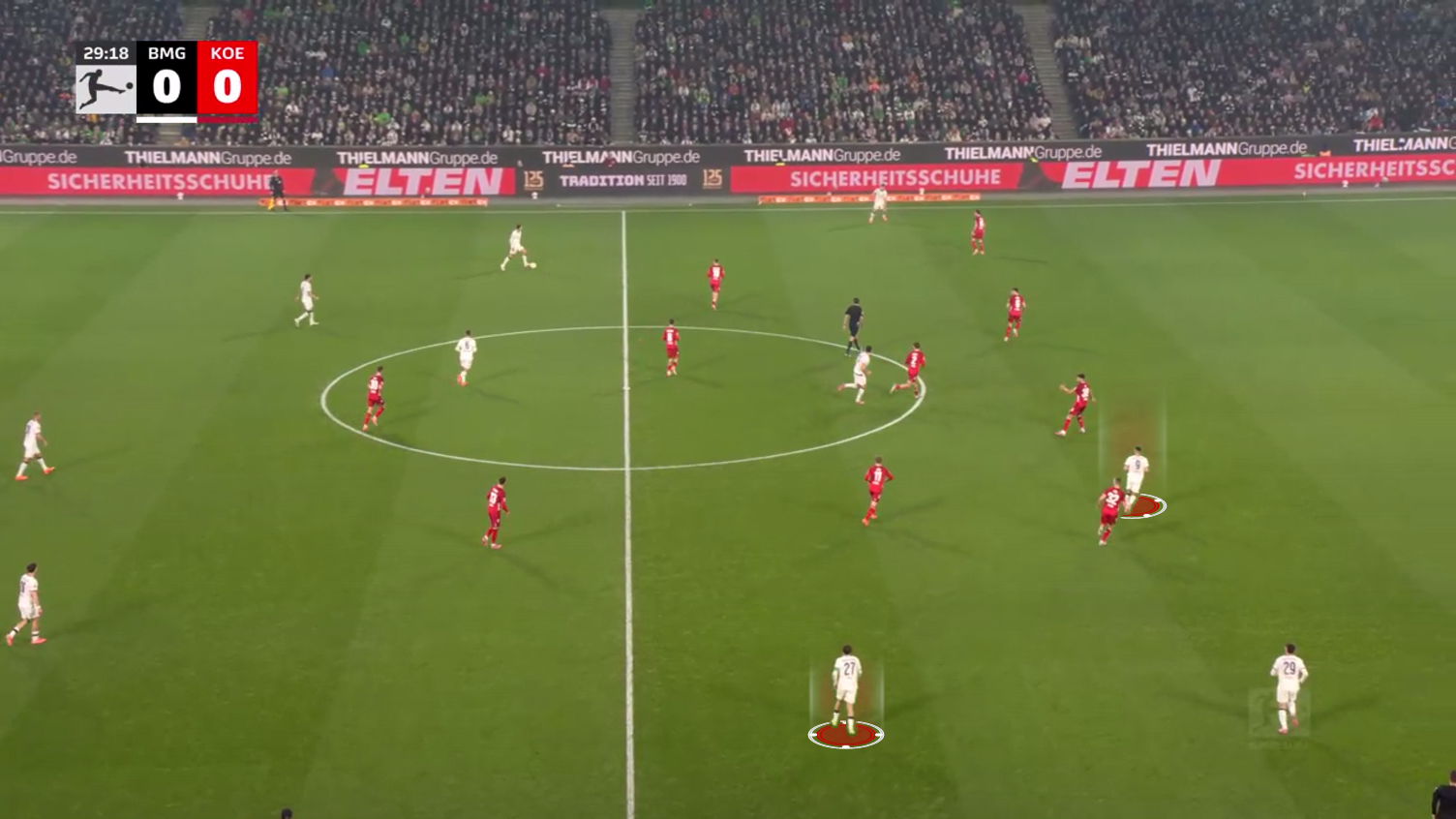 Once again, they use their two most important players in Reitz and Honorat, to create some problems for the backline, which played with a man-marking system in this game.
Honorat threatens the run behind the backline right at the edge of being offside, Reitz moves outwards to the wing to get into open space.
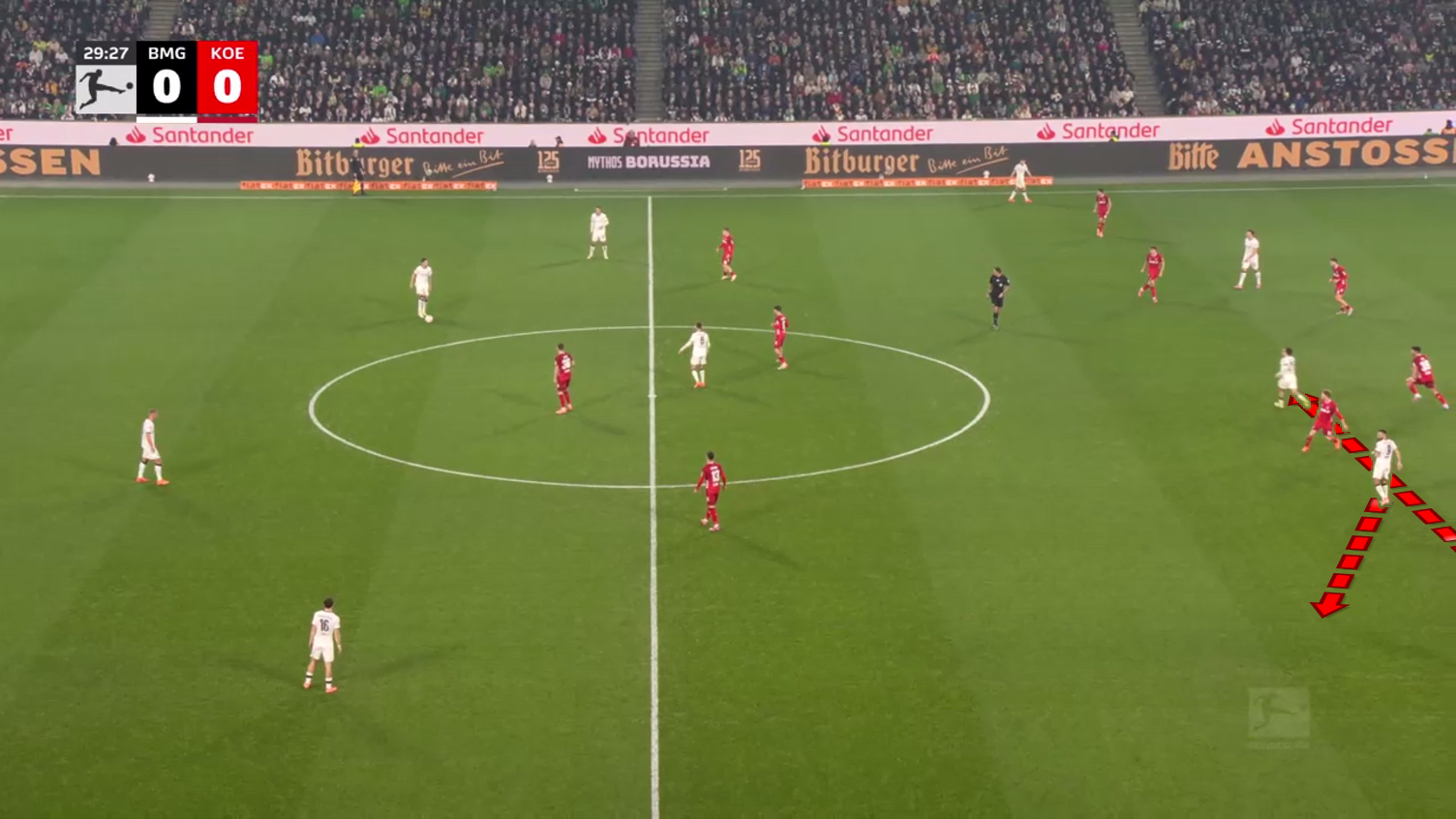 Gladbach do not manage to play the ball behind the backline in this situation, so they needed to build up again at the end of the situation.
Now, Reitz and Honorat move in opposing directions, creating a moment of confusion for the defenders, who decide too late if they want to switch their assignments or follow them.
In the end, both players follow Reitz for a short amount of time, completely leaving Honorat wide open on the wing.
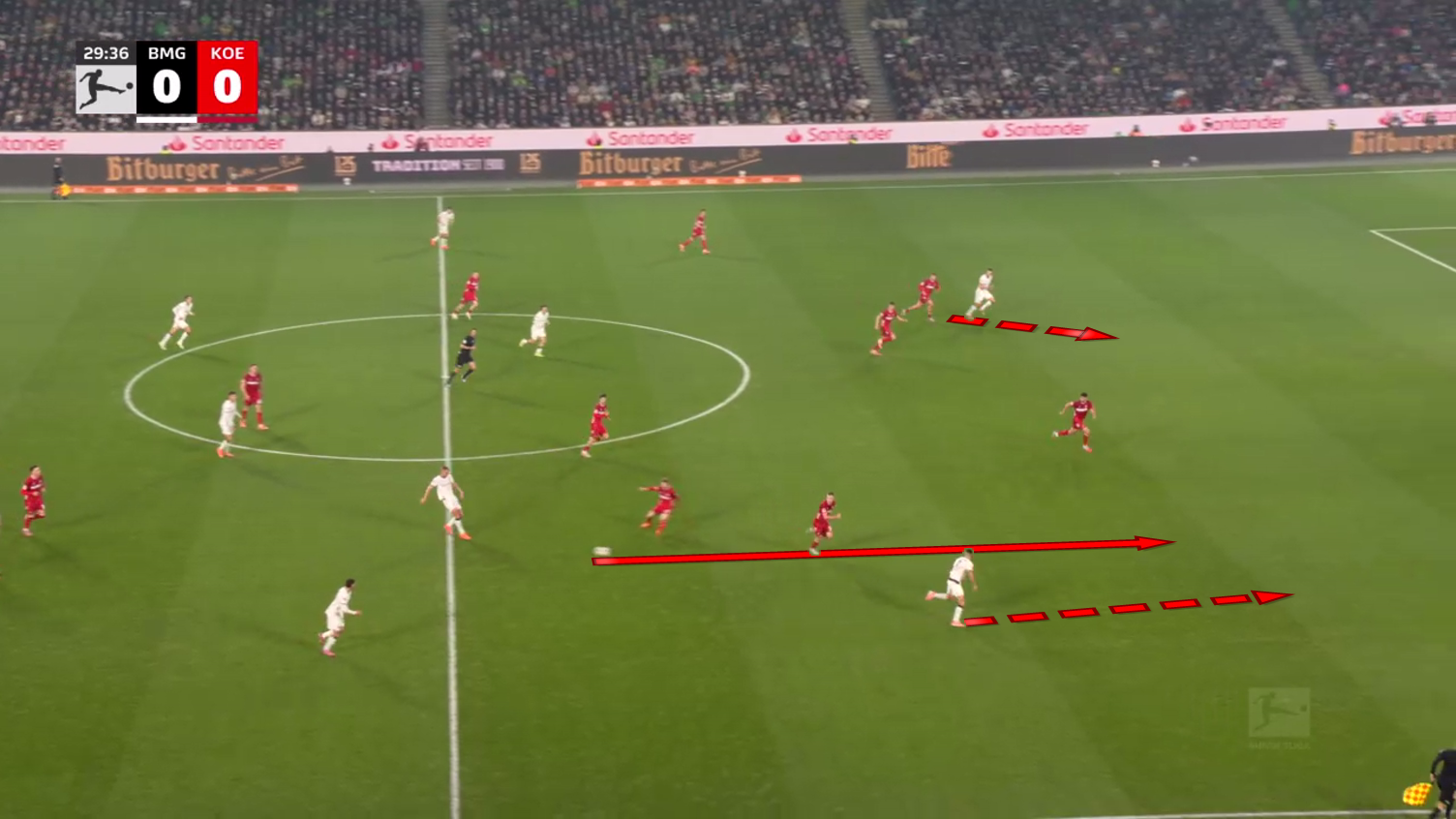 From there on out, Gladbach just shows off their pace with their sprints and their intensity in these situations.
Both Tabakovic and Honorat are instantly making a high-intensity run into the space behind the defenders, getting running earlier than the backline.
The centre-back doesn’t even hesitate for a split second and instantly plays the vertical through-ball into the space behind the defender who got dragged forward by Reitz.
These situations happen often, and they always end the same way: Honorat uses his pace to run past the defenders, then crosses towards Tabakovic in the box, and Gladbach have been exceptionally successful with that over the last three games.
Conclusion
In the end, the three wins were great and incredibly important for Borussia Mönchengladbach and Eugen Polanski, but they faced relatively poor opponents, if we are being honest, so it will be interesting to see if they can keep up their momentum.
The way the young coach uses his star players and gets them involved definitely helped them to get a foot back into the season and get out of the worst in the relegation battle in a crucial phase of the season.
Especially their vertical playstyle, high intensity, and runs on the counter have been very fun to watch and were the key to their success.
With German international Tim Kleindienst coming back from injury in the next couple of weeks, Gladbach suddenly is in a very decent position in the Bundesliga.
The club and new CSO Rouven Schröder were definitely pleased with Eugen Polanski’s work and made him the permanent head coach until 2028 this week.
With the win against Heidenheim and the general development, I could see this being the right decision for the future of the club.
