
Dead-ball situations frequently prove decisive in the battle for promotion from Spain’s second tier.
In a division where matches are regularly decided by narrow margins, a reliable corner-kick routine can crucially yield between eight and 12 goals over the course of a season.
This is a return that often separates teams challenging for a playoff place from those anchored in mid-table obscurity.
This season, under Rubi‘s tactics, Almería’s corner routines show a deliberate balance between chaos and control.
Their manager is an experienced head in Spanish football, having previously been in the managerial hot seat at clubs like Espanyol, Real Betis, Real Valladolid, and Levante.
Rubi was also the number two at Barcelona under Gerardo Martino in the 2013/2014 campaign when the Blaugrana finished second in La Liga.
Now, he’s tasked with getting Almería back to Spain’s top flight, and one of his main methods in trying to achieve that this season is by establishing set-piece superiority.
Rather than relying on a single dominant aerial target, they manipulate defensive reference points, create second-ball scenarios, and attack zones with coordinated timing.
This tactical analysis in the form of a set-piece analysis breaks down the main corner-kick structures Almería are using, explaining the mechanisms behind each routine and why they consistently generate shots, rebounds, and sustained pressure.
Near-Post Overload & Flick-On
Almería employs a corner-kick tactic which sees them overload the near post with two attackers positioned at the edge of the six-yard box to create a numerical advantage and create a quick goalscoring opportunity.
As the taker begins his run-up, one attacker darts aggressively toward the near post, while the second curves his run slightly deeper.
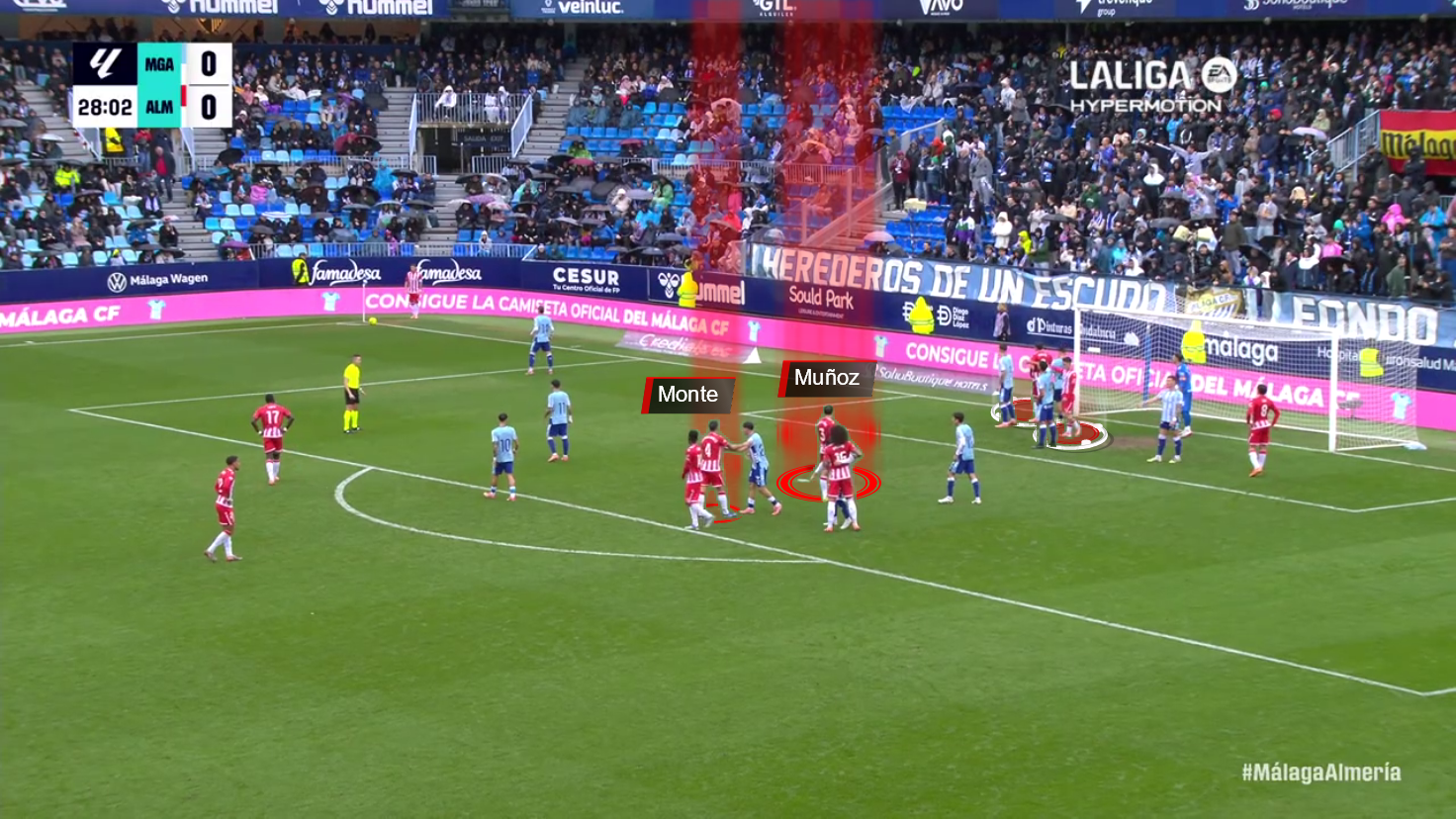

In this sequence, Nélson Monte initiates the movement by attacking the near-post zone, dragging his marker with him and collapsing the first line of coverage.
This action opens a pocket of space behind the initial defensive line, which Álex Muñoz times perfectly, arriving to exploit the vacated area and attack the ball under minimal pressure.
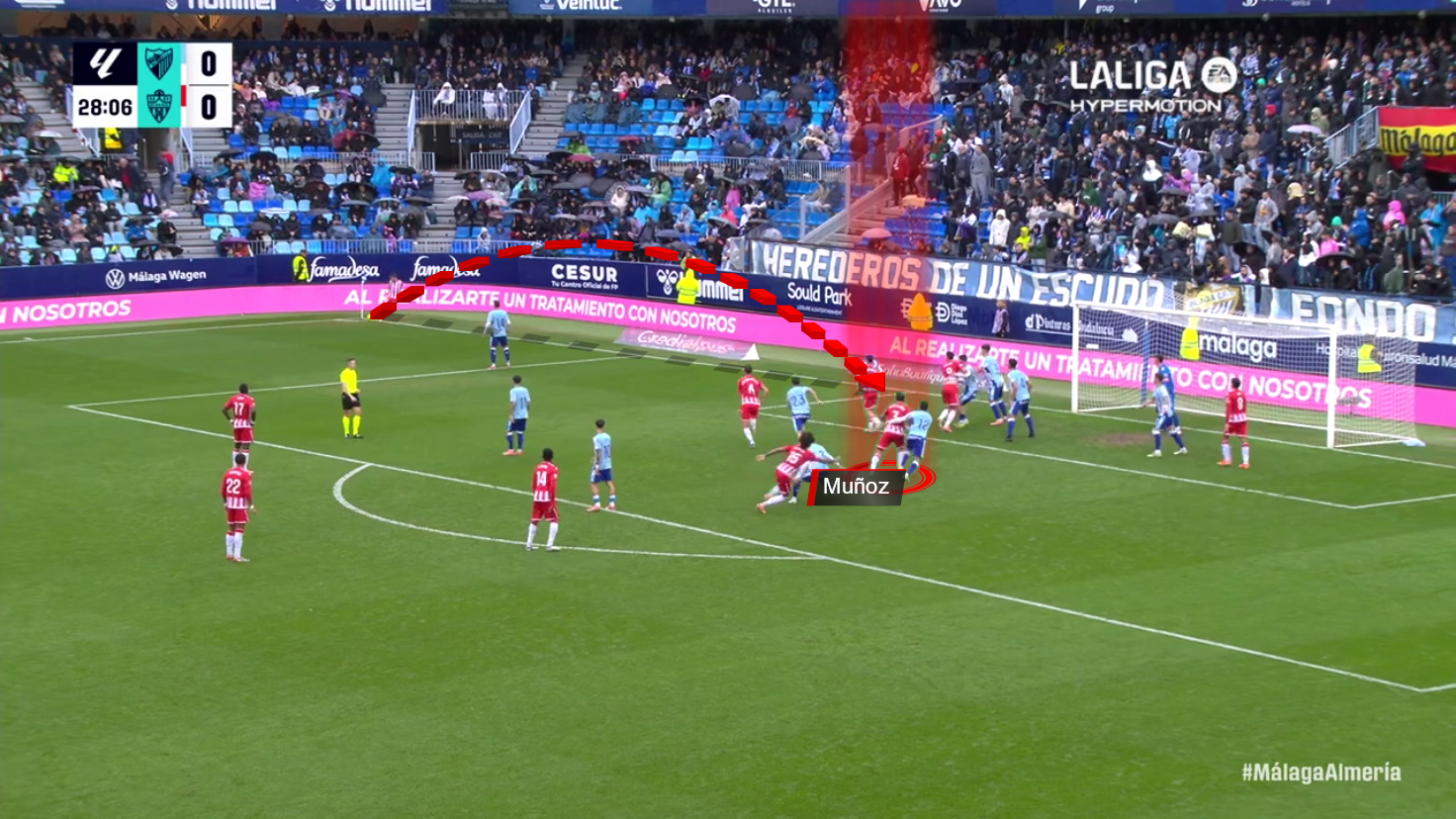
The taker then delivers the cross to Muñoz in the space where Monte’s movements had created it.
The primary objective is not always a direct shot.
Instead, the first runner attacks the ball with a glancing header, aiming to flick it across the face of the goal.
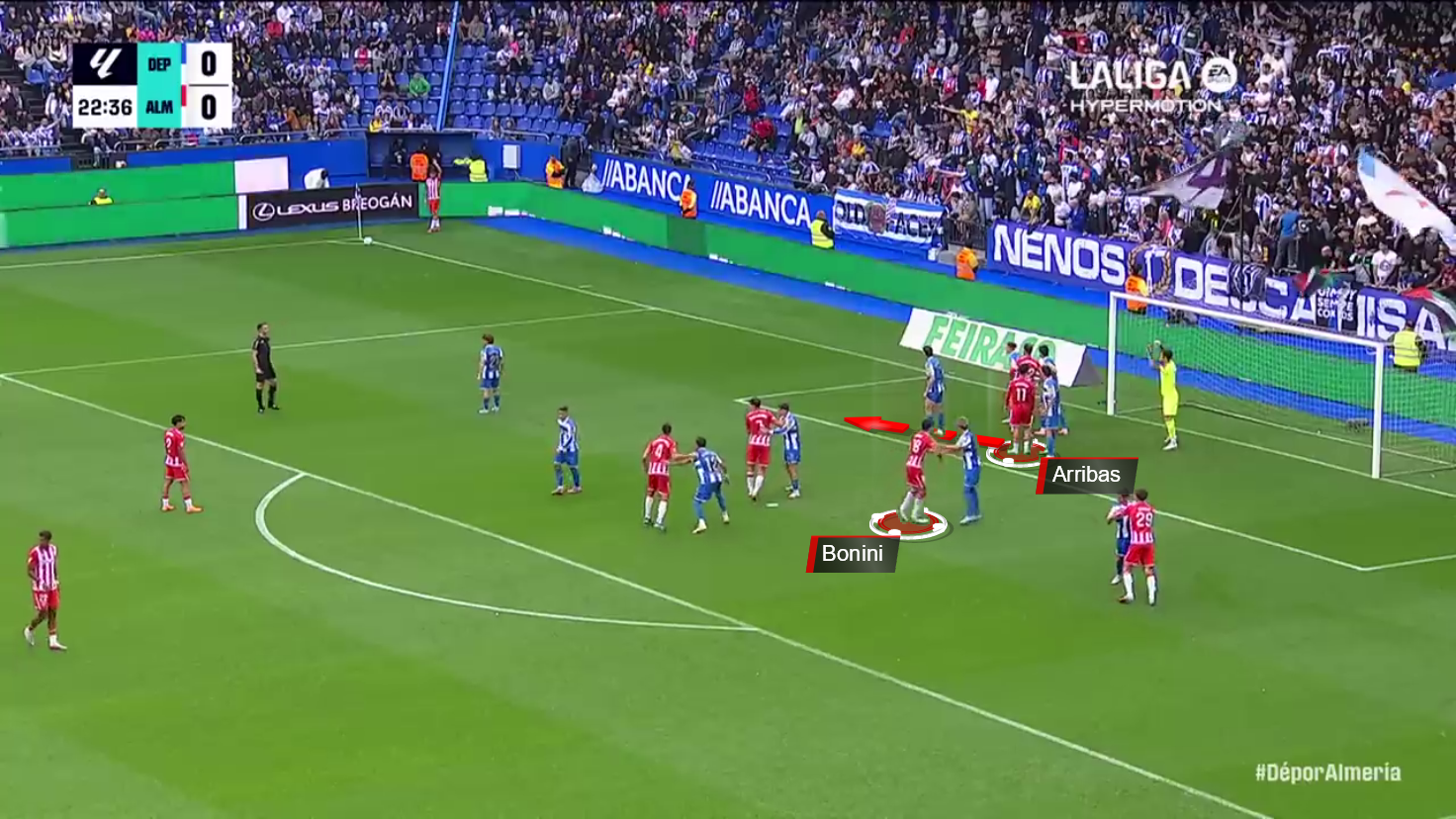
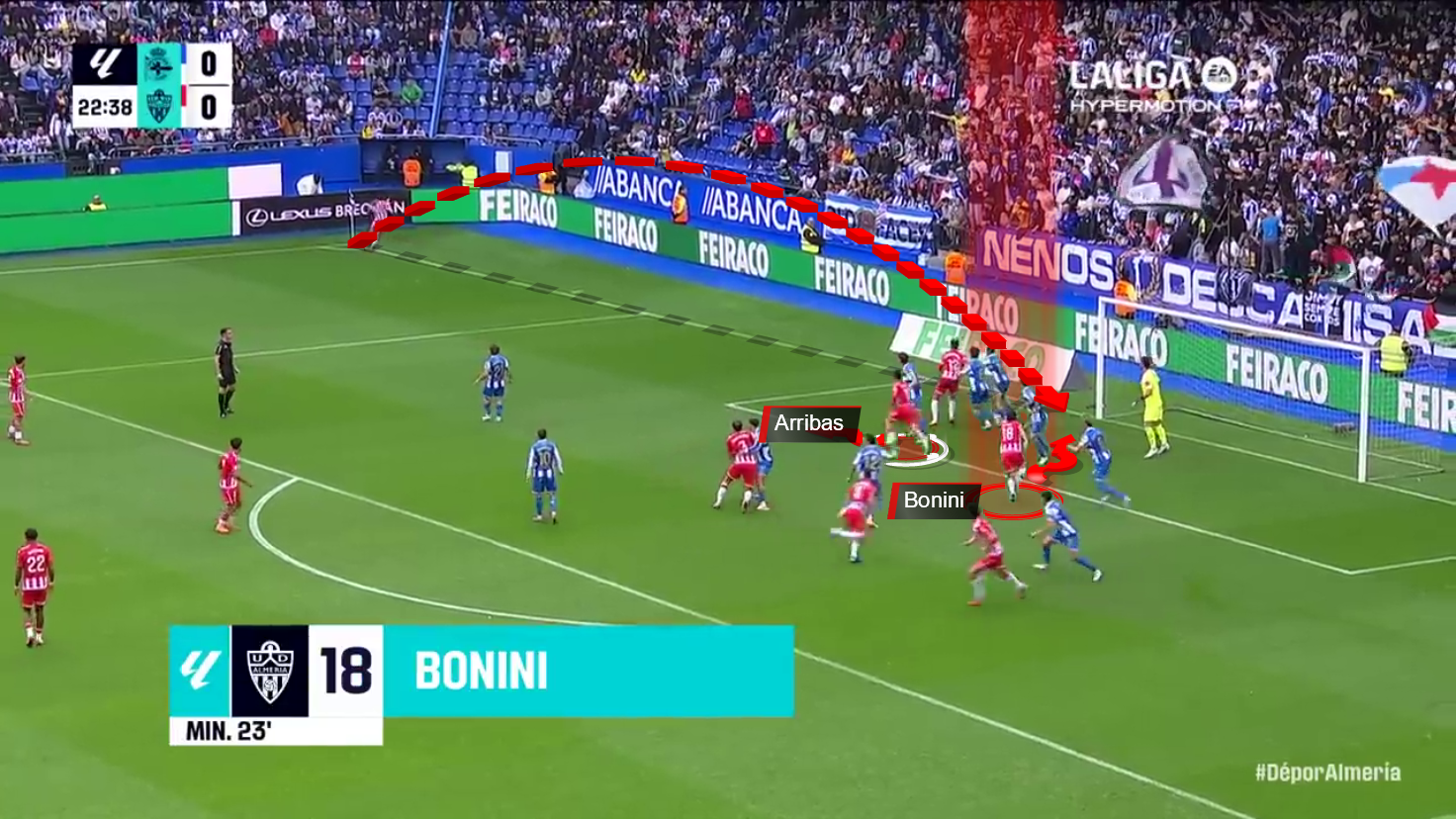
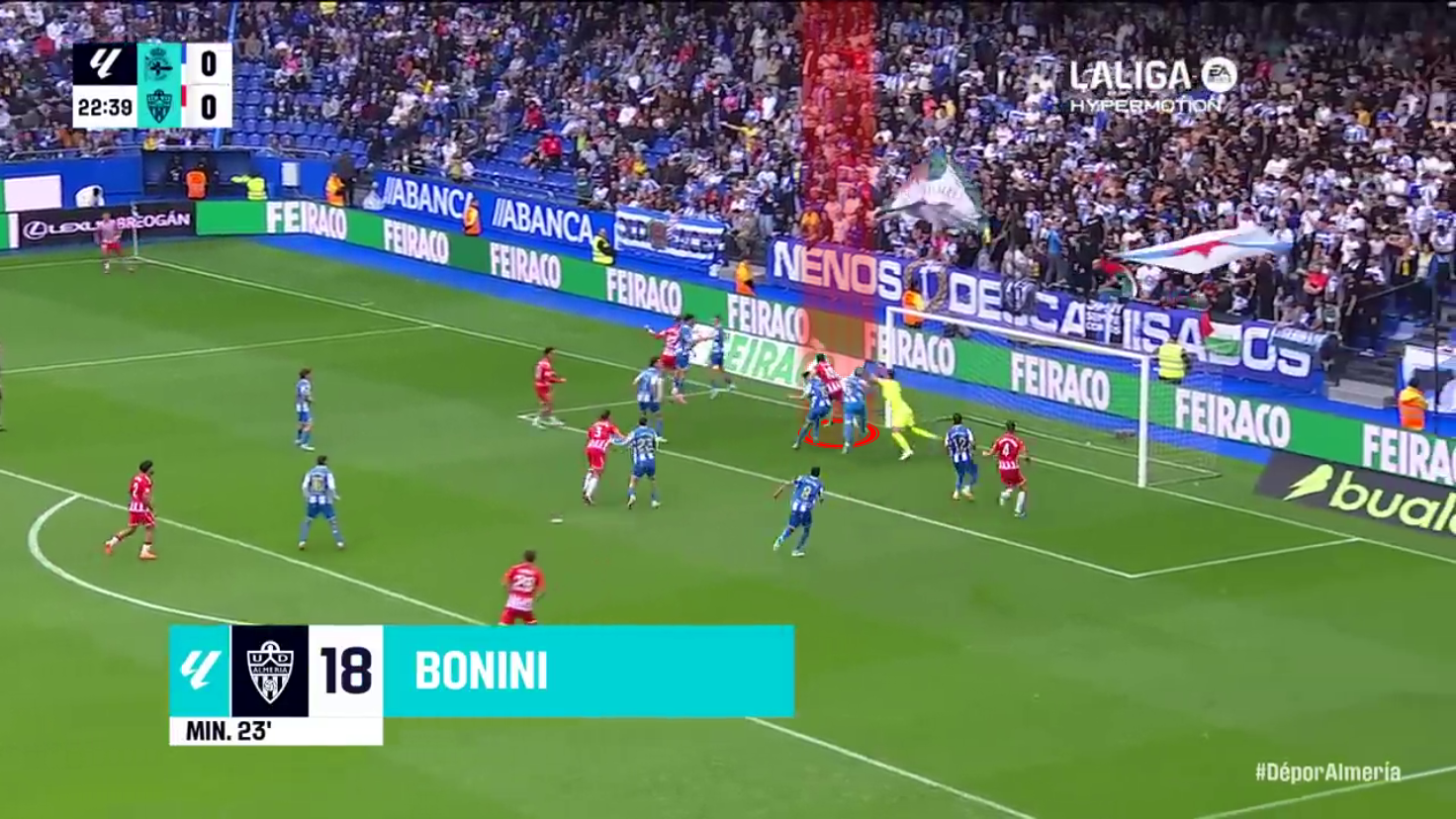
A similar mechanism was evident against Deportivo de La Coruña, where Sergio Arribas’ movement from the six-yard line dragged his marker forward, creating vertical separation inside the box.
This opened a clear channel for Federico Bonini to attack, allowing him to exploit the space with a late run and convert from close range.
This movement forces the near-post defender to commit early, often opening a channel between the six-yard line and the penalty spot.
By overloading the near post and using subtle flick-ons, Almería consistently created dangerous second balls and disrupted defensive organisation.
Far-Post Isolation With Delayed Run
In contrast to their near-post attacks, Almería also utilise a far-post isolation strategy where the majority of attackers draw defenders to the centre, creating a 1-v-1 opportunity for a player positioned at the back post.
During a set-piece, such as a corner kick or a wide free kick, a powerful attacker positions themselves away from the back post, seemingly uninvolved in the immediate play.
Just as the kick is taken, they execute a delayed run, bursting towards the back post with momentum to attack the ball.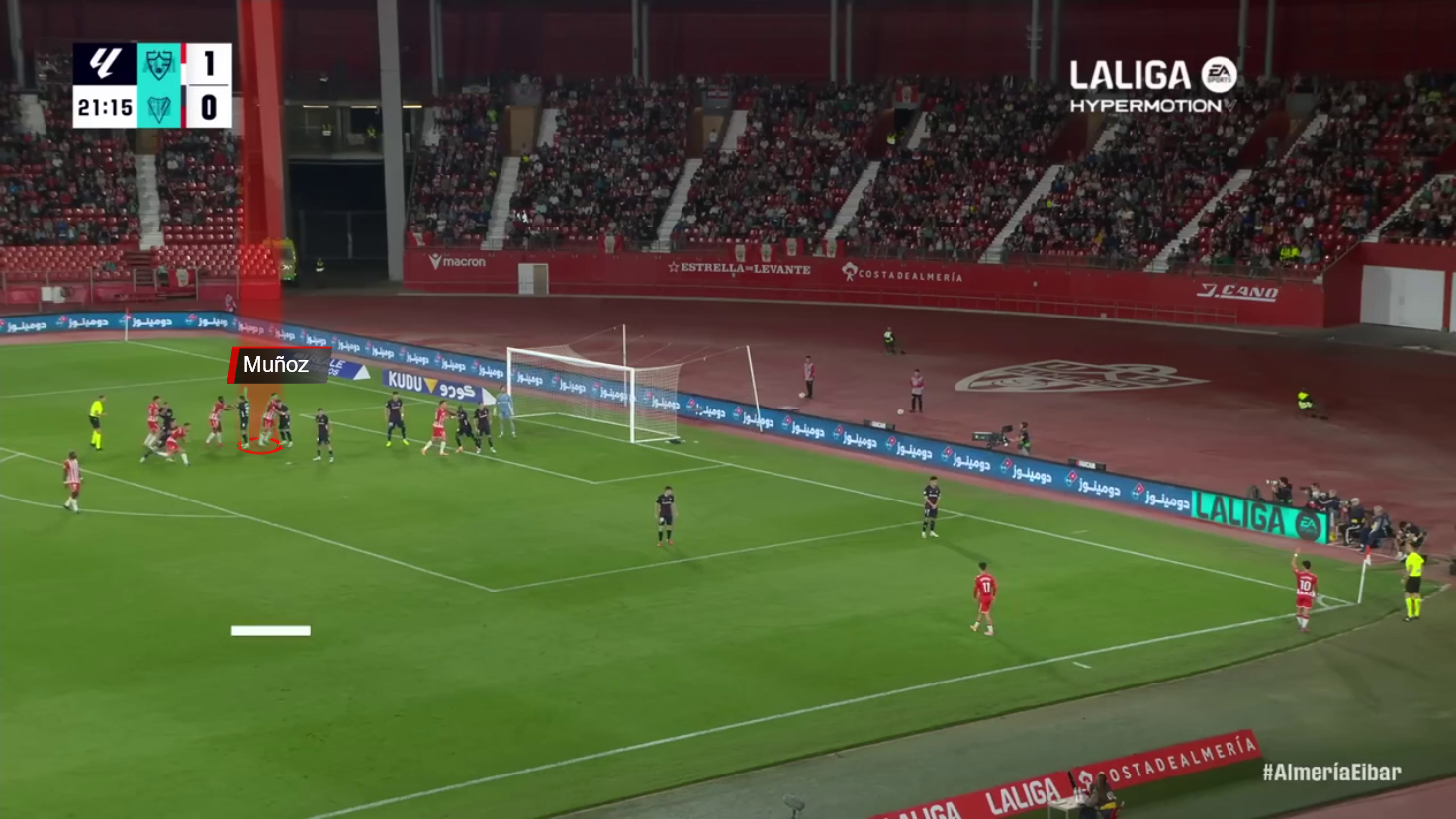
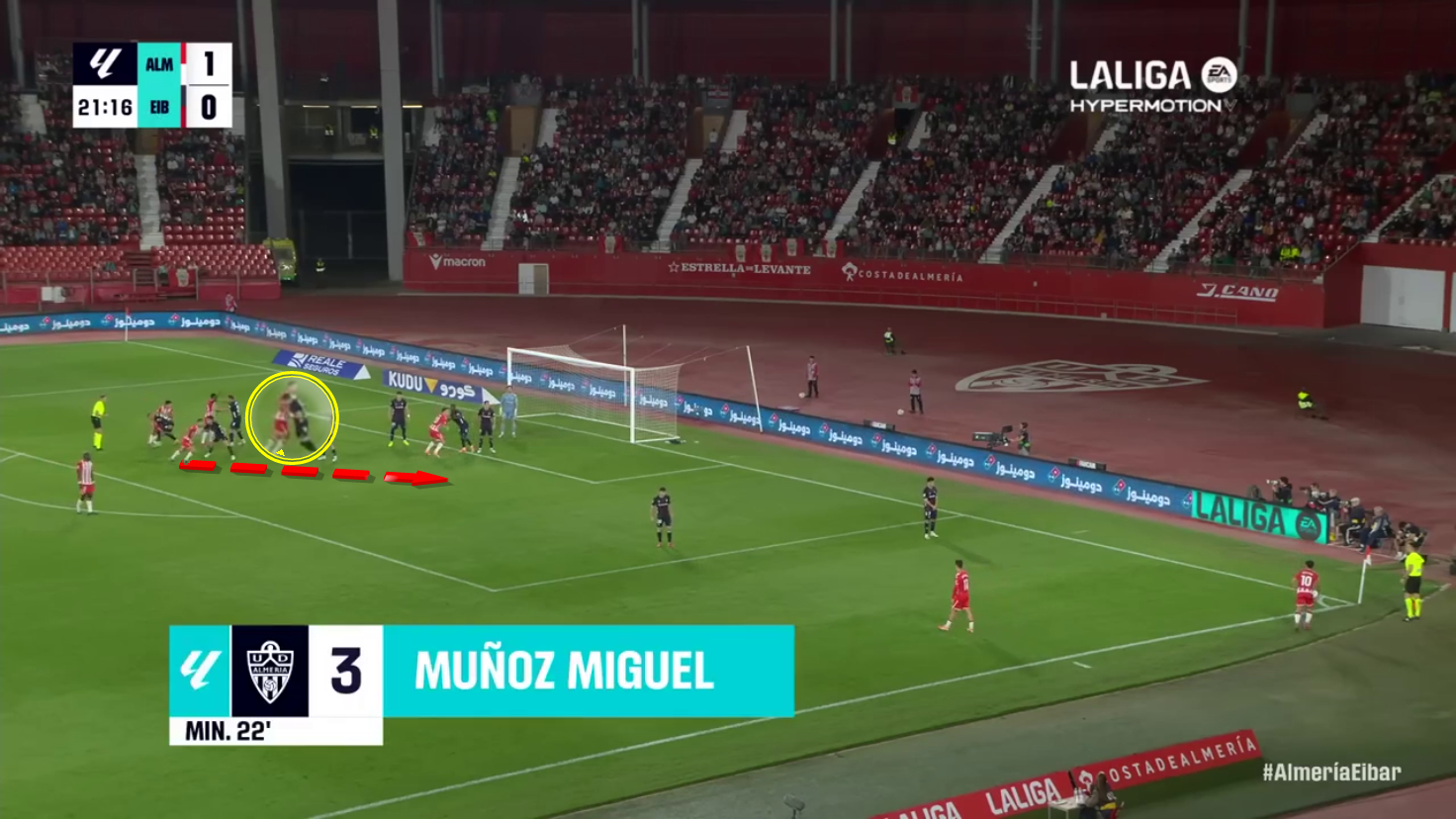 Muñoz applies subtle physical pressure on the defender stationed at the far post, displacing him just enough to compromise his balance, while a teammate positioned behind Muñoz occupies the defender’s line of sight, further delaying his reaction.
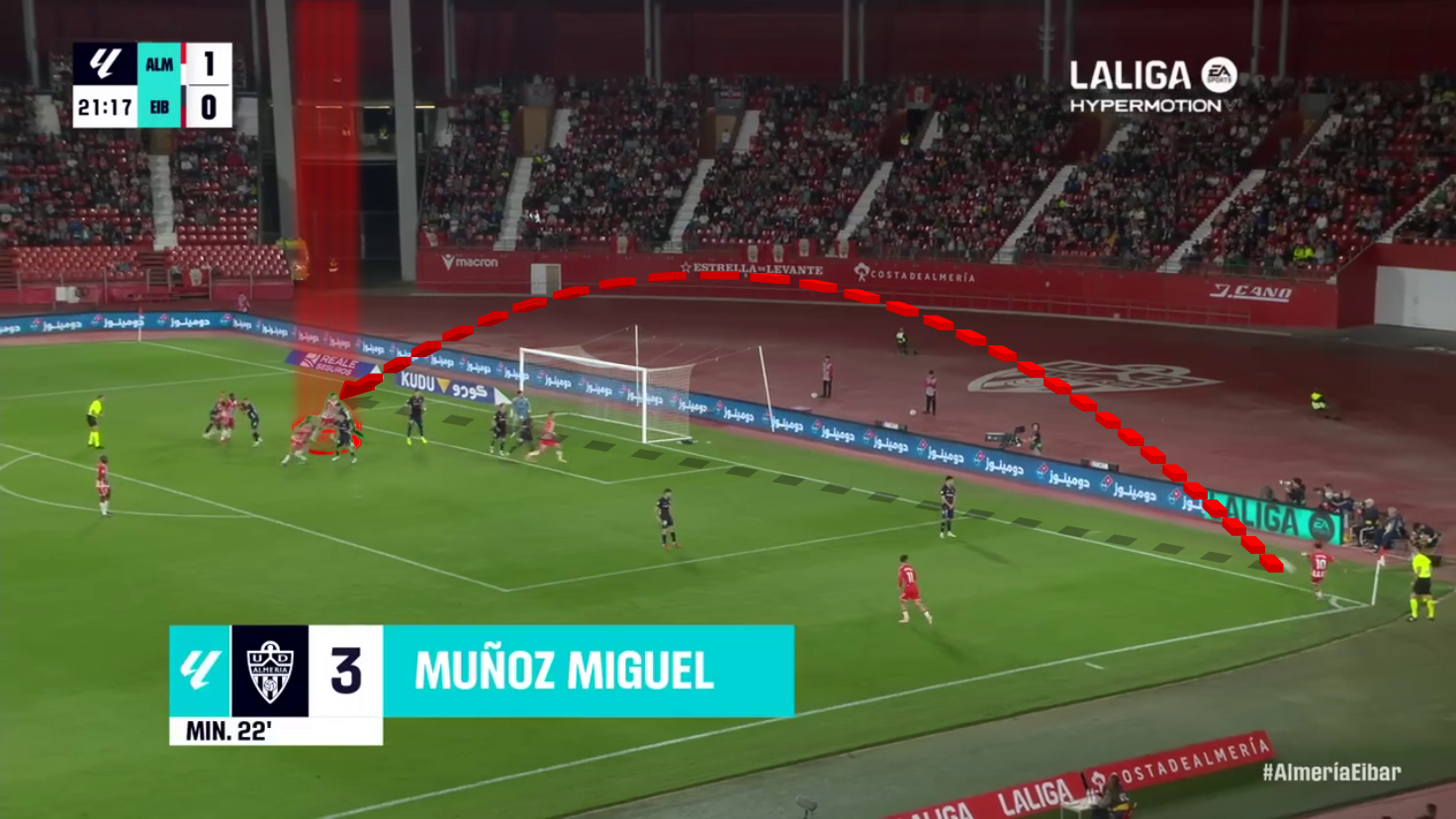 The delivery is then executed with precision toward the far-post zone, isolating Muñoz and allowing him to attack the ball without immediate defensive pressure.
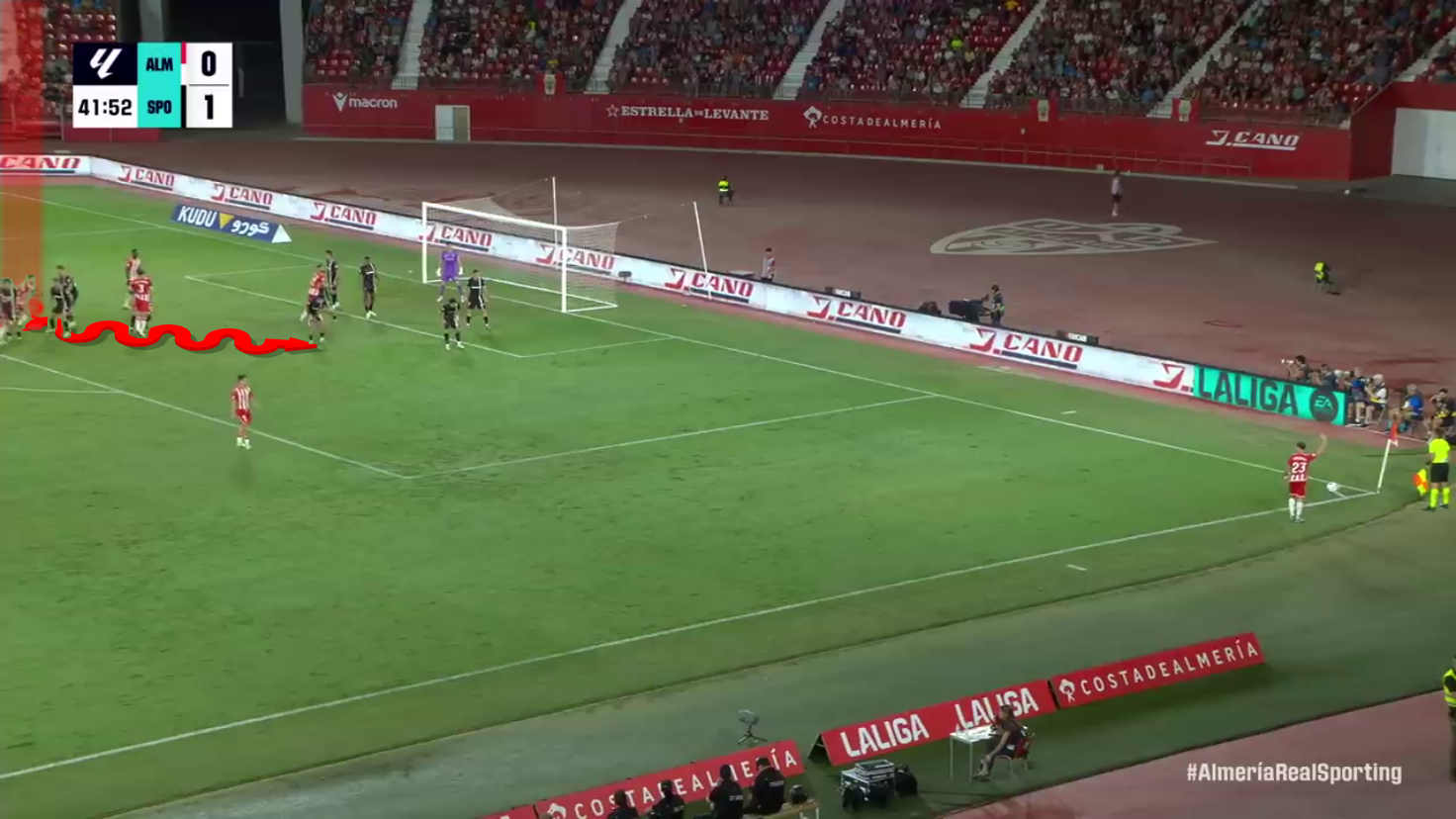
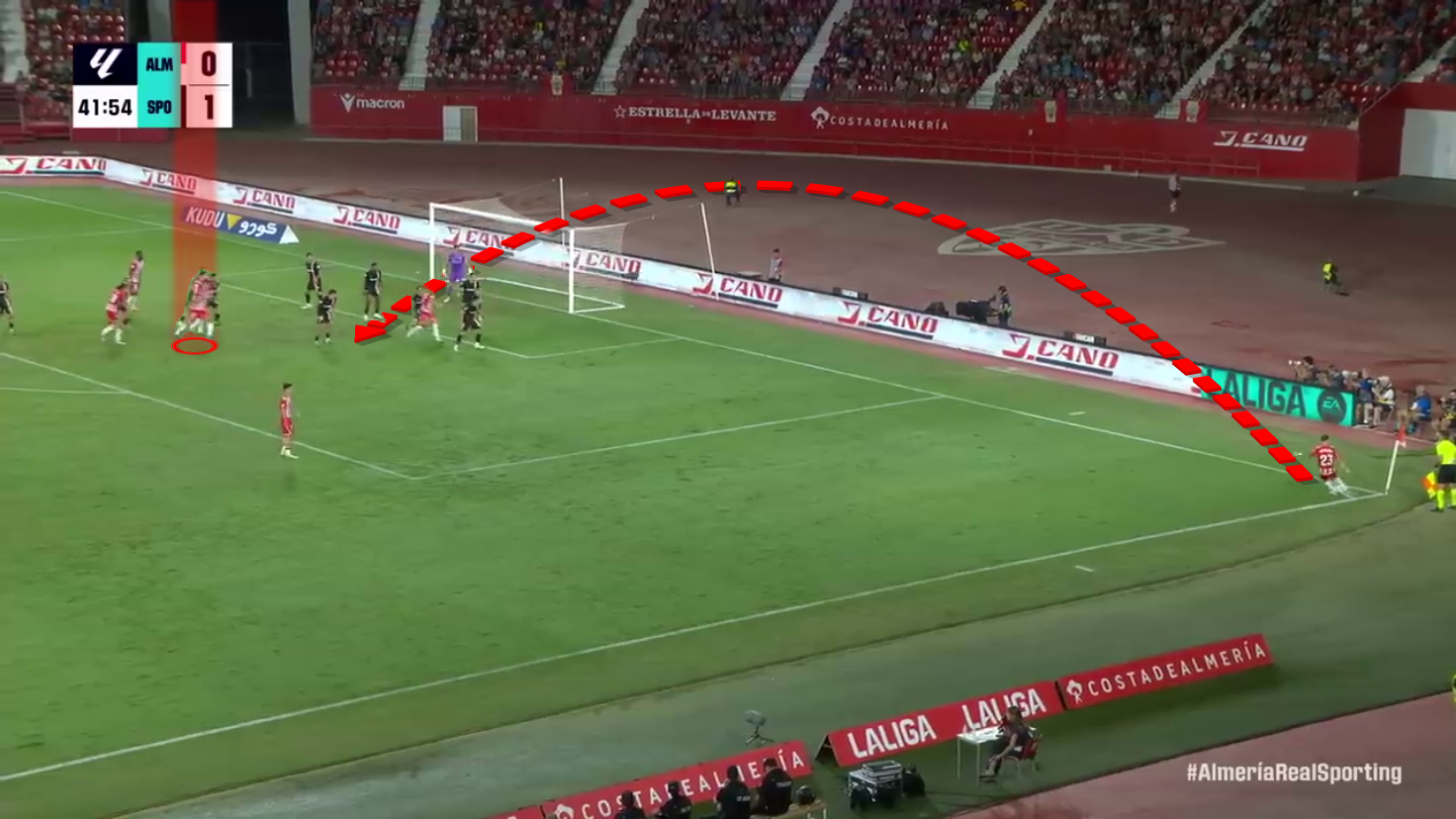 An Almería player applies pressure to the Real Sporting defender, forcing him to step toward the near post, which in turn opens space at the far post for the subsequent attack.
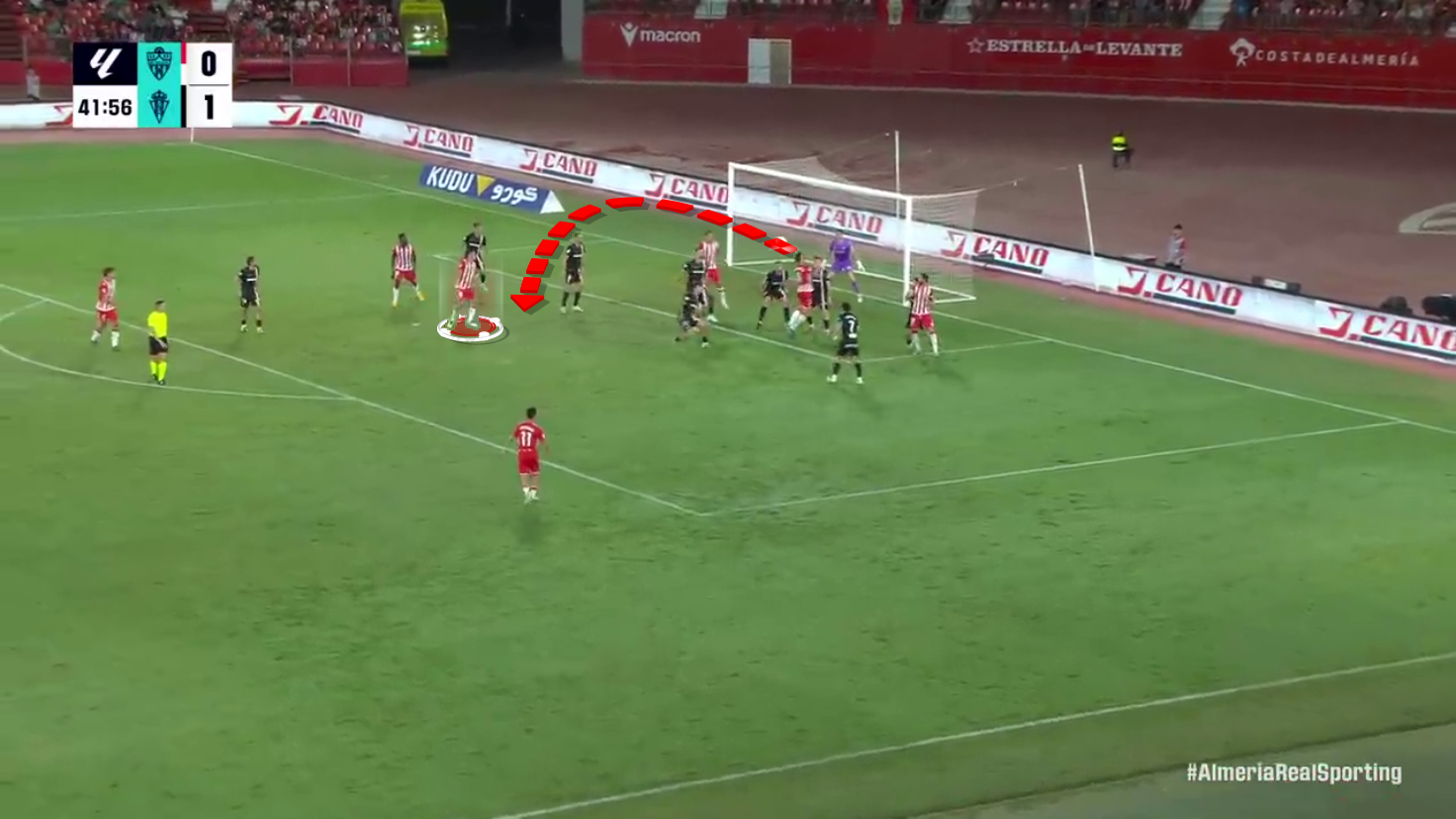
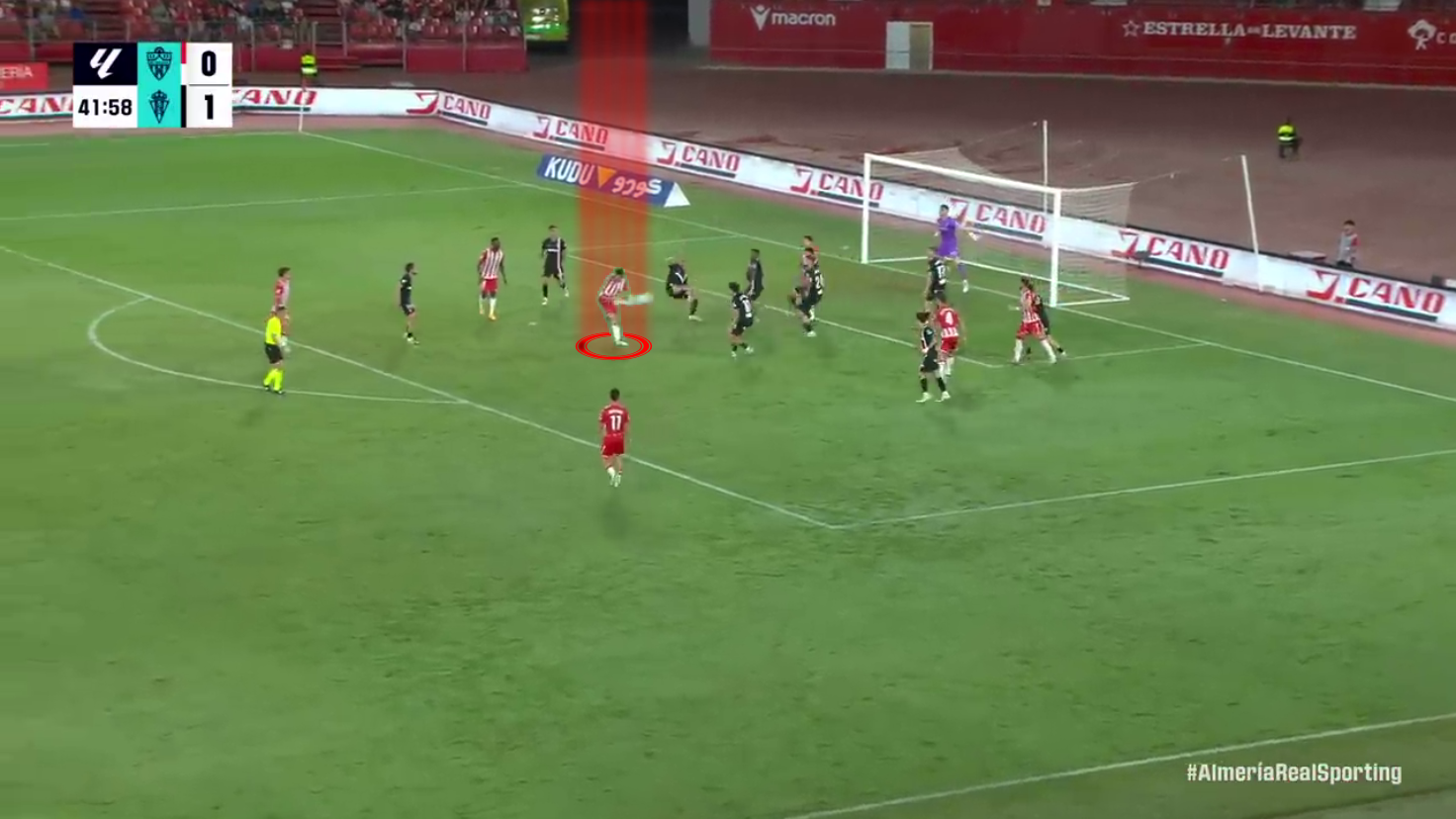
This delayed movement consistently creates mismatches.
Defenders assigned to zonal coverage at the far post were often flat-footed, allowing Almería’s runner to attack the ball at speed.
This far-post routine is built on delayed movement and precise timing, allowing attackers to exploit defenders who are set too early and lose awareness of space behind them.
By isolating the runner at the back post, Almería consistently creates high-quality finishing situations without relying on pure aerial dominance.
Block & Release At The Penalty Spot
Two attacking players strategically position themselves to screen a key defender, legally obstructing their path and preventing them from following the primary attacking runner.
This allows the main target player to find space around the penalty spot to receive the pass or shot.
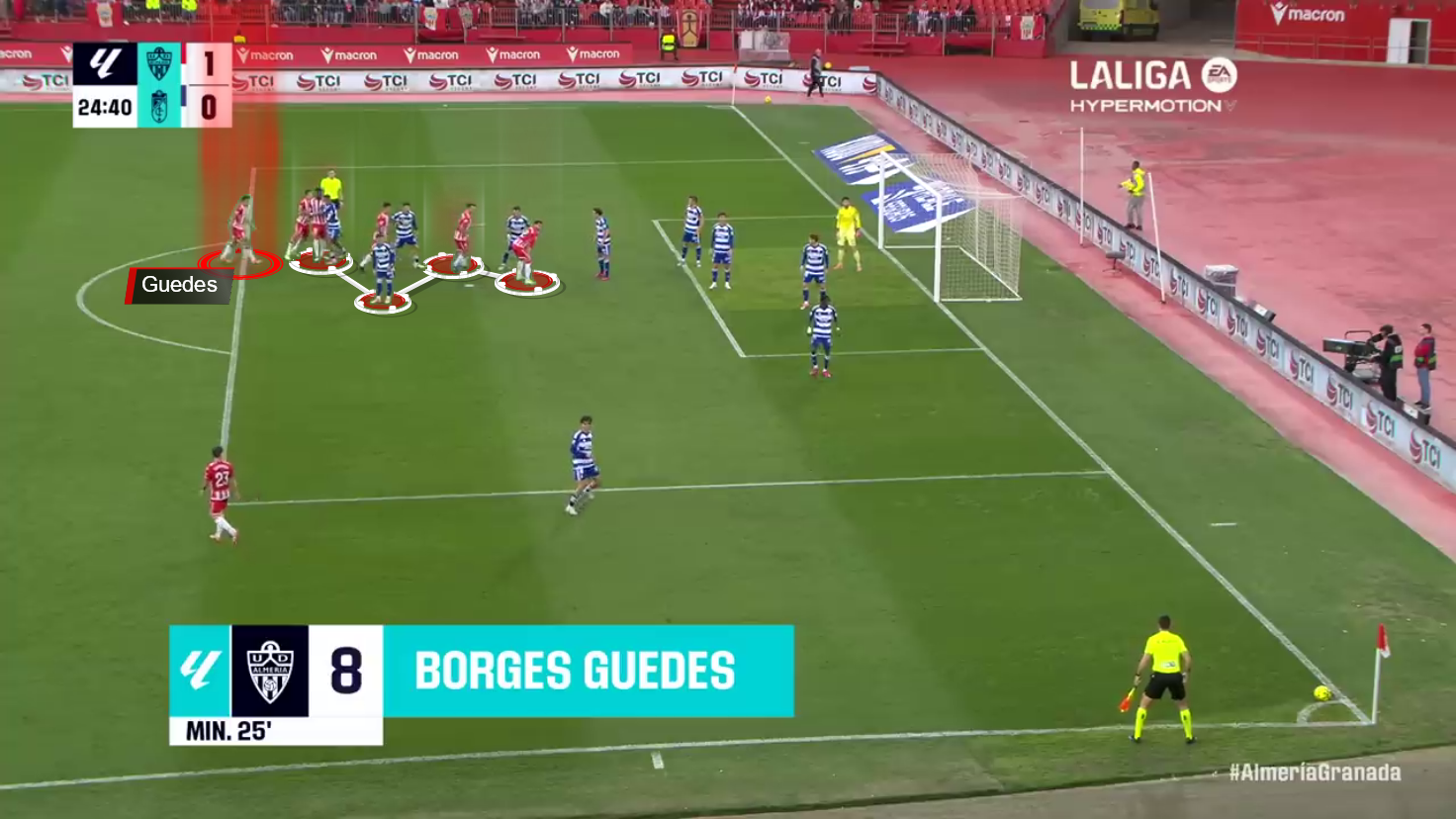
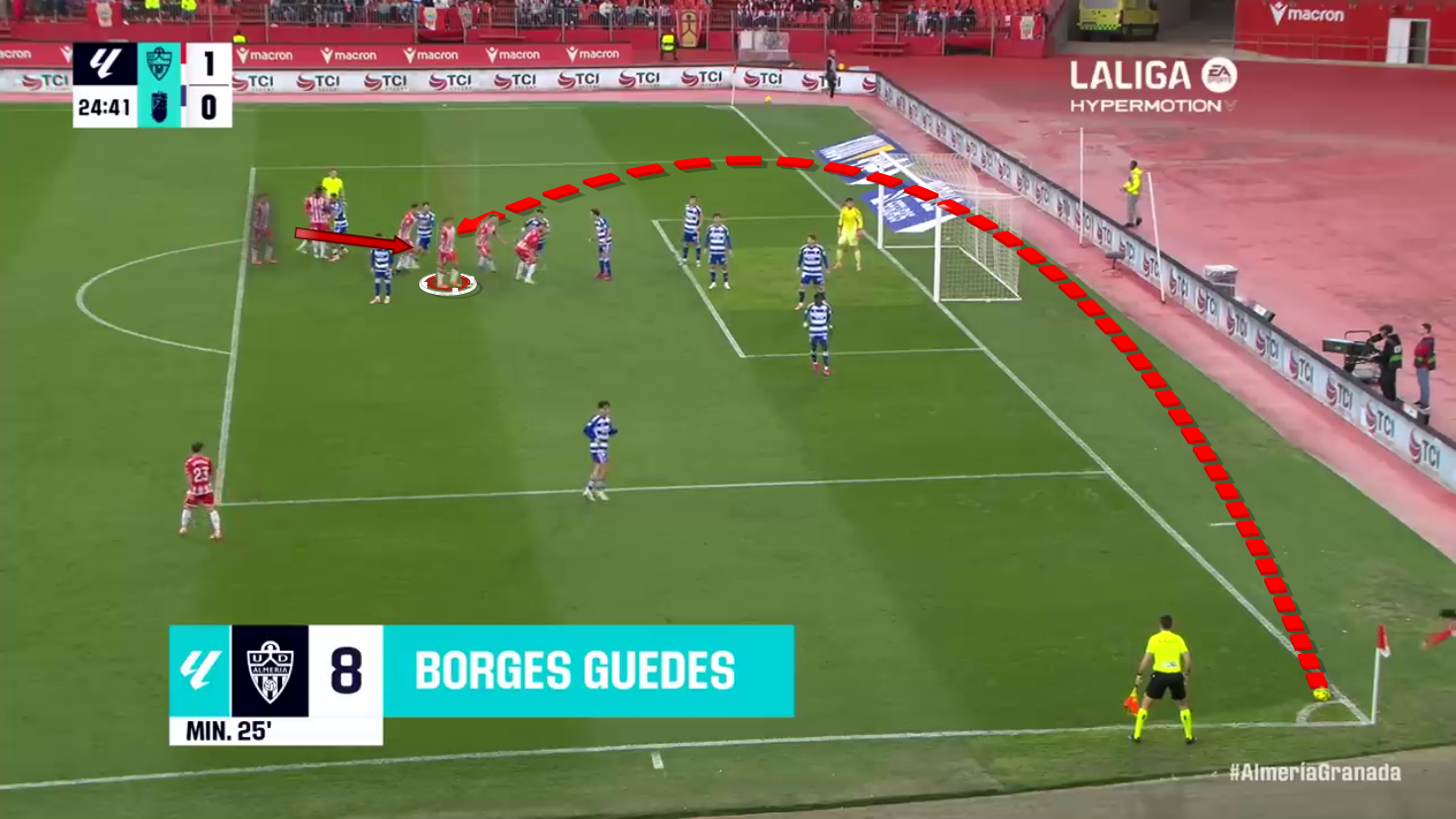
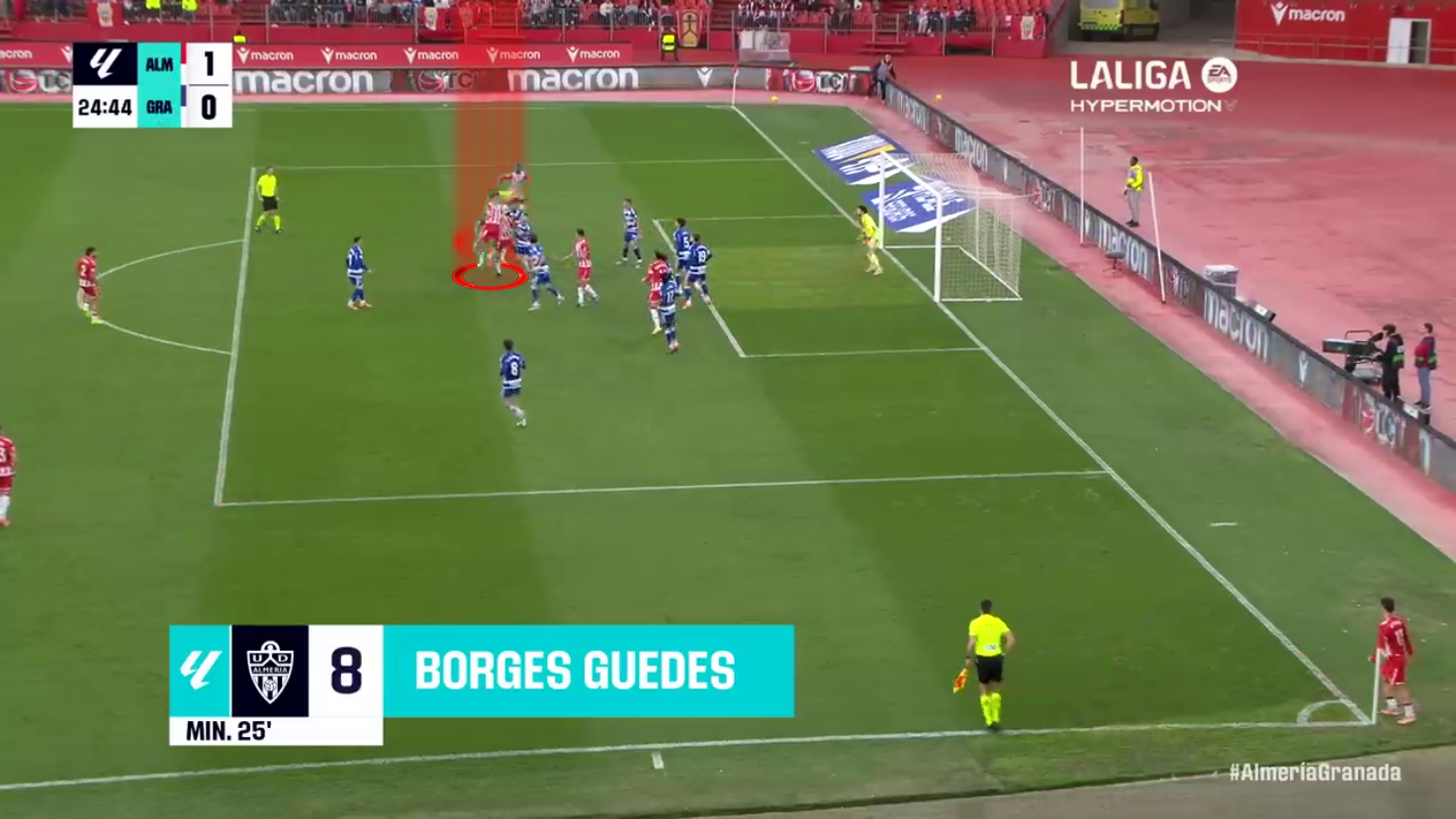
As the ball is delivered, the designated target curves his run from deep toward the penalty spot, attacking the space created by the block.
The delivery is typically inswinging, encouraging a direct header rather than a knock-down.
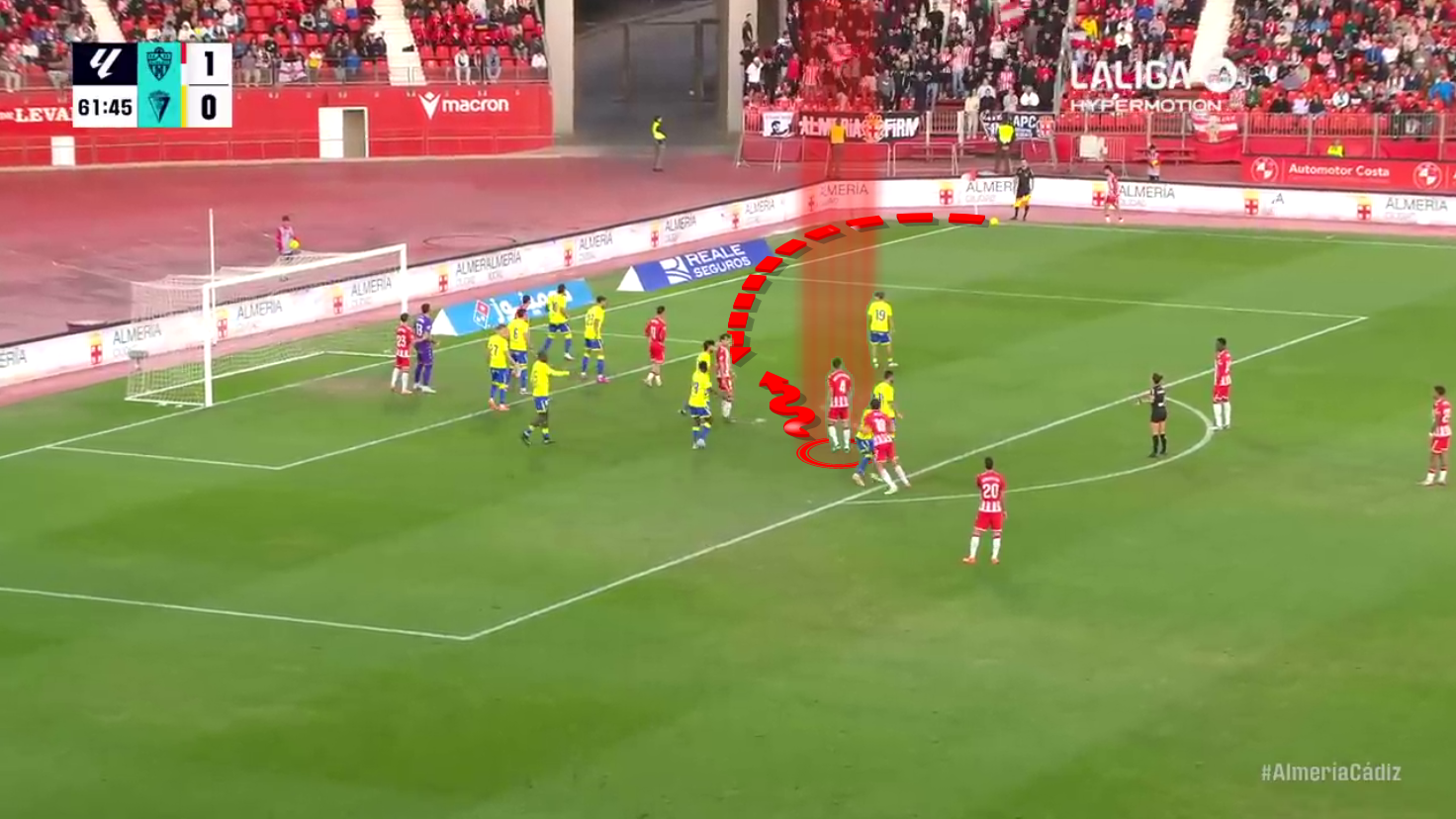
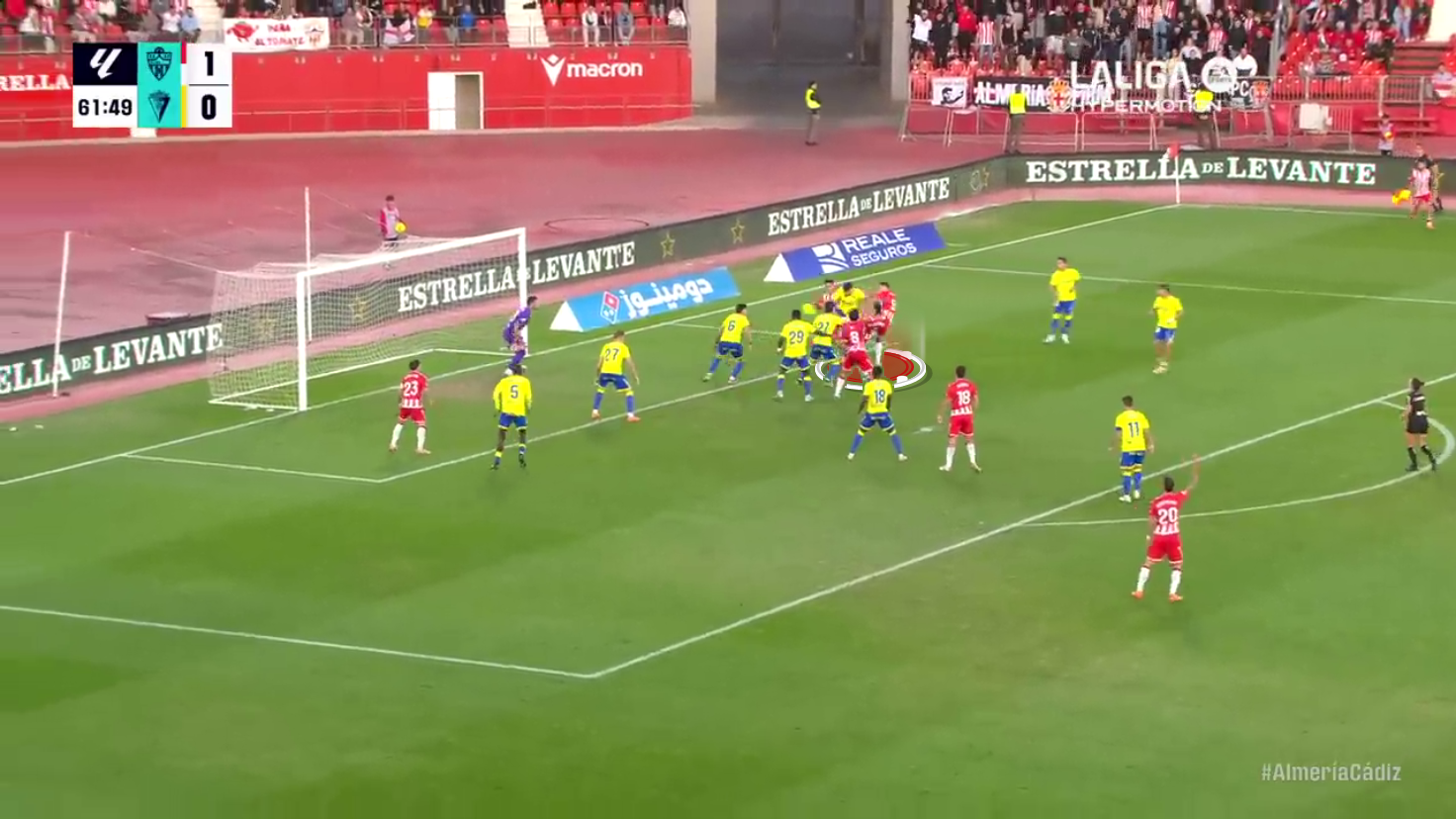 The penalty stemmed from a well-structured corner against Cádiz, where Almería overloaded the central zone to pin defenders inside the six-yard box.
The initial delivery forced a defensive clearance under pressure, and the resulting second ball dropped into a destabilised backline, leading to a late challenge inside the area and the subsequent penalty decision.
Conclusion
To put it concisely and deliver the message clearly, Almería’s corner kick approach in the 2025/2026 La Liga 2 season highlights how set-pieces can become a consistent source of attacking threat.
Sides that establish clear structural principles, define individual responsibilities, and introduce tactical variation from set-pieces can transform these moments into a sustainable source of goals, accumulating the points necessary to sustain a promotion push across the entire season.
Through coordinated movement, varied deliveries, and strong second-ball organisation, Rubi’s Almería repeatedly unsettles opposition defences through their set-piece tactics.
Rather than relying on complex routines, Almería applies a small number of clear principles in several different ways, which is a welcome reminder that clarity and execution often outweigh complexity in football tactics.
In a competition as closely contested as Spain’s second-tier, with a mega prize for those who successfully navigate the league, Almería’s claim to the set-piece throne could prove valuable in their promotion efforts.
