
Over the past two weeks, Indonesia has been in the global news spotlight for a number of reasons.
Firstly, the country’s democracy is under real threat after the government passed a controversial law that could strengthen the role of the military, sparking protests across the country.
Meanwhile, they are also in the football spotlight as this international break marks the debut of their national team coach, Patrick Kluivert.
Yes, that one.
Kluivert is famous as a player, having achieved legendary status with the Netherlands national team and various clubs, including Ajax and Barcelona.
However, his record as a manager is far from impressive—he failed with the Curacao national team and in Turkey with Adana Demirspor.
So when the Indonesian Football Association offered him the job in December last year, Kluivert was automatically given another chance to prove he could be a decent manager.
Managing Indonesia is no easy task, however, and it never has been.
Firstly, he had to replace the famous Shin Tae-yong, who had led the team for the last five years and successfully qualified them for the Asian Cup for the first time in more than a decade.
They have also qualified for the third round of World Cup qualifying, where they still have a chance of qualifying for the finals for the first time since becoming an independent nation.
Second, because the expectations are high, the federation chose Kluivert because they seem to believe that he can bring a style of football that will suit the team.
He is also familiar with the Dutch, as most of the players speak Dutch.
In this context, it is important to understand that the Indonesian National Team now contains many “Diaspora Players“—players who have Indonesian blood from their relatives even though they were not born or grew up in the country.
Only two players from their last starting XI, for example, didn‘t start their football careers through the club or academy in the Netherlands.
There are expectations that Kluivert can bring the possession-based, attacking, and attractive football that can be seen as the Dutch identity to the Indonesian National Team.
The last international break finally revealed what he can bring to the team.
Indonesia Vs Australia: Front-Foot Approach Turned Into A Nightmare
Kluivert was determined to make an instant impact on his debut.
Whereas under Tae-yong, Indonesia tended to play a more back-foot game, he tried to get them going from the word go.
In the away game against Australia, he had his team press the Australians high and intensely with man-to-man marking all over the pitch.
This is unusual for Indonesia, which is more used to playing deep in a mid or low block.
Indonesia really tried to disrupt Australia’s build-up, or more specifically, to force Australia’s build-up to the right side, as Kluivert mentioned in his post-match press conference.
They tried to prevent Australia from attacking from the left and also seemed to be hoping that Australia would play the long ball, making it easier for them to lose possession.
Reality didn’t work out as planned, however.
Australia were able to evade Indonesia’s pressing, often moving the ball from side to side with short passes.
When Indonesia tried to trap them in a wide position (which made it easier to lose the ball), Australia escaped by sending the ball diagonally inside.
Australia’s second and third goals came from exactly this scenario: They escaped Indonesia’s man-marking, played the ball in from the right, won the challenge against the Indonesian midfielder, pushed the Indonesian back line deeper and attacked or shot from a comfortable position.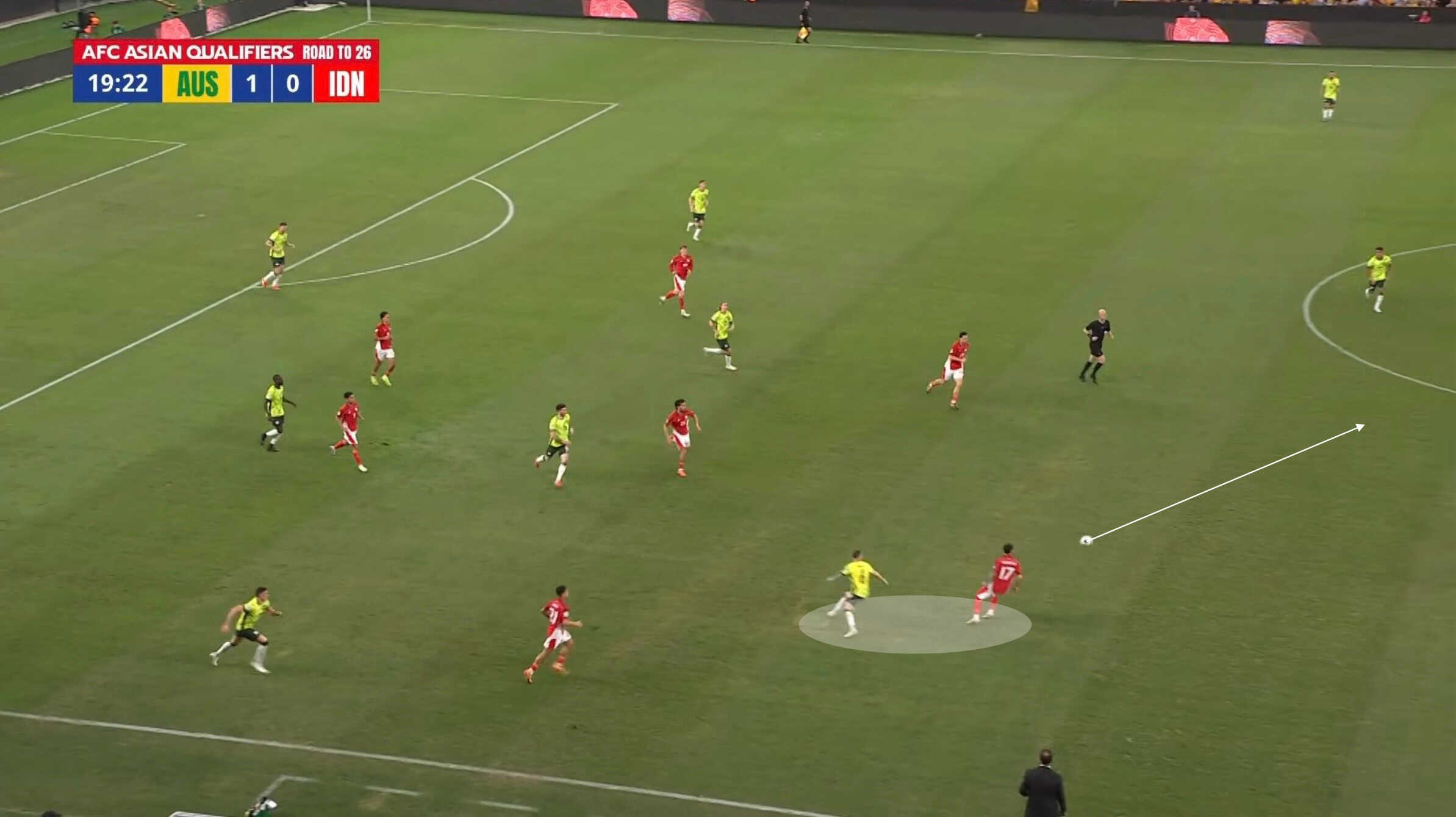
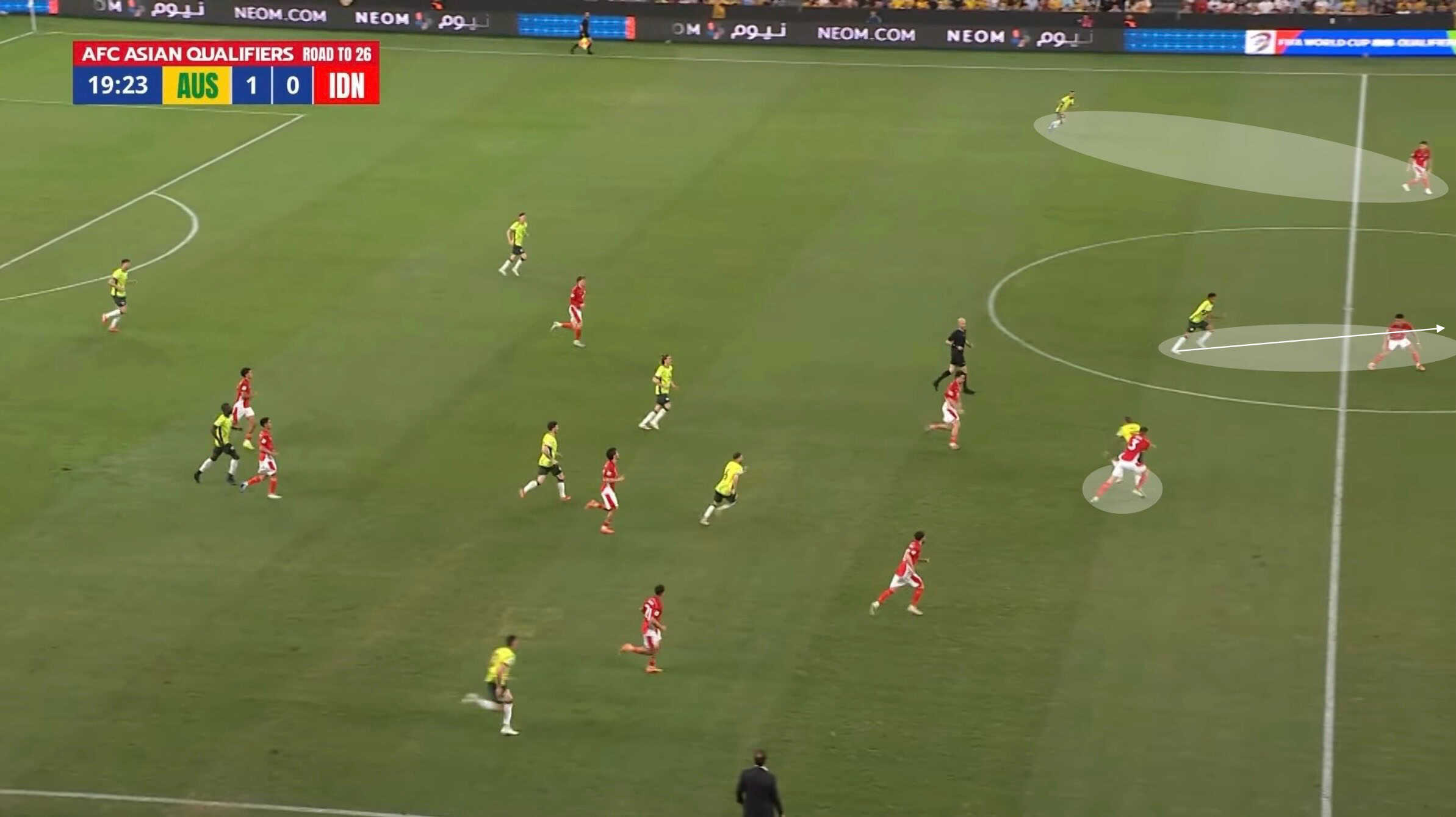
In short, Kluivert’s defensive strategy didn’t work against Australia.
The players didn’t seem ready to play on the front foot.
They were sometimes too far away from the markers when pressing, too sloppy in duels, and failed to regroup to form a solid defensive block once the press was broken.
Offensively, Kluivert got his team to be more in control of possession.
They tried to control the ball more, take the initiative, and attack Australia with a 3-2-5 or 3-4-3 structure in possession.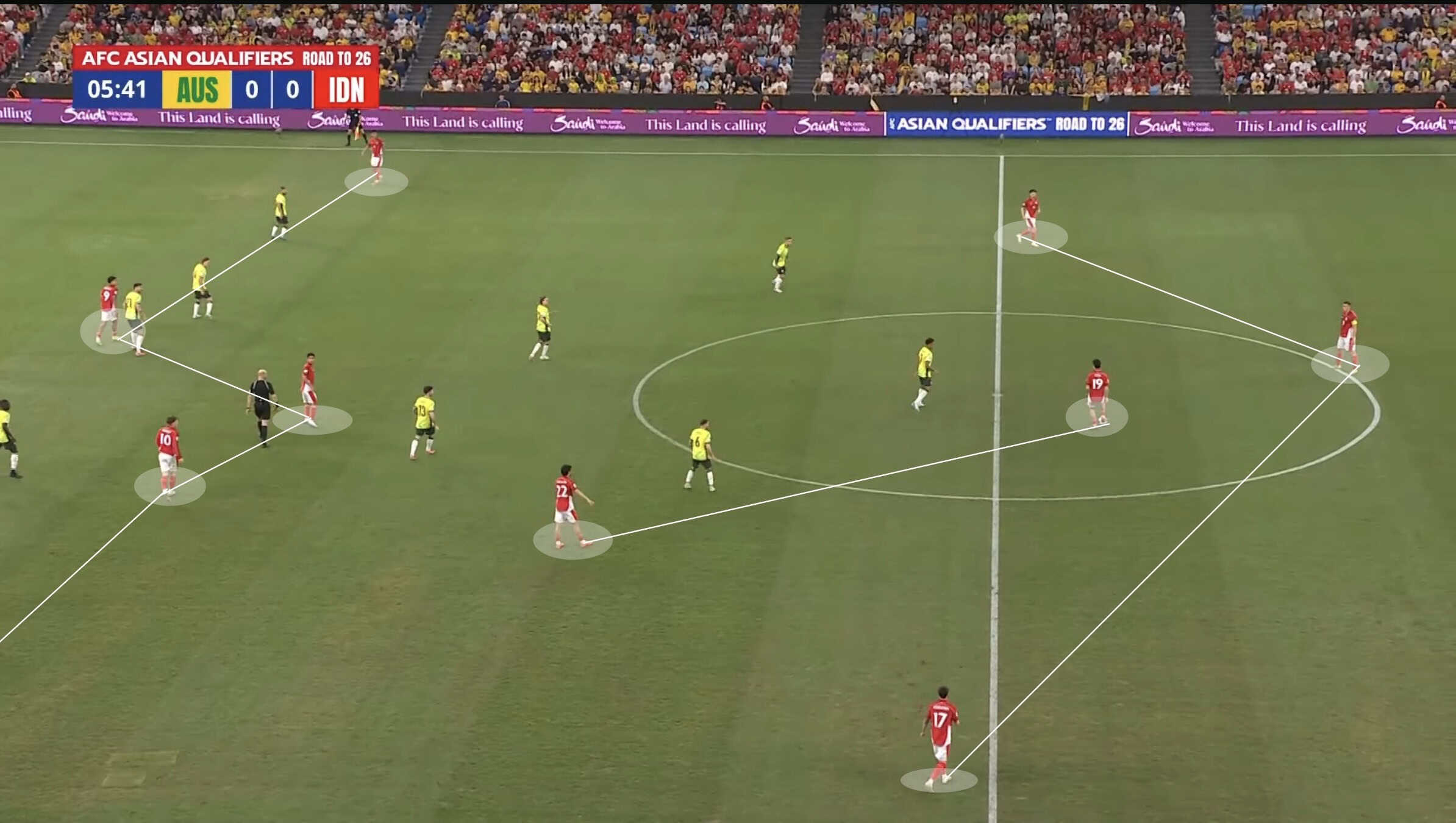
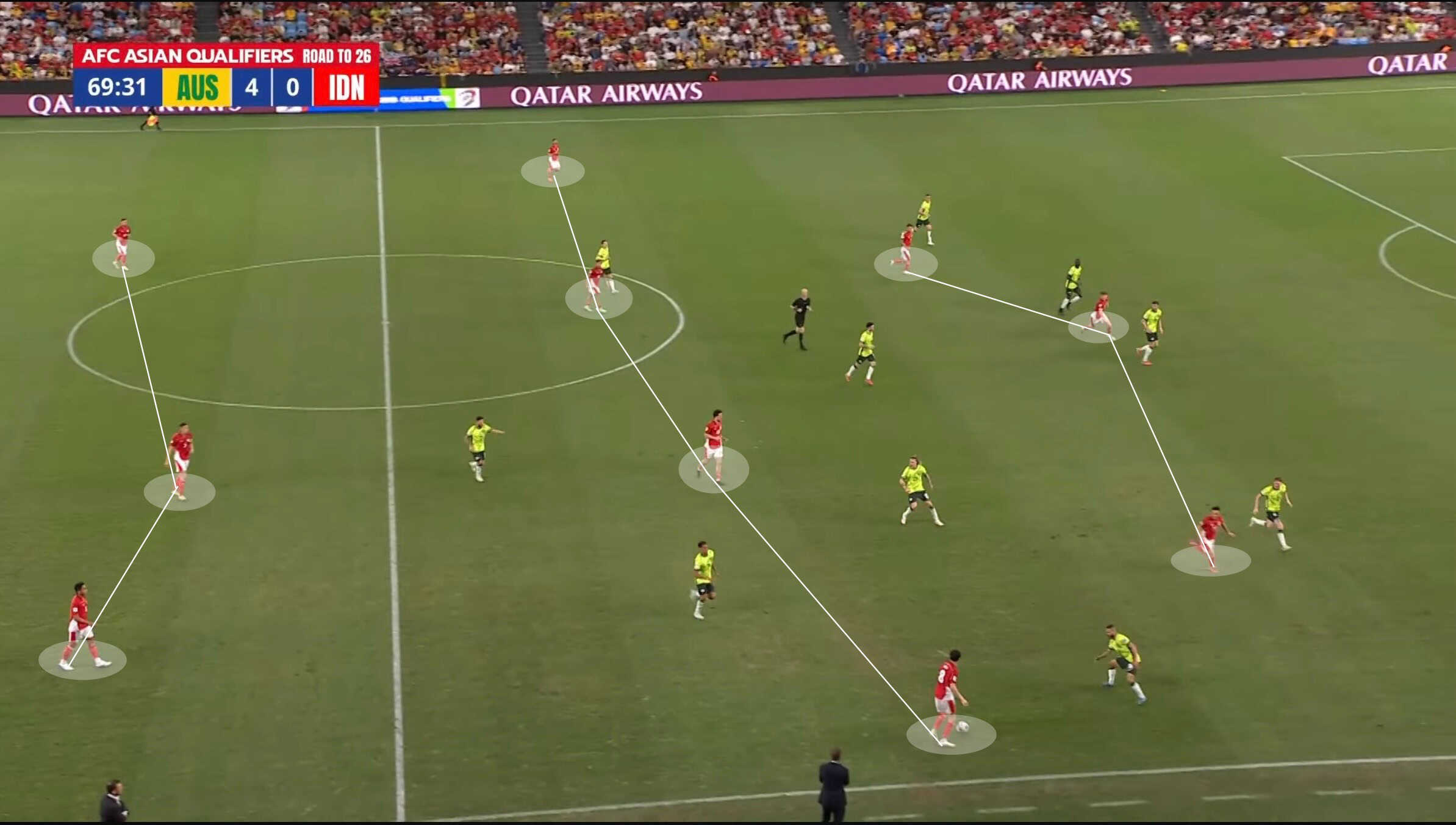
A structure that can give them the potential to attack with different variations, at least that is what happened during the game against Australia.
Firstly, the 3-2-5 structure allowed them to eliminate the numerical disadvantage in front (or in the final third).
Australia also used five men up front and five behind when they were out of possession.
So when Indonesia successfully baited Australia’s five-man front line to move forward or press, it created a 5-on-5 situation in the final third, and Indonesia were able to send direct balls into attack.
And that is exactly what happened when they were awarded the early penalty.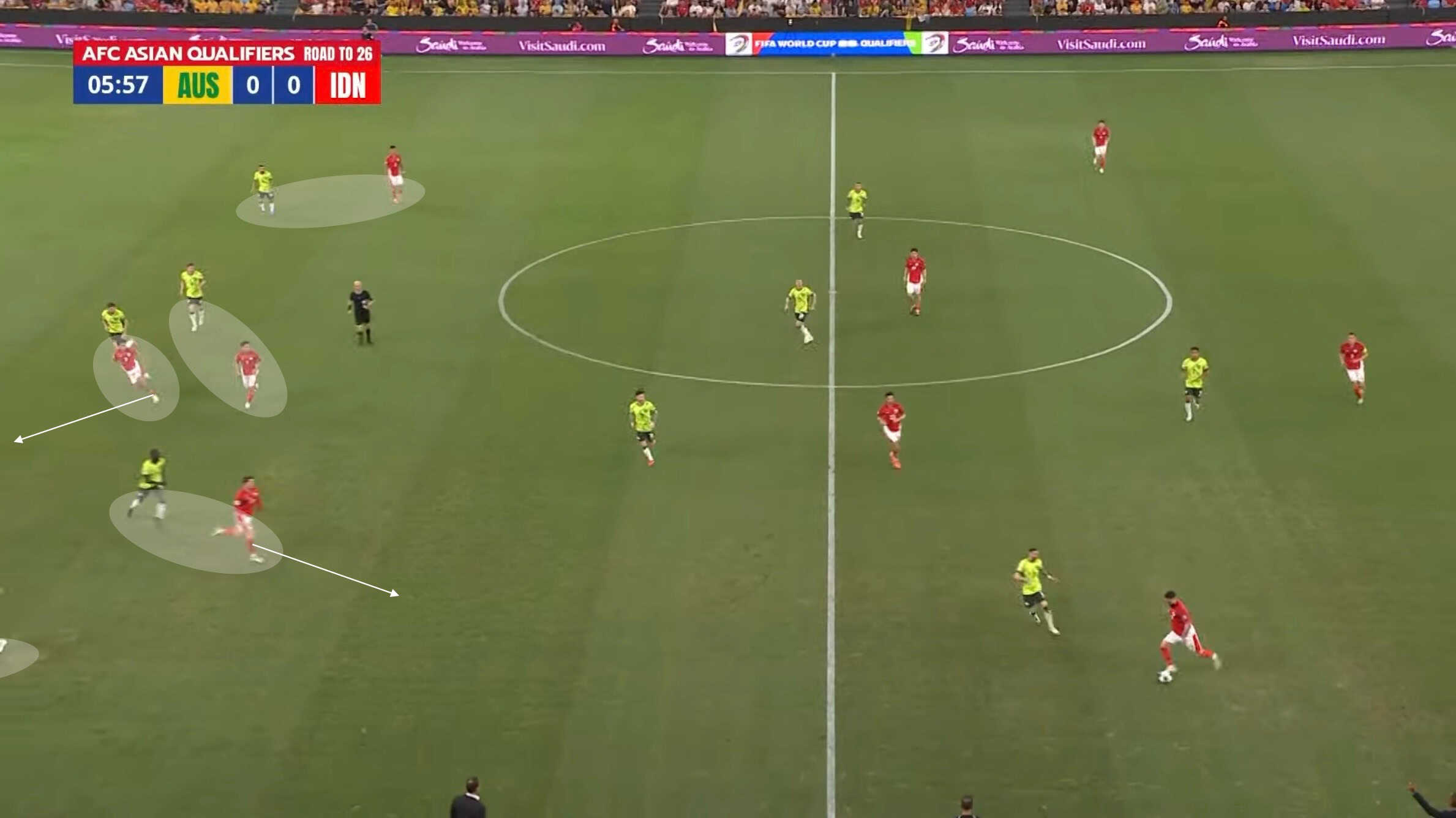
Secondly, the 3-2-5 or 3-4-3 structure allowed Indonesia to move the ball around in the wide areas.
They started the sequence by getting the ball to their wide centre-back, who then played it wide to the wing-back.
From the wide area, the wing-back played a diagonal pass inside to the attacking midfielder, who played the ball back into the space behind Australia’s defensive line for the striker and wing-back to run into.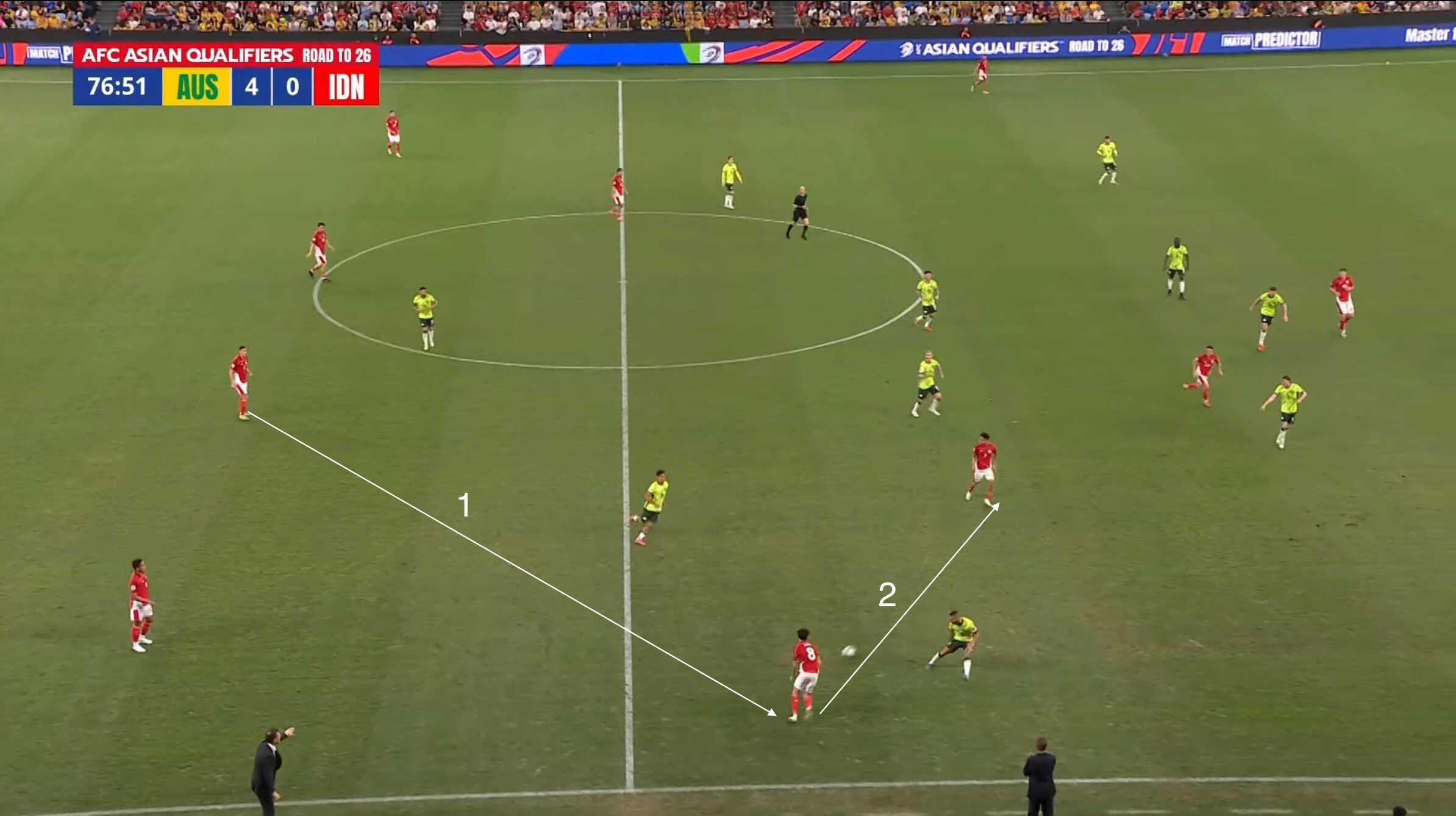
It was exactly this scenario that led to Indonesia’s goal, with Ole Romeny scoring after running into space behind Australia’s defensive line with the ball from wing-back Kevin Diks.
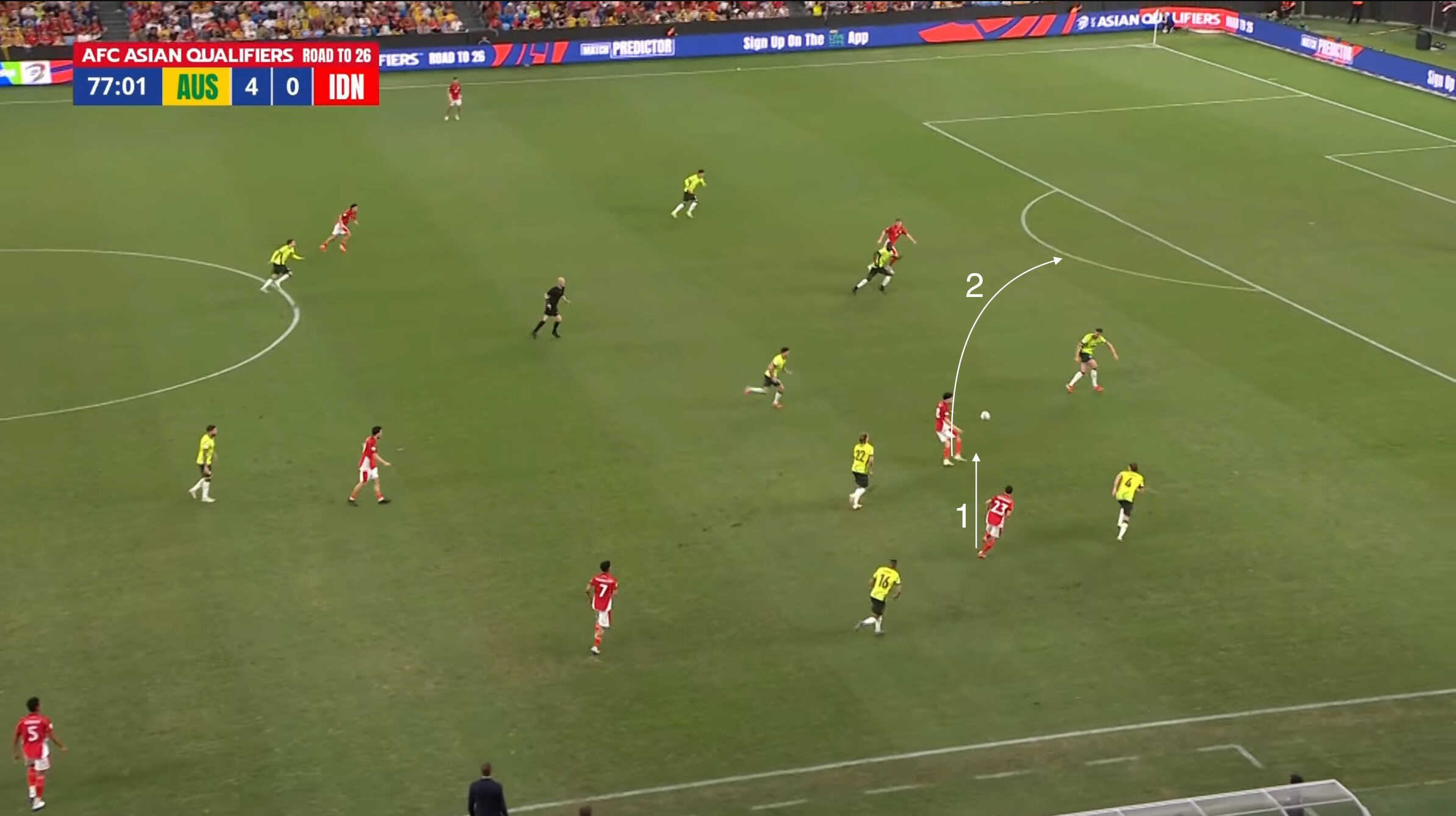
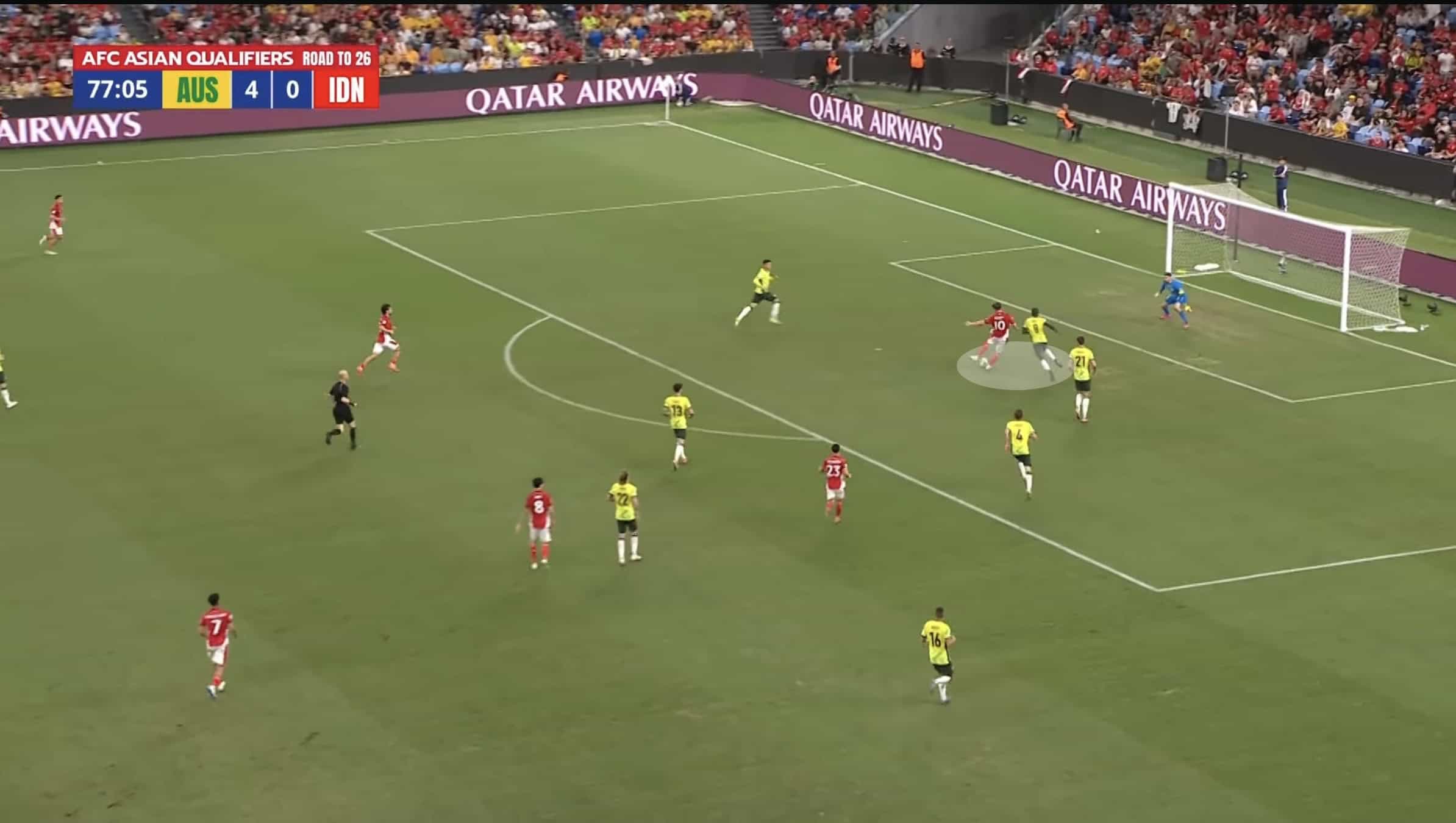 From the first game, Kluivert also has some interesting touches; his team is smarter in terms of the third-man run, as they always try to run into space.
Also, the direct ball that they send is not only sporadic but targeted at the situation where they have a 5 vs 5 situation upfront.
However, the result against Australia, which ended with Indonesia losing 5-1, showed that Kluivert’s approach to front-foot play had gone awry, especially as he hadn’t really had time to prepare the team for the new style he wanted to implement.
Indonesia Vs Bahrain: Back To The Foundation
Lessons were learned, and for the second game against Bahrain, Kluivert changed his approach.
Firstly, his Indonesia didn’t press high and intensely.
They were patient and focused on defending as a unit with a mid-block rather than jumping up to press the opposition in a man-to-man approach.
That’s why, instead of defending in a 4-6, they played a 5-4-1 or 5-3-2 structure out-of-possession for most of the match.
With this decision, Indonesia successfully neutralised Bahrain’s attack.
In the final third, Bahrain rarely threatened as they were outnumbered by Indonesia’s players.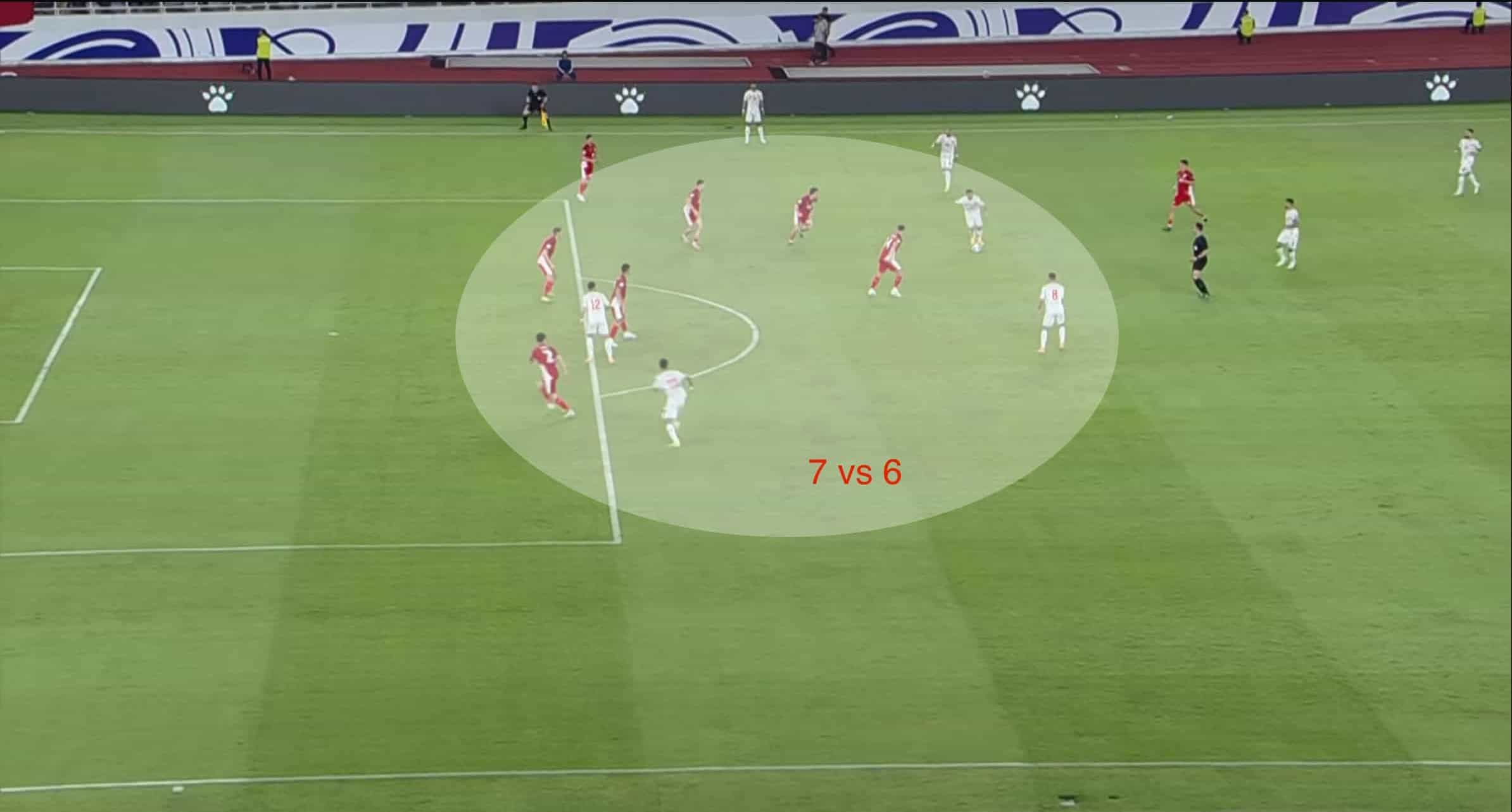
This was not only because of the way Indonesia defended but also because of a miscalculation by Bahrain, which always wanted to have more players in the build-up rather than increase the target up front.
That approach indeed sounds like a bad idea.
Most of the time, Indonesia didn’t try to press or disrupt Bahrain’s build-up, so there’s no reason why Bahrain should always have a lot of players in the back.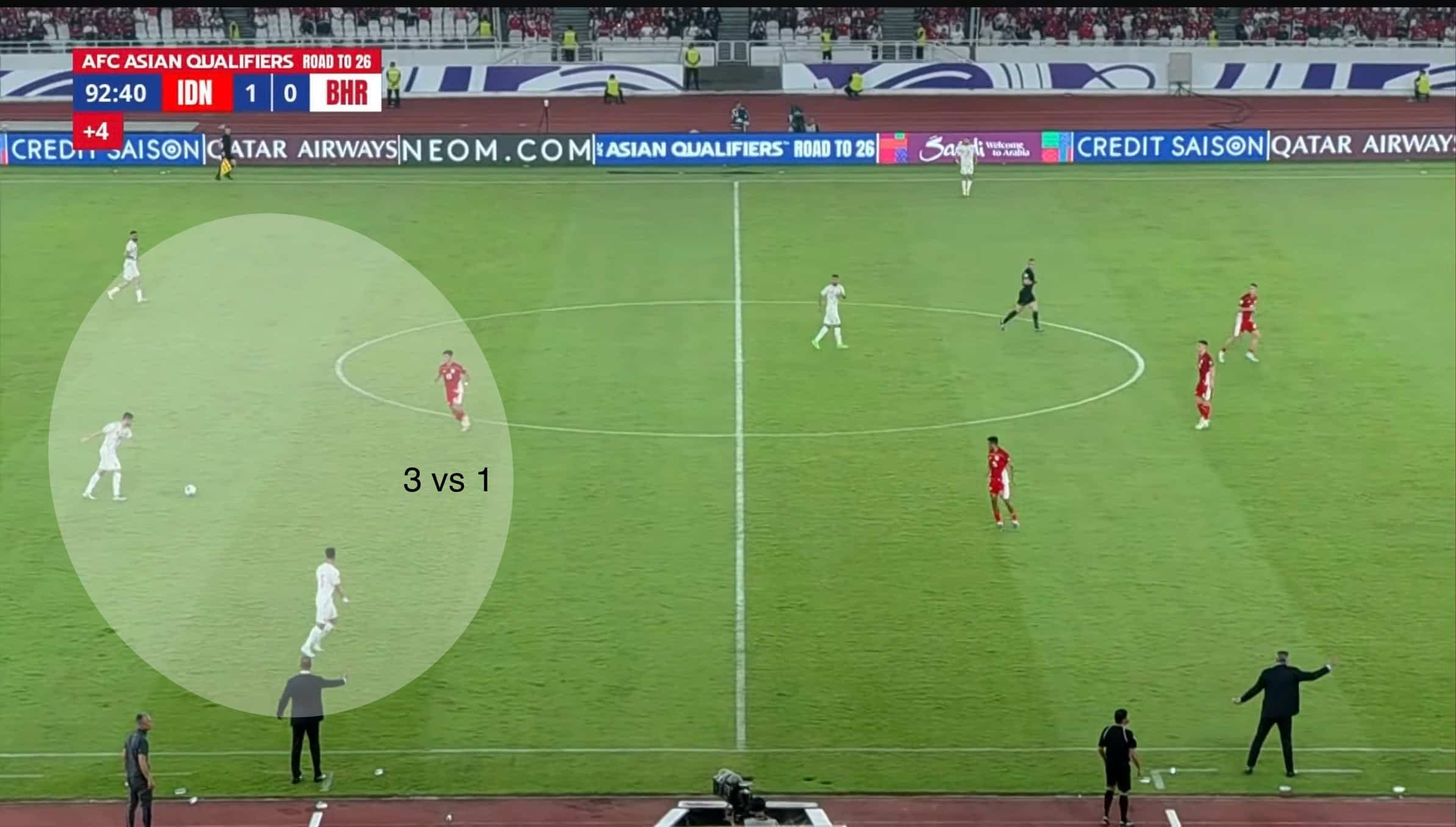
Their approach has also made it easier for Indonesia to defend.
Their defenders can jump comfortably to press the Bahrain players who have received the ball, as they are outnumbered—Indonesia‘s spare man can cover the space left by the teammate who jumped to press the opponent.
In the first half, Bahrain managed just one shot, and it wasn’t even on target.
They shot the ball only seven times, and only one of those was on target.
Their xG was just 0.31.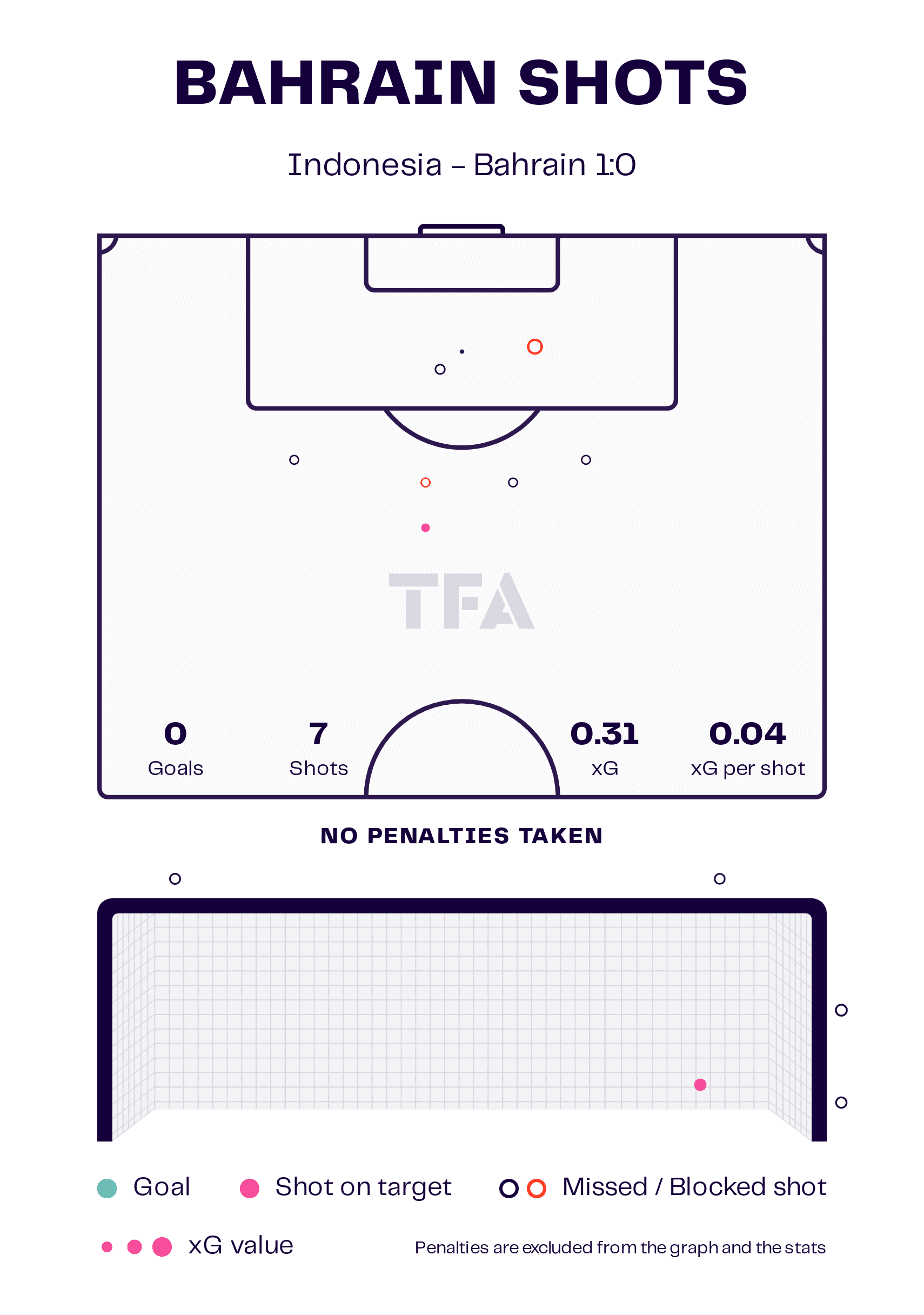
Defending deep and mostly waiting for the opposition to enter their zone rather than pressing high is what Indonesia has been built on under Shin Tae-Yong, and against Bahrain, they showed once again that they know how to make this approach work well.
On the attacking front, Kluivert has also changed his team’s approach.
They reduced the number of possessions, played more directly and made the most of transition moments.
Indonesia knew that if Bahrain took the initiative in the build-up, the defensive line would move forward to create space behind them.
Indonesia made the most of this and, as mentioned earlier, were the better team when it came to using a third man.
Ole Romeny’s only goal of the match is a perfect example.
Indonesia won the ball in their own half, breaking up Bahrain’s attack.
And with more players at the back, they found it easy to organise attacks and launch quick counters.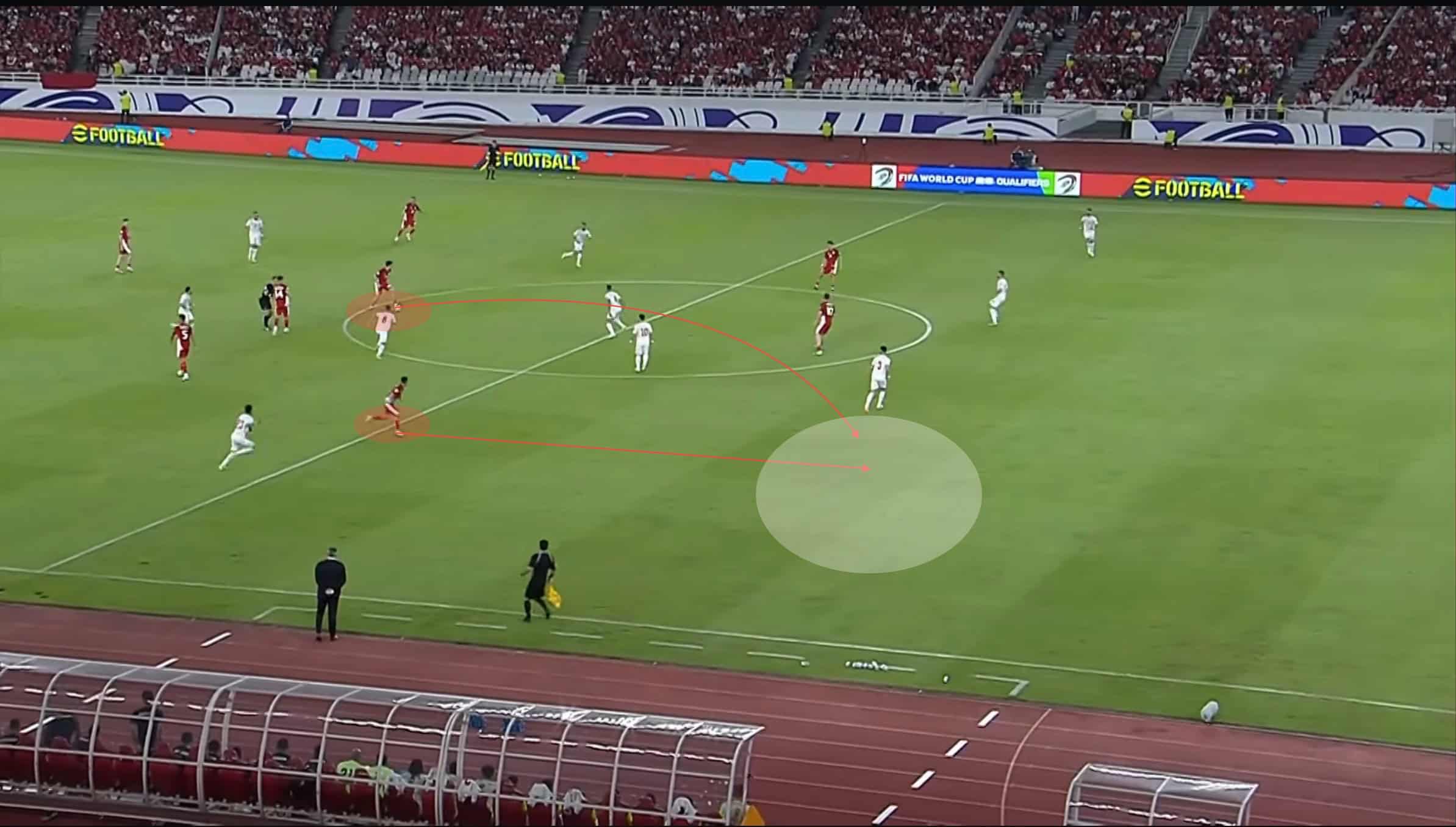
Tom Haye, their deep-lying playmaker, kicked off the counterattack with a long ball to Marselino Ferdinan, who made a smart run into the space behind the Bahrain backline.
Marselino then collected the ball and sent a low cross to Romeny, who finished effectively.
After the goal, Indonesia had two more chances as they continued to exploit the space behind the Bahrain defence, one from Ferdinan and the other from Eliano Reijnders.
Both were taken inside the Bahrain penalty area.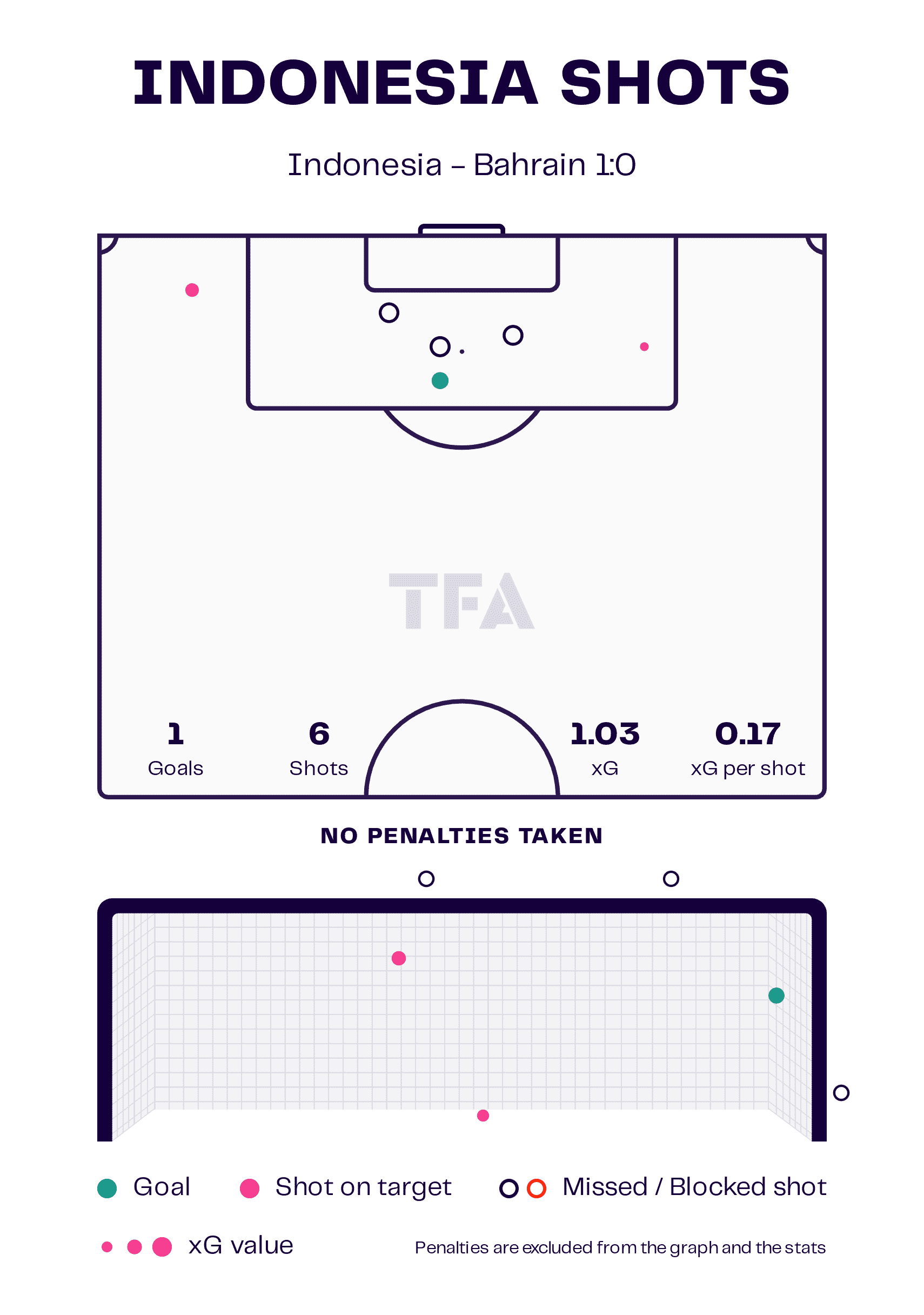
None of these chances resulted in goals, but it was another sign of the improvement the team has made under Kluivert tactics and his coaching staff.
Indonesia have long had a base of attacking through transition or on the counter, but this international break has shown that they have become more astute in their movement off the ball, understanding how and when to exploit space or run into it.
Conclusion
Indonesia still have a chance of qualifying for the 2026 World Cup.
Their chances of qualifying directly from the third round (by finishing in the top two of their group) may be slim, as they are four points behind Australia with only two games left and have to play Japan away from home.
However, they still have a chance to keep their hopes alive in the fourth round of qualifying, where they’ll most likely face a team that’s in the “beatable” bracket.
Saudi Arabia, for example, who are currently above them in the standings, were beaten at home and Indonesia picked up a point on the road.
But if they are to realise their dream, Indonesia and Patrick Kluivert must be realistic and learn from their mistakes during the last international break.
Kluivert and his coaching team may have ambitions to make Indonesia play comfortably with their idea, as may the federation that appointed Kluivert in the first place.
Many of the players may also be playing more possession or attacking football for their clubs.
But the game against Australia, and the understandable lack of time to adapt to the new style, shows that it may be wiser for them to stick to what they’ve been built on for many years.
It is better for them to be an inferior team in possession, more patient in defence, but sharp on the counter or in transition.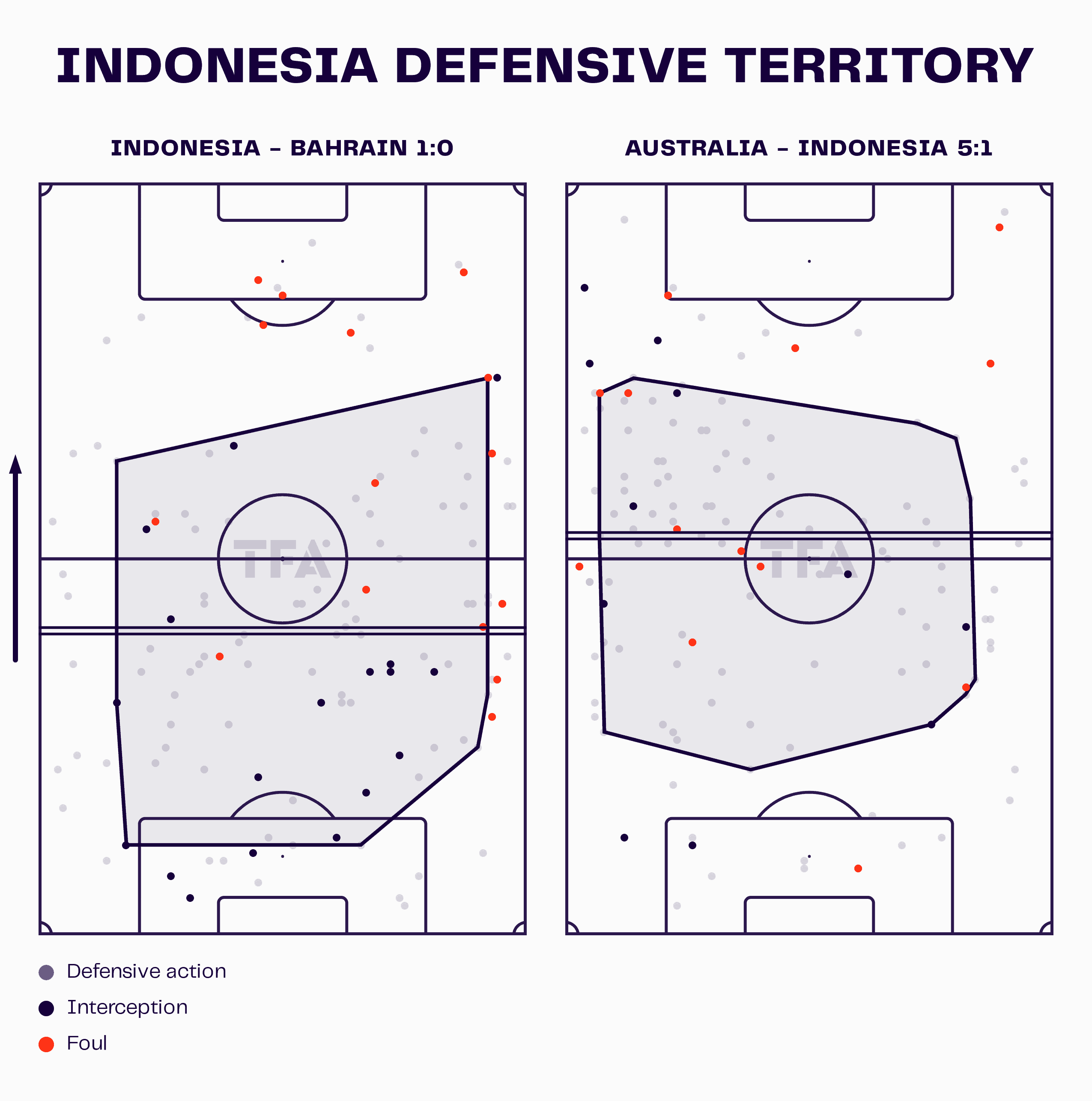
So rather than trying to completely change their approach or style of play, Kluivert may be looking to tweak what is already there, trying to make the foundation better.
He has shown he can do that with his off-the-ball movement, which worked well against Bahrain.
Indonesia still have some homework to do, such as being more comfortable and accurate in the build-up, more effective with the direct long ball and more intelligent defensively in duels and set-pieces.
If Kluivert concentrates on those things, they have a real chance of making history—and his name could be remembered more than his predecessor’s.
