
In League Two this season, the top seven features six sides that predominantly play a five-at-the-back formation.
Doncaster Rovers are the only exception; however, they have also switched to this system for certain games.
For comparison, in League One only three of the playoff sides play this shape, two of which are teams promoted from League Two last season.
None of the top six in either the Championship or the Premier League do.
So why is this?
This article will look at the features of a back five, the benefits and drawbacks, and why League Two, in particular, is so clearly suited to this shape.
The Back Five Explained
Firstly, a back-five system typically uses three central defenders with two wing-backs.
The two main variations then involve either three central midfielders setting up in front with two central forwards (5-3-2) or two central midfielders in front, with one centre forward and two wide players playing off him (5-2-3).
In this year’s League Two, only Bradford adopt the latter system mentioned, typically playing just one striker in either Andy Cook or Callum Kavanagh.
Unlike a traditional back four, a back five tends to shift into a three during transition into possession.
Like we have previously seen with Antonio Conte‘s Inter or Thomas Tuchel‘s Chelsea, wing-backs can press high and wide and become wide midfielders in possession.
The system tends to heavily involve wing-backs, which has led to defenders such as Reece James and Achraf Hakimi putting up goal-contribution numbers typically seen only by wingers in recent years.
Benefits

The first benefit of this system is also the most obvious: Defensive stability.
Playing with five defenders and three central midfielders sets an extremely solid foundation to the side, and forms a core that is very difficult to infiltrate.
Hence, when teams defend a lead late in a game, bringing on an extra centre-back and shifting to a five at the back is a common occurrence.
In particular, this shape is extremely effective in a low block.
The formation builds a very congested central area of the pitch, essentially having eight players to bypass for the opposition before any opportunities are created.
This forces the opposition wide, as only the wing-backs alone navigate the flanks of the pitch, where a winger would usually be present in a four-at-the-back formation.
However, the wingers’ usual crossing outlet becomes much more challenging due to the three central defenders present.
Having the extra central defenders usually means increased aerial domination, and they also overload the box, making less space for attackers’ runs.
Goalkeepers should benefit from this, as they have increased protection in the air from their backline.
As mentioned, Tuchel’s Chelsea adopted this system in 2020 and conceded just four goals in their 13 games, leading to the UEFA Champions League final.
Inter also used a back-five in 2023 and conceded just once in their seven knockout games.
Another benefit is fluidity, allowing a team to transition into a counterattack rapidly.
A 5-3-2 can easily shift into a 3-4-1-2, with wing-backs pushing forward.
This quick shift can help push up the pitch quickly, catching the opposition off guard and out of shape.
Weaknesses
Conversely, this setup can have its limitations in attack and can reduce the ability to create opportunities.
Having five defenders automatically means one less forward player, meaning it’s much easier for the opposition defence to overload the attack.
This makes it more challenging to find space, as the defence can man-mark and still have a man spare.
It relies heavily on midfielders and wing-backs pushing on to join the attack in support, which can be challenging and puts a lot of pressure on individuals.
Furthermore, these players pushing on are traditionally deeper players and lack the skillsets of natural attacking players.
Full-backs and central midfielders will usually be less effective at creating chances or scoring goals than wingers, so replicating their creativity will always be challenging and require tactical innovation.
Another weakness is the reliance upon wing-backs to push forward.
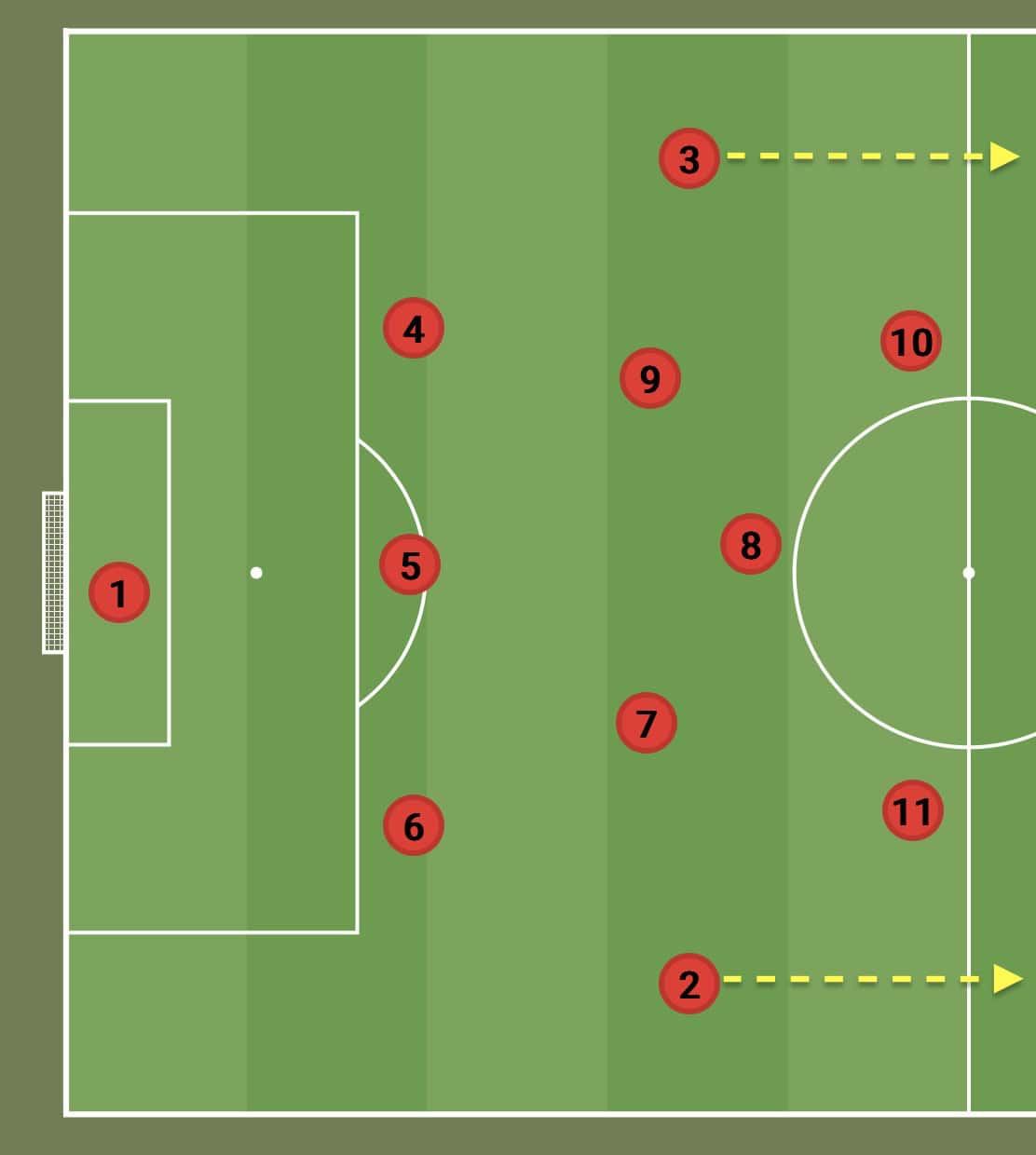
This can leave teams highly susceptible to counterattacks, as without them, the defensive shape has very little width, and the wings are very open.
Looking at the image below, there is a clear space behind ‘3’ and ‘2’ that could be exploited on the counterattack.
Important Roles
In this setup, arguably the most important position is the wing-backs.
The 5-3-2 typically becomes a 3-5-2 or a 3-4-1-2 in possession, meaning the wing-backs are relied upon to be both full-backs in defence and wide midfielders in the attack.
This is both mentally and physically demanding, as it requires lots of running but also concentration.
It also requires a very flexible skillset; if they cannot create from wide, then the team becomes very limited and easy to defend against.
The use of the wing-backs as creative outlets in the system are shown in league two, as six of the top ten assisters are wing-backs off the ball (Jackson, Hume, Nemane, Barrett, Tilley & Patterson).
The top seven goalscorers are also quite traditional central strikers (Jatta, Stevens, Cheek, Lowe, McGoldrick, Smith, Cook & Matt) who benefit from the crosses they put in.
The central midfielders are also key, as they again have the role of helping in defence and attack.
Whilst the defensive three and attacking two can focus on their individual roles, the whole midfield unit (including full-backs) have a huge responsibility to support with both.
The centre midfielders must ensure they make runs off the strikers and offer movement in attack.
Otherwise, the team can be too easy to mark and pose limited threat.
Direct Style Of Play
Because of these systematic traits, a back five typically lends itself to a particular style of play: Direct.
Looking to be fluid and possession-based in this formation can be difficult and leave openings, which counteracts the main benefits of using the system anyway.
Therefore, as seen in this division, teams usually look to play direct into the final third.
There are typically two clear routes to creating goalscoring opportunities in this system:
- Direct central balls, asking the forwards to hold up possession and wait for runners from centre midfield to lay off to.
- Wide balls into the channels, where the wing-backs push on and look to get crosses into the box.
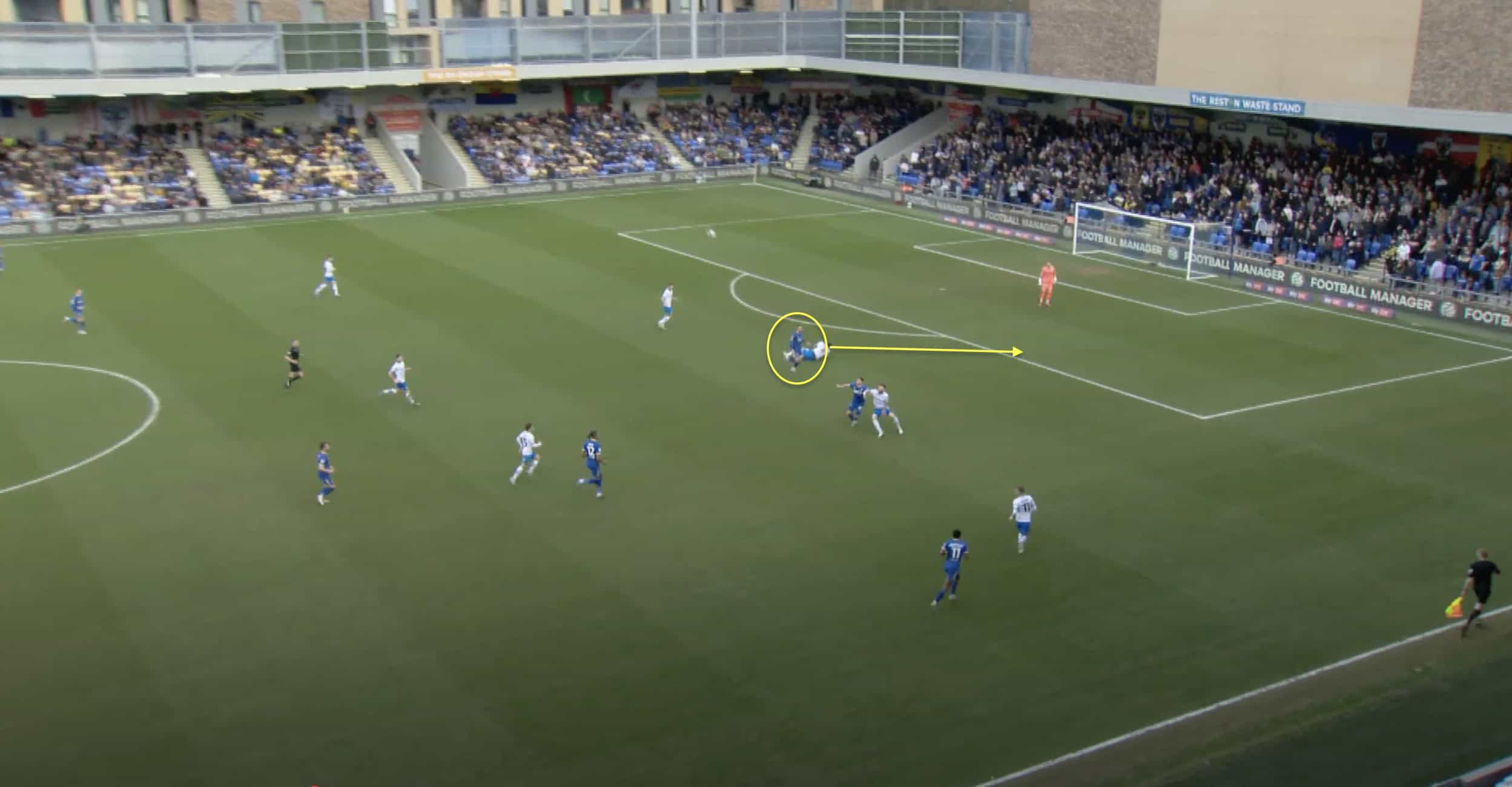
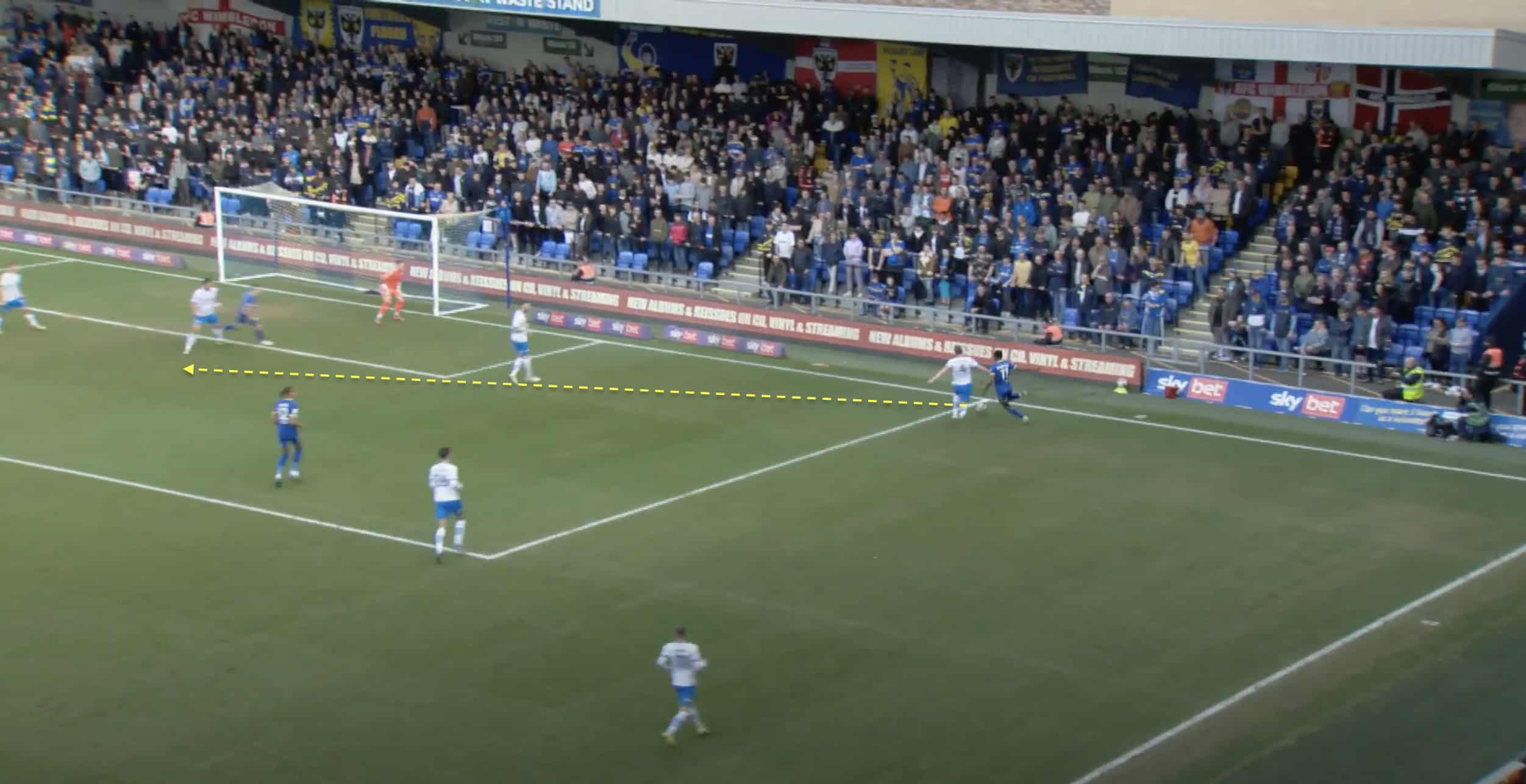
In their recent game against Barrow, Wimbledon showed these routes perfectly, scoring one goal from each route mentioned above.
Option 2) involves more build-up and reduces turnovers to the opposition.
However, 1) can also be very effective if the strikers are capable as target men.
League Two
Compared to the higher English Divisions, how does League Two compare stylistically, that may encourage the use of five at the back?
When comparing previous season’s statistics, League Two is much faster and more direct than the leagues higher up the English pyramid.
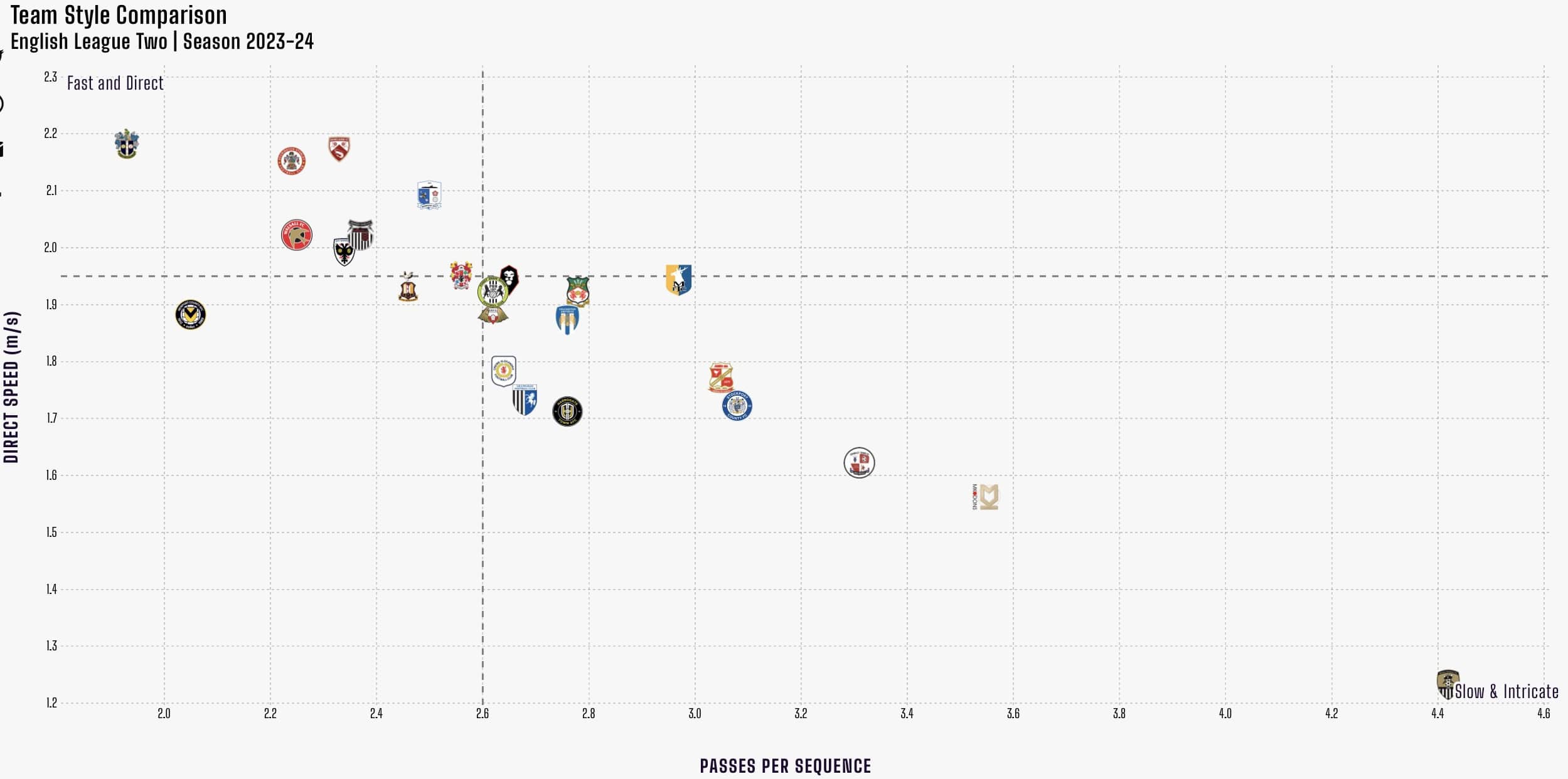
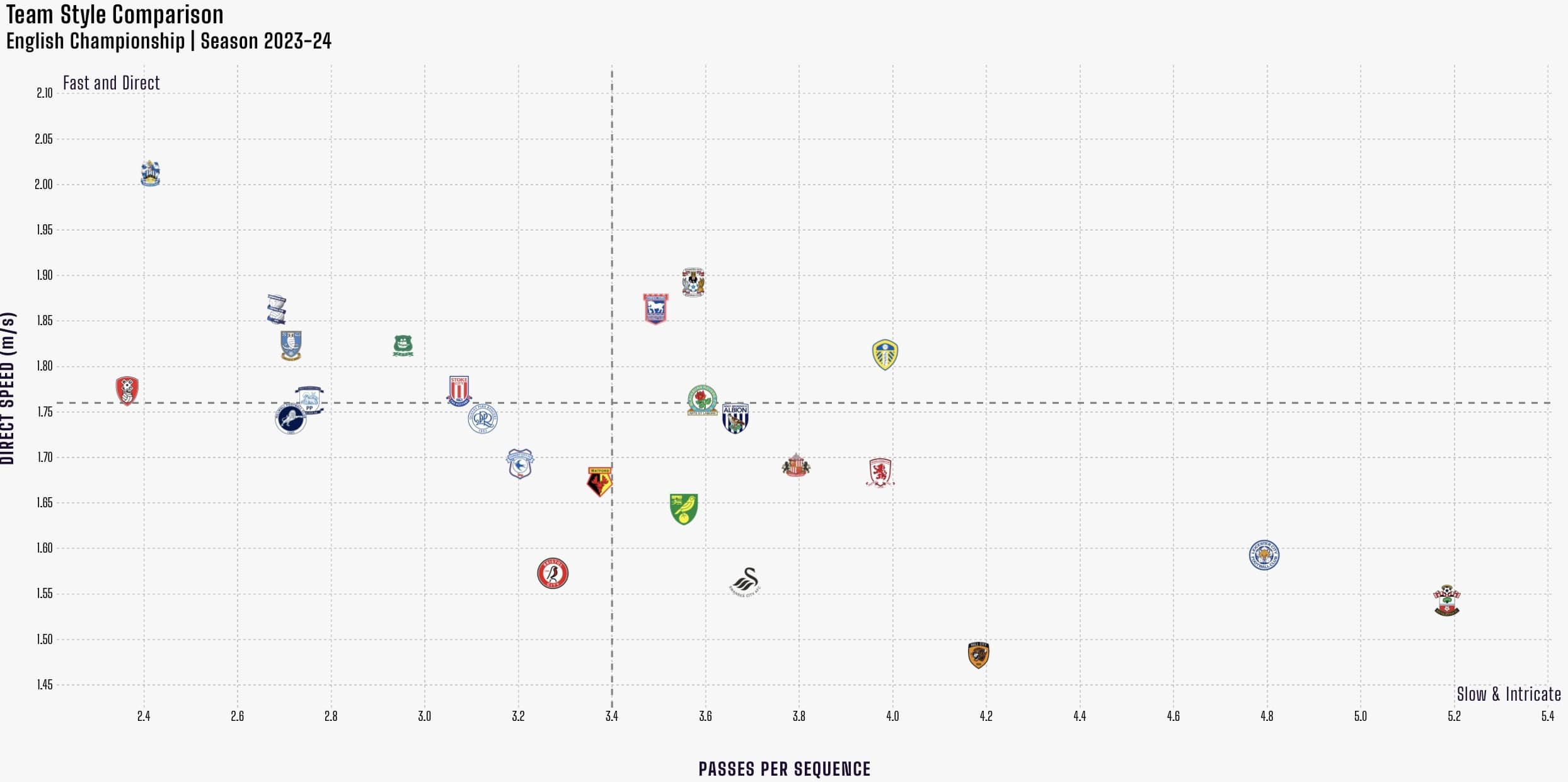
Looking specifically at last year in comparison, League Two sides are, on average, much more direct in their build-up play and play fewer passes per sequence, ultimately taking less time to transition the ball to the attack.
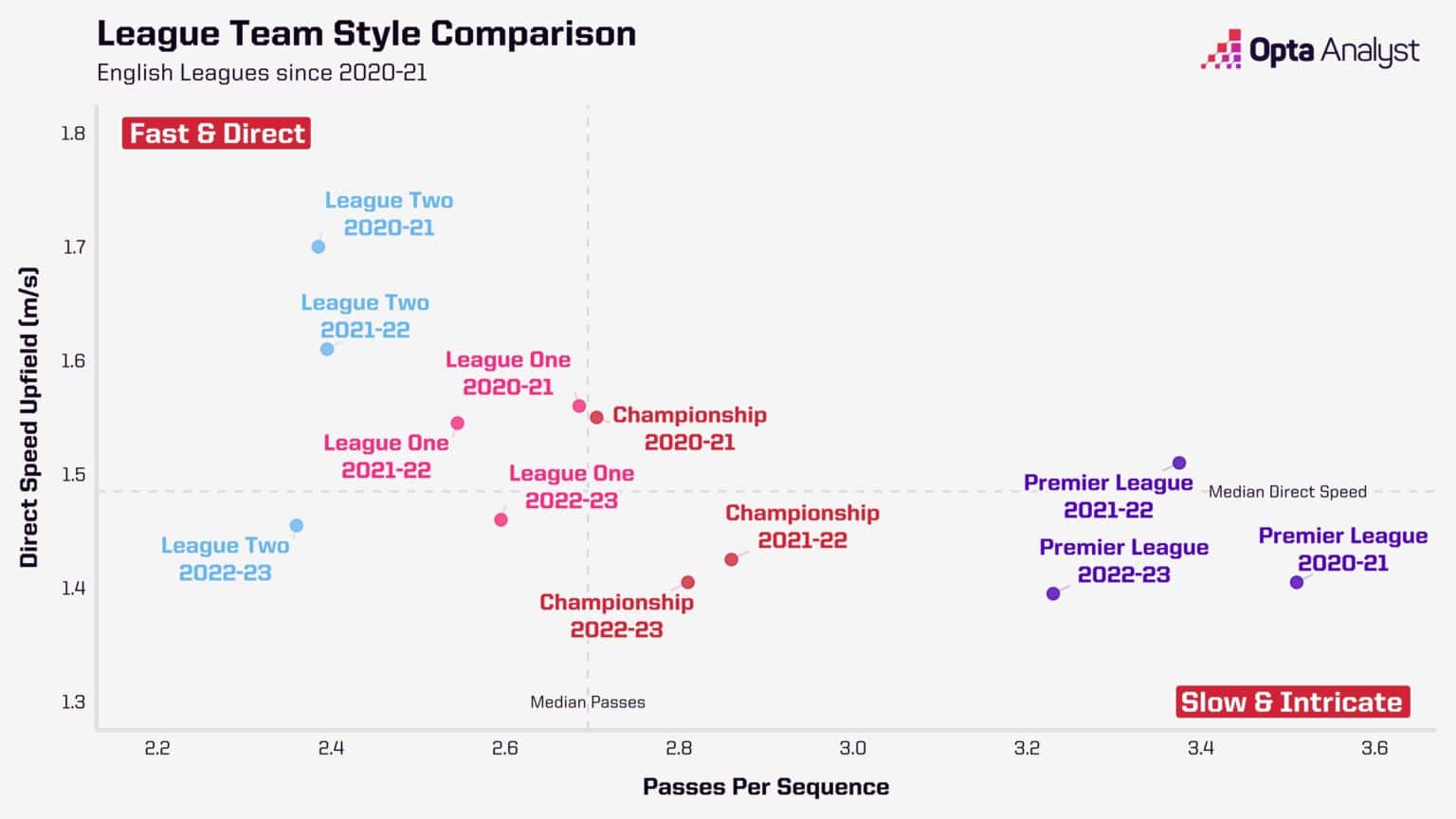
A direct division strongly suggests the teams that will thrive will be those capable of dealing with long balls and quick turnovers, whilst being able to hit quickly themselves.
These traits are key benefits of a 5-3-2.
Reasons For The Direct Play
There are numerous factors that could determine this more direct, fast style of play.
Firstly, the state of the leagues pitches in comparison.
Whilst technology is improving, the standard of the grass is much higher in the Championship and Premier League, which enables teams to play shorter, more intricate passes through the thirds.
A risky pass in the defensive third is a lot higher risk at Tranmere Rovers away than at Tottenham Hotspur‘s new stadium, with a retractable pitch and dividing technology.
Playing long takes out the chance of bobbles or bad bounces.
Secondly, the players’ technical levels are lower down the pyramid.
Whilst there are still clearly exceptional footballers, the overall level is reduced.
A direct style of football introduces more elements of athleticism and physicality, which definitely suits a lot of the league’s two profiles.
Stats also show fewer goals are scored at League Two than at higher levels, with strikers having a lower conversion rate.
Last season, the Premier League averaged 3.28 goals per game, whereas League Two averaged 2.98.
Lower-scoring games tend to mean games are more regularly decided by one goal, and over the season, this is likely to benefit teams with better defences.
This suits a back five, which prioritises defensive stability.
How Are Teams Using It?
Out of the top seven, only Grimsby ranks low for crossed attempts this season.
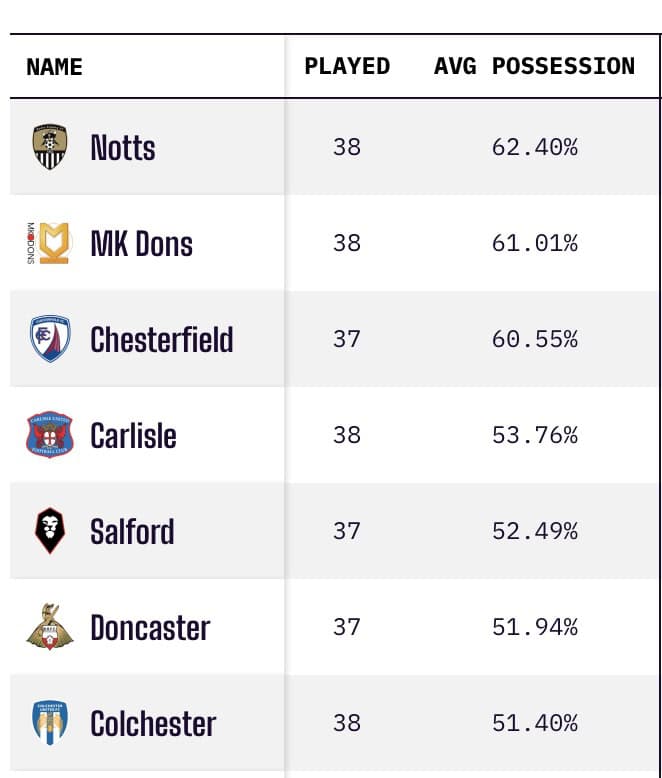
In comparison, only two of the top seven rank highly for possession in the league: County and Doncaster.
This shows the shift from a focus on possession-based football and suggests the best-performing teams this season are those who can transition quickly and get balls into the box.
This is a clear contrast from the Premier League, where we have become so used to the idea that ‘good’ football is possession-based.
This also explains why so many of the top creators in the league are wing-backs.
They are given so much attacking responsibility and are the primary outlet in transition into attack, essentially playing as wingers on the ball.
They are given the freedom to create and are not told to prioritise ball retention.
This is not a new trend either; last year, Wrexham were promoted comfortably and ranked second for crosses into the box.
Conclusion
I would be surprised to see a transition away from this shape, and I can see it being adopted even more readily in the future.
The system provides enhanced defensive solidity, allows more direct attacking play, and arguably suits the league much more than a 4-3-3.
The most popular formation in England is a 4-3-3, which encourages playing through the thirds.
This is challenging in a league with physical players and poorly kept pitches.
Whilst it may provoke a less attractive playing style, it is highly effective and clearly provides the results needed to get out of an extremely difficult league.
Wrexham and Stockport are shining examples of this, and they have also used the system to thrive in the league above.
