
Ligue 1 has no shortage of exciting attacking teams this season.
One such side is Lille OSC under Bruno Génésio, who have scored 23 goals in their first 12 league games of the campaign.
That tally is only good enough to place Lille as the fifth-highest goalscorers in Ligue 1 so far.
Meanwhile, Les Dogues have generated 22.93 xG this term, placing them third in this metric.
One of Génésio’s key attackers has been Félix Correia (178cm/5’10, 72kg/158lbs), who joined Lille from Gil Vicente in Liga Portugal for €7m this past summer.
The 23-year-old has had an eventful young career.
Starting in Sporting CP’s academy, Correia joined Manchester City at 18 years of age in 2019 for €4.55m but moved to Serie A giants Juventus for €10.5m a year later without making a first-team appearance for Pep Guardiola’s side.
The Portuguese playmaker appeared just once for Juventus’ first team, a five-minute cameo in Serie A versus Udinese under Andrea Pirlo in 2021, as his tenure at Allianz Stadium was packed with loan spells.
Correia found himself back home in Portugal last season after joining Gil Vicente from Juventus for €3.25m in the summer of 2024, scoring nine goals and providing four assists for the lower-table side, which earned him a move to Lille this past summer, where he has continued his improved form under Bruno Génésio tactics.
This Félix Correia scout report shares analysis of Félix Correia style of play at Lille in 2025/2026 via analysis of Correia’s key playmaking strengths and his role in Lille tactics.
Félix Correia Stats
First, we’ll look at Figures 1 and 2, which provide a statistical profile of Félix Correia last season and this season, respectively.
These pizza charts compare Félix Correia with positional peers in leagues of similar strength to highlight his relative standing in various relevant metrics.
Félix Correia Pizza Chart 2024/2025

From watching Félix Correia’s game this season and last, it’s no surprise to see his creative passing, in particular, jumping out from the pizza chart, as indicated by the relatively high percentile rank in ‘Dangerous passes per 90’, with a similarly strong ranking in ‘Progressive passes per 90’ and ‘Received passes per 90’, the latter highlighting Correia’s relatively high level of involvement in possession for Gil Vicente last season.
Félix Correia Pizza Chart 2025/2026

The three aforementioned metrics remain strong points in Correia’s pizza chart for 2025/2026 so far, with the creator having played 81% of all possible minutes for Bruno Génésio’s side in the first third of the season.
In both seasons, Correia’s rank for xG contribution is also quite high.
This naturally results from his strong creative passing numbers and heavy involvement in his team’s possession play.
Félix Correia Position
Last season, Correia had his minutes split about 70:30 between the left wing and right wing.
This term, it’s been a bit more even, with almost half of Correia’s league minutes coming from the right, the side of his stronger right foot.
Félix Correia Heat Map 2025/2026
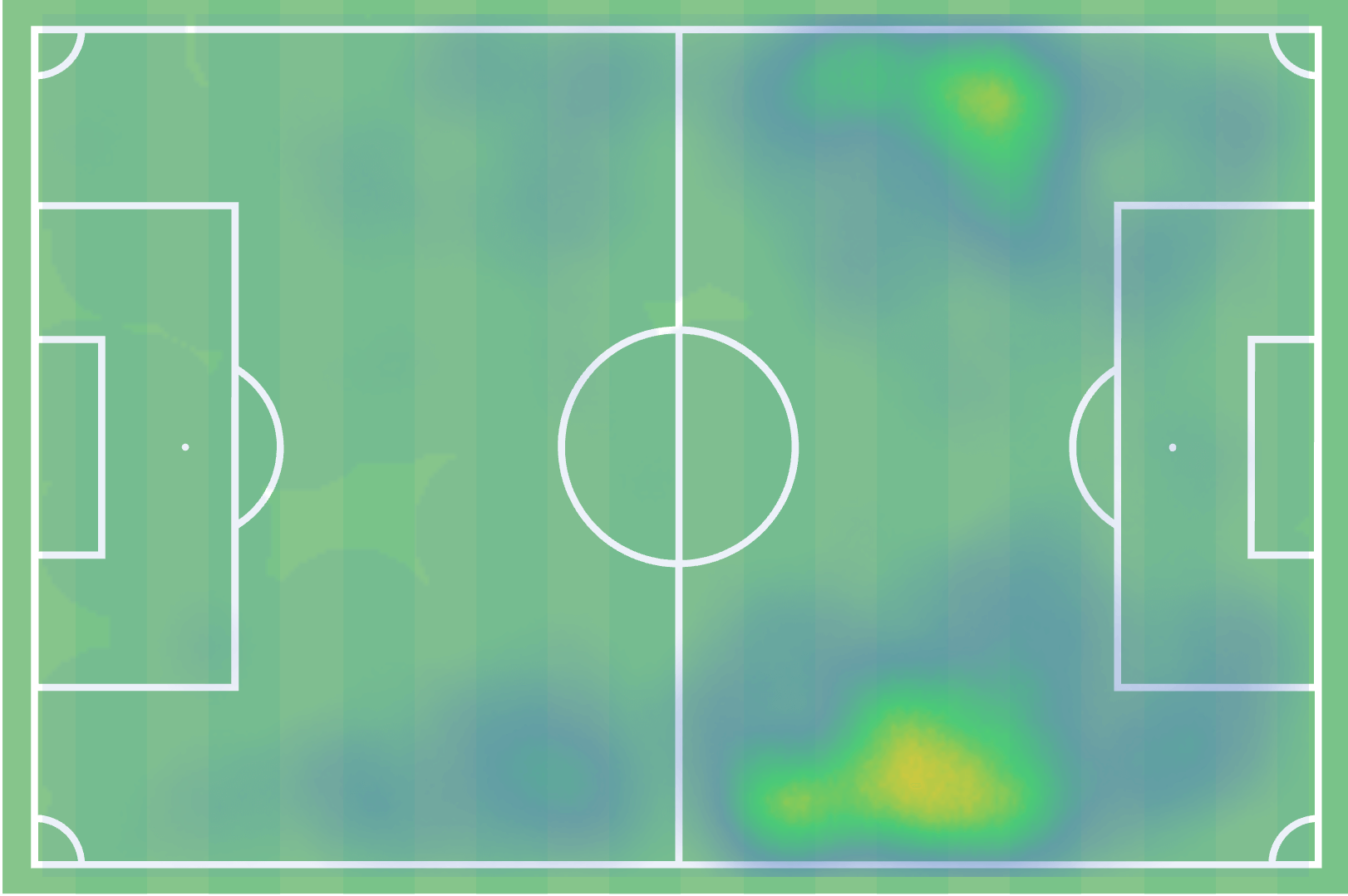
Regardless of whether he’s lining up on the left or the right, Félix Correia tends to start fairly wide under Génésio, where he’ll often receive the ball in space before carrying inside.
Correia also drifts inside to receive in slightly more central pockets of space as well, from where he can be very dangerous.
However, space tends to be at a premium in those areas, hence he’s generally more difficult to find in those positions compared to when he’s starting out wide.
Personally, I like Correia on the left due to his style of play and tendency to cut inside early rather than take the ball down the wing.
Doing so from the left enables him to naturally take the ball onto his stronger side.
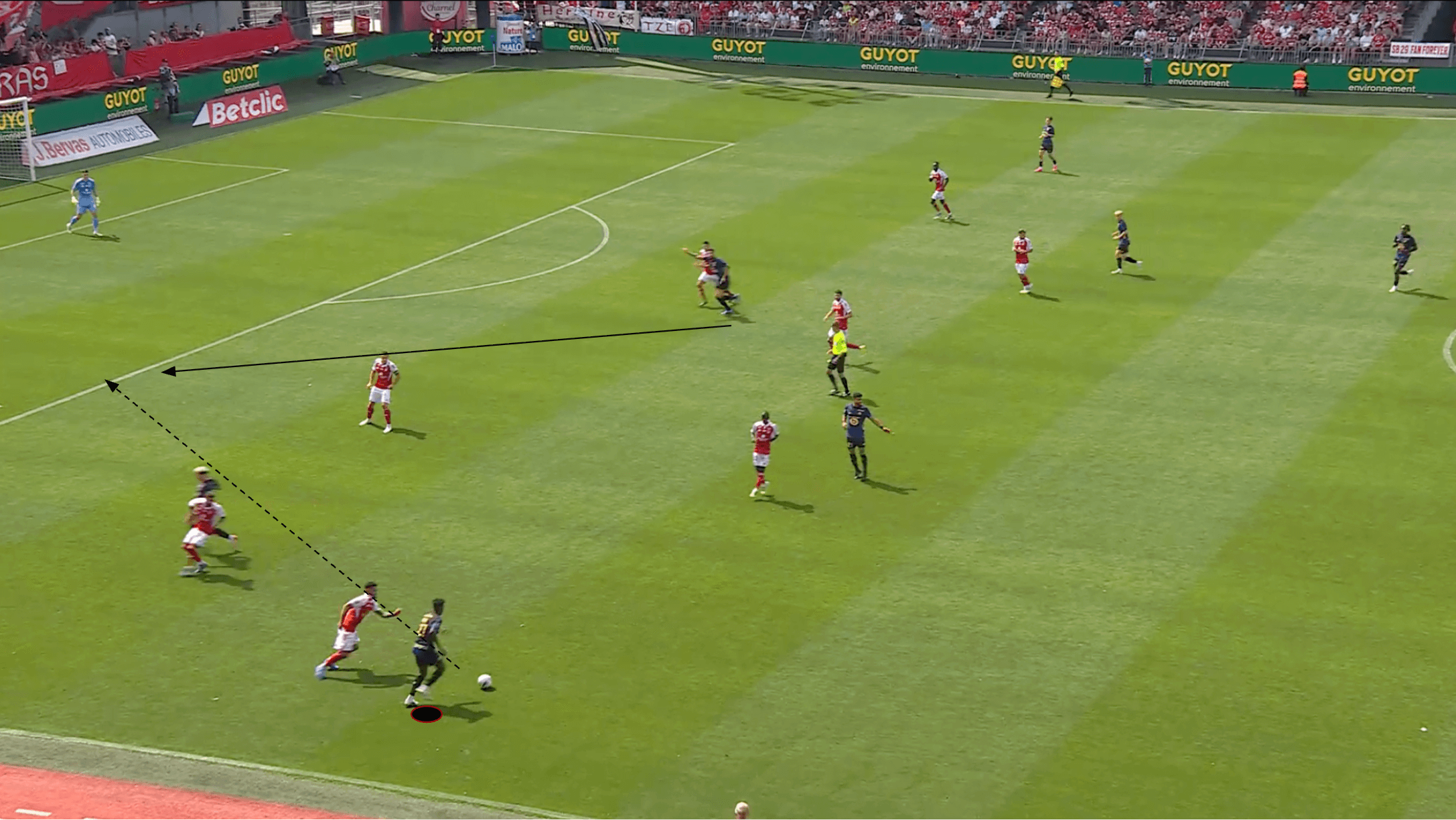
Take Figure 4, for example.
Here, Correia carries the ball towards the centre on the edge of the final third just after receiving out wide on the left.
Olivier Giroud makes a diagonal run in behind, which invites the through pass from Correia.
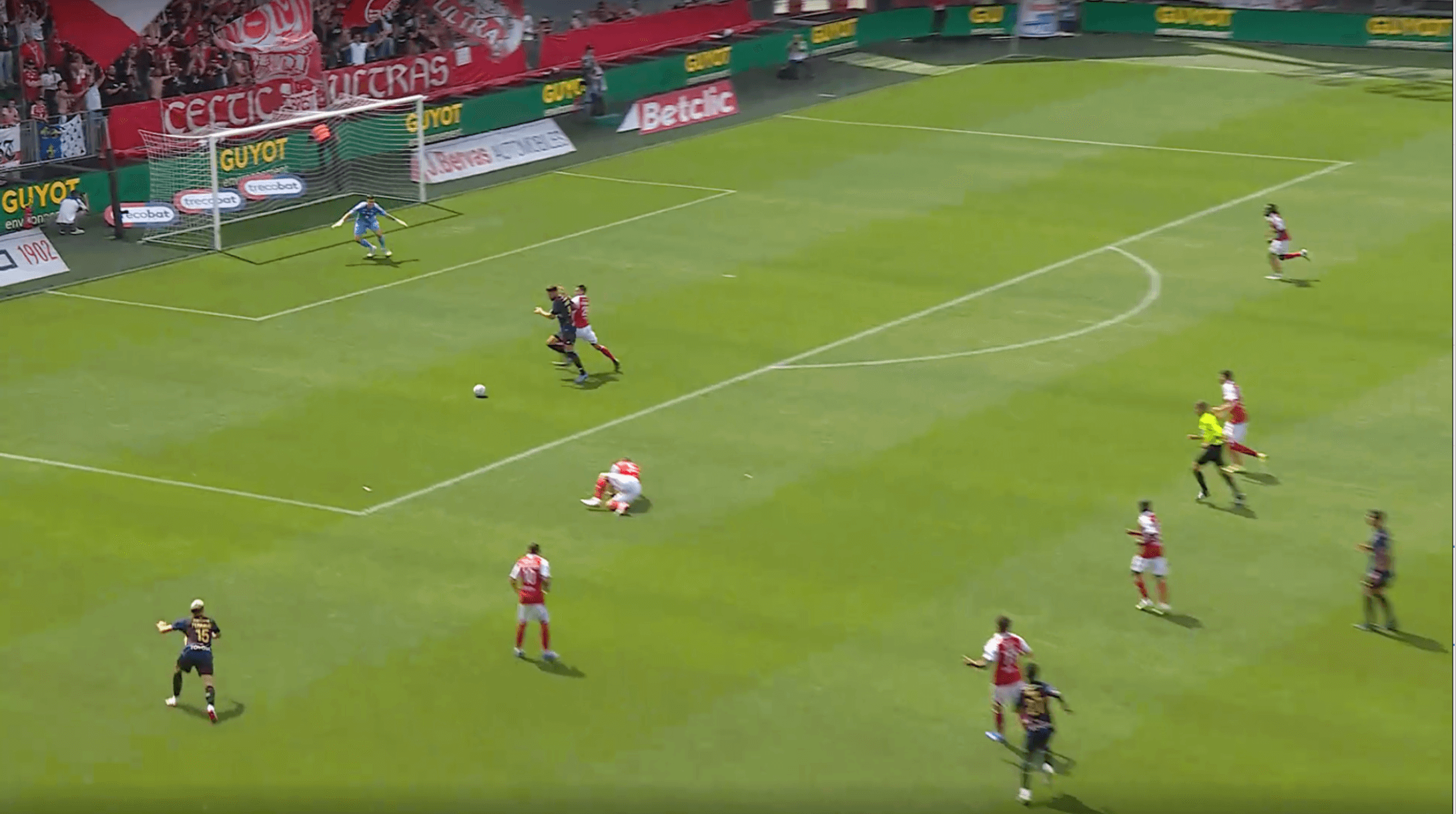
This sets up the 2018 FIFA World Cup-winning forward for a shot on his stronger left foot, which he slots away into the net.
This is one of Félix Correia’s go-to creative moves, and it feels very natural for him to pull it off when coming off the left here.
He’ll receive out wide, get his head up early while carrying inside, and look to split the opposition’s defence open with a pass.
I like the threat Correia poses from the left, and three of his five assists this term have come from that side.
However, as a counterargument to that, Correia’s level of involvement and underlying data on his chance creation point to him being just as, if not more, dangerous on the right, so it’s important to take a holistic look at Lille’s squad and Bruno Génésio’s tactical setup when considering his best role for the team.
Félix Correia Chance Creation
Technically, Félix Correia’s passing is of a high standard, which makes him worthy of playing as a key playmaker for a strong side like Lille in one of Europe’s top-five leagues.
Mentally, he’s been positive this term, always looking forward and trusting his ability to slice open opposing defences to create chances for his forwards.
This combination of technical and mental ability has played an important role in Lille’s positive start to the campaign.
Correia’s movement with and without the ball have also enhanced the quality of his chance creation this term, and that’s where we’ll primarily focus in this section of the scout report.
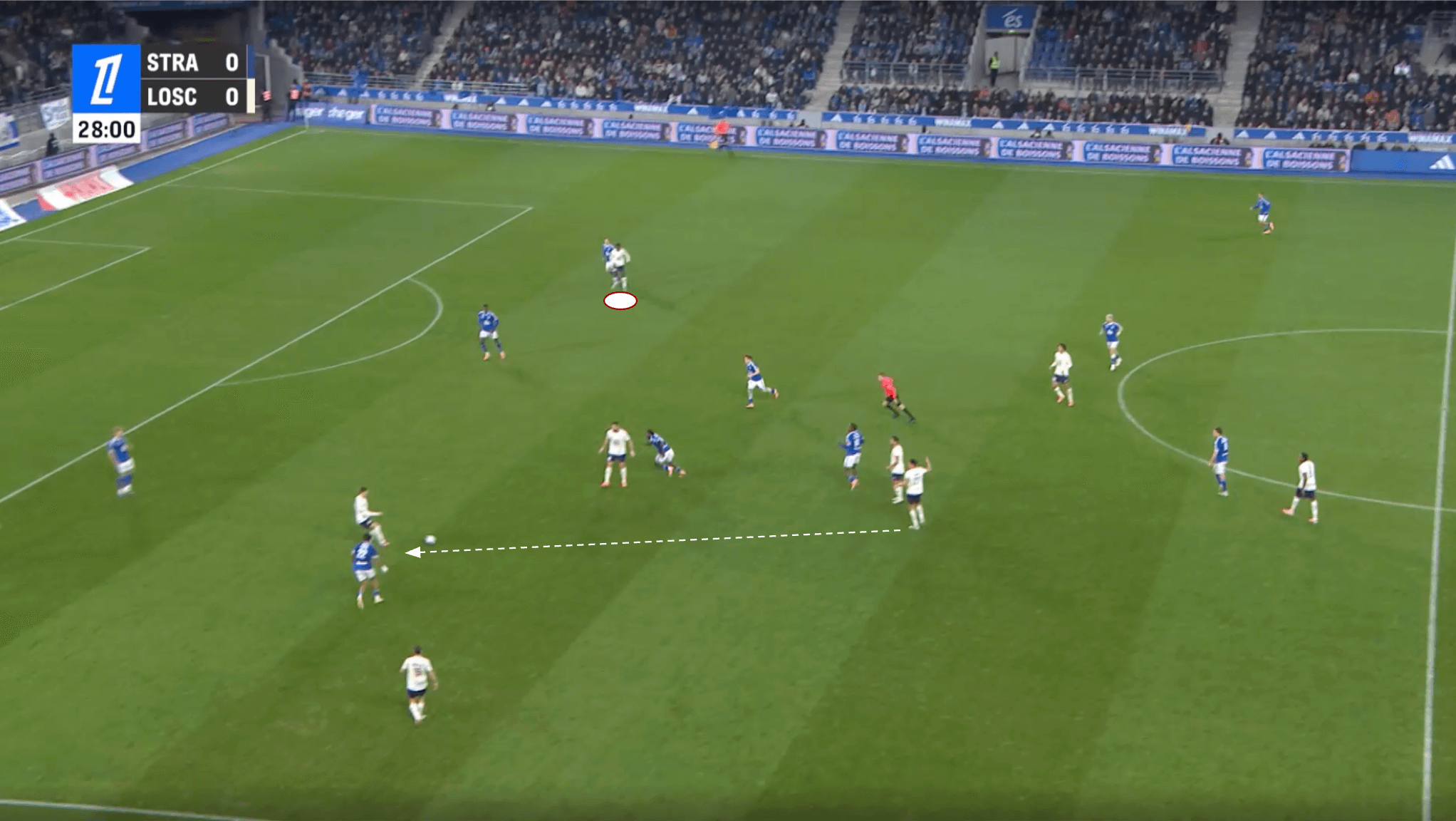
This first passage of play from Figures 6-9 shines a spotlight on Félix Correia’s intelligent movement, with which he makes himself an option for the teammate who initially receives between the lines (Figure 6), thus providing a platform for himself to go on and create a chance for Lille.
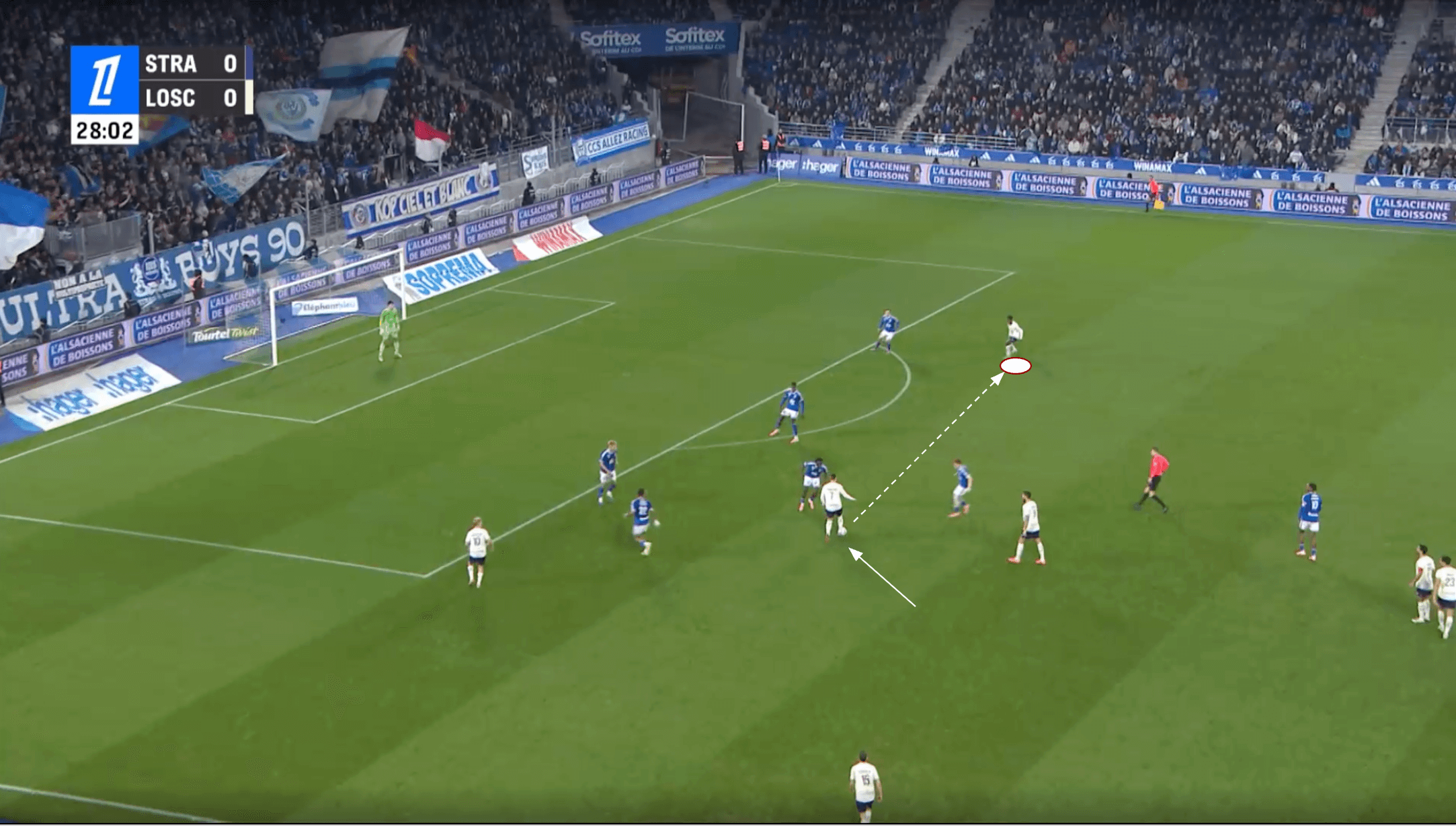
As Correia’s teammate receives in Figure 6, the Portuguese playmaker, playing off the right in this game, holds his run.
He doesn’t immediately burst in behind because that’s not his game.
Instead, he allows the opposing defenders to dart back, while just slowly making his way forward a few steps himself.
This leads to Figure 7, where Correia has lost his marker and enjoys some space in front of the RC Strasbourg defence inside the final third.
This is how Correia intelligently made himself a strong passing option for the ball carrier inside the final third, by subtly creating space where there hadn’t been any.
Rather than moving around to find space, he effectively remained still while others moved around him.
Correia let the space find him.
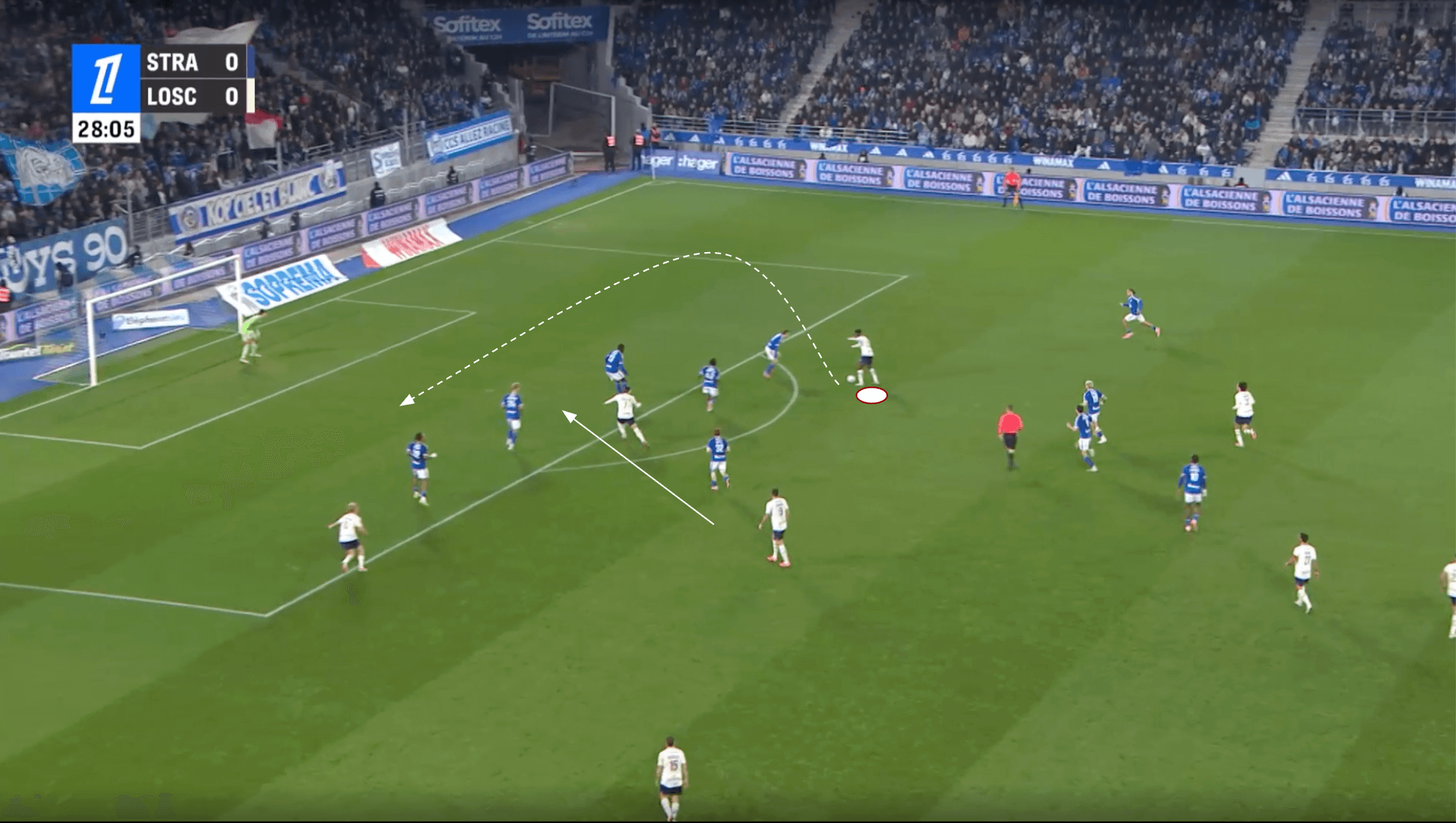
As play moves on, Correia attempts to complete the one-two with Matías Fernández-Pardo, who had found him previously.
Fernández-Pardo continues his run, and Correia attempts to play him in behind Strasbourg’s backline with a lofted through pass close to the box, which has to be weighted and timed perfectly to have any chance of finding the attacker between the backline and the goalkeeper.
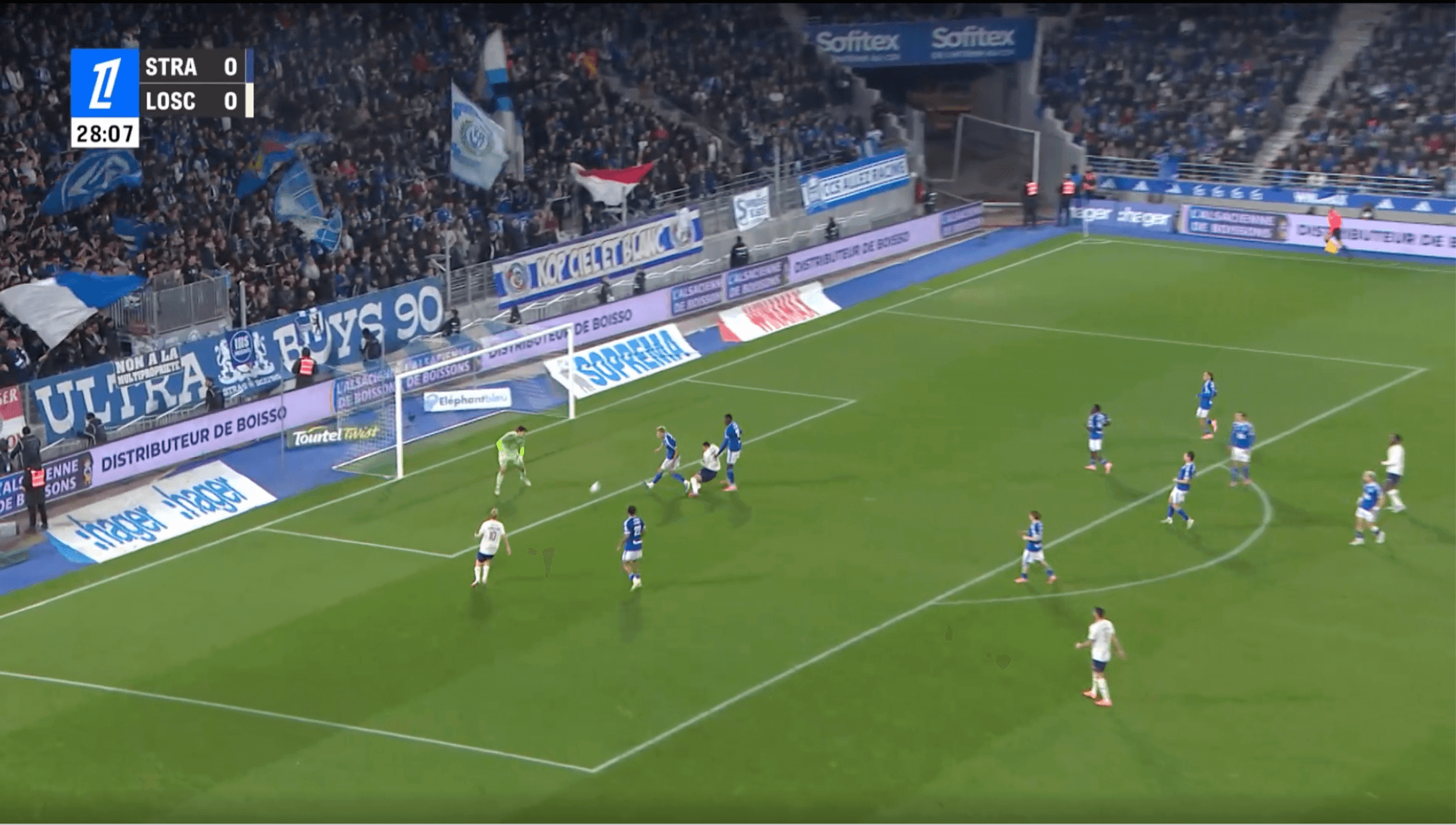
This passage of play provides a strong example of Correia’s intelligent movement, as well as the technical and mental qualities mentioned at the beginning of this section.
Unfortunately for Correia and Lille, this attack was ultimately well defended by Strasbourg, whose goalkeeper, Mike Penders, on loan from Premier League side Chelsea, calmly collected the ball in the end.
The idea was great, however, and Correia deserves credit for the fact LOSC Lille almost created a goalscoring opportunity here at all.
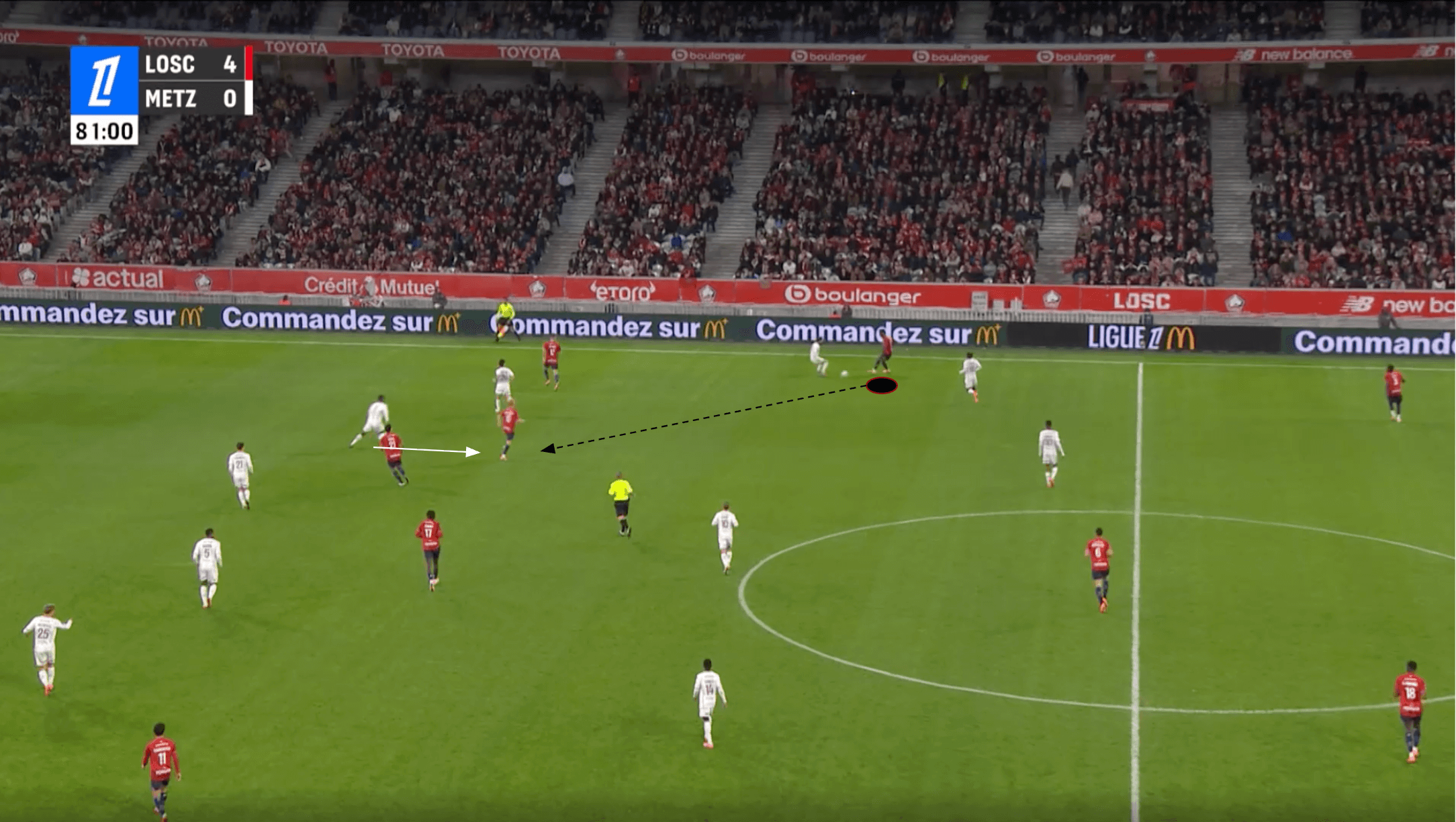
Moving on to Figures 10-13, we’ll see Félix Correia reacting as space opens up behind the opposing backline, which he needs to target for the good of the team.
Initially, Correia creates space behind the opposing backline with a pass into Hákon Haraldsson in the right half-space that drags the opposing left centre-back out.
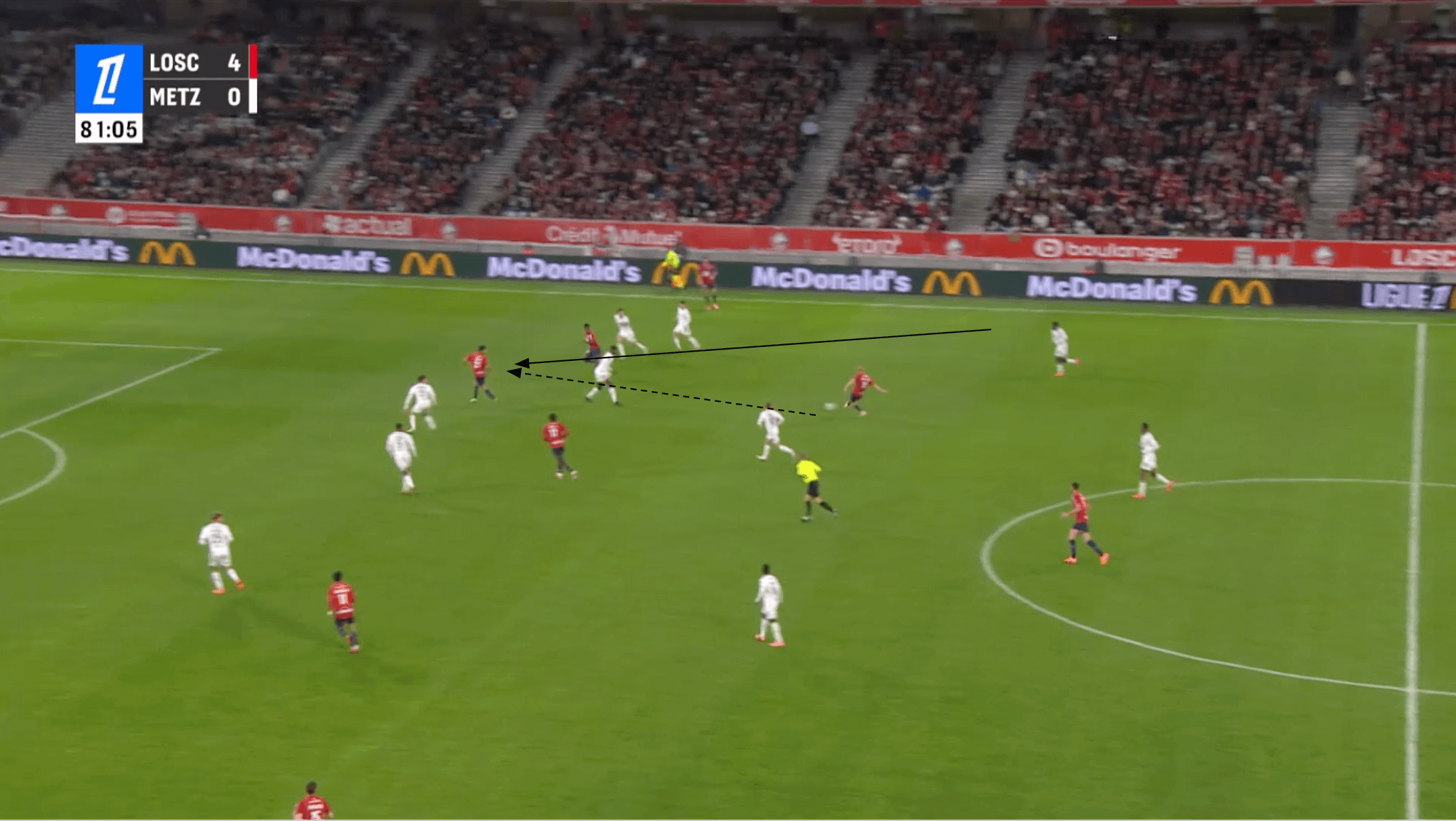
Correia spots the defender’s movement, which creates a gap in the Metz backline.
Viewing himself as being best-placed to target that space, Correia makes the run, and Haraldsson plays the return ball.
This isn’t typical of Correia.
He is far more likely to be the one playing the through pass to a runner going in behind than actually making that run himself.
However, his footballing intelligence is again on display here.
Correia reacts to space opening up in the Metz backline as a result of his pass and his teammate’s movement.
He sees a golden opportunity if a Lille player can exploit that space, so he takes it upon himself to be that player.
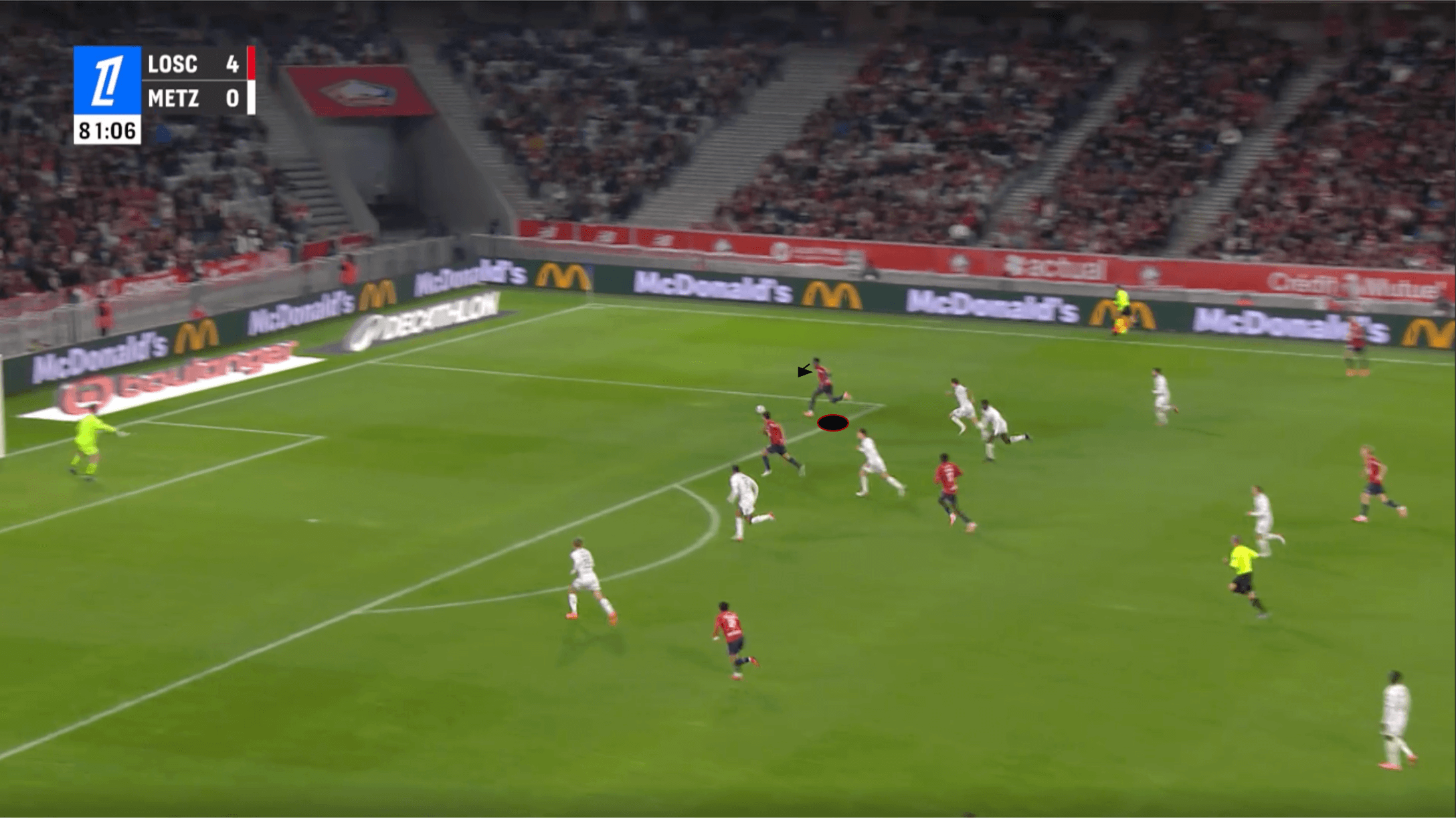
As he gets onto the end of Haraldsson’s through pass, Correia takes a quick look to assess his options in the penalty box before crossing.
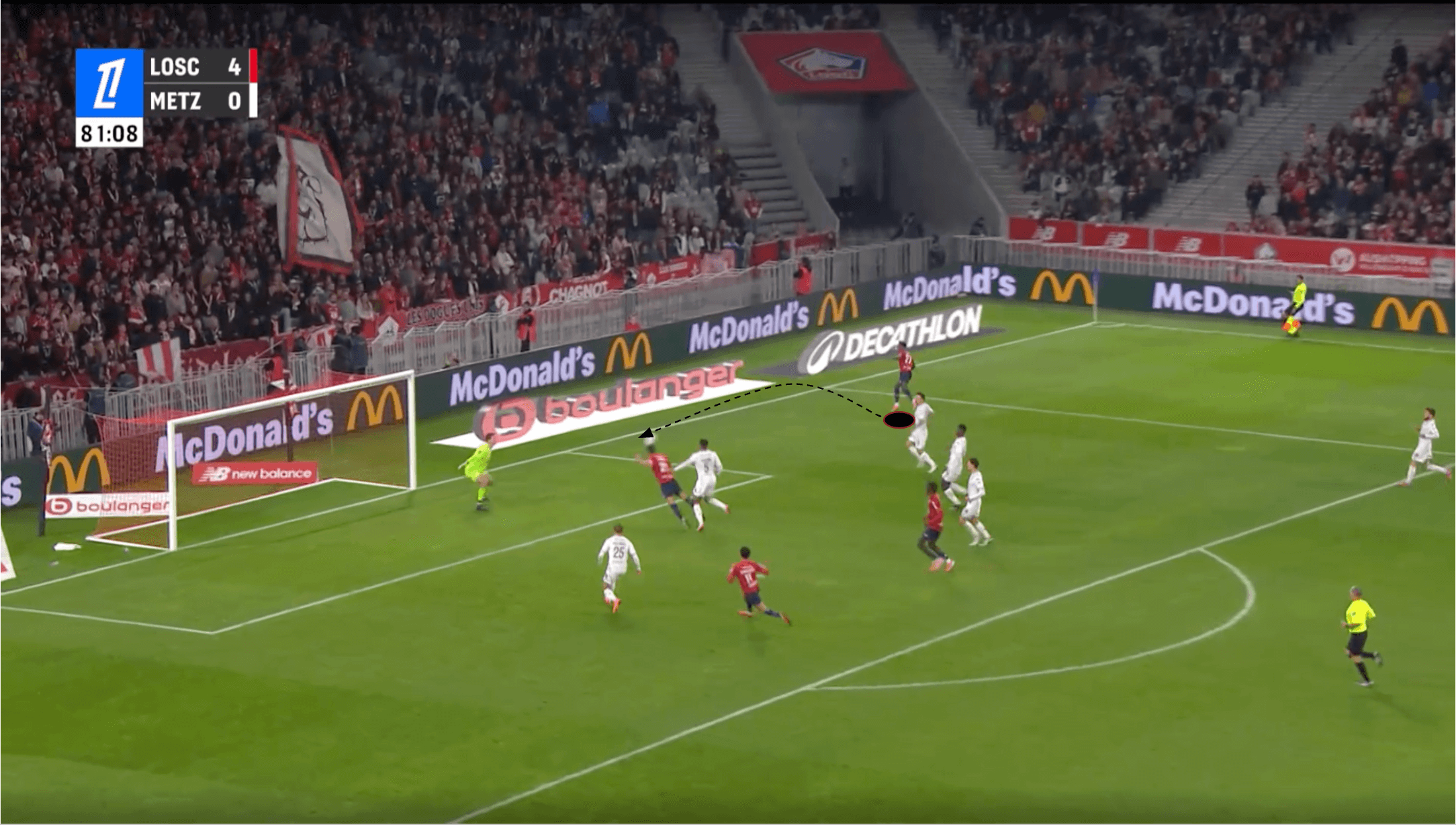
In the end, Correia opts to tee the ball up for Benjamin André at the near post, who converts and puts Lille five goals to the good.
This was a great example of Correia’s flexibility and versatility.
He’s adapted when required on the right, and here, he reacted fast to create what would not be a typical chance for him to come up with, but what was, in the end, an excellent opportunity for Lille, thanks to his quick thinking.
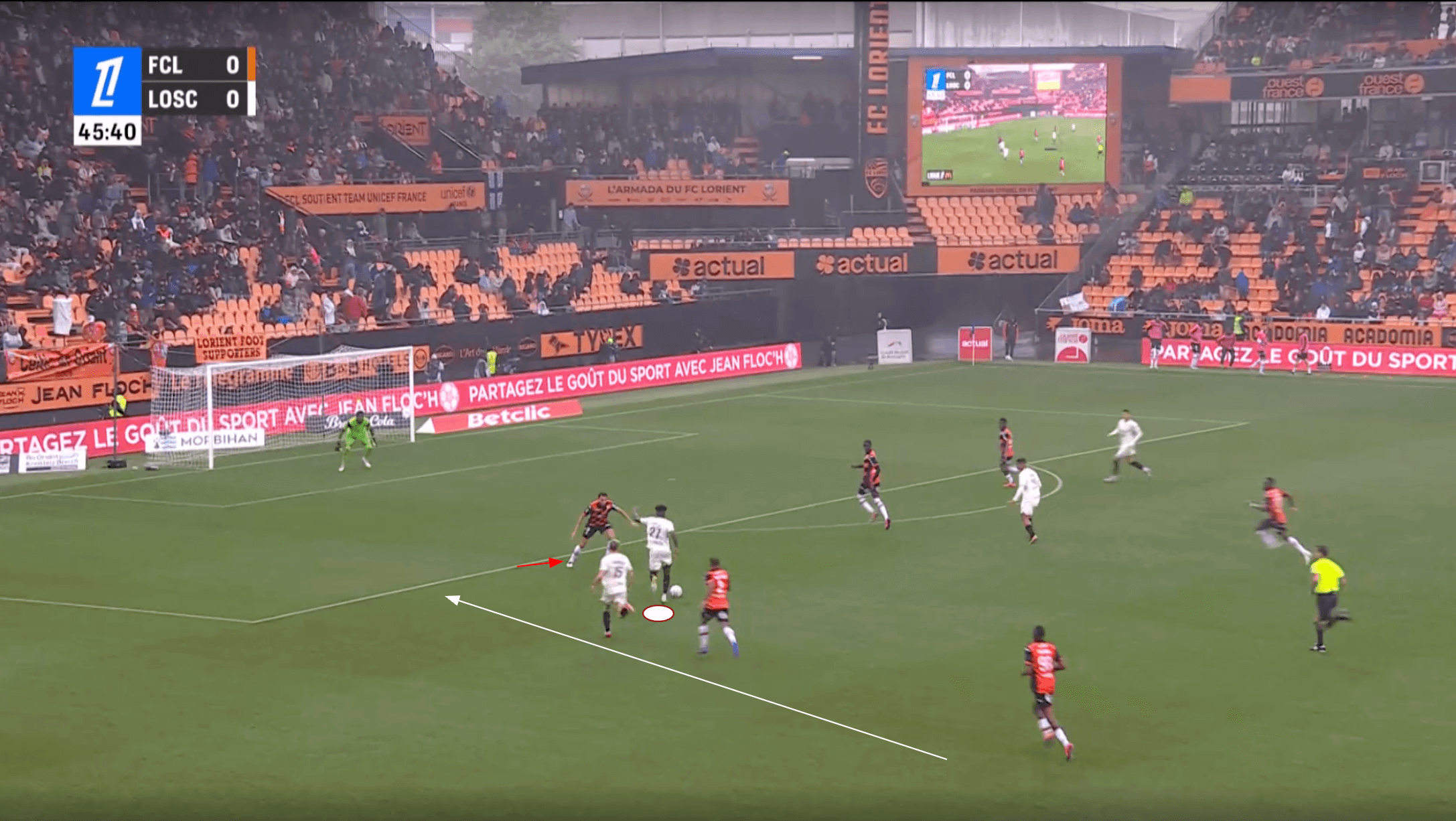
In Figure 14, we find Félix Correia back on the left.
Here, he’s in possession of the ball.
So now, we’re focusing on his movement with the ball, rather than without it.
Having scanned previously when slightly further wide, Correia is aware of the overlapping run from his teammate at left-back, Romain Perraud.
The winger intelligently carries the ball towards the centre as Perraud makes his way upfield, forcing the opponent to make a decision that will inevitably lead to Lille enjoying space somewhere.
If the opponent follows Correia centrally, there’ll be more space for Perraud to exploit on the overlap.
If the opponent tries to cover Perraud, he’ll allow Correia into a great position while cutting inside on his stronger right foot.
Again, this is the kind of opportunity Correia is capable of forging from the left and a key reason why I think he’s better on that side.
You give up this kind of dynamism in your attack when he’s on the right.
As you might expect, the opponent follows Correia, opting to cover the more valuable central area.
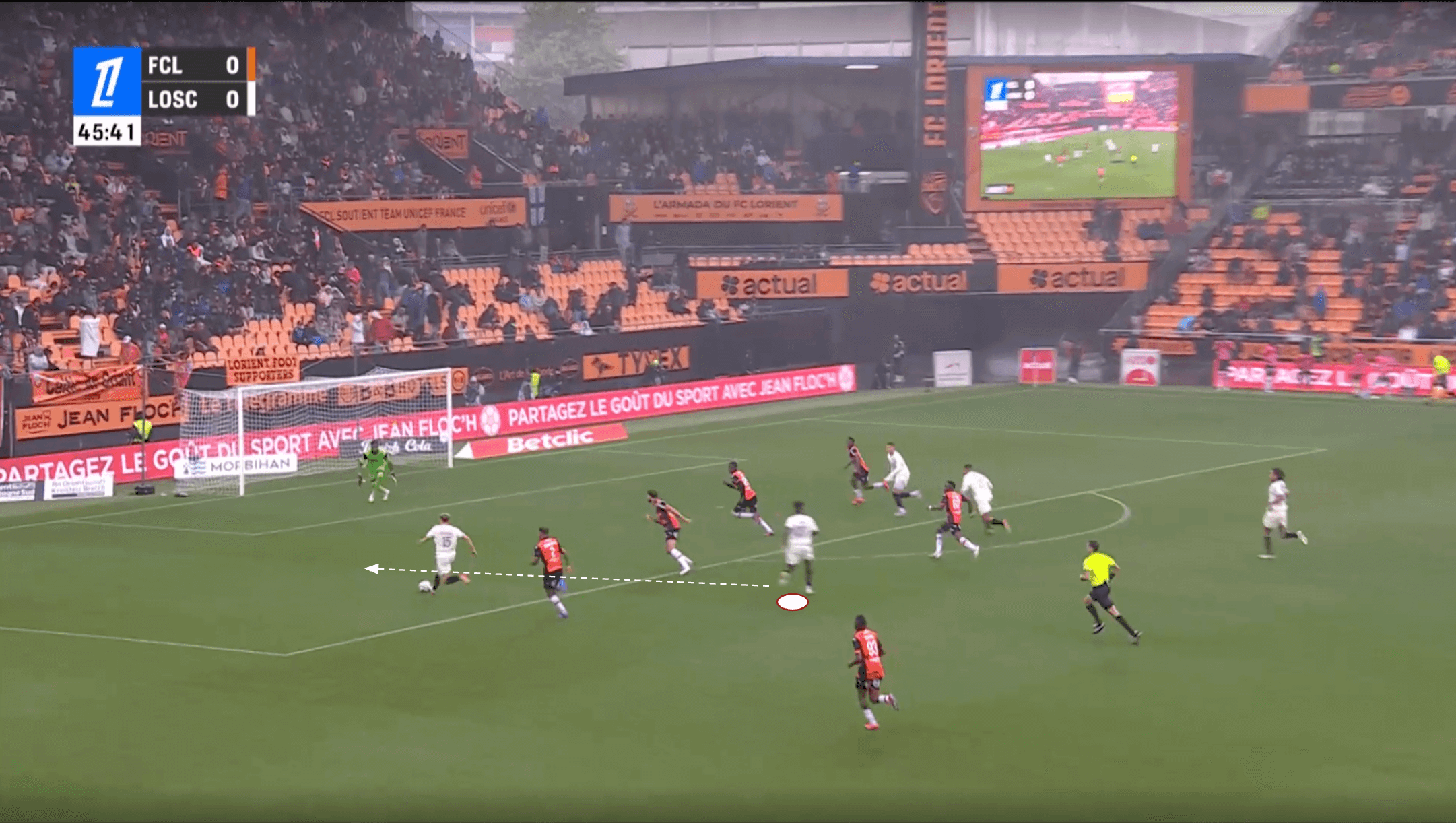
Correia will have expected that too, and punishes the overloaded opponent with a perfect through ball into Perraud’s path.
From here, Perraud scored Lille’s opening goal of what would go on to be a resounding 7-1 win for Lille, thanks in no small part to Correia’s intelligent playmaking.
Conclusion
To conclude this Félix Correia scout report, I view Correia as an intelligent, technically sound, and, crucially, mentally positive playmaker who seems at home in Ligue 1 this term.
As our millionth example of ‘development is not linear’, it’s evident that Correia matured massively last season at Gil Vicente, and he’s continuing his growth under Bruno Génésio at Decathlon Arena – Stade Pierre Mauroy.
There’s still room for growth in Félix Correia’s game.
He’s quite one-footed, which is a weakness that intelligent defenders can exploit, and his physical ability doesn’t necessarily stack up with his technical and mental attributes.
Nevertheless, the €7m Lille spent on him this past summer looks like a bargain.
He’s definitely one to monitor, as Les Dogues will likely be able to make a healthy profit on Correia in the future, should they wish to do so, if they continue to provide a positive environment for the young playmaker to further his development.
