
In an era in which goalkeepers are evaluated as much for their involvement in the build-up phase as for their ability to prevent goals, Bruno Antúnez has established himself as one of the most interesting profiles in the position within the Uruguayan First Division.
At just 22 years of age, the Boston River goalkeeper has not only supported his team with decisive interventions between the posts but has also actively influenced play from the back, displaying a level of composure, decision-making, and technical reliability aligned with the demands of modern football.
Antúnez’s path to this point has not been linear.
Born and raised in Paso Carrasco, he did not begin his development exclusively as a goalkeeper.
During his youth years, he alternated between playing as a forward and as a goalkeeper, an experience that helped shape a comprehensive understanding of the game.
That early versatility is reflected today in the way he interprets the role, which will be explored in our Bruno Antúnez scout report and player analysis.
During the 2025 season, Antúnez completed his first year as an undisputed starter for Boston River, accumulating minutes in both the Uruguayan First División and continental competitions (Copa Libertadores and Copa Sudamericana).
In an increasingly demanding context, his performances confirmed a potential that goes beyond goalkeeping fundamentals, positioning him as a structural piece within the team’s collective functioning.
Bruno Antúnez Footwork
Bruno Antúnez’s main strength lies in his footwork, both in terms of quality and intention.
He is not a goalkeeper who merely fulfils short-passing duties when the system requires it, but rather one who assumes an active role in possession management, participating in the build-up as an additional outfield player.
From goal kicks, he offers a varied and reliable passing range.
He can initiate play short, connecting with centre-backs or midfielders, but is also capable of executing medium- and long-range passes with purpose, either from a static position or after a few steps of ball-carrying.
This ability broadens the team’s range of solutions and complicates the opponent’s defensive reading, making it difficult to anticipate the type of restart.
Under high pressure, Antúnez shows composure and clarity in decision-making.
His behaviour is not driven by urgency, but by an interpretation of the opposing first line’s intentions.
He identifies when a press is genuine and when it is merely a feint, using time as a tool to disrupt the opponent’s structure.
Bruno Antúnez Fixer & Organiser
Beyond individual execution, his contribution must be understood within a broader logic: Antúnez acts as a goalkeeper-fixer.
His presence and calmness on the ball attract pressure, fix opponents, and generate structural advantages for the rest of the team.
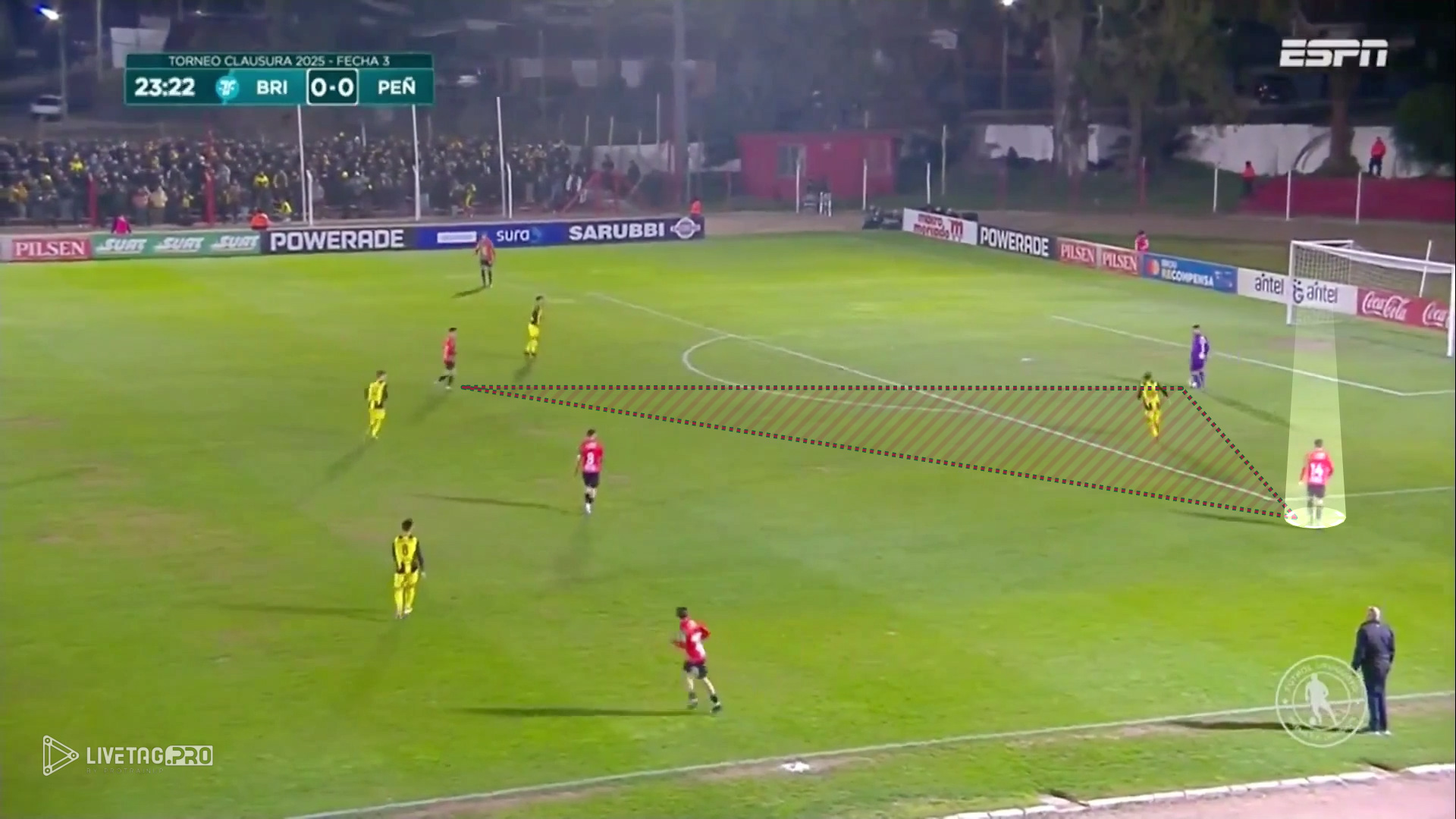
In this sense, he does not always look to progress with the most vertical pass.
At times, his best decision is to slow the game down, retain possession, or restart the sequence.
This pause, far from being conservative, fulfils a tactical function: allowing the team to organise itself, enabling passing options to emerge, and forcing the opponent to reveal their defensive intentions.
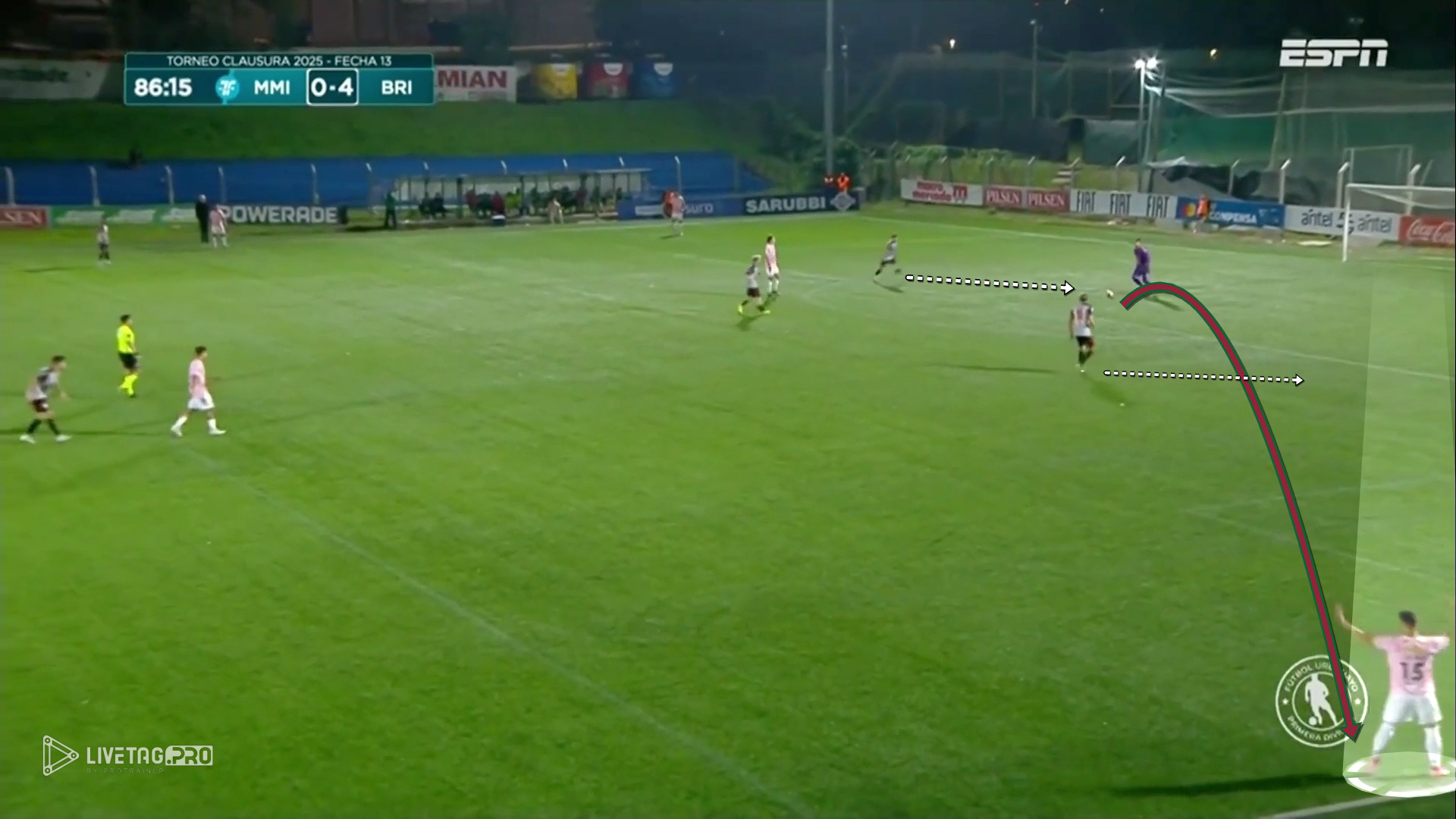
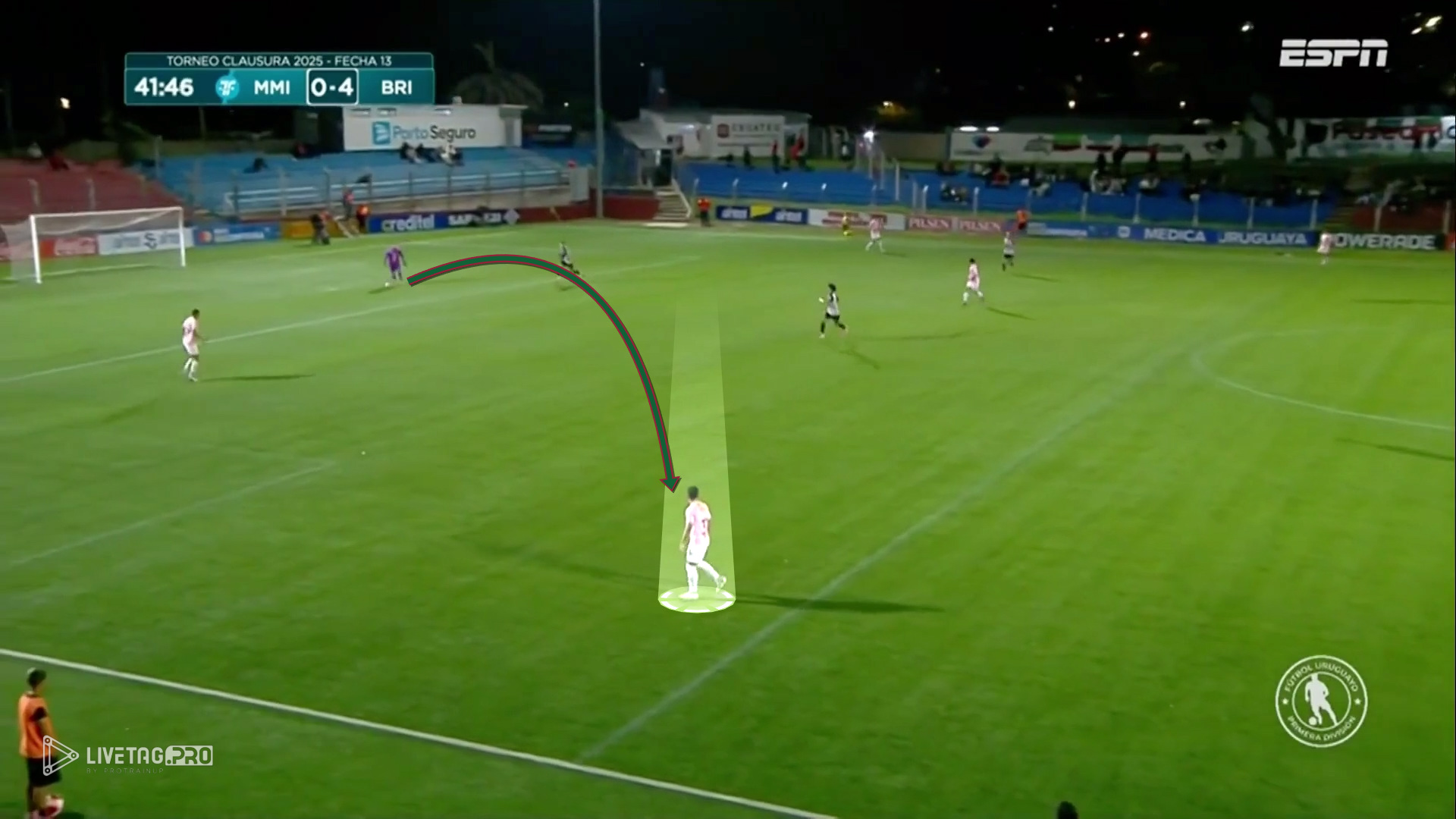
This behaviour is particularly valuable for teams that seek clean build-up structures, with centre-backs positioned wide and midfielders offering support inside.
Antúnez understands these dynamics and integrates into them without disrupting the system’s balance.
Bruno Antúnez Pressure Manipulation
One of the most intriguing aspects of his game is the use of his first touch as a tactical gesture.
Antúnez does not control the ball solely to set it, but to disguise his subsequent intention.
He orients his reception towards a profile that simulates a passing option and, from there, manipulates the opposing forward’s pressing movement.
This detail allows him to gain time and create passing lanes that were not initially available.
By attracting the first presser, he frees teammates behind that line and finds the free man with a clean, usually ground-level and well-weighted pass.
His ability to use both feet is key in this regard.
Antúnez can recycle possession to the nearest centre-back or switch play towards the weak side without requiring long adjustments.
This natural ability to change the point of attack reinforces the stability of the build-up and prevents the team from being trapped on a single flank.
Bruno Antúnez Defensive Contribution
Between the posts, Antúnez’s profile presents nuances.
His positioning in relation to the posts, particularly when covering the near post, appears to be an area for improvement.
In certain situations, his initial positioning can leave margins that require a subsequent corrective action.
However, these limitations are offset by a strong ability to dive from his starting position.
Supported by his agility and quick reactions, he frequently reaches low shots and places finishes, despite not possessing a dominant physical stature.
A key point is his rebound management.
Antúnez generally controls second balls well, avoiding dangerous rebounds in central areas.
When he cannot secure the ball, he directs his parries towards wide zones, reducing immediate risk and facilitating defensive reorganisation.
Bruno Antúnez Box Defence
In box defence, he adopts a proactive stance.
He looks to claim crosses, reduce space, and anticipate trajectories with good timing.
Rather than remaining passive on his line, he seeks to intervene before situations become critical.
Nevertheless, his physical limitations in terms of upper-body strength affect his reliability in contact situations.
When dealing with aerial duels under physical pressure, he can be destabilised by stronger attackers, reducing his margin for error in these actions.
This does not invalidate his reading of the play, but it does set a clear ceiling in contexts of high physical demand inside the box.
Even so, his behaviour reflects an appropriate understanding of risk: he selects when to come out and when to protect the goal, avoiding unnecessary exposure.
Bruno Antúnez Tactical Fit
The value of Bruno Antúnez does not lie in spectacular actions, but in the coherence of his behaviour within the system.
His footwork is not an isolated resource, but a structural trait that conditions how Boston River can initiate, progress, and restart play.
From a systemic perspective, he combines the traits of a ball-playing goalkeeper with those of an organising goalkeeper.
He does not force long balls as an escape route, but uses them as a tactical solution when the context demands it.
His decision-making is grounded more in reading the game than in mechanical execution.
From a developmental standpoint, he is in a phase where the fundamentals of the position are well established, with room for improvement in specific details such as fine positioning and aerial duels under contact.
Nevertheless, his game understanding and ability to intervene with the ball align him closely with the demands of contemporary football.
Conclusion
Bruno Antúnez represents an increasingly valued figure in modern football: the goalkeeper who not only defends the goal, but also organises the game.
His contribution through footwork expands the team’s tactical possibilities and provides a competitive advantage in pressing contexts.
Beyond the areas still to be refined, his profile invites us to consider the position from a relational perspective, where decision-making, contextual reading, and technical quality are integrated into a single gesture.
In that sense, Antúnez is not just a reliable goalkeeper, but an active agent in the construction of play, capable of influencing the game far beyond his own area.
