
Omar Alderete has become one of those signings that only looks obvious in hindsight.
Sunderland’s recruitment in their push to survive in the Premier League has rightly drawn attention for the headline additions, with Nordi Mukiele adding athleticism and recovery pace to the defensive unit, Enzo Le Fée giving them flair, and Granit Xhaka providing authority and connective play in possession.
However, the quieter business can decide whether a newly promoted team can actually compete.
Alderete, arriving for around £10m, has been exactly that kind of addition, a piece that makes other pieces fit.
At 29, the Paraguayan brings a particular kind of experience centred on surviving difficult matches.
His most telling background comes from working under José Bordalás at Getafe, a side defined by physical confrontation, high-intensity defending, and long stretches where you have to protect your box with your back against the wall.
Players formed in those environments tend to arrive in England without shock at the pace of duels or the emotional volatility of low-possession football.
Alderete looks comfortable in the Premier League because he has already weathered similar storms.
For Sunderland, that has meant adding an older statesman’s presence alongside Dan Ballard, someone who has been through tactical extremes across Switzerland, Germany, Spain, and now England and can translate those experiences into small decisions that keep a team afloat.
This Omar Alderete scout report will focus on Omar Alderete’s style of play, strengths, weaknesses, and how those traits apply to Régis Le Bris’s Sunderland.
Omar Alderete Style Of Play
Omar Alderete is a centre-back first and can also play as a left-back.
This speaks to his understanding of spacing and defensive angles in different reference points.
At left-back, he is not an overlapping runner, but he can give you control, aerial security at the far post, and a way to close down wide attacks without panicking.
At centre-back, where Sunderland have used him most of the time, his main value is the combination of physical dominance and technical order.
In the air, he is dominant.
Premier League teams love to stress newly promoted sides with early crosses, direct switches and competition over second balls because it forces a defensive line to contest first contact repeatedly.
Omar Alderete has made that first contact one of his main strengths.
When he attacks the ball, he does it with clarity and makes the duel about his timing (not the opponent’s leap).
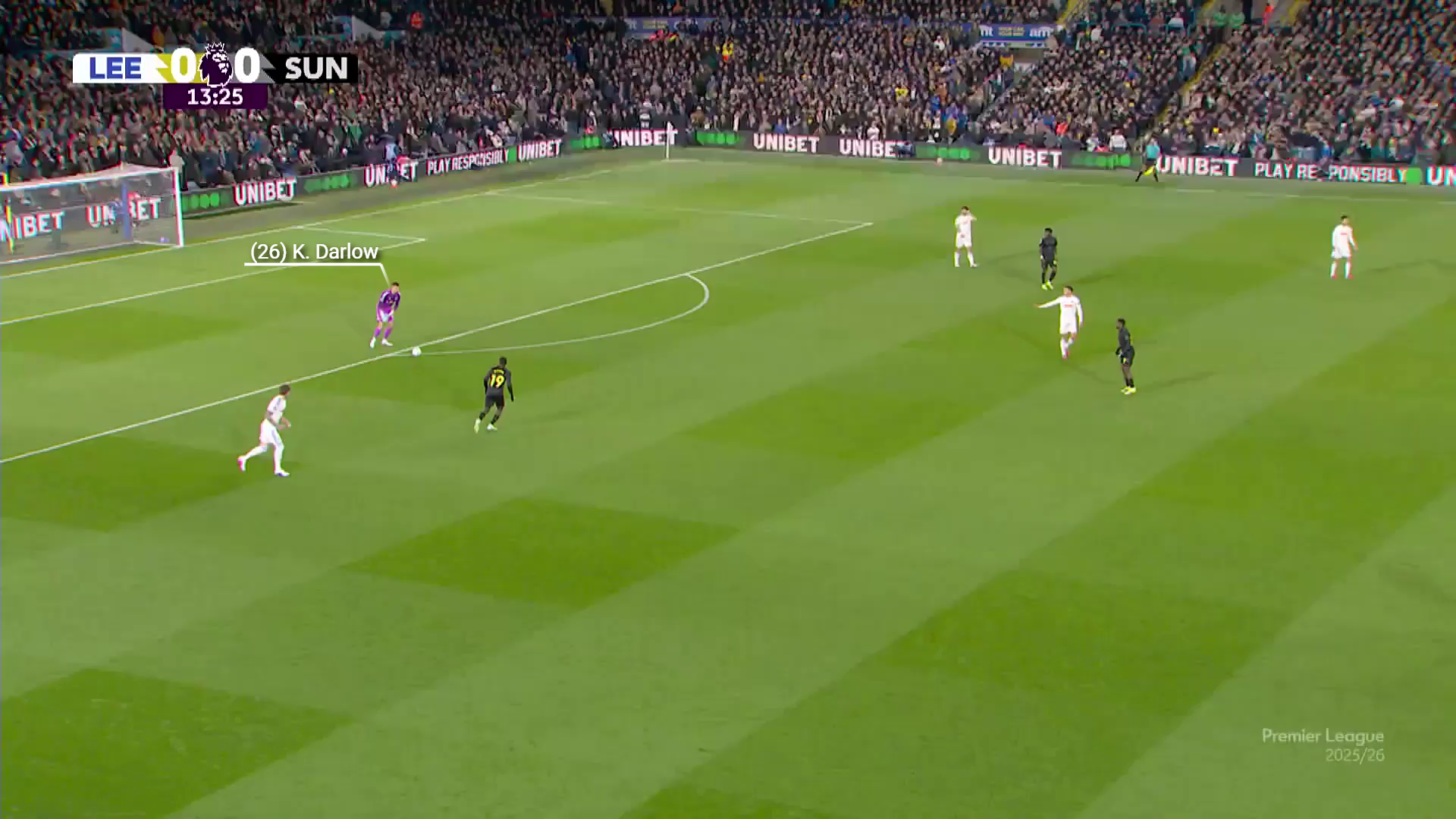
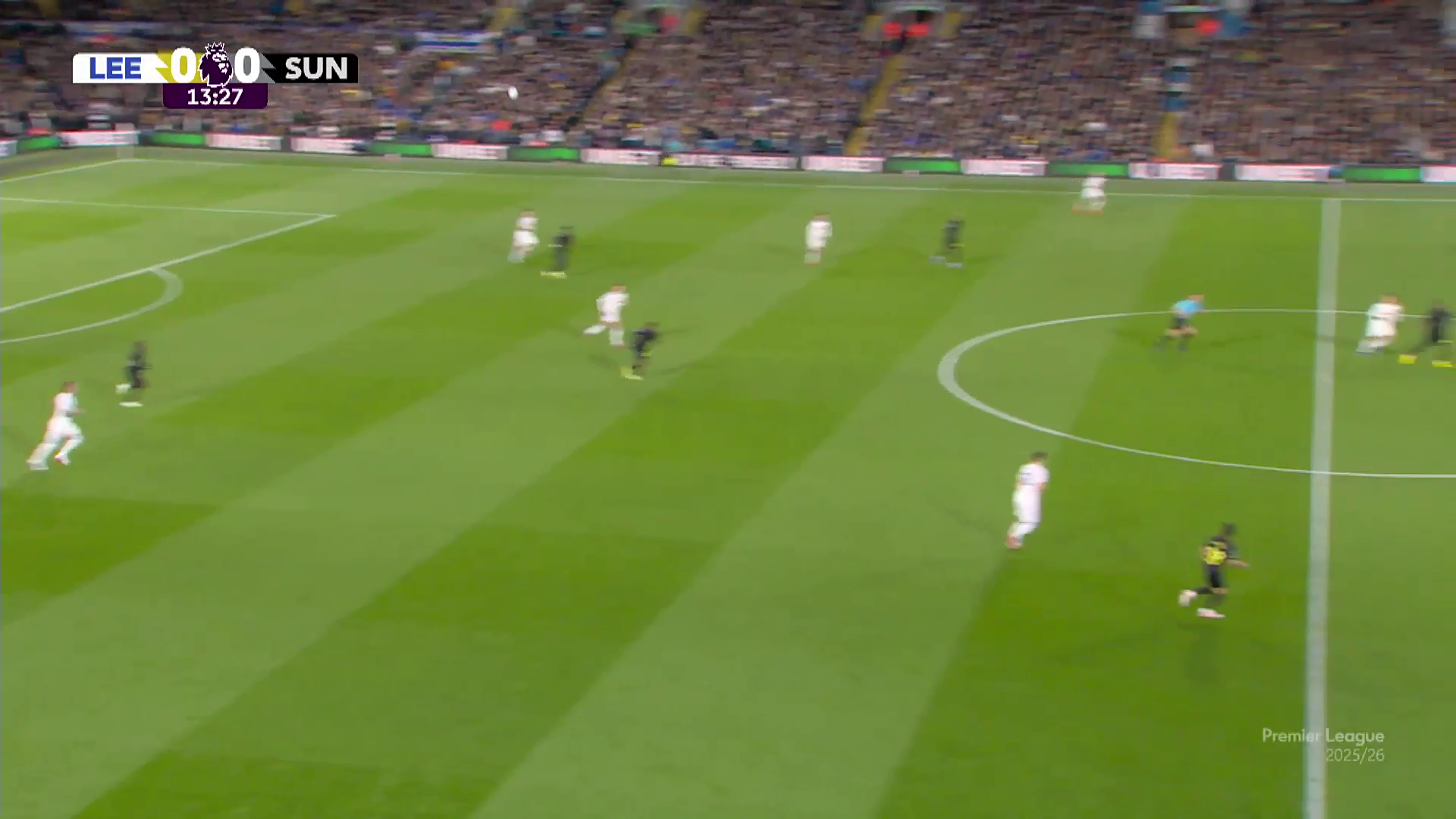
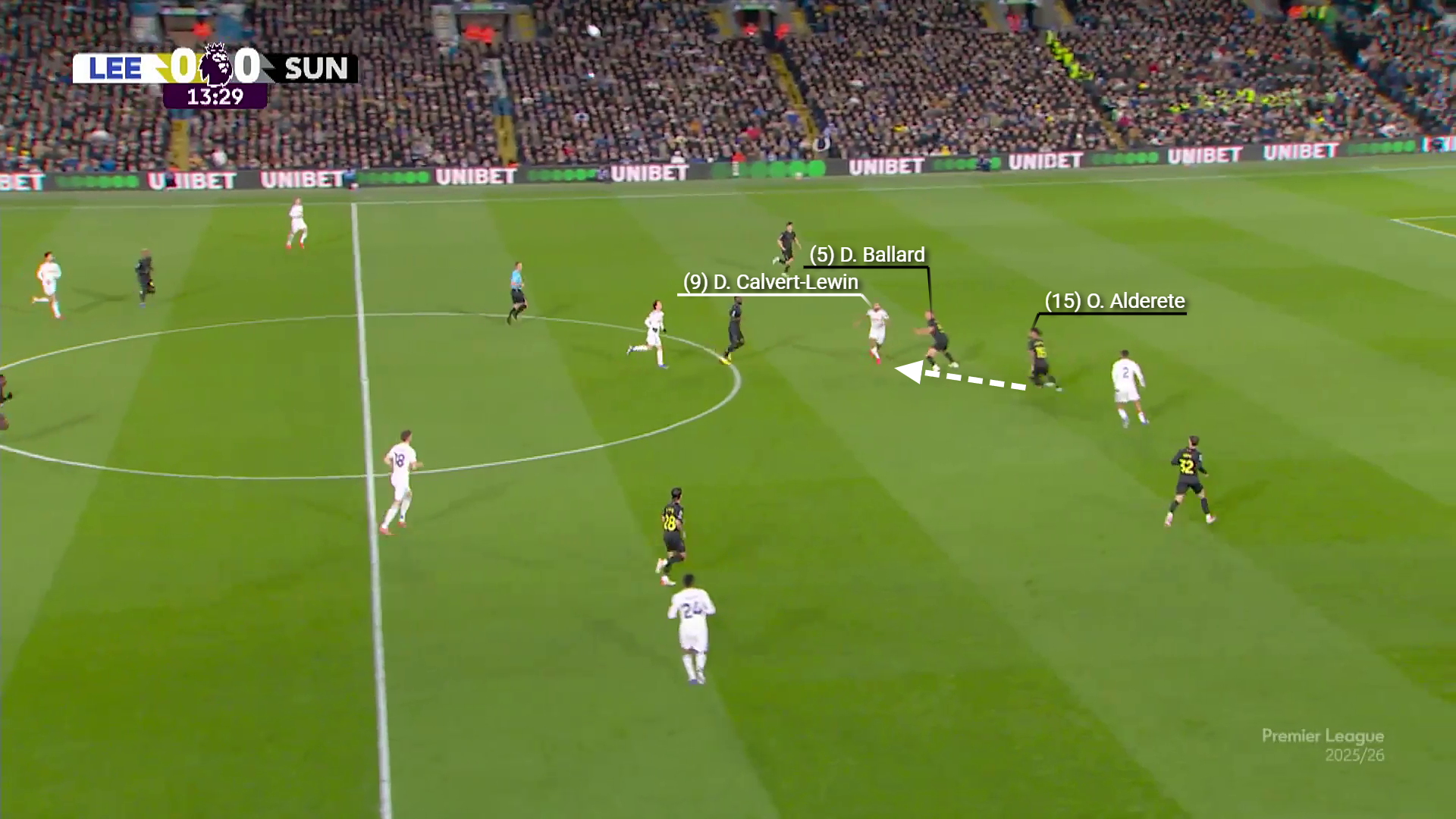
 In Sunderland’s away win against Leeds United, Karl Darlow went long, and the ball appeared to be dropping toward Dan Ballard.
Dominic Calvert-Lewin moved across to contest the header and initially looked in control, with Ballard watching the flight and waiting for it to arrive.
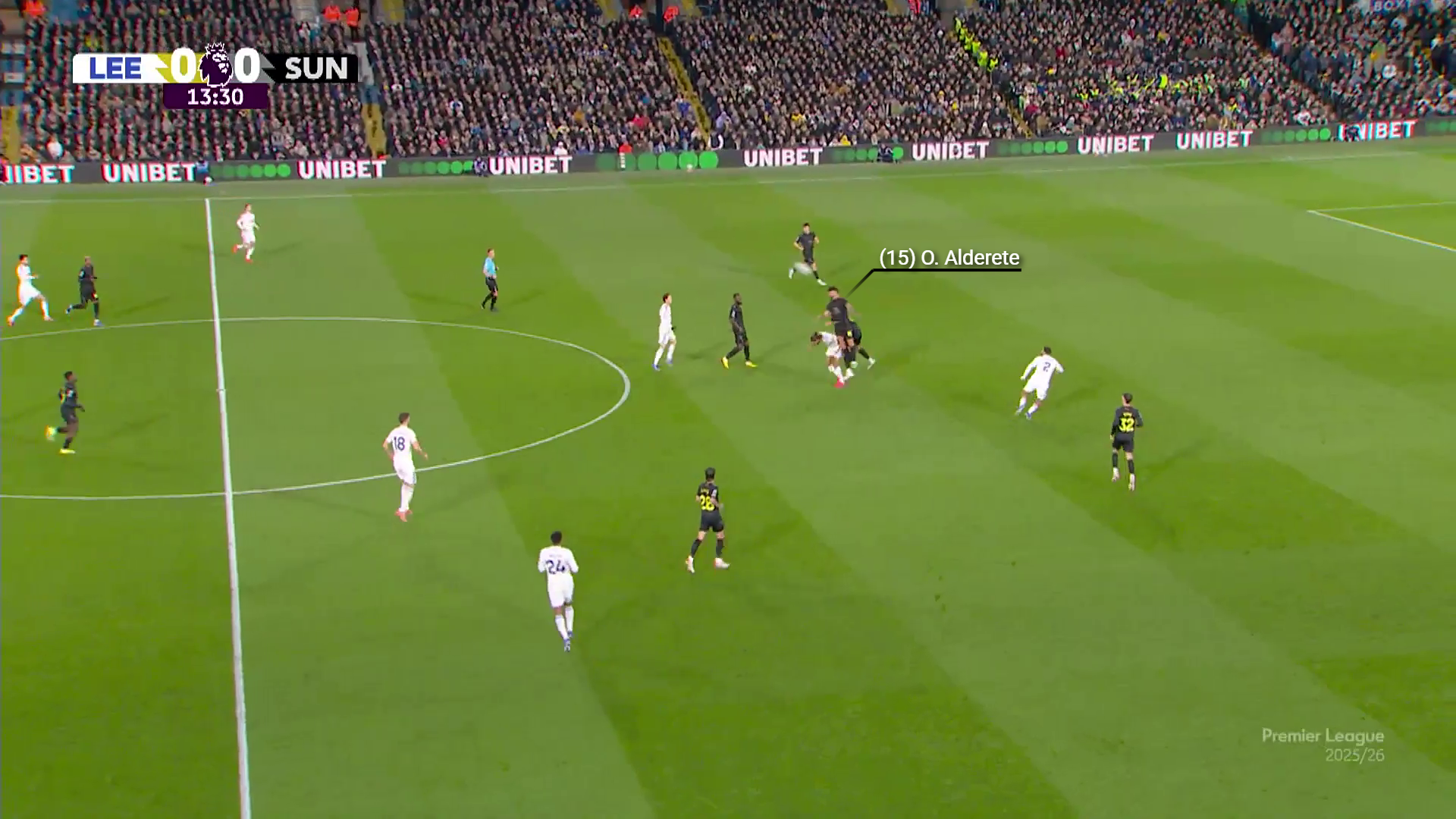
Alderete, however, read the trajectory early, stepped in, and took command of the situation.
He rose above both Calvert-Lewin and Ballard to win the first contact and head clear.
It was a moment driven by anticipation and reading the ball, not solely focusing on the duel.
This is important for set-pieces, as well as for long diagonals and quick, wide deliveries that test a compact block.
If Sunderland are going to remain a Premier League side, they have to come out on top of enough of those moments to keep the game in their preferred zones, and Alderete helps them do that.
On the ball, the most important detail is that he is left-footed.
In a league where pressing schemes are increasingly designed around forcing play to a weaker side, a left-footed centre back changes the geometry of a build-up.
Alderete is not primarily a ball carrier who glides through pressure, but he is a technically strong passer who can break a line.
His passing range includes the kind of fast, zippy deliveries into midfield that let a receiving player turn.
As shown against Nottingham Forest, Alderete scans upfield, recognises the space ahead of him, and drives forward with the ball.
He then spots the opening and threads a through ball into the path of Chemsdine Talbi.
There is a stylistic comparison worth making, not because Alderete plays exactly like him, but because it captures the idea.
Cristian Romero at Tottenham Hotspur is a centre-back whose passing has the type of bite that can puncture a press.
Alderete has a similar capacity to play a killer pass, especially when he has scanned early and can see the lane into a midfielder’s back foot or into a player positioned between the lines.
As shown against Tottenham, Alderete splits their block with a killer line-breaking pass into Enzo Le Fée.
Le Fée then lays it off to Granit Xhaka, who switches play out wide to the overlapping runner, Lutsharel Geertruida.
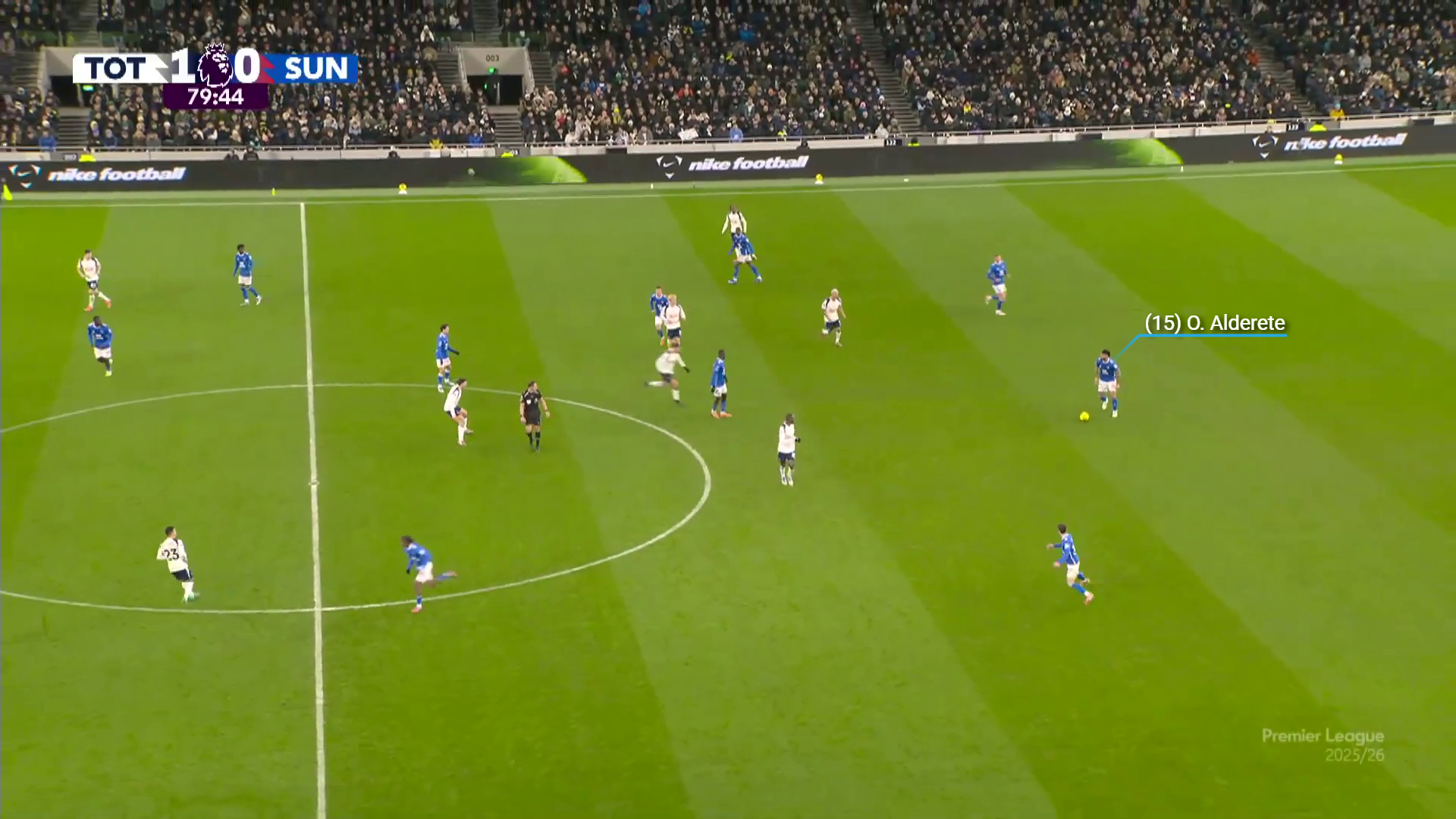
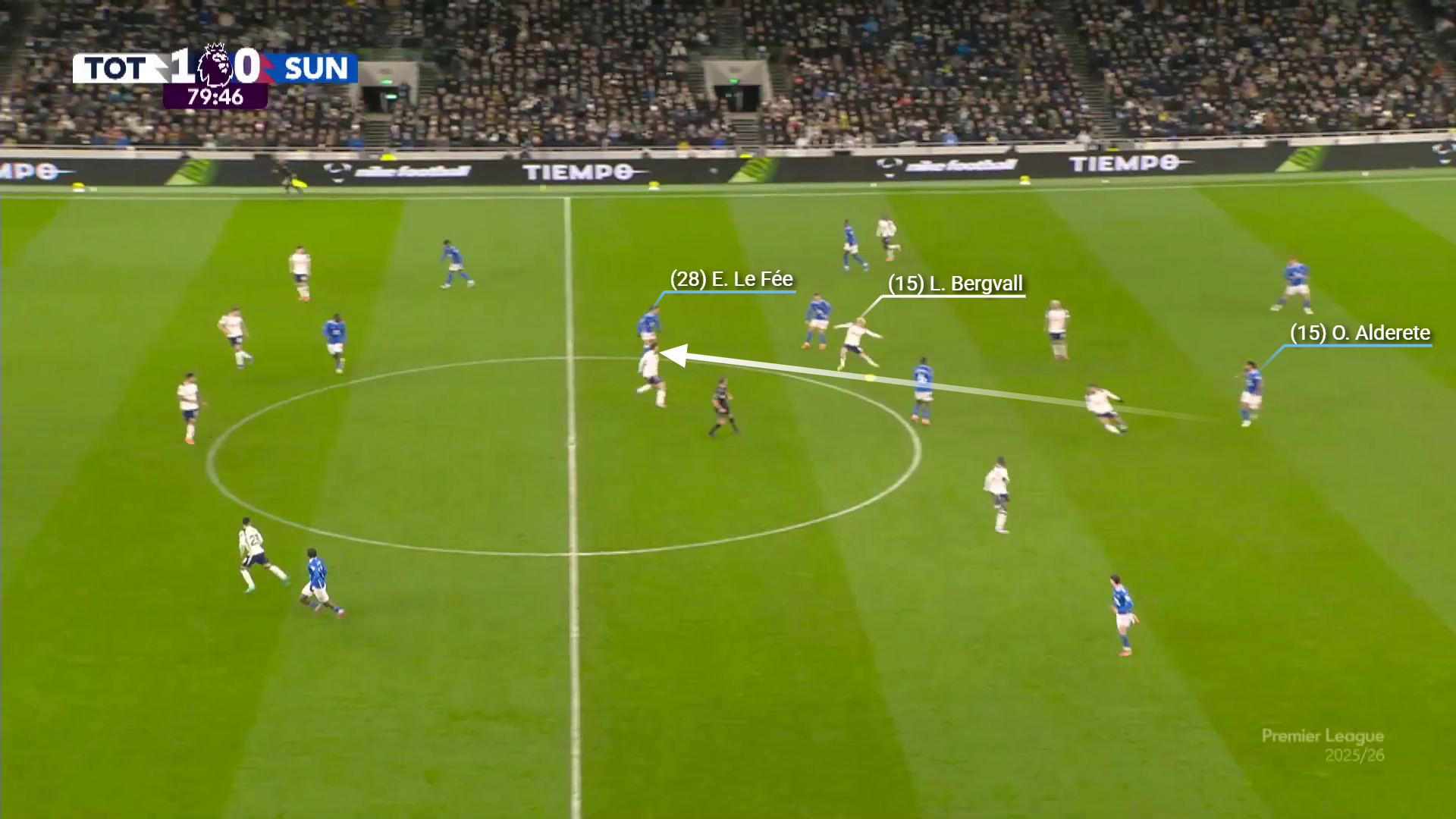
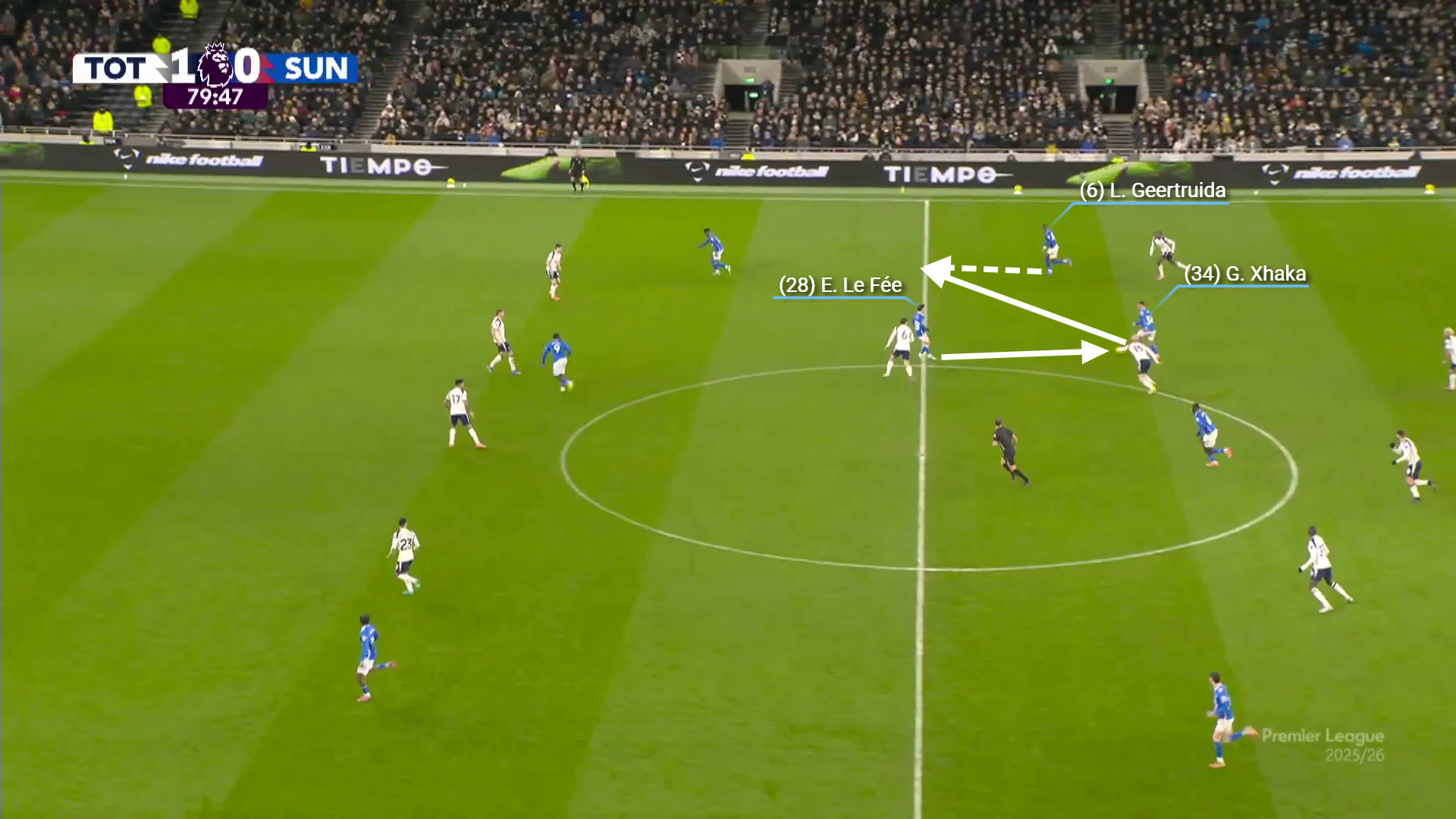
This is relevant in a pairing with Ballard, who can be solid and assertive but does not naturally offer the same variety of left-sided angles and disguised access passes.
Alderete’s presence widens the scope of Sunderland’s first phase.
That ability to pass under pressure also links to his composure.
He tends to look like a defender who expects contact.
When opponents try to jump the first pass, Alderete can hold the ball long enough to manipulate the presser and then release at the right moment.
His best sequences are those where he invites pressure, uses a small adjustment to open his body, and then plays into midfield quickly enough that the press cannot recover.
Defensively, Alderete is a strong 1v1 defender who understands how to use his body without becoming reckless, although the risk is always present.
In their 2–0 defeat to Manchester United, Senne Lammens hit a long ball to Bryan Mbeumo, who then feeds Bruno Fernandes.
Alderete had already read the danger.
As Mbeumo set Fernandes, Alderete recognised Mbeumo’s run beyond Sunderland’s backline into the space behind, with Sunderland positioned near the halfway line.
He stepped in with an important tackle, won the ball off Fernandes, and laid it off to Granit Xhaka, allowing Sunderland to regain possession in an advanced area.
Alderete is comfortable in both zonal and man-marking contexts.
For a side like Sunderland, it is imperative that they can defend with different reference points depending on the game state.
Against some opponents, they may want to protect zones around the box, but against others, they might need to follow runners and compete in direct duels.
As he showed during his spell at Valencia, Alderete uses his aggression to win the ball back, denying opponents the chance to turn and forcing them to retreat.
This leads to provoking a turnover.
Omar Alderete’s game translates across both due to his understanding of angles.
He tends to position himself to show attackers into areas where support is closer and where the next duel becomes easier.
He is not what you would call a pacy centre-back in open space.
The Premier League can punish defenders who are forced into long sprints towards their own goal.
Omar Alderete’s ability to read the game helps him avoid being exposed in those situations, and short-distance acceleration allows him to create separation between himself and an attacker at the exact moment the ball arrives.
That first movement is more important than top speed because it determines whether the striker can roll you or must take an extra touch.
Context On Régis Le Bris Tactics & Why Omar Alderete Suits Them
Where he becomes especially valuable to Régis Le Bris is in the aggression between the lines.
Sunderland’s defensive identity under Le Bris is built around compactness and intensity, expressed through a 4-4-2 shape out of possession.
Higher up the pitch, there is an intention to press with man-to-man principles, using the front players to jump on specific triggers and then trusting the midfield behind them to lock down the second-ball zones.
Alderete fits that requirement, from the centre-back needing to step out and jump into the space between midfield and attack.
As seen against Crystal Palace, Sunderland are increasingly settled in their out-of-possession phase after losing the ball.
Will Hughes plays a pass between Noah Sadiki and Xhaka for Brennan Johnson to receive in the space behind them.
That pocket is where uncertainty creeps in, because Johnson can turn and run directly at the defence and, with time to lift his head, evaluate multiple options.
In those moments, the centre-back’s job is to kill the space early and strip the attacker of possibilities.
Alderete does exactly that.
Even though Johnson’s body shape is not set to swivel and drive at Sunderland’s back line, Alderete is already proactive.
He steps in on the first touch and shepherds the danger away from the central zone.
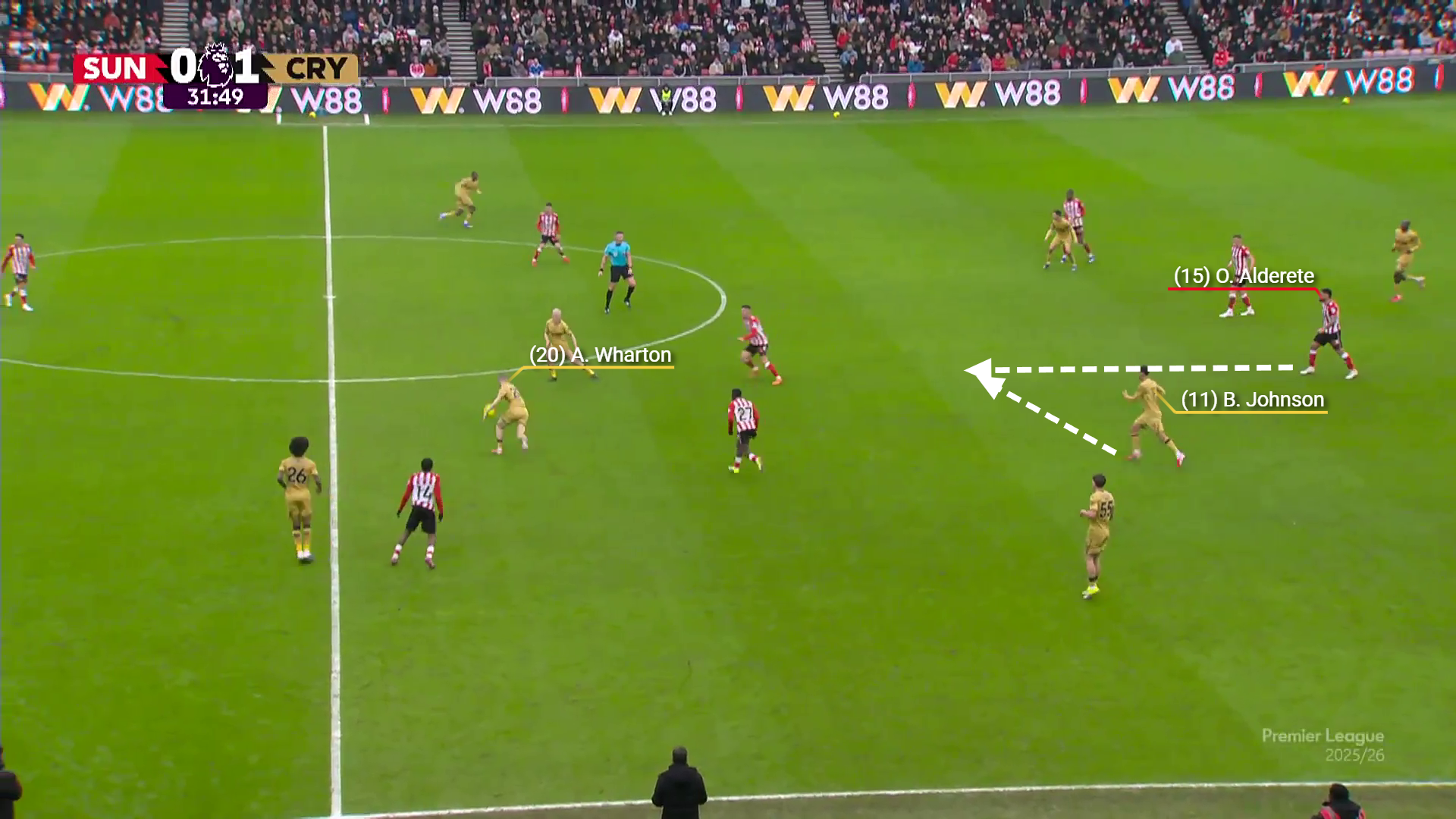
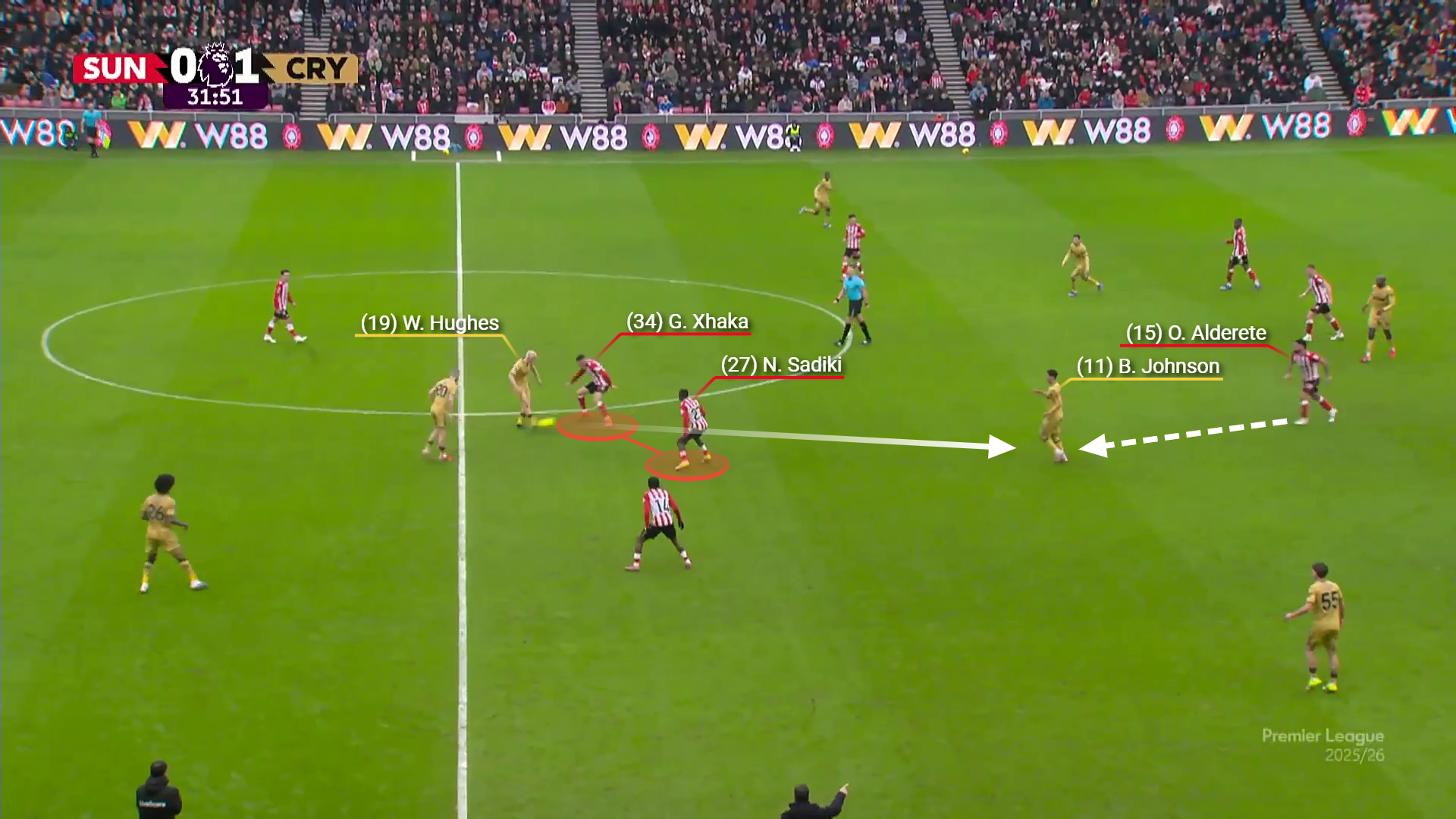
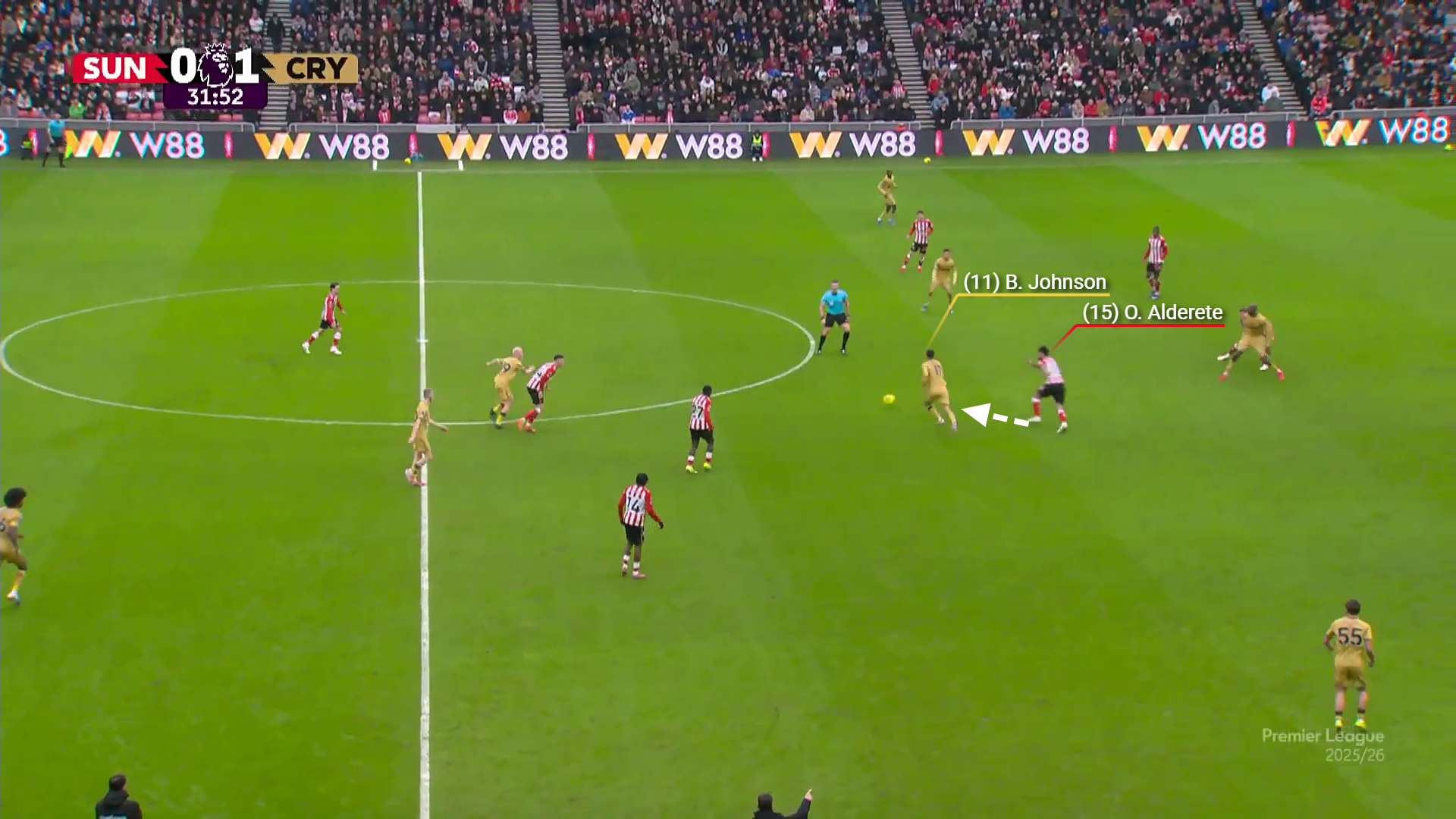
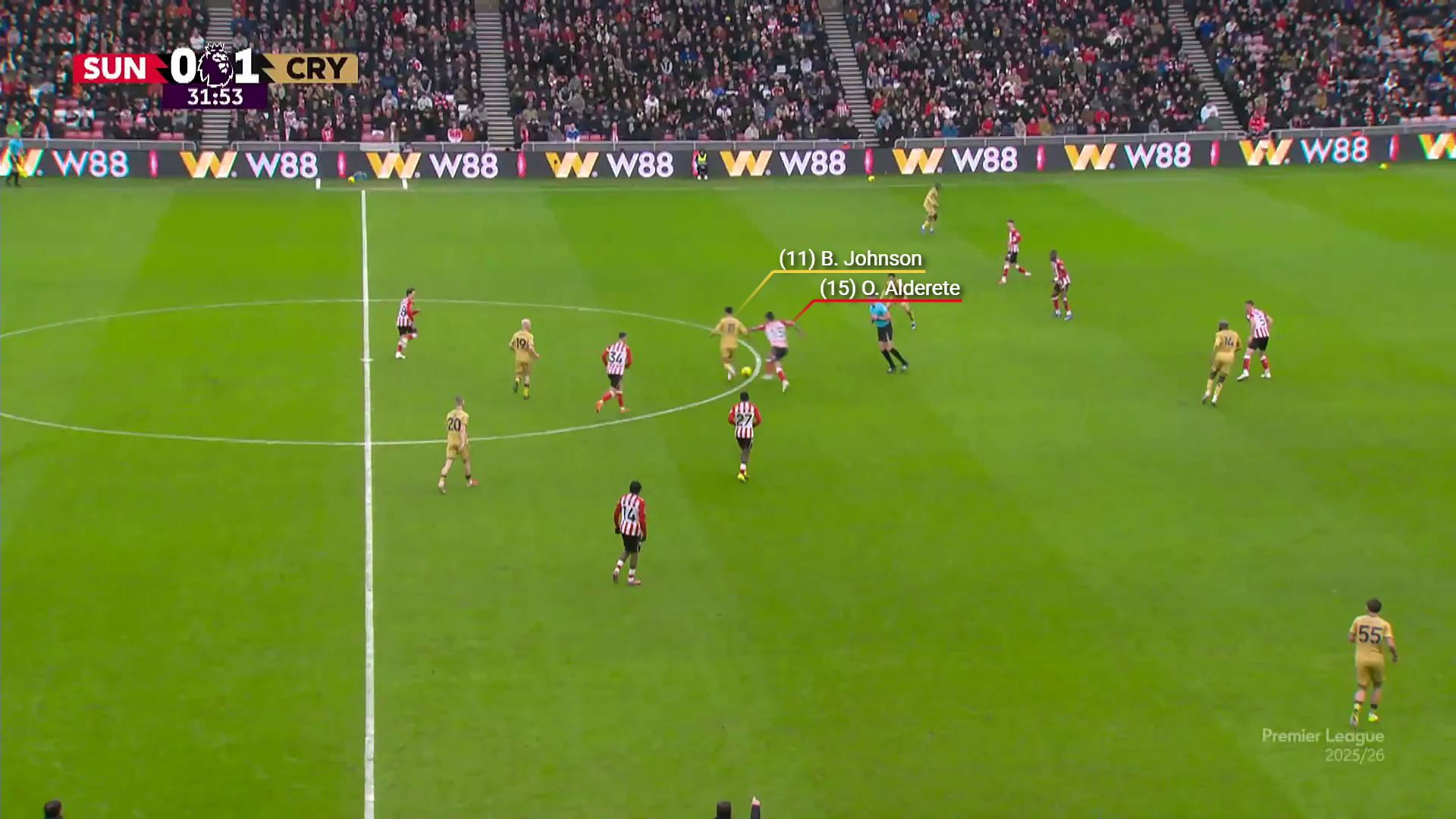
It is a high-IQ defensive action because it combines aggression, timing to the press, and consideration of the distances behind him.
Le Bris adjusts his buildup dynamics to the opponent’s press, moving between shapes such as 4-2-4 and 4-3-3 in the first phase, depending on the situation.
And at the heart of this, Omar Alderete is able to adapt and find the spare player/right pass.
From a psychological point of view, it is the mental upside Alderete brings to the side.
One of the most impressive things about Le Bris’ Sunderland has been how unfazed they are by the opposition, and that mentality aligns closely with Alderete’s Getafe experience.
Bordalás teams live for discomfort.
They are able to thrive through the chaos and ugly stretches of low possession.
Alderete carries that personality into Sunderland’s back line, which can be contagious.
It is easier for younger defenders to hold their nerve when the player next to them treats pressure as normal.
Omar Alderete Risk Profile & Limitations
The same traits that make Alderete a solid aggressor can also turn into a liability.
He has a red card or a penalty in him, but this is a tactical risk when defenders play on the front foot.
When you step between the lines to win the ball, the margin for error narrows.
This is also where his partnership with Ballard and the supporting cast matters.
Mukiele or Reinildo’s athleticism can cover spaces that open when a centre back steps out, while Xhaka’s ability to anticipate and plug gaps reduces the number of emergency situations.
Conclusion
At such a low fee, Sunderland have acquired a defender in his prime, with an international pedigree and top-flight experience across several European leagues.
His signing has undoubtedly raised the floor of the team.
With Sunderland set to remain in the Premier League, Omar Alderete’s season will be remembered as one of the understated reasons why.
He is strong, technically secure, and tactically suited to what Le Bris asks from his backline.
He can probably play at a higher level, but for Sunderland, his importance is precisely that he has brought stability.
In a first season where survival often depends on dozens of small moments, Alderete has been winning enough of them to make Sunderland look less like visitors and more like mainstays.
