
In the sterile, high-possession landscape of modern La Liga, José Bordalás remains the ultimate disruptor.
His Getafe CF side has long been synonymous with a brand of football that prioritises defensive solidity, high-intensity duels, and a refusal to allow the opponent any rhythmic comfort.
However, the second half of the 2025/2026 campaign has introduced a fascinating evolution in Azulones’ attacking output.
While the 4-4-2 structure remains the holy scripture at Estadio Coliseum, the personnel occupying the forward line, Martín Satriano and Luis Vázquez, have transformed Getafe from a team that merely survives transitions into one that weaponises them with surgical precision.
After the injury to Borja Mayoral, the team was in desperate need of more attacking power, with no other player scoring three more open-play goals, and the club acted accordingly to the wishes of the manager.
This is not the traditional big-man, small-man partnership of yesteryear; it is a sophisticated dual-threat system designed to exploit the physical and positional frailties of Spain’s more ball-playing-focused backlines.
Bordalás has always demanded strikers who are willing to suffer for the collective, but in Satriano and Vázquez, he has found a pair that offers a rare blend of “Garra” and technical functionality.
The partnership functions as a reactive mechanism to the league’s trend toward high defensive lines.
By pairing Satriano’s roaming intelligence with Vázquez’s relentless verticality, Getafe forces opposition centre-backs into a constant state of dual-priority.
They can no longer simply mark the “nine”; they must navigate a shifting landscape where the focal point of the attack is constantly rotating.
This Getafe tactical analysis and scout report will dissect the individual profiles of both strikers, the Uruguayan’s wide-roaming creativity and the Argentine’s sheer physical dominance, before exploring the intricate mechanics of their partnership.
We will see how Bordalás has coached these two to act as a tethered unit, ensuring that Getafe remains a tactical nightmare for the division’s elite.
It is a masterclass in pragmatic personnel integration, proving that direct football, when executed with high-level positional awareness, is as intellectually stimulating as any “Juego de Posición.”
The Wide-Roaming Architect: Martín Satriano
Martín Satriano’s role within the Getafe machine is perhaps the most critical component of their tactical flexibility.
Standing at 1.87m, he possesses the physical stature of a traditional target man, yet his movement profile is that of a modern false nine or a wide-drifting playmaker.
Under Bordalás, Satriano has been granted a specific tactical license: to vacate the central corridor and seek out pockets of space in the half-spaces or along the touchlines.
This wide-roaming tendency is not a sign of positional indiscipline; rather, it is a calculated effort to manipulate the opposition’s horizontal compactness.
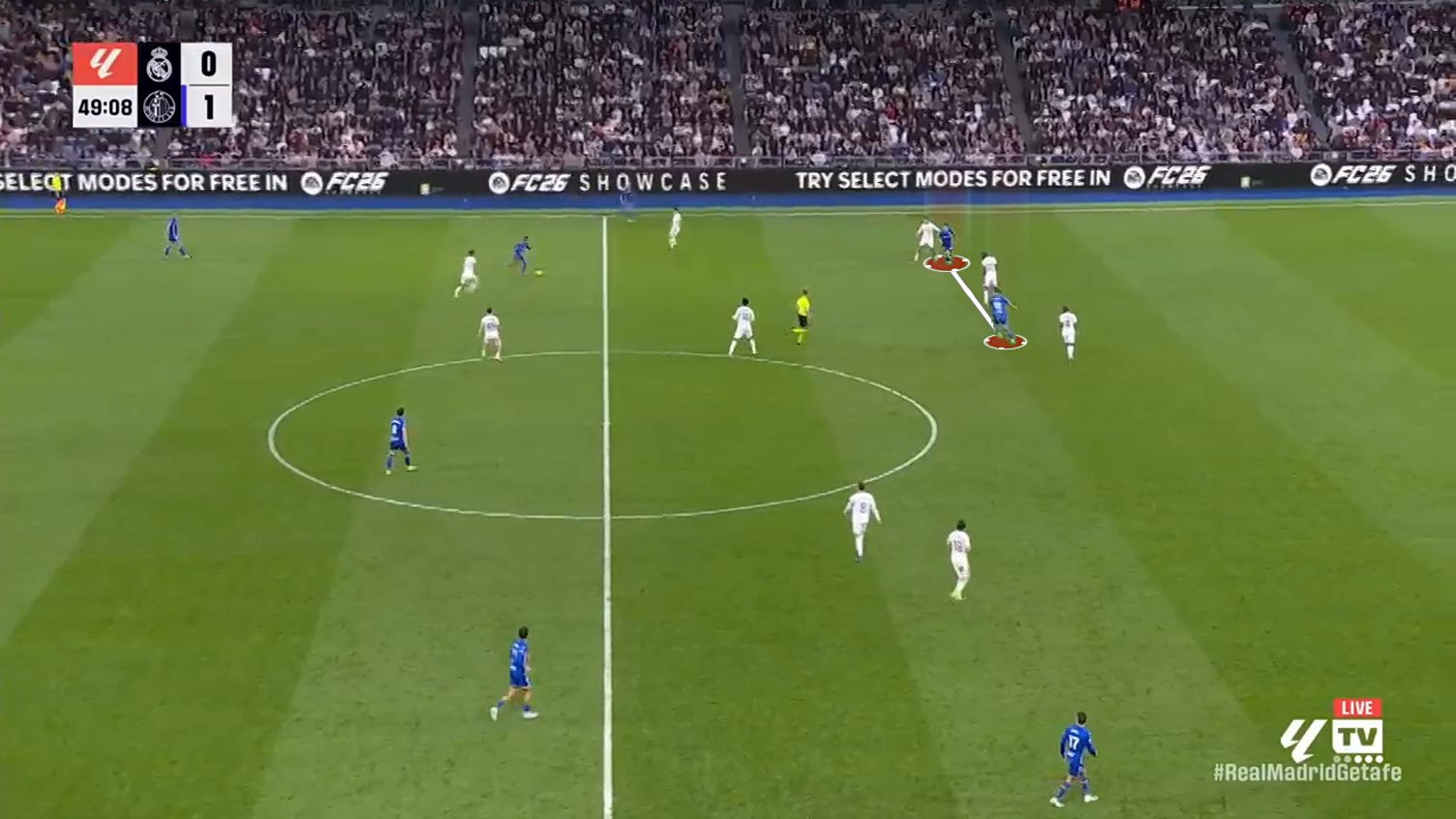
When Satriano drifts toward the left flank, he drags the opposition right-back or a ball-side centre-back with him, essentially “hollowing out” the heart of the defence for late runs from midfield or vertical thrusts from his strike partner.
On the ball, Satriano exhibits a technical proficiency that is often underrated in the context of Getafe’s direct style.
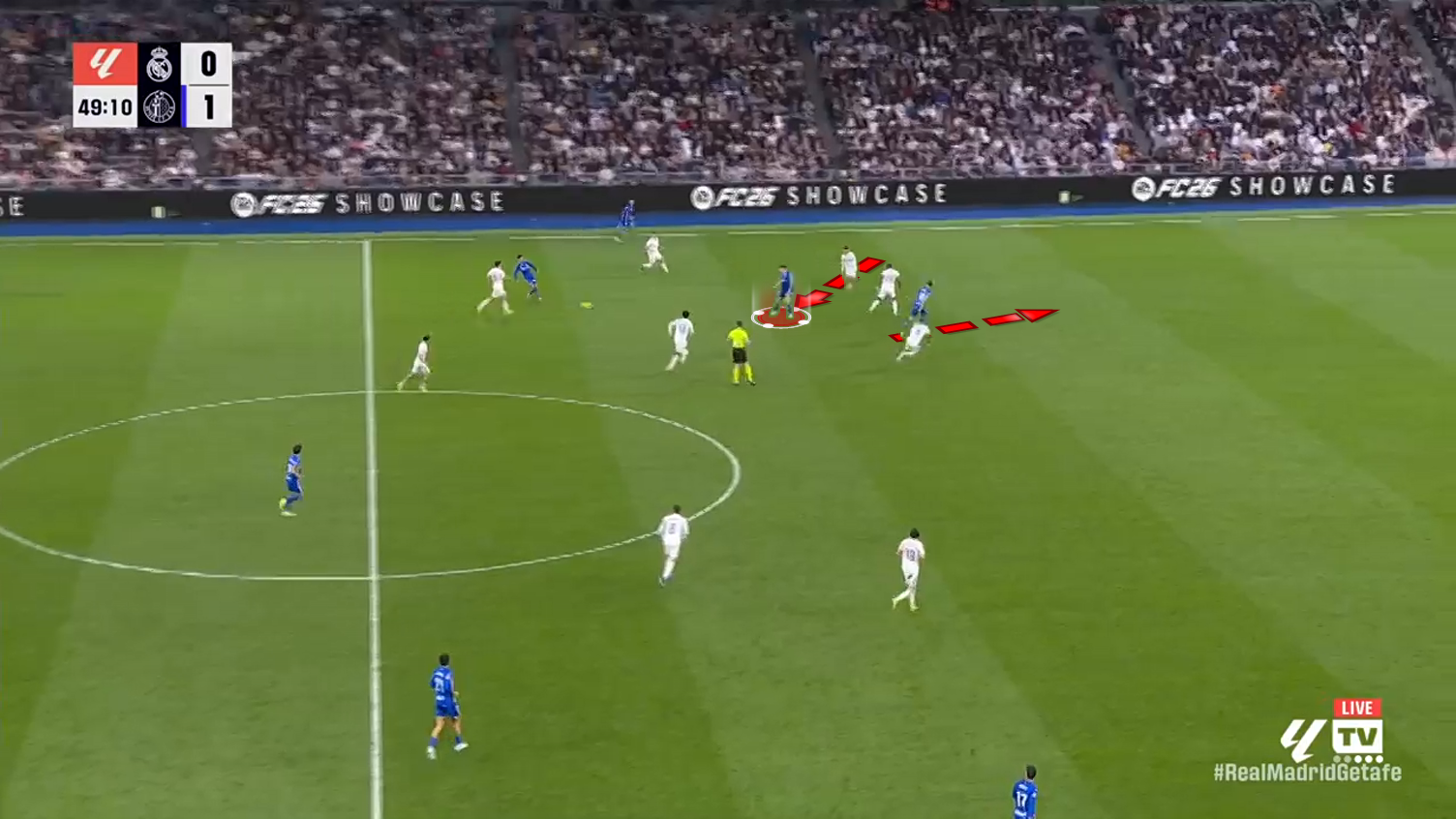
He serves as the primary relief valve during the build-up phase.
When Getafe’s centre-backs are under pressure, the long ball is rarely aimless; it is directed toward Satriano in wide areas.
His ability to receive under pressure, shield the ball with his frame, and turn into space allows Getafe to bypass the midfield scrap entirely.
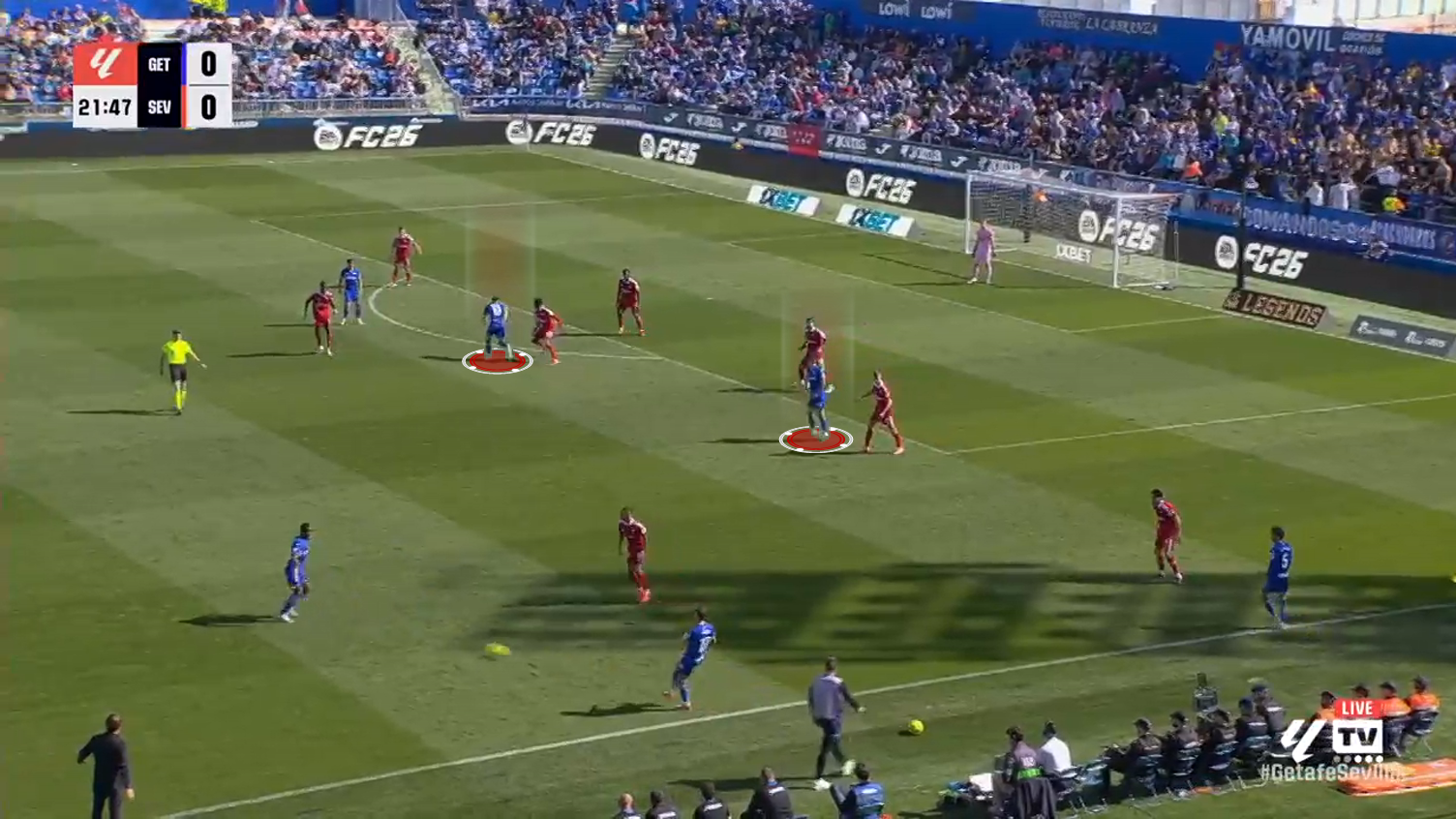
Once he secures possession, his vision comes to the fore.
He excels at switching the play or sliding weighted passes into the path of runners.
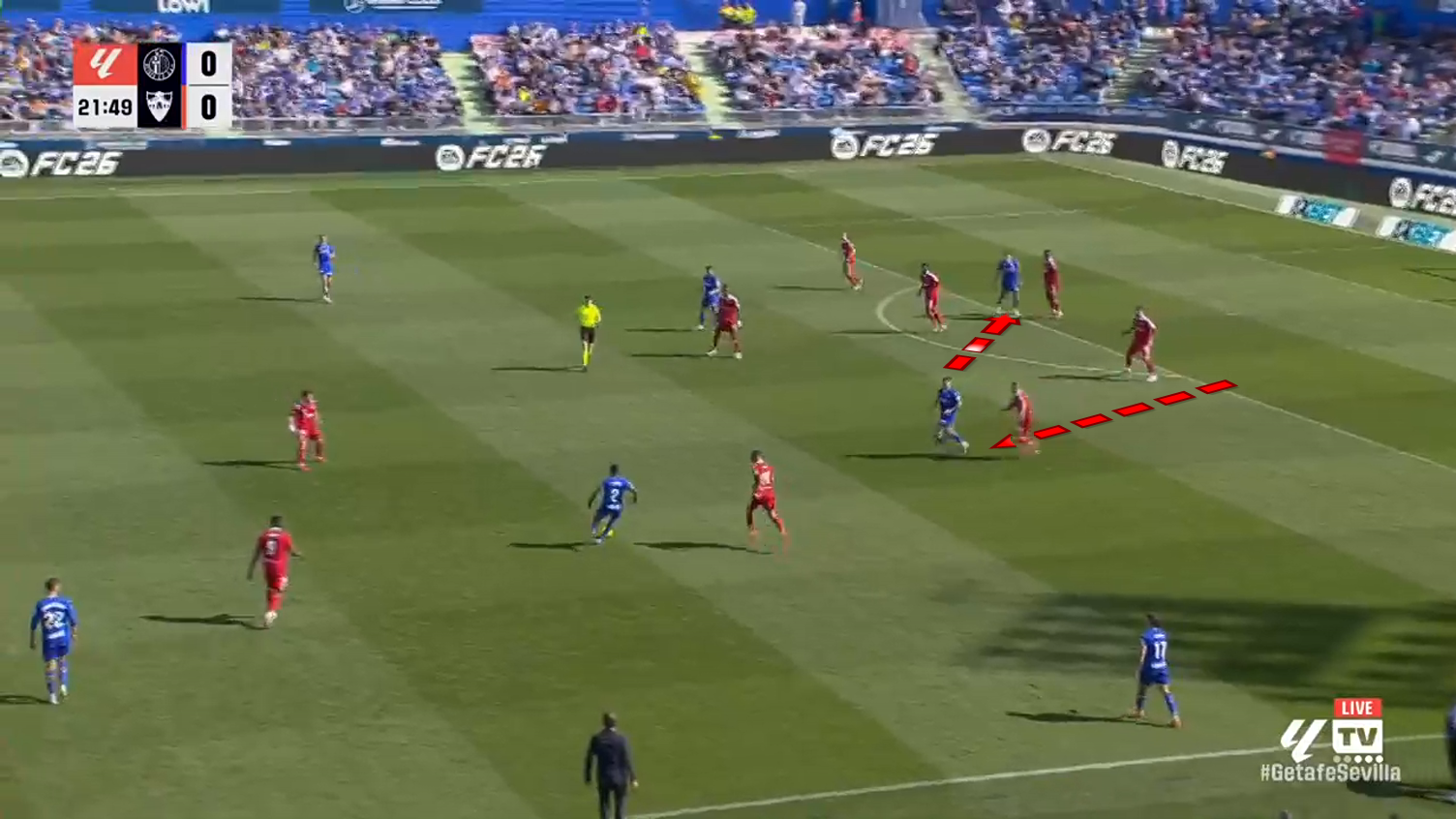
His aerial ability, while useful for winning initial headers, is actually more potent when used to flick balls into the path of Vázquez.
Satriano doesn’t just jump; he jumps with the intent to facilitate.
His 1.87m frame allows him to compete with the league’s most physical defenders, but it is his soft touch upon landing that truly initiates the Getafe attack.
Tactically, Satriano acts as the linker.
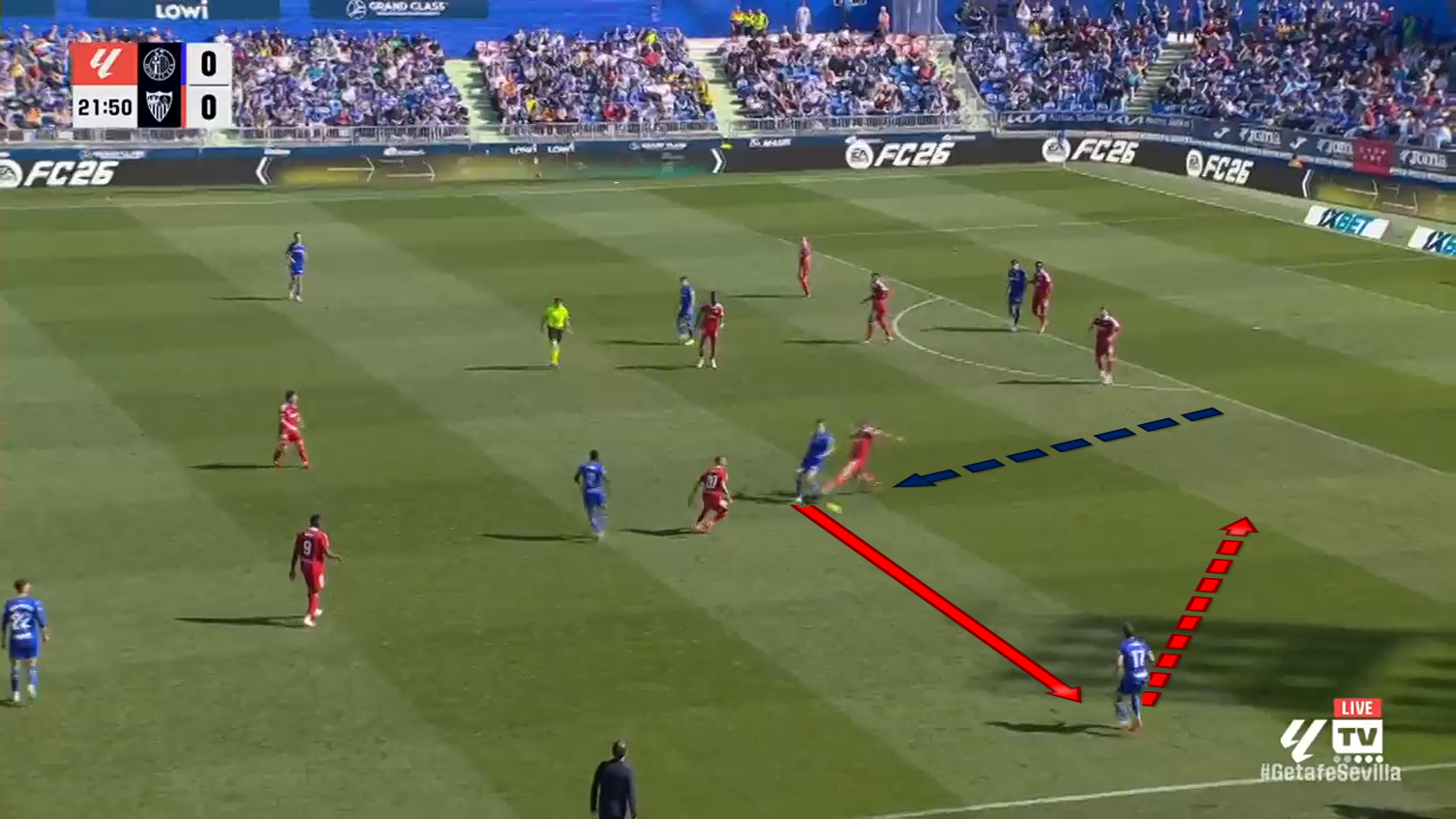
In the 4-4-2, the gap between the midfield bank of four and the strikers can often become a chasm.
Satriano bridges this gap by dropping deep into the ten space, creating a temporary 4-4-1-1 structure that provides Getafe with an extra passing lane.
This movement is essential for retaining possession in the final third.
Instead of the ball constantly coming back at the Getafe defence, Satriano’s ability to hold and recycle the ball allows the fullbacks, such as Diego Rico, to advance into crossing positions.
His intelligence in the press is equally vital.
He doesn’t merely chase the ball; he uses his cover shadow to block passing lanes to the opposition’s deep-lying playmaker.
By stifling the source of the opponent’s build-up, Satriano forces them into the long-ball game that Getafe’s defenders thrive on.
He is the technical brain within the physical body, a player whose roaming nature provides the Azulones with the creative spark necessary to break down low blocks while remaining the first line of defence in Bordalás’ high-intensity pressing scheme.
The Physical Powerhouse: Luis Vázquez
If Satriano is the architect, then Luis Vázquez is the battering ram.
The Argentine striker is the physical embodiment of the Bordalás philosophy: tall, rapid, and utterly uncompromising in the duel.
Standing at 1.90m, Vázquez provides the verticality that balances Satriano’s lateral movement.
His primary strength lies in his pinning ability, the capacity to occupy both opposition centre-backs through sheer physical presence and the constant threat of a run in behind.
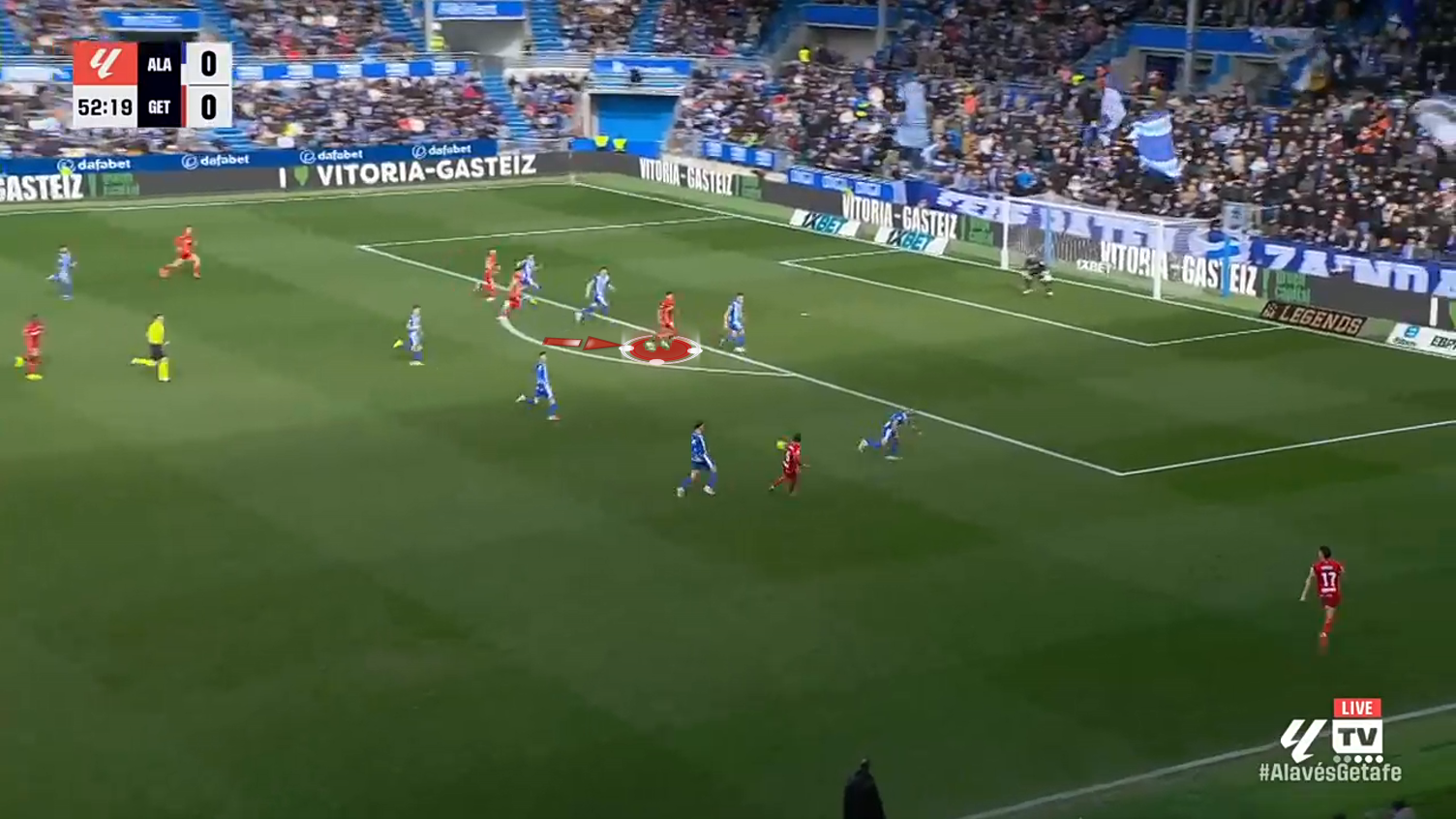
Vázquez does not look for the ball in space; he looks for the ball in the defender’s body.
He thrives on contact, using his superior height and strength to establish a platform in the final third from which Getafe can launch their secondary attacks.
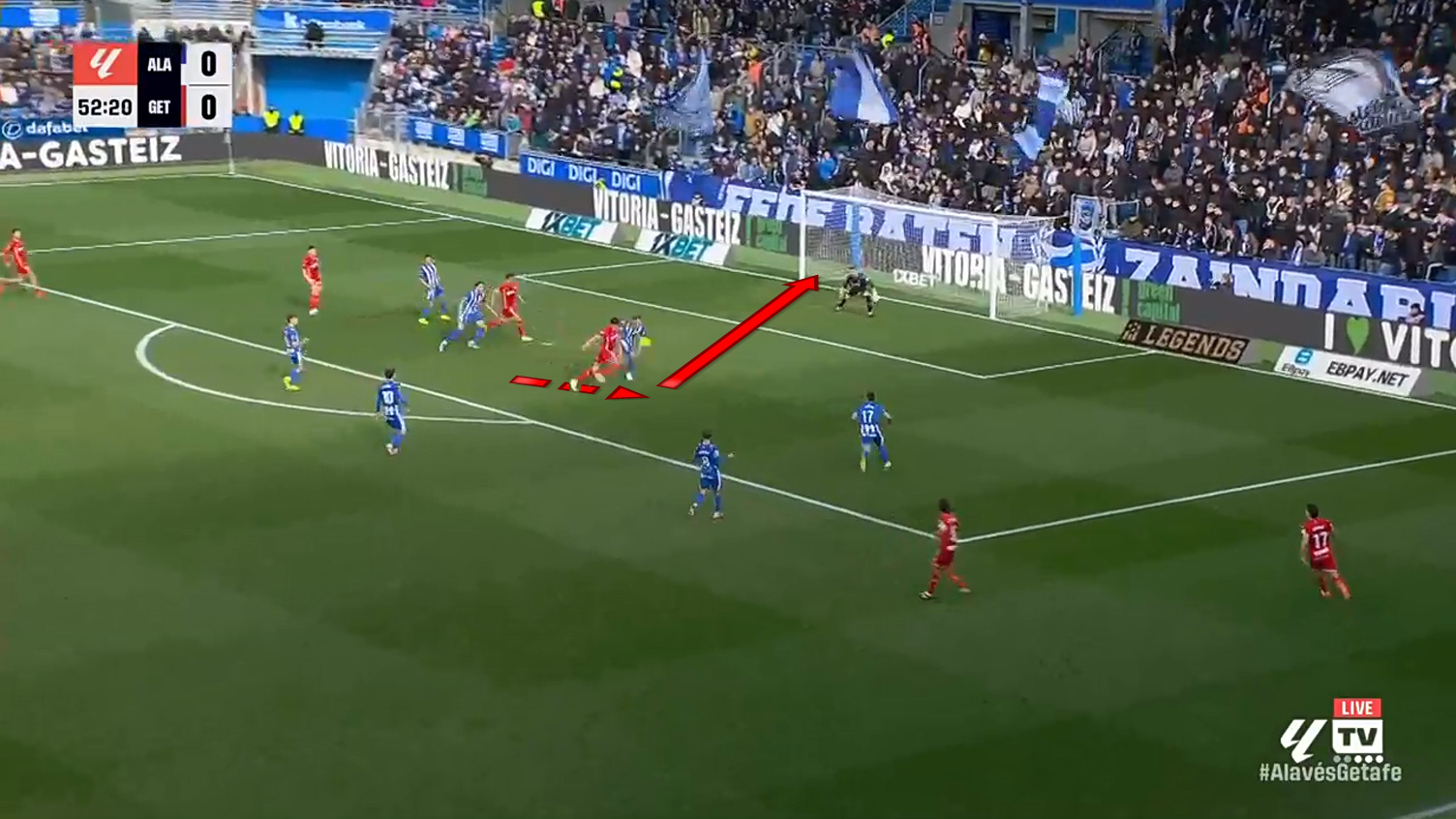
Vázquez’s athletic profile is remarkably suited for the transition-heavy nature of Getafe’s game.
Despite his massive frame, he possesses a burst of pace over the first 10 yards that catches defenders off guard.
This makes him a lethal threat on the shoulder of the last defender.
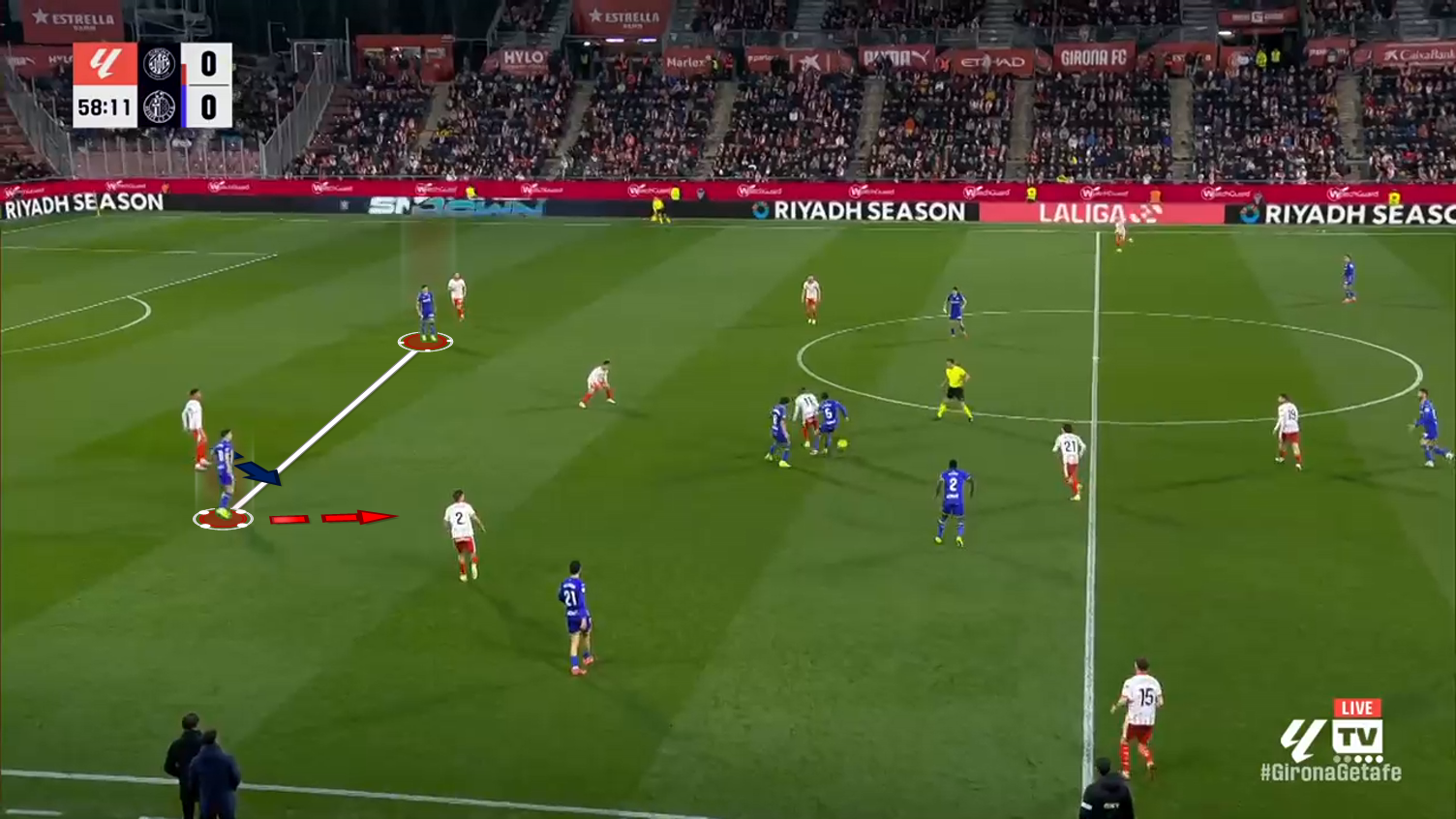
When Getafe recovers the ball in their own half, Vázquez’s first instinct is a vertical sprint toward the goal.
This movement forces the opposition defensive line to drop deeper, creating more room in the midfield for Satriano and the Azulones’ wingers to operate.
His work rate is equally staggering; he is a defensive striker in the truest sense, relentless in his pursuit of the ball-carrier and always willing to initiate the counterpress.
This high-intensity work rate wears down defenders mentally and physically, often leading to errors in the final fifteen minutes of matches.
In the box, Vázquez is a predator of the highest order.
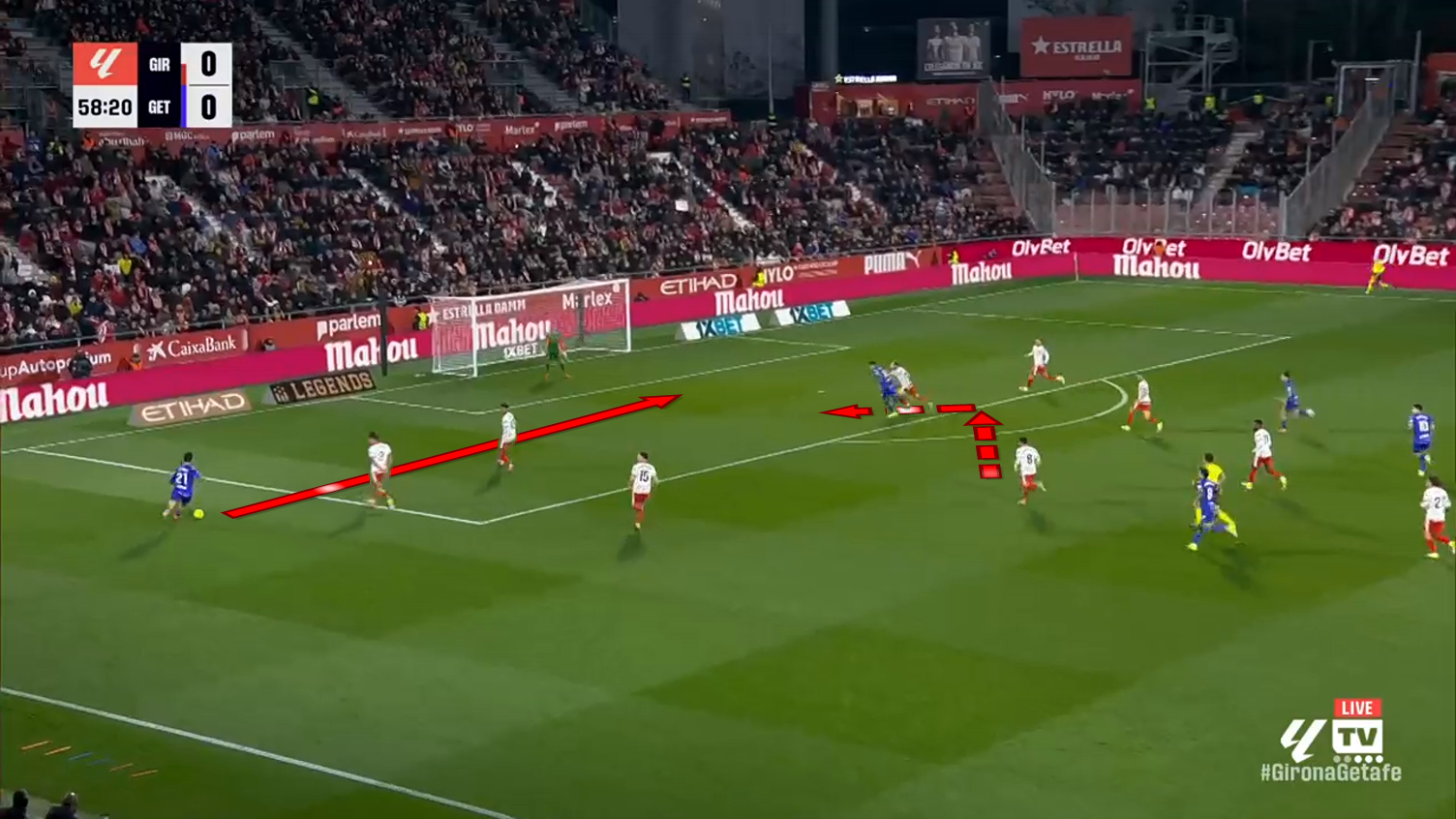
He excels at attacking the posts, using his height to dominate in the air but also showing a keen sense for second balls.
In the Bordalás system, crosses are a primary source of chance creation, and Vázquez is the ultimate target.
He doesn’t just wait for the ball; he manoeuvres his marker into a position of weakness before the cross even arrives.
His physical playstyle is not just about brute force; it is about winning the space.
Whether he is shielding the ball to allow a teammate to join the attack or rising above a defender to power a header toward goal, every action is deliberate.
He provides the edge that Getafe requires, a focal point who can turn a 40/60 ball into a 50/50, and a 50/50 into a goal.
Without his willingness to engage in the “ugly” side of the game, the space Satriano enjoys would not exist.
Vázquez is the gravity of the Getafe attack, pulling the defence toward him and creating the chaotic conditions in which this team thrives.
The Mechanics Of The Partnership: Positional Symmetry
The true genius of the Satriano-Vázquez partnership lies in their positional symmetry, a tethered relationship where the movement of one directly informs the positioning of the other.
Bordalás has coached these two to act as a cohesive unit that stretches the opposition defence both vertically and horizontally.
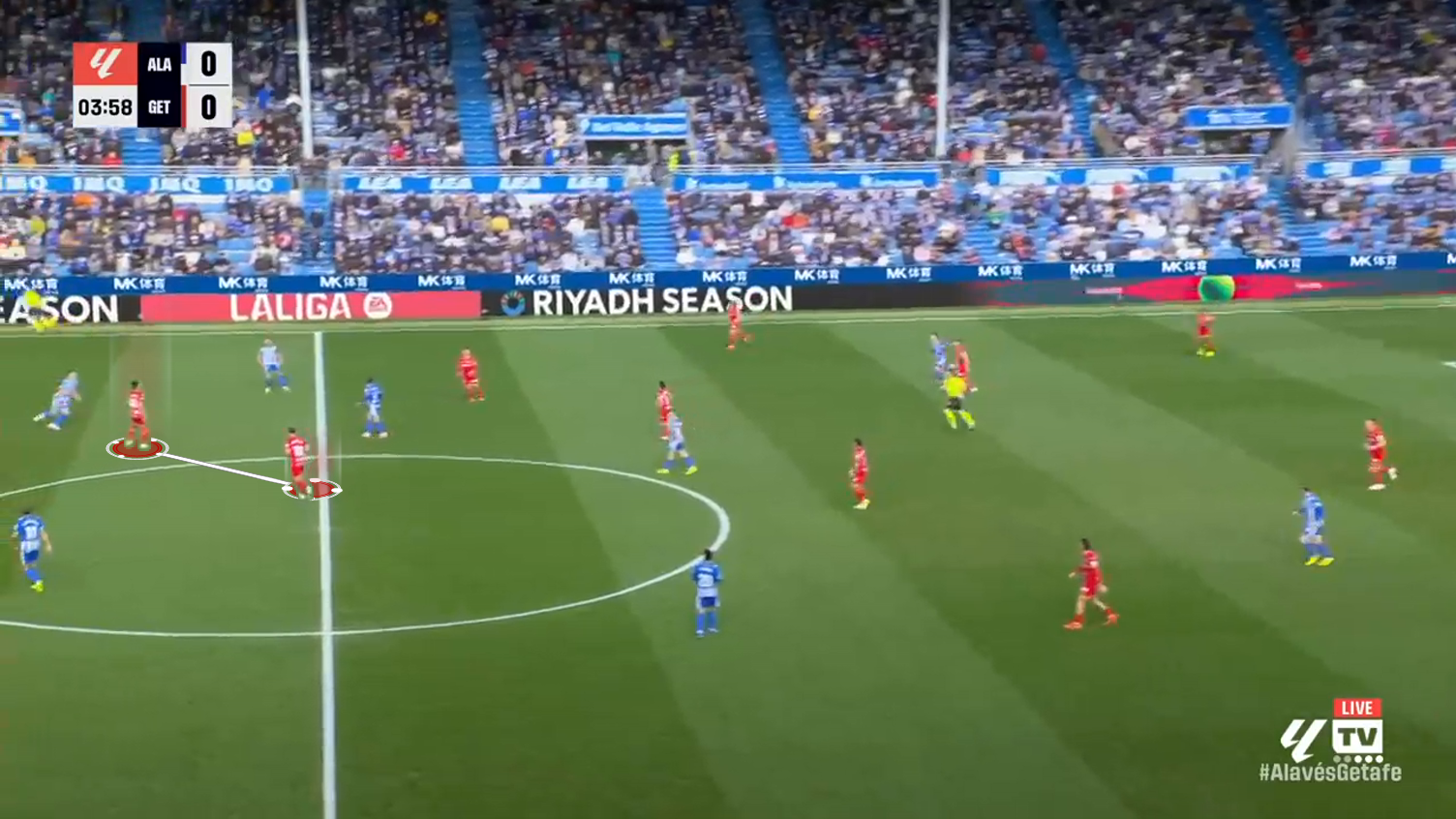
The most common pattern involves Satriano dropping into a wide-left or central-deep position to receive a pass.
As soon as the Uruguayan moves toward the ball, Vázquez initiates a diagonal run into the space Satriano has vacated.
This up-back-and-through movement is a staple of Getafe’s play.
The centre-back following Satriano is pulled out of the defensive line, creating a gap that Vázquez’s pace and power can exploit.
This partnership also thrives on second-ball dominance.
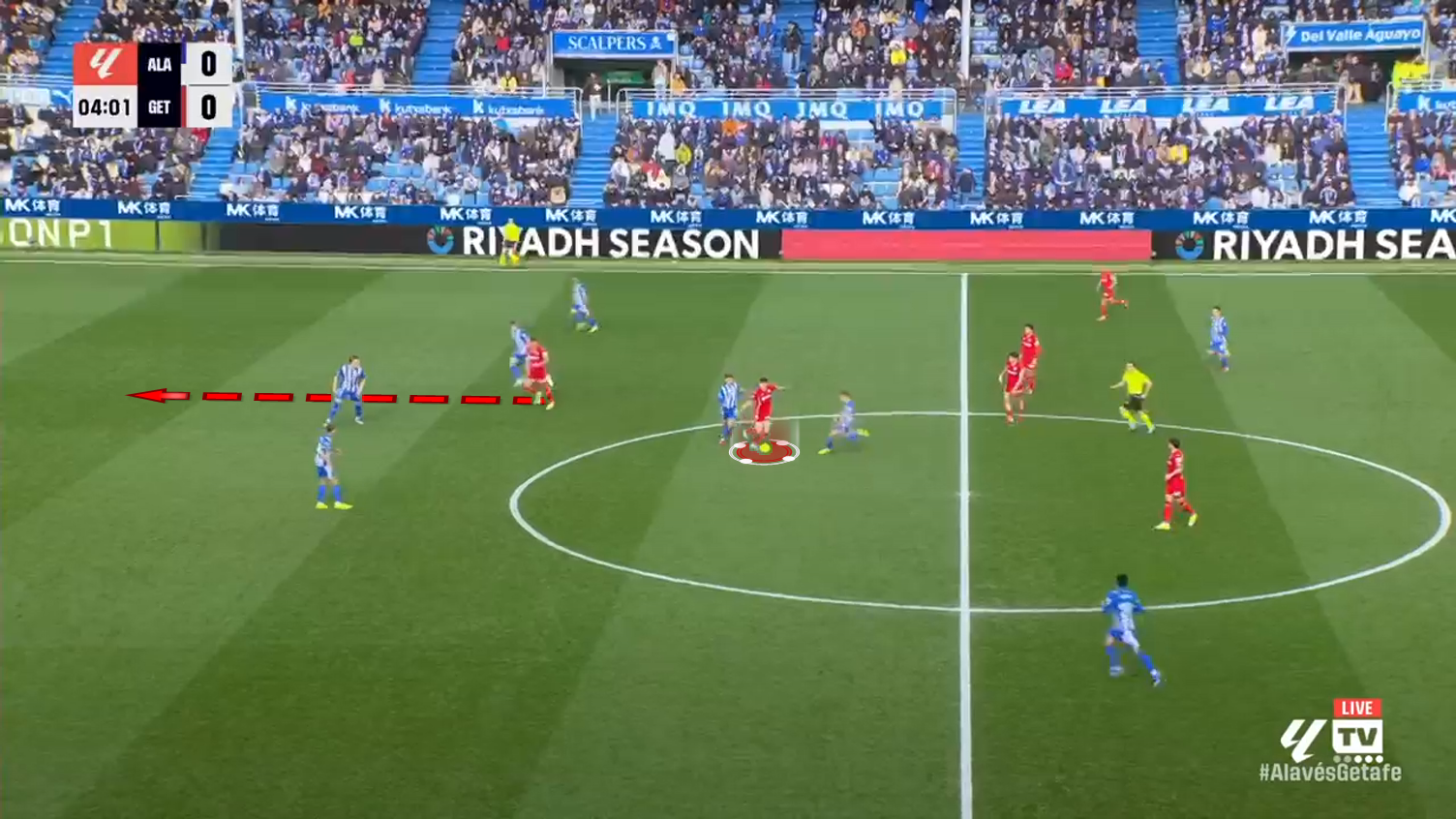
When a long ball is played toward the front line, the two strikers don’t just jump together; they stagger their depths.
One (usually Vázquez) attacks the primary duel, while the other (Satriano) positions himself in the “drop zone” to collect the flick-on or the loose ball.
This ensures that even if Getafe doesn’t win the initial header, they are the favourites to win the second ball.
This is the essence of Bordalás-ball: it’s not about the first action, but the second and third.
Their movement off one another in crossing situations is equally synchronised.
Vázquez will often make a darting run to the near post, taking two defenders with him, which allows Satriano to peel off into the “blind spot” at the back post.
This staggered arrival in the box makes it nearly impossible for a zonal defence to track both threats simultaneously.
Furthermore, their defensive coordination is what makes Getafe so difficult to play through.
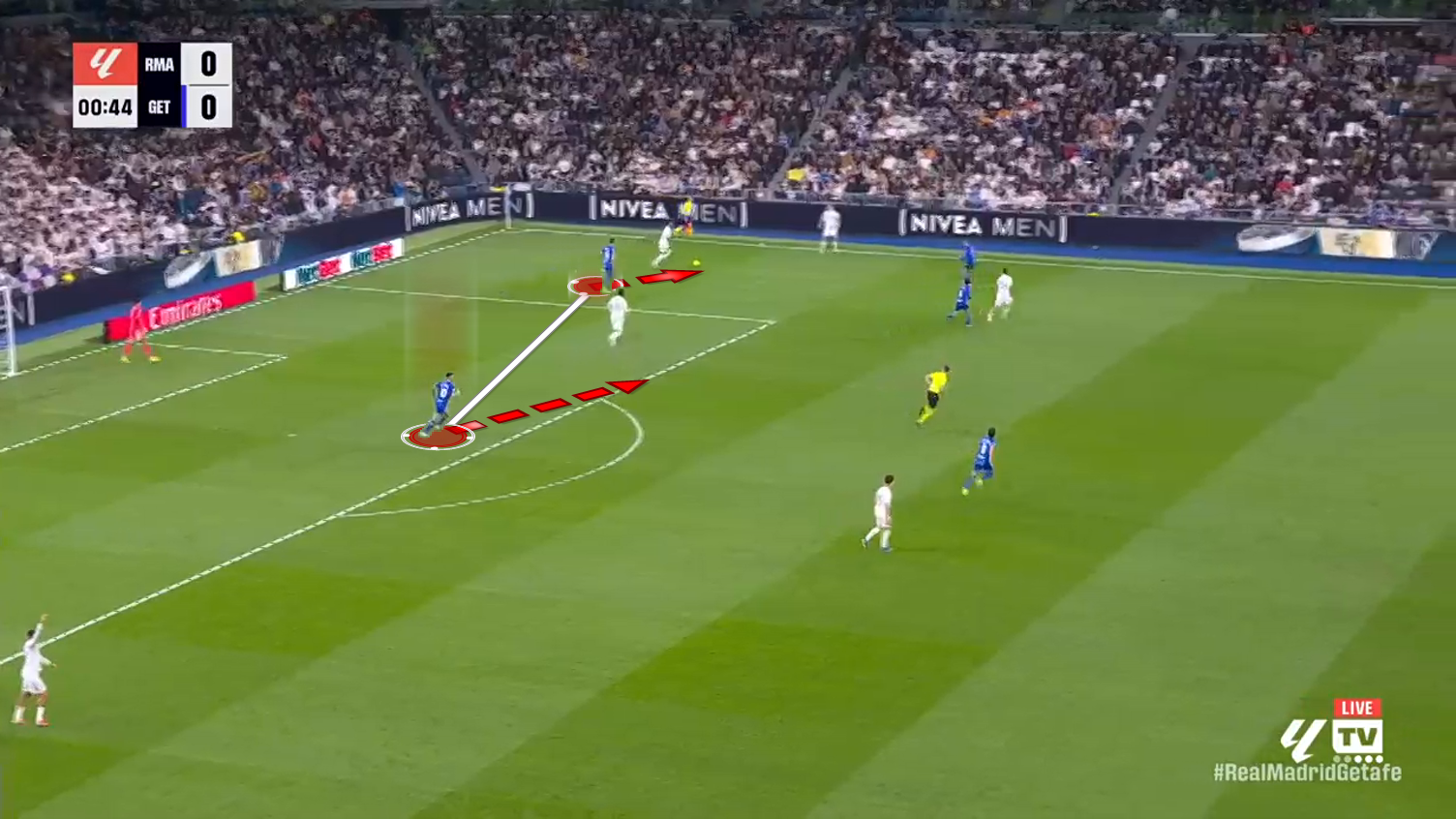
They employ a split-press where they occupy the two opposition centre-backs, but as soon as the ball is played to a full-back, the near-side striker (often Satriano) triggers the press while the other (Vázquez) shifts across to cut off the back-pass to the other centre-back.
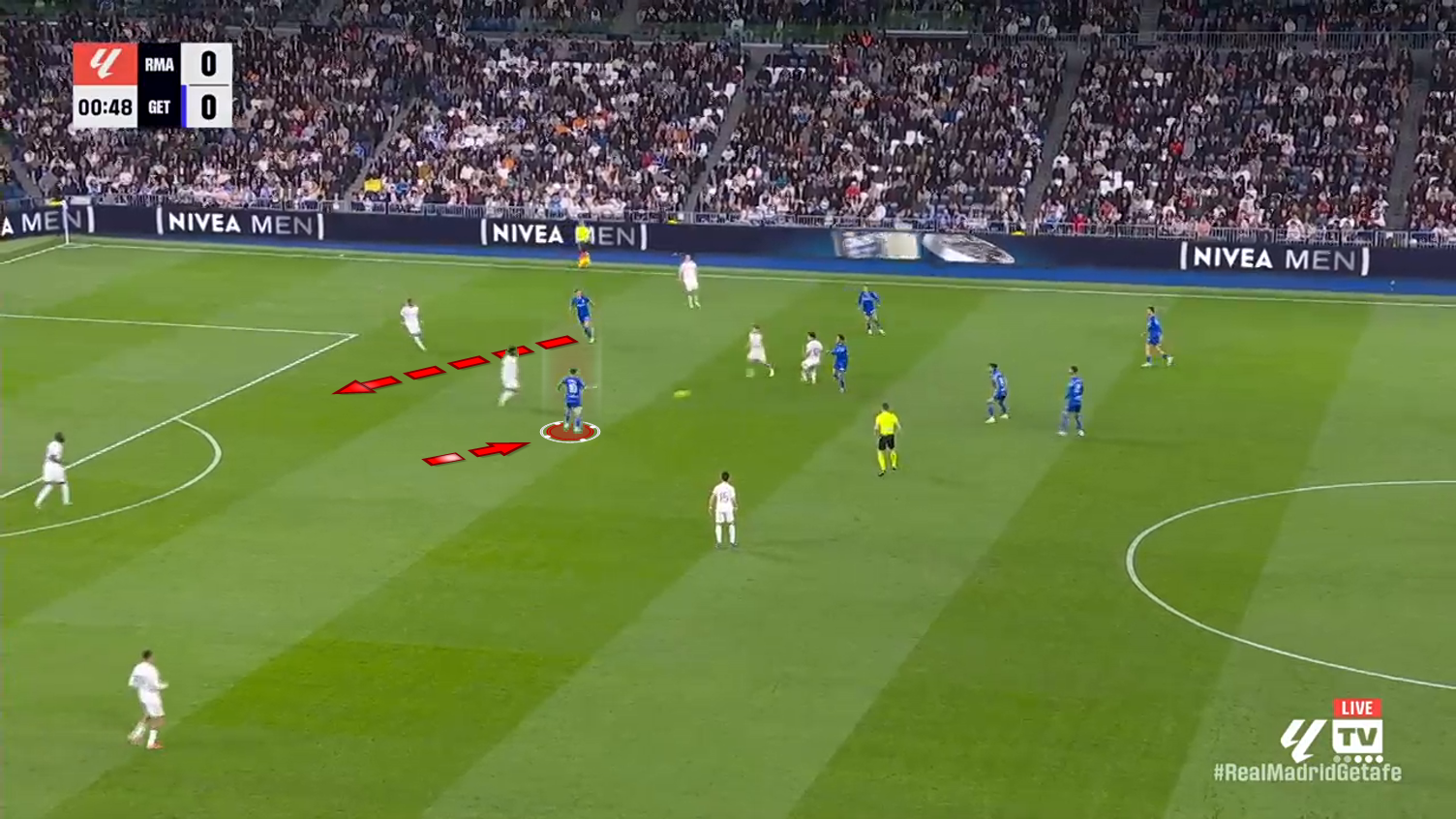
This forces the opponent into a long, low-percentage diagonal pass, which is exactly what Getafe’s compact midfield wants to defend, allowing them to collect second balls and get back into their most common pattern of play.
The individual strengths, Satriano’s technical link and Vázquez’s physical pin, complement each other perfectly.
Satriano provides the pause and the vision, while Vázquez provides the thrust and the finish.
It is a partnership defined by selfless movement; they are rarely in the same vertical lane, ensuring that the opposition defensive line is always stretched and never allowed to settle.
This positional intelligence, combined with their shared South American grit, has given Getafe a front line that is far more than the sum of its parts.
Conclusion
In the final assessment, the partnership between Martin Satriano and Luis Vázquez represents a tactical masterstroke by José Bordalás.
It is a testament to the idea that a clear identity, when paired with the right personnel, can overcome the technical gap between the league’s giants and its middle-class aspirants.
By integrating Satriano’s wide-roaming, technical facilitator profile with Vázquez’s physically dominant, vertical finisher archetype, Getafe has created a strike force that is uniquely equipped to handle the demands of modern La Liga.
They have turned the act of “direct football” into a sophisticated art form, one that relies on positional symmetry and individual sacrifice.
As the season progresses, this duo will likely be the primary reason Getafe remains in the hunt for a top-half finish.
Their ability to harmonise their movements, one dropping to create, one running to destroy, ensures that the Azulones are never a one-dimensional threat.
In Satriano and Vázquez, Bordalás hasn’t just found two players; he has found a tactical solution to the problem of modern possession-based dominance.
It is a pragmatic renaissance at Estadio Coliseum, proving that there is still plenty of room for height, pace, and sheer physical power in the Spanish top flight, provided they are guided by an elite tactical mind.
