
Wednesday’s clash between Aston Villa and Chelsea had huge implications for the race for UEFA Champions League football.
It’s almost a certainty that England is going to get an extra Champions League spot, so the race for the top five right now is really tight.
Aston Villa were comfortably inside the top three and even in the title race for a little while this season, but have since hit a rocky run of form and now are in danger of falling outside the top five after the loss to Chelsea on Wednesday.
Liam Rosenior’s side had been winless in their last three Premier League matches, dropping points from winning positions against Leeds United and Burnley before losing to Arsenal in the North West London derby on Sunday.
Unai Emery’s side had been overperforming drastically for most of the season, and now they are starting to feel the effects of negative regression.
Rosenior put together a perfect tactical plan to exploit Aston Villa’s weaknesses and delivered a statement win, boosting their chances of qualifying for the Champions League.
In this tactical analysis, we will examine how Chelsea’s aggression in possession exploited Aston Villa’s high line, how the Blues effectively overloaded the wide areas, and Aston Villa’s struggles to build out of the back.
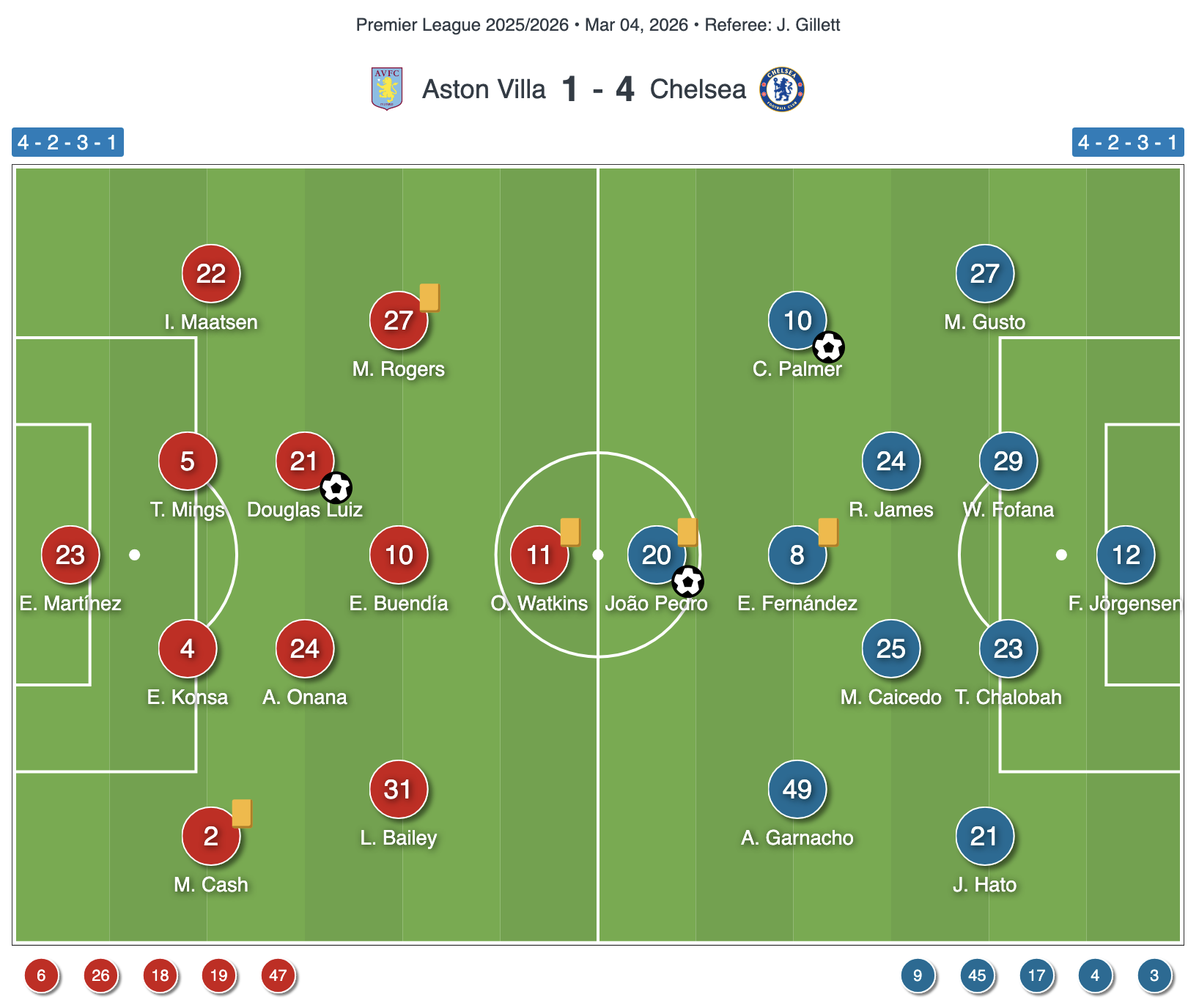
Aston Villa Vs Chelsea Lineups & Formations
Unai Emery lined his team up in their usual 4-2-3-1 formation
Emiliano Martínez occupied his usual spot in goal behind the centre-backs of Tyrone Mings and Ezri Konsa.
Ian Maatsen started at left-back, while Matty Cash started once again at right-back.
Amadou Onana and Douglas Luiz started together as the two defensive midfielders for the sixth straight match.
Emi Buendia started as the number 10 with Morgan Rogers and Leon Bailey alongside him as the two wingers.
Ollie Watkins started once again up top as the striker.
Unai Emery made five substitutions in the match.
In the 46th minute, Lamare Bogarde came on for Cash.
In the 63rd minute, Alysson Edward came on for Bailey, Jadon Sancho came on for Buendia, and Ross Barkley came on for Luiz.
In the 72nd minute, Emery made his final substitution, bringing on Tammy Abraham for Watkins.
Liam Rosenior lined Chelsea up in a 4-3-3 formation.
Filip Jørgensen lined up in goal behind Trevoh Chalobah and Wesley Fofana as the centre-back pairing.
Jorrel Hato started at left-back, while Malo Gusto started at right-back.
Reece James, Moisés Caicedo, and Enzo Fernández started together as the three midfielders.
Alejandro Garnacho started at left wing, while Cole Palmer started at right wing.
João Pedro started once again up top for the Blues.
In the 75th minute, Roméo Lavia came on for Gusto.
In the 77th minute, Tosin Adarabioyo came on for Fofana, and Marc Cucurella came on for Fernández.
The final substitution came in the 85th minute, and Andrey Santos came on for Palmer.
Chelsea’s Aggressive Passing
One of the criticisms of Enzo Maresca is that he was often too conservative in possession.
He often wanted Chelsea to maintain numerical superiority in the middle of the pitch and would consistently drop both Palmer and Fernández deeper to make that happen.
The problem with doing that against Emery is that he loves to play an extremely high line and take away any space in between the lines.
What that usually means is that, to beat his team, you have to play balls over the top or in behind with precision, not only timing your runs with their offside trap but also being in a position where Martínez can’t come out as a sweeper to clean things up.
When Rosenior started João Pedro up top, it seemed as if Chelsea wanted to overload Aston Villa through the middle, since Pedro, unlike someone like Liam Delap, loves to drop deep and get on the ball.
However, Rosenior did the exact opposite and continually had Pedro, Palmer, and Garnacho making runs in behind Aston Villa’s high line.
One of the tactics teams have been doing recently is making runs right through the two centre-backs
Leeds recently pushed two of their forwards up to occupy the two centre-backs a couple of times and then had Dominic Calvert-Lewin make a delayed run right through the door.
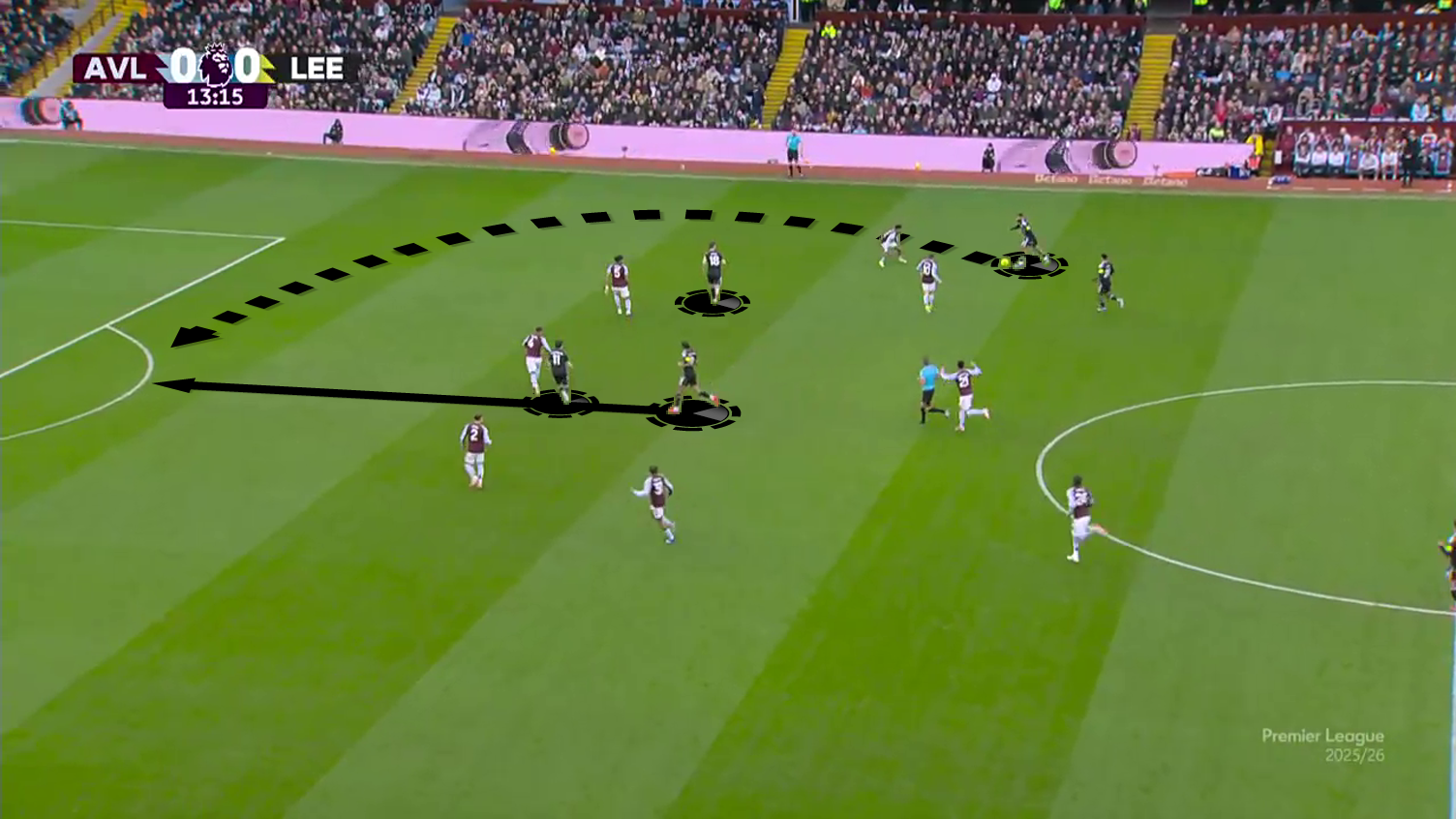
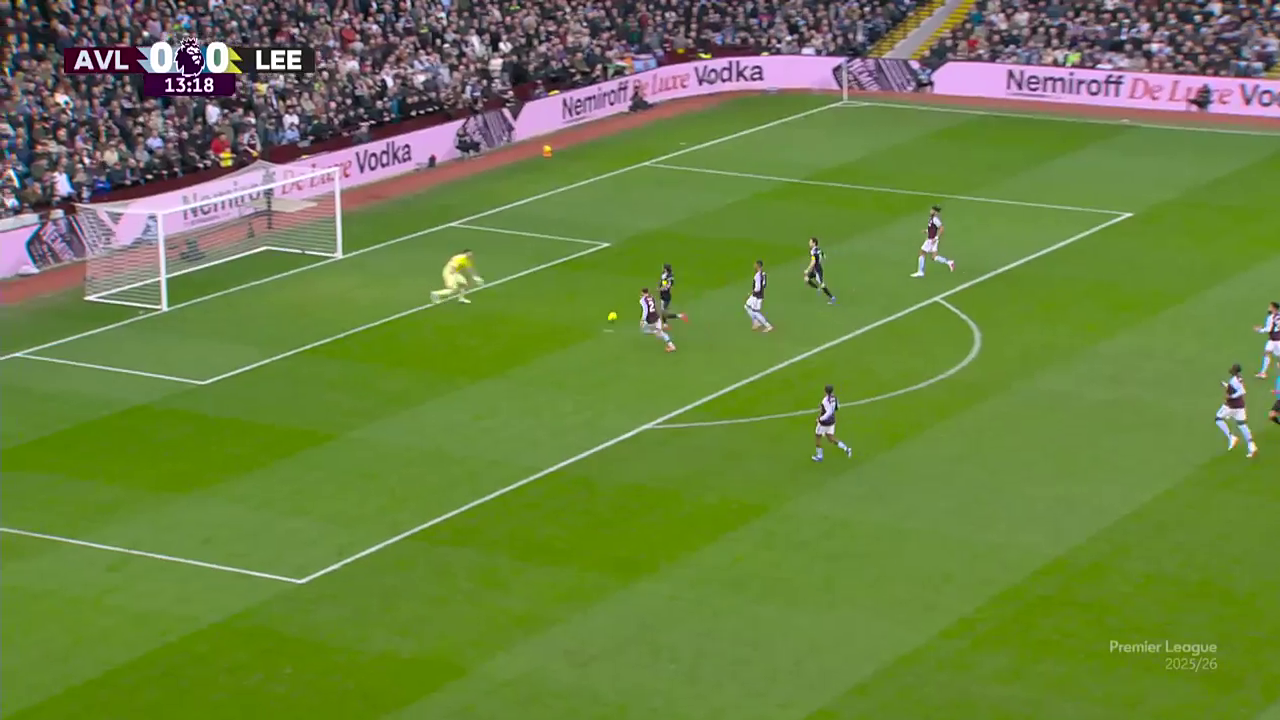
Chelsea had the same idea since they weren’t going to receive the ball in between the lines easily.
Aston Villa typically doesn’t pressure the ball once they fall back into their mid-block, so Chelsea’s forwards took advantage of that time on the ball to time their runs.
You can see early on here, Palmer making a run right between the two Aston Villa centre-backs and creating a big chance for Garnacho.
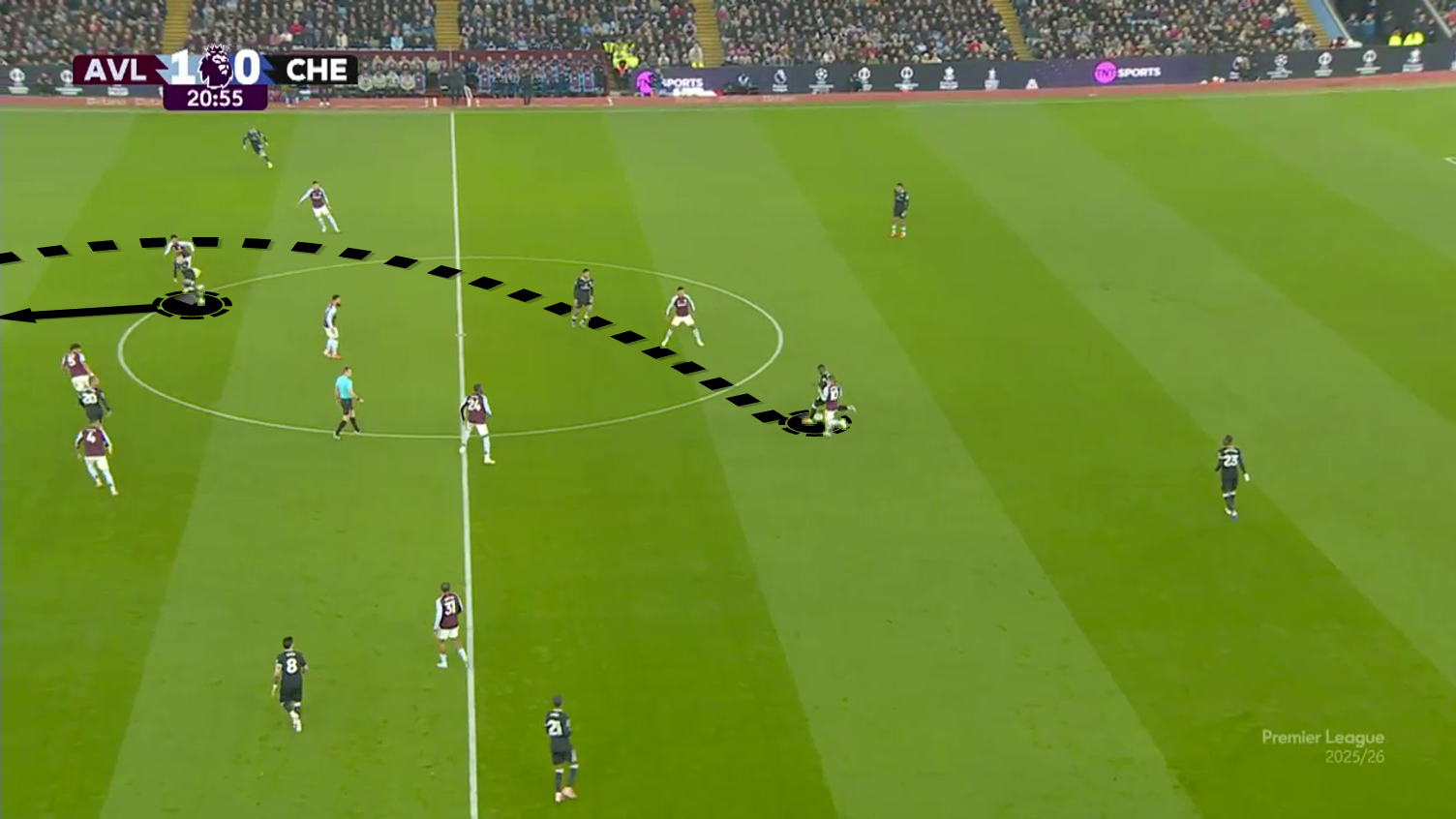
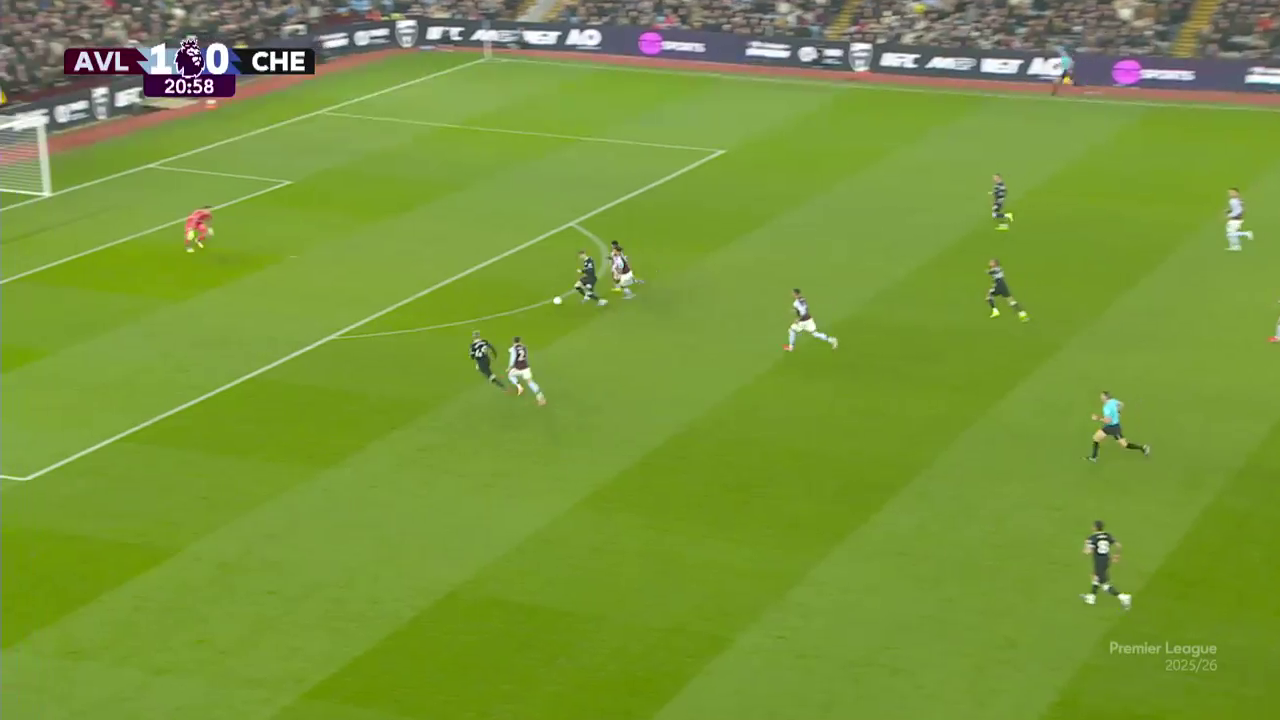
The first Chelsea goal, Maatsen loses track of Gusto, who times his run perfectly.
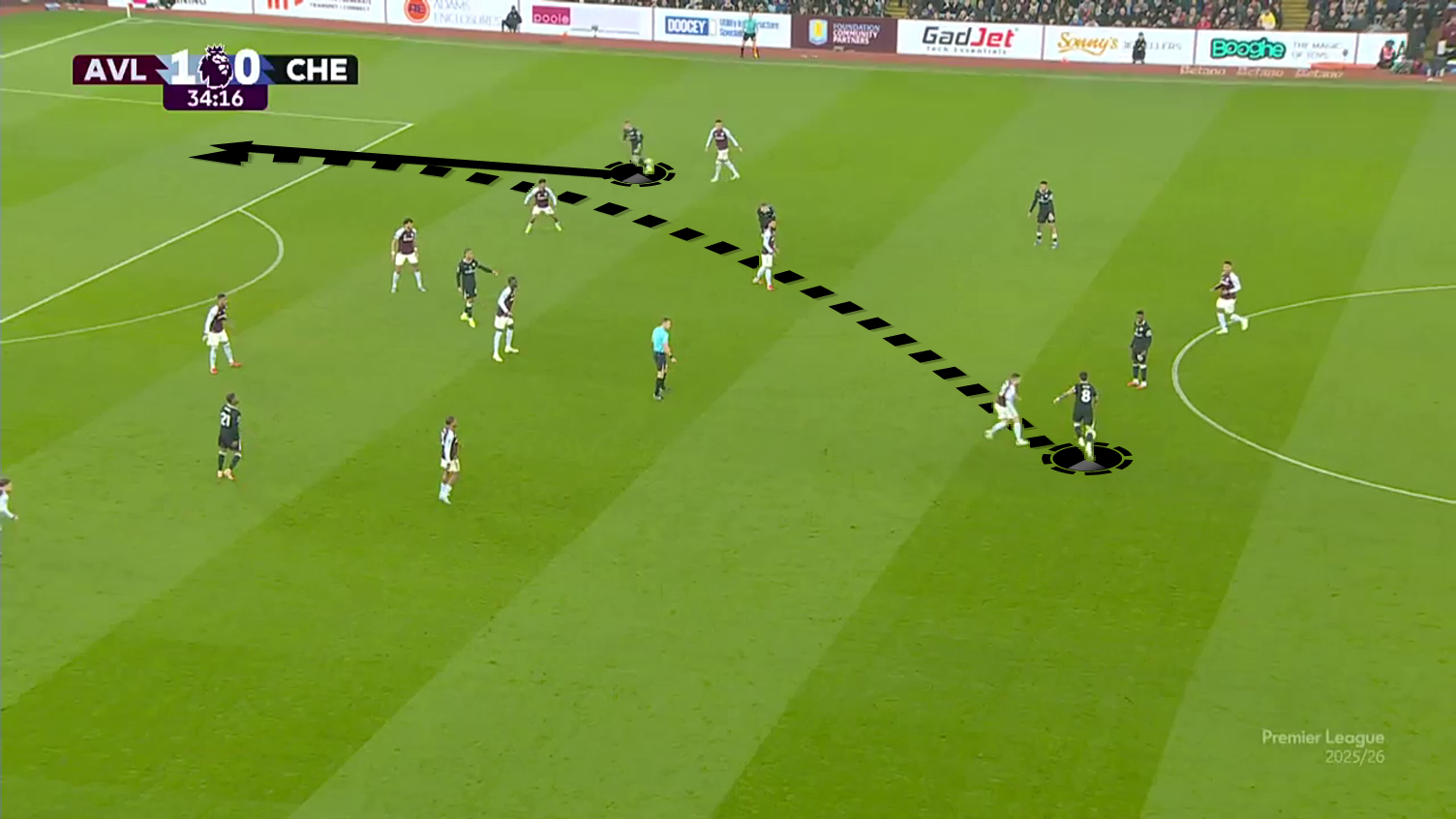
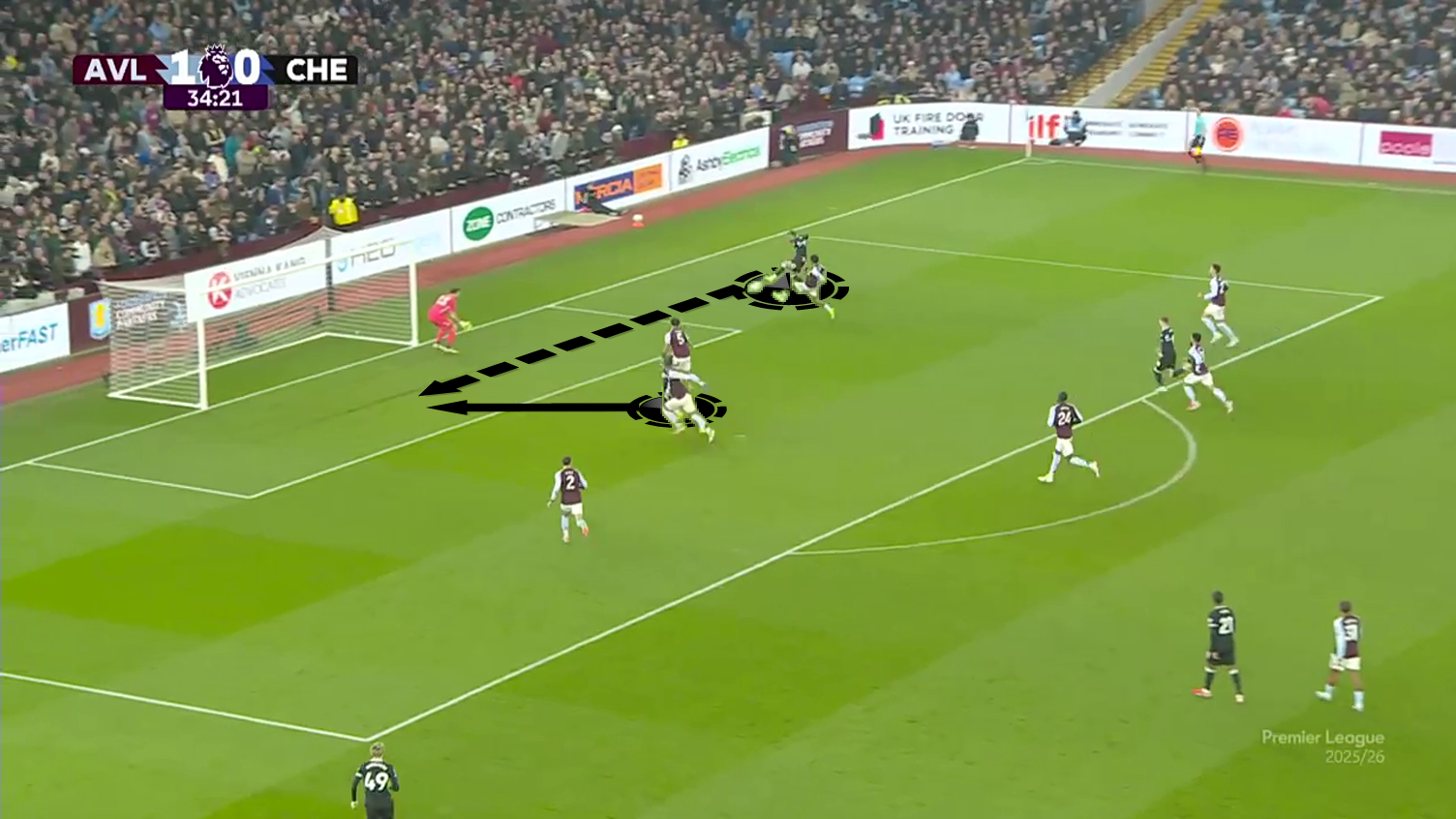
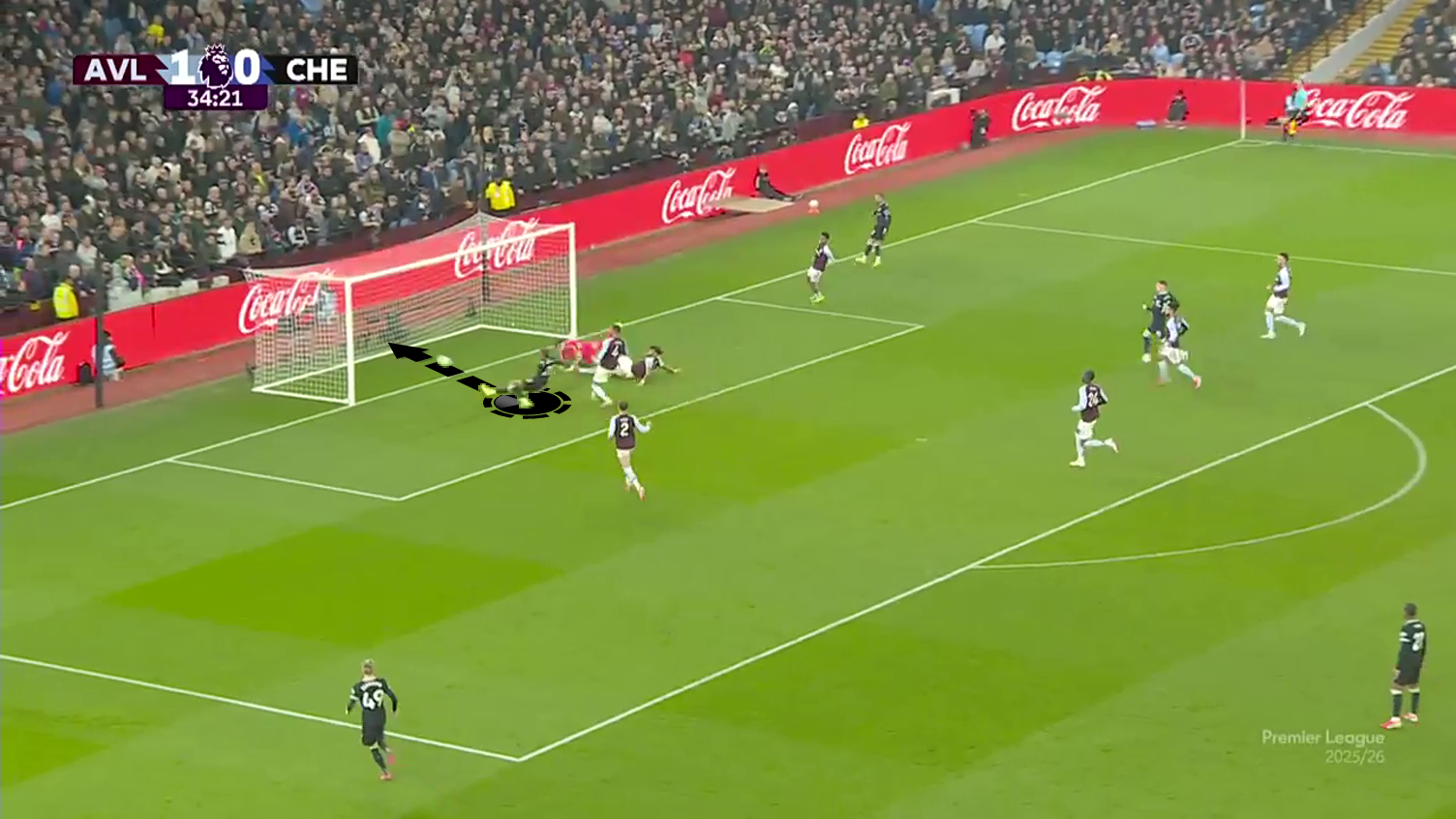
Because Fernández is given time and space on the ball and Aston Villa’s backline is pushed up, it allows space to play the ball to him, with Pedro making a late run into the box to get on the end of a cross.
Even the third Chelsea goal came from Aston Villa trying to push their defensive line up, but since Palmer was given time and space on the ball, he was easily able to play James in behind to set up a cross.
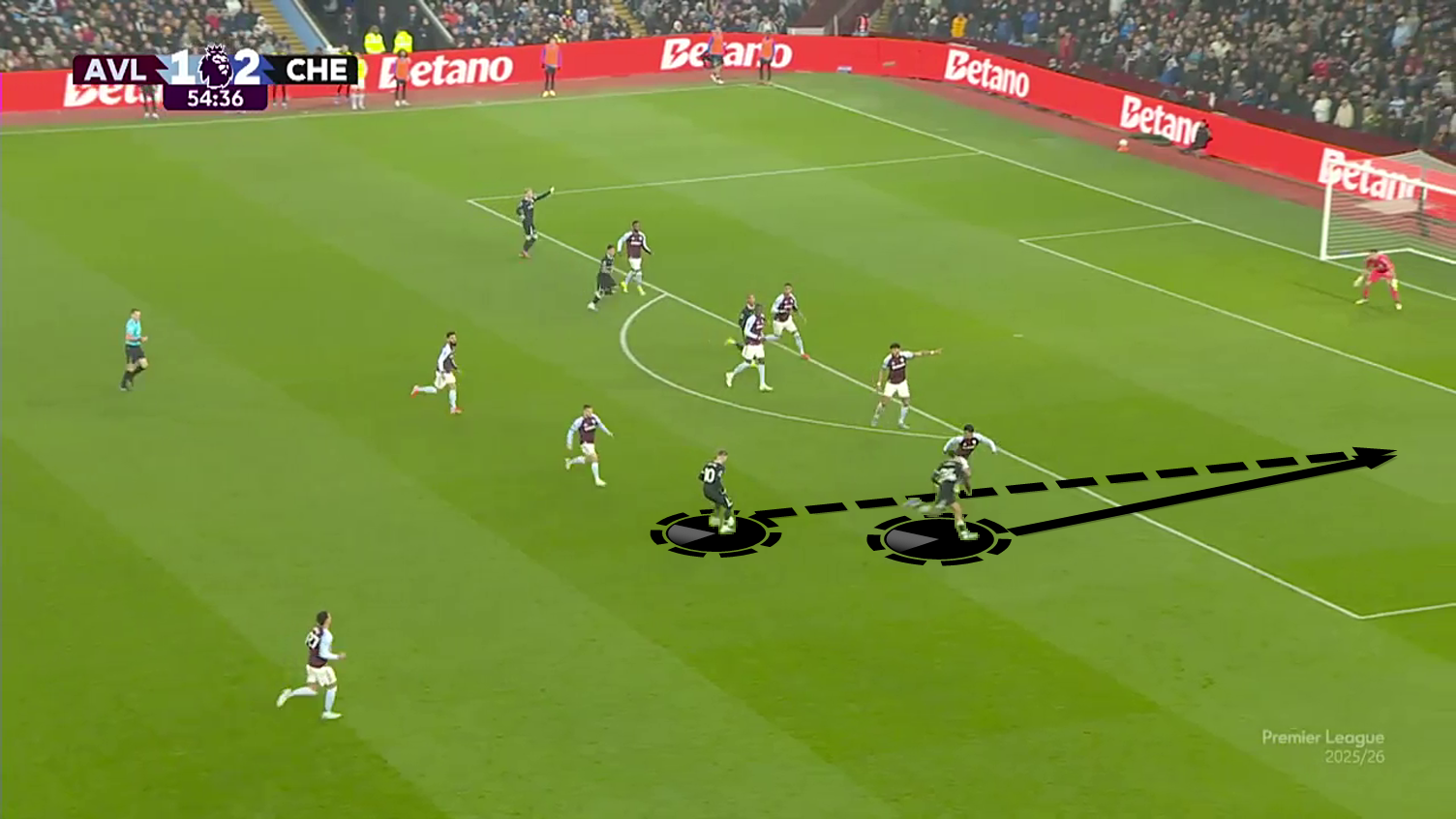
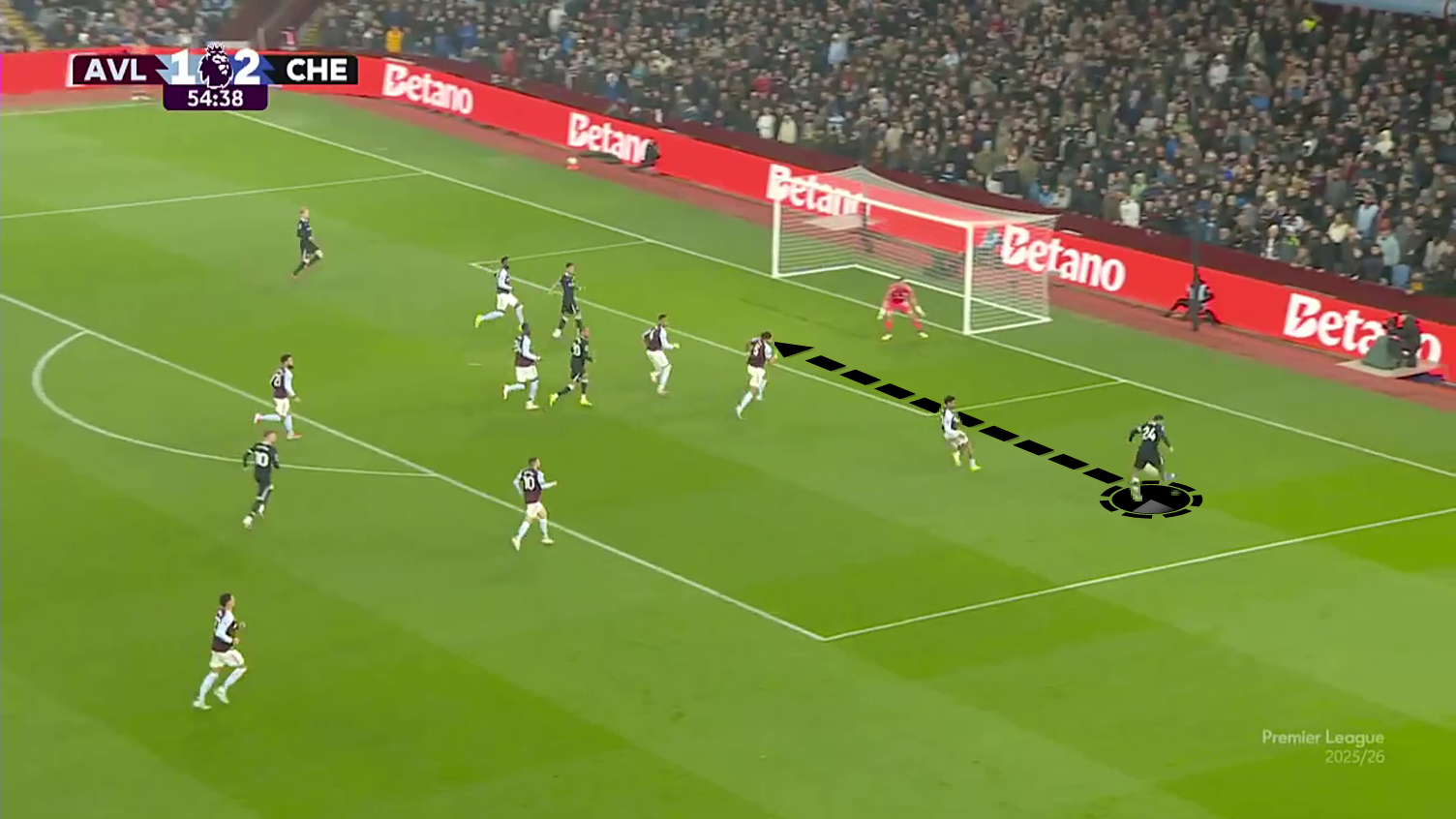
The ball eventually fell to Palmer at the top of the box, and he hammered it home.
Chelsea Wide Overloads
Unai Emery always drills into his side to take away the middle of the pitch.
It doesn’t matter whether they are defending in transition or in a mid-block; the wide areas of the pitch are usually free to pass to.
Because Rosenior switched Chelsea to a 4-3-3, it allowed Fernández to play a slightly wider role, which he flourished in since Aston Villa was playing so narrow.
When you look at his heat map from the match, you can see how much time he spent on the left-hand side, combining with Garnacho.
Enzo Fernández Heat Map Vs Aston Villa
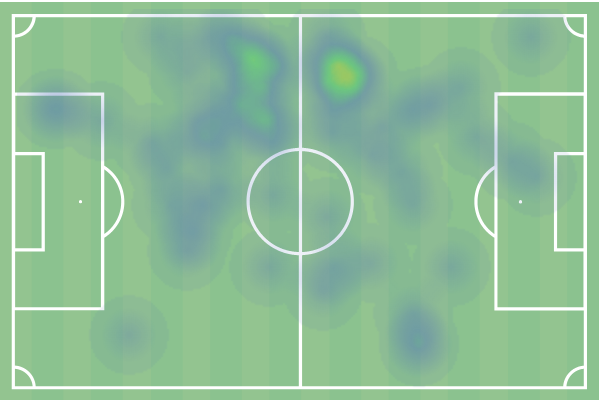
When you look at Chelsea’s pass map, you’ll see how often Rosenior was trying to create these three and four-man combinations because he knew they would have the numerical advantage.
Chelsea Pass Map Vs Aston Villa
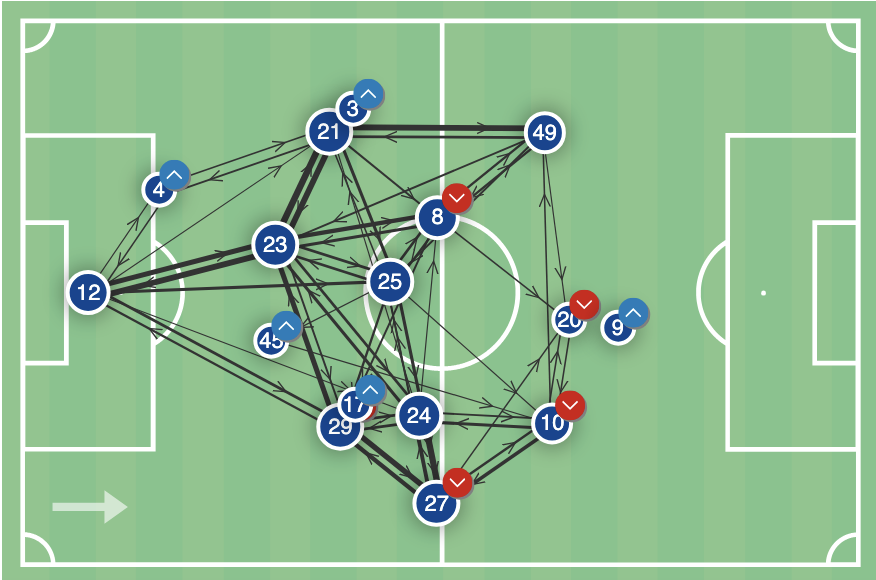
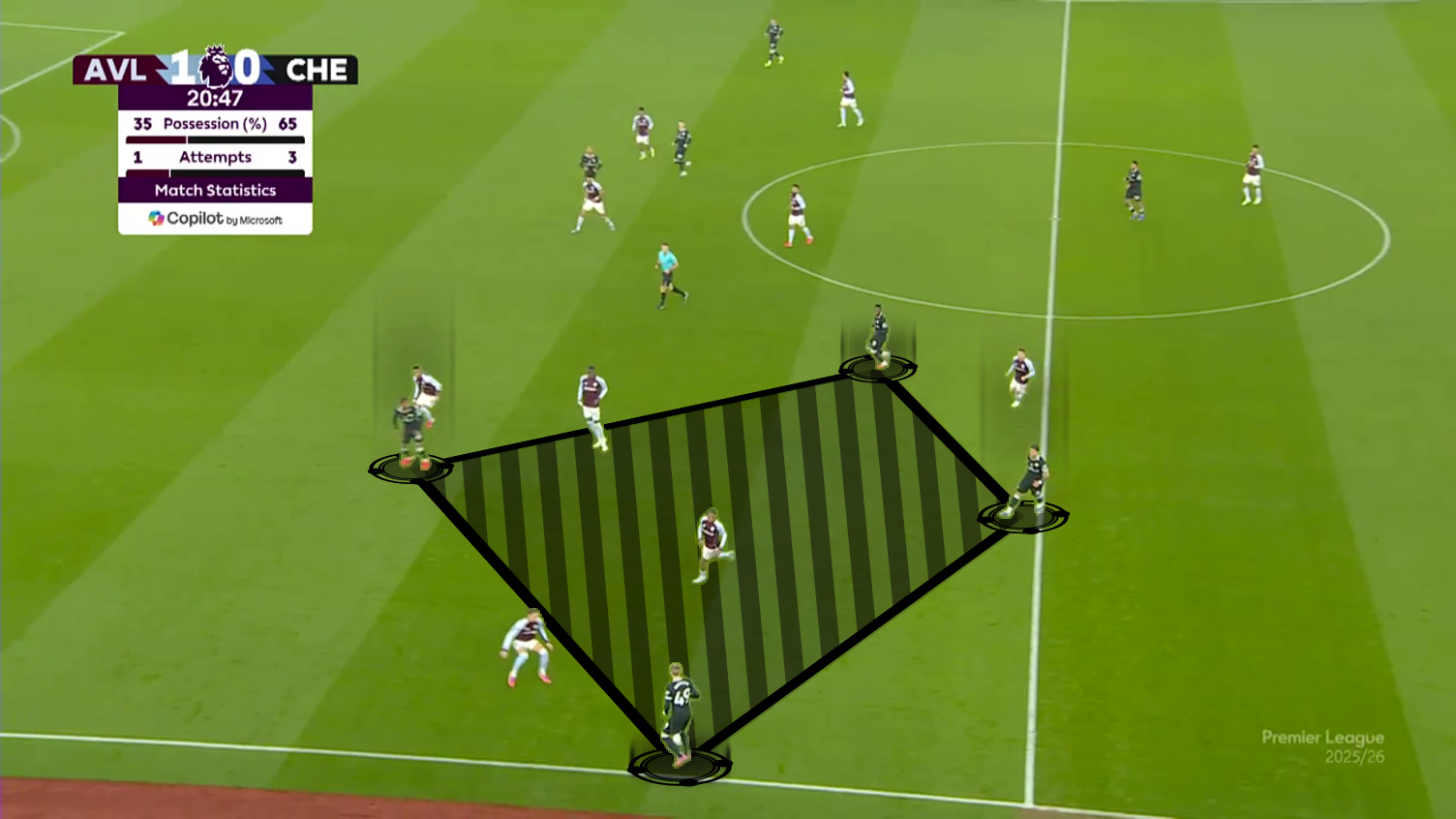
Garnacho ended up playing a huge role in this match because he was given tons of space on the left-hand side.
Look at how narrow Aston Villa is and how much space he is afforded here to take Cash on 1v1.
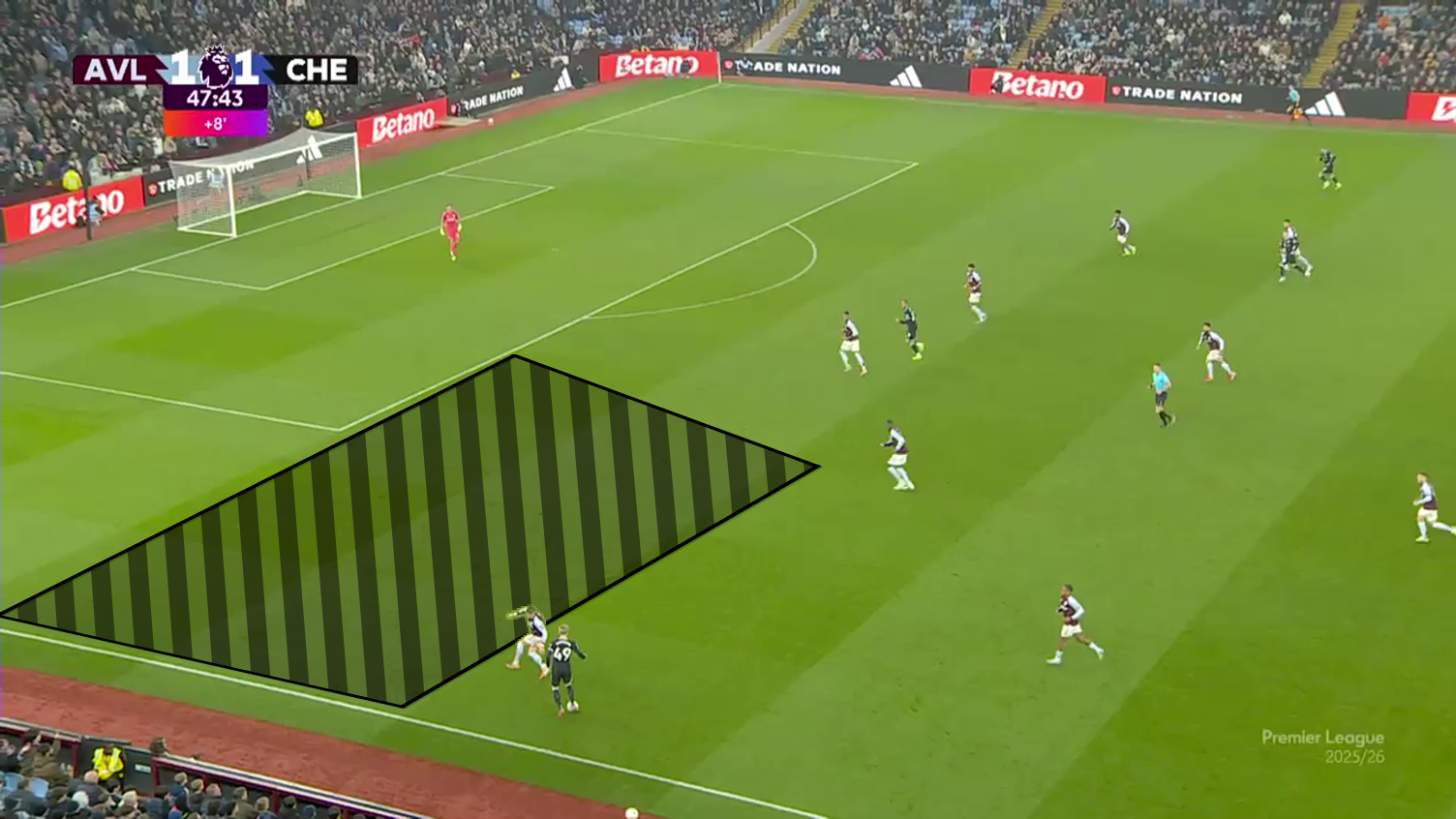
Allowing this much space out wide can be a problem if you can’t defend in space, and Garnacho had a pretty good game with 12 touches in the penalty area and created six chances.
Aston Villa Build Up Struggles
Emery has his system that he believes works by overloading the opposition in the first and second phases of build-up.
It’s very predictable, but because he uses Martinez as a +1, he always has a numerical advantage and wants Aston Villa to play out from the back and through opponents with a lot of short passes, usually through the wide areas.
Here, they set up in their usual 4-2 base and dropped Rogers in deep, but he ended up losing the duel, which allowed Chelsea to win the ball high up the pitch and quickly hit Aston Villa in transition.
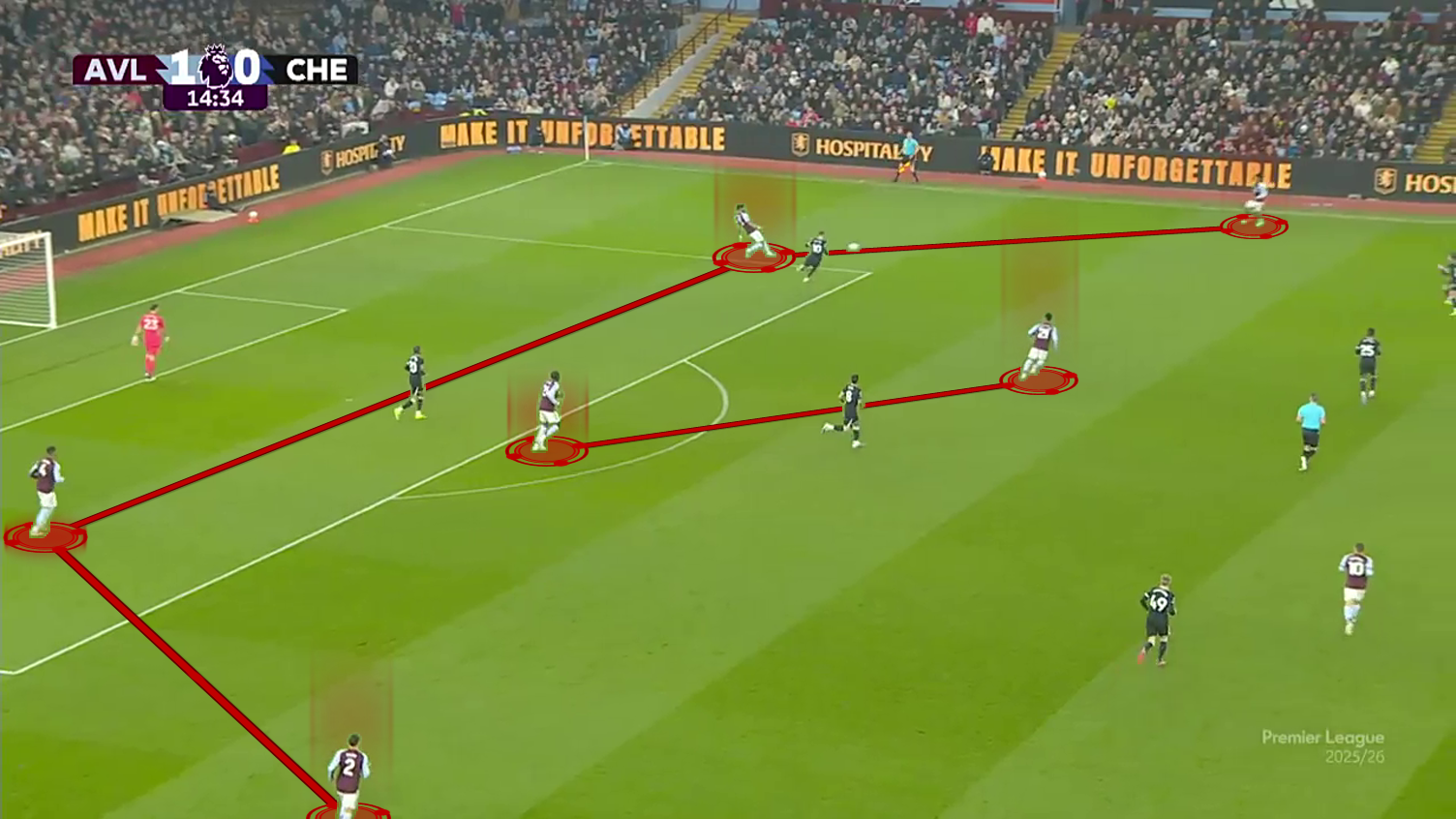
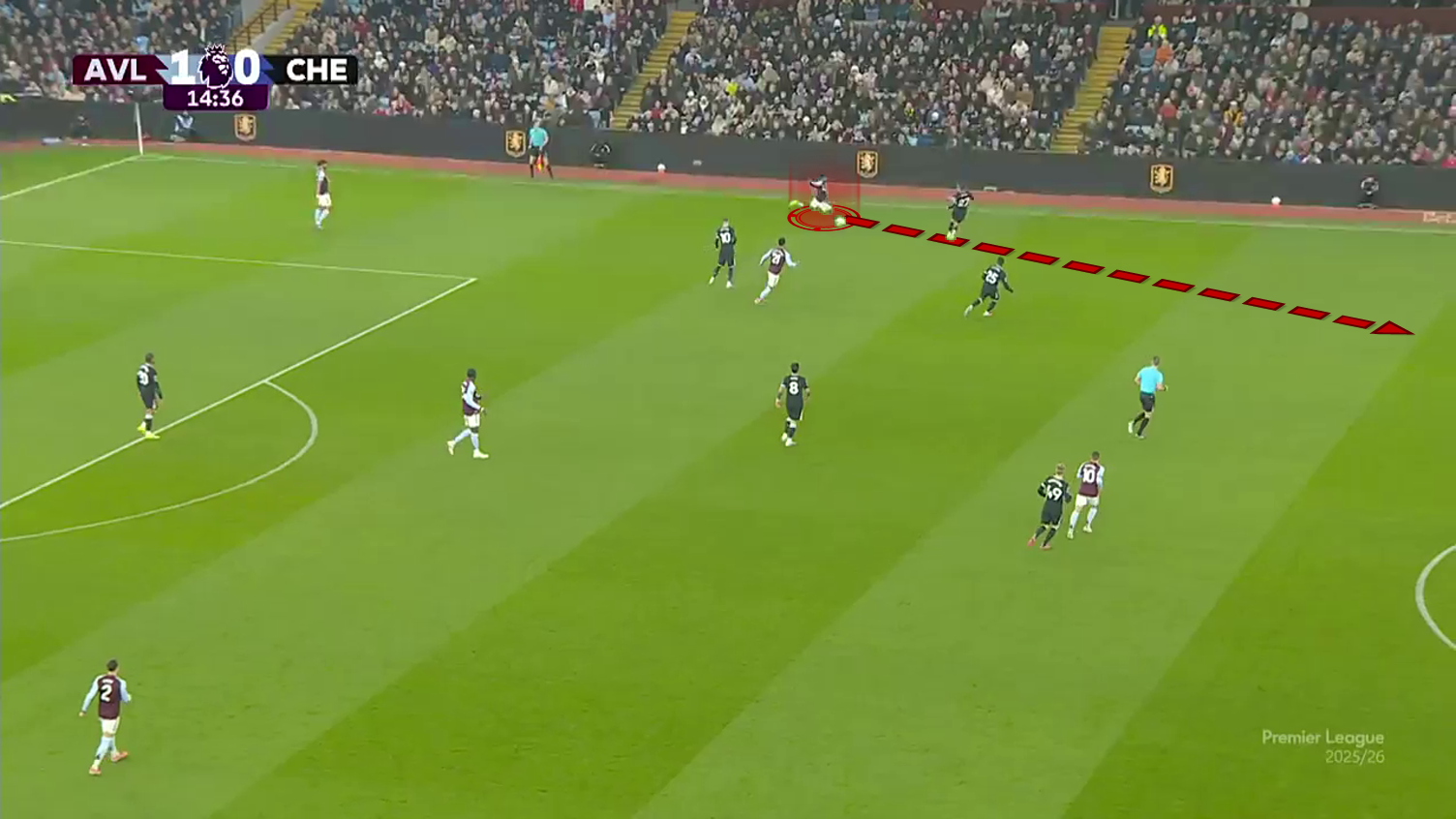
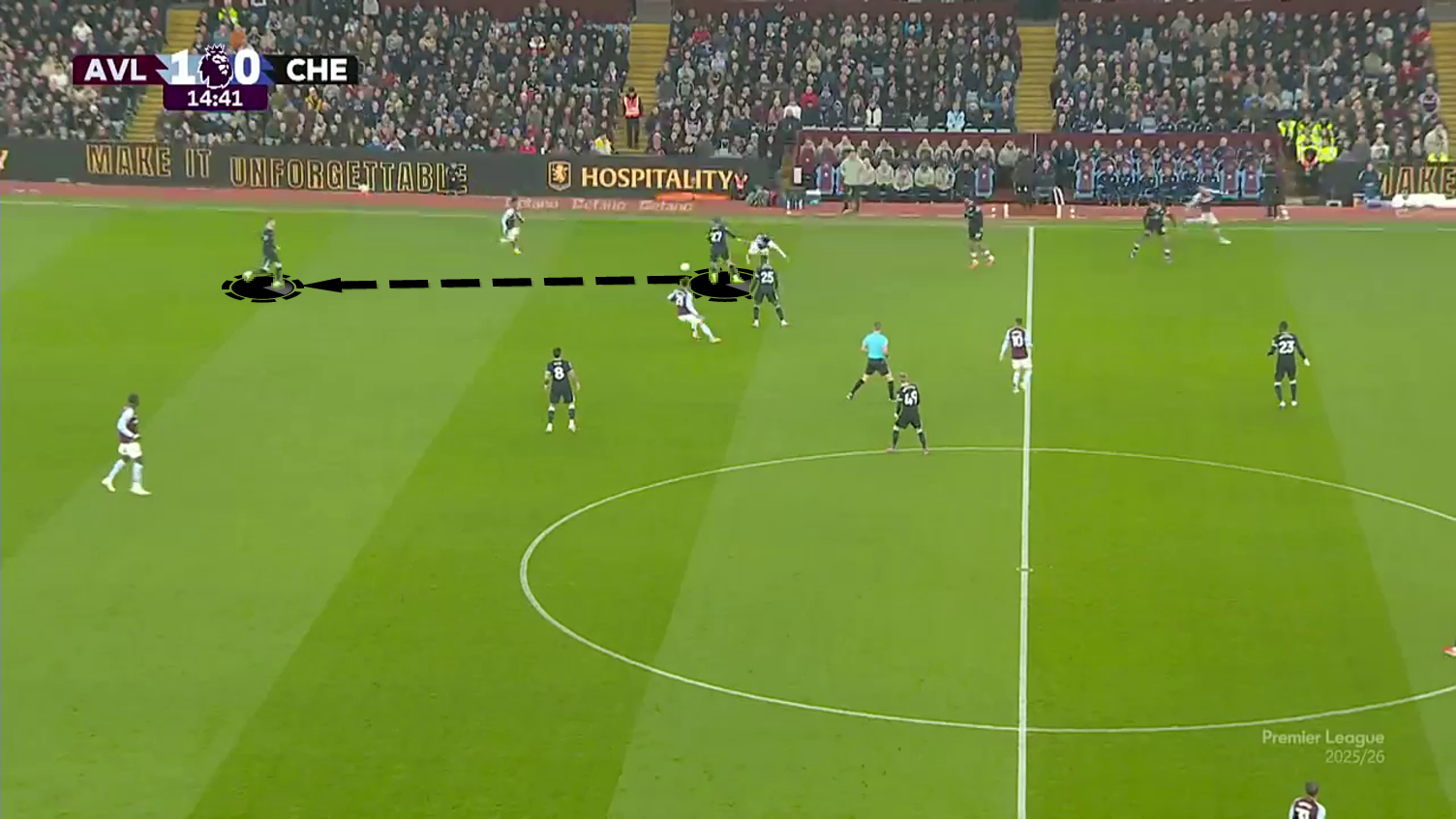
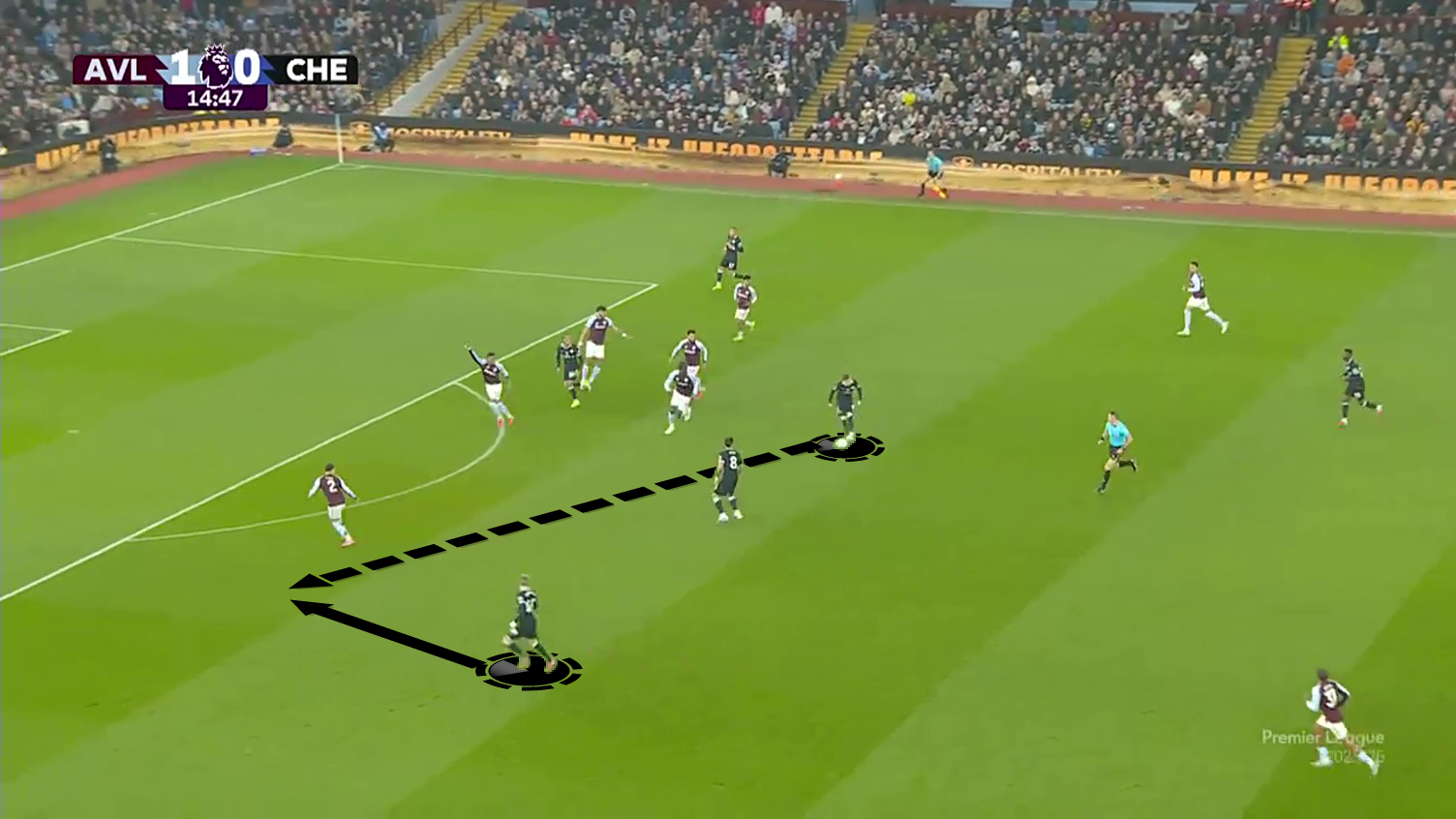
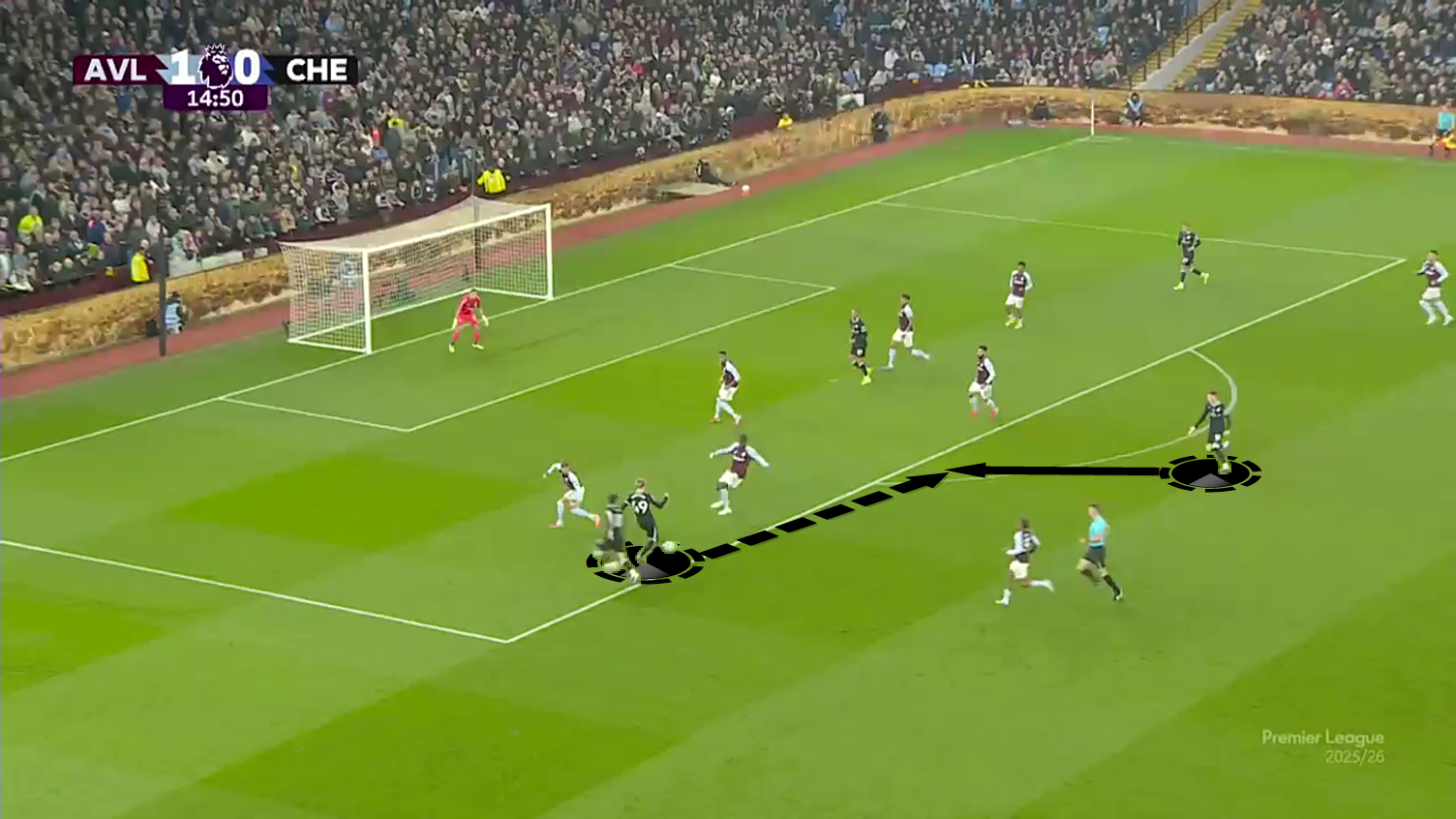
What often happens is their build-up slows, and their patterns can become very easy to take away, or teams simply sit back on them and not allow Villa to play through the middle.
You can see in their previous match against Wolves how narrow their build-up was once they entered the final third.
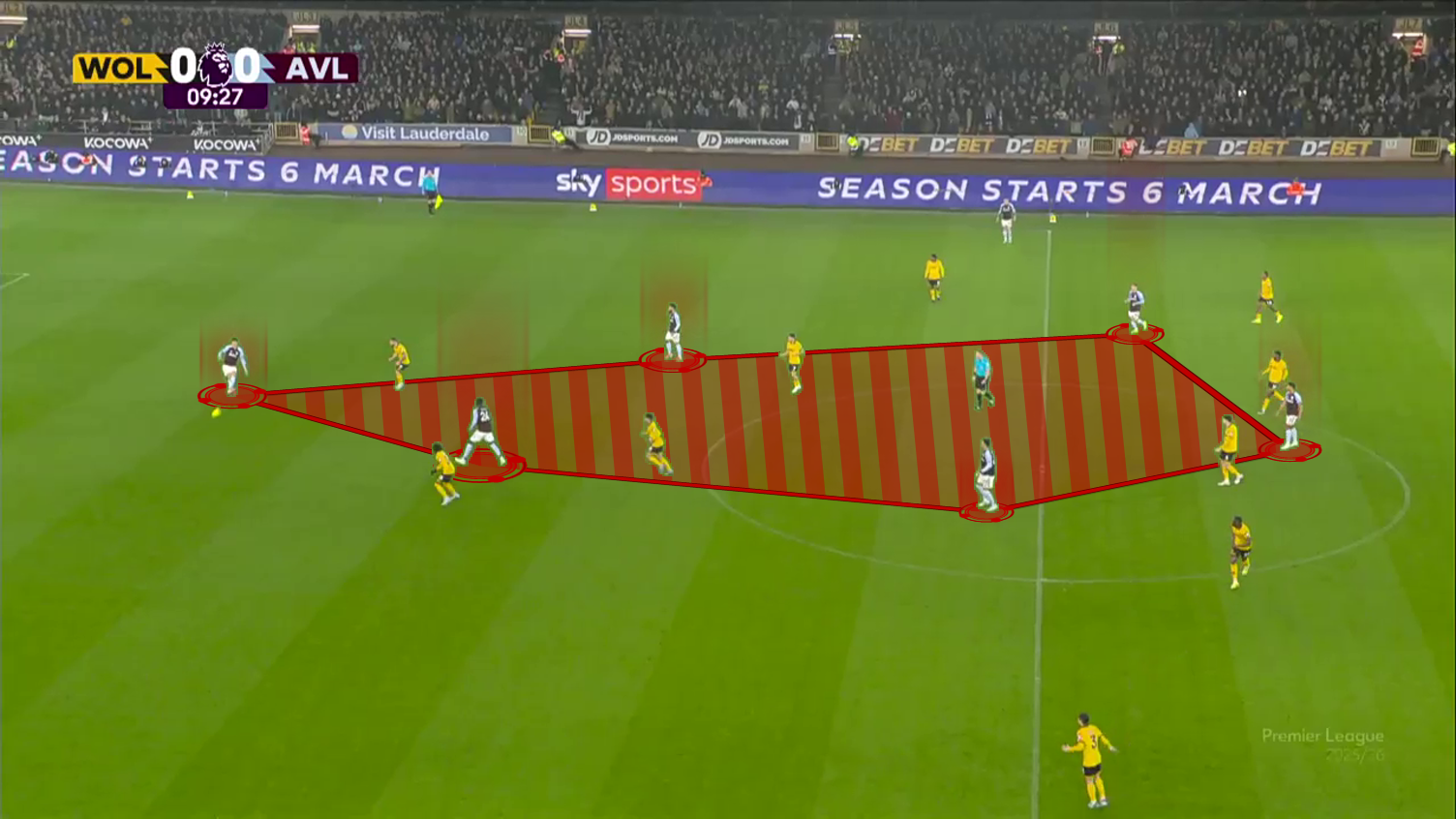
From their pass map here against Chelsea, there was just a lot of ball circulation from side to side trying to find space through the middle, but they really couldn’t penetrate the middle of Chelsea’s defensive block.
Aston Villa Pass Map Vs Chelsea
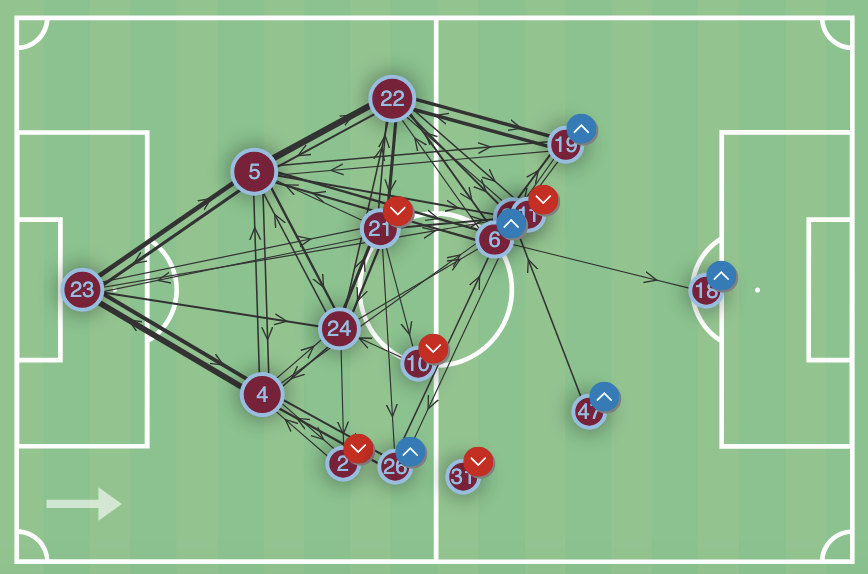 This is a basic theme with Unai Emery: against subpar competition, Aston Villa is pretty good at effectively building out of the back.
Against any decent pressing team or low block, they tend to struggle a lot, and too much focus on playing through the middle has been the biggest problem.
Conclusion
This was an incredibly dominant performance from Chelsea and one that had been coming for Aston Villa.
Not only did Chelsea win the match, but they also created 3.6 expected goals, one of their highest outputs of the season.
They were really unlucky to lose 2-1 to Aston Villa in their previous meeting, as they outcreated them on expected goals, 2.1 to 1.2.
This time around, Rosenior went after Aston Villa’s high line and attacked them to perfection, taking advantage of the time and space on the ball to allow runners to make countless runs in behind, which led to chance after chance.
Aston Villa had been running hot for a long time, but their poor underlying numbers have finally caught up with them.
For the season, Aston Villa has a -4.3 non-penalty expected goal differential, which is 12th in the Premier League.
The win moves Chelsea into fifth place, just three points behind Aston Villa.
The Blues now have an important FA Cup match against Wrexham, followed by a Club World Cup final rematch against PSG in the Champions League.
Aston Villa will try to end their poor run of form in the Europa League against Lille, then have a huge match at Old Trafford against Manchester United.
