
Arsenal hosted Chelsea in Gameweek 28 of the 2025/2026 edition of the Premier League at the Emirates Stadium.
The Gunners came out on top with a 2-1 win, with all three goals coming from corner-kicks.
Although the Blues had the upper hand in terms of ball possession, the hosts held the advantage in final-third entries (57-29), passes in the final third (72-59), and touches in the opposition penalty box (30-13).
Chelsea had more interceptions (13-5), tackles (20-17), recoveries (44-41), and aerial duels (16-11); this suggests Arsenal had more penetration.
Through this tactical analysis, we aim to highlight the tactical actions of both Arsenal and Chelsea and determine why Arsenal dominated.
Arsenal Vs Chelsea Lineups & Formations
Let us look at how Mikel Arteta and Liam Rosenior fielded their squads.
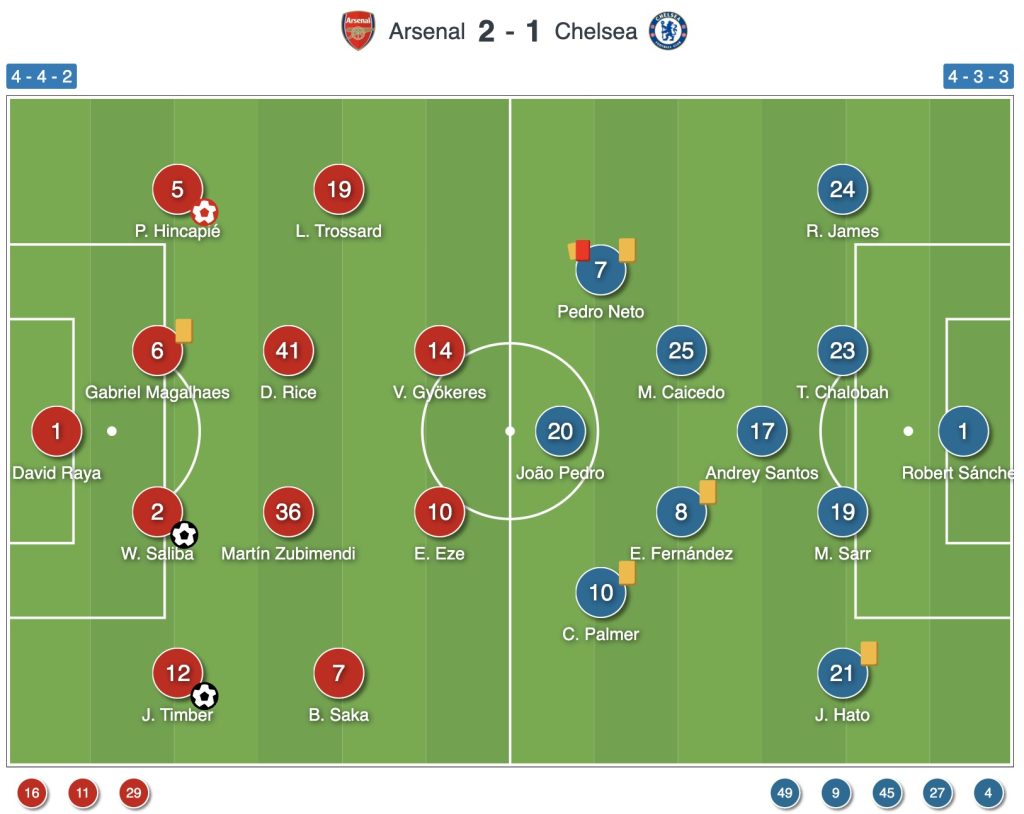
The hosts, Arsenal, played in a 4-4-2 formation.
David Raya started in goal.
The back four were Jurriën Timber (right-back), William Saliba (right centre-back), Gabriel Magalhães (left centre-back), and Piero Hincapié (left-back).
Martín Zubimendi and Declan Rice operated as the double pivot. Christian Nørgaard came on for Rice after 76 minutes.
Skipper Bukayo Saka (right) and Leandro Trossard (left) played as the wingers.
Gabriel Martinelli (56’) came on for the latter.
Eberechi Eze and Viktor Gyökeres played as the front two. Kai Havertz (76’) replaced the latter.
The visitors, Chelsea, played in a 4-3-3 formation.
Robert Sánchez started between the sticks, behind a back four of skipper Reece James (right-back), Trevoh Chalobah (right centre-back), Mamadou Sarr (left centre-back), and Jorrel Hato (left-back).
Sarr and Hato made way for Tosin Aradabioyo (90’) and Malo Gusto (75’), respectively.
Andrey Santos played as the pivot, along with Enzo Fernández and Moisés Caicedo as centre midfielders.
Santos and Fernández were replaced by Roméo Lavia (75) and Liam Delap (86), respectively.
Pedro Neto (right) and Cole Palmer (left) were the wingers, with João Pedro as the striker.
Alejandro Garnacho came on for Palmer at the 86th minute.
Chelsea Attacking Tactics
Chelsea showcased patience in their build-up and created space by moving in relation to each other to open passing lanes or space to dribble.
As the midfielder receives the ball from the centre-back, he sets it to the left-back and moves up, dragging an opponent with him.
This opens space inside to either dribble or play a pass.
Additionally, the other midfielder, who is marked, moves up to drag his marker away.
This opens the passing lane, allowing him to shift play through the right centre-back.
They were comfortable with rolling the ball backwards and sideways to have control in the defensive third.
Whenever they regained possession, they slowed the game down for a few extra moments, allowing their players to take up advanced positions and even alter the attacking structure.
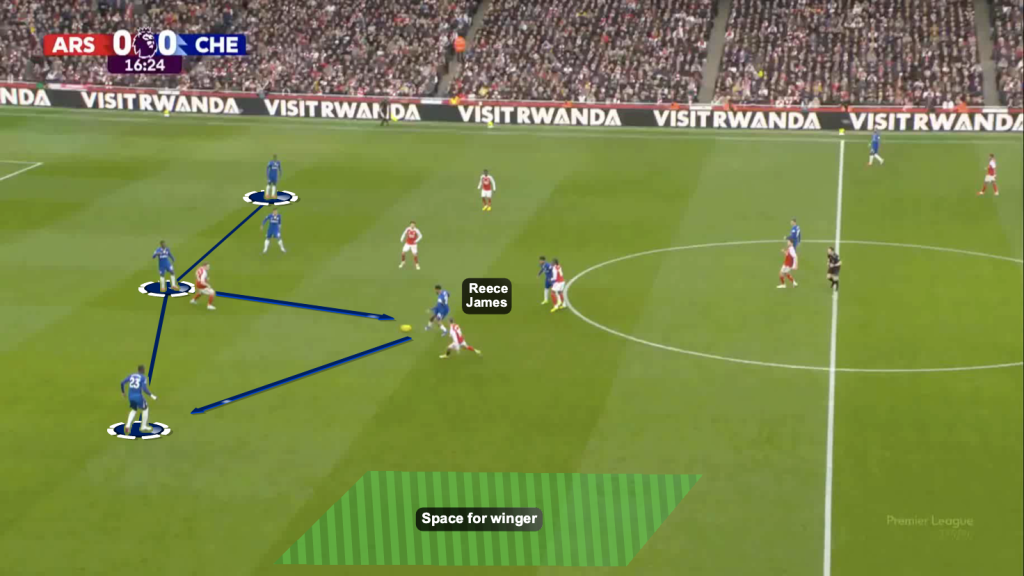
James inverted into the midfield during such moments.
This gave them an extra angle for the inside pass.
It also opened space in the wide channel for the winger to drop and receive to feet; meanwhile, the other centre-midfielders could move higher up the pitch and occupy advanced positions.
Their composure on the ball was inconsistent as they progressed up the pitch, which caused several turnovers.
Loose passes and miscontrolling the ball were a common sight when forced to make a decision.
This is why a majority of their actions with the ball were in their own half.
Their inability to win the ball back quickly upon being dispossessed hurt their chances in attack.
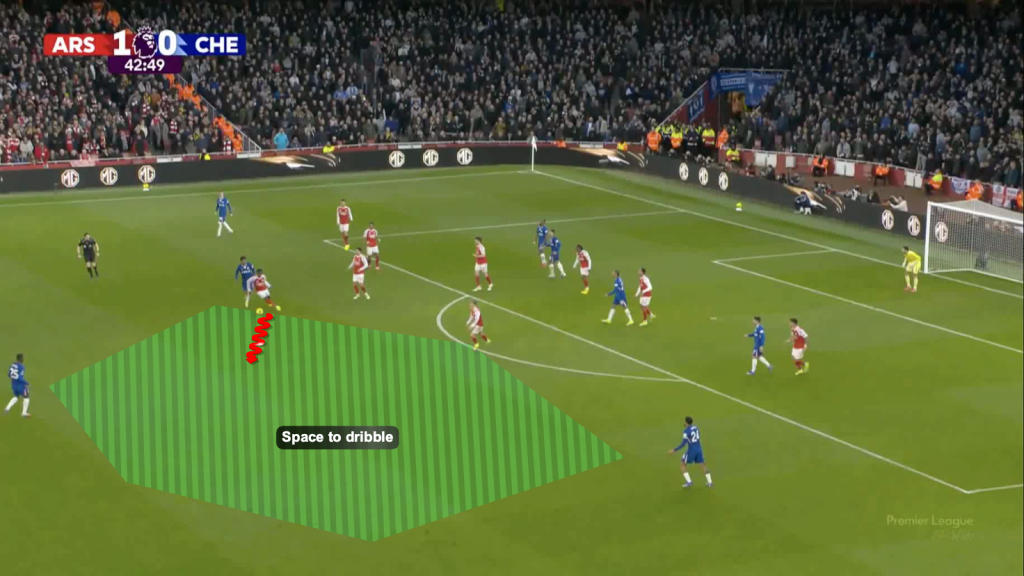
It came down to their poor rest-defence.
While attacking, Chelsea committed numbers up the pitch.
Meanwhile, the defensive players had not positioned themselves close enough to the action, in case they lost possession.
The labelled space in the above image represents the space Arsenal were offered when they won the ball in their defensive third.
Had Chelsea covered this space in rest-defence, they would win the ball back within a few seconds of losing it.
Chelsea Defending Tactics
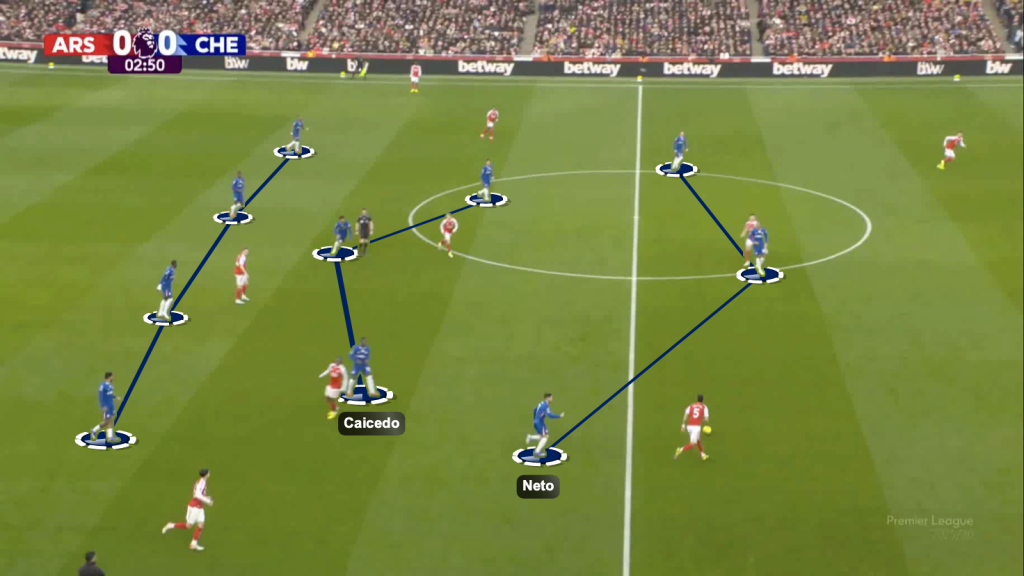 The visitors were seen defending in their default 4-3-3 formation; the pivot stayed in the central channel, while the two centre-midfielders stayed in the half-spaces.
An interesting feature of their shape was the positional interchange between players depending on where the ball was.
In the picture above, Neto is engaging in the pressing action, with Caicedo to cover for the inside pass.
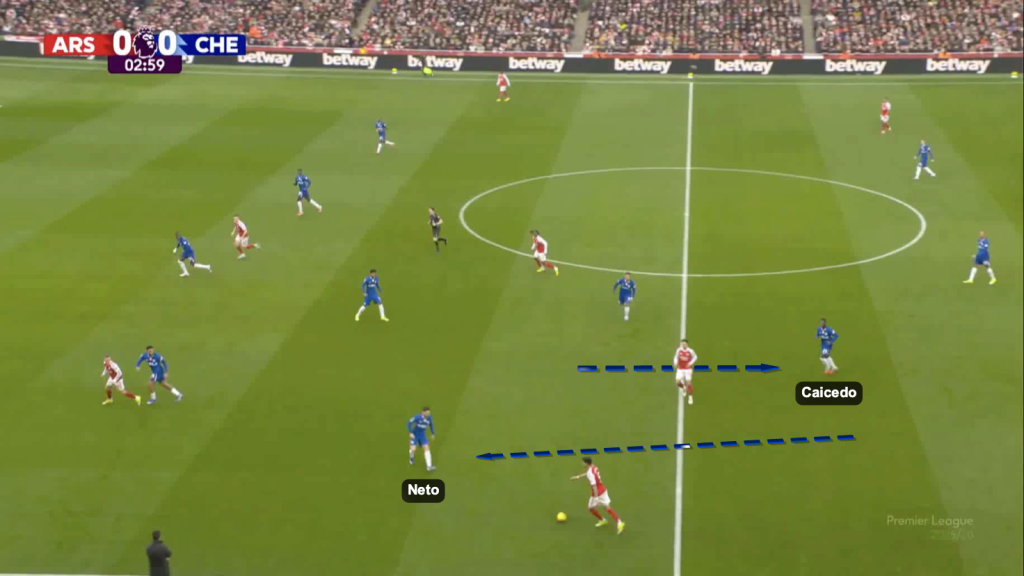
However, the two interchanged to cover different zones.
To maintain pressure in the half-space, Caicedo stepped up.
Meanwhile, to help defensively in the wide channel, Neto dropped deep.
With this adjustment, Chelsea intended to minimise Arsenal’s time on the ball in the left half-space.
When they moved the ball to the wide area, Chelsea already had two players in position to mitigate the threat.
While pressing high, Chelsea made sure to cut one side and force their opponents to the other side.
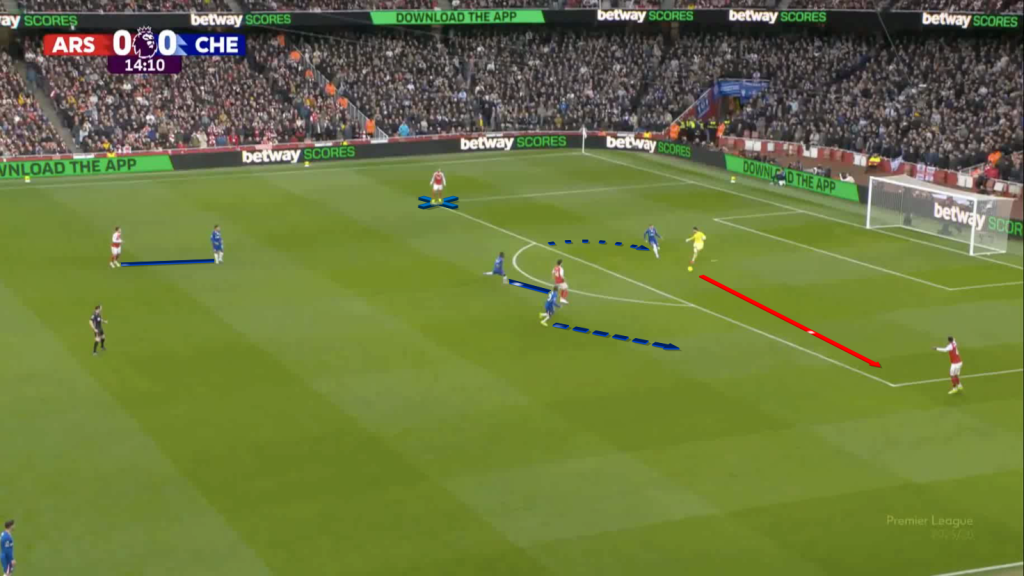
Chelsea shut the passing lane to the right side, thereby forcing Raya to play towards the left side.
However, this approach was flawed, as they did not keep a compact shape vertically.
Their opponents frequently found passes behind the first line of press.
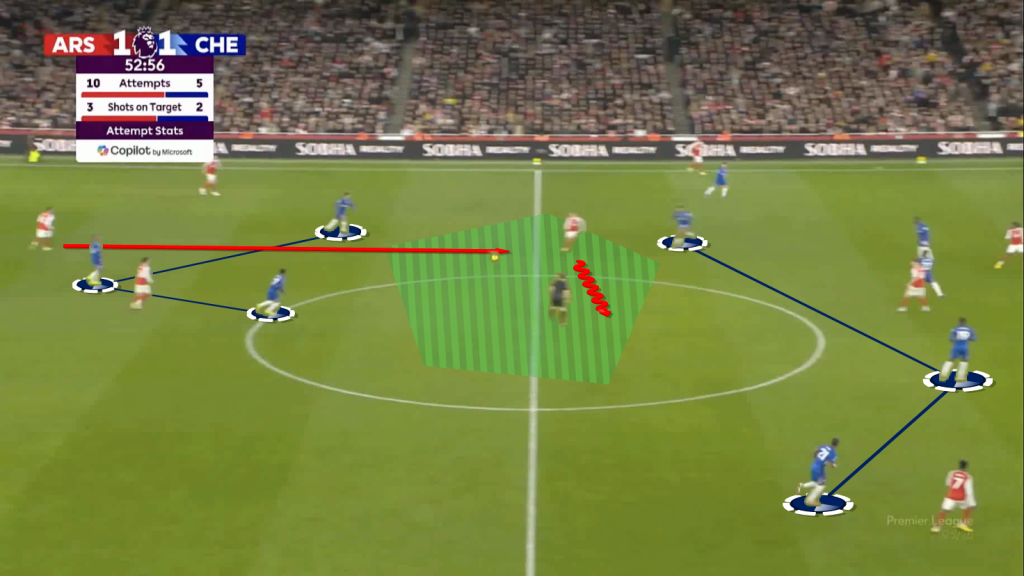
The Arsenal midfielder, who received between the lines, got enough space to either lay it off to the wide area or use the space infield to carry the ball.
Arsenal Attacking Tactics
One of the major reasons for Chelsea’s struggles was the variety of routes Arsenal took to progress the ball.
Apart from their double pivot in Zubimendi and Rice, they had other players dropping outside the structure to receive the ball.
This made it difficult for the opponents to track their opponents, which allowed Arsenal more space and time to find progressive passes.
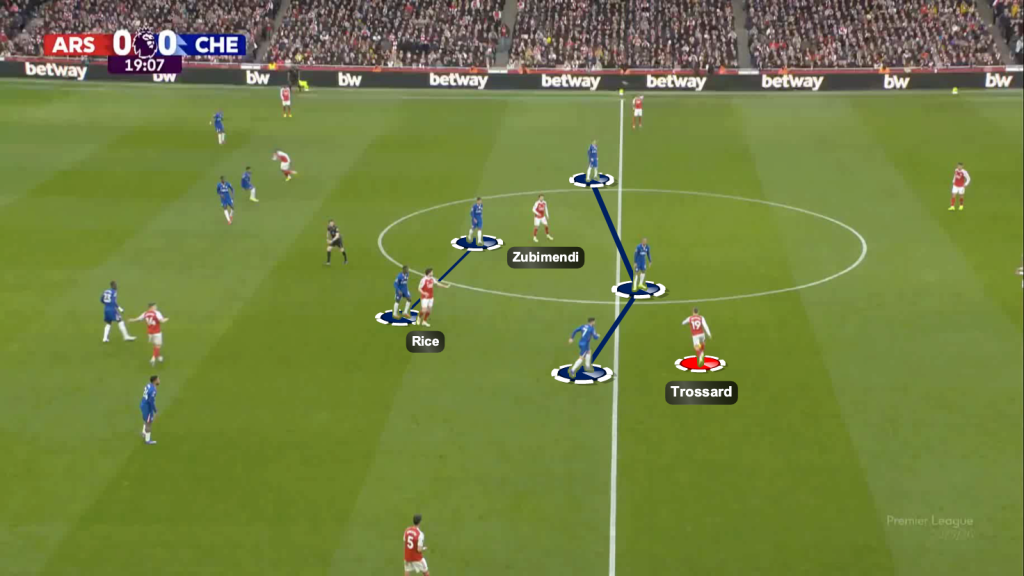
Trossard drops outside the structure while Rice and Zubimendi are positioned between the lines.
Meanwhile, Hincapié holds the width on the left, and Saka on the right.
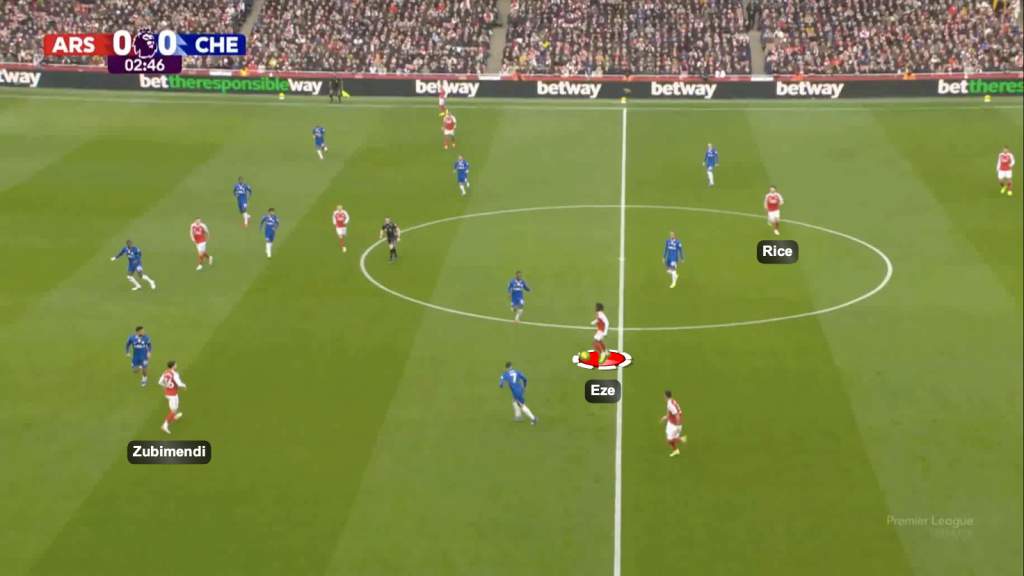
Eze drops outside the structure. Although Rice is outside the structure as well, Zubimendi stays between the lines, drifting wide.
Since Eze operated close to the striker for link-up, here Trossard steps infield to occupy that space.
These interchanges kept the fluidity alive during Arsenal’s build-up.
As mentioned earlier, Chelsea failed to stay vertically compact; Arsenal exploited that to connect the initial few passes consistently.
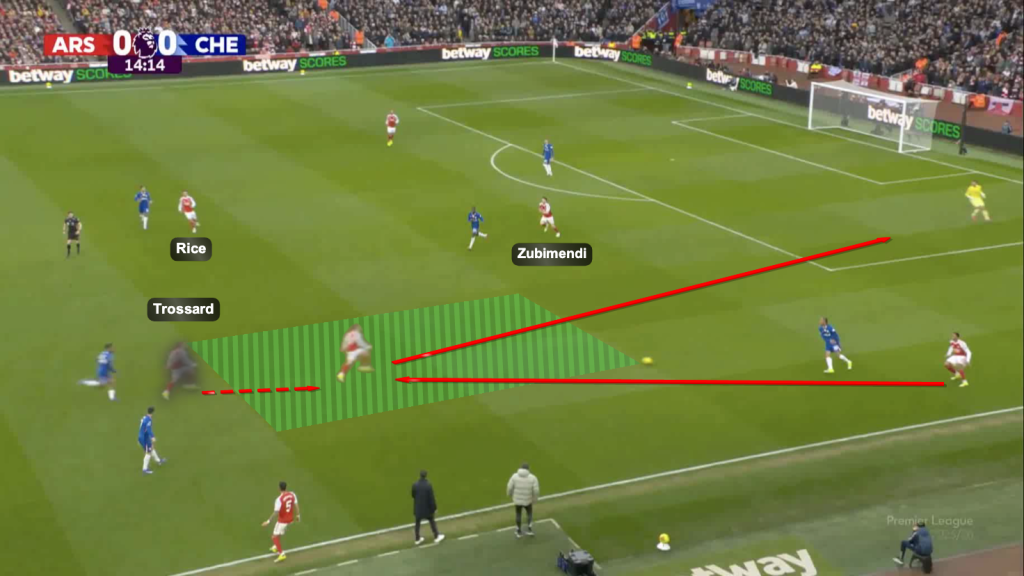
Zubimendi and Rice are man-marked in the build-up phase; a third inside option is required to offload pressure.
Trossard drops in the half-space behind the first line of press to receive from Hincapié.
With the pass back to the goalkeeper, Arsenal complete a third-man pass and successfully get the ball out of pressure.
Another scenario where Arsenal exploited the space between lines is to find combinations to achieve progression.
Gyökeres drops in the half-space to receive from Timber; soon after this pass is played, the full-back starts an underlapping run.
As the striker moves it to Saka, who attracts the opposition full-back, Timber’s run exploits the space in-behind.
The move ends up in a corner kick, which results in the opening goal.
The centre-backs found the striker in the central zone to create a different version of combination play.
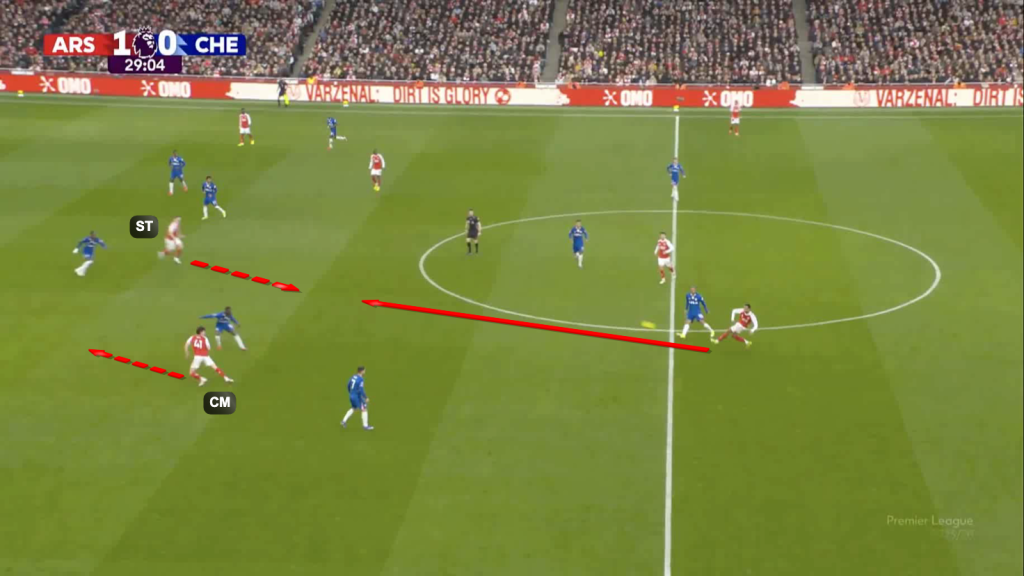
Arsenal recognise the space between the lines, which triggers a third-man combination.
The striker and the midfielder make opposite movements simultaneously.
This drags the Chelsea midfielder away from action.
Depending on the space and time the striker gets in the mid-third, he attempted through passes or set passes.
There were phases in the game when only the wide space was available to the Gunners.
They utilised overlaps and underlaps to make final third entries.
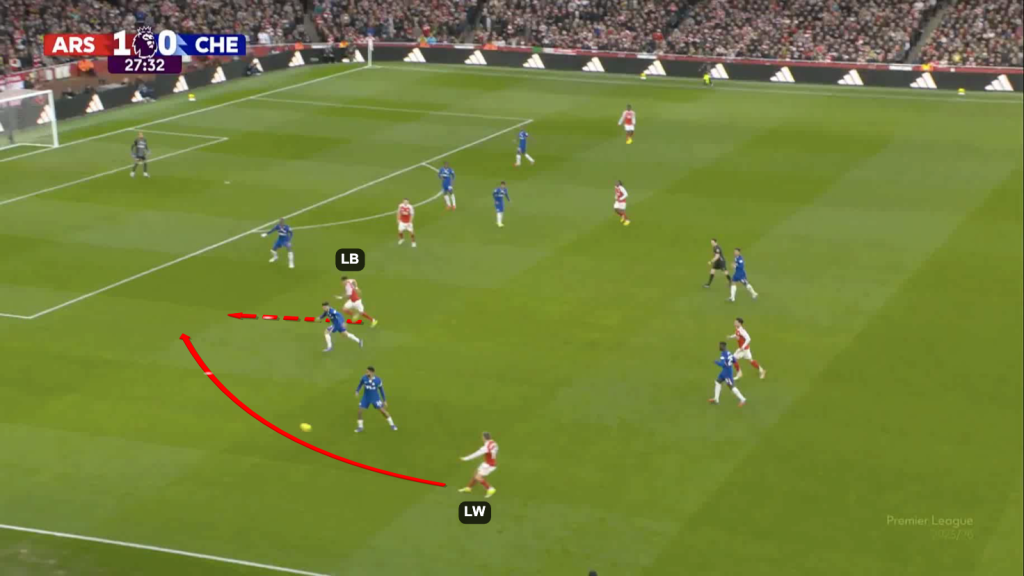
Hincapié makes a blind-side underlapping run to receive a through pass from Trossard.
He ends up making a box entry in this situation.
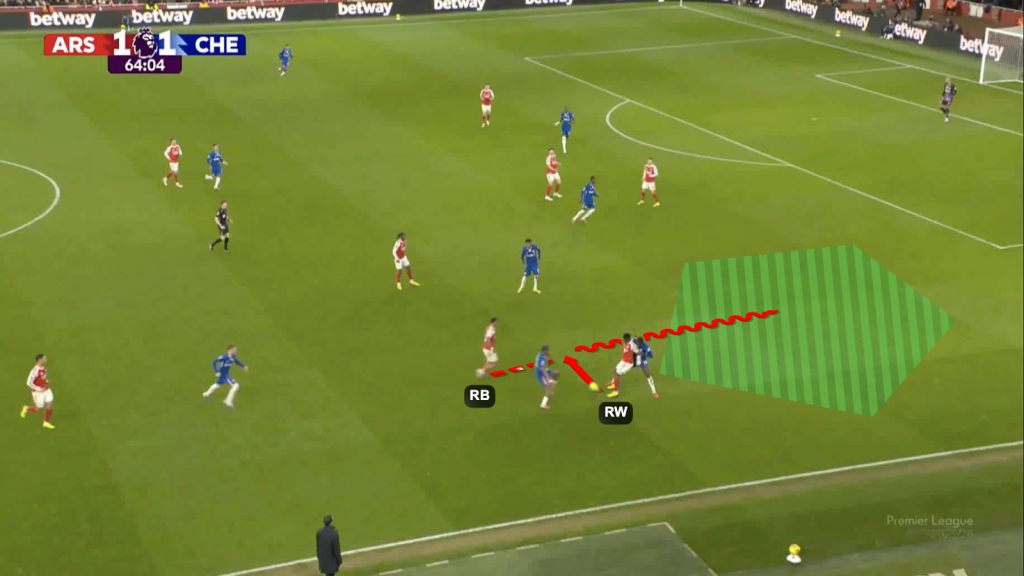
Saka drags his direct opponent out of position, opening up space down the line.
Timber makes a timely underlap, utilising the 2v1 overload.
As he dribbles into the space ahead, he is fouled.
Subsequently, Arsenal’s free-kick is parried out for a corner-kick, which becomes the source of Arsenal’s winning goal.
Apart from winning set-pieces, Arsenal got the ball into dangerous positions or shot creation.
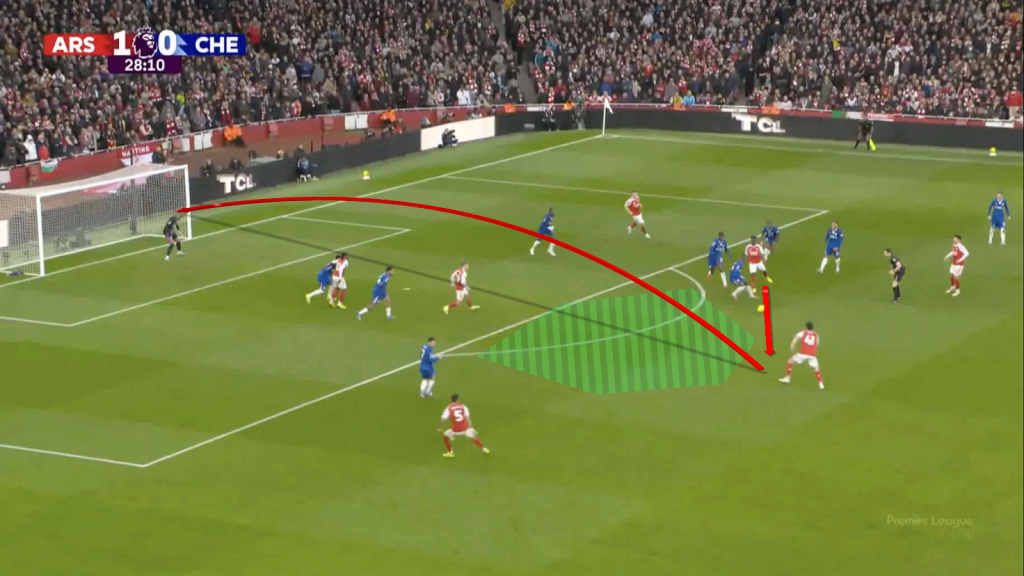
Saka cuts inside on the edge of the box and lays it off to Rice, who takes a shot from zone-14.
Chelsea giving the ball away cheaply also benefited the hosts in this regard.
Chelsea lose the ball in the mid-third; Arsenal are quick to capitalise.
They play a third-man combination, which results in Eze making a box entry and getting a shot on target.
Arsenal Defending Tactics
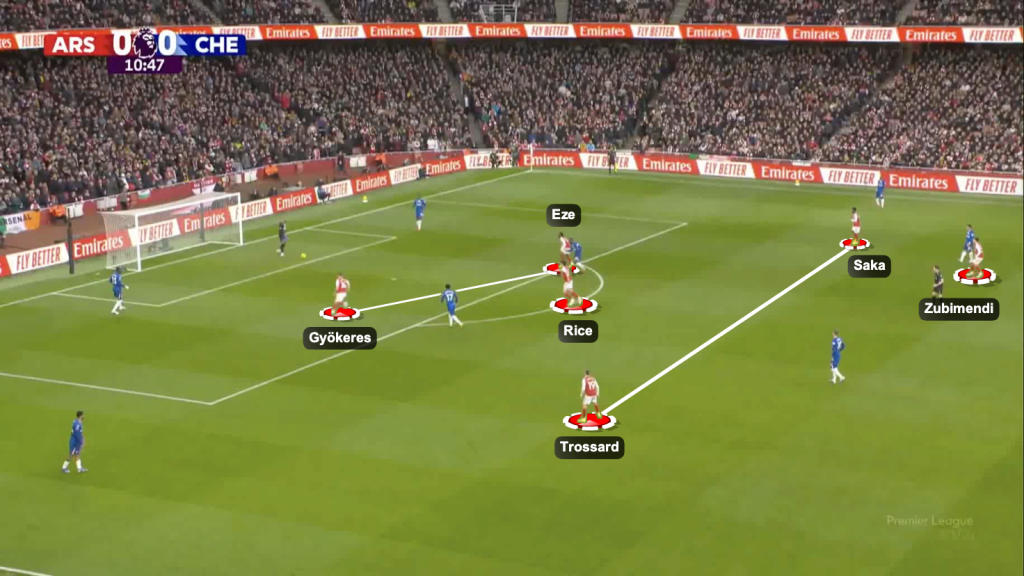
Arsenal pressed in a narrow 1-2-1-2 shape with their front six whenever their opponents had a static start.
The narrow shape ensured the ball travelled outside, since the inside options were unavailable.
As the ball went wide, the Gunners attempted to squeeze them tight, which forced them to play long.
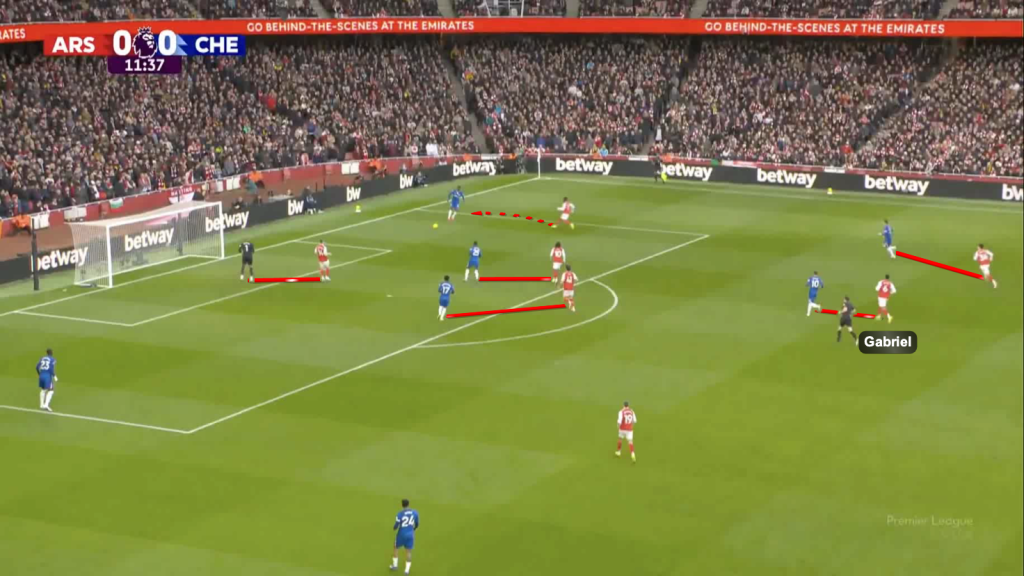
There were situations where even the centre-backs joined the press.
Cutting out the ball-side short options was the priority, as Chelsea were holding onto the ball a bit longer right off the bat.
These group pressing actions helped Arteta’s side in disrupting the flow of their opponents.
Committing players forward comes with a cost at times, which was incurred by the hosts.
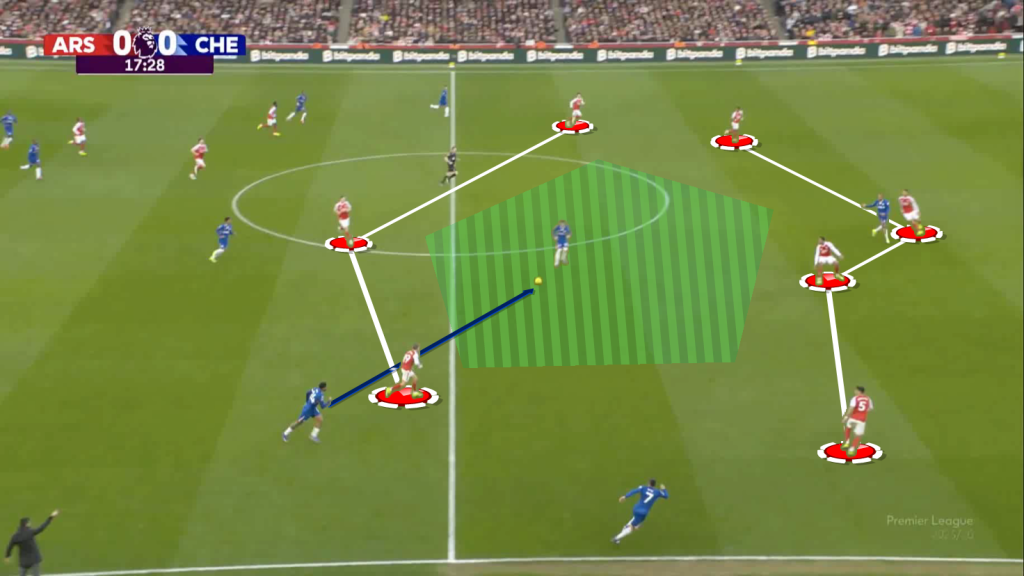
In situations where Chelsea managed to bypass the press, they exploited the space between the Arsenal lines of midfield and defence.
Arsenal allowed their opponents to make 29 final-third entries, some of which resulted from these transition moments.
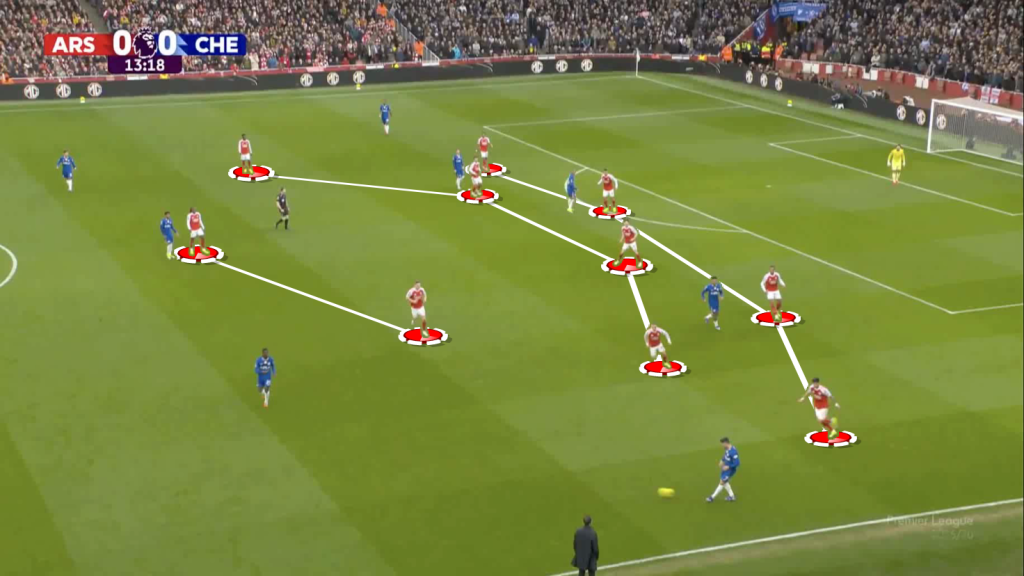
In the moments Arsenal managed to get all players behind the ball, they maintained a 4-4-2 shape.
Once they reached this point in the defending phase, it was a matter of time before Chelsea gave away possession, and Arsenal hit them with a quick counter.
Since their opponents had an unsatisfactory rest-defence on display, Arsenal got a fair bit of success in terms of getting the ball to the final third.
Conclusion
Chelsea carried out their build-up with composure for long phases, which is why they had more ball possession than their opponents.
However, Arsenal caught up with their high press.
When Reece James inverted, it gave them more options for the inside pass and allowed the other midfielders to move higher up.
Defensively, they executed a 4-3-3 with Caicedo and Neto interchanging to adjust according to Arsenal’s play.
Their high press was ineffective, as they left a lot of space behind their first line of press.
Apart from that, cheap giveaways made their life difficult.
Arsenal approached the attacking phase by utilising several routes to progress the ball, finding progression through both central and wide channels.
Through progressive play, they earned decisive set-pieces and also achieved shot-creation.
Defensively, they pressed high with a narrow shape, forcing their opponents wide, and then proceeded to squeeze them wide to force long passes.
On a few occasions where Chelsea bypassed the pressure, they found passes inside Arsenal’s structure.
However, they did not find as much success as Arsenal.
