
Ligue 1 has always been a laboratory for tactical extremes, but the current state of OGC Nice represents a fascinating, albeit painful, case study in structural decay.
The Mediterranean sun, usually a backdrop for the club’s European ambitions, now shines on a squad caught in a profound identity crisis.
Since Claude Puel’s return to the Allianz Riviera in late December 2025, the narrative has shifted from the avant-garde positional play of the Franck Haise era to a brand of survivalist pragmatism that, paradoxically, has left the team more vulnerable than ever.
Puel, a veteran of the French game known for his rigid discipline and focus on youth integration, was brought in as a lifeline to halt a historic slide.
Yet, as we move into March 2026, the fire is still smouldering, and the tactical architecture of the side appears to be buckling under the weight of its own contradictions.
The issues at Nice are not merely a result of bad luck or an injury crisis that has, at various points, decimated their defensive line.
Instead, we are witnessing a fundamental breakdown in the team’s collective mechanics.
Les Aiglons currently languish in 15th place, just five points clear of the play-off spot, not because of a lack of individual talent; the squad still boasts the likes of Sofiane Diop and Youssouf Ndayishimiye, but because they have lost the ability to function as a cohesive tactical unit.
Under Puel, the team’s positional play has become heavy, characterised by a lack of clarity in their simple actions.
This tactical analysis will dissect the three pillars of Nice’s tactical failure: a disconnected attacking press, a catastrophic vulnerability in their own defensive third, and a complete reliance on individual brilliance to bypass a lack of coherent attacking patterns.
We see a team that has forgotten how to manipulate space, and in doing so, has become easy to manipulate.
The Ghost Of A Press: Disconnection In The First Line
One of the most glaring issues in Claude Puel’s current tactical setup is the malfunctioning of the high press.
In modern football, the press is not just a defensive tool but the primary playmaker; it is designed to win the ball in high-value areas and initiate immediate transitions.
However, at Nice, the press has become a series of isolated sprints that serve only to exhaust the forwards while leaving the midfield completely exposed.
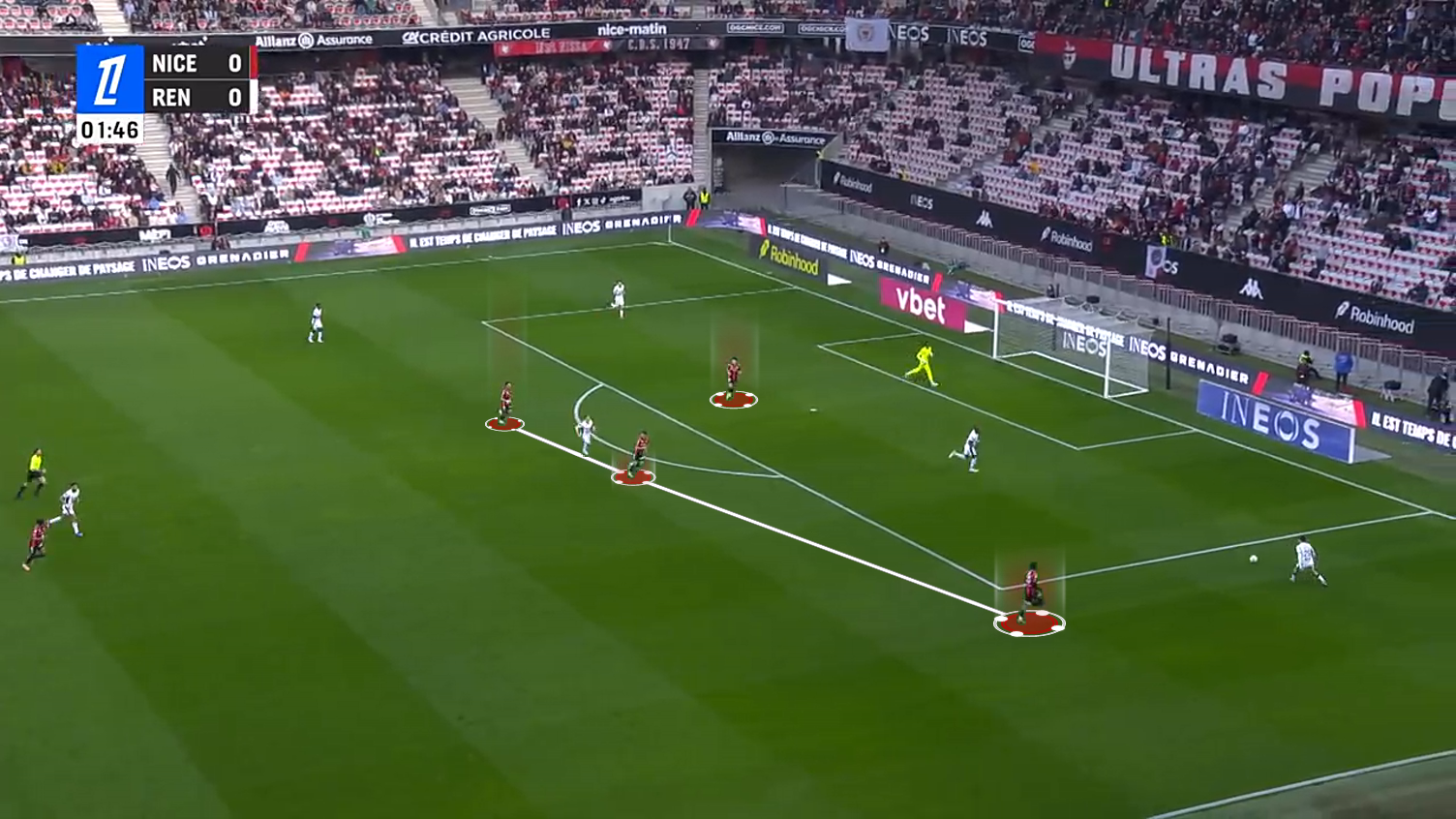
Puel’s preference for a 4-4-2 or 4-2-3-1 defensive block requires a high degree of vertical compactness, a squeezing of the pitch that Nice is currently failing to execute.
When the first line of pressure, often led by Sofiane Diop or Mohamed-Ali Cho, triggers a press, the second line of the midfield fails to push up in support.
This creates a vast no-man’s-land in the middle third where opposition playmakers can receive the ball, turn, and scan the pitch without immediate harassment.
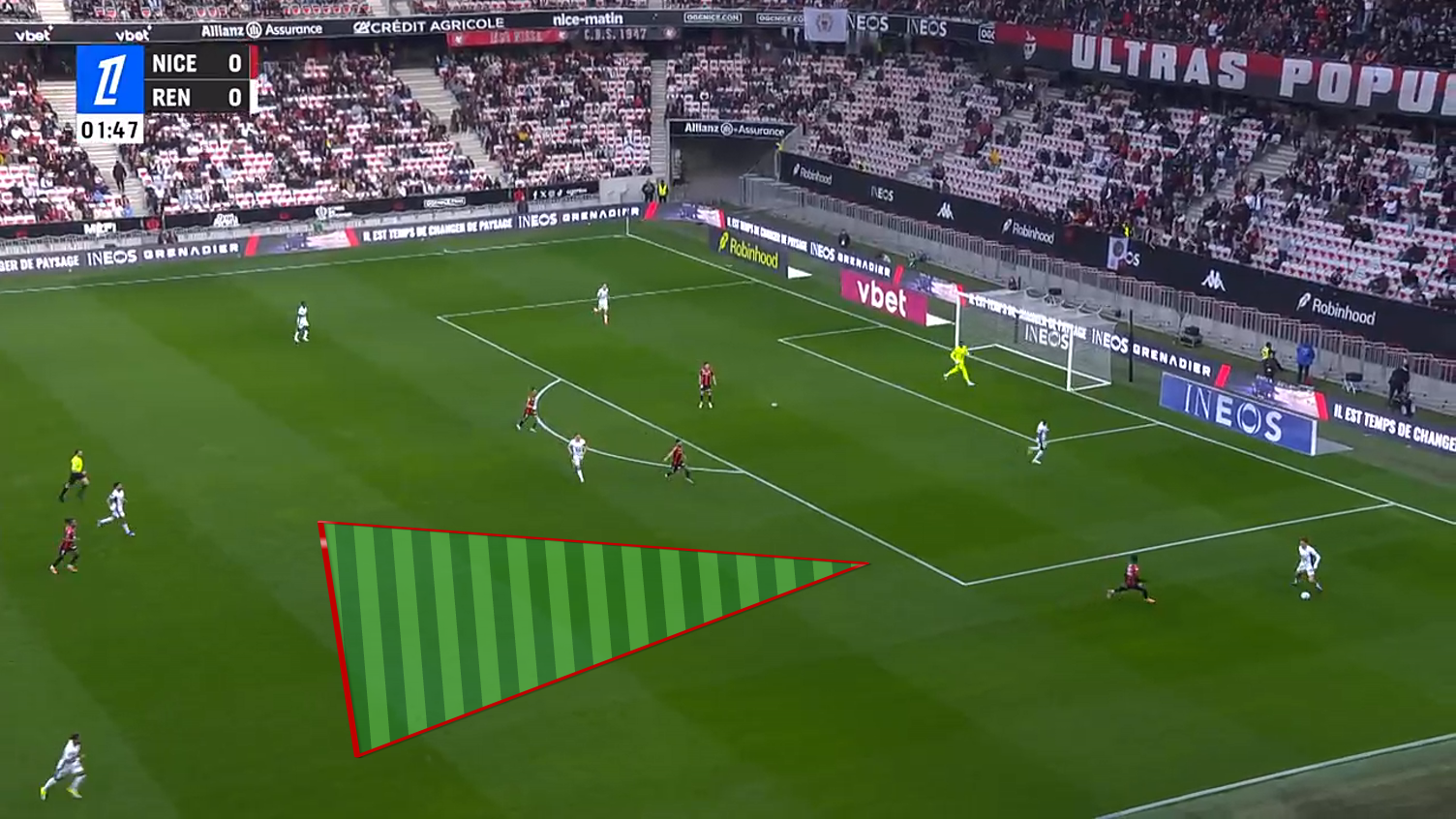
The psychological impact of this disconnected press is profound.
Forwards begin to lose faith in the system, leading to half-hearted presses in which players move toward the ball-carrier but don’t commit to the duel, fearing the space they leave behind.
Against teams like Rennes, who recently thrashed Nice 4-0, this was painfully evident.
The Rennes midfielders consistently found pockets behind Nice’s front two, drawing the central midfielders, Hicham Boudaoui and Morgan Sanson, out of position.
Once the pivot is bypassed, the defensive line is forced into a reactive retreat, surrendering the very territory the press was supposed to protect.
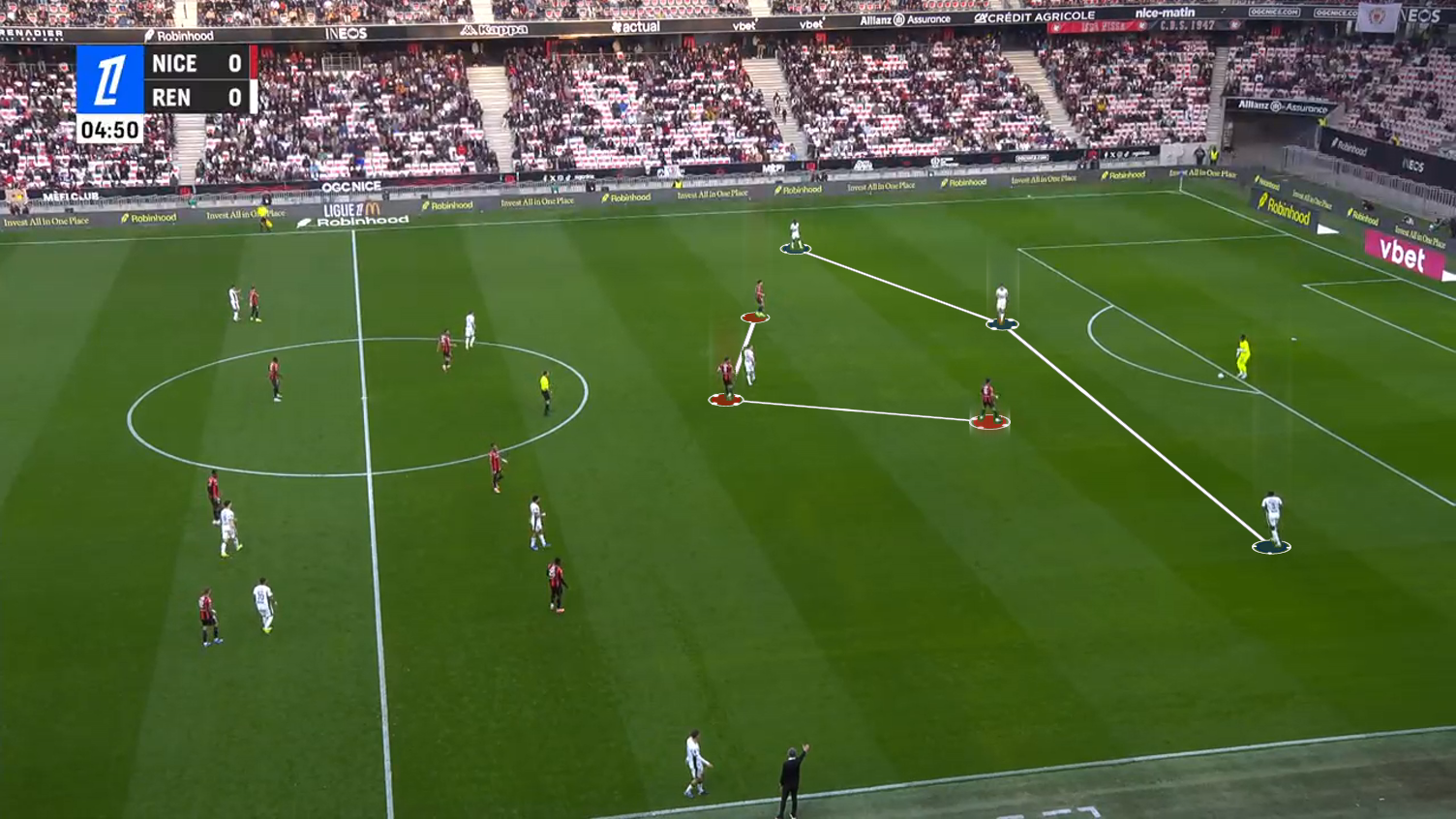
The press is reactive rather than proactive; instead of forcing the opponent into traps along the touchline, Nice’s forwards chase the ball, allowing the opponent to use the goalkeeper as a plus-one to reset.
Furthermore, the personnel decisions in the pressing line have raised questions.
Puel has often used Sofiane Diop in a more advanced role to utilise his work rate, but this often leaves the team without a focal point once the ball is won.
The pressing triggers are inconsistent; one player may trigger a sprint while the others remain in a mid-block, leading to a staggered defensive line that is easily carved by diagonal balls.
The intensity that Puel demands is present in spirit but absent in structure.
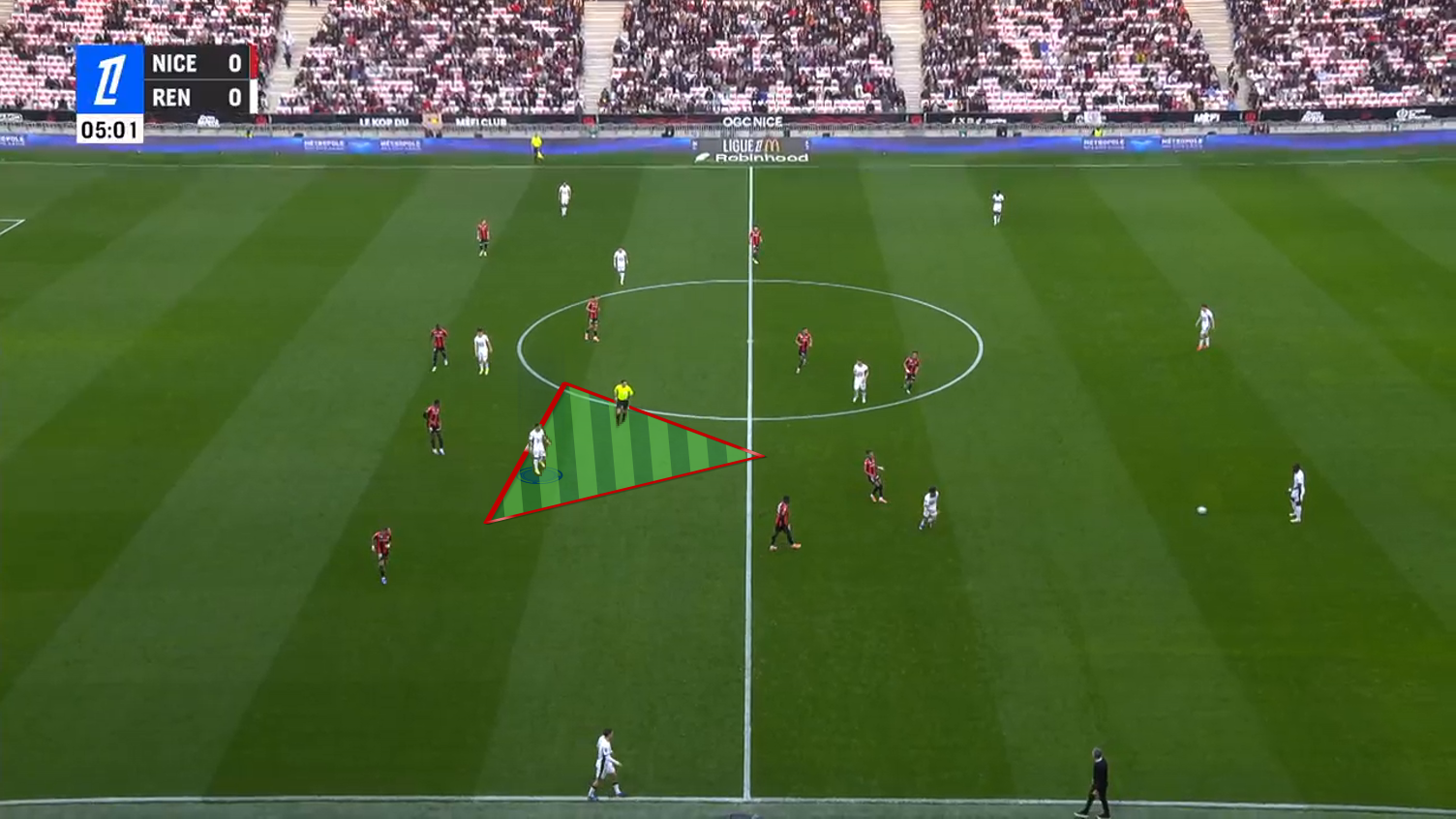
Without a synchronised squeeze from the backline to reduce the distance between the units, the press is nothing more than a ghost, a theoretical concept that the players are attempting to execute without the necessary positional foundations.
This failure to disrupt the opponent’s build-up means that Nice are constantly forced into long periods of defensive suffering, as they cannot regain possession in areas where they can actually hurt the opposition.
The press, intended as a weapon, has become a burden that consistently leaves the team’s core vulnerable to quick, central penetrations.
By failing to lock the opponent into one side of the pitch, Nice allow for easy switches of play that further stretch their already fragile horizontal compactness.
Structural Fragility: The Collapse Of Box Defending
If the high press is a ghost, the box defending is a haunting.
Nice’s defensive record this season, conceding 48 goals in 25 matches, is the hallmark of a team that has lost its orientation.
Under Puel, the defensive line often fluctuates between a high line that lacks the speed to recover and a deep block that lacks the aggression to clear its lines.
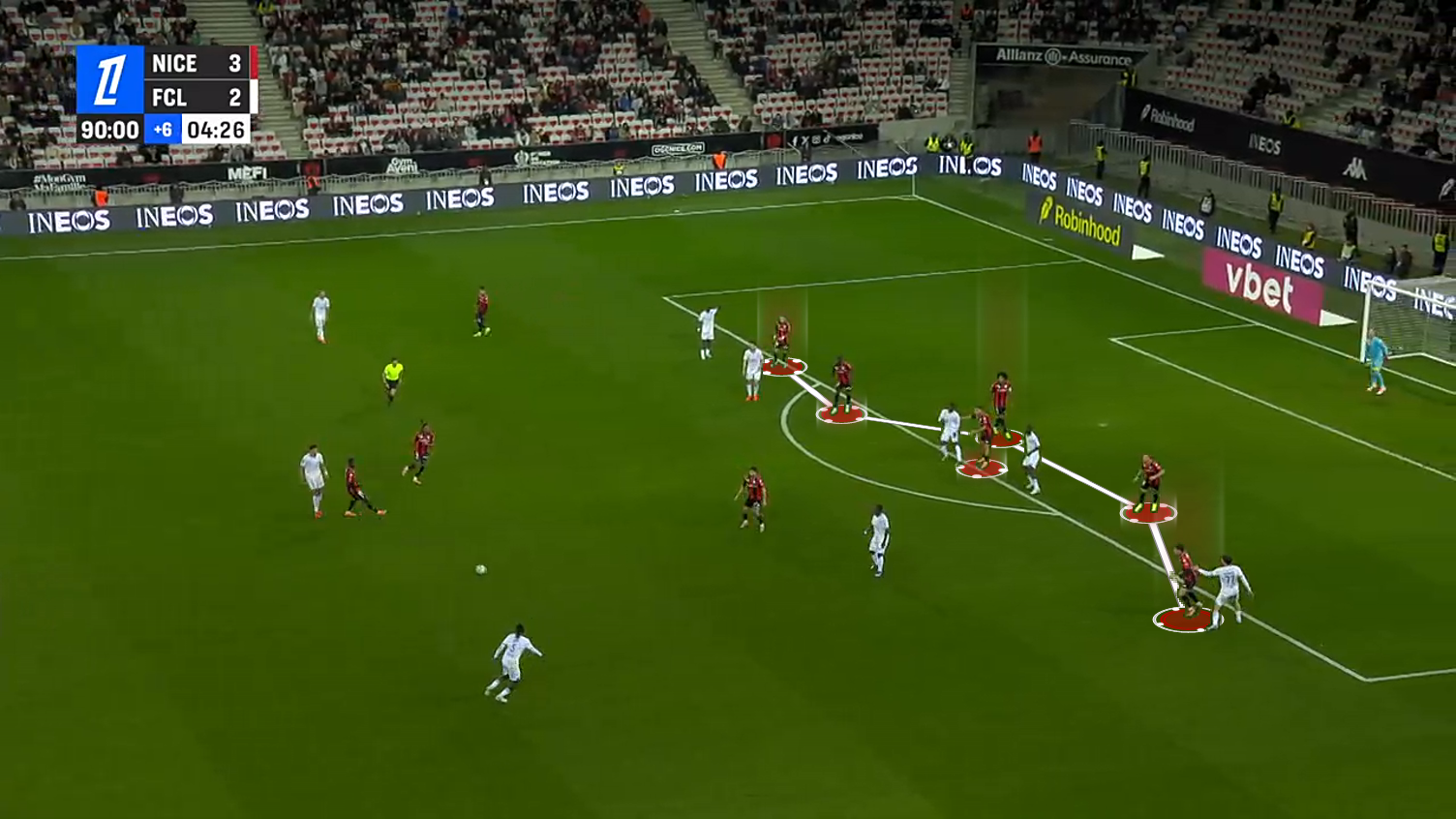
The primary issue is a lack of horizontal compactness and a recurring failure in the handover mechanics between the full-backs and the centre-backs.
When an opponent attacks the wide areas, Nice’s full-backs are often left in 1v1 situations without adequate cover from the near-side midfielder.
This forces a centre-back to slide over to assist, which inevitably opens a cavernous gap in the heart of the box.
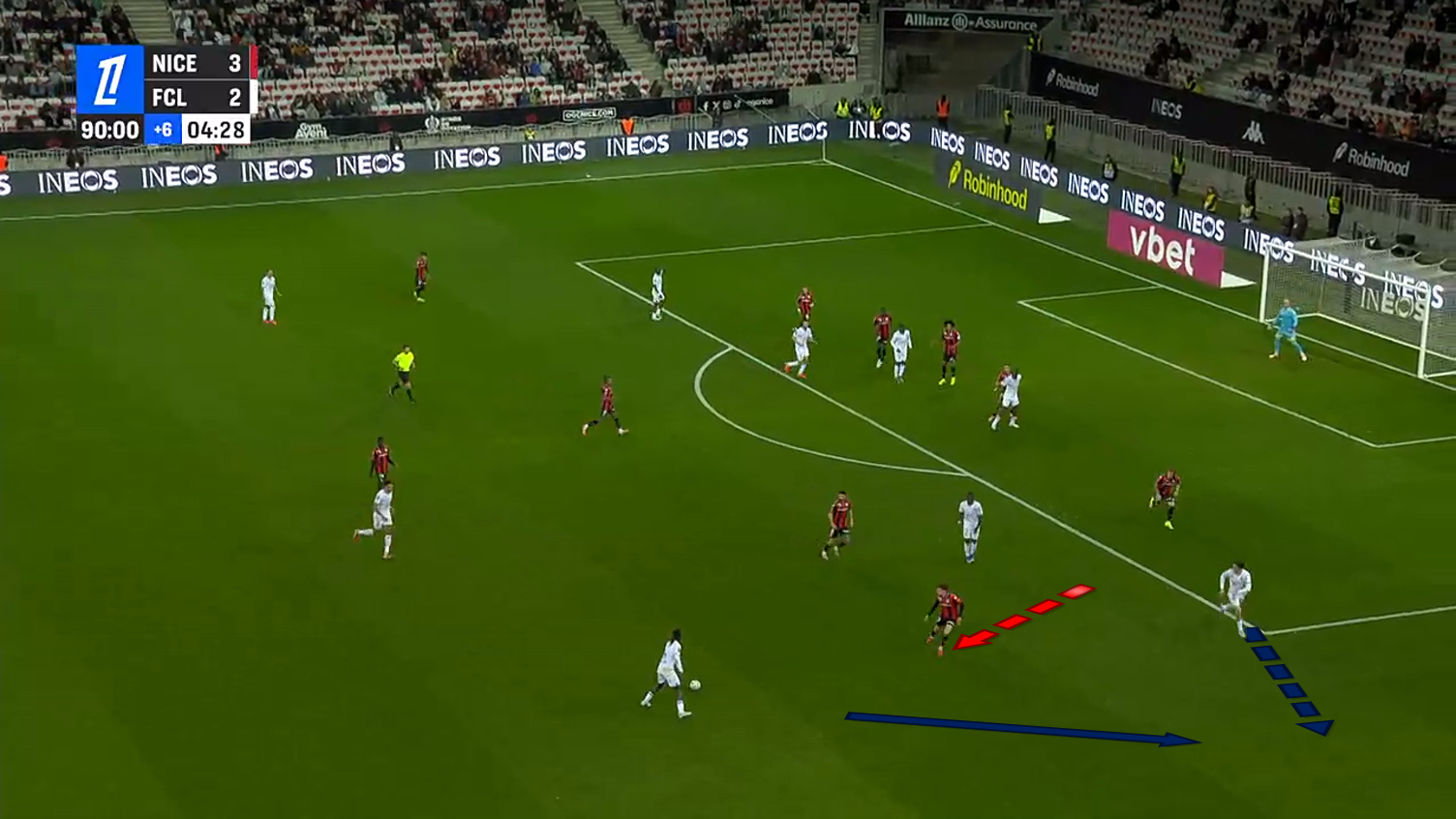
This stretching of the backline is a recurring nightmare.
The 4-0 humiliation against Rennes exposed fundamental defensive issues that Puel has struggled to address.
The positional drift of the centre-backs, Dante’s experience being offset by a lack of recovery speed, and the long-term absences of Moise Bombito, Mohamed Abdelmonem, and Youssouf Ndayishimiye, have led to a defensive unit that ball-watches rather than marking space or runners.
In their own third, the communication hierarchy appears broken.
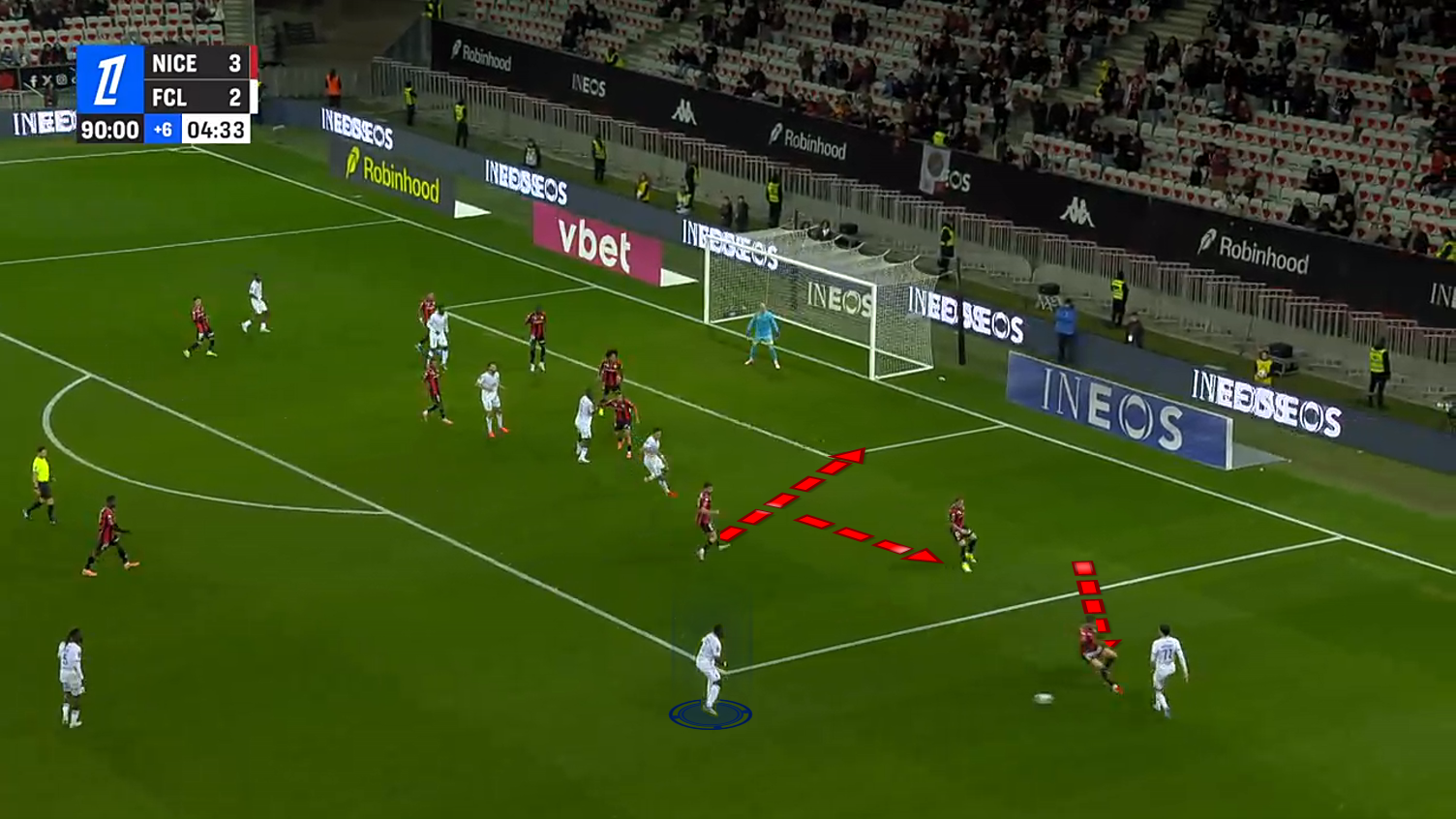
We often see multiple defenders gravitating toward the ball-carrier, leaving the far post completely vacated.
This lack of scanning is a fundamental error; defenders are focused on the immediate threat but are oblivious to the secondary and third-man runs that modern Ligue 1 offences prioritise.
The lack of height and physical dominance in the centre of the defence has also made them easy targets for direct crosses.
Moreover, the transition from a mid-block to a deep-defensive stance is clunky and fraught with hesitation.
As the opponent enters the final third, Nice’s midfield often fails to track back with enough intensity to form a double screen in front of the centre-backs.
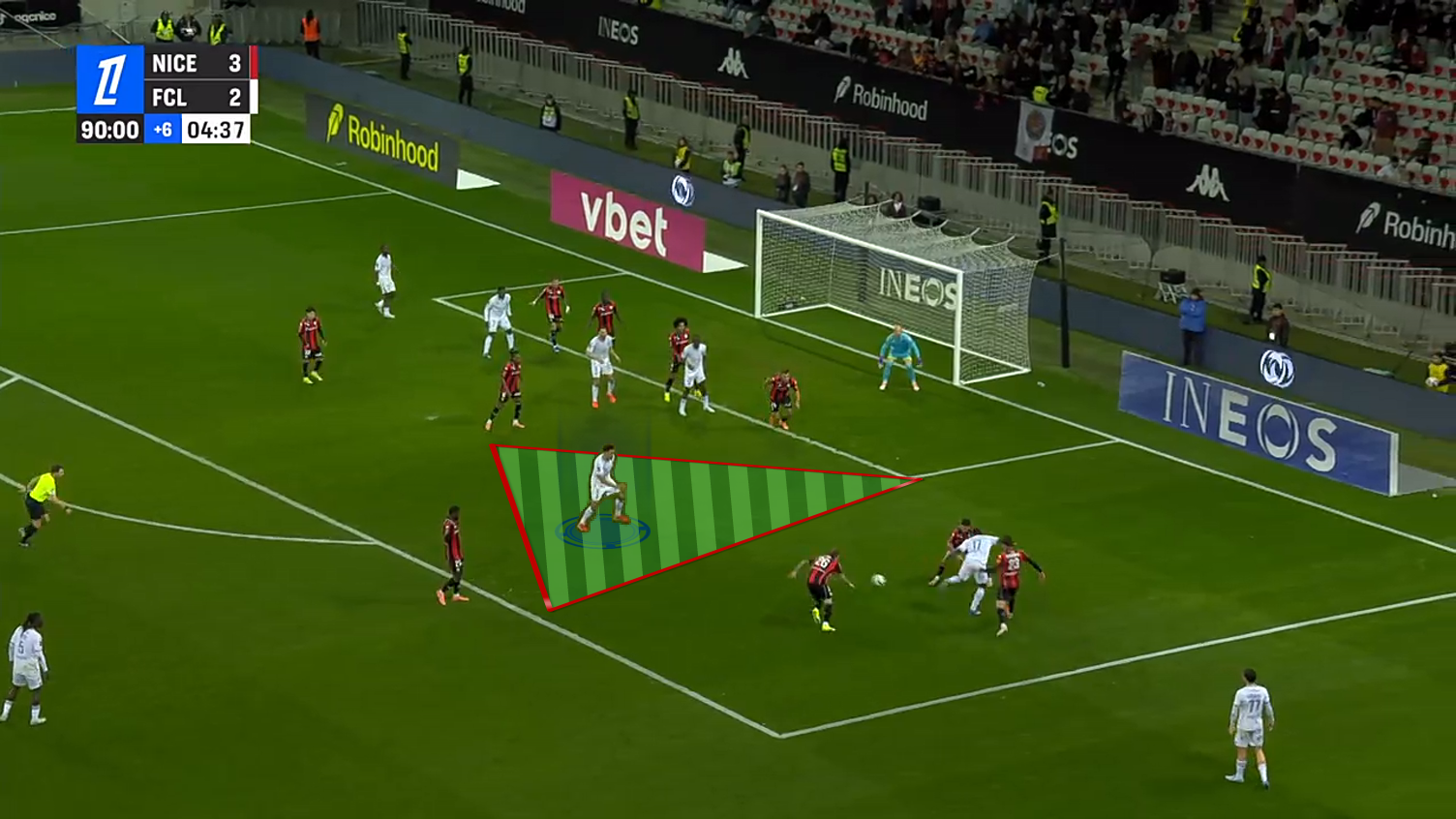
This leaves the back four isolated against five or six attackers.
The second-ball problem is also acute; Nice frequently wins the initial header from a cross but fails to anticipate where the ball will land, allowing the opponent to retain possession in the danger zone (the area between the penalty spot and the edge of the box).
This structural fragility is compounded by a lack of physical dominance in the air, particularly during set-pieces.
Puel’s emphasis on doing the simple things well has yet to manifest in a disciplined box-defending routine.
Instead, the team relies on the heroic shot-stopping of Yehvann Diouf or Maxime Dupé to bail out a system that is consistently breached.
The defensive third, which should be a sanctuary, has become a zone of panic, where the lack of clear zonal responsibilities leads to a paralysis of decision-making under pressure.
This is further exacerbated by full-backs like Melvin Bard being caught between staying narrow to help the centre and staying wide to stop the cross, often doing neither effectively.
The Individualist Trap: Lack Of Cohesive Attacking Patterns
Offensively, OGC Nice is a team that exists in a state of tactical improvisation.
While they have managed to score 30 goals, a respectable figure, the vast majority of these goals have come from moments of individual class rather than coached attacking patterns.
Under Claude Puel, the build-up play is patient and possession-based, but it lacks the triggers and automations that characterise top-tier positional play.
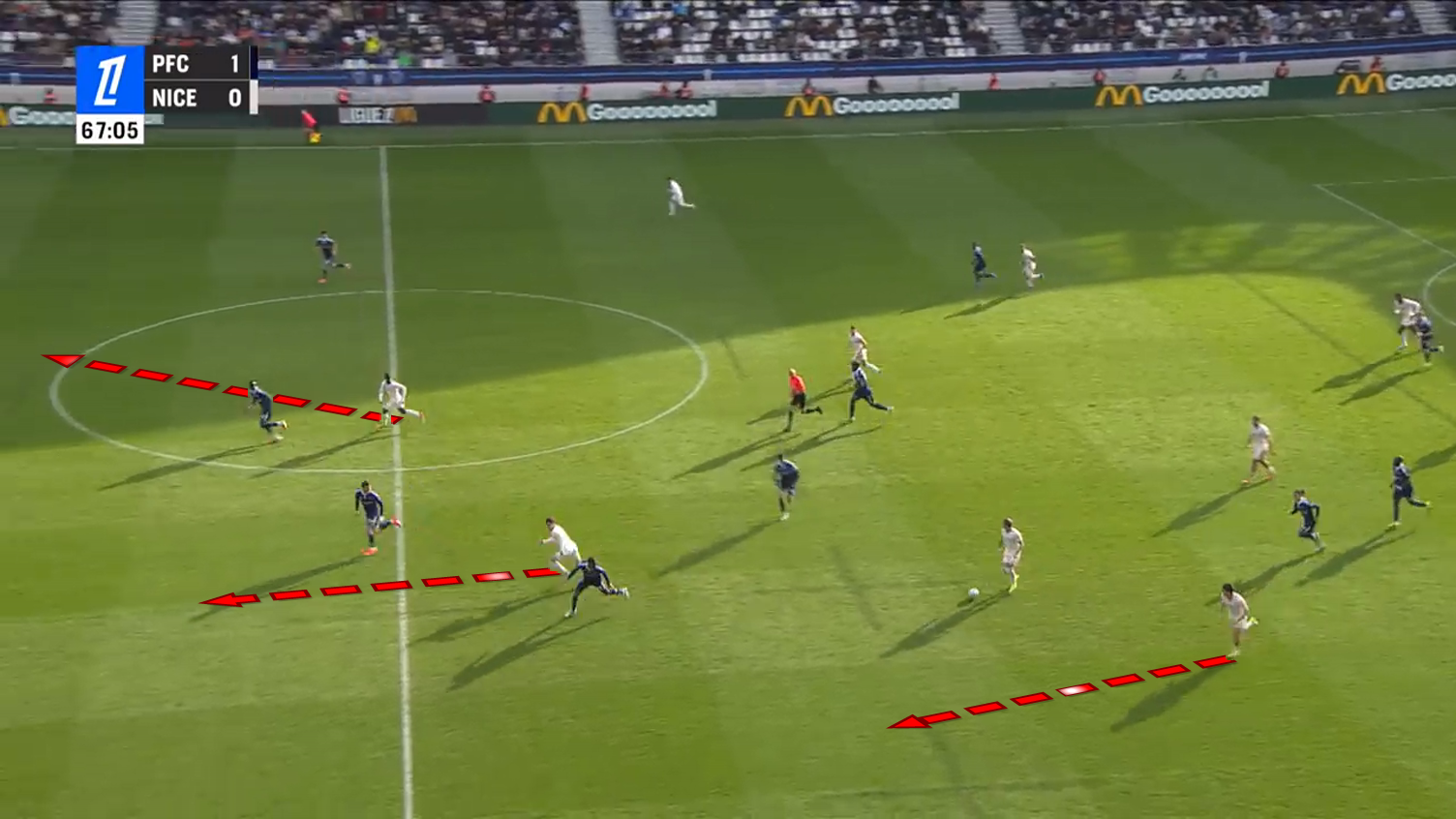
The team lacks a clear offensive roadmap; when the ball moves from the centre-backs to the midfield, there is a visible hesitation.
Players look for the safest option rather than a line-breaking pass, resulting in a U-shaped circulation that is easy for opponents to defend against.
This predictability is the death knell for any side attempting to break down a well-organised block in Ligue 1.
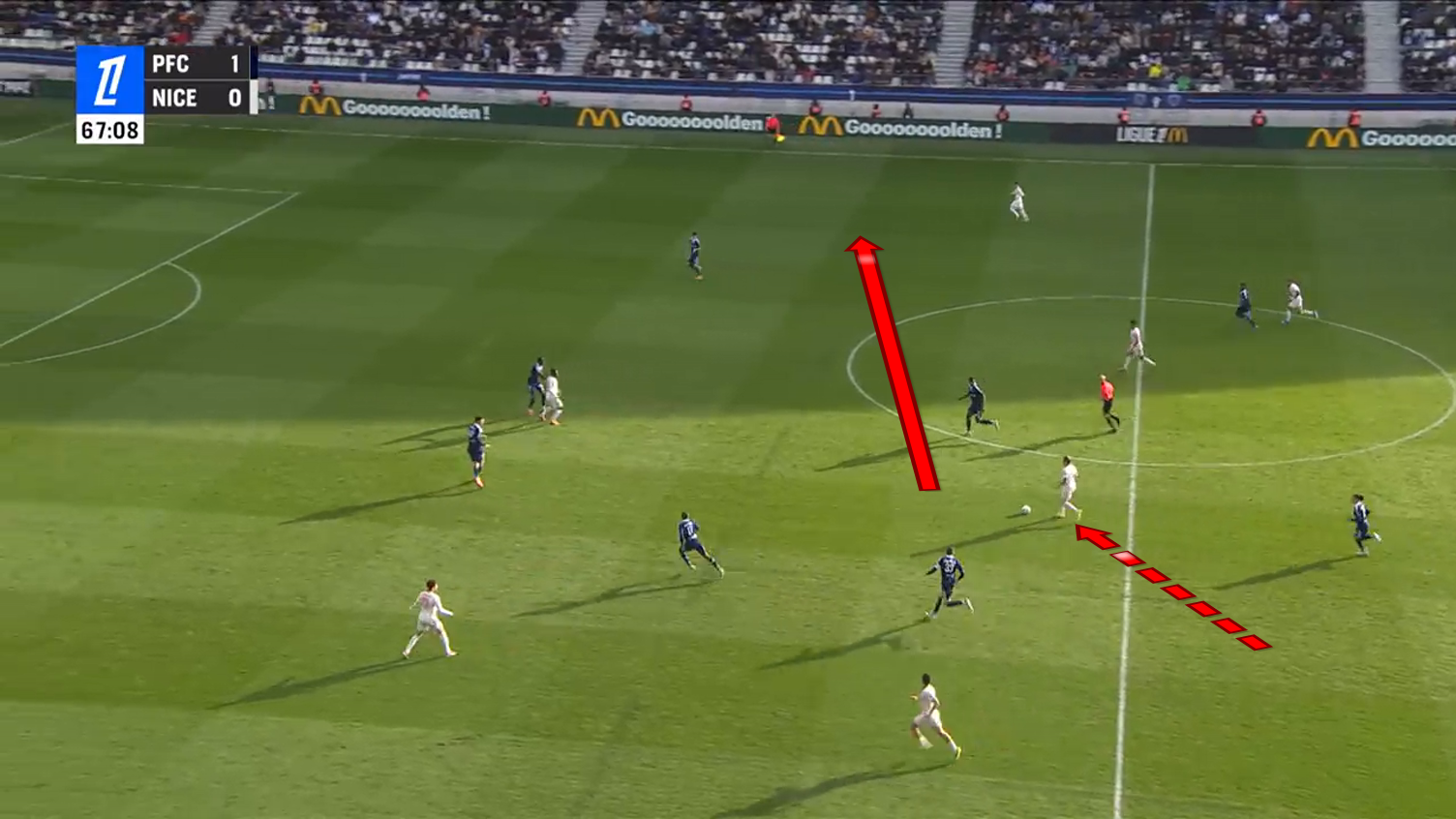
The dependence on individual brilliance is most evident in the roles of Sofiane Diop and Jérémie Boga, and with the latter leaving at the end of the winter transfer window, the team has fallen even deeper into trouble.
When the collective structure fails to create an opening, the instructions seem to revert to giving the ball to the wingers and hoping they beat two or three men.
While Diop is undoubtedly one of the best 1v1 dribblers in the league, this reliance makes Nice predictable.
Opponents double-team the wide players, knowing that the central support, the underlapping or overlapping runs, will be late or non-existent.
There is a distinct lack of verticality in the centre of the pitch.
Nice rarely employ third-man runs to bypass a midfield screen, opting instead for lateral passes that allow the opponent to shift their block and remain organised.
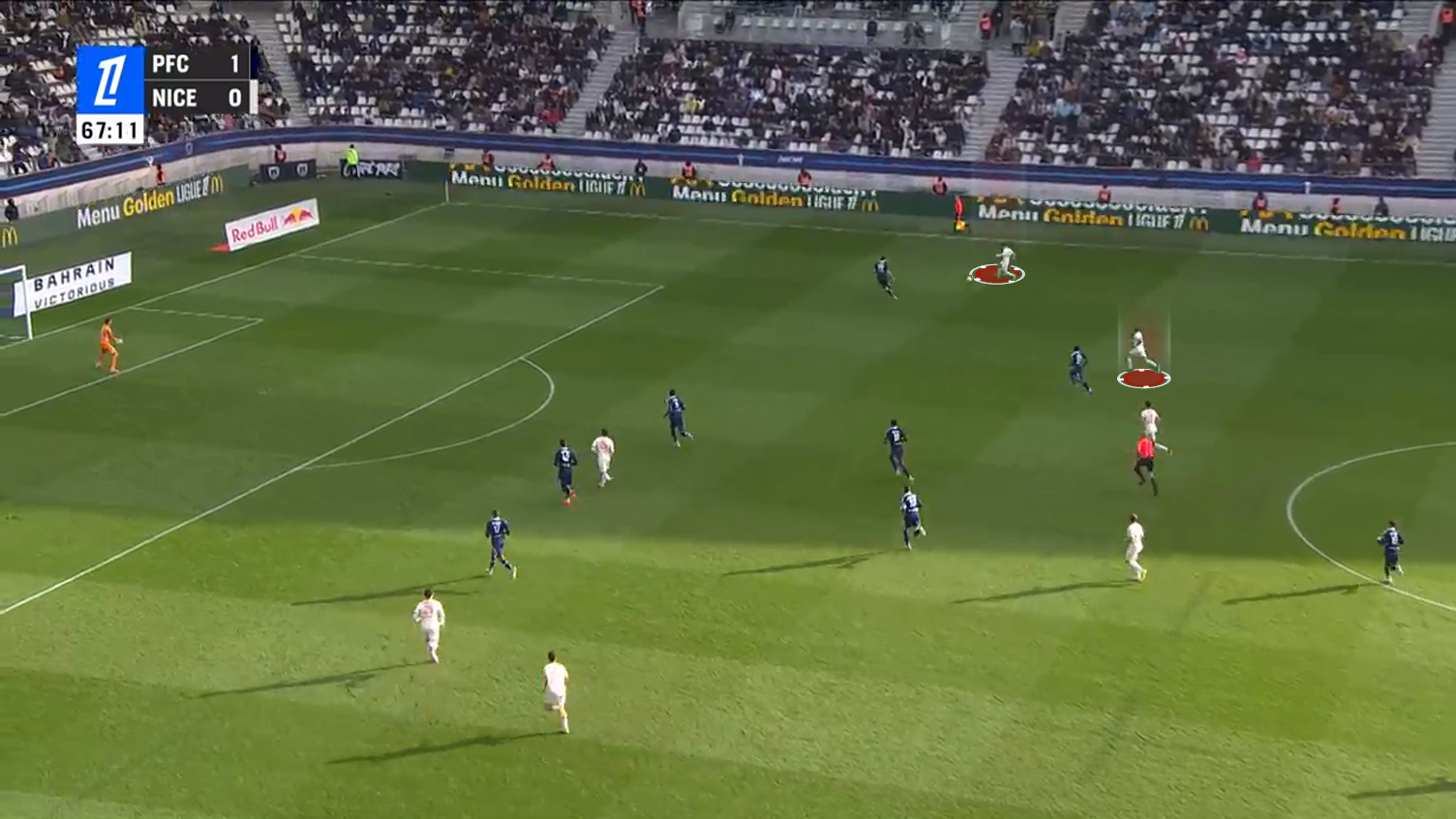
This static nature of the attack means that the strikers are often left isolated, forced to feed on scraps or speculative long balls from the back.
The absence of a consistent striking partnership has also hindered the development of attacking chemistry.
With Elye Wahi often sidelined and the summer arrival of Kevin Carlos, the strike-line has been a revolving door.
This lack of continuity means that the possession play, the ability to know where a teammate is without looking, is absent.
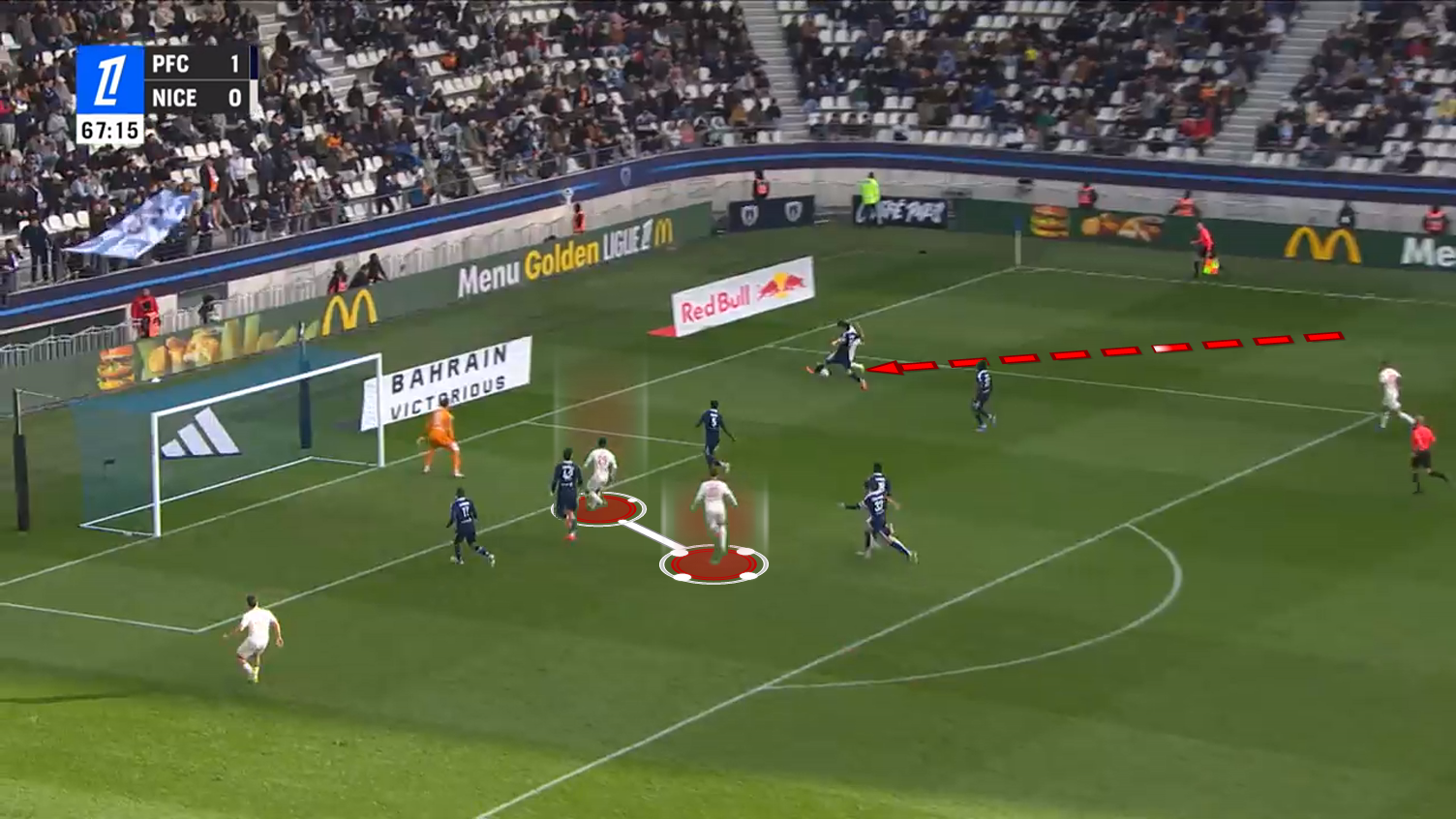
We see players making runs into the same space, or worse, standing still in the same vertical lane as the ball-carrier.
The positional play is static; rather than occupying different heights on the pitch to create passing triangles, the players often end up on the same horizontal line.
This makes it impossible to create the up-back-and-through combinations essential to breaking down a low block.
Puel’s Nice is a team of moments rather than movements.
They rely on a world-class strike from distance or a solo run to find the net, an unsustainable strategy.
This lack of structural cohesion in the final third means that even when Nice dominate possession, they rarely translate that control into high-quality xG opportunities.
They are playing a game of chance in a sport that demands tactical certainty, often leaving their talented creative players frustrated and overburdened with the task of inventing goals from nothing.
Conclusion
The tactical landscape at OGC Nice under Claude Puel is one of transition, but the destination remains dangerously unclear.
By stripping away the complex positional play of his predecessor in favour of a back-to-basics approach, Puel has inadvertently exposed the team’s fundamental structural flaws.
The disconnected press, the fragile box defending, and the reliance on individual inspiration are all symptoms of a side that has lost its collective soul.
In Ligue 1, where tactical discipline is the minimum requirement for survival, Nice are currently operating on the edge of catastrophe.
Puel’s mission is clear: stabilise the team and move away from the danger zone.
However, stability cannot be achieved through grit alone; it requires a tactical framework that allows the players to trust one another’s positioning.
As we look toward the final stretch of the 2025/2026 season, the question is whether Puel can instil the necessary automations and verticality into this squad before their structural poverty completely neutralises their individual quality.
Les Aiglons have the talent to fly, but currently, they are grounded by a tactical weight that feels increasingly insurmountable.
Survival will not be won by sweating for the shirt, but by rediscovering the geometric harmony that makes a team greater than the sum of its parts.
With their current record, I am not sure Claude Puel will be the manager to help secure their spot in the league.
