
A rematch of the Club World Cup Final lived up to the billing as three late goals from PSG gave them a 5-2 win over Chelsea, alongside a huge advantage heading into the second leg.
This seven-goal thriller had everything from incredible finishes, mistakes at the back, blistering counterattacks, and so much more.
PSG had come into the match on a bit of a rocky run of form.
They had recently lost to AS Monaco in Ligue 1 and struggled to get by their fellow French side over two legs in the Champions League knockout playoffs, despite Monaco getting a red card in both legs.
Chelsea, on the other hand, have been in good form under Liam Rosenior, but maybe haven’t got the results they deserve.
This match was definitely one of those scenarios because, as we will discuss in this tactical analysis, PSG were incredibly fortunate to find the back of the net five times, and you could argue that Chelsea may have been the better side.
With that being said, it was a very interesting tactical battle between Luis Enrique and Rosenior.
In this analysis, we examine the effectiveness and weaknesses of PSG’s pressing, PSG’s ruthless finishing, and Chelsea’s success in quick transitions.
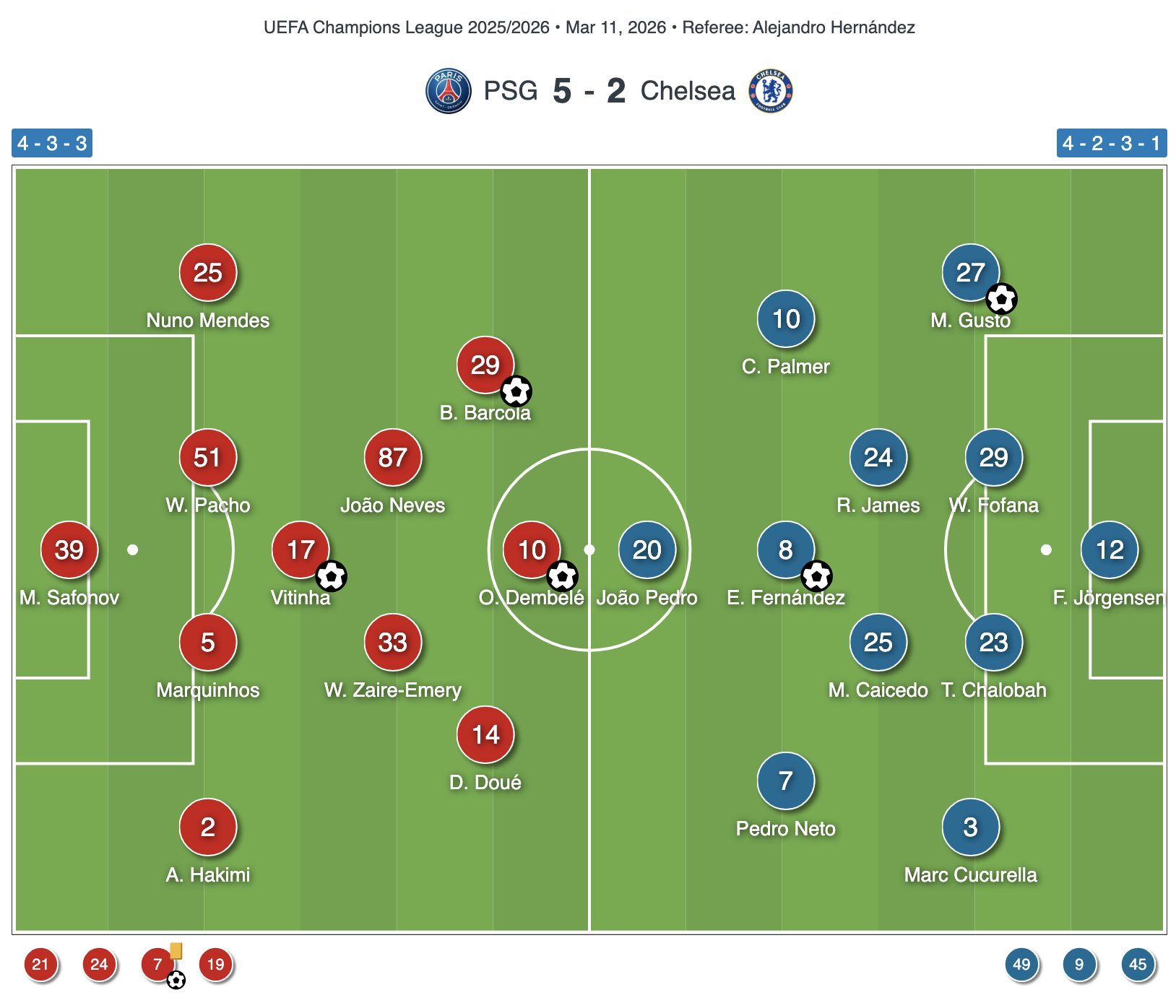
PSG Vs Chelsea Lineups & Formations
Luis Enrique lined his team up in their usual 4-3-3 formation.
Matvey Safonov started in net behind the centre-back pairing of Marquinhos and Willian Pacho.
Nuno Mendes started at left-back, while Achraf Hakimi started once again at right-back.
Warren Zaïre-Emery, Vitinha, and João Neves started together as the three midfielders.
Désiré Doué started at right wing, while Bradley Barcola started at left wing.
Ballon d’Or winner Ousmane Dembélé started up top.
Luis Enrique made four substitutions in the match.
In the 62nd minute, Khvicha Kvaratskhelia came on for Doué.
In the 69th minute, Lee Kang-In came on for Dembélé.
In the 78th minute, Senny Mayulu came on for Barcola, and Lucas Hernández came on for Zaïre-Emery.
Liam Rosenior lined Chelsea up in a 4-2-3-1 formation.
Filip Jørgensen lined up in goal behind Trevoh Chalobah and Wesley Fofana as the centre-back pairing.
Marc Cucurella started at left-back, while Malo Gusto started at right-back.
Reece James and Moisés Caicedo started as the two defensive midfielders.
Pedro Neto started at left wing, Enzo Fernández started as the ‘10’, while Cole Palmer started at right wing.
João Pedro started once again up top for the Blues.
Liam Rosenior made three substitutions in the match.
In the 83rd minute, Liam Delap came on for Pedr,o and Roméo Lavia came on for Palmer.
In the 88th minute, Alejandro Garnacho came on for Gusto.
PSG High Press
The big story coming out of this match wasn’t that PSG completely ran over and got their revenge on Chelsea from the Club World Cup Final.
To me, it was more the mistakes Chelsea made at the back that ended up costing them the match.
Chelsea really did struggle in the buildup for most of the match, and Jørgensen was never comfortable on the ball.
Even when PSG were pressing high man-to-man, they often forced Chelsea to go long with Pacho and Marquinhos winning a high number of duels with Pedro.
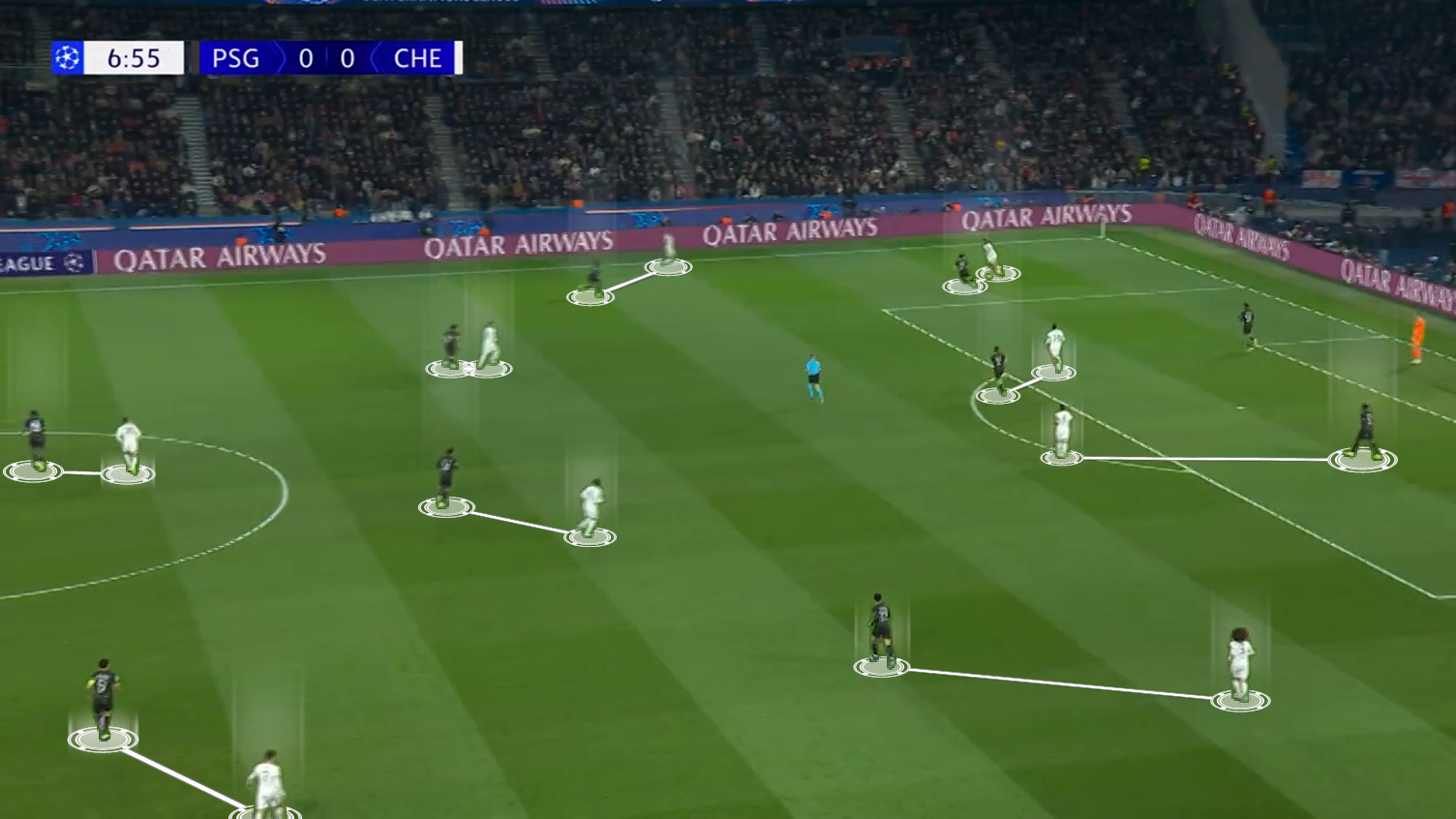
In total for the match, PSG had 17 high recoveries and a PPDA of 6.6.
While overall they were impressive, there were a couple of instances when Chelsea turned their pressure against them.
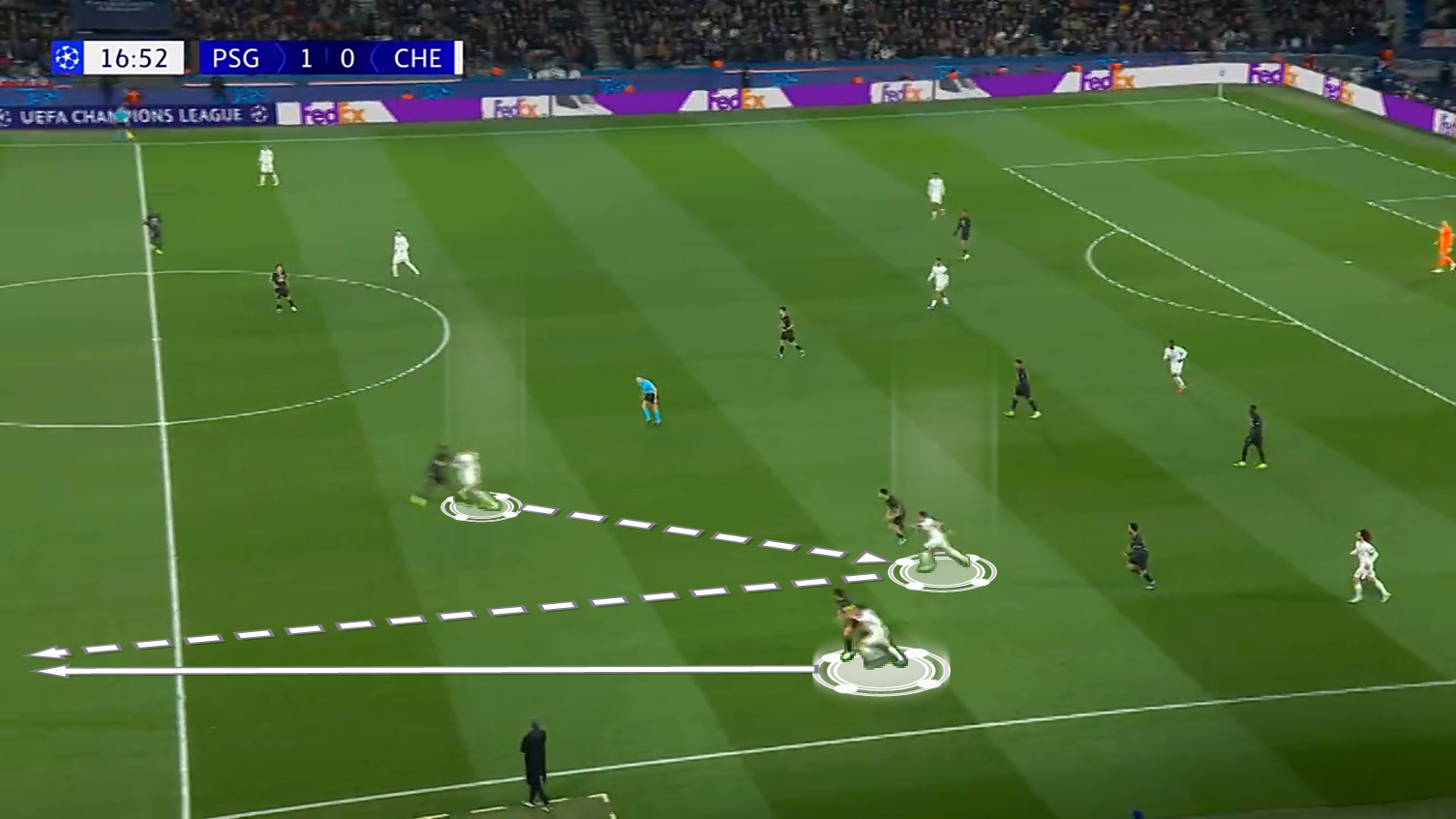
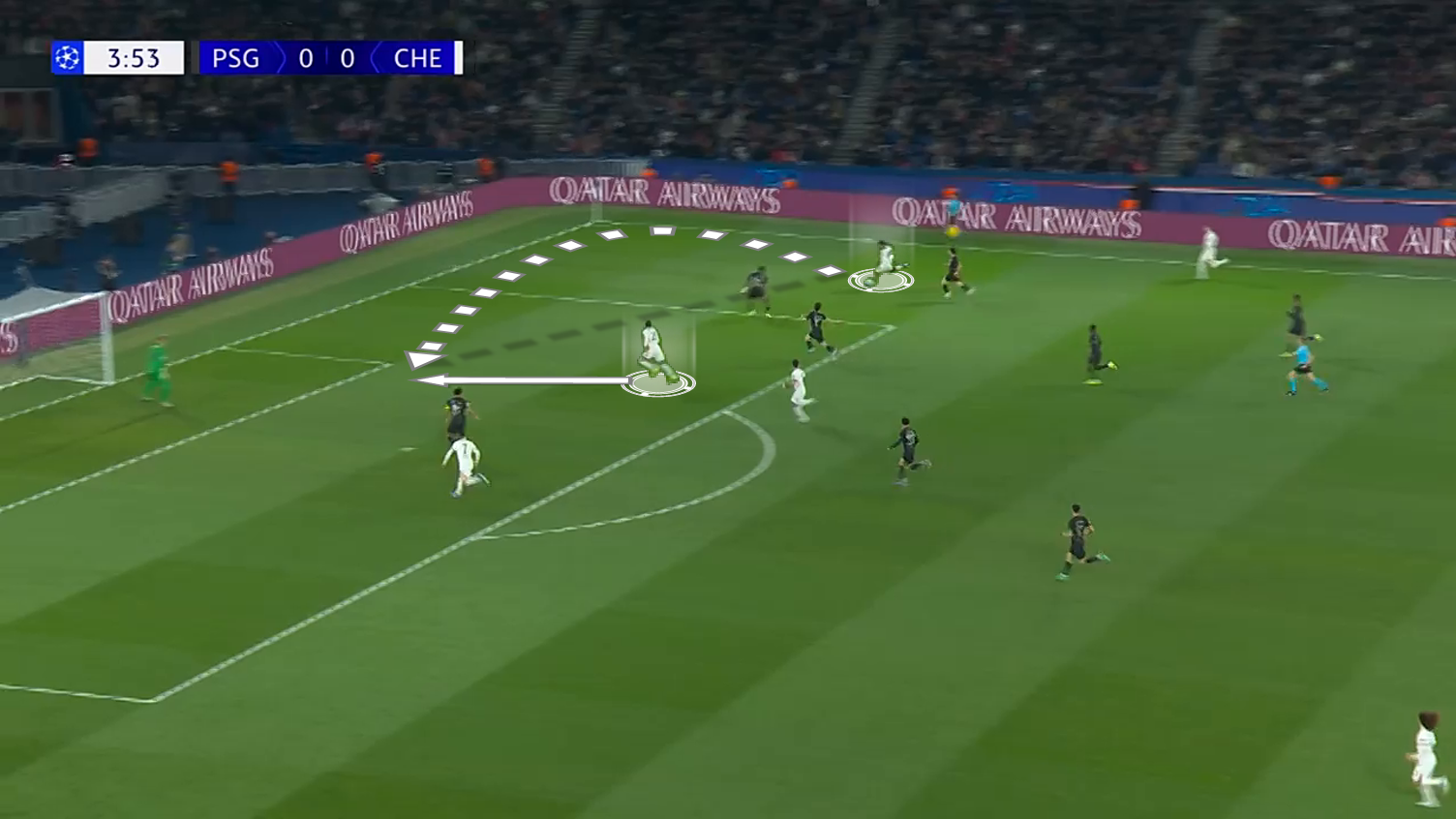
Here, the ball goes wide. Pedro drops deep to receive it from Neto, then plays it back to Fernández, while Neto makes a run into the space Pedro has created, creating a really dangerous chance at the other end of the pitch.
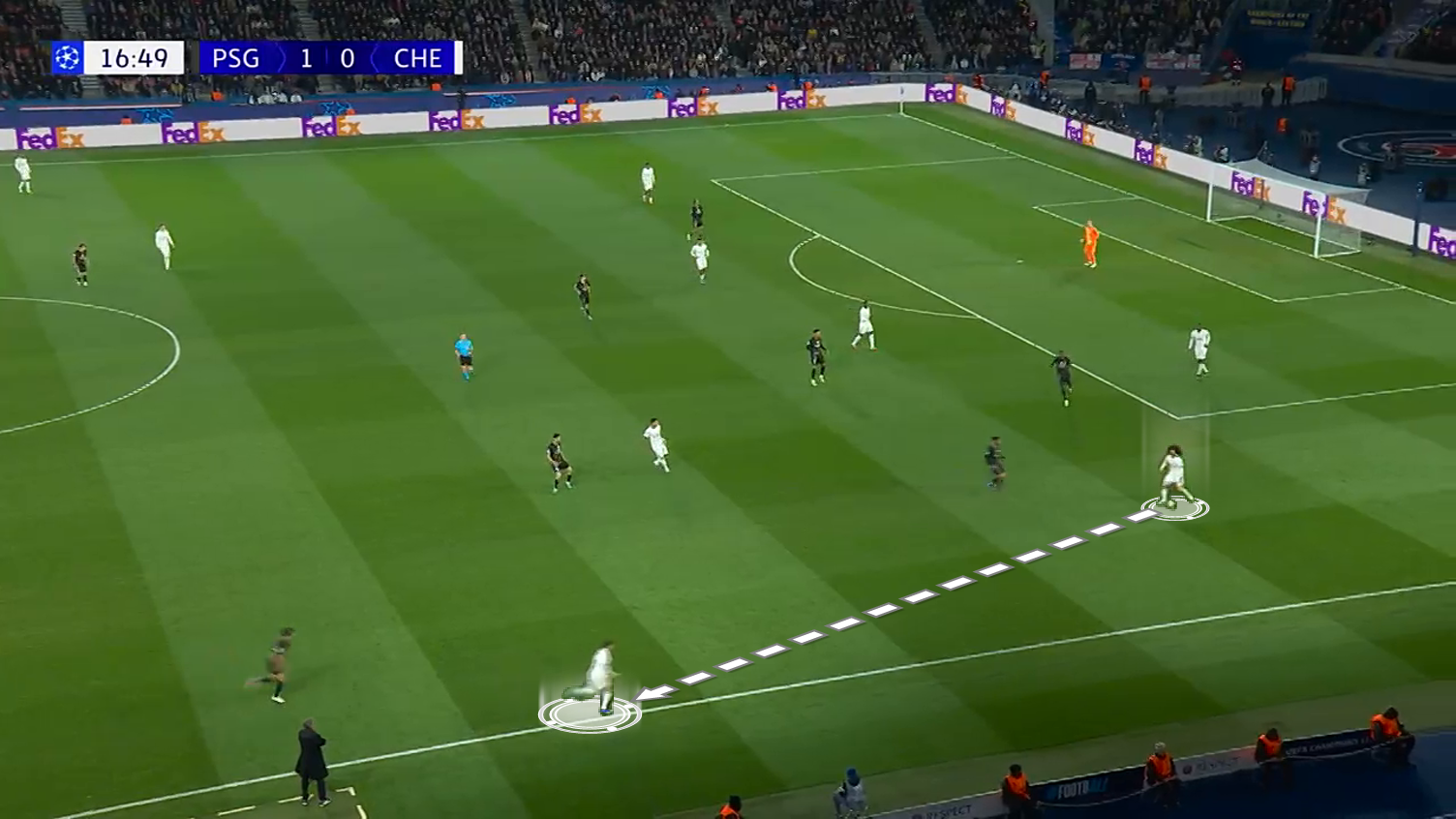
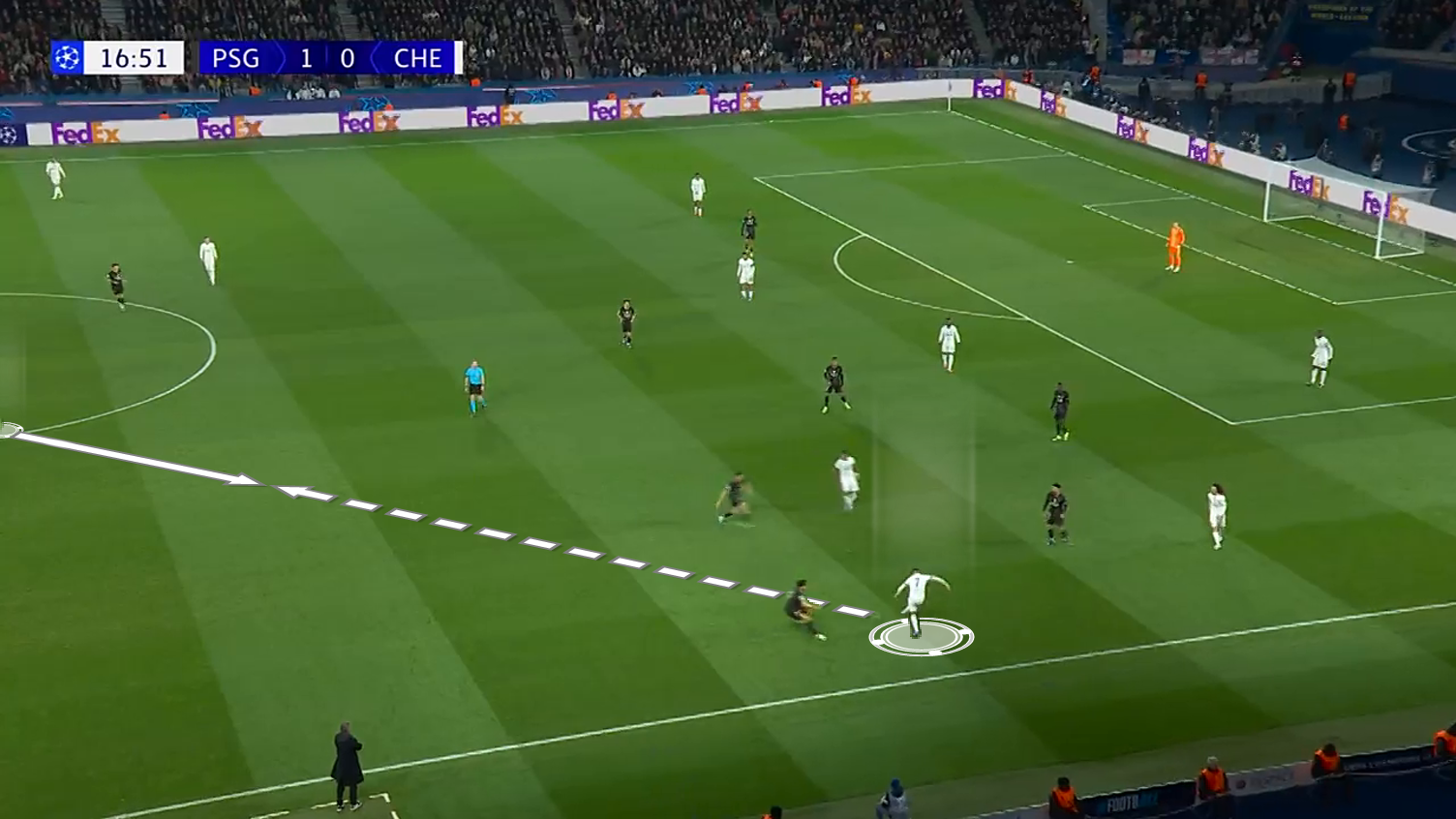
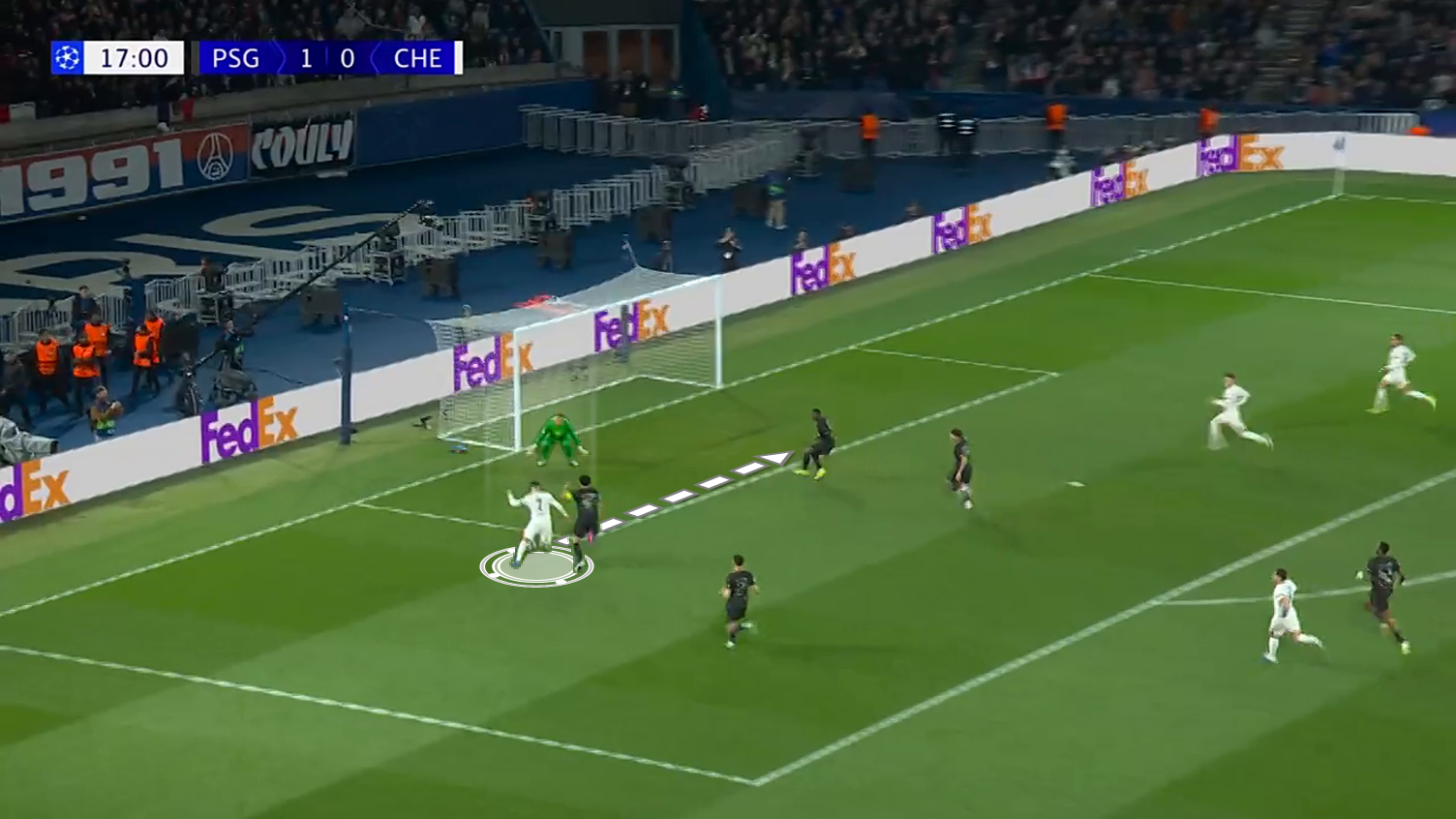
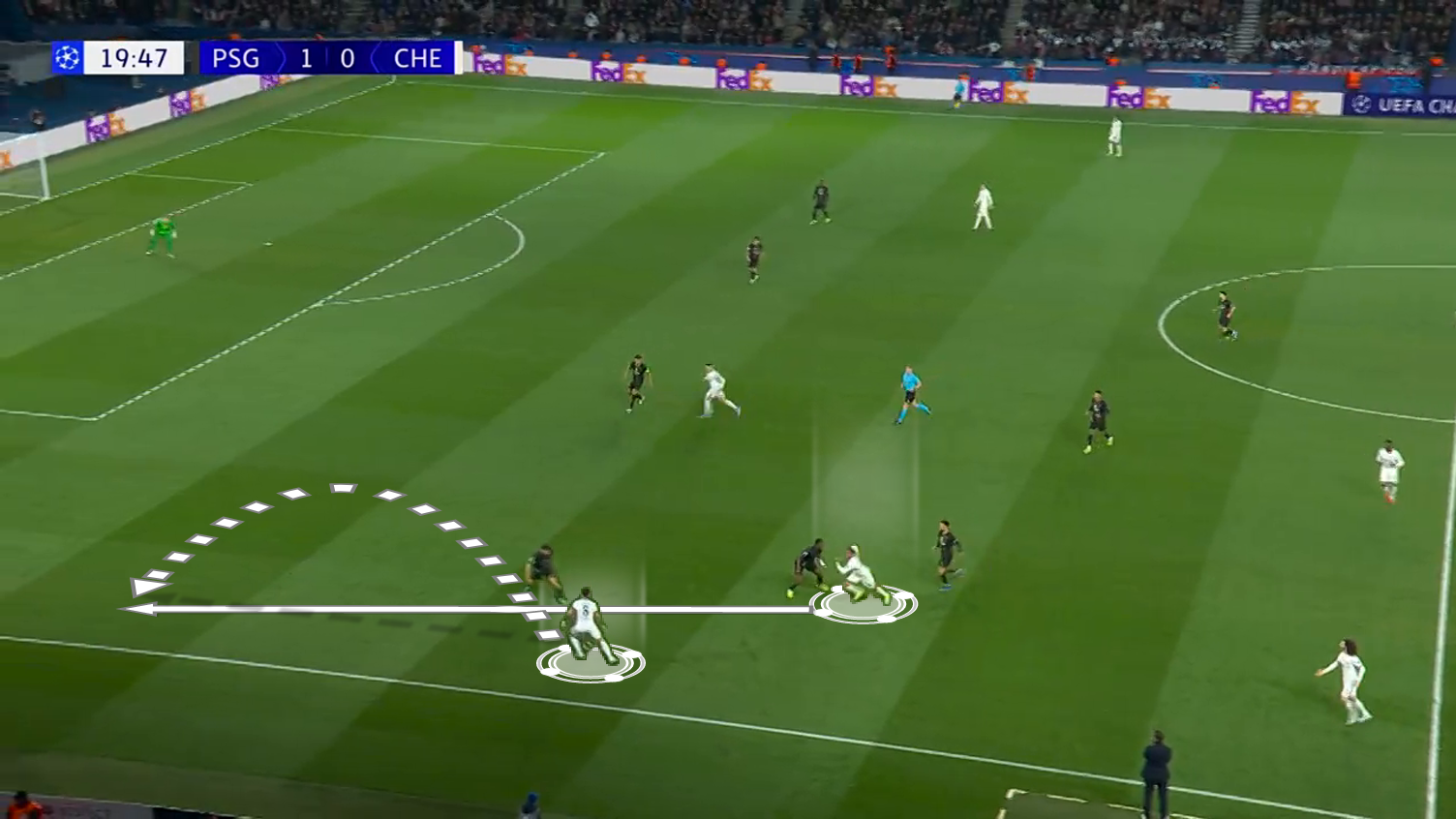
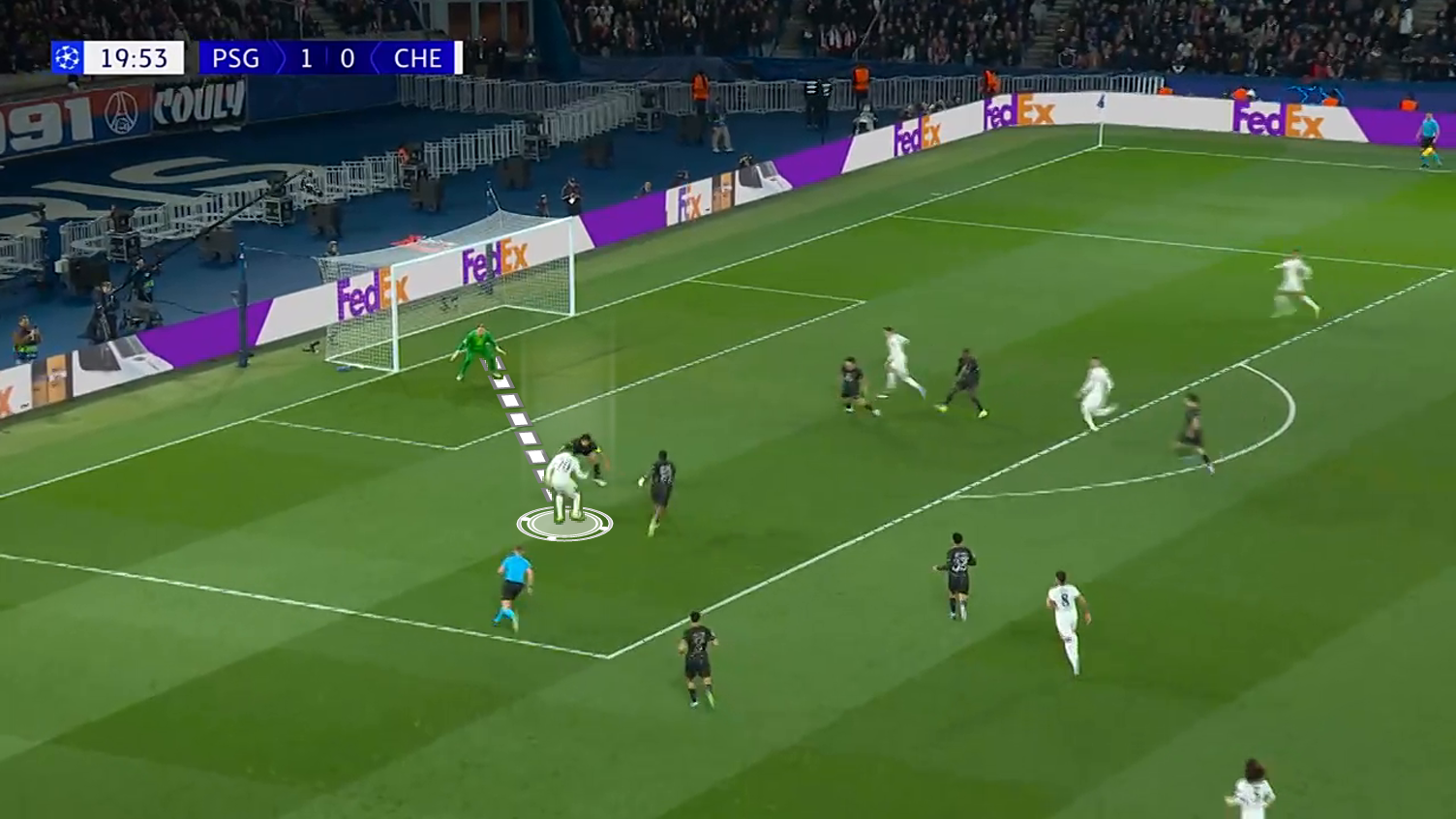
Another example of the weakness of man-to-man marking is that if you, as the defender, get beaten, there is a lot of space behind you.
Here, Pedro makes a bent run around Fernández into the space available and gets off a pretty decent shot that is deflected.
Even though Chelsea turned it over quite a bit in their own end of the pitch, they were still playing PSG very evenly right up until the 72nd minute when Jørgensen made a crucial error that gave PSG the lead.
You can see that Barcola had cut off the right side of the pitch, PSG had Chelsea’s double pivot covered, so Palmer was sprinting in deep to try and provide support.
Jørgensen tried to play it to Palmer, but Barcola blocked the pass right to Kvaratskhelia, who played it to Vitinha for the go-ahead goal.
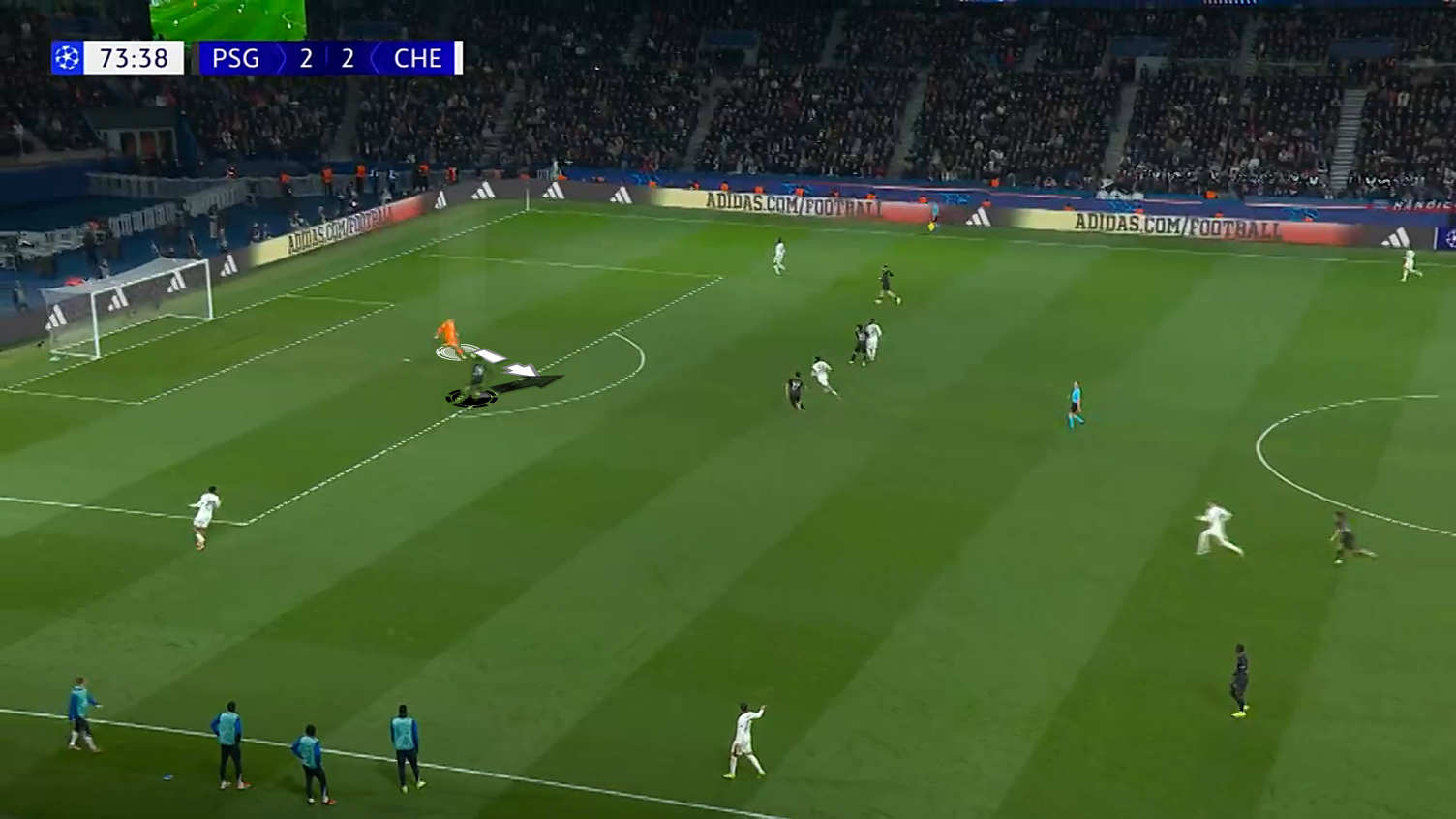
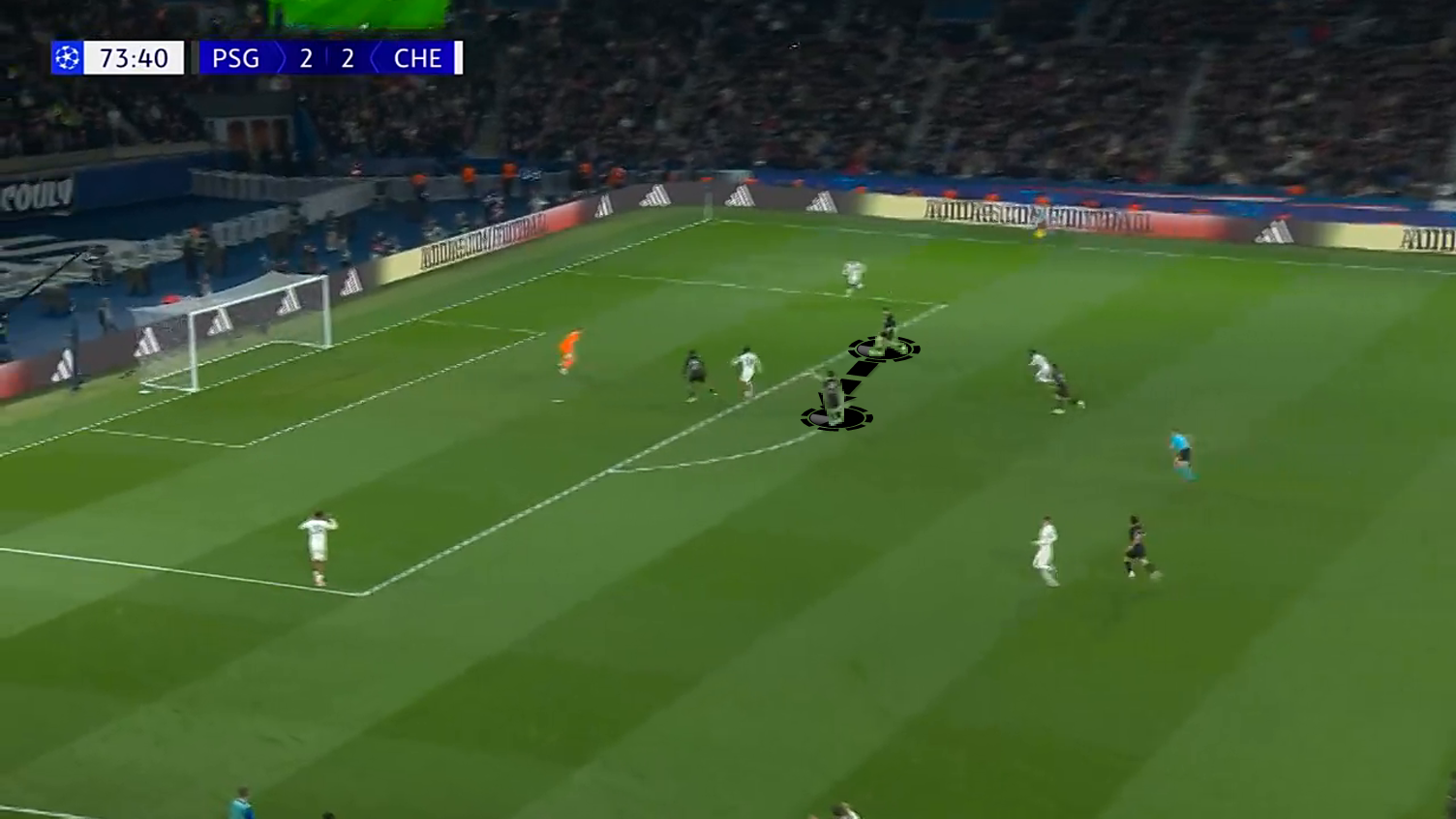
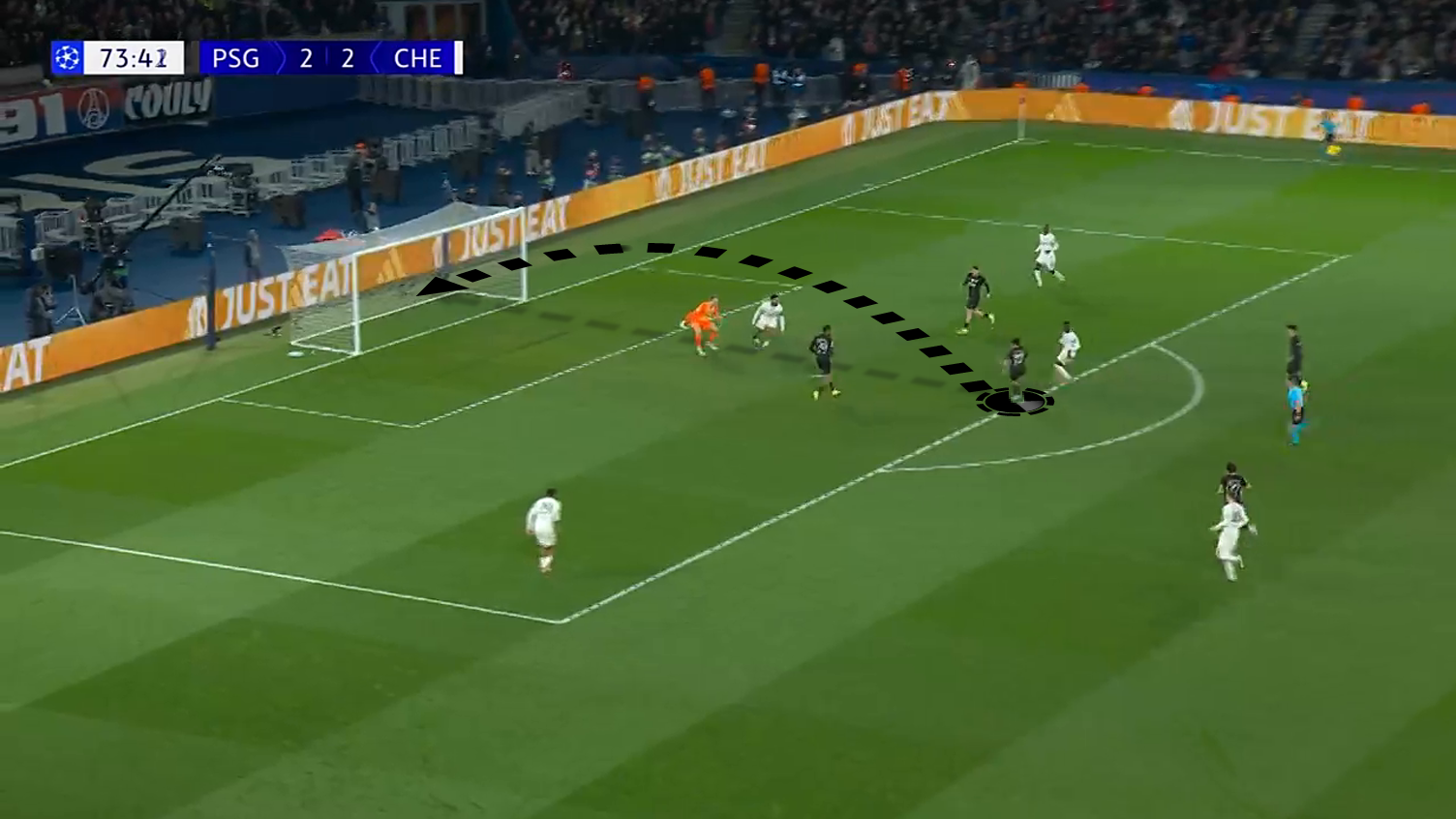
Chelsea had their opportunities created by PSG’s pressure, but in the end, one crucial mistake gave PSG the lead.
PSG’s Ruthless Finishing
PSG were ruthless in front of the net and took advantage of the few shots they actually got.
The French side finished with only nine shots for the match, and all three of their shots in the second half ended up in the back of the net.
Per Opta, PSG created only 0.90 xG but scored five times.
PSG Shot Map Vs Chelsea
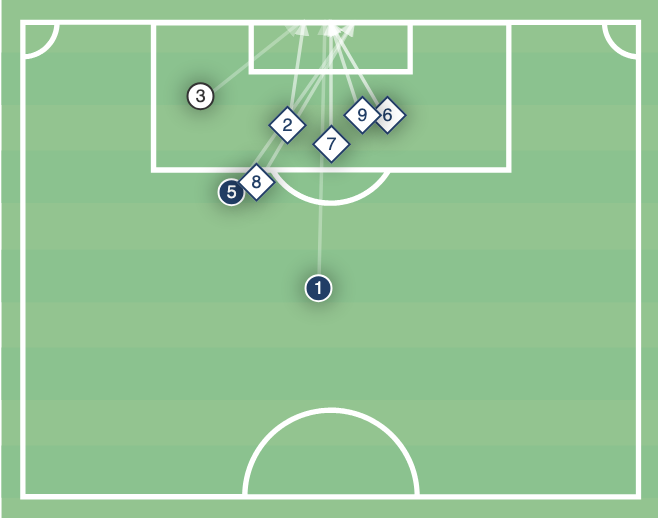
Even their post-shot xG for the match was 1.63 on five goals, so they were very fortunate to score as much as they did.
The opening two goals both came off deflections, which helped them find the back of the net.
The two Kvaratskhelia goals were pretty crazy as well.
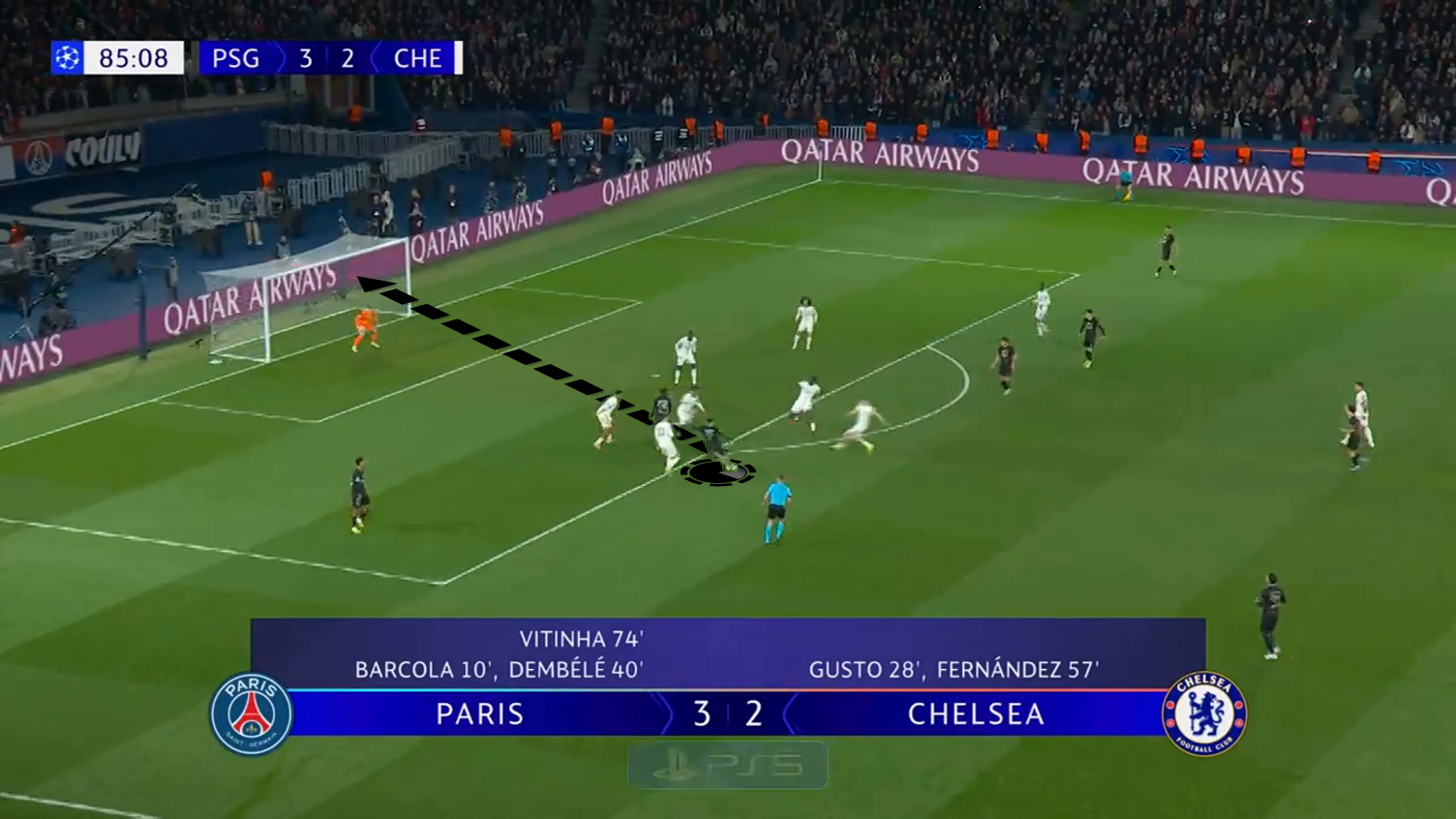
The Georgian’s first goal was him cutting inside past a couple of different defenders and finding the corner of the goal.
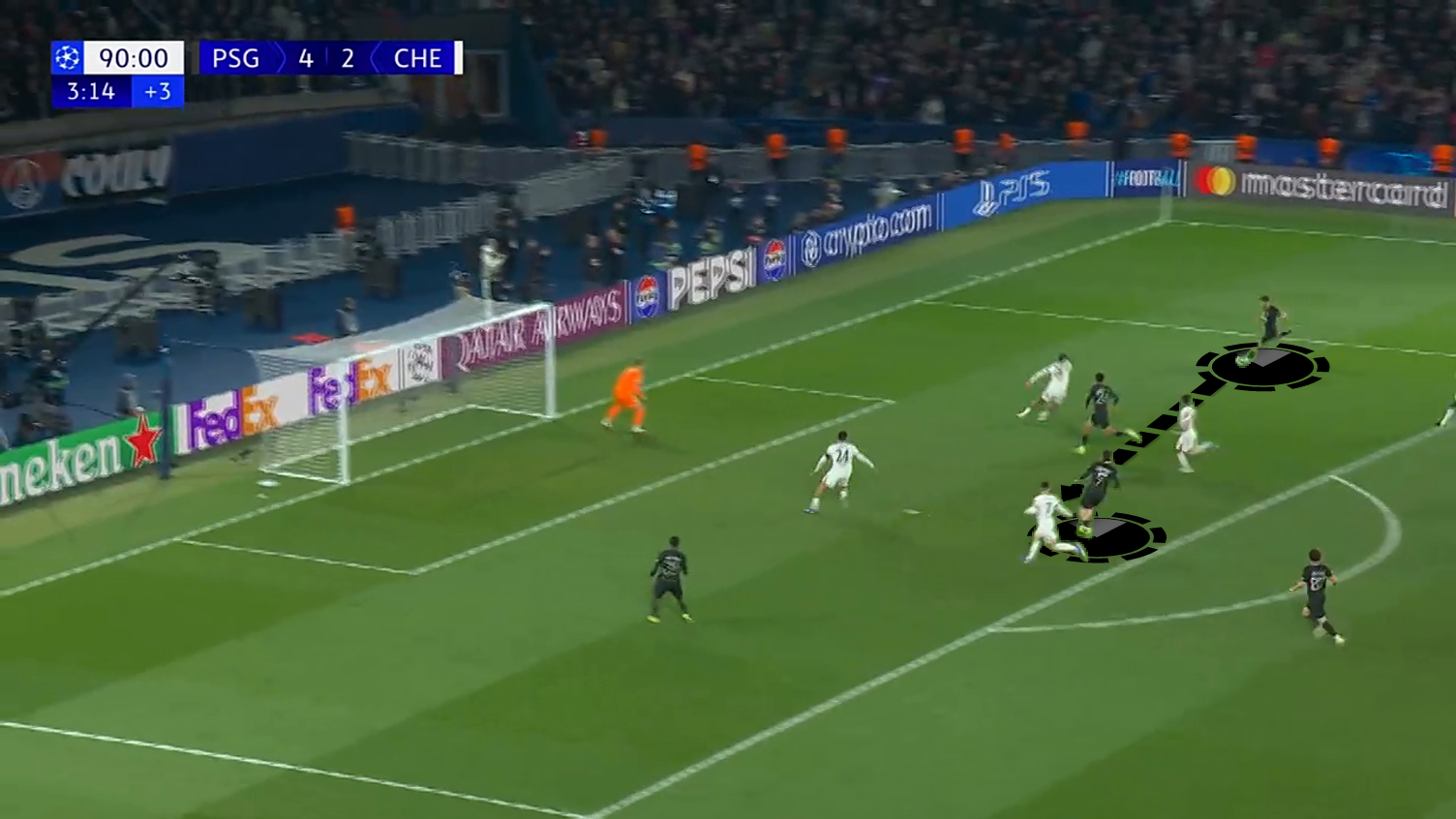
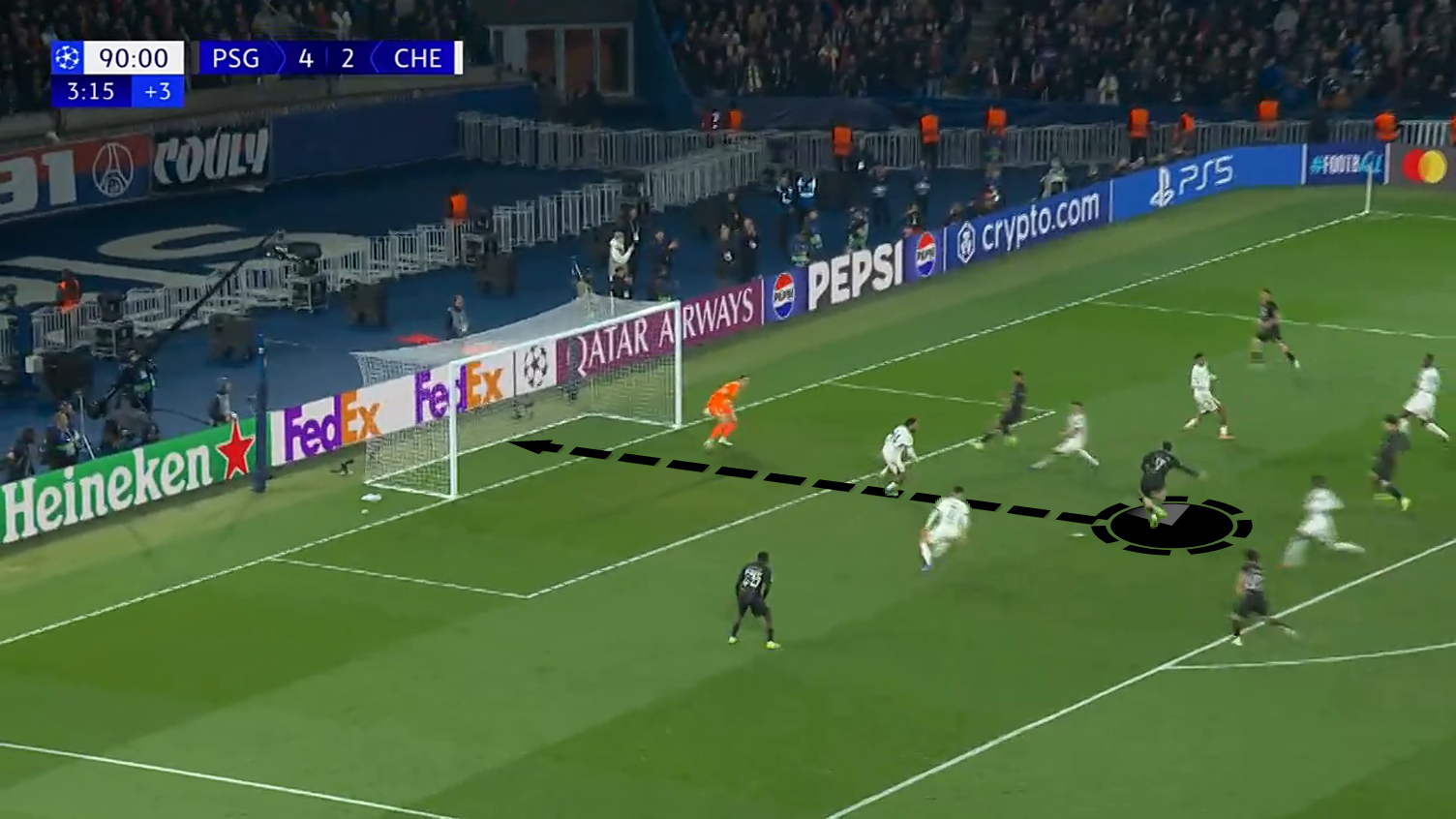
Then, in stoppage time when the match was stretched, Hakimi found him with a cutback for a shot with an xG rating of 0.22.
In the end, the data show that Jørgensen allowed 3.21 more goals than he should have, based on post-shot xG.
Chelsea Transitions
Chelsea were really successful in quick transitions when PSG were out of position.
A couple of their best chances came from throw-ins.
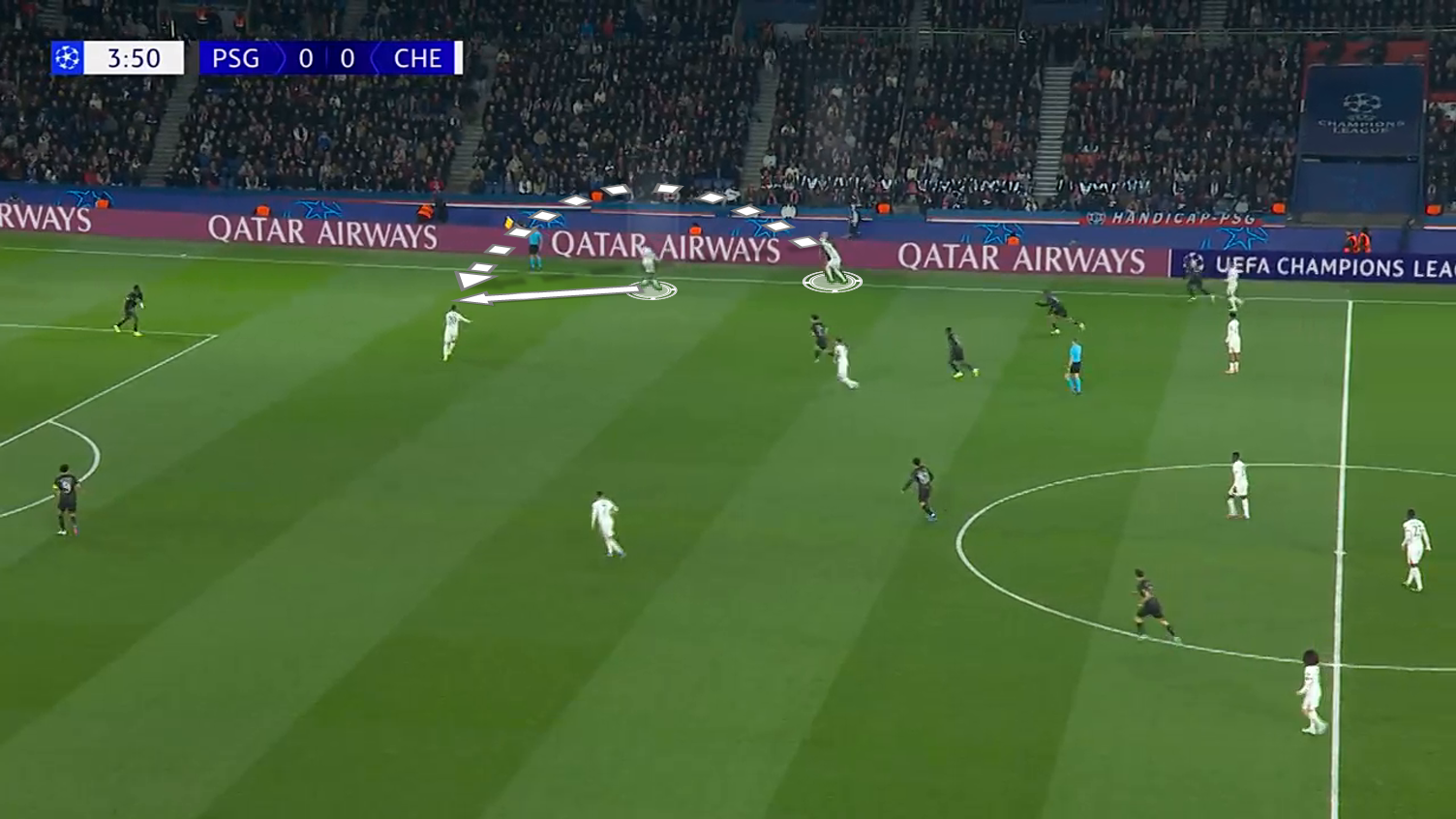
Early on, you can see they quickly got the ball to James after winning it high up the pitch and sent a really dangerous cross into the box.
The opening goal for Chelsea came on a throw-in when Mendes was on the other side of the pitch, but didn’t get back in time.
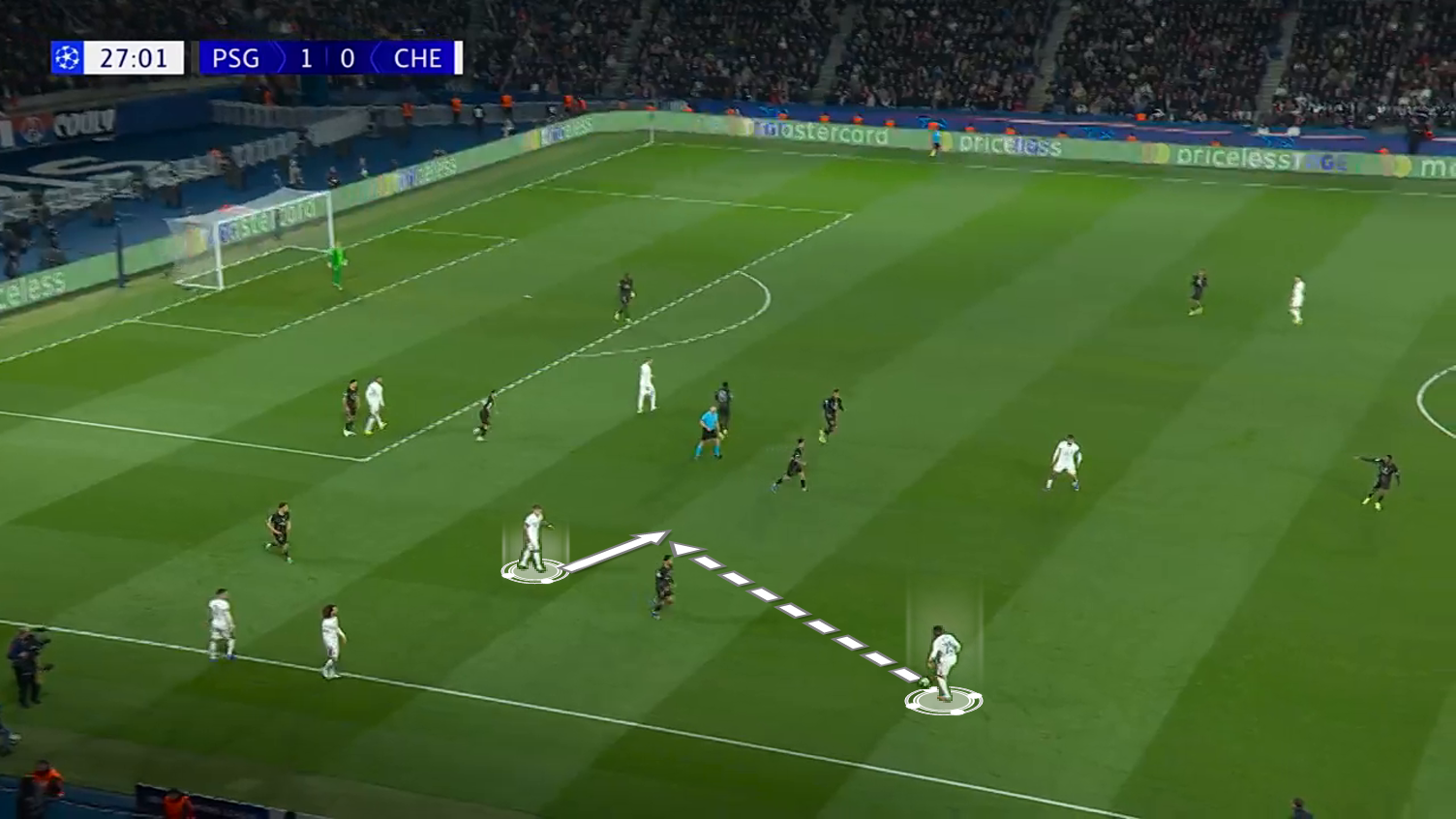
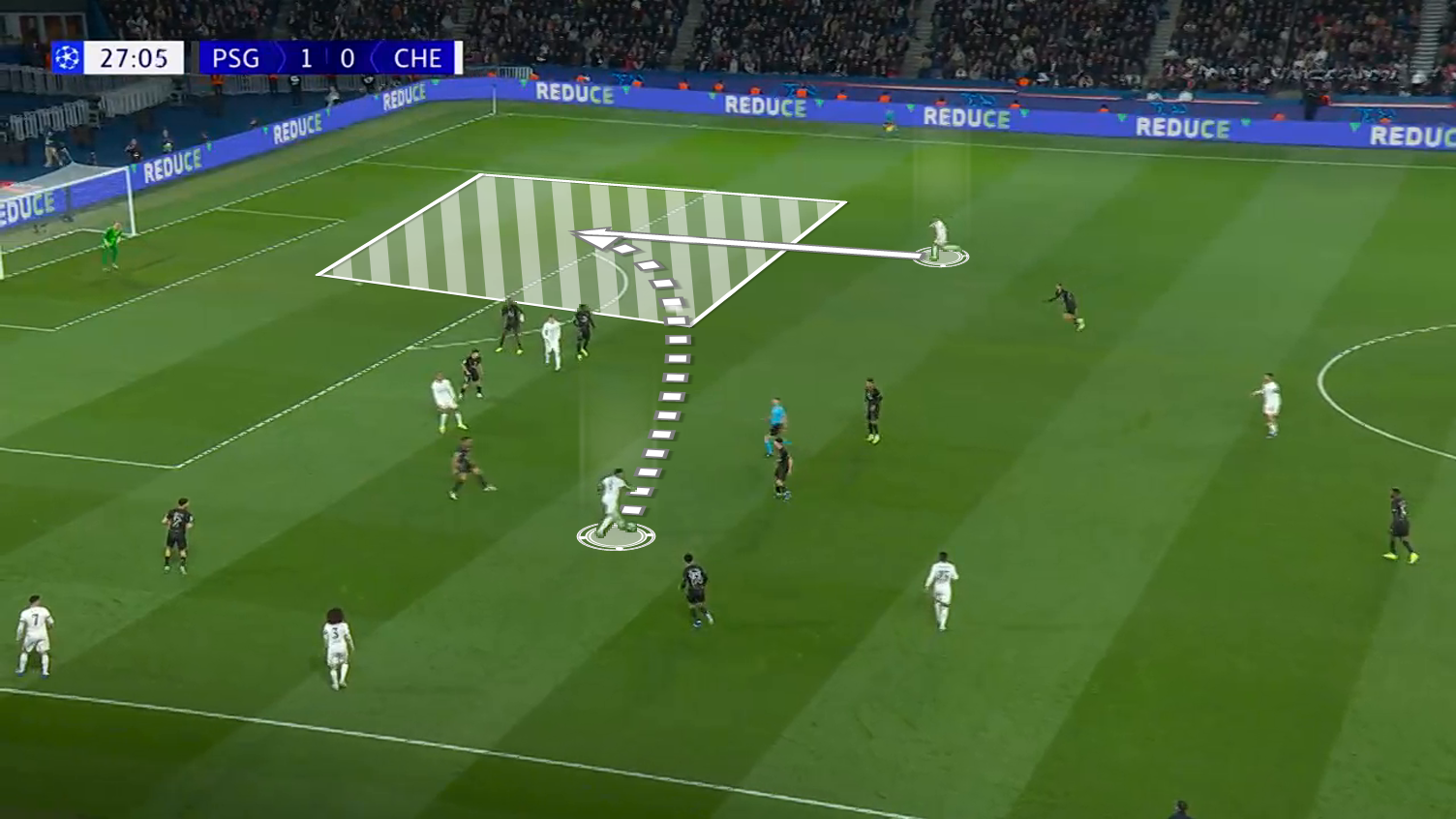
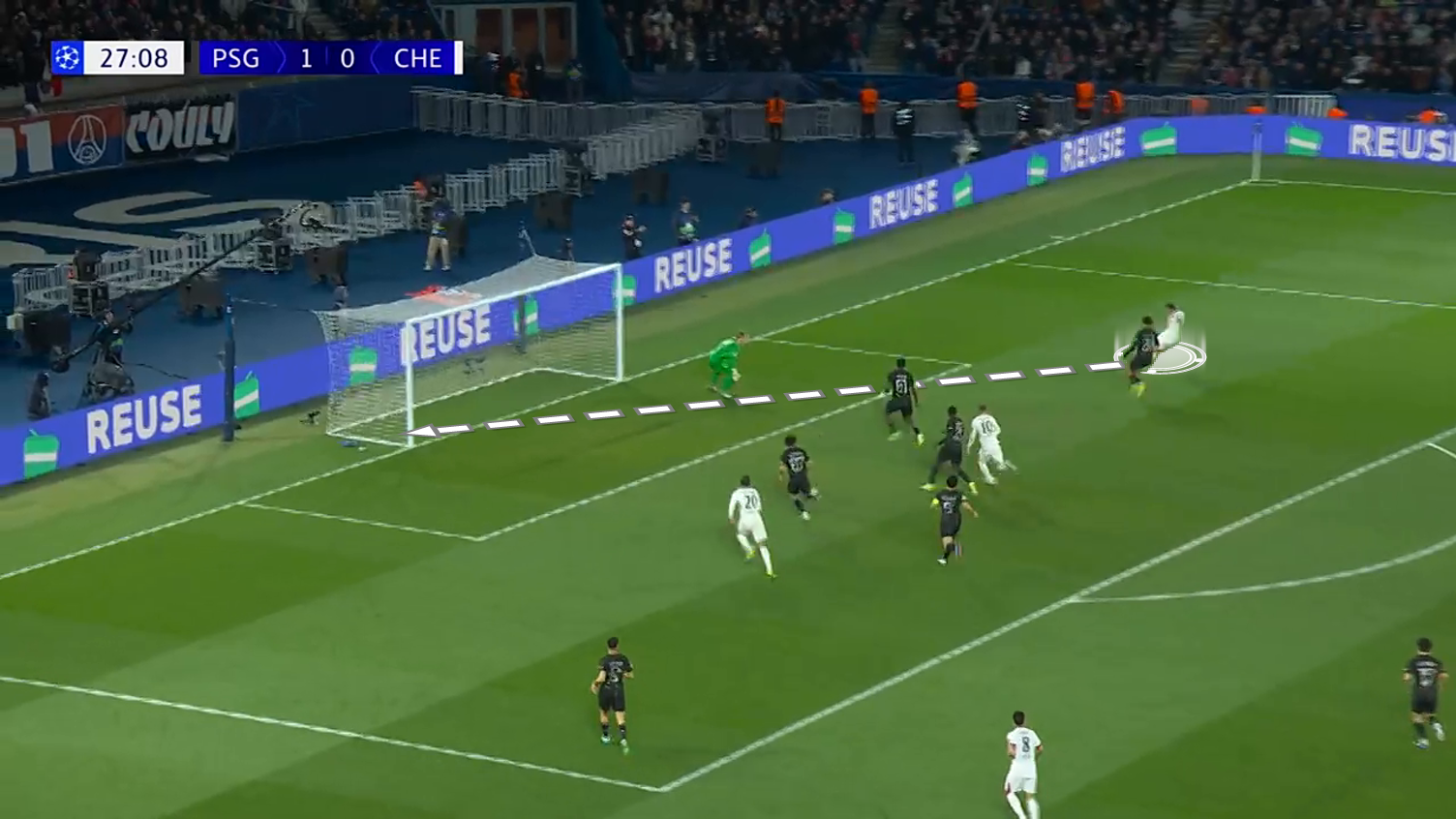
Gusto recognised the available space, and Fernández found him with a beautiful ball to level the match at 1-1.
The second goal from Chelsea came on a blistering counterattack and great individual play from Neto.
Mendes tries to play a switch ball to Doué at the opposite end of the field, but Neto picks it off and carries it all the way into a dangerous area to find Fernández in the box to make the match 2-2.
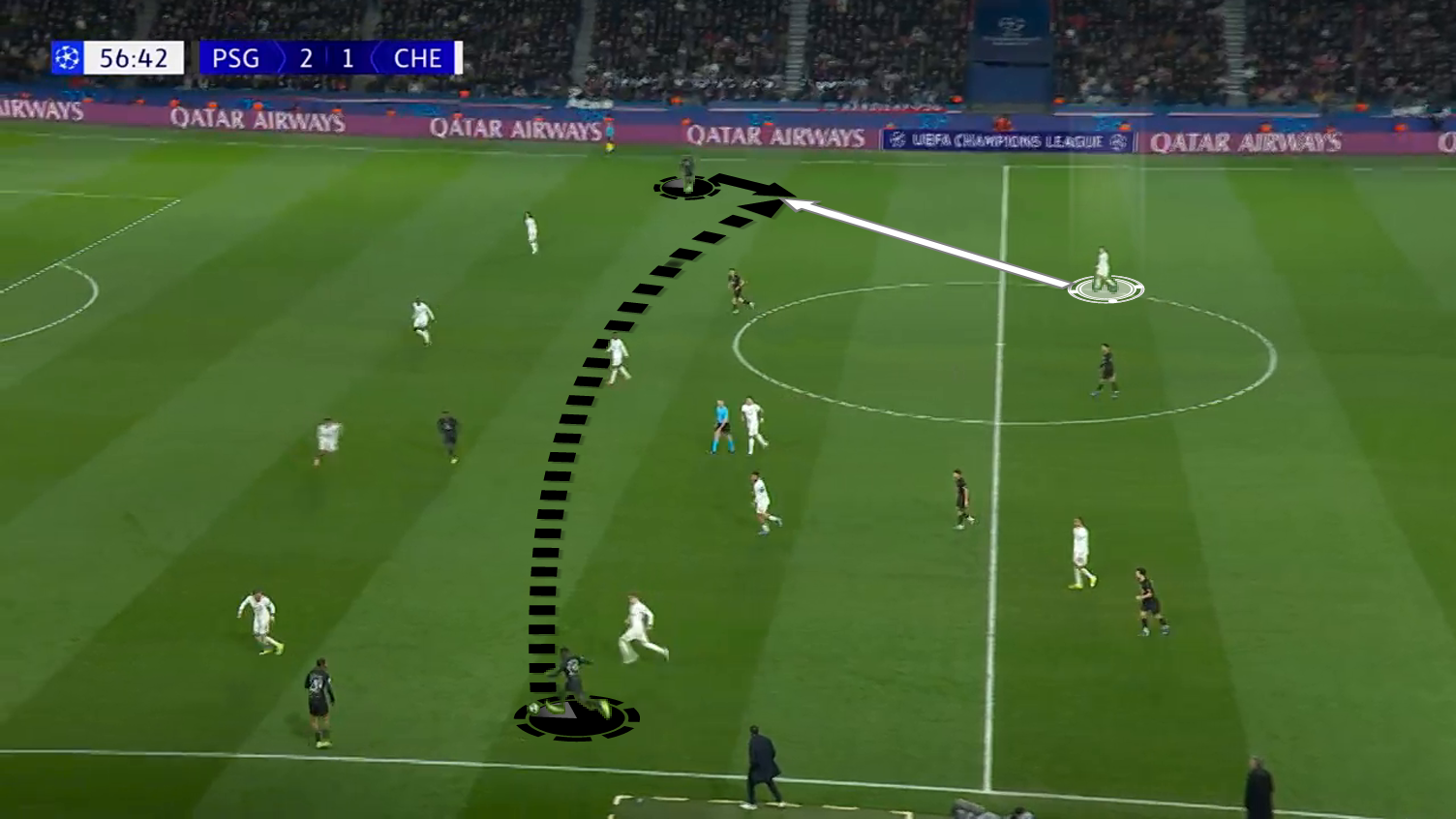
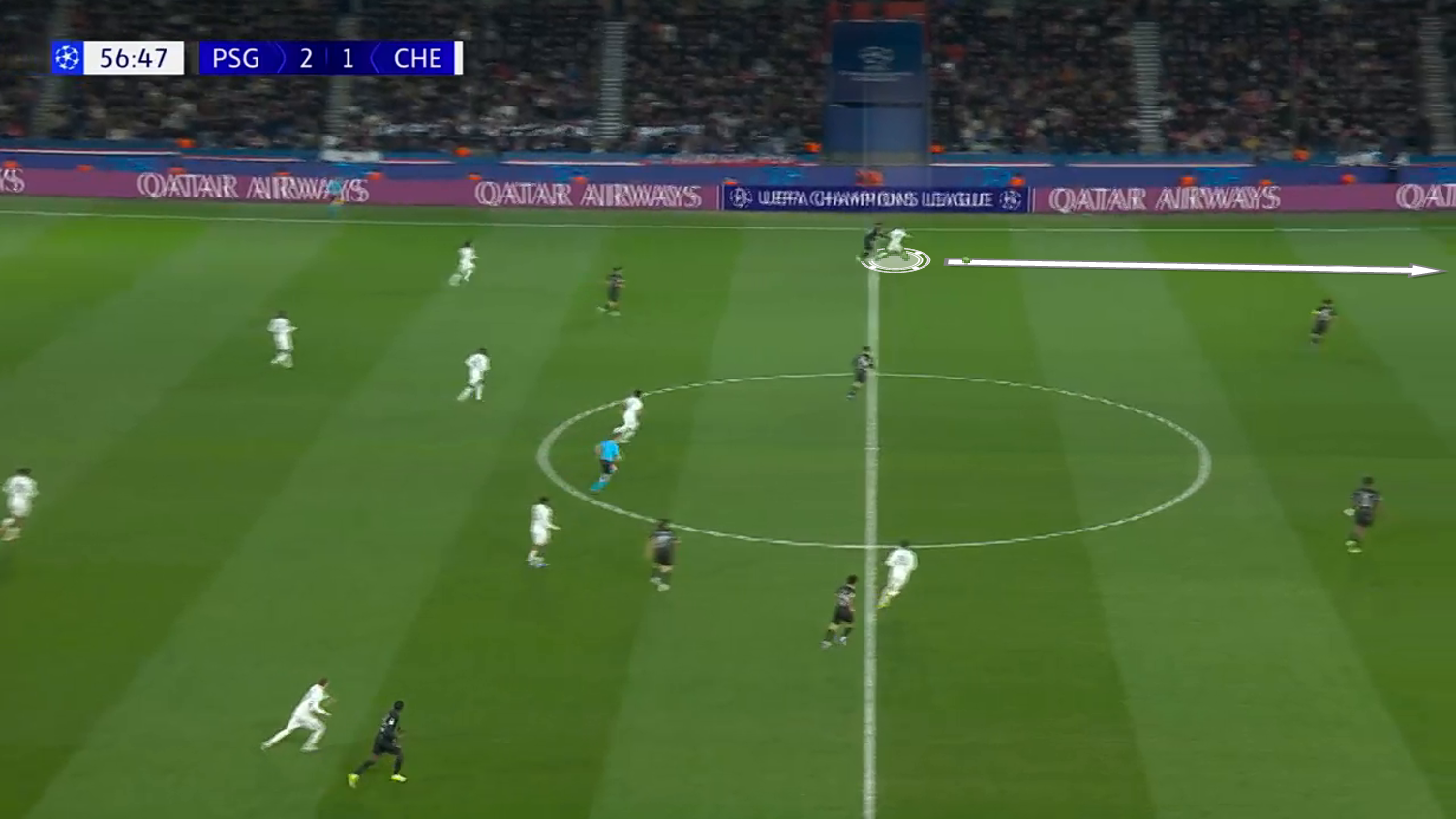
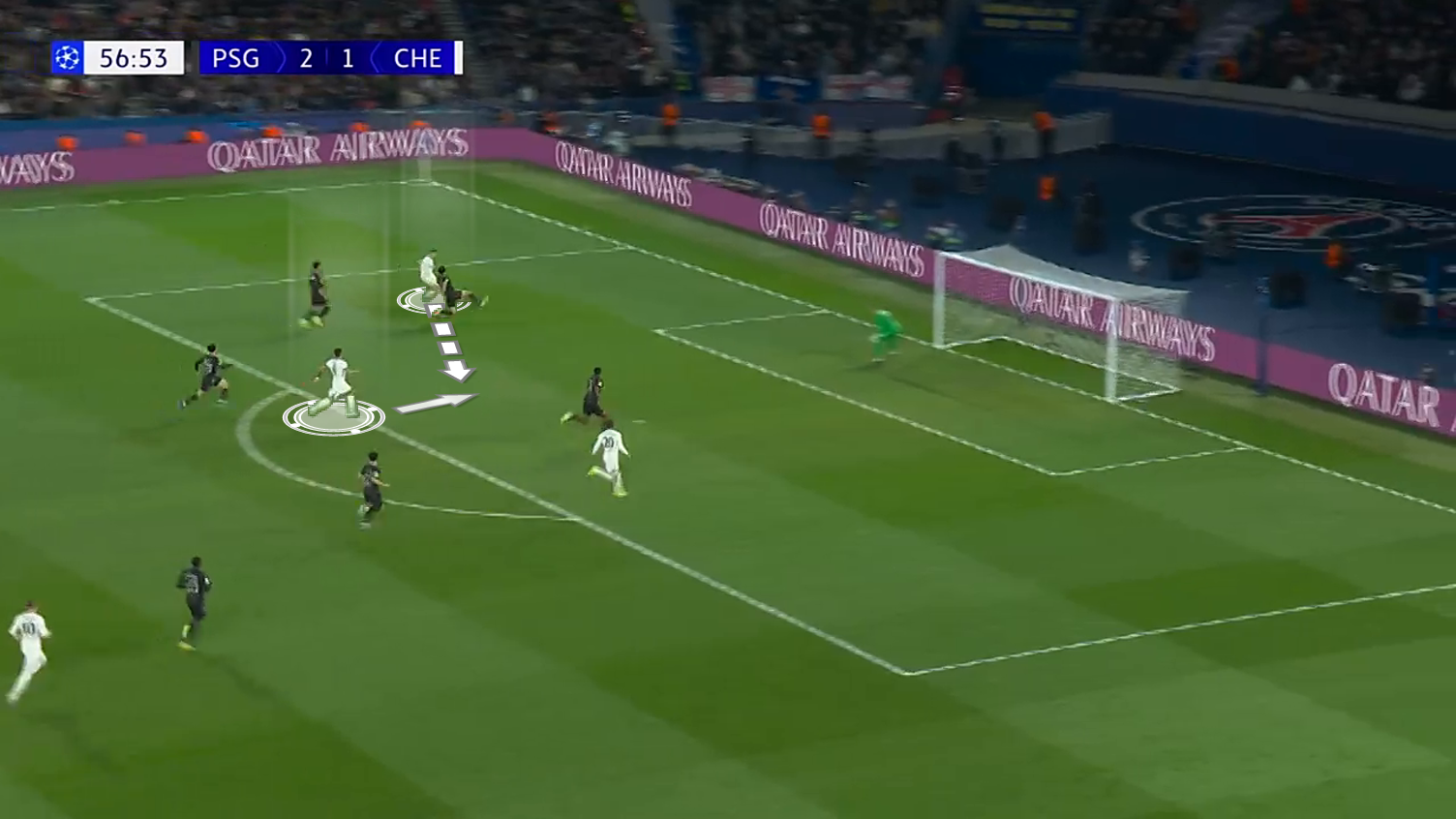
It was these quick transitions, when Chelsea had PSG out of position, that they took advantage of.
Conclusion
The final scoreline really covers up what wasn’t a good performance from PSG.
They ended up controlling 58% of the ball, but didn’t really do much to Chelsea when the Blues were defending in the final third.
Their wide and central overloads were not effective at playing through Rosenior’s side, but some elite finishing gave them a three-goal advantage heading into the second leg.
Chelsea should come away from this tie with a lot of confidence, given the way they were not only able to play through PSG’s man-to-man high press but also hit them in transition effectively.
In the end, the final xG was PSG 0.90 to Chelsea 1.57.
PSG got their revenge on Chelsea, but the issues they had in that Club World Cup Final were exposed at times by Rosenior’s side.
The second leg at Stamford Bridge will certainly be an interesting match because it’s not a position that PSG finds themselves in very often: defending a big lead.
Last season in the Champions League semifinal second leg against Arsenal, PSG won 2-1 but conceded 2.91 expected goals to the Gunners.
Enrique’s out-of-possession tactics are built on PSG being one of the most aggressive high-pressure teams in the world, so the question is: can they sit back and see out this three-goal advantage on the road?
Chelsea also didn’t get many set-piece opportunities.
The Blues lead the Premier League in xG per set piece at 0.13, and PSG is not a physical or tall team by any means.
Chelsea has a tough match this weekend against Newcastle United, but given how the first leg went, I don’t think this tie is over just yet, and Chelsea does have a path to getting back into this.
