
Sebastian Hoeneß Tactics At VfB Stuttgart
VfB Stuttgart are currently third in the Bundesliga, with 56 points from 29 matches, just two goals ahead of RB Leipzig (also on 56 points).
Their stats show they are excellent at defending set-pieces.
Sebastian Hoeneß‘s side has conceded just one goal from set-pieces in the Bundesliga, better than any other team in the top five leagues.
They have also conceded the least xG from set-pieces in the Bundesliga (4.93).
In this VfB Stuttgart tactical analysis and set-piece analysis, we will dive into their set-piece defence tactics, examining their defensive schemes on corner kicks and highlighting strengths and weaknesses that opponents can exploit to break through this strong scheme.
VfB Stuttgart Corner Defence Tactics
Defending corners isn’t just about knowing whether they use a zonal-marking, man-marking, or hybrid system.
It is also not only about the number of zonal defenders and their starting positions.
It is correct that teams fix around 90% of their defensive scheme, but elite teams always have different notes about the next opponent to give some players specific instruction or adjust a role here and there.
It’s not only about the opponent, but also teaching the player how to react in different scenarios that may happen during the match, like short corners, changing the depth of the zonal line due to crowding the area behind them near the goal line, dealing with blocks from the attackers, and so many other attacking actions.
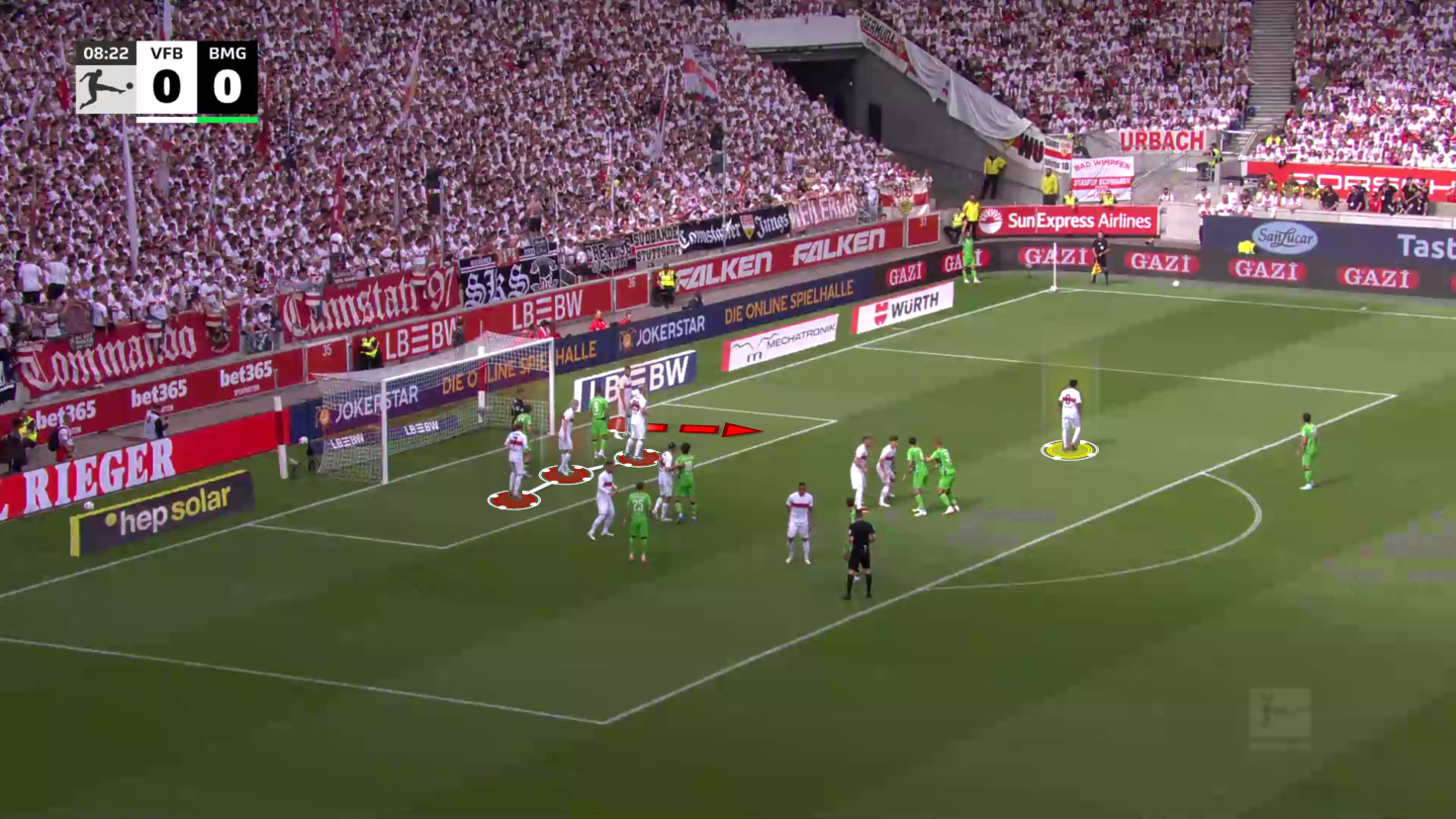
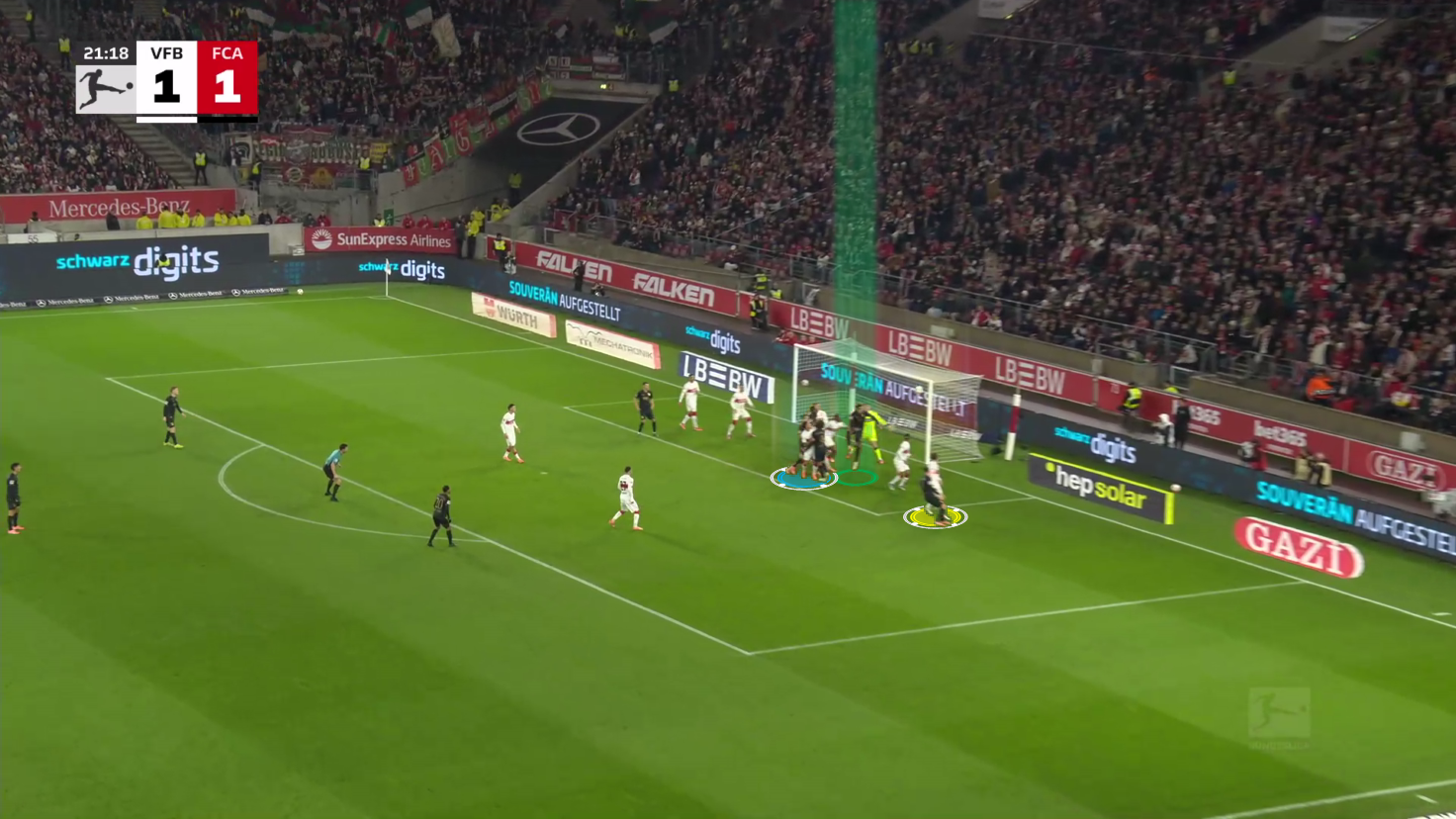
As shown in Figure 1 below, Stuttgart defend with a hybrid system that includes four zonal defenders (red), five man markers, and a player near the edge of the box (yellow).
Sometimes, they have just four-man markers to prepare a player to defend the rebound on the edge of the box, besides the other one who goes to defend any possible short corner.
It is important to know who will go to chase the first touch ahead of the near post against any possible flick by the attacking team, so you can find that the first zonal defender (on the near post) is the one who is ready to defend flicks.
He has a different body shape to allow him to track any possible run from his blind side, which makes him always aware of any threat to flick the ball before him.
It is also important to note the height of the zonal line, which is slightly deeper (as we will see in other cases) because the opponent has two players behind the zonal line, thereby reducing the empty area behind them.
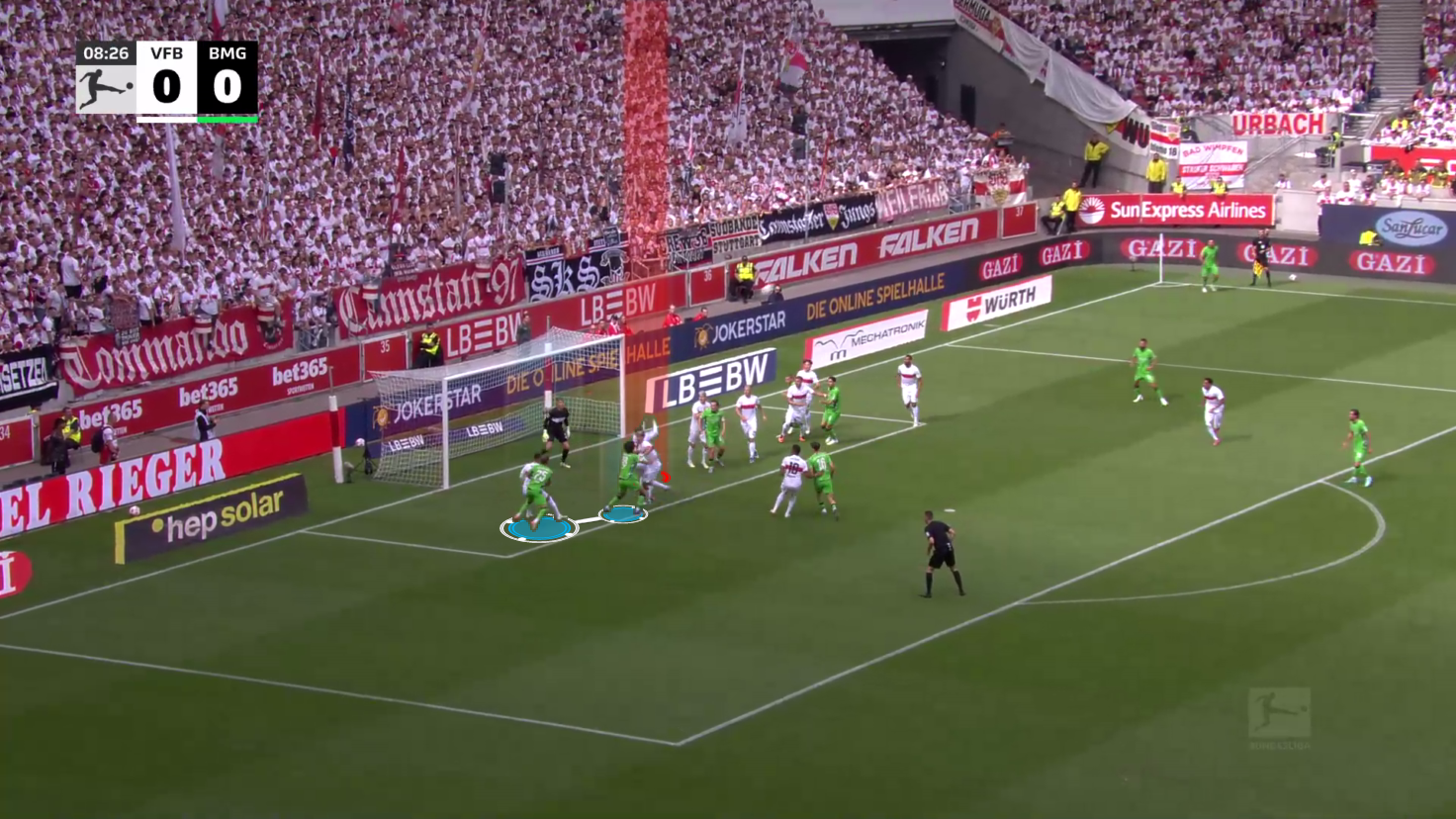
In Figure 2 below, we are still in the same case, and we want to clarify, in principle, why this balanced hybrid system is generally difficult to break: the attacking targeted player must overcome both his man marker and the zonal defender in the targeted area.
You can see that the targeted area on the far post has two players who should overcome their two-man markers (below), the last zonal defender (red), and, in some cases, the goalkeeper (as we will discuss later).
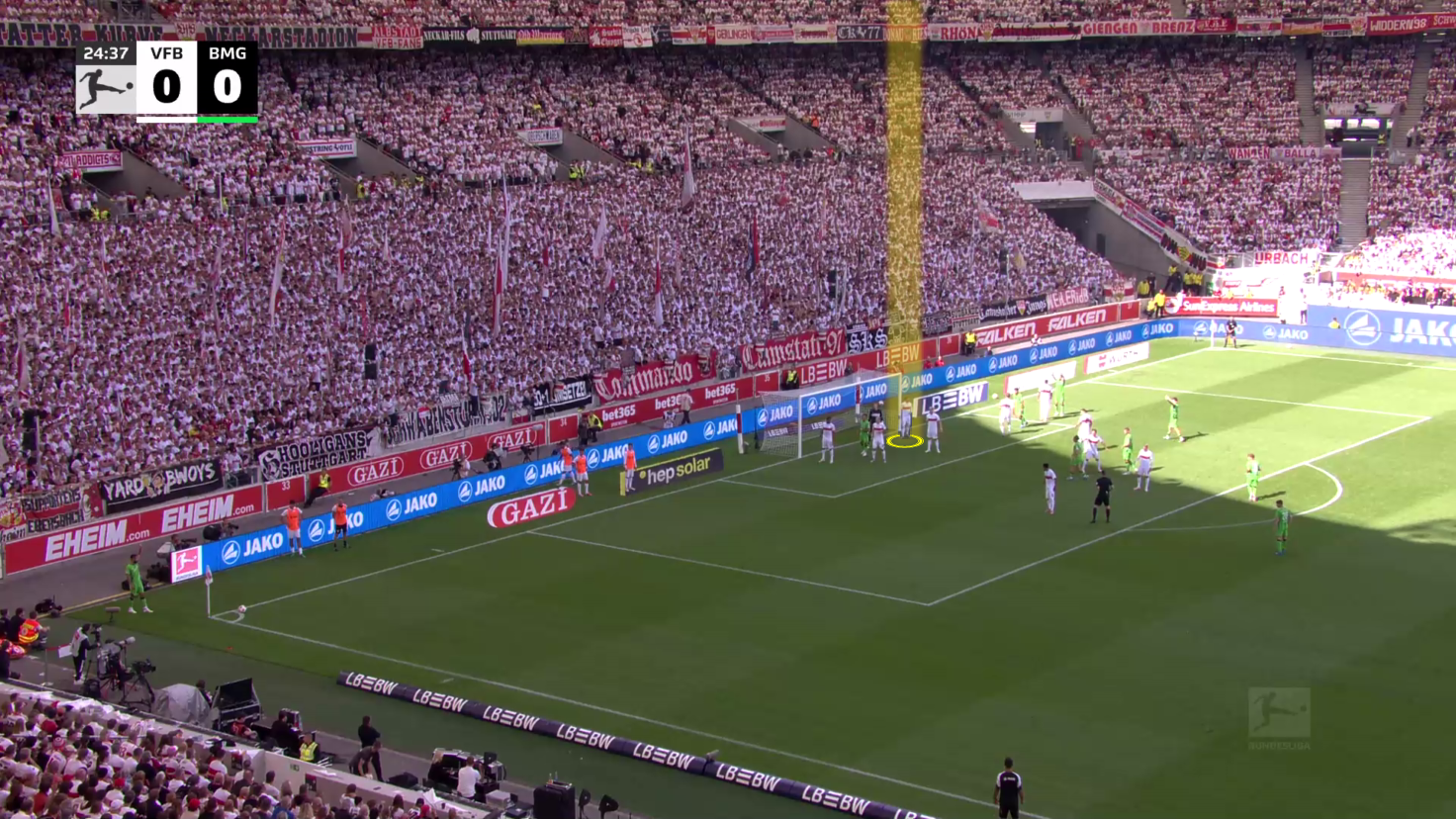
As we discussed the position of the first zonal defender, we should also discuss the variable position of the last zonal defender depending on the attackers’ starting positions.
In Figure 3, you can note that the last zonal defender has a deeper starting position than in the previous case, because of the starting positions of two attackers beyond the far post, so he now has a better view of their movement.
However, asking the last zonal defender to start deeper than the rest of the zonal line has some disadvantages, as we will discuss later.
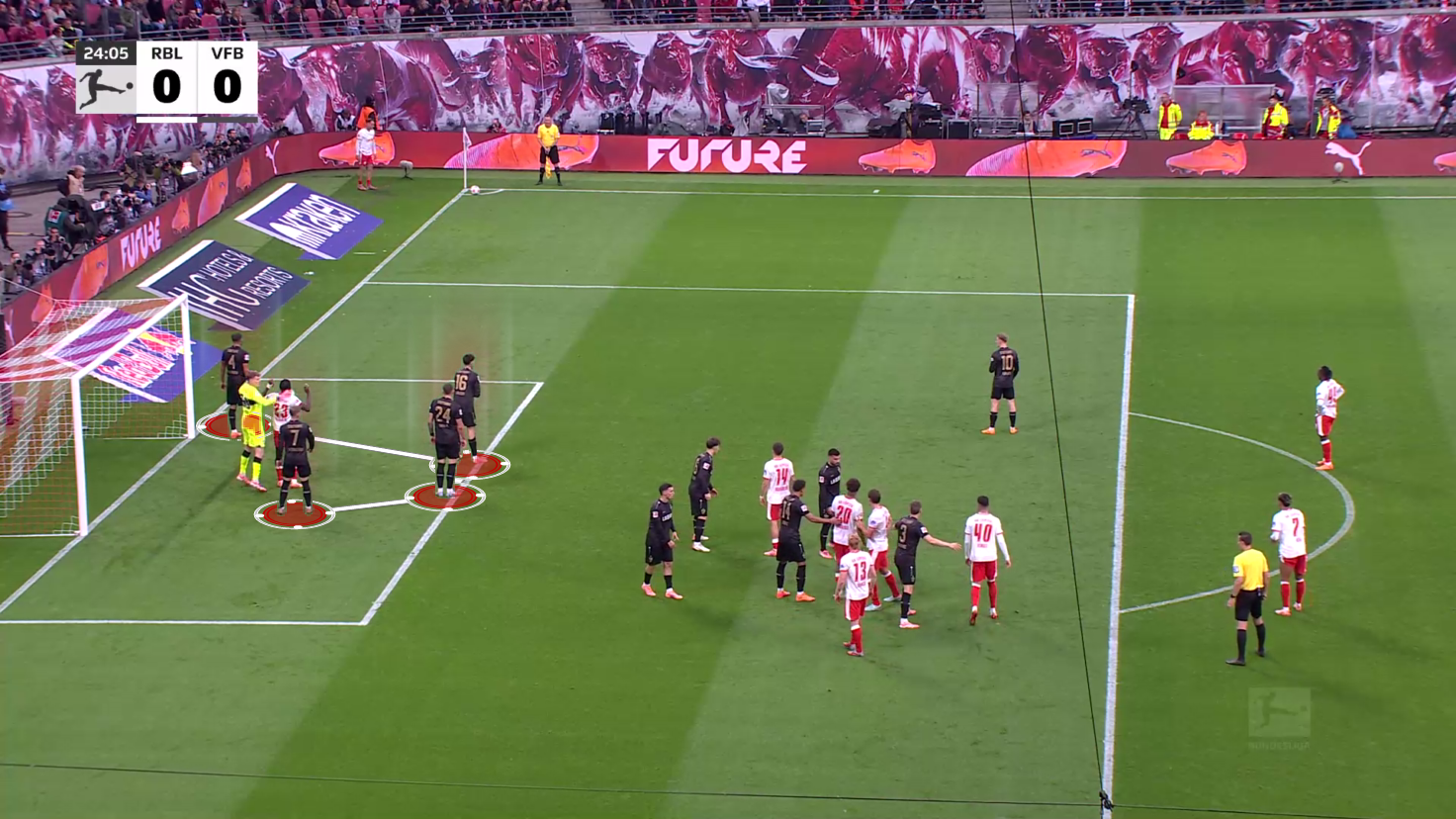
In another variable reaction, the zonal line may sometimes have a higher depth, especially the middle two zonal defenders, depending on many factors.
The first variable is the attackers’ starting position; if the runners are further away and the opponent usually targets the area in front of the six-yard line, the middle two zonal defenders stand on the six-yard line to clear the ball, as in Figure 4 below.
In Figure 5, you can see that the two middle zonal defenders are ready to defend the targeted area adjacent to the two-man markers.
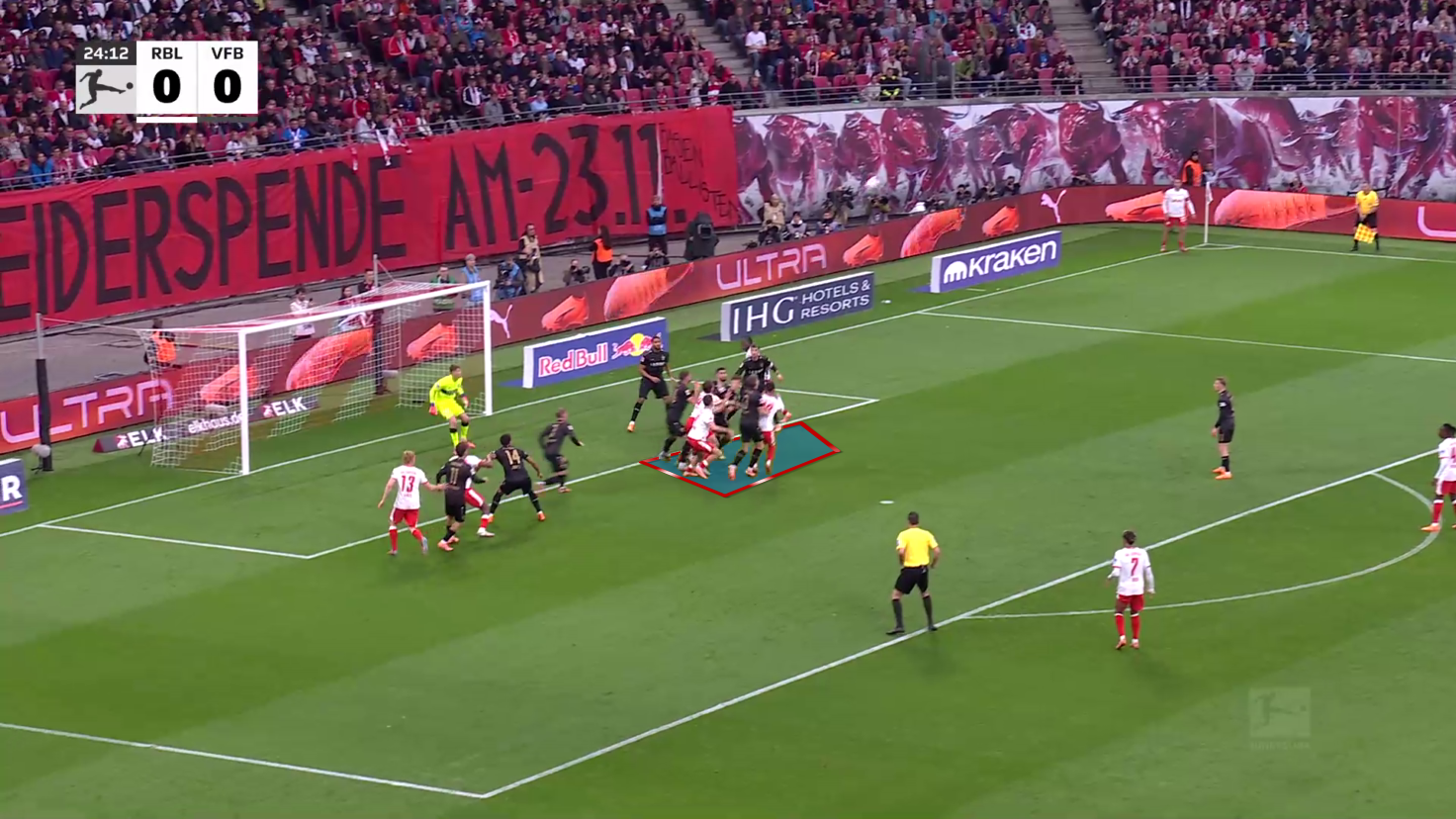
Figure 6 shows the importance of that tactic.
Despite losing the first contact, the targeted player touches the ball in a difficult position and in a crowded situation that prevents him from shooting strongly and directly, as there are three attackers, three markers, and two zonal defenders in the targeted area.
This highlights the importance of a balanced hybrid scheme with variable instructions in every match, depending on the opponent, for teams that are not the best individually at defending corners due to their shortness or poor aerial duels.
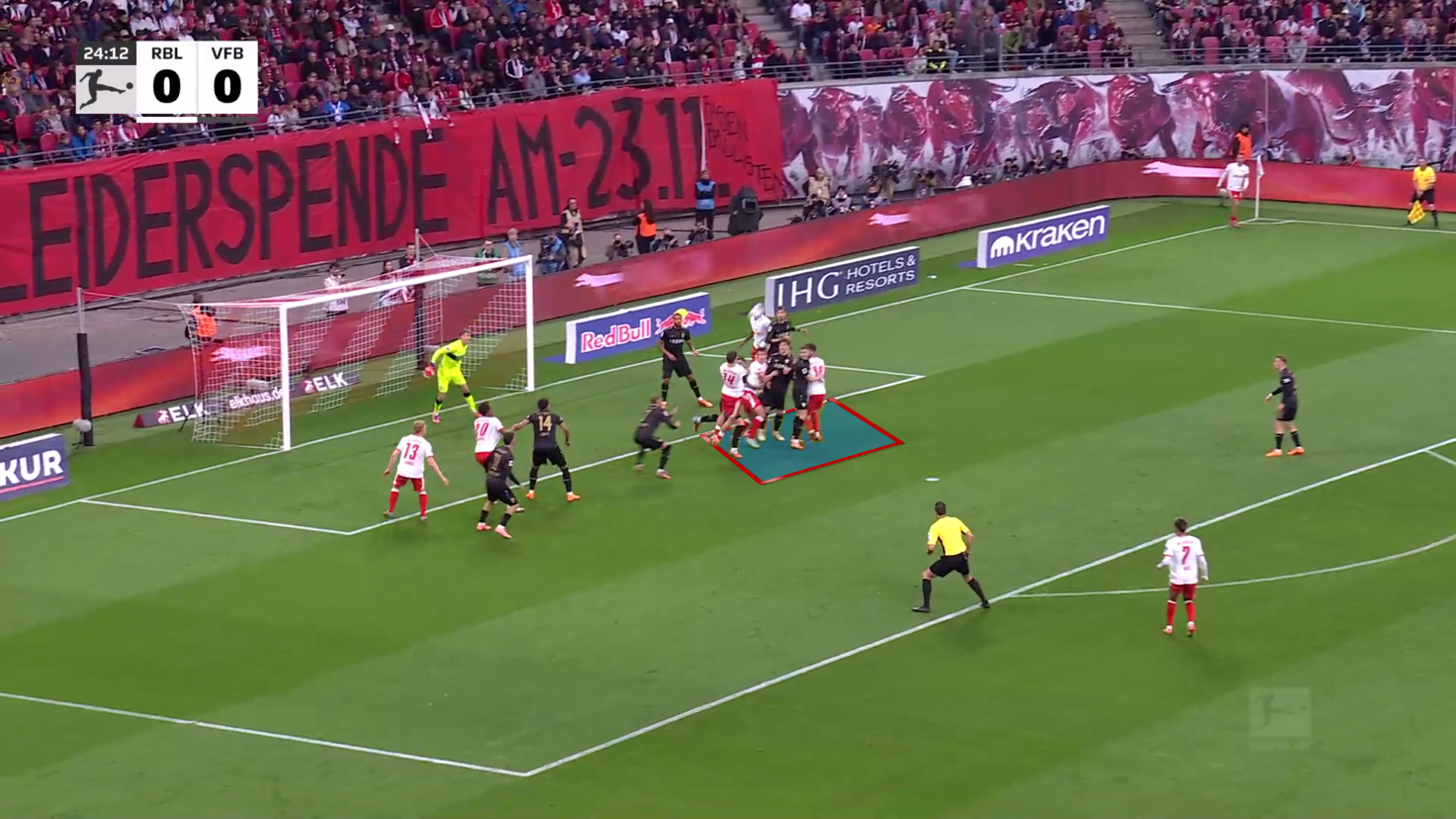
The second variable that decides the starting position of VfB Stuttgart’s zonal defenders in corners is the type of cross.
Figure 7 below shows how the third zonal defender is higher when facing an out-swing cross, ready for the expected cross trajectory.
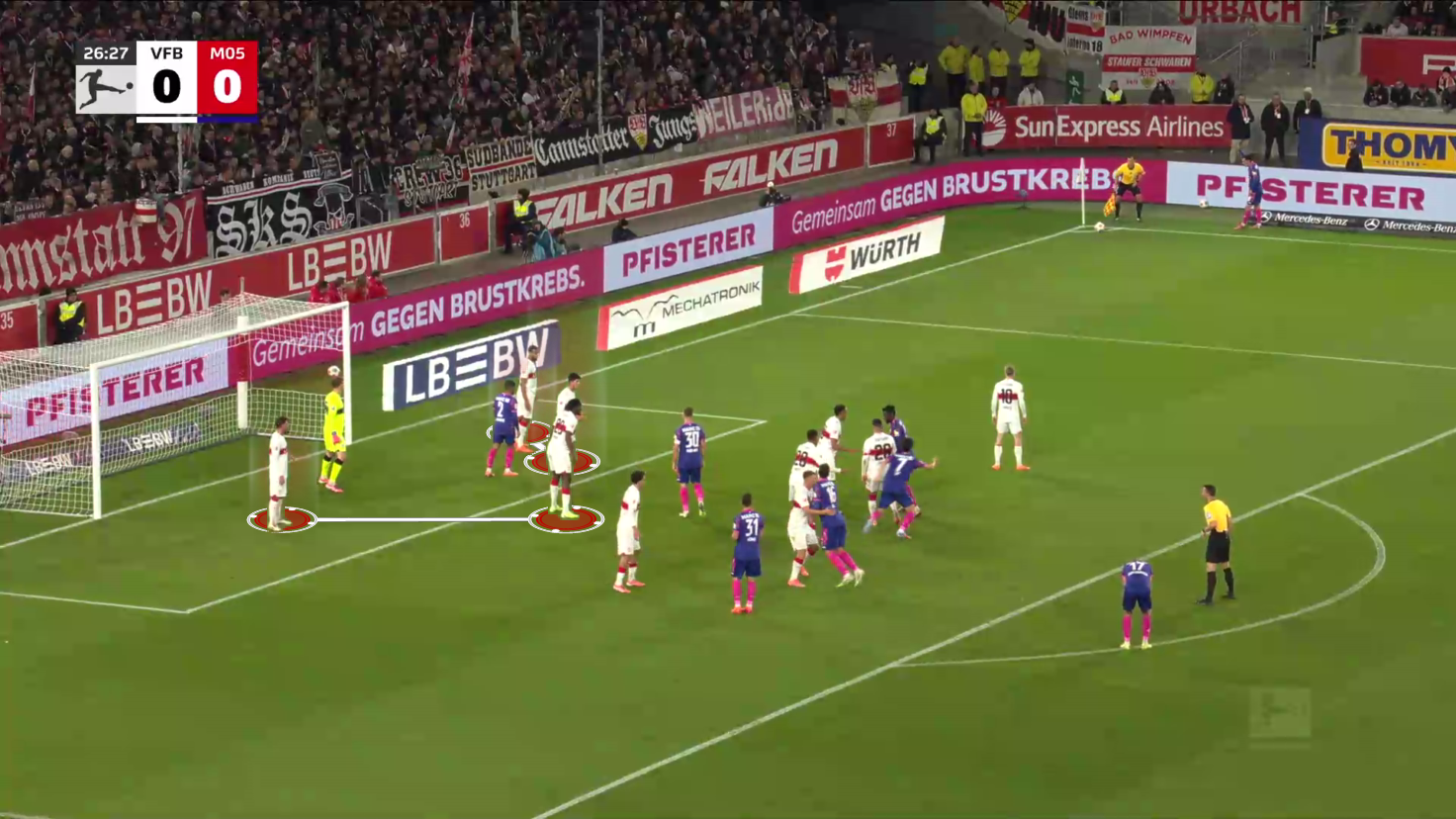
In elite teams, goalkeepers play crucial roles in defending corners, which affects the entire corner-defending system and also leads to a preference for some goalkeepers over others in recruitment.
Figure 8 shows that the first zonal defender moves to chase any flick ahead of the near post, leaving just three zonal defenders protecting the goalmouth. Only one of them stands between the middle and the far post (the last zonal defender).
This makes you feel the far post is more vulnerable than the near post because it has just one zonal defender against two runners (red), one of whom is free from man-marking.
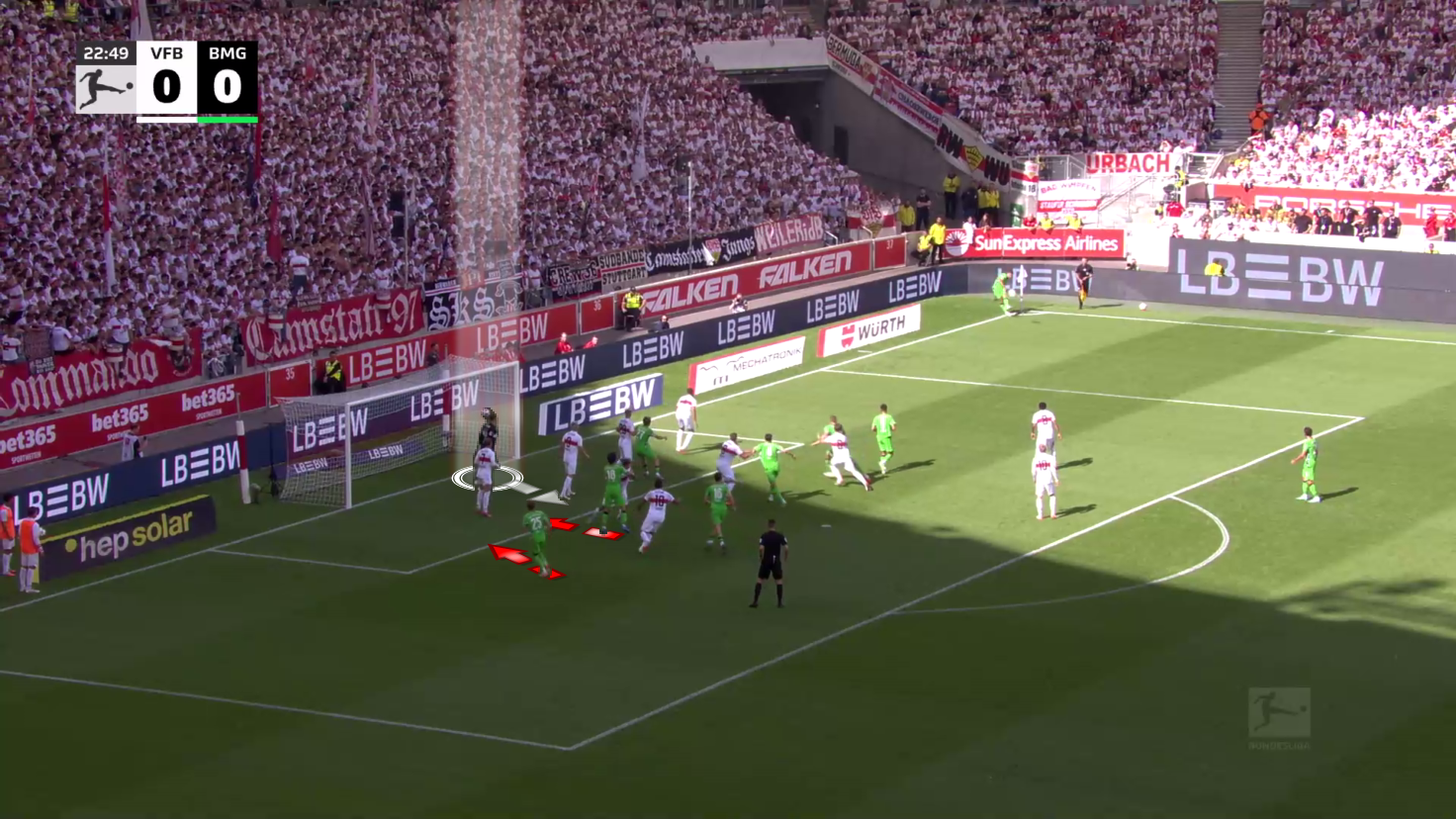
However, the goalkeeper is responsible for claiming any cross that passes through the middle of the goal from the six-yard box, thereby preventing attackers on the far post from gaining numerical superiority, as shown in Figure 9.
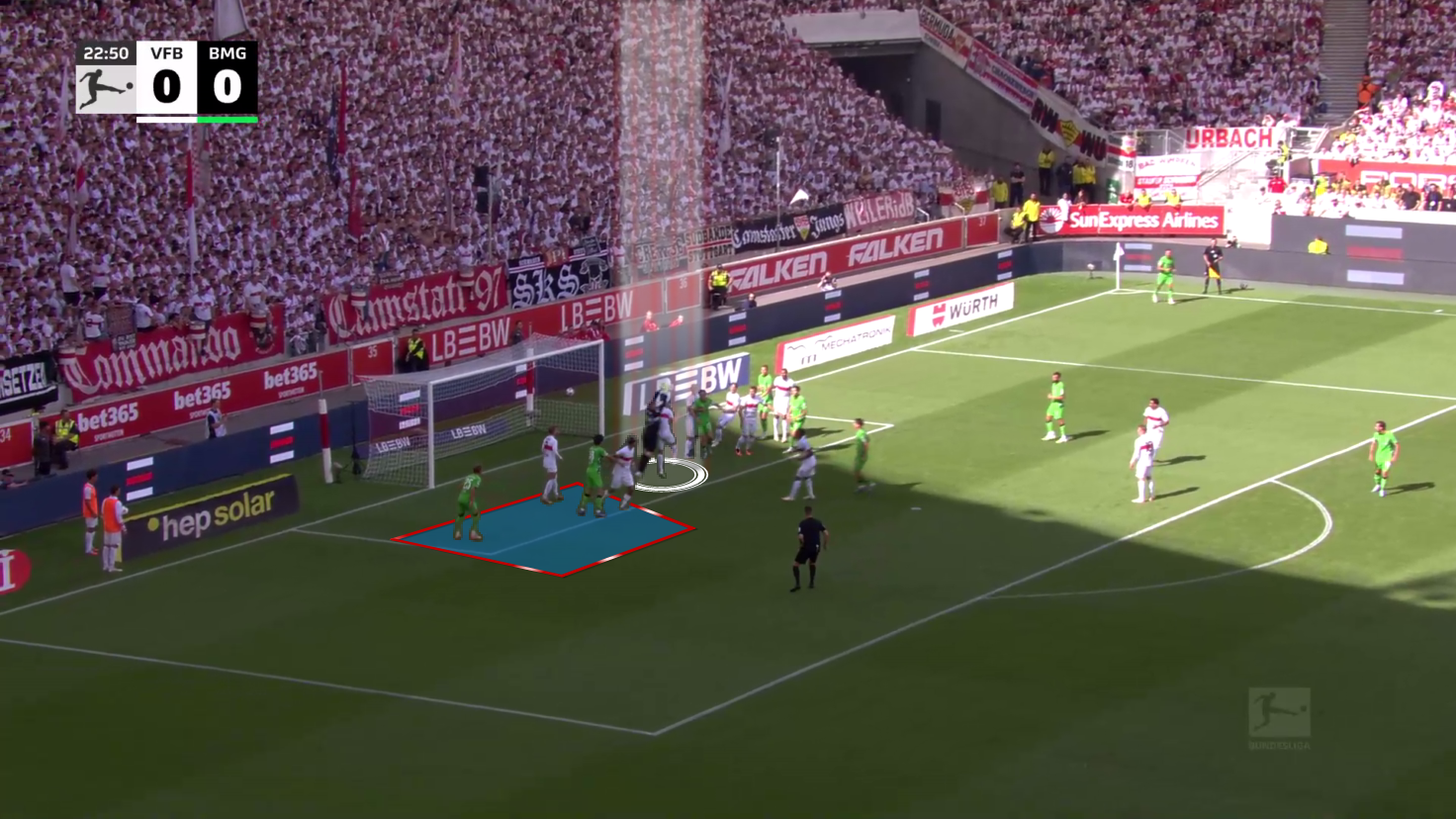
Going into another detail, we will highlight a crucial aspect of defending corners, which is the behaviour of the zonal defenders in two cases:
- Blocks and runs.
- The need for vertical movement.
Starting with dealing with blocks from the attacking teams, the zonal defender should always be active, scanning around him and aware of any possible coming block.
The old version of the zonal defender who just stands in his zone to clear the incoming ball no longer exists in elite teams.
Figure 10 below shows that the attacker with the white arrow plans to run from the blind side of the first zonal defender to flick the ball.
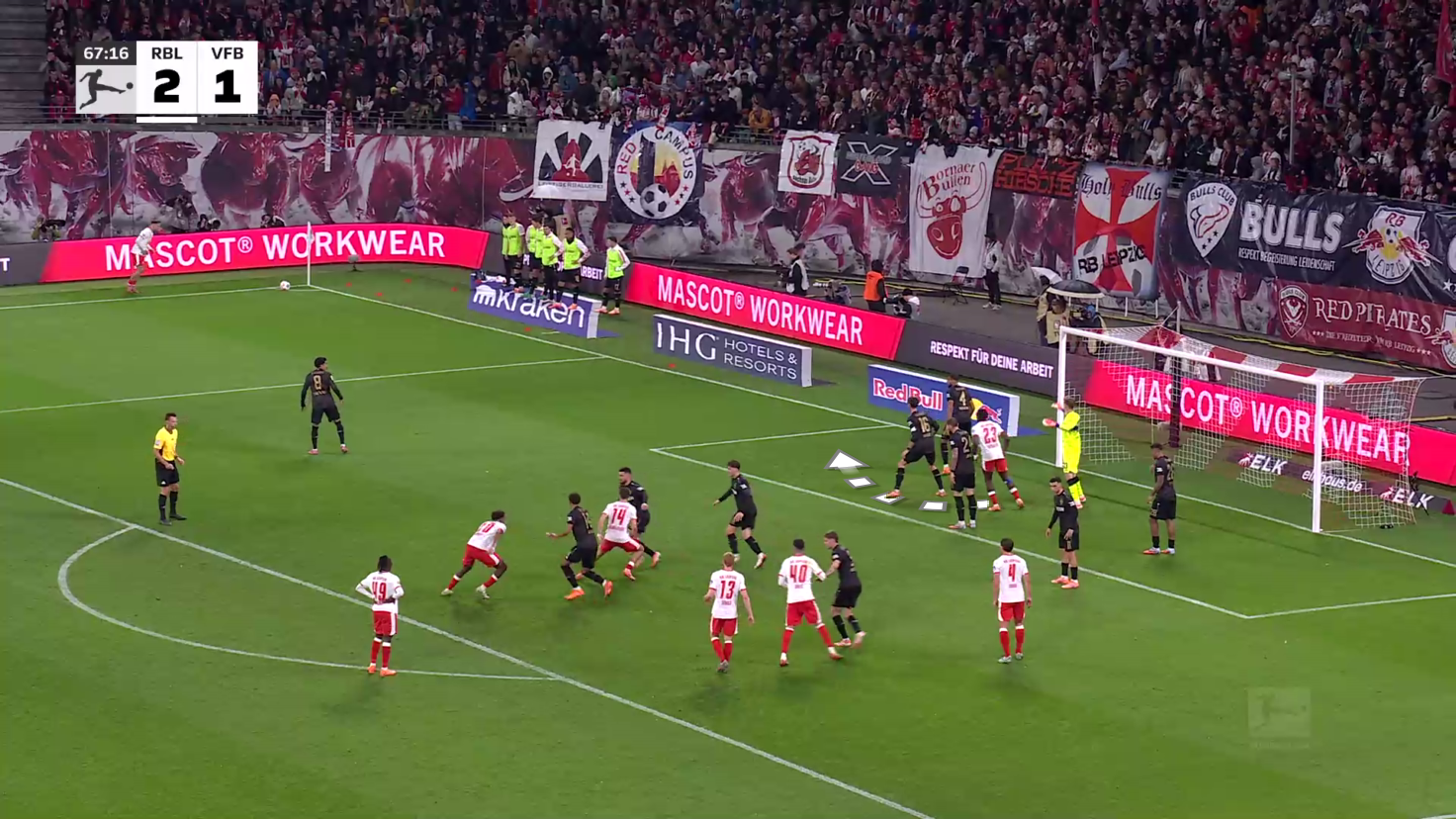
Figure 11 below shows the importance of having an aware zonal defender who anticipates the imminent danger and is ready to deal with it without leaving his zone.
The zonal defender (red) blocks the runner, slowing him down to prevent him from going to get the first touch.
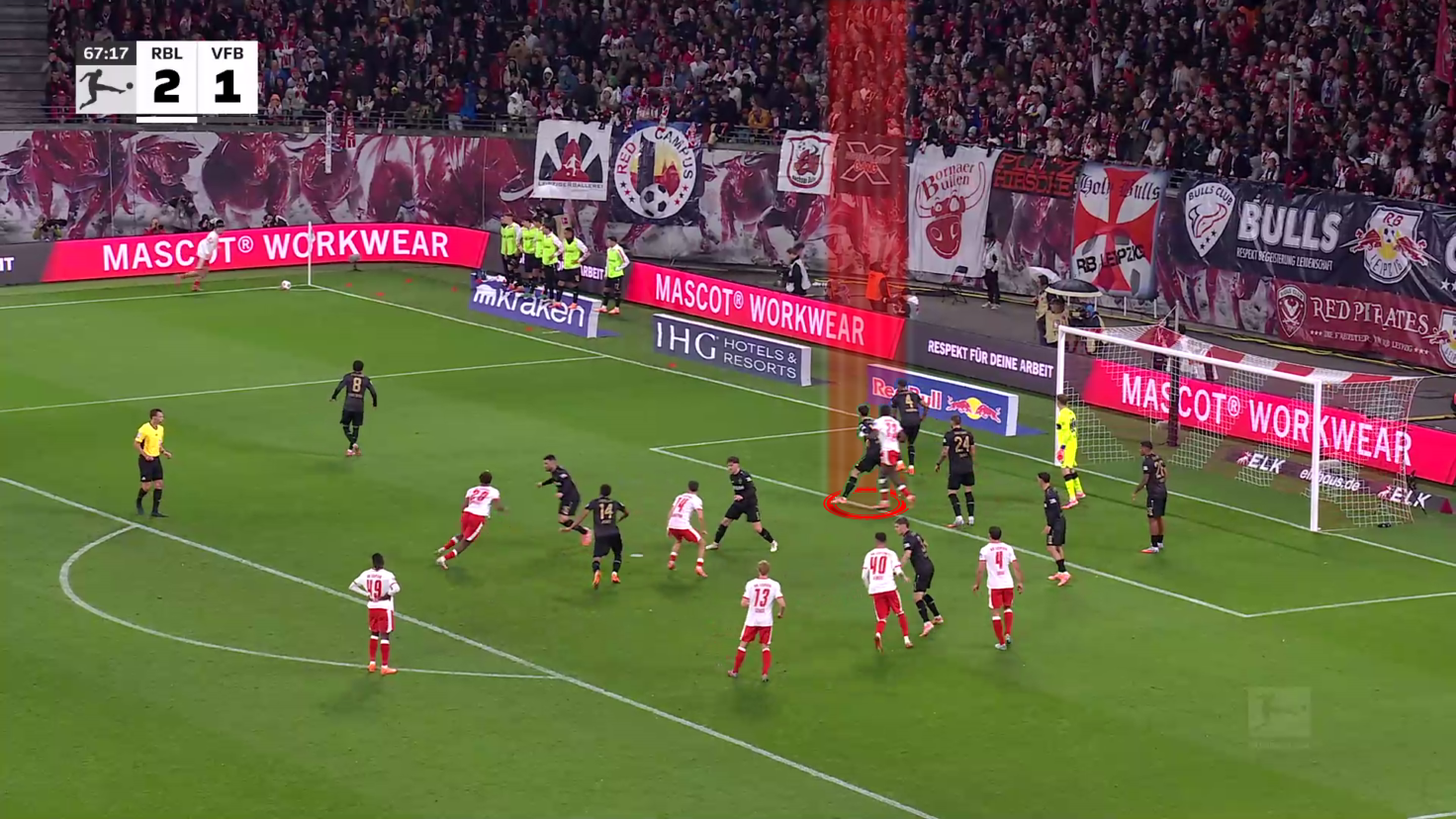
In the end, the attacker can’t reach the target area, so the first zonal defender clears the ball easily, as shown in Figure 12.
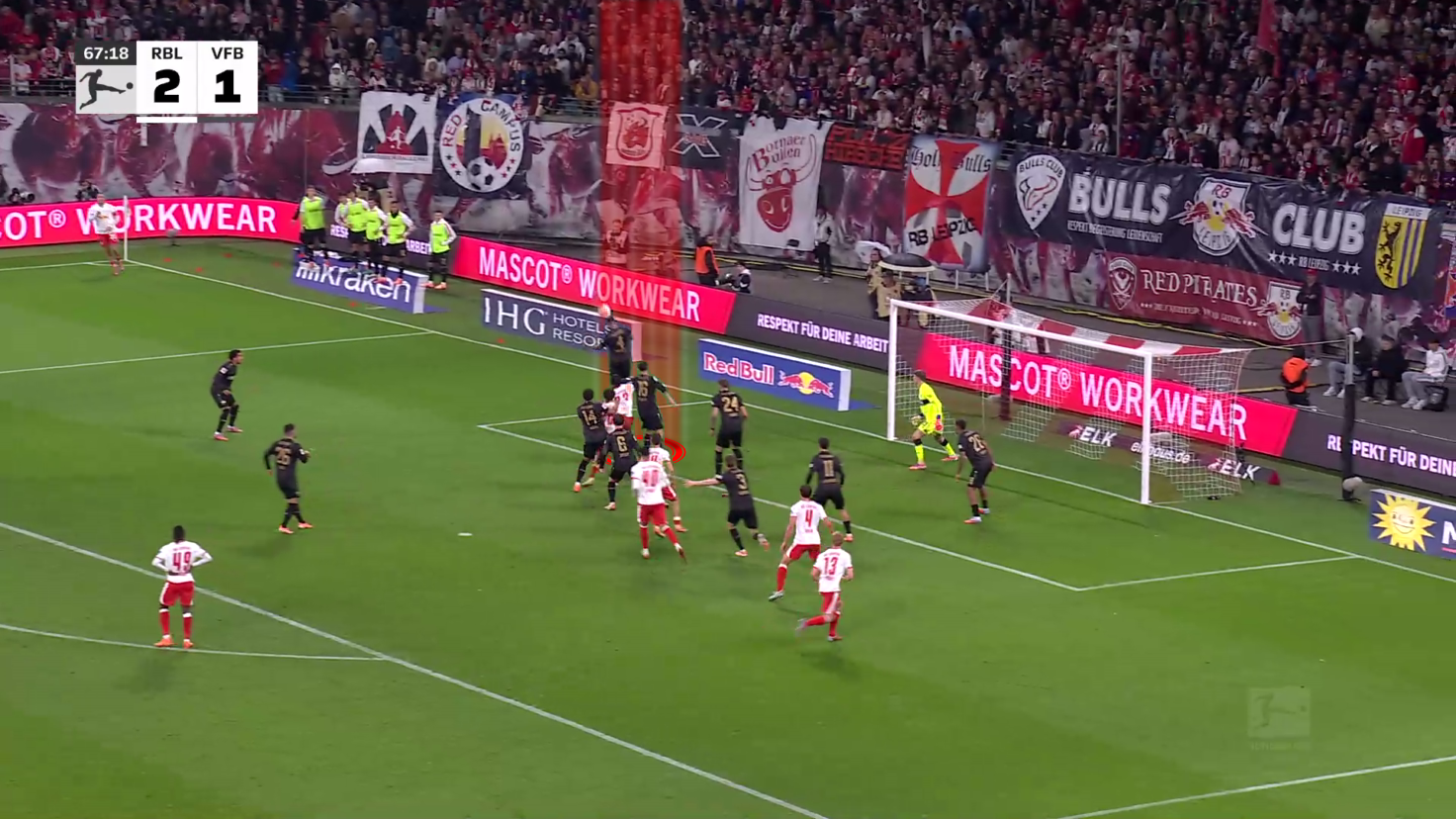
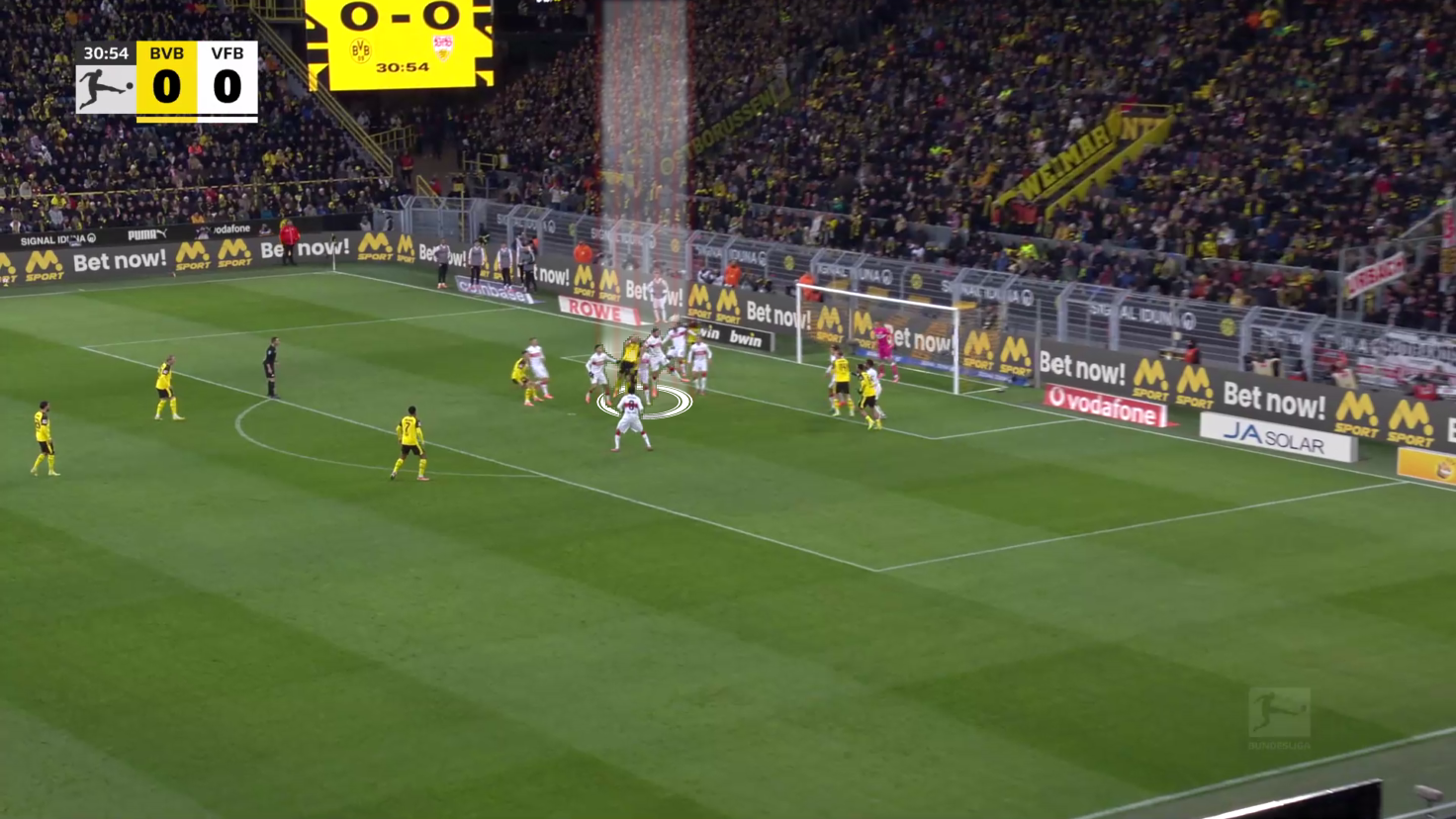
The second point is that the zonal defenders are free to leave their zone vertically (not shifting horizontally) to clear the ball because the man-markers aren’t the best at aerial duels, so they need help.
In Figure 13 below, the middle zonal defender, for example, can’t shift horizontally, leaving his zone,e which is so dangerous.
However, he can chase the ball if it will land in front of his zone, where there aren’t any zonal defenders, which means the attackers can easily overcome the man-markers who aren’t the best at aerial duels.
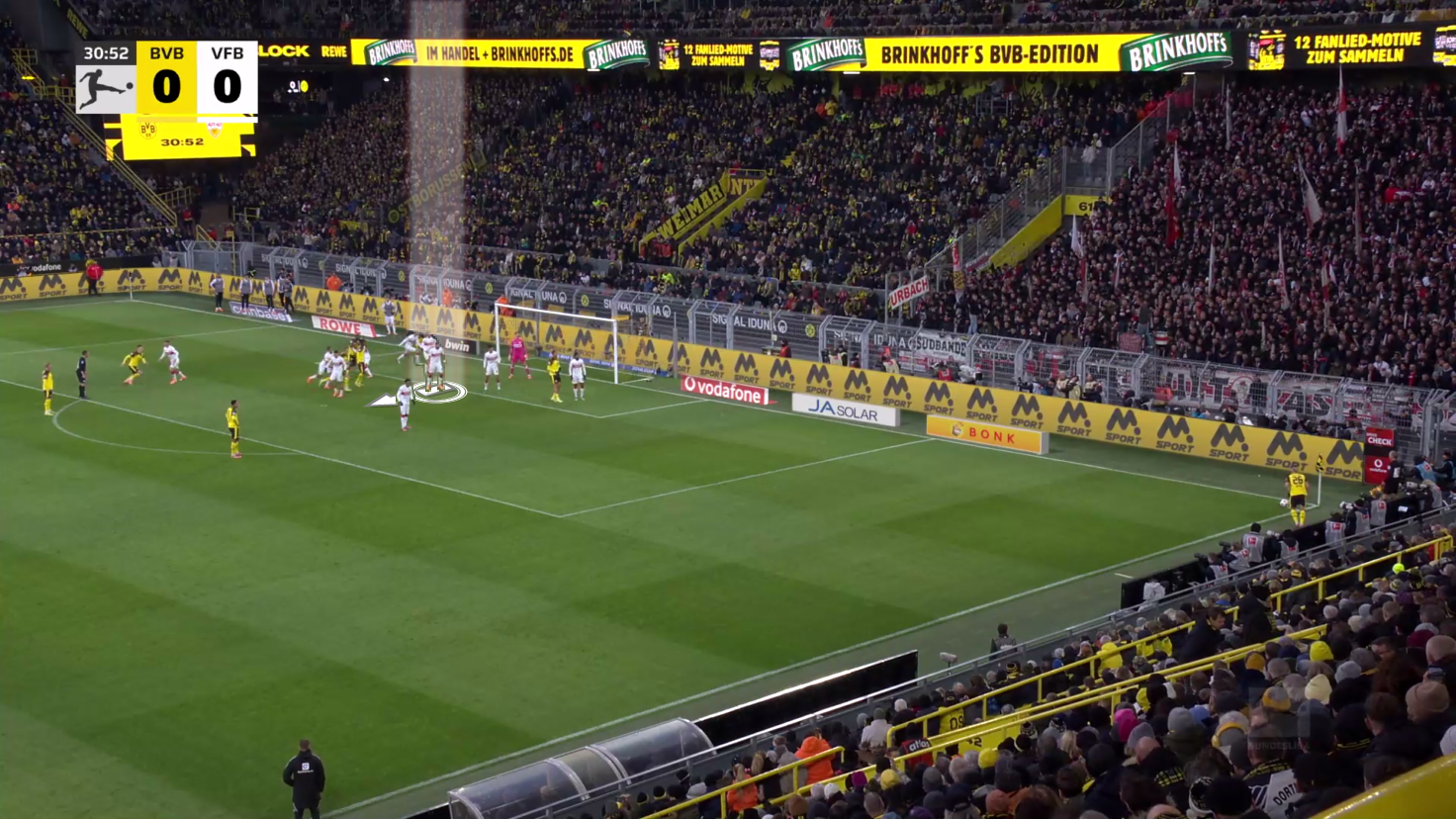
Figure 14 shows the importance of this action because the attacker overcomes the maker, but the zonal defender was there to help.
Weaknesses Of Stuttgart Defending Scheme
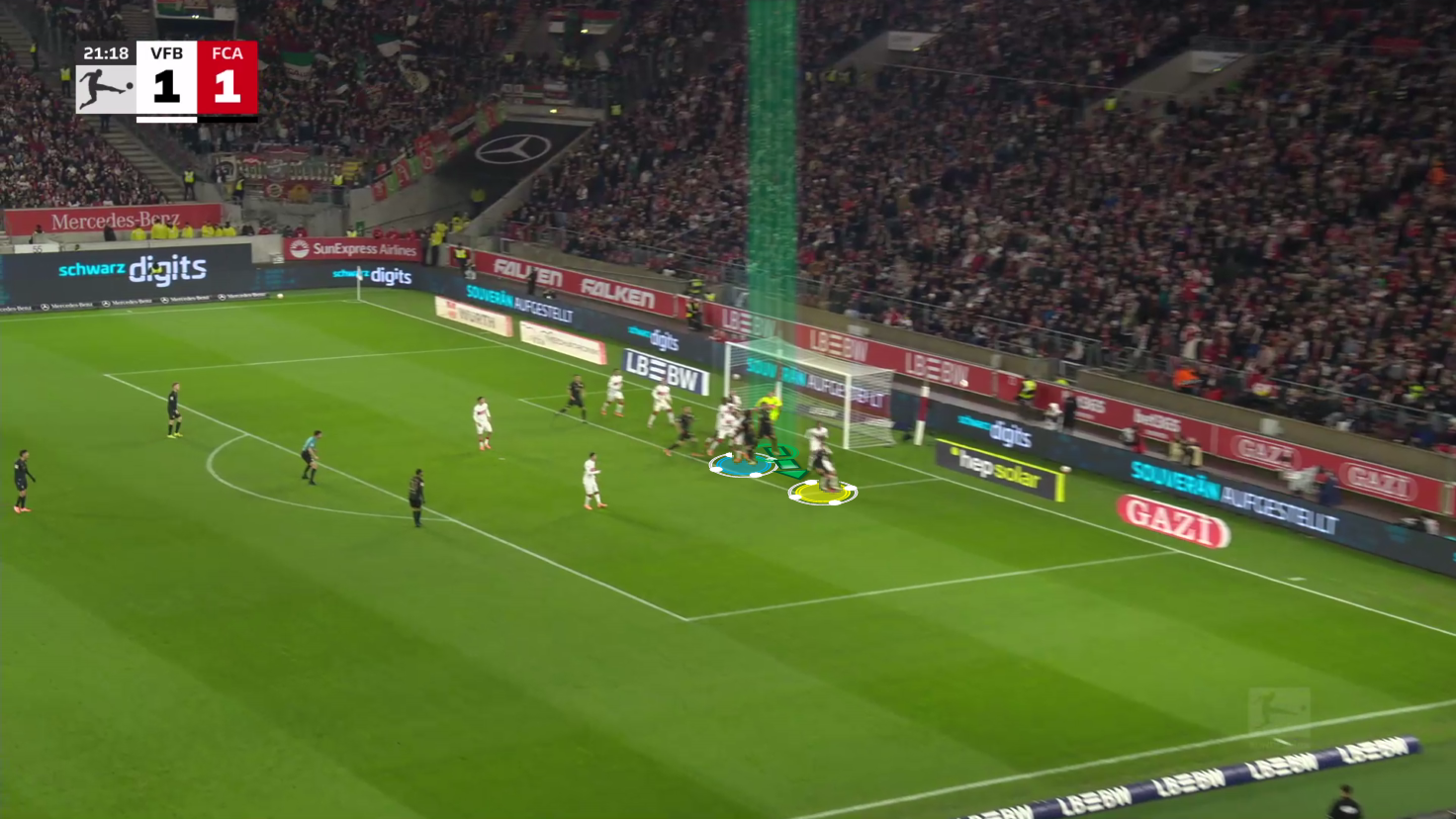
The first gap occurs because of horizontal shifting, which happens when the first zonal defender moves to defend flicks, widening the gap between him and the next zonal defender.
As shown below, the opponent’s plan was to use the yellow player to drag the first zonal defender while the blue player blocks the second zonal defender, creating a gap for the green one to start freely behind the zonal line.
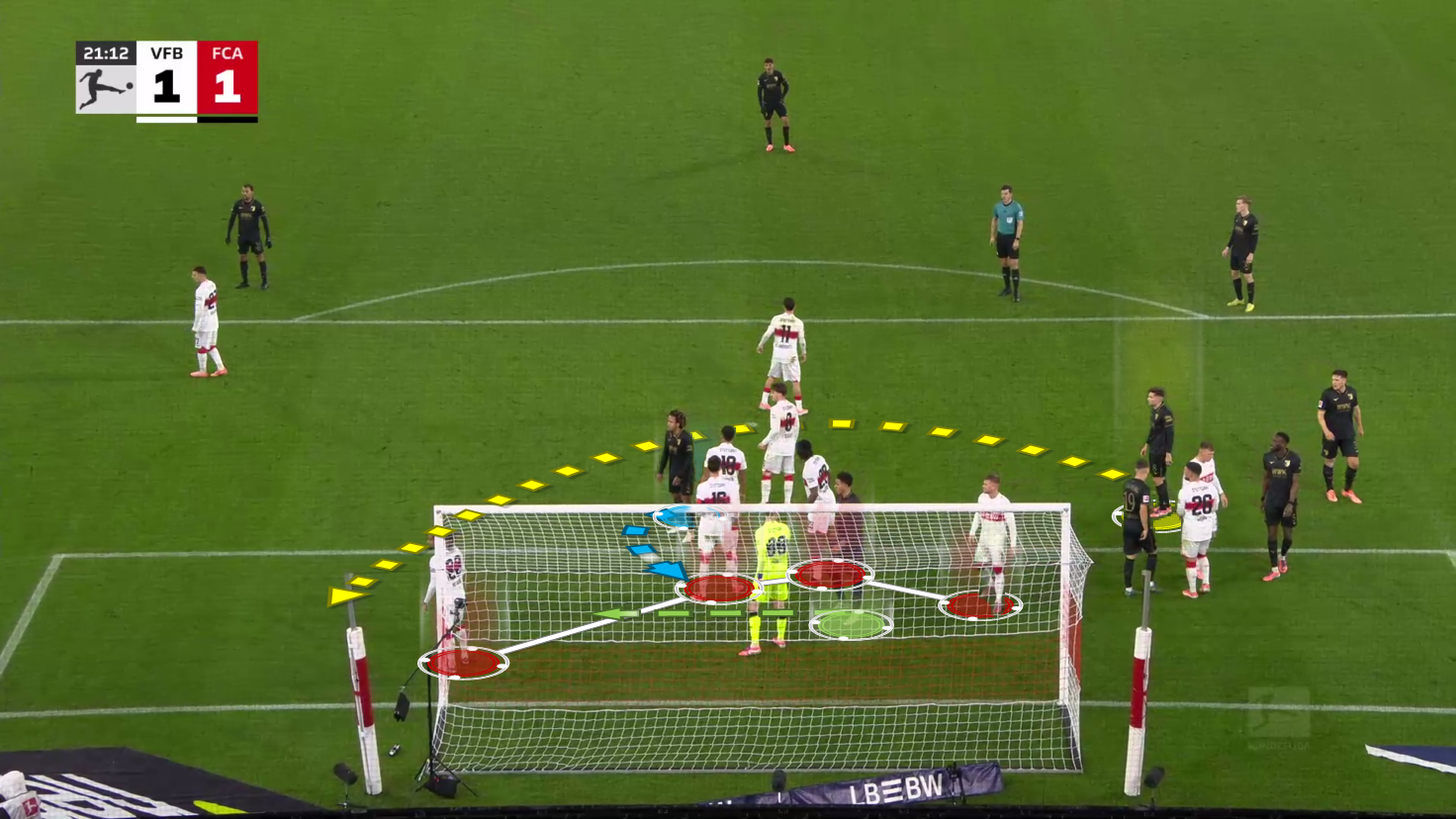
Figures 16 and 17 show that the plan succeeded, leading to a dangerous chance.
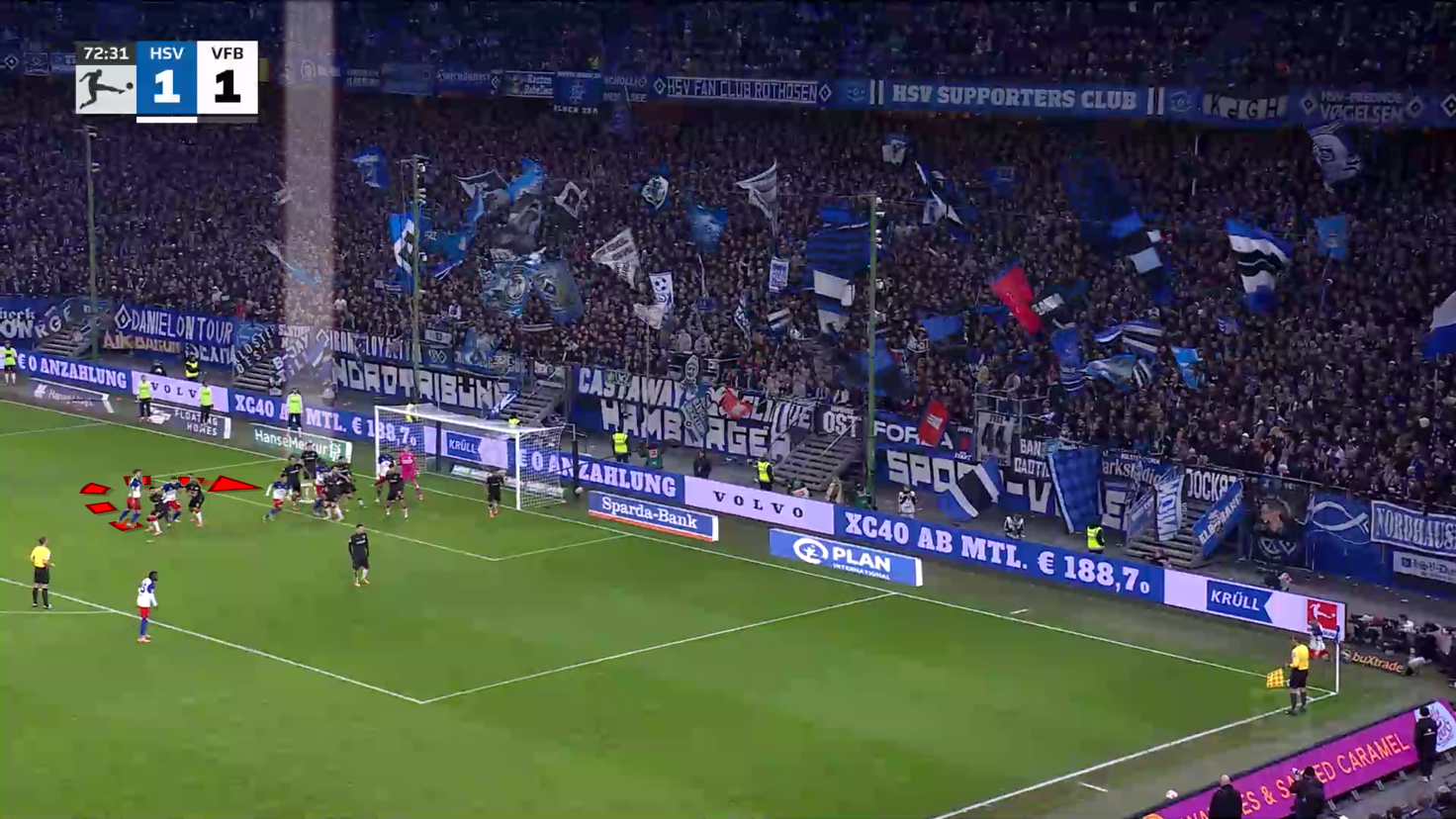
The second weakness appears when a free runner runs toward the last zonal defender, gaining momentum over him because of his deep starting position, which makes him take time to have side steps, then jump.
At the same time, the attacker runs a good distance before facing him, giving him a dynamic advantage over the last zonal defender.
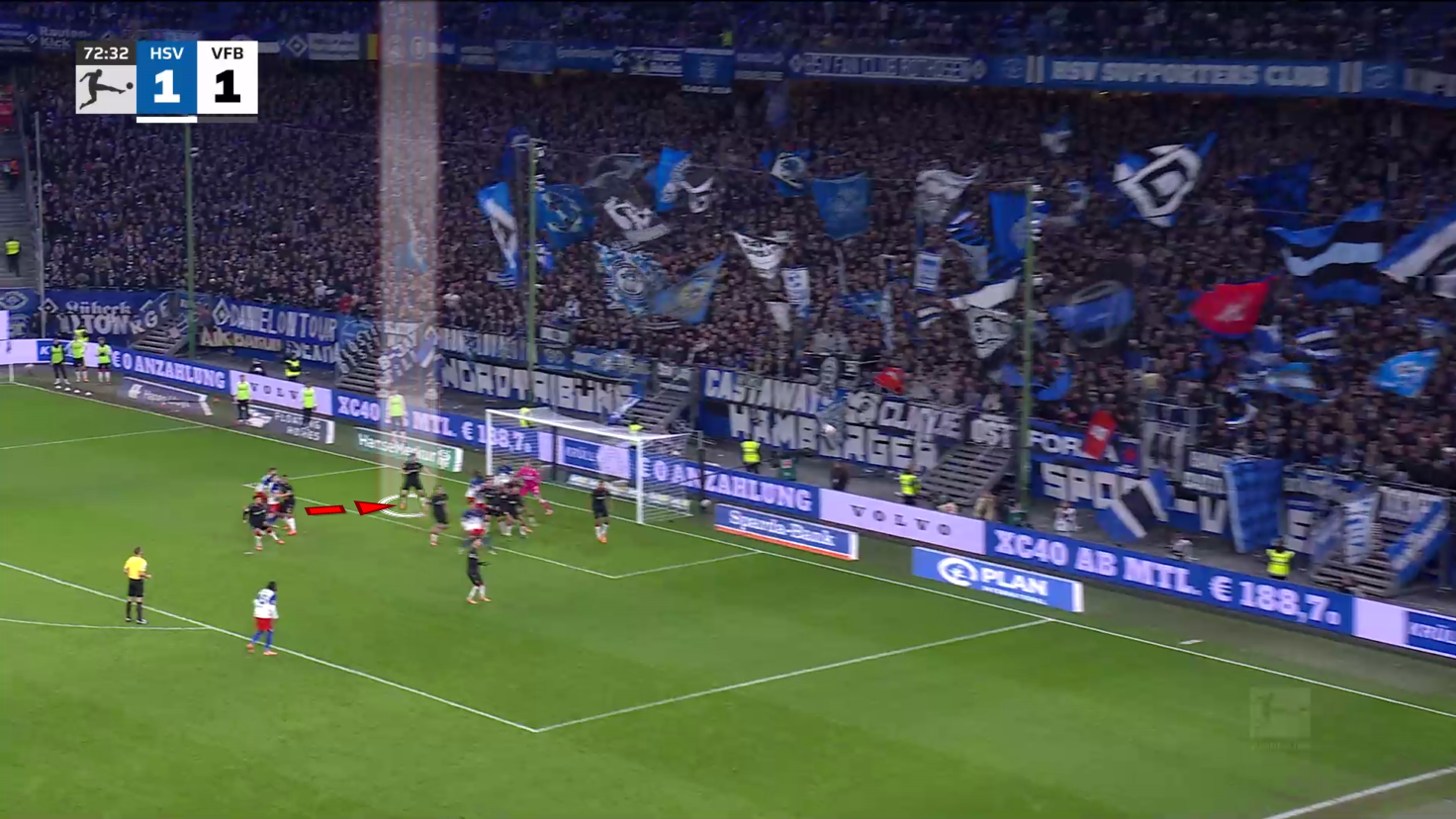
As shown below, one runner turns his mate around, using him as a screen to block his marker and free him.
That makes the runner free from a far point, running vertically over the side steps of the last zonal defender, as shown below.
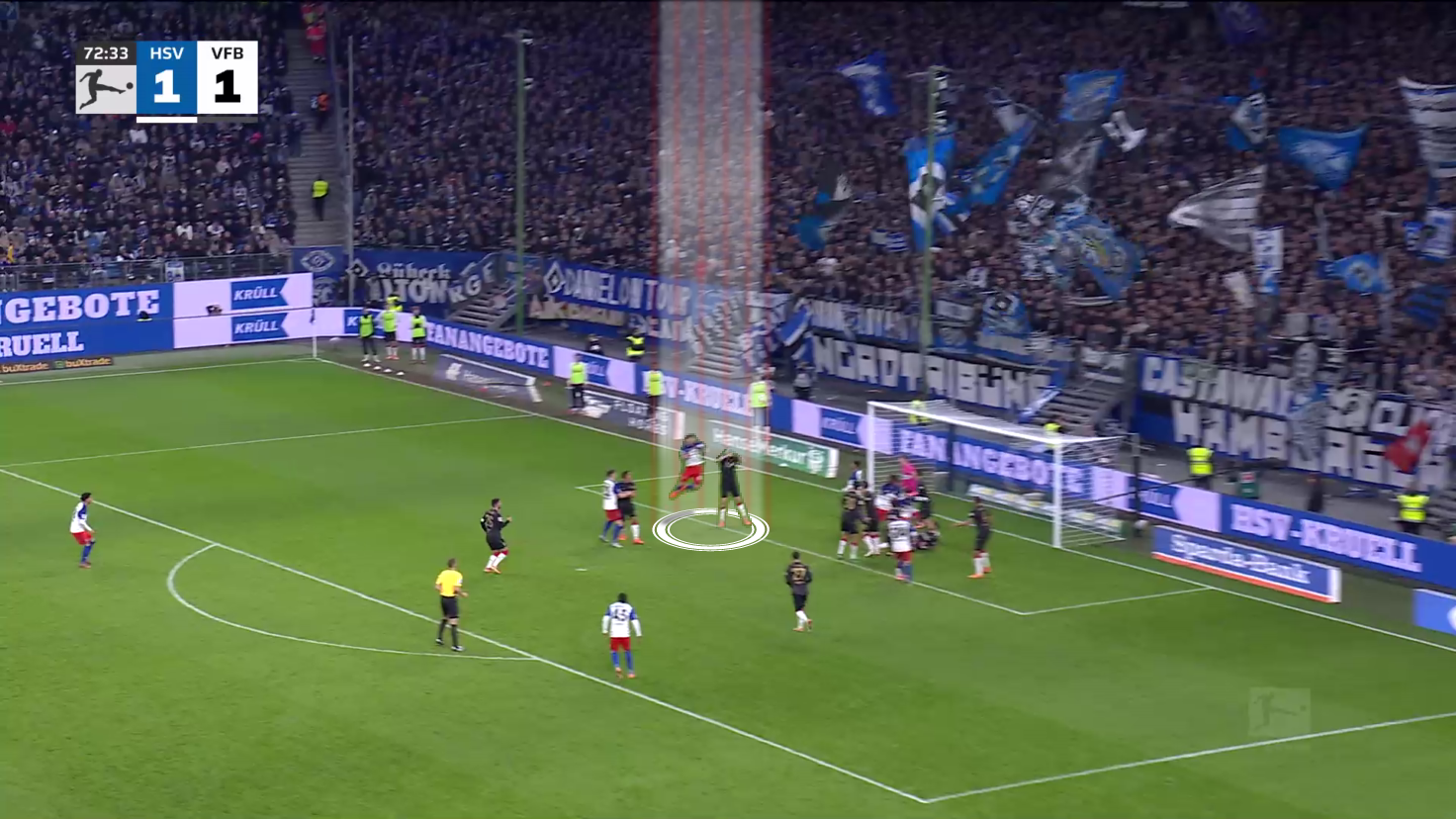
The result is that the attacker can jump over the last zonal defender, as in Figure 20.
The last weakness is dealing with a short corner.
They sometimes ask the first zonal defender to go help the short-option defender in a 2v2 situation, as shown below.
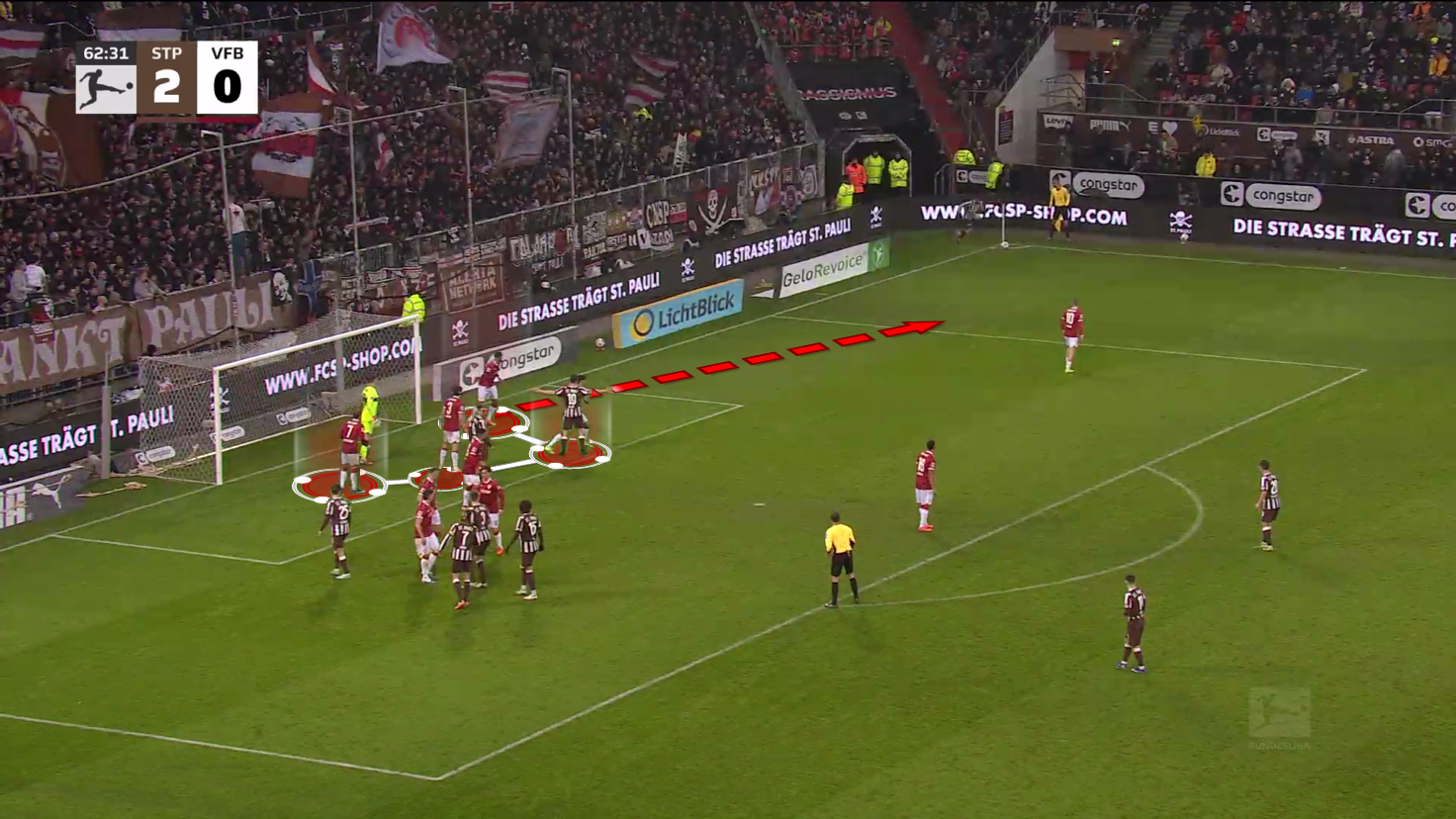
As in Figure 22, the second zonal defender is forced to push ahead of the near post instead of him, which creates a gap on the near post, exploited by two yellow players coming from the blind side.
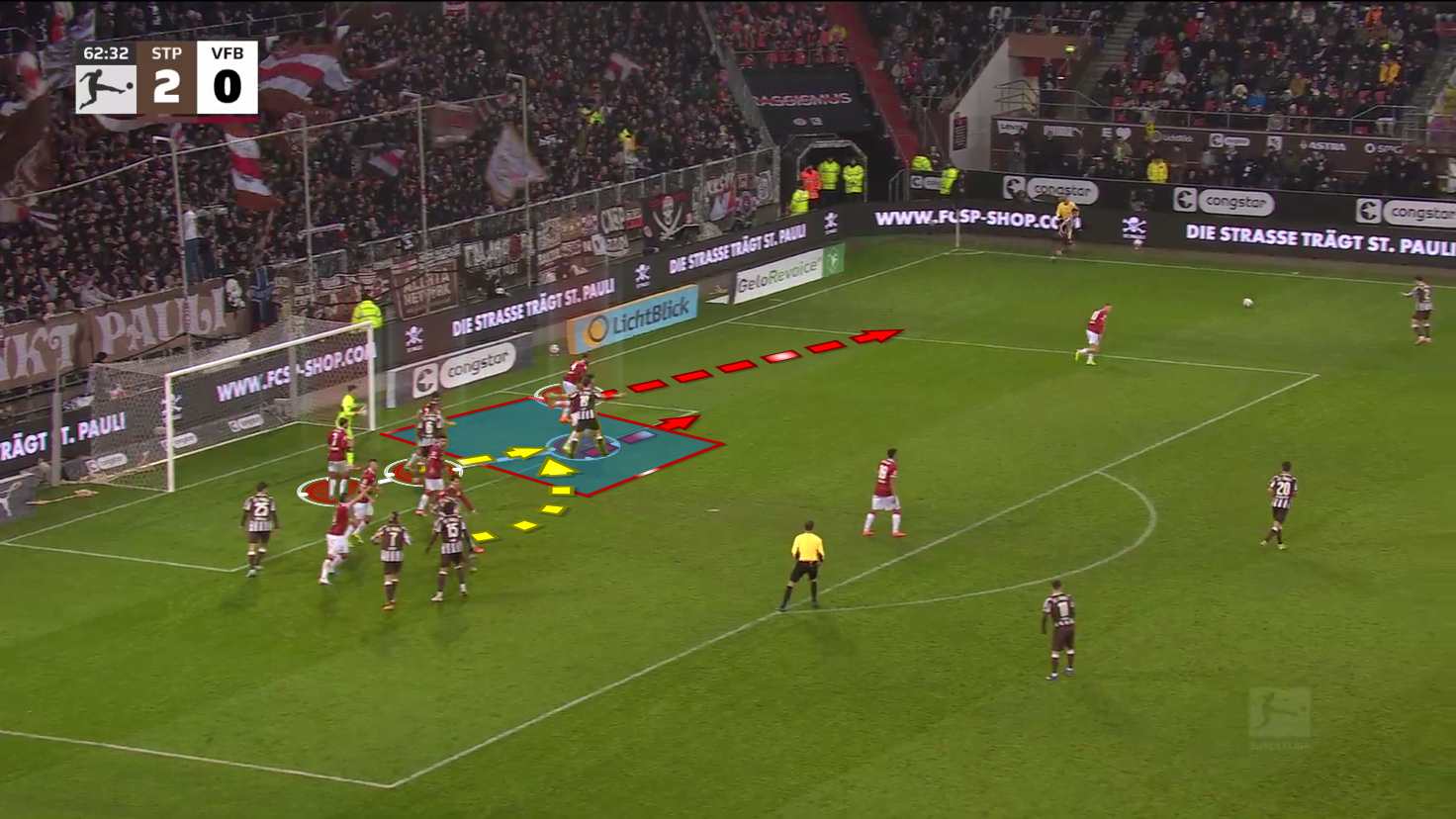
Figures 23 and 24 show how the attackers coming from the blind side could exploit this gap.
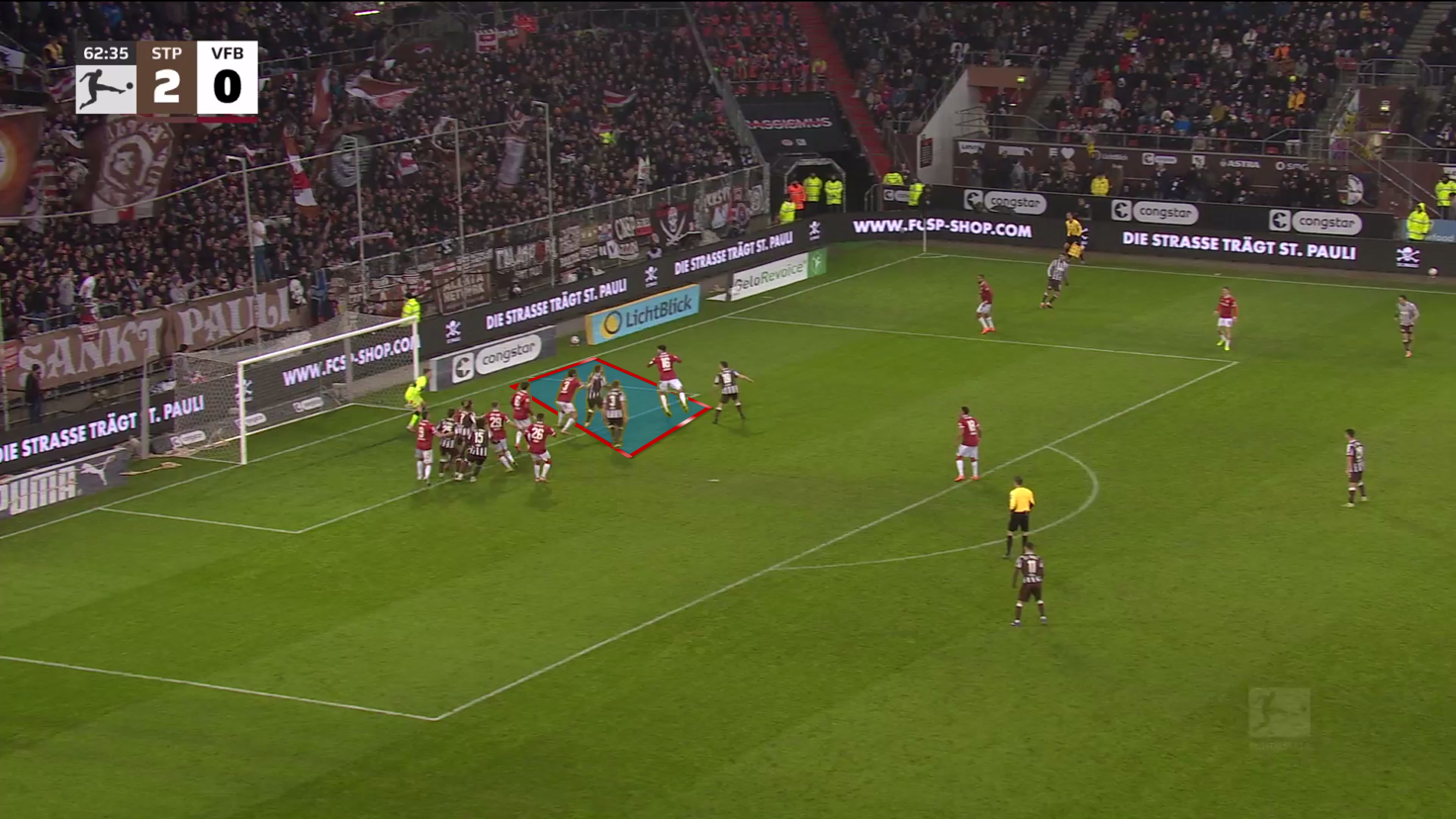
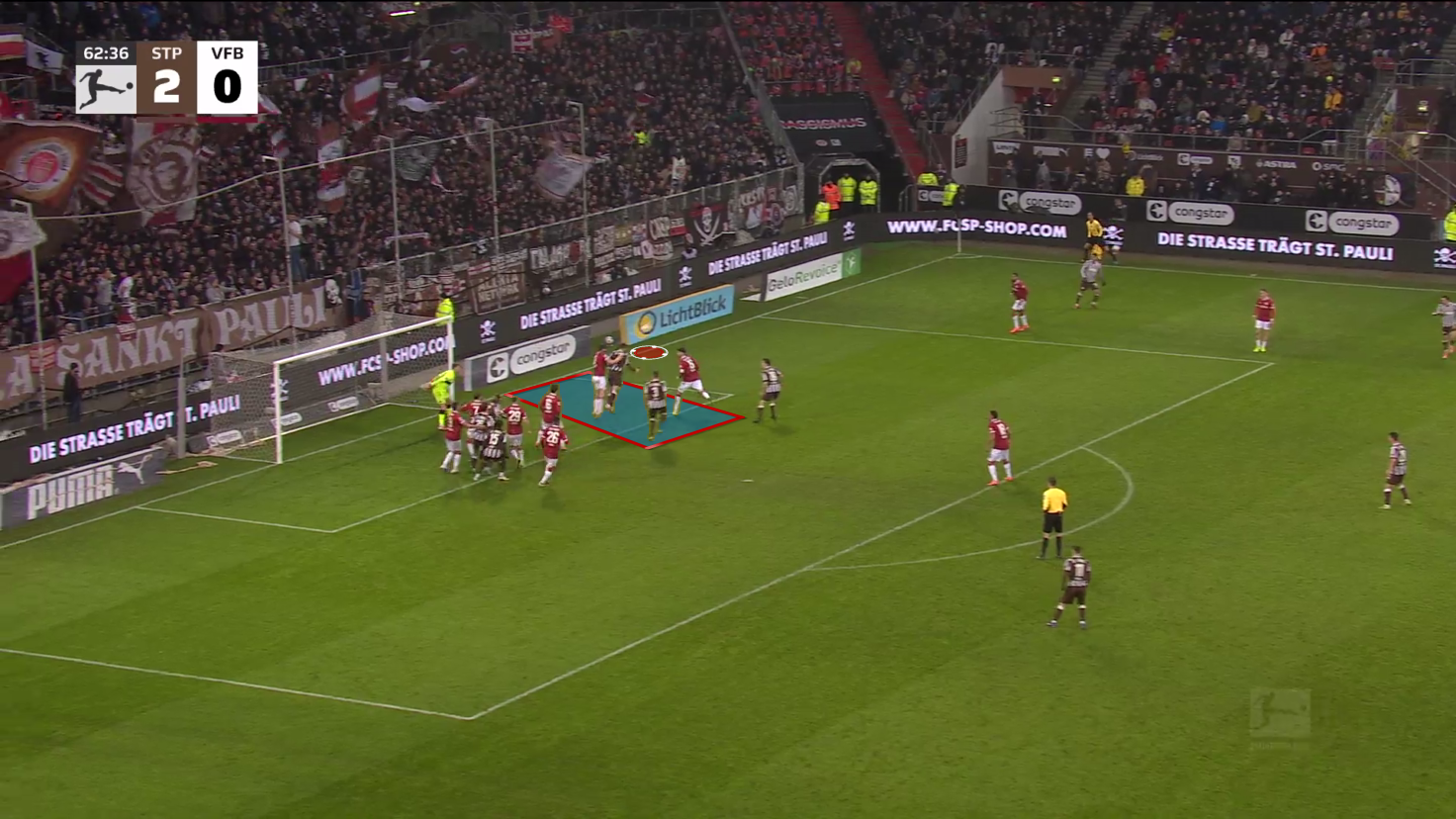
When the rebound player (red) goes to defend the short corner against these two short-option attackers, the near post is protected, but the edge of the box is empty.
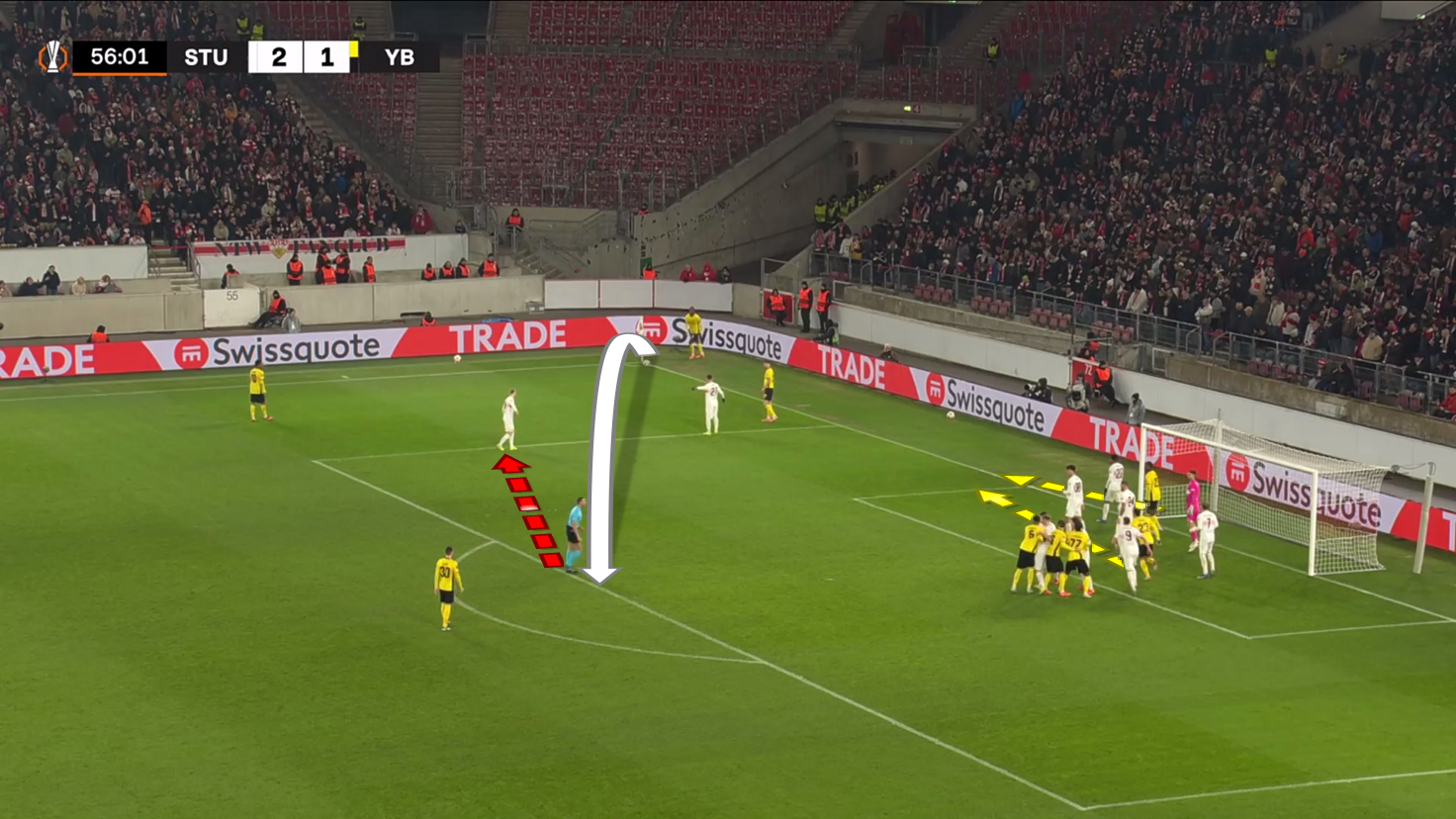
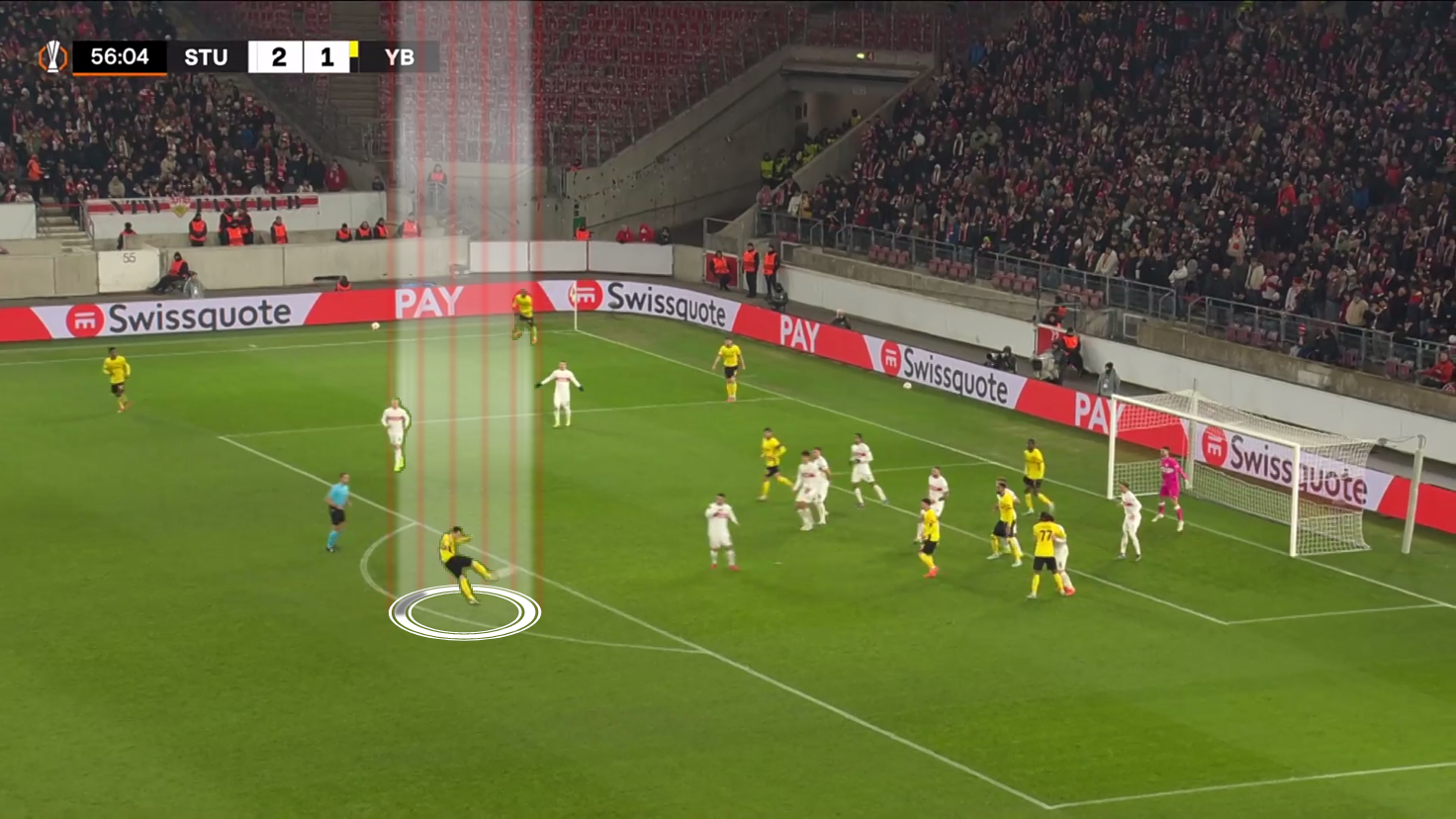
As shown below, the two yellow attackers want to draw the attention of the first two zonal defenders, ensuring that the rebound player, who is the one who goes to help.
As shown in Figures 25 and 26, the cross is played directly to the edge of the box, ending in a goal.
Conclusion
VfB Stuttgart’s corner defence currently ranks among the most effective in the Bundesliga and across Europe’s top-five leagues.
As shown, Stuttgart’s success is built on a well-organised structure and clearly defined individual responsibilities.
Yet even the best systems have weaknesses.
By analysing Stuttgart’s scheme in depth, we have also identified how opponents can challenge this defensive setup.
Recognising both the strengths and potential vulnerabilities of Stuttgart’s structure is key to understanding how Stuttgart have achieved their defensive efficiency, as well as how rivals might look to break it.
