
Second-placed Chelsea held league leaders Arsenal to a 1-1 draw in Gameweek 12 of the 2025/2026 Premier League season.
The Gunners would be disappointed with a draw, as the hosts went down to 10 men only 38 minutes into the game.
The remainder of the game was a great example of Chelsea’s game management as they held on for the draw.
With Manchester City beating Leeds United, the gap to the top is closed to five points now, as Pep Guardiola’s side are now in second with 25 points.
This puts an interesting spin on the title race and also signals that it is possible to win points from the mighty Arsenal.
Through this tactical analysis, we will examine how Chelsea managed to stay in the game after their red card.
Chelsea Vs Arsenal Lineups & Formations
Let’s look at how Enzo Maresca and Mikel Arteta fielded their squads.
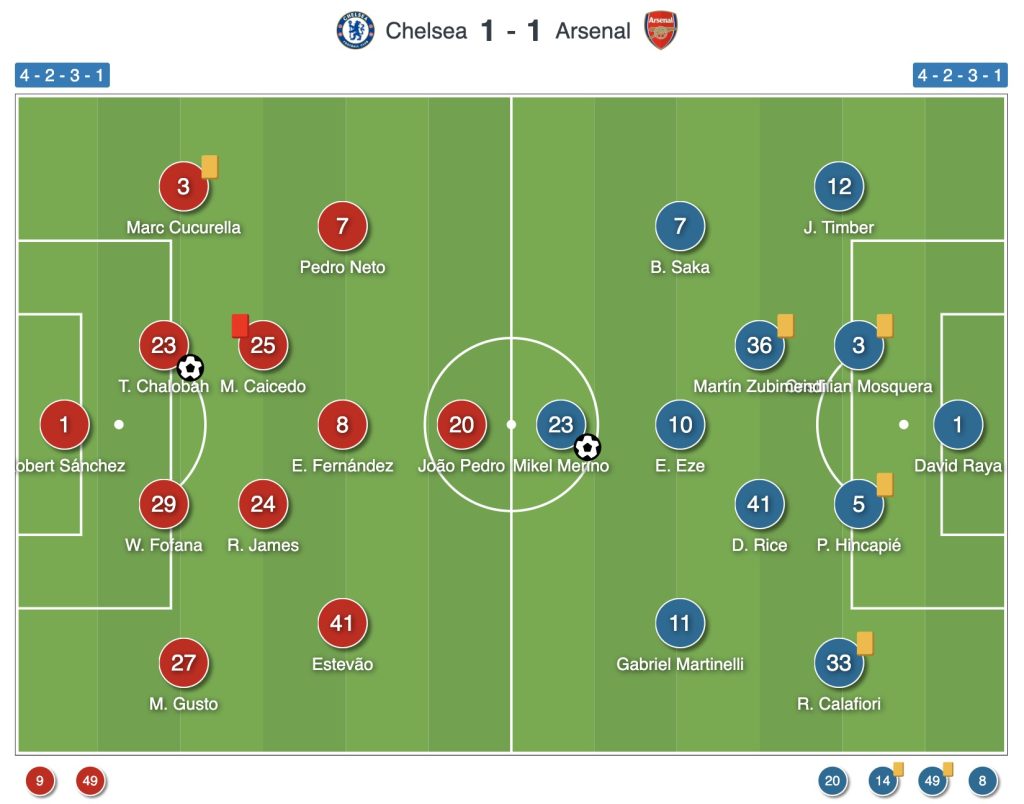
The hosts, Chelsea, played in a 4-2-3-1 formation.
Robert Sánchez started in goal, behind a back four of Malo Gusto (right-back), Wesley Fofana (right centre-back), Trevoh Chalobah (left centre-back), and Marc Cucurella (left-back).
Skipper Reece James and Moisés Caicedo played as the double pivot.
The front four comprised Enzo Fernández (centre attacking midfielder), Estêvão (right-winger), Pedro Neto (left-winger), and João Pedro (striker).
Alejandro Garnacho came on for Estêvão after 46 minutes, and Liam Delap came on for João Pedro at the 55th minute.
The visitors, Arsenal, played in a 4-2-3-1 formation.
David Raya started between the sticks.
The back four were Jurriën Timber (right-back), Cristhian Mosquera (right centre-back), Piero Hincapié (left centre-back), and Riccardo Calafiori (left-back). Myles Lewis-Skelly came on for Calafiori at the 46th minute.
Martín Zubimendi and Declan Rice played as the double pivot.
Martin Ødegaard came on for Zubimendi in the 57th minute.
The front four were Eberechi Eze (centre attacking midfielder), skipper Bukayo Saka (right-winger), Gabriel Martinelli (left-winger), and Mikel Merino (striker).
Martinelli was replaced by Noni Madueke after 57 minutes, and Viktor Gyökeres came on for Eze after 72 minutes.
Chelsea Before The Red Card
Although they did not capture the majority of the ball possession in the first half, Chelsea were still the dominant side until Caicedo’s red card.
They recorded five shots, three more than their opponents, during the first 45.
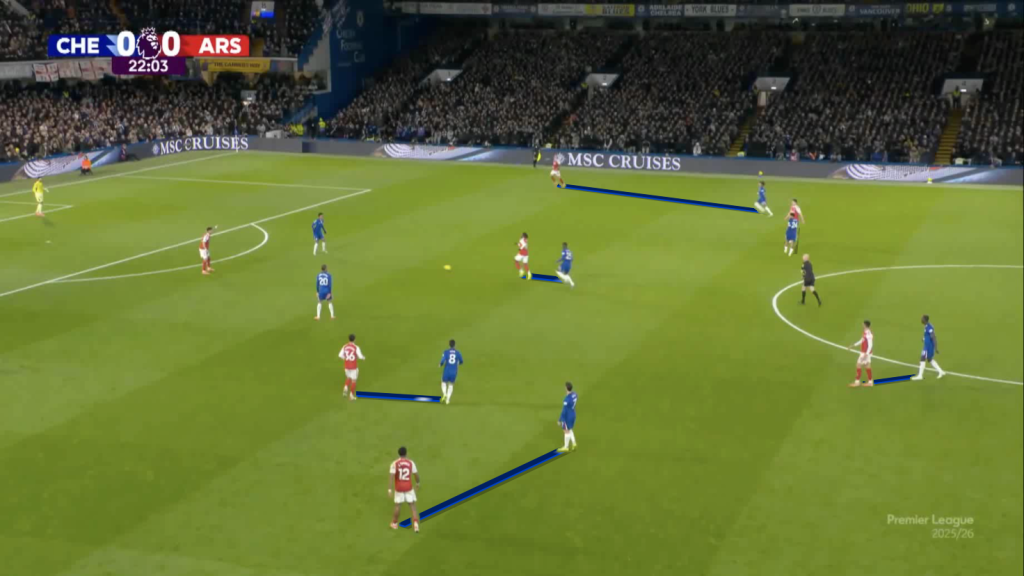
They pressed with numbers, suffocating Arsenal in the build-up.
Their man-orientations forced Arsenal to go long.
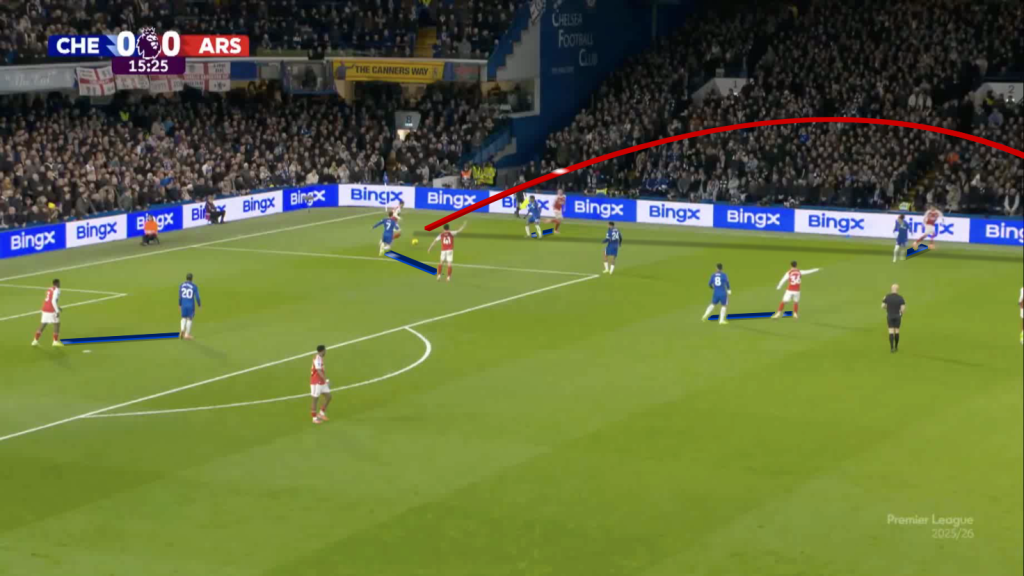
A prominent way for the Blues to win possession was to squeeze their opponents high in the wide channel.
As they allowed no inside passes, the Gunners were forced to go long.
With the rushed long balls, Chelsea made sure to get the first contact.
The hosts were persistent in winning duels, especially when it came to second balls.
They benefited from this in the midfield third, finding themselves in attacking situations.
Chelsea’s defensive resilience was evident across the pitch, as the players showed a commitment to keeping close tabs on their direct opponents.
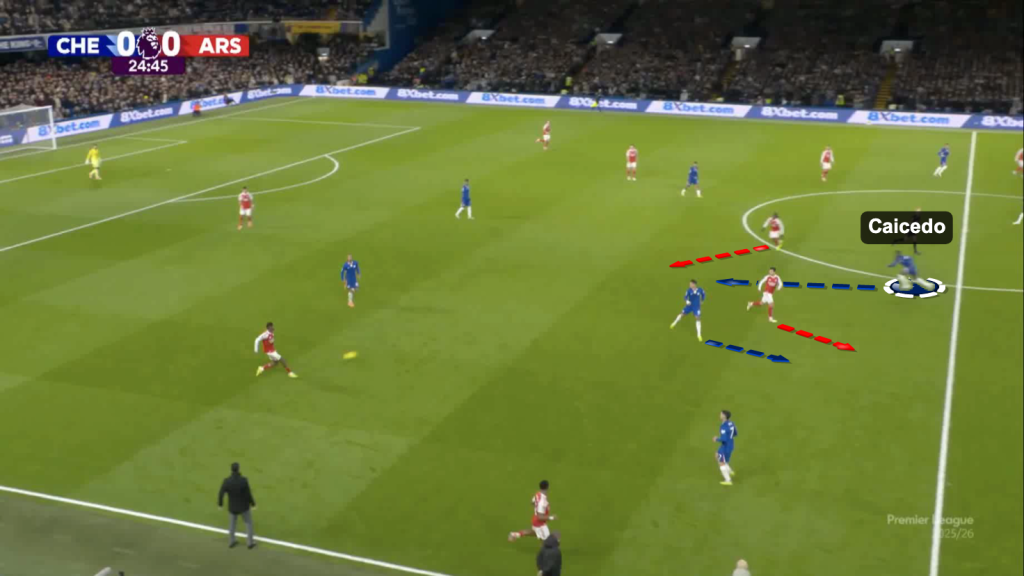
Here, Zubimendi is closely followed by a Chelsea player; the Spaniard decides to move up the pitch to drag the opponent, which opens space for Eze.
However, Eze is closely followed by Caicedo, who locks him down and denies progression.
With constant defensive effort, Maresca’s side created attacking opportunities.
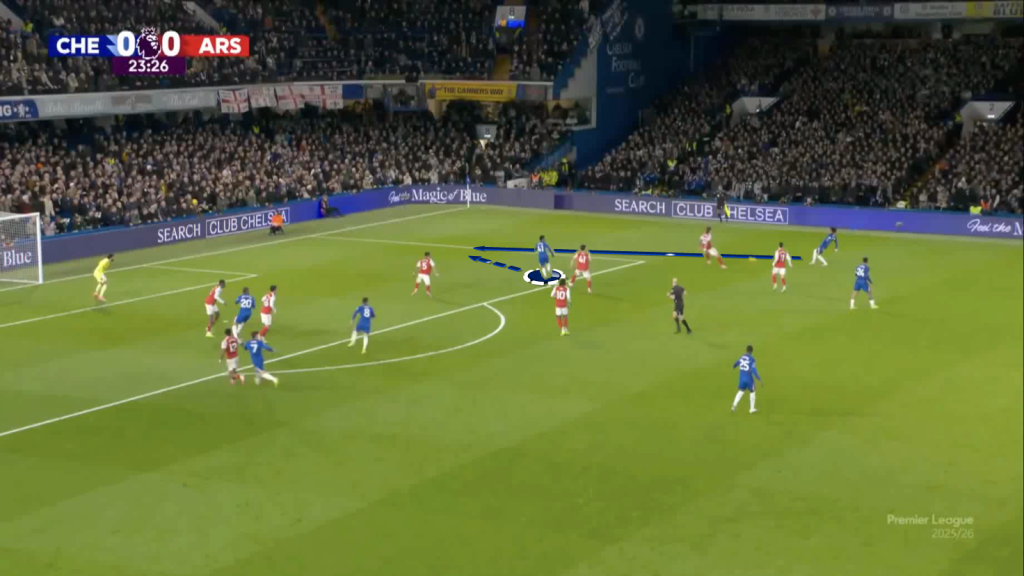
One such example is the underlapping runs in the half-spaces.
They created chaos in Arsenal’s defensive third and yielded a few shooting chances.
Chelsea Defending After Red Card
The Blues’ approach took a turn when a key player, Moisés Caicedo, was shown a red card.
All their focus shifted from attacking with numbers to defending deep with numbers.
Chelsea Defending Shape
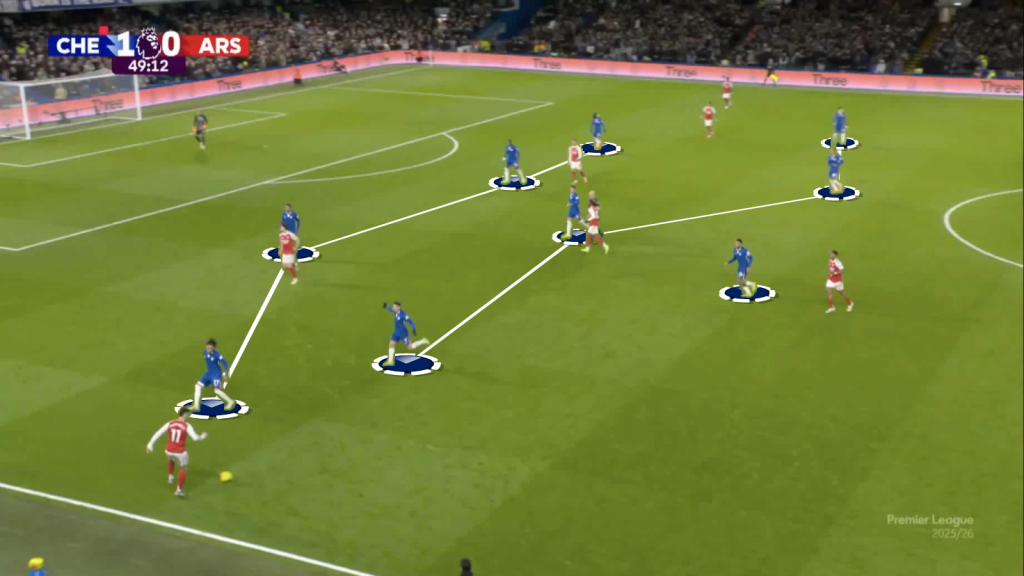
They started defending in a 4-4-1 shape.
Enzo Fernández dropped alongside Reece James to keep a compact midfield shape.
However, as Arsenal moved the ball quickly, the Chelsea players had to constantly adapt and cover for one another.
Chelsea’s right-back (Gusto) steps up to engage the Arsenal winger.
Meanwhile, another Arsenal attacker is running on Gusto’s blind side.
To cover this, Chelsea’s right-winger (Neto) drops and follows him.
This quick interchange to track opponent runners is called a takeover.
The duo performs another takeover right after, as a chipped pass is played behind the Blues’ defence.
After Arsenal scored the equaliser, Chelsea made a point of tightening their defensive third.
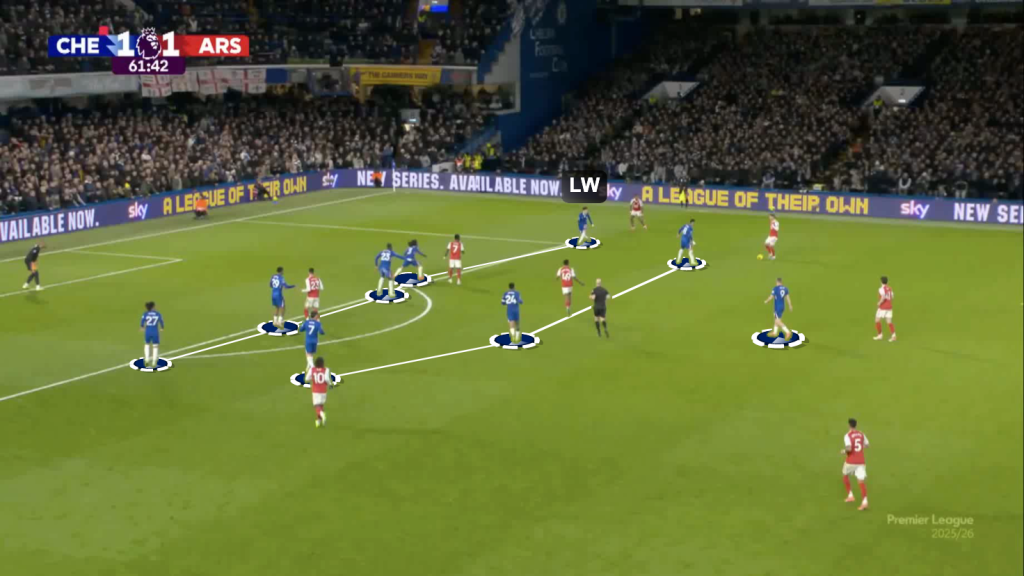
They were seen defending in a 5-3-1 shape as they entered their defensive third.
The ball-side winger dropped into the back line to make a back five.
The midfield line was left with two centre-midfielders and the far-side winger.
Meanwhile, the striker stayed higher to challenge for loose balls.
Arsenal Equaliser
Although they kept their shape well, Chelsea lost concentration, allowing Arsenal to score the leveller.
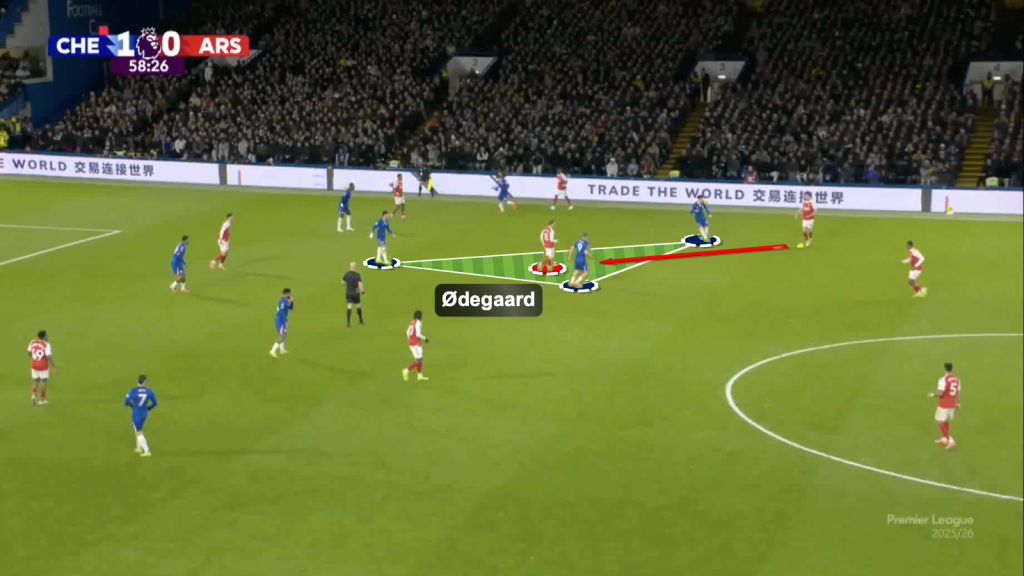
Ødegaard received the ball in a pocket in the right half-space before moving it to the wide channel.
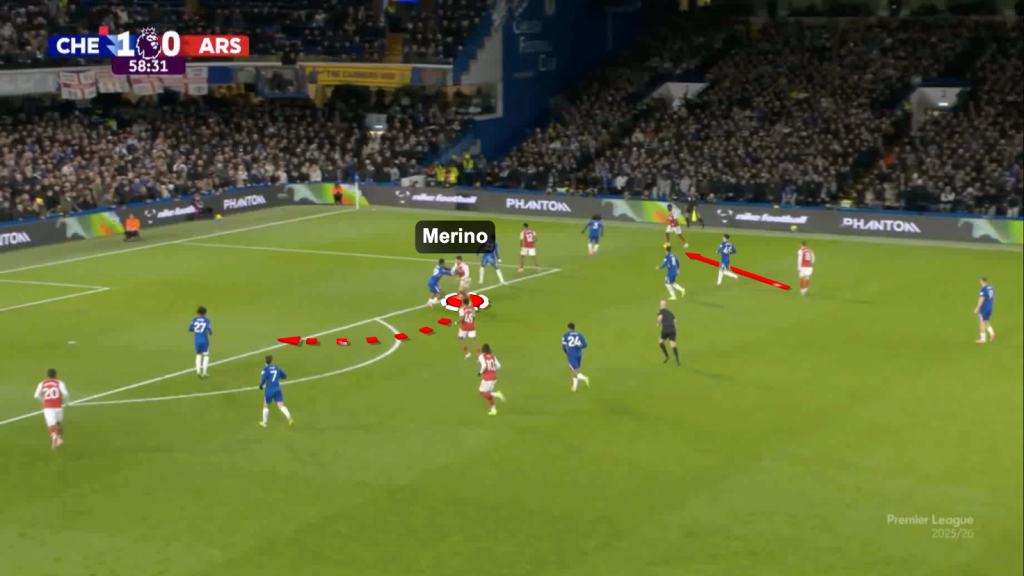
As Saka received it in the wide area, Merino began moving away from the ball, a commendable striker’s instinct.
He looks to exploit the space between Chelsea’s far-side full-back and centre-back.
This movement keeps him on the blind side of his direct opponent.
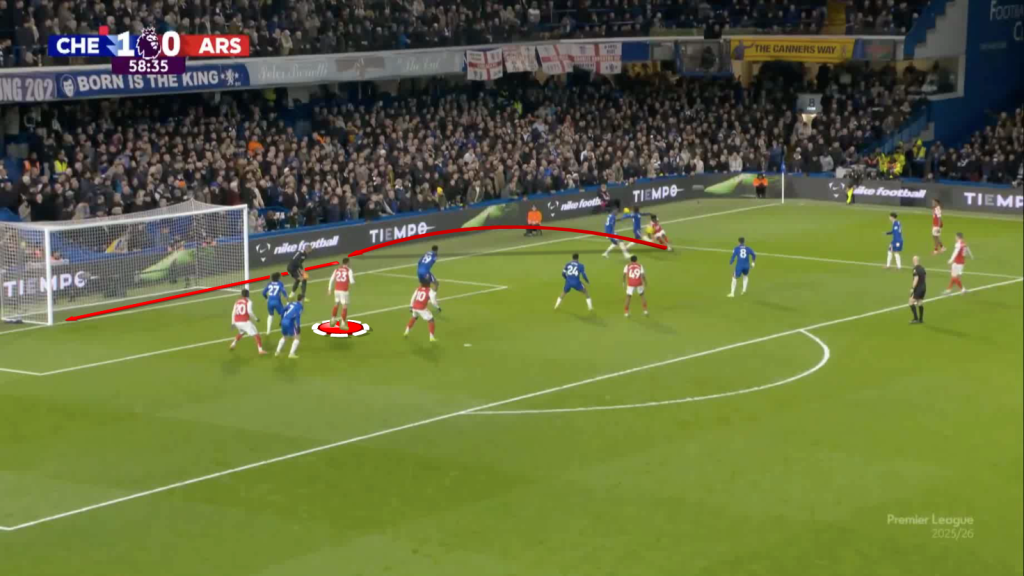
When the cross finally arrives, the job is simple: Merino guides it into the goal with a free header.
Small Group & Individual Defensive Actions
Apart from staying in a compact shape, Enzo Maresca’s players also made noteworthy defensive efforts to keep the Gunners out.
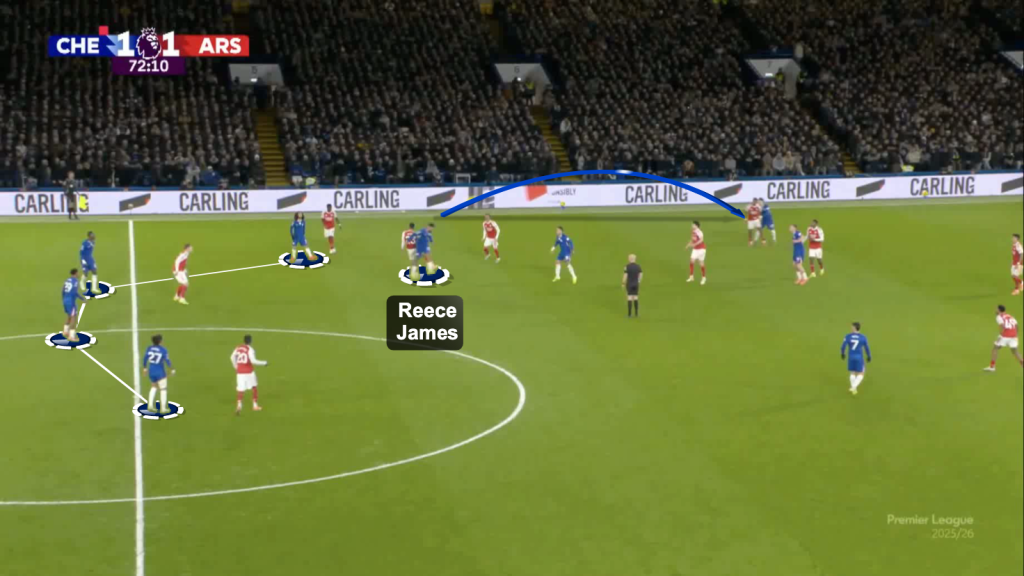
Reece James sat right above the back four, shielding them from any danger, aerially or on the ground.
He won five out of six aerial duels and six out of seven ground duels throughout the game.
The image above depicts him winning an aerial duel in the mid-third, sitting right above the back four.
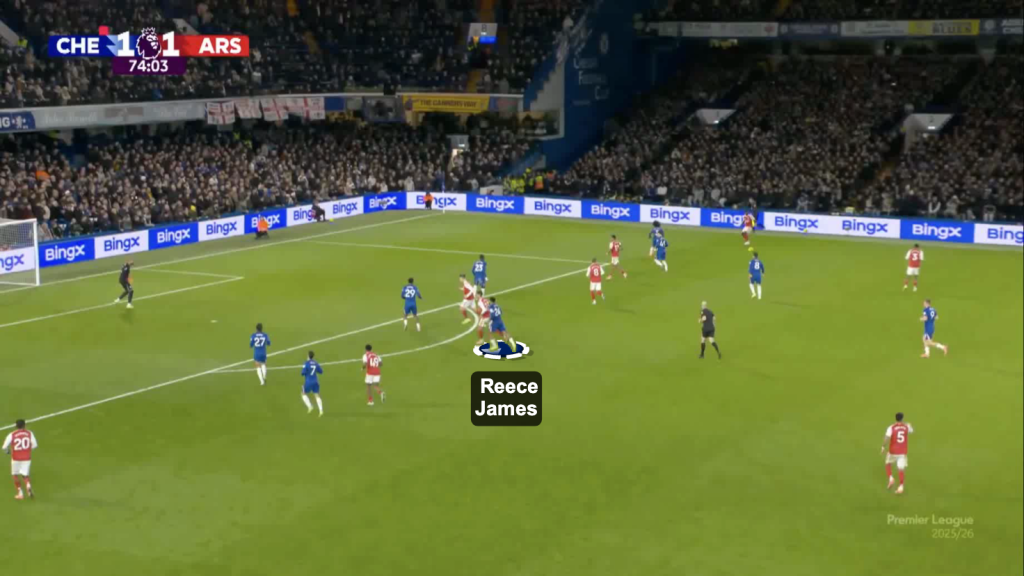
The skipper stayed in position to maintain structure as Arsenal entered the attacking third.
He held down the zone 14, cutting out potential penetrative passes through the central channel.
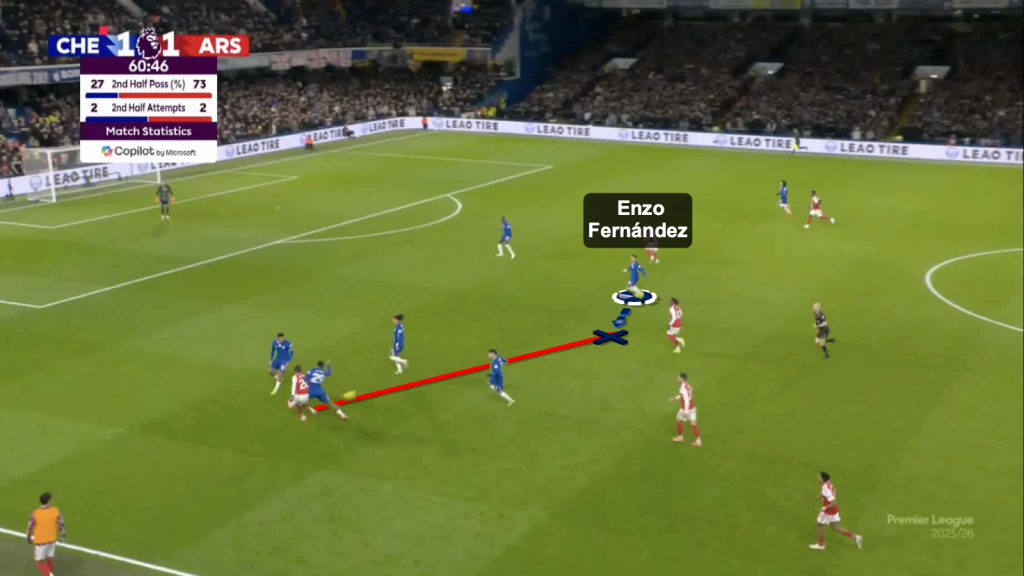
In situations where Reece James was dragged out of position, Enzo Fernández made sure to cover up for his English compatriot.
Any flat inside passes from the Gunners were dealt with by the Chelsea midfielders.
Small-group defending included making 2-v-2s in wide areas to prevent being outnumbered.
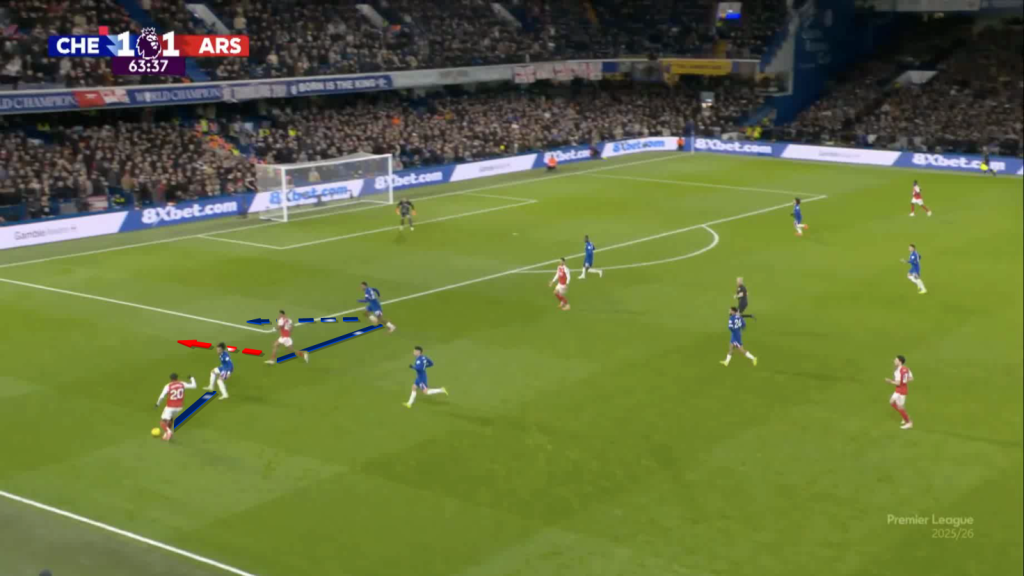
As the Chelsea full-back engages with the Arsenal winger, another Arsenal attacker makes an underlapping run on the full-back’s blind side.
However, this does not pose much danger for the Blues, as the ball-side centre-back tracks the Arsenal player’s underlap.
Arteta’s side are left with no option but to play backwards.
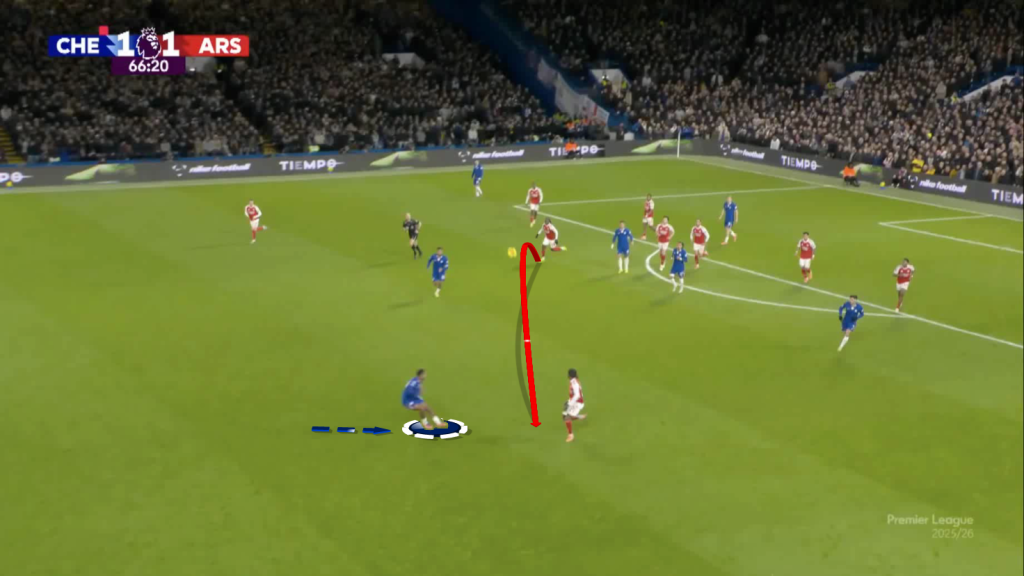
Chelsea’s defensive actions were intended to cut out any possible Arsenal threat, whether in an organised attack or in the attacking transition.
When Chelsea have most of their numbers high up the pitch, they cannot afford to allow their opponents space to counterattack.
As Madueke is in the process of receiving a clipped pass to attack the space ahead of him, the Chelsea defender steps up to close him down, allowing no verticality.
Chelsea Attacking After Red Card
The Blues’ attempts to attack displayed conviction during the first half.
However, it all changed after the red card.
Their approach turned to playing with less risk and more safety.
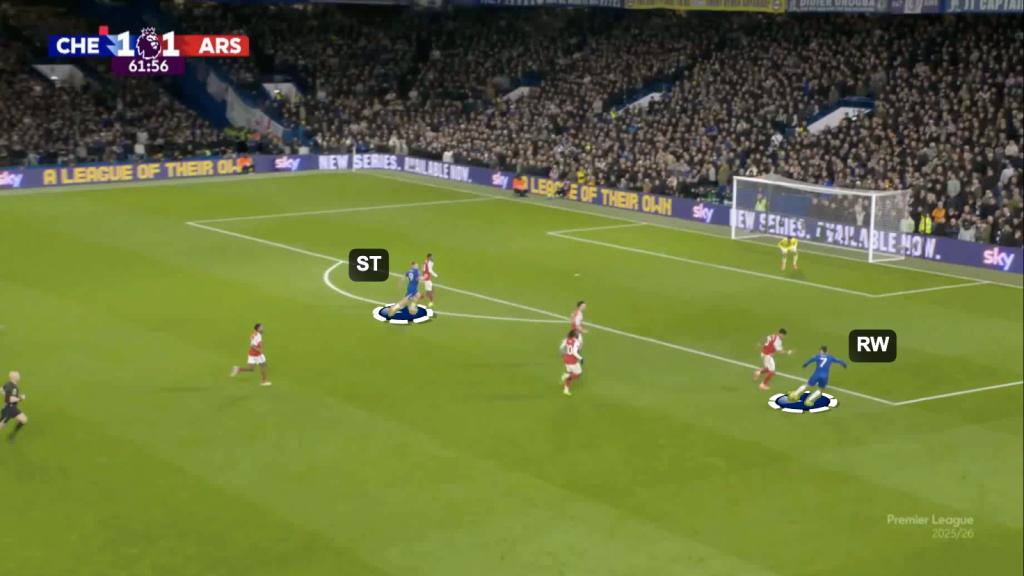
In the attacking transition, they did not intend to commit high numbers.
Going forward with just two players in the situation above proves prudent for them, as they manage to get a corner kick from it.
A corner is how Maresca’s side got their goal, which gave them a big upper hand.
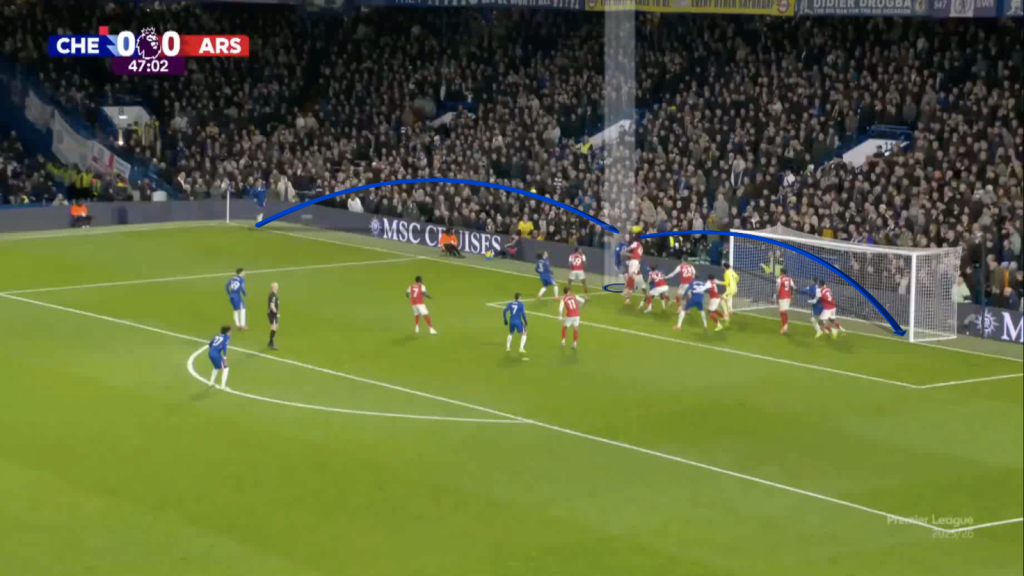
Reece James’ cross is met by Trevoh Chalobah, who masterfully flicks it over everyone to the far corner.
Apart from set-pieces, the hosts did not see many players in the attacking half, which paid off for Enzo Maresca.
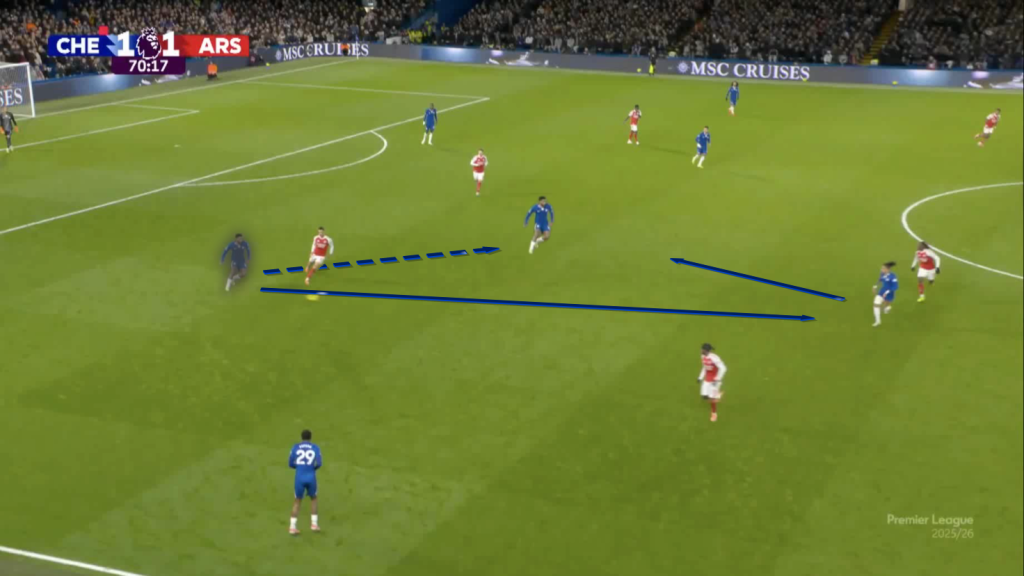
With a man down, the hosts made the most out of possession by injecting mobility into their build-up and progression.
Fofana plays a one-two with his midfielder to receive again and carry the ball into the mid-third.
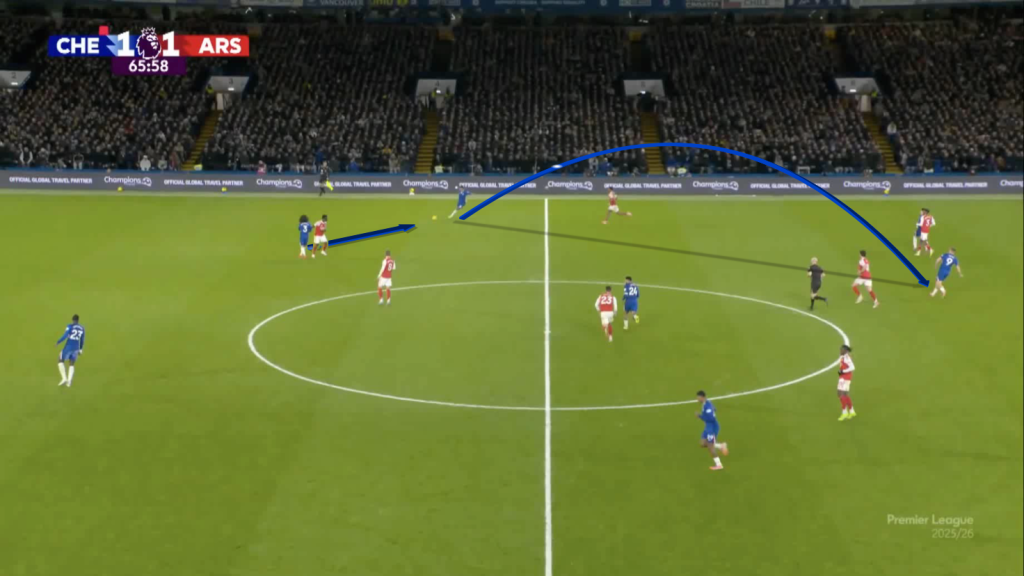
Third-man passes were a lot more direct.
Using fewer time and numbers for attacking moves became the strategy.
Cucurella plays a pass to Enzo Fernández, who finds Delap with a long ball.
This attack continues as Delap lays it off to a wide teammate (Garnacho).
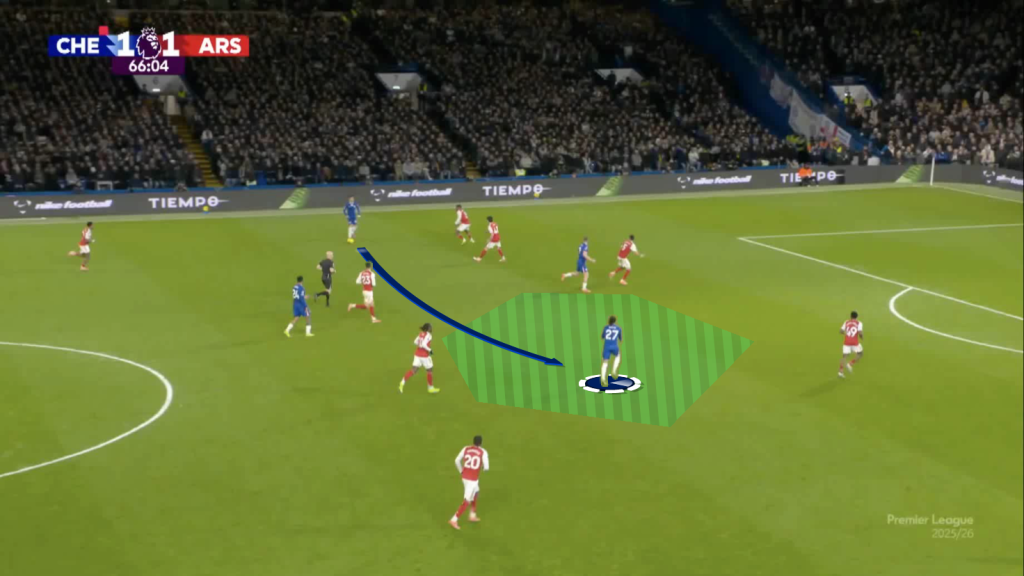
This movement opens space between the Arsenal midfield and defence.
This is almost exploited by Malo Gusto, who positions himself in the central zone. A pass to him from wide opens up the Arsenal defence.
Conclusion
Chelsea were dominant in the initial phase of the game.
When it was 11 against 11, the hosts demonstrated structured pressing deep into the Arsenal half, forcing the visitors to play rushed long passes.
Chelsea’s pressing in the central and wide zones alike was executed through resilient man-orientations.
As a result, even Arsenal’s positional rotations did not yield much success.
With the intensity of Chelsea’s press, Arsenal were exposed when turnovers occurred, which led to shooting chances for the visitors.
After the red card, Chelsea committed to deep defending with numbers, adopting 4-4-1 and 5-3-1 formations.
With smooth takeovers between full-backs and wingers, Arsenal struggled to penetrate.
Apart from this, the Chelsea players displayed individual and small group defensive actions that helped keep the visitors out.
On the ball, Maresca’s side stuck to attacking with fewer numbers, except for set-pieces.
Their attacking moves were intended to be quick and effective, ensuring they rarely got caught out on counters.
