Total Football Analysis
  • Football Analysis
    • Data Analysis
    • Formations
      • 2-2-4 Formation
      • 2-3-5 Formation
      • 3-1-4-2 Formation
      • 3-2-2-3 Formation
      • 3-2-4-1 Formation
      • 3-1-6 Formation
      • 3-3-4 Formation
      • 3-4-1-2 Formation
      • 3-4-2-1 Formation
      • 3-4-3 Formation
      • 3-5-1-1 Formation
      • 3-5-2 Formation
      • 4-1-4-1 Formation
      • 4-2-2-2 Formation
      • 4-2-3-1 Formation
      • 4-2-4 Formation
      • 4-3-1-2 Formation
      • 4-3-3 Formation
      • 4-4-2 Formation
      • 4-5-1 Formation
      • 5-3-2 Formation
      • 5-4-1 Formation
      • 6-3-1 Formation
    • Head Coach Analysis
    • Match Analysis
    • Player Analysis
    • Recruitment Analysis
    • Set Piece Analysis
    • Tactical Theory
    • Tactical Preview
    • Team Analysis
    • Training Analysis
    • Tactical Analysis
    • Scouting Report
  • Competition
    • ALL Competitions
    • English Premier League
    • Champions League
    • La Liga
    • Bundesliga
    • Serie A
    • Ligue 1
    • Eredivisie
    • EFL Championship
    • FIFA World Cup 2022
    • WEURO 2022
    • Women’s Super League
    • NWSL
    • Belgian First Division A
    • A-League
    • Liga Profesional de Argentina
    • Austrian Bundesliga
    • Campeonato Brasileiro Série A
    • DFB Pokal
    • 1. HNL
    • Danish Superliga
    • EFL League One
    • EFL League Two
    • FA Cup
    • EFL Cup
    • Indian Super League
    • K-League
    • J1 League
    • Liga MX
    • Copa América 2021
    • Copa del Rey
    • MLS
    • Eliteserien
    • Euro 2020
    • Primeira Liga
    • Scottish Premiership
    • Allsvenskan
    • Europa League
    • UEFA Nations League
    • Liga AUF Uruguaya
  • Coaches
    • All Coaches
    • Alfred Schreuder
    • Ange Postecoglou
    • Antonio Conte
    • Arne Slot
    • Bo Svensson
    • Brendan Rodgers
    • Bruno Lage
    • Carlo Ancelotti
    • Christophe Galtier
    • Claude Puel
    • Claudio Ranieri
    • David Moyes
    • Dean Smith
    • Diego Simeone
    • Domenico Tedesco
    • Frank Lampard
    • Eddie Howe
    • Edin Terzić
    • Emma Hayes
    • Erik ten Hag
    • Ernesto Valverde
    • Gennaro Gattuso
    • Gerardo Seoane
    • Gian Piero Gasperini
    • Giovanni van Bronckhorst
    • Graham Potter
    • Igor Tudor
    • Imanol Alguacil
    • Jesse Marsch
    • Jonas Eidevall
    • Jorge Sampaoli
    • José Bordalás
    • José Mourinho
    • Julen Lopetegui
    • Julian Nagelsmann
    • Julien Stéphan
    • Jürgen Klopp
    • Luciano Spalletti
    • Lucien Favre
    • Manuel Pellegrini
    • Marcelo Bielsa
    • Marco Rose
    • Marco Silva
    • Massimiliano Allegri
    • Mauricio Pochettino
    • Maurizio Sarri
    • Mikel Arteta
    • Niko Kovač
    • Nuno Espírito Santo
    • Oliver Glasner
    • Patrick Vieira
    • Paulo Fonseca
    • Pep Guardiola
    • Peter Bosz
    • Rafa Benítez
    • Ralf Rangnick
    • Ralph Hasenhüttl
    • Roger Schmidt
    • Roy Hodgson
    • Sean Dyche
    • Sérgio Conceição
    • Simone Inzaghi
    • Sonia Bompastor
    • Stefano Pioli
    • Steffen Baumgart
    • Steven Gerrard
    • Thiago Motta
    • Thomas Frank
    • Thomas Tuchel
    • Unai Emery
    • Vincenzo Italiano
    • Xavi
  • Teams
    • ALL Teams
    • AC Milan
    • Ajax Amsterdam
    • Arsenal
    • AS Monaco FC
    • Atalanta
    • Atlético Madrid
    • FC Barcelona
    • FC Bayern Munich
    • Borussia Dortmund
    • Celtic FC
    • Chelsea FC
    • Everton F.C.
    • Inter Milan
    • Juventus F.C.
    • Leeds United F.C.
    • Liverpool FC
    • Manchester City
    • Manchester United FC
    • Paris Saint-Germain
    • Rangers FC
    • RB Leipzig
    • Real Madrid CF
    • Tottenham Hotspur
    • West Ham United
  • Players
    • ALL Players
    • Alisson Becker
    • Bukayo Saka
    • Erling Haaland
    • Harry Kane
    • Jack Grealish
    • John Stones
    • Julián Alvarez
    • Kalvin Phillips
    • Kevin De Bruyne
    • Kyle Walker
    • Kylian Mbappé
    • Lamine Yamal
    • Lionel Messi
    • Luis Díaz
    • Mohamed Salah
    • Phil Foden
    • Virgil Van Dijk
  • Guides
    • Best Betting Sites
      • World Cup Betting Sites
      • World Cup Free Bets
      • World Cup Betting Promotions
      • Betting Sites Not on GamStop
      • European Bookmakers
      • Betting Apps
      • Footbal Betting Sites
      • New Betting Sites
      • Betting Bonuses
      • Free Bets
    • Online Casinos
      • Non GamStop Casinos
      • Crypto Casinos
      • Offshore Casinos
      • Real Money Slots
  • Contact
No Result
View All Result
No Result
View All Result
Total Football Analysis
No Result
View All Result
Home Analysis

Ben White Scout Report At Arsenal 2025/2026: The Overlooked Key To Unlocking Mikel Arteta’s Open-Play Attack — Player Analysis

Aaron O'Shea by Aaron O'Shea
November 3, 2025
in Analysis, Arsenal, Ben White, Bukayo Saka, Jurriën Timber, Martin Ødegaard, Mikel Arteta, Player Analysis, Premier League, Scouting Report, Tactical Analysis
0
Ben White At Arsenal 20252026

Mikel Arteta’s Arsenal are one of the most complete sides in world football.

They control every phase of the game, from build-up to rest defence, and have reached a level of collective understanding that few teams can match.

Their possession play suffocates opponents, their defensive structure is near impenetrable, and their set-piece routines are among the most innovative in the sport.

Even Pep Guardiola’s Manchester City were reduced to sitting in a low block versus this Gunners side.

Arsenal’s dominance from dead-ball situations has been widely documented.

Before the Burnley game, they had already scored nine set-piece goals this season, which is more than any other Premier League team.

Yet a closer look at the data reveals an imbalance in their attacking profile.

Out of 16 goals in total, only five have come from open play (17th in the league).

Their open-play xG of 7.8 ranks eighth, and with just 31% of their goals originating from open play, they have the lowest share in the Premier League.

Arsenal are not short of attacking talent, nor tactical clarity.

However, as their reliance on set-pieces grows, one overlooked solution could help restore fluidity in open play: Ben White.

This scout report does not seek to criticise Arteta or his methods.

Instead, it explores how Ben White’s unique influence, particularly his relationship with Bukayo Saka, could be the tactical tweak that restores Arsenal’s fluency in open-play attacks.

This tactical analysis will delve into the benefits of the White and Saka partnership and how White’s profile could be key to breaking down compact low-block defences that have frustrated Arsenal in recent weeks.

Arsenal Attacking Imbalance

The stats above illustrate a surprising truth.

Arsenal rank first for set-piece goals and fourth for total goals, but they are just 19th for the percentage of xG created from open play.

This imbalance doesn’t necessarily indicate a flaw, but it does hint at a missed opportunity.

Arteta’s Arsenal are capable of controlling matches through patience and structure, yet at times that control has come at the cost of unpredictability.

Their attacks often end in recycled possession rather than dynamic final-third entries.

Against low blocks, where the margins are tight, the absence of quick, purposeful combinations down the right flank has become noticeable.

This Arsenal analysis isn’t about criticising Mikel Arteta tactics.

Far from it.

It’s about identifying how one tactical adjustment, embodied in Ben White’s profile, can reintroduce the chaos and tempo that made Arsenal so devastating in the 2022/2023 season.

Ben White Style Of Play

To understand Ben White’s value, it’s worth tracing his development.

Before joining Arsenal, White played under Marcelo Bielsa at Leeds United, a coach renowned for his man-to-man pressing system, relentless intensity, and emphasis on third-man movements.

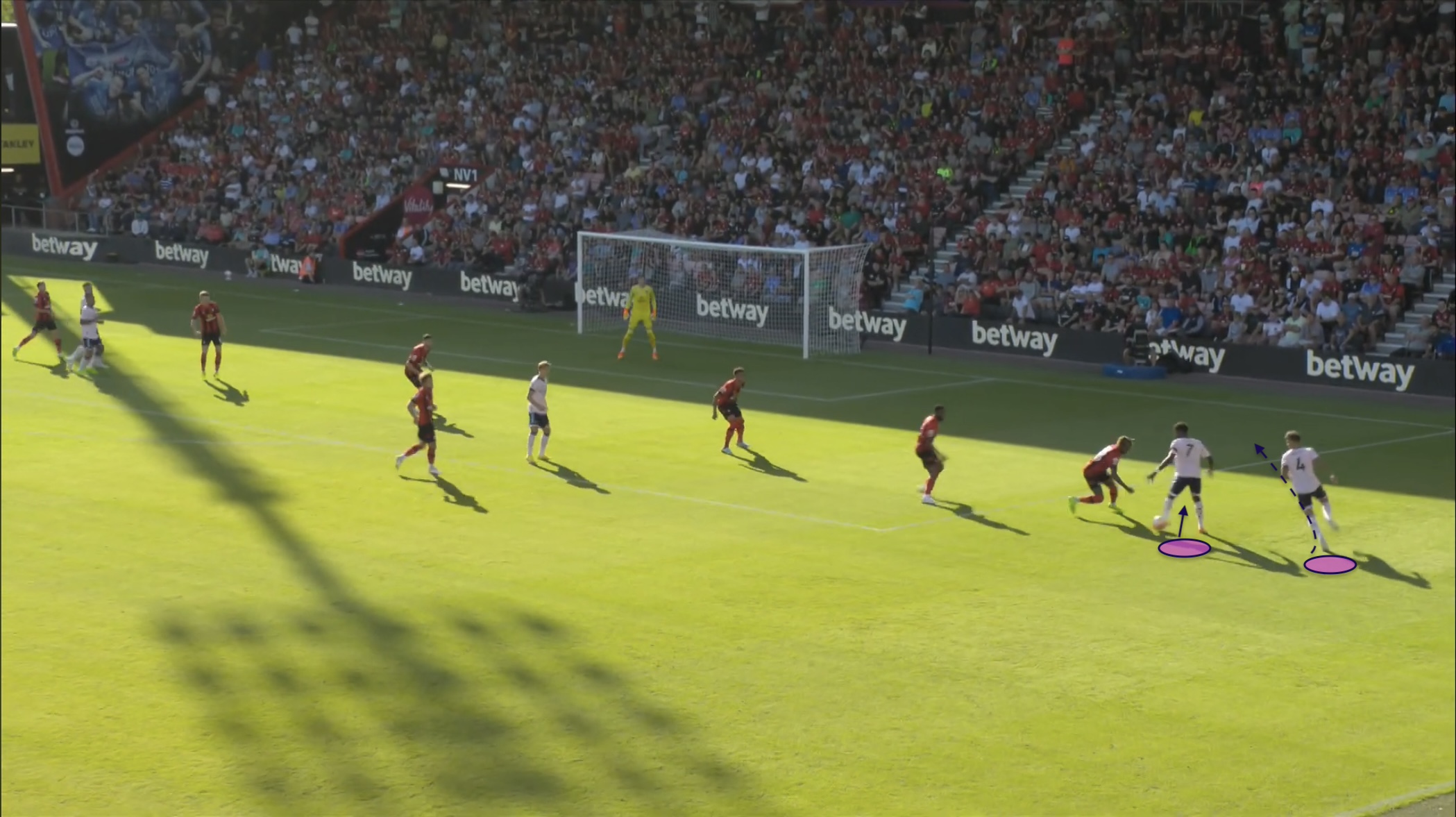
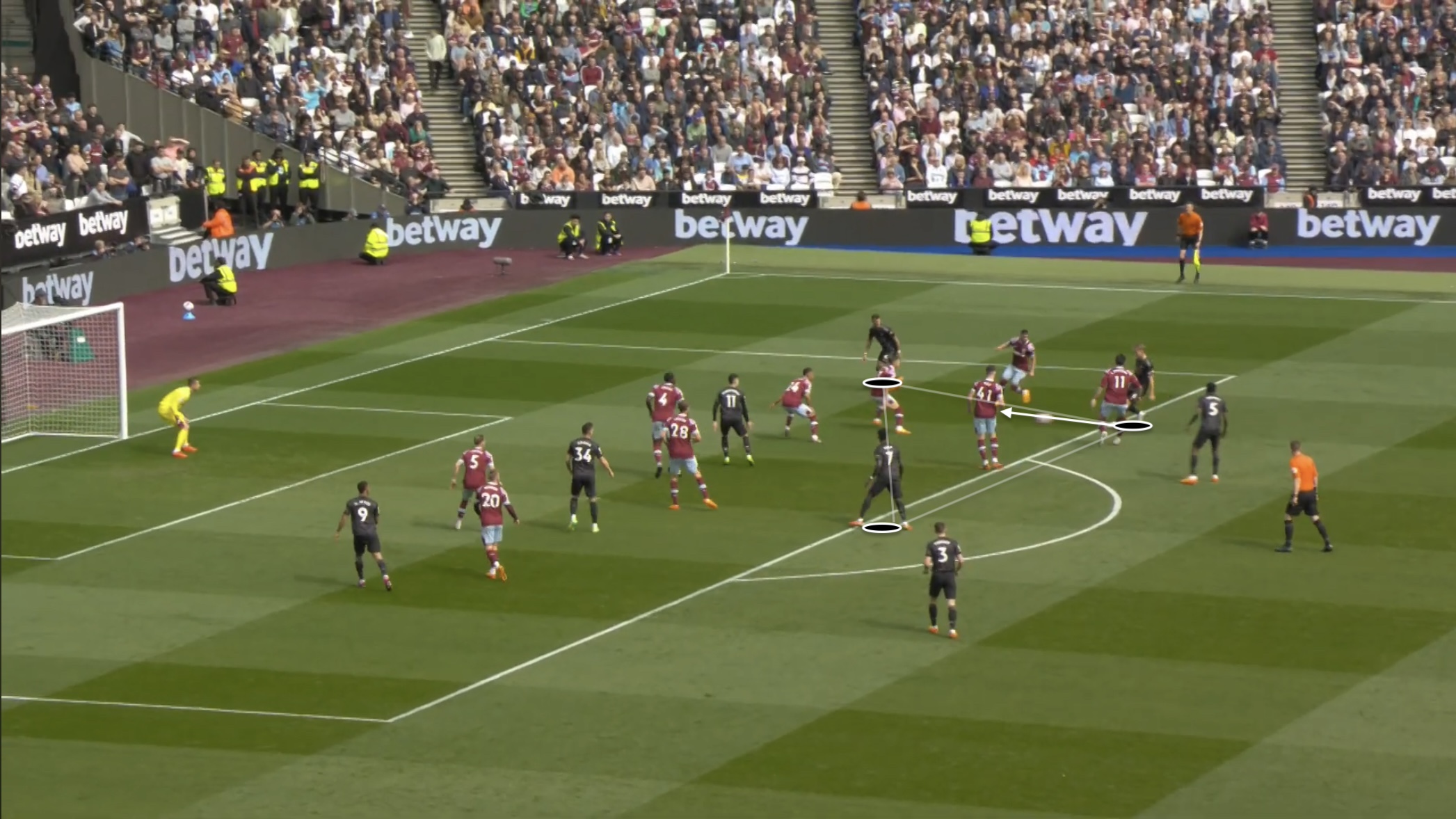
Ben White plays a pass with Saka and in Bielsa style overlap - he overlaps with crazy intensity into the space
Ben White plays a pass to Saka and overlaps with crazy intensity into the space.
That Saka - White connection - He receives the ball back from Saka in space and now all he has to do is deliver a cross into the box and find an Arsenal player
White receives the ball back from Saka in space, and now all he has to do is deliver a cross into the box and find an Arsenal player.
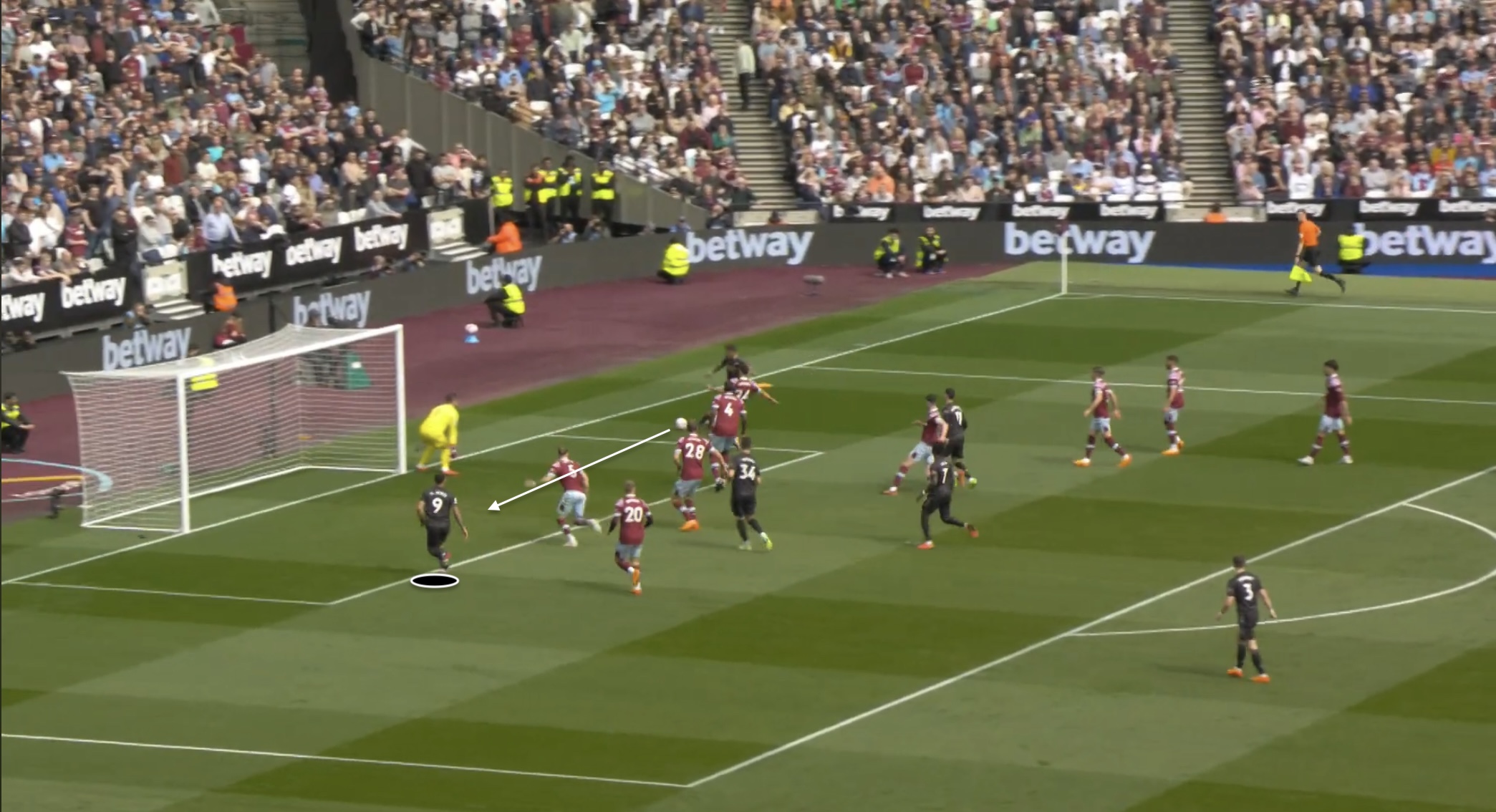
Of course he has it bang on the money as is Ben White's quality! He finds Xhaka and Arsenal executed a brilliantly worked goal but it all came from Ben White's Bielsa style intensity overlap!
Of course, he has it bang on the money, as is Ben White’s quality! He finds Xhaka and Arsenal executed a brilliantly worked goal, but it all came from Ben White’s Bielsa-style intense overlap!

Bielsa’s methods instilled an exceptional understanding of space, timing, and physical endurance, all traits that define White’s current game.

Under Mikel Arteta, he has harnessed that Bielsa intensity and channelled it into a more controlled, structured form of chaos, deepening his understanding of the full-back role.
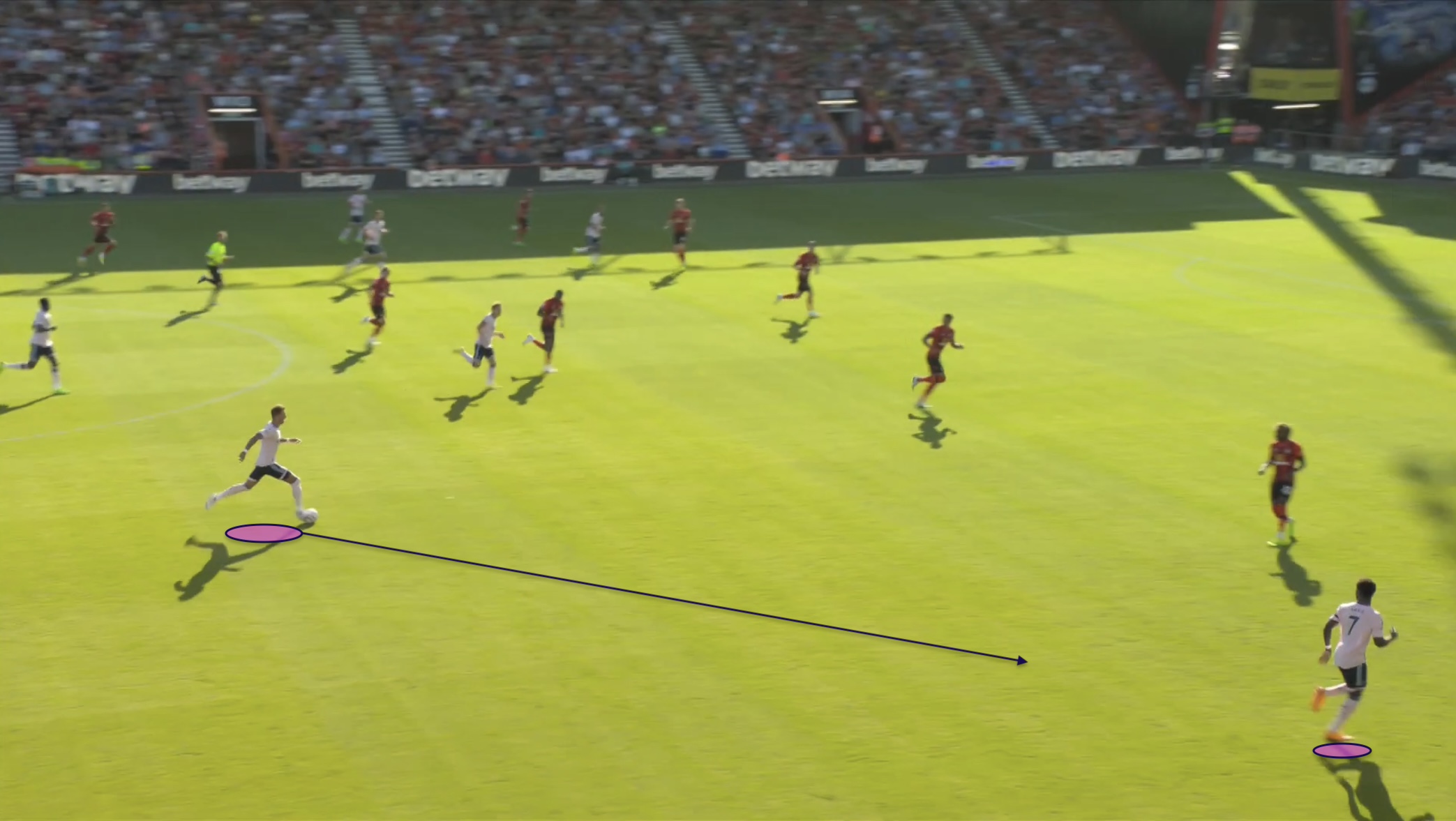
Ben White starts the attack and immediately drives into the space
Ben White starts the attack and immediately drives into the space.
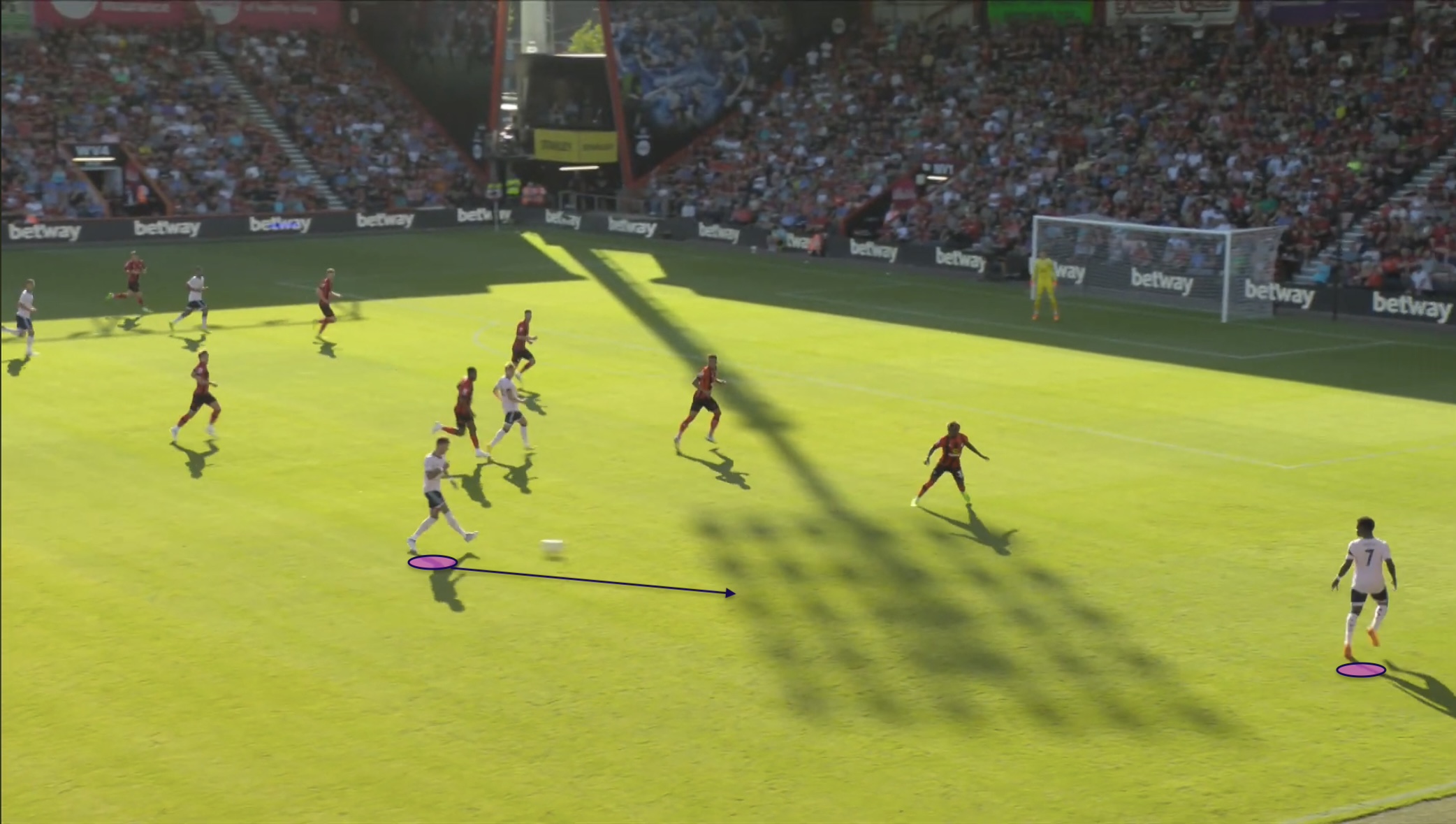
White plays it to Saka who has a 1v1 out wide
White plays it to Saka, who has a 1-v-1 out wide.
Ben White makes an intense lung-bursting overlap to give Saka options; he plays in White because the defender from Bournemouth doesn’t track White’s run.
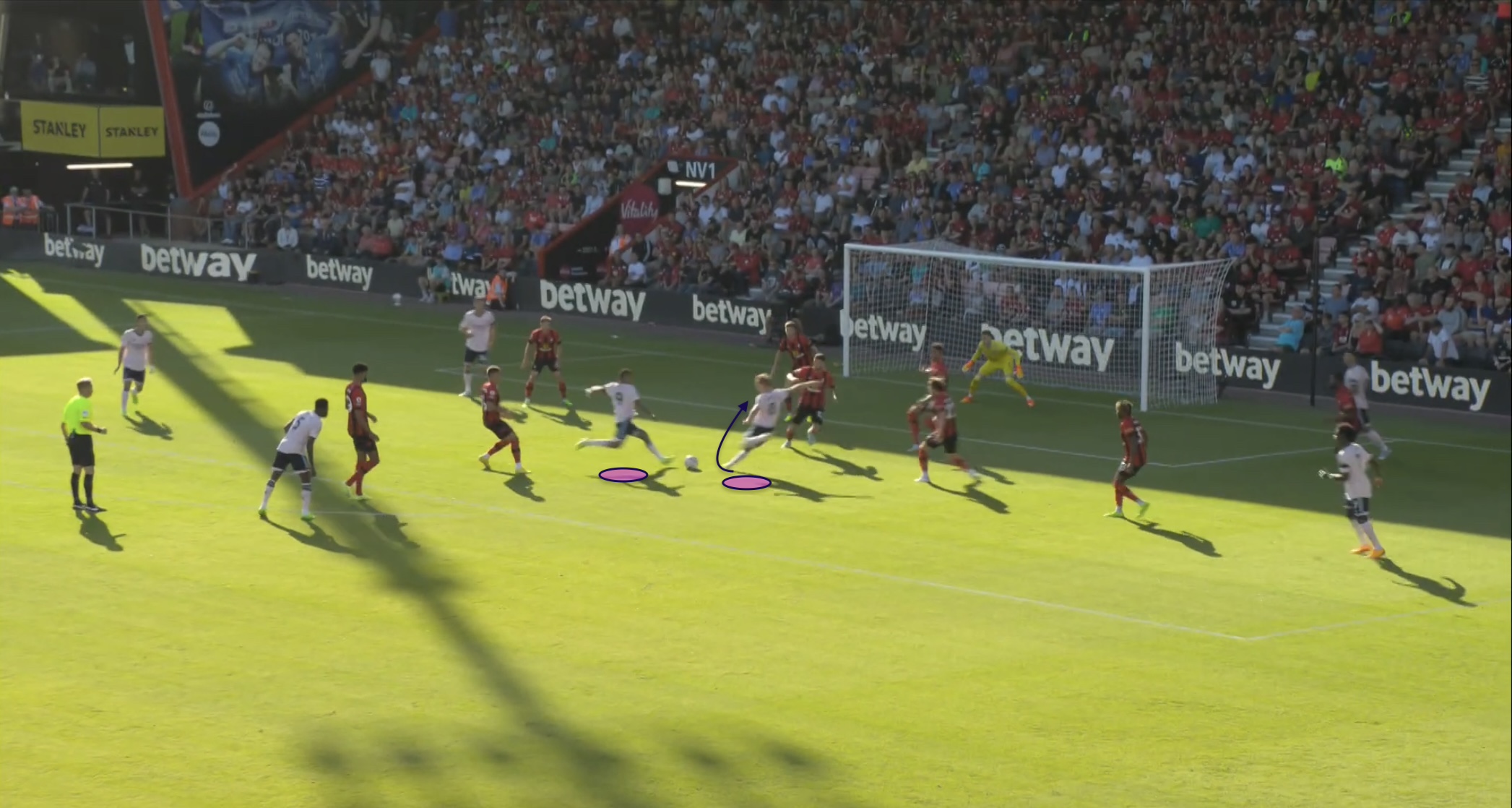
White, now by the byline, plays a cross into the box where Arsenal have a high number of bodies.
The ball falls to Martin Odegaard, who pulls the trigger and scores for Arsenal, but it all stems from Ben White’s intense overlap.

White has evolved into a hybrid full-back who is capable of tucking inside to support build-up or bombing forward to create overloads.

His intelligence, timing, and engine allow him to adapt between roles seamlessly.

However, what makes Ben White particularly valuable is how he complements Bukayo Saka.

Recreating Arsenal’s 2022/2023 Fluency

When thinking back to Arsenal’s most fluid attacking spell, the 2022/2023 campaign stands out.

During that season, the right flank trio of Ben White, Martin Ødegaard, and Bukayo Saka formed one of the most effective trios in Europe.
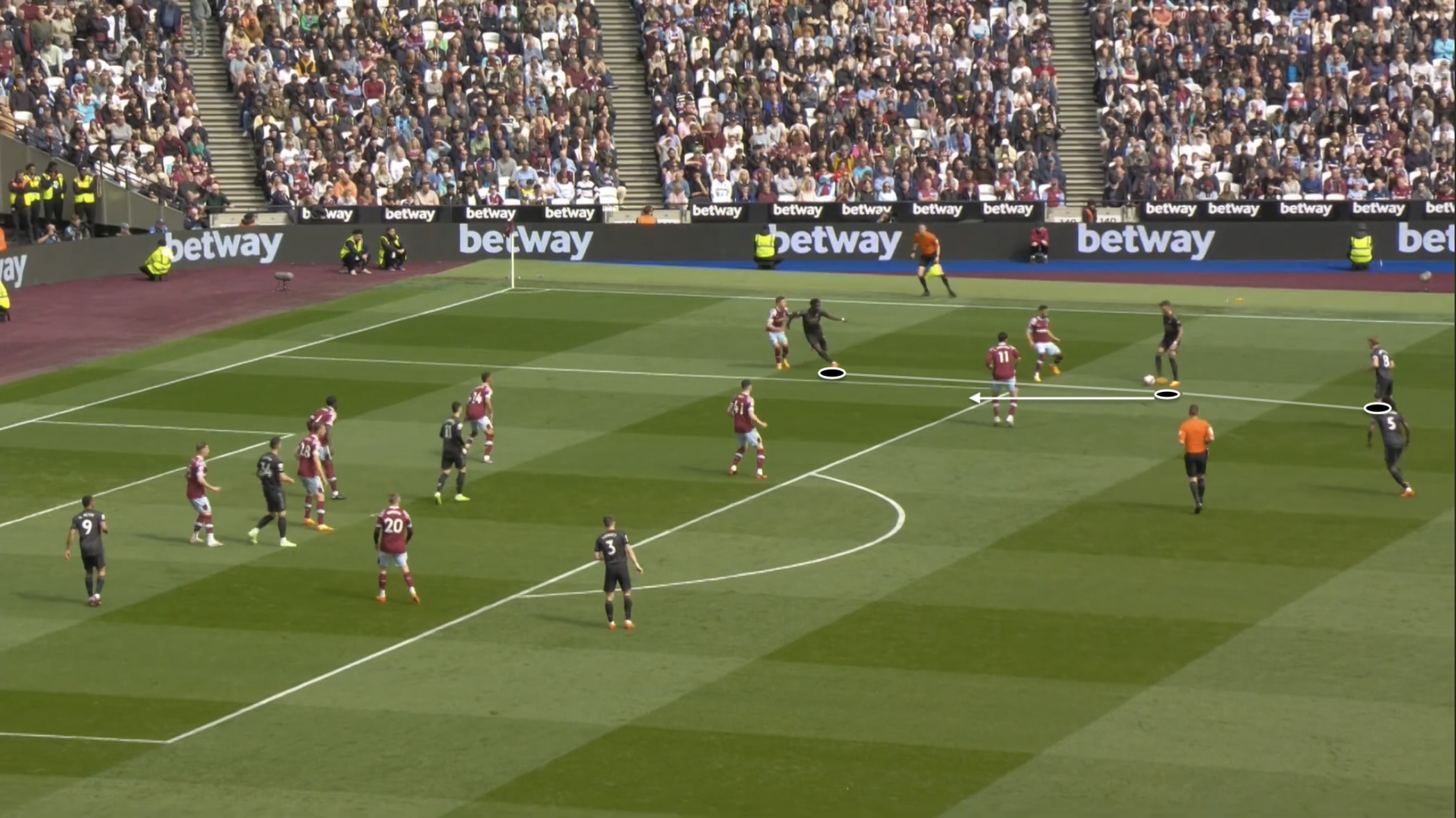
You can clearly see the White, Odegaard and Saka connection here! White assessing the picture, Odegaard like a quarterback behind him. Saka makes an inverted run but as the intensity of Ben White, he is looking got be positive and plays the forward pass to Saka rather than recycling.
You can clearly see the White, Odegaard and Saka connection here! White is assessing the picture, while Odegaard is like a quarterback behind him; Saka makes an inverted run, and as Ben White looks positive, he plays the forward pass to Saka rather than recycling.
Ben White plays that pass to Saka and Immediately overlaps looking for the return pass
Ben White plays that pass to Saka and immediately overlaps, looking for the return pass.
Saka plays that pass back to Odegaard who plays the ball into Ben White's path ! This trio synchronisation will become a them throughout the article
Saka plays that pass back to Odegaard, who plays the ball into Ben White’s path! This trio synchronisation will become a theme throughout the article.
Ben White pays a pass to Jesus to finish off the move ! A beautiful worked goals and all came from White intense overlap
Ben White pays a pass to Jesus to finish off a beautifully worked goal that all came from White’s intense overlap.

Their rotations, one-touch combinations, and timing were almost telepathic.

Every time Saka received possession, he had multiple layers of support.

Ben White would provide intense overlapping or underlapping runs, forcing defenders to make uncomfortable choices.
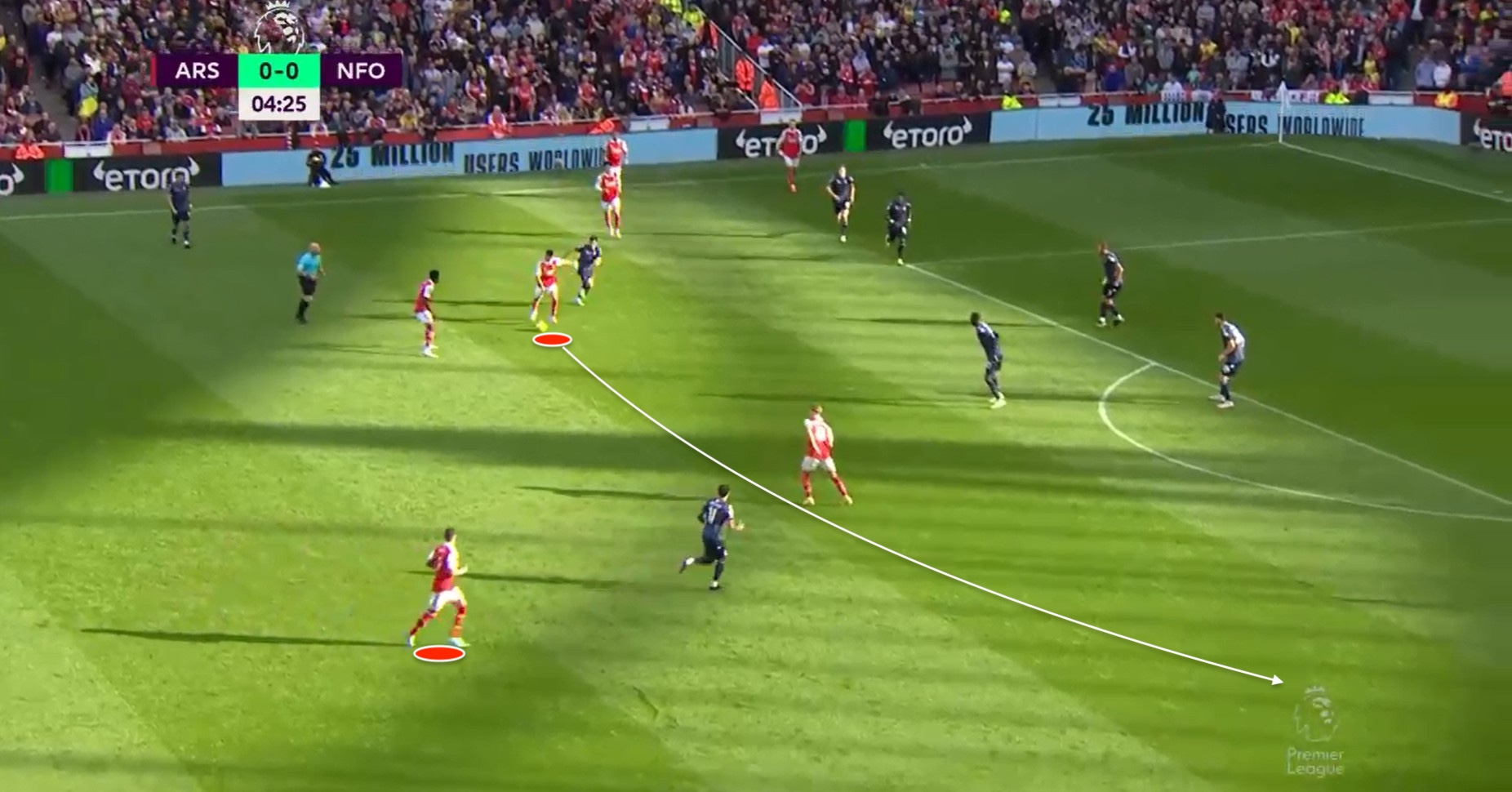
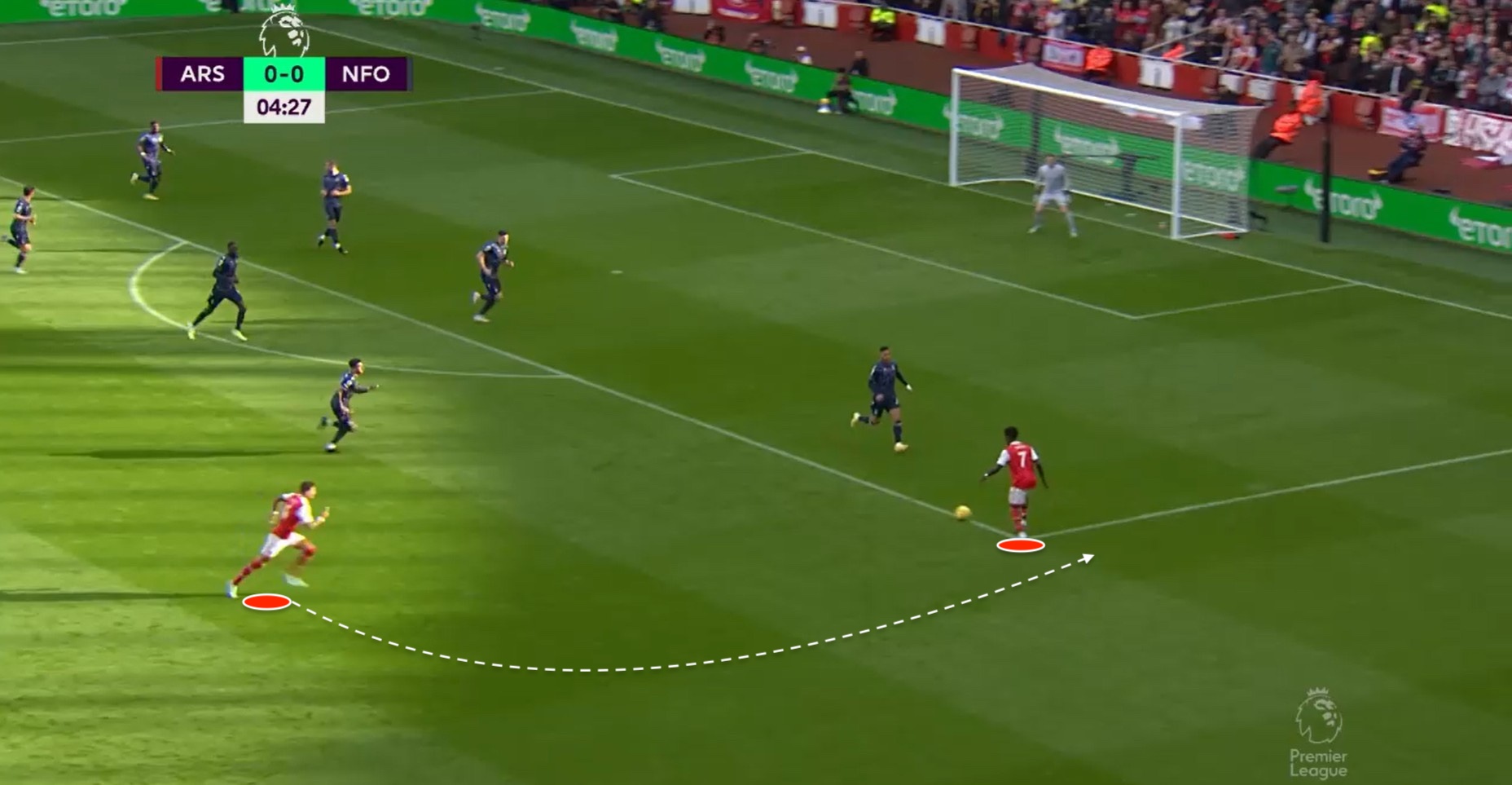
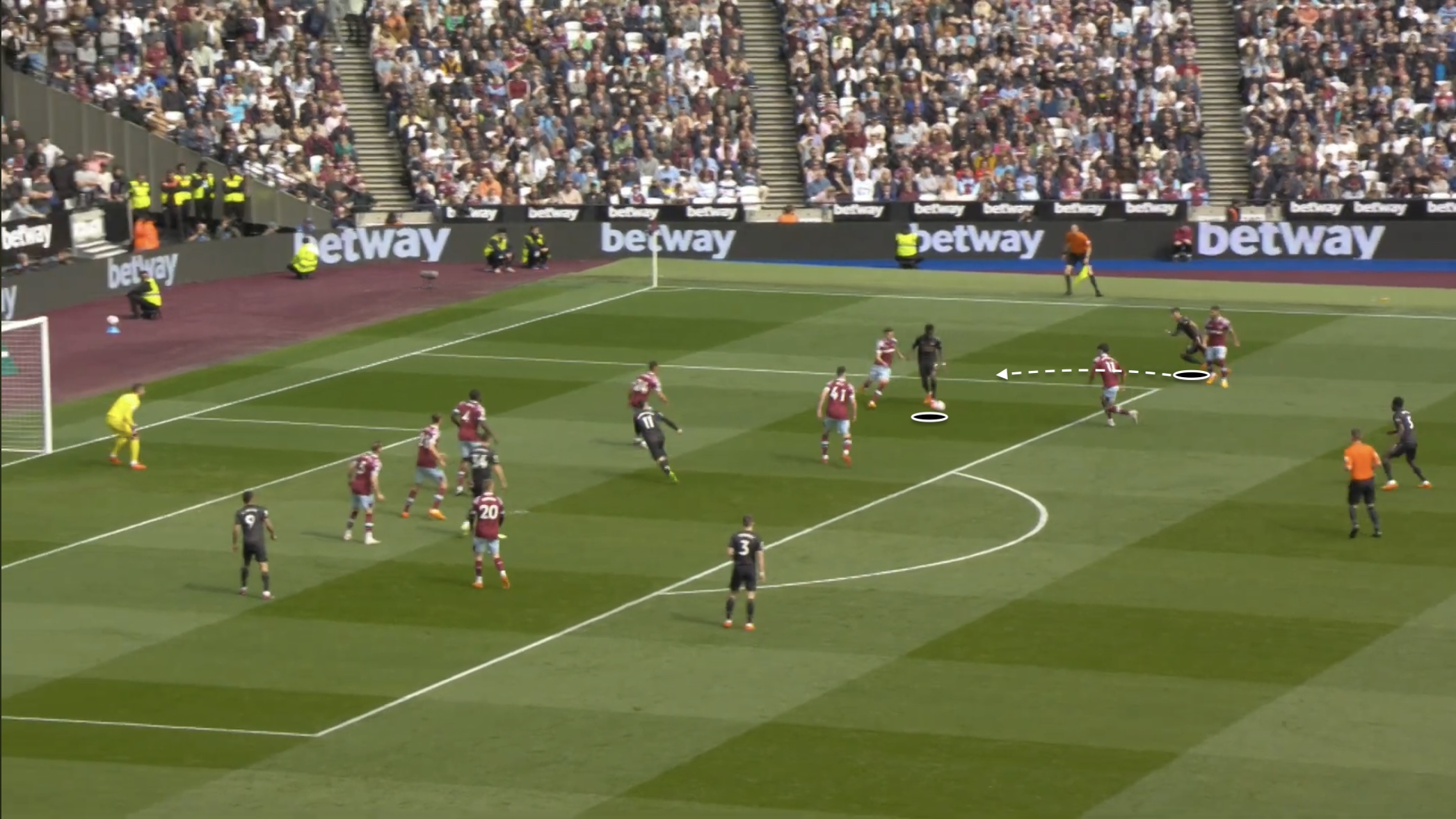
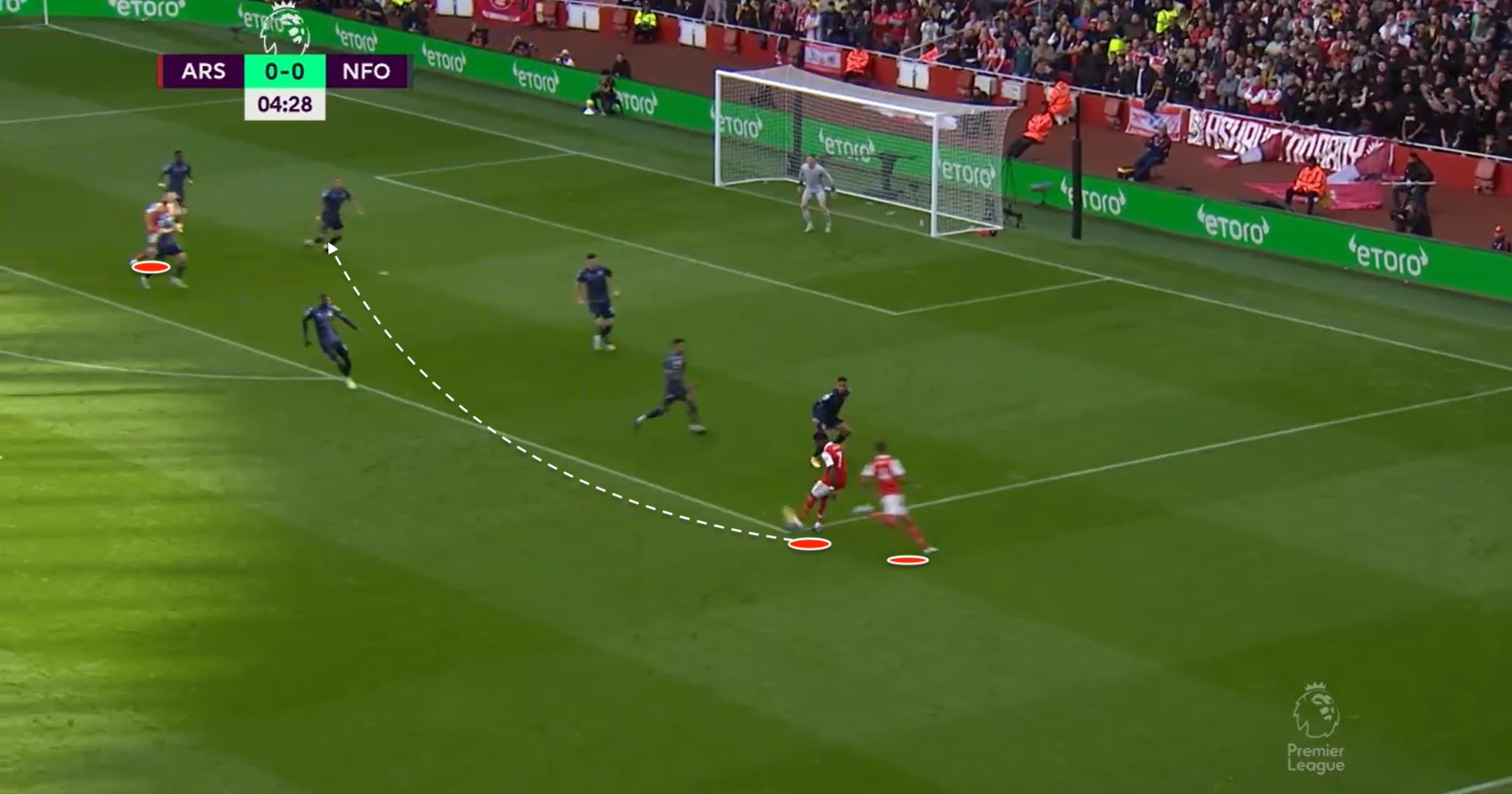
Arsenal switch the play to Saka - White immediately begins his overlap for Saka
Arsenal switch the play to Saka; White immediately begins his overlap for Saka.
Saka has a 1v1 match up - Ben White overlapping so Saka can create separation
Saka has a 1-v-1 match-up, Ben White is overlapping, so Saka can create separation.
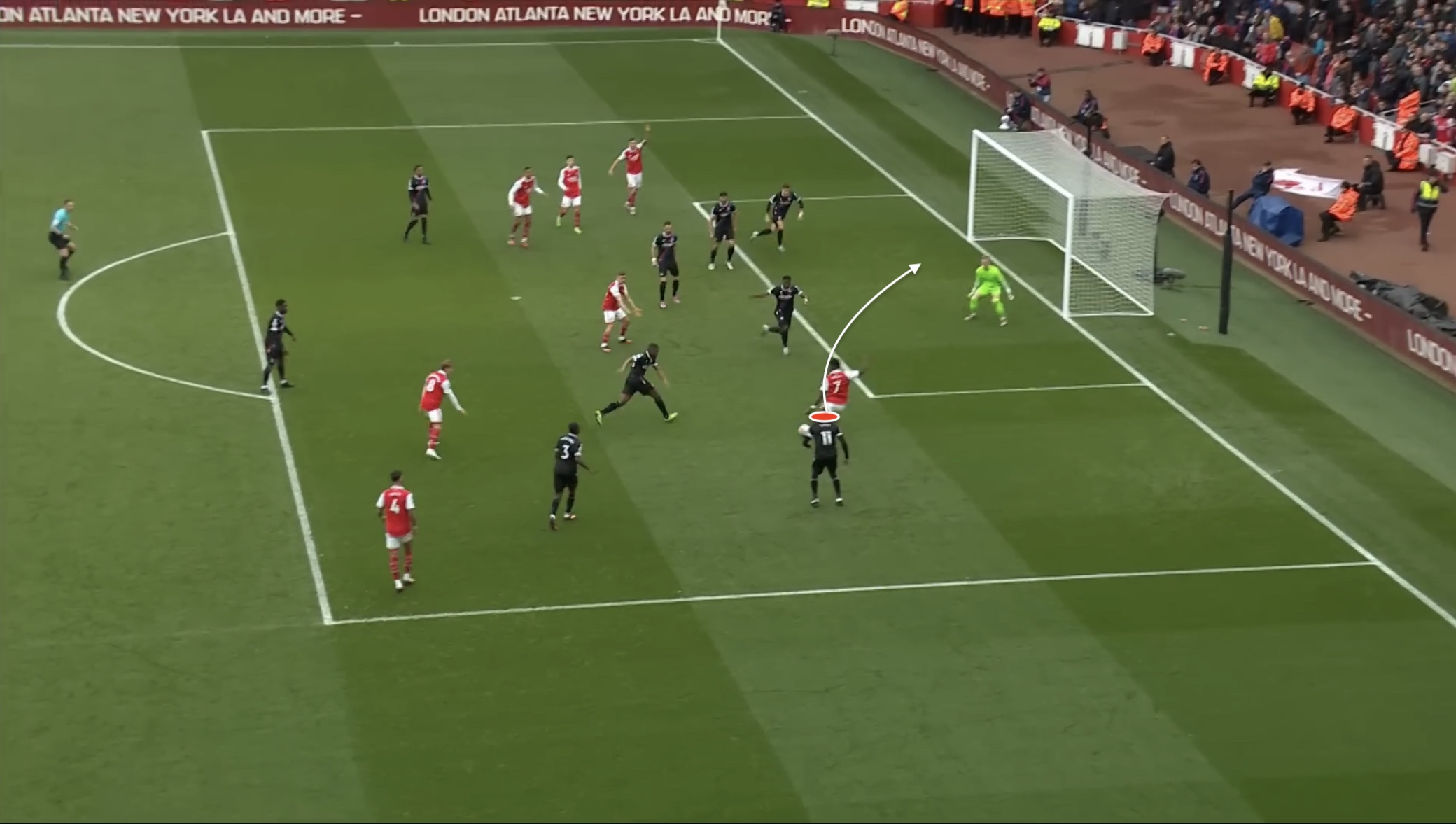
Whites overlap creates options for Saka , 1- He can use White's momentum to create separation for himself to cut back to his left foot as the Forest defender goes with White, If the defender doesnt follw WHite he can in White. Saka chooses the former but it allows Saka to create separation easily to get the cross in for the goal
Ben White’s overlap creates options for Saka; he can use White’s momentum to create separation, allowing him to cut back to his left foot as the Forest defender follows White, or if the defender doesn’t follow White, he can play in White. Saka chooses the former, but it allows Saka to create separation easily to get the cross in for the goal.

Ødegaard operated between the lines, exploiting the pockets of space those movements created.

Crucially, White and Saka were never on the same line.

Ben White’s passes to Saka were angled and deliberate, allowing the winger to receive on the half-turn, facing goal rather than being forced backwards.
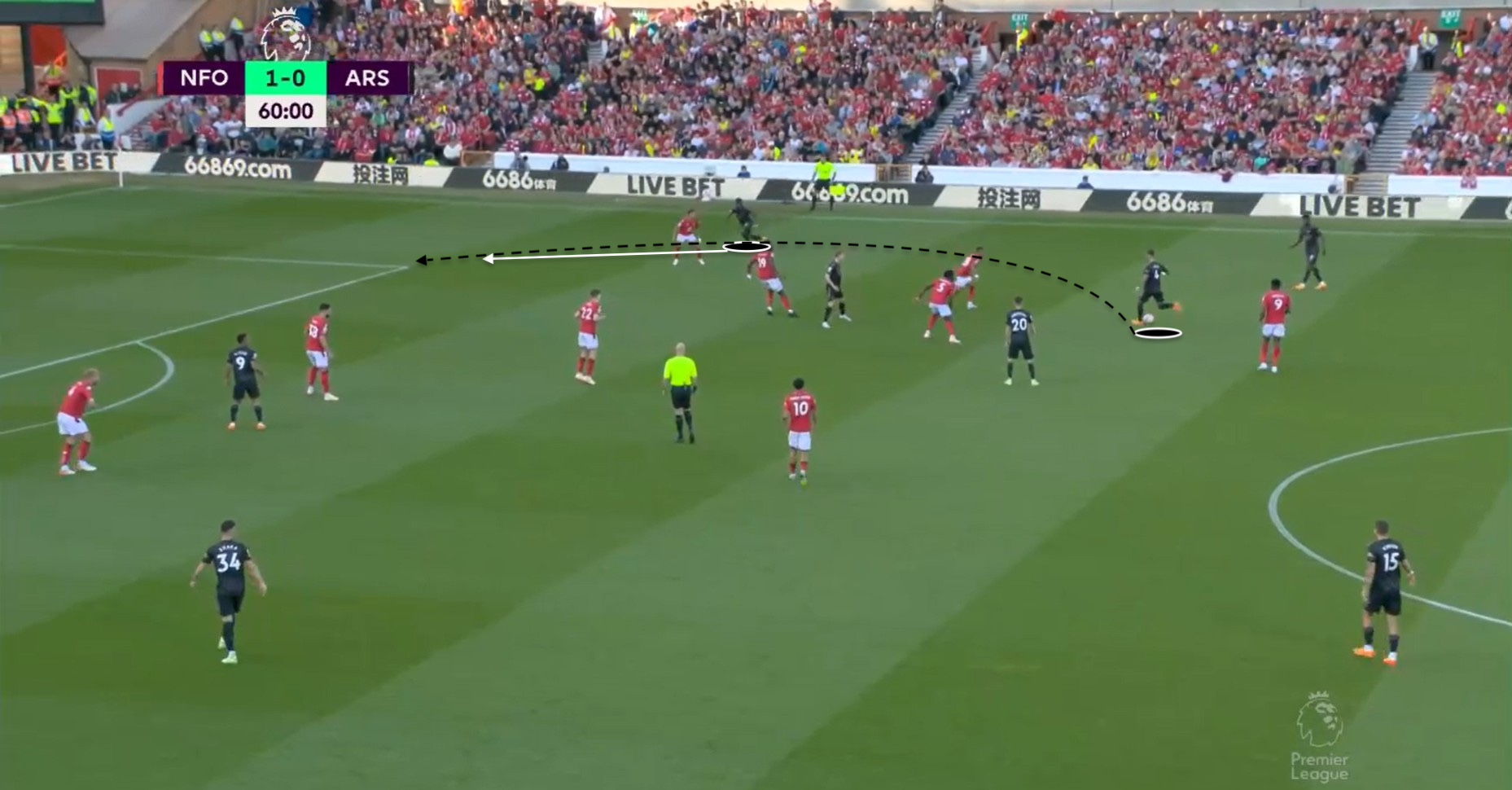
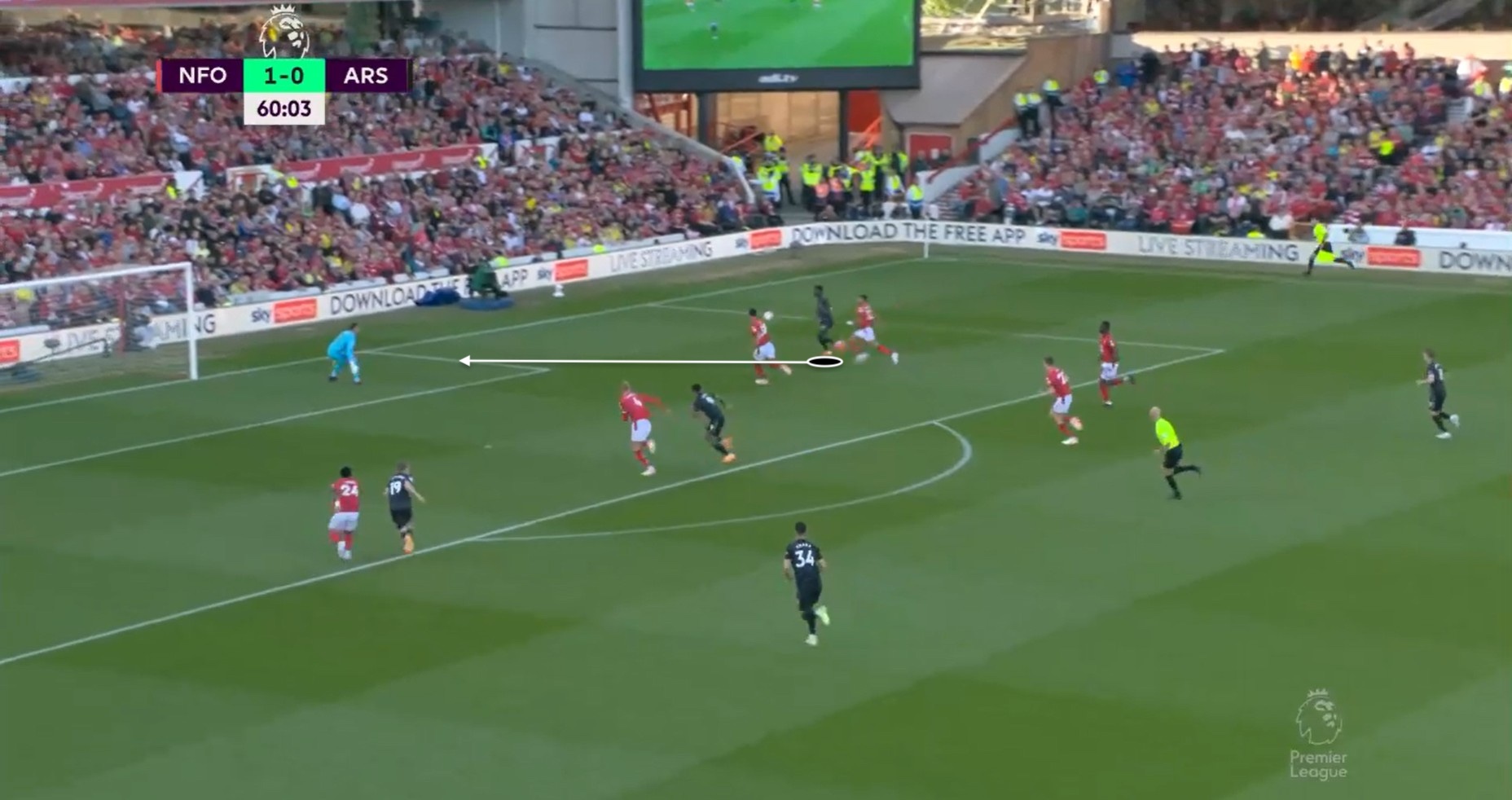
White operating in the deep half pace whilst Saka is making an out to in angled run in behind.
Ben White is operating at the deep half-space, while Saka is making an out-to-in, angled run behind.
White plays a perfectly weighted pass for Saka who has a big chance
White plays a perfectly weighted pass for Saka, who has a big chance.

This detail made it incredibly hard for Arsenal’s right side to defend as the full-back had to respect White’s overlap.

In contrast, the wide midfielder had to track Saka’s inward movement, creating constant indecision.
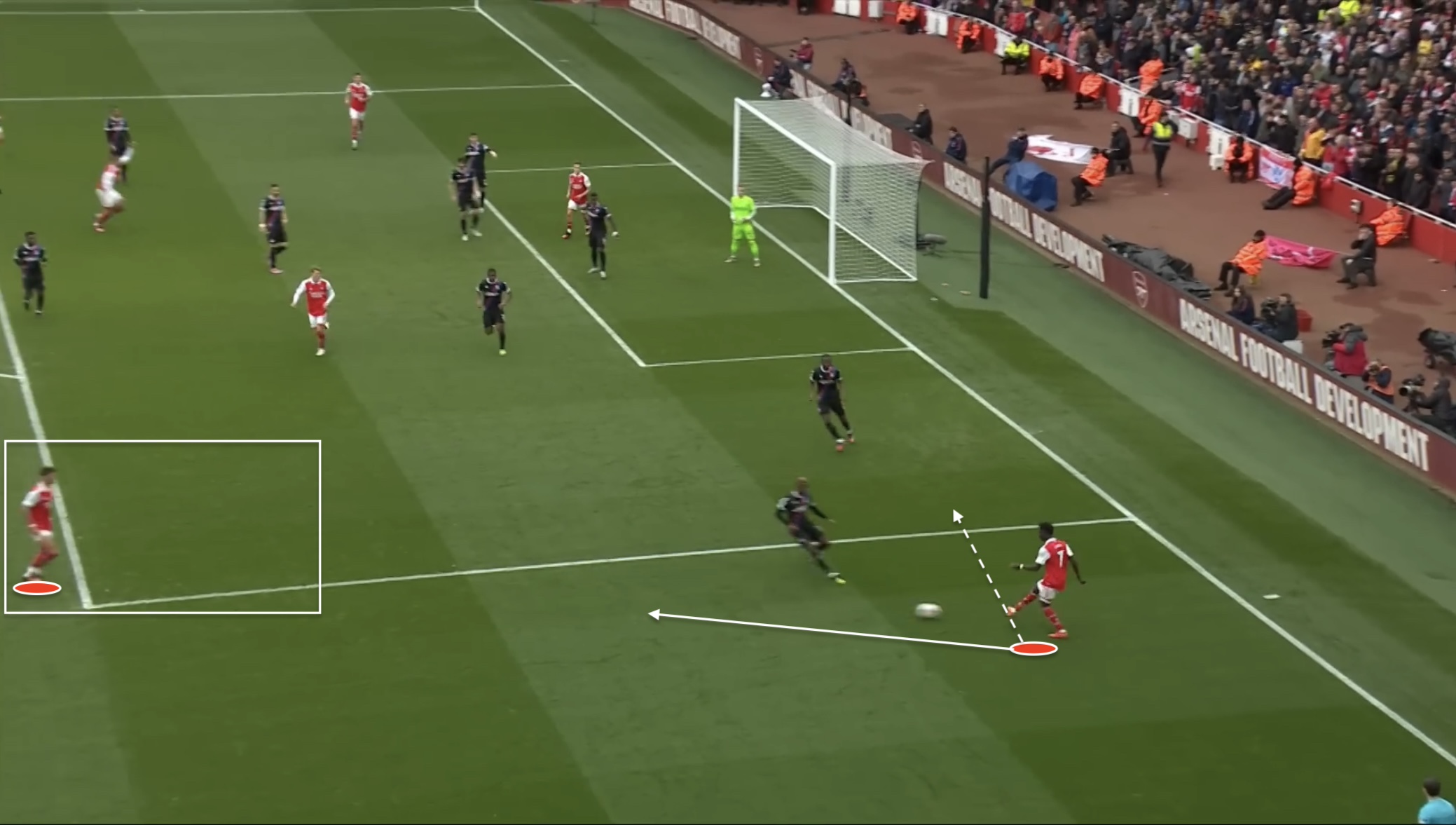
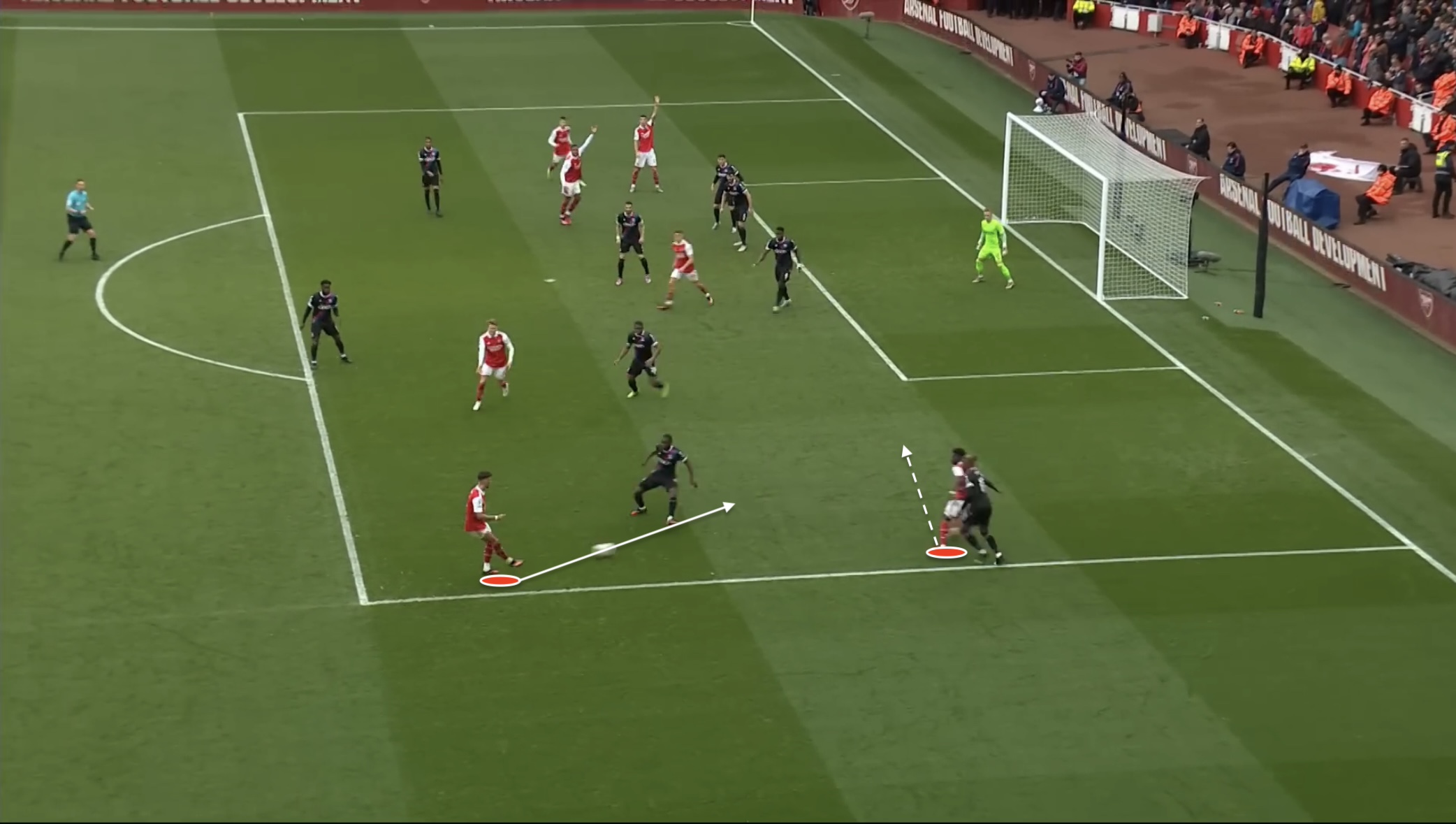
Saka plays a a pass to Ben White in the half-space and immediately goes for the return pass
Saka plays a pass to Ben White in the half-space and immediately goes for the return pass.
White plays a perfectly weighted pass back to Saka directly into his path
White plays a perfectly weighted pass back to Saka directly into his path.
Saka finishes expertly into the bottom corner
Saka finishes expertly into the bottom corner.

That partnership has been disrupted in the last couple of seasons, partly due to injuries and the integration of Jurriën Timber, whose natural tendencies differ significantly.

Jurriën Timber Vs Ben White: Two Elite Profiles, One Key Difference

Jurriën Timber, a product of Ajax’s academy, developed primarily as a centre-back under Erik ten Hag.

His qualities include press resistance, composure under pressure, and efficient circulation, making him an outstanding modern defender.

However, his centre-back background shapes his instincts: he’s more of a circulatory full-back, comfortable recycling possession rather than breaking lines through off-the-ball movement.

White, by contrast, thrives on verticality and intensity.

His overlaps are not just functional, they’re purposeful.

Every run he makes demands attention, even when he doesn’t receive the ball.

The defender marking him has to react because the threat is real.

This commitment creates the milliseconds of hesitation that elite wingers like Saka exploit.
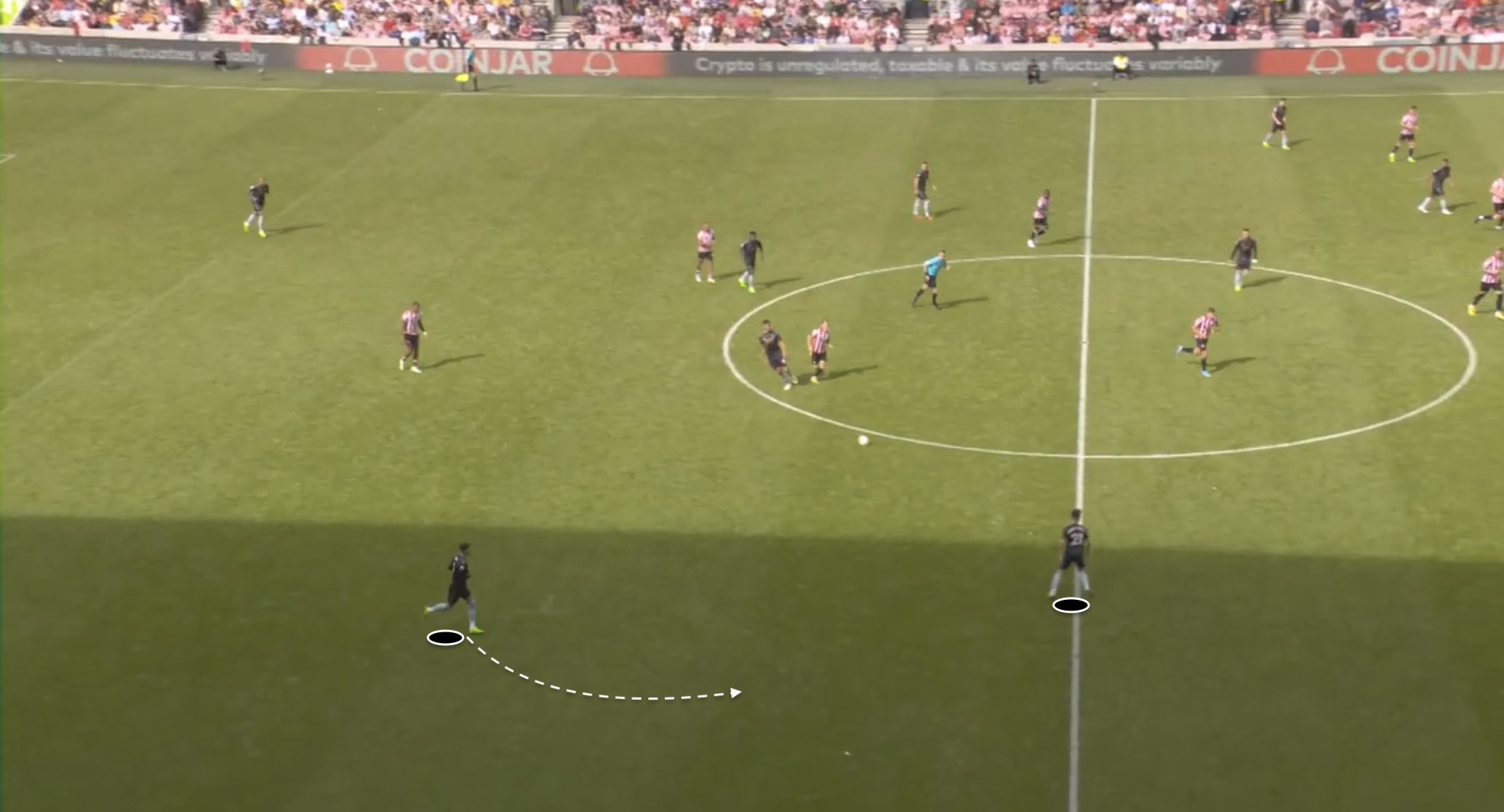
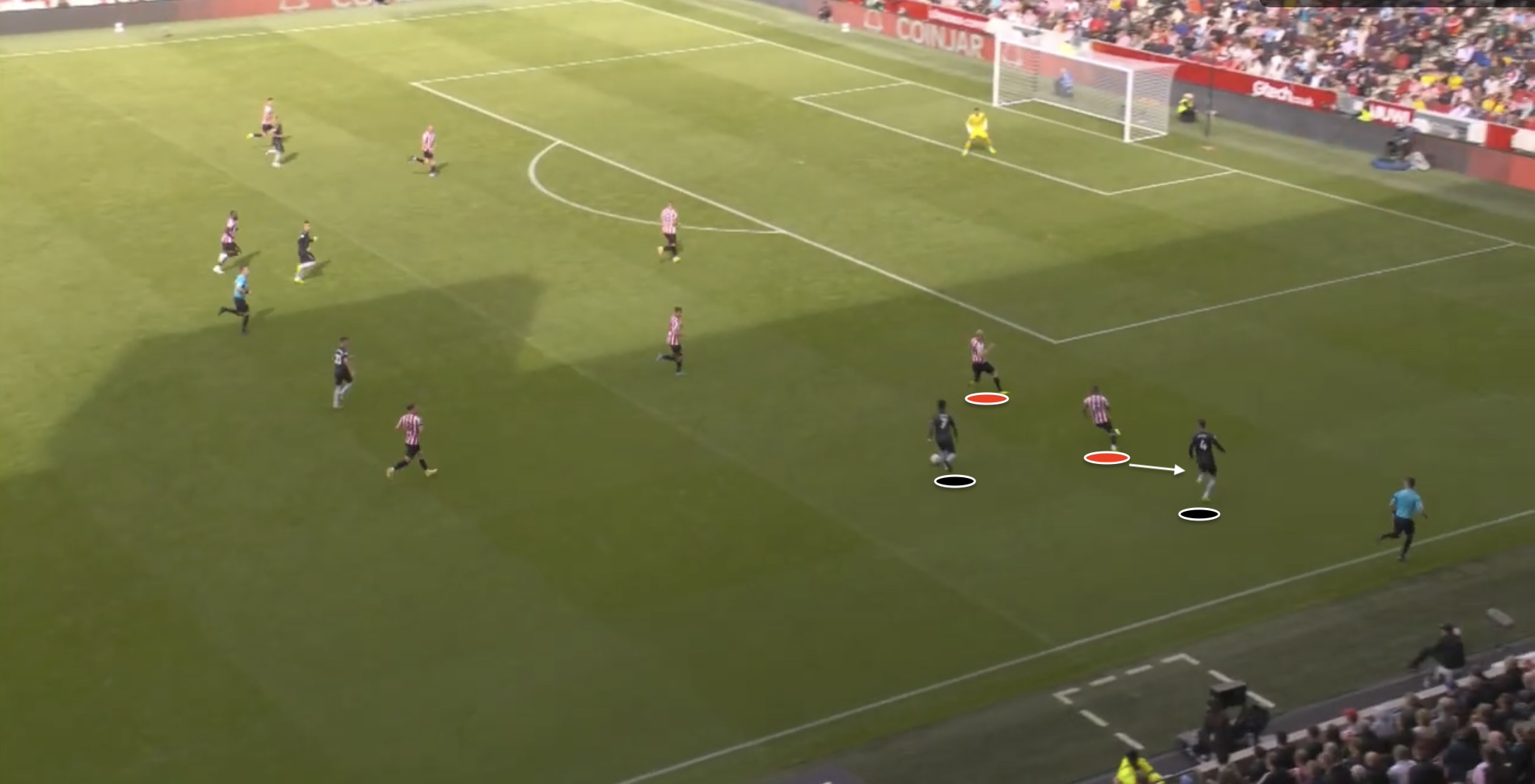
Viera taking up the position of Odegaard here receives it in midfield - Ben White in usual Ben White fashion is straight away preparing for an overlap
Fábio Viera, taking up the position of Odegaard, receives it in midfield. Ben White, in his usual Ben White fashion, is straight away preparing for an overlap.
As soon as the ball reaches Saka , Brentford defenders are concerned because Ben White intense overlap is forcing them backwards
As soon as the ball reaches Saka, Brentford defenders are concerned because Ben White’s intense overlap is forcing them backwards.
Ben White's overlap takes the attention of the Brentford defenders - Now Saka has separation on his left foot and whole host of options opening up
Ben White’s overlap takes the attention of the Brentford defenders. Now, Saka has separation on his left foot, and a whole host of options are opening up.
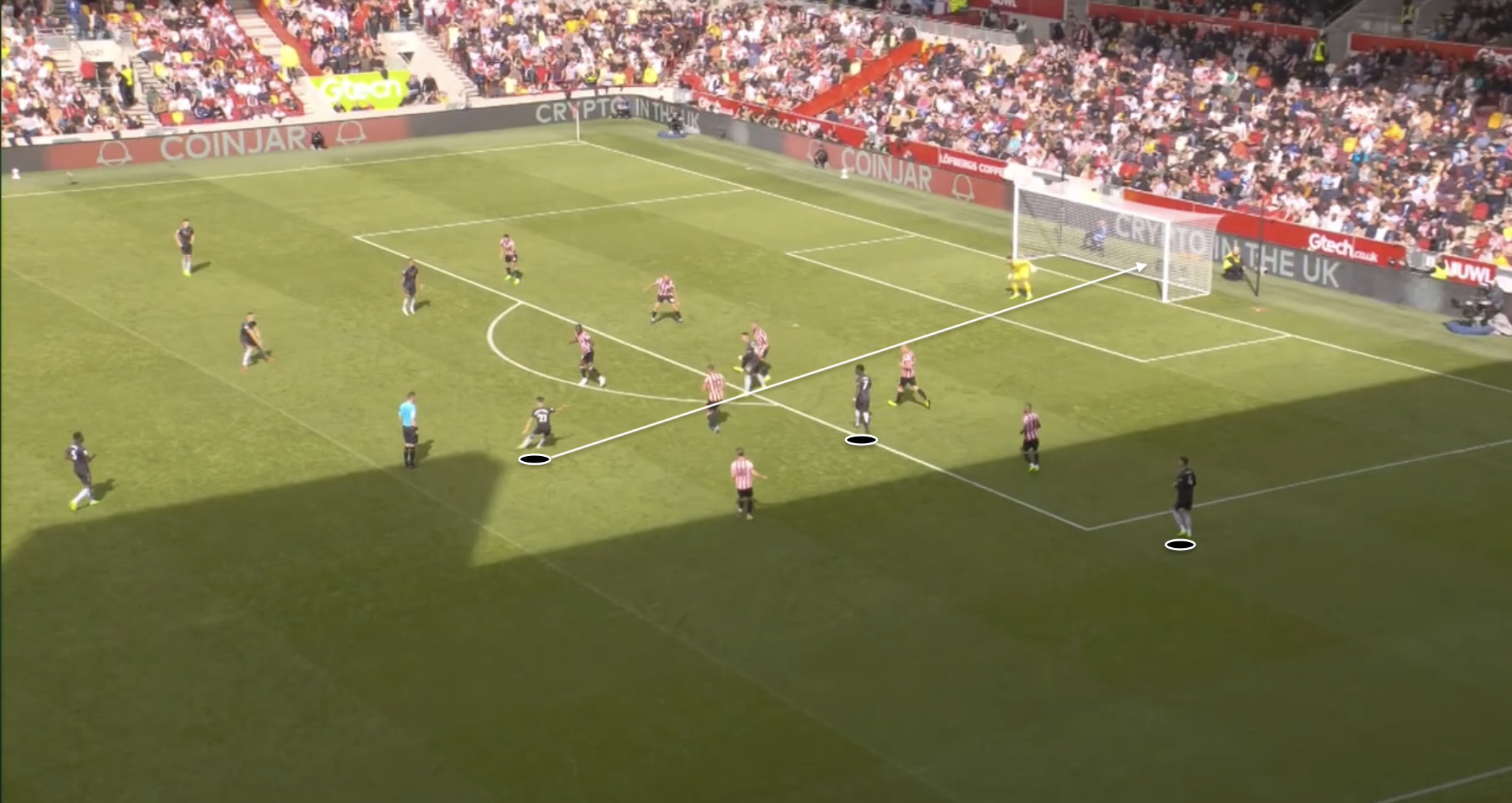
Saka plays the pass to Viera who scores an incredible goal from distance !
Saka plays the pass to Viera, who scores an incredible goal from distance!

It’s not that Timber can’t overlap or underlap; he can, but it doesn’t come as naturally to him.

White’s overlaps are driven by instinct, rhythm, and understanding.

He knows exactly when to go, how to angle his run, and how to disguise his intentions.

This dynamic was crucial to Arsenal’s best attacking performances in the 2022/2023 season.

It didn’t always show up in assists or goals for White himself.

Still, it consistently enhanced Saka’s influence, allowing him to isolate defenders, create separation, and deliver higher-quality crosses into the box.

The Knock-On Effect: Unlocking Saka & Ødegaard

Reintroducing Ben White into these attacking sequences does more than help Saka; it reshapes the entire attacking network.

When Saka receives more 1-v-1 opportunities due to White’s overlapping threat, Arsenal’s strikers, such as Kai Havertz or Viktor Gyökeres, benefit from improved service.

The volume and quality of Saka’s deliveries increase, leading to more predictable crossing zones for centre-forwards to attack.

At the same time, Ødegaard’s rhythm improves.

During the 2022/2023 season, White’s overlaps often created a three-man chain: White to Saka, Saka into Ødegaard, Ødegaard back to White.

Those patterns opened up central spaces for Ødegaard to dictate play or arrive late into scoring positions.
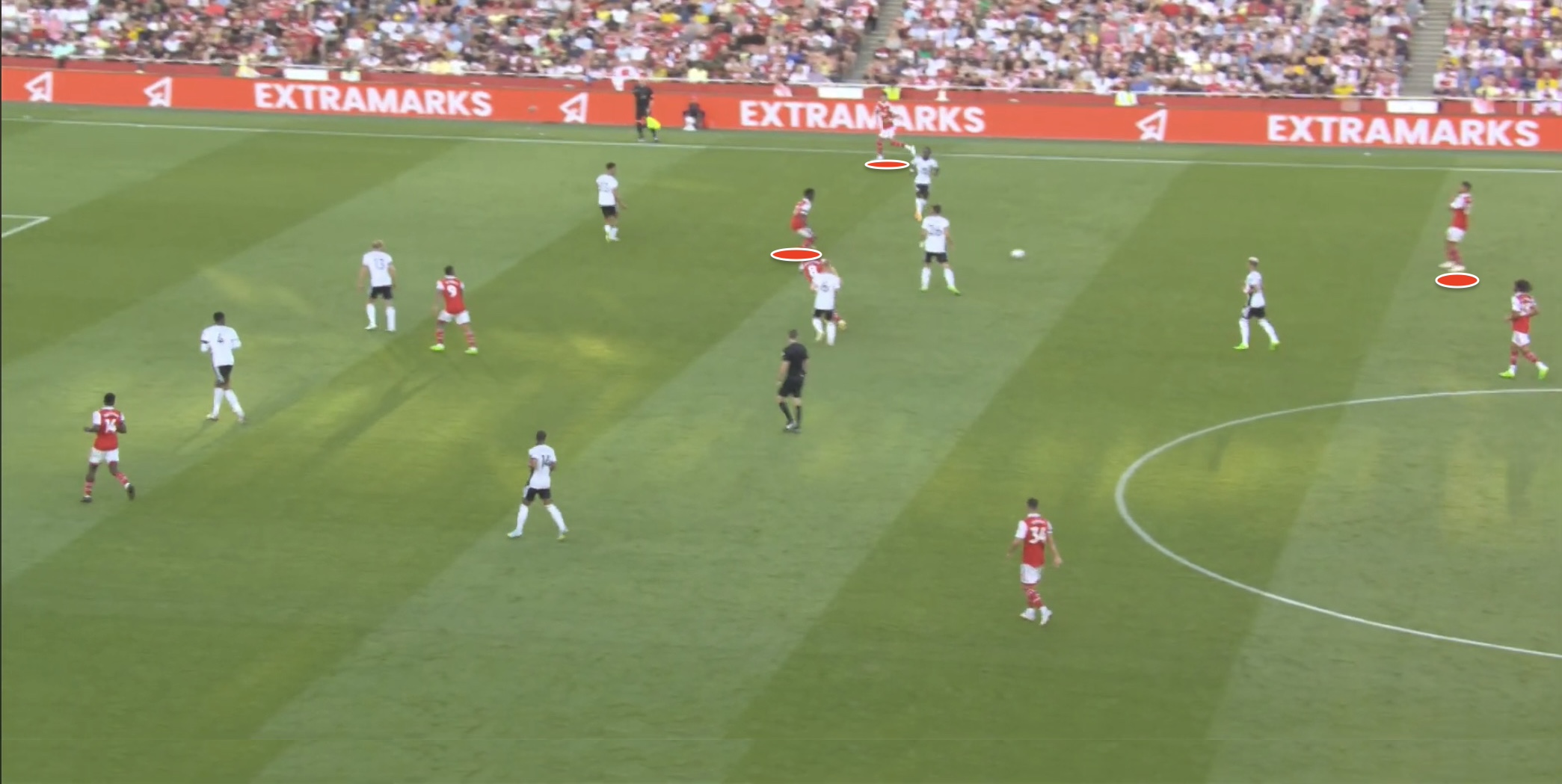
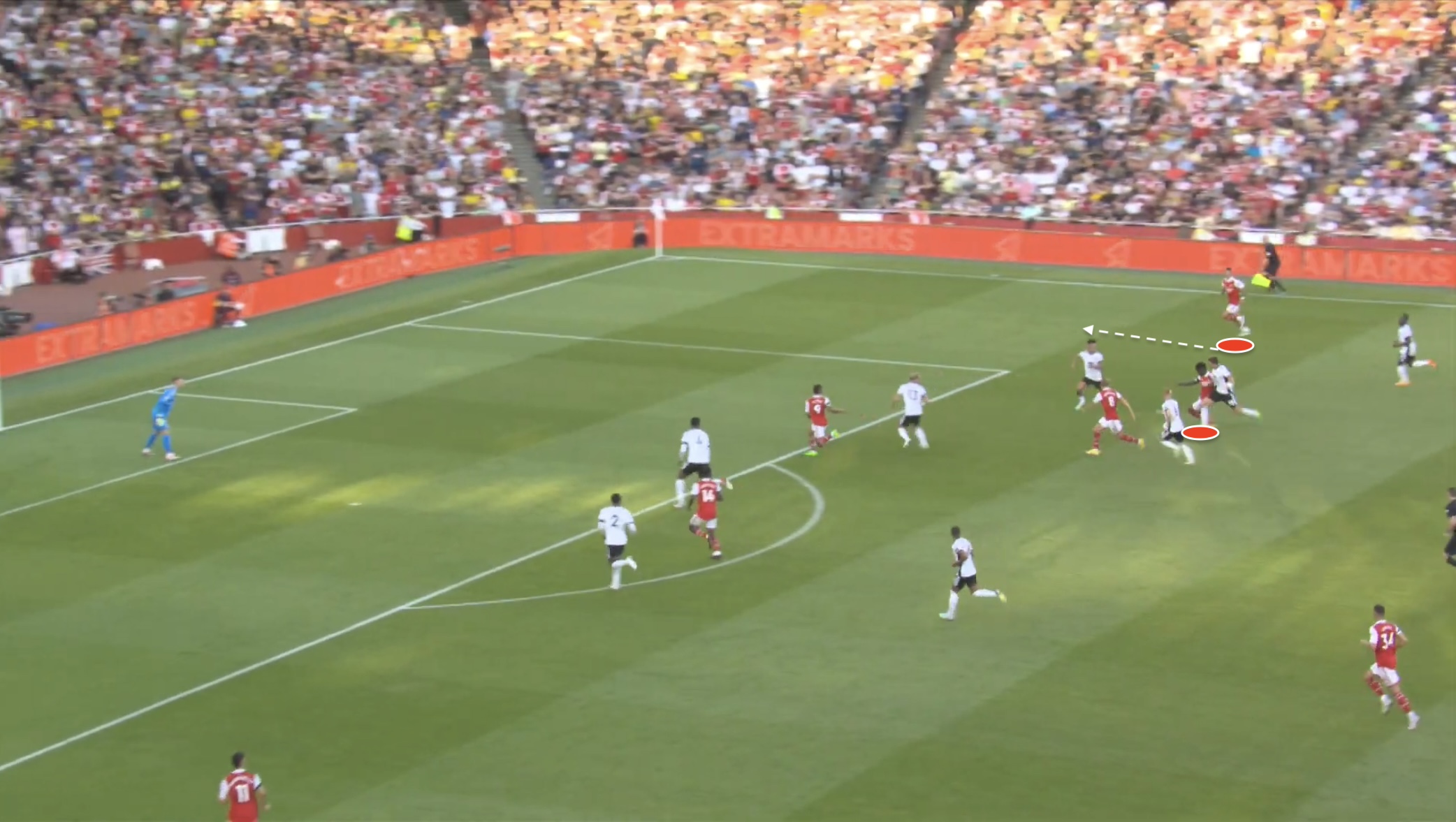
The rotations between Saka and White - White now plays high and wide and allows Saka to invert and receive into the half space
The rotations between Saka and White: White now plays high and wide, allowing Saka to invert and receive into the half-space.
By White being high and wide - it makes the opposing full back have to respect that threat which leaves Saka with more time and space in the pocket
White’s high and wide positioning makes the opposing full-back respect that threat, which leaves Saka with more time and space in the pocket.
These three man rotations allows Odegaard to get the ball at the edge of box with the whole goal to aim at
These three-man rotations allow Odegaard to get the ball at the edge of the box with the whole goal to aim at.

Without that dynamic right-sided triangle, Arsenal’s current attacks often feel slower and more methodical.

Additionally, White’s intense overlaps and operating high and wide enable Saka to invert and get closer to the goal, much like Mo Salah, for example.

Currently, Saka receives the ball with multiple defenders and bodies in front of him out on the wing.

Reverting to these 2022/2023 rotations, Saka can get closer to goal and increase his goal output while reducing the carrying load he currently has isolated on the wing.
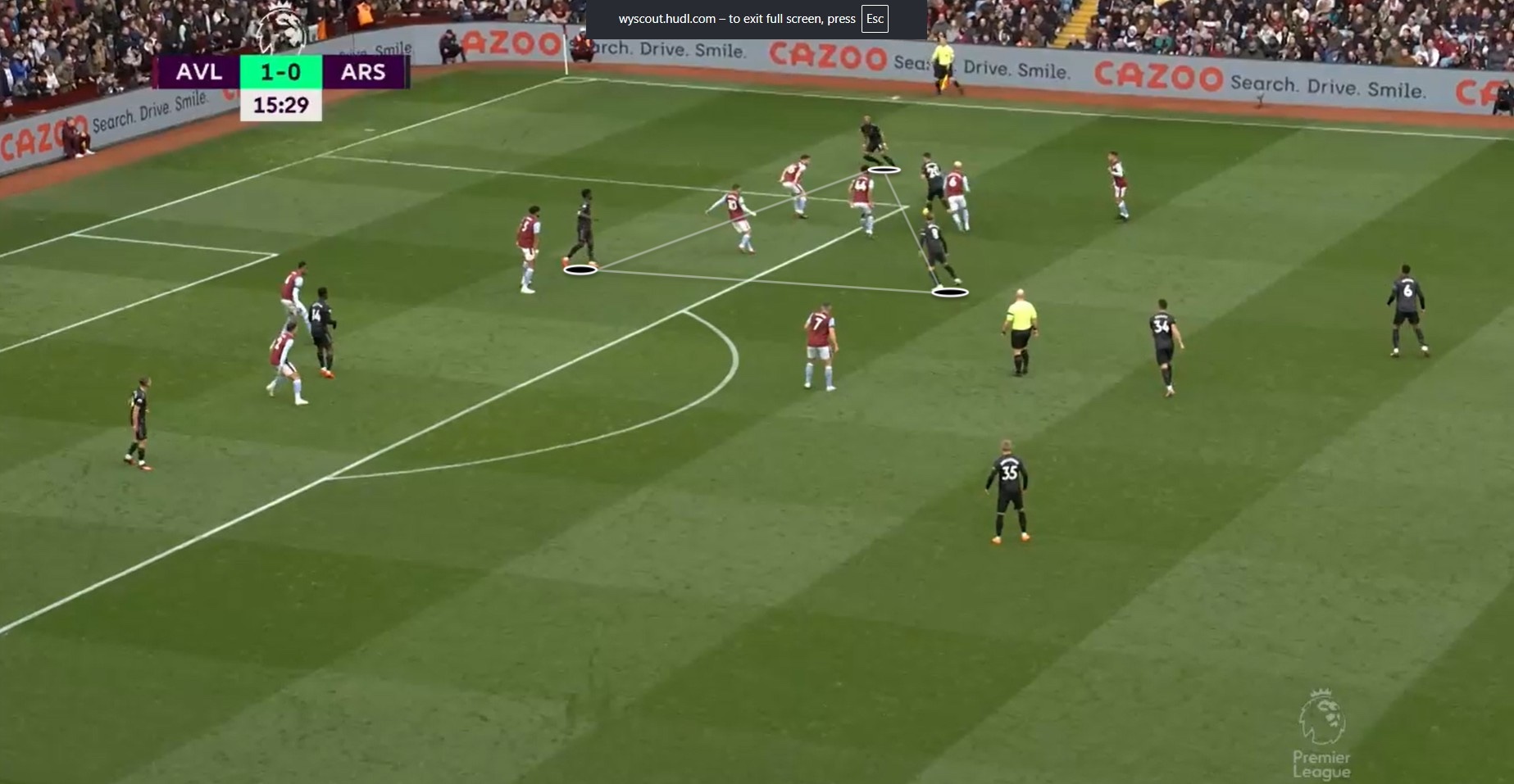
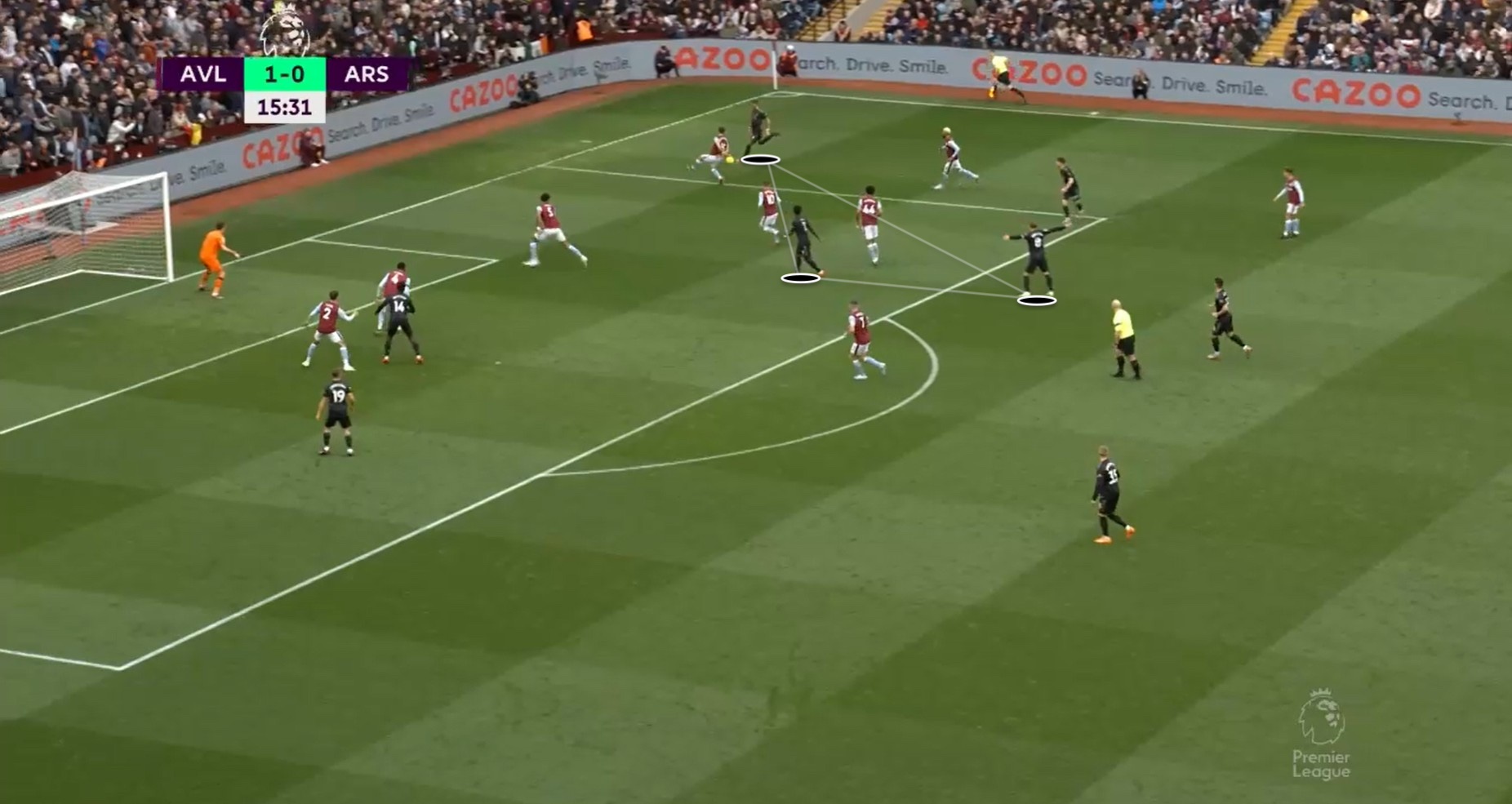
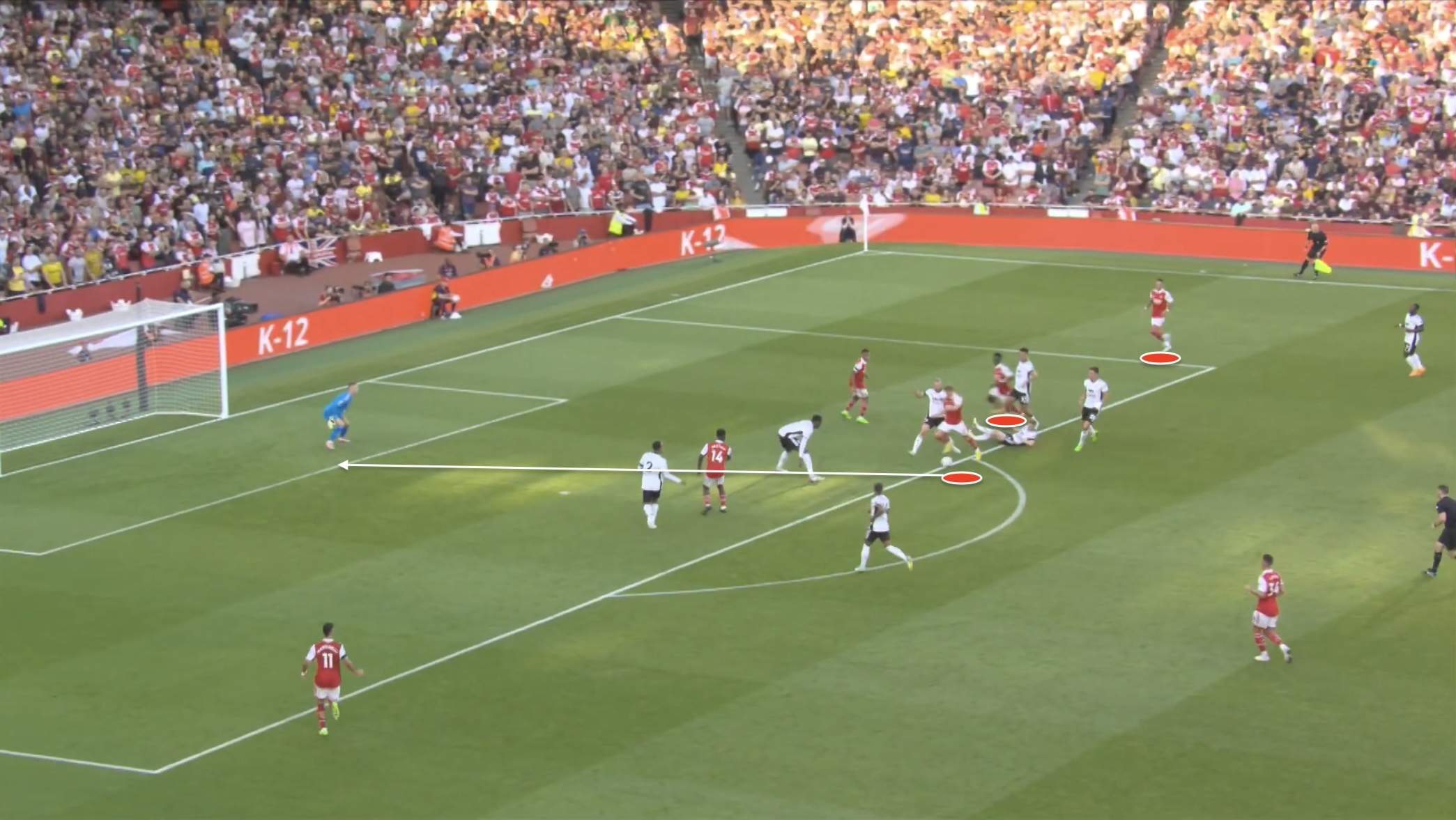
You can see the trio of Odegaard, Saka and White - White ready to overlap and Saka inside the box with Odegaard waiting on edge of box. Ideal balance!
You can see the trio of Odegaard, Saka, and White: White is ready to overlap, and Saka is inside the box, with Odegaard waiting on the edge of the box. This is an ideal balance!
Ben White receives the pass and attempts a cross
Ben White receives the pass and attempts a cross.
The 2nd phase in the box falls to Saka and he expertly finishes it ! Get Saka in these positions more and his numbers will rise !
The second phase in the box falls to Saka, and he expertly finishes it! Get Saka in these positions more, and his numbers will rise!

An Often-Overlooked Detail: Ben White Throw-Ins

An often-overlooked part of Ben White’s game is the quality of his throw-ins.

Arsenal are one of the most well-drilled teams in Europe, and even in these small moments, there is structure and intent.

White’s throws are quick, accurate, and proactive.

Rather than using them to simply retain possession, he often looks to release Bukayo Saka or Martin Ødegaard in space, playing the ball diagonally into the pitch to bypass the first line of pressure.

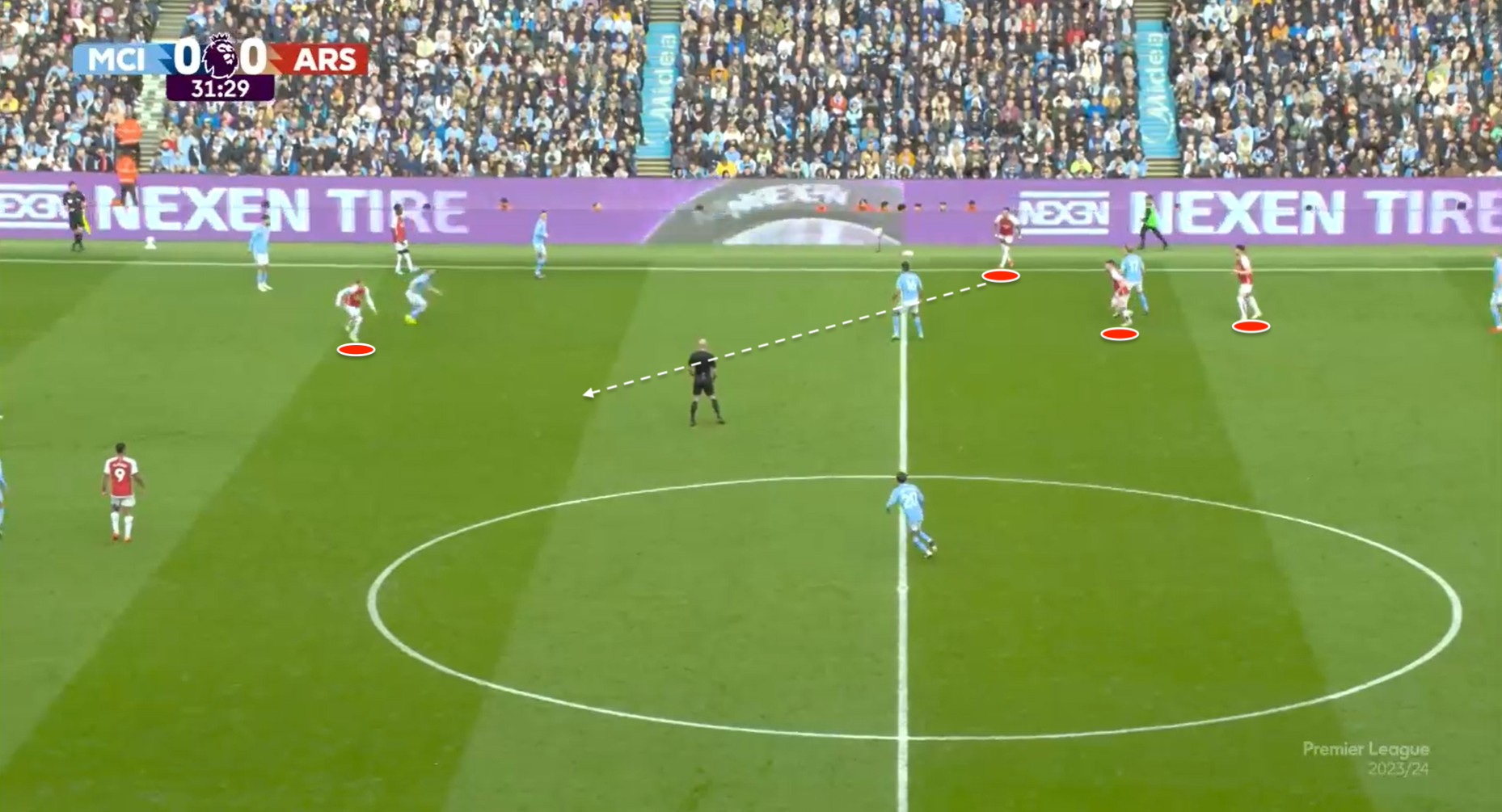
A good example came against Manchester City, where Arsenal set up specific patterns around White’s throw-ins.
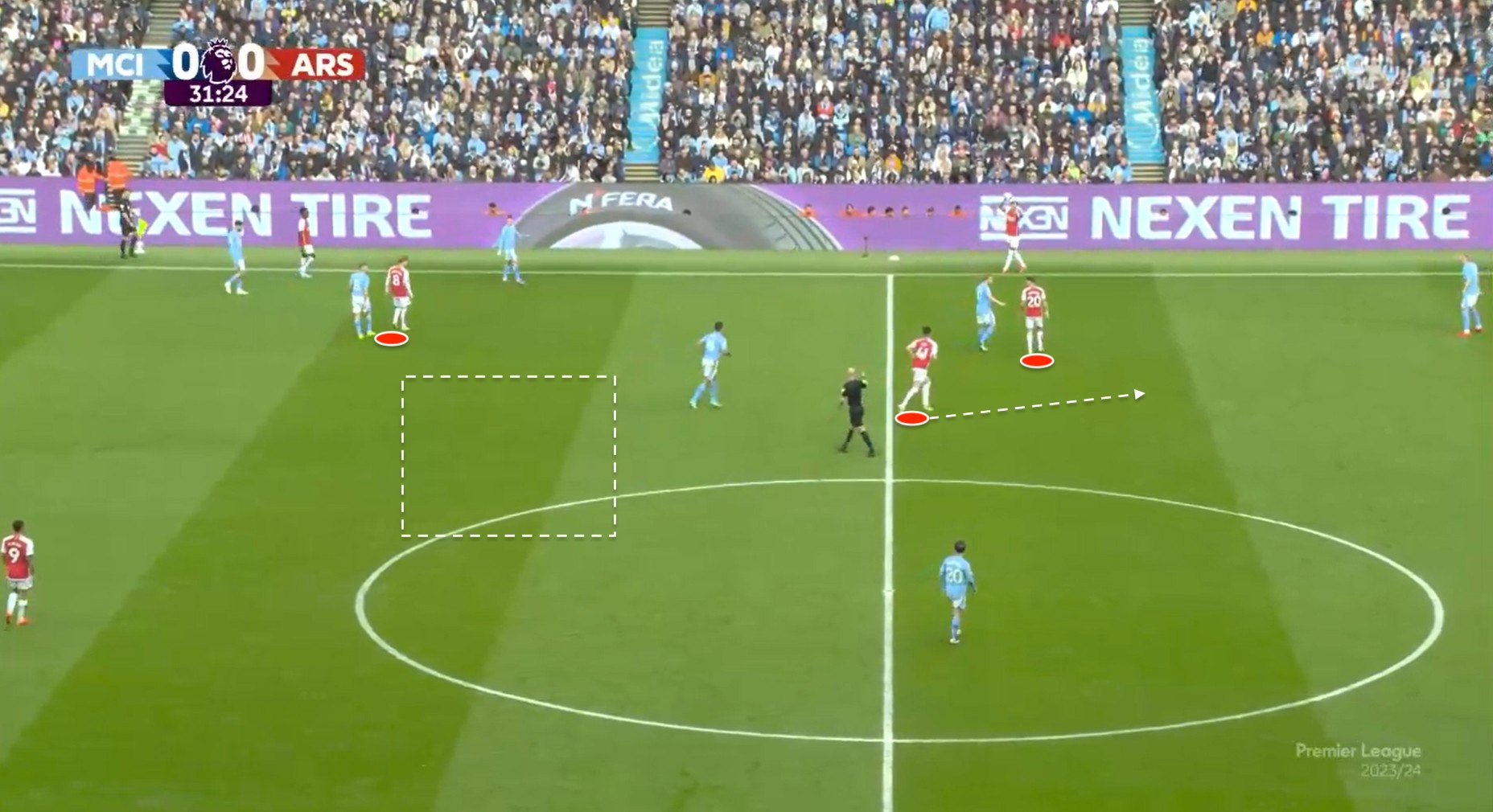
Arsenal are setting up the throw in - Rice is dragging Rodri deep opening up space behind him
Arsenal are setting up the throw-in: Rice is dragging Rodri deep, opening up space behind him.
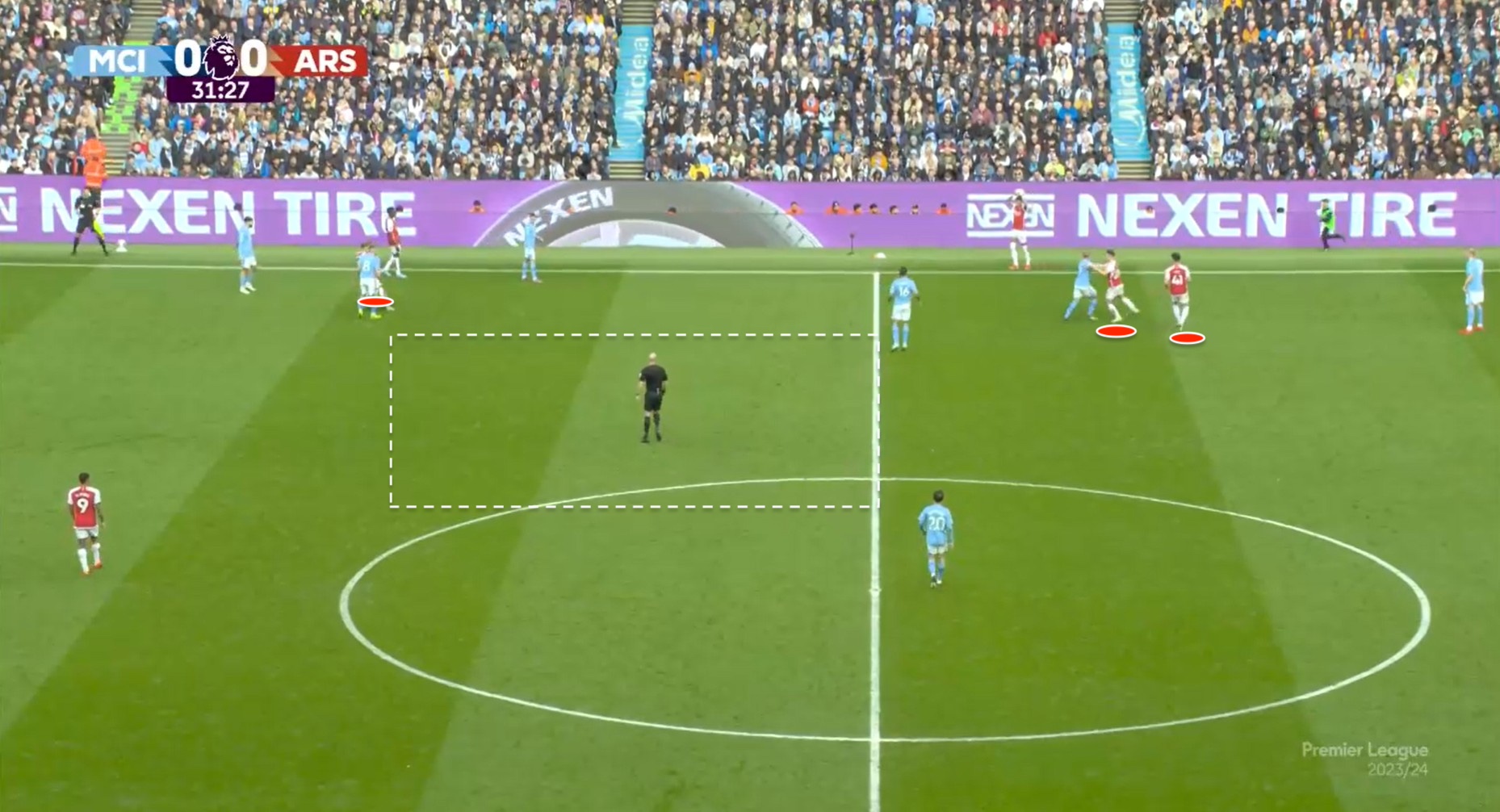
Space is created now. Its ready for someone to make a movement in there
Space is created now. It’s ready for someone to make a movement in there. Jorginho is also screening for Rice. So, there are two clear options.
Odegaard losing Kovačić and Ben White throws a perfectly weighted throw in. Now Odegaard is attacking centrally on his left leg with the whole game opened up
Odegaard loses Kovačić, and Ben White throws a perfectly weighted throw-in. Now, Odegaard is attacking centrally on his left leg, and the whole game is opened up.

On several occasions, he released Ødegaard into central areas, immediately turning defence into attack.

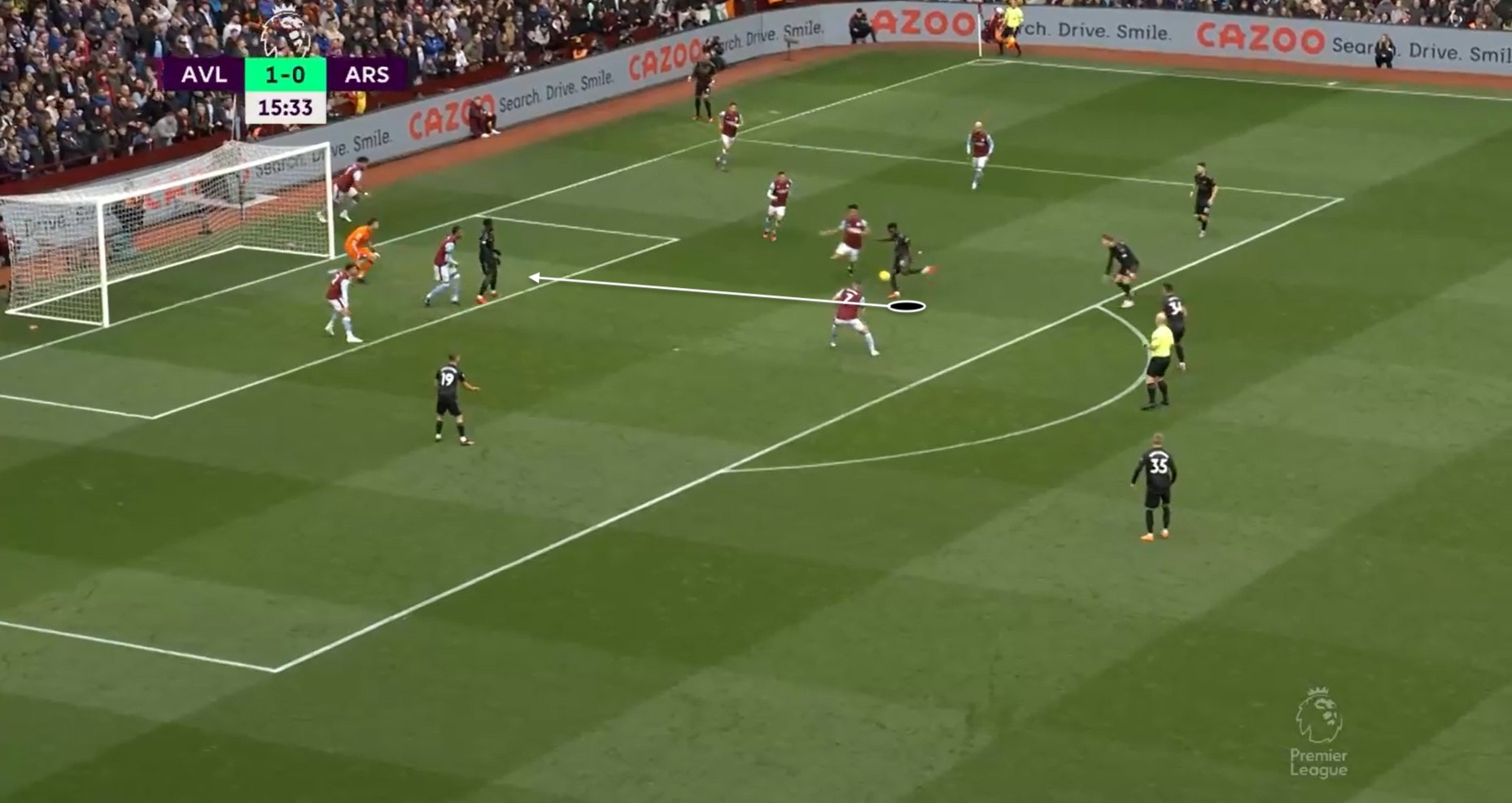
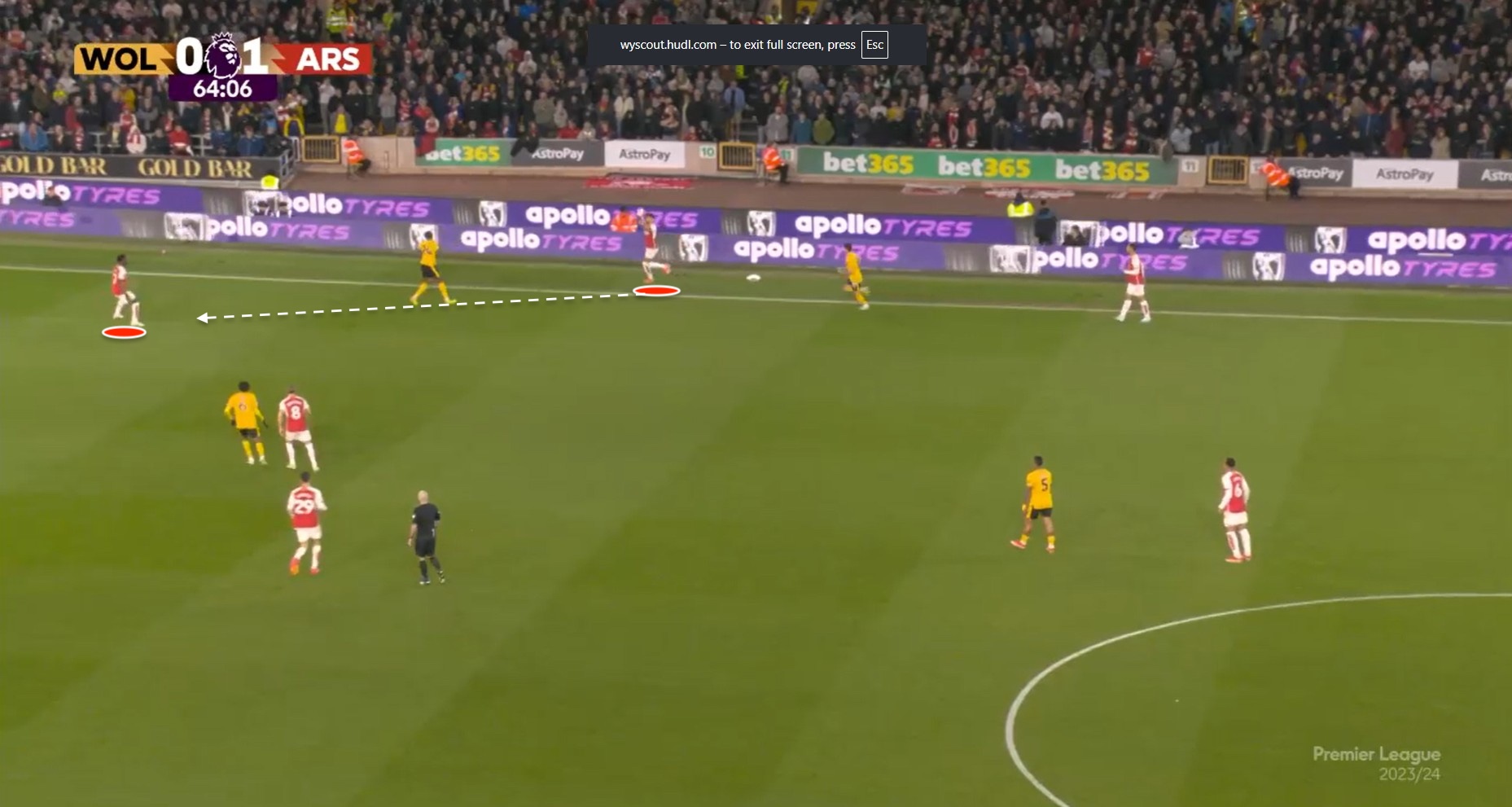
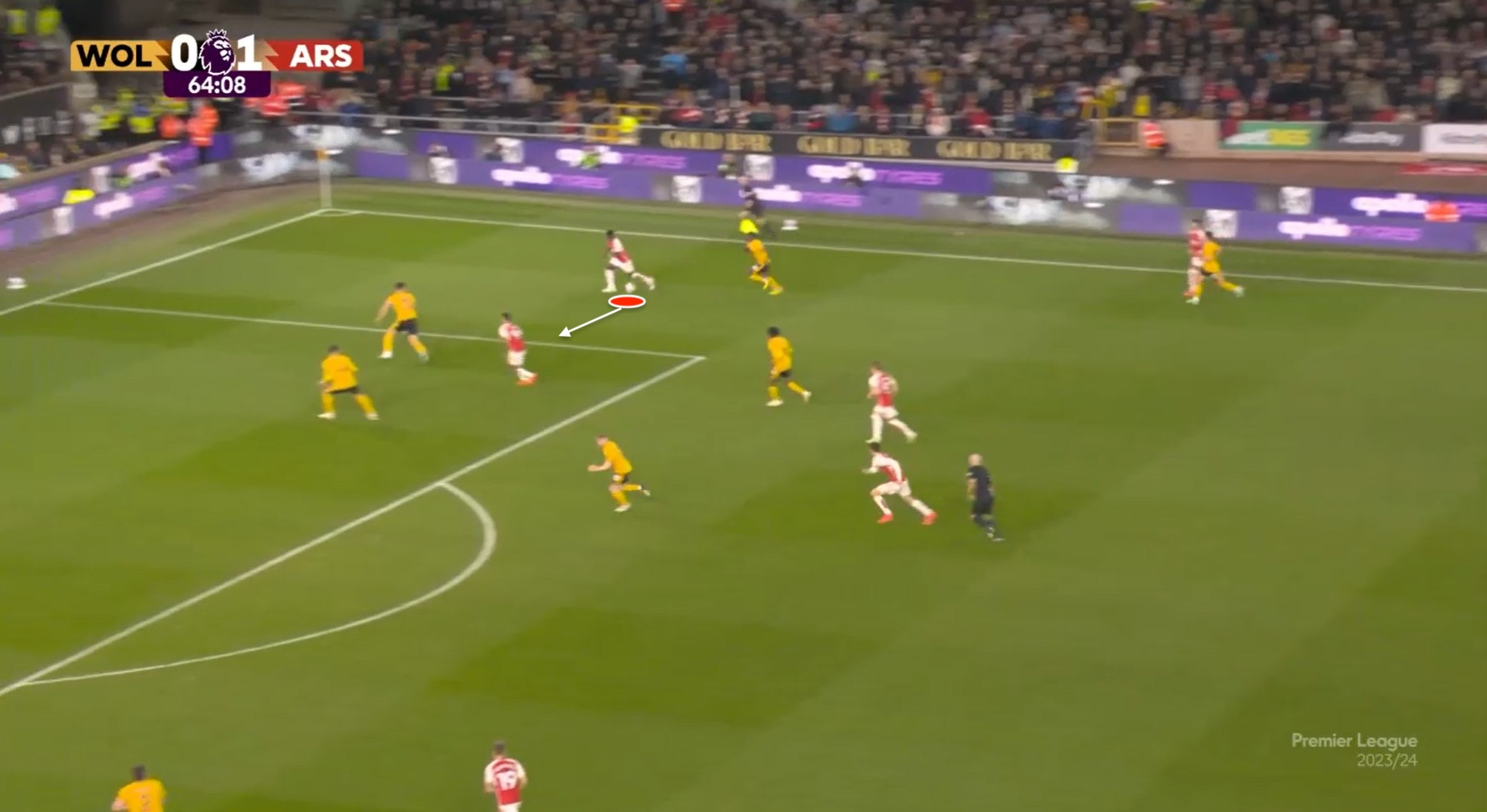
The same quick thinking has been evident against Liverpool and Wolves, where he has used sharp, forward throws to release Saka in behind before the opposition can reset.
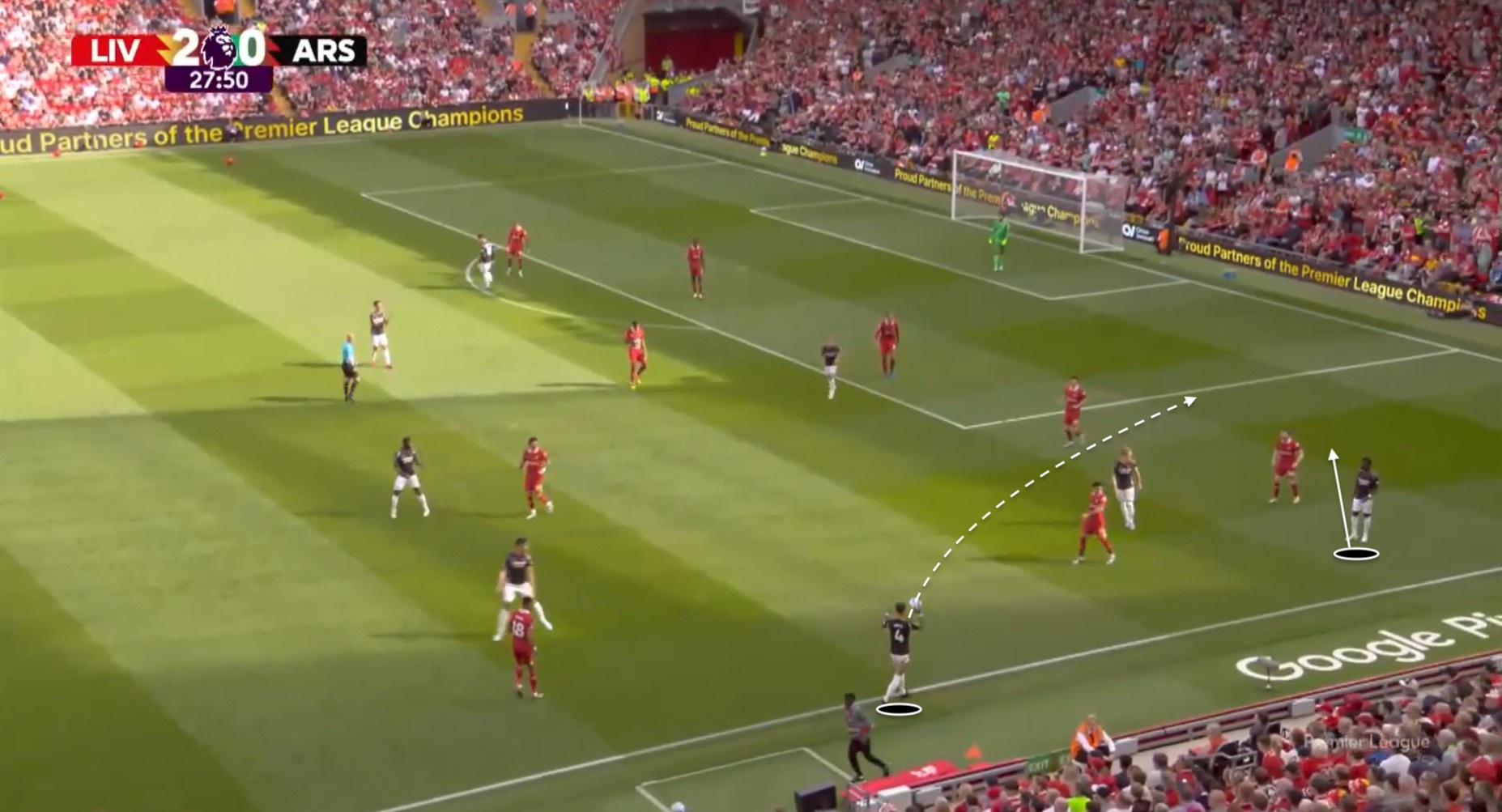
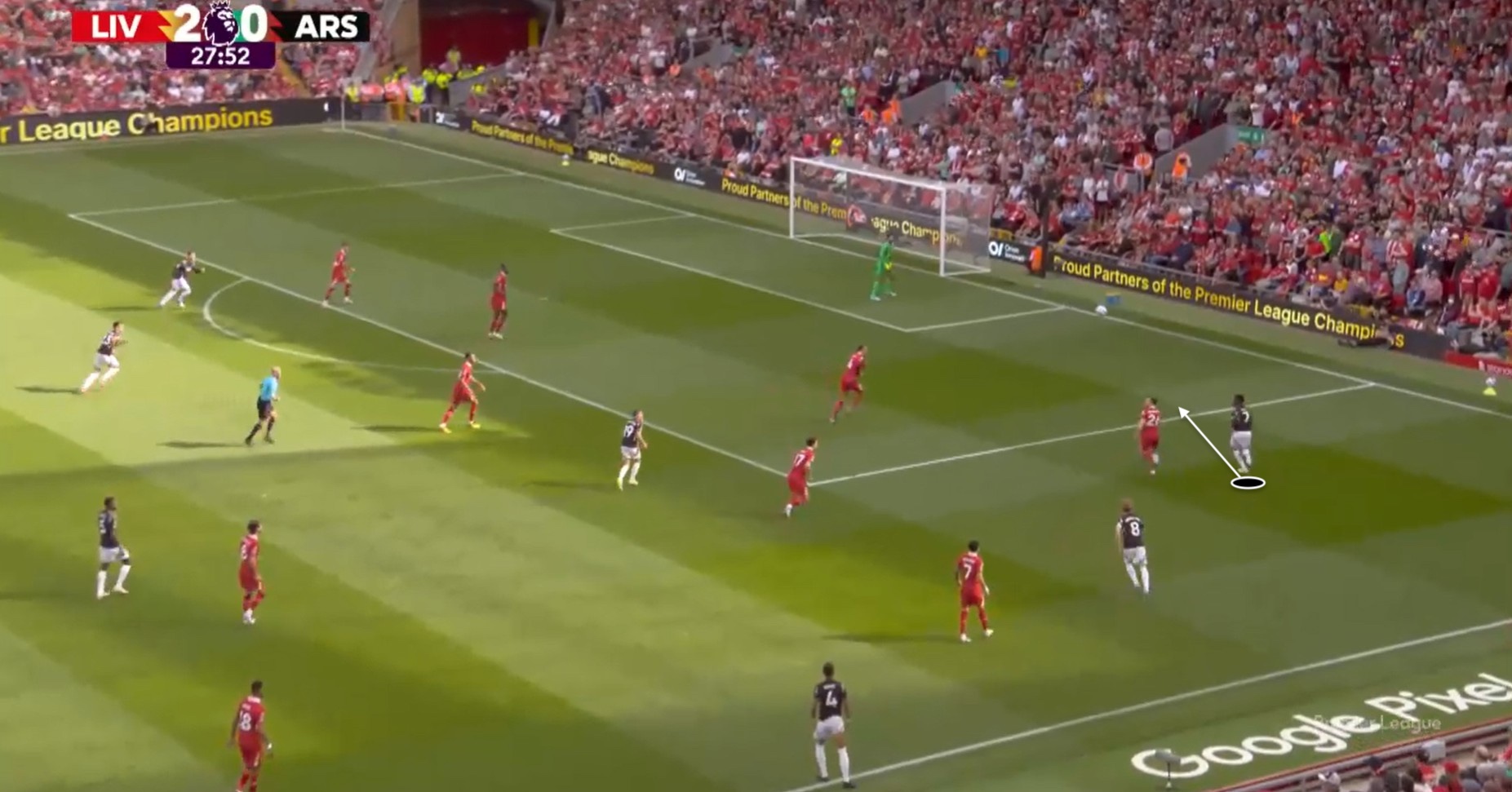
Arsenal setting up another throw in routine. Saka opening up space behind him
Arsenal set up another throw-in routine. Saka is opening up space behind him.
Ben White plays a perfectly looped throw in into the path of Saka. An easy final third entry for Arsenal
Ben White plays a perfectly looped throw into the path of Saka: an easy final third entry for Arsenal.
Arsenal win a throw in and rather than wait for a structured set piece routine - Ben White spots Saka free and looks to release him straight away
Arsenal win a throw-in, rather than wait for a structured set-piece routine, Ben White spots Saka free and looks to release him straight away.
Now instead of Saka being double teamed, he is running into the box against the Wolves CB. A mismatch thanks to Ben White proactive and aggressive nature
Now, instead of being double-teamed, Saka is running into the box against the Wolves centre-back. Thanks to Ben White’s proactive and aggressive nature, this is a mismatch.

Instead of slowing the game down, White’s throw-ins inject tempo and intent, helping Arsenal sustain attacking rhythm and catch opponents off balance.

White’s Passing Range & Build-Up Contribution

While White’s overlapping runs draw attention, his distribution is equally important.

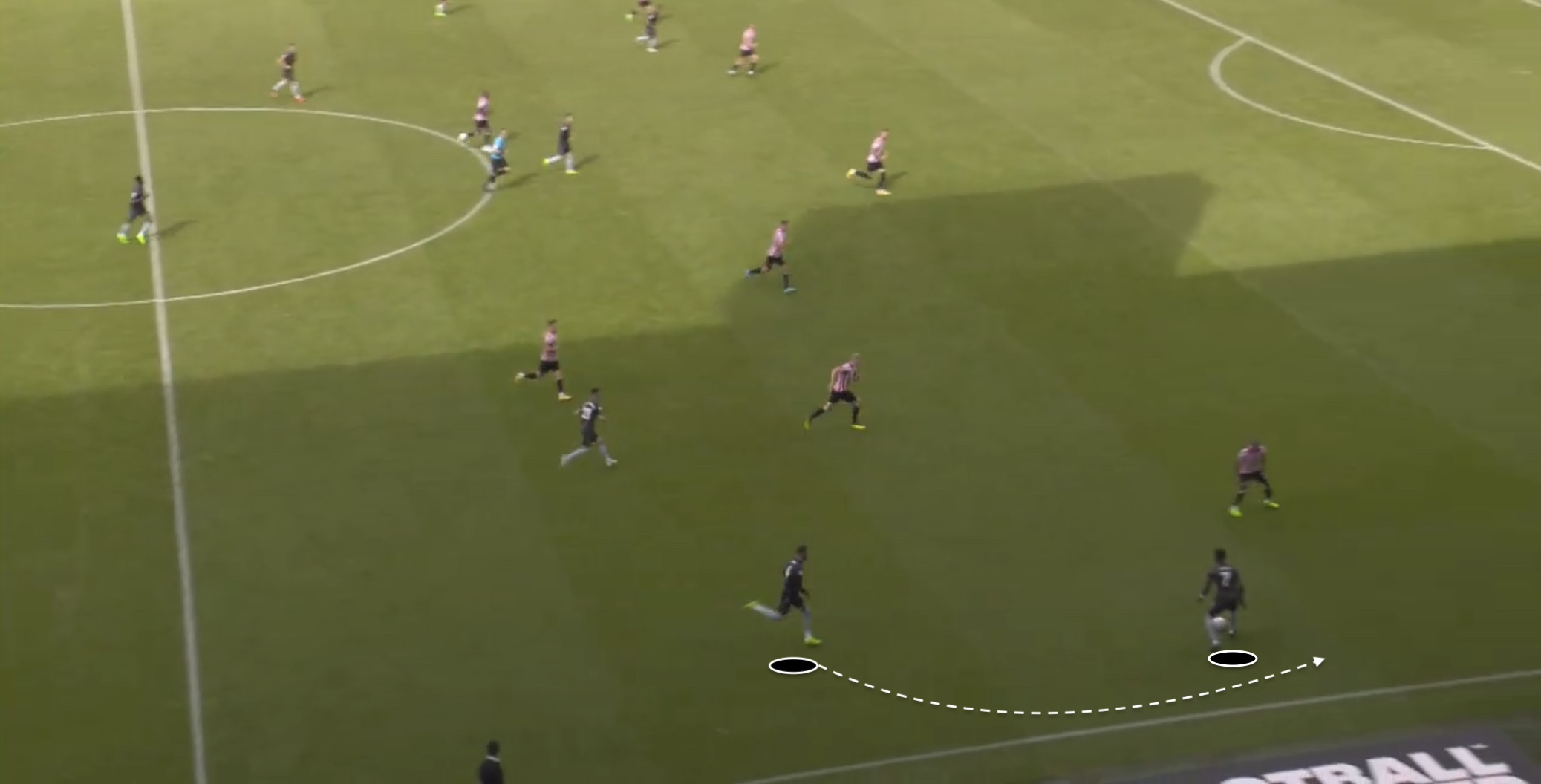
One of the subtler aspects of his game is his ability to switch play accurately and quickly: something Arsenal currently lack when Timber plays at right-back.
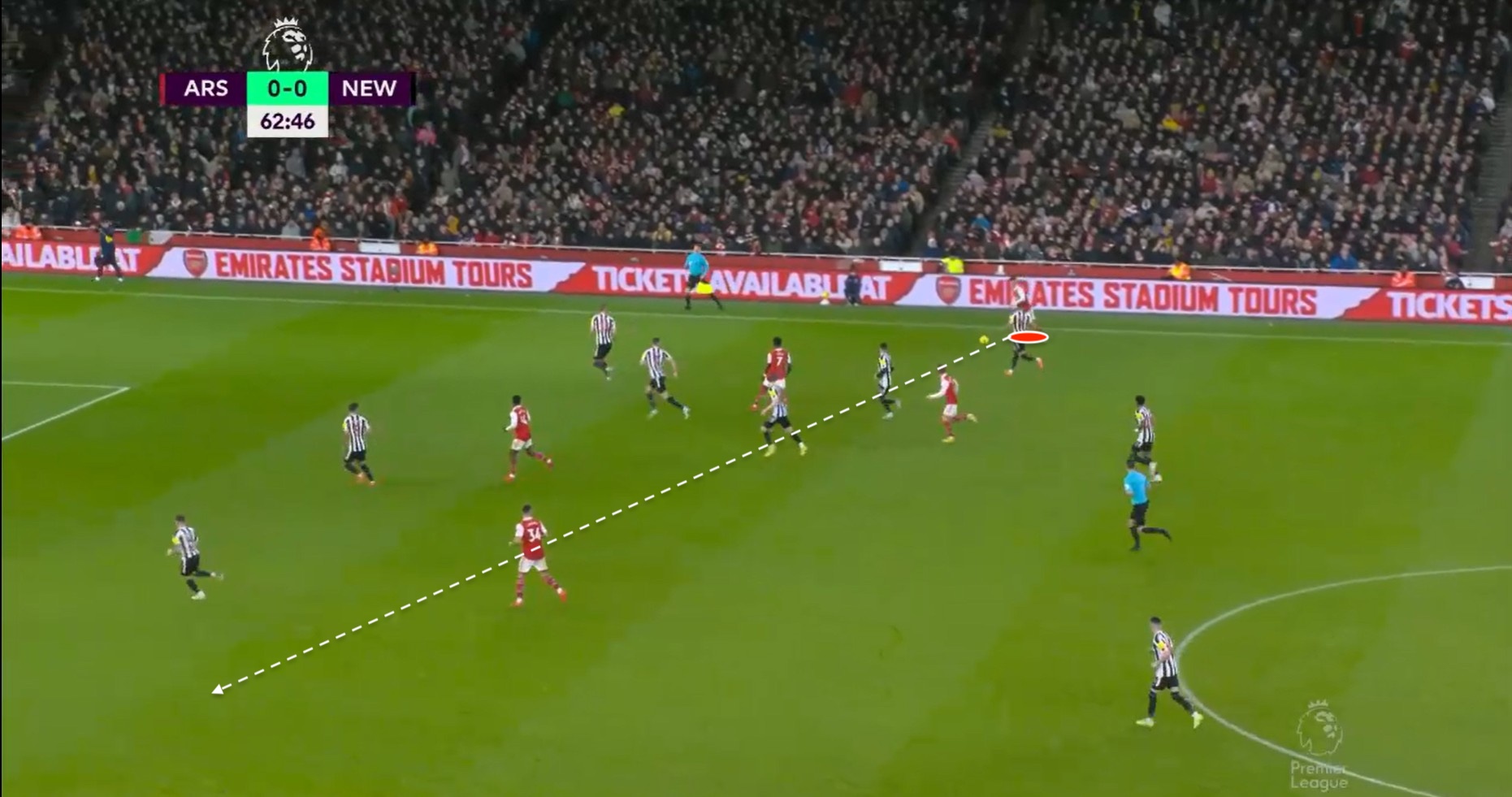
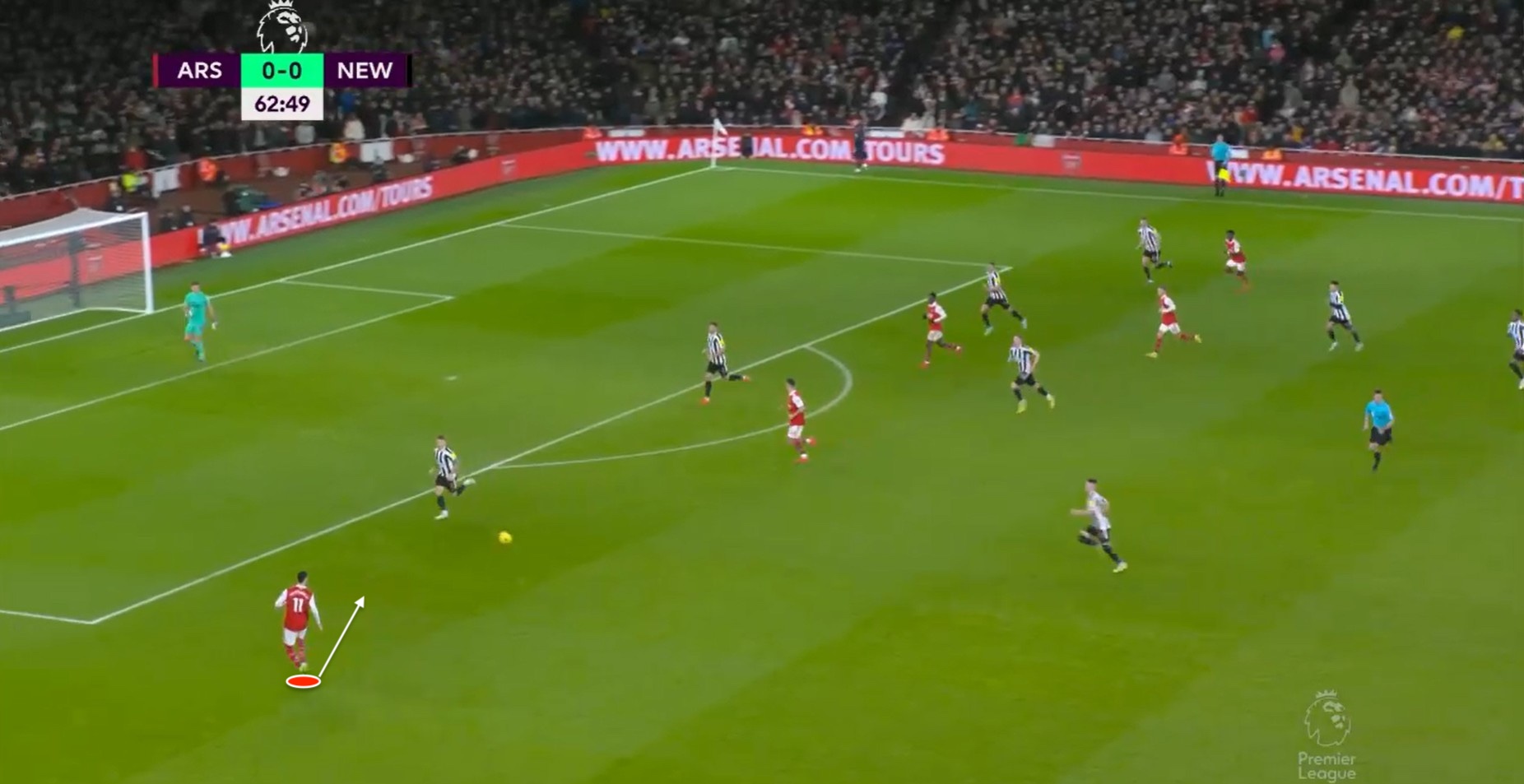
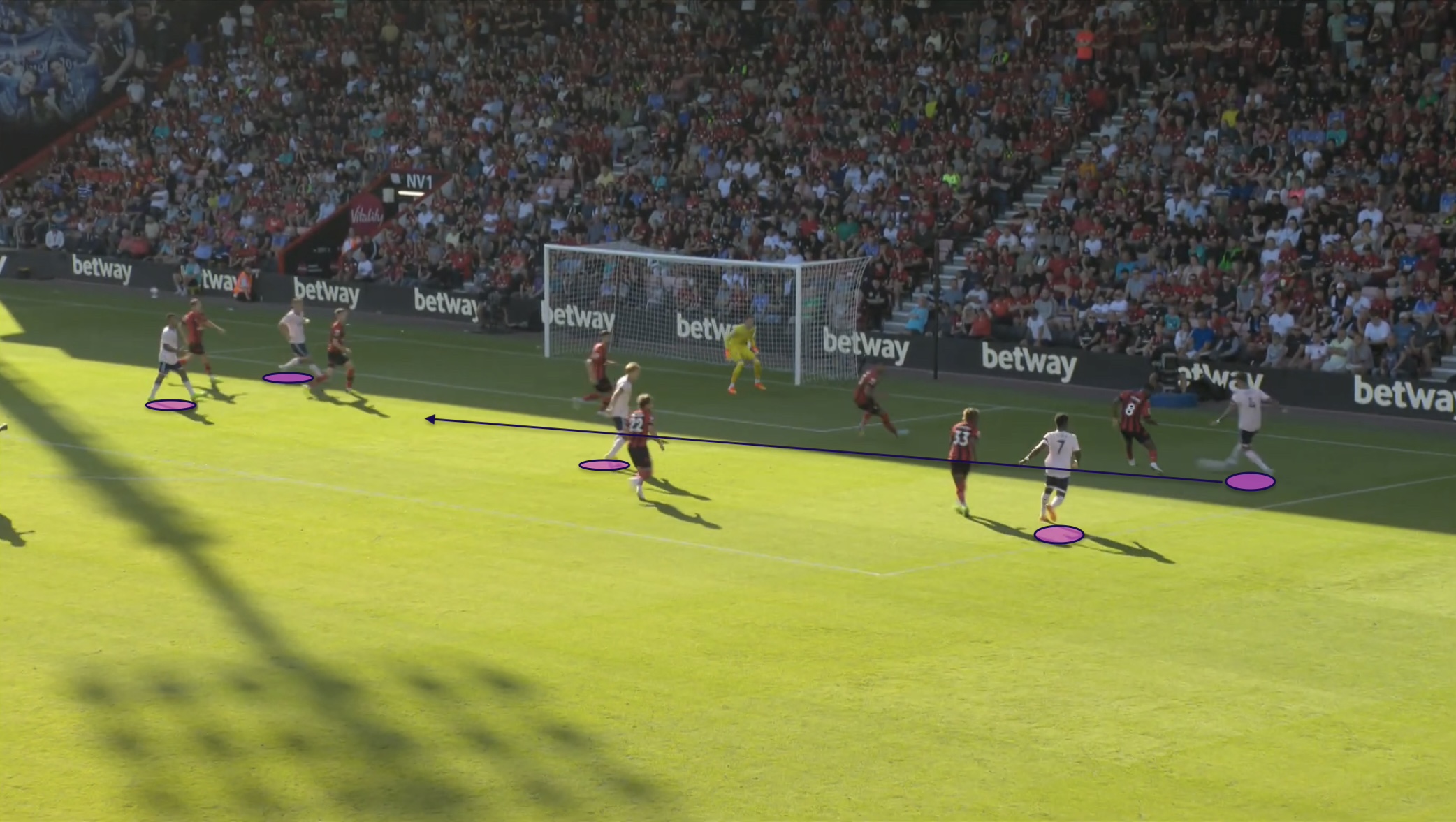
Arsenal are going down a bottle neck situation here - the areas is flooded with bodies and there is no clear avenue to progress - White notices the space is on the opposite flank
Arsenal are going down a bottleneck situation here: the area is flooded with bodies, and there is no clear avenue to progress. White notices the space is on the opposite flank.
White expertly swiches the plau to Martinelli who now has a 1v1 match up
White expertly switches the play to Martinelli, who now has a 1v1 match-up.

When opposition teams press high, Arsenal’s structure often leaves the opposing full-back (usually Riccardo Calafiori or Myles Lewis-Skelly) free.

Ben White’s diagonal passing allows Arsenal to exploit this.

He’s capable of firing long-range, flat passes that immediately change the point of attack, stretching compact defences and giving Arsenal an extra dimension in transition.

Timber, by contrast, prefers to progress the ball through shorter combinations.

That’s not a flaw, it’s simply a different profile.

But against deep, compact defences, White’s ability to accelerate the tempo and switch the play to the opposite side becomes invaluable.

The Tactical Selection Balance

Arteta’s challenge is not choosing between White and Timber outright; it’s selecting them contextually.

Timber’s defensive solidity and press resistance are crucial against high-pressing teams or in big UEFA Champions League fixtures.

His composure under pressure helps Arsenal evade traps and sustain possession.

However, against low-block sides like the Burnleys of the league, Ben White’s inclusion offers the aggression and unpredictability Arsenal sometimes lack.

His constant forward runs stretch defences, tire out wide players, and create openings that set-piece routines alone can’t provide.

Playing White in these scenarios also serves a squad management purpose.

It keeps Timber fresh for the more demanding defensive tests, while allowing Arsenal to maintain their attacking variety domestically.

A Complete Team Searching For The Final 1%

Arsenal’s foundation is built on control.

With William Saliba and Gabriel Magalhães forming arguably the best centre-back partnership in Europe, and Declan Rice offering protection in front, Arteta’s side possesses a defensive platform few teams can rival.

Add in the organisation of their set-pieces and transitions, and you get a near-perfect system.

However, even the best systems benefit from marginal gains: the “1%” improvements that turn contenders into champions.

Reintroducing Ben White as a key component against deep defences could be one of those refinements.

His aggressive overlaps open space for Saka.

His passing range allows Arsenal to switch play faster.

His intensity forces defensive errors and gives Arsenal’s forwards the kind of service that converts control into goals.

Conclusion

Arsenal are closer than ever to achieving total balance.

They’re the best defensive team in the league, the most dangerous from set-pieces, and arguably the most tactically disciplined.

But their open-play output remains the missing link in an otherwise complete side.

Ben White represents a bridge between Arsenal’s two identities: the structured, controlled team Arteta has built, and the fast, expressive side that emerged in the 2022/2023 season.

His chemistry with Saka and Ødegaard once gave Arsenal their sharpest attacking edge, and restoring that connection could be the final step toward reclaiming the Premier League title for the first time since 2004.

With Liverpool’s decline and City’s transition, the window of opportunity is open.

Arteta’s Arsenal have all the tools, and Ben White might just be the subtle, tactical lever that could be the key that fuels Arsenal’s ascent to the Premier League title.

Tags: ArsenalArsenal AnalysisArsenal Set Piece TacticsArsenal Style Of PlayArsenal Tactical AnalysisArsenal TacticsBen WhiteBen White ArsenalBen White Scouting ReportBen White Style Of PlayBen White TacticsHow Good Is Ben WhiteJurriën TimberJurriën Timber Vs Ben WhiteMikel ArtetaMikel Arteta AnalysisMikel Arteta ArsenalMikel Arteta Playing StyleMikel Arteta Style Of PlayMikel Arteta TacticsWho Is Ben White
Previous Post

Marcos Senesi Scout Report At AFC Bournemouth 2025/2026: The Andoni Iraola MVP Back In Lionel Scaloni Argentina Plans – Player Analysis

Next Post

FC Köln Vs Hamburger SV [4–1] – Bundesliga 2025/2026: How Lukas Kwasniok Intensity Beat Merlin Polzin Tactics – Tactical Analysis

Next Post
1. FC Köln - Hamburger SV Bundesliga - Tactical Analysis

FC Köln Vs Hamburger SV [4–1] - Bundesliga 2025/2026: How Lukas Kwasniok Intensity Beat Merlin Polzin Tactics – Tactical Analysis

Premier League tactical clusters data visualization showing three team archetypes

Premier League Tactical Archetypes: What Clustering Reveals

June 4, 2026
PSG’s Control Of Arsenal In The Champions League Final – Tactical Analysis

PSG’s Control Of Arsenal In The Champions League Final – Tactical Analysis

June 3, 2026
Femi Azeez

Femi Azeez Scout Report At Millwall 2025/2026: A High-Output Transition Winger – Player Analysis

April 17, 2026
  • About Total Football Analysis
  • Contact Total Football Analysis
  • Advertise
  • Privacy Policy
  • Cancellation / Refund Policy
  • Resources
  • Terms Of Service

© 2026 Total Football Analysis

No Result
View All Result
  • Football Analysis
    • Data Analysis
    • Formations
      • 2-2-4 Formation
      • 2-3-5 Formation
      • 3-1-4-2 Formation
      • 3-2-2-3 Formation
      • 3-2-4-1 Formation
      • 3-1-6 Formation
      • 3-3-4 Formation
      • 3-4-1-2 Formation
      • 3-4-2-1 Formation
      • 3-4-3 Formation
      • 3-5-1-1 Formation
      • 3-5-2 Formation
      • 4-1-4-1 Formation
      • 4-2-2-2 Formation
      • 4-2-3-1 Formation
      • 4-2-4 Formation
      • 4-3-1-2 Formation
      • 4-3-3 Formation
      • 4-4-2 Formation
      • 4-5-1 Formation
      • 5-3-2 Formation
      • 5-4-1 Formation
      • 6-3-1 Formation
    • Head Coach Analysis
    • Match Analysis
    • Player Analysis
    • Recruitment Analysis
    • Set Piece Analysis
    • Tactical Theory
    • Tactical Preview
    • Team Analysis
    • Training Analysis
    • Tactical Analysis
    • Scouting Report
  • Competition
    • ALL Competitions
    • English Premier League
    • Champions League
    • La Liga
    • Bundesliga
    • Serie A
    • Ligue 1
    • Eredivisie
    • EFL Championship
    • FIFA World Cup 2022
    • WEURO 2022
    • Women’s Super League
    • NWSL
    • Belgian First Division A
    • A-League
    • Liga Profesional de Argentina
    • Austrian Bundesliga
    • Campeonato Brasileiro Série A
    • DFB Pokal
    • 1. HNL
    • Danish Superliga
    • EFL League One
    • EFL League Two
    • FA Cup
    • EFL Cup
    • Indian Super League
    • K-League
    • J1 League
    • Liga MX
    • Copa América 2021
    • Copa del Rey
    • MLS
    • Eliteserien
    • Euro 2020
    • Primeira Liga
    • Scottish Premiership
    • Allsvenskan
    • Europa League
    • UEFA Nations League
    • Liga AUF Uruguaya
  • Coaches
    • All Coaches
    • Alfred Schreuder
    • Ange Postecoglou
    • Antonio Conte
    • Arne Slot
    • Bo Svensson
    • Brendan Rodgers
    • Bruno Lage
    • Carlo Ancelotti
    • Christophe Galtier
    • Claude Puel
    • Claudio Ranieri
    • David Moyes
    • Dean Smith
    • Diego Simeone
    • Domenico Tedesco
    • Frank Lampard
    • Eddie Howe
    • Edin Terzić
    • Emma Hayes
    • Erik ten Hag
    • Ernesto Valverde
    • Gennaro Gattuso
    • Gerardo Seoane
    • Gian Piero Gasperini
    • Giovanni van Bronckhorst
    • Graham Potter
    • Igor Tudor
    • Imanol Alguacil
    • Jesse Marsch
    • Jonas Eidevall
    • Jorge Sampaoli
    • José Bordalás
    • José Mourinho
    • Julen Lopetegui
    • Julian Nagelsmann
    • Julien Stéphan
    • Jürgen Klopp
    • Luciano Spalletti
    • Lucien Favre
    • Manuel Pellegrini
    • Marcelo Bielsa
    • Marco Rose
    • Marco Silva
    • Massimiliano Allegri
    • Mauricio Pochettino
    • Maurizio Sarri
    • Mikel Arteta
    • Niko Kovač
    • Nuno Espírito Santo
    • Oliver Glasner
    • Patrick Vieira
    • Paulo Fonseca
    • Pep Guardiola
    • Peter Bosz
    • Rafa Benítez
    • Ralf Rangnick
    • Ralph Hasenhüttl
    • Roger Schmidt
    • Roy Hodgson
    • Sean Dyche
    • Sérgio Conceição
    • Simone Inzaghi
    • Sonia Bompastor
    • Stefano Pioli
    • Steffen Baumgart
    • Steven Gerrard
    • Thiago Motta
    • Thomas Frank
    • Thomas Tuchel
    • Unai Emery
    • Vincenzo Italiano
    • Xavi
  • Teams
    • ALL Teams
    • AC Milan
    • Ajax Amsterdam
    • Arsenal
    • AS Monaco FC
    • Atalanta
    • Atlético Madrid
    • FC Barcelona
    • FC Bayern Munich
    • Borussia Dortmund
    • Celtic FC
    • Chelsea FC
    • Everton F.C.
    • Inter Milan
    • Juventus F.C.
    • Leeds United F.C.
    • Liverpool FC
    • Manchester City
    • Manchester United FC
    • Paris Saint-Germain
    • Rangers FC
    • RB Leipzig
    • Real Madrid CF
    • Tottenham Hotspur
    • West Ham United
  • Players
    • ALL Players
    • Alisson Becker
    • Bukayo Saka
    • Erling Haaland
    • Harry Kane
    • Jack Grealish
    • John Stones
    • Julián Alvarez
    • Kalvin Phillips
    • Kevin De Bruyne
    • Kyle Walker
    • Kylian Mbappé
    • Lamine Yamal
    • Lionel Messi
    • Luis Díaz
    • Mohamed Salah
    • Phil Foden
    • Virgil Van Dijk
  • Guides
    • Best Betting Sites
      • World Cup Betting Sites
      • World Cup Free Bets
      • World Cup Betting Promotions
      • Betting Sites Not on GamStop
      • European Bookmakers
      • Betting Apps
      • Footbal Betting Sites
      • New Betting Sites
      • Betting Bonuses
      • Free Bets
    • Online Casinos
      • Non GamStop Casinos
      • Crypto Casinos
      • Offshore Casinos
      • Real Money Slots
  • Contact
  • Login

© 2026 Total Football Analysis