
We have a heavyweight clash in the EFL Cup Final on Sunday as Arsenal battle Manchester City.
Mikel Arteta meets his former boss Pep Guardiola for the 15th time; while Guardiola holds the overall advantage, Arteta has gotten the better of him recently.
Since the Community Shield in August of 2023, Arsenal are unbeaten against Manchester City.
Before that, Arteta couldn’t get past his former boss, losing eight of his first nine meetings against Guardiola.
Things are a bit different this time around because Arsenal are now clearly the best team in the Premier League and perhaps the more tactically diverse side in Sunday’s clash.
This is a very important final for the Gunners because not only are they still alive in all four competitions, but they have not won a major trophy since the 2020 FA Cup Final.
For Manchester City, the season is starting to slip through their fingers.
They are currently trailing Arsenal by nine points in the title race, and they were recently knocked out of the Champions League again by Real Madrid.
The battles between Arteta and Guardiola typically produce some of the highest-level tactical battles in world football, and Sunday’s EFL Cup final should be no different.
In this tactical preview, we are going to look at the tactical battle for each team, both in and out of possession, using some of their recent matches and their previous meeting in September.
Arsenal Vs Manchester City Head-To-Head In Their Last Six Meetings
With two managers so obsessed not only with maintaining control but also with being very conservative in possession, these encounters typically produce very low-event matches.
Over the last six meetings, neither team has averaged more than one expected goal per match, while shots are typically hard to come by.
| Category | Arsenal | Manchester City |
| Goals | 1.82 | 0.55 |
| Expected Goals | 0.79 | 0.89 |
| Shots | 9.64 | 7.45 |
| Touches in the Box | 22.67 | 20.67 |
| Possession | 44.83% | 55.17% |
Note: All stats above are per 90 minutes in 11v11 matches over their last six meetings.
Manchester City are typically the team that controls the majority of possession in these encounters, but that doesn’t translate into many high-quality chances because Arsenal are so difficult to play through.
Arsenal In Possession Vs Manchester City Out Of Possession
Typically, in these encounters with Manchester City, Arteta favours a more conservative approach both in and out of possession.
More often than not, he will concede a lot of possession to Pep’s side, but in the previous meeting in September, that all changed.
In the 1-1 draw, Arsenal held 67% of the ball, had 39 touches in Manchester City’s penalty area, and had over double City’s passes in the final third (272 vs 121).
This may have been a product of Manchester City going ahead inside the first 10 minutes.
Still, Arsenal were able to comfortably build out from the back without much pressure from City.
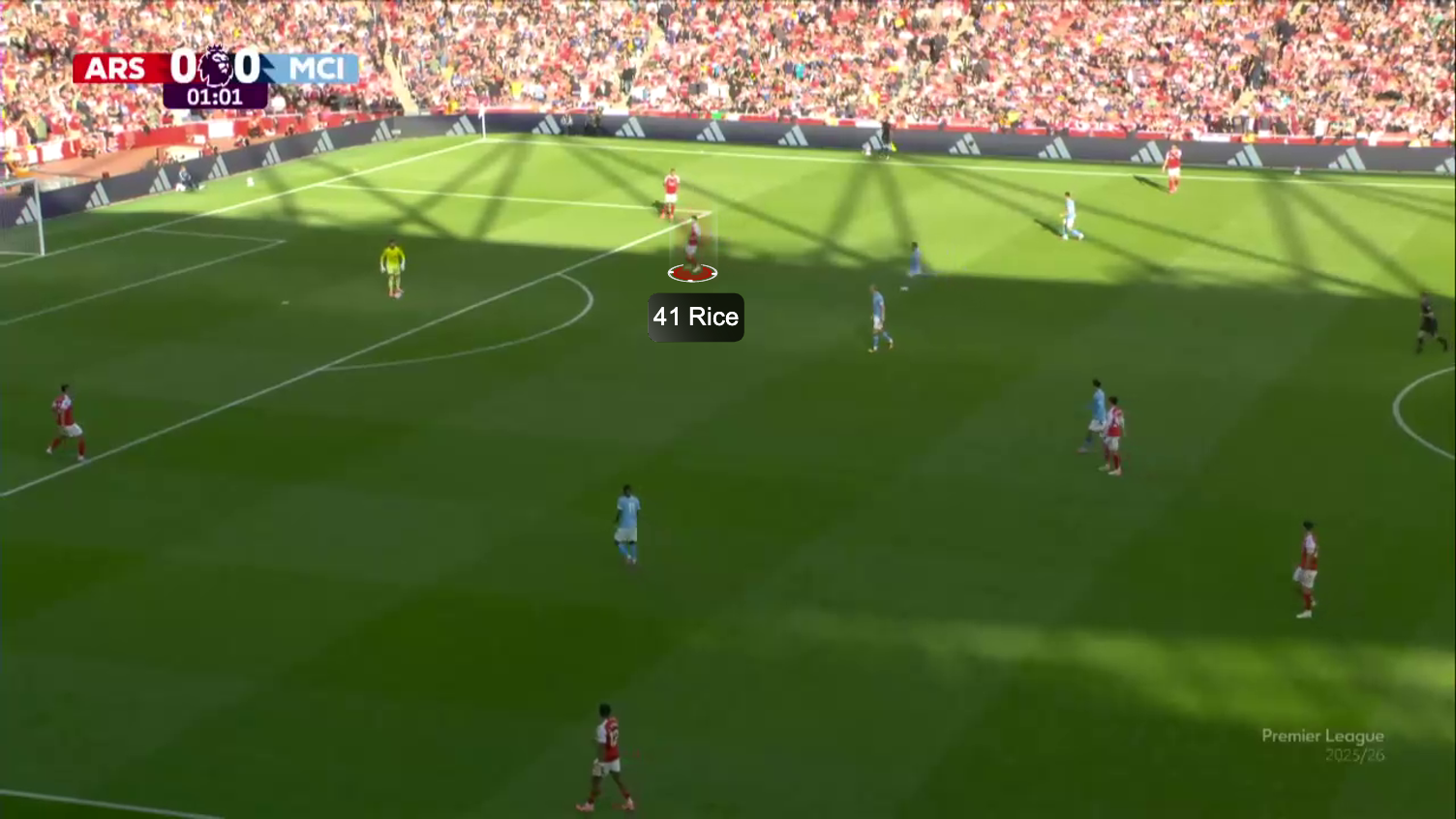
The Gunners often used Declan Rice as a single pivot, dropping into the backline like we see below.
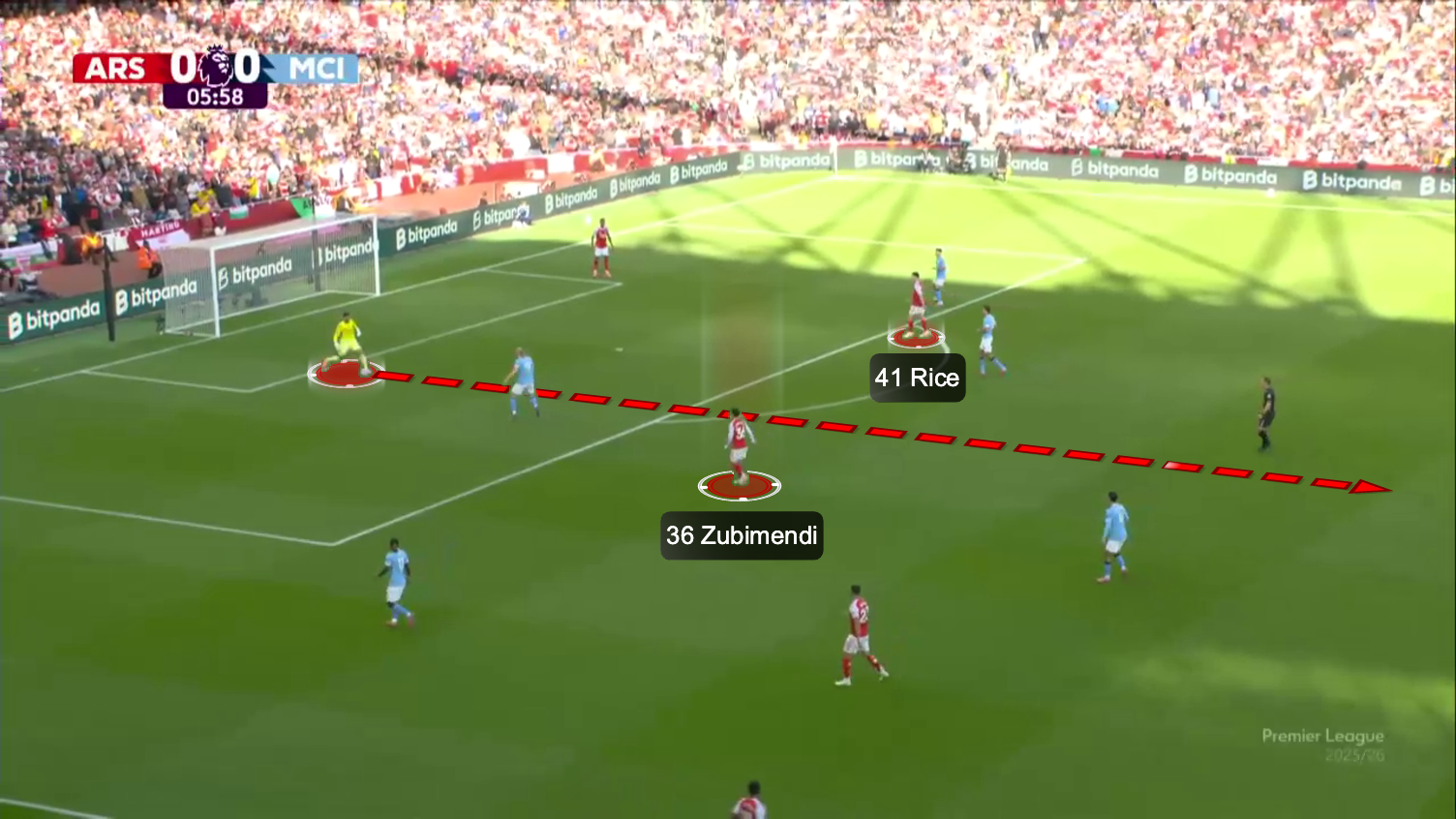
Alternatively, they used Rice and Martin Zubimendi as a double pivot to try to create an overload in the first phase.
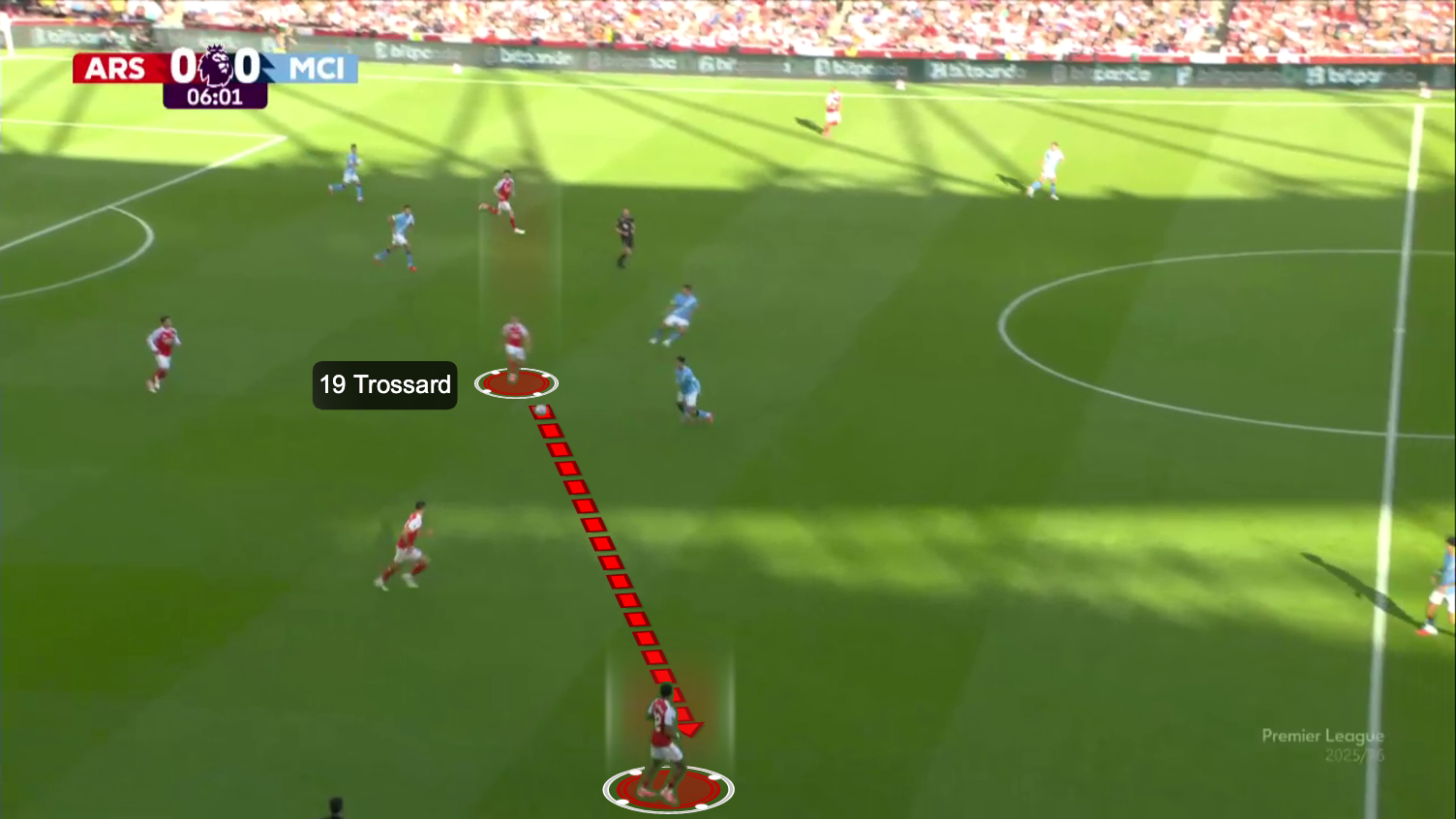
What this often did, though, was free up space between the lines for Mikel Merino or even Leandro Trossard to drop in and receive the ball.
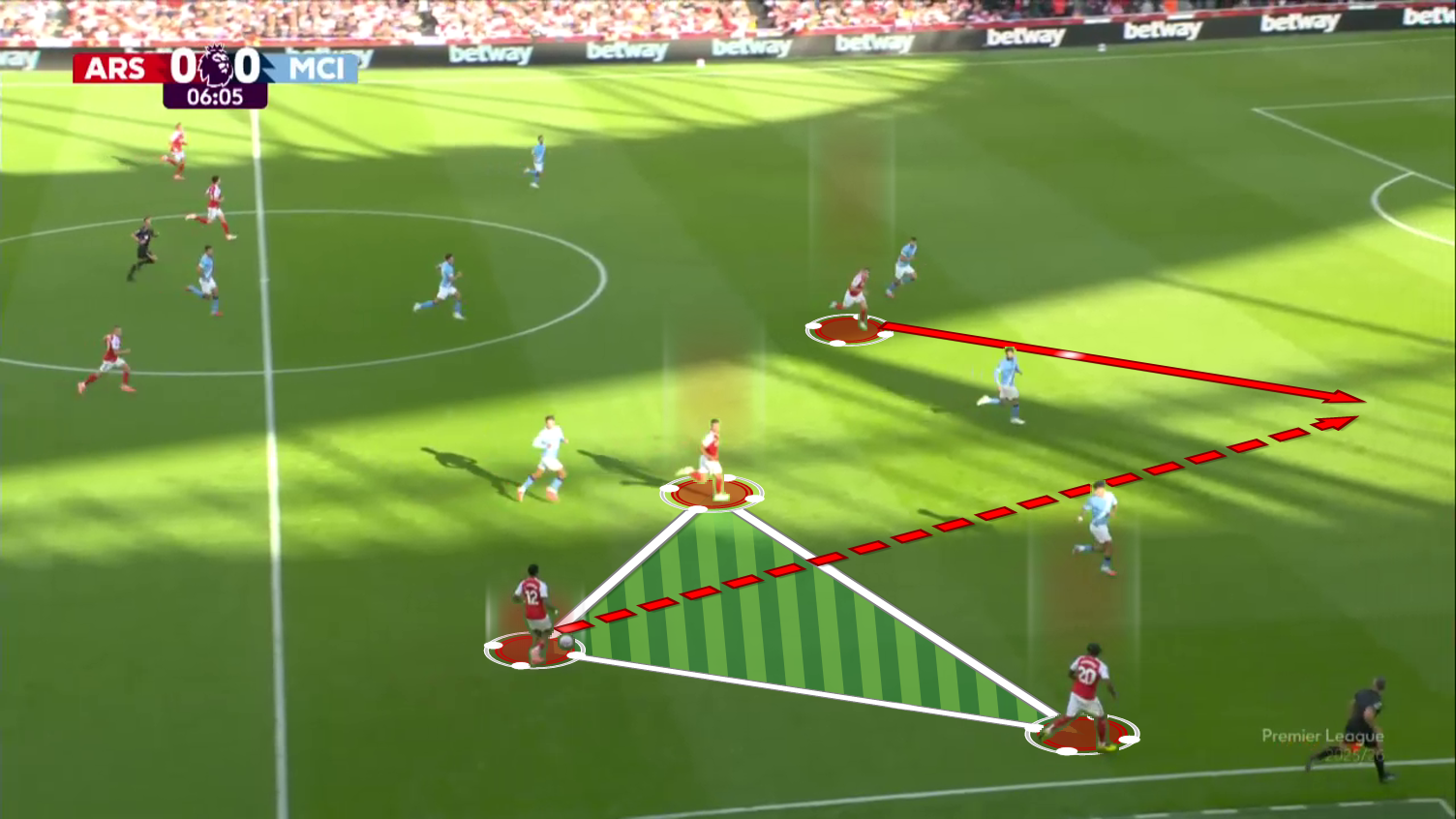
Here, David Raya can find Trossard in between the lines, while Jurrien Timber pushes high, and Arsenal can progress the ball down the right-hand side, creating a 3v2.
Manchester City have recently switched their pressing formation to a diamond to better jump into a man-to-man press and win second balls when the opposition goes long.
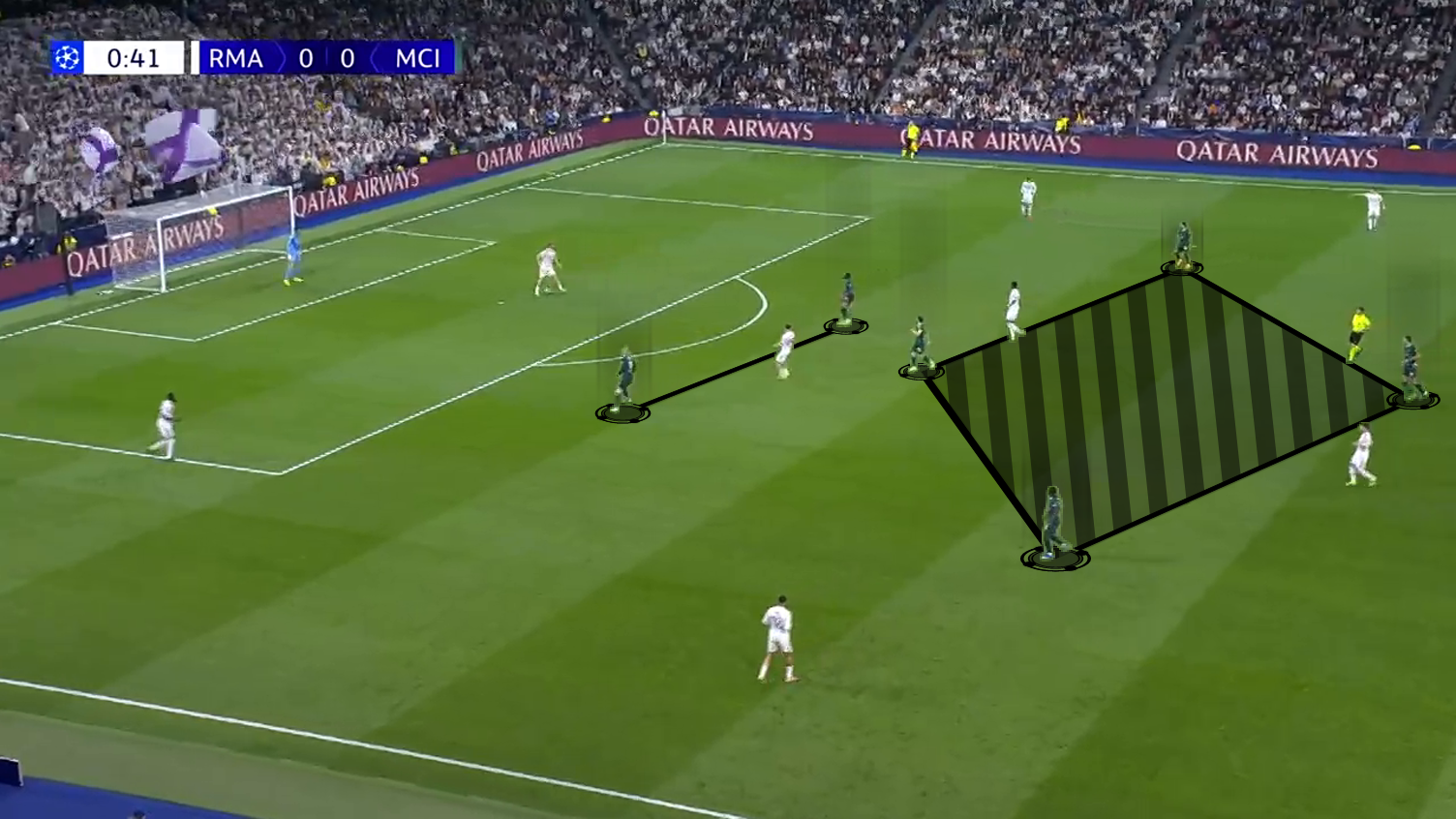
The problem with this formation is that when the opponent drops both their forwards deep, it creates a numerical disadvantage in the middle of the pitch.
Real Madrid exploited this many times by creating a box midfield, which left Bernardo Silva and Rodri stuck defending 4v2.
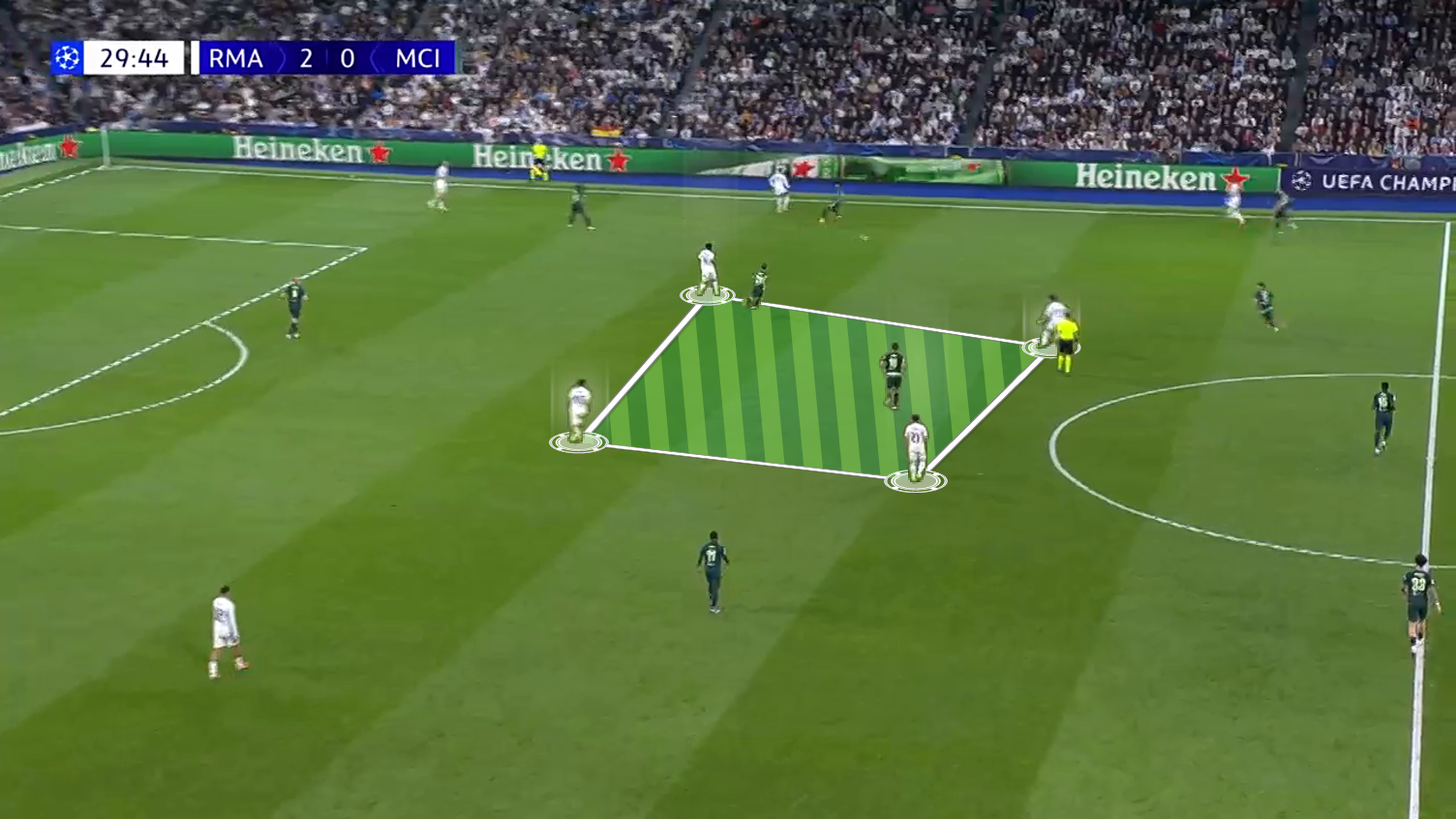
Arsenal have favoured a diamond midfield over a box midfield recently, but I am sure Arteta will try to create these types of midfield overloads.
When Arsenal entered the second phase of build-up, they would switch to a 3-2-5 build-up, with either Timber or Riccardo Calafiori pushing high to create a 5v4 on Manchester City’s last line of defence.
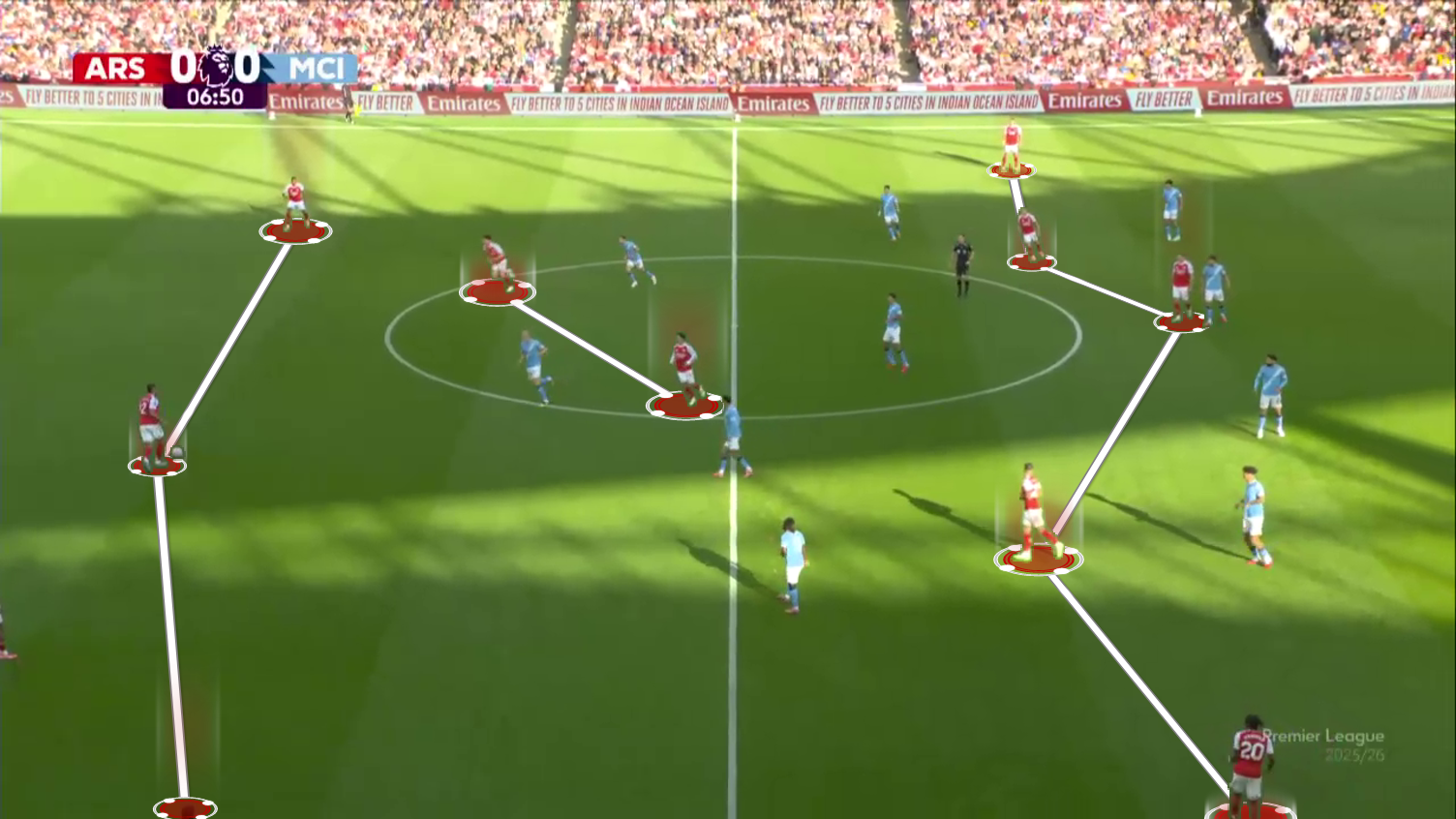
Because Manchester City were playing so narrow in their 4-4-2, the wide areas for Arsenal to pass to their full-backs were always open, and that is where Arsenal created most of their chances.
What was fascinating about the previous meeting between these two was that Arsenal constantly applied pressure in the second half and created a few decent chances in the first 15 minutes.
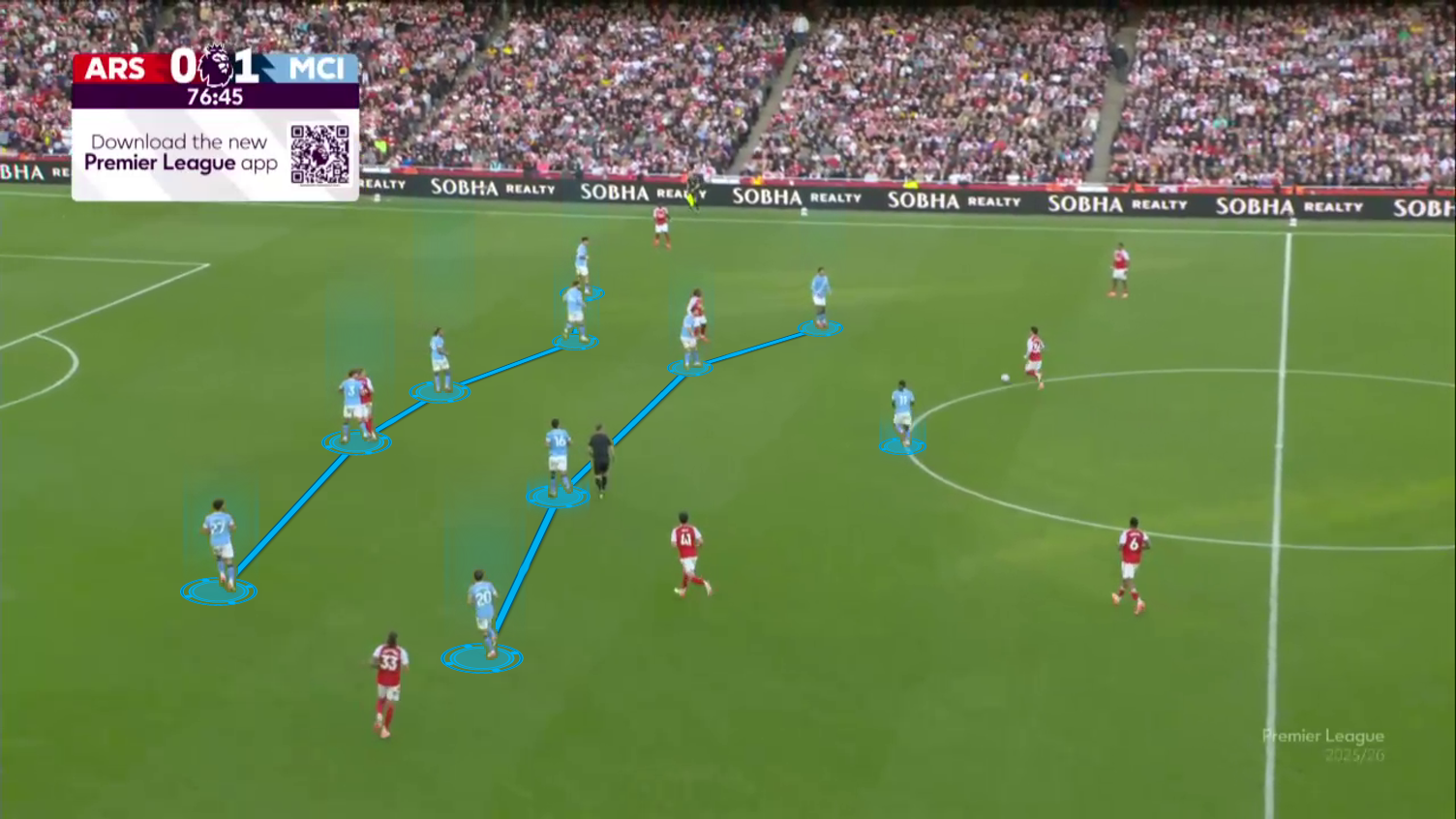
Pep had one look at the situation, and for the first time in who knows how long, opted to fall back into a low block and see the match out defensively.
Manchester City sat in a 5-4-1 like this for the final half hour of the match and did a really nice job defending, as the Gunners finished the match with only 0.57 xG from open play.
However, Eberechi Eze showed why Arsenal signed him for big money and why he’s now supplanted Martin Ødegaard in the starting XI.
When the match entered stoppage time, Arsenal finally took a chance with Eze finding Gabriel Martinelli over the top to get in behind Manchester City’s backline and chip Gianluigi Donnarumma.
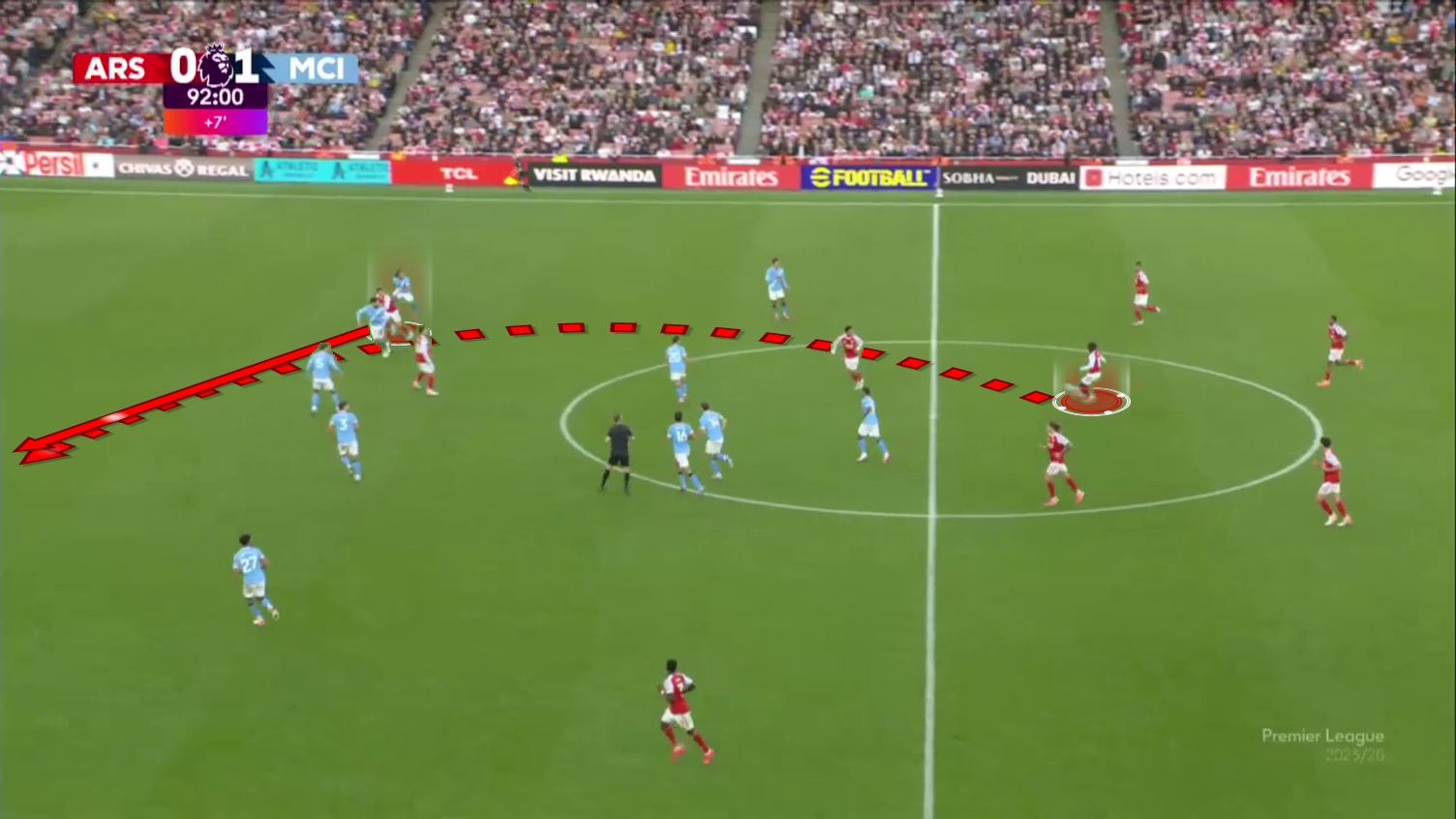
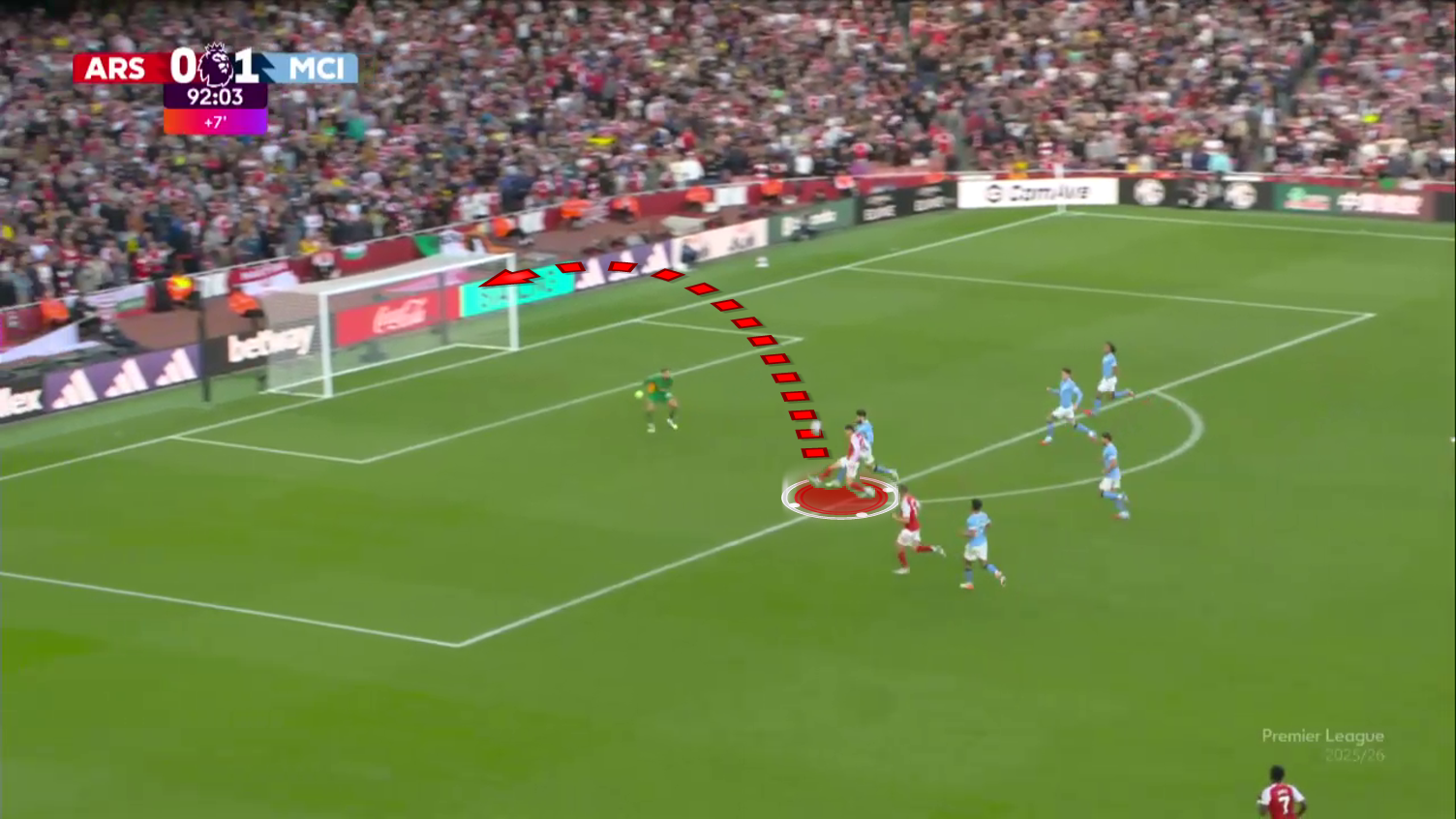
Arsenal will likely take a very conservative approach on Sunday to control the match as they did in the previous meeting and attack Manchester City from wide.
Of course, when talking about Arsenal, you have to discuss set-pieces.
The Gunners have scored 24 goals from set plays between the Premier League and Champions League this season.
Manchester City have been a fairly decent defensive side, allowing only 10 goals from set plays and have one of the lowest xG allowed figures in the Premier League.
Manchester City In Possession Vs Arsenal Out Of Possession
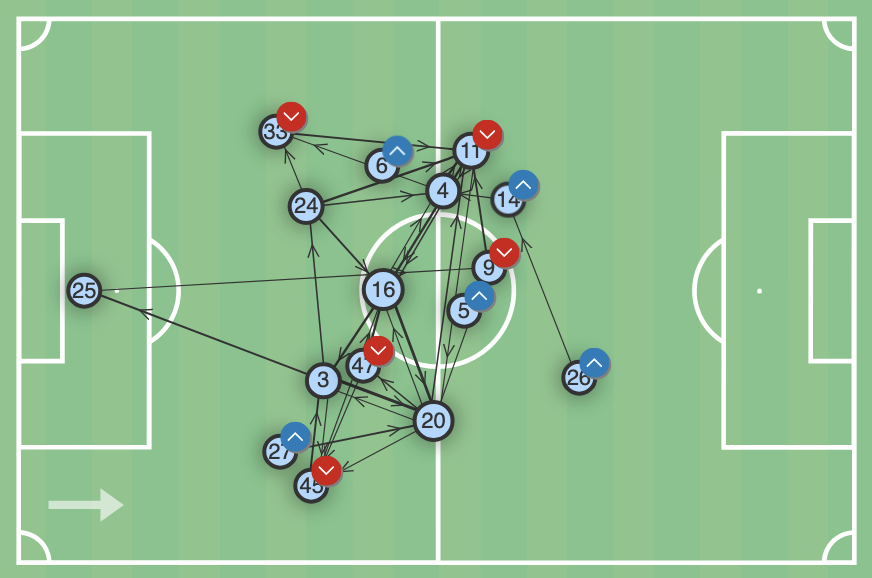
The previous meeting between these two was one of Manchester City’s worst performances of the season in the build-up department.
They had their lowest build-up completion percentage at 76.6%, while Arsenal had a PPDA of 7.1.
Manchester City’s pass map below shows how disjointed they were.
Manchester City Pass Map Vs Arsenal
Their best chance of the match did not come in the build-up, but actually from a counterattack, which is rare against Arsenal.
Erling Haaland won the ball centrally here, and Arsenal had him surrounded with their counterpress, but a brilliant pass to Tijjani Reijnders opened the Gunners up and created a 3v2 break for City with Haaland finding the back of the net.
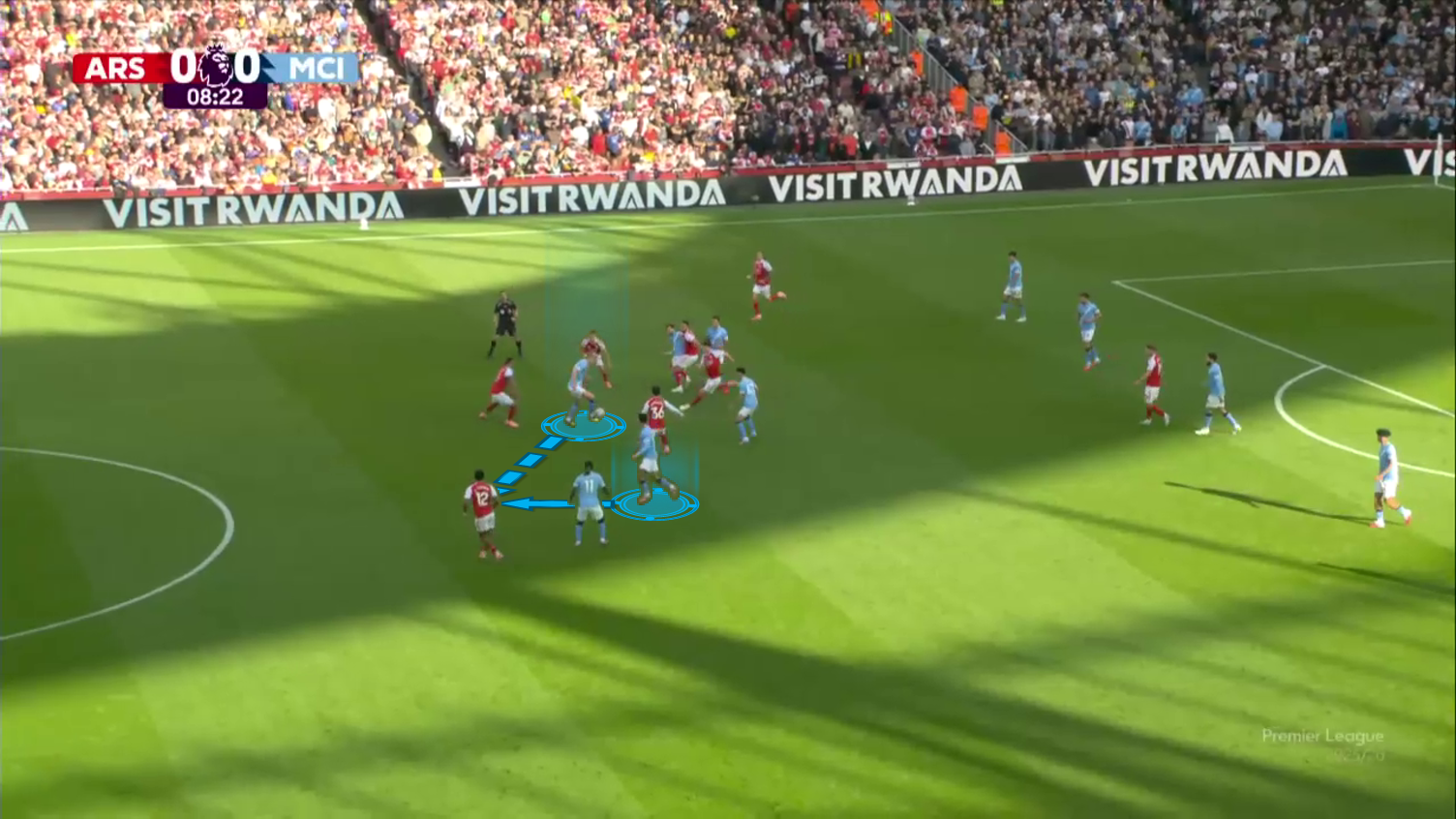
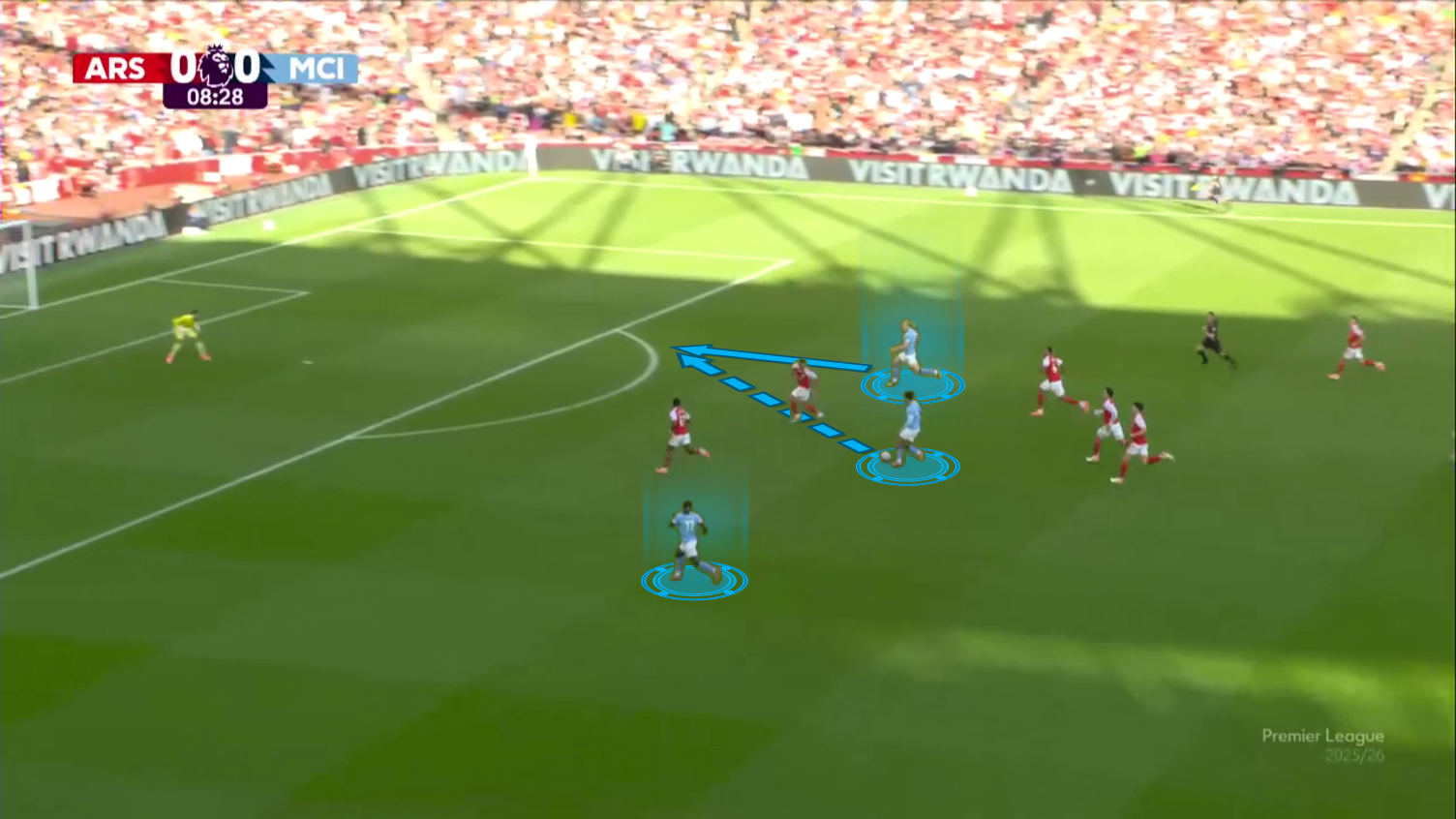
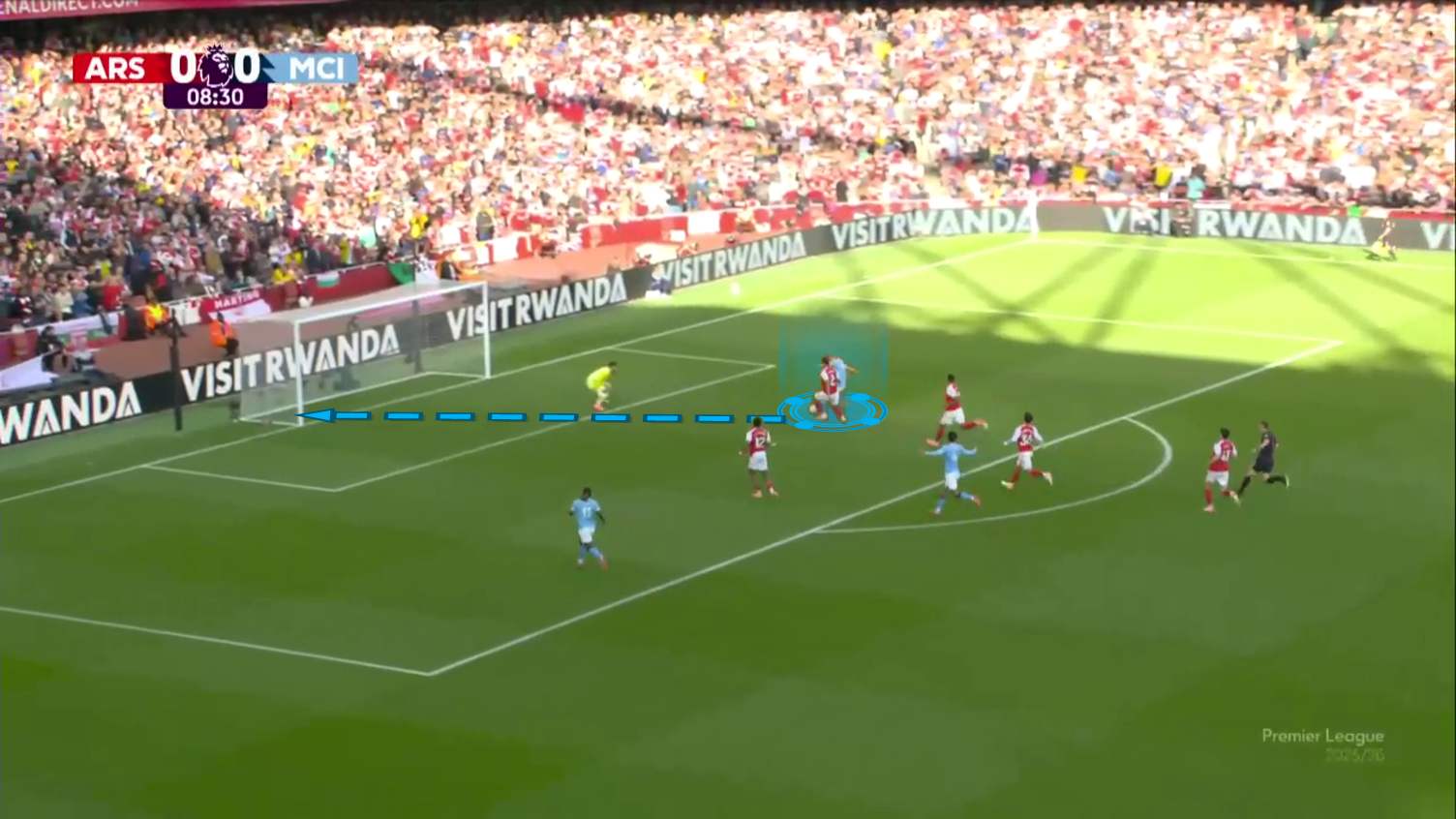
What is crazy is that this is the only counterattacking goal Arsenal have conceded in all competitions this season.
Even when Manchester City entered the final third, there were many times when Rice and Zubimendi cut off passes into the forwards or midfielders trying to find space between the lines.
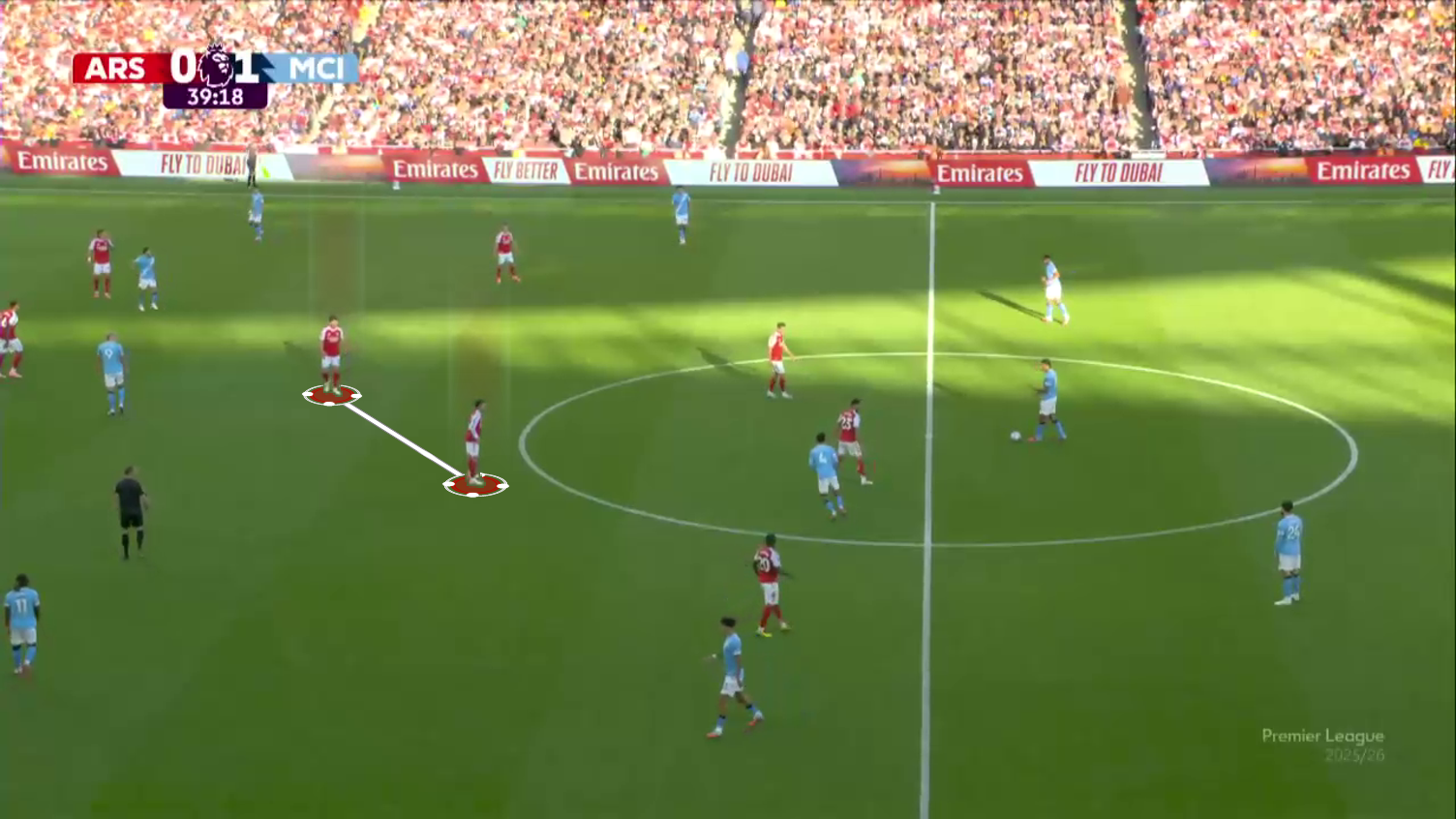
The question is what Manchester City can actually do tactically to not only maintain control of this match but also create effective chances against Arsenal.
In the first leg against Real Madrid, it seemed their entire plan was to overload the middle of the pitch by building up in a 3-1-6 to isolate Jérémy Doku out wide.
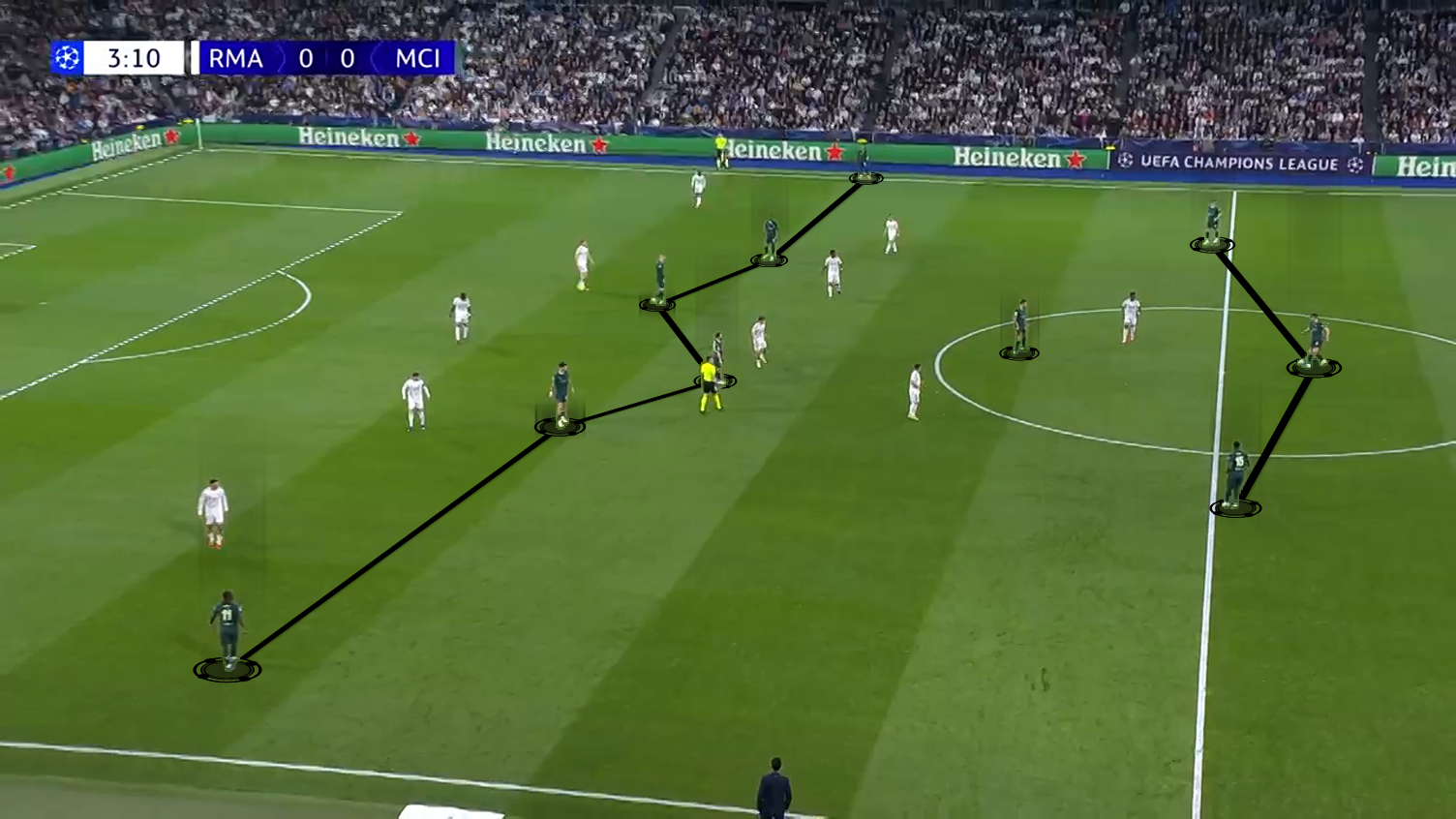
Doku in that first leg against Real Madrid had seven successful dribbles, but went 0/5 on crosses into the box, failing to create a single chance.
If Manchester City are not able to play through the middle of Arsenal’s 4-4-2 when they are in the final third and Doku continually gets doubled, what exactly are Manchester City going to do?
Pep may try to maintain an extreme level of control by using more relational concepts, getting as many players close to the ball to try to overload Arsenal in the build-up.
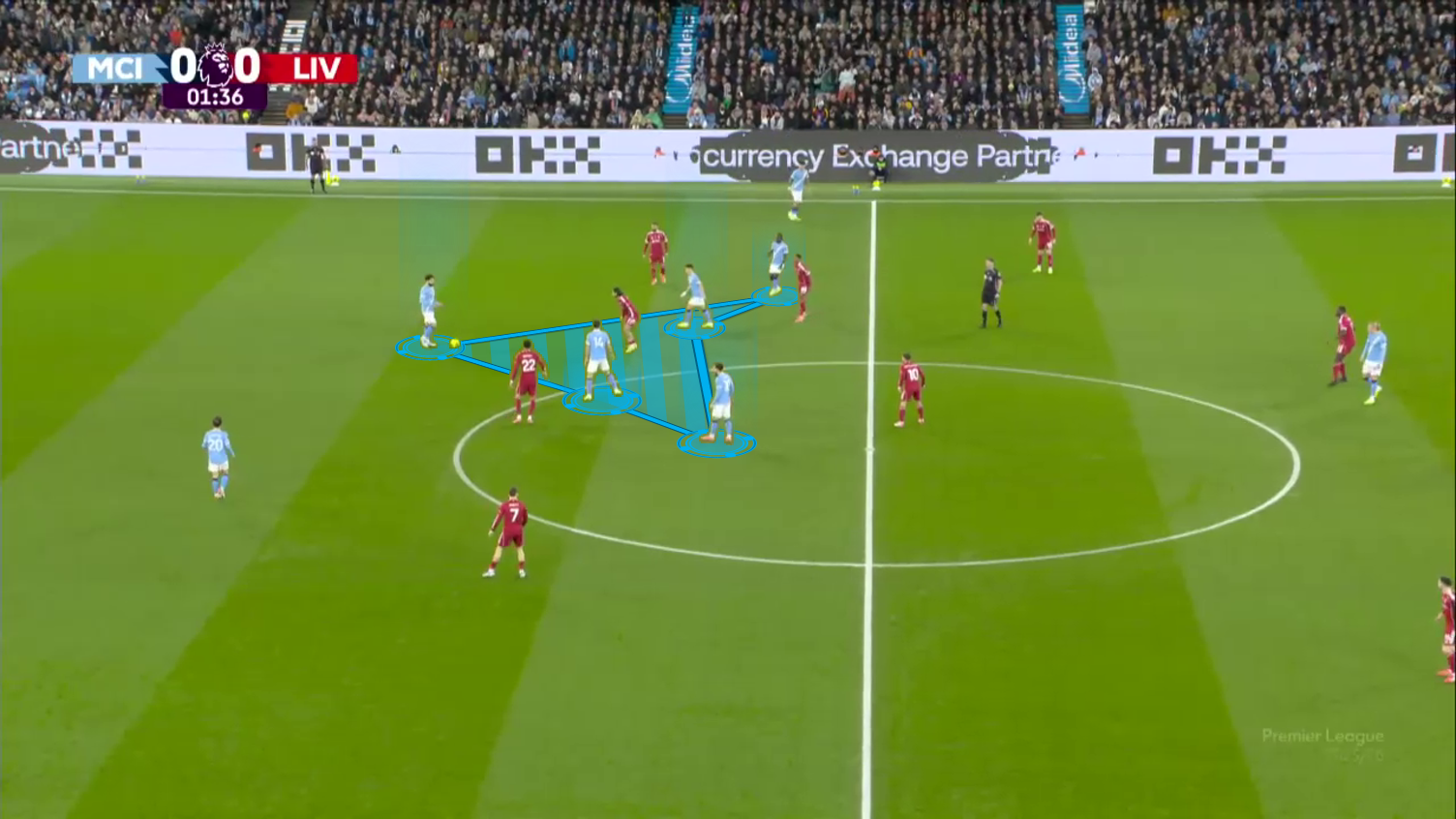
You could also see them try to play the ball directly through Haaland when Arsenal tries to press them high and focus on winning second balls to create transitions, even if they are difficult to manufacture against the Gunners.
Conclusion
With this being a cup final, I really question both teams’ ability to maintain possession if they fall behind.
They are not forced into it very often, but when Arsenal sit in their 4-4-2 low block, they are one of the most difficult teams to break down, and Arteta is not going to allow Pep to control the middle of the pitch.
If Manchester City go ahead, they’ve already shown once that they can defend in a low block, while Arsenal have had plenty of issues this season creating chances from open play.
It should be a fascinating tactical battle between master and protégée to see who lifts the first trophy of the season.
