
Following a thoroughly disappointing 2024/2025 season, wherein they finished 15th in the Premier League and lost the UEFA Europa League Final to Tottenham Hotspur, Manchester United need to undergo a significant squad upheaval for the upcoming season.
With the Manchester United transfer of Matheus Cunha and Bryan Mbeumo finalised, Ruben Amorim‘s next target is recruitment in the striker position.
Although talented, Rasmus Højlund and Joshua Zirkzee have not been able to assert themselves in the role demanded by the Portuguese manager.
Owing to their lack of consistency, the Red Devils are in the market for an upgrade.
RB Leipzig’s Benjamin Šeško and Crystal Palace’s Jean-Philippe Mateta are two contenders for the position.
But who best fits Ruben Amorim tactics for the 2025/2026 Premier League season?
We will find out in this scout report and player analysis, where we examine Benjamin Šeško and Jean-Philippe Mateta playing styles and compare them with those of Man United strikers Joshua Zirkzee and Rasmus Højlund.
How Do Manchester United Strikers Play?
In the 2024/2025 EPL season, Manchester United deployed Joshua Zirkzee and Rasmus Højlund as strikers on numerous occasions.
Let’s look at how these two interpreted the position under Ruben Amorim style of play.
Man United Strikers In Attacking Phase – Receiving To Feet
Under Ruben Amorim formation at Man United, they operate in a 3-4-3, which means that they play with just two midfielders in the middle (central zone and half-space).
Thus, the striker dropping to link play helps them progress.
It was common to see both Højlund and Zirkzee combining with midfielders in the midfield and the attacking thirds.

Here, we can see Højlund dropping into the midfield third to combine with a midfielder.
He pulls the opponent’s centre-back out of position, which opens space in behind for a runner.
The midfielder is able to play a one-two with Højlund to receive behind the opponent’s backline.
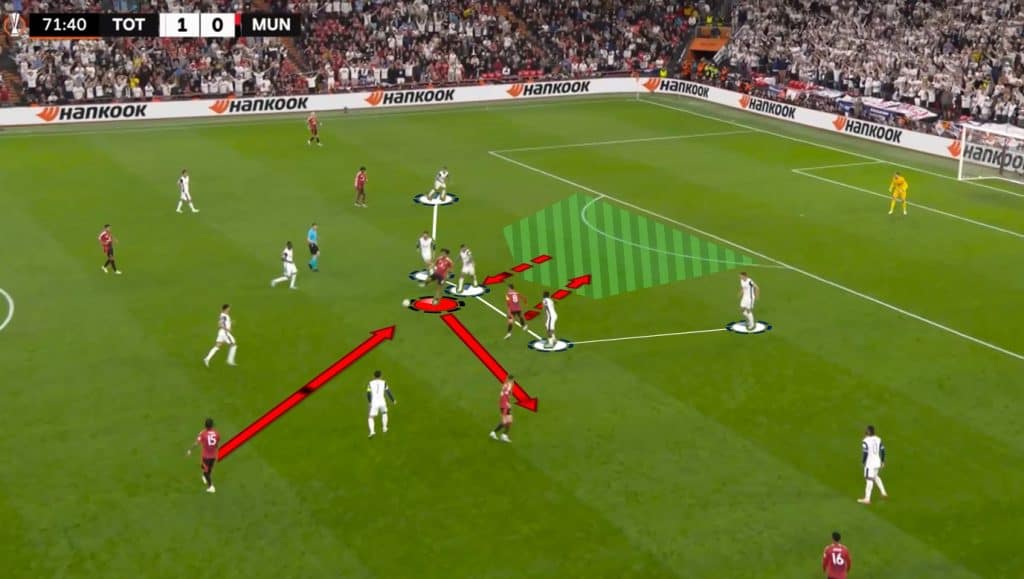
In this image, Zirkzee pops out of his position to play a third-man pass.
This drags the opponent defenders out of position, which opens space in the final third.
We can see Bruno Fernandes starting his forward run; the Portuguese eventually meets a cross for a free header owing to Zirkzee’s movement.
While both the United strikers can drop into deeper positions to combine with teammates, link-up play in the attacking third, especially zone 14, has not been Højlund’s strong suit.
However, Zirkzee has shown the ability to operate in those tight areas.
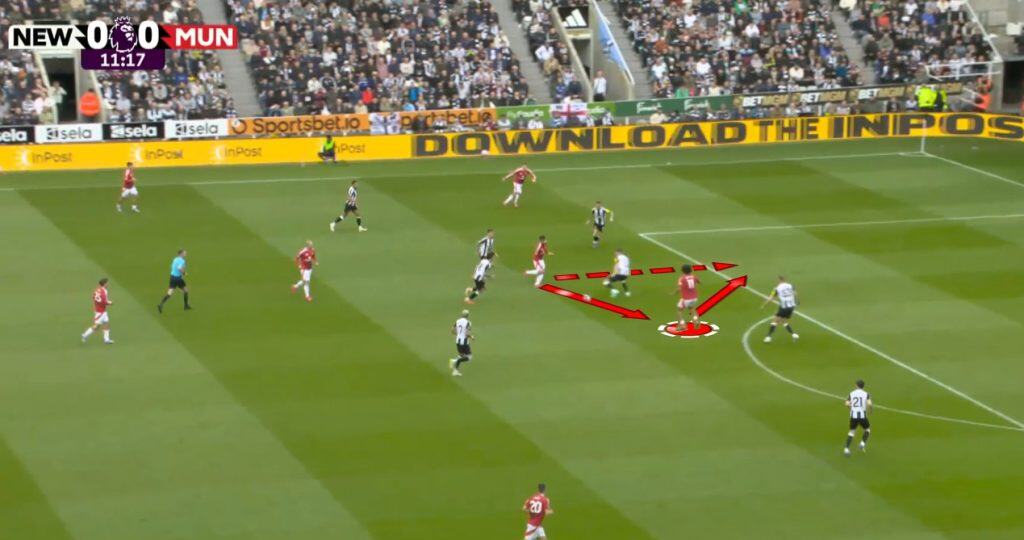
Here is an example of the Dutchman combining with a teammate in zone 14.
Although technically adept, he lacks the physicality to withstand pressure and is susceptible to being muscled off the ball, leading to turnovers.
Højlund, on the other hand, owing to his large frame, can absorb the physical pressure, but lacks the technical ability to link play with consistency.
Man United Strikers In Attacking Phase – Receiving On The Run
Both strikers have also showcased a variety of runs in behind, ranging from runs in the half-space and curved runs in the central zone to underlapping runs to receive out wide.
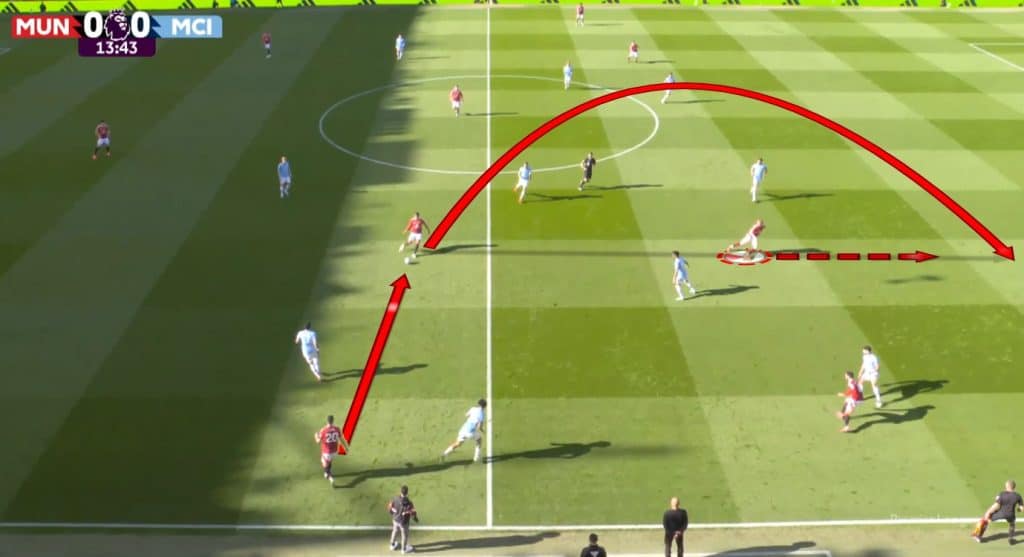
Here, Højlund gets on the end of a third-man pass by making a run in the half-space.
The right wing-back plays a flat pass to the centre-midfielder, who plays a chipped through pass for the Danish striker.
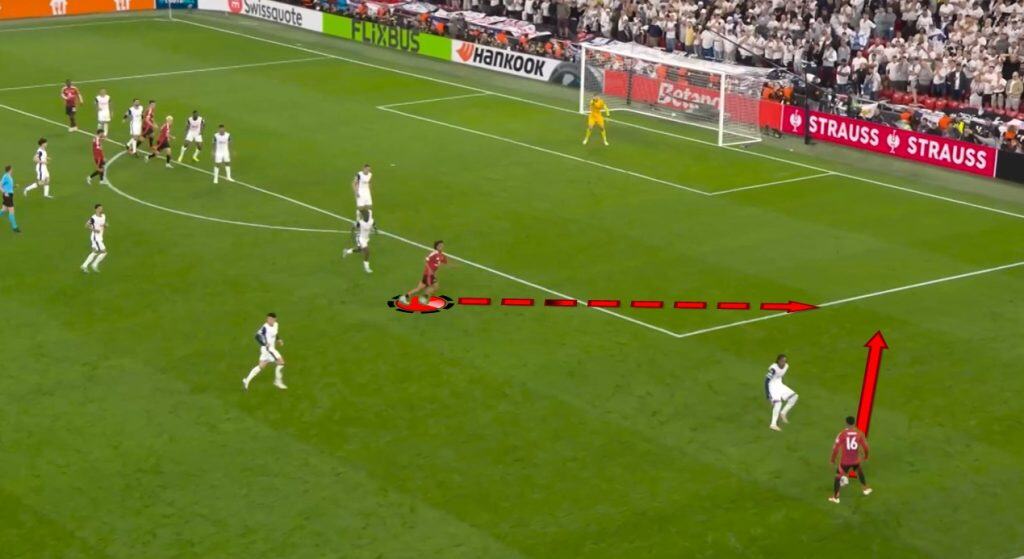
In this situation in the attacking third, Zirkzee identifies space in-behind in the wide area.
He makes an underlapping run to receive from the wing-back.
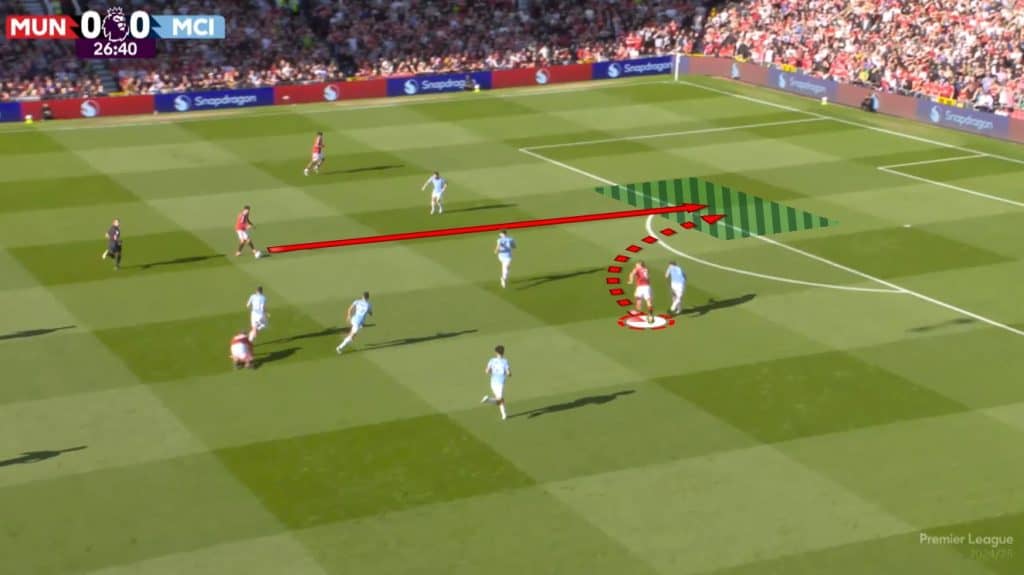
The image above shows a curved run in the central channel from the Dane as a passing lane opens up.
Any striker who joins Man United is expected to have variety in movement, as they often find themselves in situations like these against sides that play with a high line.
Additionally, the striker will also be expected to be able to link play in both midfield and attacking thirds, which will be the requirement against low-block opponents.
Man United Strikers In Defensive Phase
Rasmus Højlund, who featured in the majority of Amorim’s games last season, displayed underwhelming numbers in terms of defensive actions, especially in the final third.
The Danish attacker had a combined 0.22 tackles + interceptions per 90’ in the high zone, which indicates that United benefited minimally from his pressing actions.
The 22-year-old operated more by cutting passing lanes and staying in structure than aggressively pressing.
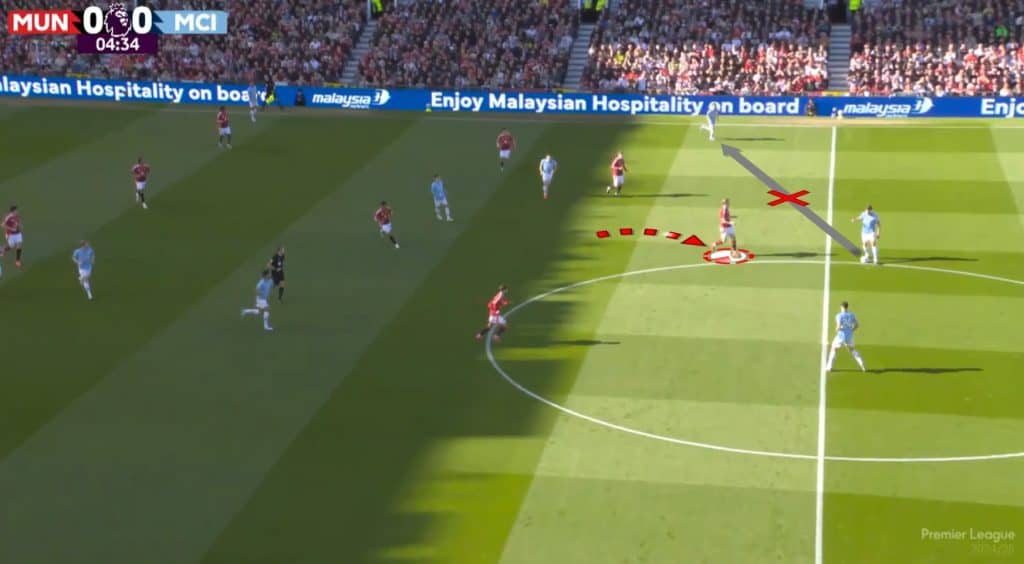
Here is an example of Højlund pressing an opponent centre-back in the midfield third.
He curves his pressing run to cut out passing angles on one side.
However, the pressure is to direct the opponent rather than create chaos.
Benjamin Šeško Scout Report & Style Of Play
Benjamin Šeško style of play is that of a dynamic striker adept at making runs, carrying the ball at a high intensity, and dribbling at defenders.
He has a large frame and, being a tall striker, dominates aerial battles.
He was heavily involved in attacking play for RB Leipzig, which is reflected in his goal contributions per 90’.
He has a large radius and range of action, which allows him to be involved in several phases of play.
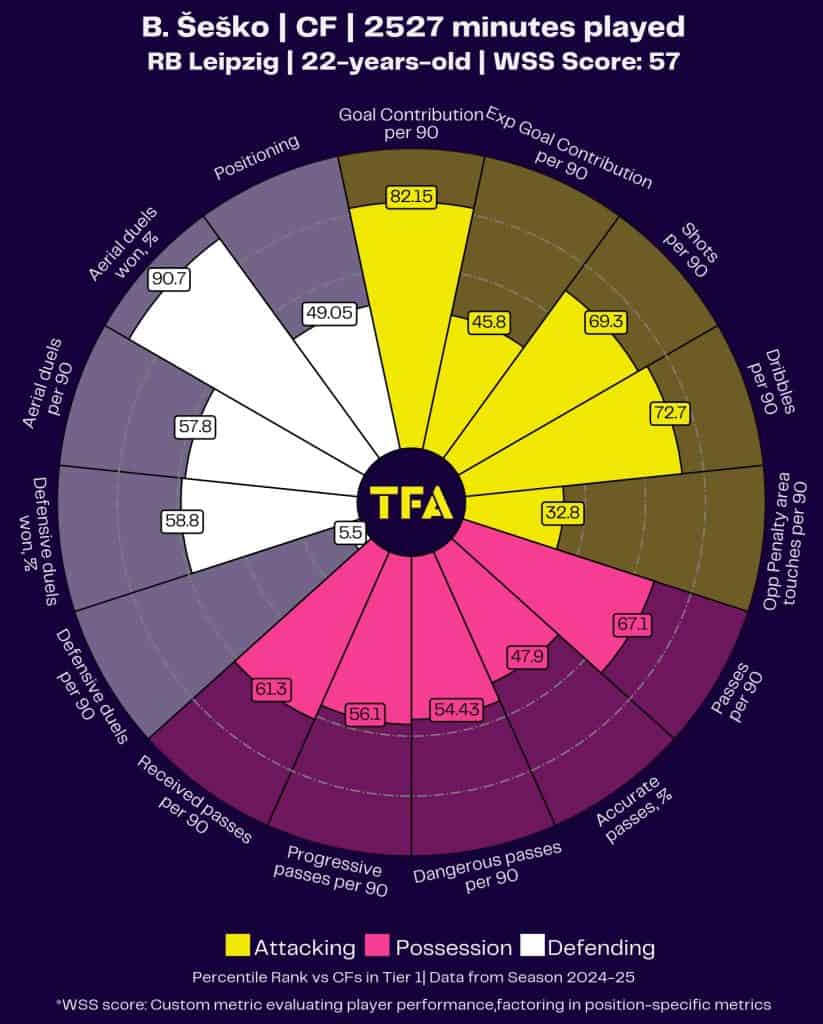
Let’s examine how good is Benjamin Sesko and how he could set up tactically at Manchester United.
Benjamin Šeško In Attacking Transition
The Slovenian is an avid runner and consistently exploits the spaces in-behind with his pace on and off the ball.
RB Leipzig are a transition-heavy side, which is why Šeško was such a hit for them.
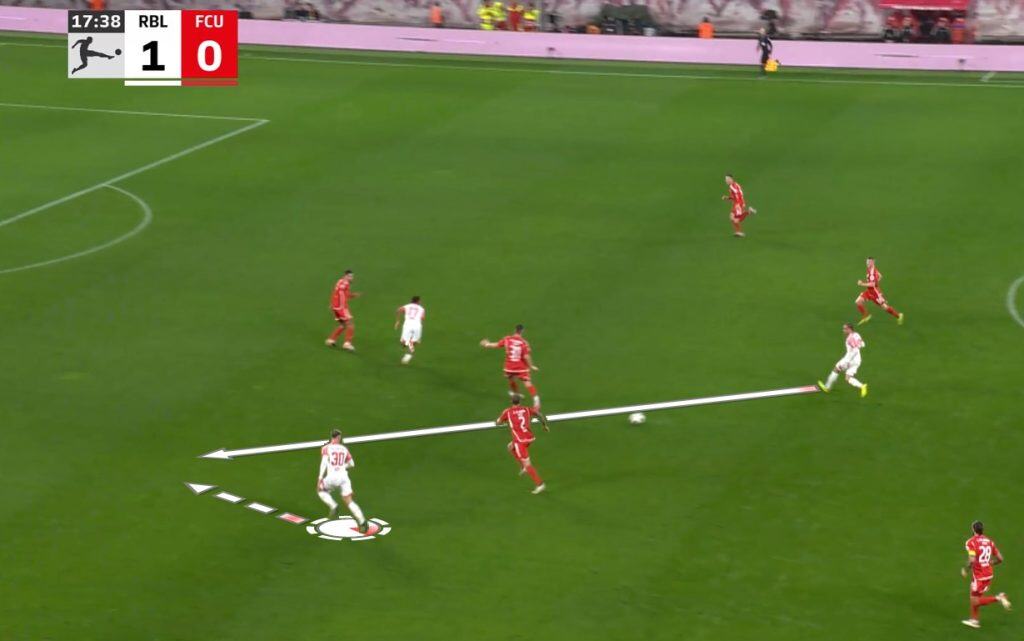
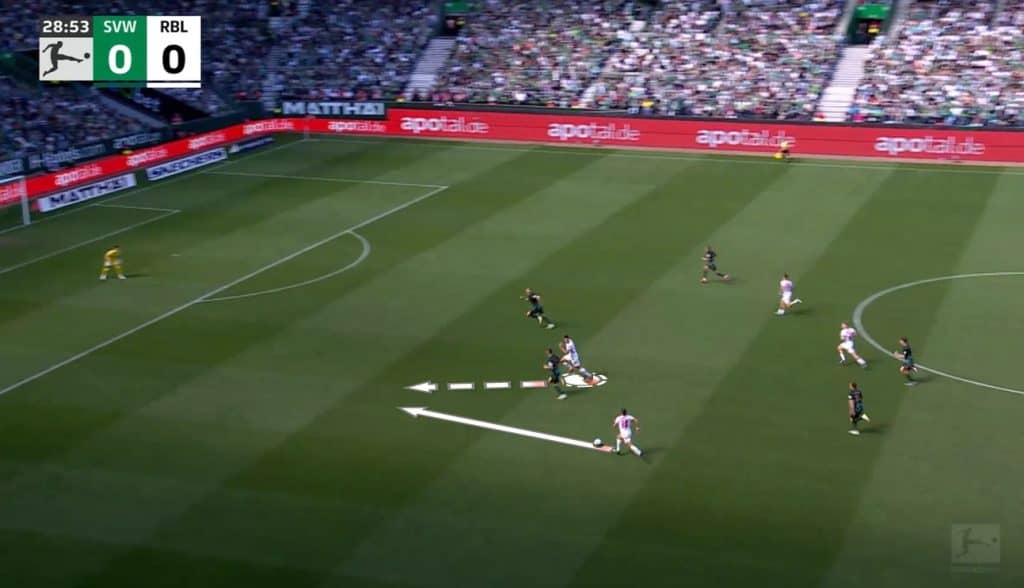
In this image, we can see Šeško making a run in behind during an attacking transition situation for Leipzig.
The opponent’s defence is unsettled, and the Slovenian takes advantage of the situation by running on the defender’s blindside.
He would come in handy for Amorim, as United also gets into many of these situations and needs direct runners who can exploit depth.
Here is another example of the Leipzig striker running in-behind; in this situation, he is making an underlapping run to exploit space in the half-space.
A movement like this takes him away from the defender on his blindside, giving him enough time and space to create for either himself or an arriving teammate.
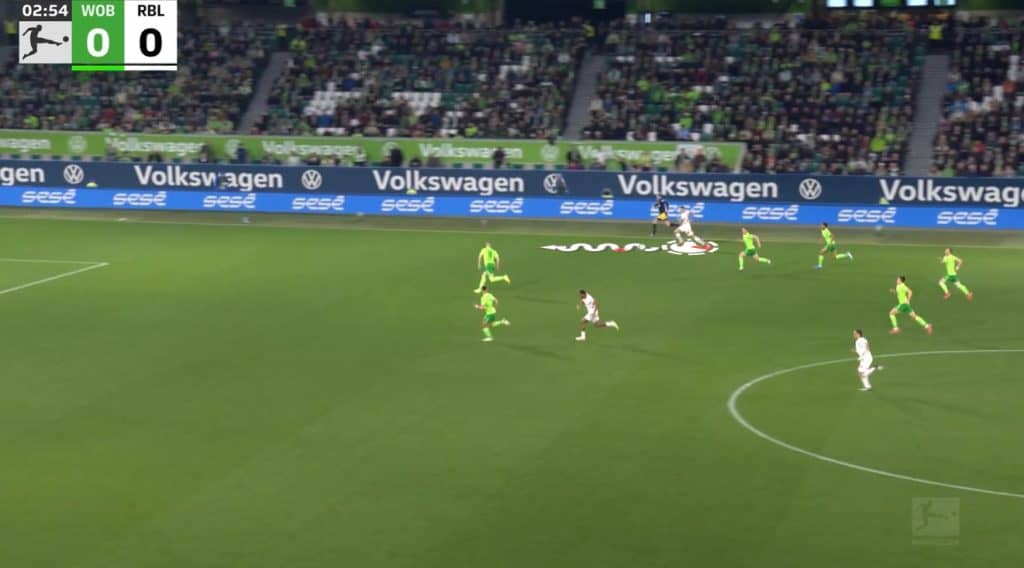
Apart from making runs in behind, he is adept at exploiting space with his aggressive ball-carrying.
In the situation shown above, he picks the ball up in the defensive third and starts the counter-attack by driving straight down the middle.
His dribbling across two-thirds of the pitch attracts all the opponents to him, leaving space open for his teammate, who is running alongside him.
He can also be seen breaking down the wide channel whenever there is space in those areas.
This injects fluidity into the attack and makes him difficult to track for the opposition defenders.
In the situation illustrated above, we can see Šeško carrying the ball in the wide area, with his fellow attacker making a run in the central channel.
The Slovenian eventually crosses the ball for his teammate.
Benjamin Šeško In The Attacking Phase
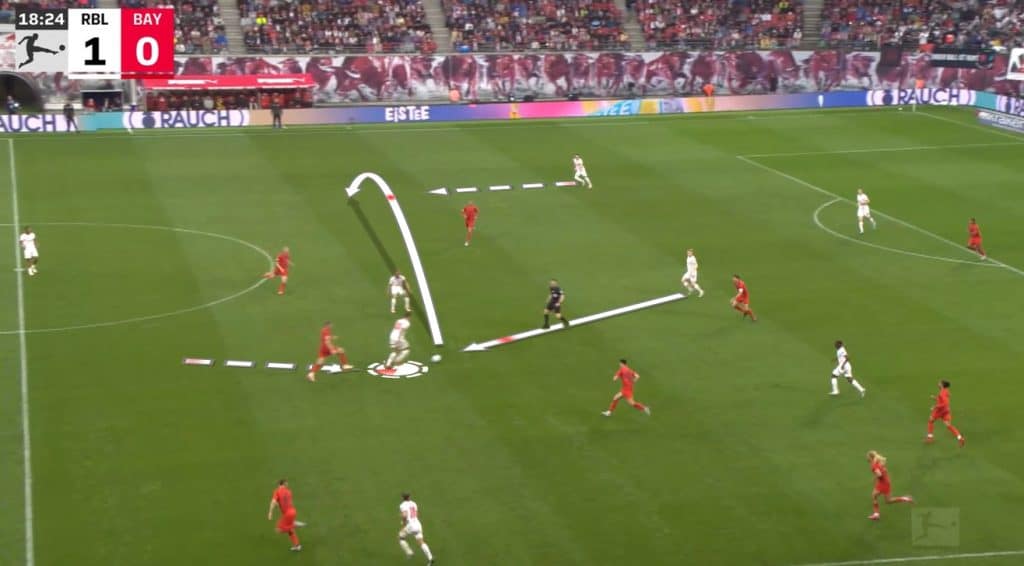
The Slovenian was seen dropping deep when offered space to receive the ball at his feet.
In these situations, he was able to either lay it off to the oncoming midfielders or switch play.
In the image above, he drops into the midfield third and shifts play to find the full-back on the other side.
Although he was spotted dropping frequently, despite his large frame, he is still not refined in terms of hold-up play.
Whenever he drops, he makes sure to take his touch away from the blindside pressure to release it quicker.
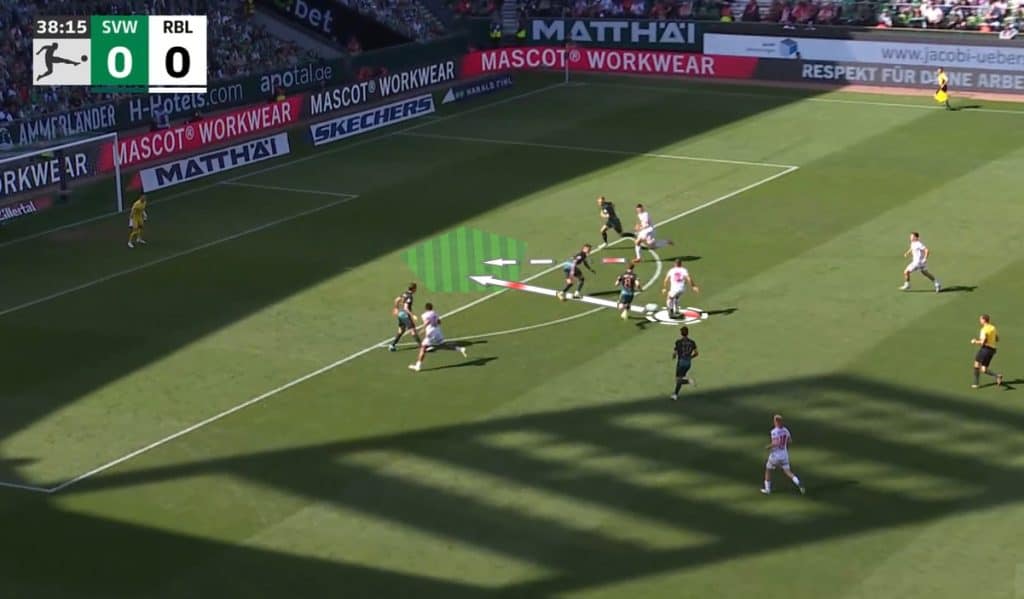
A byproduct of Šeško’s direct dribbling is his chance-creation in the attacking third in the form of key passes.
As his ball-carrying attracts multiple defenders, it often opens space for his teammates.
In the image shown above, Šeško is closely followed by two opponents, one of whom is the centre-back.
As the latter steps up, space opens up behind him, which a Leipzig teammate exploits.
The Slovenian threads a pass in-behind to set him up for a one-on-one against the goalkeeper.
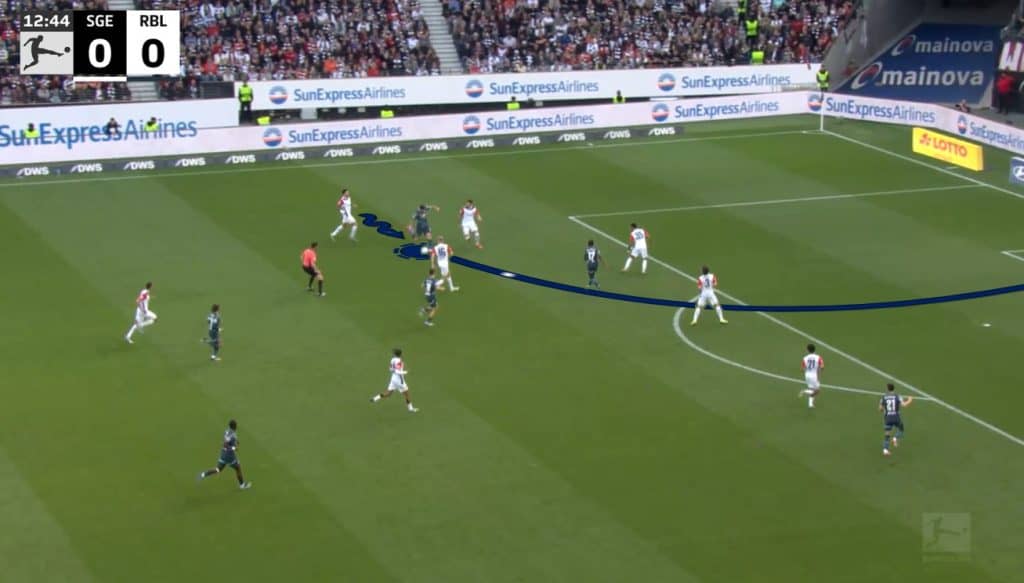
Another byproduct of his dribbling is the number of shooting opportunities he creates for himself.
He frequently peels wide, carries the ball, and cuts inside to shoot.
In the example here, he does the same from the left flank.
Despite being surrounded by three opponents, he is quick to get the shot away.
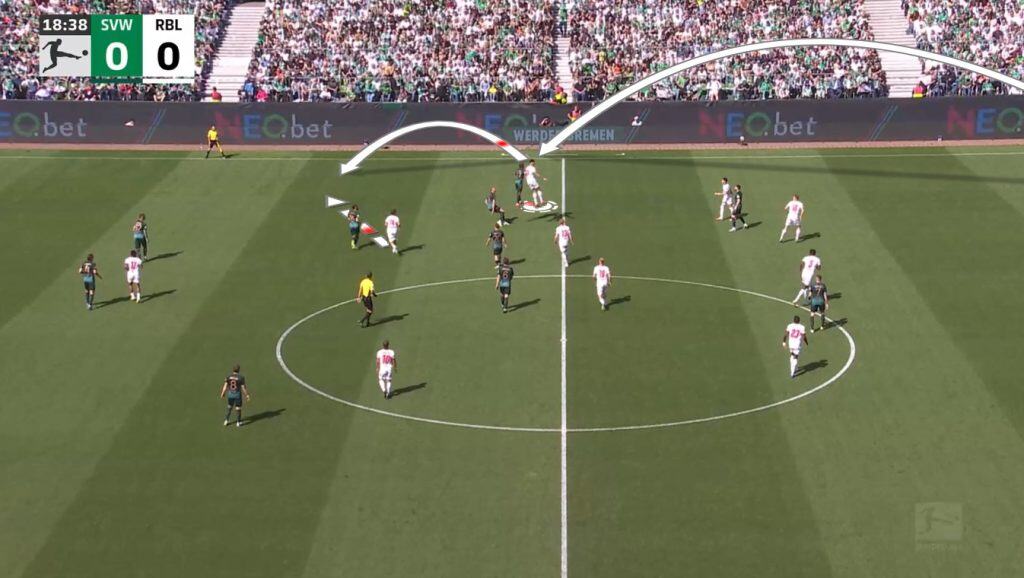
Although not the most dominant in terms of hold-up play, Šeško does some heavy lifting in aerial duels.
He is proficient at meeting long passes with his head, flicking them on for his teammates, and making forward runs.
In this example, we can see Šeško playing a flick-on for his teammate running forward.
This could be of great utility for Man United, especially with runners like Cunha and Mbeumo.
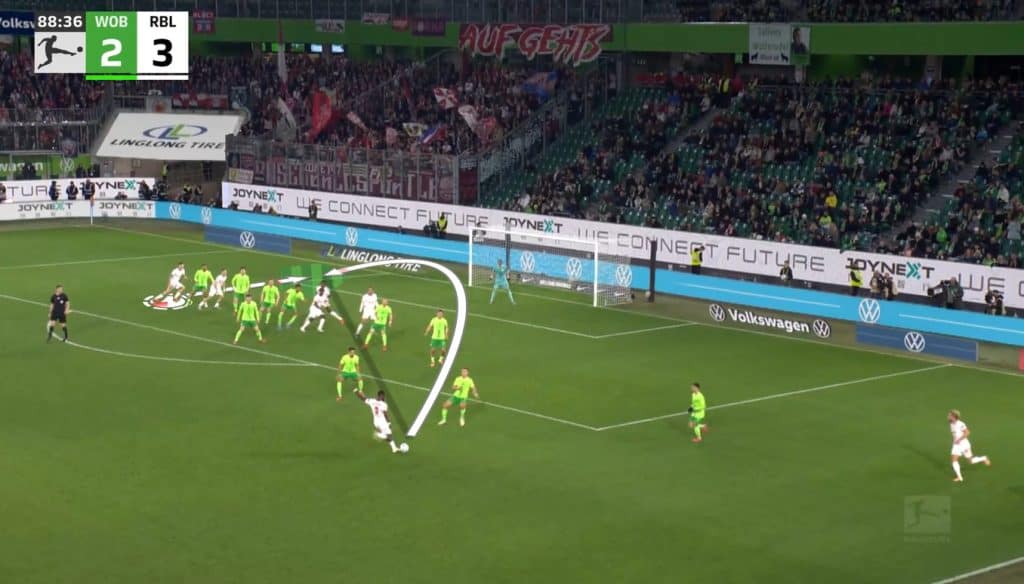
Šeško is not the most prolific goal-scorer with his head.
However, he is adept at beating his direct opponent through movement to get to the ball first.
This is exactly what he does in the example above.
As the crosser receives the ball, he starts by peeling wide and stretching the defender.
As his teammate shapes up to cross, he makes a burst of pace into the space behind the back line for a back-post header.
Benjamin Šeško In The Defensive Phase
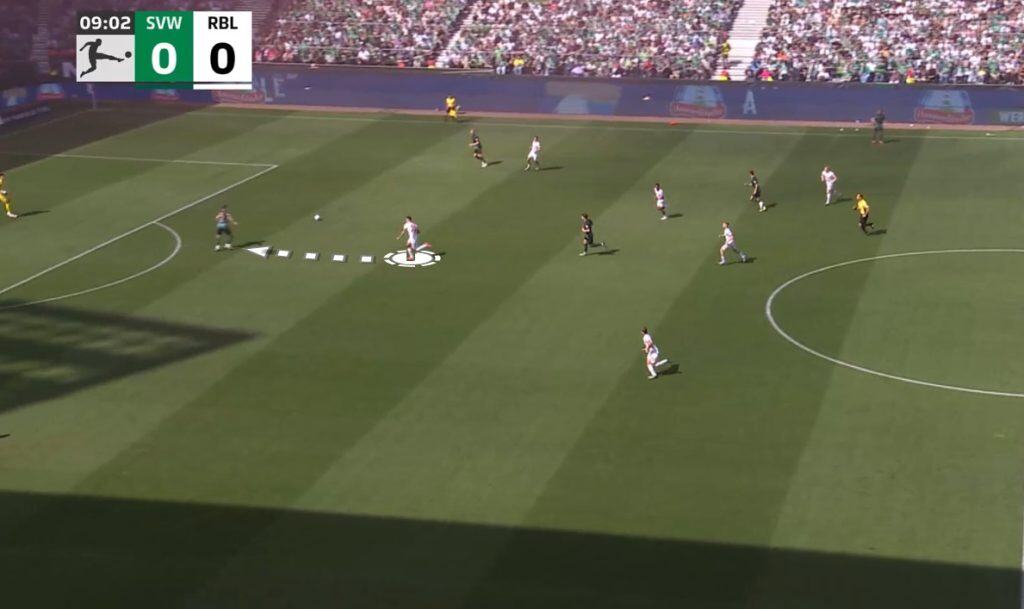
The Slovenian is an aggressive presser who will unsettle the opponent’s build-up with his running.
The Leipzig striker is a recipe for chaos, which could prove helpful for United as they look to dominate the attacking third.
Jean-Philippe Mateta Scout Report & Style Of Play
Jean Philippe Mateta style of play is very calm and physical, as he is more of a traditional poacher with an eye for goal.
Although he is not as quick and dynamic as the Slovenian, he is adept at hold-up play, aerial duels, linking play in the final third, and positioning in the penalty area.
He has a relatively smaller radius of action, but he is more refined as a striker and dominates with his presence in the central zone, especially zone 14.
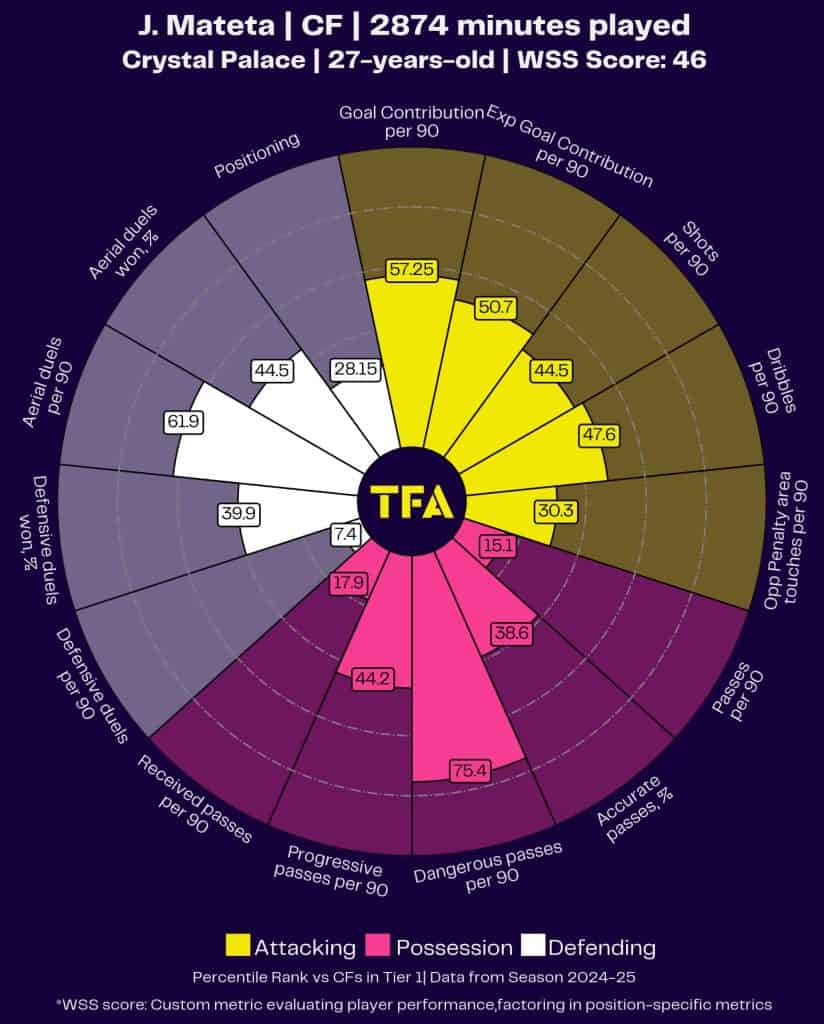
Let’s examine how good is Jean-Philippe Mateta and how he would set up tactically at Manchester United.
Jean-Philippe Mateta Actions In Midfield Third
The Frenchman is fairly comfortable dropping deep to offer support in progression.
During his time with the Eagles, he frequently combines with his midfielders to create lay-offs and move the ball from one open space to another.
His action of occupying a pocket of space to link play has been key for Oliver Glasner’s side.
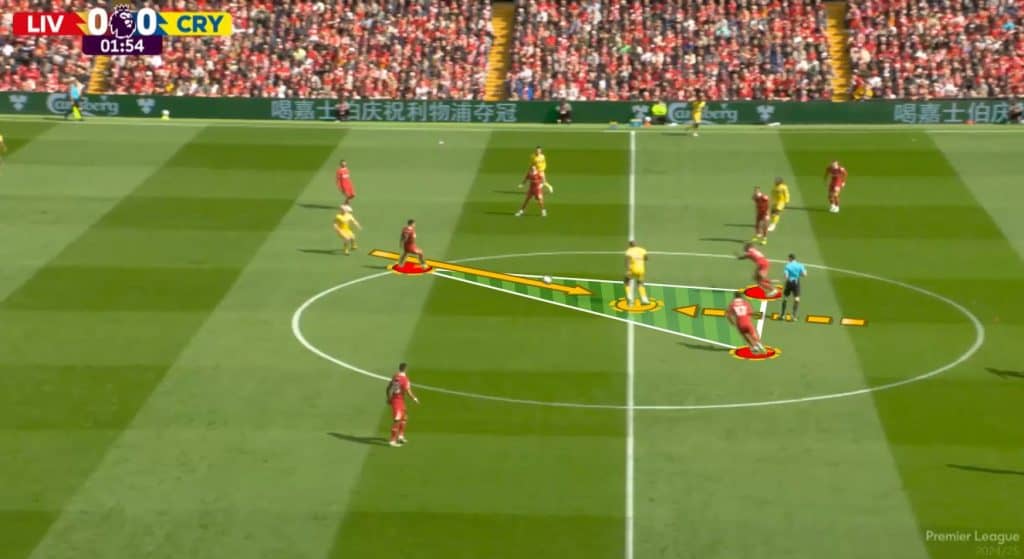
Here is an example where Mateta drops into the midfield third to receive from his midfielder.
With pressure on his back, he comfortably takes a touch to the side and progresses the ball with a forward pass.
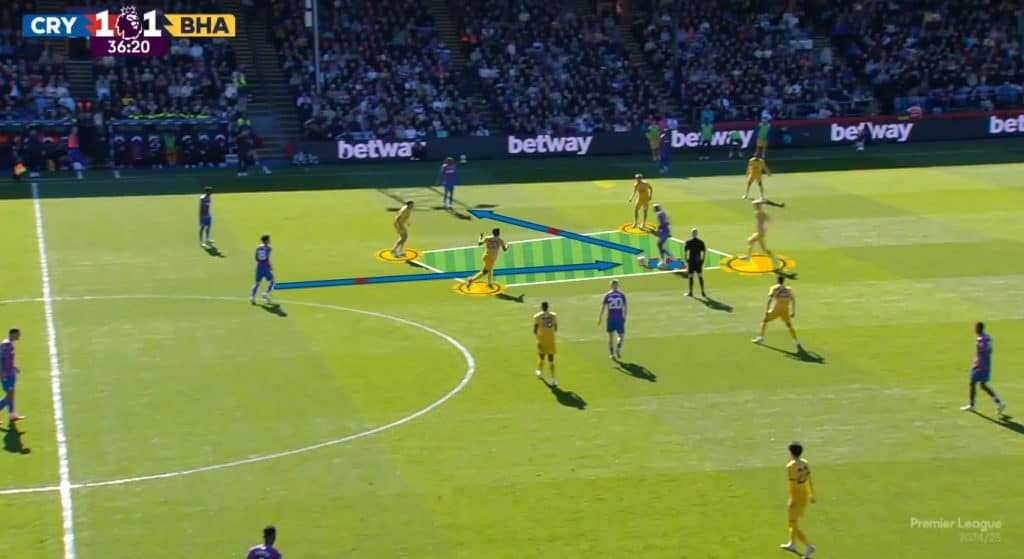
Here is another example of the Frenchman dropping into the midfield third, in the half-space on this occasion.
He occupies a small pocket of space to receive a vertical pass from his midfielder.
Mateta then proceeds to send it to the wide area where his full-back is in a bit of space.
Strong in the air, Mateta proves useful to his teammates by bringing down long balls to start attacks from a higher position on the pitch.
He is also adept at flicking them forward into runners’ paths.
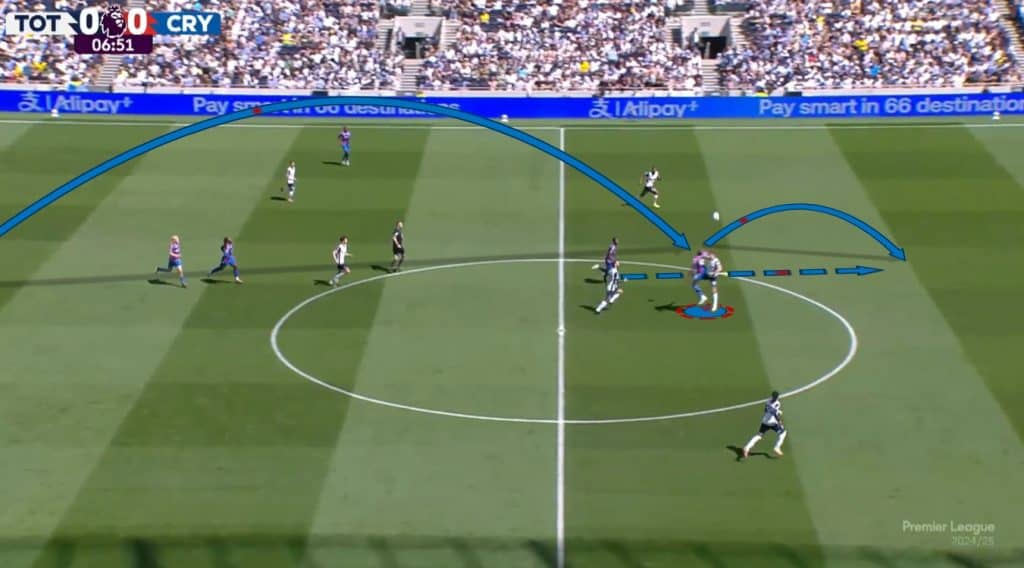
In the example above, the Frenchman leaps to meet a long ball with his head, comfortably flicking it forward for a teammate on the run.
Jean-Philippe Mateta Actions In Attacking Third
Mateta is equally effective in the attacking third.
Since he operates as a target man, much of the play in the final third involves him.
Here, we can see that the Frenchman receives from the right flank and spots a runner down the left side.
He immediately threads a pass through.
This action leads to a shot on target.
This would come in handy for Ruben Amorim’s side, as he will work with runners in the half-space.
It is similar to how he operated under Oliver Glasner, since Crystal Palace played in a 3-4-2-1 in the 2024/2025 Premier League season.
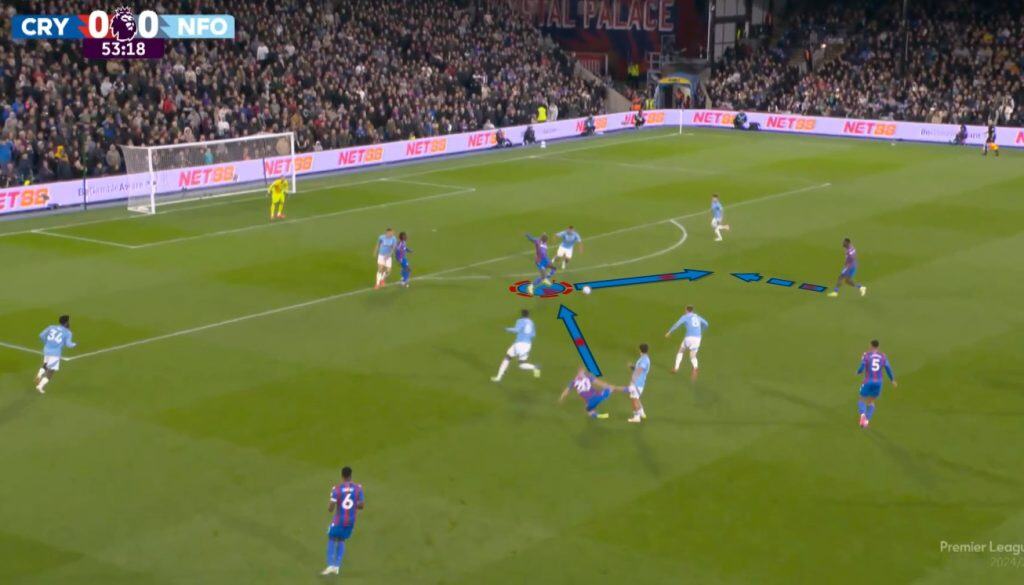
Along with link-up play in the midfield third, an area where Mateta shines is the zone-14.
The Frenchman can absorb pressure from the opposition centre-backs and facilitate quick ball movement in the final third.
In the example above, Mateta receives the ball in zone 14 and sets it up at an angle for an arriving teammate, who gets the ball in space.
Actions like these can help create shooting actions, which can be useful for United, as they have multiple-distance shooters.
Mateta’s presence in the penalty area is one of his key strengths.
Although he is not the quickest, his intelligence in terms of movement and positioning helps him complete several crosses.
In the example above, Mateta is in a good position as the cross is played.
Because of his physical presence, he comfortably guides the header to the back of the net.
Benjamin Šeško Vs Jean-Philippe Mateta Stats
The above analysis highlights how Šeško and Mateta, being two different profiles, contribute to the system in different ways.
Ruben Amorim will benefit from their ability to exploit space, link play, win aerial duels, press aggressively, thread passes through, and score headers.
The main question all United fans want to know is: who is better, Benjamin Sesko or Jean-Philippe Mateta?
We will answer this question and examine data to understand who better fits Manchester United’s needs in multiple areas.
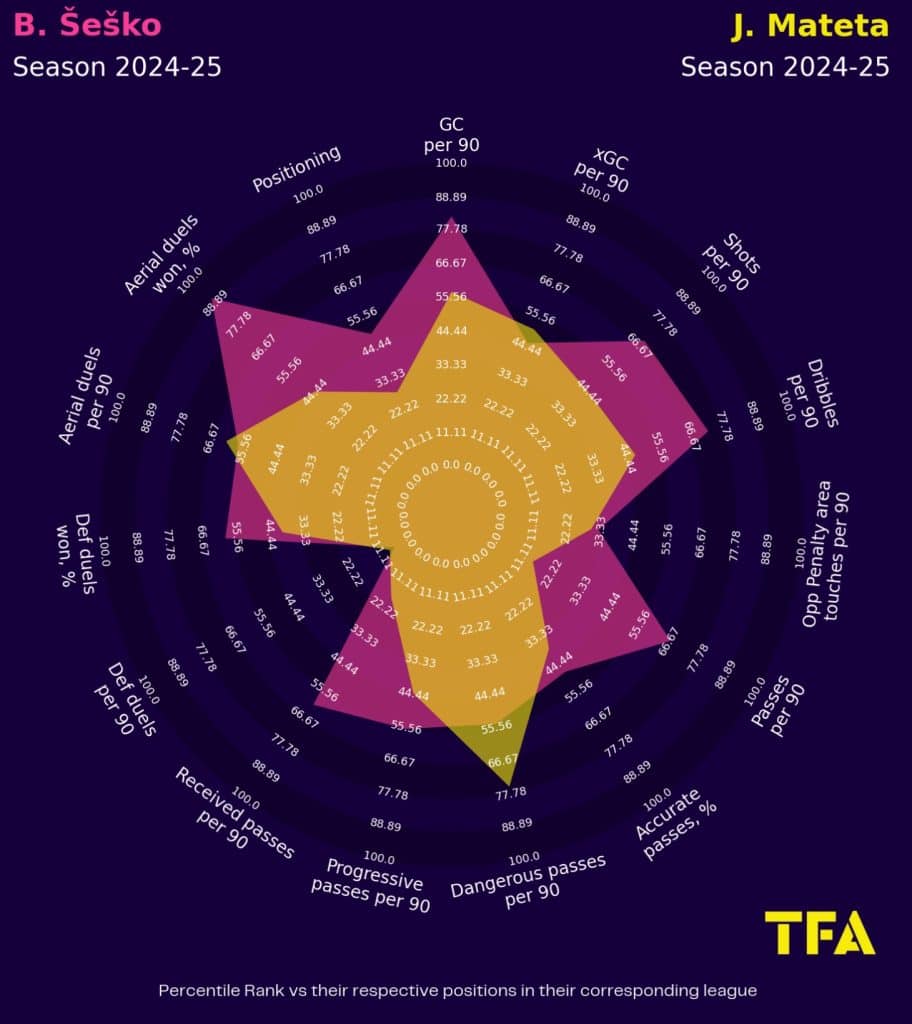
Benjamin Šeško & Jean-Philippe Mateta Goal Contributions
Benjamin Šeško scored 13 times in the Bundesliga with a frequency of 0.49 goals per 90′; meanwhile, Jean-Philippe Mateta had 14 Premier League goals under his belt last season, which is 0.48 per 90′.
Additionally, the Slovenian also scored four times in the UEFA Champions League, delivering on his xG of 3.57
They are pretty evenly matched in terms of the number and frequency.
However, there is a notable difference in how Leipzig and Palace play.
This means that Šeško scored more from moments in positive transition, and Mateta scored more owing to his presence and positioning inside the penalty area.
They are not far apart in terms of shots per game either, with Šeško having 2.50 per 90′, and Mateta shooting 2.31 times in the same duration.
Šeško creates most of his shot chances by carrying the ball, dribbling, and cutting inside.
Meanwhile, Mateta’s shots come from link-up play and intelligent positioning.
Šeško bagged five assists in the Bundesliga, exceeding his xA of 1.73.
He surpassed the Frenchman as Mateta managed two assists in the Premier League.
Benjamin Šeško & Jean-Philippe Mateta Progressive Actions
Both strikers completed 68% of their passes on average.
The difference is evident when we examine the direction of their passes.
Mateta completed 1.77 progressive passes per 90′ to Šeško’s 1.39.
It highlights the Frenchman’s involvement in the attacking third.
The Slovenian had relatively more progressive carries per 90′ (1.78) than the French striker (1.53).
This is because Šeško played for a fast-paced counterattacking side, which resulted in more repetition in terms of ball-carrying.
Mateta, on the other hand, was more suited to playing the ball to the wide players and moving up the pitch.
Šeško was more involved in play leading to shots and goals, which reflects in his big chances created per 90′ (0.75), which is higher than that of Mateta (0.24).
This explains that Oliver Glasner had his striker placed more on the receiving end of chances than creating them.
The Slovenian averaged slightly higher dribbles per 90′, with 1.20 (43 total), whereas the Frenchman had 1.0 (20 total).
This is consistent with the information that the latter is more inclined to stay in further positions to link play in the attacking third.
Benjamin Šeško & Jean-Philippe Mateta Final Third Involvement
Šeško had an average of 4.09 touches in the opponent’s penalty area, while Mateta had 2.78.
This is a consequence of the former’s more dynamic presence in all parts of the pitch.
This was also the case in midfield third, where Šeško was involved in all vertical channels, whereas Mateta displayed more touches in the central channel.
Mateta received around 4.16 progressive passes per 90′. Meanwhile, Šeško received approximately 5.78.
This highlights that the Slovenian is a more willing runner and is comfortable popping out of the central zone to get on the ball more.
Benjamin Šeško & Jean-Philippe Mateta Defensive Actions
Jean-Philippe Mateta won 0.41 tackles per 90′ and intercepted 0.10 times.
Meanwhile, Benjamin Šeško won 0.14 tackles and intercepted 0.17 times.
This shows that the Frenchman is more proactive in winning duels; however, the Slovenian is slightly better in reactive positioning.
Šeško made 2.48 ball recoveries per 90′, which is slightly higher than Mateta’s 2.30.
This signals a higher level of dynamism from the Leipzig striker.
Conclusion
Jean-Philippe Mateta is a clinical poacher who focuses most of his actions in the attacking third.
His progressive passes reflect his involvement in the attack.
If Manchester United sign him, his ability to link play in zone 14, aerial presence in the penalty area, and physicality in tight spaces will be key.
However, he cannot stretch defences with his running and lacks the ball-carrying and dribbling abilities that the Slovenian could bring.
Benjamin Šeško is dynamic, energetic, and fluid in terms of movement and positioning.
His radius of action is larger as he covers wide areas.
His statistics around dribbles, progressive carries, and ball recoveries aptly show his influence.
If United sign Sesko, he would be a key player in transition due to his running and would inject more fluidity into the side.
With him peeling wide, the central spaces can be occupied by Cunha or Mbeumo.
However, he is not as refined in final third link-up play like the Frenchman.
Mateta is a more refined striker and would be great for attack with possession.
Meanwhile, Šeško is more dynamic and will be useful in transition.
