
Carlos Romero has been one of the most efficient players in the Espanyol squad this season in La Liga.
Romero has emerged as one of Manolo González‘s most consistent players.
The left-back, on loan from Villarreal, not only performs his role on the flank but also dictates the tempo of the game for his team.
His participation in 21 league matches, scoring four goals and making three assists, not only reflects his individual statistics but also underscores the extent to which the coach relies on him to perform complex roles within the same match.
In this Carlos Romero scout report, we will examine Carlos Romero’s profile and style of play within Los Periquitos‘ tactics.
Carlos Romero In Build-Up & Positional Play
From the back, during the build-up phase, Carlos Romero is one of the key players in overcoming the opponent’s initial press.
Instead of maintaining a wide position, he often drops a step or two inside, creating an additional passing angle with the centre-back and holding midfielder, allowing Espanyol to play the ball out in an organised manner under pressure.
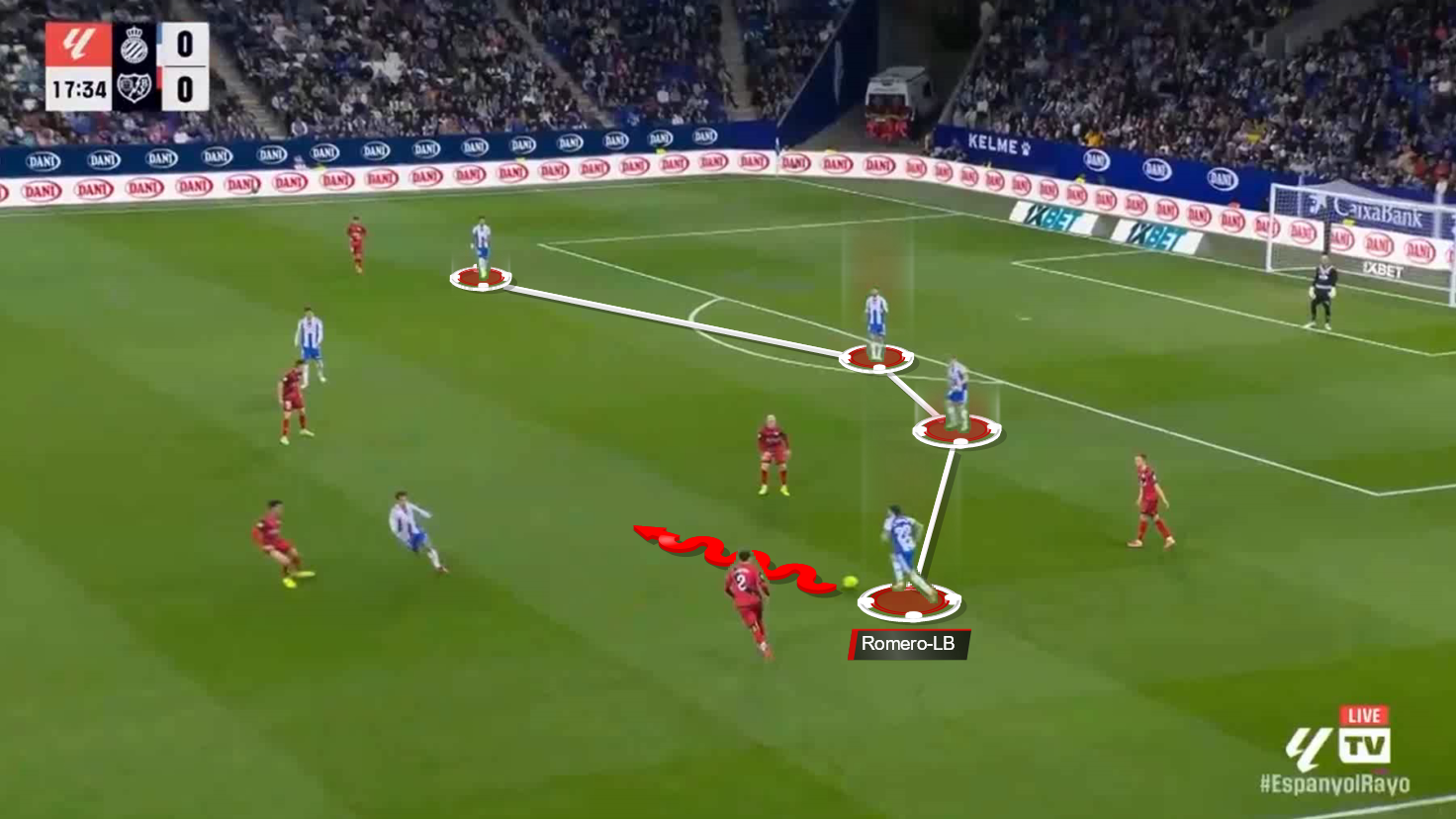
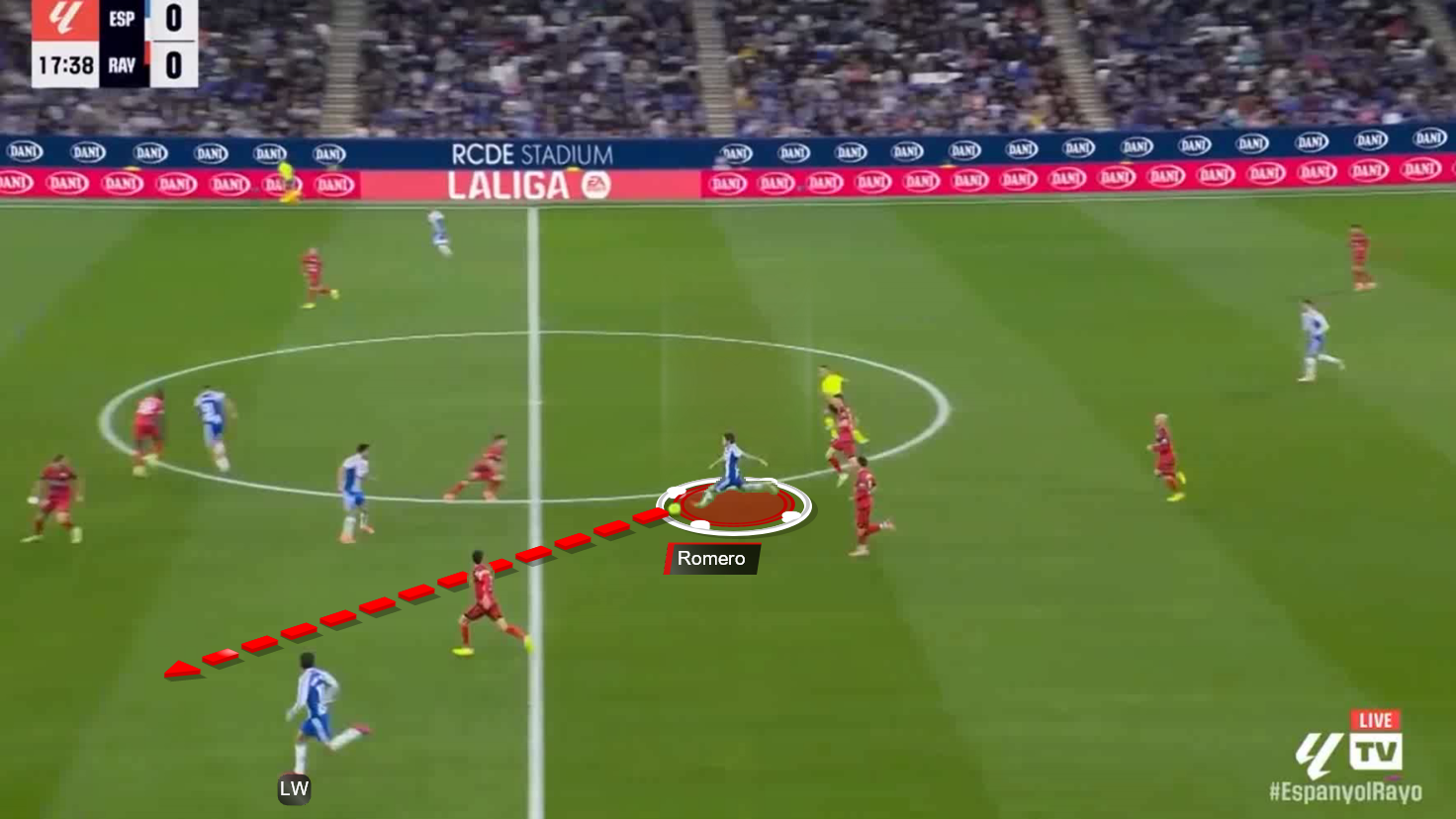
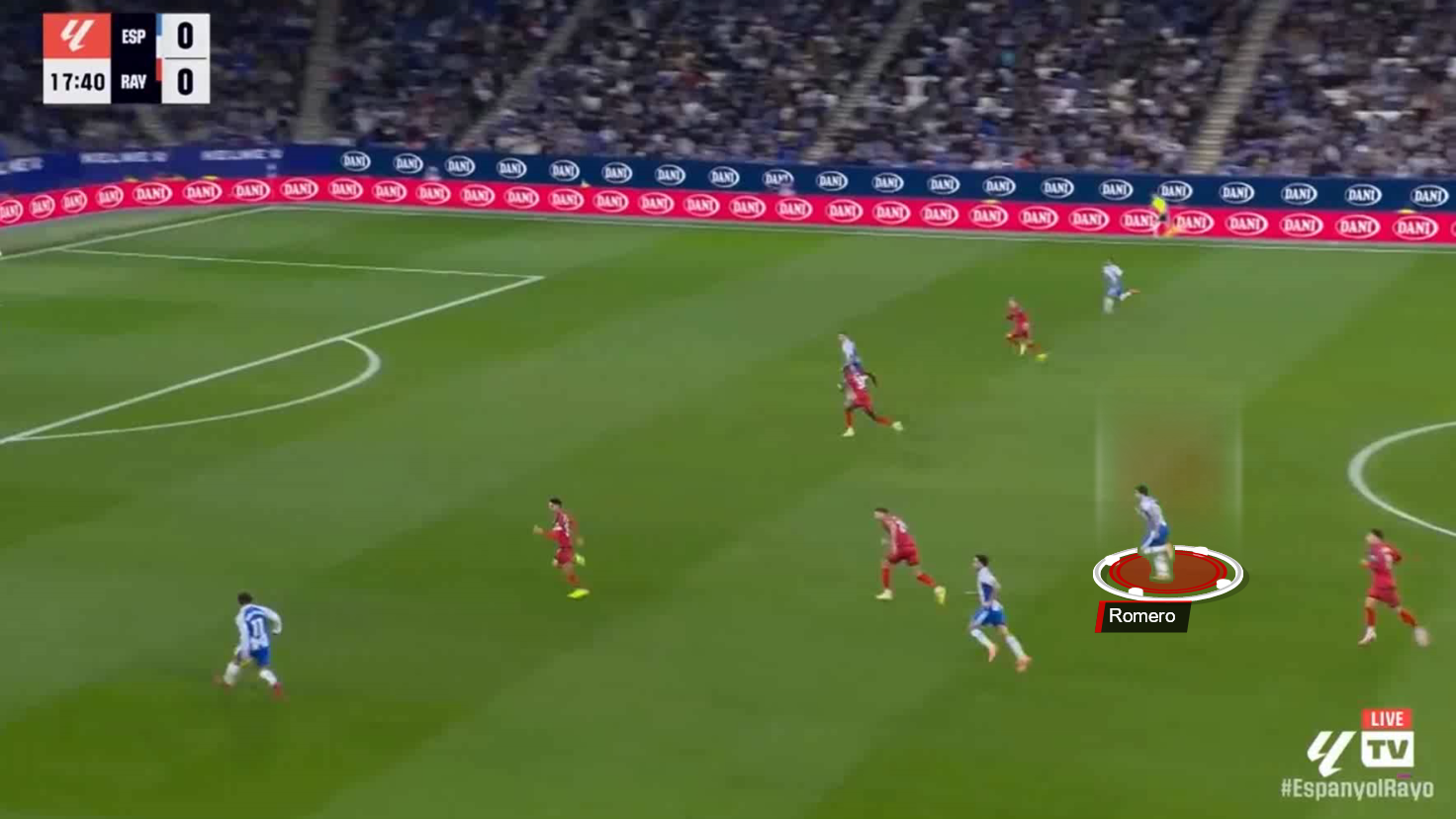 Here, against Rayo Vallecano, Romero moves diagonally to the middle, where all the Espanyol midfielders were marked, and breaks through the first two lines of pressure.
Instead, he forced the Rayo Vallecano midfielder out of position, which opened up space that the left winger exploited to receive the ball between the lines.
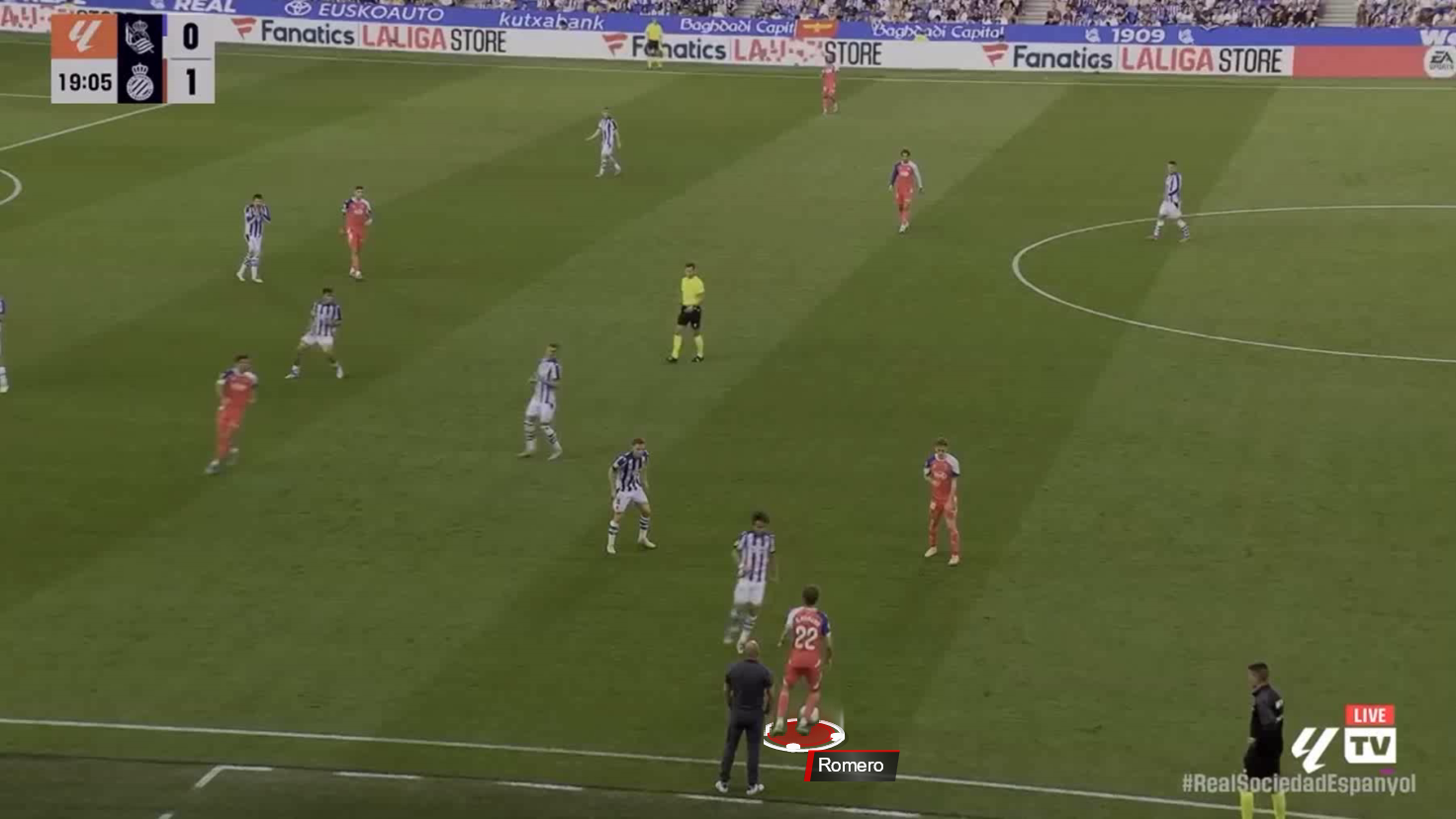
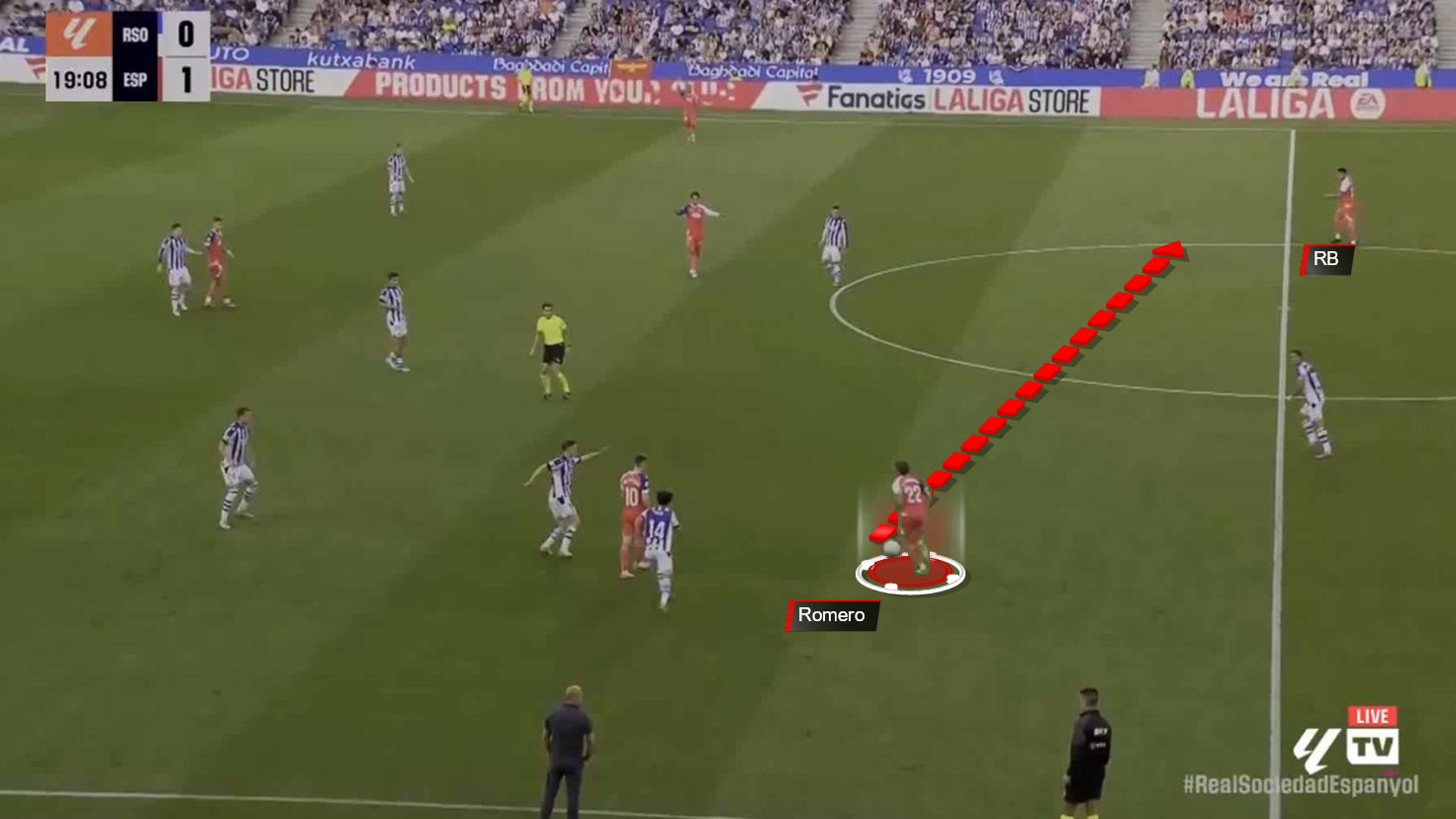
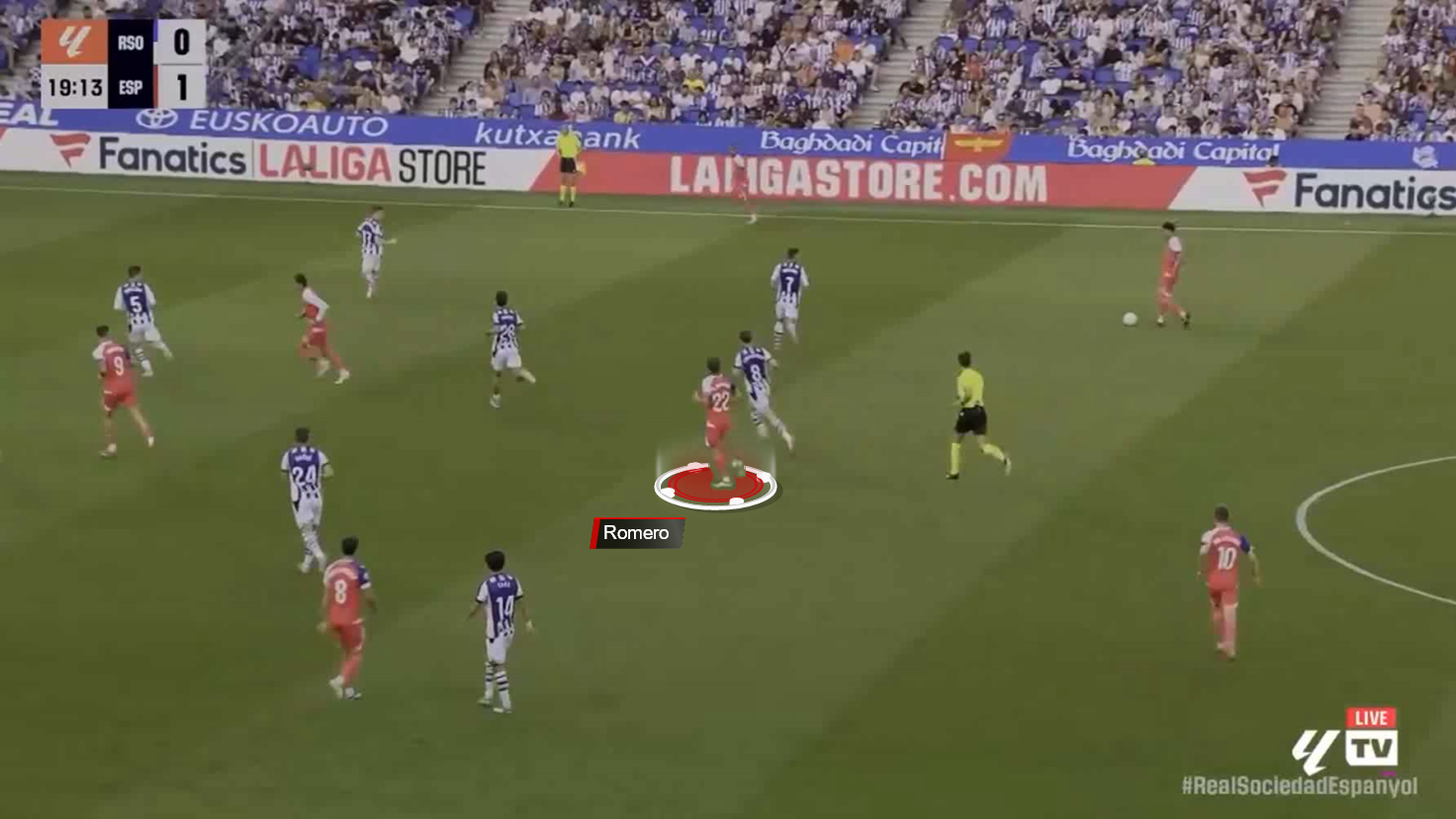 Here against Real Sociedad, Romero opted to move centrally early, leaving the left flank open.
This decision created a clear moment of hesitation for Sociedad’s right winger: should he follow him and leave the line wide, or maintain his position and allow Romero the freedom to receive the ball?
This hesitation alone was enough to give Espanyol a numerical advantage in the build-up.
One of Carlos Romero’s greatest strengths lies in his tactical relationship with the left winger.
Movements on that flank aren’t based on fixed roles, but rather on a constant exchange of positions that confuses the opponent and makes marking difficult.
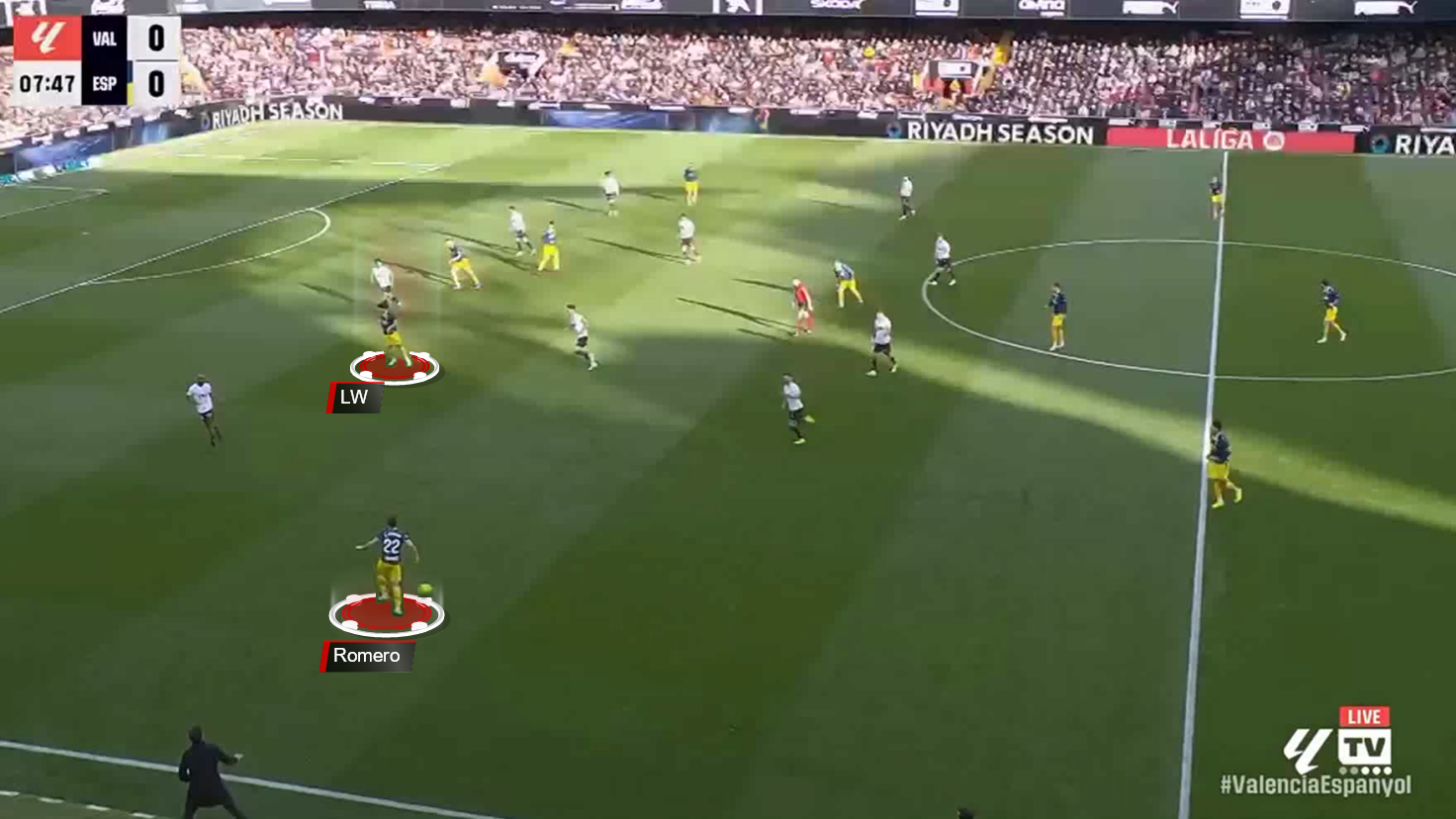
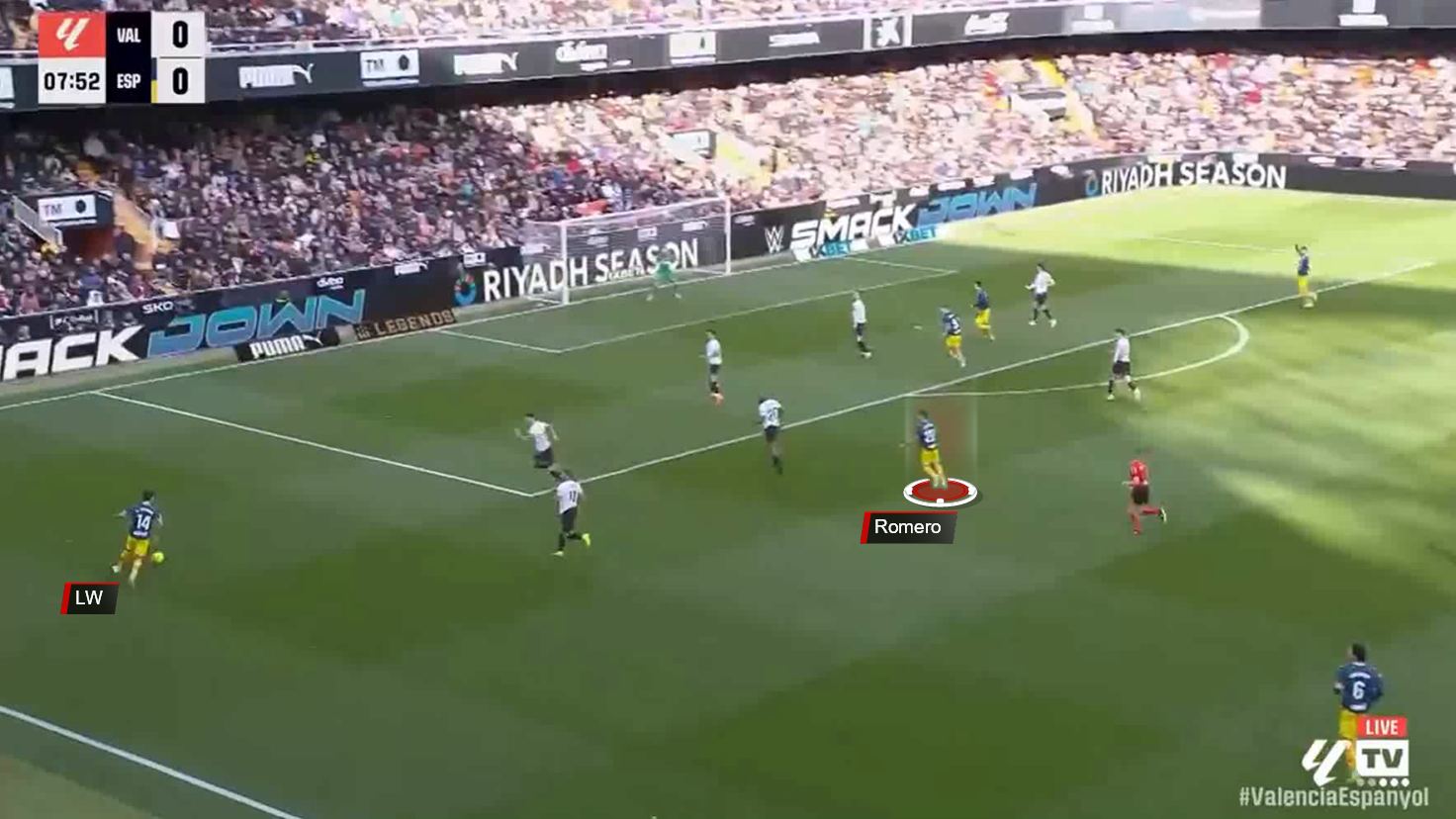
Romero positioned himself in the left half of the pitch for an extended period, while the winger remained close to the touchline.
This interchange left the Valencia midfielder hesitant, unsure whether to come out and mark Romero or maintain his position, while the full-back was reluctant to leave the flank.
Following this series of movements, Carlos Romero received a through ball and fired a shot from the edge of the box.
Carlos Romero Final Third Contribution
In the attacking third, Carlos Romero doesn’t rely on constant presence in the box, but rather on choosing the right moment.
He’s a full-back who prefers to wait rather than run, which makes his movements harder to track.
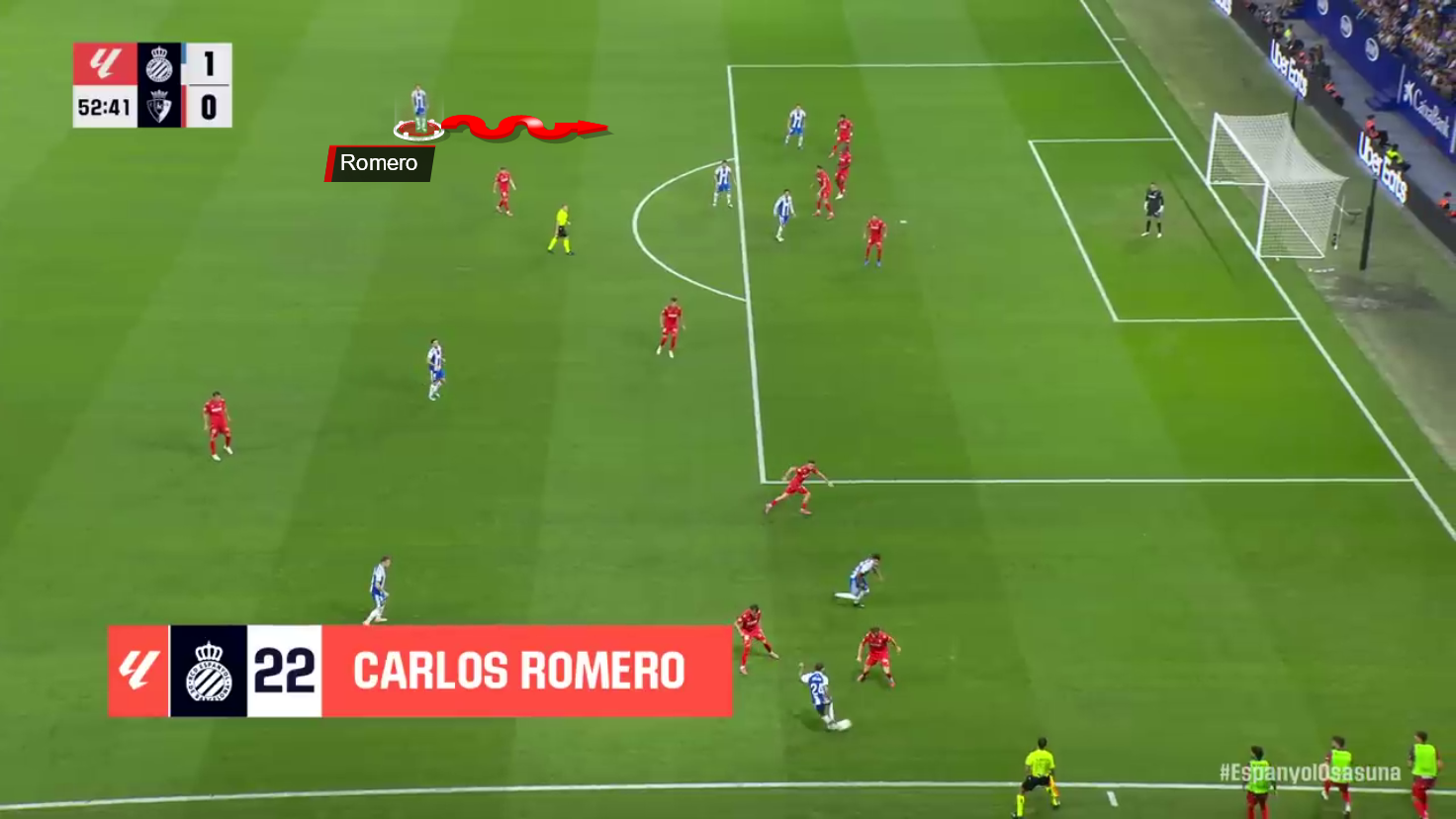
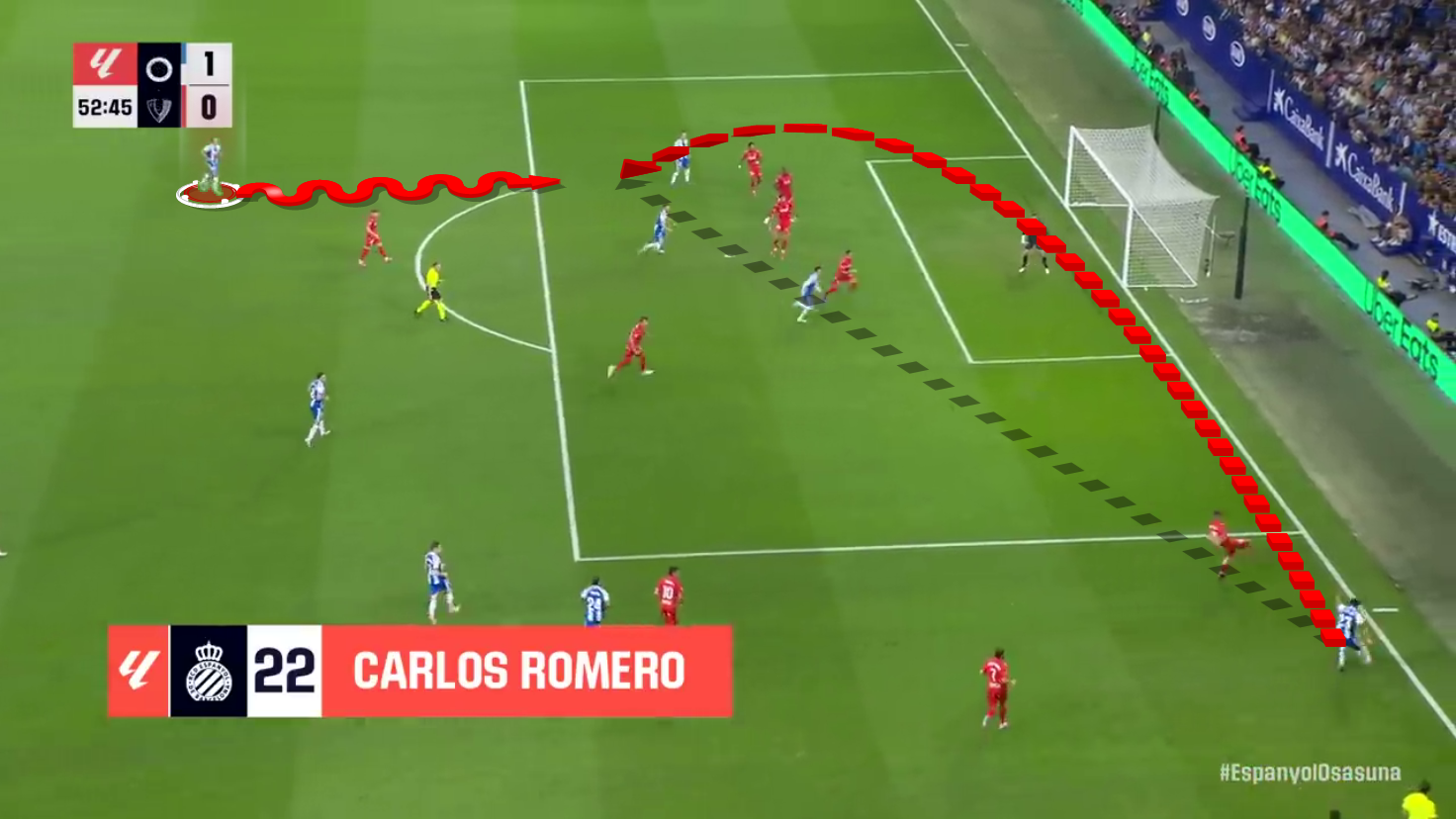
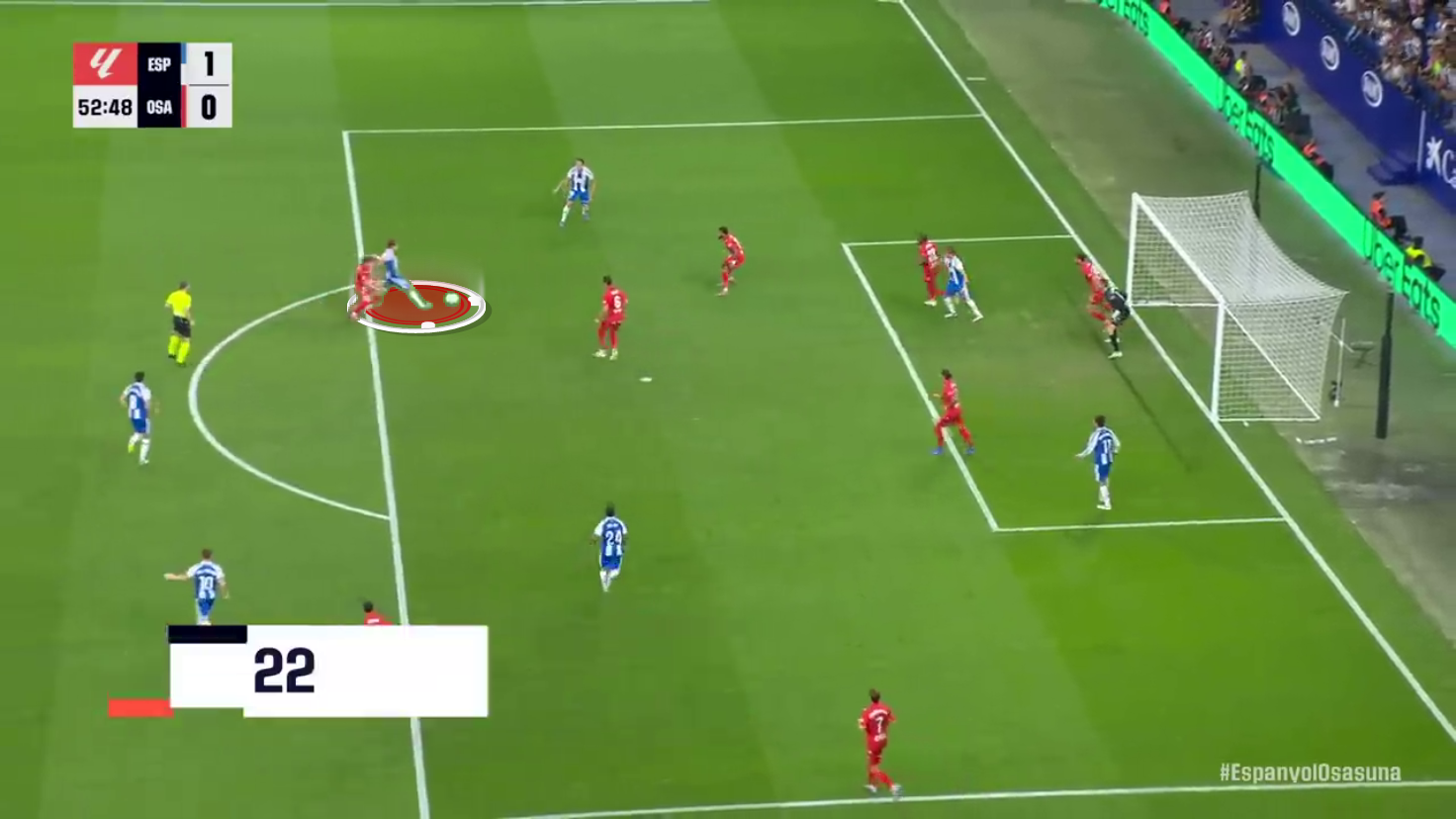
Romero didn’t enter the penalty area directly; instead, he positioned himself near the far post, taking advantage of the defence’s focus on the attackers.
When the cross arrived, Romero was in an ideal position to shoot.
Demonstrating his ability to influence the game inside the box without needing to be constantly present there.
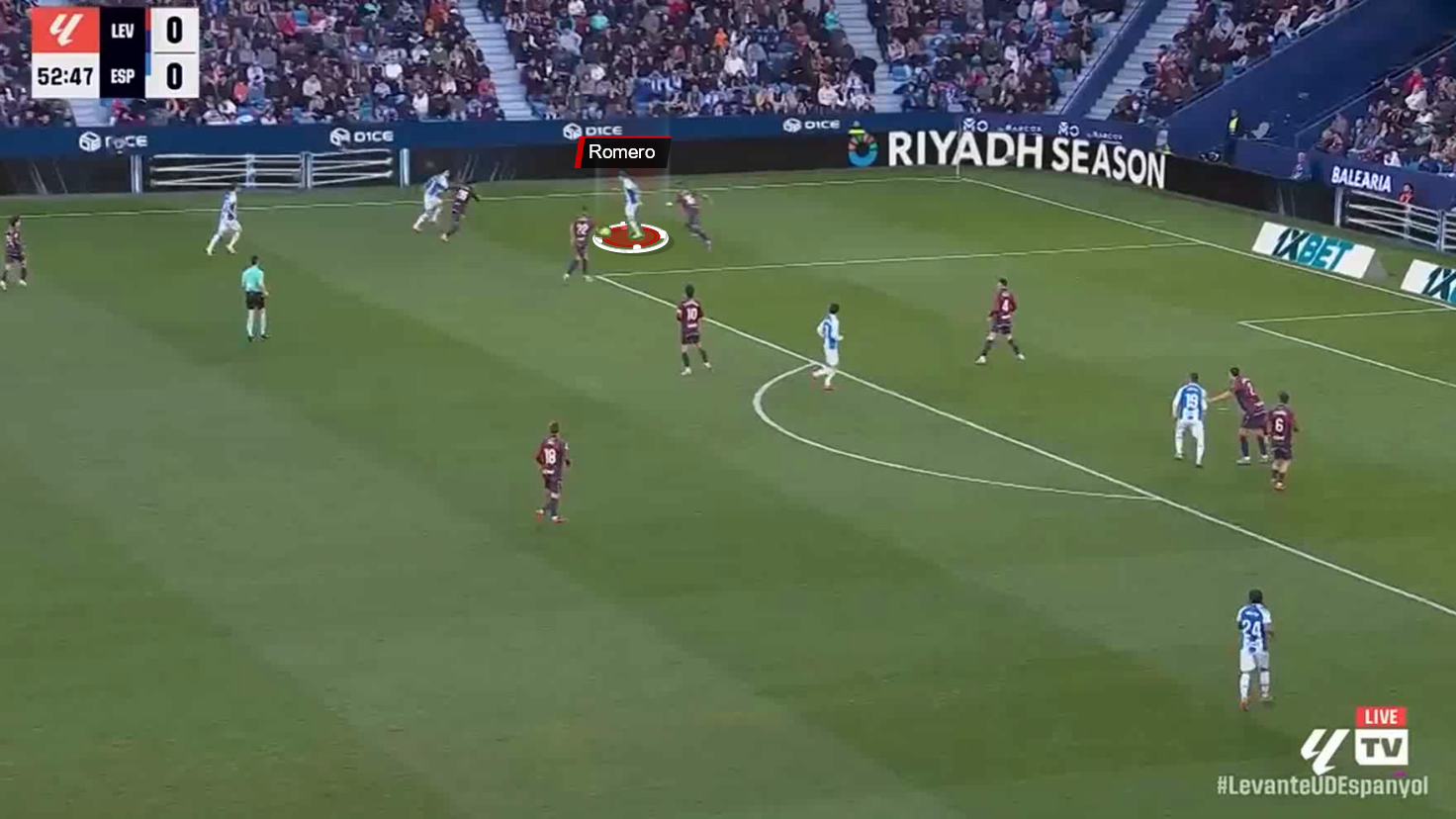
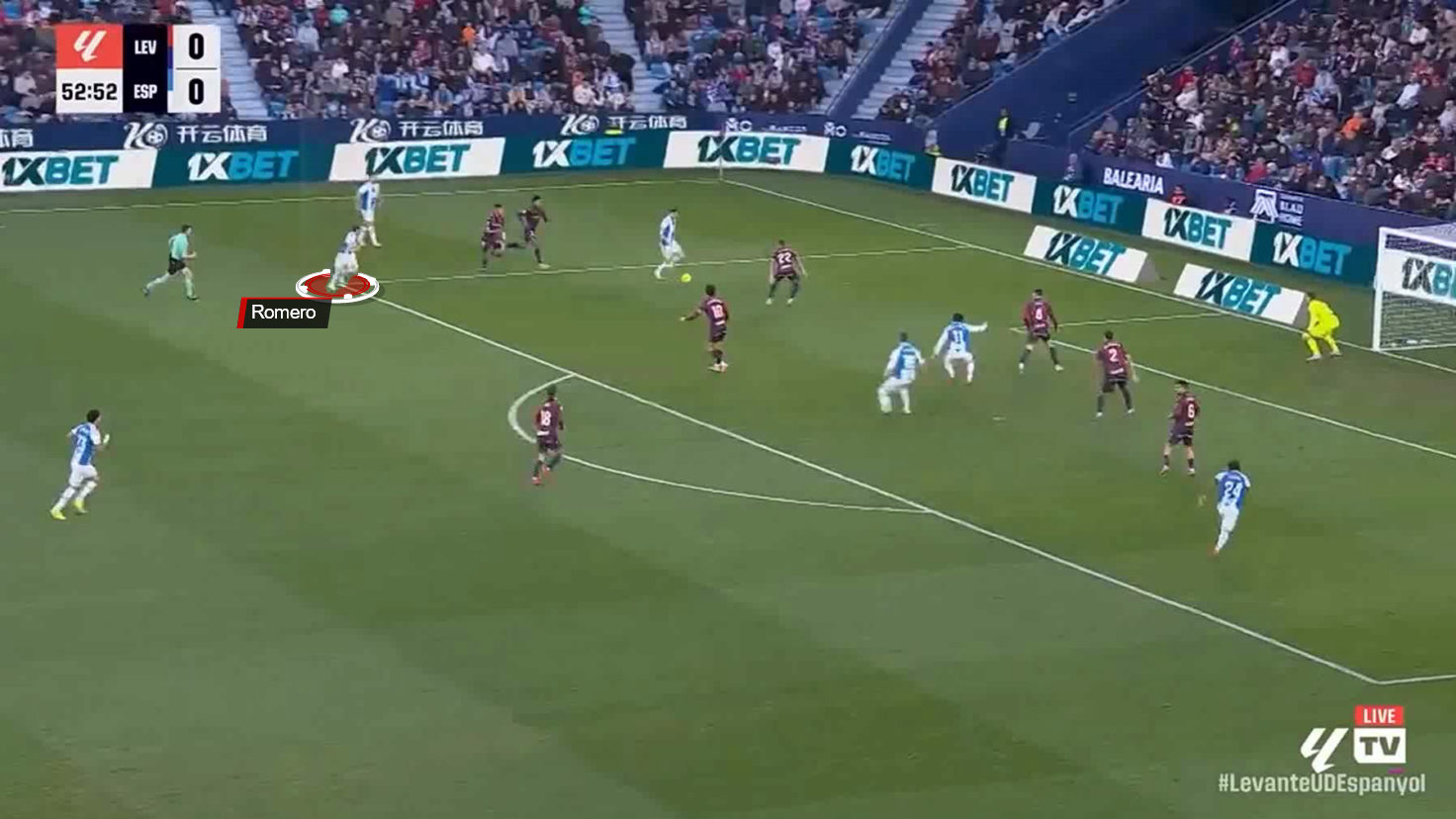
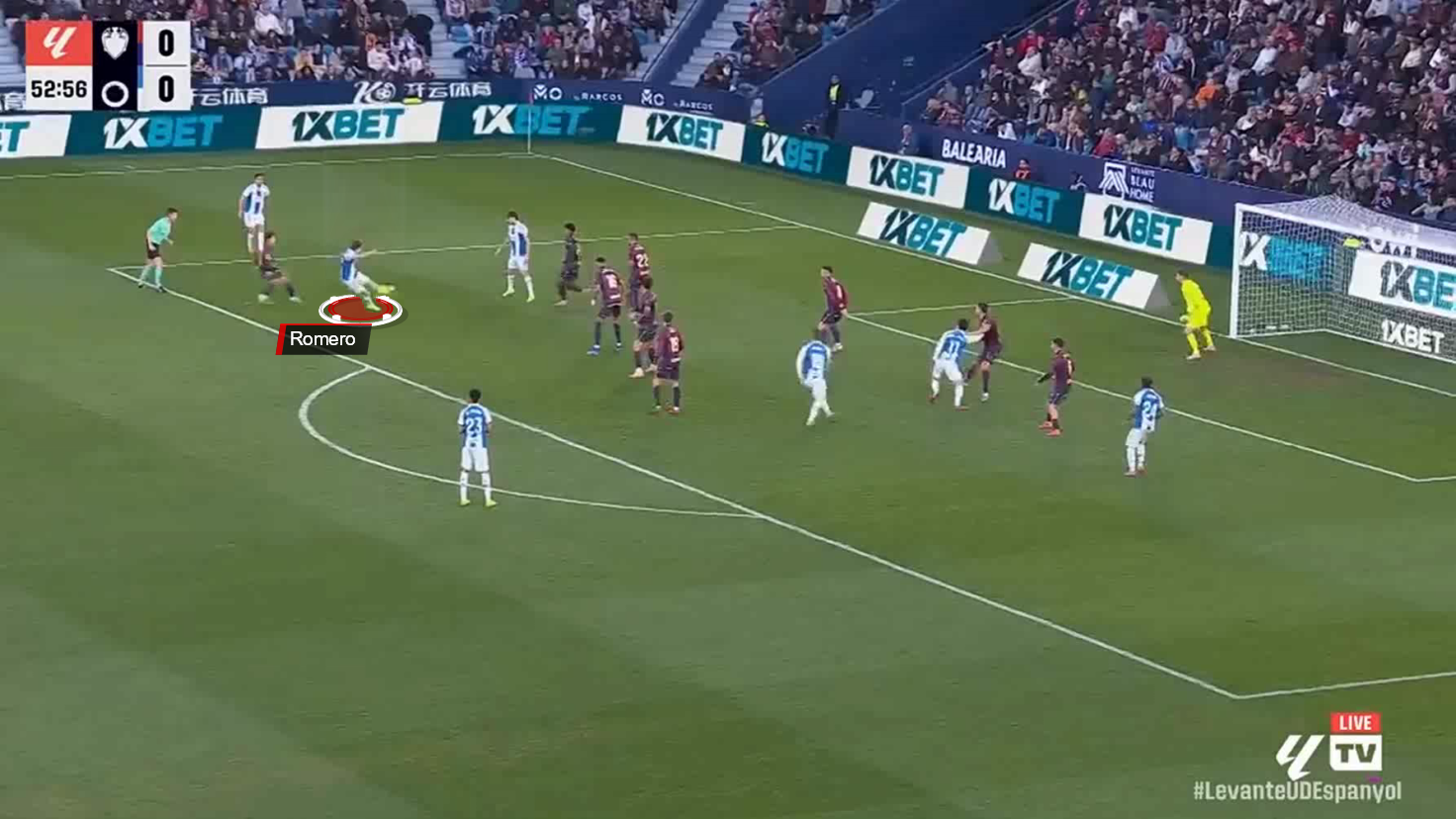
Here, we can see Carlos Romero moving forward to gain numerical superiority on the flanks.
Versus Levante, starts on the flank with the ball, then moves softly to the penalty area, and exploits the deflection and makes a first touch shot, where he scored.
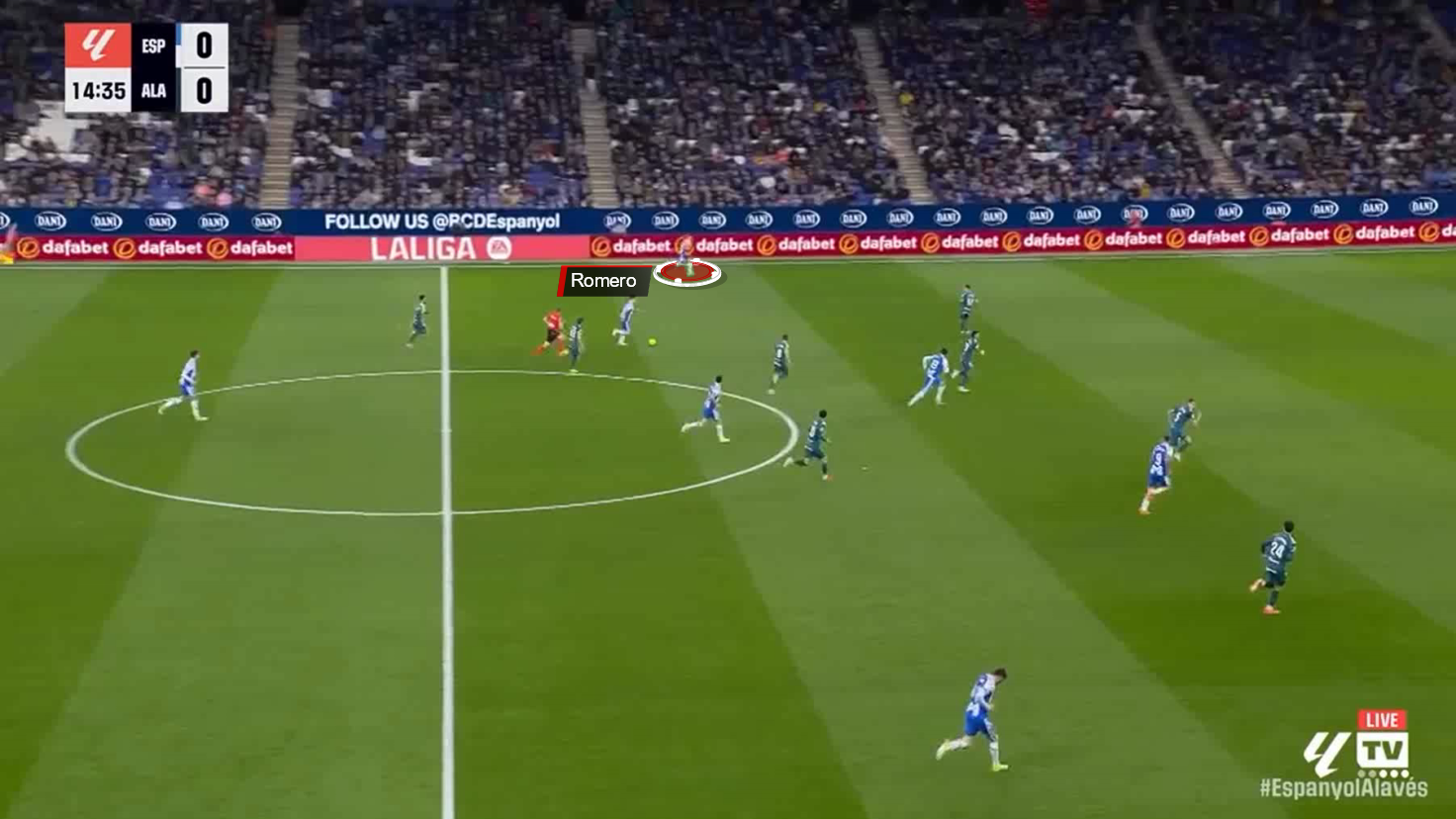
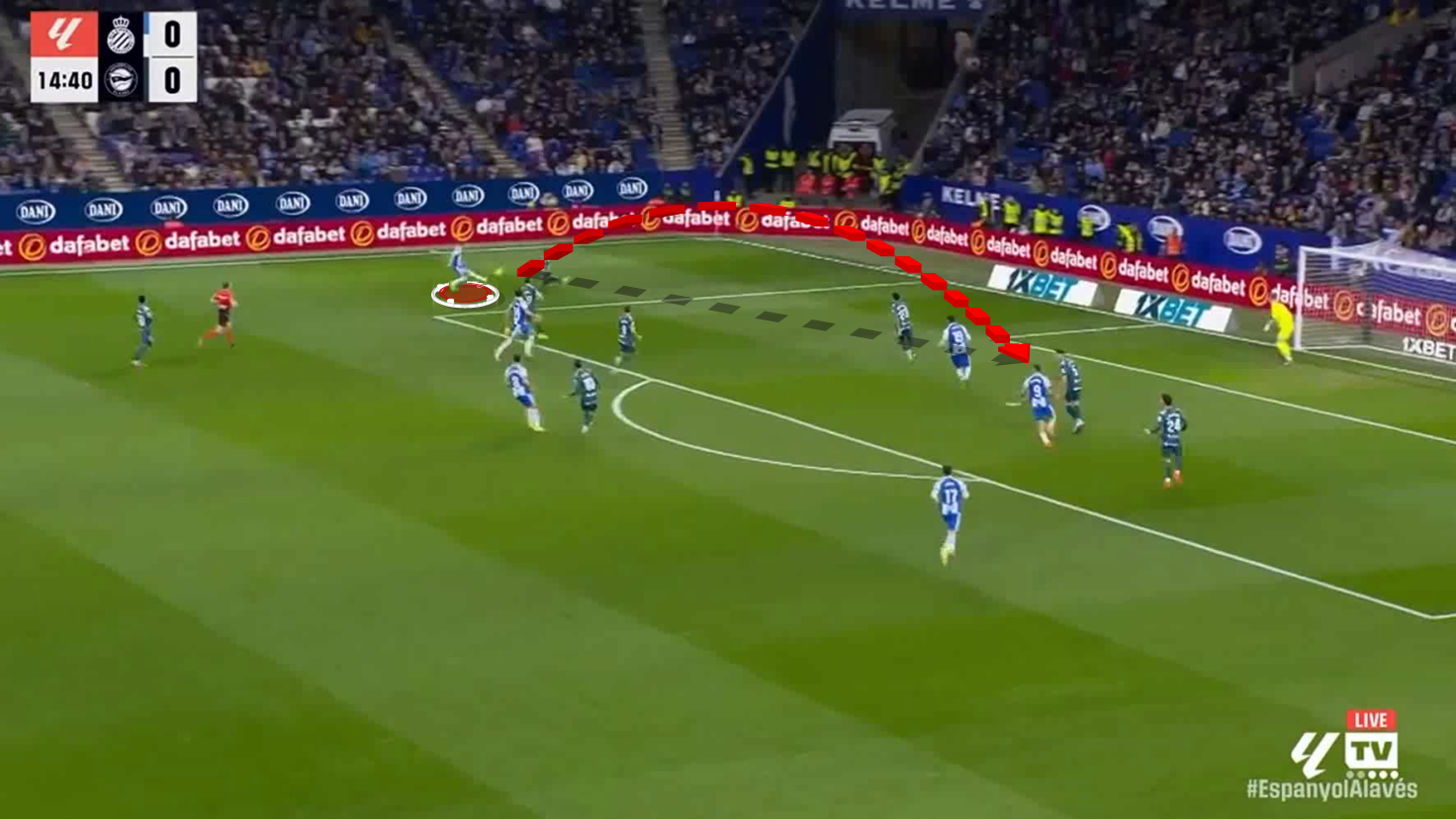 In that scene, Romero didn’t rush forward prematurely.
Instead, he waited for the Alavés defence to drop deep as the attackers moved forward, before advancing perfectly down the flank.
He received the ball in a one-on-one situation against the full-back, with no immediate pressure, giving him a split second to look up and assess his teammates’ positioning in the box.
The cross itself wasn’t a typical aimless high ball, but rather a precisely aimed cross into the space between the two centre-backs, exploiting the striker’s movement between them.
Carlos Romero’s choice of cross, neither a powerful shot to the near post nor an overly curling cross, reflects a player who understands how to break down the defensive line instead of simply sending the ball into the box.
Carlos Romero In Attacking Transition
In attacking transitions, Carlos Romero emerges as one of Espanyol’s most dangerous weapons.
Once possession is regained, he is among the first players to move forward, exploiting the space behind the opposing full-back.
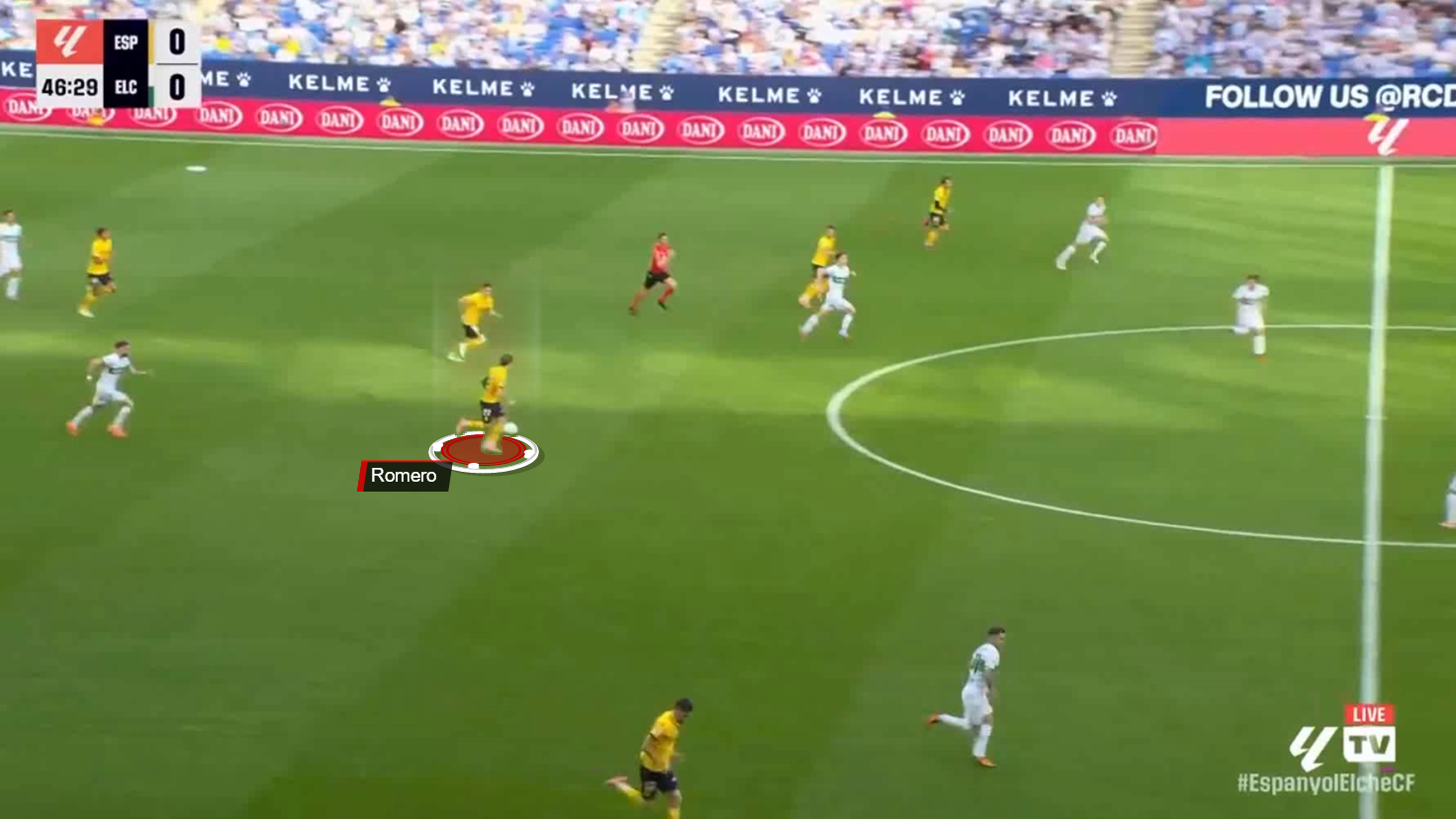
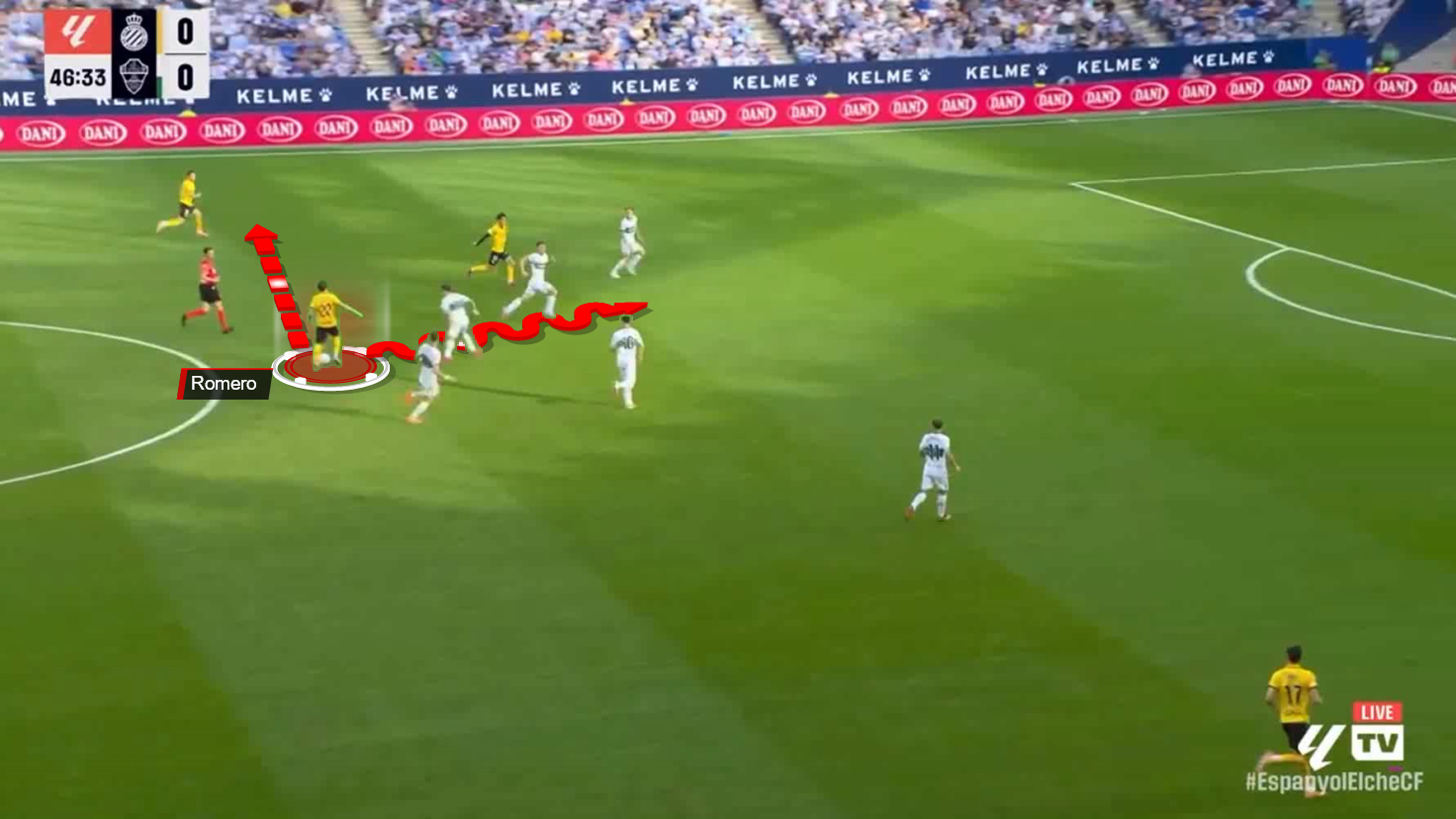
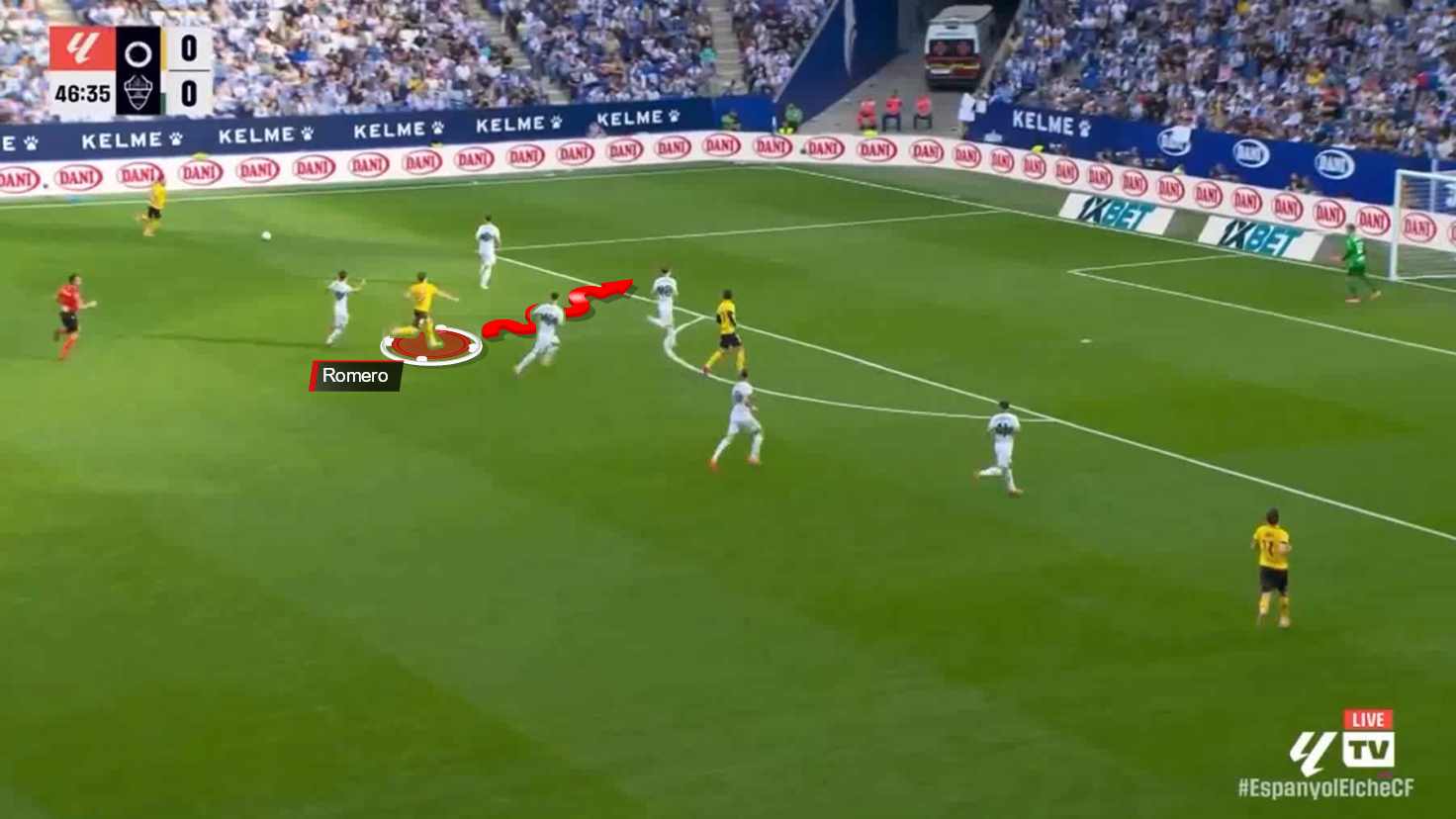
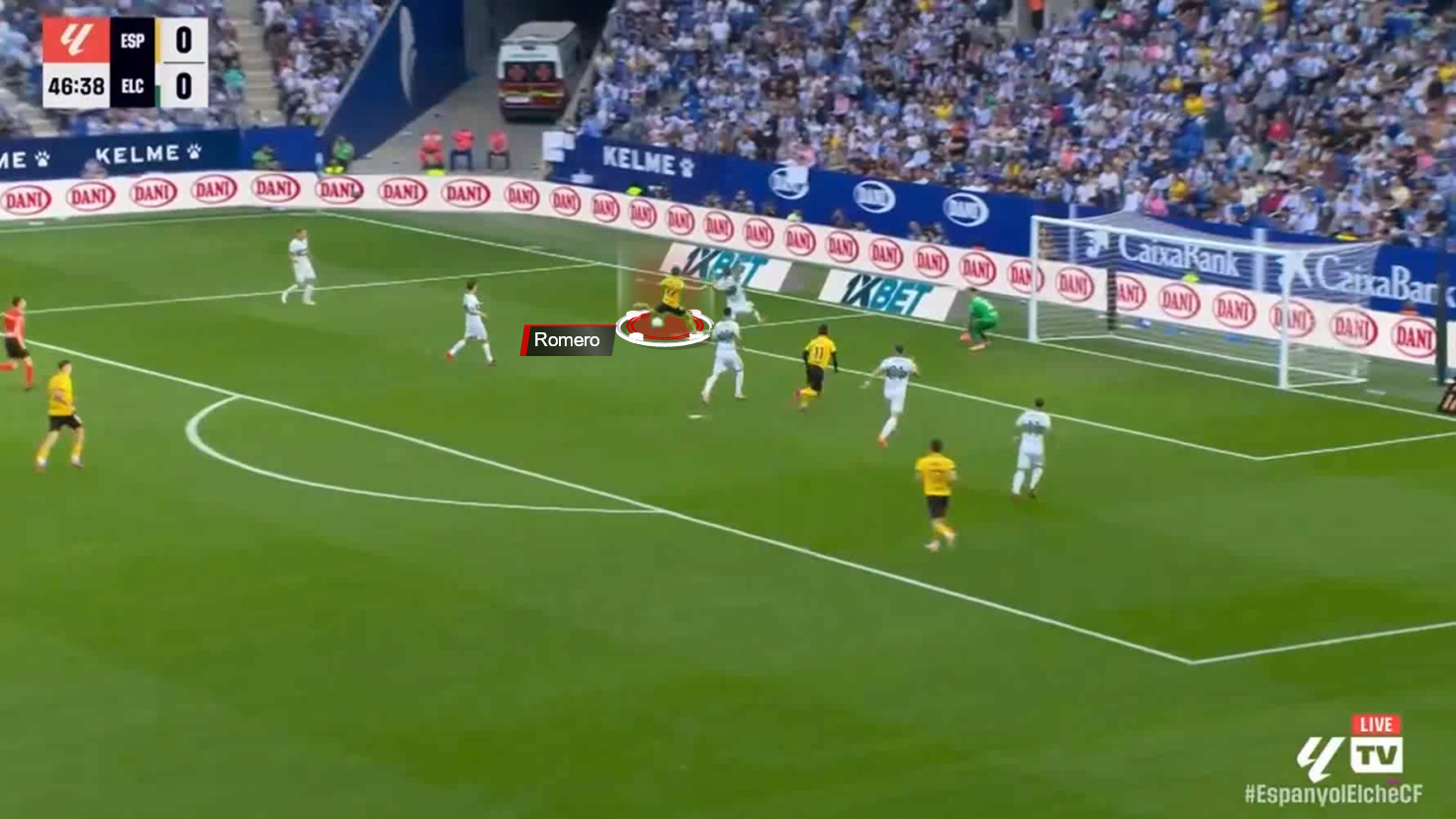 Carlos Romero’s influence was clearly evident in the attacking transition that resulted in the goal.
Upon regaining possession in the middle third, Romero launched an early run behind the right-back, exploiting Elche‘s high defensive line and their focus on pressing.
His anticipatory movement gave him a clear advantage when receiving the ball in open space in the half-spaces.
Upon reaching the final third, he didn’t rush his shot, but rather advanced an extra step to force the defence back before receiving the cross and firing a shot.
This sequence reflects a player who understands that a counterattack depends not only on speed but also on timing, choosing the right path, and remaining calm in the final decision.
Defensive Discipline For Carlos Romero
One of the most significant aspects of Carlos Romero’s defensive style is his aggression in 1v1s.
He uses the line as a teammate and applies it in defence against wingers.
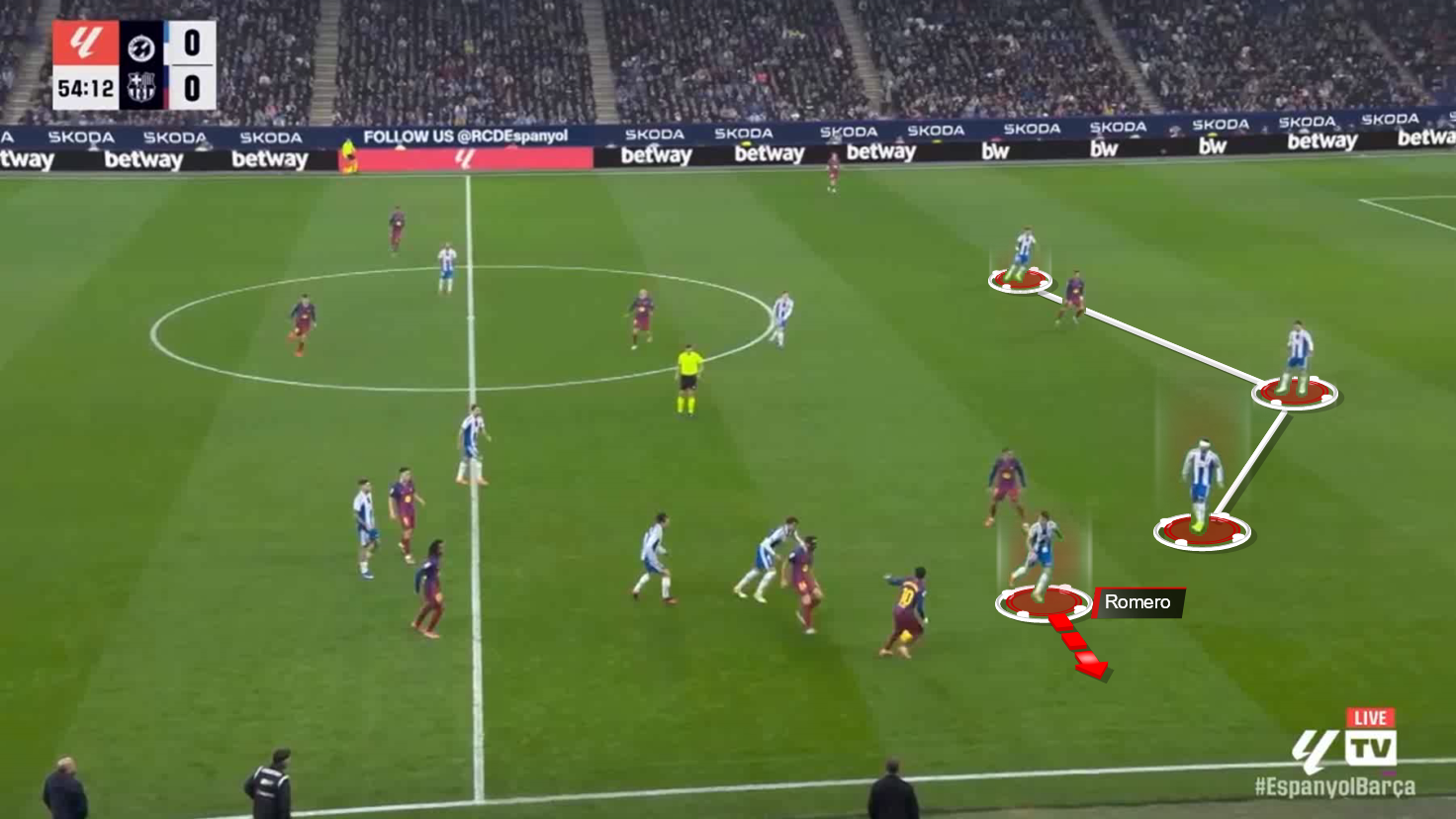
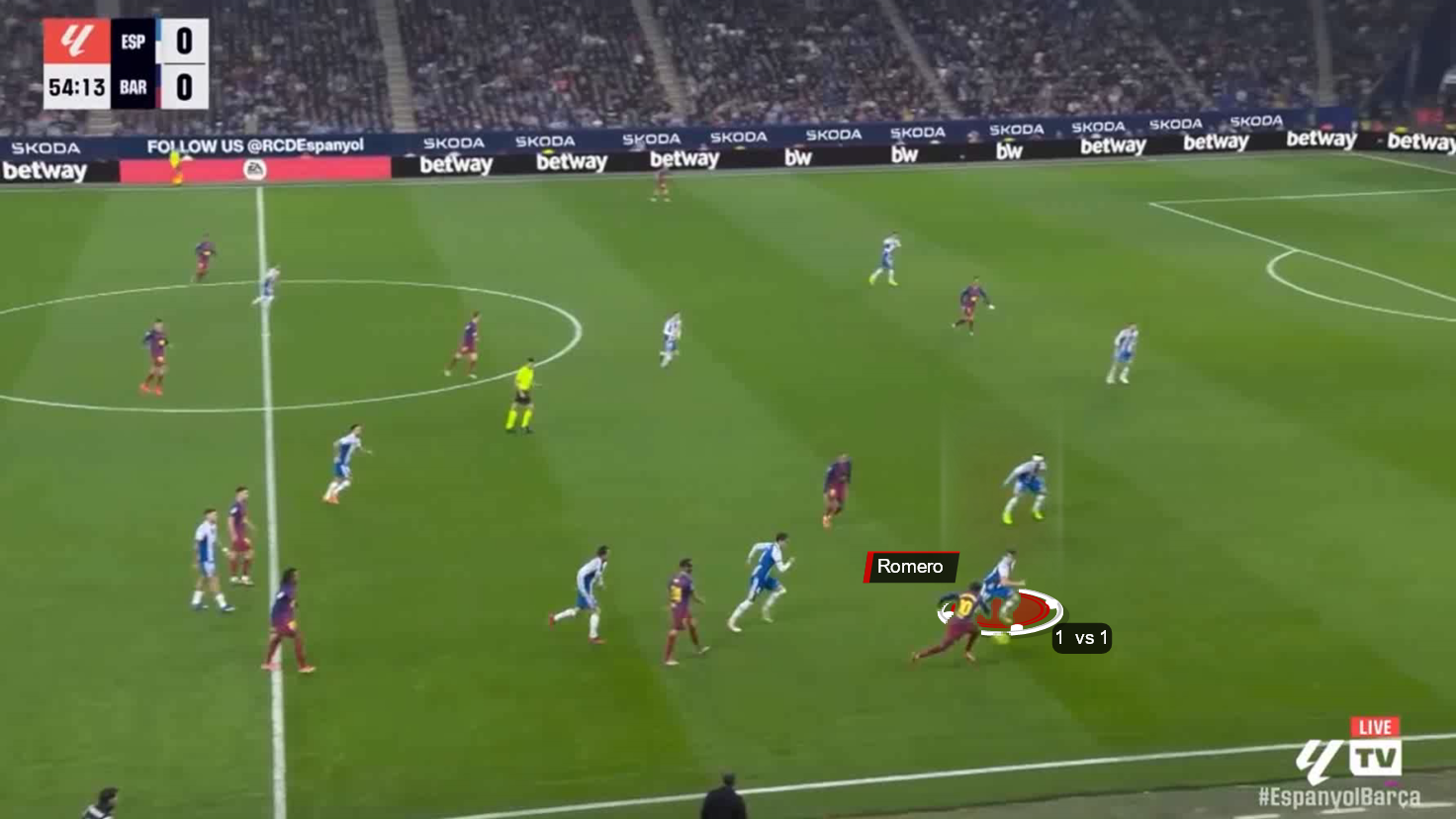
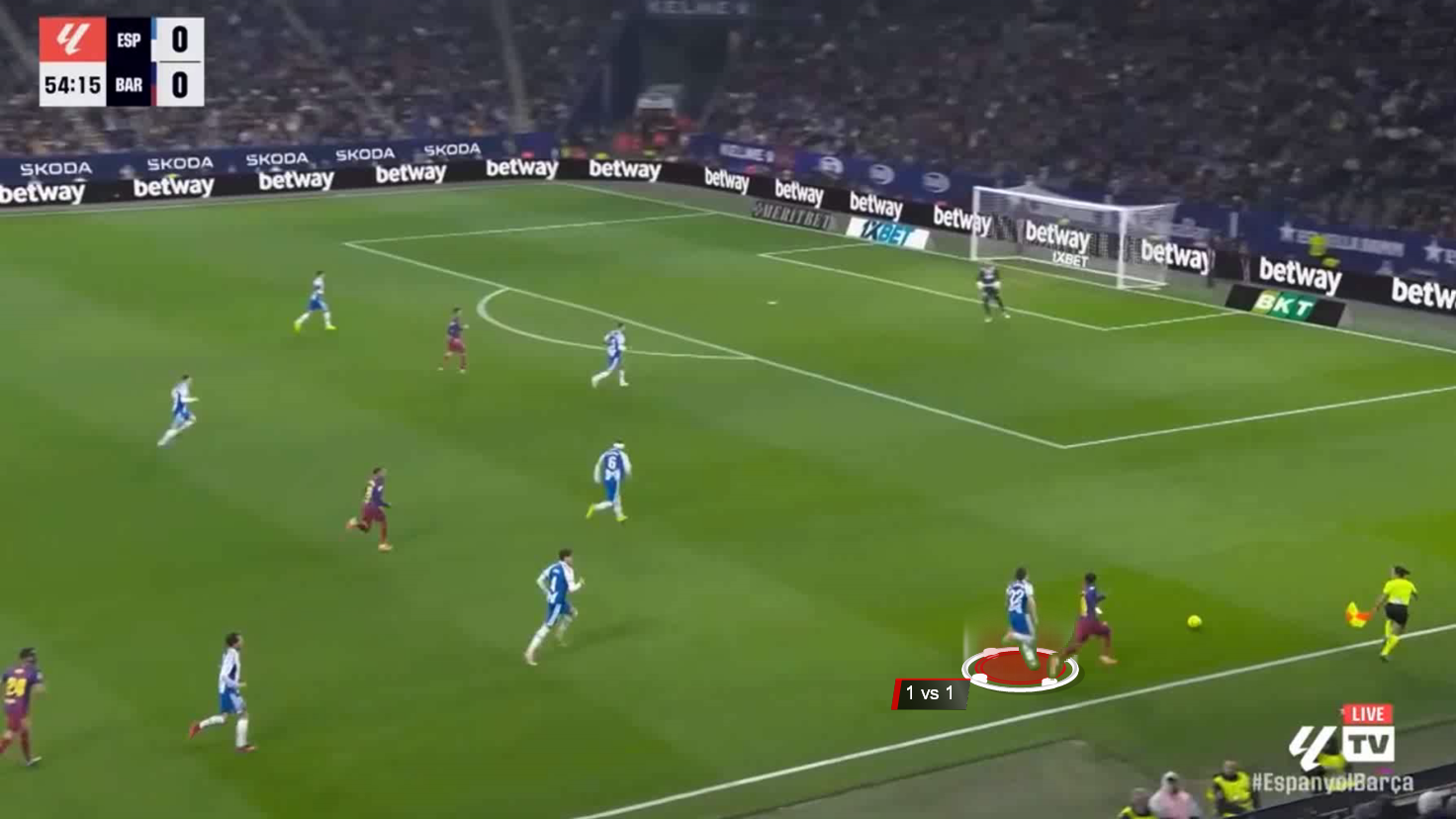
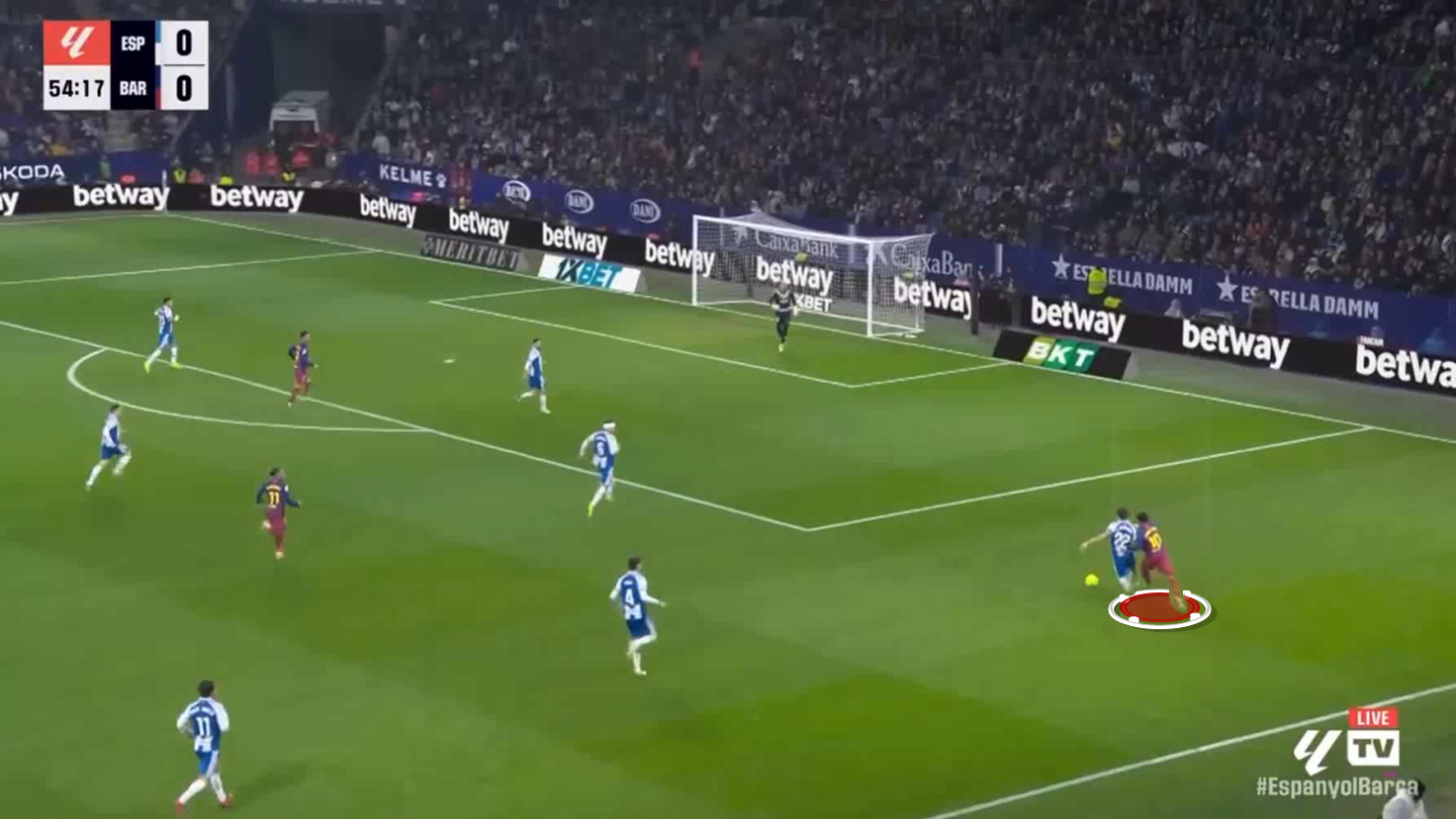 Here we see Carlos Romero’s ability to keep pace with Lamine Yamal in one of the toughest 1v1 situations you can face, a moment that reflects his defensive versatility more than just a successful tackle.
Romero didn’t rush forward; instead, he chose to wait and control the distance, directing Yamal towards the touchline to keep him away from the centre.
With a longer touch, he made a perfectly timed run, closed down the dribbling angle, and won the ball back.
This sequence demonstrates a full-back who understands defending as a process of reading and timing, not just a physical challenge.
Despite his attacking style, Carlos Romero demonstrates a clear defensive commitment.
In deep marking, he maintains a suitable distance between himself and the left centre-back, thus reducing opportunities for through balls behind him.
Carlos Romero Areas For Improvement
Despite his strong season, there are still areas for improvement.
The accuracy of his crosses under pressure could be more consistent, especially against compact defences.
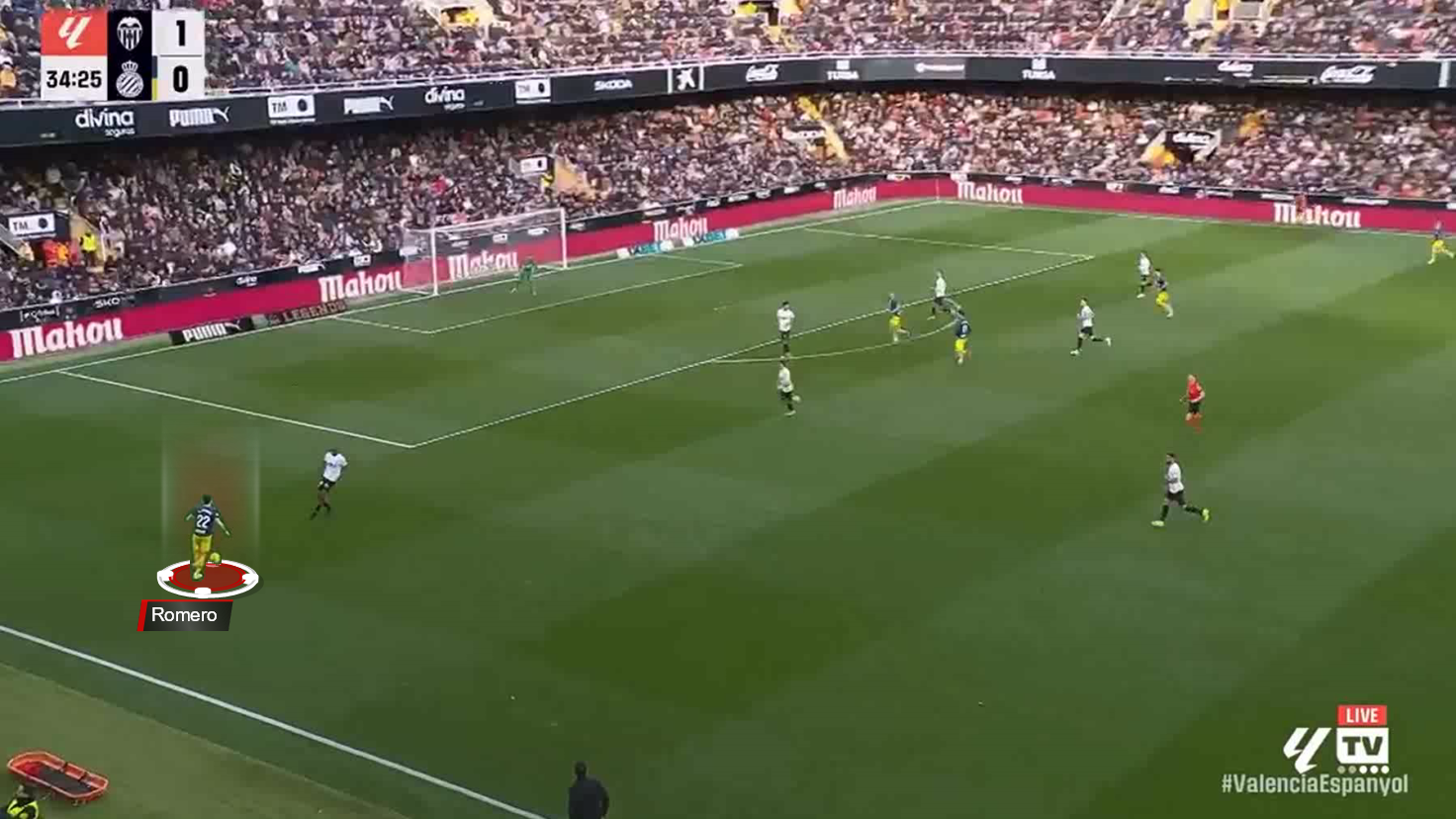
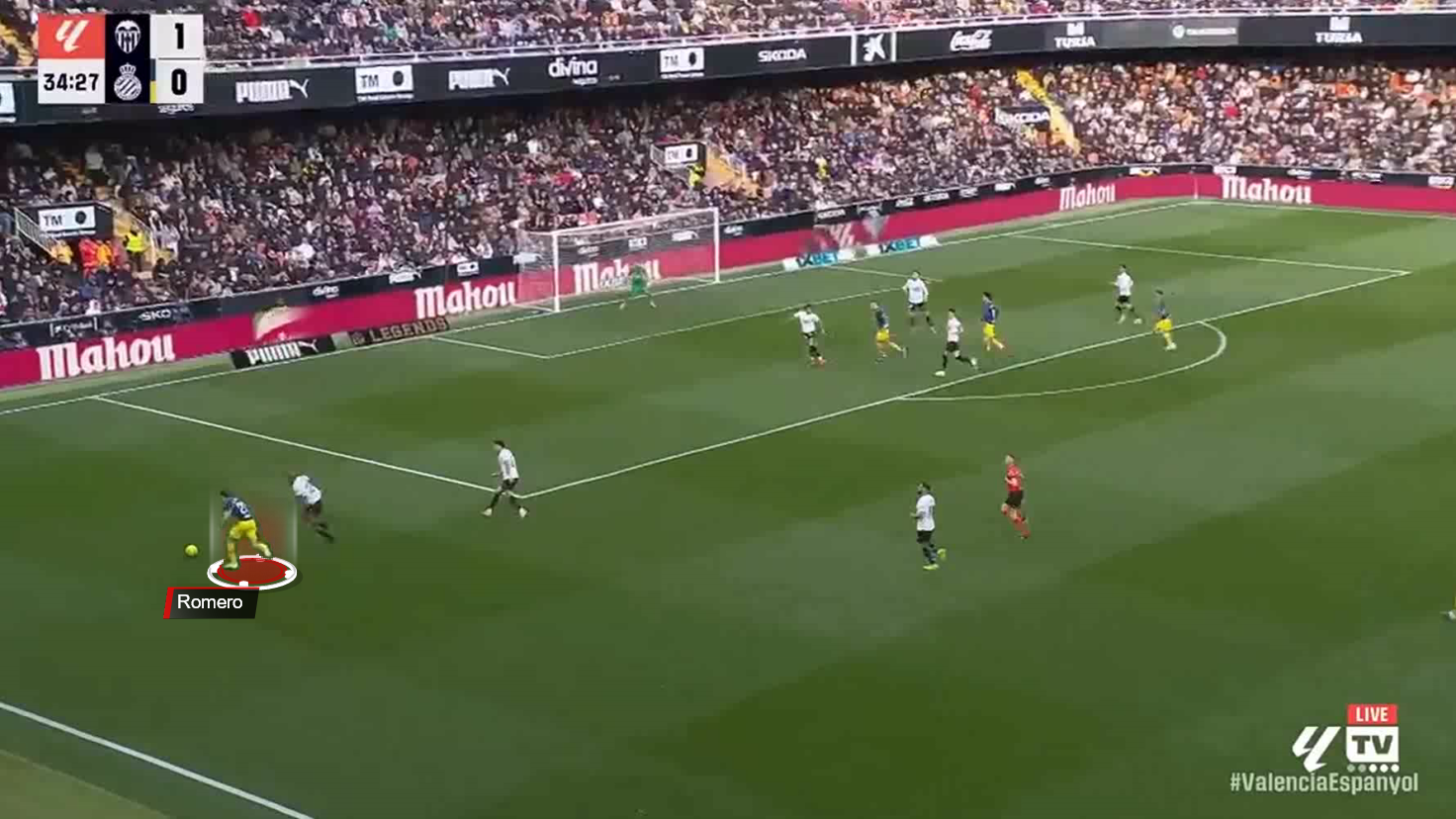
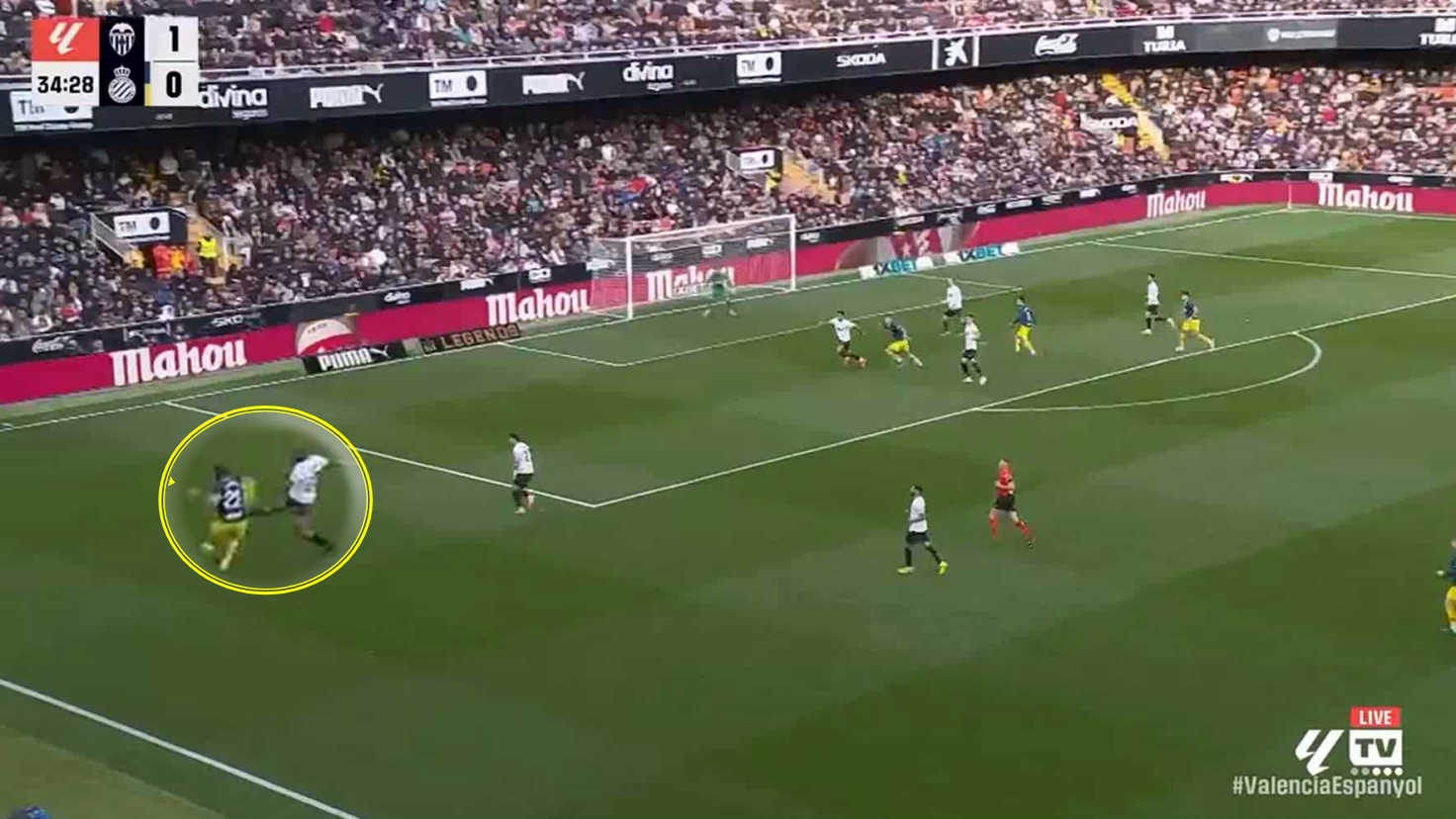
Romero resorted to the quick solution of crossing the ball in more than one instance, despite having better options on the edge of the area.
Also, his attacking drive sometimes leaves gaps behind him, requiring greater coordination with the pivot player to secure the flank.
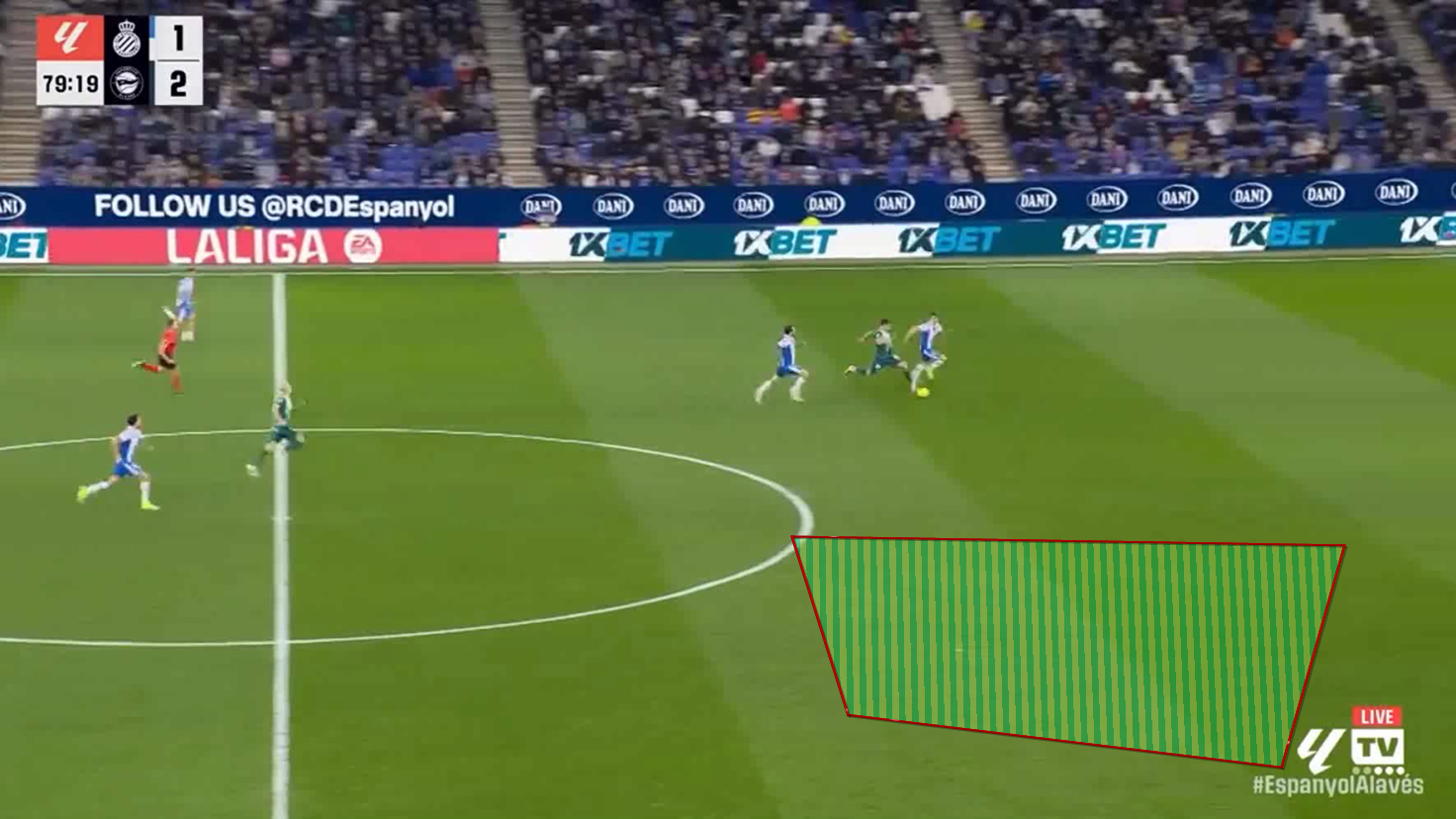
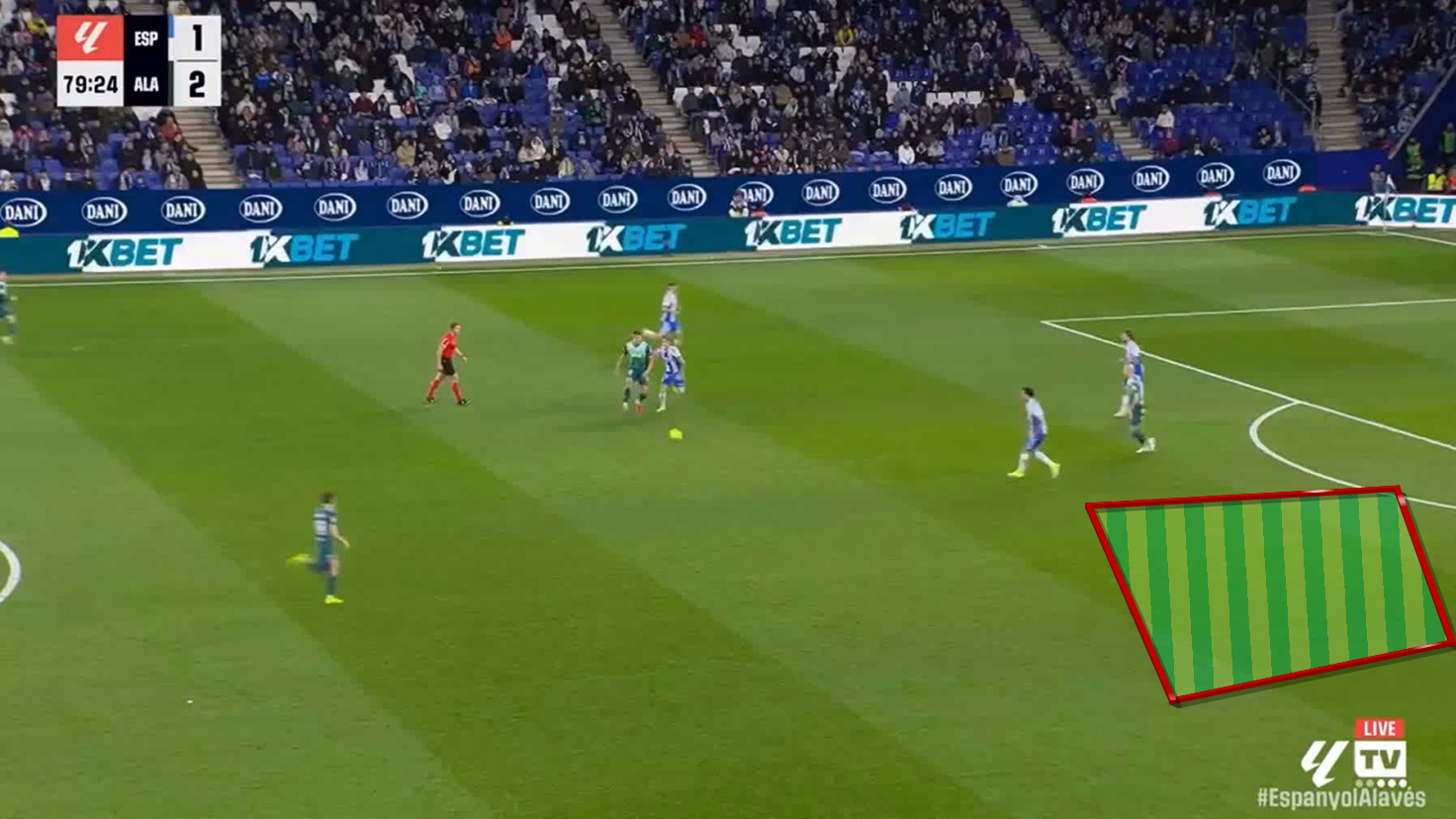
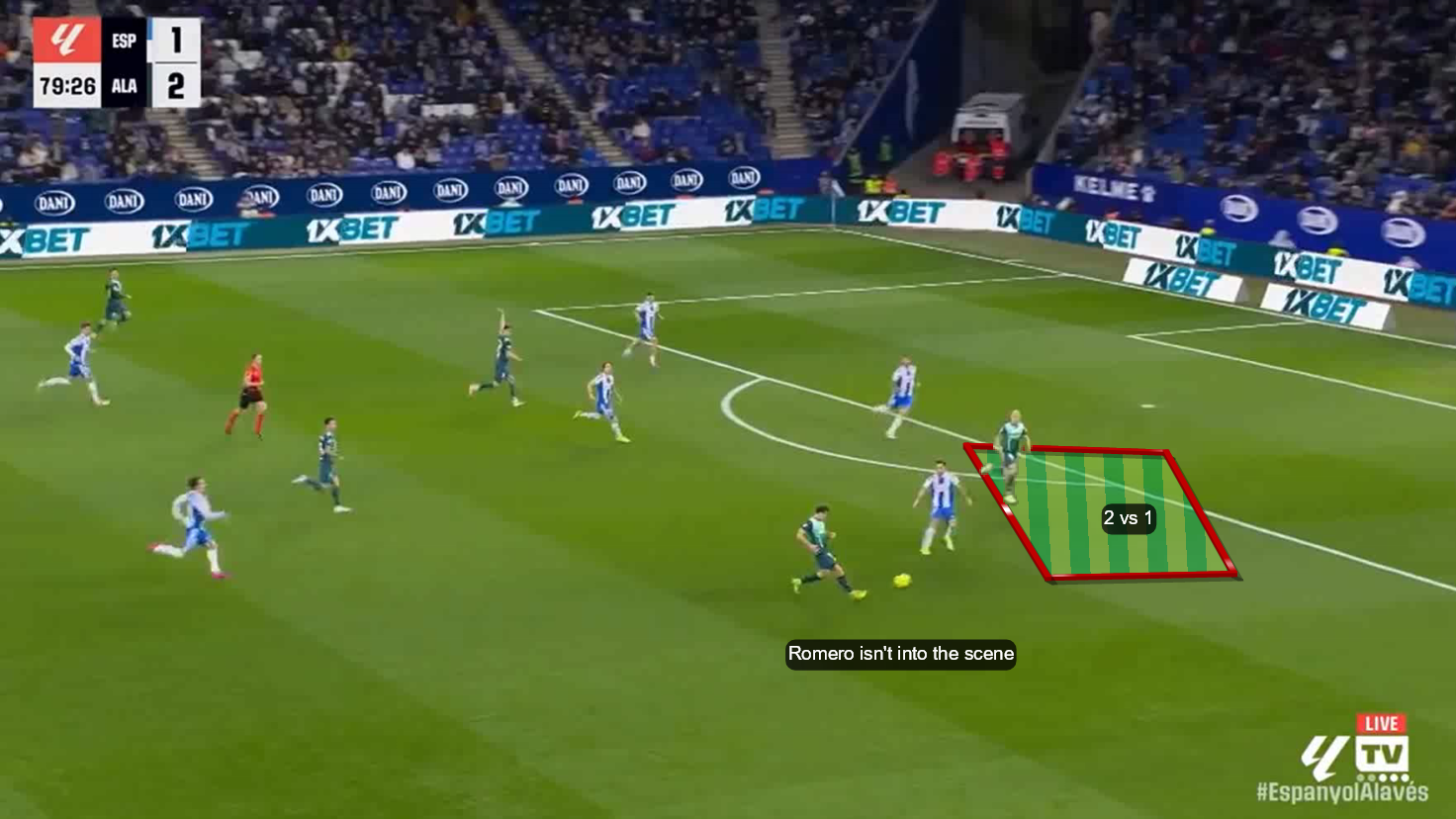 In Espanyol’s match against Alavés, one area for improvement in Carlos Romero’s defensive transition became apparent.
After losing possession while in a high-attacking position, Romero was relatively slow to return to his position, creating space behind him on the left flank.
This delay forced the left centre-back to move out to cover, creating a temporary imbalance in the backline and allowing Deportivo Alavés to advance down that side.
Although the situation was later rectified, the incident highlights the need for quicker reaction times when possession is lost and for a faster return to position, especially when the team is playing with advanced full-backs.
Conclusion
Carlos Romero has presented a clear model of the modern left-back this season, a player who understands space, has perfect timing, and directly influences his team’s performance both on and off the ball.
His contributions at Espanyol go beyond his loan spell, positioning him as a ready-made option for a larger role, whether by returning to Villarreal with greater responsibilities or by attracting the attention of clubs seeking a full-back capable of executing complex tactical roles within a well-defined team system.
