
In modern football, a midfielder’s value is not measured solely by the number of goals or assists, but also by their ability to control the tempo of the game and maintain the balance of the team throughout their various phases.
Santi Comesaña, the Villarreal midfielder, exemplifies this type of player who works quietly, yet whose influence is clearly evident in the team’s performance and stability on the pitch.
While his current season in La Liga may not be particularly impressive statistically, his tactical role reveals him to be a player who is an integral part of the system, not merely a supporting element.
In this Santi Comesaña scout report, we will examine Comesaña‘s contribution to Villarreal tactics and his vital part in Marcellino‘s style of play.
Santi Comesaña Tactical Role & Identity In The Villarreal System
Santi Comesaña has been a key figure in Villarreal’s midfield this season, although his statistics (two goals and two assists in 18 matches) don’t reflect his true impact.
He primarily plays as a central midfielder, but his hybrid role combines elements of an attacking midfielder and a number 8, depending on the phase of the game.
His presence allows Villarreal to maintain their organisational structure during possession, especially in matches where the opposition applies medium or high pressure.


 Here, against Real Sociedad, we could see his value as the main player: the key to relieving pressure is receiving the ball in the space between his team’s defence and the opponent’s attack and midfield, then calmly circulating the ball rather than risking a direct long pass.
These specific minutes demonstrate how the player contributes to stabilising the team’s rhythm and preventing turnovers in dangerous areas.
Santi Comesaña Build Up & Positioning Awareness
In the initial build-up phase, Santi Comesaña displays clear positional intelligence.
He doesn’t move much with the ball, but he moves a lot without it to create a safe passing angle.
He often positions himself with a half side towards the ball carrier, not exactly with his back to the field, making it easy for the centre-backs or his peers in the middle to find him with a short pass.
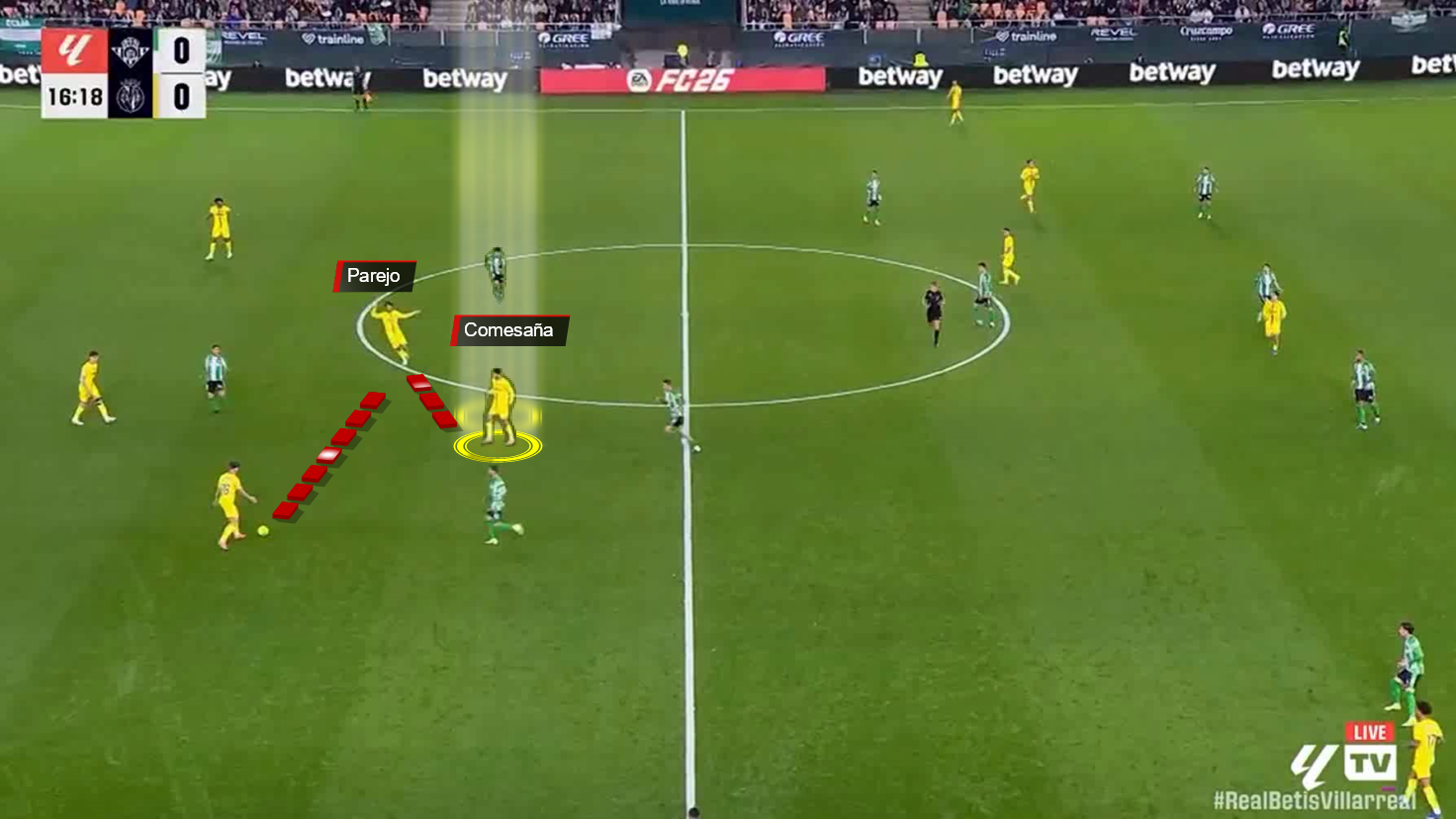
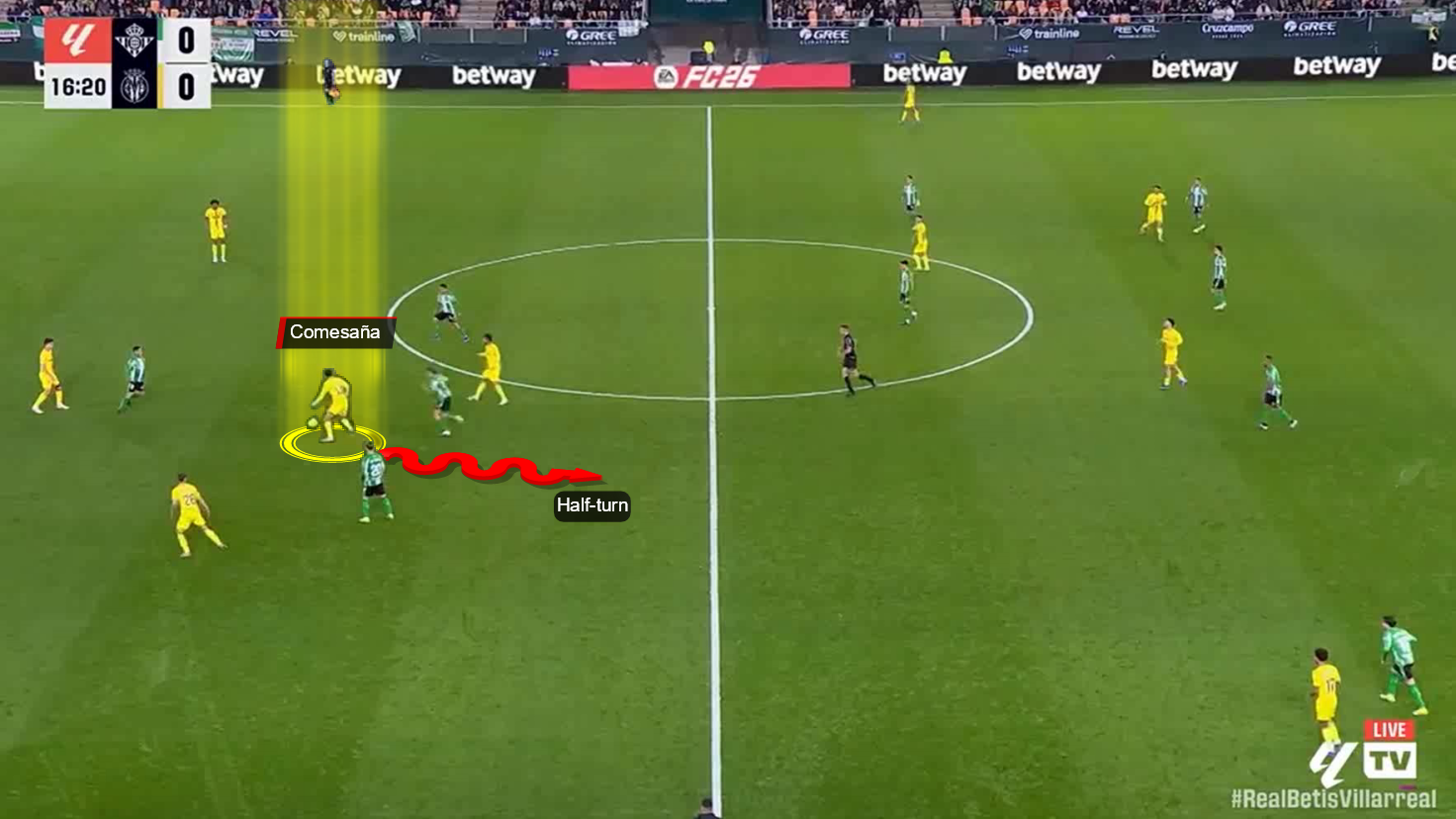
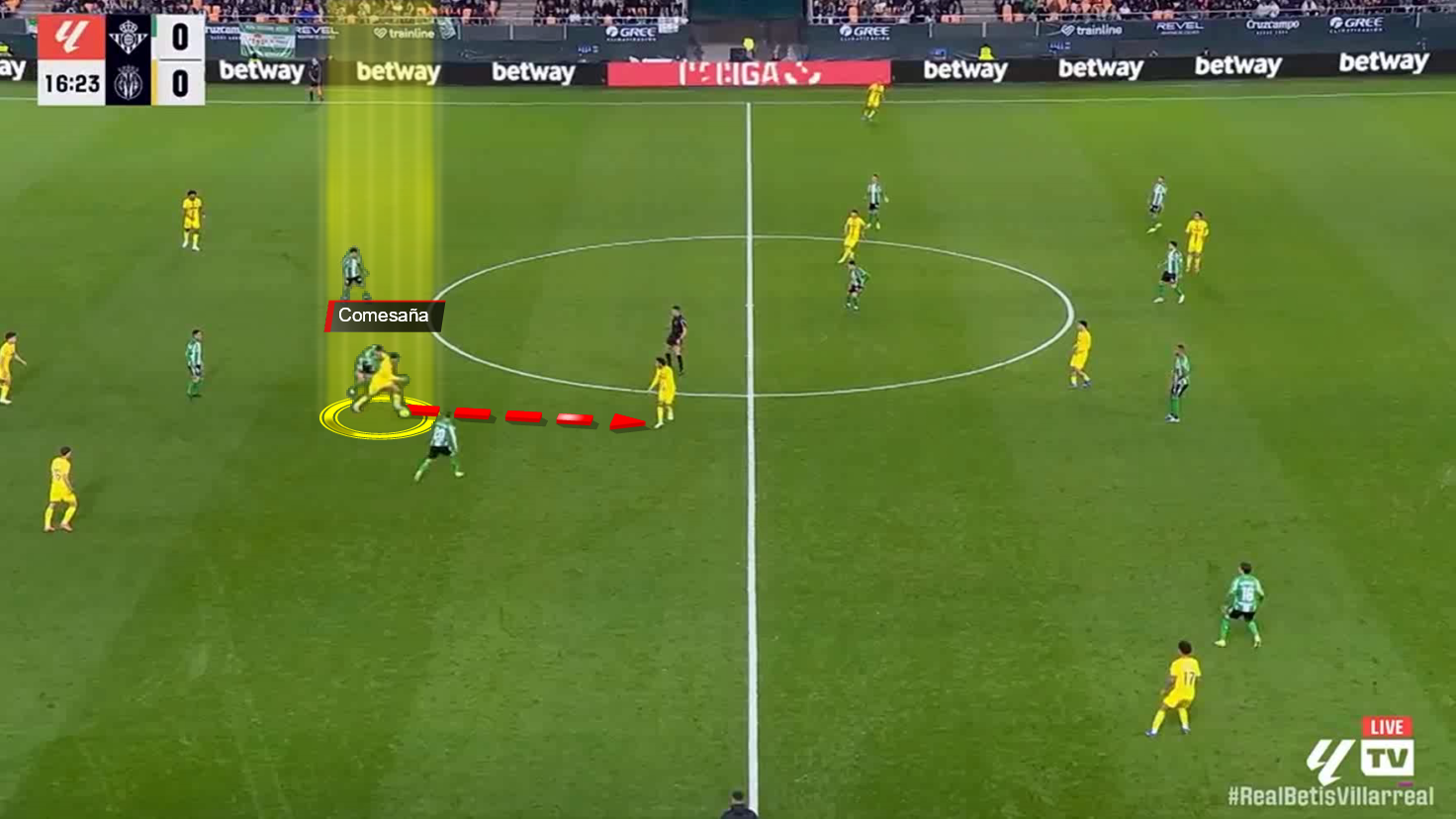
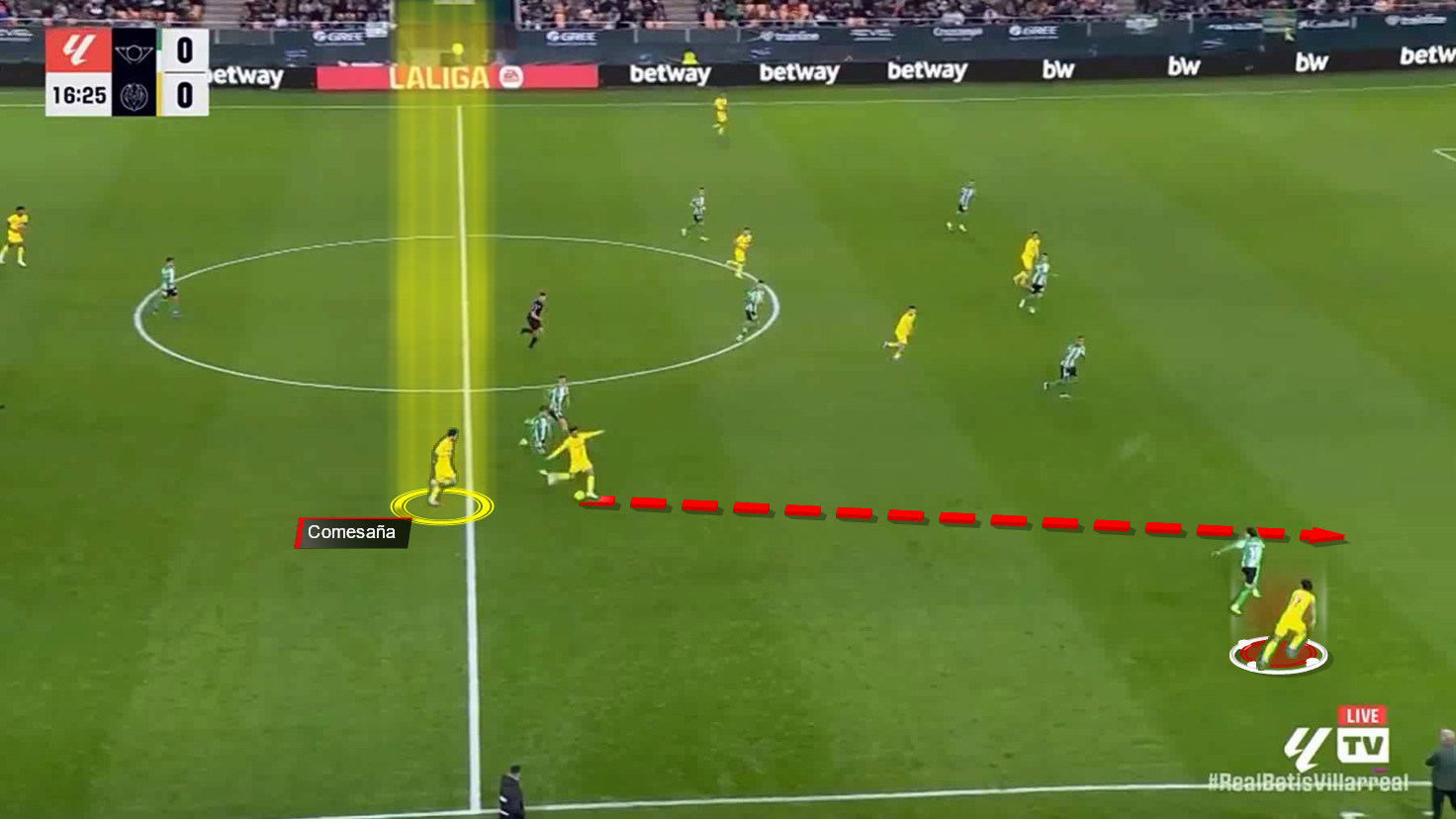 Here, against Real Betis, his importance is evident; he creates a 3-on-2 numerical advantage, receives the ball with a half-turn, and passes it to Dani Parejo, who in turn plays a through ball that breaks the defensive line.
Overcoming the initial wave of pressure without losing control.
This type of role doesn’t turn into attacking numbers, but it’s a crucial element in maintaining play.
Santi Comesaña Attacking Contribution
Despite scoring two goals and providing two assists, Santi Comesaña’s attacking value lies not in his final touch, but in the touch before it.
He’s a player who creates attacks more than he finishes them.
He moves behind the ball, fills the gaps left by the forwards, and gives the team the option to regroup rather than lose momentum.
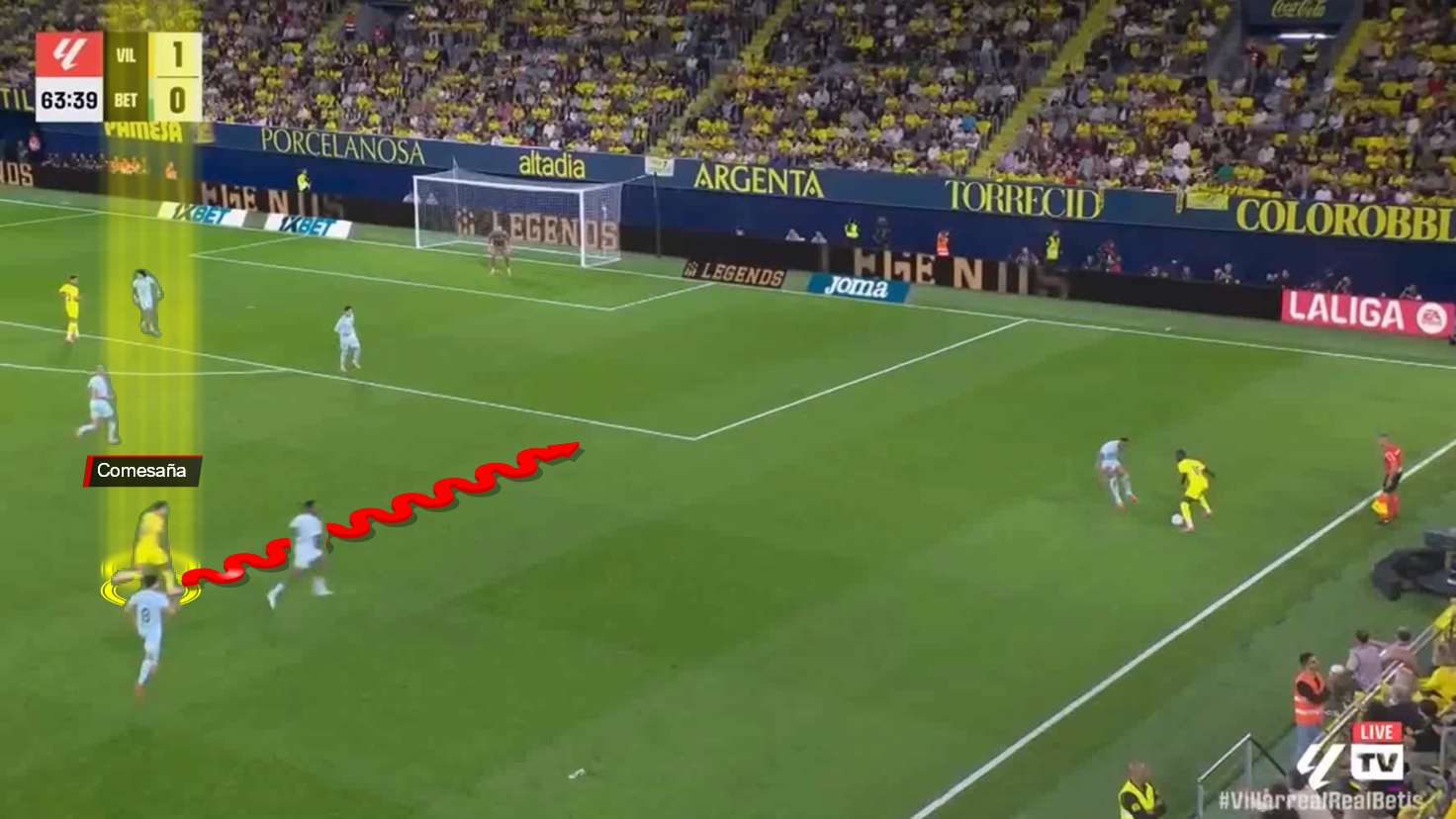
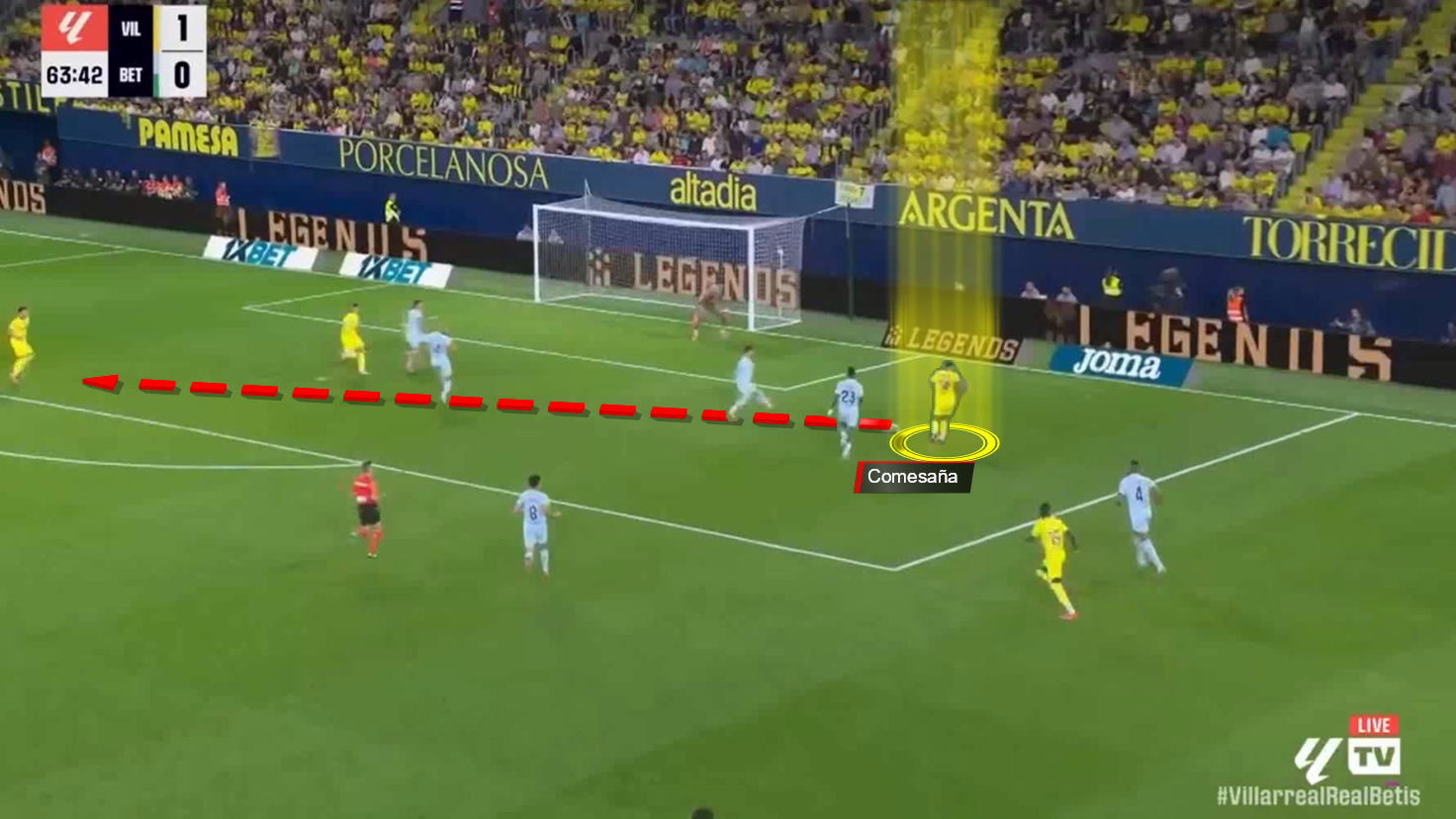 Against Real Betis above, we will see his vertical movement into the space behind the left-back and his request for the ball.
Then, looking at the far post, he saw Alberto Moleiro deliver a perfect cross, resulting in a goal.
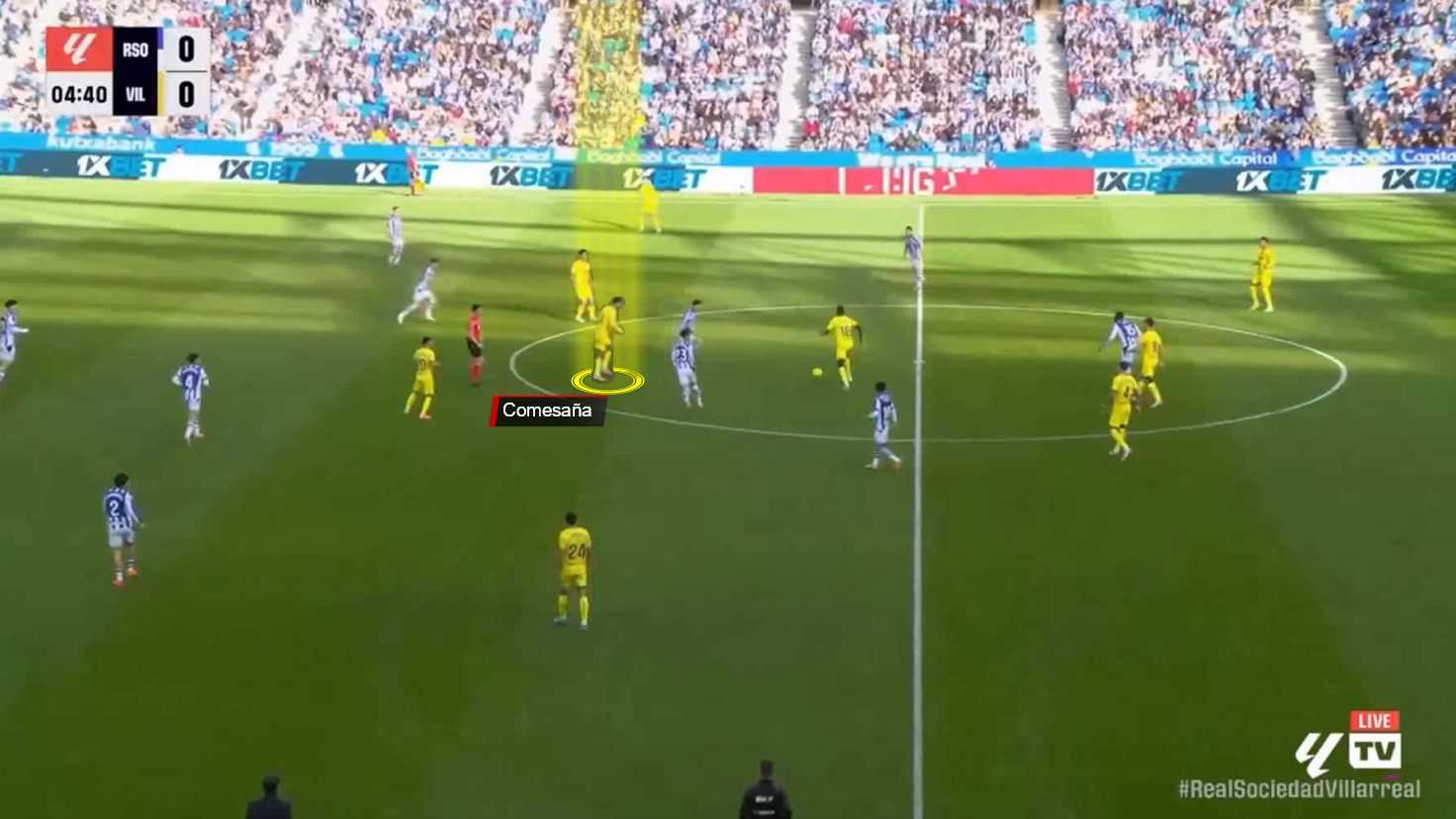
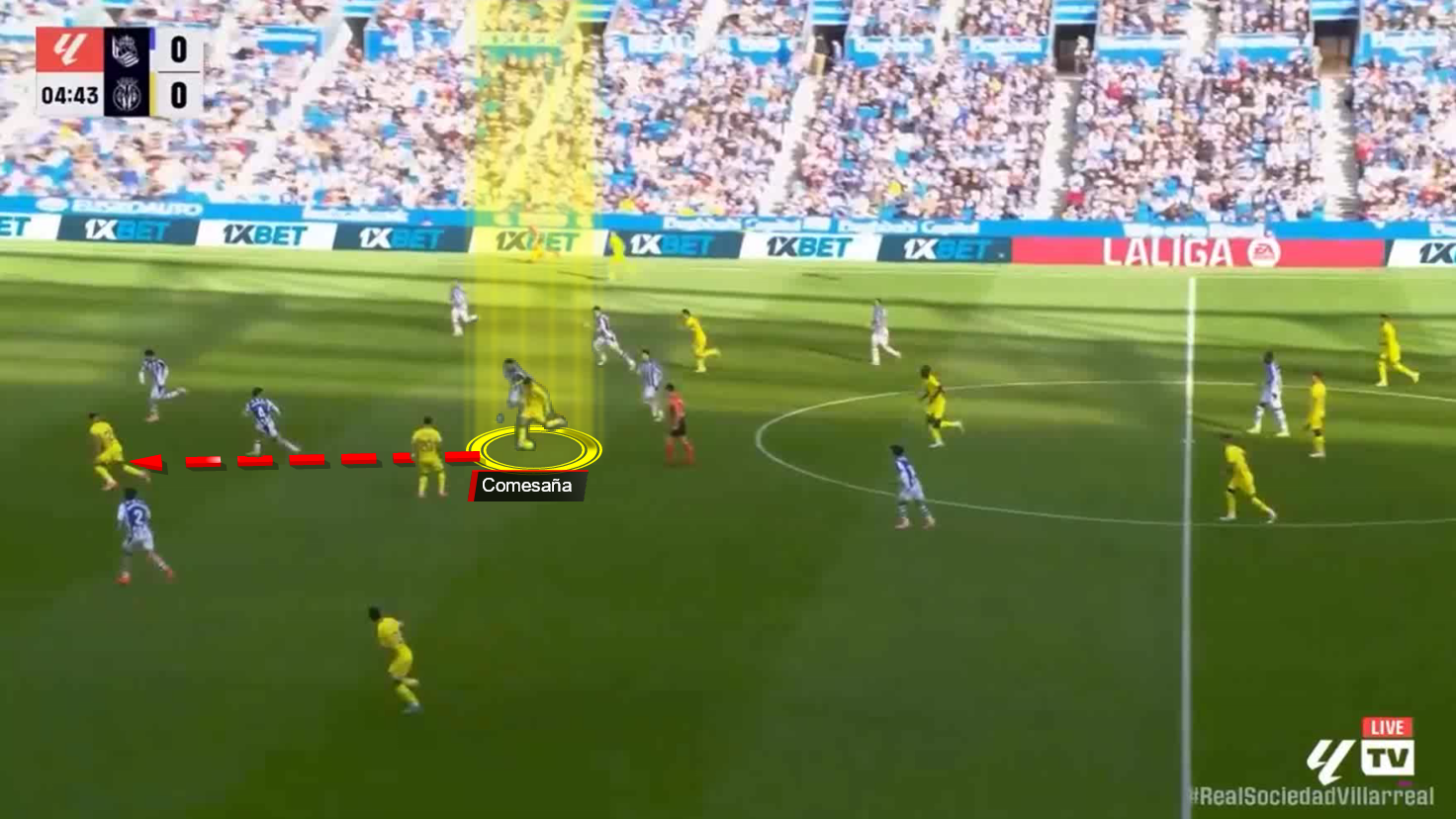 He moved intelligently behind the opponent’s midfield line, then demanded the ball and broke the second line of pressure.
He then cleverly passed into the final third with a smart key pass using his weaker foot.
Santi Comesaña is a distinguished player with the ball, whether through his decisions to retain possession and slow the tempo, his explicit attacking contributions through playmaking, or his movement to open up passing lanes and deliver crosses.
Santi Comesaña Defensive Positioning & Transitions
His defensive positioning in the coach’s preferred 4-4-2 formation demonstrates his exceptional ability to read both vertical and horizontal passing patterns.
He can even intercept players carrying the ball into the penalty area, whether they are wingers or full-backs.
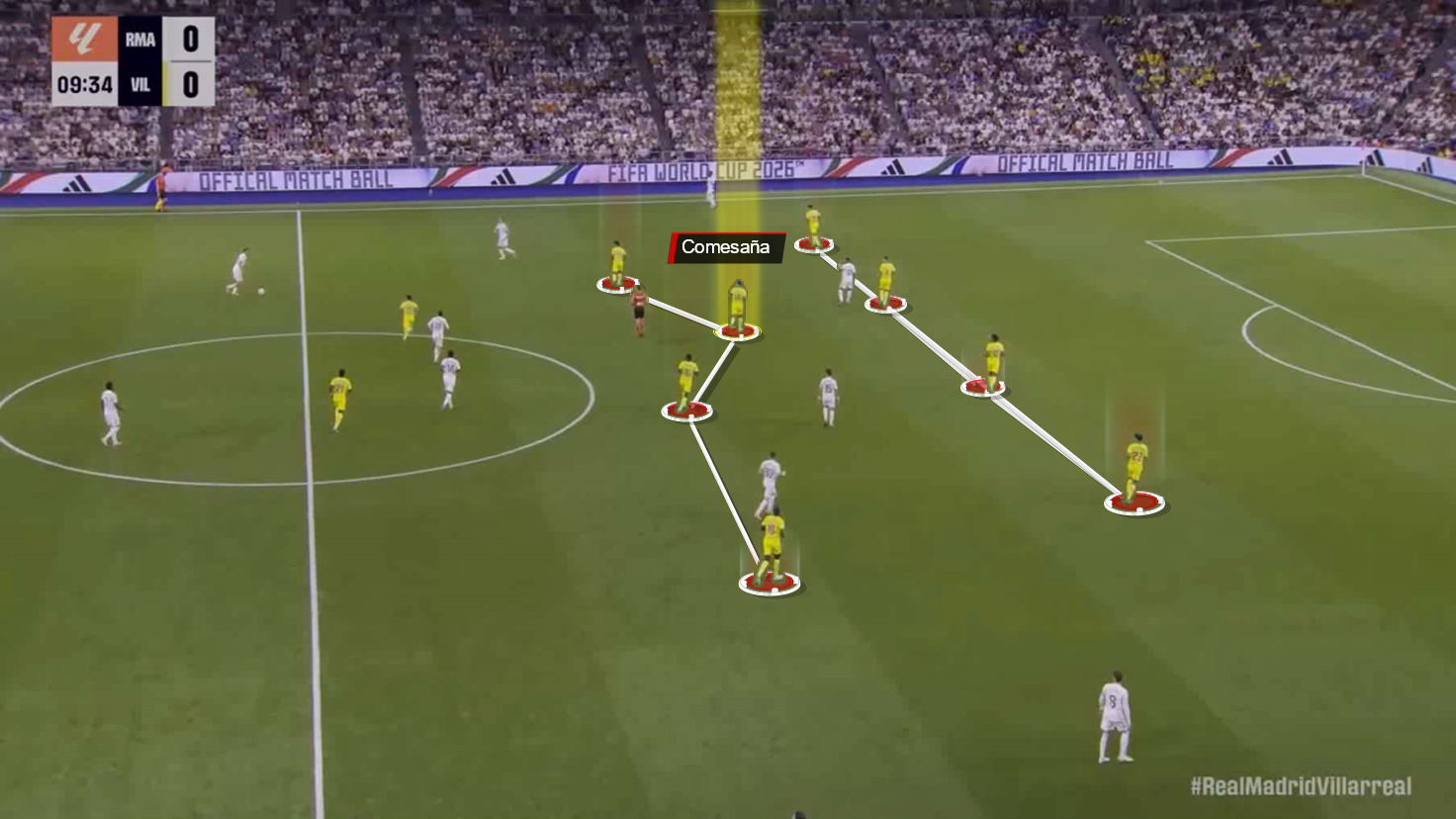
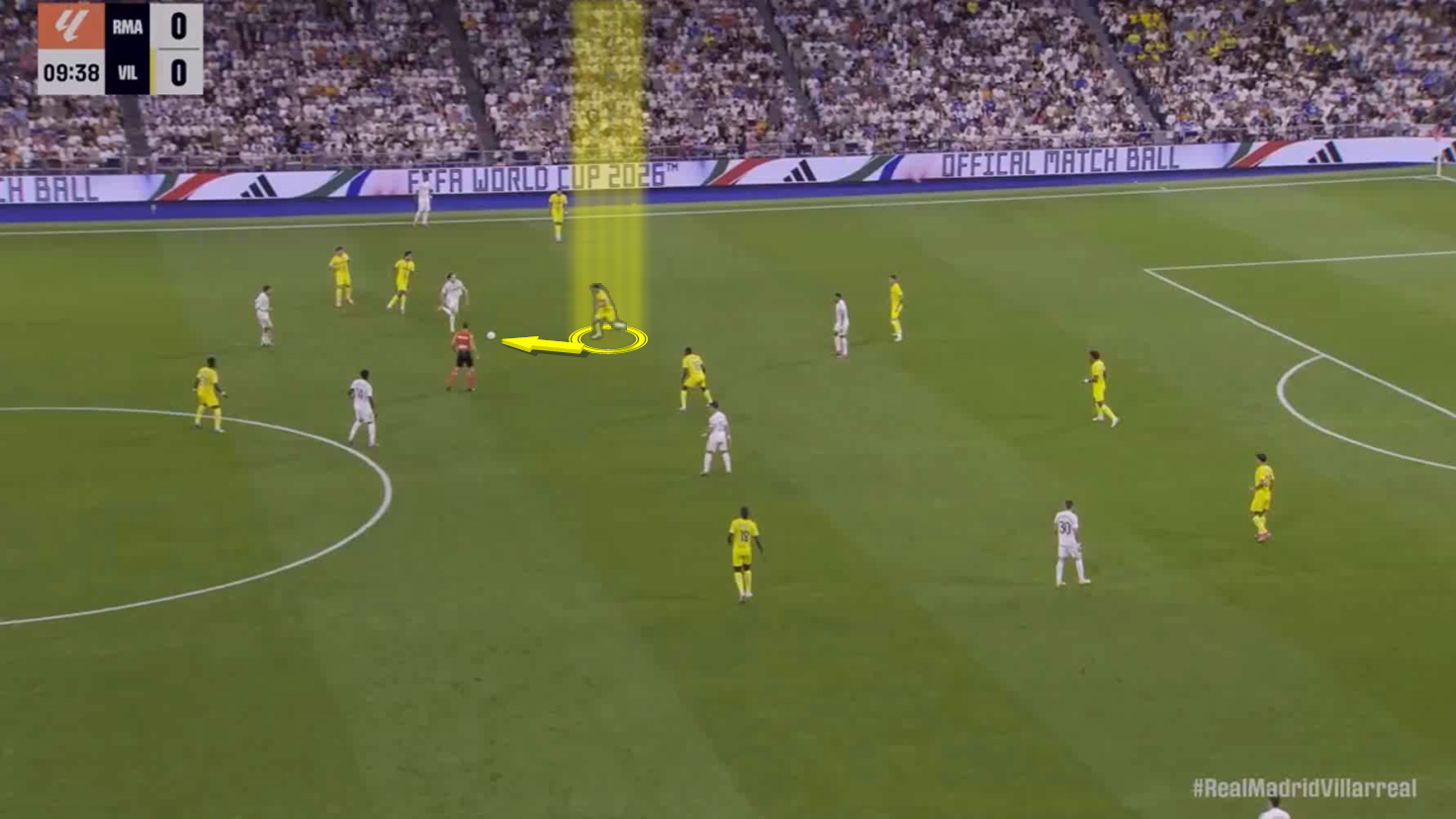
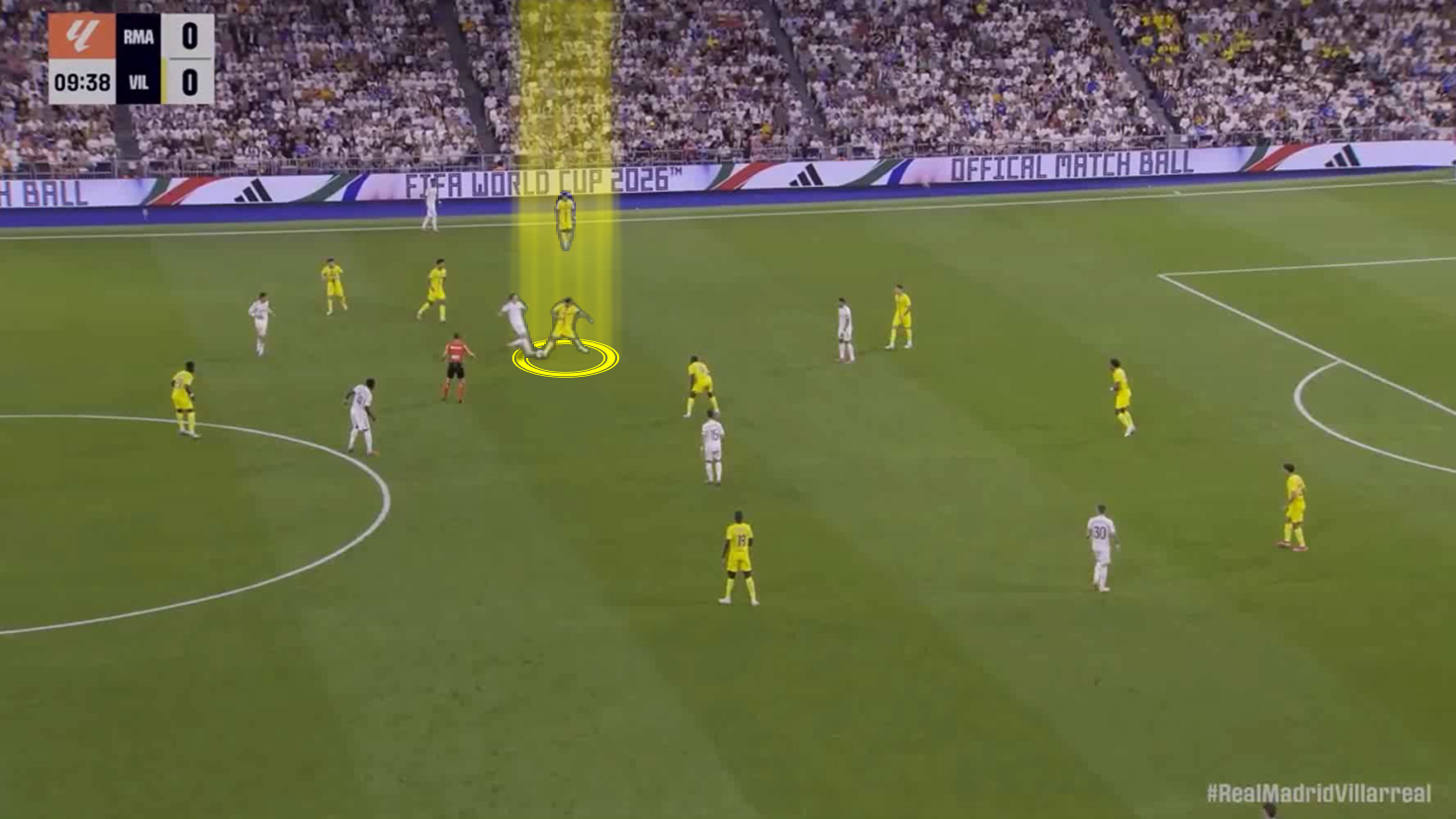 Here, against Real Madrid, his tactical awareness and style are evident when he monitors the ball as it’s passed from the centre-back to the full-back, who then dribbles inside.
But Santi Comesaña chose the perfect timing to press, intercept the ball, and regain possession.
Santi Comesaña isn’t an outright tackler, but he’s an excellent game reader.
In defensive transitions, he rarely pushes forward aggressively, preferring to cut through passing lanes and force the opposition to play sideways.
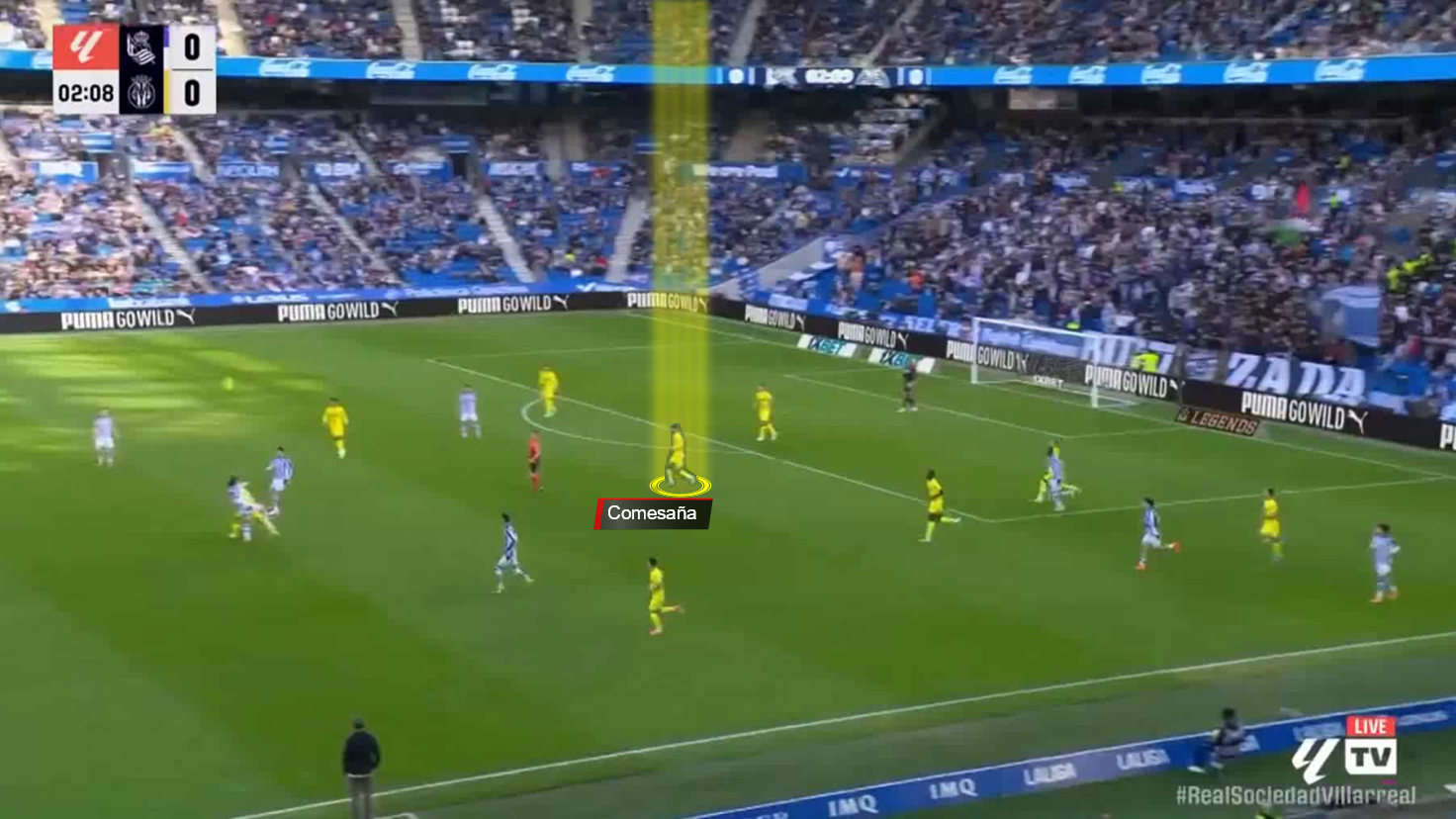
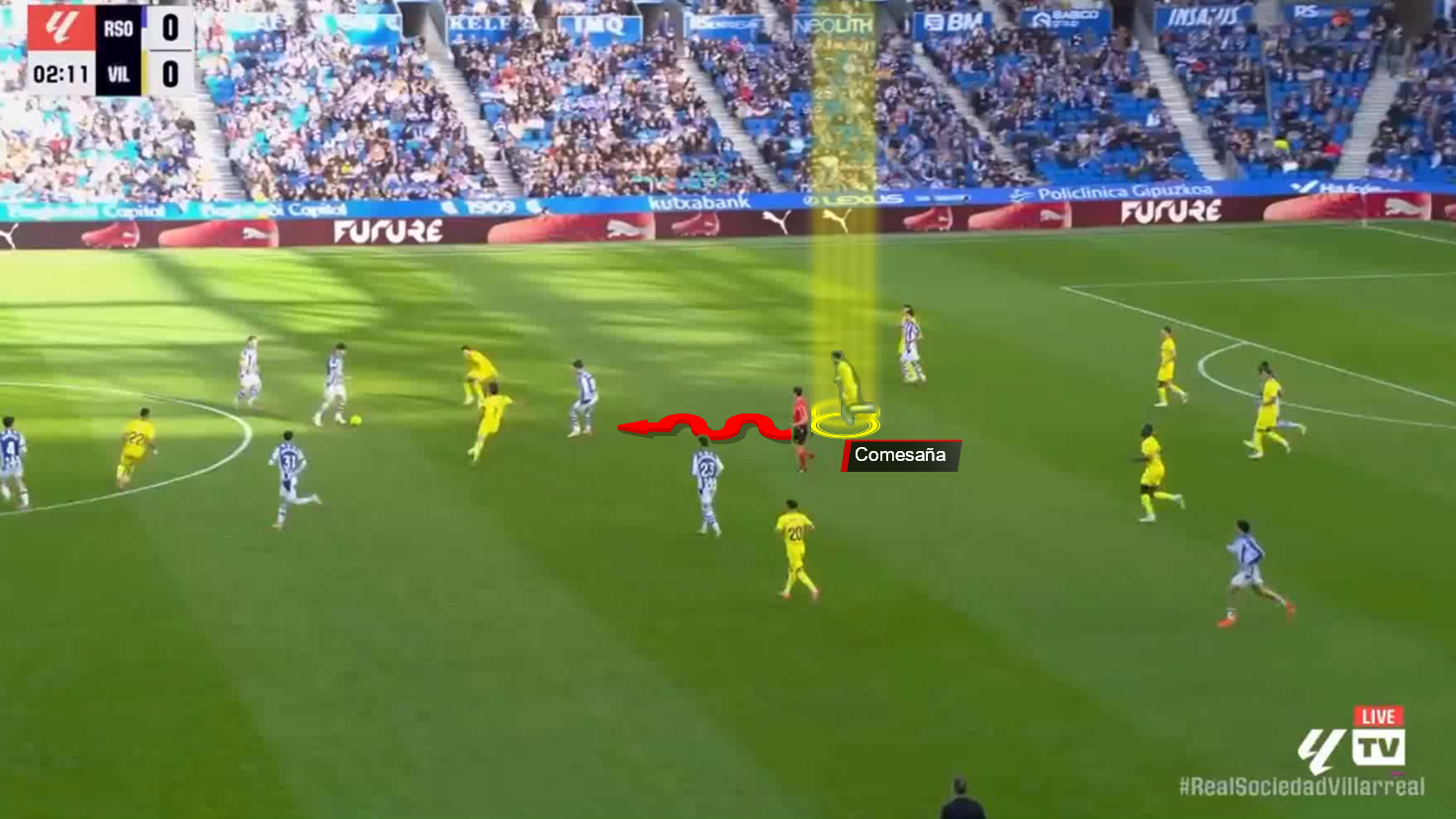
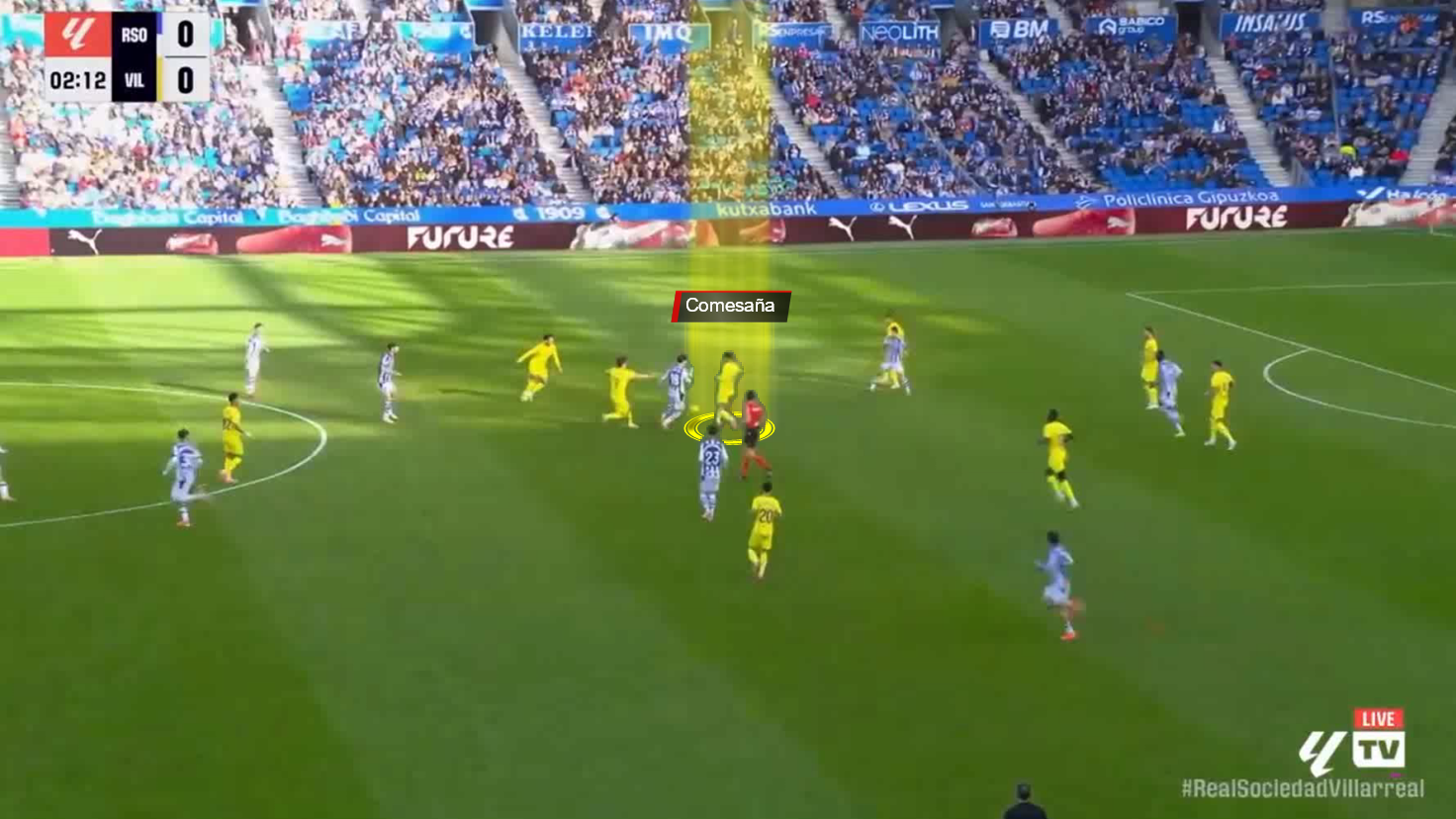 This approach reduces opportunities for vertical penetration, giving the team time to regroup defensively.
These small details reflect a player who understands defence as a system, not just as an individual confrontation.
Santi Comesaña Tactical Limitations
Santi Comesaña’s limitations in vertical progression under pressure were clearly evident during Villarreal’s initial build-up phase.
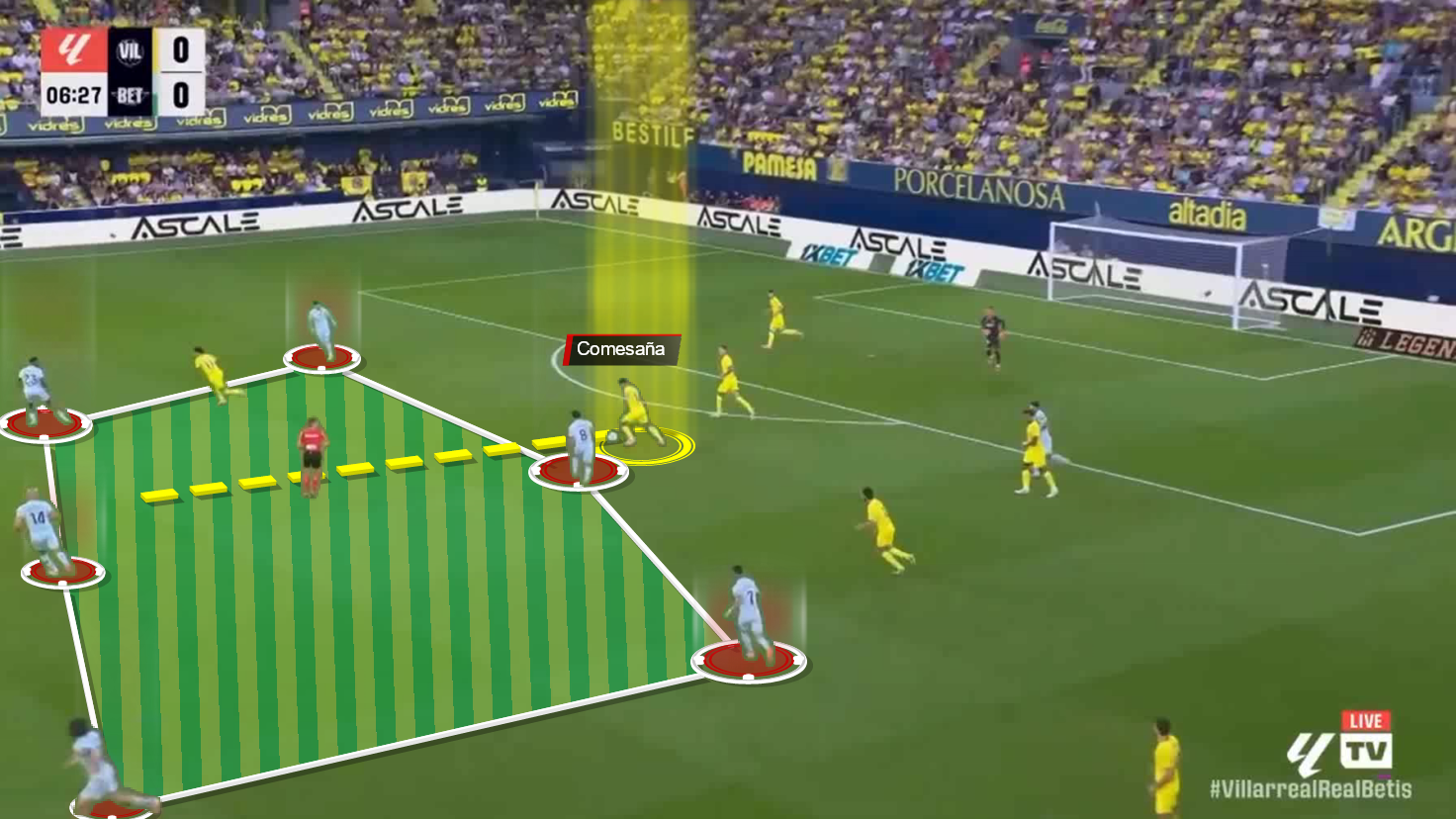
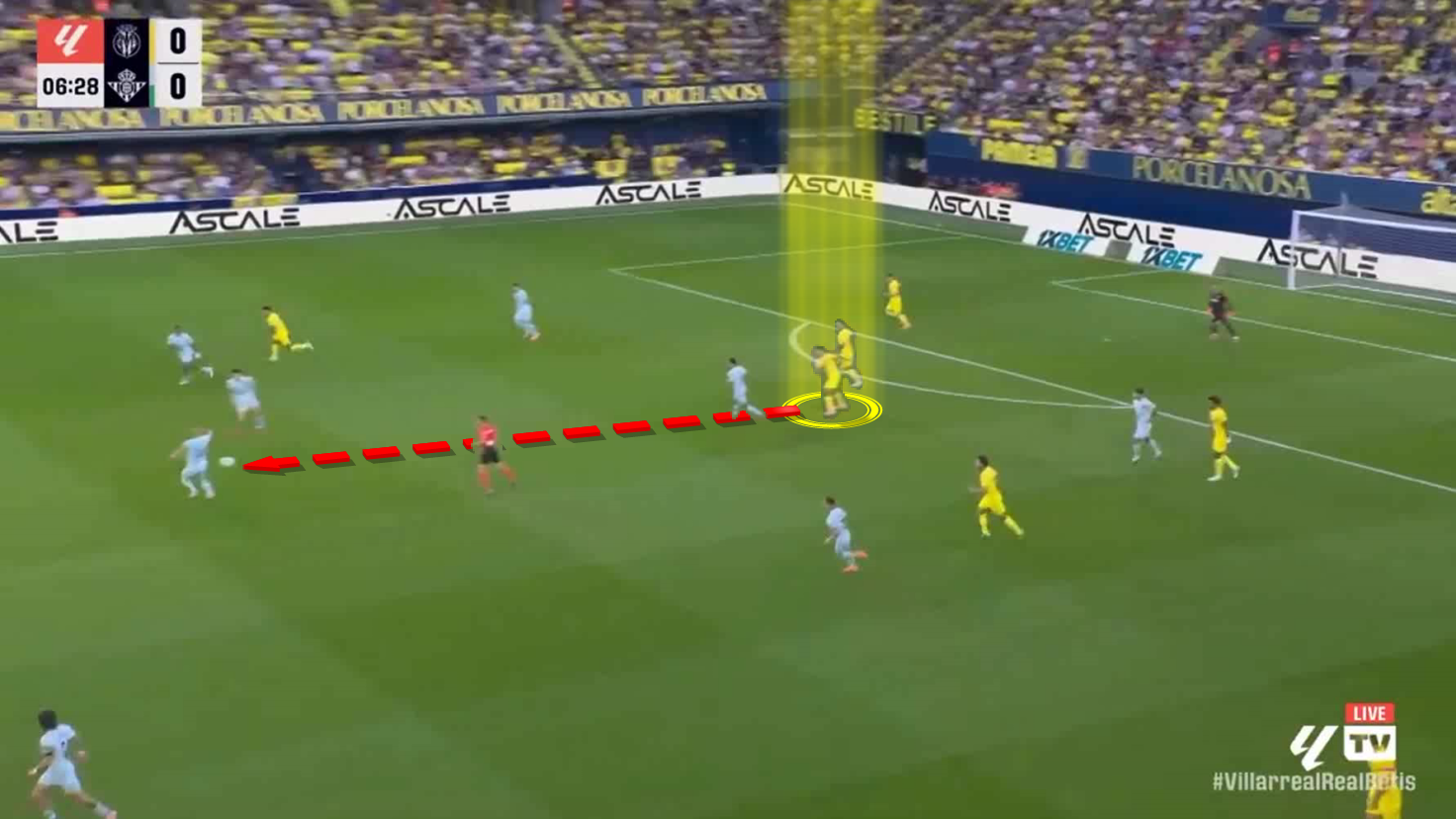 Here we can see Santi Comesaña’s decisions under pressure and an attempt to play long balls, but without focus.
Comesania has frequently received a closed-body design, prioritising security over intrusion.
Despite his high tactical commitment, Santi Comesaña’s style of play, based on medium pressing and intelligent tackling, can sometimes put him in dangerous situations if he is slow to react.
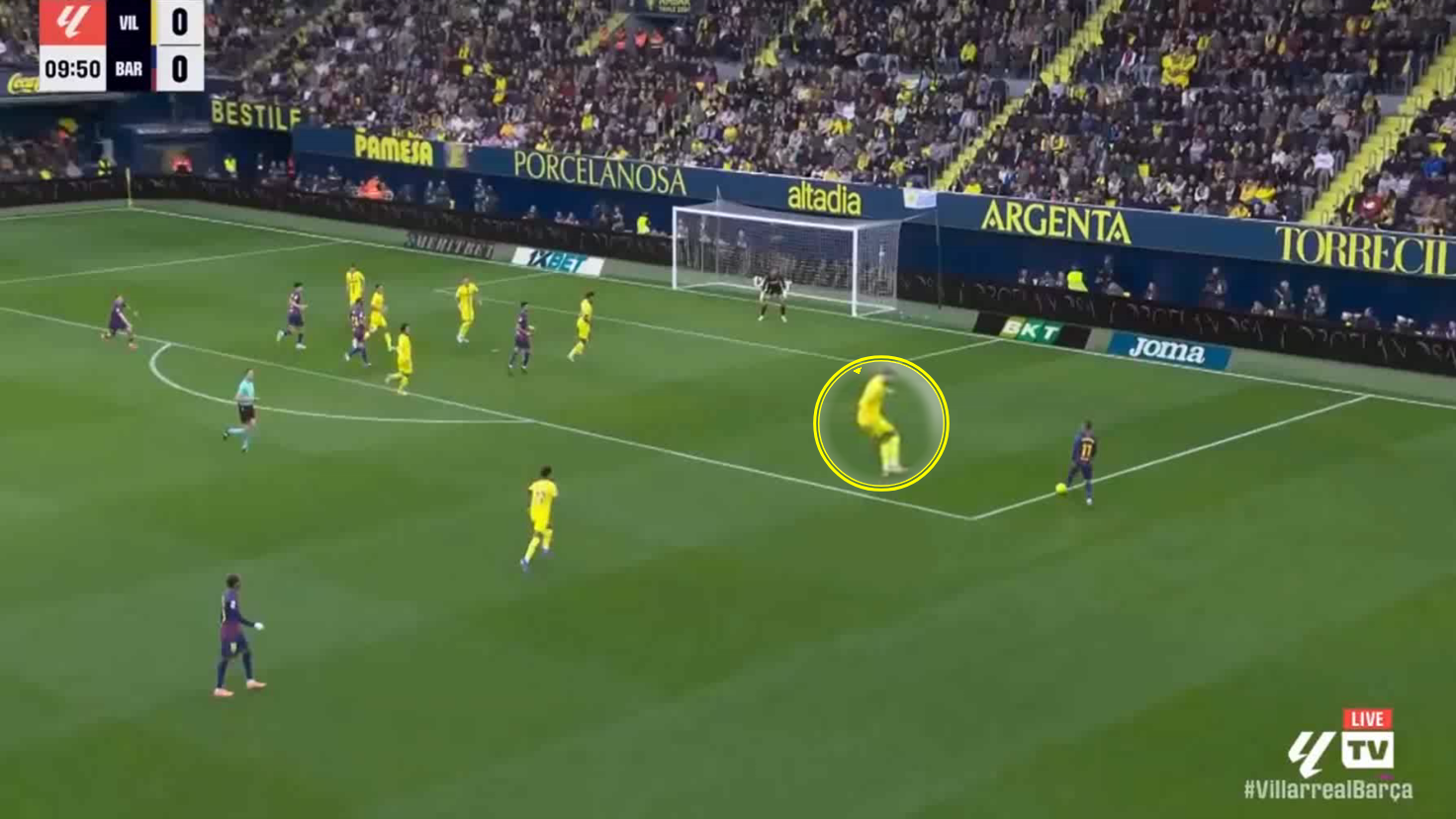
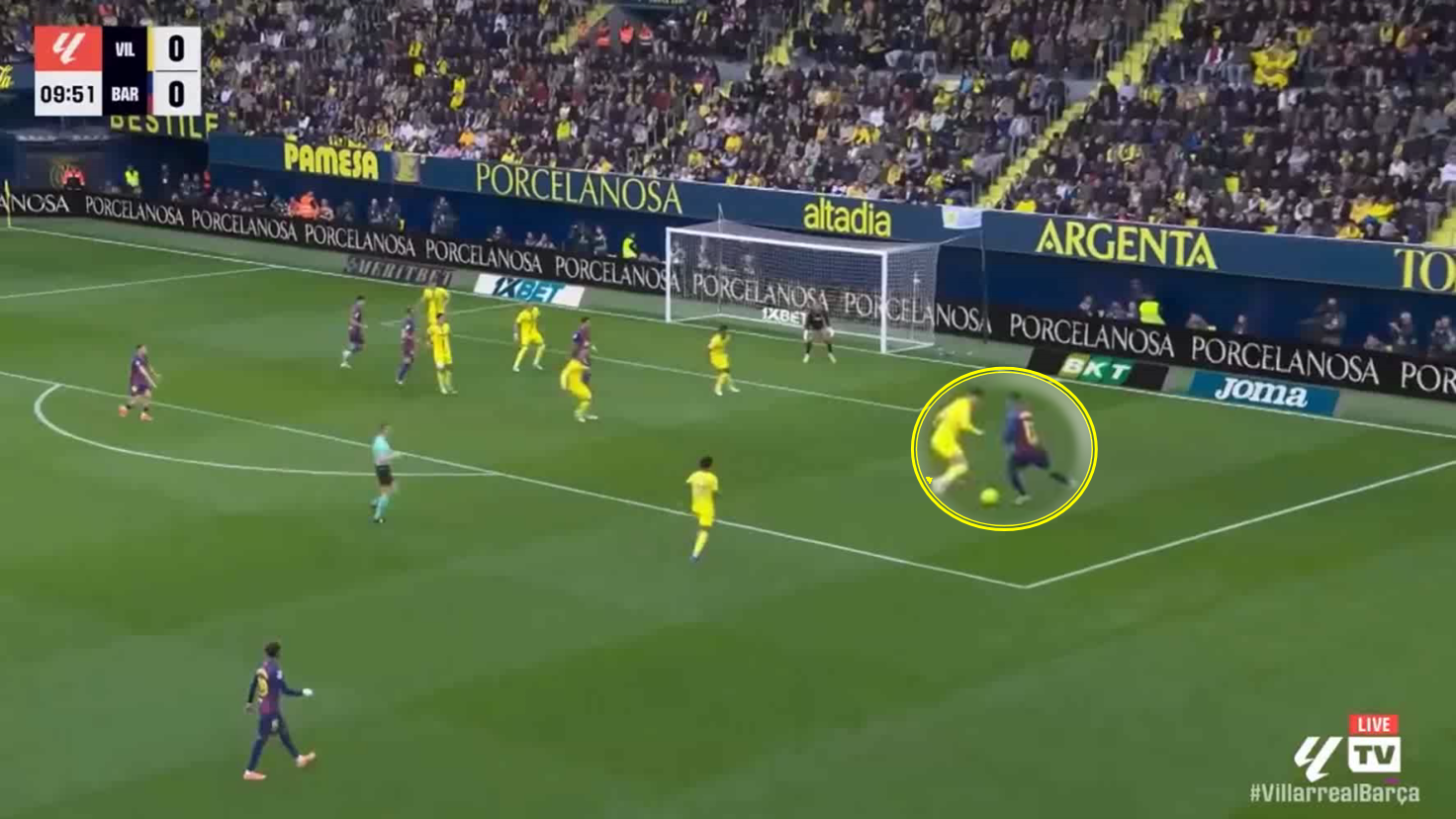
Especially in 1-v-1 situations, with players possessing excellent dribbling skills, it becomes clear that Santi Comesaña is more of a system player than anything else.
Here, in a one-on-one situation against Raphinha in the Barcelona match, and in an attempt to stop the player from penetrating deep, with incorrect positioning, he was forced to foul him.
He was forced into direct interventions as the team lost control, revealing the limitations of his role when tasked with purely defensive duties.
This doesn’t diminish his value, but it underscores that the best version of Santi Comesaña emerges when used as a stabilising force within a well-defined system, rather than as a lone solution to defensive problems.
Conclusion
Santi Comesaña is a quintessential “structural” player.
His value isn’t measured by goals, but by the team’s ability to play with consistency when he’s on the pitch.
He provides Villarreal with a balanced rhythm, helps link the lines, and reduces the chaos of transitions.
He’s not a star player, but a player of the collective project, and any team that relies more on organisation and control than individual inspiration will greatly benefit from having a player of his calibre.
