
Eddie Howe has overseen one of the most impressive transformations in modern Premier League history since arriving at Newcastle United.
He inherited a side fighting relegation and reshaped it into one defined by intensity, physical dominance, and emotional energy.
The Toon became one of the most challenging teams to face in the league, capable of overwhelming opponents through aggression, duels, and relentless momentum, particularly at St. James’ Park.
However, as the current season has unfolded, Newcastle’s performances have become increasingly uneven.
Their attacking output remains strong and, on many occasions, spectacular.
Scoring goals has not been the issue.
The problem lies at the other end of the pitch.
Newcastle are conceding too frequently, and, more importantly, in similar ways.
This Newcastle United tactical analysis examines Newcastle United’s goals conceded this season, not through isolated mistakes or individual errors, but through recurring structural patterns.
By analysing where goals are coming from and the phases of play in which they occur, a clearer picture emerges of why Newcastle are struggling to win games consistently this season.
Newcastle United Statistical Profile
Across 27 Premier League goals conceded, Newcastle United’s defensive record shows a clear pattern in how they are punished.
They have conceded 10 goals from set-pieces, whether in the first or second phase; a further nine have come from defensive transitions and turnovers.
In total, 19 goals conceded, around 70%, have arrived either from set-piece situations or immediately after possession has been lost.
This profile is significant because it immediately reframes the discussion.
Patient possession sides are not slowly breaking down Newcastle regularly.
They are not conceding wave after wave of crosses or being pinned deep for long spells.
Instead, the majority of goals arrive in moments of instability, such as following turnovers in build-up, or during chaotic second phases where organisation briefly collapses.
The low number of goals conceded from open-play crosses is particularly revealing.
Newcastle are often described as vulnerable to wide deliveries, yet the data does not support this narrative.
The real danger emerges before teams even reach crossing positions.
Problems tend to occur when Newcastle fail to reset after losing the ball or after partially defending a dead-ball situation.
The goals conceded from settled possession represent a secondary issue rather than a primary one.
When teams are allowed to establish prolonged possession, Newcastle can struggle to apply consistent pressure on the ball, particularly through central areas.
This allows opponents to dictate tempo and move Newcastle’s defensive block laterally.
However, these situations account for a far smaller proportion of goals conceded than transitions and second phases, reinforcing the idea that Newcastle’s core issue is not defending structure, but defending moments.
Newcastle United Rest Defence & The Cost Of Attacking Chaos
The most significant structural problem facing Newcastle United this season is their rest defence.
When Newcastle lose possession during build-up or attacking phases, they are often exposed, particularly in wide channels and half-spaces.
This vulnerability has been repeatedly punished through counterattacks and quick vertical passes into space.


Newcastle United are in a controlled build-up phase here, but there’s no real rest defence in place behind the ball.
When possession is lost, the structure collapses instantly, and there’s no pressure on the first forward action.
One vertical pass takes out multiple players and exposes a retreating backline.
It turns a simple build-up moment into a transition goal.
But part of this can be attributed to individual errors, but the deeper issue is systemic.
Newcastle have not consistently built their game around a secure, possession-based build-up from the back.
While Nick Pope remains an elite shot-stopper and Aaron Ramsdale offers greater comfort on the ball, neither profiles as a goalkeeper who reliably anchors controlled first-phase build-up.
As a result, Howe has leaned heavily into Newcastle’s physical strengths: winning duels, attacking second balls, and playing with speed and aggression rather than sustained control.
This approach has delivered success, but it comes with risk.
When Newcastle attempts to build up and lose the ball, they are often not structurally prepared to defend the spaces they leave behind.
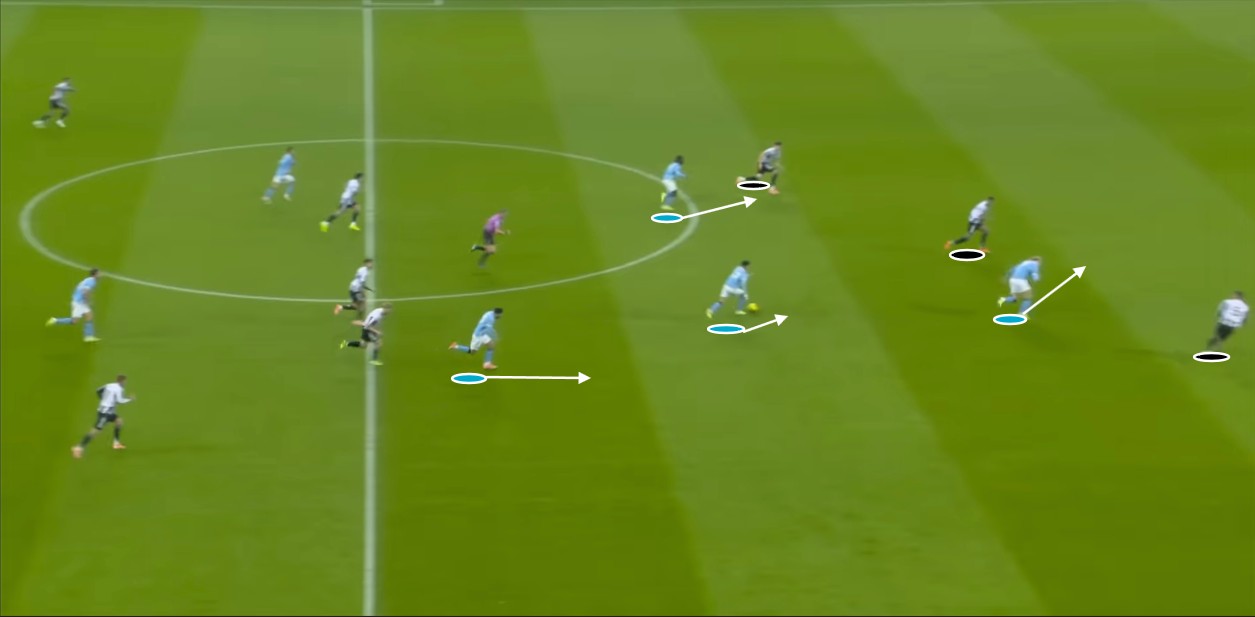
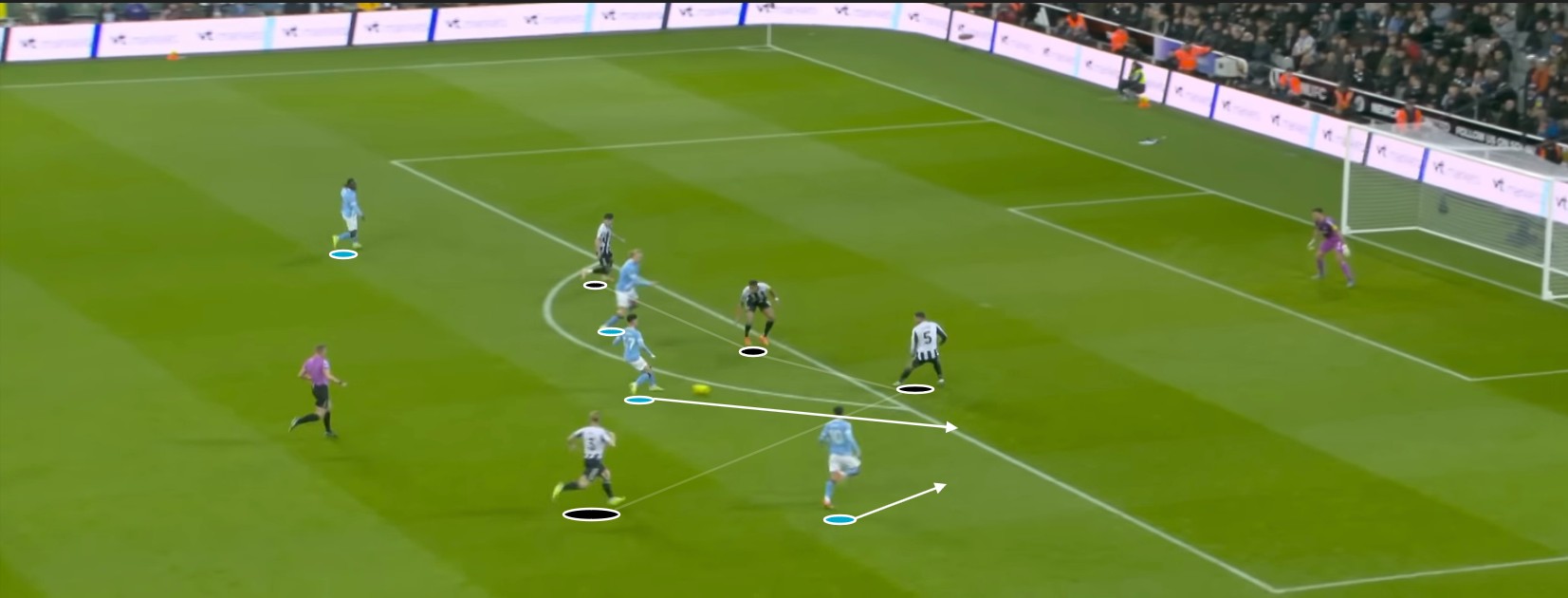
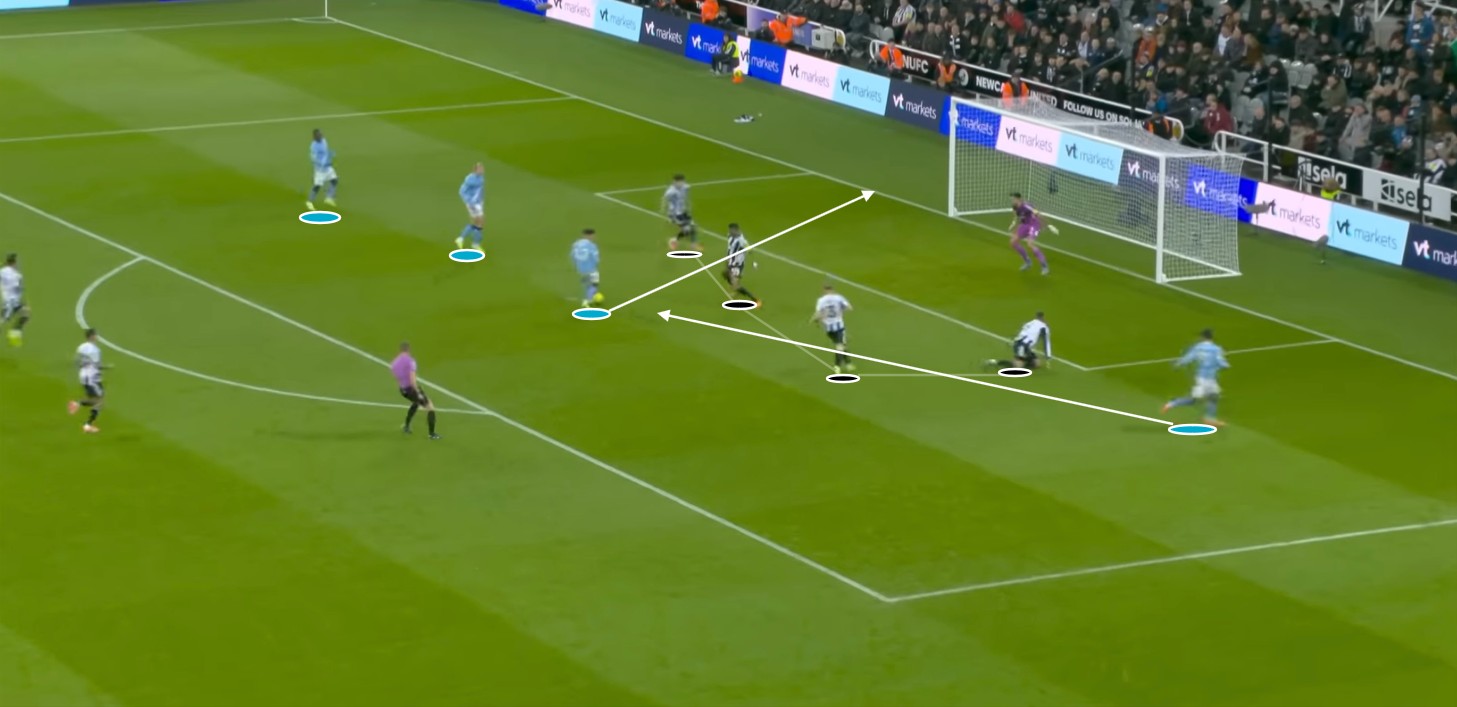
One vertical pass in transition exposes Newcastle United into a 4-v-3 against their backline, with no midfield protection in place.
Phil Foden misses the chance, but the ease with which Manchester City arrive at goal highlights Newcastle’s lack of rest defence.
Their attacking shape can become stretched, with full-backs advanced and midfielders positioned to contest second balls rather than protect space.
When possession is lost, Newcastle struggle to slow the game down or delay the opposition’s progression, leading to immediate danger.
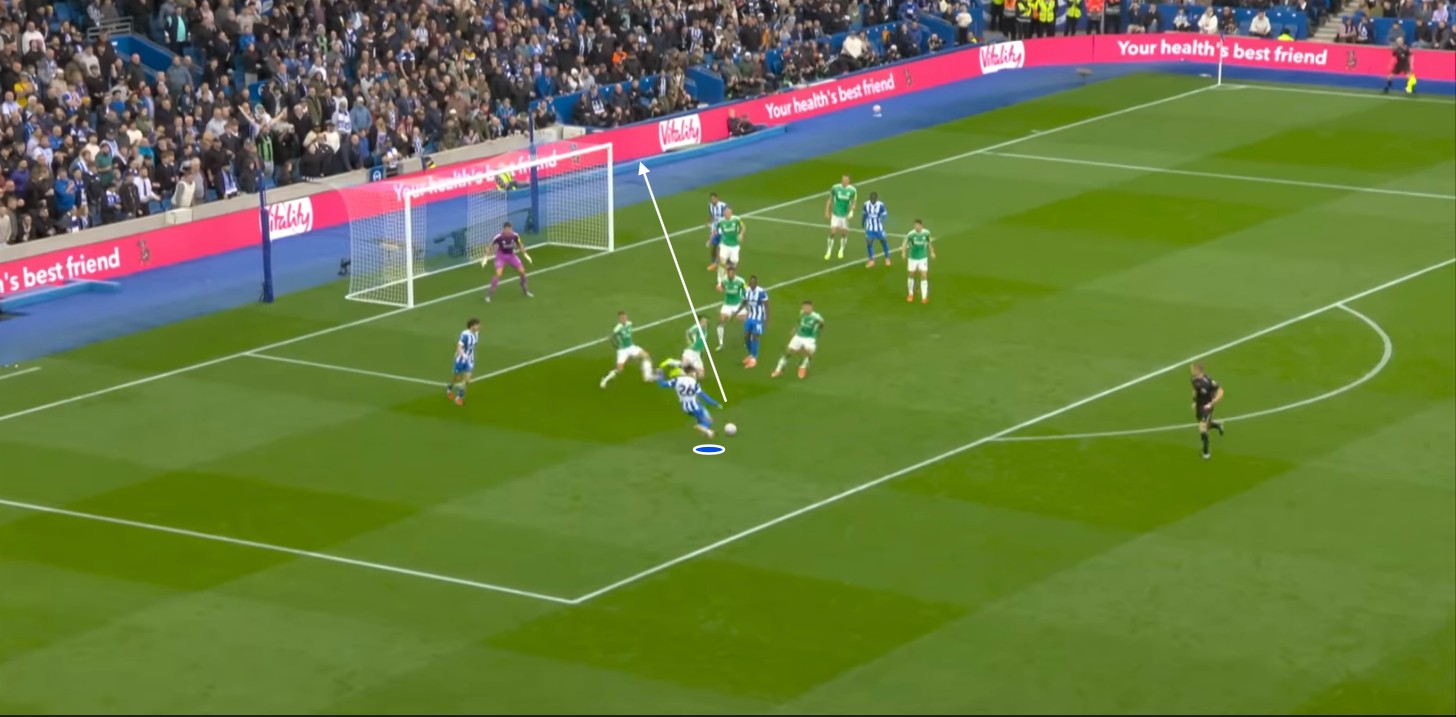
Newcastle United lose control of the game state again here after a lost duel in the build-up, with Georginio Rutter winning the ball back and instantly triggering a transition.
One vertical action pulls Newcastle’s shape apart, allowing Yankuba Minteh to drive into the box and force the back line to retreat, before the ball is recycled into the danger zone.
Yasin Ayari misses the chance, but the pattern is clear: a single turnover, no rest defence, and Newcastle are defending their box under stress within seconds.
This is not simply a matter of effort or recovery runs.
It is about spacing and role clarity.
Elite teams attack with an understanding of where protection exists behind the ball.
Newcastle, by contrast, often attacks as though the next duel will be won.
When it is not, the consequences are severe.
This is an area where Howe must evolve the structure without abandoning the identity that has brought success.
A more consistent 3–2 rest defence in possession, with one full-back, such as Tino Livramento, tucking in alongside two centre-backs, like Fabian Schär, Dan Burn, or Sven Botman, and Bruno Guimarães and Sandro Tonali positioned ahead, would provide Newcastle with greater balance and protection against transitions.
This would allow Newcastle to sustain attacks while reducing their exposure to direct transitions.
Winning matches through dramatic, high-scoring games may be thrilling, but it is not sustainable across a Premier League season.
Away from home, in particular, Newcastle cannot rely on emotional momentum or crowd energy to carry them through moments of chaos.
Newcastle United Set-Pieces & The Second-Phase Mentality Problem
Newcastle United’s struggles at set-pieces are often framed as a technical or physical weakness, but this oversimplifies the issue.
In reality, Newcastle frequently compete well for first contact.
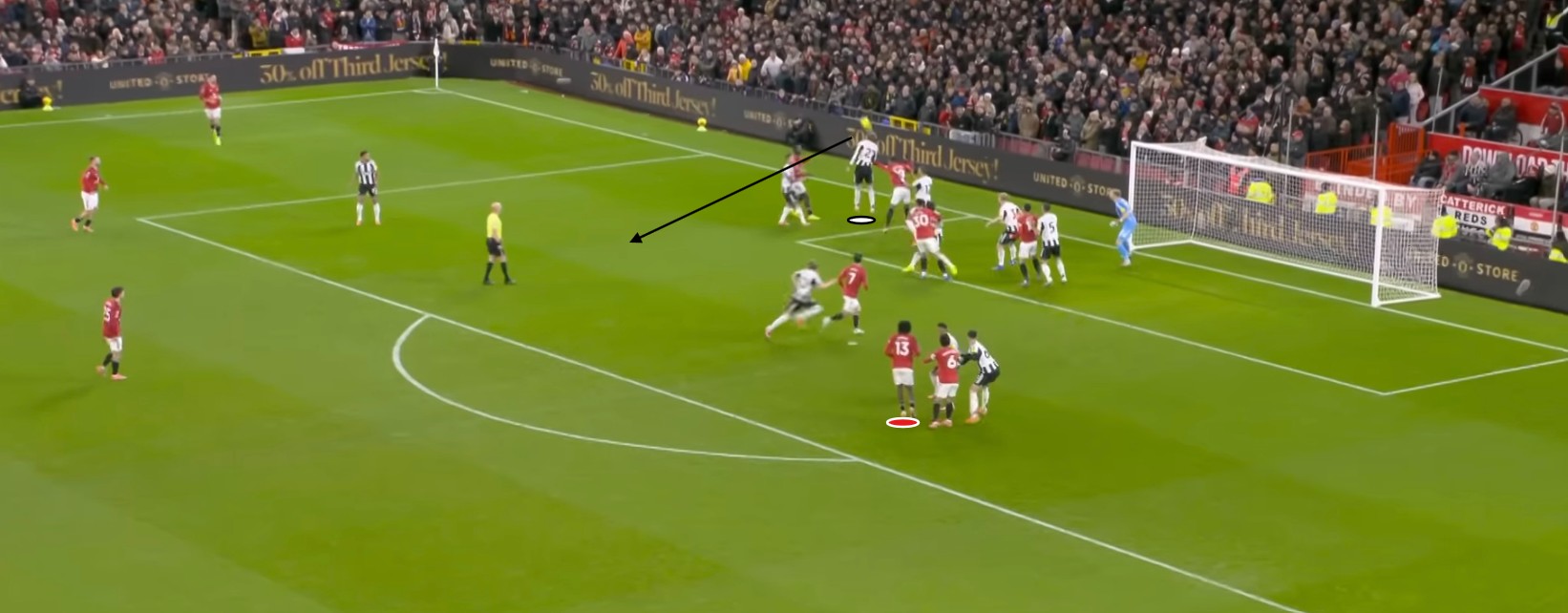
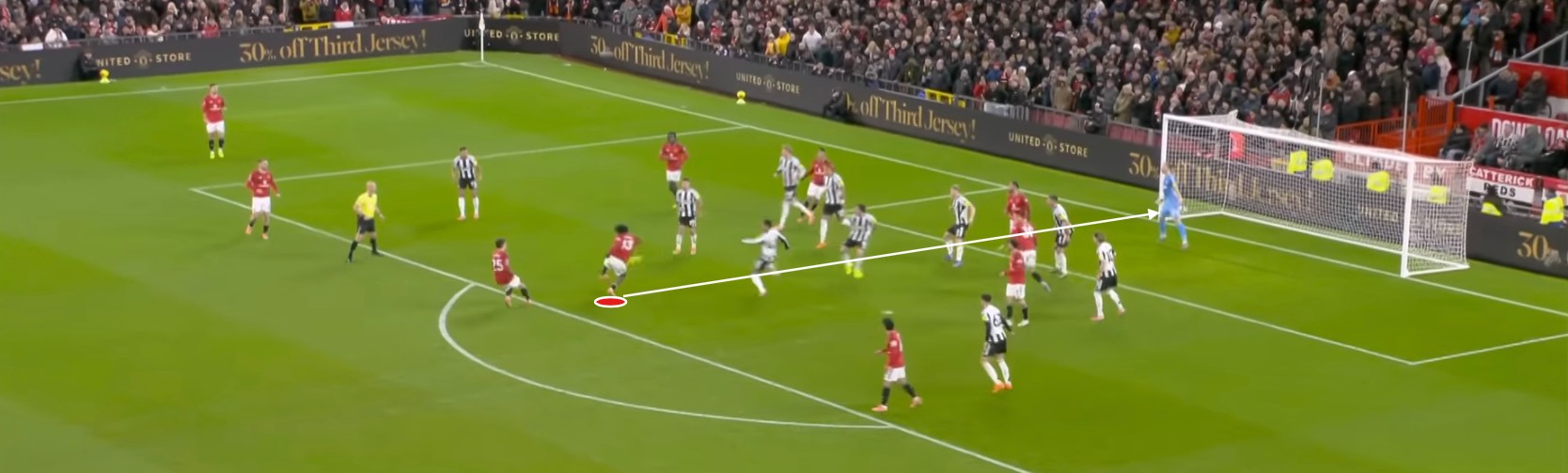
Newcastle United win the first contact from the long throw versus Manchester United, but completely lose control of the second phase.
The failure to step out and attack the loose ball allows Patrick Dorgu time to finish, a recurring pattern in how they concede from set-pieces.
They possess a squad filled with physically dominant players capable of contesting aerial duels and defending the initial delivery.
The problem lies in what happens next.
A significant number of goals conceded have come from second phases following set-pieces.
After the first clearance, Newcastle’s defensive line often fails to reset quickly.
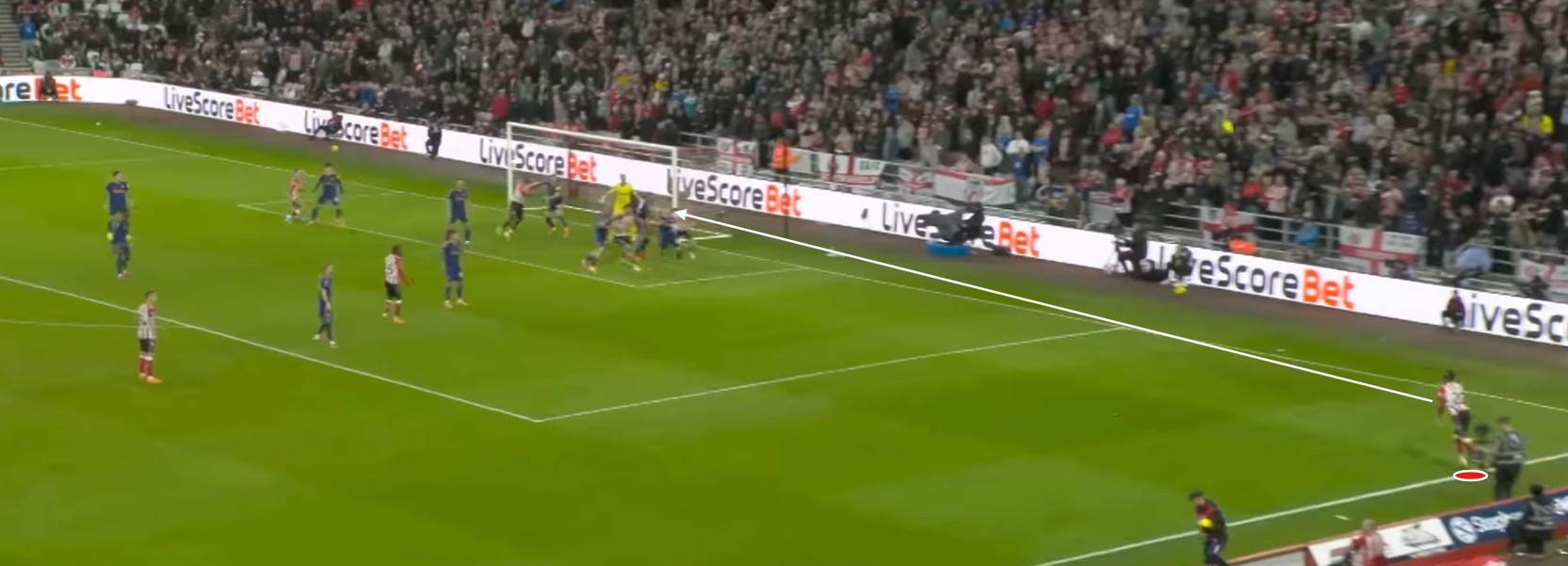
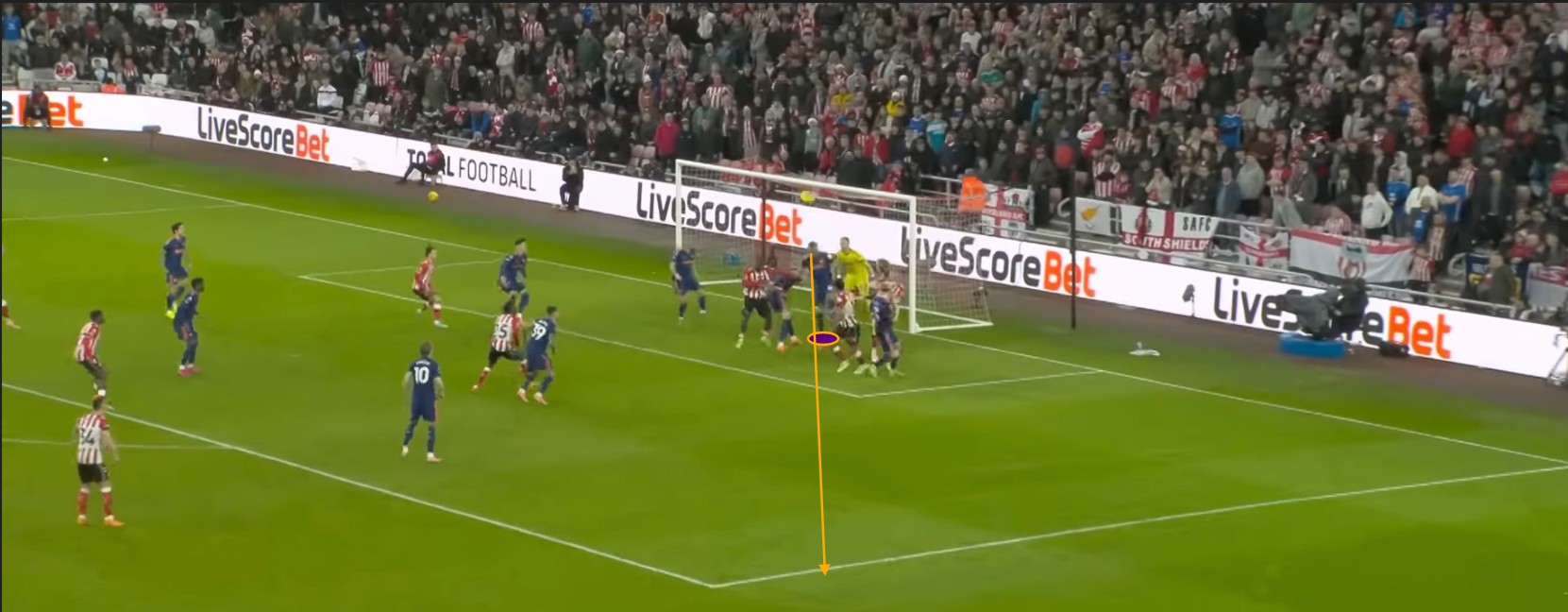
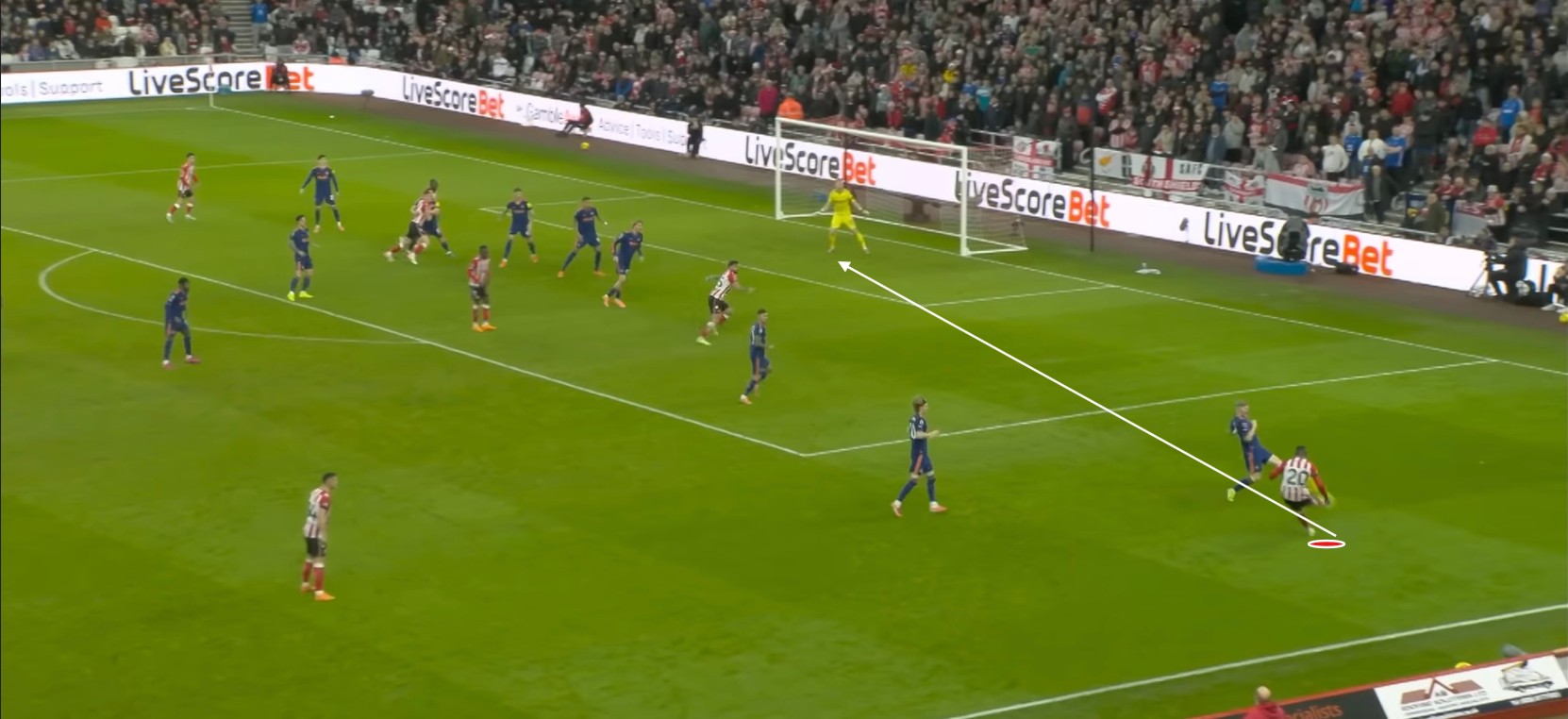
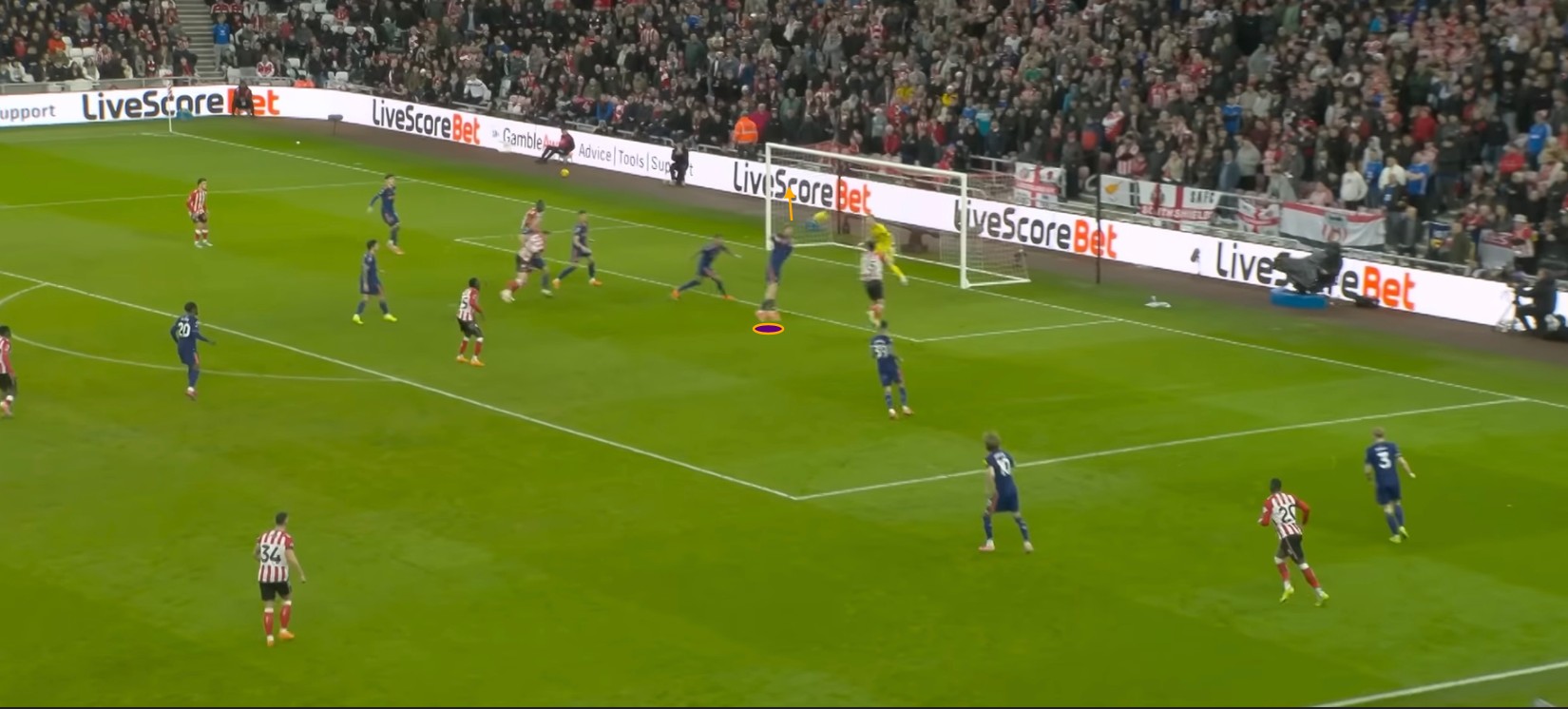
Newcastle United win the first contact from the long throw but fail to reset or attack the second phase.
Sunderland recycle the ball, re-enters the box, and the lack of urgency turns a cleared set piece into a conceded goal.
Spacing becomes disjointed, players are slow to react to loose balls, and opponents are given opportunities to recycle possession in dangerous areas.
At Premier League level, that brief lapse is often decisive.
This points less to a technical deficiency and more to a mentality and organisation issue.
Second-phase defending demands concentration, leadership, and collective responsibility.
It requires players to treat the danger as ongoing rather than assuming the threat has passed once the first header is won.
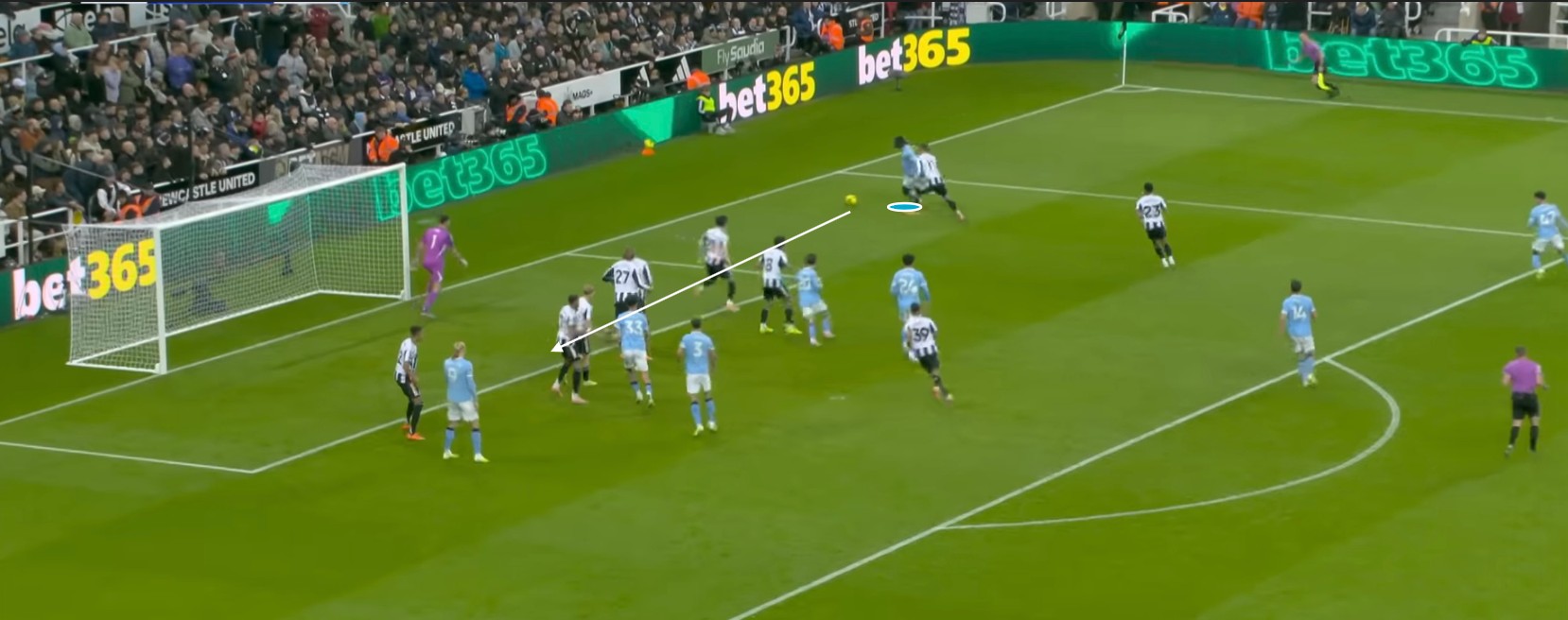
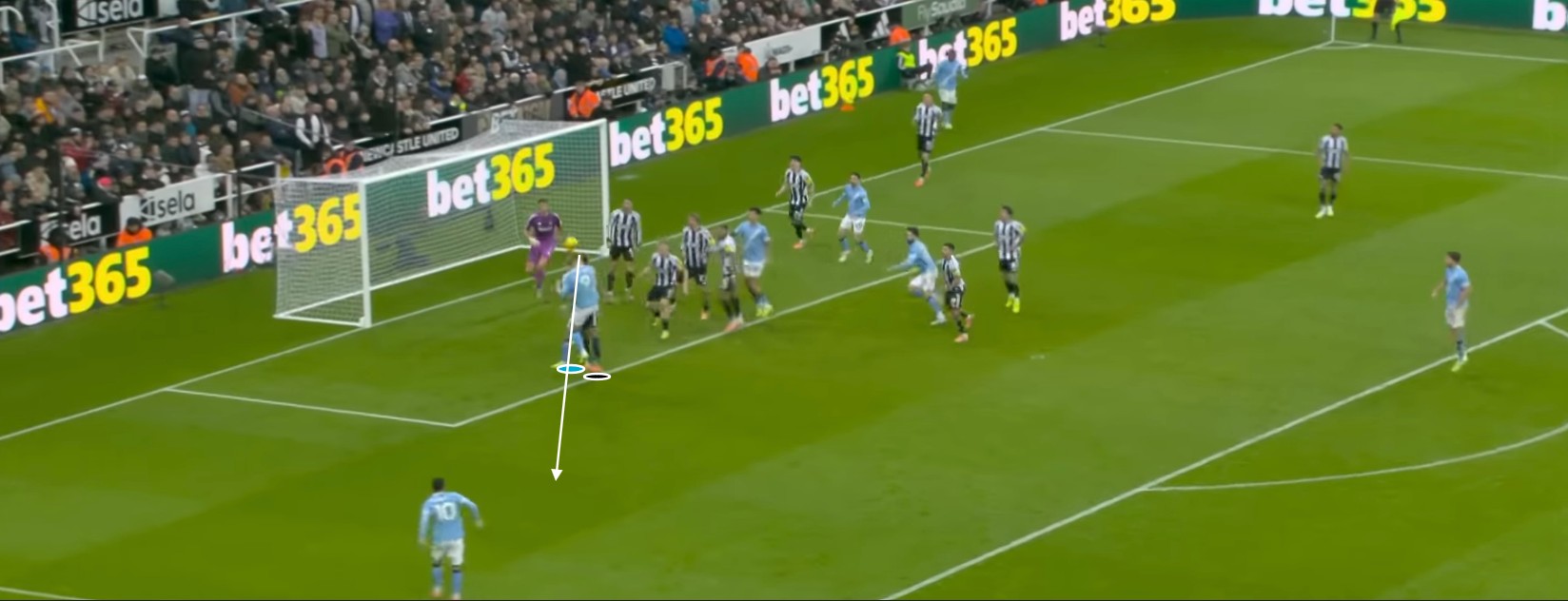
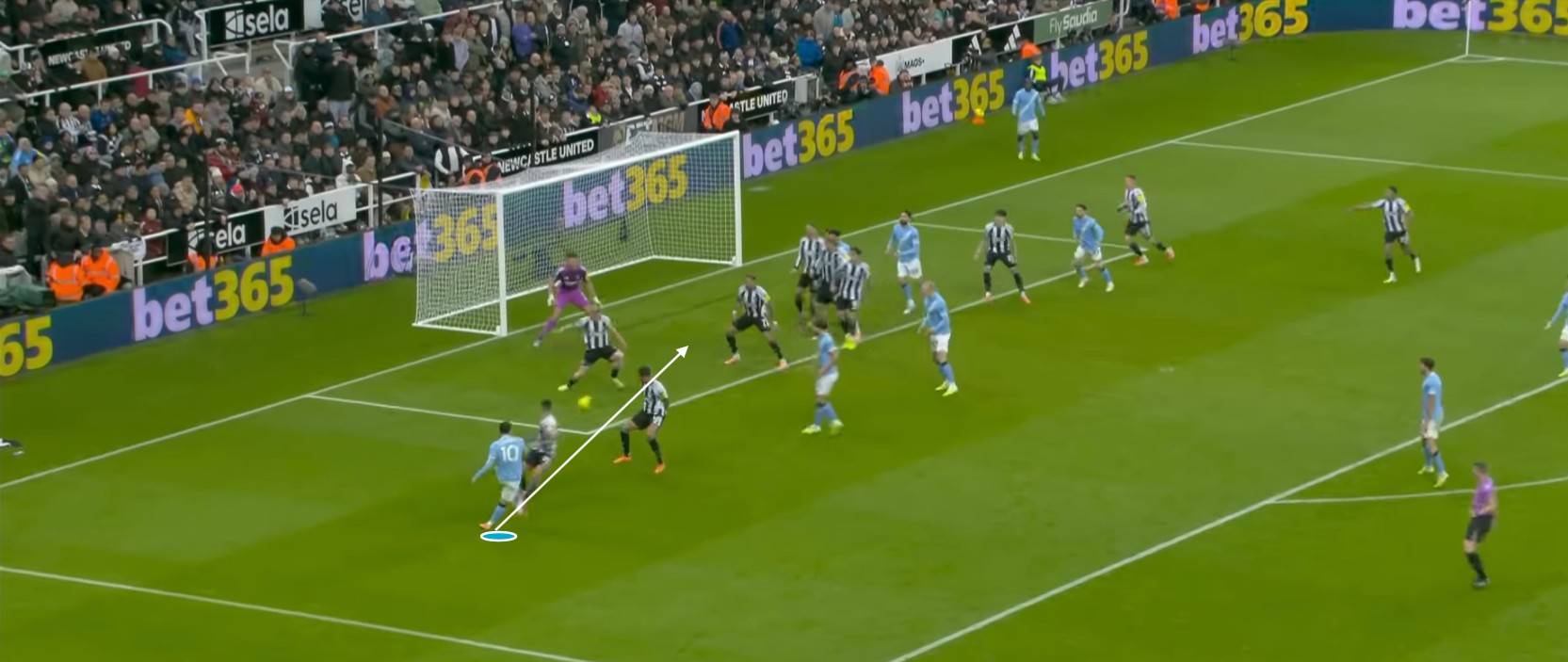
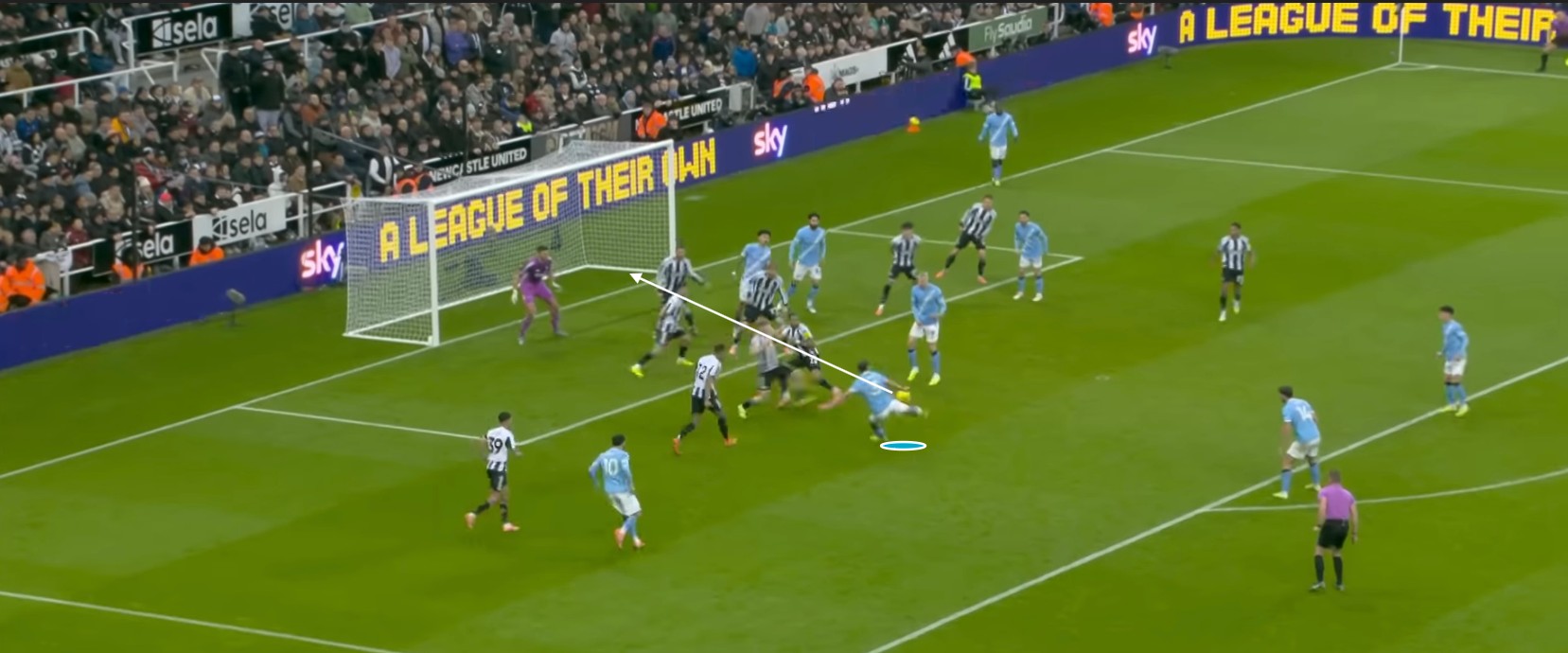
Newcastle United initially deal with the first contact from the set piece, but fail to clear their lines with conviction.
Manchester City keep the attack alive, recycle possession, and Newcastle drop deeper instead of stepping out to reset.
The second phase is poorly defended, and Rúben Dias is left free to finish, another example of Newcastle surviving the first action but losing control immediately after.
Newcastle have shown in previous seasons that they are capable of this level of aggression, but maintaining it consistently has been an issue.
Unlike rest defence, this is an area that can be addressed relatively quickly.
Clearer responsibilities, improved box spacing, and greater urgency in stepping out after clearances can significantly reduce second-phase vulnerability.
Given the physical profiles Newcastle possess, there is no inherent reason they should be conceding repeatedly from these situations.
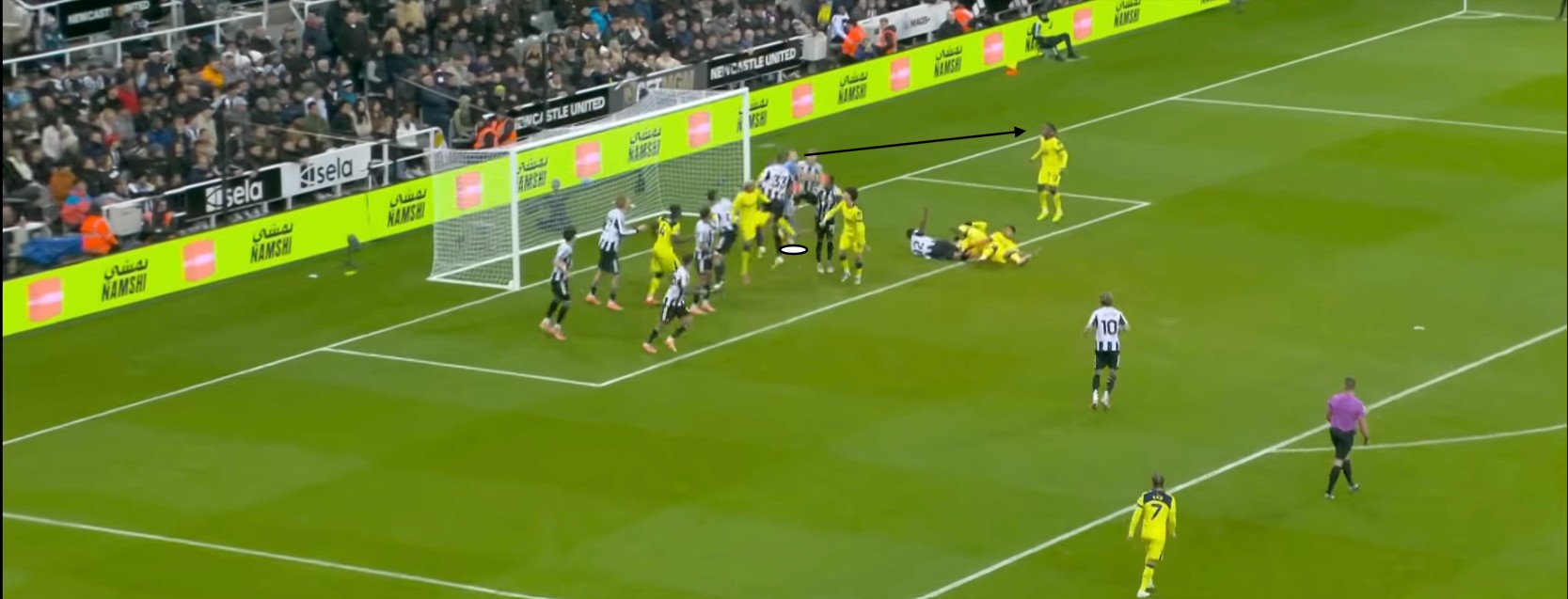
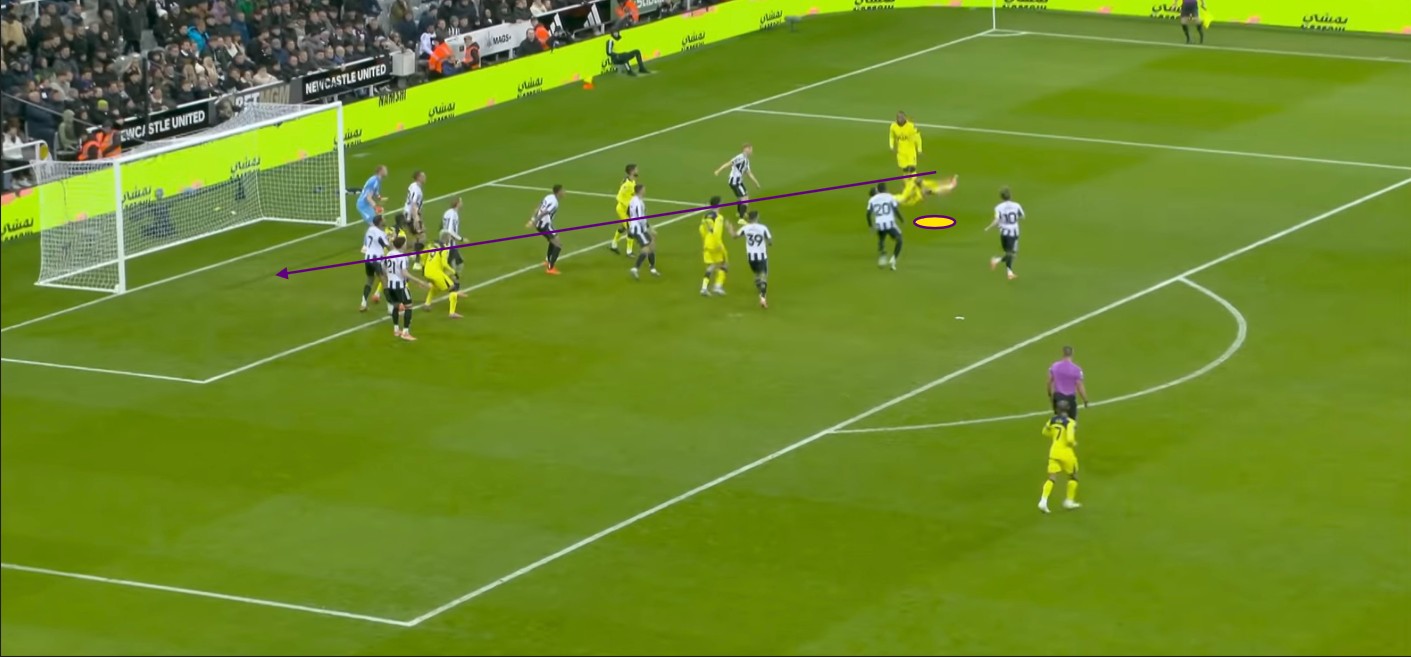
Newcastle United survive the first phase but fail to clear decisively or reset their line.
The second ball isn’t attacked, and Cristian Romero punishes them, a recurring pattern from set-pieces this season.
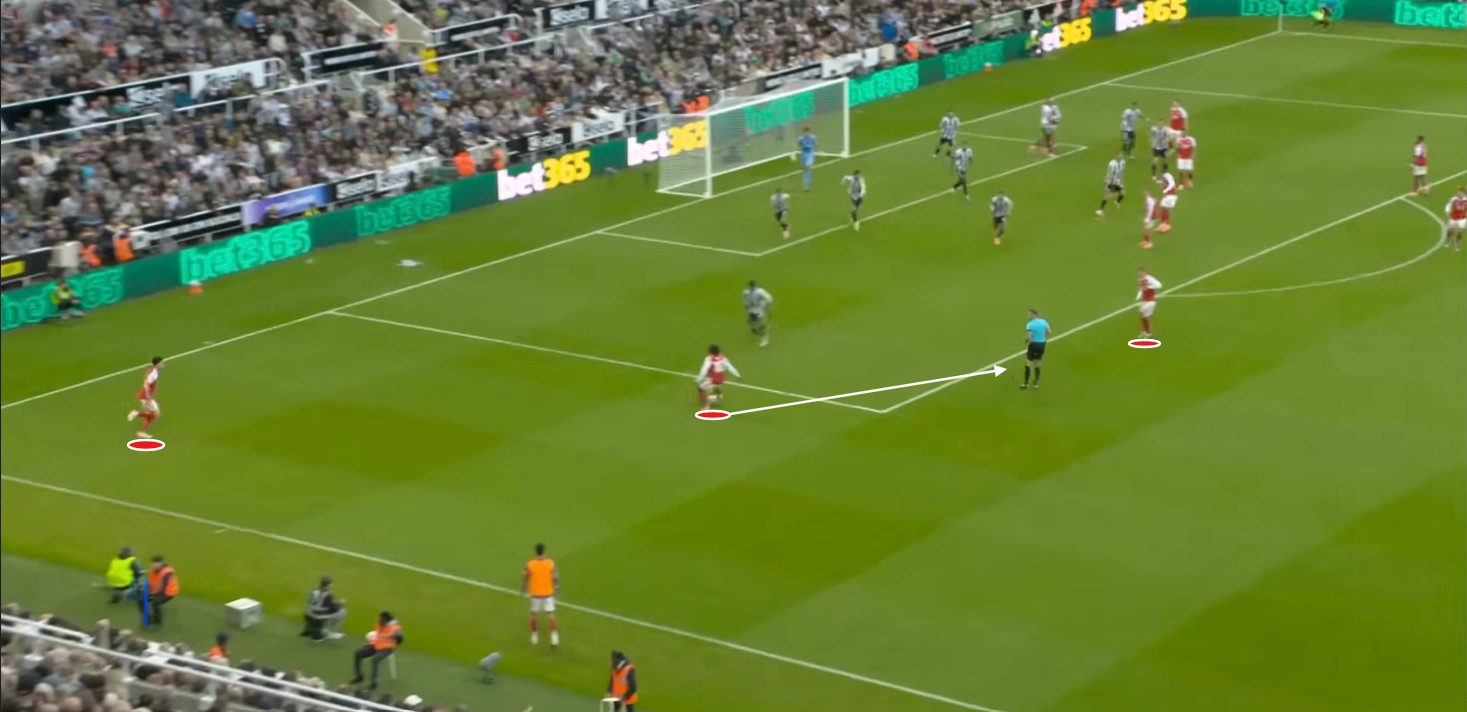
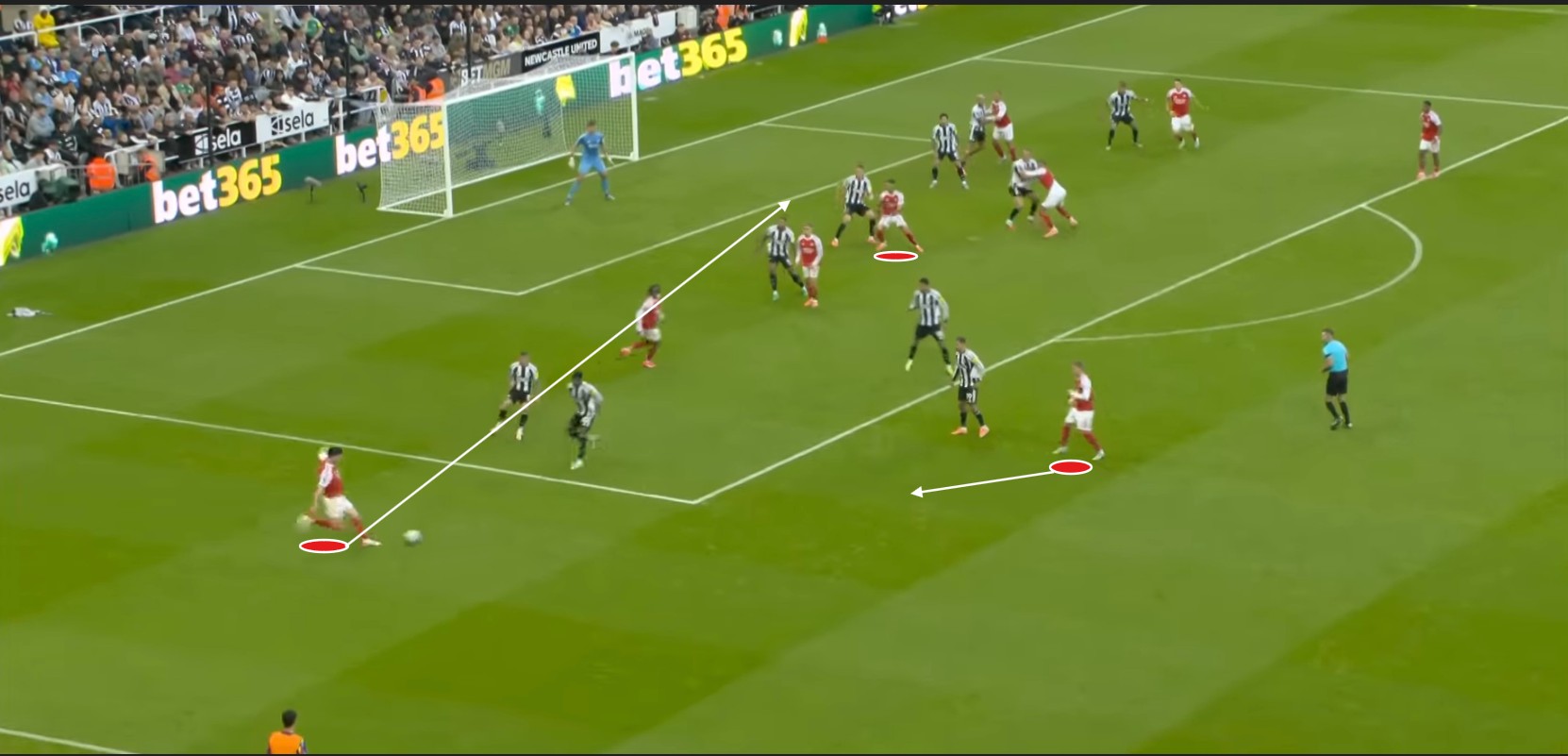
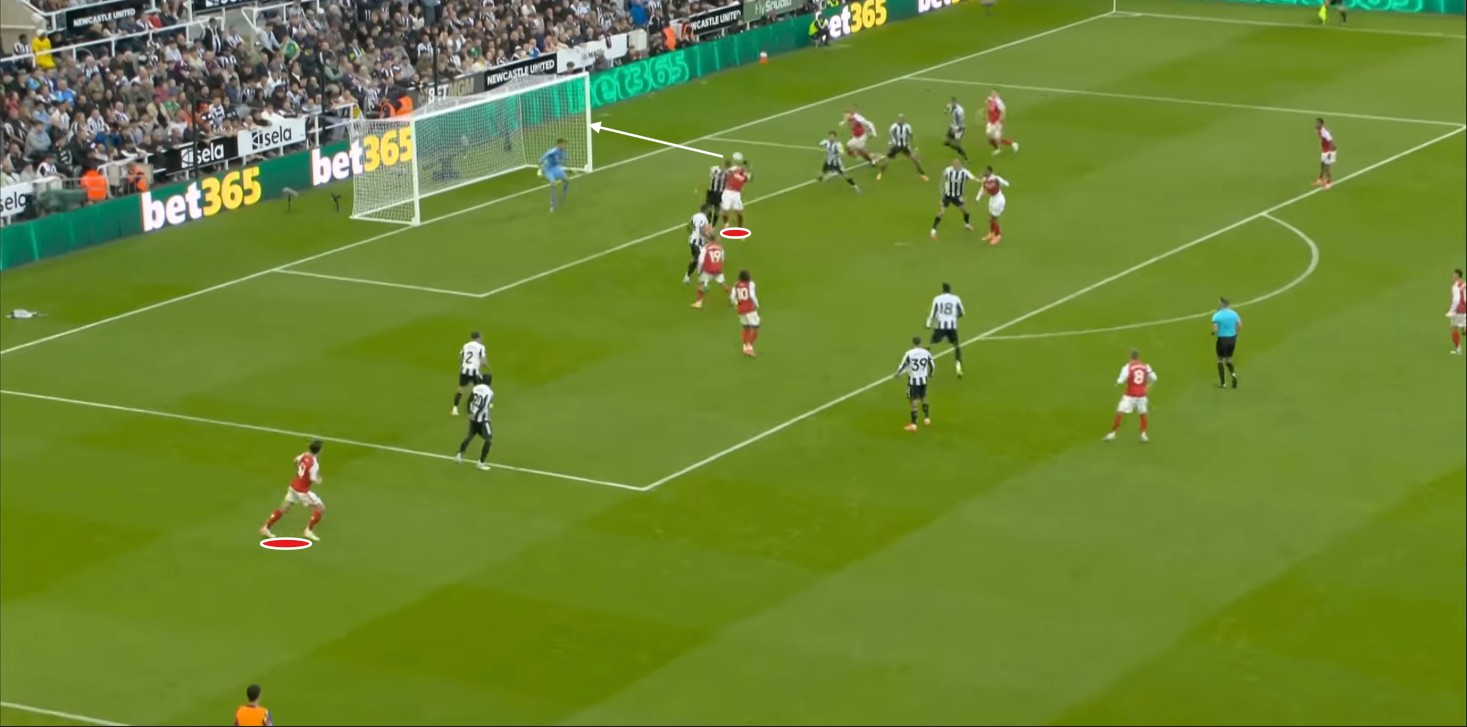
Newcastle clear the first phase, but don’t reset or apply pressure as Arsenal recycle the attack.
The second phase is passive.
Declan Rice delivers freely, and Mikel Merino punishes them, which is a recurring theme in how Newcastle concede.
Newcastle United Defending When Opposition Have Settled Possession
While not the primary issue, Newcastle United’s defending from settled possession reveals another area for improvement.
When operating in a 4-5-1 mid-to-low block, Newcastle can be extremely effective, particularly at home.
Their ability to compress space, win duels, and defend the box aggressively has produced some of their most impressive performances under Howe.
However, this effectiveness depends heavily on pressure on the ball.
When that pressure drops, Newcastle’s block can become passive, allowing opponents to circulate possession comfortably and access central zones.
This was evident in matches against possession-dominant sides such as Brighton & Hove Albion, where Newcastle struggled to disrupt rhythm or prevent progression through midfield.
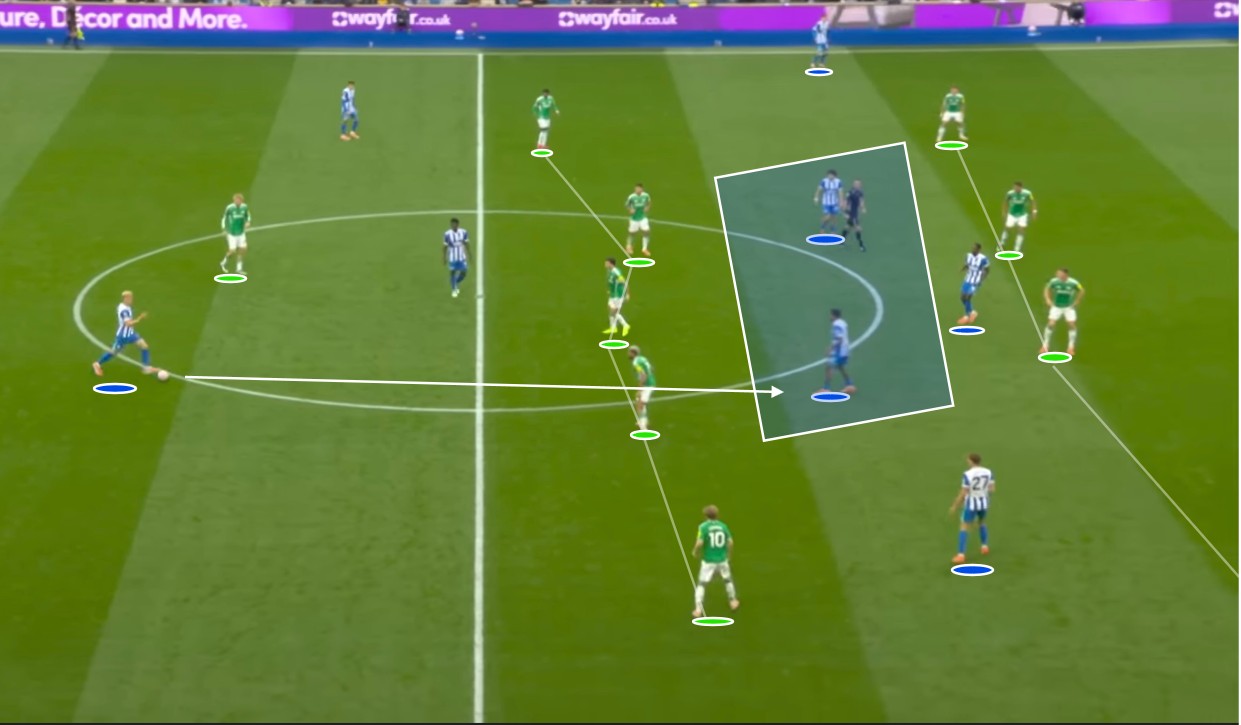
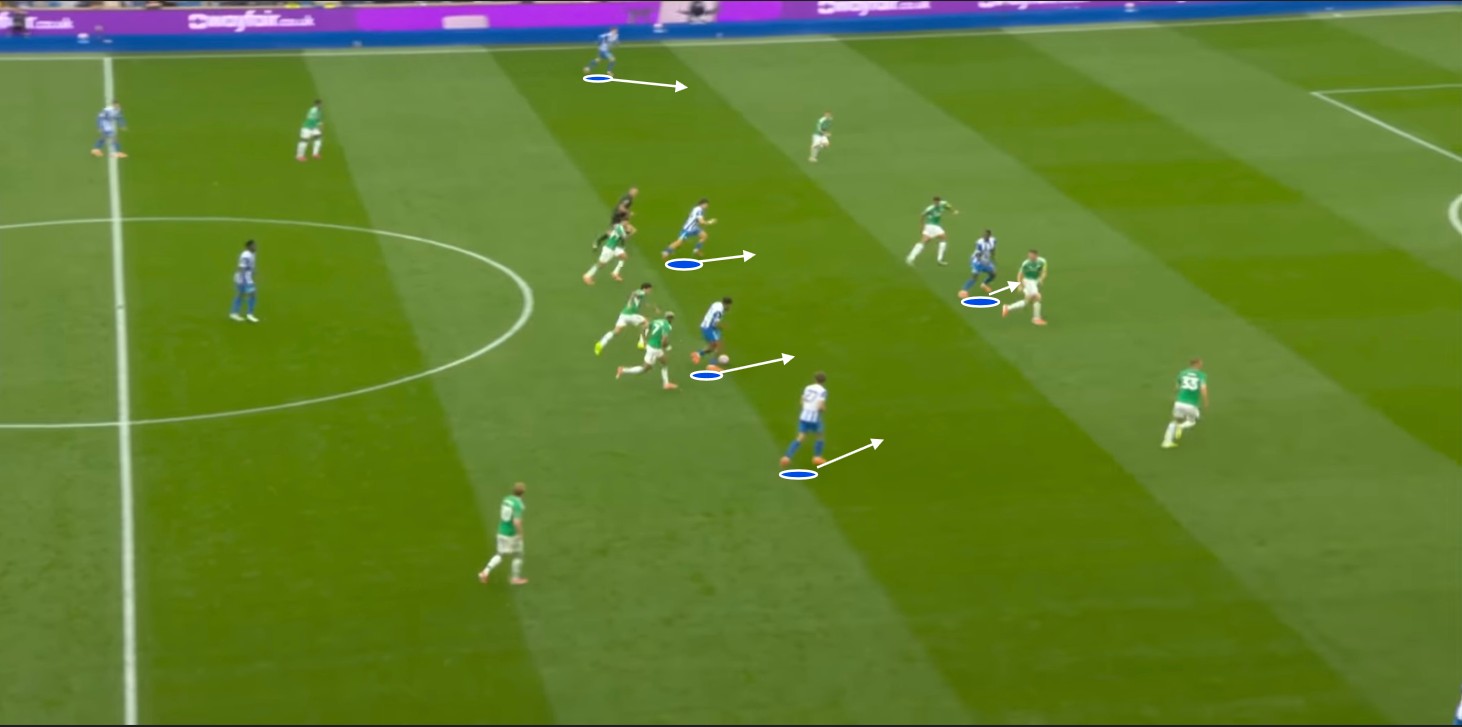
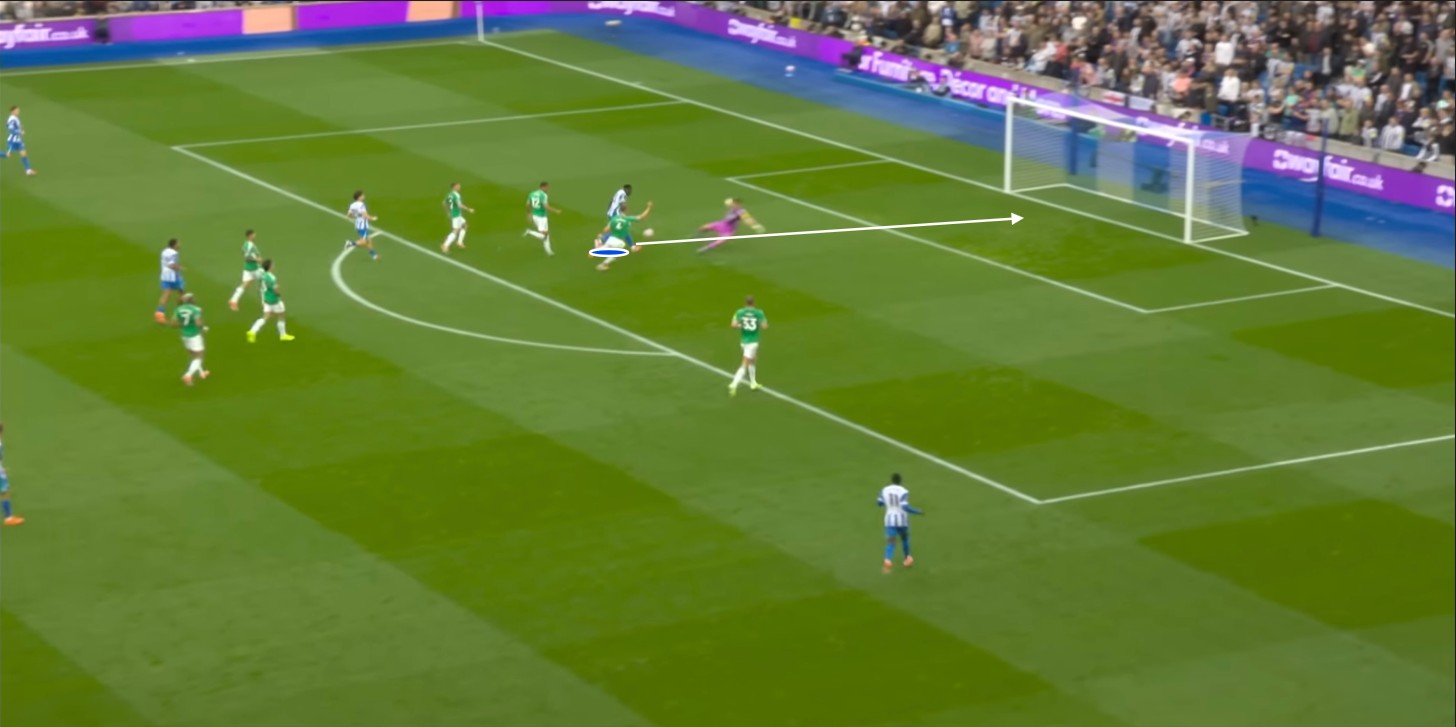
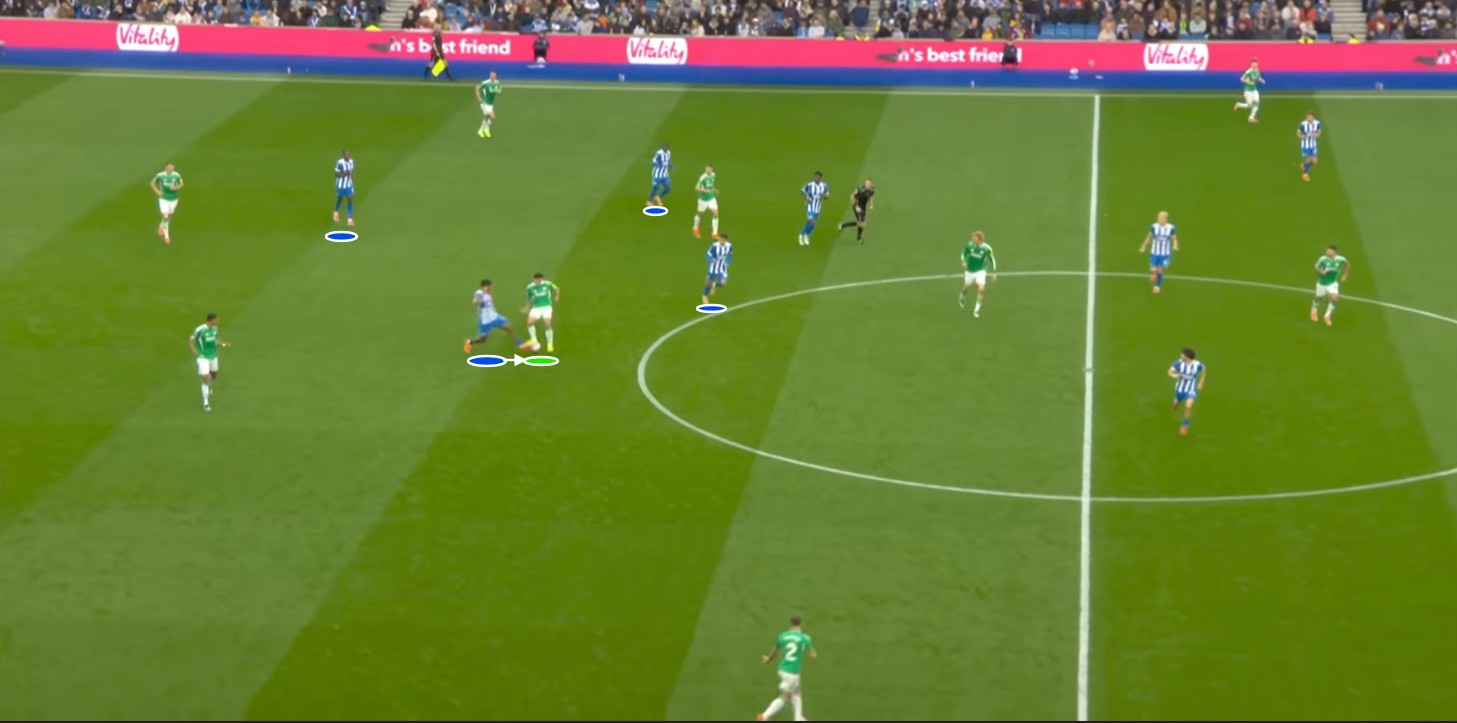
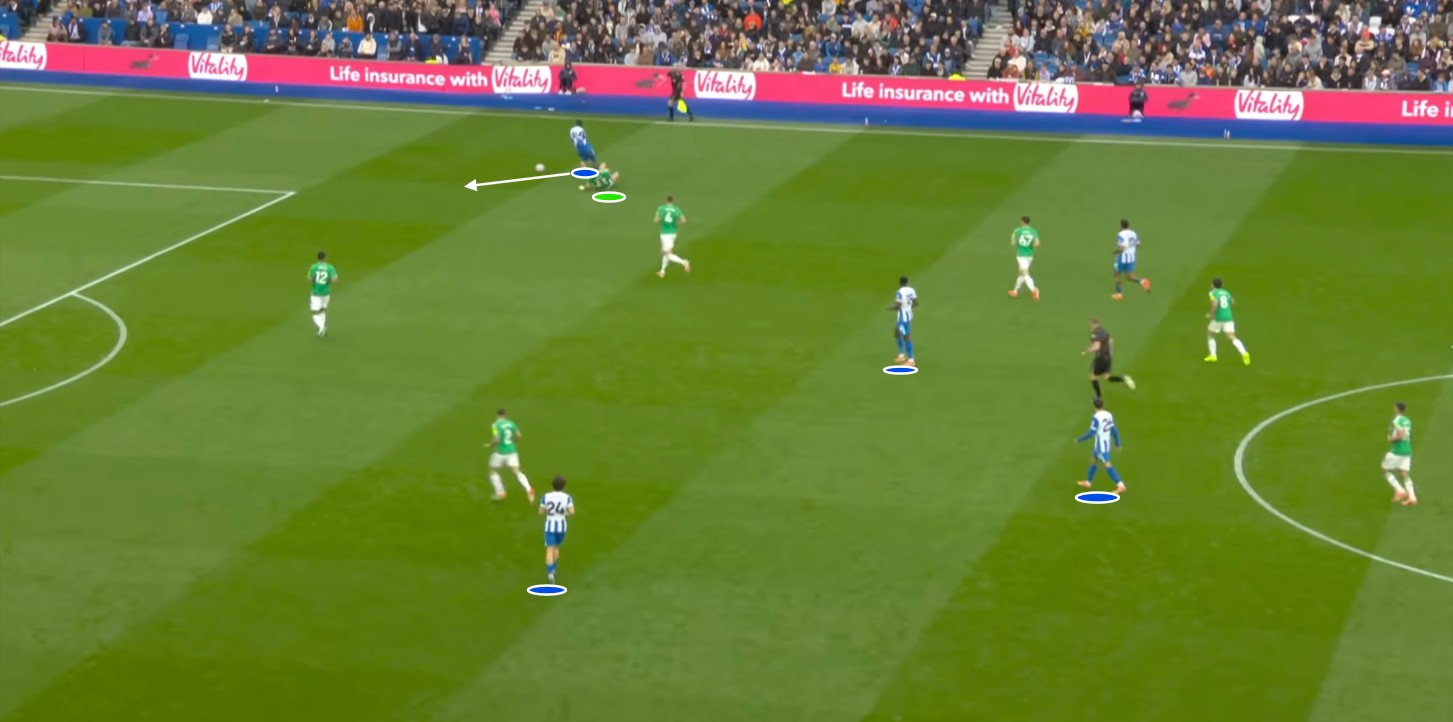
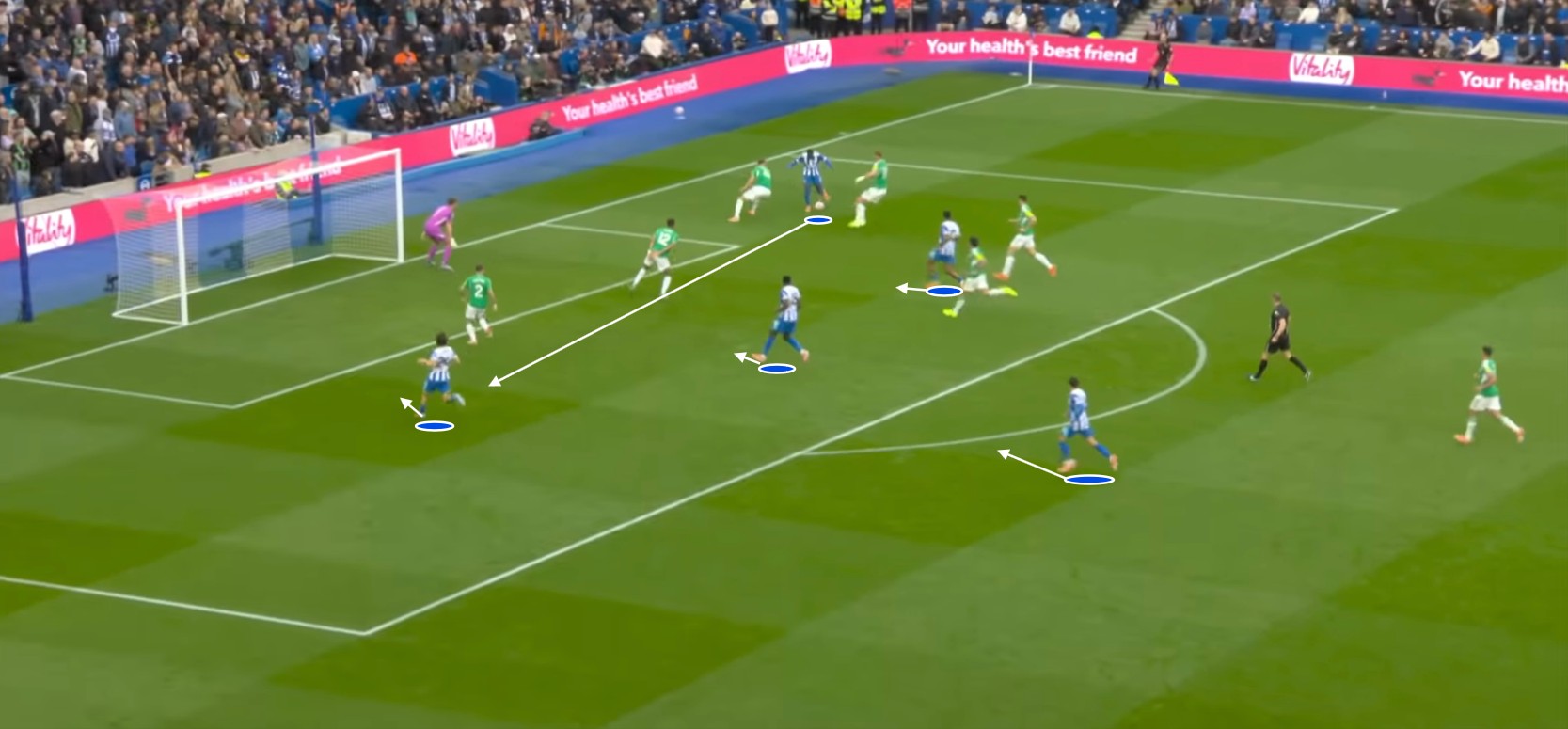
Newcastle United drop into their 4-5-1 mid-block, but there’s no real pressure on the ball, and the half-space is left open.
One vertical pass from the back line finds Rutter between the lines, instantly turning the situation into a numerical overload.
From there, Brighton attack a retreating defence, and Danny Welbeck finishes, highlighting how easily Newcastle are played through once the block isn’t aggressive enough.
The difference between Newcastle and elite mid-block teams such as Arsenal lies in consistency.
Arsenal apply relentless pressure within their block, denying opponents time and being so in tune with their pressing triggers.
Newcastle, by contrast, can drift into passive spells, particularly away from home, allowing opponents to manipulate space and dictate tempo.
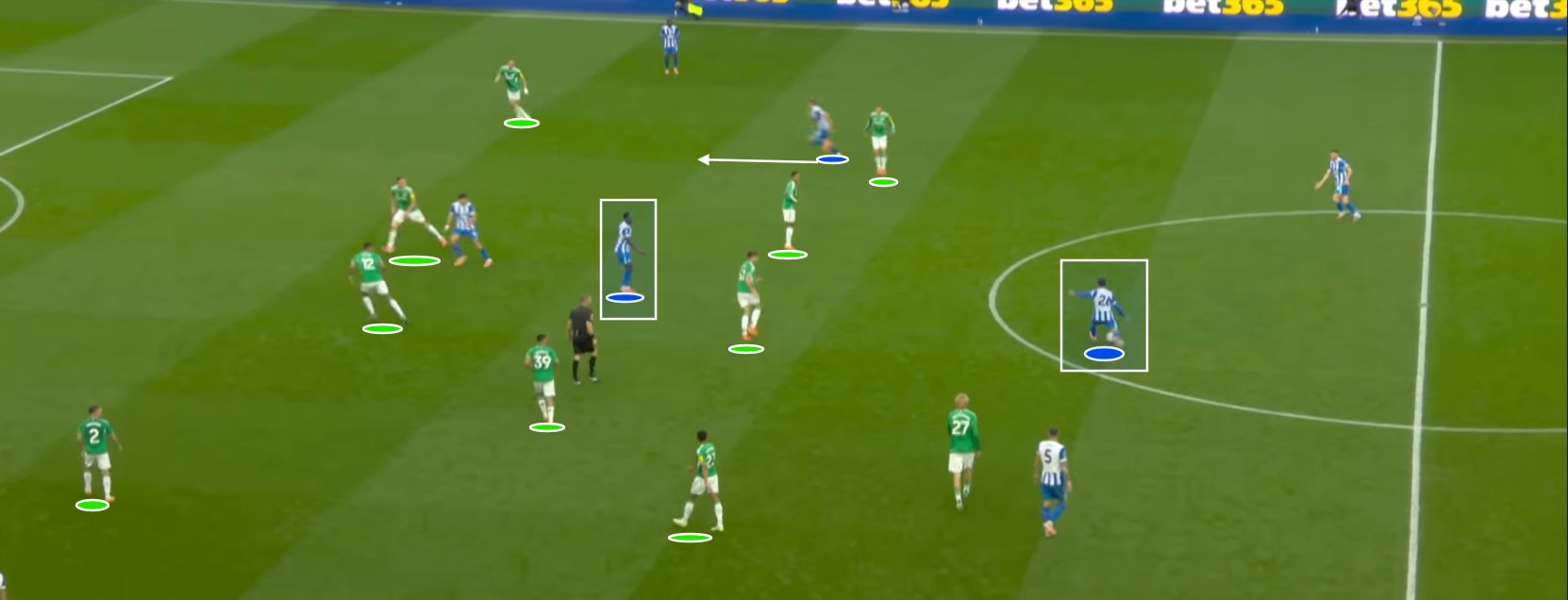
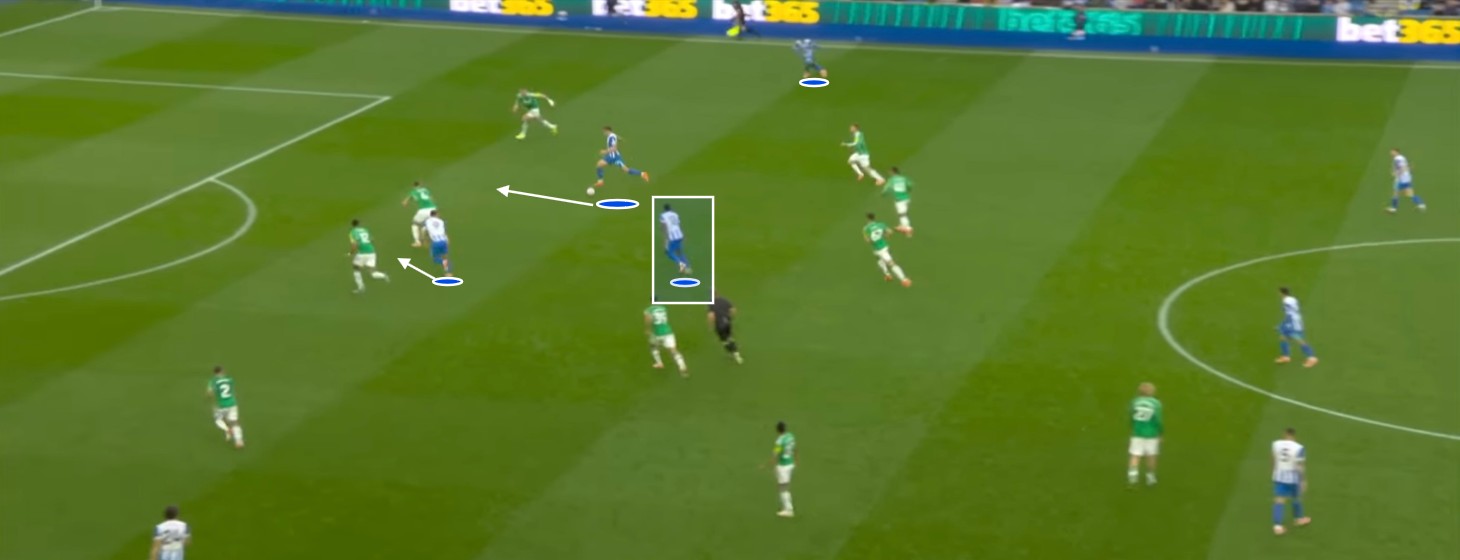
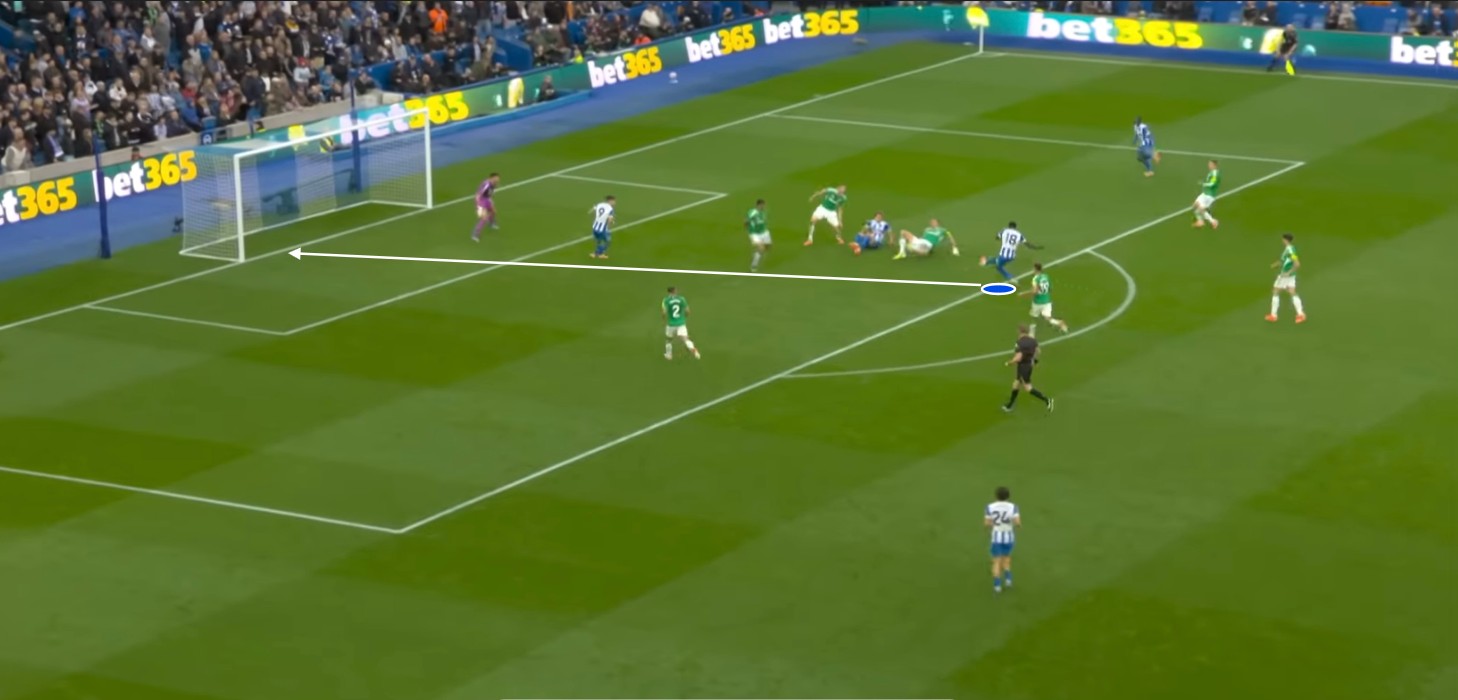
Newcastle United drop into a passive 4-5-1 mid-block with no pressure on the ball.
Ayari receives centrally with time and picks his pass at will, while the full-back’s advanced run goes completely untracked.
Throughout the move, Danny Welbeck holds a free position between the lines, arriving untouched as the structure collapses.
In isolation, you can get away with this approach in one-off games.
But over a season, it will lead to erosion.
The Premier League’s tactical level is too high to allow teams prolonged, uncontested possession without consequence.
Conclusion
None of these issues diminishes the work Howe has done at Newcastle United.
He has earned enormous credit and rebuilt the club’s competitive identity from the ground up.
However, the next step in Newcastle United’s evolution requires a shift from intensity-first football to control-first football.
That does not mean abandoning physicality or aggression.
It means structuring attacks with defensive security in mind, defending second phases with renewed focus, and applying pressure within the block consistently rather than selectively.
The data shows clearly that Newcastle’s problems are not rooted in talent or effort, but in moments where structure briefly disappears.
The Premier League punishes those moments ruthlessly.
As margins continue to tighten, control becomes the defining trait of elite sides.
Newcastle United have the players, the coaching foundation, and the experience to address these issues.
Whether they do so will determine whether they stabilise as a staple top-four contender or continue to live on the outside looking in.
The dramatic victory over Leeds United may live long in the memory, but for a coach, it represented the opposite of what modern elite football demands.
At this level, chaos isn’t sustainable.
Control is.
