
For the second consecutive year, Manchester City visited the American Express Stadium and lost 2-1.
Fabian Hürzeler‘s Brighton & Hove Albion went for it in the second half, making a quadruple substitution at the hour mark, which ended up making the difference.
It’s back-to-back losses for Pep Guardiola‘s side as they struggle to get off to a good start to the season.
The calendar has only just turned to September, and Man City are already six points off Liverpool.
The defensive issues that plagued them most of last season are still there and don’t seem to be getting fixed anytime soon.
There were some major structural flaws in Manchester City’s backline that Brighton were able to expose as the match went on.
The same exact flaws allowed Brighton to come from behind to beat Manchester City last season.
In this tactical analysis, we’ll explore how Manchester City went from being in complete control to unravelling over the final 30 minutes and losing.
Brighton Vs Manchester City Lineups & Formations
Fabian Hürzeler lined up his Seagulls in a 4-2-3-1 formation, which they have typically used throughout.
Bart Verbruggen lined up in goal behind the same centre-back pairing of Jan Paul van Hecke and Lewis Dunk that Brighton used for their first two Premier League matches this season.
New signing Maxim De Cuyper started his third consecutive Premier League match at left-back, while Joël Veltman made his first start of the season at right-back.
Carlos Baleba and Jack Hinshelwood started together in the midfield for the first time this season, while Diego Gómez lined up as the ‘10’ for the first time this season.
Yankuba Minteh started at right wing, while Kaoru Mitoma started on the left.
Danny Welbeck got the start up top for the second straight Premier League match.
Hürzeler made four substitutions in the game, all at the same time.
In the 61st minute, they made a quadruple change, bringing on Yasin Ayari, Brajan Gruda, Georginio Rutter, and James Milner for Diego Gómez, Danny Welbeck, Carlos Baleba, and Jack Hinshelwood.
As for the visitors, Guardiola set up his team in a 4-3-3 shape.
James Trafford started in goal for the Citizens behind John Stones and Abdukodir Khusanov as the centre-back pairing, which was only the second time those two have played together.
Rayan Aït-Nouri got the start at left-back, while Matheus Nunes started at right-back.
Rodri, Tijjani Reijnders, and Bernardo Silva were Manchester City’s midfield trio.
Oscar Bobb got his third start at right wing, while Omar Marmoush was on the left wing.
Erling Haaland occupied his usual position up top for City.
Guardiola made a total of four substitutions, all of them coming late in the second half.
In the 72nd minute, Bernardo Silva and Omar Marmoush were taken off, with Jérémy Doku and Nico O’Reilly coming on.
Then, in the 85th minute, Abdukodir Khusanov and Matheus Nunes made way for Rúben Dias and Rico Lewis.

Manchester City Early Control
Manchester City had control of this match for quite a long time and limited Brighton to virtually no chances.
They were doing it by tilting the field on Brighton and forcing them to defend in a very compact low block.
Like every match, Pep Guardiola tried to overload the middle of the pitch, but Manchester City found it difficult to play through the Seagulls.
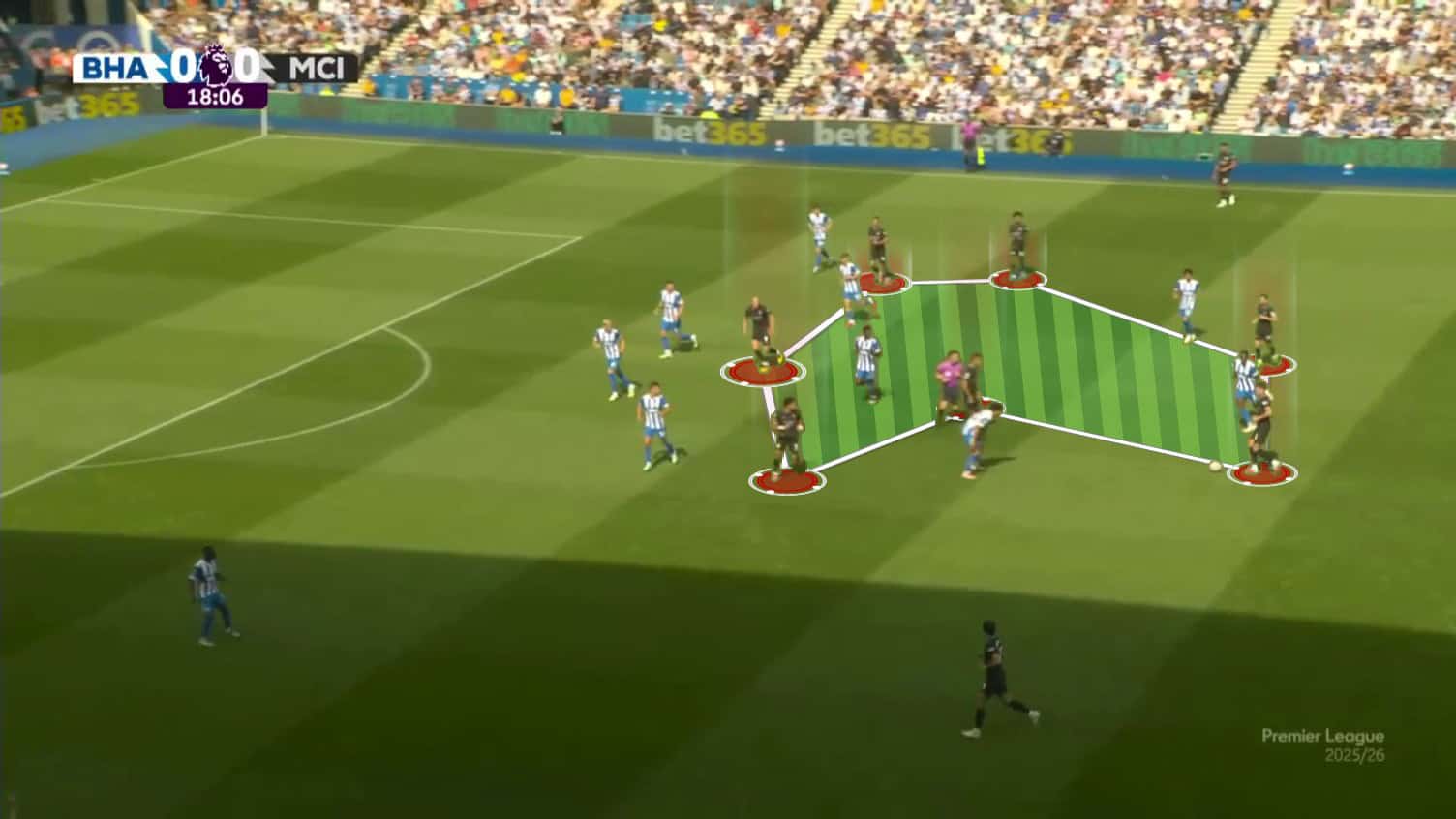
Guardiola made one switch this match: returning to his final third formation, which he primarily used last season when facing low blocks.
During the FIFA Club World Cup and the first few matches of this season, Manchester City had been inverting their full-backs more centrally and allowing their wingers to provide the width in the final third.
They did this because they wanted to get them in one-on-one situations against opposing full-backs.
However, against Brighton, Pep started Matheus Nunes at right-back rather than Rico Lewis.
It provided Manchester City with two things.
First, more defensive cover in transitions, and Nunes was a better matchup 1-v-1 against Kaoru Mitoma.
Second, Nunes is much better out wide in the final third, whereas Rico Lewis would rather play more centrally and get on the ball.
Rayan Aït-Nouri is a versatile left-back who can play both centrally and out wide, so Pep decided to have his full-backs provide the width in the final third.
This meant Oscar Bobb and Omar Marmoush played more inverted roles.
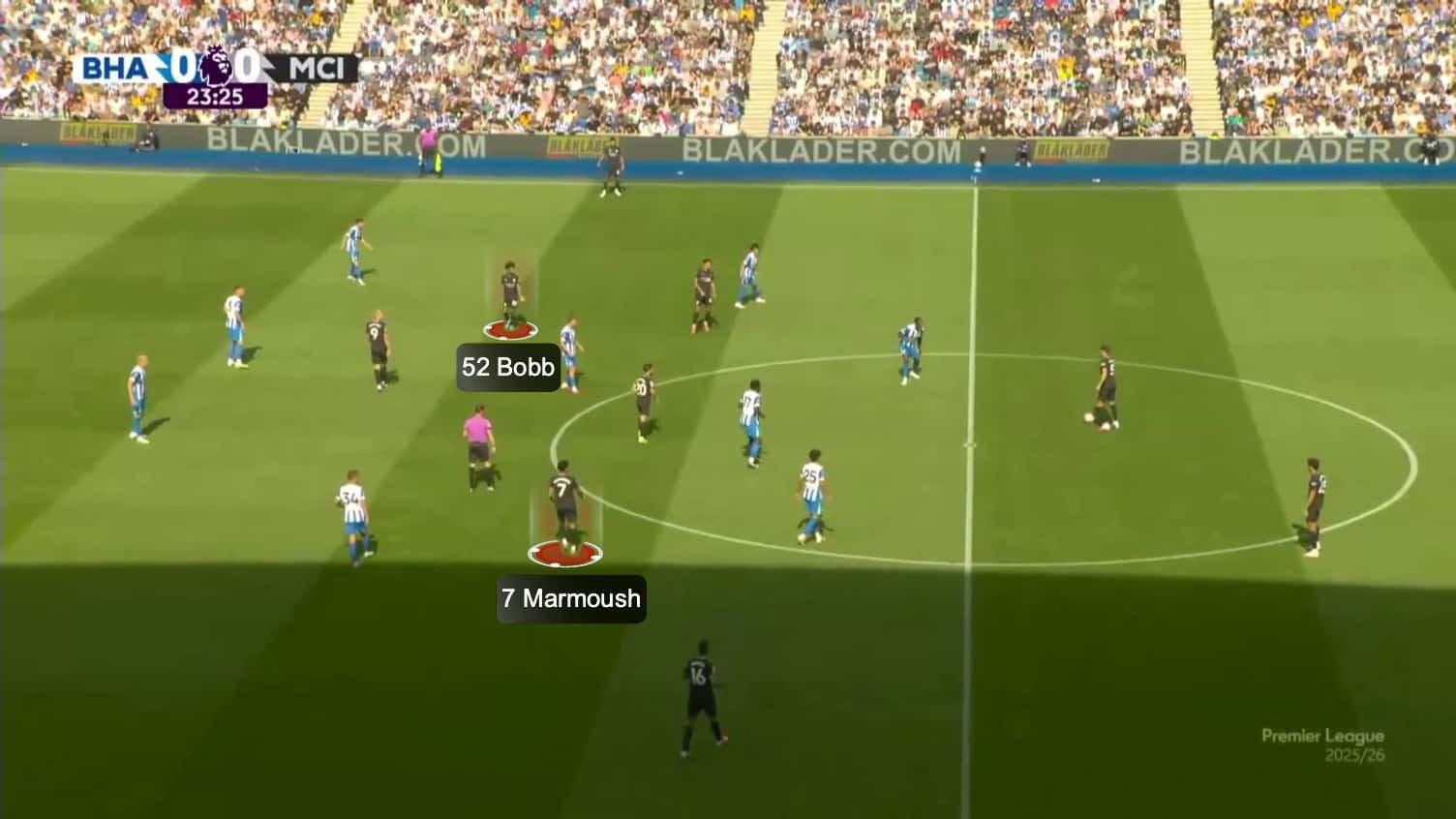
Manchester City started to really threaten by getting Brighton a little out of position.
Because Oscar Bobb occupies the half-space, he is able to pick up the ball here and plans to pass it to Tijjani Reijnders, who lays it off to Erling Haaland for a decent chance.
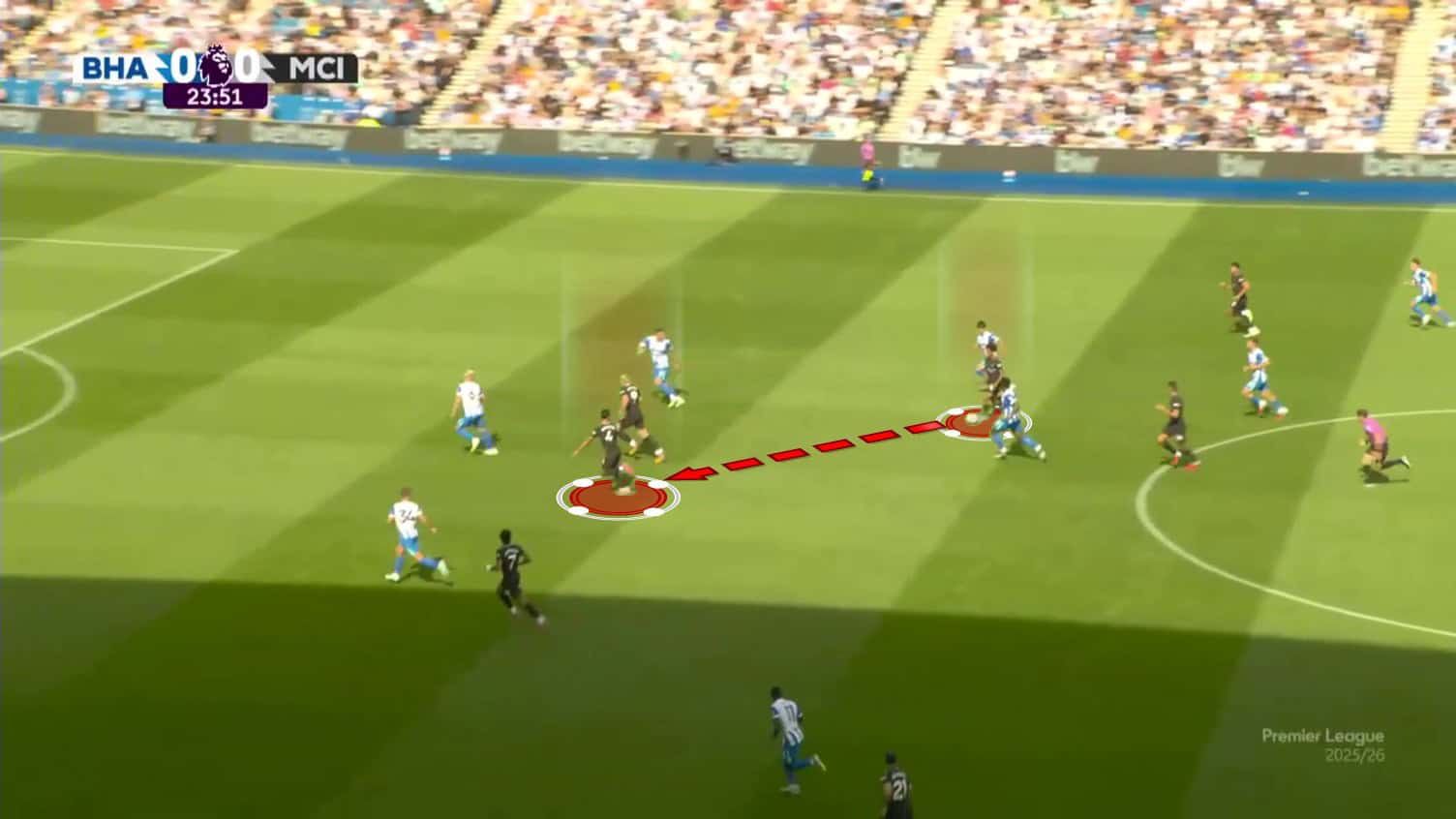
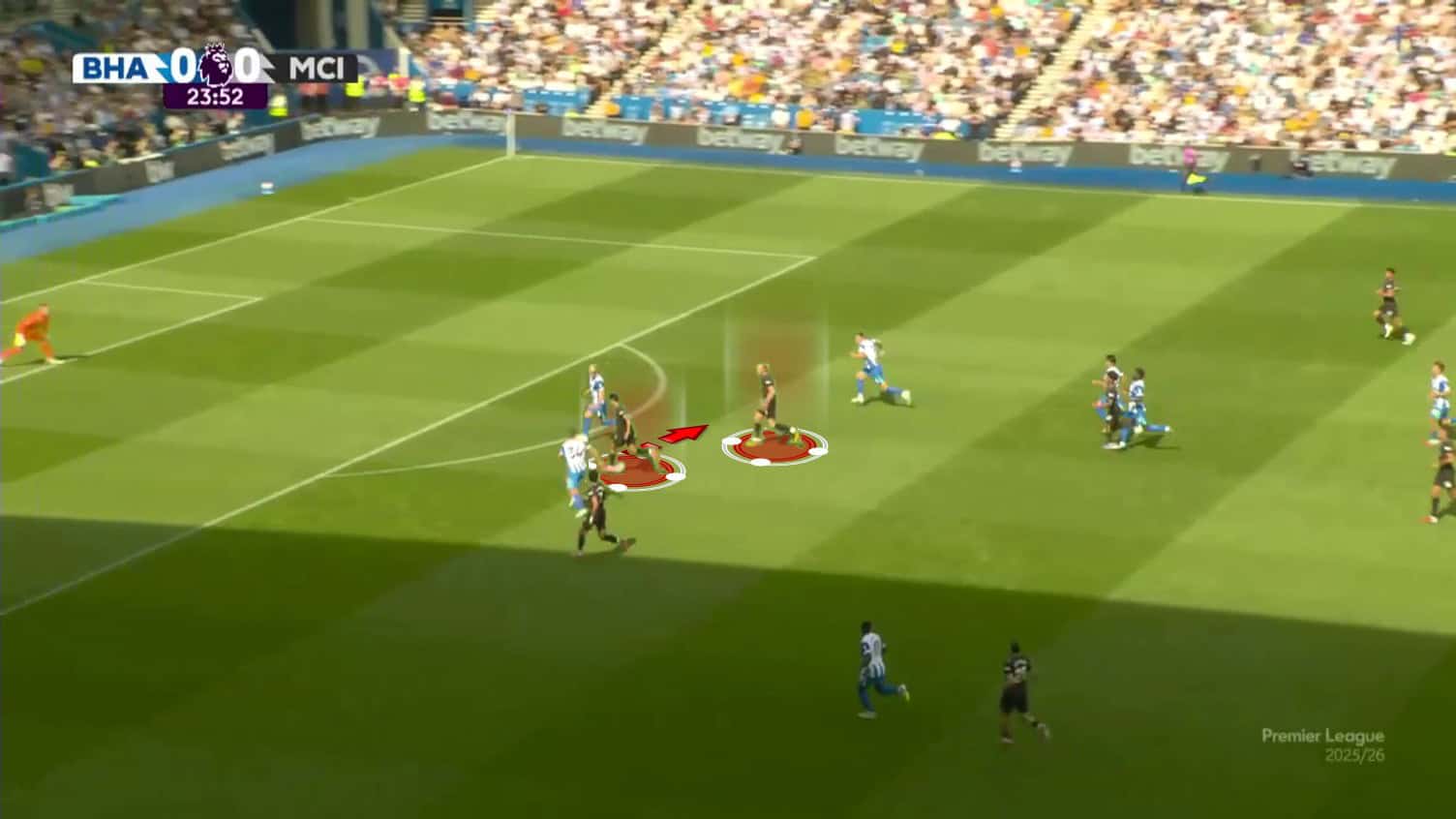
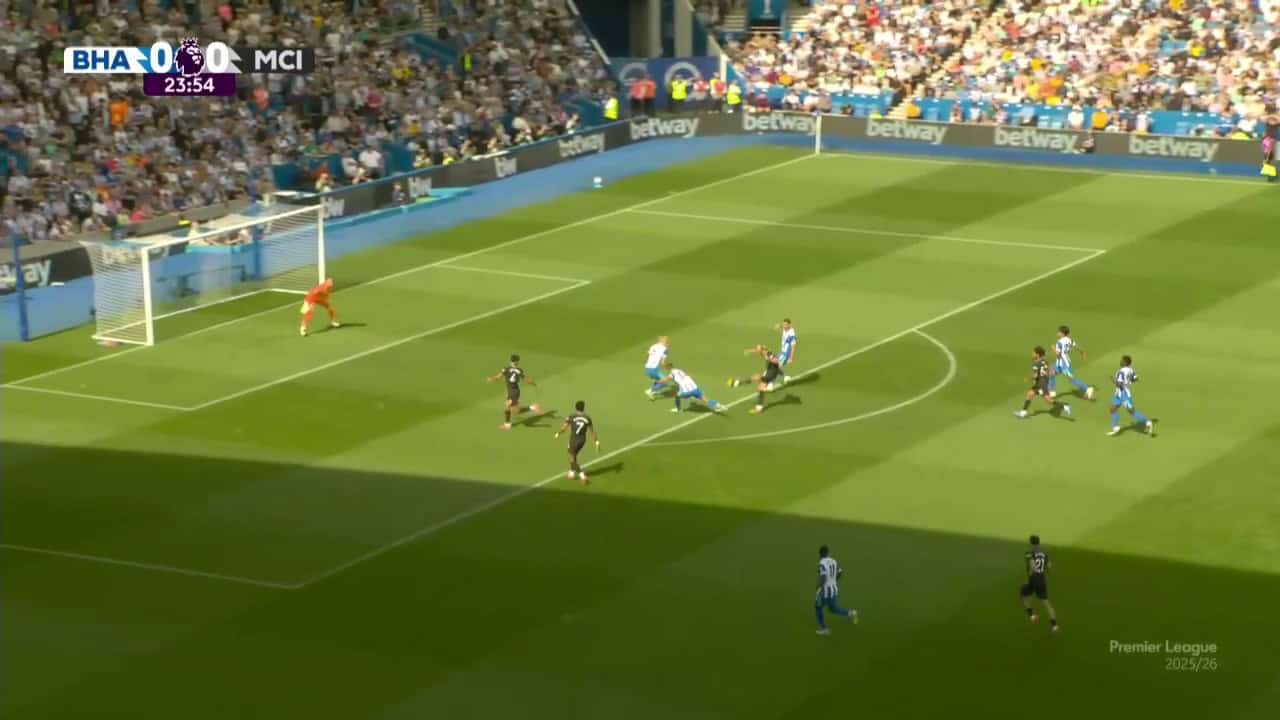
Manchester City found the breakthrough precisely because of the positioning of Marmoush and Bobb.
Bobb can turn inside and play it to Marmoush centrally, who can then relay it to Haaland for an easy finish.
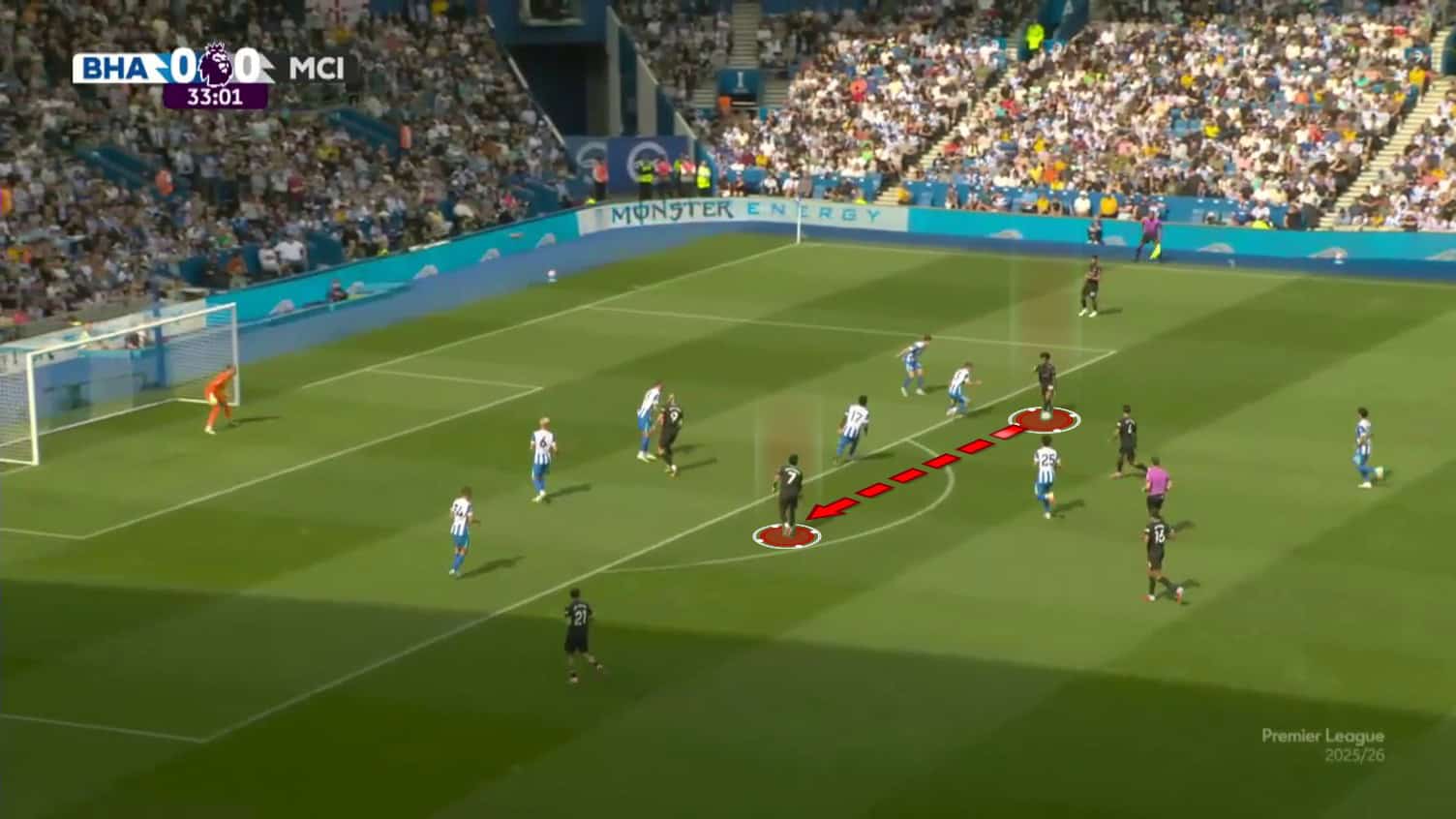
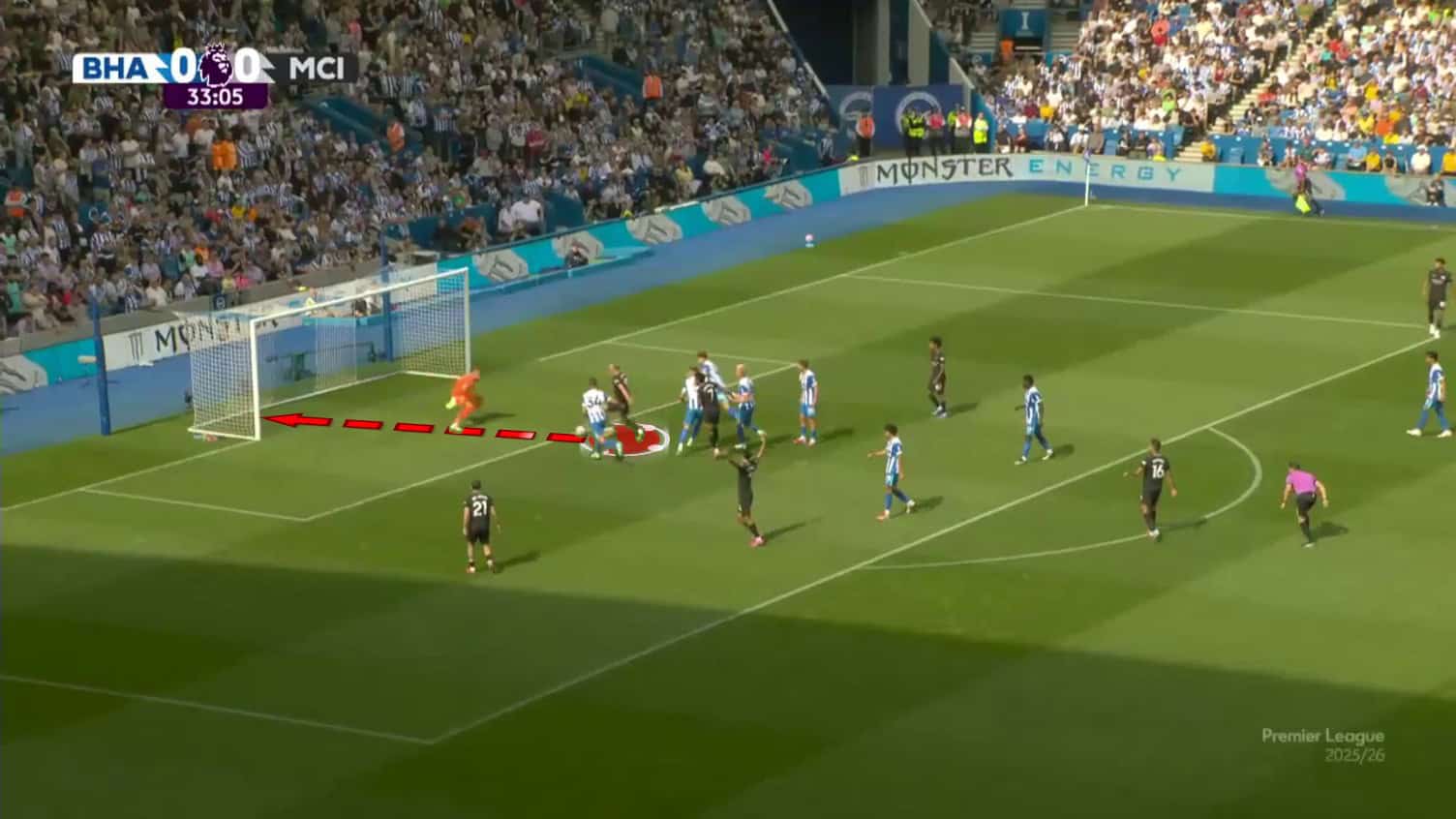
This is precisely how Pep Guardiola wants to play, right through the opponent’s middle.
Another reason why Manchester City were able to maintain control was that they were simply winning duels and second balls.
In the first half, Manchester City won 26 of their 47 duels, which was important because Brighton were pressing pretty aggressively.
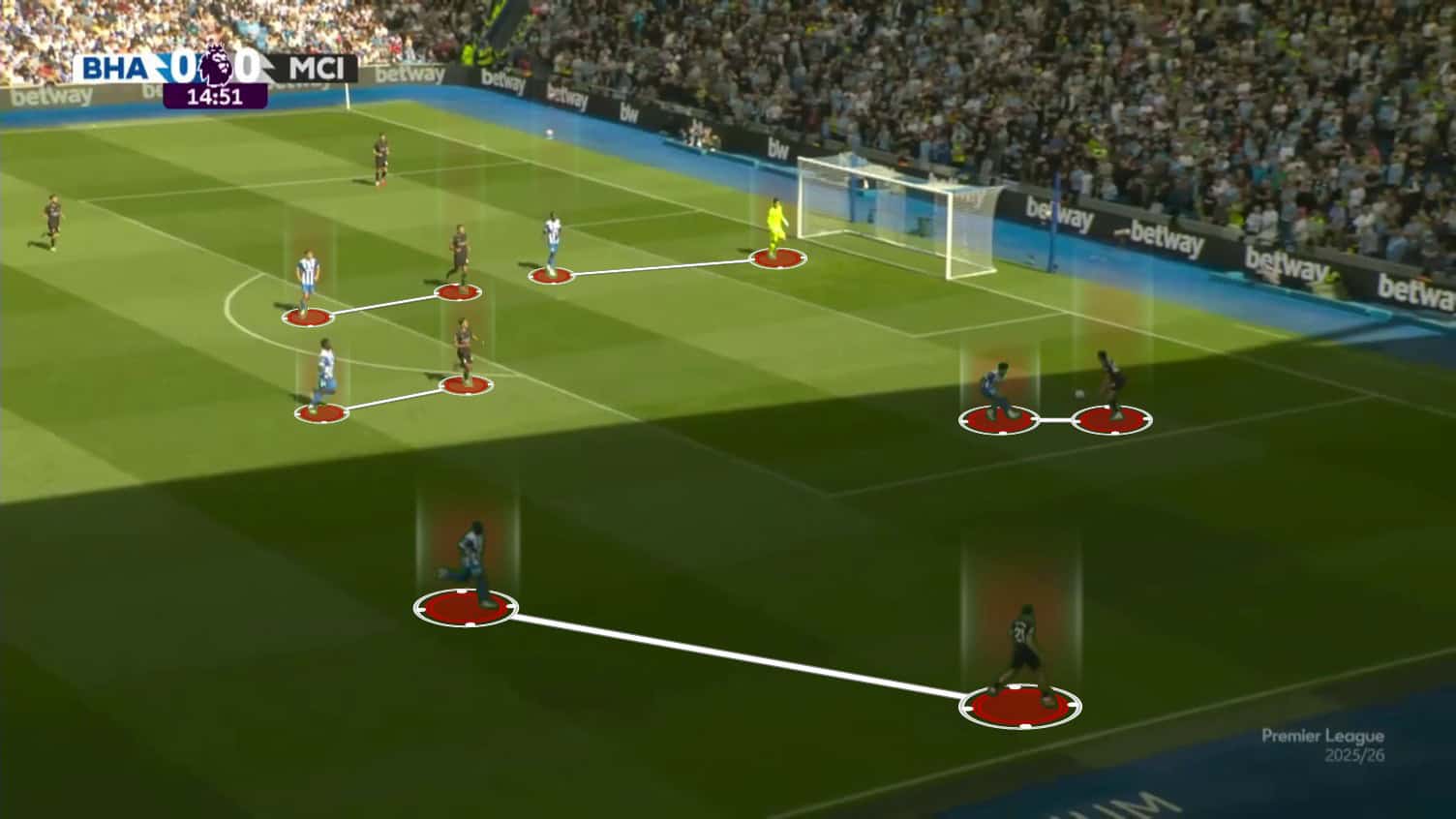
This forced Manchester City to play more directly than they wanted to, so winning duels was important.
At halftime, Manchester City had held 64% of the possession.
Brighton had only taken one shot and had just four touches in Manchester City’s penalty area.
They were in complete control.
Brighton Quadruple Substitution Impact
Manchester City maintained control for the first 15 minutes of the second half and made a few tactical changes.
They began to focus on overloading the wide areas to stretch the Brighton defensive block and create space centrally for Marmoush and Haaland.
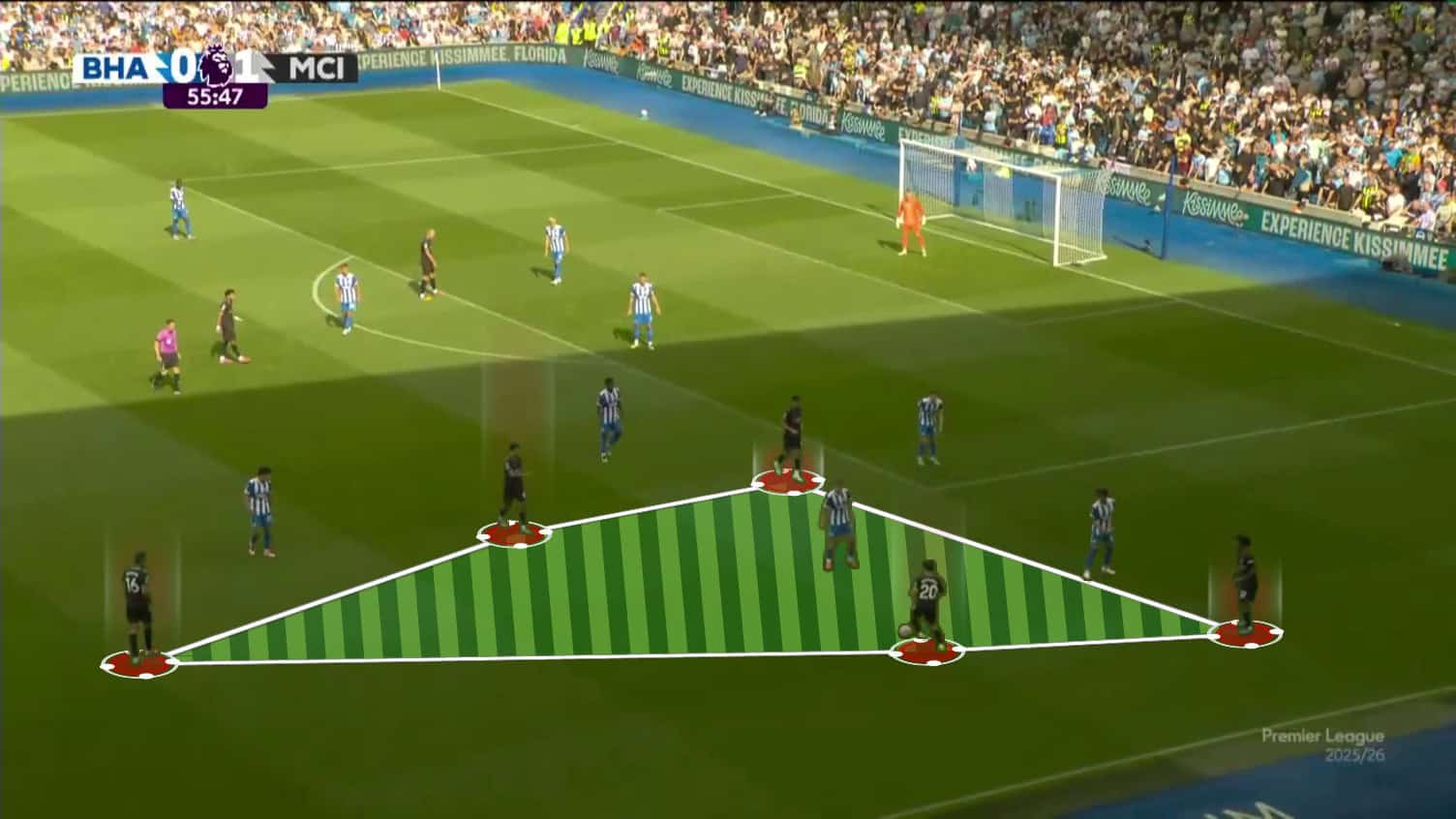
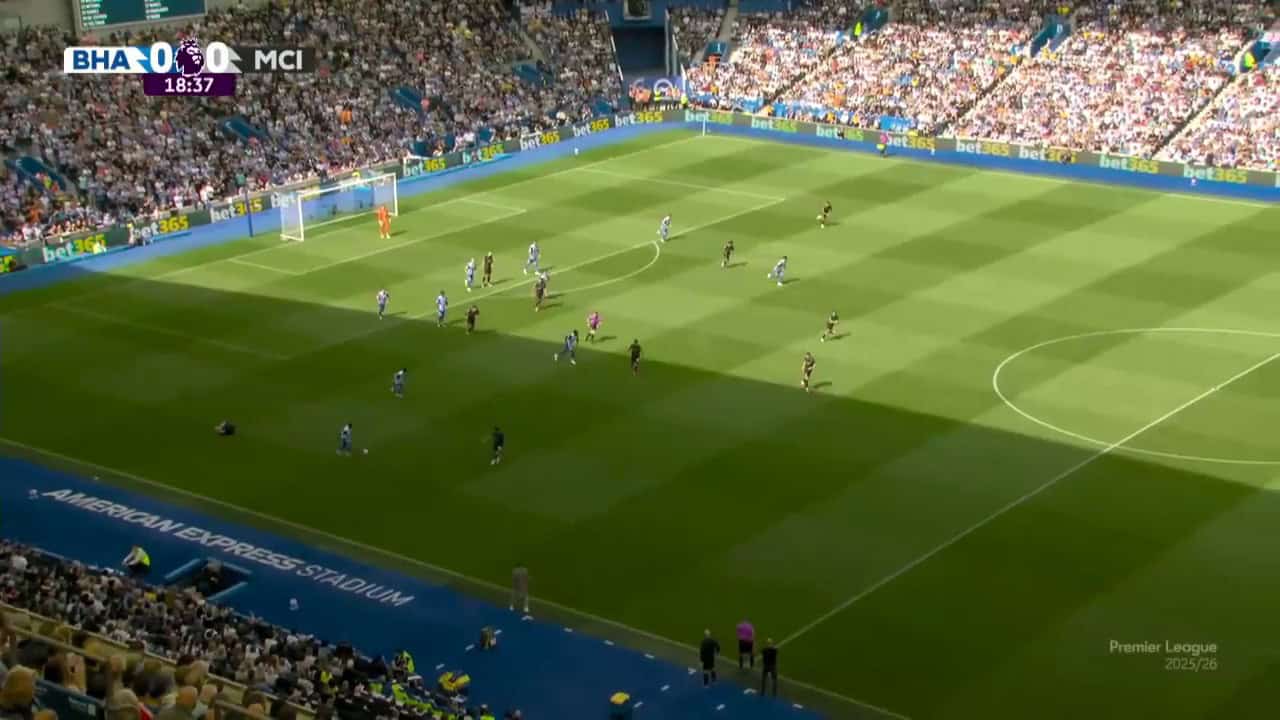
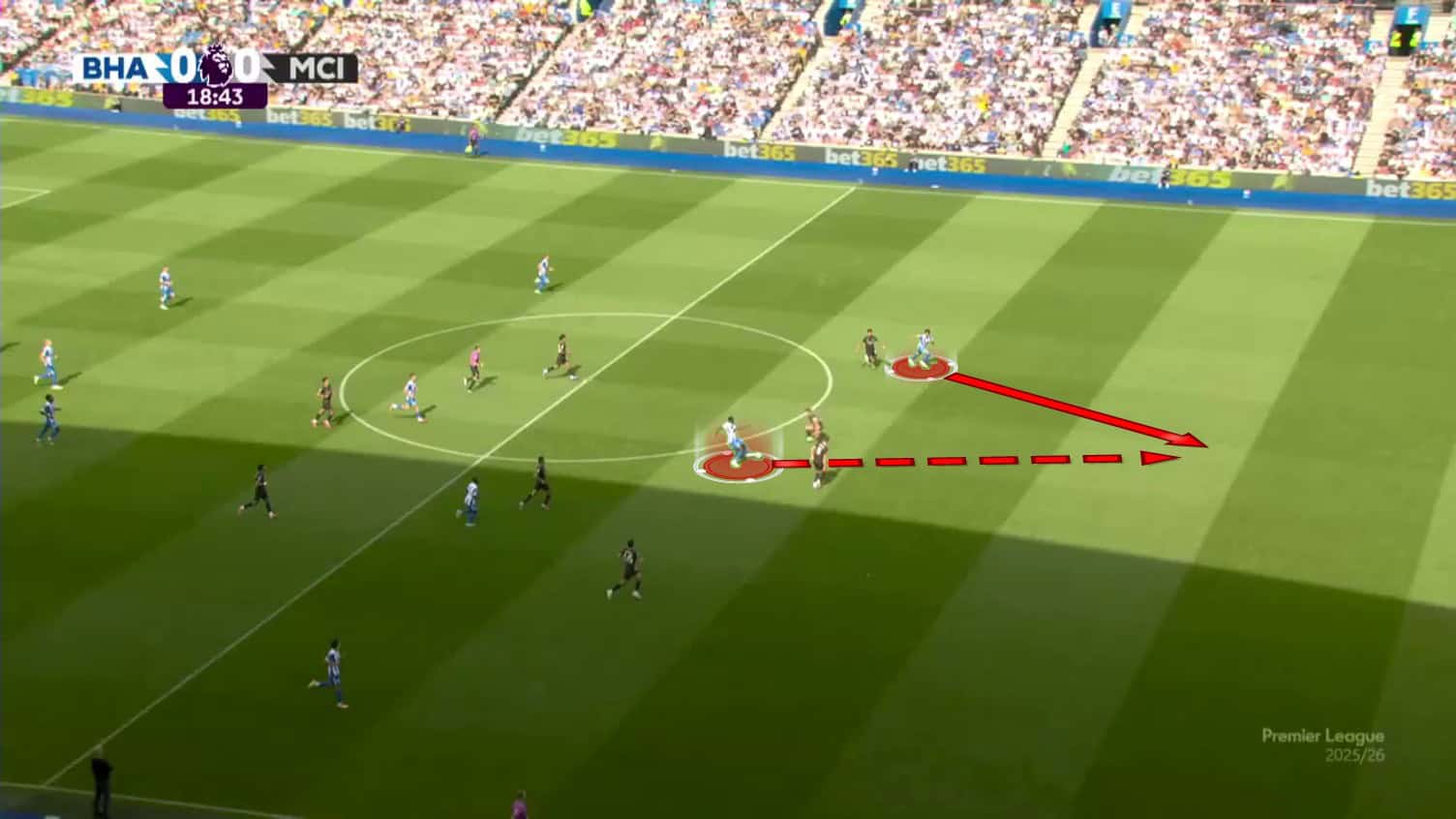
Early in the first half, there were signs that Manchester City’s transition defence was vulnerable.
Brighton fired a warning shot when they won the ball in their own final third and were able to progress it all the way past the halfway line and play Mitoma in behind.
In the 61st minute, Fabian Hurzler decided to make a quadruple substitution.
Yasin Ayari -> Jack Hinshelwood
Brajan Gruda -> Diego Gomez
Georginio Rutter -> Danny Welbeck
James Milner -> Carlos Baleba
Immediately when they came on, Brighton won the ball, made one pass and had a 4-v-3 fast break, which forced Trafford into a difficult save.
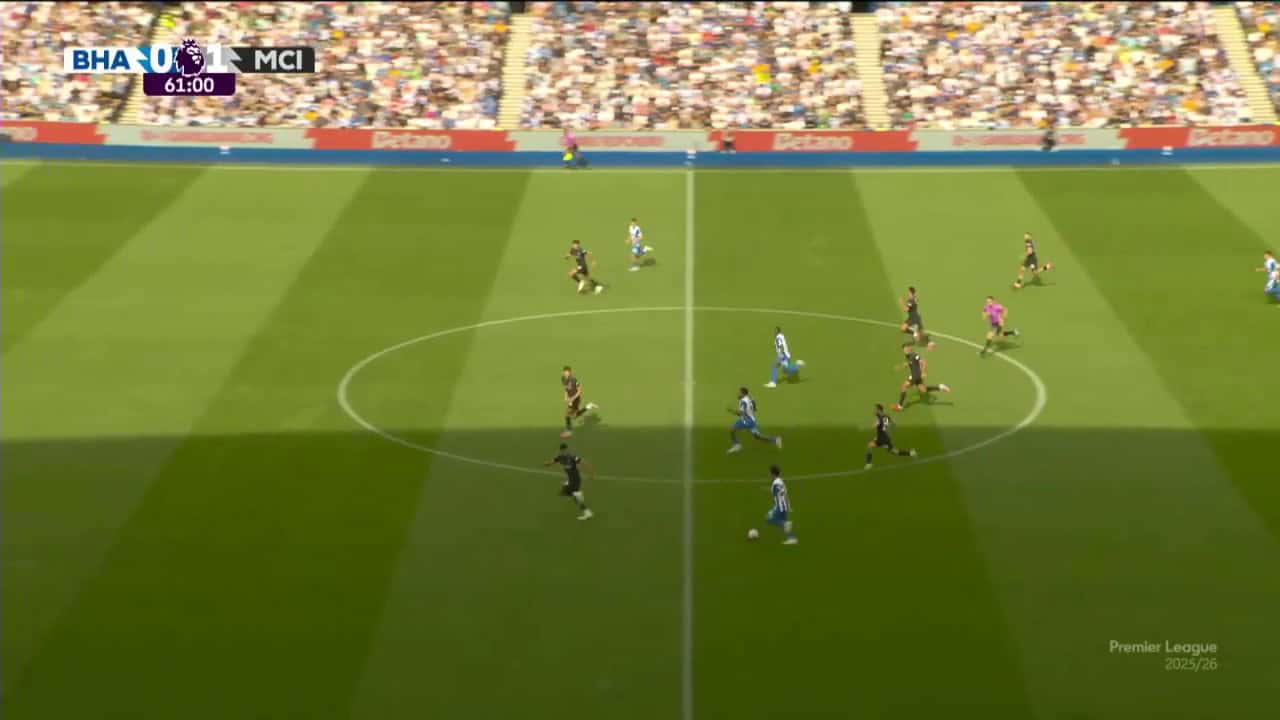
The break happened because Rodri and Aït-Nouri were positioned way too far up the pitch.
Brighton were awarded a penalty off a hand ball by Nunes, which James Milner slotted home.
What Brighton did to continue to apply pressure was quite simply to overload the last line of defence with four players versus Manchester City’s three.
One simple, direct ball from the backline on Aït-Nouri here opened Manchester City right up.
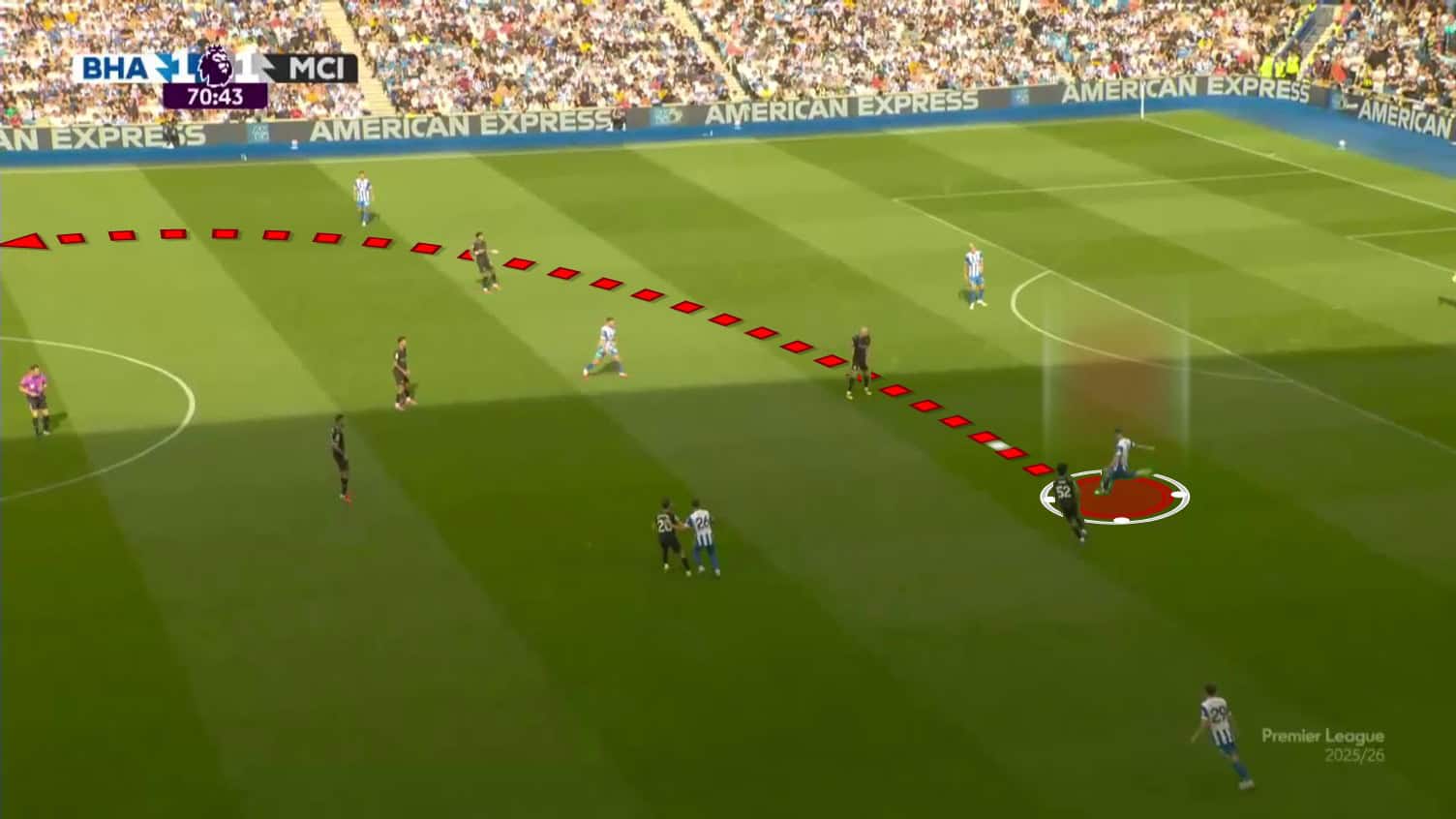
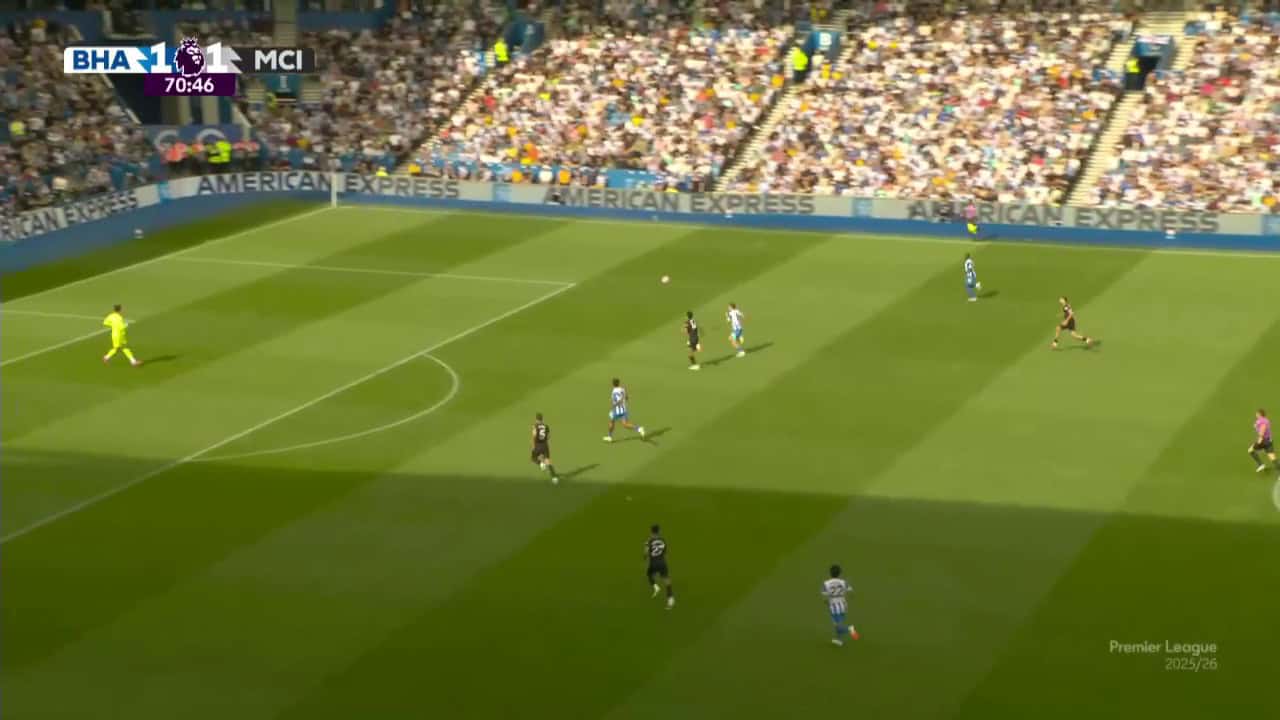
Here again, Brighton are able to win the ball and because of the positioning of Aït-Nouri.
He is so far up the pitch, and they are able to have another break with a numerical advantage.
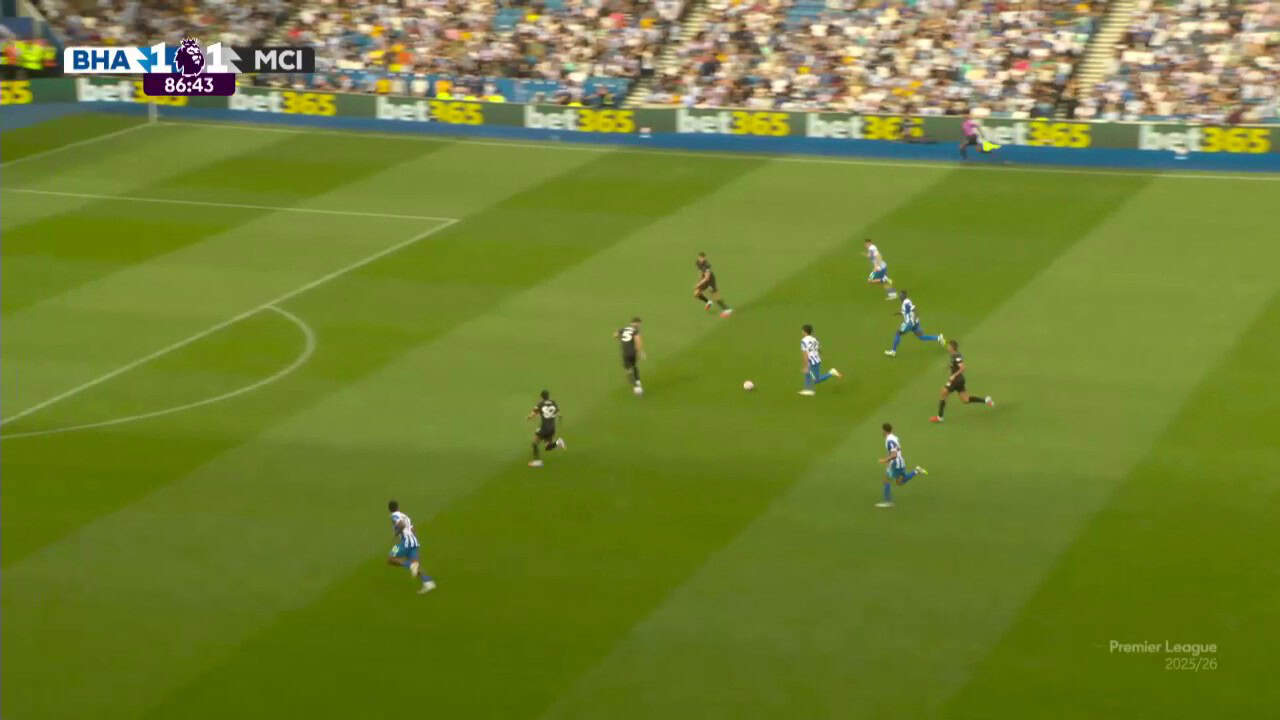
The game winner is simply an incredibly poor job defensively by Manchester City structurally.
Everyone knows Fabian Hürzeler’s Brighton loves to play direct balls to the forwards, and it’s how they beat Manchester City last year.
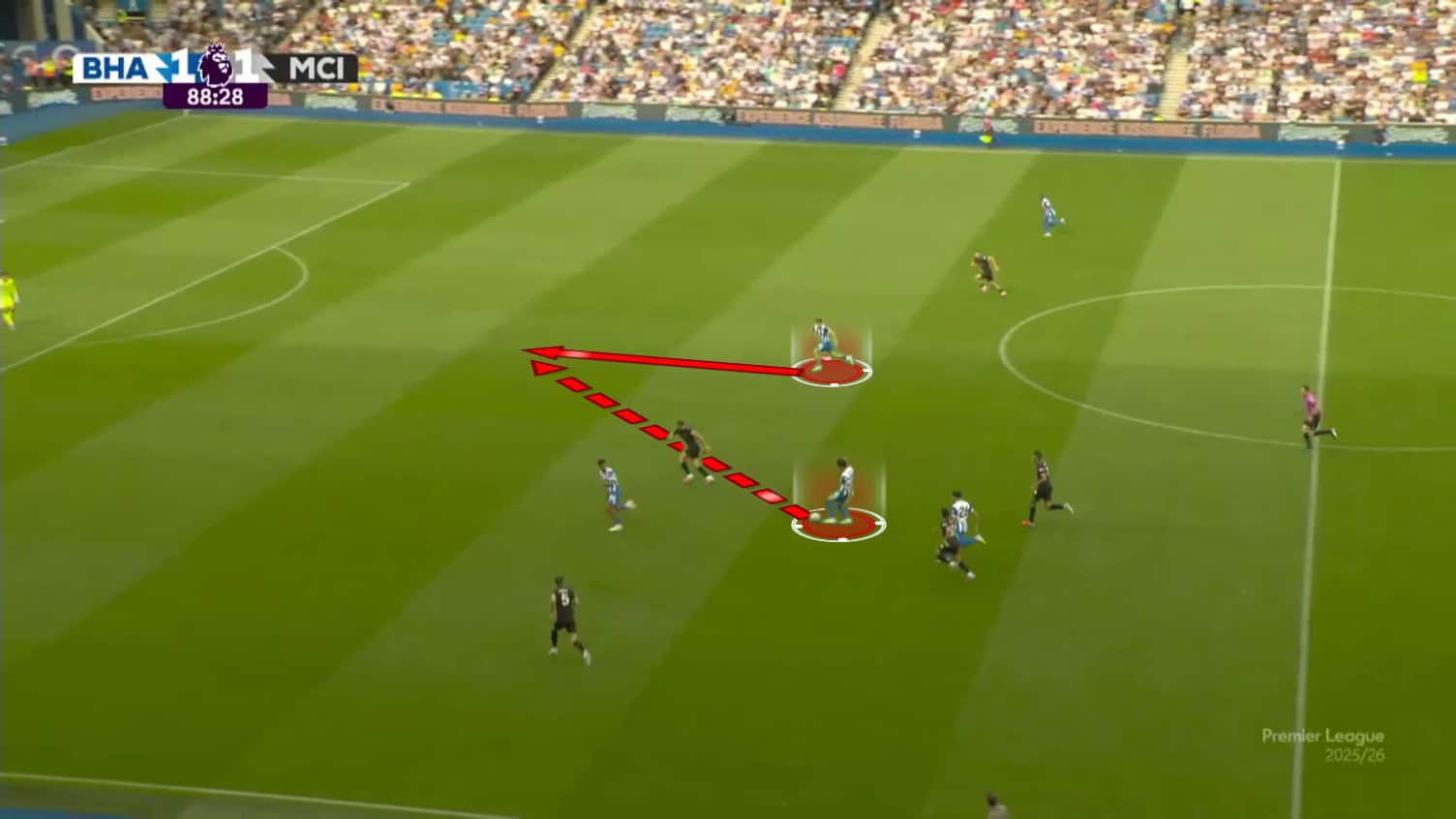
Somehow, Manchester City allowed Brighton to have a 4-v-3 on the last line.
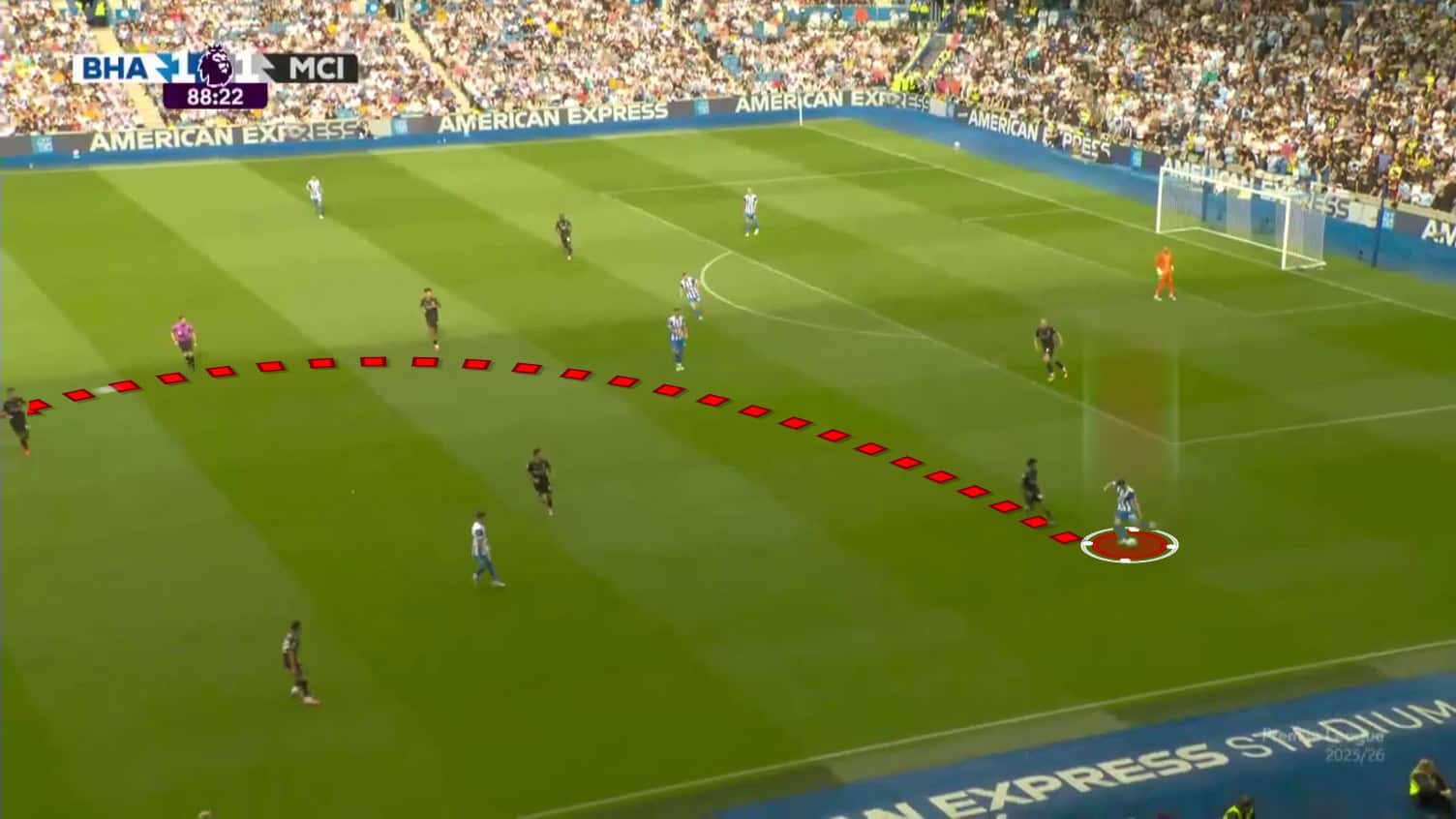
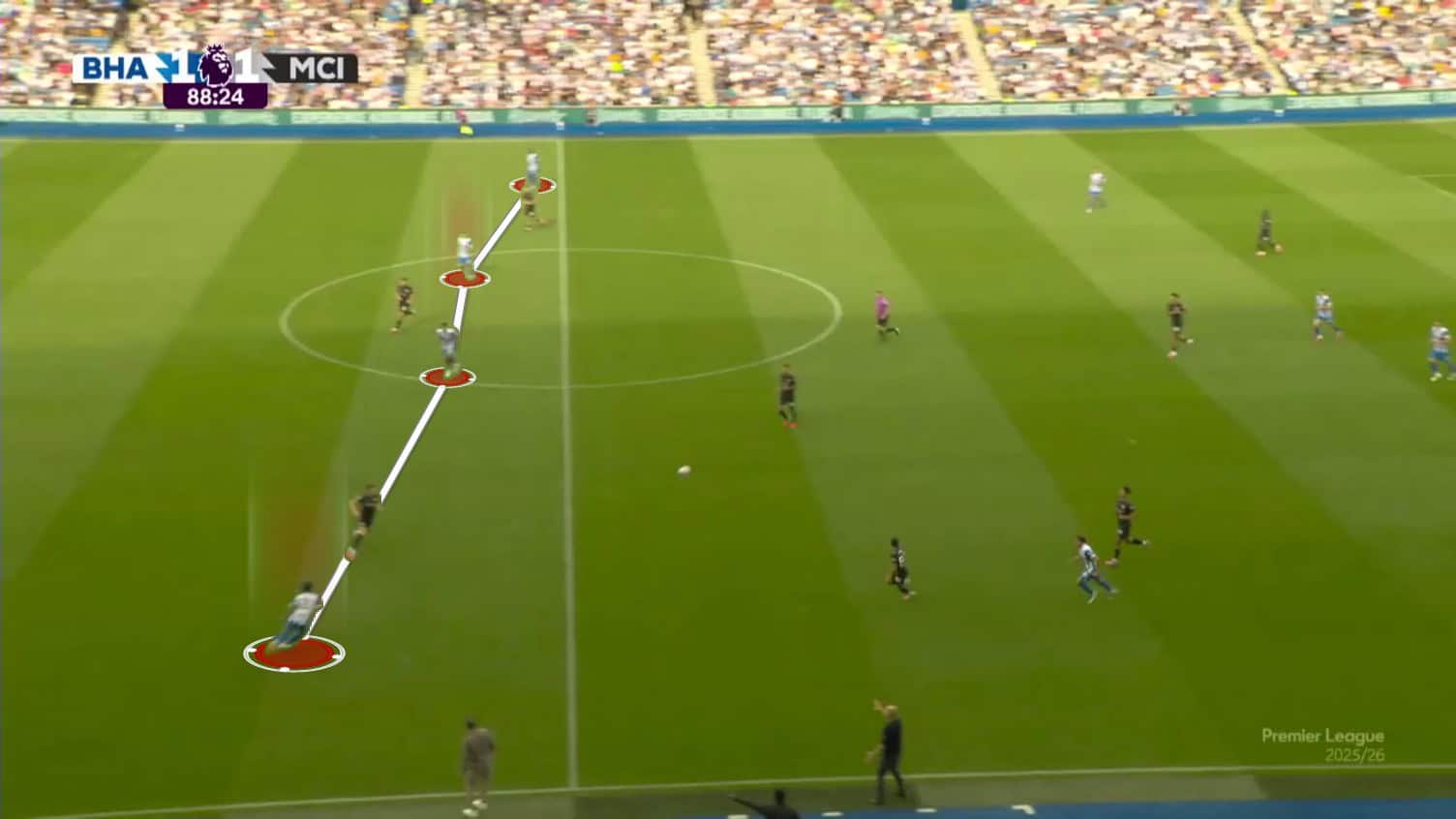 Once the direct ball was played an Brighton won the ball, it only took two passes and Gruda was in on goal.
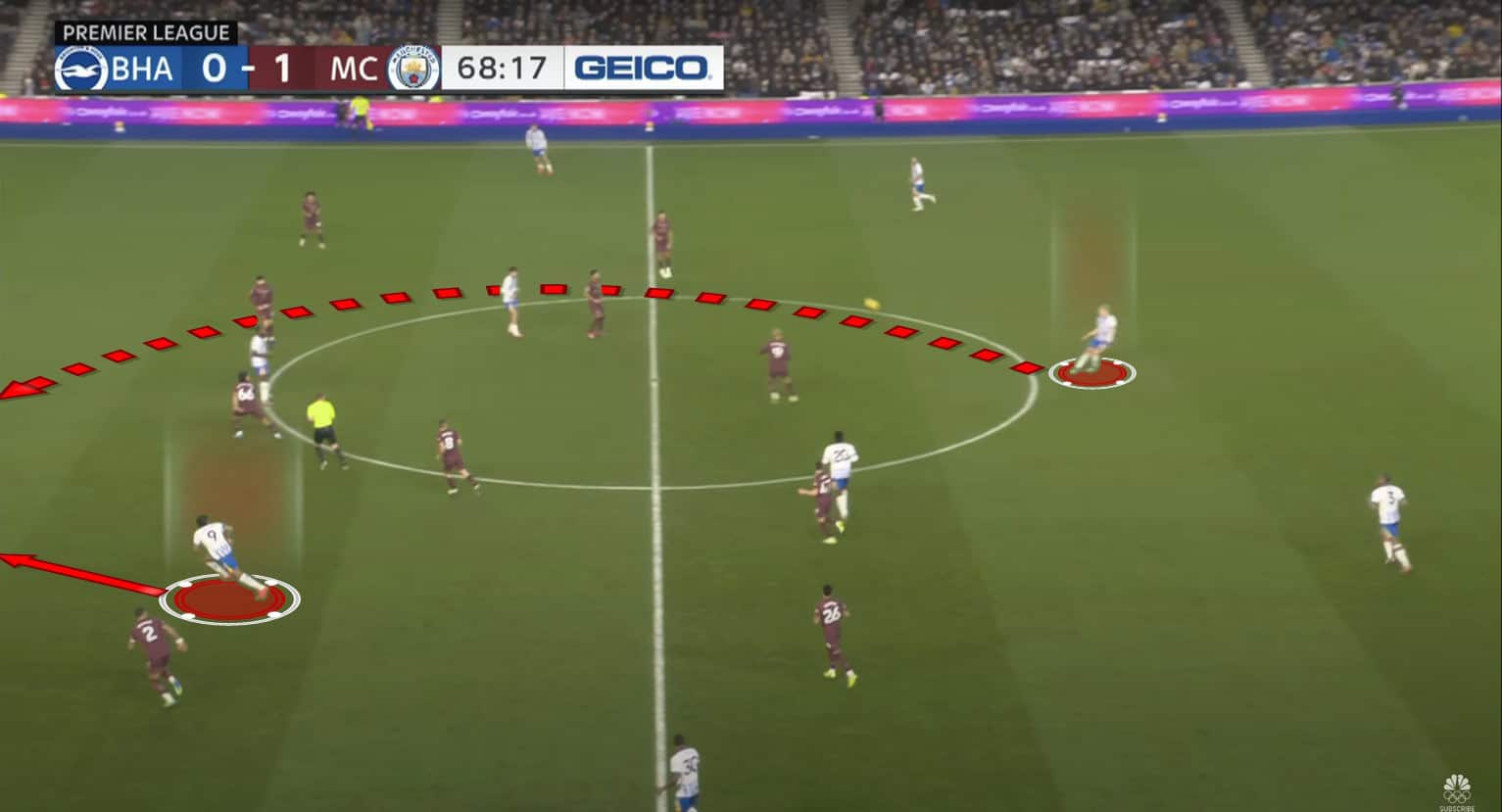
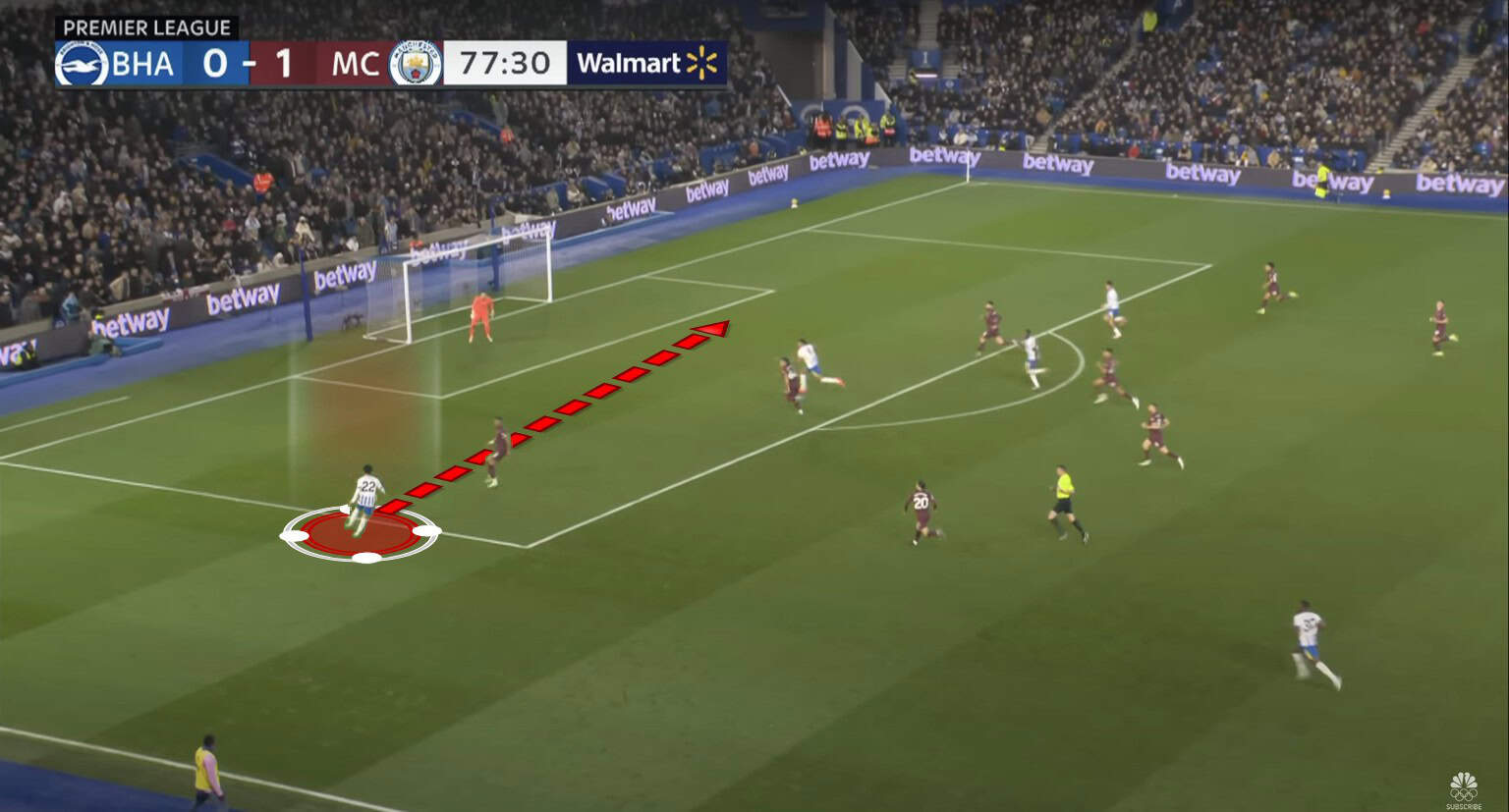
What is crazy is that this is the exact type of thing that happened last season to Manchester City when they lost to Brighton 2-1.
They were playing a very compact 4-4-2, but Brighton simply overloaded the last line of defence to get a 5-v-4.
You can see Kyle Walker was stuck defending Mitoma and João Pedro, which allowed Pedro to get in behind for a shot.
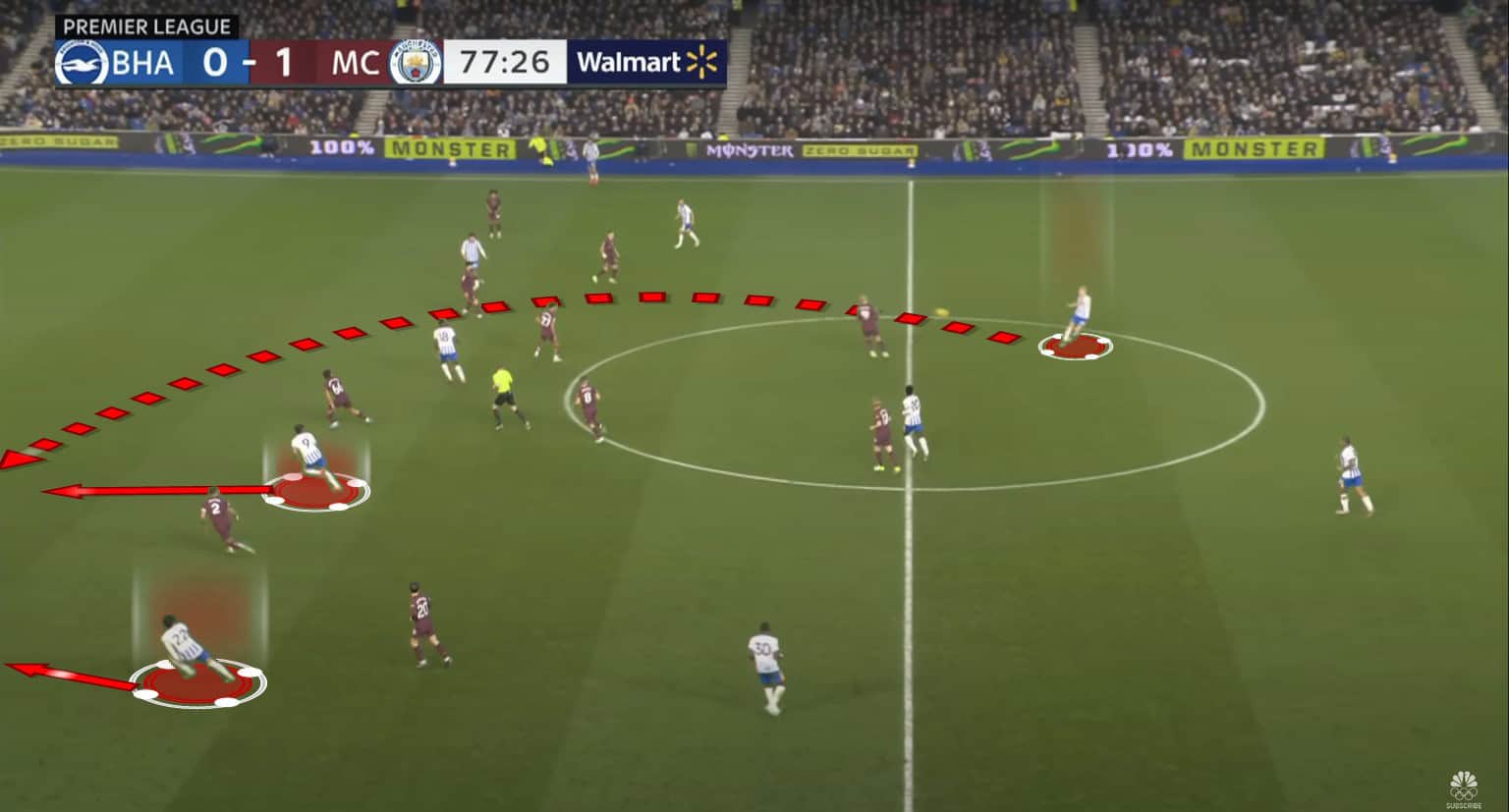
Then, the equalising goal, the same thing happened.
Jan Paul van Hecke is able to play a direct ball to Mitoma, who easily carries it into space and plays a ball into the box that João Pedro eventually puts in the back of the net.
Conclusion
This match poses numerous questions about Pep Guardiola’s approach to team structure.
When Manchester City are able to maintain control, as they did in the first half, then overloading the middle and having the fullbacks provide the width makes sense.
However, as the match went along, Manchester City’s rest defence continued to get exposed by Brighton on the counter, and it ended up costing them the match.
Pep Guardiola is putting too much pressure on Rodri to stop many of the opposition’s counterattacks because Tijjani Rijnders and Bernardo Silva do very little defensive work or are not elite in terms of ball stopping.
It is shocking to see a manager of his stature and pedigree allow this to continue happening.
Manchester City for the match had a 66.4% field tilt and held 63.8% possession, but Brighton created more expected goals (2.3 to 1.8) and outshot them in the penalty area (10 to eight).
This begs the question: Is Pep Guardiola’s methodology of overloading the middle and putting all of the pressure on the holding midfielder to stop the opposition’s counterattack clearly not working?
Manchester City have allowed five fastbreak shots in their first three matches, the most in the Premier League.
It’s a good thing we are heading into an international break, so Manchester City have some time to figure out how to solve these defensive transition issues.
They’d better figure them out quickly because they have a brutal schedule coming out of the international break that features Manchester United, Napoli, and Arsenal.
