


Werder Bremen were rather busy this summer, overturning their entire identity and style of play.
Long-time head coach Ole Werner and the club decided to part ways, which led to the club hiring Horst Steffen as their new head coach.
This also meant that the team’s entire style of play changed; their basic formation went from a 3-4-2-1 or 3-5-2 to a 4-2-3-1, and they now play with a much more passing-centred style.
Ultimately, Werder decided to part ways with their star striker, Marvin Ducksch, who later joined Birmingham City in the EFL Championship.
This meant that Keke Topp, a 21-year-old, was left as the only striker in the squad, but Werder were looking to change that.
On Deadline Day, Werder Bremen managed to get maybe the biggest signing in the Bundesliga by getting Victor Boniface on loan from Bayer Leverkusen.
Unfortunately, the situation did not unfold in a way that benefited either side.
Boniface played only 326 minutes for Werder Bremen, is still waiting for his first goal for the club, and has now suffered another knee injury.
Therefore, Werder Bremen officials spoke to the media about potentially terminating the loan early after their last game before the Christmas break against FC Augsburg.
Steffen wants a relatively rare type of striker: A roaming striker with quality on the ball, able to link up with the midfield and create opportunities by himself and not just finish them off.
He wants a player like his former strikers, Nick Woltemade and Fisnik Asllani, rather than an Erling Haaland-type.
So, in this Werder Bremen recruitment analysis and scout report, we will take a look at three potential signings for Werder Bremen who are available on loan or for a low fee this winter transfer window.
Joël Piroe Scout Report 2025/2026: ‘Dreimal ist Bremer Recht’?
Dreimal ist Bremer Recht is a famous saying in the city of Bremen, which is essentially their localised way of saying ‘third time’s the charm’.
So why would Joël Piroe be the third time?
If Werder Bremen actually signed the Dutch striker on loan, he would be the third loanee from Leeds United to Werder Bremen after Maximilian Wöber and Isaac Schmidt.
Piroe is a very intriguing target for Werder Bremen, simply because the Dutch striker fits the profile of a ball-playing, wide-roaming striker perfectly; his profile nearly matches that of Fisnik Asllani.
The biggest strength of Piroe is his ability to connect with his midfield by dropping back from the backline while still getting into traditional striker positions.

Here we see Piroe in one of his rare Premier League appearances for Leeds United this season.
Instead of just staying up front, the Dutch striker drops back from the attacking line and allows his attacking midfielder to step into the striker position, exactly what Steffen wants his strikers to do.
Interestingly enough, Piroe also played as an attacking midfielder for Daniel Farke, playing a similar role compared to how Steffen wants his attacking midfielders to play, so that he would be a fit for multiple positions in Bremen.
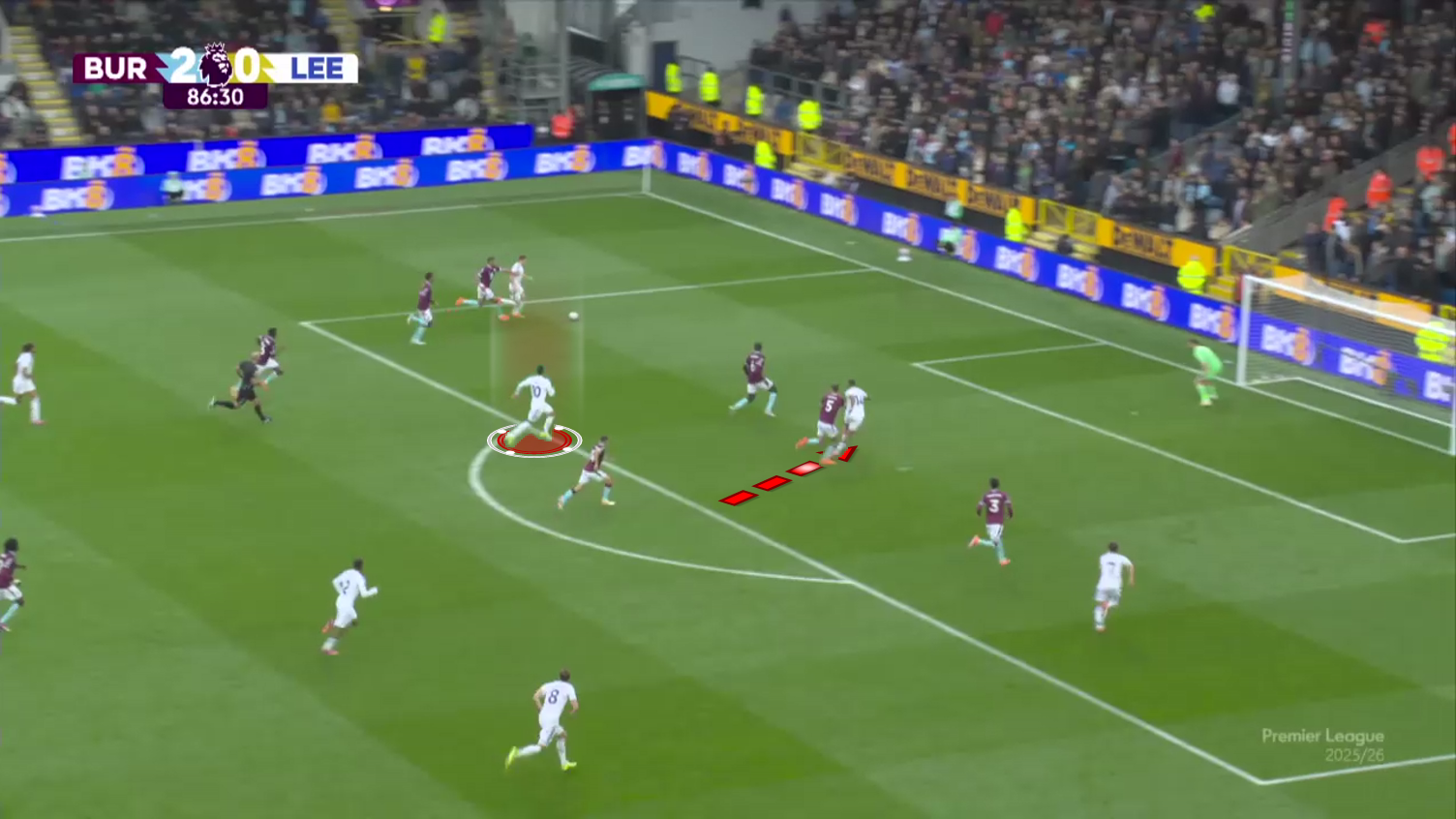
This means he is not the player making the first run into the box; instead, he allows him to find open space.
Piroe is rarely right with the centre-backs, fighting for position and making dummy runs; he prefers to position himself in open space, ready to receive cut-backs or high crosses.
Here, he is wide open to receive the ball.
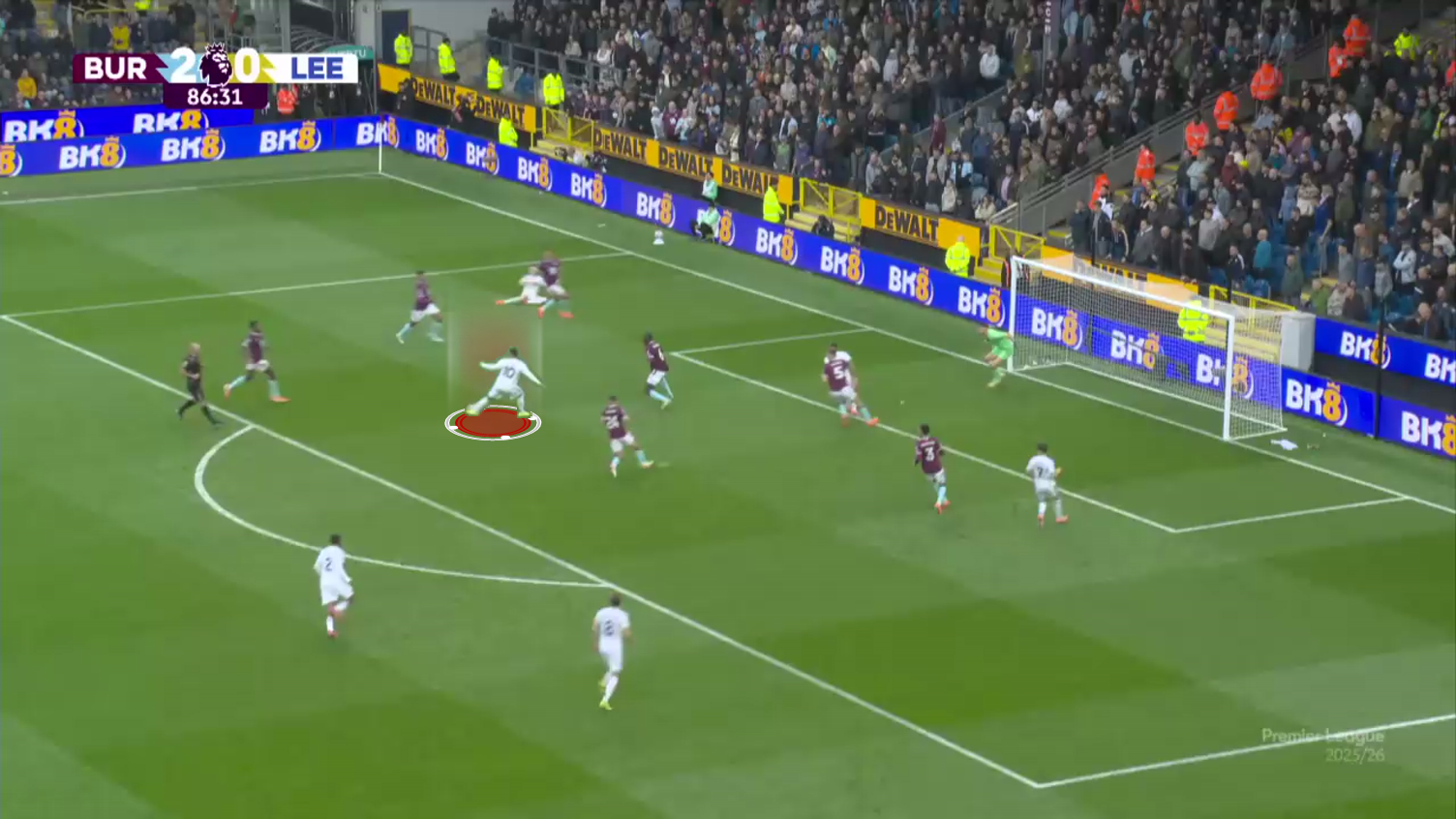
In the end, he receives the ball, but does not position his body well, and with his teammates getting closed out, the ball ends up being played a bit behind him.
Piroe has huge problems with adjusting his body position in those situations, as we can see in the picture and in the end, skies the shot, but he generated a massive opportunity for his team.
His ability to find space and position himself well between defenders would be a perfect fit for Werder Bremen, and his on-the-ball play in the passing game, as well as his positioning in the box, would also help.
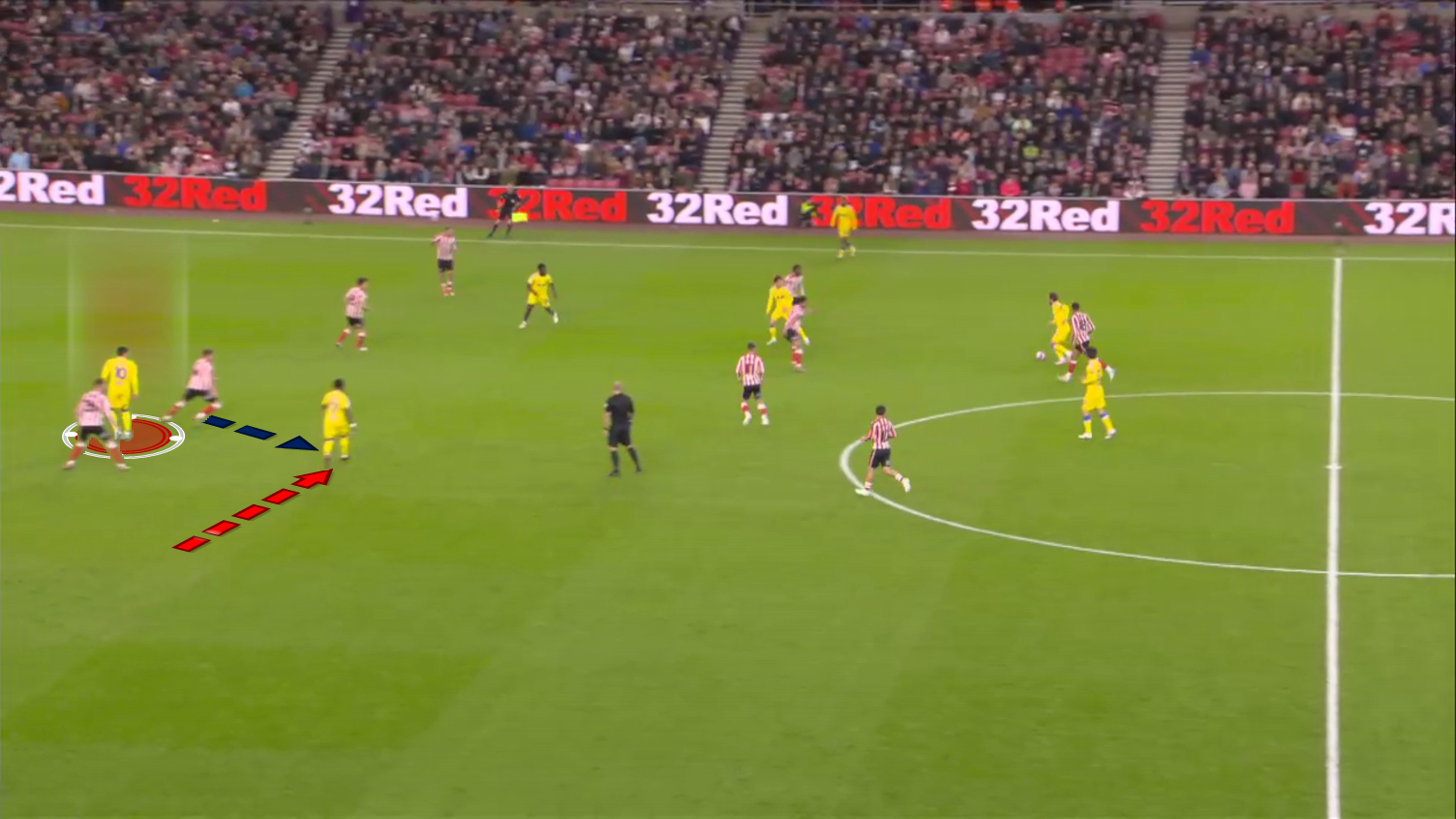
Piroe can be on the other end of those attacking patterns as well, which is one of the reasons he could play as an attacking midfielder, but it also shows his ability to use a teammate’s movements to his advantage.
Here, his teammate moves into the attacking midfielder position, forcing one defender to step up and leave his position in the backline.
Piroe quickly realises this and positions himself behind this defender.
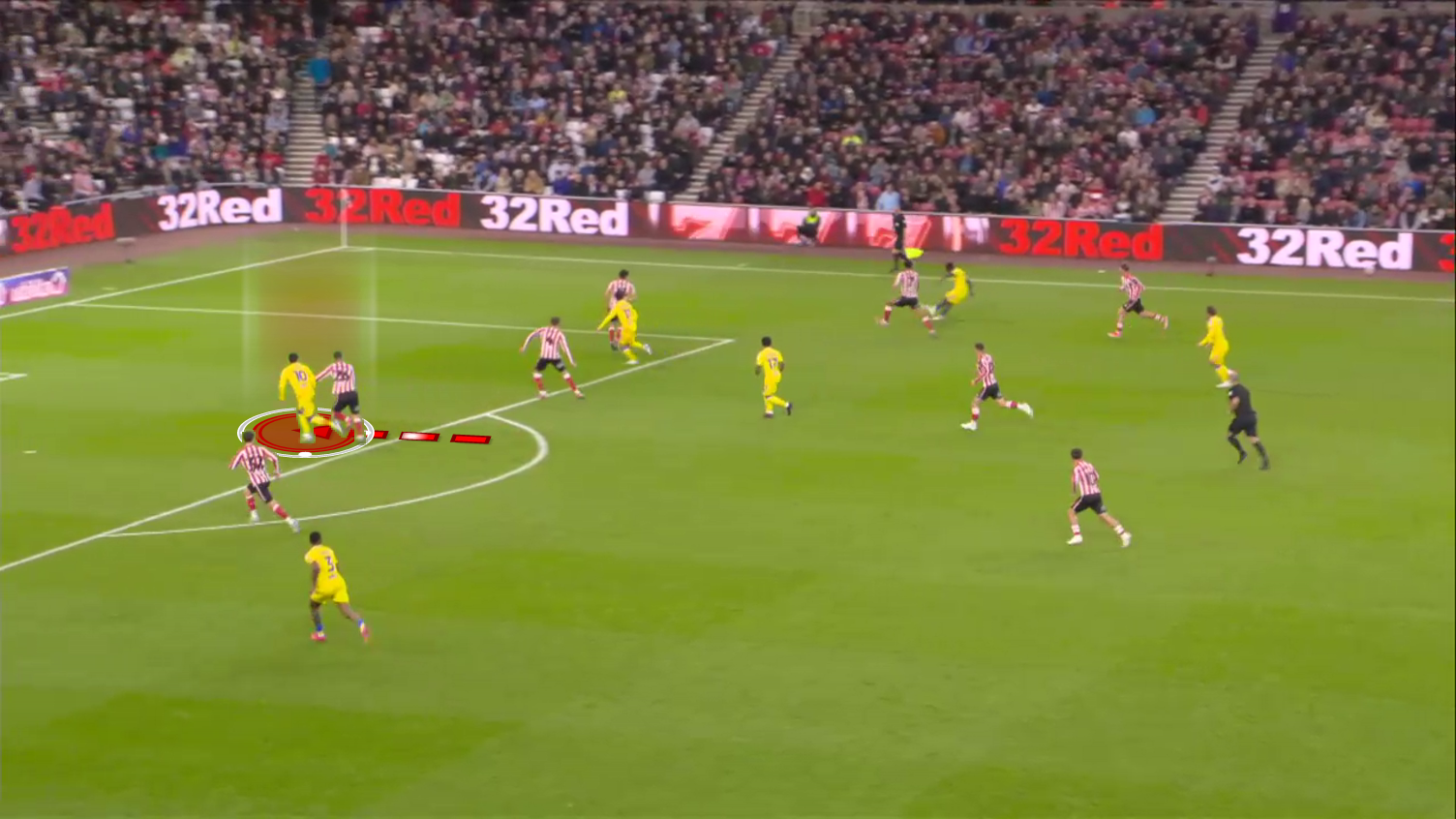
As we can see, this little movement gives Piroe an advantage in the box; he is now in front of the centre-back and therefore in a much better position to attack a ball played closer to the goal.
Piroe has problems in very physical duels and in the air, so he needs those little movements to create separation from the defender, but he does it so well.
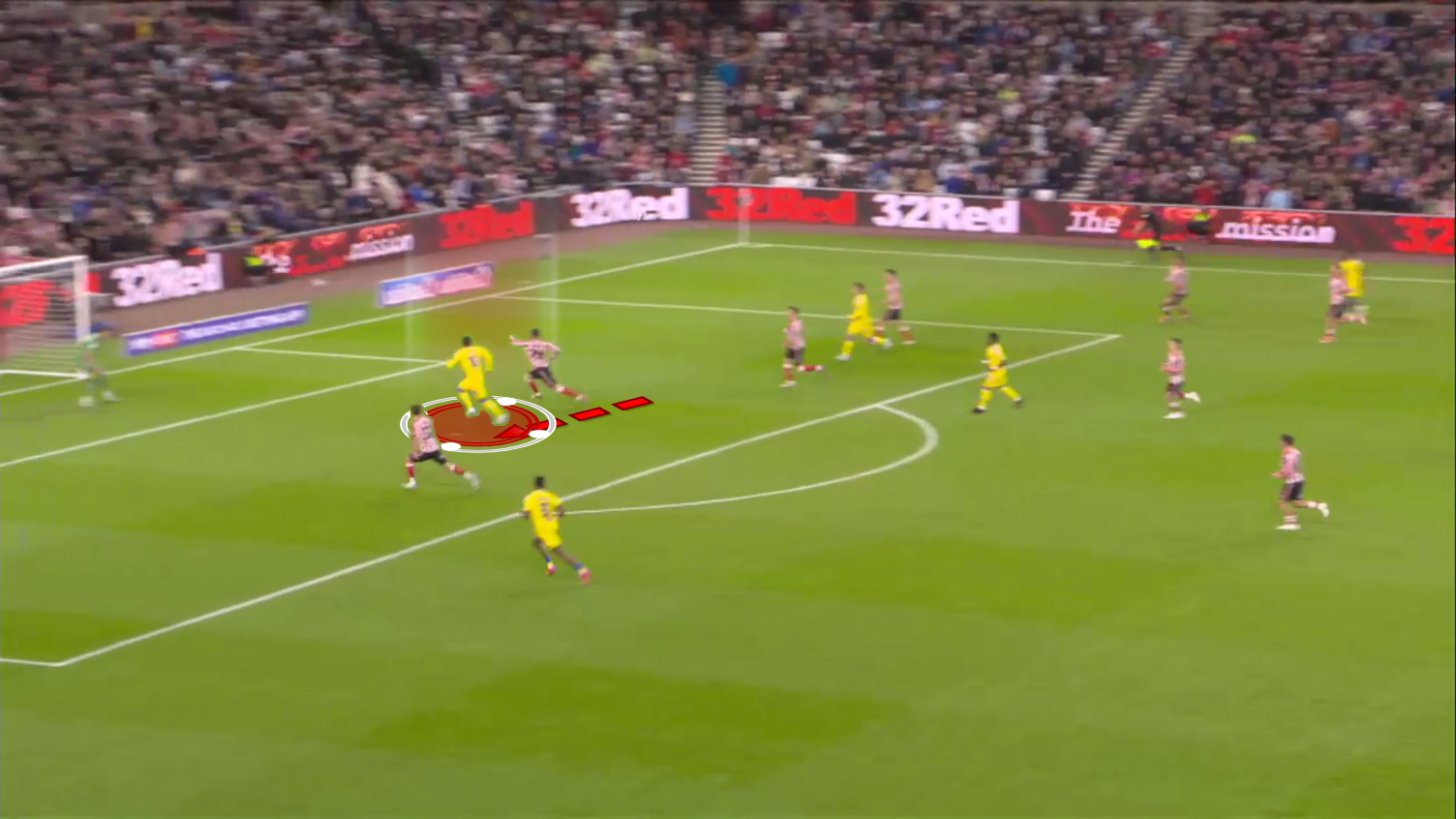
In the box, he even moves backwards a bit, anticipating the high cross towards the far post.
He is able to get a much better position than both defenders and, in the end, manages to head the ball into the net after finding himself in acres of space.
His quality on the ball is second to none for strikers anyway, but these little movements allow him to be a threat in the box as well, and Werder Bremen needs all of that badly.
Noel Futkeu Scout Report 2025/2026: Shaking Things Up
Just looking at the markets that are very interesting for a club like Werder Bremen, the 2. Bundesliga in Germany is obviously one of the most interesting leagues to look at.
One of the best strikers in that league is actually playing for one of the worst teams in the league, and therefore, Noel Futkeu would surely be happy to make the jump to Werder Bremen.
Futkeu has a rather interesting path throughout his young career, starting out as a non-league player in the fifth division, working his way up to the B-team of Eintracht Frankfurt, and then joining Greuther Fürth.
While Fürth does not want to sell their striker, Frankfurt has a buy-back option for just about €1m; they would be able to trigger that and then sell on to Werder Bremen.
Futkeu is an interesting case because he is not a traditional striker in the slightest; he is rather short and very lean, but very quick and incredibly mobile, which would fit the mould of strikers Horst Steffen has used over the last few years.
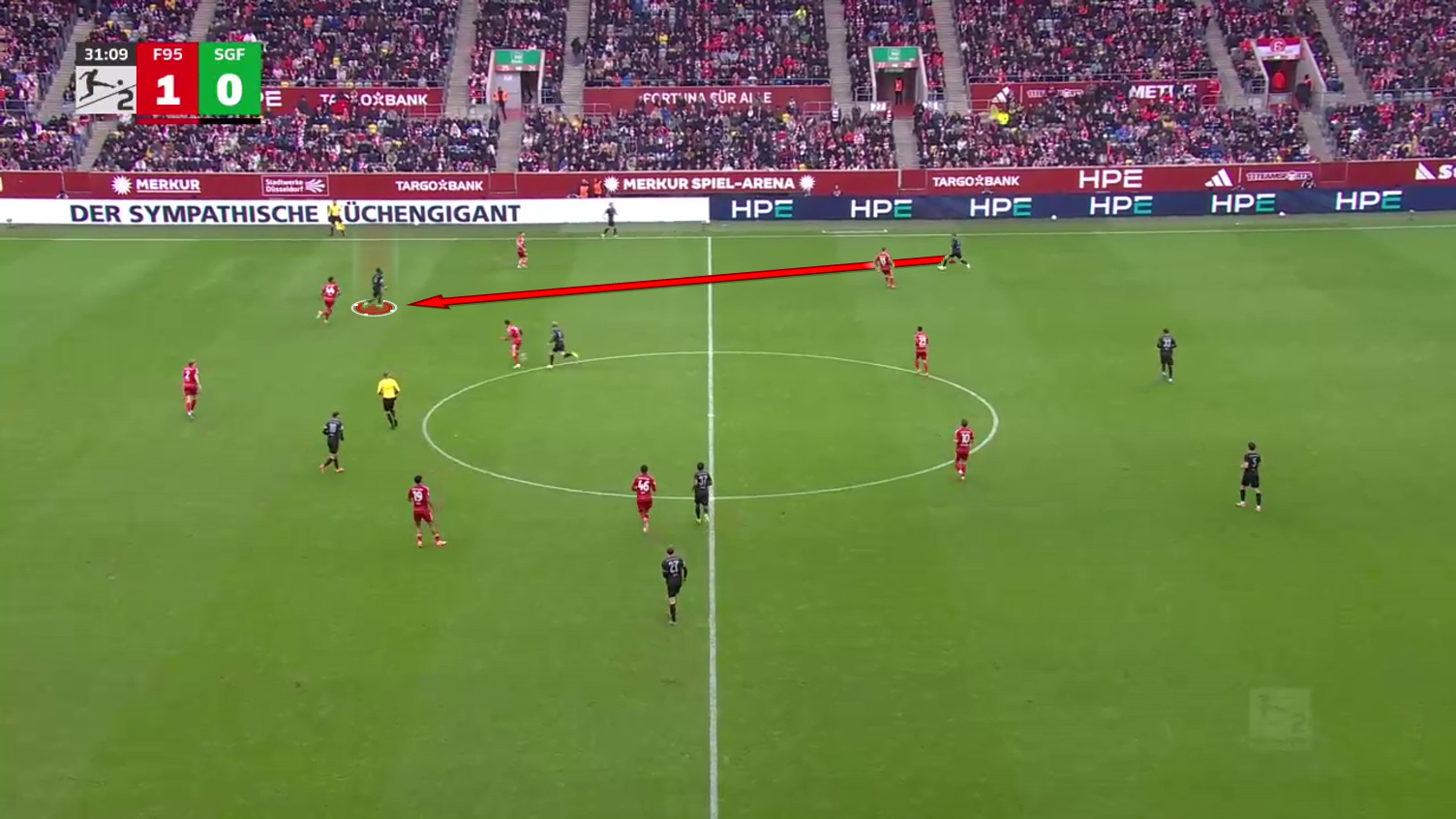
Futkeu loves to move off the attacking line and often moves into the half-space, where he positions himself very well between the lines.
While he fits best as part of a two-man strike partnership, he has played as a lone striker more over the last couple of weeks and has done well.
One of the reasons is his pace; even when he drops back deep into midfield, he can quickly get into the dangerous areas again.
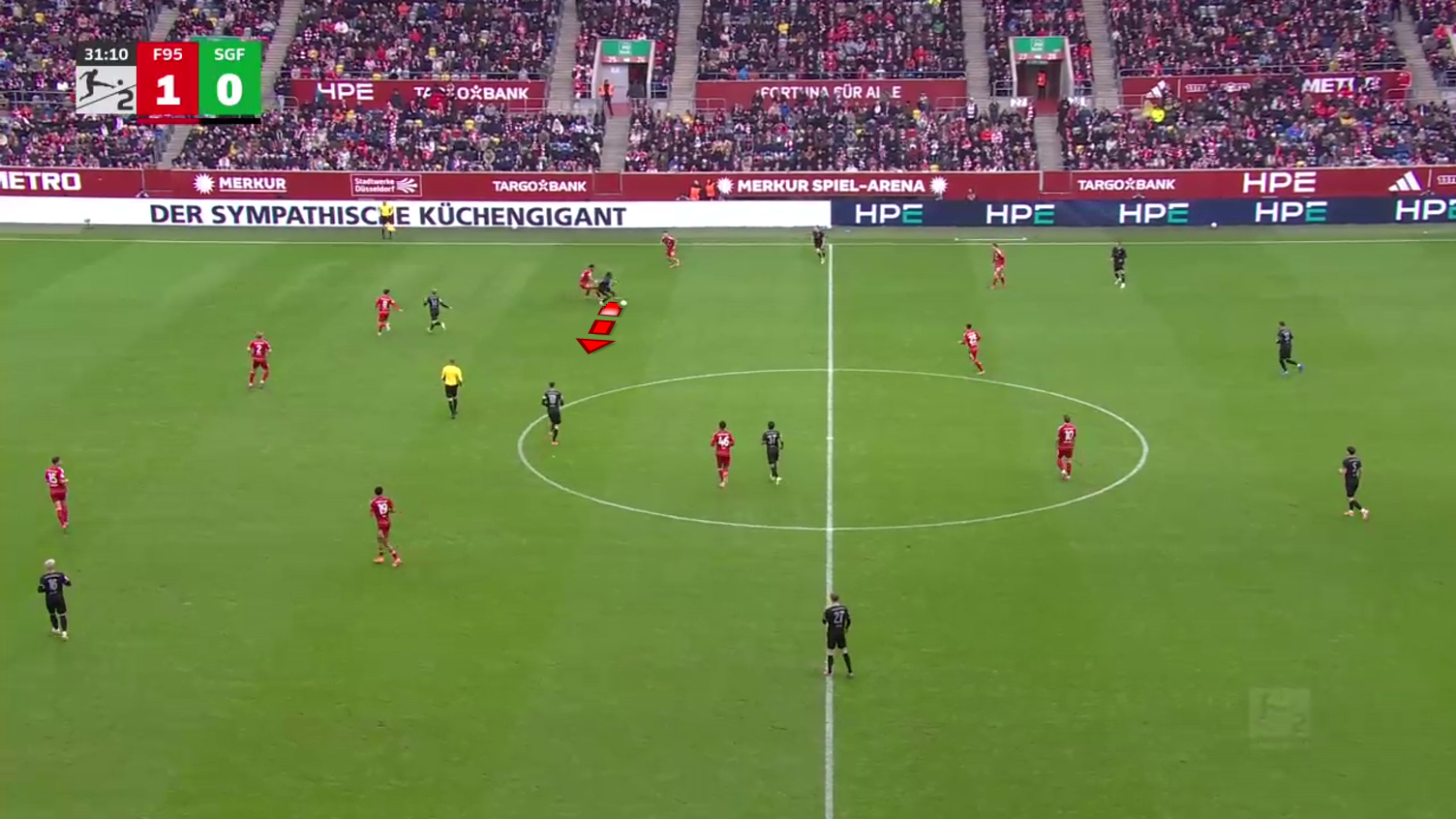
In the half-space, Futkeu is incredibly hard to defend.
His quick feet and elite short-area quickness allow him to get by most defenders in those situations.
He can quickly turn and dribble the ball forward, but he is also surprisingly strong in his attacking duels, holding off defenders well and laying the ball off many times per game.
His ball security in these situations is very good, and it’s something Werder Bremen can definitely use to help their lacklustre attacking play.
In the situation pictured above, Futkeu is able to turn inside quickly and gets a direct path towards the goal with a very good first touch.
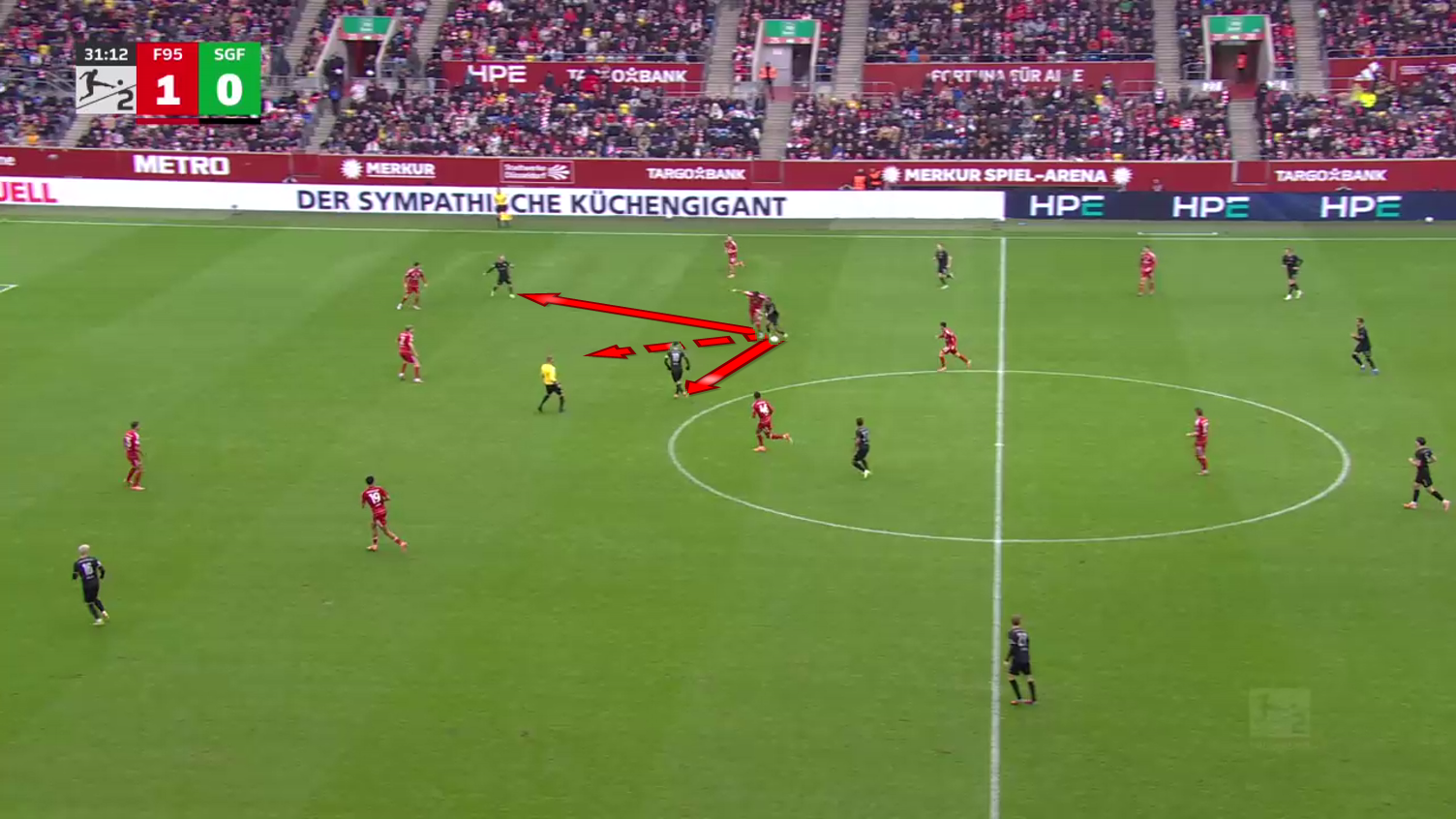
These quick movements enable Futkeu to have multiple follow-up actions in dangerous areas and accelerate the game at all times.
Here, he could keep dribbling, but he also has two options for short passes, so in the end, the defender fouls him here to keep his team out of trouble.
Considering his size and weight, his stability in those duels is incredibly impressive, enabling him to do far more than just win through his speed.
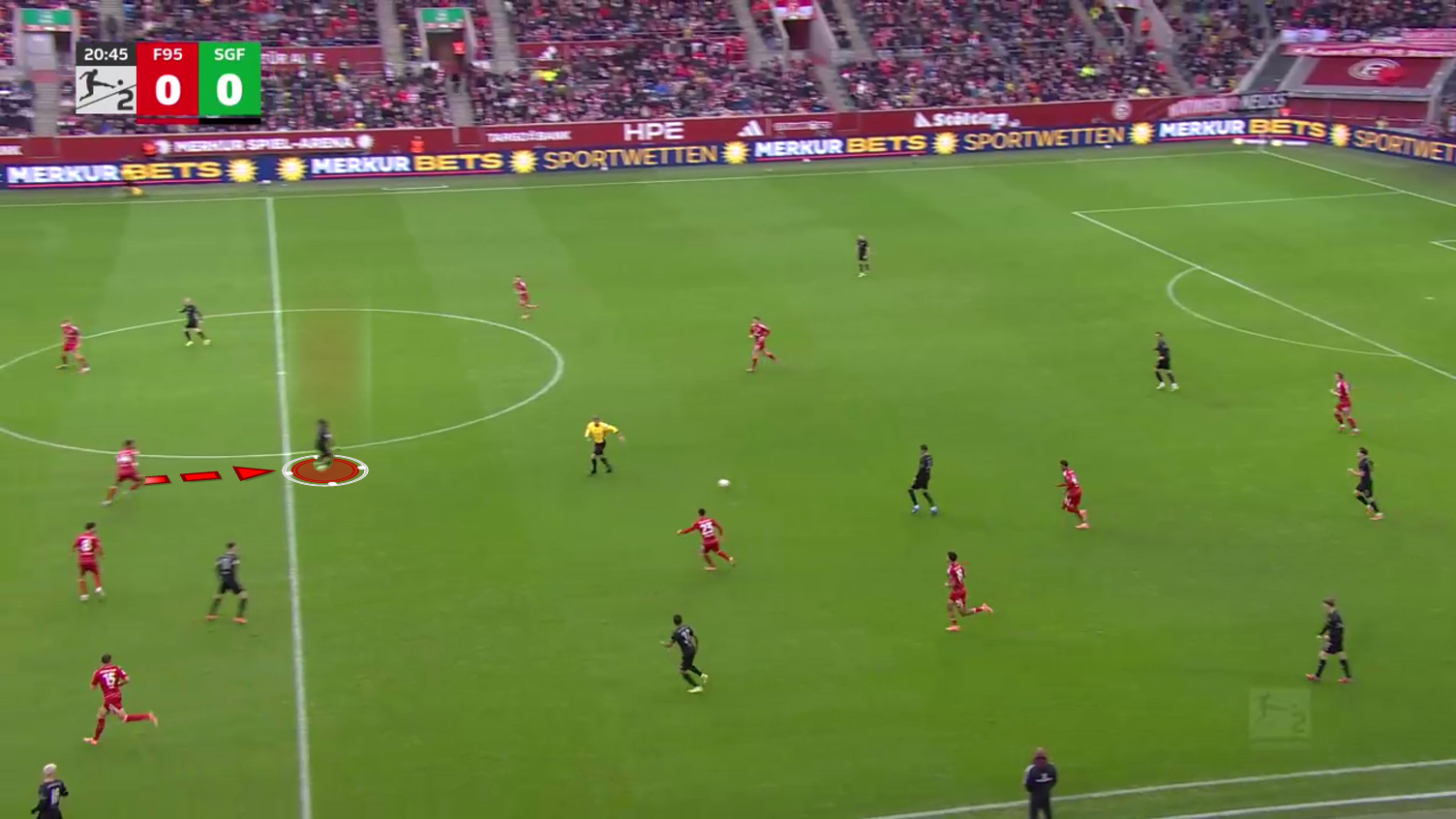
Futkeu has elite timing and explosiveness when he is dropping out of the backline.
This leads to him getting a lot of separation in those situations, as we can see in the picture above, but he also never drops back when he is the one providing pressure on the backline, instead enabling his teammates to make runs and then moving off them.
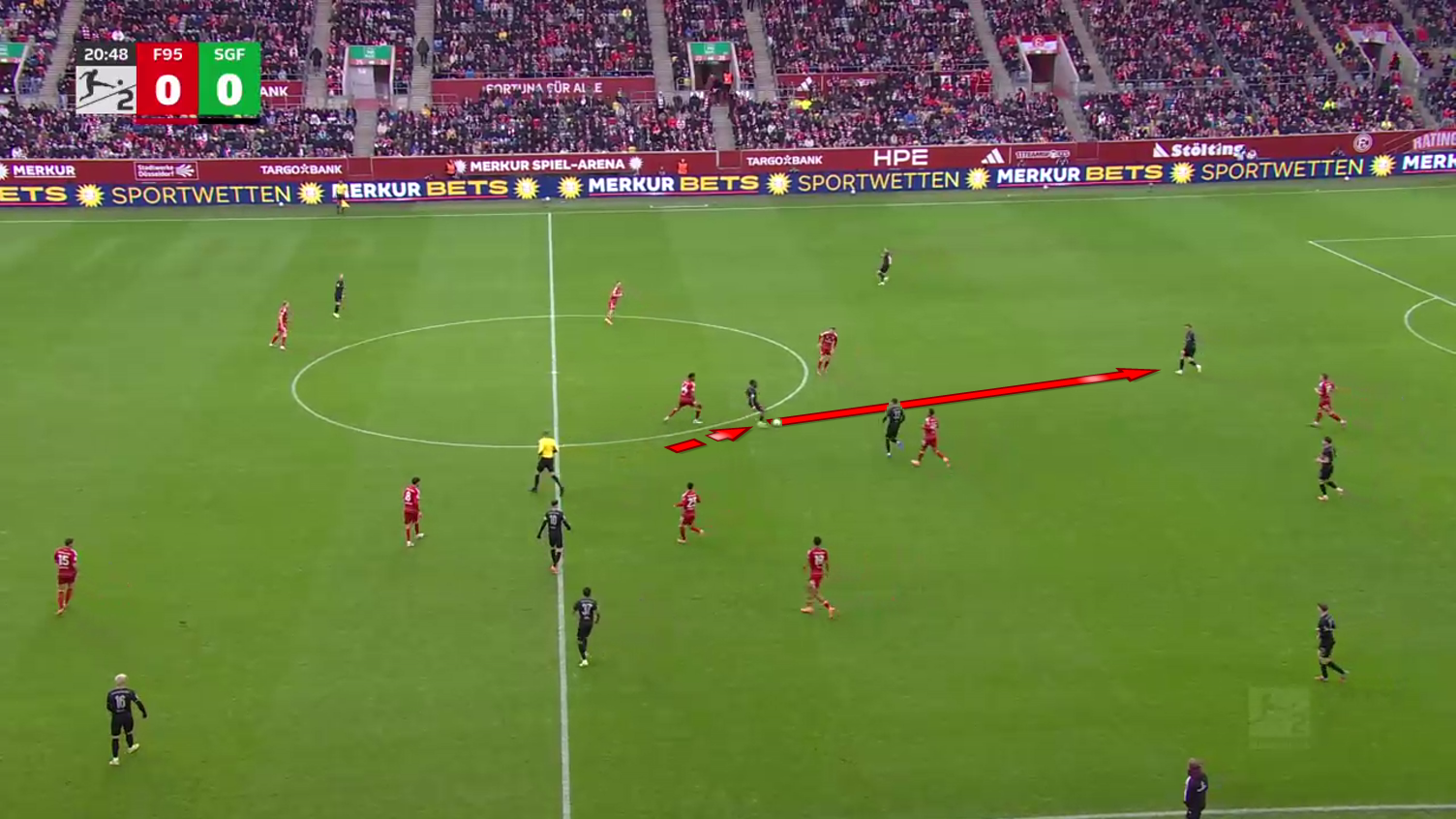 His arguably biggest problem in those situations is his body position.
Futkeu often receives in a closed stance, his back turned to the goal.
While his agility is great and he can turn at times, more often he struggles with a defender in his back, and his stance eliminates progressive link-up options from the start.
As we can see, while he was able to find space and let his teammate play a vertical pass towards him, he was forced to play it back to a defender because he was not able to position himself to turn.
Futkeu also takes a lot of touches in the hold-up game, even when he is supposed to play quicker.
So while his movements enable line-breaking passes for his teammates, he often has to abort those attacks quickly again.
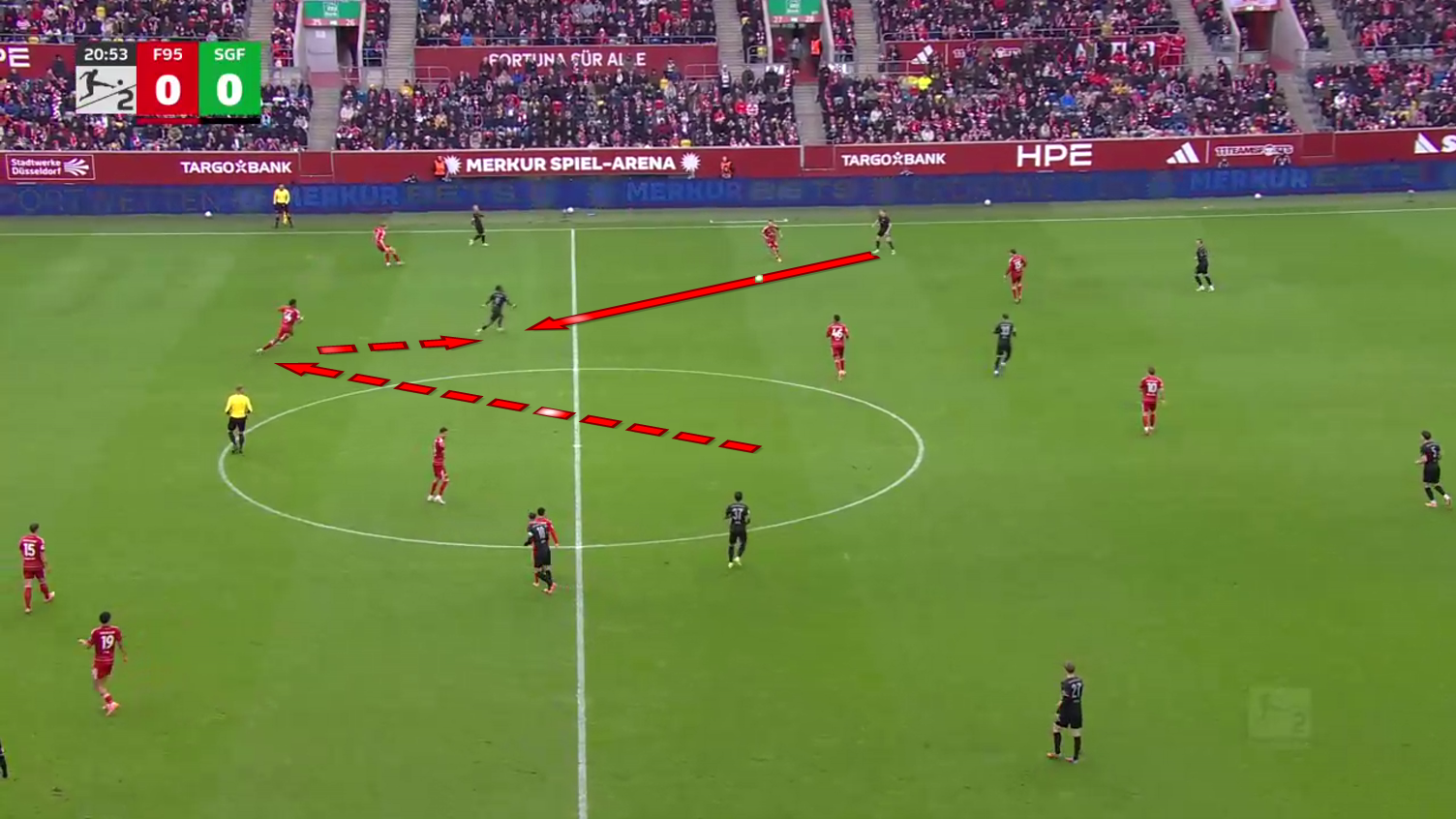
What’s really interesting to see, though, is the way he always keeps moving after playing those passes.
Here, Futkeu instantly makes a run towards the backline again, pushing the opposing defenders a couple of metres back, then drops back into the space between the lines and links up with his teammates.
His style of play is very explosive and hard to contain for defenders; he enables progressive passing and is secure on the ball.
Werder Bremen needs that desperately.
We haven’t looked at it here, but Futkeu also has elite movement in the box, and his pace is a threat at all times, which is why he has found the back of the net nine times already in the league this season.
All around, he might not be your typical striker, but Futkeu could be a very nice fit for Werder Bremen and their very specific needs.
Lassine Sinayoko Scout Report 2025/2026: More Physicality
One option to get players cheaply in the winter transfer market is to target players whose contracts expire six months later.
This is the case for Lassine Sinayoko from Auxerre.
Sinayoko nearly joined another team in the North of Germany this summer when he was close to signing for St. Pauli, but in the end, the transfer didn’t go through, and he had to stay at his boyhood club in France.
After his best season last year, Sinayoko is again Auxerre’s most important attacking player in the relegation battle, scoring six goals and providing two assists.
The Malian international is a very interesting player because he is not a traditional striker at all; he can play on both wings and in the centre, is an excellent dribbler, and his playstyle is incredibly wide-roaming, making him nearly positionless.
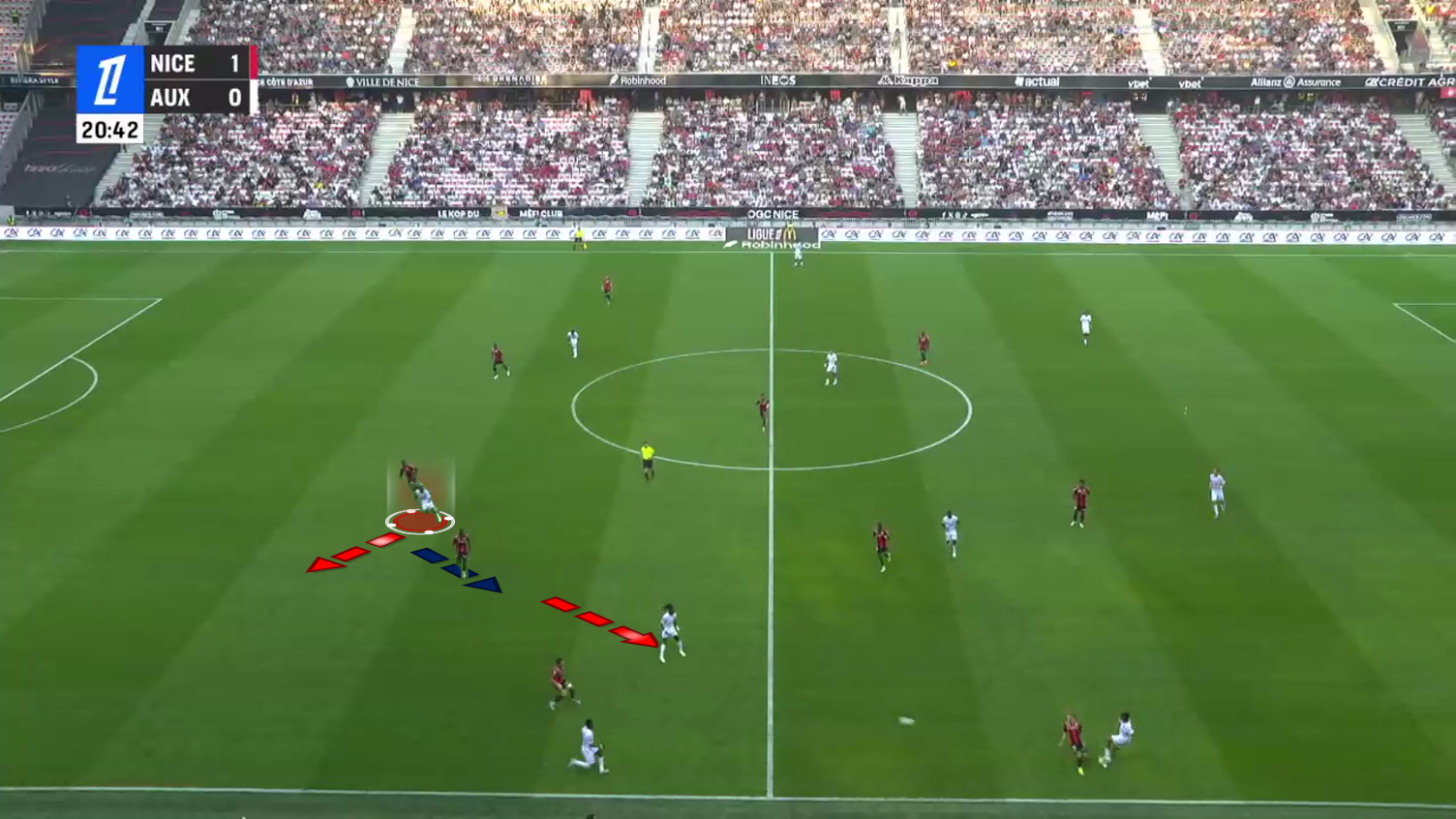
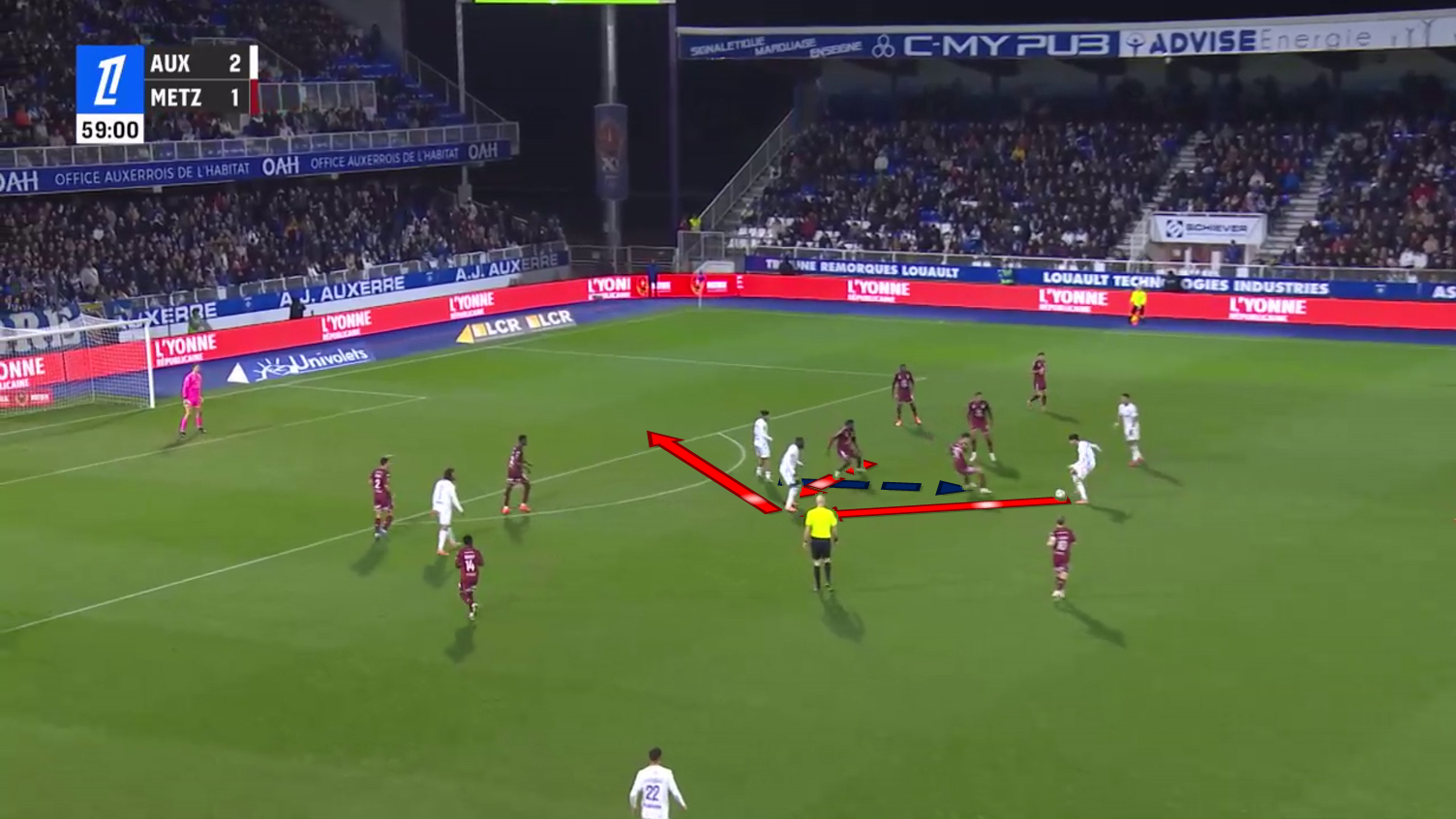
Here we can see a game in which Sinayoko played as a striker for Auxerre.
His teammate drops back into midfield to receive a pass, dragging one centre-back forward.
Sinayoko quickly realises the opportunity and makes a run behind the defender, ready to receive a long ball.
His pace and overall athletic ability are great; he is fast, strong, and yet agile, a combination of traits that allow him to be useful in any area.
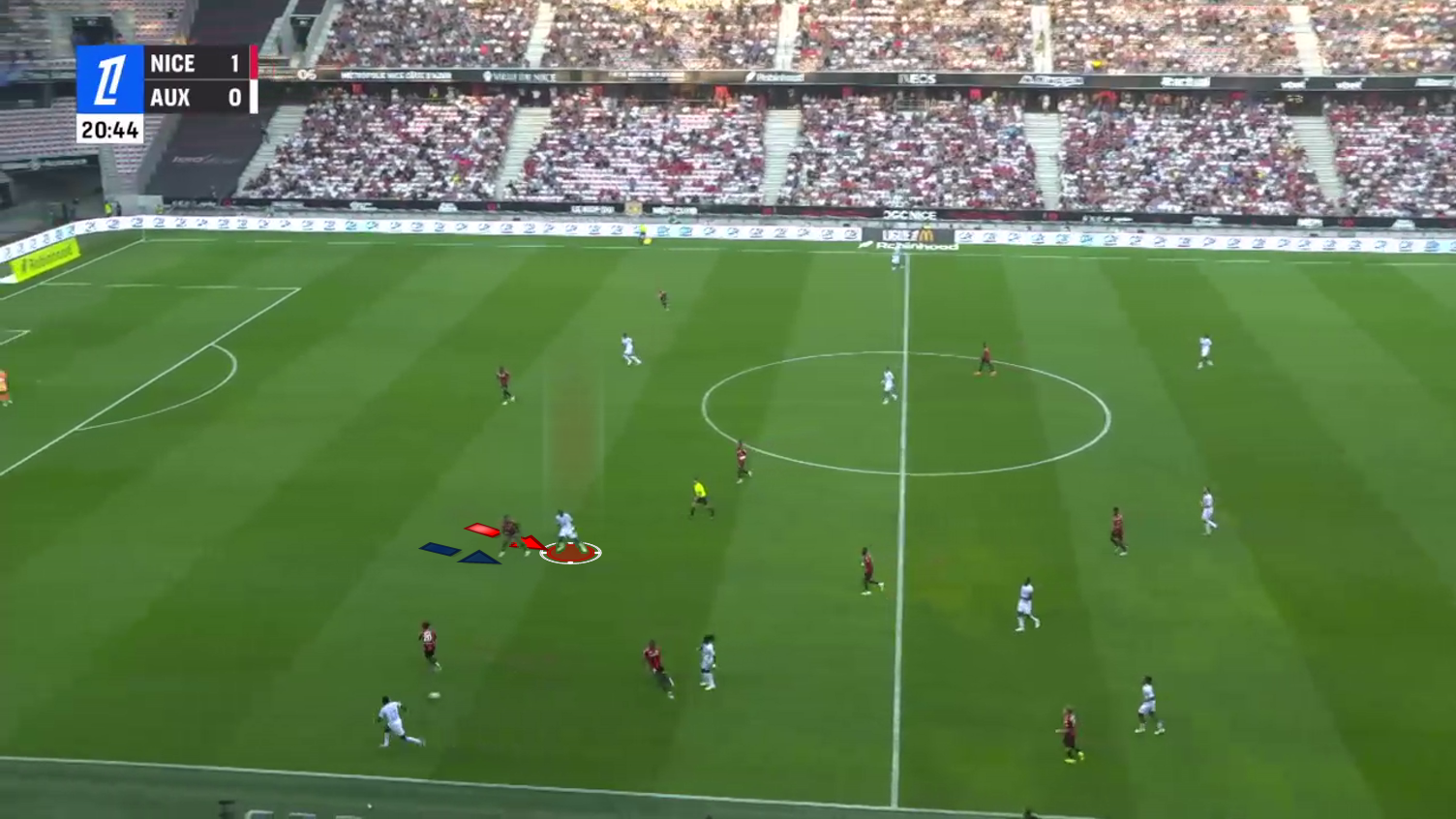
He doesn’t receive the ball here, though, so instead he drops back to help out his teammates in the short passing game and drags the other centre-half out of position now as well.
His movements off the ball are often clever; he has a knack for finding open space and manipulating the positioning of defenders to his team’s advantage.
Here, his movement opens up a pass behind the backline on the left flank.
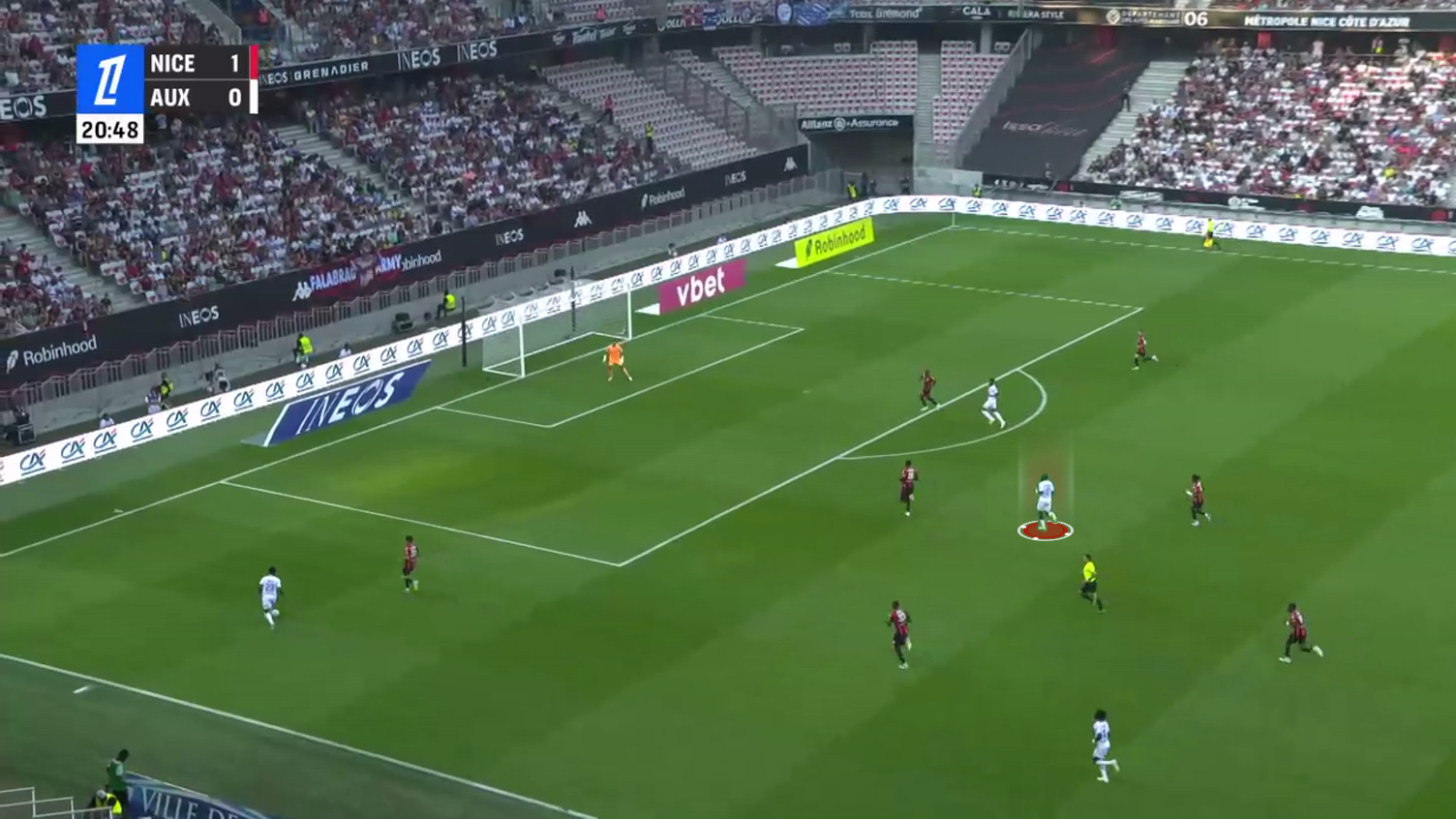
What Sinayoko does now is clever, but it’s a double-edged sword most of the time.
Instead of using his power to make a run towards the box instantly, he just jogs forward, letting the defender open up a gap between the two when he runs back.
Usually, you would want your striker to get into the box as quickly as possible, but Sinayoko rarely does that.
Instead, he now finds himself in open space and can scan the movements of the defenders in the box.
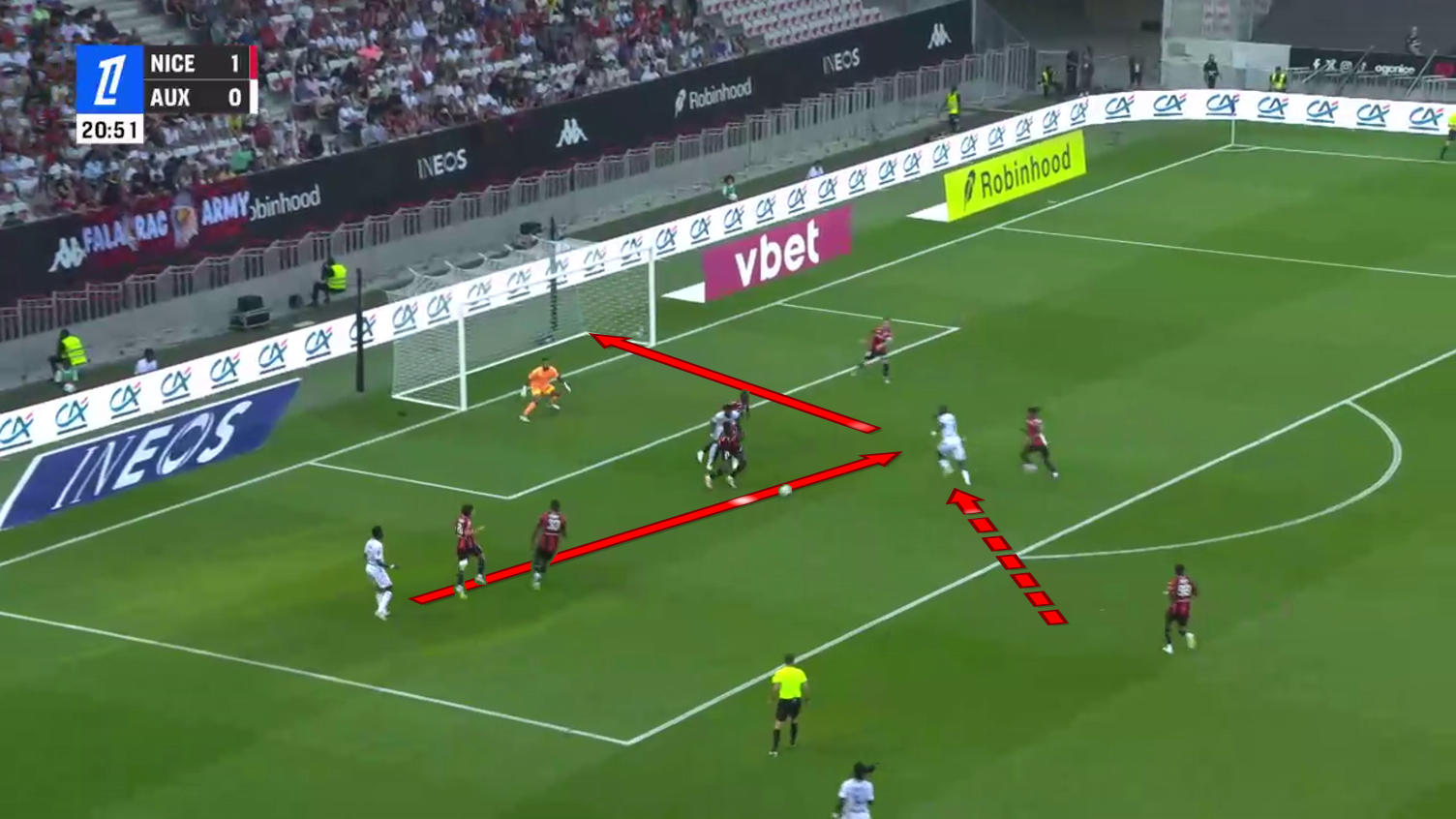
In the end, he patiently waits for the perfect moment and then, right after his winger wins his take-on on the wing, he explodes forward, ready to receive the low cross in an area where no defender has a chance to get to.
He finishes off the cut-back beautifully here with no player to even contest him, showing his feel for space, even in the box.
Still, he often lacks presence in the box, and his low expected goals value reflects that.
If you get a striker like Sinayoko, you have to live with him being anywhere, even if that means he is missing in the box more often.
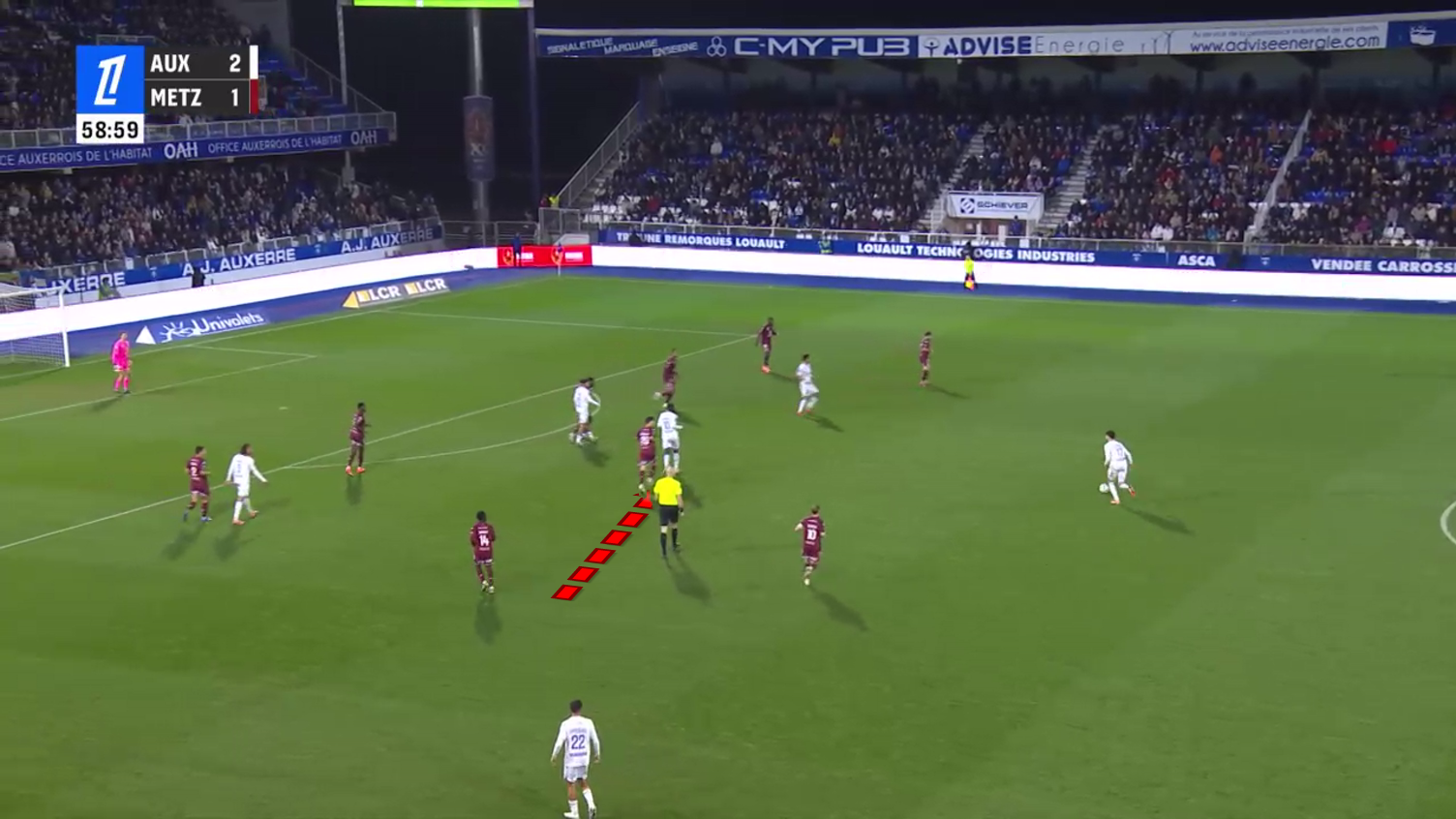
What’s really interesting about Sinayoko is his playmaking ability, however.
Last season, he provided nine assists; this season, he is in the 91st percentile for expected assists among strikers again in Ligue 1.
Sinayoko is very comfortable on the ball, has good vision, and is very good in combinations and finding solutions through the passing game, even in tight spaces.
In the picture above, we can see him playing as a winger, but dropping back and moving towards the centre to create an overload there.
He moves perfectly in the shadow of his teammates, giving the player on the ball multiple options.
In the end, he receives the ball after moving a bit to the other side again, creating just enough space to open up a passing angle towards him.
He had scanned over his shoulder multiple times in the past few seconds, recognising the centre-back who had to step up, creating a huge hole in the backline.
He sees his teammate making a run there and plays a beautiful backheel pass right into his teammate’s path, creating a huge opportunity for his team, but in the end, they fail to convert.
Sinayoko’s blend of size, pace, physicality, and playmaking ability makes him an intriguing target for Werder Bremen and Horst Steffen. He would be perfect as a striker in their system.
Given how Steffen prefers to have his attacking midfielders in the box, and Jens Stage being elite there too, Sinayoko’s weaknesses could be worked around a bit.
There is one big problem, though: Sinayoko currently plays for Mali at AFCON and would be available at the end of January, not directly when the transfer window opens.
Conclusion
We have taken a look at three different candidates for the striker position for Werder Bremen, and I think it’s a very interesting case.
Their system needs a nontraditional striker, which opens up a niche in the transfer market for them because many of the players other teams want are not the players Werder Bremen want.
On the other hand, finding a striker with an elite feel for space, who is good on the ball and still a threat, is a hard task.
Personally, Joel Piroe would be the best pick for Werder Bremen’s attack.
He has a good feel for space, is very good on the ball, and even played as an attacking midfielder for Leeds at times while still having a knack for being in the box at the right time.
I don’t really think Leeds wants to keep him at all costs, so just like Wöber and Schmidt, it could be beneficial for all sides if Piroe joined Werder Bremen on loan until the end of the season.

