
Football, at its highest level, is often celebrated for artistry, moments of technical brilliance, and end-to-end action.
Yet being defensively resolute is the bedrock of survival, especially for newly promoted teams.
Leeds United have learned that their fate hinges on defensive solidity as much as attacking options.
In the 2022/2023 Premier League season, the Whites conceded 78 goals, which contributed to their relegation.
Their 2024/2025 recruitment, beginning with a focus on acquiring Jaka Bijol from Udinese, is a clear statement of intent.
This player analysis examines Bijol’s game, drawing on metrics and how he fits within Daniel Farke’s evolving Leeds model.
The aim is to highlight Bijol’s strengths and weaknesses in isolation and explain (through narrative cause and effect) how his presence may give Leeds a fighting chance and what tactical trade-offs Farke must consider.
Who Is Jaka Bijol?
Jaka Bijol is a 26-year-old centre-back who started out as a defensive midfielder during the early years of his senior career.
His transition to the back seems to have contributed to his ability to see changing pictures of different match scenarios and read play.
His reputation grew during the UEFA Euro 2024 competition, during which he led Slovenia‘s defence to a clean sheet in 120 minutes against Portugal, a testament to his concentration and determination.
In Serie A with Udinese, Bijol became the axis of a defence often under pressure, making 34 league appearances in 2024/2025 and emerging as one of the league’s most reliable box defenders.
Bijol is not just a presence; he is a player whose profile suits the needs of teams seeking structure and leadership at the heart of defence.
His experience, both at the club and international level, has strengthened his anticipation and ability to lead a defensive unit under pressure.
Jaka Bijol Stats & Data In Context
Bijol’s statistical output shows a centre-back optimised for a direct, mid-block system.
His 10.3 long balls per game (91st percentile among top-five league positional peers) and 6.32 completed (90th percentile) tend to be deliberate progressions that initiate counterattacks or find wide runners.

This radar chart provides a visual summary of Jaka Bijol’s performance as a centre-back for Udinese during the 2024/2025 season, showing how he compares to other centre-backs from Europe’s top-five leagues.
The 50th percentile is the average for his position—anything above that means Bijol is performing better than the typical top-five league centre-back in that area.
For example, Bijol’s aerial duels per 90 (91st percentile) and aerial duels won percentage (88th percentile) are well above average, making him one of the strongest in the air among his peers.
His defensive duels won percentage (59.1) is also above average, while his progressive and dangerous passing (67.1 and 72.5) show he can contribute positively to build-up.
However, some metrics, such as received passes per 90 (41.1), are below the 50th percentile, indicating potential weaknesses.
These numbers reflect Udinese’s direct style, but Bijol’s composure and vision under pressure—attributes that become crucial when Leeds’ build-up is stifled and quick verticality is required.
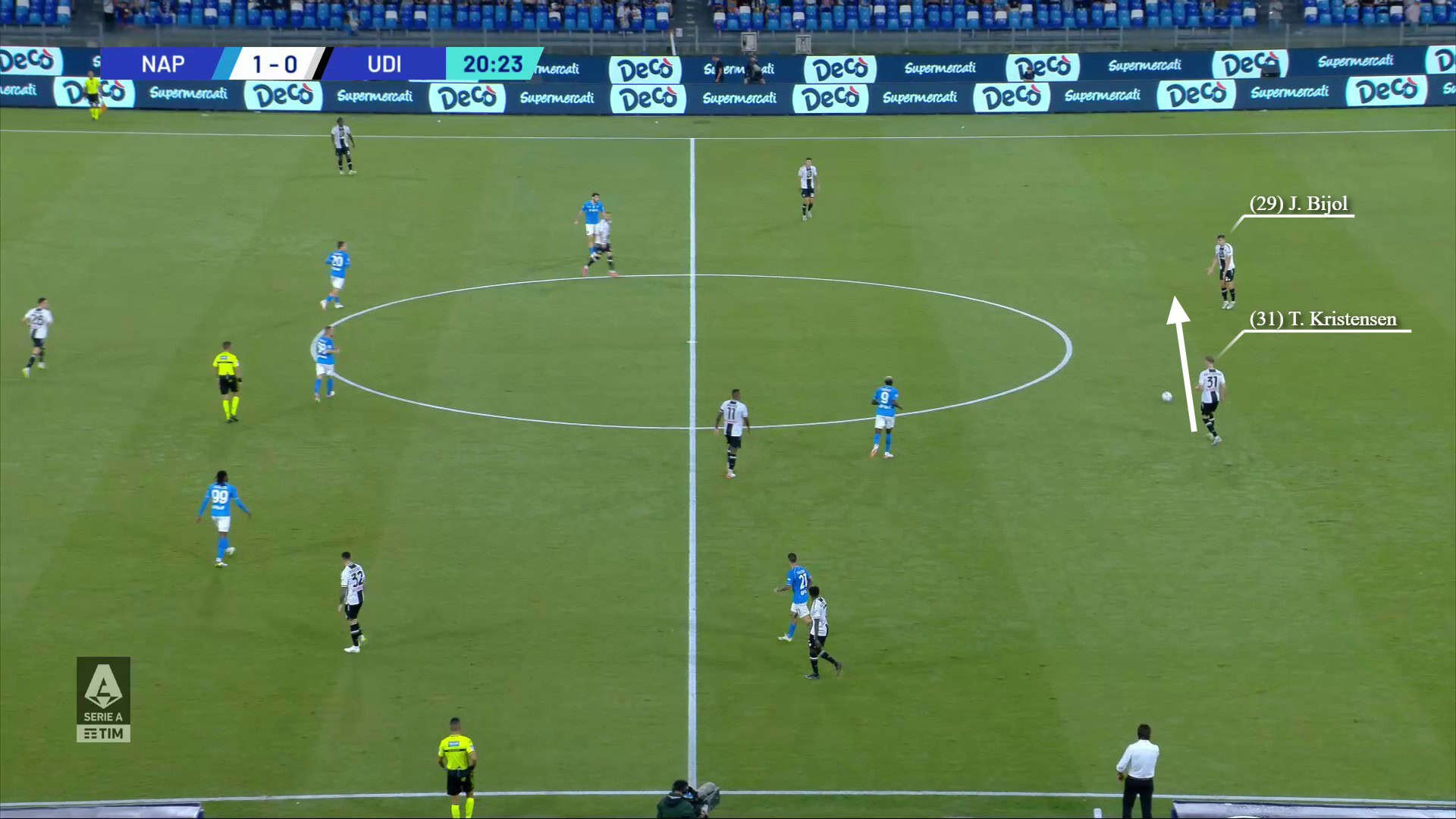
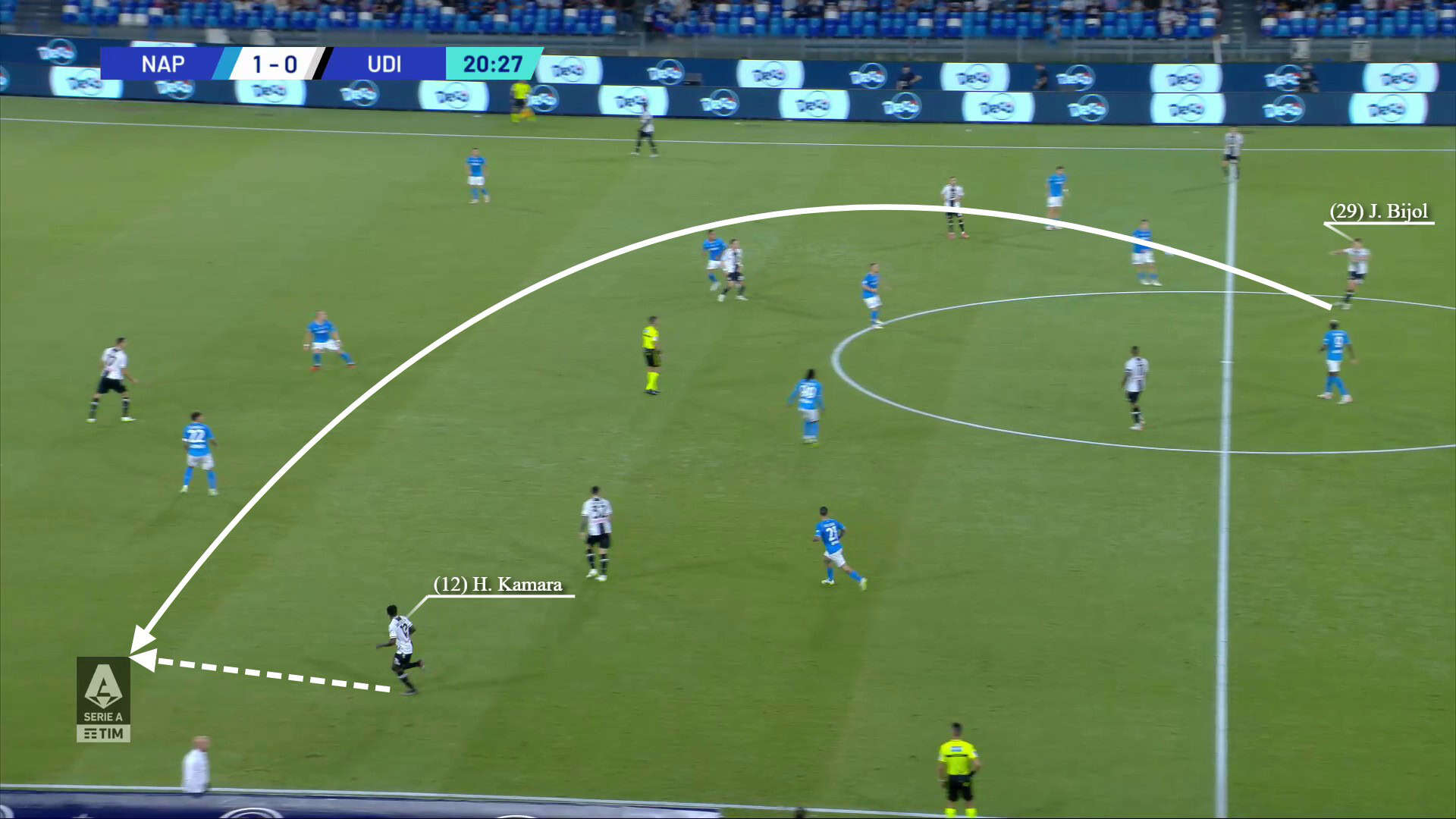
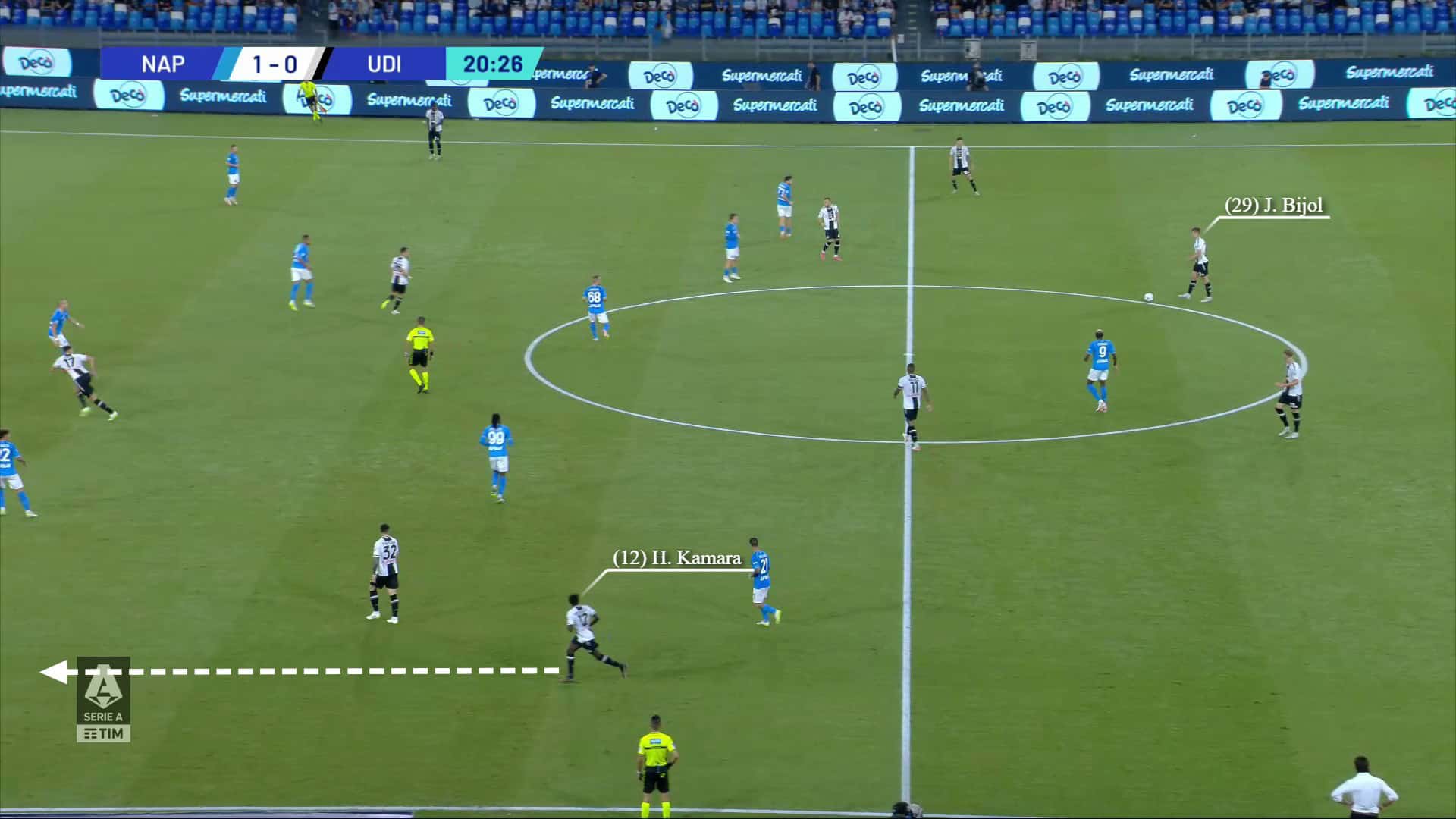
As shown in a league match against Napoli, Bijol receives a square pass from Thomas Kristensen just inside his own half.
Bijol quickly scans the pitch, noting that the Napoli midfield is compressing the central spaces to restrict passing lanes into Udinese’s midfield.
Spotting this, Bijol identifies the opportunity as Napoli’s right-back, Giovanni Di Lorenzo, steps inside to cover.
This leaves I Bianconeri left-back, Hassane Kamara, unmarked in the wide left channel.
Bijol opens his body and sets up a long diagonal pass.
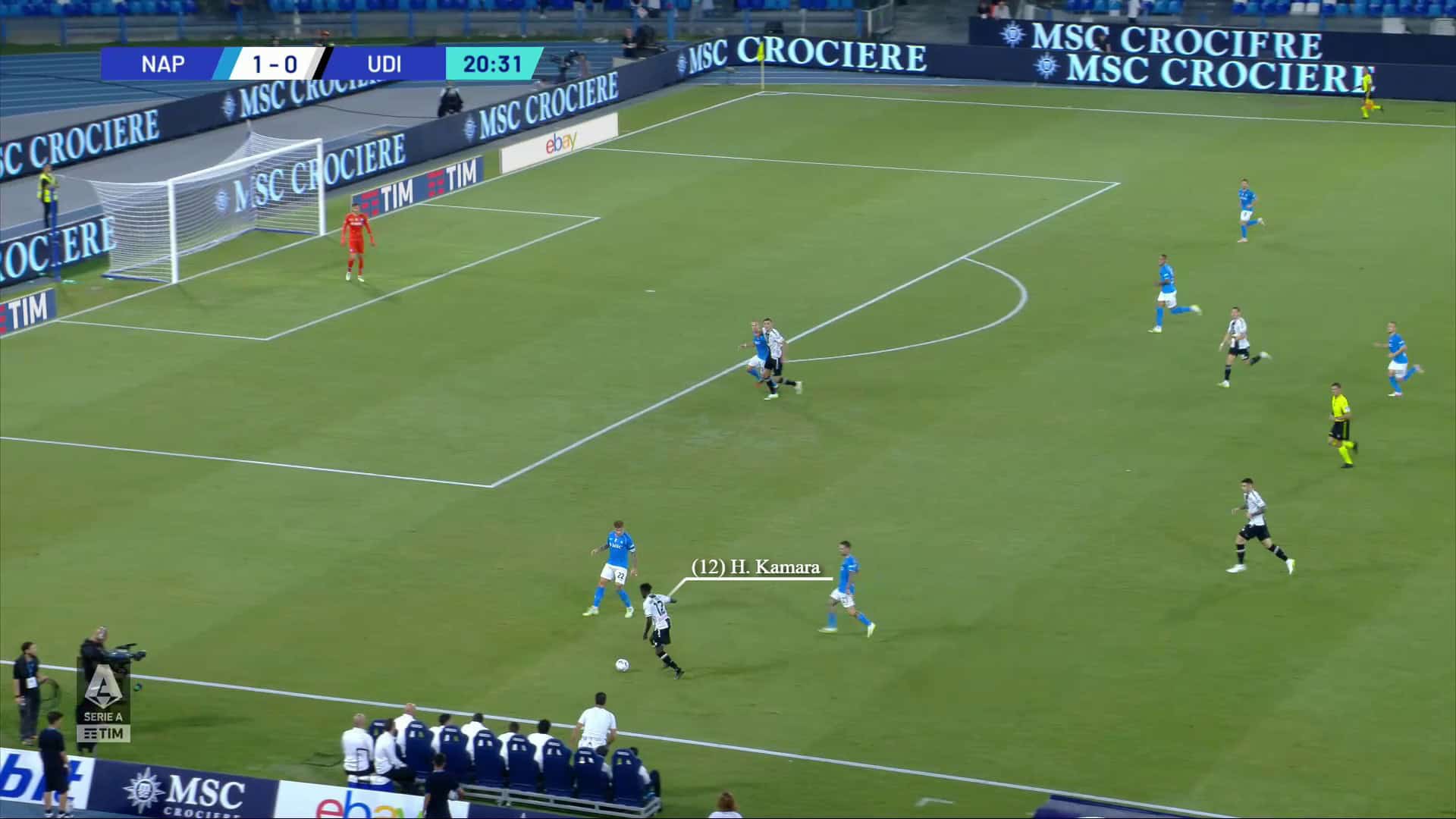
This bypasses the Napoli block and finds Kamara in stride.
This progressive pass immediately shifts the point of attack and puts Kamara in a dangerous 1v1 situation and a chance to create a high-quality crossing or dribbling opportunity in the final third.
Defensively, Bijol’s 5.53 clearances per game (71st percentile) and 3.31 aerial duels won (93rd percentile, with a 67.7% win rate) place him among Europe’s best in controlling the box and first contact.
Dominance like this directly impacts a team’s resilience to aerial bombardment.
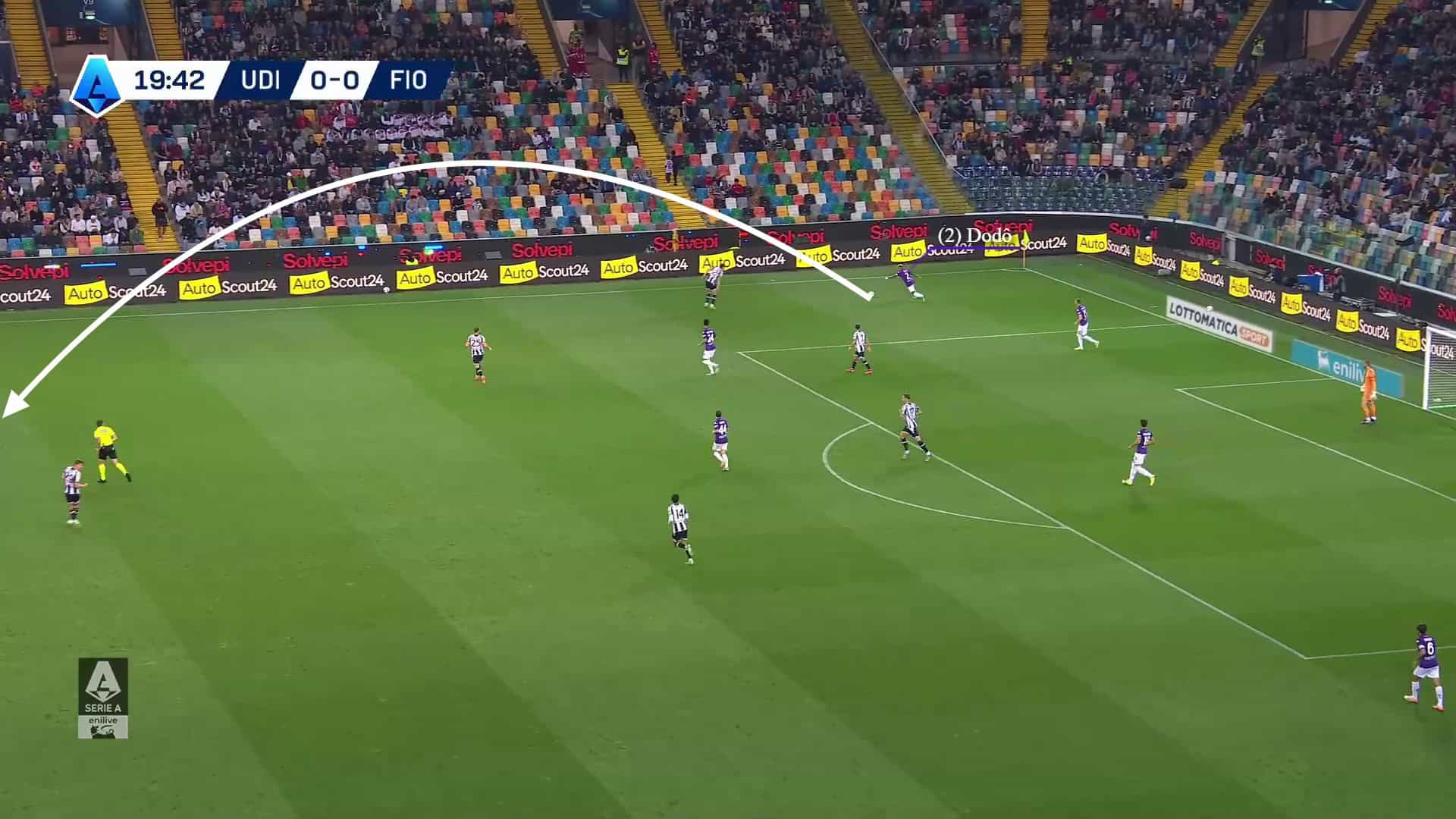
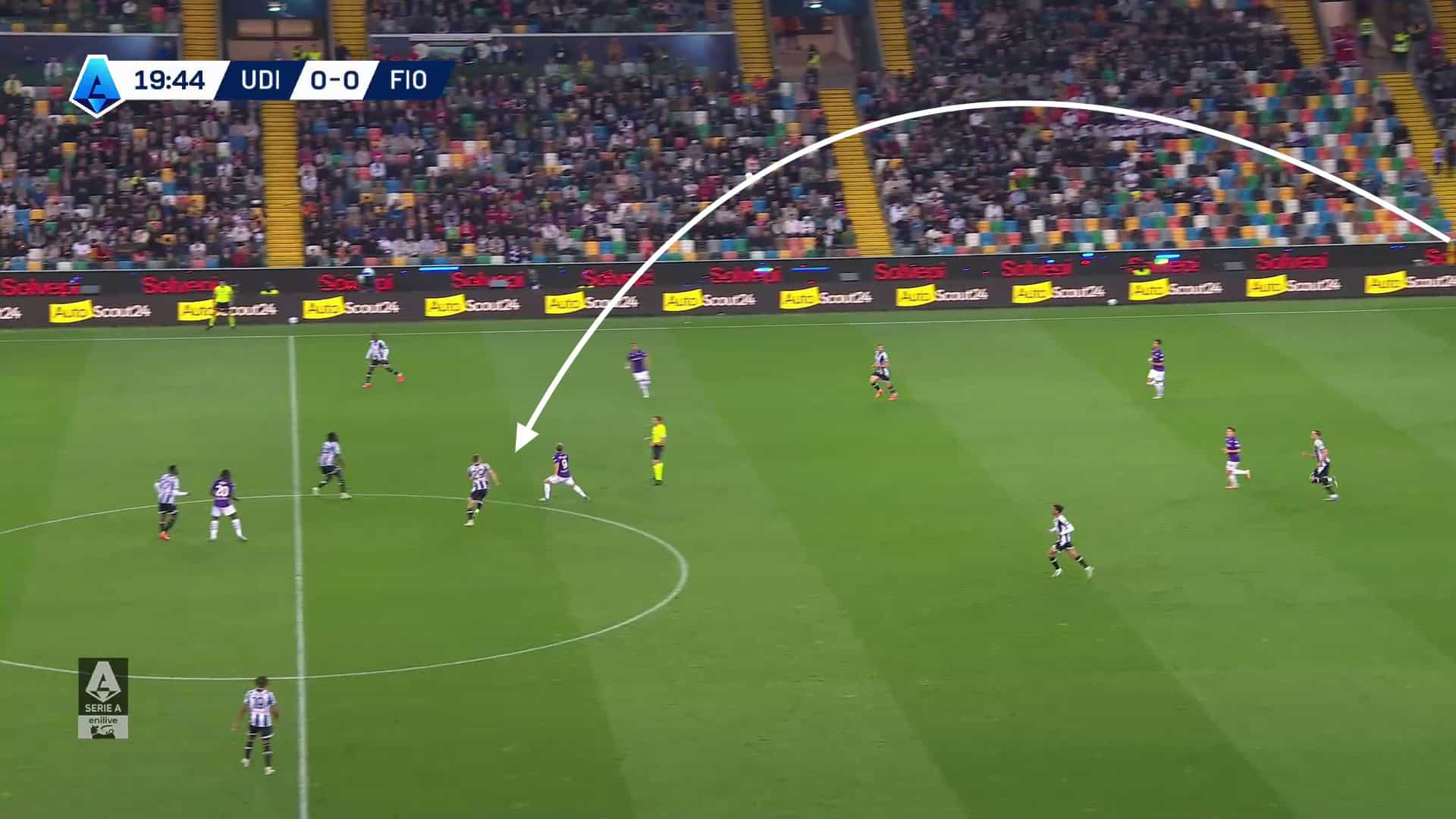
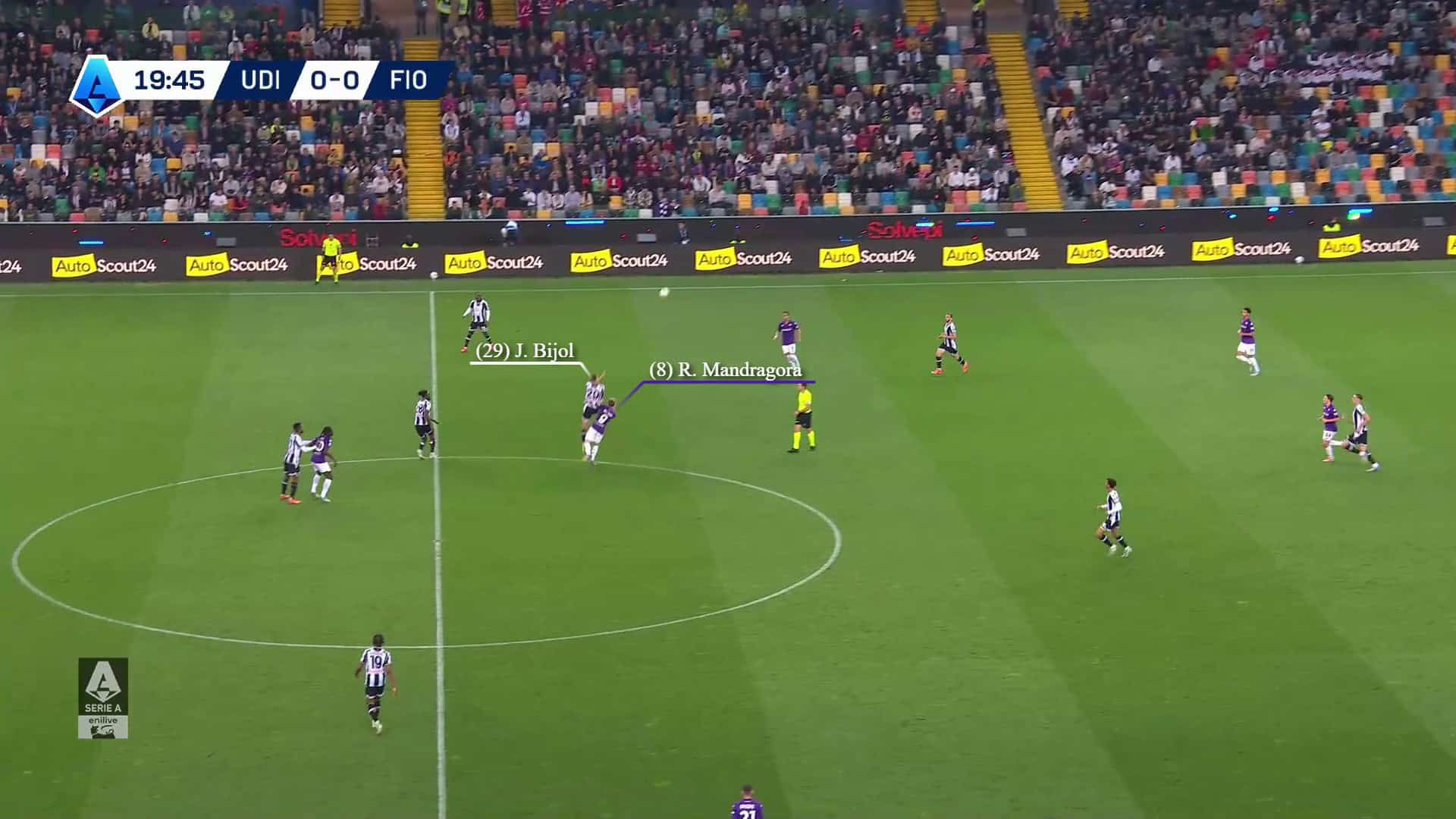
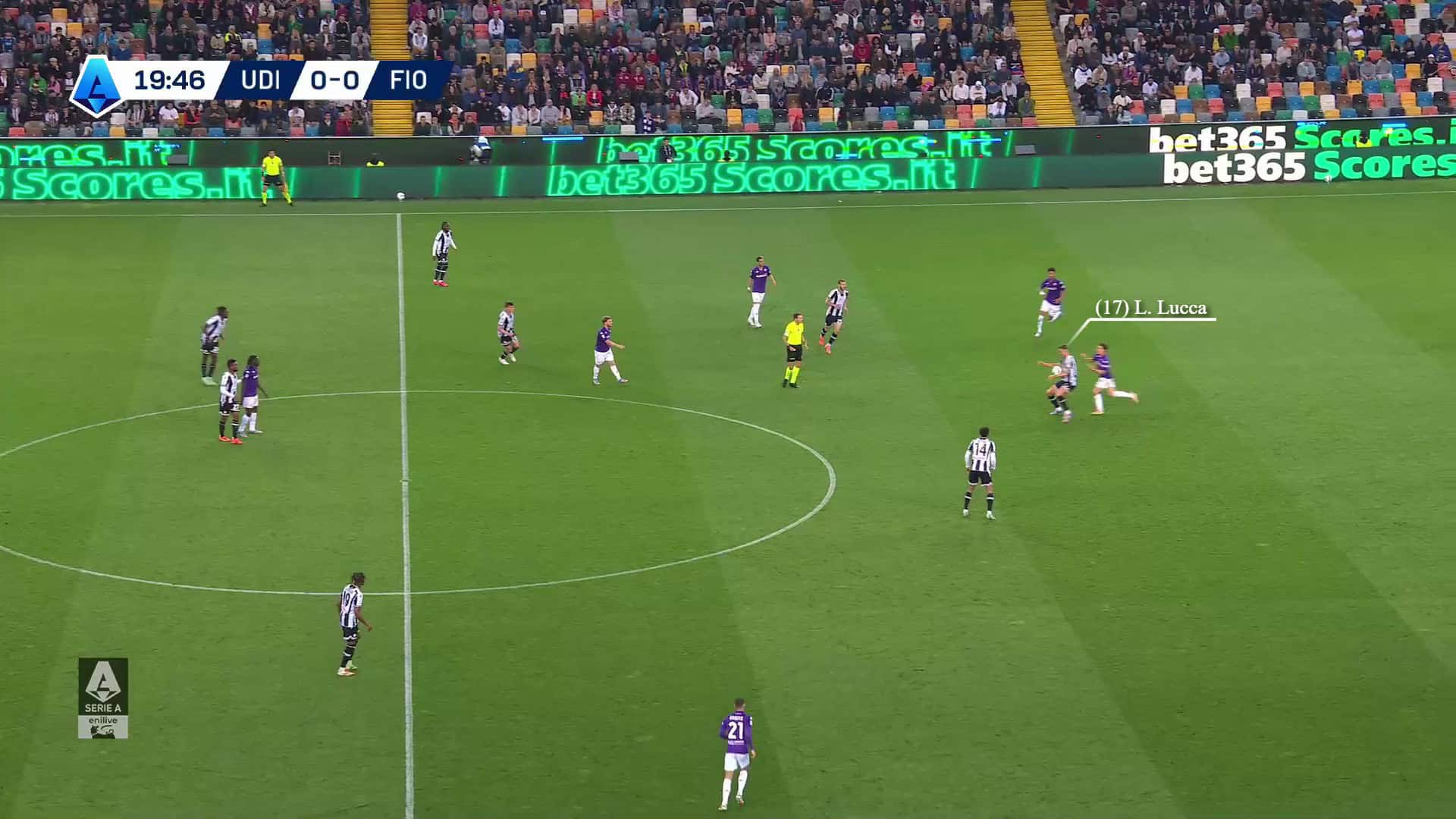
As shown in a home game against Fiorentina, Domilson Cordeiro dos Santos (commonly known as Dodô) plays a long pass towards Rolando Mandragora.
Bijol reads the ball’s trajectory and anticipates the danger despite initially being several meters away from Mandragora.
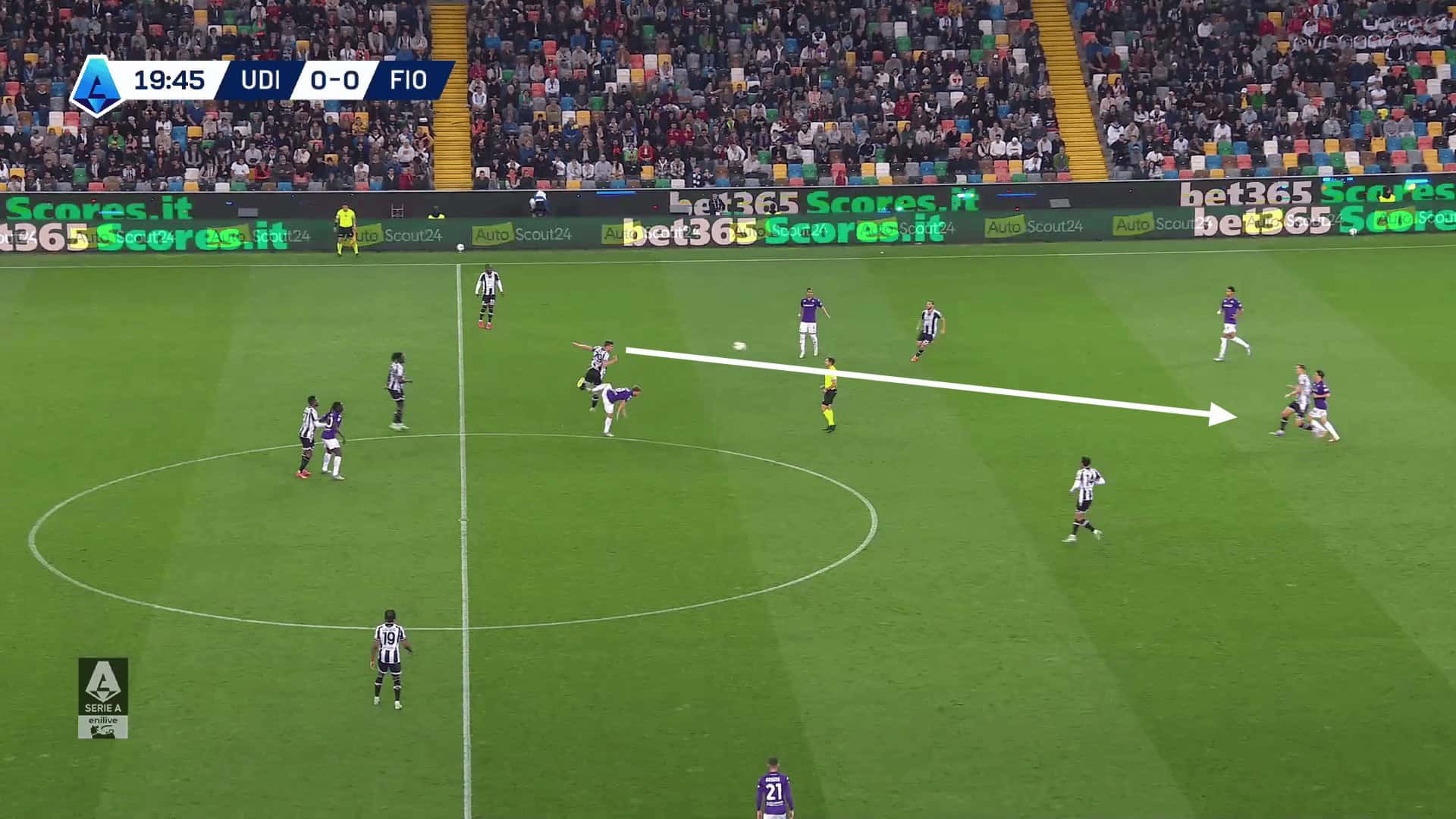
He demonstrates spatial awareness and athleticism, closing the distance quickly and assertively, timing his leap to win the aerial duel.
What makes this intervention excellent is his ability to make decisions under pressure.
Rather than clearing the header aimlessly, Bijol directs the ball towards Lorenzo Lucca, who is positioned centrally and has teammates around him.
This controlled header allows Lucca to take possession and initiate a counterattack, showcasing Bijol’s composure and understanding of how to transition defence into attack.
Jaka Bijol Box Defending, Anticipation, & Leadership
Bijol’s defining quality is his box defending.
His anticipation of reading and reacting to second balls, cutting out cutbacks, and maintaining a reasonable relation to the ball enables him to dominate in congested penalty areas.
Unlike defenders who rely on physicality, Bijol combines aerial ability with an awareness of space, allowing him to address threats before they materialise.
This is shown in his high clearance and aerial duel metrics, but more importantly, it is visible in his ability to keep defensive lines intact.
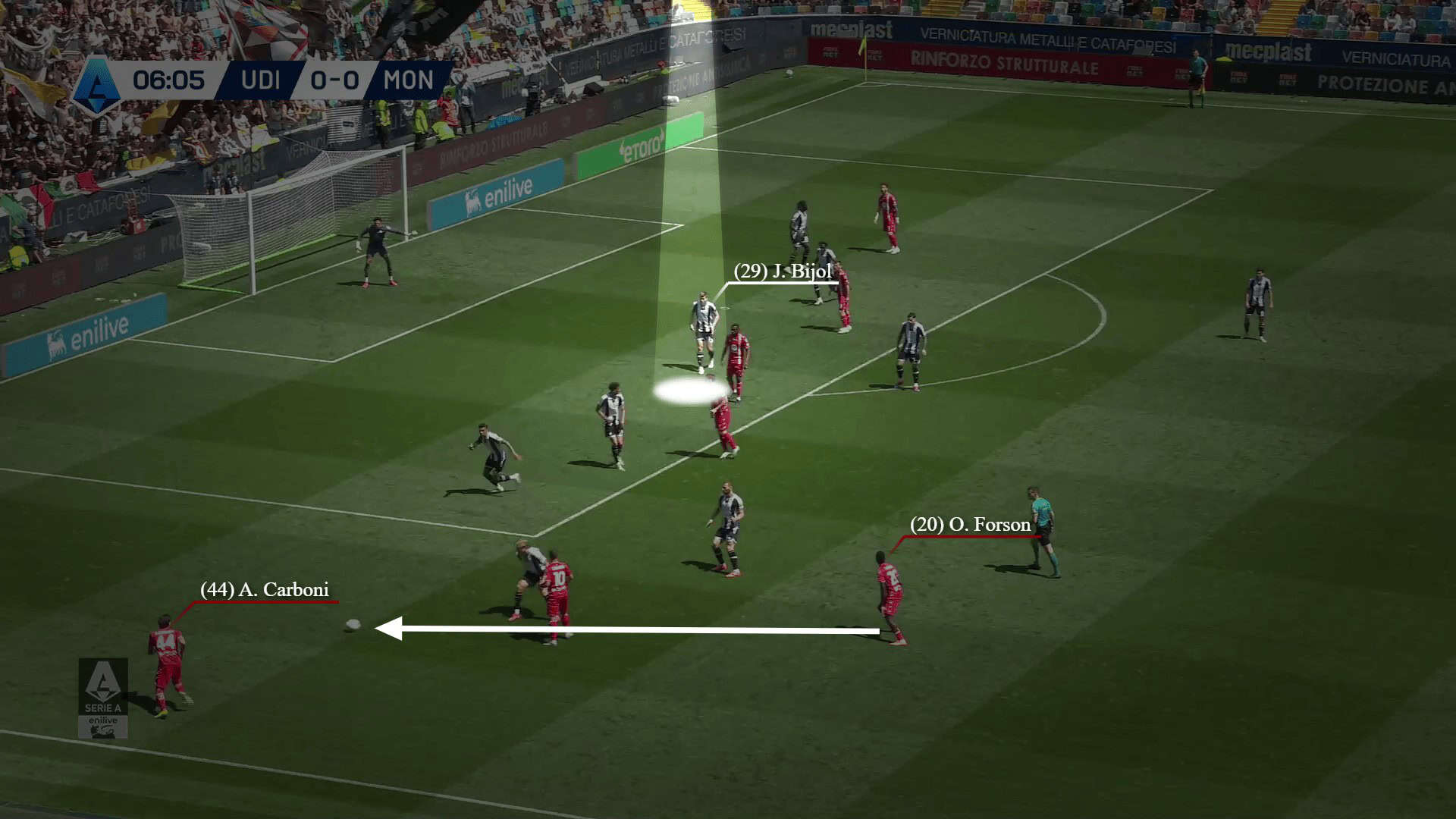
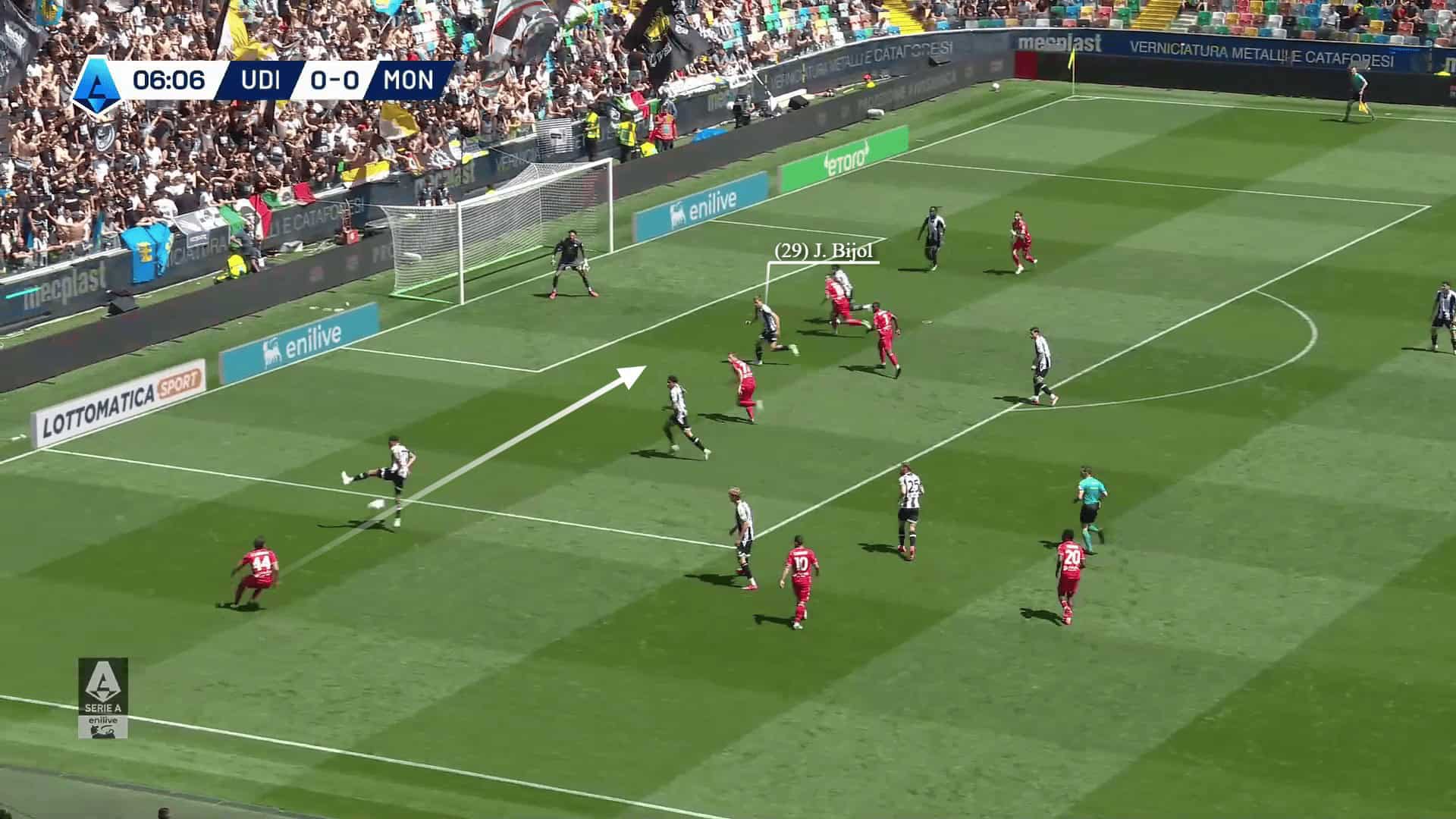
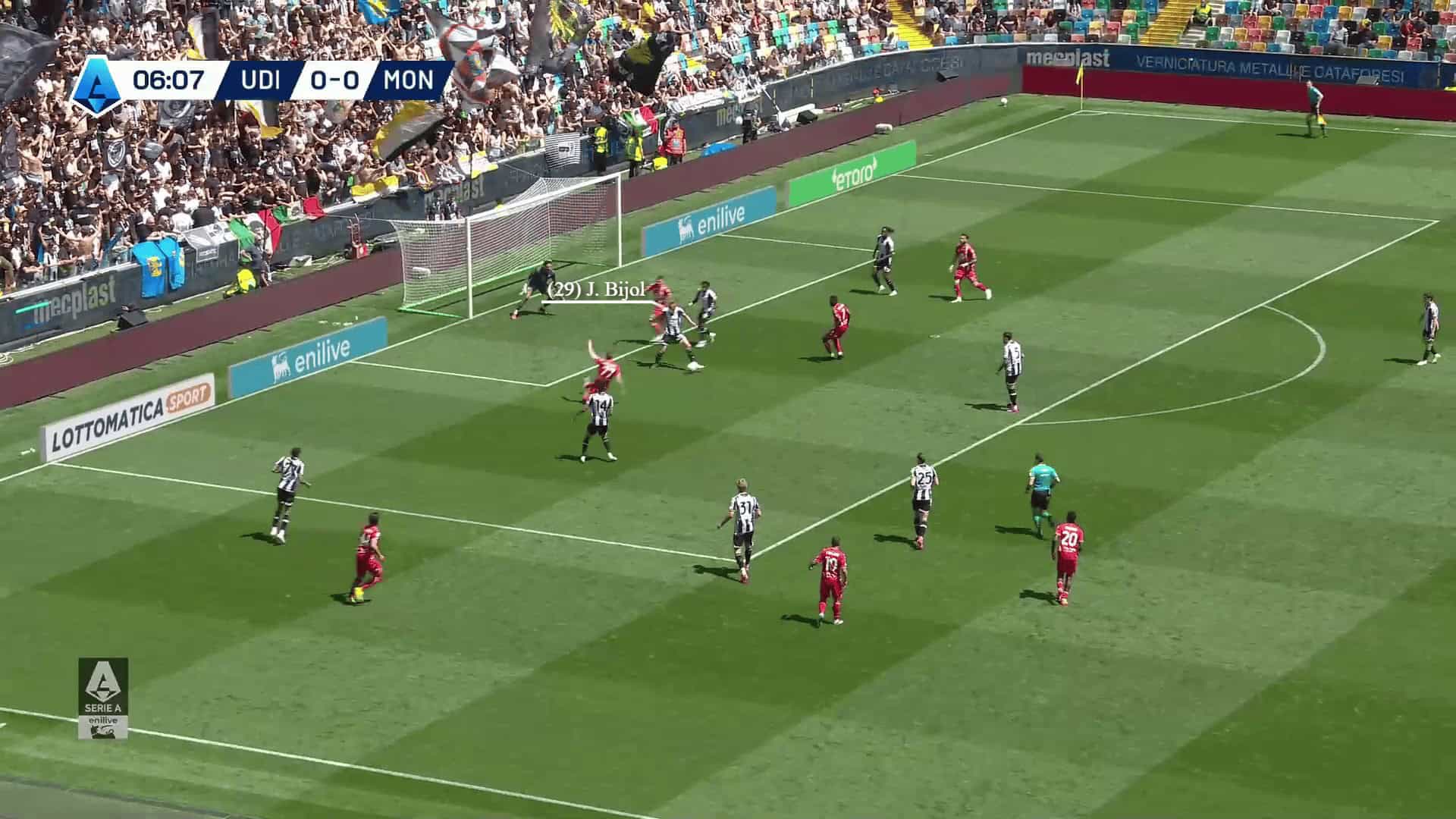
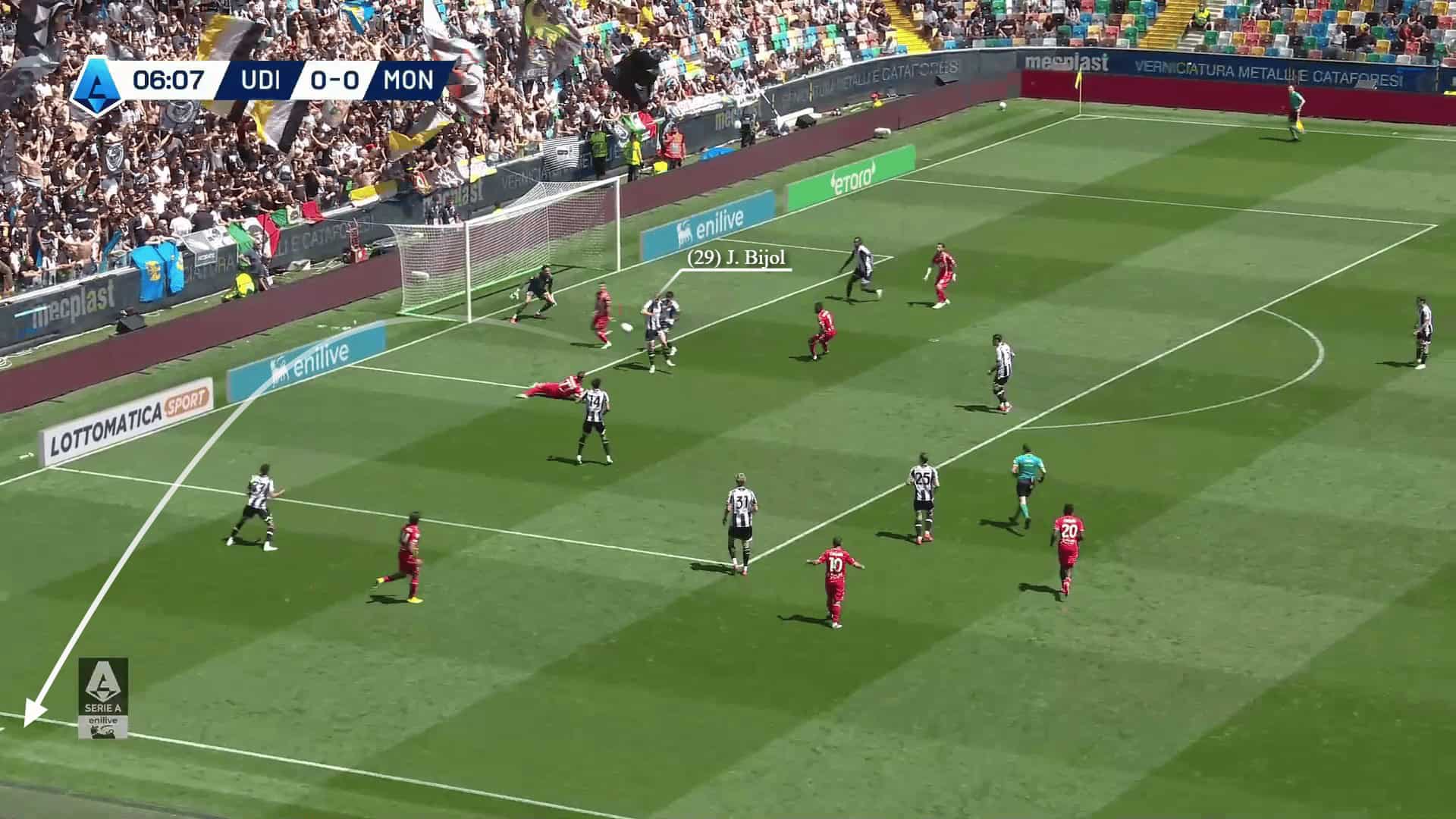
In a league match against AC Monza, midfielder Omari Forson plays a pass out wide to full-back Franco Carboni.
Carboni delivers a low, driven ball into the populated central area of the penalty box.
Bijol faces a challenging situation: he has an opposition forward in front of him, and another forward is making a run behind.
Bijol positions himself so that he can immediately step forward to challenge if the ball is played to his feet.
He also positions his body to intercept any pass that might slip through the forward behind him.
As the ball zips into the area, Bijol reacts and steps in to win possession.
He not only prevents a dangerous opportunity but also clears the ball.
His leadership and organisational skills are central to his value.
At Udinese and with Slovenia, Bijol was the clear communicator, the reference point of the line, and the adjuster of compactness.
This is not a superficial trait; it fills a vital vacuum for Leeds, who, as previous Premier League seasons have shown, have lacked consistent on-pitch authority at the back.
Bijol’s presence is helpful for his individual interventions and the collective discipline he brings.
On the ball, Bijol is pragmatic; he rarely overcomplicates his actions.
His high long-ball volume does not indicate a technical limitation, but rather a tactical tool: when Leeds’ central overloads draw opposition pressure, Bijol’s direct passing can bypass lines and exploit advanced wing-backs or inverted wingers.
In Farke’s system, which occasionally relies on Pascal Struijk‘s and Ethan Ampadu‘s launching ability to find runners like Daniel James and Wilfried Gnonto, Bijol fits as another reliable distributor from deep.
Jaka Bijol Mobility & Exposure In Transition
Bijol’s principal limitation is his lack of top-end speed and agility in open space.
While his anticipation can compensate and he can be aggressive when he reads the situation well, he is not equipped to recover in situations where Leeds’ high or mid-block is broken, leaving him isolated against Premier League forwards with pace.
His difficulty turning quickly, especially when defending large spaces or sudden transitions, could be a risk.
This would be especially pronounced in England’s more vertical, transition-heavy league.
This exposes a tactical fault.
Farke’s focus on central areas and advancing his full-backs further up the pitch can leave centre-backs exposed to counterattacks and wide overloads.
Bijol’s skill set suits a mid- or low-block defence, but he is not an ideal fit for a high line or a possession-heavy team that requires defending in space.
His 0.76 tackles won per game (33rd percentile) and 1.49 fouls drawn (10th percentile) are not weaknesses in a deep block, but against high-tempo, aggressive pressers, they may become problematic.
Passing under pressure is another area where Bijol is solid but does not excel.
He rarely makes costly errors, but he is not a consistent line-breaker in build-up.
In matches where Leeds must progress possession methodically against a low block, the responsibility may fall more heavily on the full-backs, midfielders or his centre-back partner (Strujik and Ampadu are both capable of this).
