
President Duílio Monteiro Alves significantly improved Corinthians’ situation throughout 2021.
From undoing the terrible actions of the past administration to implementing a new structure at the club, Corinthians went from the lower part of the table to a title candidate.
In addition to clearing millions from the wage budget, Duílio also signed several new commercial deals.
The most significant being the partnership with the agricultural trading company Taunsa, which allowed them to sign the former Barcelona and Tottenham player, Paulinho.
Other stars such as Willian, Giuliano, Roger Guedes, and Renato Augusto have also been brought in, remarkably strengthening the squad.
Despite having a very strong squad, Corinthians were still not impressing under the previous manager, Sylvinho.
The Brazilian’s formation-based tactics had far too many weaknesses, most notably the inability to create quality chances.
At the beginning of this year, Duílio decided to make a change and bring in the Portuguese Vitor Pereira.
The appointment was a surprise, as Pereira was heavily linked with the Everton job and still had opportunities in Europe.
The Portuguese is a certified winner, having won league titles in three different countries.
His time at Porto was the most impressive, during which he lost only one league match in 68 played.
Vitor Pereira will look to hit the ground running as the Copa Libertadores and Brasileiro Série A start next month.
In this tactical analysis, we will examine Pereira’s tactics throughout different phases of the game.
We will also take a look at how, if possible, to play Corinthians’ five stars together under Pereira’s system.
Vítor Pereira Style Of Play
Pereira’s teams are defined by their structural organisation and movements.
The directness of play and tempo are largely inconsistent and dependent on opponents and situations.
As a result, certain indexes, which are meant to identify a style of play, are consistently inconsistent.
From match to match, metrics fluctuate, showing their flexibility and adaptability.
This must not be seen as either good or bad but simply different.
They adapt to the opponent and what the situation calls for.
Whether they must play direct football and exploit spaces or patiently retain possession until a situation arises will depend on the situation.
A few key metrics below highlight this constant change in mentality.
In five matches, the match tempo has gone from 13 to 18.
Average passes per possession also display how they may patiently retain possession at times (6.01) or be very direct (2.53).
Similarly, the long pass % will change accordingly.
In the match where they averaged 2.53 passes per possession, 14.29% of their passes were long.

At any rate, Pereira’s teams still go about their business in a structured and organised manner.
They have consistent patterns of behaviour and movement that allow for a larger organisation and a defined strategy.
More specifically, they are very consistent in their possession strategy.
Throughout the three stages of possession (construction, progression, and creation), they employ similar behaviour strategies, attacking in a dynamic and dangerous manner.
In construction or build-up, they organise in a 3-2-5 structure.
The starting formation does not need to contain three centre-backs; this can be achieved in other ways.
We will explore this concept further when we discuss how he may structure Corinthians.
Whereas a single pivot is preferred for building through the middle, a double pivot often sees teams building through the wings and half-spaces.
Pereira also likes his wide centre-backs to be very attacking, emphasising this wide approach.
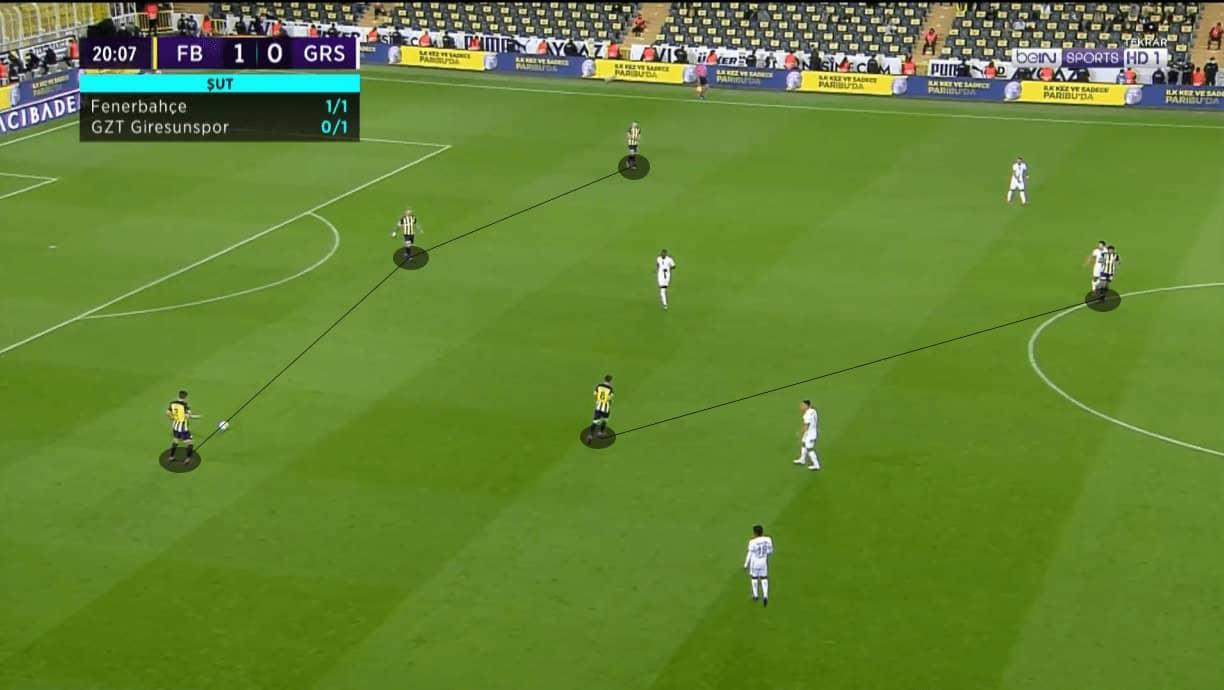
As they looked to build through the sides, the centre-backs positioned themselves in the wide channels to create numerical superiority.
The double-pivot will be key in moving the ball from side to side and providing support in these areas.
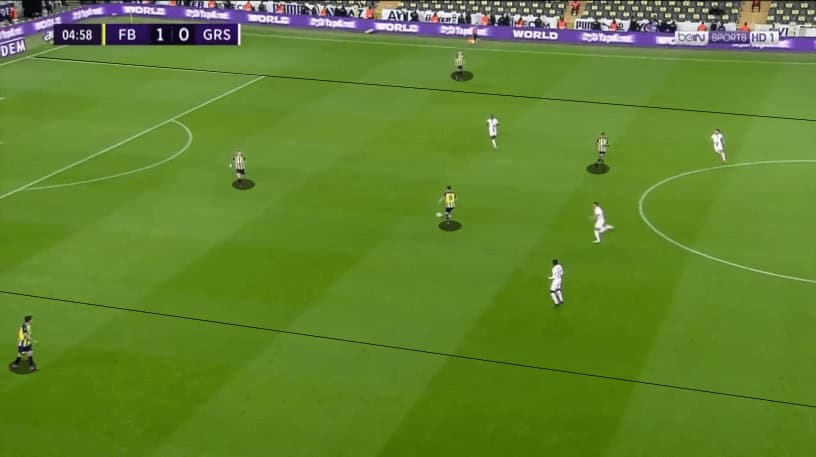
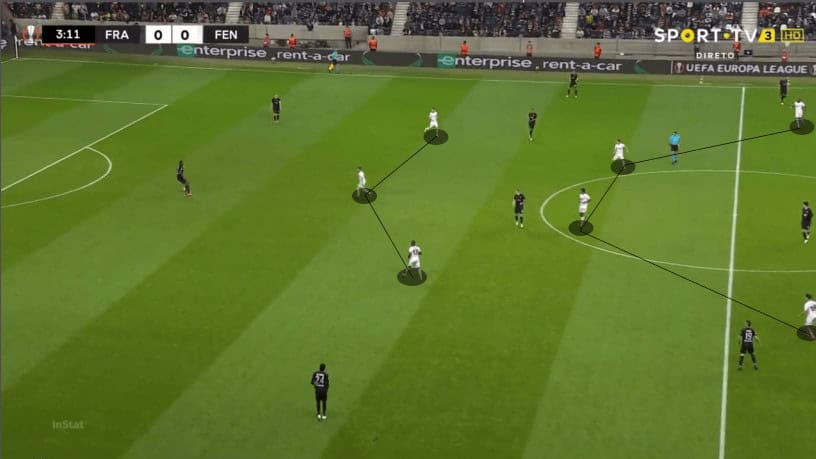
Below is an example of Fenerbahçe trying to build out of the back.
The ball is played out to the centre-back, who is in the wide area.
The left wing-back provides support along with one of the number 10s, who is dropping in.
These wide overloads are essential for combining and beating the press quickly.
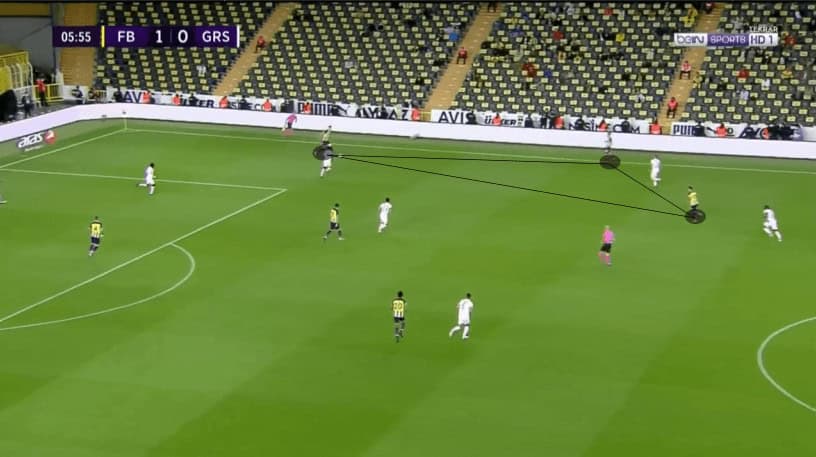
Now, with four players, Fenerbahçe again looks to construct through the sides.
One of the midfielders in the double pivot will drift wide to provide support from inside.
One of the 10s will also drop deep to support, along with the wing-back.
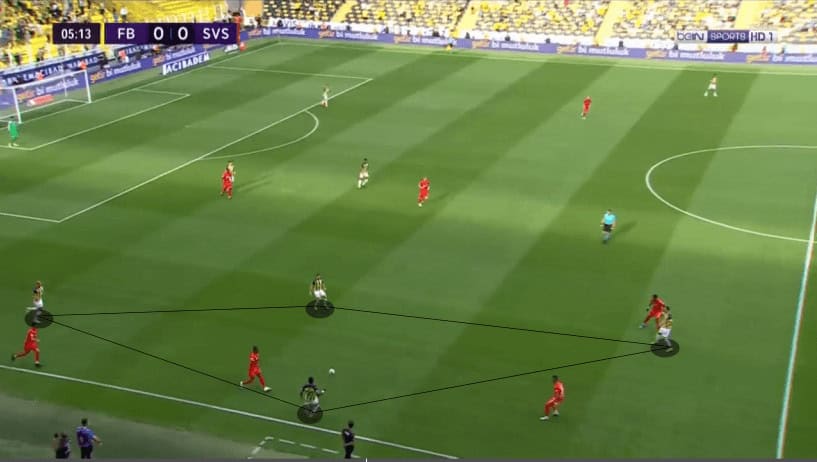
This creates a diamond shape with optimal passing angles.
This build-up phase approach is consistent with Fenerbahçe and should be continued in Corinthians.
Vítor Pereira Progression
Similar to their approach in the construction phase, Pereira’s Fenerbahçe looks to progress through the sides.
The progression phase is when the team has possession and seeks to advance from the middle third into the final third.
This is essential as effectively breaking into the final third will increase the quality of chances created.
The image below describes the distribution of positional attacks in one of Fenerbahçe’s matches.
100% of their expected goals came from wide attacks.
A total of 27 wide attacks against three in the middle.

In this phase, Fenerbahçe maintain their starting 3-4-2-1.
However, the wing-backs will often provide depth in addition to width, which will see their position much higher.
This organisation again prioritises the wide areas, as aside from the centre-back and centre-forward, there is no player in the central lane.
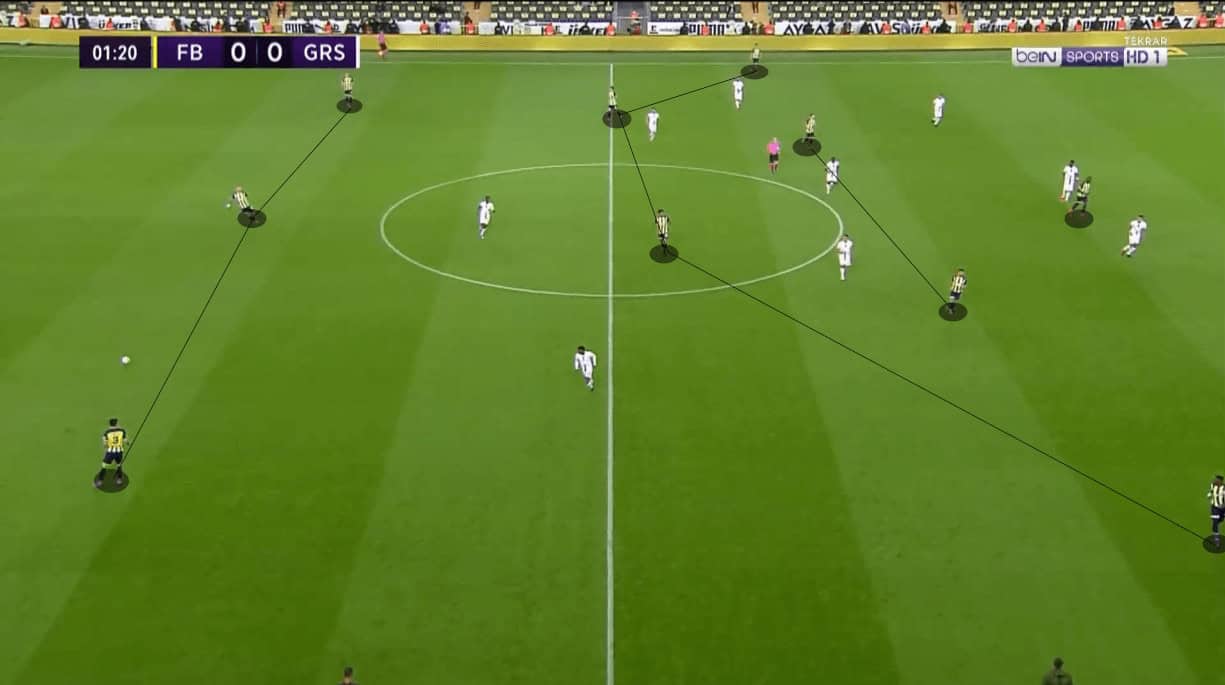
The two number 10s at Fenerbahçe were very creative players: Ozil and Rossi.
As the centre-backs looked to break lines and move through the zones, the two were key.
Their movement to drop into the half-spaces and provide options was essential.
The way Fenerbahçe are organised, it is difficult for the opponent to track these players, so they often find themselves in great space.
This was the first pattern as they looked to break defensive lines.
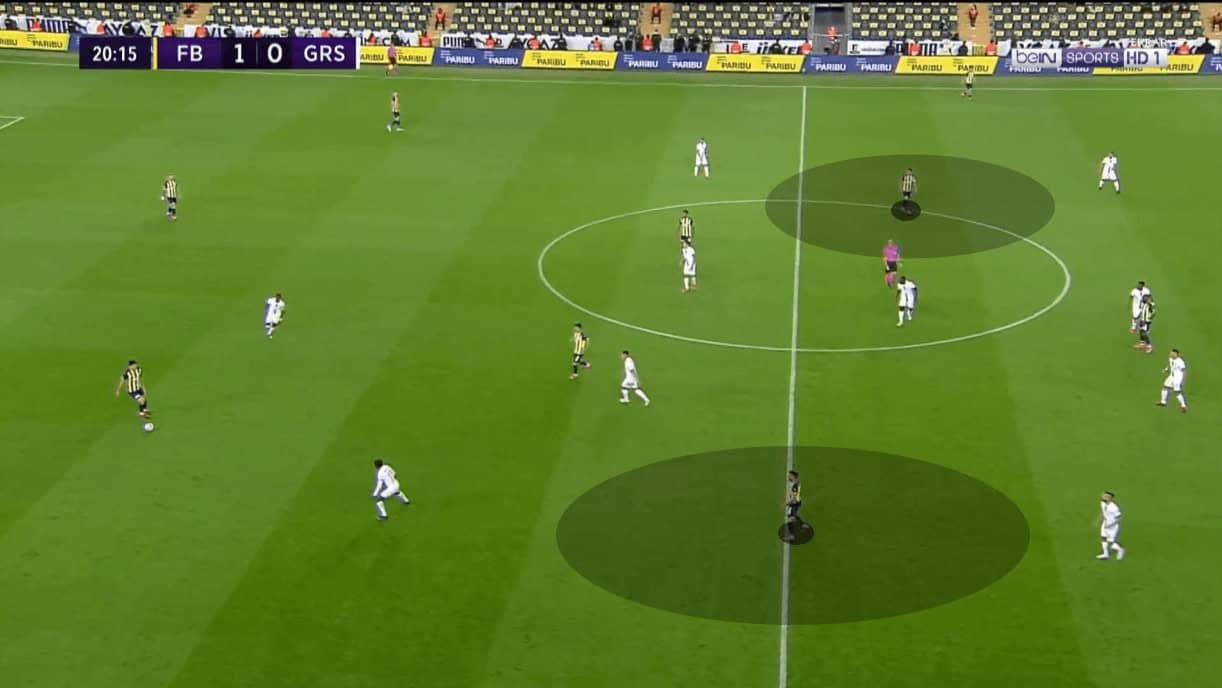
Additionally, there are some variations in movement and positioning that will create advantageous situations.
Most of them are targeted at wide areas.
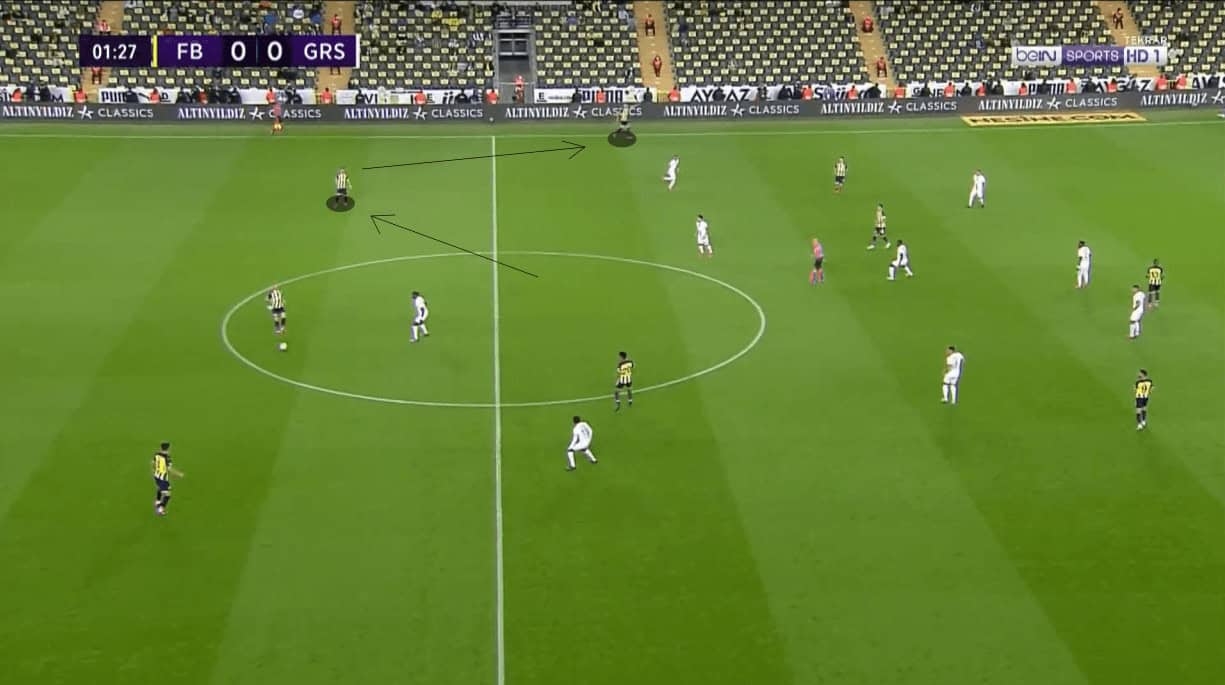
Commonly, midfielders may drop into wide areas to cover for an attacking fullback.
However, in Fenerbahçe, the midfielder will move wide to cover for an attacking centre-back. In the image below, Szalai pushes up high while one of the two midfielders drops to provide cover.
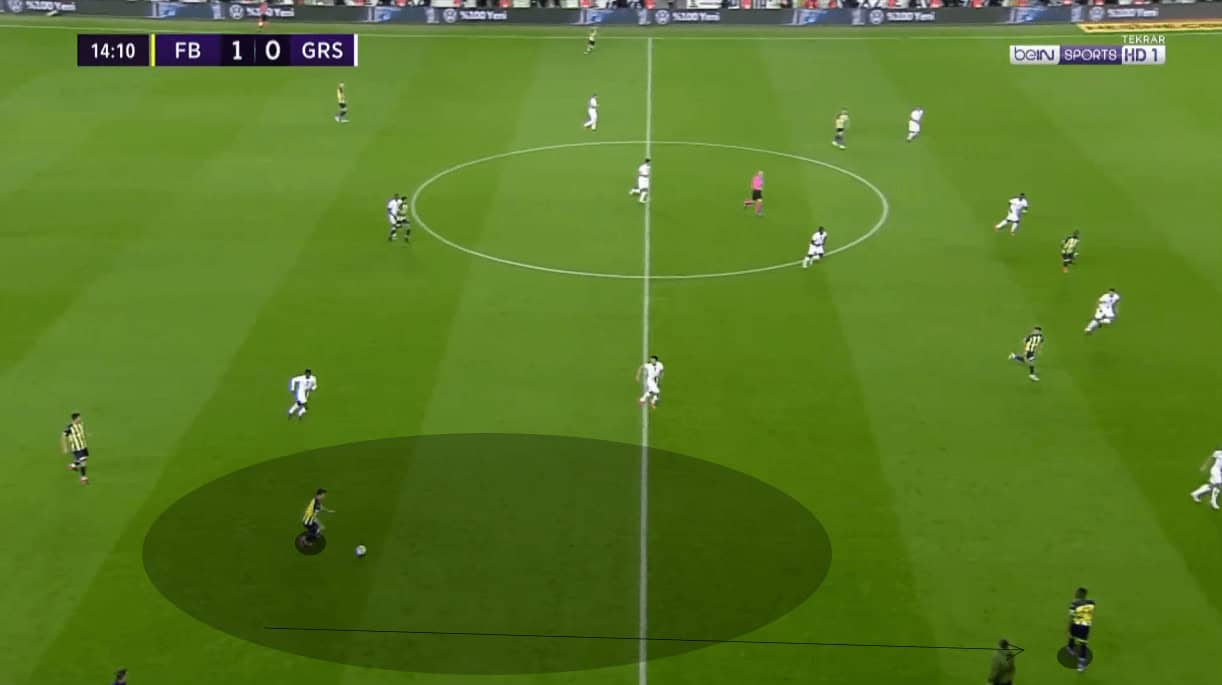
Another common tendency is for the central midfielder to move into the wide channel to create.
In this one, the centre-back provides cover while the midfielder drives into space to attack the wings.
The wing-back will be pushed higher to create this space in the middle third.
Many of these variations are ways to create superiority or space in the wide channels or just simply focus the attack in that area.
Vítor Pereira Attack
As they enter the final third, Vitor Pereira’s teams maintain a similar strategy with similar variations.
Attacking mostly through the wide areas, they deliver many crosses.
The key is to get into good positions to deliver these crosses and make good runs into the box.
This is often achieved by combining the wide channel to reach the desired delivery area.
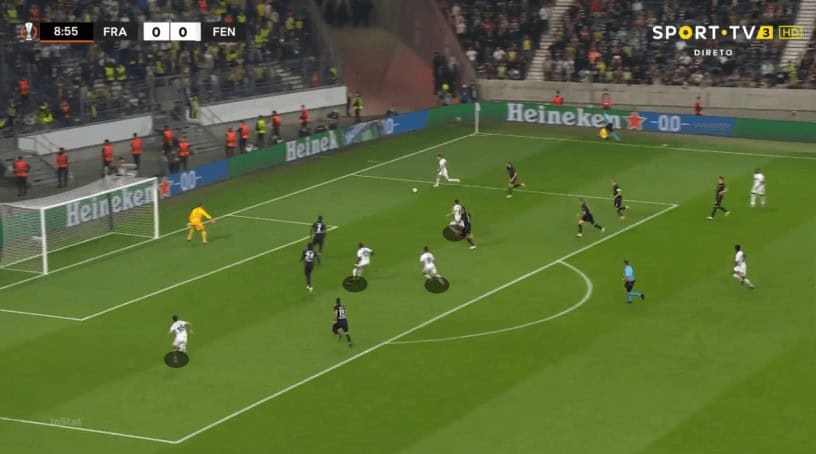
Below, the wing-back plays a progressive pass further into the channel for one of the 10s.
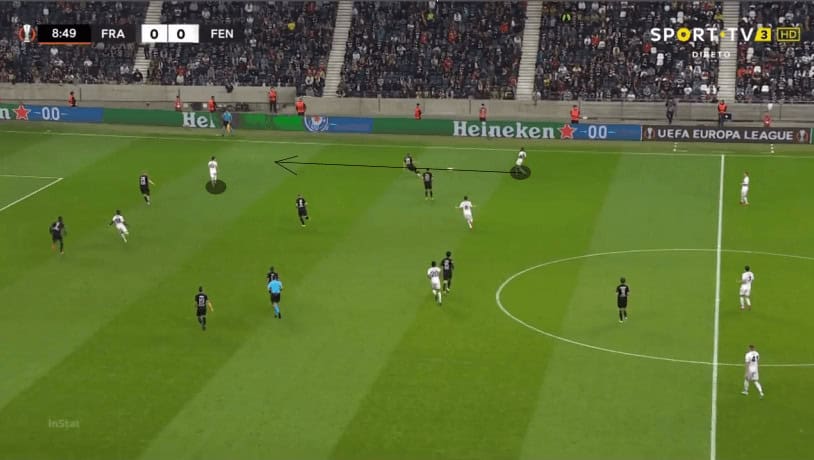
After being pressured, the attacking midfielder plays it back to the wing-back.
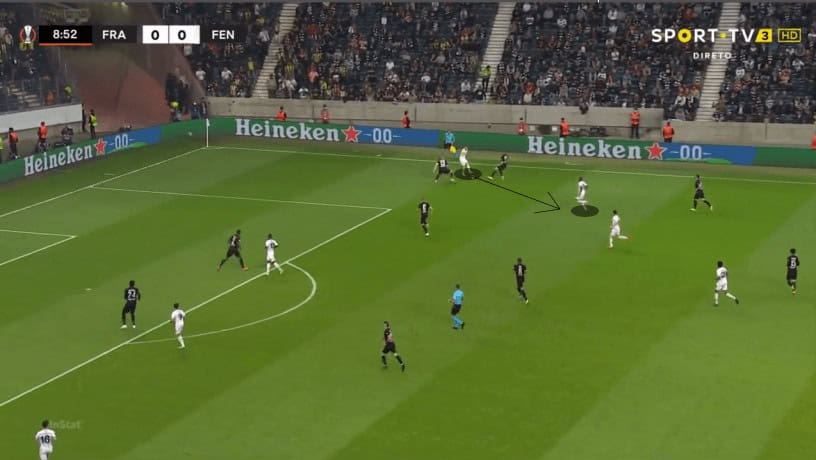
The wing-back then completes the one-two and plays the attacking midfielder into a very dangerous area.
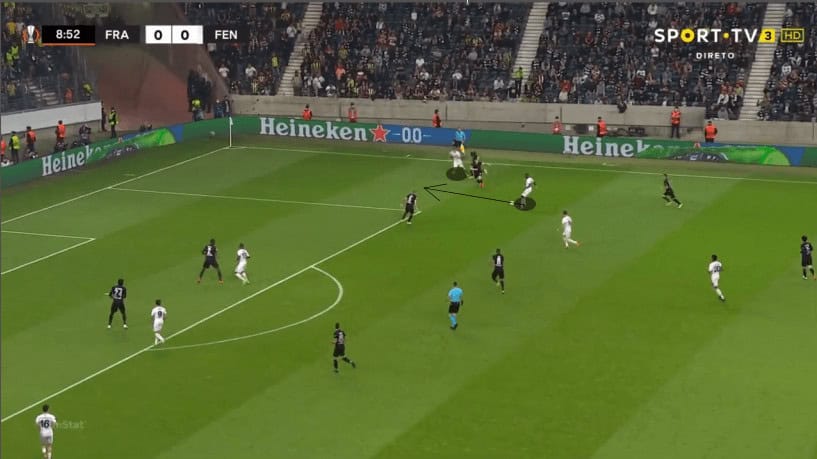
As this develops on the wing, four players are able to make very good runs into the box.
The attacking midfielder gets into an optimal delivery area and is in a position to deliver a dangerous low cross to a number of good options.
In the match below, Fenerbahçe scores their first goal from a cross after a quick combination.
After a few rotations in position, the three players can complete a quick passing combination, putting the midfielder in a great position to deliver a dangerous ball into the box.
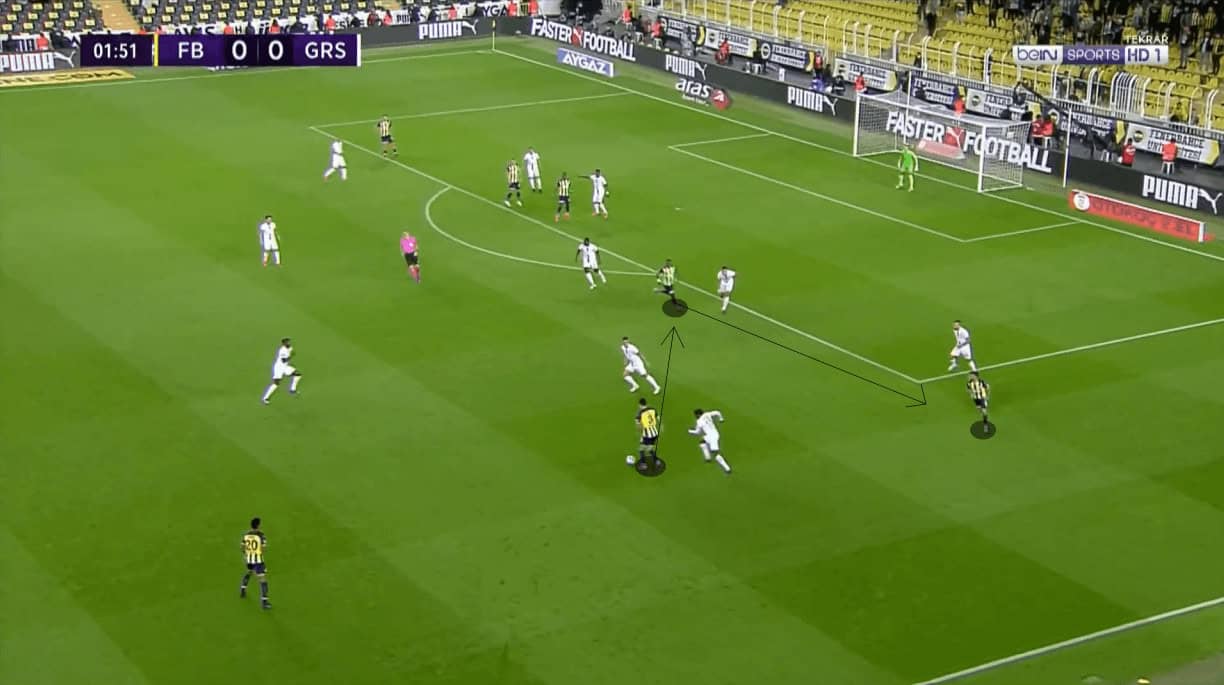
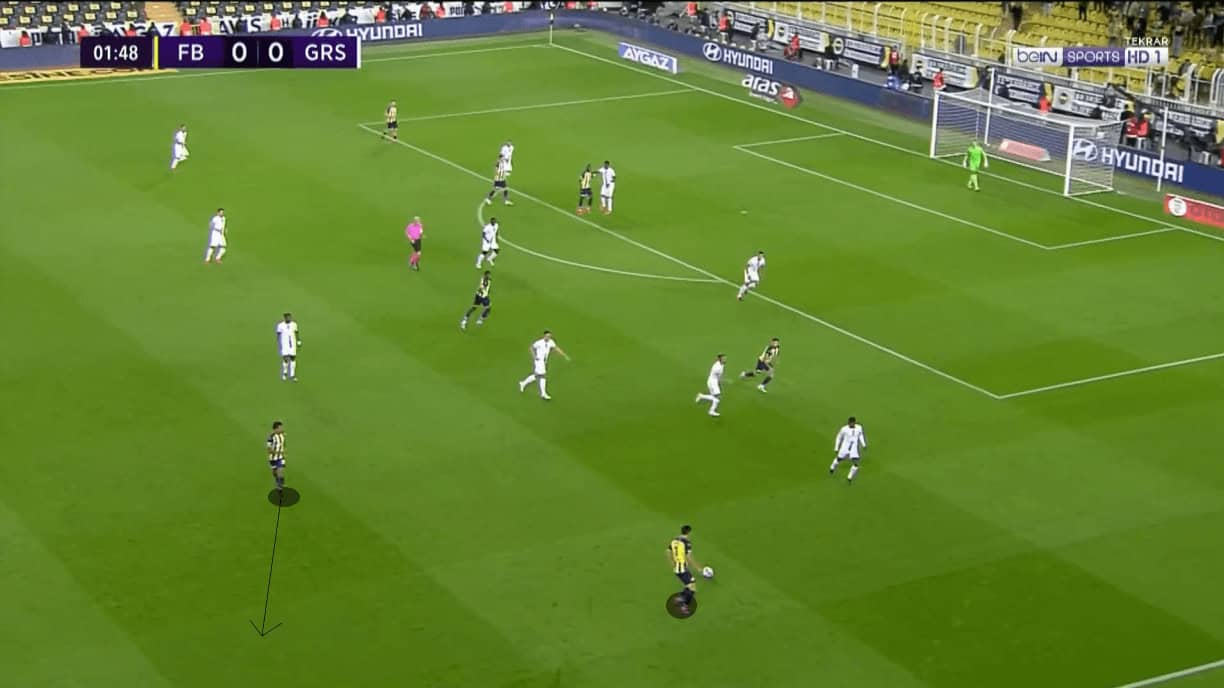
In this same play, we can visualise a few of their behavioural patterns in the final third.
Wide overloads with attacking centre-backs are a key part of Pereira’s system.
As the wing-back dribbles inside, the right centre-back makes the overlapping run that will later allow them to combine for the first goal.
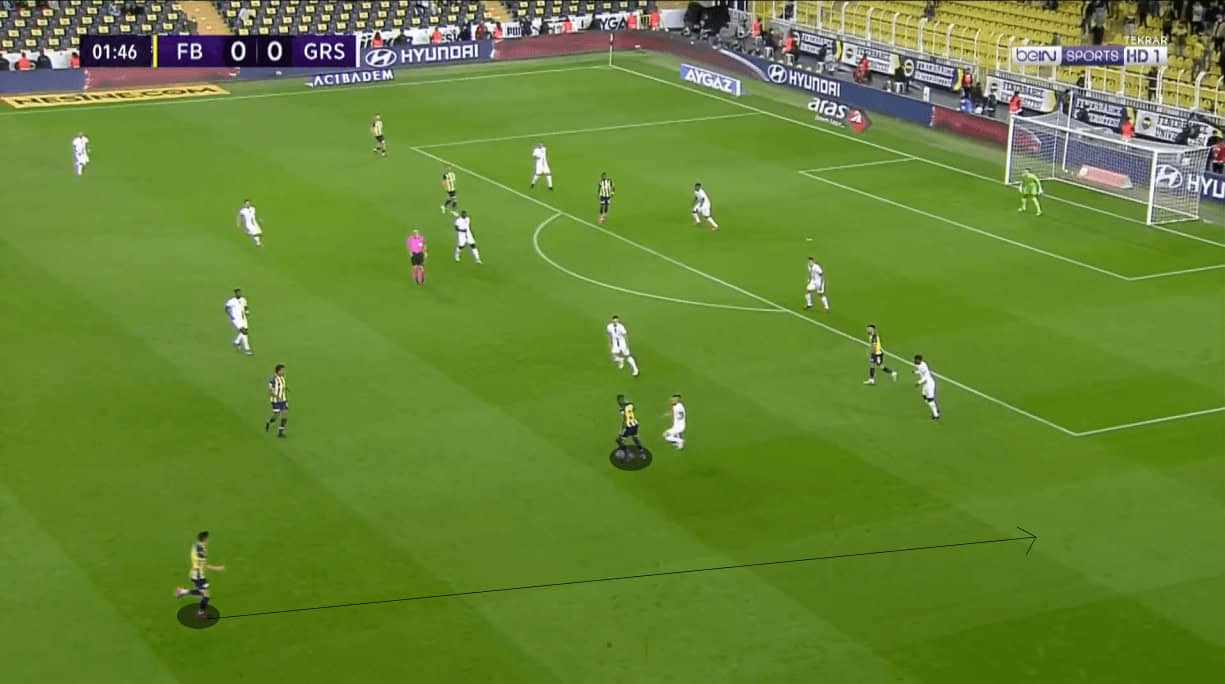
As the right centre-back advances into the final third, the defensive midfielder quickly drops into the space behind to cover for him.
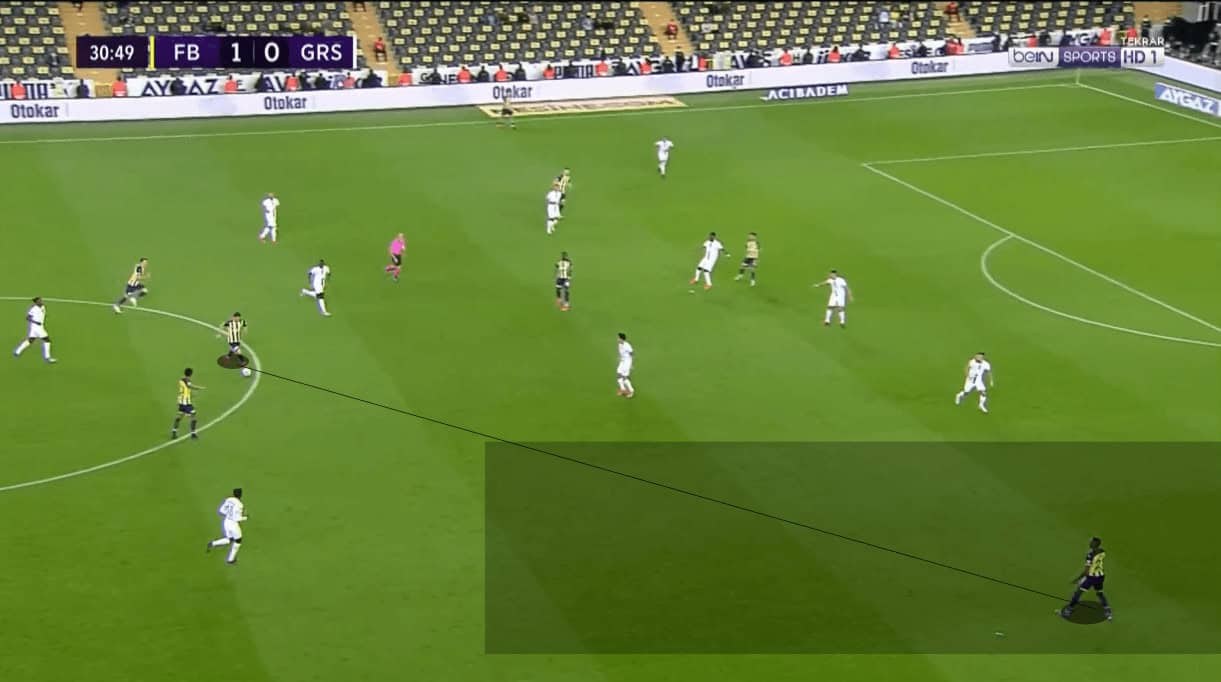
In addition to combinations and wide overloads, Pereira’s teams have another strategy.
After attacking through one wing and drawing the opposition’s entire defensive block over, the quick switch of play will often create a lot of danger.
As Pereira likes to have wide players on both sides, constantly maintaining width, there is usually a player with plenty of space to attack.
In the image below, the midfielder quickly plays the switch into space for the right wing-back.
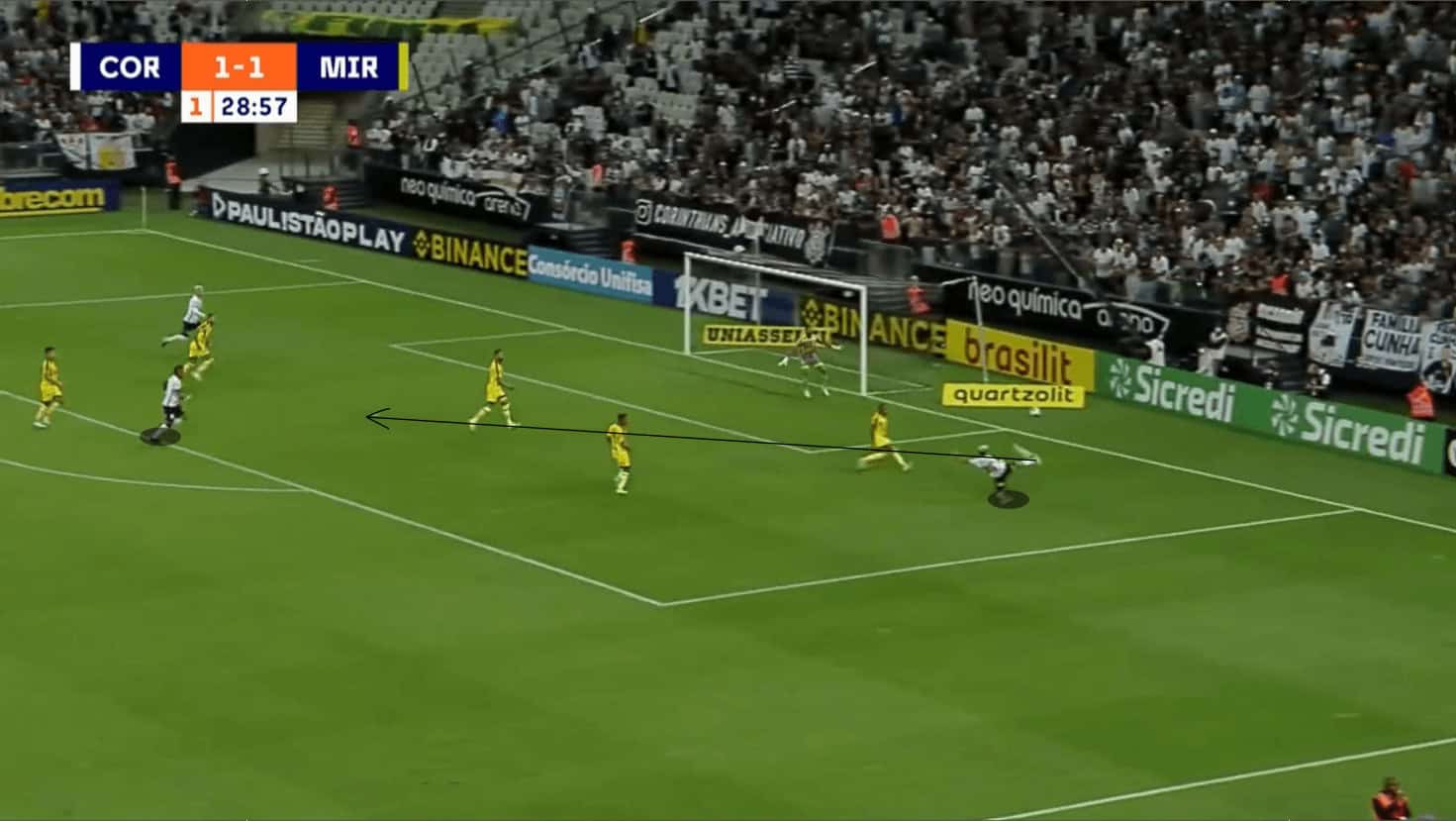
Similarly, Corinthians scored a beautiful goal a few weeks back against Mirassol.
After focusing the attack on the left-hand side, Renato Augusto shows to provide a way out.
As soon as he receives the ball, the right-back, Fagner, starts making a deep run into space.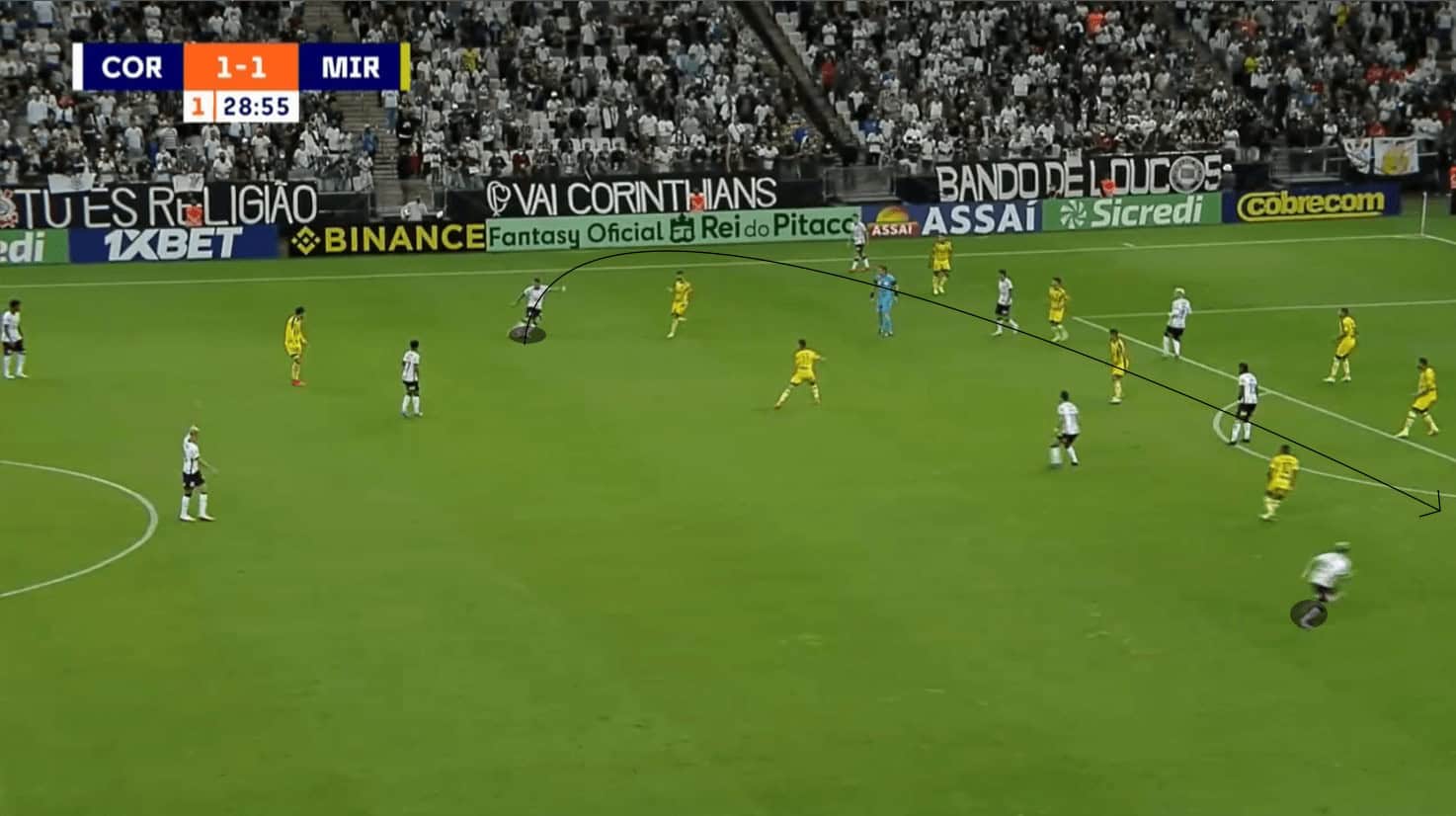
Renato Augusto plays a perfectly weighted ball for Fagner, who is able to stretch and cut it back for Paulinho, who arrives late into the box for the finish.
Vítor Pereira Defensive structure
Usually, the PPDA is a good indicator of a team’s defensive behaviour.
Similar to other metrics, however, Pereira’s PPDA at Fenerbahçe constantly varied.
Sometimes as high as 14, sometimes as low as six.
At any rate, Vitor Pereira has never been known as an intensive, high-pressure coach.
His teams are very compact defensively.
They will press at times, but with certain triggers.
The most common one is when the opposition plays it to the side, and Pereira’s side is able to use the touchline as an extra defender.
At Fenerbahçe, the front three were the leaders of this press.
They were the ones who looked for these triggers and determined when to apply pressure.
Whether in a high or medium block, they were the first line of pressure and led the defensive structure.
Below is an example of them in a high defensive block with the front three leading it.
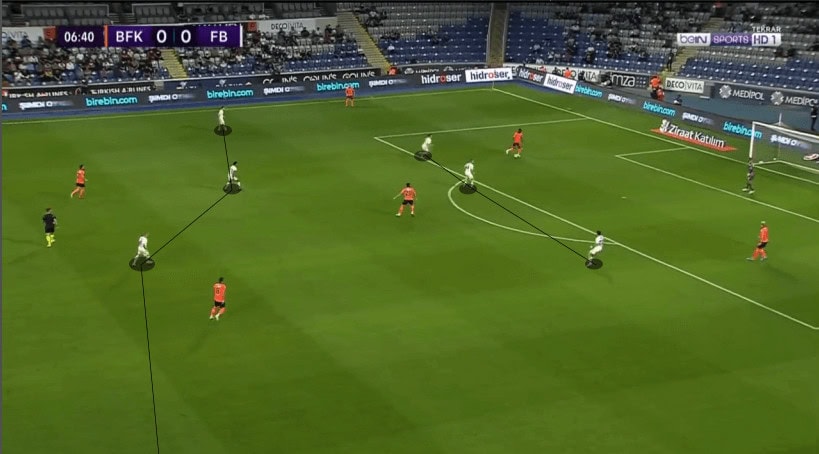
In a high block, Pereira’s team will not necessarily look to apply intense pressure.
They remain compact and look to keep the opposition from entering the middle third.
As they are in a higher block, their shape will be 3-4-3, with the wing-backs higher.
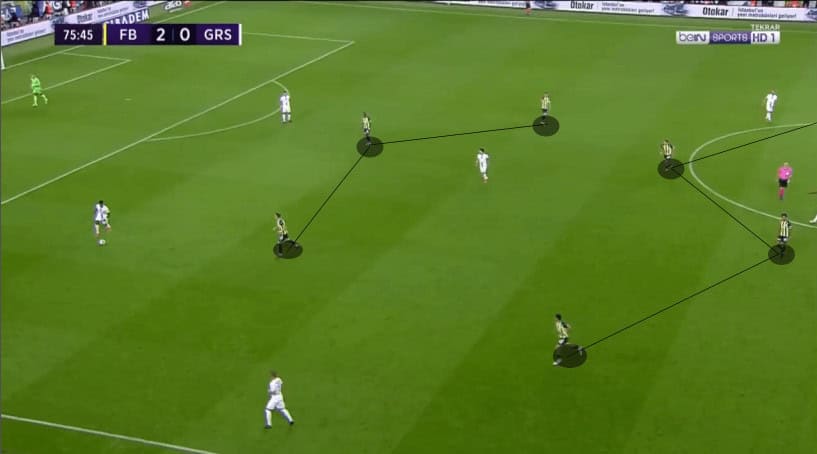
This medium-to-high defensive block is difficult to play through as it is very compact.
It is very effective at limiting passing lanes and spaces, thereby keeping the opposition from entering the middle third and advancing through the zones.
As they regress to a lower block, the wing-backs will drop in deeper to form a 5-2-2-1.
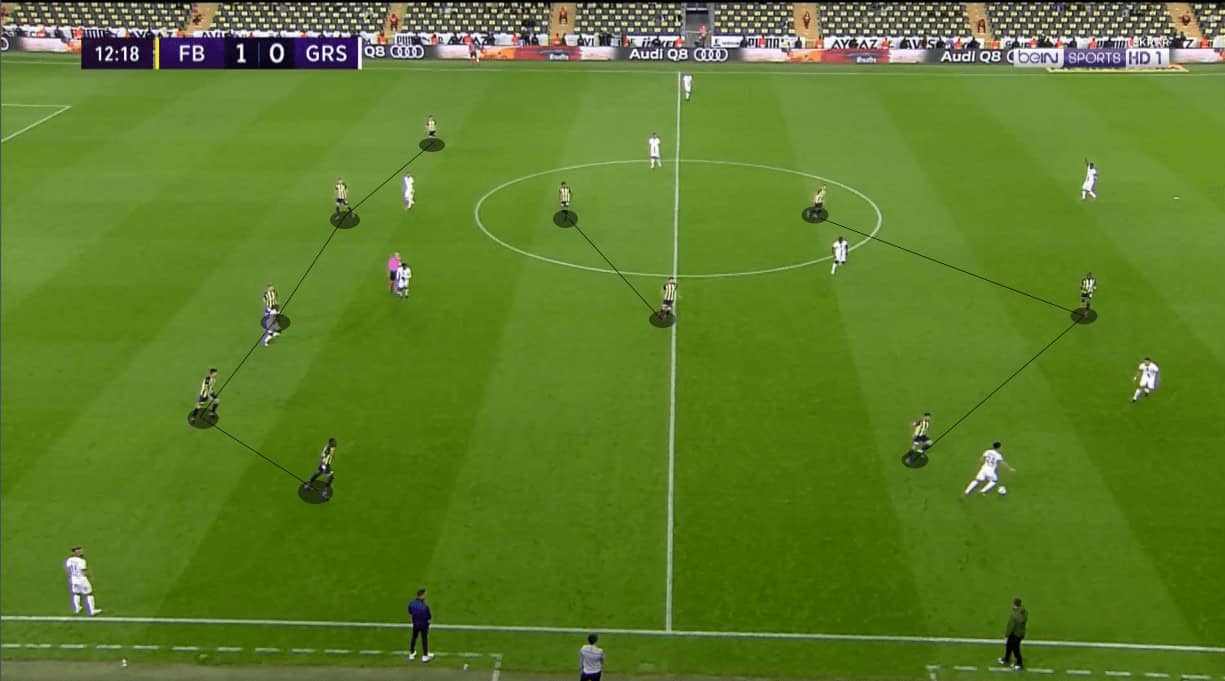
The image below is another example illustrating their compact defensive block.
The line of five defenders provides a lot of cover and numbers in the back, making it very hard to attack the depth.
The midfield is also difficult to play through, as they have a lot of numbers there.
Additionally, they move very well as a unit and, as a consequence, defend wide areas well.
The limited space between the lines is also a big strength of this structure.

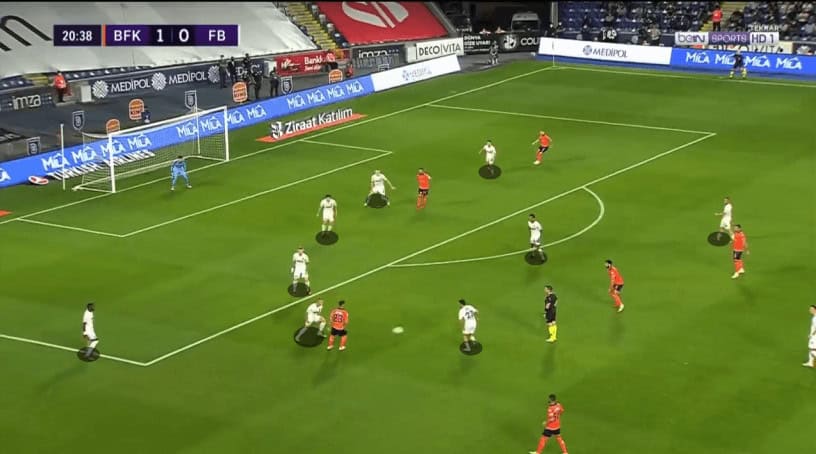
Finally, their defensive structure has strength in numbers.
In lower blocks, they can defend incredibly compactly and keep numbers in front of the ball.
This makes it very difficult to create clear chances, as there are always multiple players in front of the ball.
In the image below, nearly all team is inside their own third.
Vítor Pereira At Corinthians
The first dilemma with Pereira at Corinthians is the formation.
The Portuguese clearly likes playing with three at the back, especially in attack to create wide overloads with attacking centre-backs.
Aside from a handful of matches in May 2021, Corinthians has rarely ever used three at the back.
Additionally, one of the positives from Sylvinho’s Corinthians was their defensive stability.
With four at the back, they had one of the best defences in the Brasileiro 2021.
Immediately changing to three at the back would disrupt this stability and create some problems.
Consequently, I believe Vitor Pereira will begin with a hybrid system.
Like Pirlo at Juventus, Kovač at Monaco, and other teams, the team will defend in one way and attack in another.
Defensively, I believe he will provide some continuity to the existing defensive structure.
However, the team will switch to his favourite 3-4-2-1 in the attack.
This can be done in a number of ways, but I think there is one obvious strategy.
On the left, Corinthians have a good but ageing left-back in Fábio Santos.
On the right, Fagner is one of the best right-backs in Brazil and supports the attack very well.
Vitor Pereira could hold Fábio Santos as the third centre-back and let Fagner play as a wing-back, providing width on the right.
Willian is one of Corinthians’ most dangerous and fast players, so he would be the player to maintain width on the left.
Now, the biggest dilemma is in the middle.
Corinthians have three world-class midfielders: Giuliano, Renato Augusto, and Paulinho.
However, none of them can play as the first defensive midfielder.
They are all very attacking players.
On the other hand, the young Du Queiroz has been fantastic as a ball-winning midfielder and is often the backbone of the team, despite being just 22.
As Pereira likes to build through the sides and use a double pivot, Du Queiroz would be joined by Renato Augusto as the first midfielder.
More advanced, Paulinho and Giuliano would be the two attacking midfielders.
Finally, Roger Guedes would play up top while they still look to sign a big-name number nine.
The big question surrounding Corinthians over the last six months – ‘can the five signings play together?’ – will be solved by Vitor Pereira.
His preferred three-at-the-back system allows Fagner to push up and consequently fits all these players centrally.
The nature of this team may also lead Pereira to adopt a mentality that relies less on the opponent.
Pereira’s Corinthians should look to impose themselves and control the game.
The squad is very technical yet old.
A game played on transitions and intensity will not be sustained.
Consequently, Pereira will wish for his team to have the majority of possession and not have to press or defend as much.
They definitely have the quality to do so.
Conclusion
Vitor Pereira’s Fenerbahçe lacked a clear mentality in its possession approach.
Key metrics that identify a team’s playing style constantly change due to situations and opponents.
However, Pereira’s team are extremely organised and has a clear strategy in their organisational approach to possession.
They also have a very effective and balanced defensive organisation.
However, Pereira may have to adjust his tactics as the context in Corinthians is unique.
The Portuguese’s arrival has brought a lot of excitement and hope for the Corinthians’ fan base as they look to return to their glory days.
Exactly 10 years ago, they won the Copa Libertadores and Club World Cup over Chelsea.
This year, they return to the prestigious tournament with one of the best squads.
Will the Portuguese meet the expectations?
