
In a decision that signals both urgency and a quest for structural clarity, SV Werder Bremen have appointed Daniel Thioune as their new head coach, tasking him with steering the club clear of a precarious relegation battle in the Bundesliga.
After parting ways with Horst Steffen, Bremen pursued several options at the touchline, notably Bo Henriksen and Bo Svensson, both of whom were linked strongly with the role but ultimately did not come to fruition: Henriksen was reportedly unavailable due to contractual constraints, while Svensson declined the opportunity to join under the current sporting circumstances.
Thioune arrives with a résumé forged in the competitive crucible of Germany’s second tier.
His career includes a spell at Hamburger SV, Bremen’s traditional northern rival, where he navigated the intense expectations of a club striving for promotion before being relieved of his duties in 2021.
Most recently, he led Fortuna Düsseldorf until October 2025, when the team had a difficult start to the 2. Bundesliga campaign, he saw his tenure conclude despite prior success in stabilising and advancing the club’s competitive position.
This appointment marks Thioune’s first foray into a Bundesliga head-coaching role, a baptism by fire at a club fighting to reclaim its identity.
As Bremen transitions into this new chapter, this Daniel Thioune tactical analysis will outline how Thioune’s philosophical imprint, squad management, and match-day strategies will differ from those of his predecessor, and whether his experience in high-pressure environments can catalyse the crucial turnaround the Weser club so desperately seeks.
With Werder going scoreless in five out of their last seven games, we will focus on the way Thioune’s teams played with the ball in this article.
Line 1: Goalkeeper Line
In discussing his tactics and playstyle, Daniel Thioune emphasises two priorities: playing through the lines quickly and doing so with short passes.
The experienced manager prefers to play with short passes and has his team play very vertically at all times.
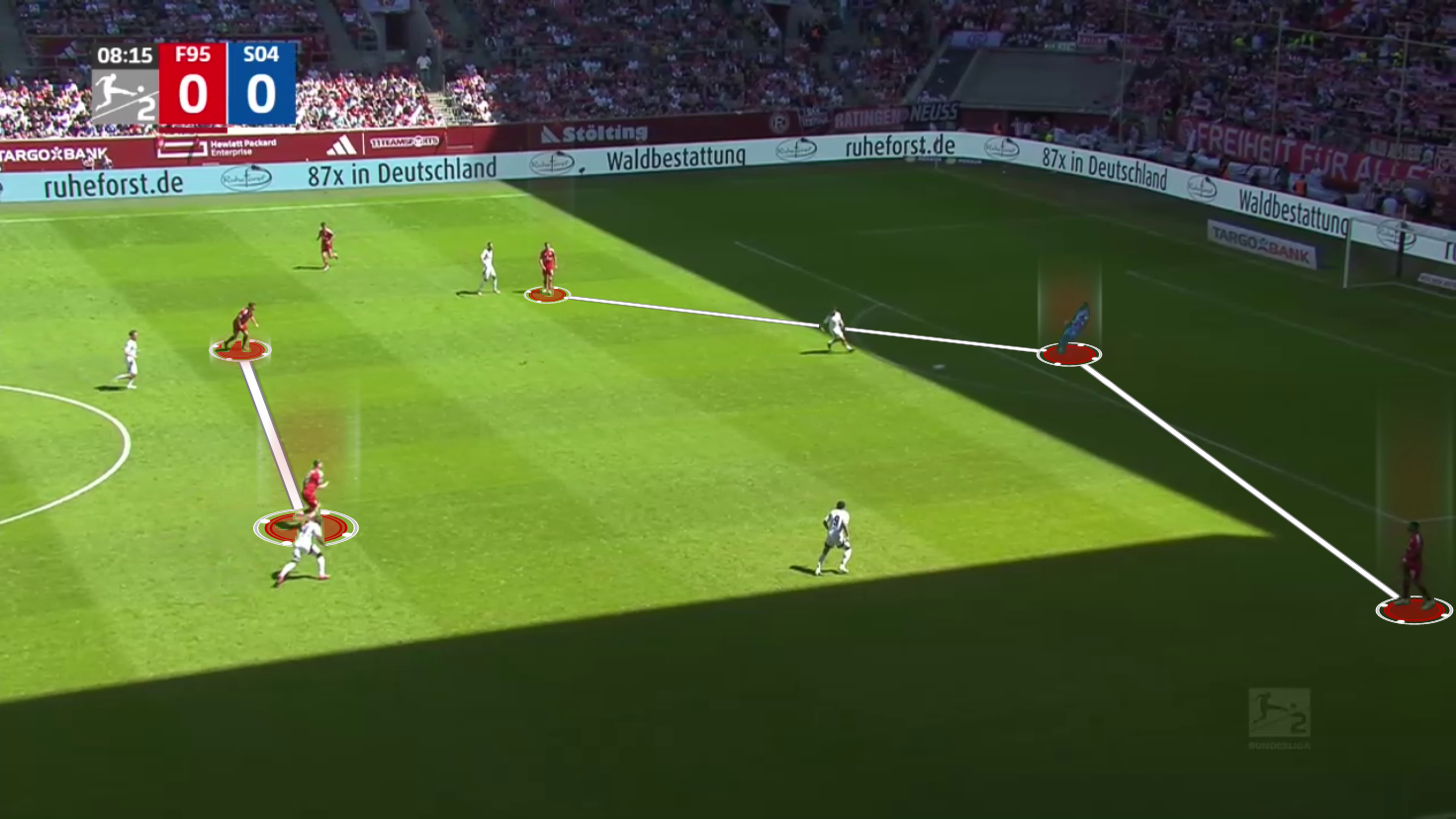
Examining Thioune’s structure at Fortuna Düsseldorf last season, it was notable how he adapted to the circumstances.
He heavily involves his goalkeeper in the build-up.
In every situation, even when they were building up with a higher line, the goalkeeper consistently positioned himself between the two centre-backs in the 4-2-3-1 formation.
The two centre-halves usually positioned themselves very wide, with the goalkeeper becoming the central player in a pseudo-back three that stretched across much of the width of the pitch.
The double pivot, by contrast, adopted a very narrow shape, maintaining considerable distance from the centre-backs, creating a 2+1-2 structure.
Thione’s team always started play by passing to the goalkeeper, who then dribbled forward until he was pressed by the opposing team.
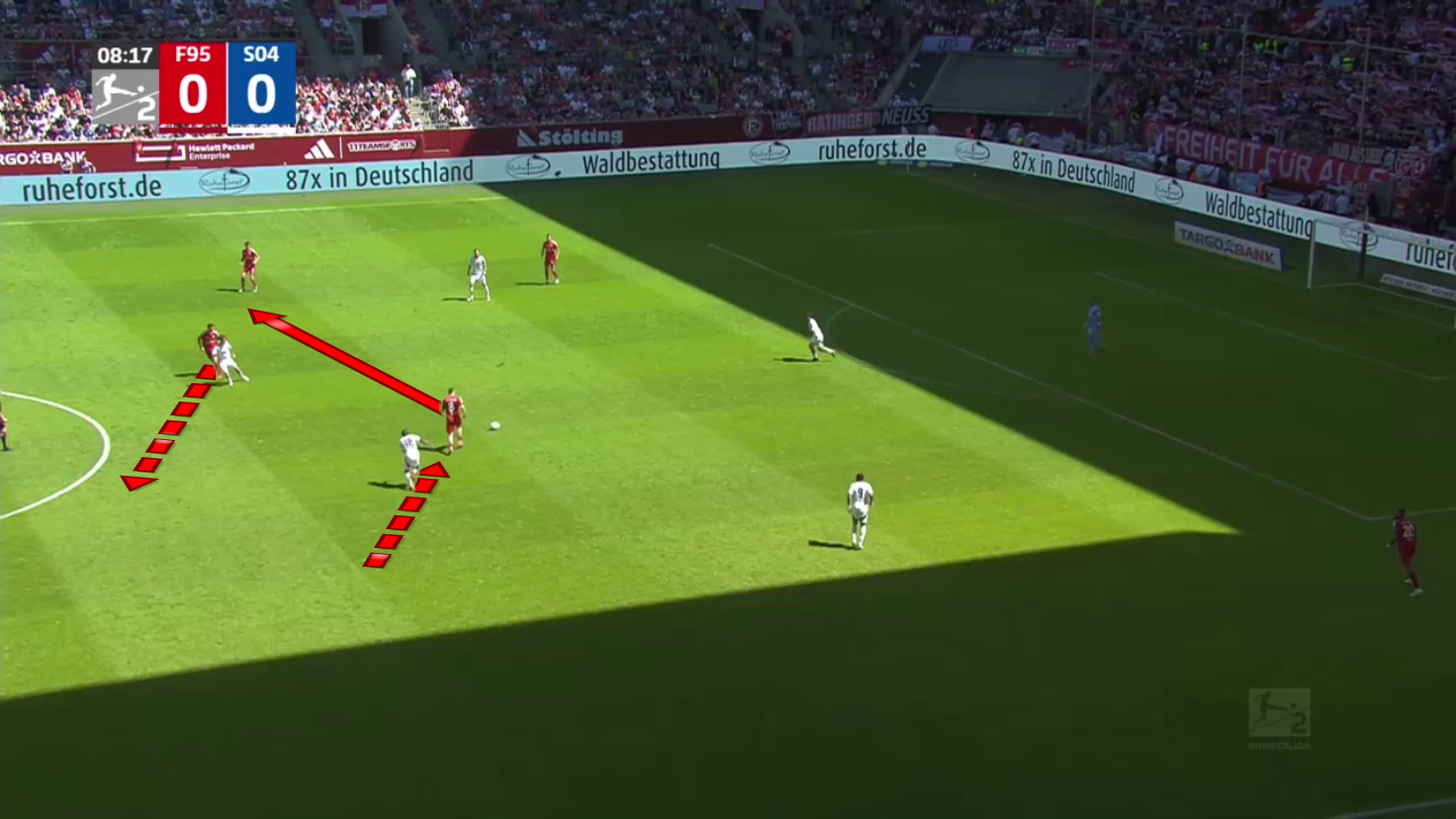
With the distance between the midfield and the backline, central midfielders can move into the space behind the first line of pressure.
Often, one of the two midfielders would make a vertical run, while the other dropped back, creating additional space.
The goalkeeper was now looking for vertical passes to the midfielder, who dropped back to find him behind the first line of pressure.
From then on, the wide centre-backs or full-backs positioned themselves to receive a first-time pass from the midfielder, and Düsseldorf often found solutions through the triangle to advance the ball with just two quick passes.
Thioune uses his players’ dynamics to advance the ball through simple means.
Düsseldorf also demonstrated great patience in those situations, often playing the ball back through their centre-backs and goalkeeper, keeping possession and attracting the press.
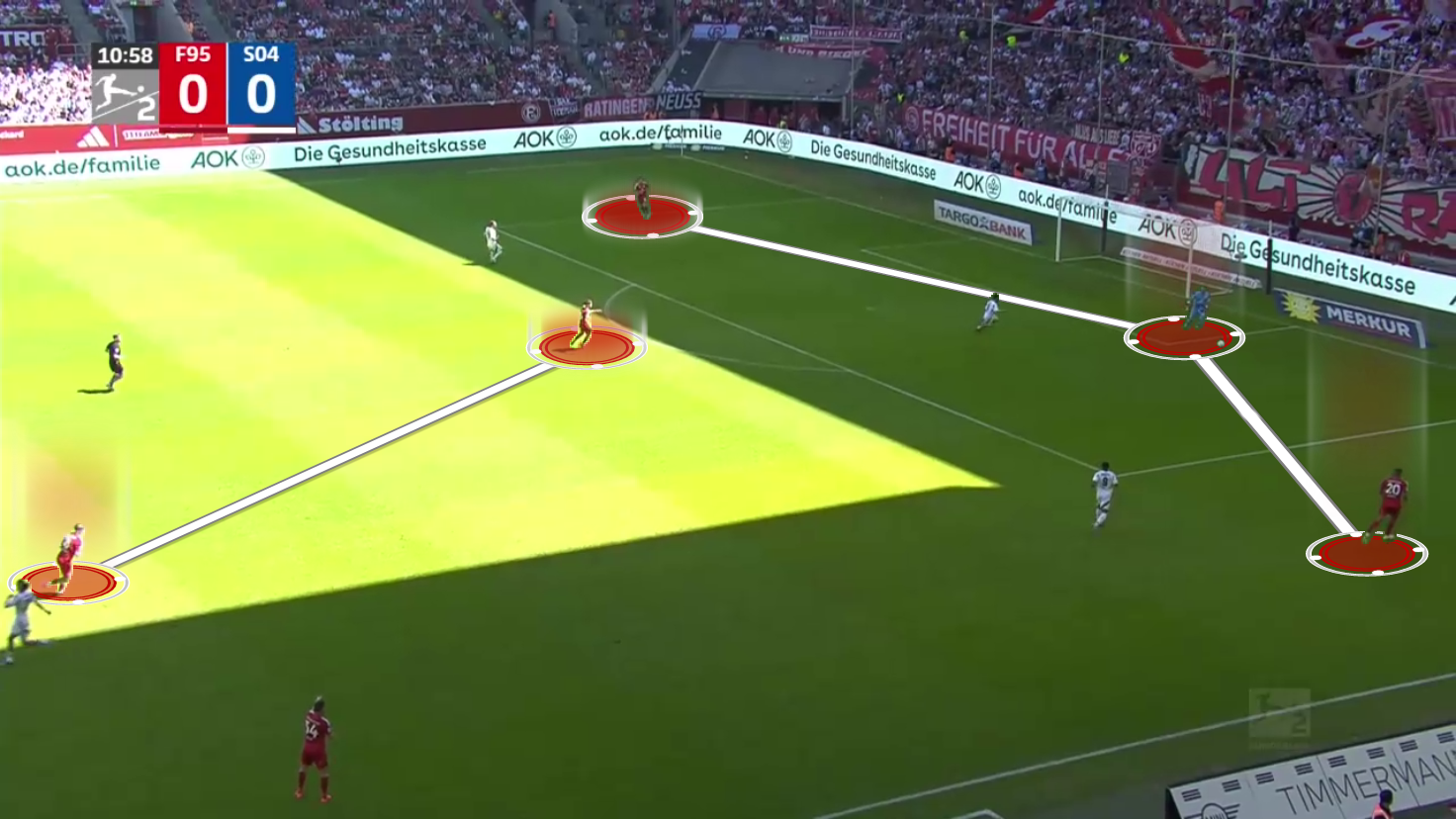
This often led to them getting pressed deep in their own half, but they did not have any major problems with that.
Even in those situations, they trusted their goalkeeper to play well with the ball on his feet.
They staggered their double pivot and sought passes behind the first line of pressure and solutions through the triangle.
Werder goalkeeper Mio Backhaus has been really good with the ball on his feet so far this season, so he should be able to handle those responsibilities as well.
Senne Lynen should be a decent fit as a holding midfielder as well, having played in a similar role for former Werder manager Ole Werner.
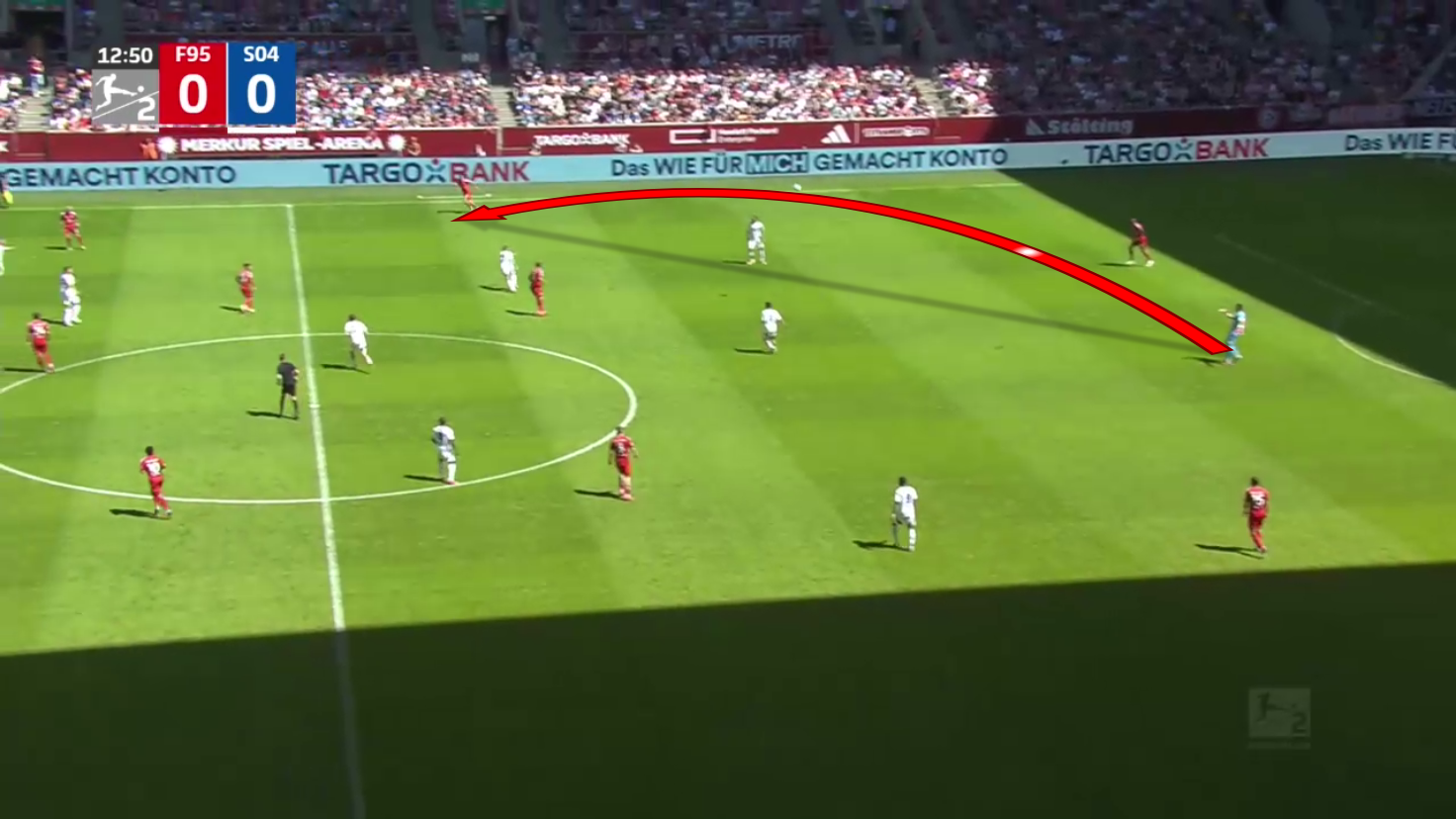
When not under pressure from the opposing team, Düsseldorf often relied on long balls, particularly those played by their goalkeeper.
As we can see, the centre-backs and the goalkeeper are pushed very high up the field in this situation, but their opponent, Schalke 04, decided not to press them so as not to play into Düsseldorf‘s strengths.
Schalke crowded the centre of the pitch, so Thioune had his goalkeeper play many chipped balls to the full-backs, but they also often just played it long over the top and then chased it.
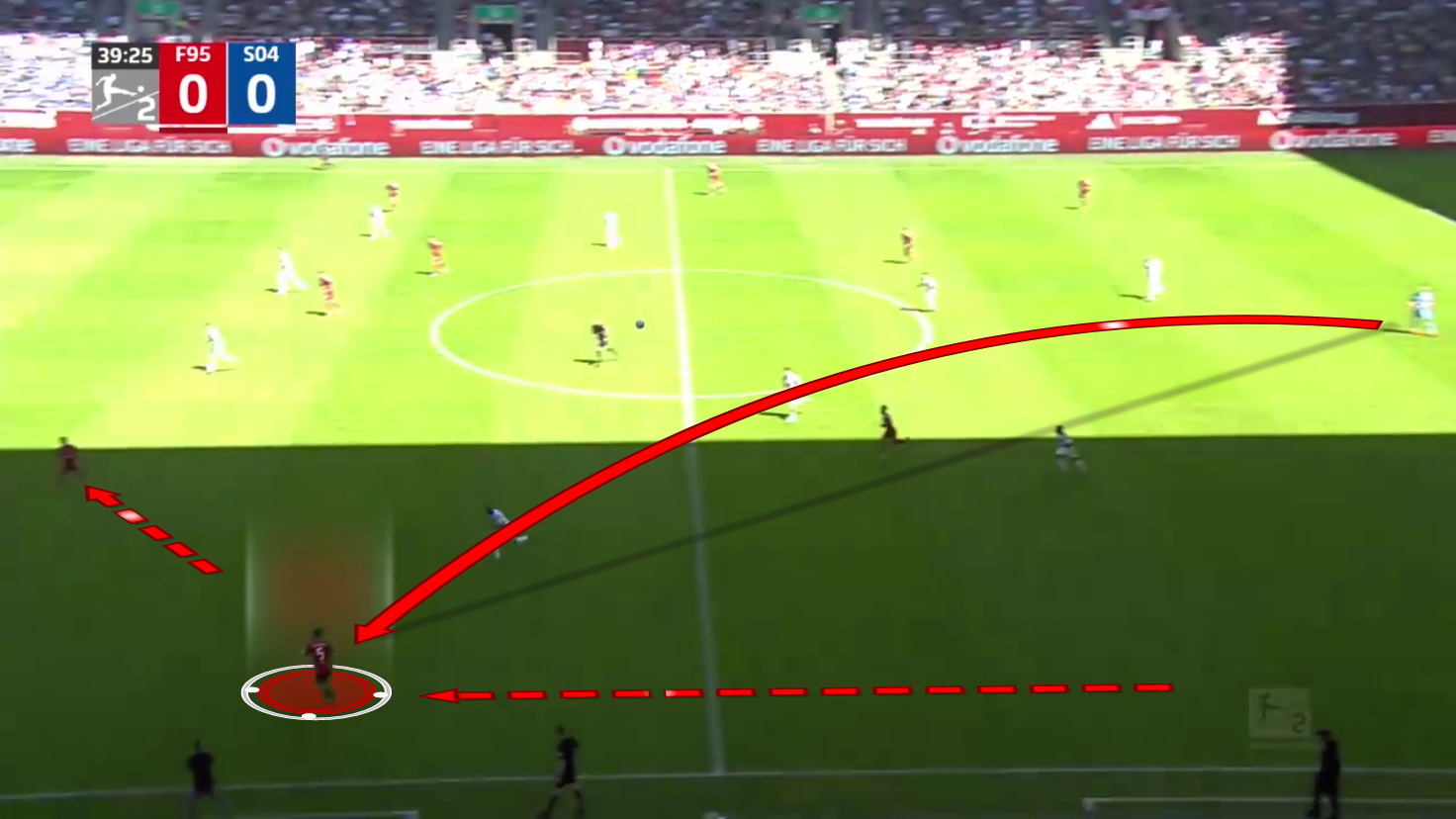
Thioune preferred his winger to push inwards towards the half-space, something he has in common with his predecessor at Werder, Horst Steffen, and make space for the full-backs on the wing, who are tasked with providing the width for the team.
The goalkeeper then played numerous diagonal balls into the path of the full-backs, quickly playing over the press.
Given Thioune’s remarks, this makes sense: his team doesn’t wait indefinitely to attract the press; instead, they try to play over the press quickly, even when it is not doing so through short passes.
Line 2: Crowding The Centre & Diagonal Solutions
Looking at what Thioune’s team did when they managed to play over the first line of pressure, they often looked to find diagonal solutions.
Düsseldorf were consistently a team that sought to threaten the space behind the backline and were often aggressive in seeking vertical solutions.
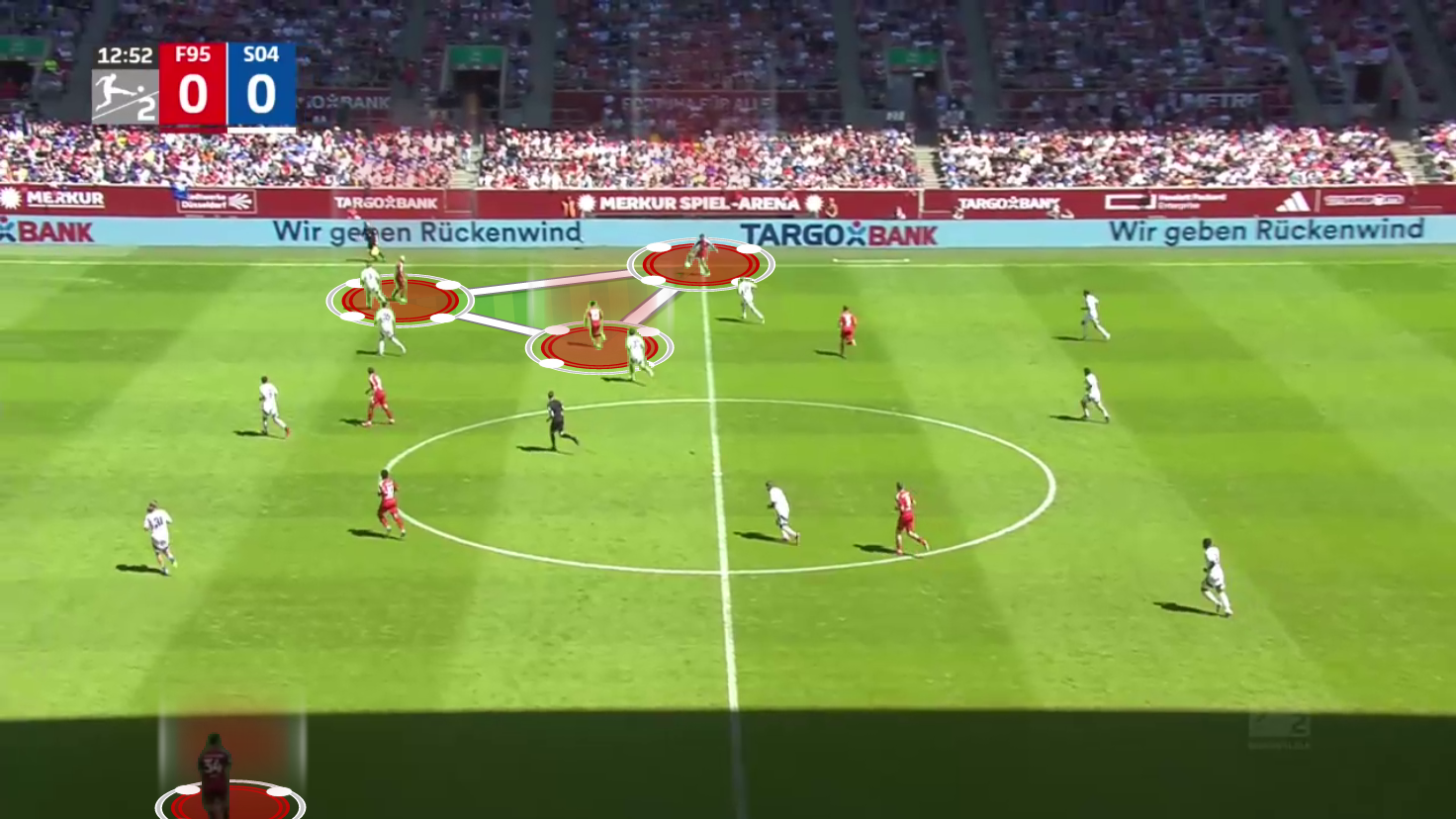
After getting behind the first line of pressure through the triangle, as we established in the first part of this piece, they often found themselves on the wing, getting into the opposing team’s half.
They often formed triangles on the wing, then quickly sought vertical runs through the third man, allowing the player with the ball to play a through ball.
In such situations, the player positioned furthest up the pitch drops back slightly, and the third man makes a run down the channel in the half-space.
The far-sided full-back always kept providing the width and stayed near the sideline, stretching out the effective playing space for Thioune’s team.
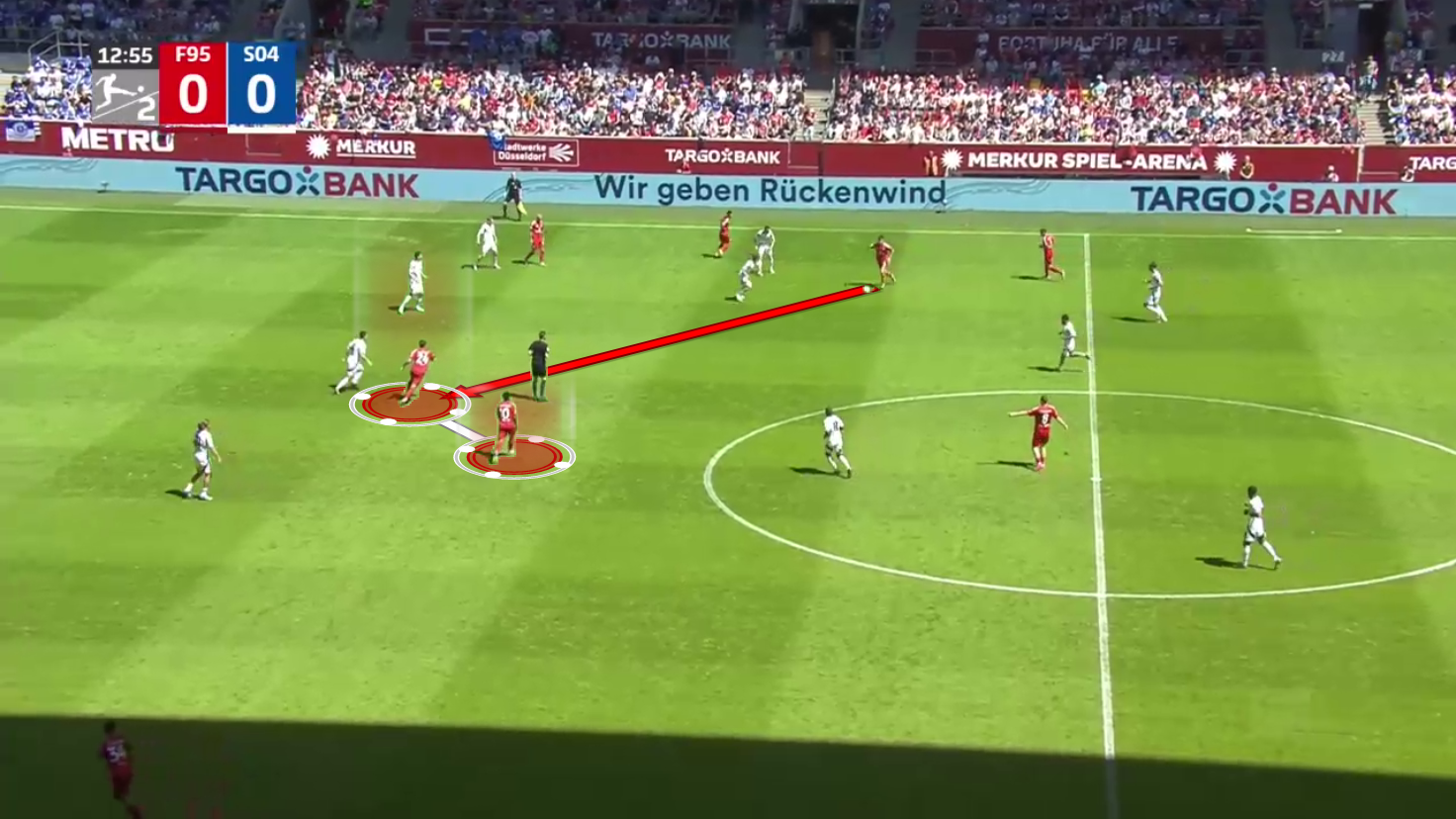
If they were unable to find a vertical pass in those situations, they often sought diagonal solutions, playing the ball back to the centre from the wing.
With the wingers pushing inwards, they usually overloaded the centre and tried to find their striker or their far-sided winger with those passes.
These two players positioned themselves close but slightly staggered, allowing them to execute a quick one-two after one of them receives the diagonal pass.
This also introduces another basic principle for Thioune’s team: they always look to play to the centre and to the outside alternately.
If they pass towards the centre, the next pass should go to the outside, and vice versa, always keeping the opposing team moving in the block and preventing them from gaining a grip.
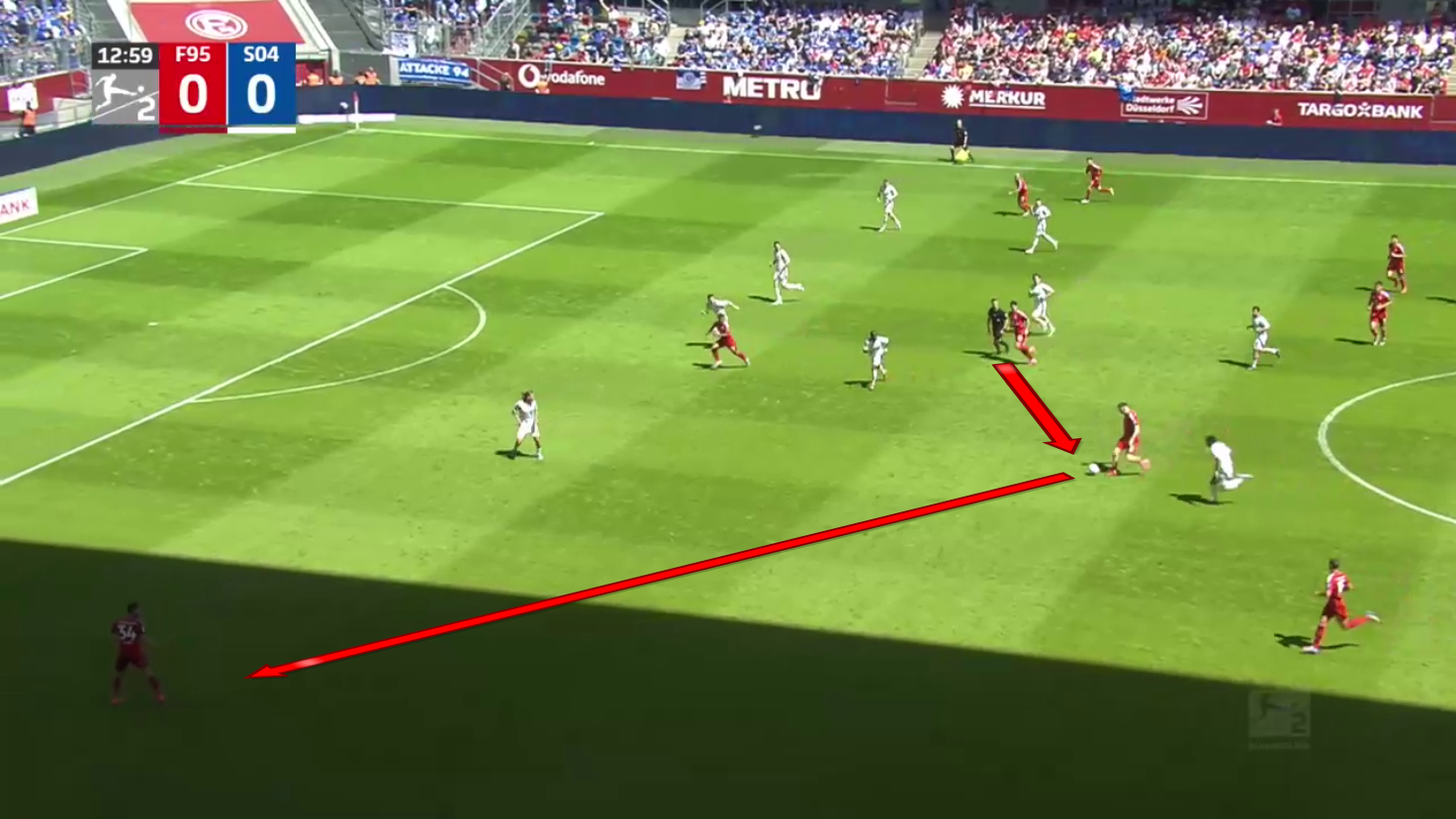
In this case, they quickly played through the centre, then switched to the other side, and then back to the centre via the wing.
With the far-sided full-back providing width, they always have options to switch play, either through the centre of the field as here or via a diagonal long ball.
Thioune often created opportunities for his team to cross, thereby threatening the depth of the half-space with one of the wingers.
Especially against teams with a narrow shape against the ball, Thioune’s men found a lot of open space that way.
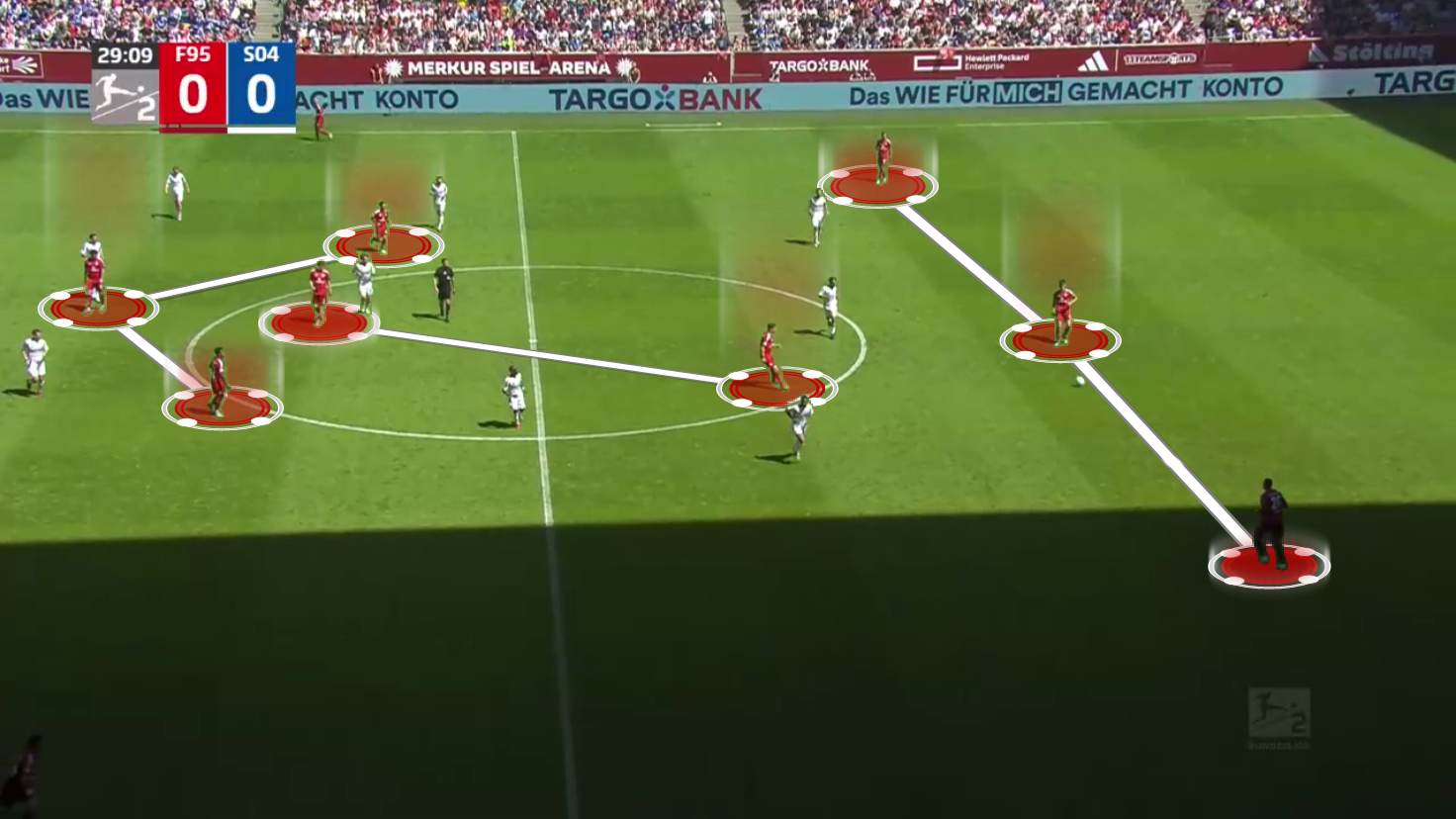
If they had to build through their backline again in line 2, they always dropped one of their two central midfielders back into the backline and played with the Pep Guardiola-3-2-5 shape, with the two midfielders again playing at different depths.
The wingers pushed inwards, forming a very narrow attacking shape; the full-backs provided width, allowing them to often play to the centre and then move into the open space on the wing.
Their attacking play has been rather static; the timing of their runs and overall positional play have been rarely perfect, and this has often led to them becoming stuck in their own possession.
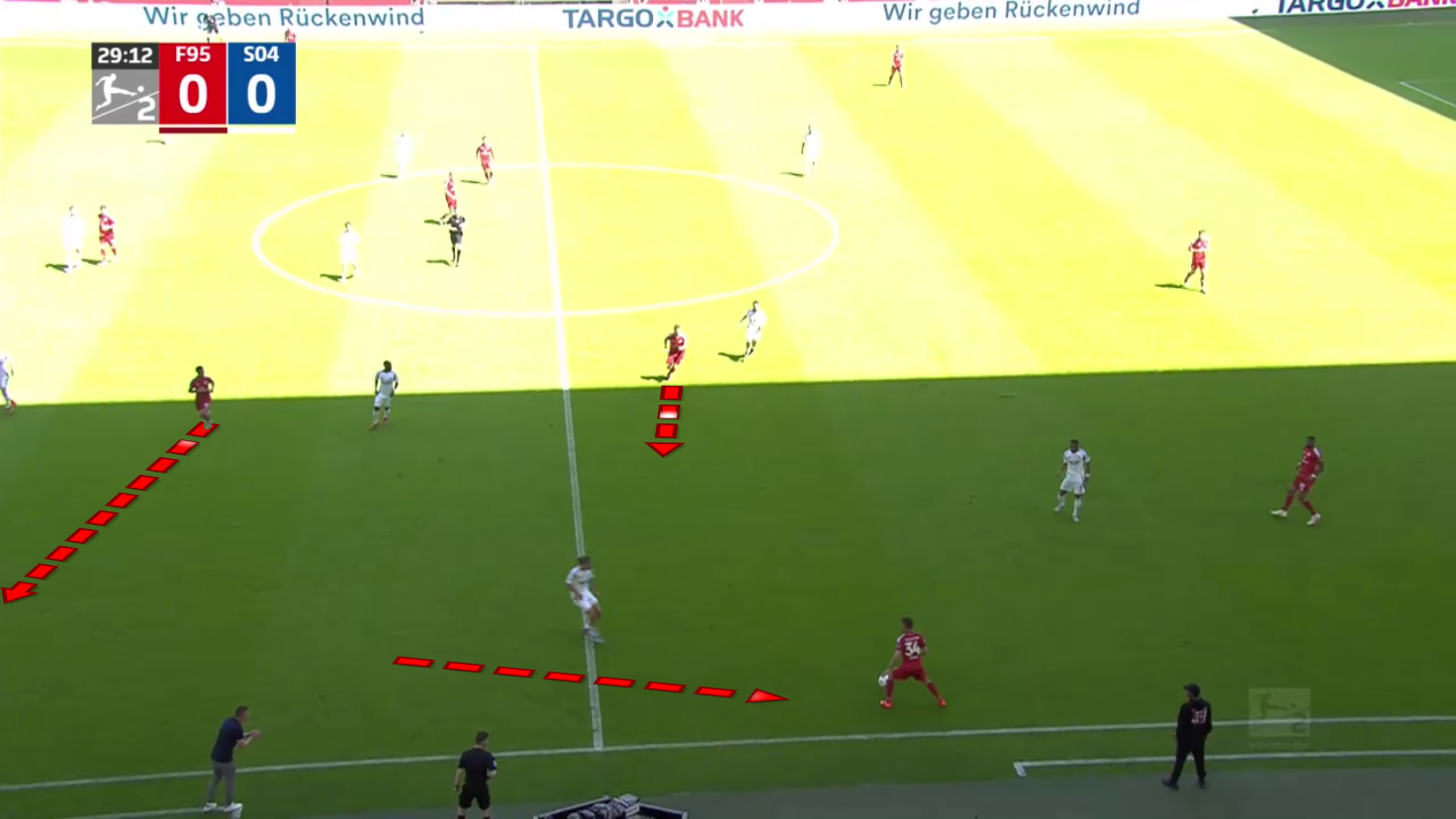
When they had to play through the wing or found themselves there after a switch, the full-backs often dropped back, allowing the winger to make a run from the half-space to the outside, overloading the wing for a couple of seconds.
This allowed them to execute more vertical passes down the wing and to move the ball quickly through the midfield.
For Werder, this would not entail significant changes in how they position themselves, but rather a markedly different approach to the height of play and the degree of verticality they seek.
Werder under Steffen often looked for vertical passes to the half-space from their central midfielders; now this pattern will change slightly.
Changes With A Back Three
This season, Düsseldorf was unsuccessful, leading to Thioune’s dismissal early in the season, but the manager attempted to adapt again and deployed a back three for a couple of games, with limited success.
Given that Werder’s players revolted against the back four of former manager Steffen, he might be forced to play with a back three in Bremen.
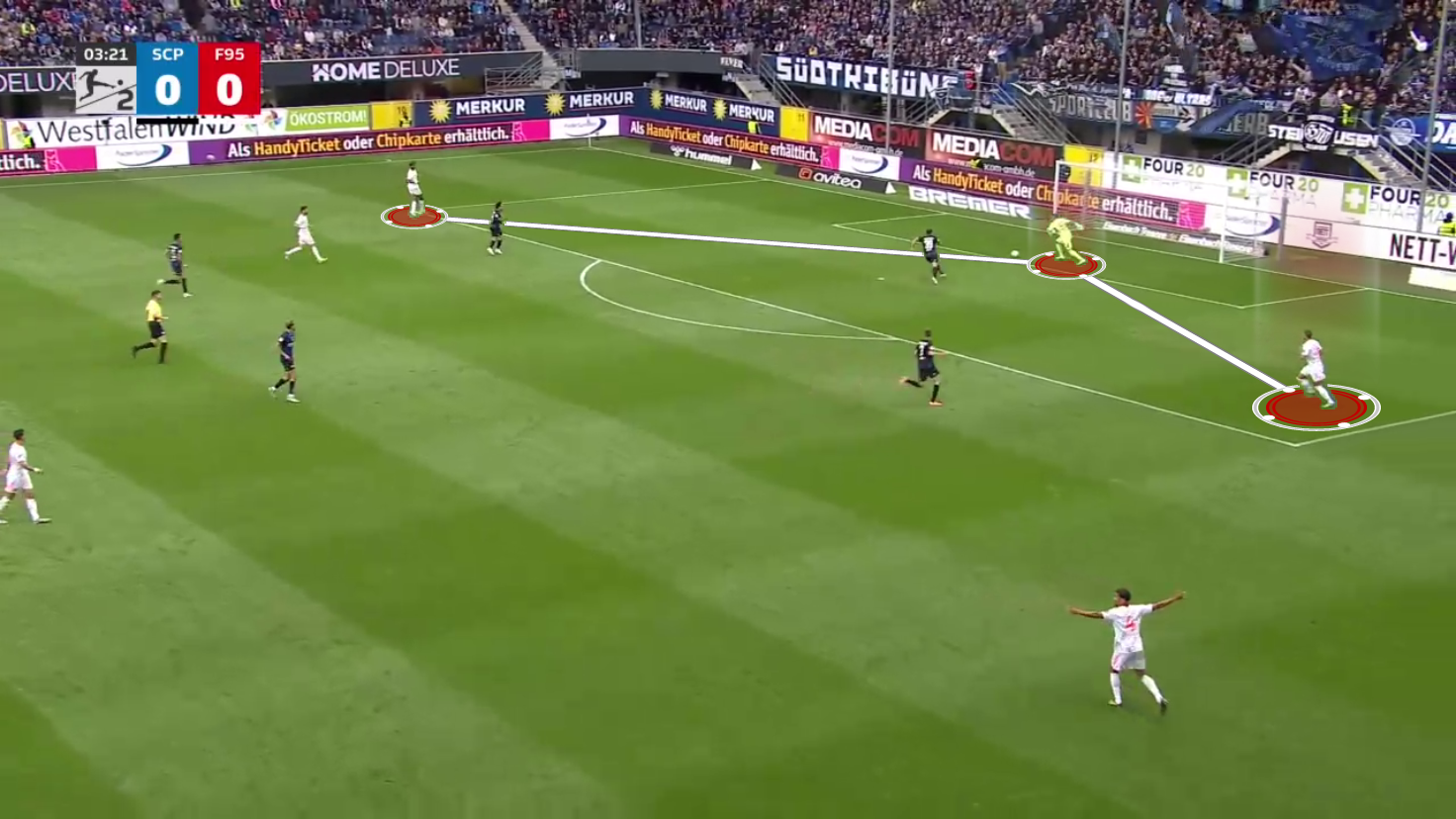
As they played with four defenders, they continued to involve their goalkeeper and repeatedly tried to form a goalkeeper line when pressed.
Looking at the other players’ positional play in this situation, we can see that they are rather erratic in their new 3-4-2-1 formation and are unable to find solutions through short passes.
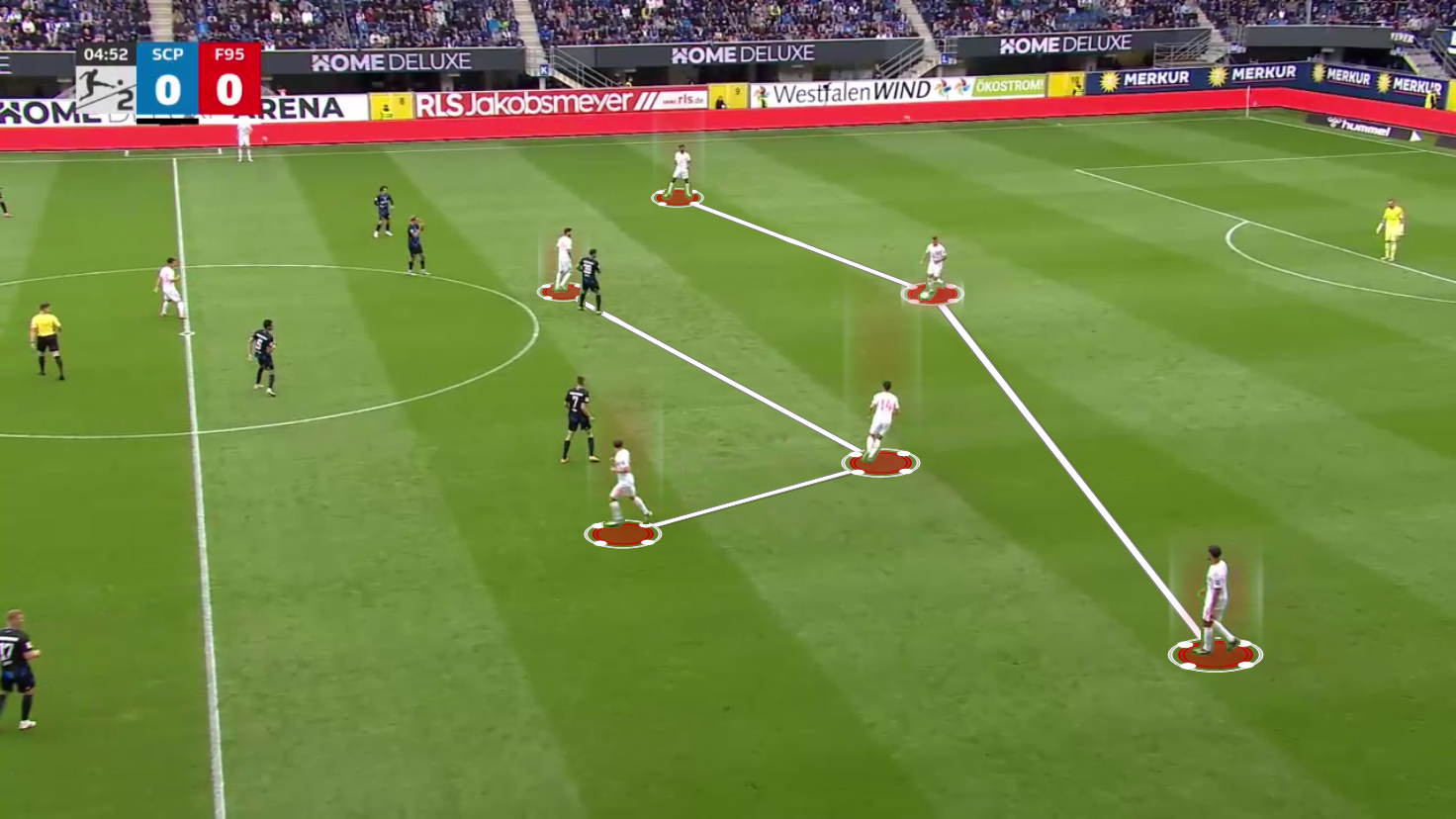
They also retained the basic principle of playing with a back three in line 2, which had become easier, as they no longer had to drop a midfielder back in such situations.
Examining the three midfielders now, we can see where the problems began for Düsseldorf.
The midfielders played at a poor depth, no longer getting into the spaces behind the opposing team’s players, and Thioune’s basic idea of playing through the lines quickly no longer worked.
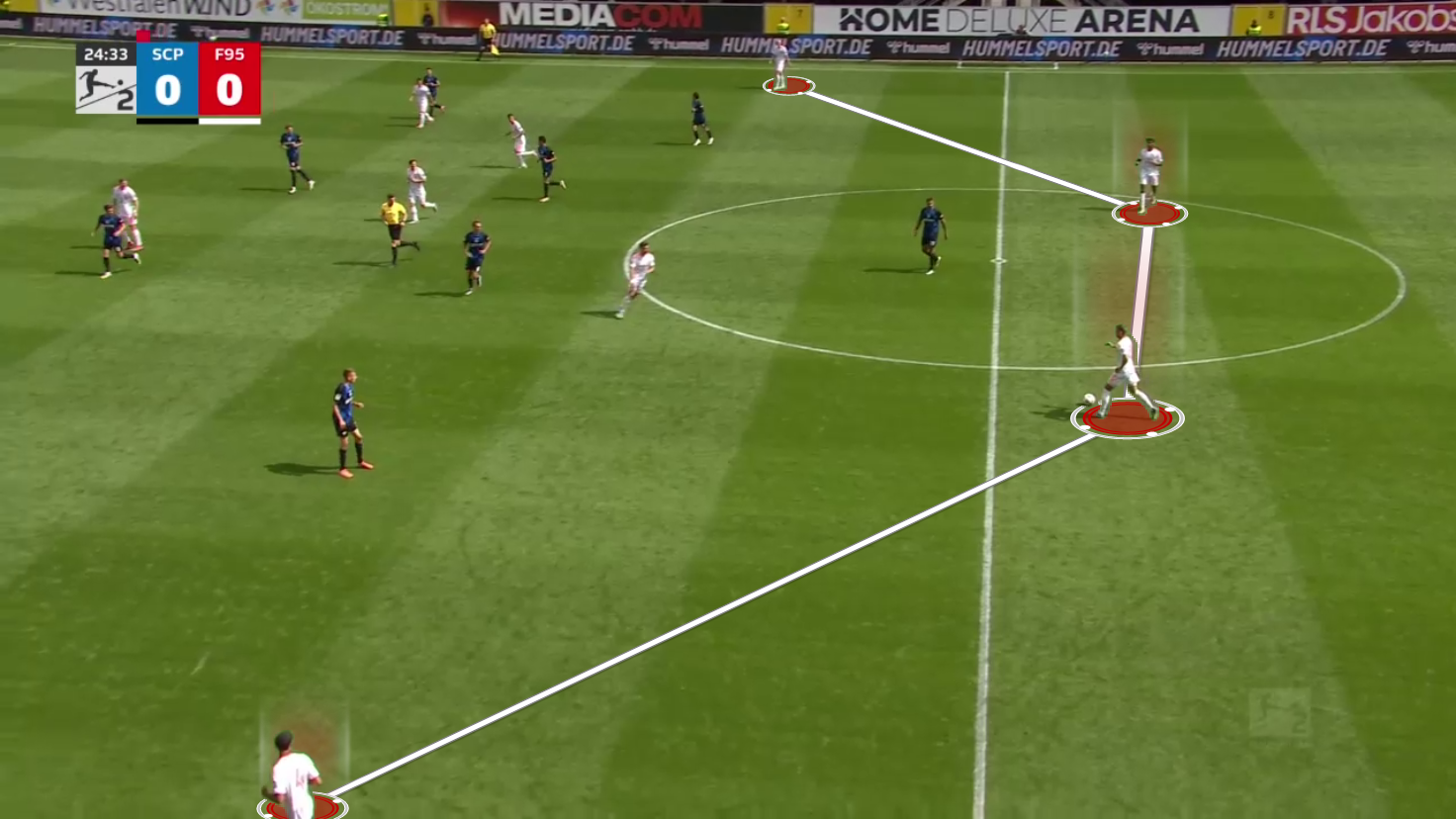
Notably, they later chose to build with a back four in the opposing team’s half.
The full-backs still provided width, and they now pushed one wing-back into the attacking line and one centre-back towards the outside.
They were one man up in this game, though, and SC Paderborn only pressed with one striker after receiving a red card, so it made sense for them, showing that Thioune can also adapt in-game and has a pragmatic approach rather than an ideological one.
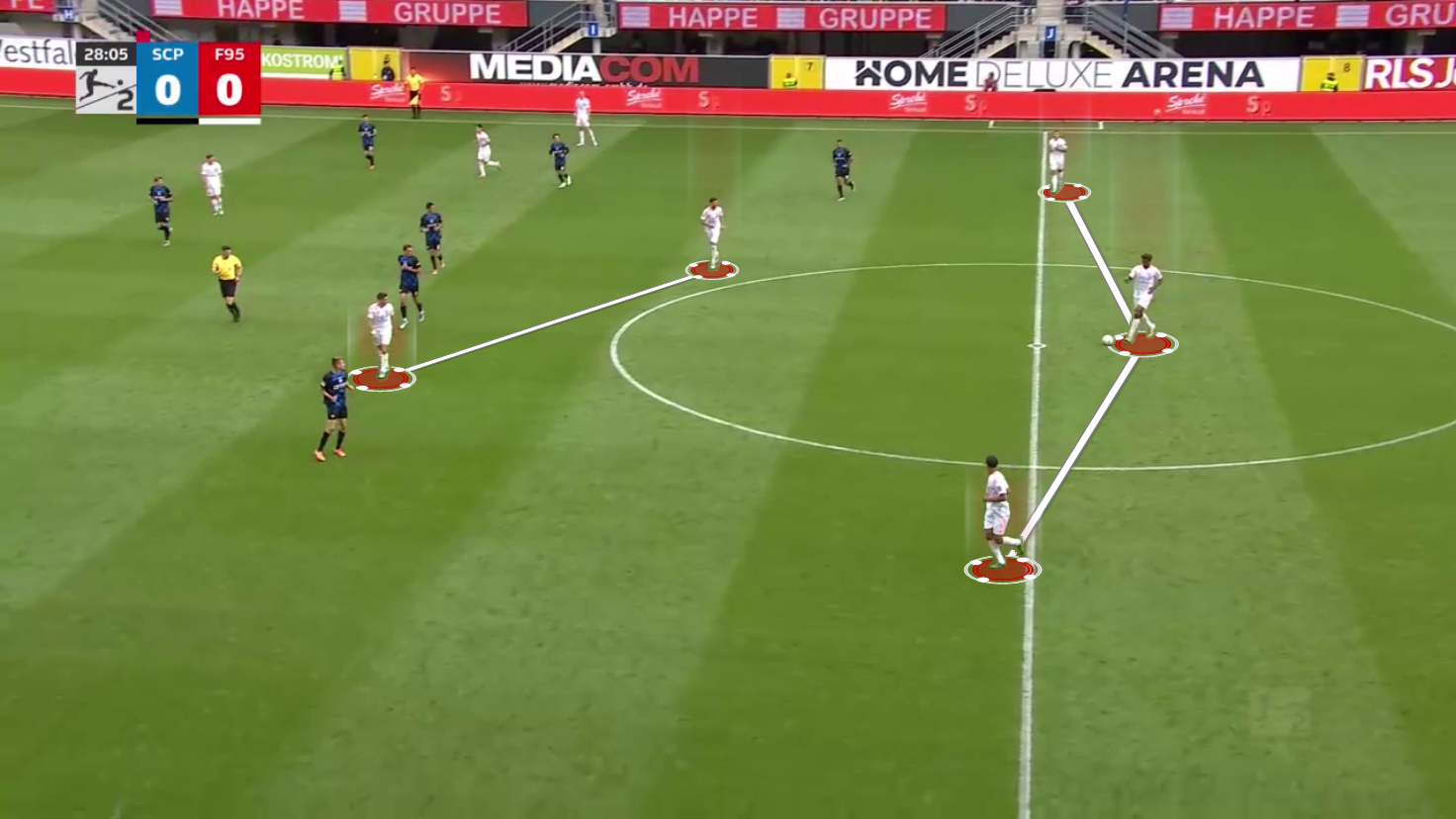
They still often used the 3-2-5 shape, though, so I think we will see the 2+1-2 and 3-2-5 shapes for Werder when he had enough time to implement his ideas.
Both of these shapes would be rather new to Werder; Steffen did not really use these formations during his tenure there.
Will Werder have more success with it compared to Düsseldorf this season?
I believe that the squad presented to Thioune in Bremen is significantly better than their current run indicates.
The newly appointed manager has already doubled down on the pragmatic approach, saying he will look at what the team needs rather than implementing his ideas, so Thioune may surprise the Bundesliga and do completely different things, though I highly doubt that.
Conclusion
In closing the chapter on this surprising managerial shift at Werder Bremen, Daniel Thioune’s first press conference set the tone for what promises to be a defining period in both his career and the club’s season.
Thioune arrived at the Weser with palpable conviction, repeatedly stressing that he feels “the right coach in the right place” and that he doesn’t shy away from the challenge ahead, even amid intense scrutiny and the palpable pressure that comes with steering a Traditionsverein out of a relegation fight.
Throughout his remarks, the 51-year-old highlighted more than just personal motivation; he spoke of emotional connection and readiness to embed himself within Bremen’s culture and identity, noting the significance of leading a club that has loomed large both regionally and historically.
Thioune underlined that his enthusiasm isn’t rooted in individual ambition but in a collective desire to reforge belief and momentum within this squad, which he believes possesses untapped potential despite recent struggles.
Werder will face SC Freiburg on Saturday in the first game with their new manager at the helm.
That sentiment, emphasising solutions over problems, belief over fear, offers an early glimpse of the strategic mindset he intends to bring to a club in urgent need of direction.
As Thioune prepares for his first training session and imminent Bundesliga debut in green and white, the narrative now pivots from the departure of Horst Steffen to a renewed tactical identity under new leadership, one in which resilience, adaptability, and clear analytical frameworks will be essential.
In the coming weeks, how effectively Thioune translates his words into performance will determine whether this appointment becomes a turning point or another chapter in Bremen’s turbulent campaign.
