
Filippo Inzaghi has led Pisa to their first promotion from Serie B to Serie A in 34 years, a massive achievement for the club and their fans.
Before this, Inzaghi did not have very successful periods with the clubs he coached after he retired from playing football.
He coached Milan, Venezia, Bologna, Benevento, Brescia, Reggina, and Salernitana before joining Pisa this season and leading them to Serie A.
His previous achievements include leading Venezia from Lega Pro to Serie B and ensuring the promotion of Benevento from Serie B to Serie A as Champions with seven games remaining.
In this tactical analysis, we will explore Inzaghi’s footballing philosophy and tactics with I Nerazzurri.
This head-coach analysis will shed light on Pisa’s remarkable strengths and Inzaghi’s effective implementation of the 3-4-2-1 shape.
Filippo Inzaghi Attacking Phase
Inzaghi’s Pisa SC have had outstanding attacking numbers this season, with an average of 1.63 goals per match.
This means that Pisa has scored at least one goal per match this season and are always capable of scoring more.
Inzaghi relied on a single formation throughout the season, which helped him and the team find their balance and be very organised in both defence and attack.
He opted for this 3-4-2-1 formation because it also suits the available players’ abilities and best positions on the pitch.
The 3-4-2-1 formation guarantees Inzaghi more defensive protection with two close lines of defence.
At the same time, it suits the former AC Milan striker’s attacking ideas since he likes playing with one or two strikers and advanced playmakers behind him/them.
He prefers this attacking organisation to playing with wingers and a striker and avoiding the use of an advanced playmaker.
Since the available team squad has more strikers and offensive midfielders’ profiles than wingers, Inzaghi leaned toward using the 3-4-2-1 and sometimes the 3-4-1-2 more often.
Even when he wanted to use wingers occasionally, he did not change the defensive organisation and played according to the 3-4-3 formation.
Mattéo Tramoni, Alexander Lind, Henrik Meister, and Stefano Moreo were Inzaghi’s most-used weapons on the wings and in the striker role.
These players had better shooting abilities, pace, dribbling skills, and tactical maturity needed to press high on opposing defences.
Inzaghi relied on fast counterattacks and encouraged individual penetration efforts while supporting the penetrations of the other attacking players, who usually presented passing options.
Furthermore, he succeeded in using set-pieces efficiently and dangerously, putting a lot of work into these actions and varying the set-piece plans to surprise opponents.
More importantly, he instructed a powerful physical player like Idrissa Touré to always be present during such set-pieces and be ready to receive second balls or beat his direct opponent in the aerial duel.
Idrissa Touré Role In Set-Pieces
Idrissa Touré was crucial for the team on key occasions.
He scored very important goals with shots from distance and second balls won inside the box during set-pieces, making his impact tangible in his team’s promotion to Serie A.
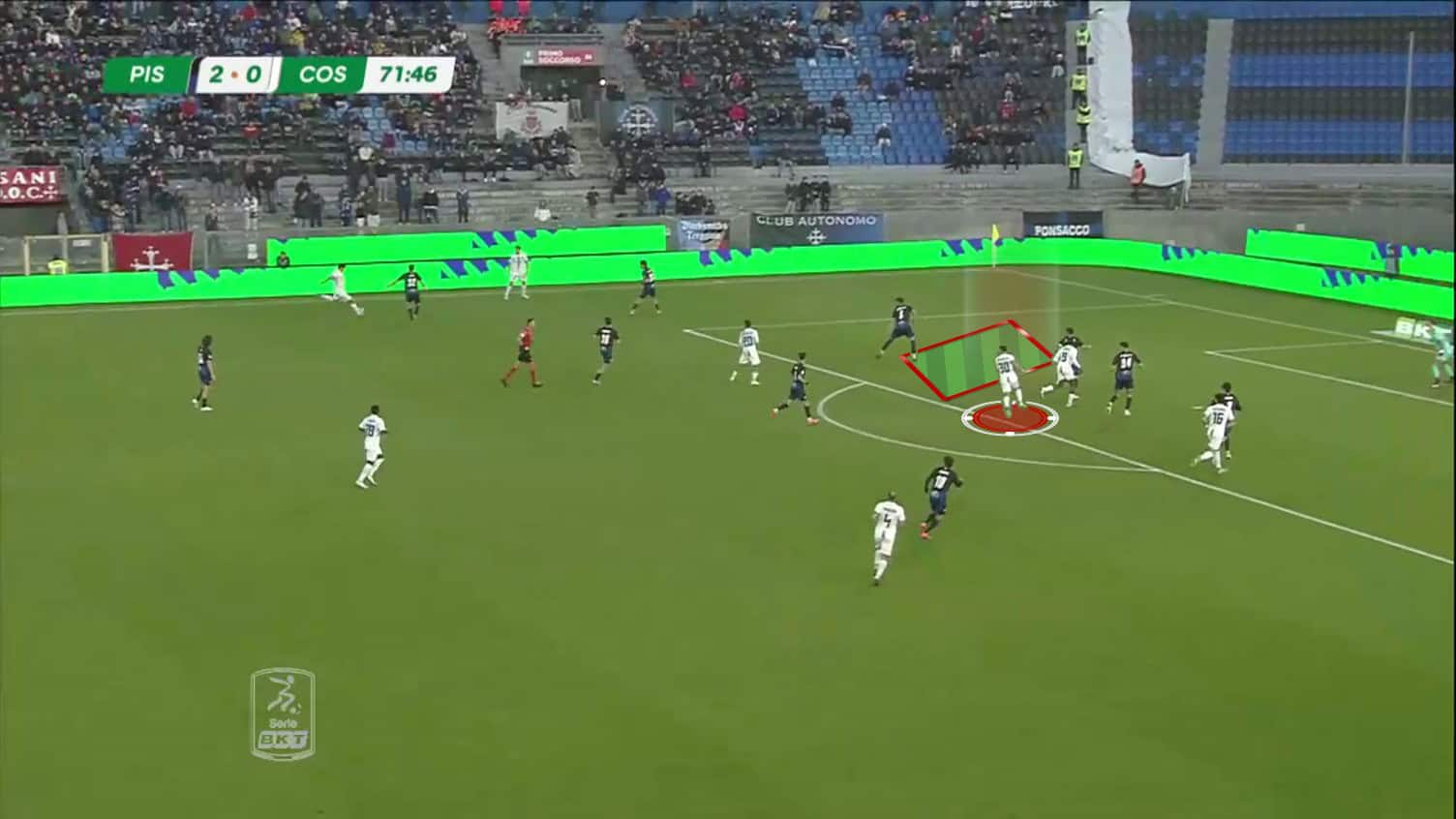
The following goal example highlights Touré’s crucial role during set-pieces and his ability to always find a way to receive the ball in key areas that give him more chances to score.
He uses his outstanding and powerful shooting skills to finish the actions inside the net.

Pisa can still rely on Touré’s set-piece roles next season in Serie A, but they will need to alternate their set-piece strategies further to allow him to confuse opposing defences and avoid being marked.
This will be very important mainly because Serie A teams will surely study Inzaghi’s set-piece ideas carefully and try to limit his weapons by man-marking Touré on each occasion, unlike in the above example, where Cosenza applied a sort of zonal marking rather than strict man marking.
Inzaghi’s Pisa is also characterised by remarkable counter-pressing that has helped the team on many occasions.
This allows them to intercept the ball and creates a lot of danger for the opponents as they intercept the ball in their own third.
As soon as Pisa loses the ball, they often apply a high counter-pressing with many players in an attempt to win the ball back as soon as possible and have more opportunities to shoot on goal.
Filippo Inzaghi Counter-Pressing
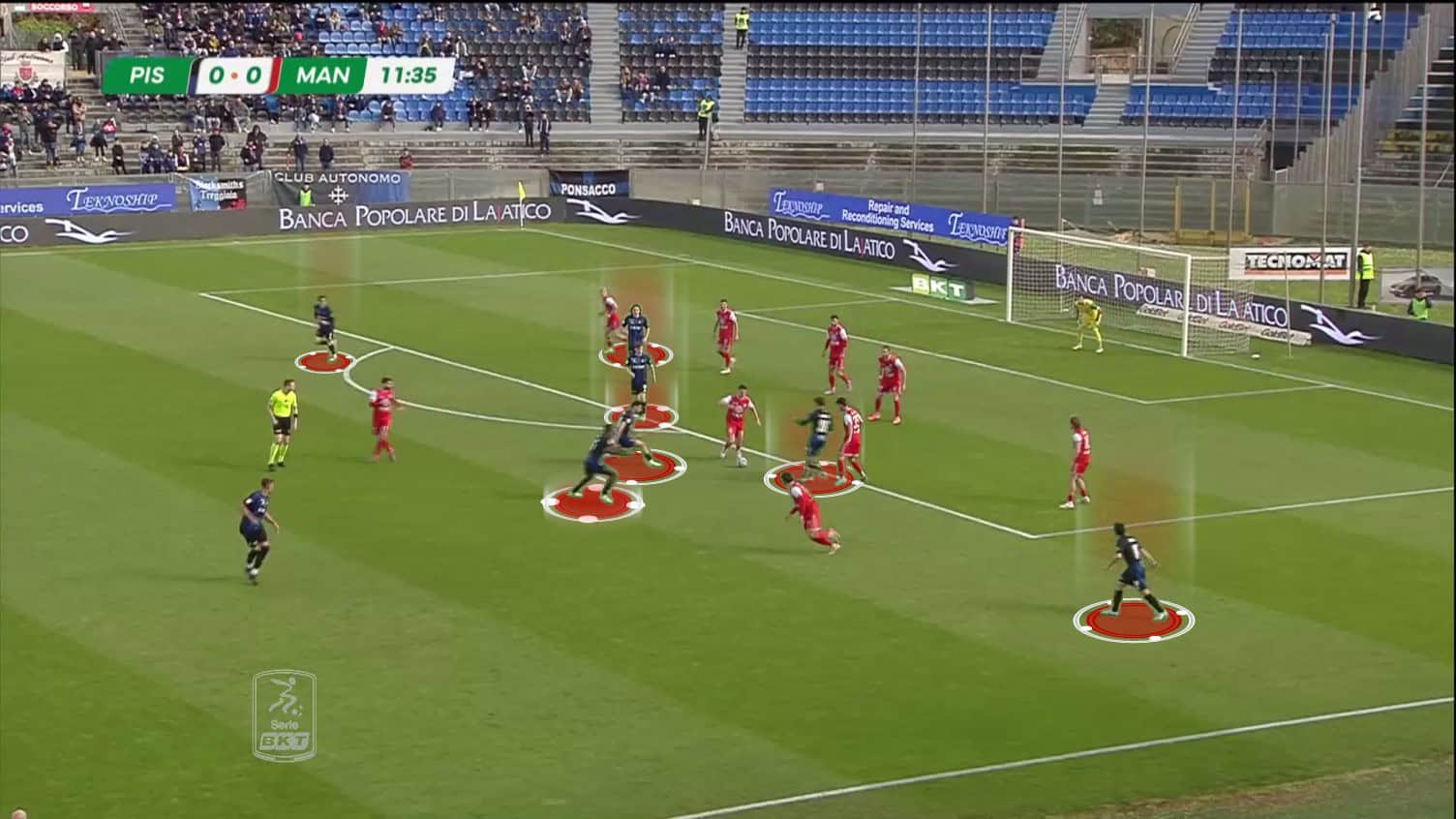
This picture highlights how aggressive Pisa’s attacking players can be as soon as they lose the ball.
They often try to siege the ball holder quickly and intercept the ball from him to create dangerous counterattacks.
In this case, they did it with seven players inside Cosenza’s own third, which showcases the attacking mentality and the counter-pressing system that Inzaghi’s side adopts so often.
Moreover, Inzaghi usually prefers a quick passing system upfront, relying on the players’ excellent ball control and pace.
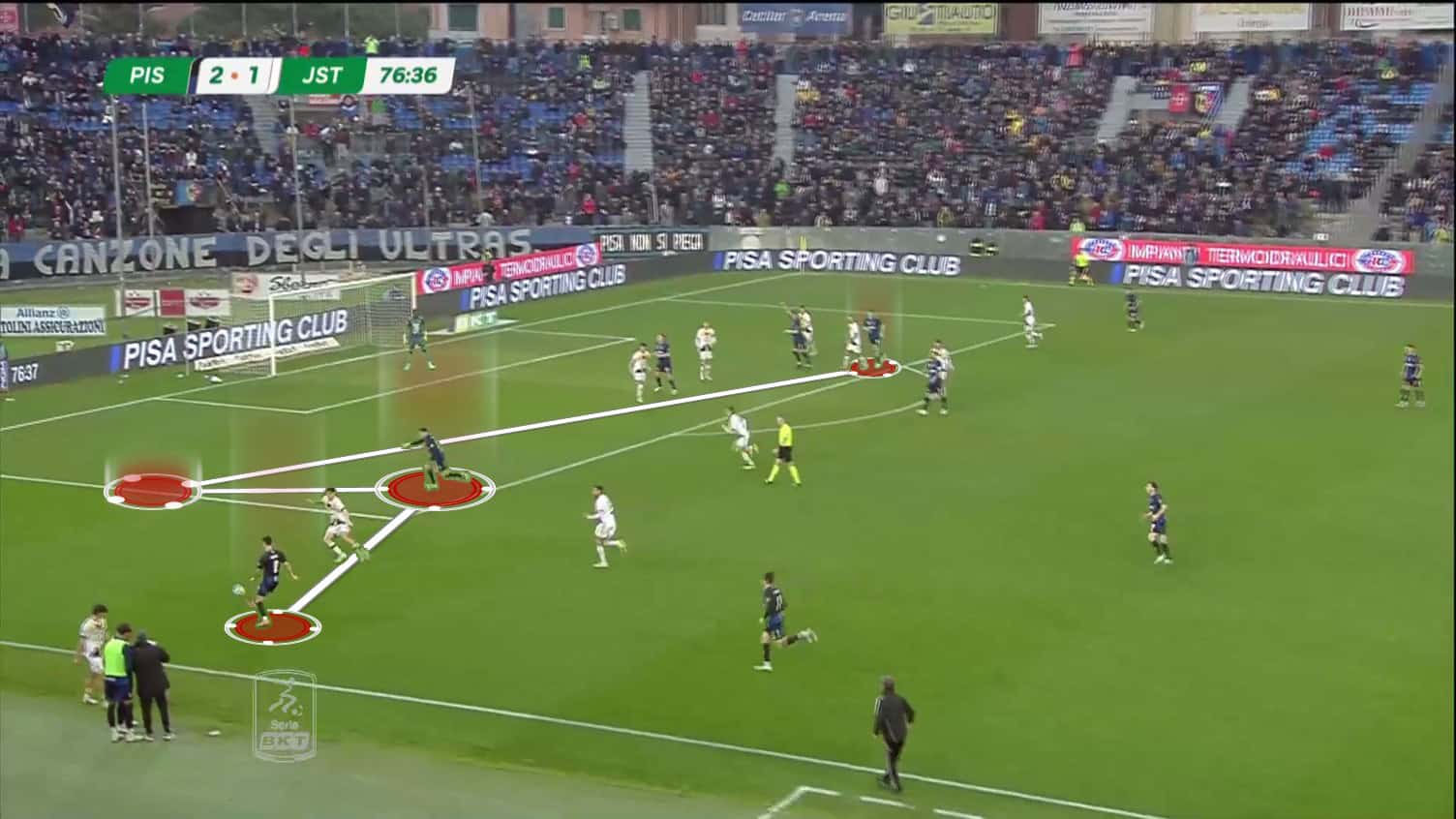
Triangular passes accompanied by dribbling from the wings and towards the box were also a recurrent attacking tactic that Pisa used numerous times to score goals.
Filippo Inzaghi Triangular Passing & Movements Without The Ball
Such actions like the one shown below highlight Inzaghi’s players ability to move well without the ball and often create opportunities thanks to accurate passing and continuous movements without the ball.
Moreover, their ability to escape from marking and usually finish with powerful and accurate shots helped Pisa score 64 goals, the second-highest number behind Sassuolo, who scored 78 goals.
Filippo Inzaghi Defensive Phase
Regarding defensive numbers, Pisa conceded 36 goals this season, less than Sassuolo, who finished the season with 38 conceded goals.
This was the second-highest number of conceded goals for Serie B teams this season, with Spezia conceding the fewest goals: 33.
Pisa concedes an average of 0.95 goals per game and wins 61.8% of the defensive duels per match.
These statistics are positive for Pisa and can only confirm that their defensive system is powerful enough, mainly thanks to the correct interpretation of the 3-4-2-1 formation from a defensive perspective.
The two lines of defence often help Pisa counter the opposing attacks early, limit their danger, and win some precious time before they reach the penalty box.
Regarding pieces, Inzaghi’s side tends to use zonal marking and switch their marking system according to the opponent’s attacking system to guarantee more chances of successful defending.
Filippo Inzaghi Set-Piece Defending Style And Issues
Nevertheless, there is still much to improve in this regard because Pisa’s players commit individual mistakes in clearances, which penalises the whole defensive system in such situations.
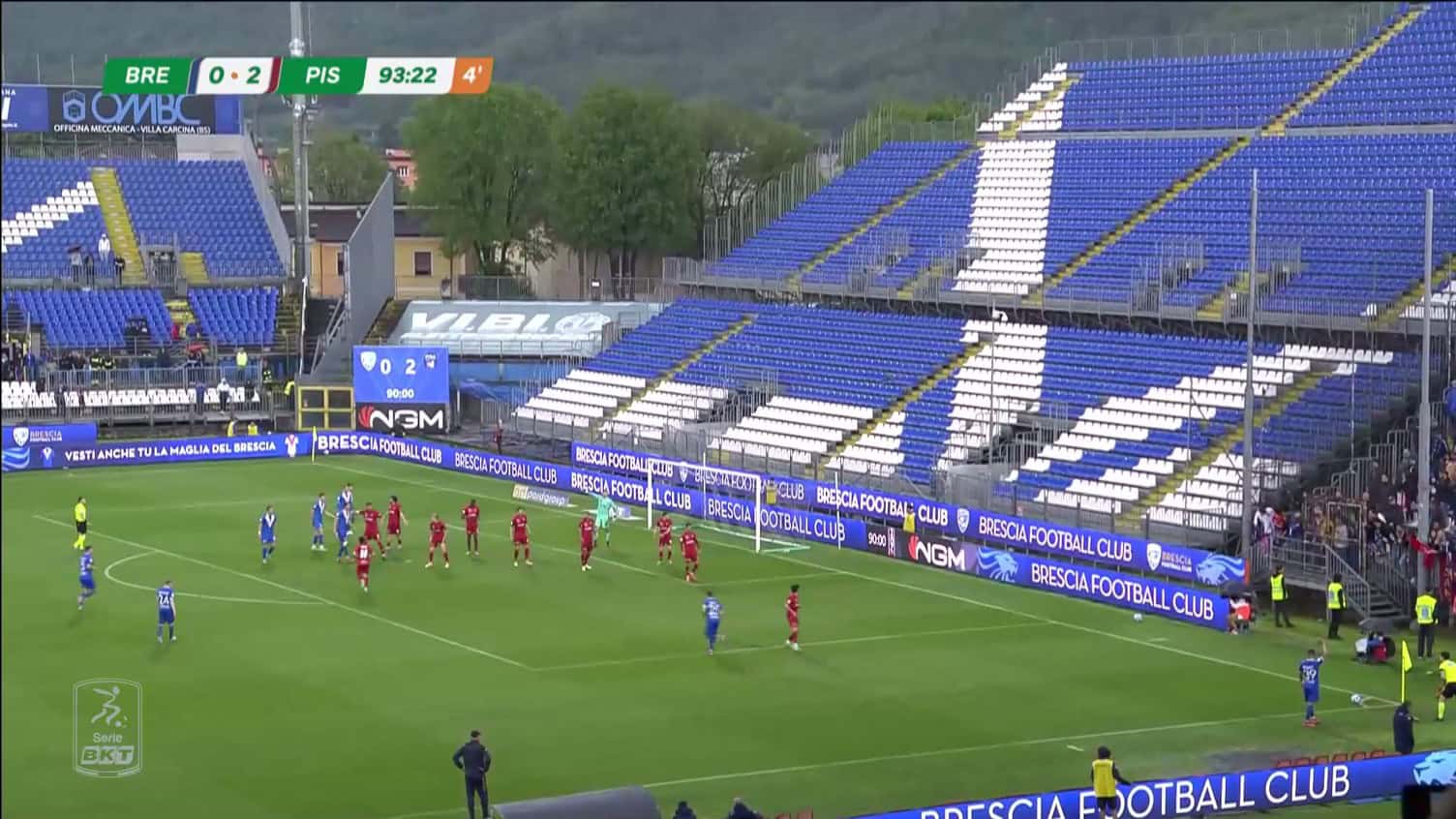
The following example shows one of the times Pisa defended a corner kick using partial zonal marking but failed to clear the ball away.
The player who made the clearance was unaware that he was actually providing an assist to an opponent near the far post.
Pisa Own Goals
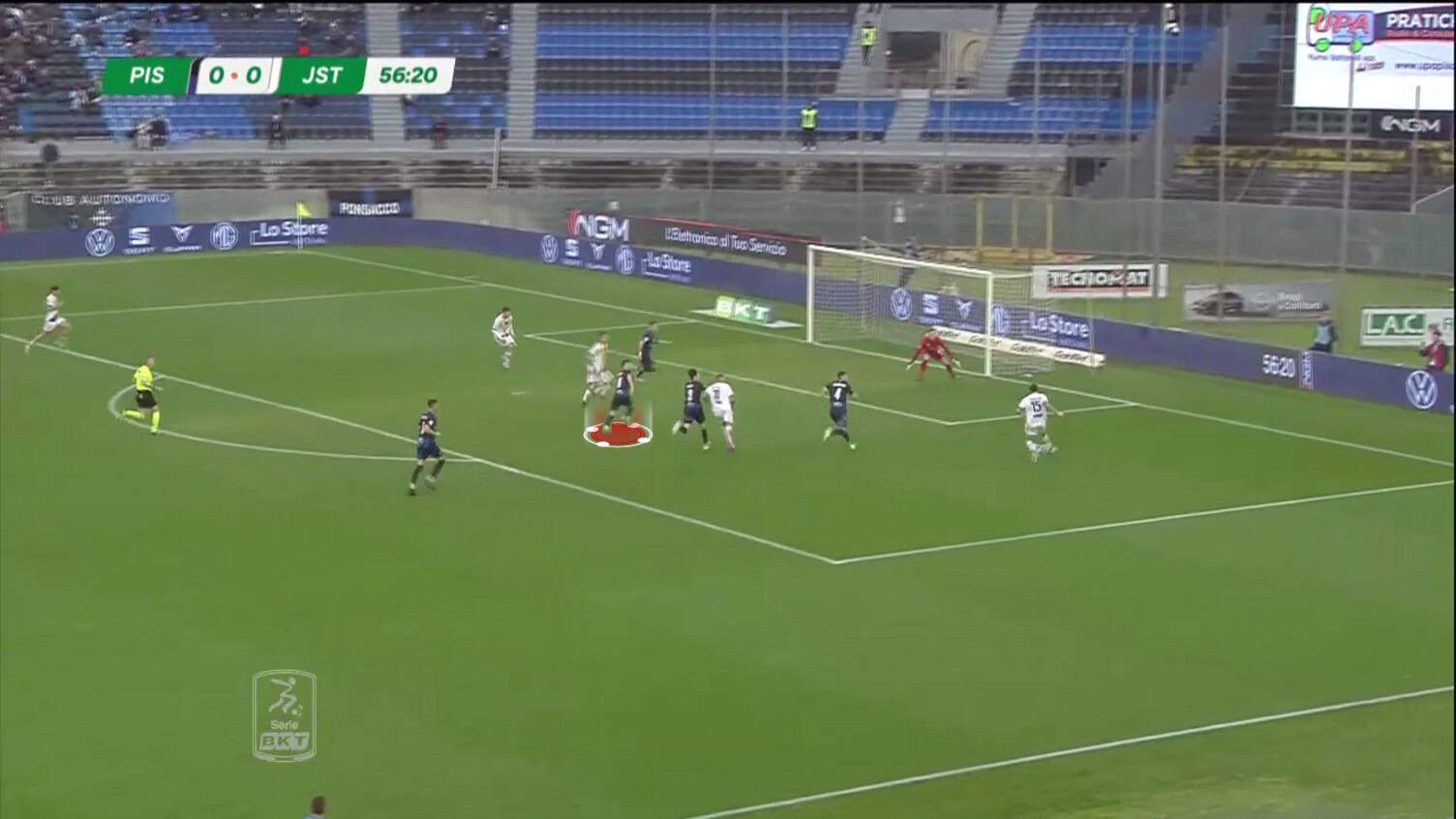
Although Pisa has often proved that they can defend crosses well, winning around 55.58 aerial duels per match, their defenders will need to pay more attention to avoid conceding own goals due to poor clearances, as they did in the following example against Juve Stabia.
Another aspect that Pisa needs to consider following their promotion to Serie A is the chase of strikers inside the box when crosses are about to be executed.
Pisa conceded some goals because their defenders were unable to mark the strikers tightly when they moved without the ball to create spaces for themselves.
Pisa SC Marking Inside The Box
This type of striker’s movement will be even more recurrent in Serie A as opponents are more accustomed to tight spaces.
Therefore, they tend to move a lot without the ball and use many tricks to confuse defenders.
That’s why Pisa should better organise their defensive line and be more aware of their opponent’s strengths in attack and their strikers’ tendencies to limit their goalscoring possibilities.
Alexander Lind Scouting Report At Pisa SC – Player To Watch
Even though many other players were crucial to Pisa this season and helped the team even more in their promotion journey, Alexander Lind has been on our radar simply because he has a lot of potential to improve and can become a world-class striker if he keeps working and improving.
He is a 22-year-old Danish striker who played 32 Serie B games this season, scoring eight goals and providing five assists, which is already excellent for someone playing in Serie B for the first time ever at the age of 22.
Lind’s attacking positioning has been outstanding, and his anticipatory movements without the ball inside the box have helped him score many goals.
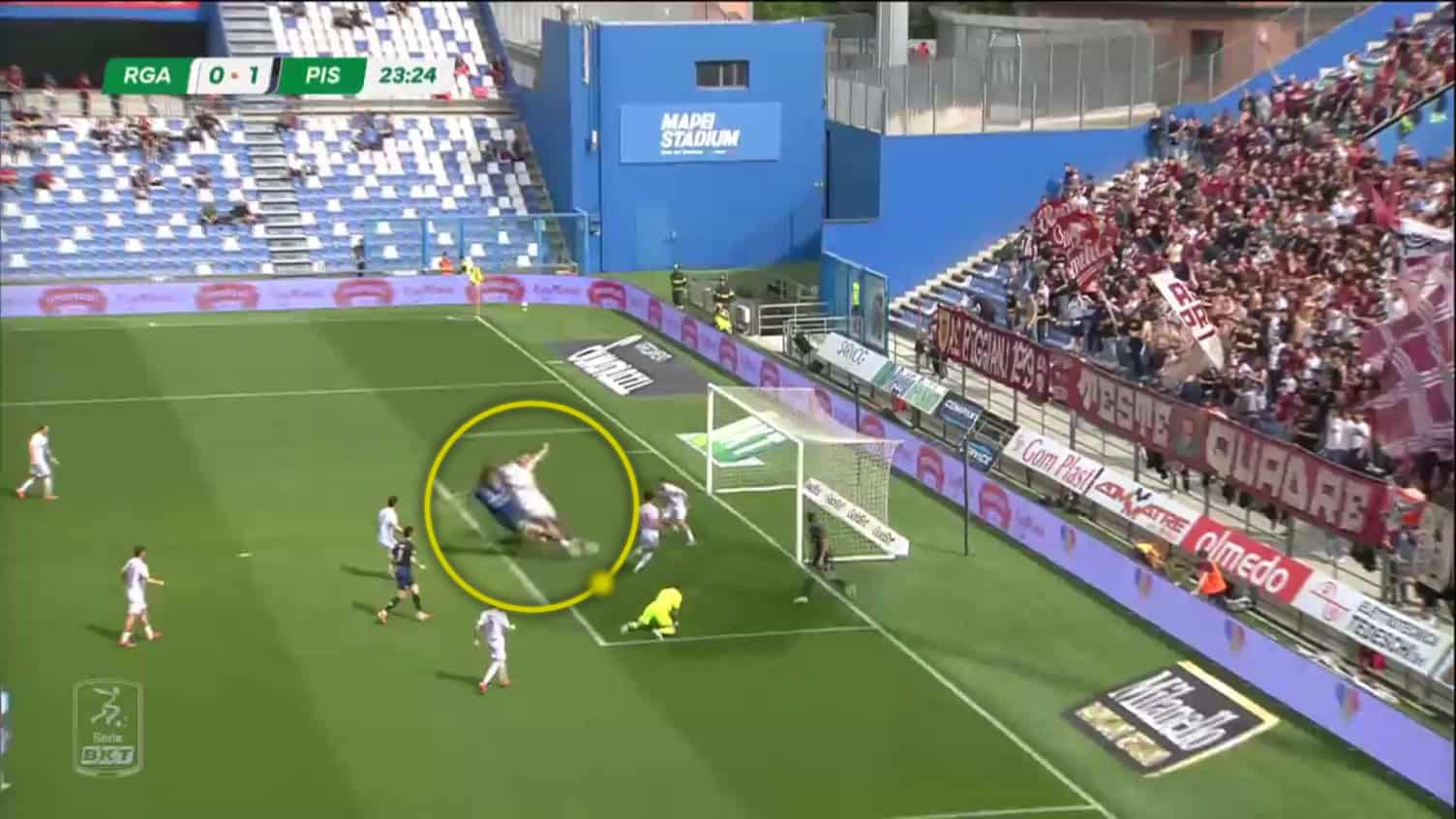
He was the first to win second balls and to use sliding shots to anticipate defenders’ interceptions.
Alexander Lind Sliding Shots
In this regard, he reminds me of Inzaghi himself since both players use their intelligent positioning and anticipatory movements without the ball to score goals and be ahead of defenders.
Moreover, his pace and ability to press high whenever needed and in a smart way, helped him intercept the ball in key areas and score goals thanks to his effective high pressing.
He proved that he can also score headers, be crucial during set-pieces, and deal well with one-on-one situations with goalkeepers.
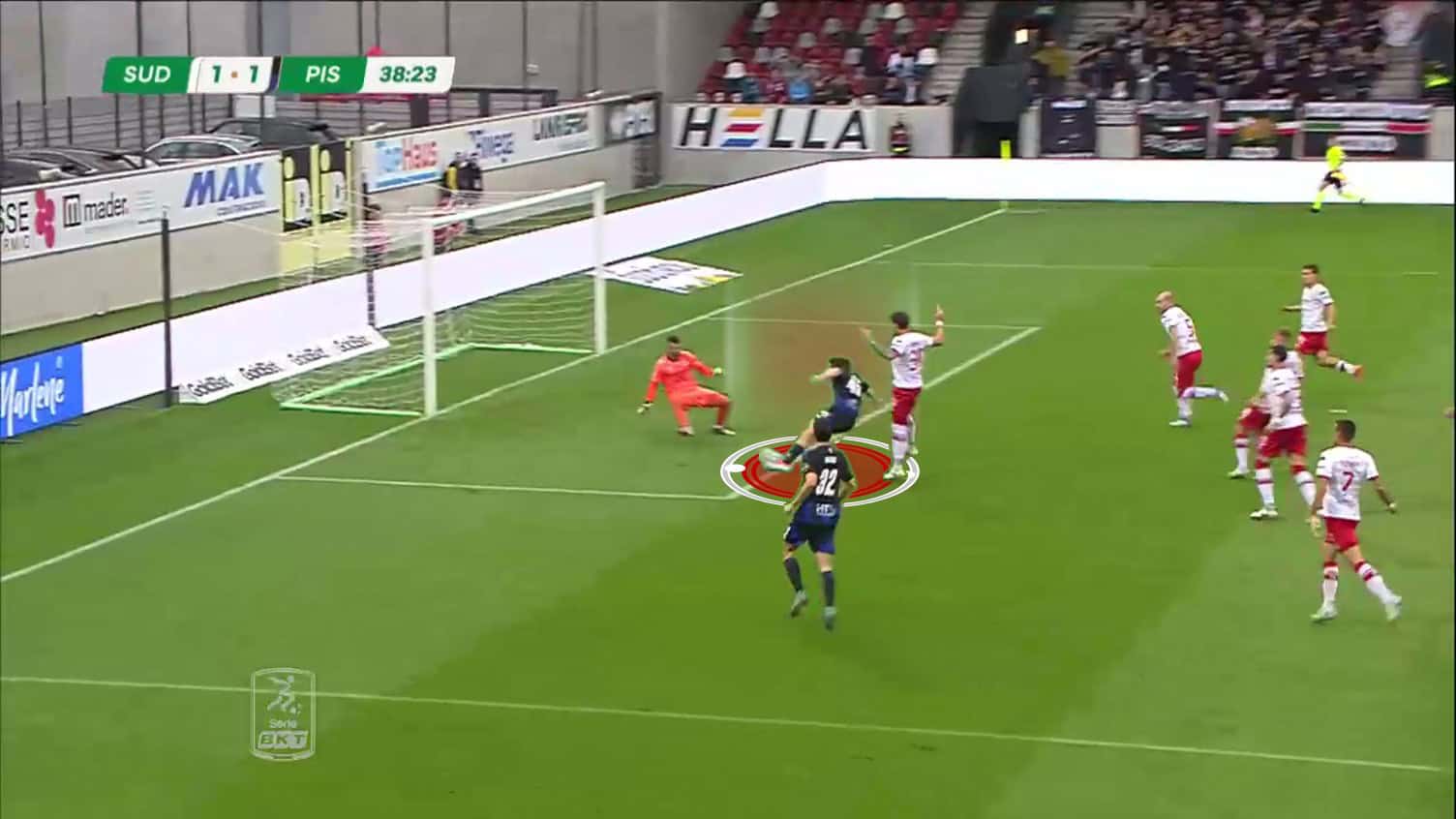
Alexander Lind Left-Footed Finishing
Being able to score even when put in complicated situations and having almost no time to think or act makes Lind’s attacking profile more impressive, as that finishing instinct is not very common with strikers nowadays.
The following example of a left-footed sliding shot finish in a situation where Lind has no time to think or put the ball to his right foot highlights how crucial Lind can be in such situations.
Alexander Lind Radar Map
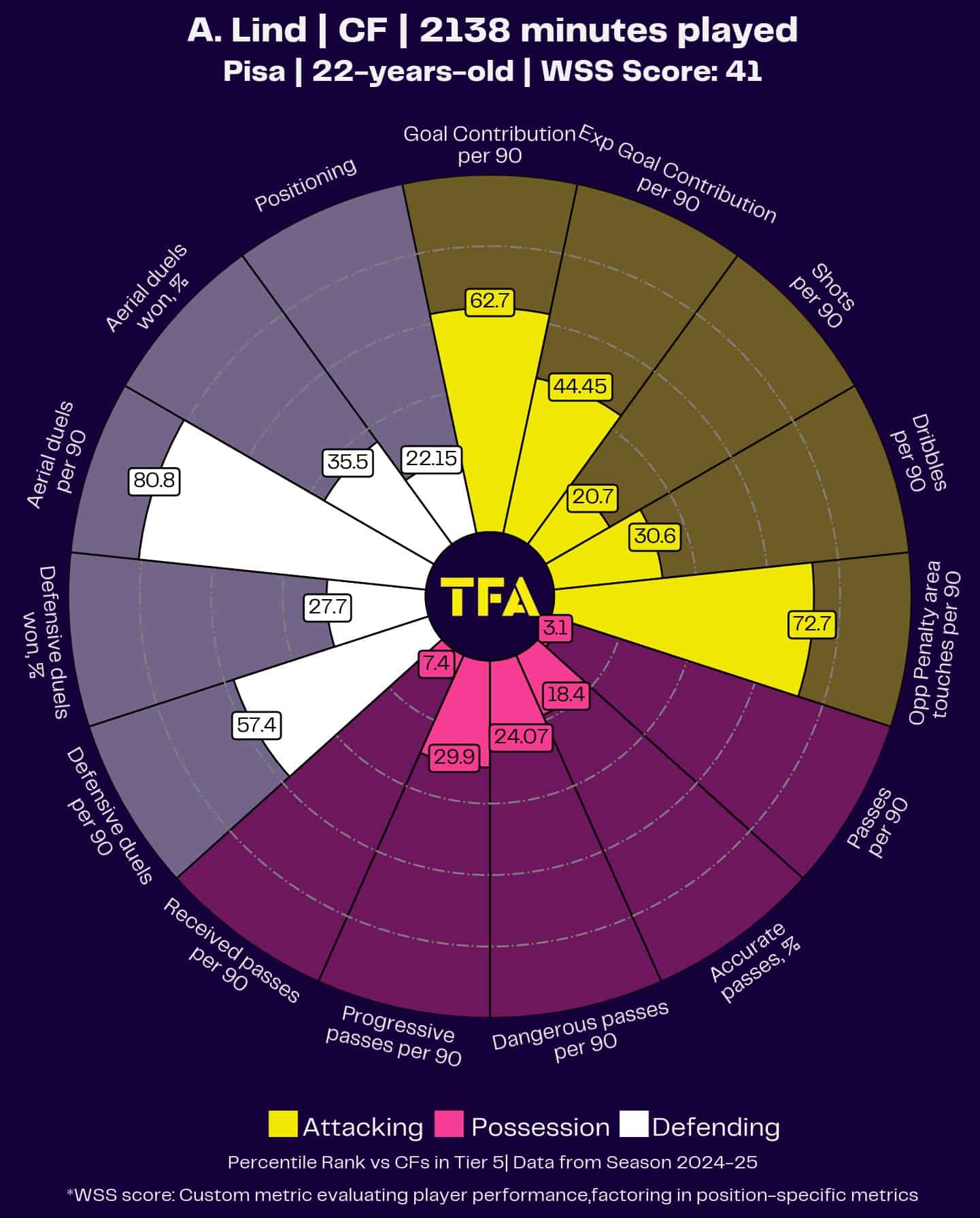
This Pizza Map shows that Lind’s goal contribution has been much higher than expected, which confirms that Lind is a promising striker who is expected to become even more critical, especially if he succeeds in remaining useful in Serie A.
Winning a lot of aerial duels per game is also very positive, and that will help Lind a lot in Serie A.
That said, there is still much to improve, whether in terms of dangerous passes, accurate passing, or shots per match.
Conclusion
Filippo Inzaghi’s Pisa achieved an outstanding result in Serie B and are flying back to Serie A after 34 years of absence, thanks mainly to Inzaghi’s successful attacking and defensive tactics.
At the same time, many aspects need improvement, especially in the defensive phase ahead of their participation in Serie A next season, to avoid being re-relegated to Serie B.
