
Since Ashley Cole’s international retirement, left-back has been a problem position for the England National Team.
Luke Shaw has performed well when called upon.
Still, regular injuries have limited his involvement and often forced Gareth Southgate to look to an out-of-position Kieran Trippier in recent tournaments.
Yet, as Thomas Tuchel steps into the role of England Manager, England has had a sudden emergence of full-back talent.
Youngsters Lewis Hall and Myles Lewis-Skelly have both broken into the first team at their respective clubs, and look set to give Tuchel a good selection headache as we head towards the 2026 World Cup.
This player analysis article will examine the two profiles and analyse their strengths and weaknesses, before assessing which player may be more suited to a Thomas Tuchel starting XI for England.
Lewis Hall Vs Myles Lewis-Skelly Stats
|
Lewis Hall |
Myles Lewis-Skelly |
|
|
Height |
1.79 M |
1.78 M |
|
Age |
20 |
18 |
|
Weight |
73 KG |
72 KG |
|
Position |
LB |
LB |
|
Premier League Appearances |
54 |
17 |
|
International Caps |
2 |
2 |
Myles Lewis-Skelly Player Analysis
Lewis-Skelly is a natural central midfielder, but plays left back for Mikel Arteta‘s Arsenal side.
This role suits him exceptionally, as he regularly inverts into central midfield in possession.
Myles Lewis-Skelly Strengths
Myles Lewis-Skelly’s biggest strength is his exceptional ball-carrying ability.
Despite playing a deep role in possession, he is fearless when taking players on and is vital to progressing Arsenal’s play.
He is extremely press-resistant and possesses a unique skill of drawing opposing players into the press, making it appear as though he is likely to concede possession, before using his body as a shield and bursting away from the opposition.
His ability to carry the ball and be press-resistant is down to a combination of technical skill and impressive physicality.
He is quick to adapt to the opposition press with his footwork and manages to maintain extremely close control even when under oncoming pressure.
He also uses his body particularly well to shield off opposing defenders and keep the ball away from their grasp.
Lewis-Skelly is also an efficient passer of the football and excels in retention.
He passes accurately with speed and makes good decisions when it comes to his selection options.
As he inverts into the central midfield role, he often collects the ball in compact, overloaded areas.
This has meant, thus far in his career, that his ball playing has been chiefly focused on retention.

When given the opportunity like above, he has proven he can be incisive and progressive with his passing.
He has managed to contribute to goals and assist despite his role being based on retention.
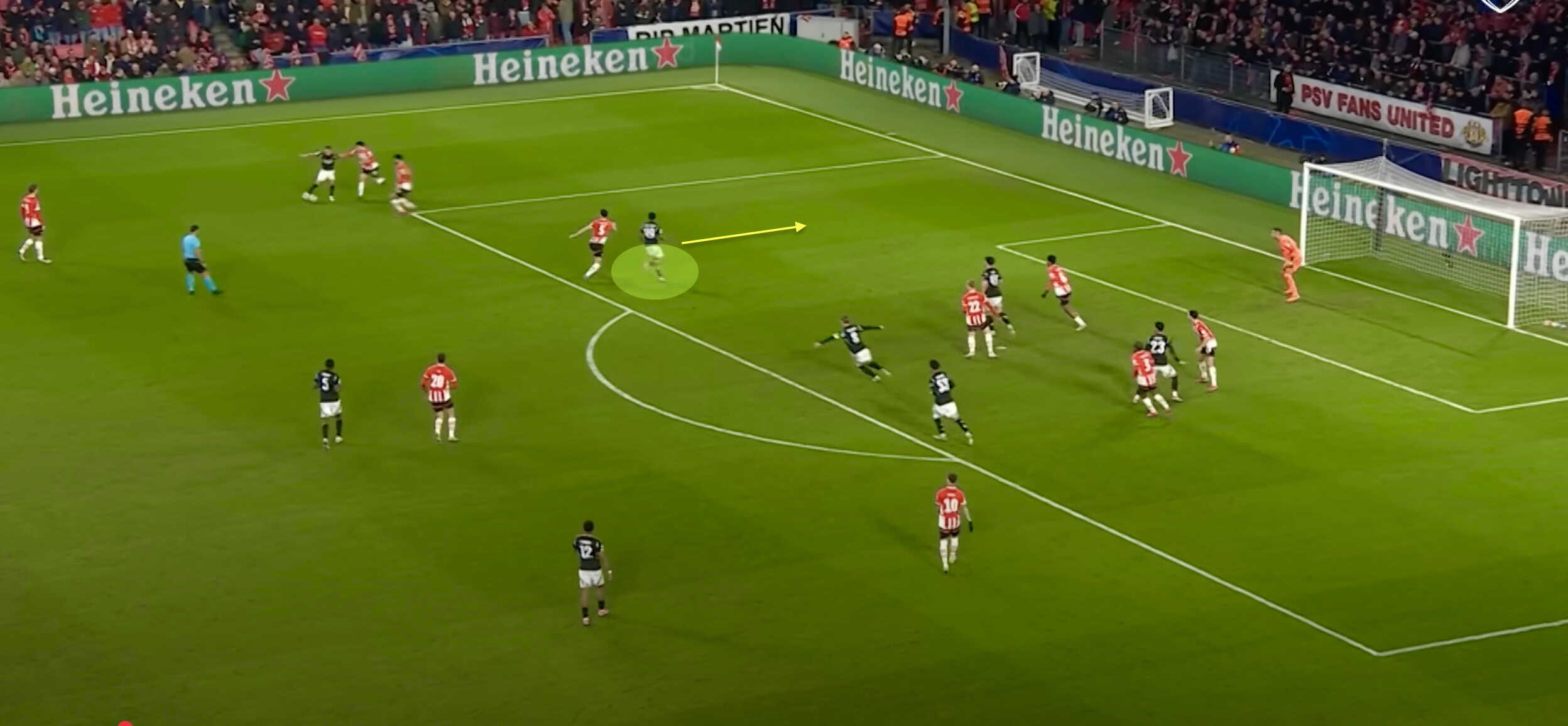
Finally, Lewis-Skelly is an unusually effective defender for his age and is coming off a clean sheet against a front three of Vinicius Junior, Kylian Mbappé, and Rodrygo.
In particular, Lewis-Skelly thrives in duels.
He uses his physicality brilliantly to outstrength and outpace opposition when competing for the ball.
He is strong, but also agile and athletic, which allows him to react quickly to second balls and loose passes, ensuring he beats his opposition.
He is combative and has an eagerness to compete and get involved, even when facing bigger opposition.
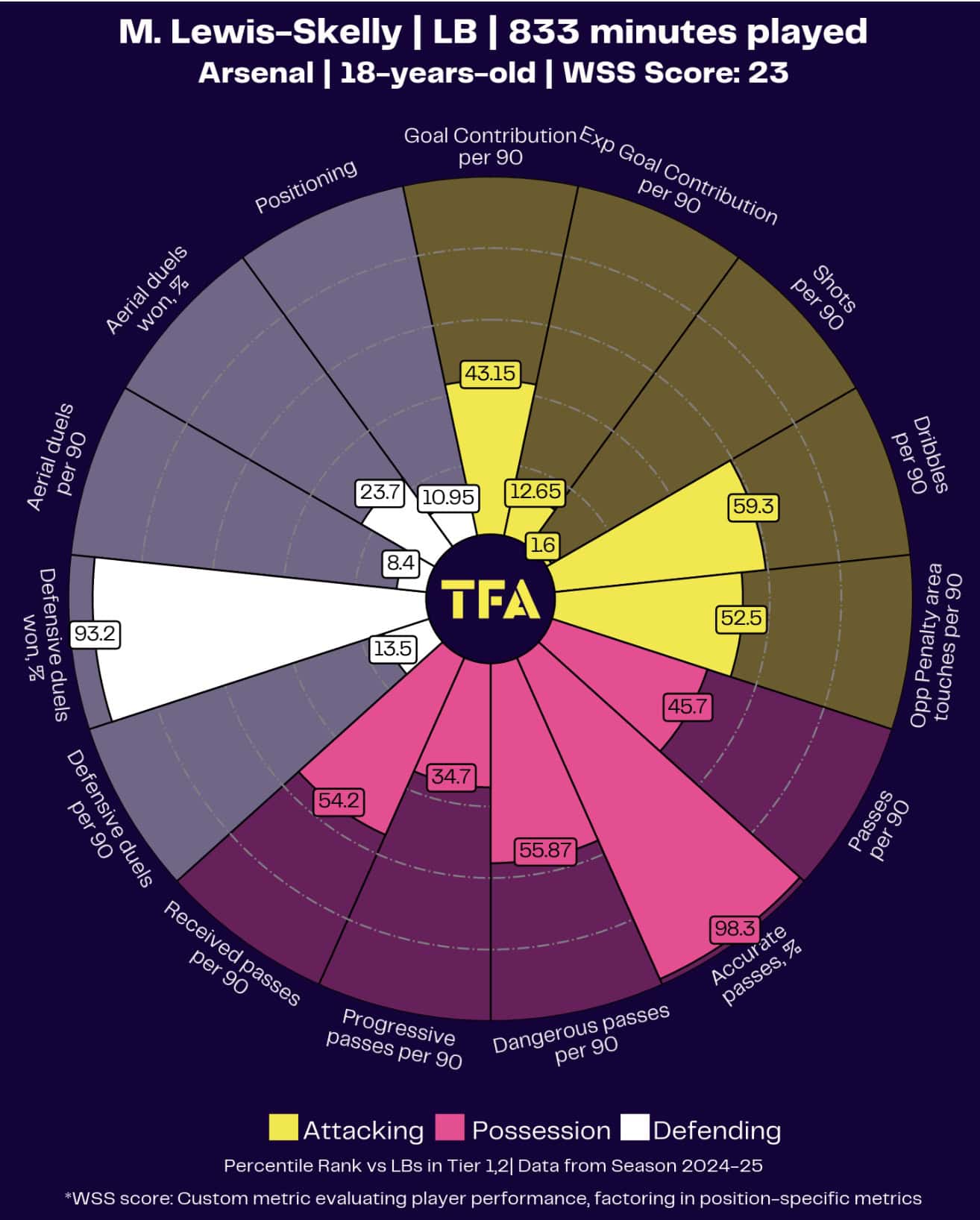
The statistics heavily support this, as he excels in ground duels, with a win rate and ranks highly amongst Premier League players in terms of preventing opposition forwards from taking him on.
Myles Lewis-Skelly Radar Chart
Myles Lewis-Skelly Weaknesses
Many people have criticised Lewis-Skelly for being rash in his decision-making.
To me, this is inaccurate and paints a false narrative.
Bar a sloppy red card against West Ham, which was down to a poor choice on the ball, he has been the victim of an unjust red card against Wolves and an outrageously weak penalty against Everton.
Whilst a rash element to his game could be forgiven at 18, I genuinely believe he has been nothing more than unlucky to gain this reputation.
Truthfully, so far, there are few obvious weaknesses to his game.
Lewis Hall Player Analysis
Lewis Hall also came from academy football as a central midfielder.
He graduated from Cobham and began his transition to full-back under Thomas Tuchel, who recognised that his ball-playing ability was also complemented by excellent defensive nous.
He has remained in this role under Howe and operates as a successful overlapping full-back.
Lewis Hall Strengths
Firstly, it doesn’t take long watching either Hall to recognise his comfort in possession or his outstanding ability on the ball.
Hall is exceptional in maintaining close control of possession, and particularly excels in tight areas.
His ball manoeuvring is brilliant, and he has a good ability to keep the ball secure even when under pressure.
He is a capable dribbler, using body feints and shoulder drops effectively to force the opposition into committing, before effortlessly gliding past.
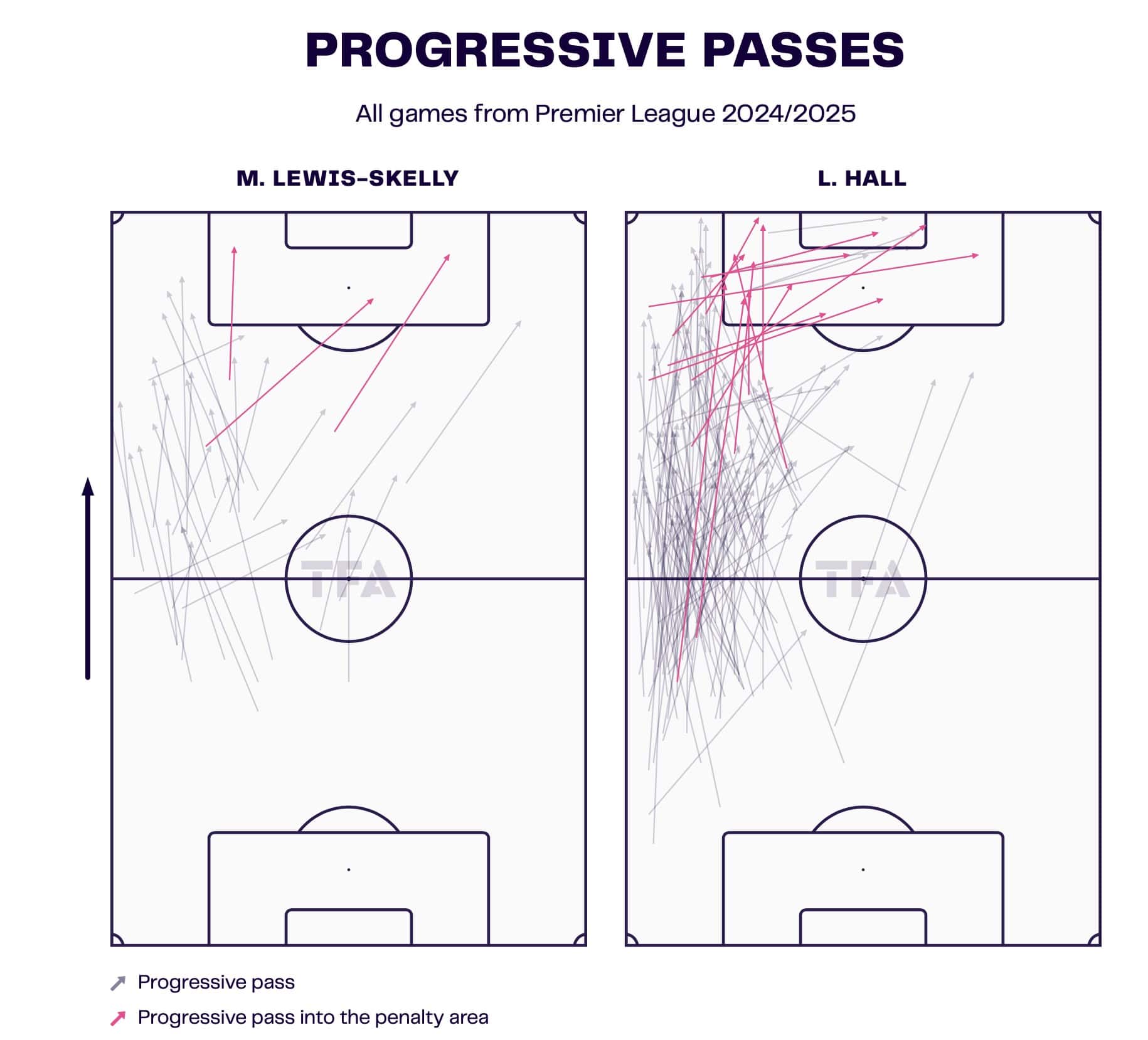
Hall is an also immensely progressive passer of the ball for his age and position.
He is accurate and incisive and has a very adaptable technique that allows him to play a range of passes.
His impressive passing ability enables him to open up the game and creating opportunities from deeper zones on the pitch.
He is also a very impressive crosser of the ball.
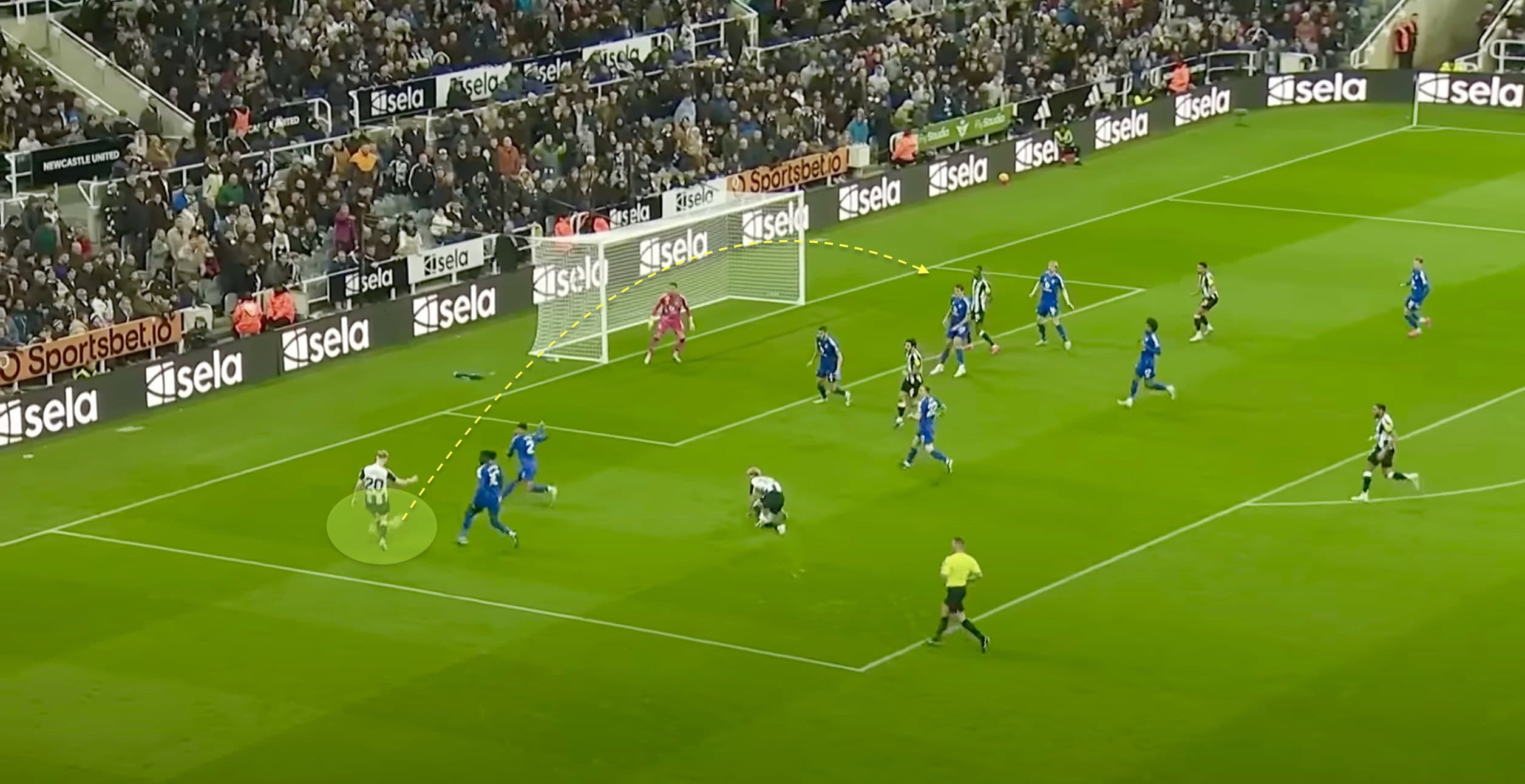
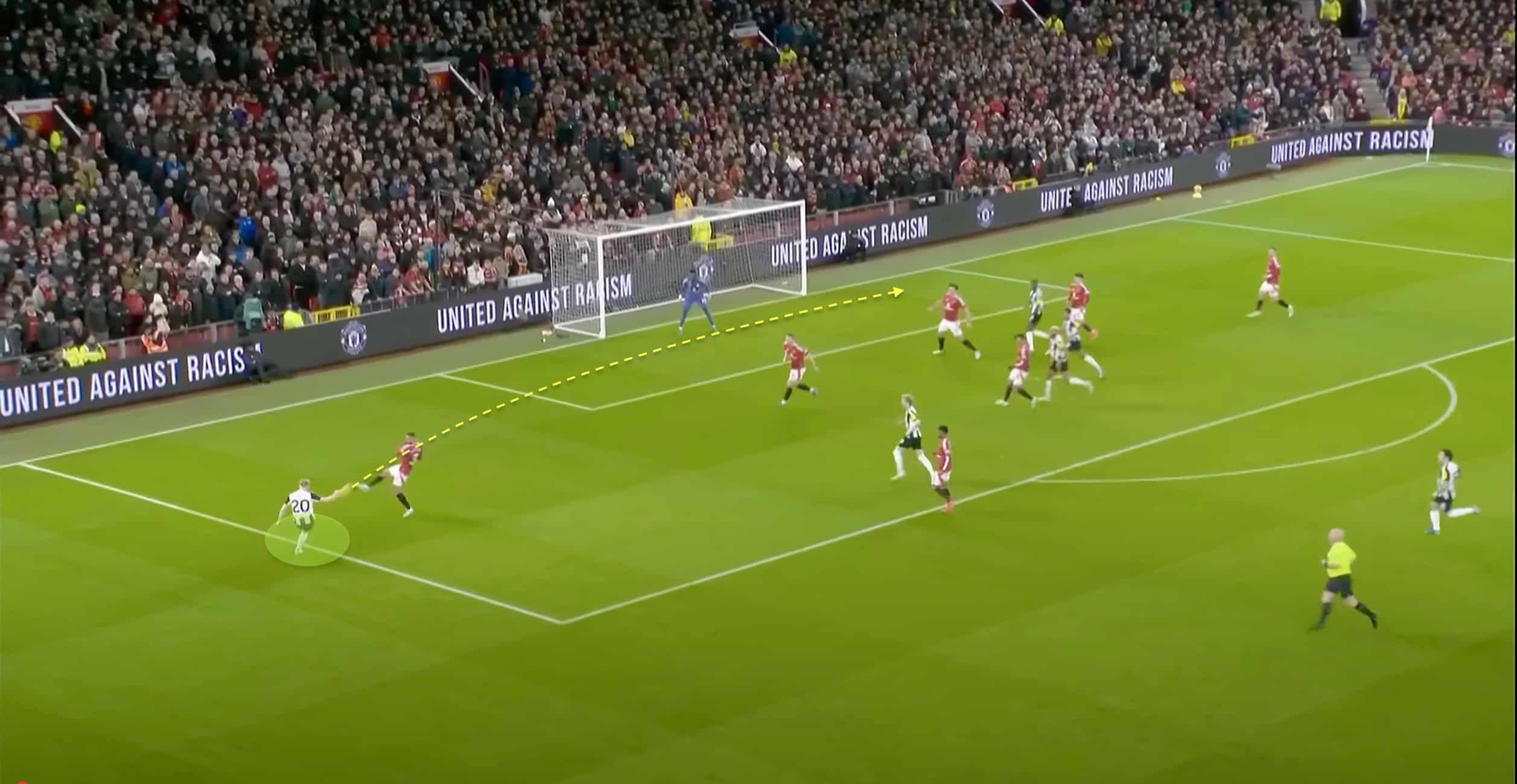
He can find his players with accuracy and speed, and as a result, he also takes set pieces for Newcastle United.
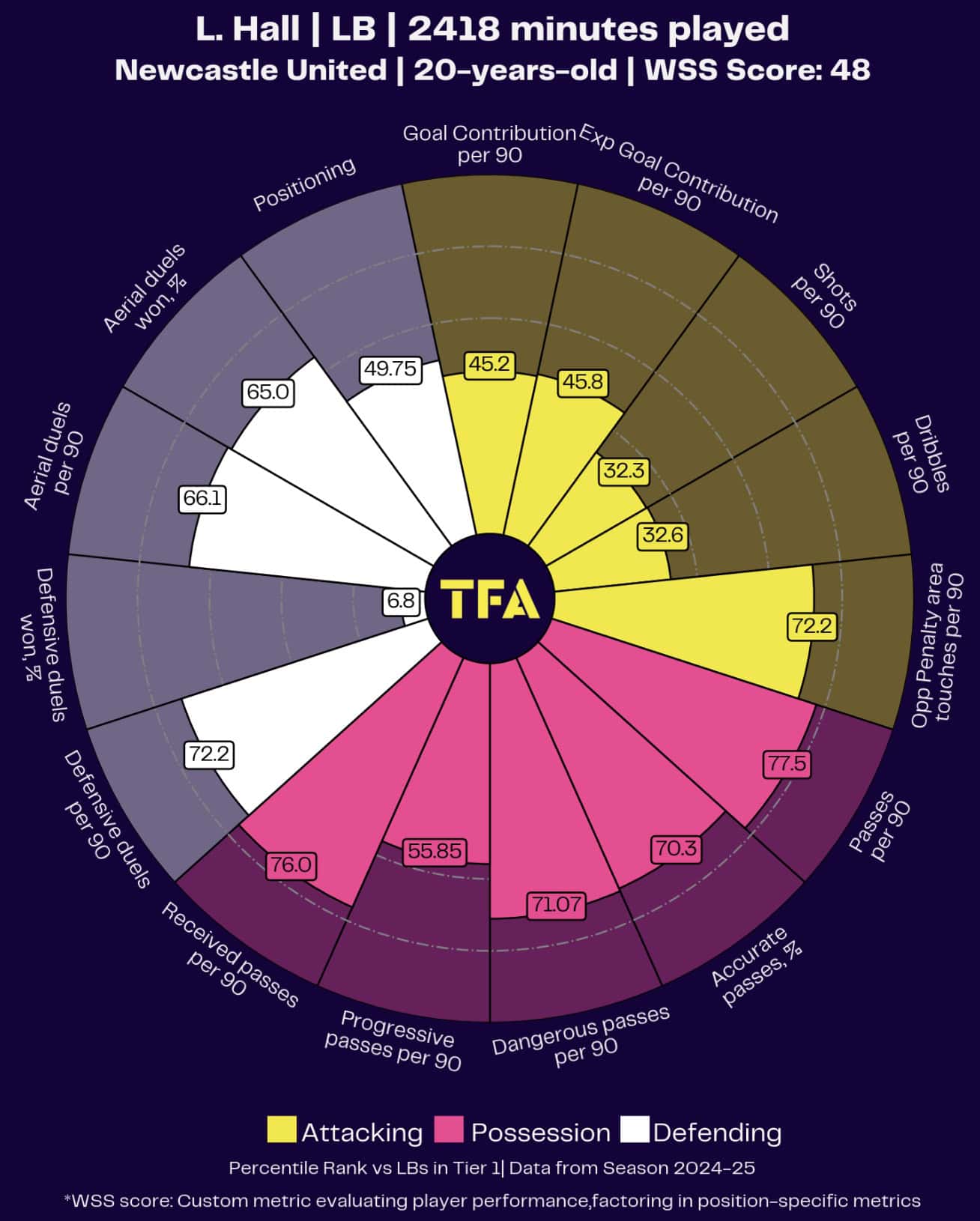
Compared to his positional ‘counterparts’ average, Hall creates more expected goals, has more goal-creating actions, and also has a longer progressive passing distance (all per 90).
Hall is highly involved in possession and is used as a progressor in Newcastle’s build-up, which shows Howe’s eagerness to use his skill set.
Lewis Hall Vs Myles Lewis-Skelly Progressive Passes Map
Finally, Hall is also an efficient defender, and recently famously defended Mo Salah at Anfield tremendously.
He is bold in terms of regaining possession and often appears aggressive in committing to the opposition.
He presses high and wins challenges all throughout the pitch.
Physically, he is not as gifted as some other defenders, but he makes up for this, for the most part, with his intelligence and ability to read the game.
Lewis Hall Radar Chart
 Lewis Hall Weaknesses
Hall could be seen as slow for a full-back, but his intelligence in reading runs and positioning means it rarely causes him any problems, as he is usually one step ahead.
Myles Lewis-Skelly & Lewis Hall Similarities
One standout factor for both of these young, inexperienced footballers is the level of confidence and composure that they both show on the pitch.
For such young players in terms of age, they both display a level of arrogance and assurance on the pitch that is usually seen in veterans.
This terminology of arrogance is, in most walks of life, a bad thing, but arguably the biggest compliment of a young player.
Both likeable, popular personalities off the pitch, yet confident, self-assured on it.
The best sign of one’s belief in their own ability.
This is essentially the reason both have made a large amount of appearances so early in their careers.
In terms of shared weaknesses, neither Lewis-Skelly nor Lewis Hall are particularly effective in the air.
Both players rank low in terms of aerial duels win percentage.
Other than that, both players are relatively complete as full-backs and do not have any major red flags in their game.
The Future For England
At this point in their careers, I do not believe one player is better than the other, but either could be more effective for England in different games.
Their uses depend primarily on the opposition and also on the system Tuchel chooses to adopt.
Thomas Tuchel Formation For England
Tuchel is a relatively tactically flexible manager, and although he has a clear style of play, he has proven willing to adapt his shape or formation based on the player profiles within the squad.
He has previously played a back five system with Chelsea, when he won the UEFA Champions League with Ben Chilwell and Reece James as key pieces.
Alternatively, at Bayern Munich, Tuchel preferred a 4-2-3-1 setup, with Alphonso Davies and Konrad Laimer often chosen for the full-back roles.
Right now, a back five with wing-backs would most certainly suit Hall, whose overlapping nature and crossing ability are unmatched.
In his Chelsea side, Chilwell and James were given a lot of attacking freedom and asked to deliver goals and assists, which Hall would certainly be able to provide.
His chance creation could be extremely beneficial to the likes of Harry Kane, who values balls into the area in high XG areas.
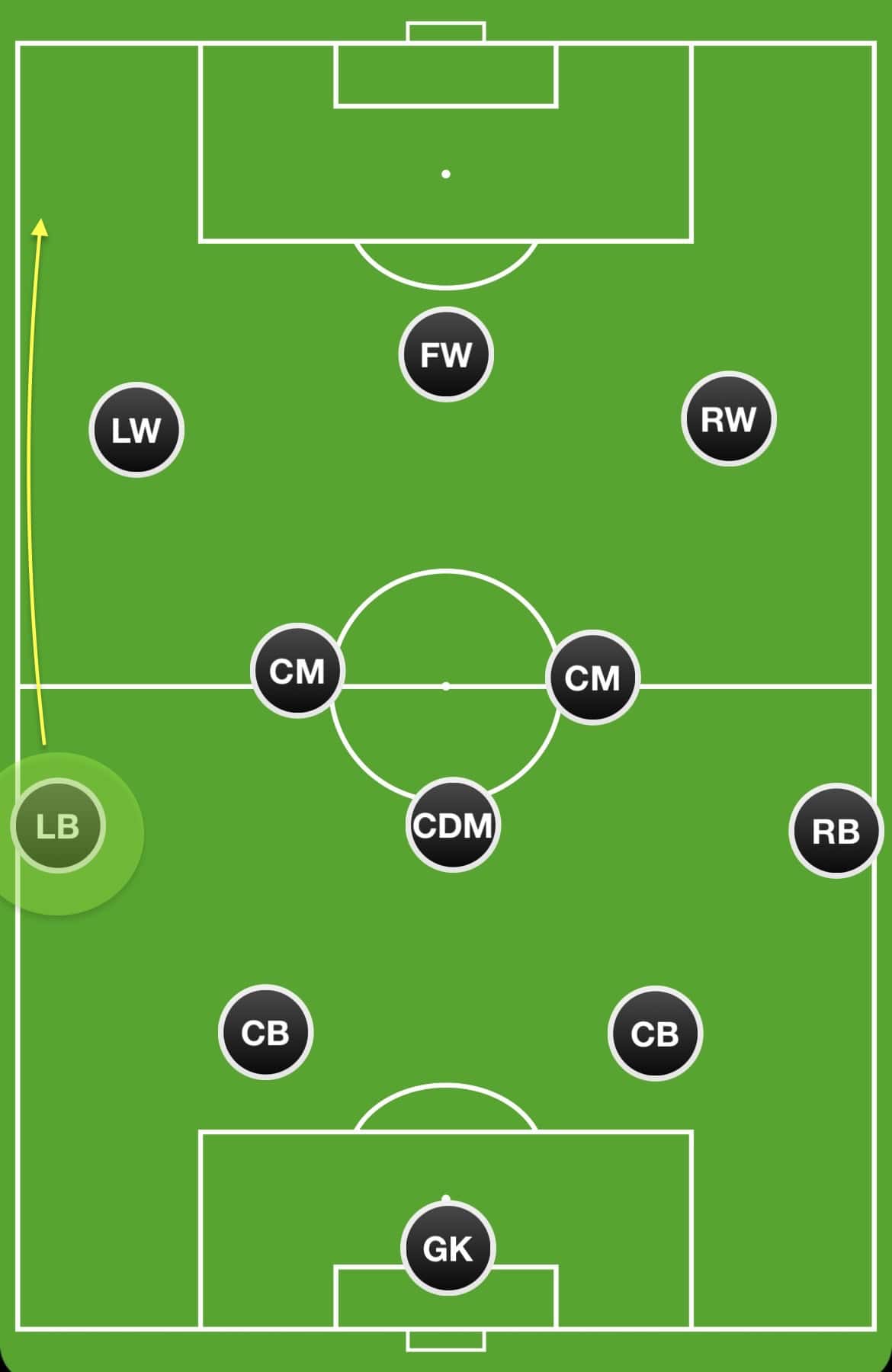
Against lower-block teams, I could see Tuchel utilising Hall and seeking out his progressive passing abilities to unlock the defences.
On the other hand, a back four set up against a top international side would suit Lewis-Skelly’s profile more prolifically.
His brilliance in defending opposition dribblers and winning physical duels would provide a challenge for any opposition, as we saw this week with Mbappé and Rodrygo’s struggles at the Emirates.
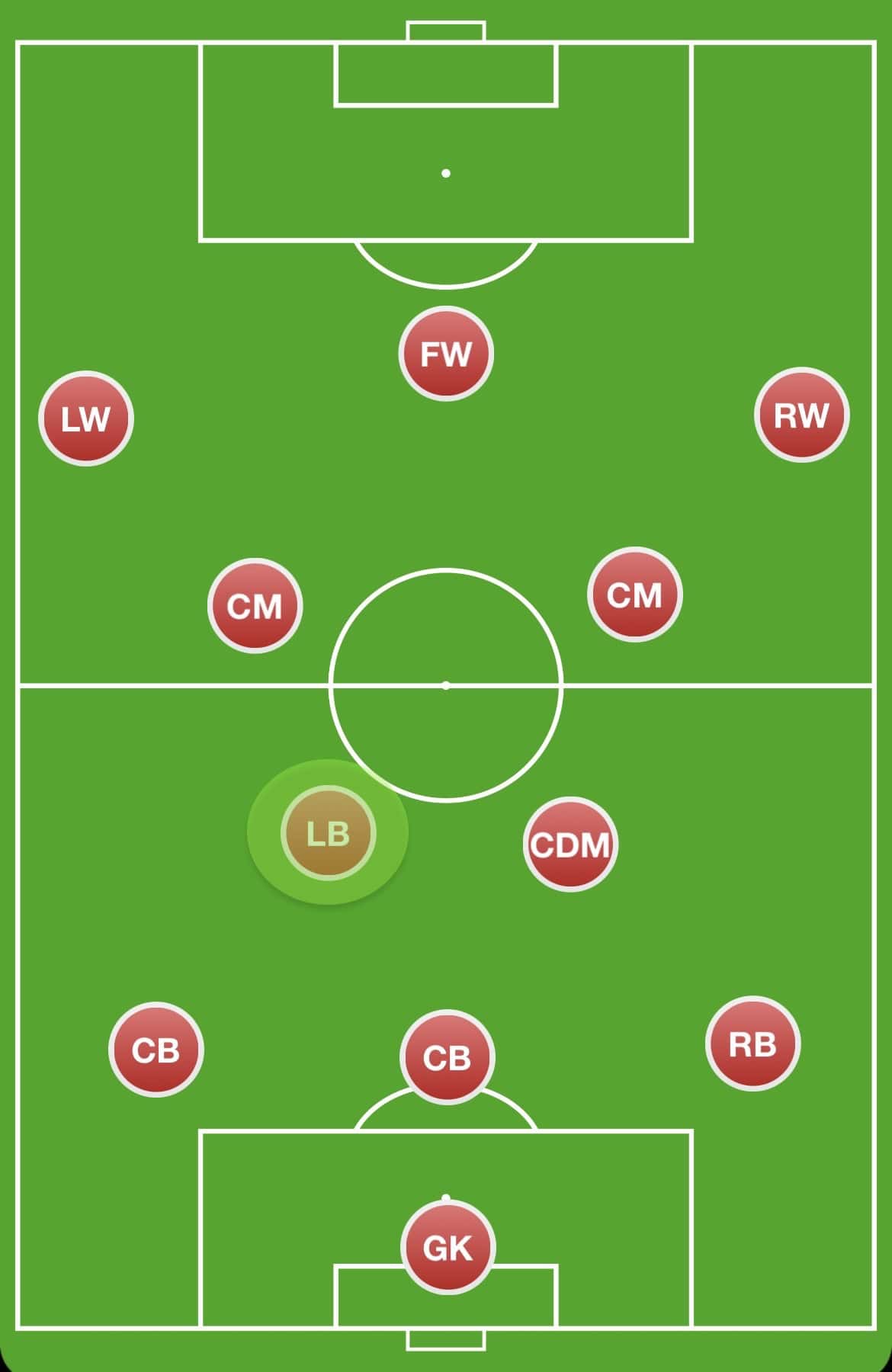
Looking at England’s selections so far, he has opted to use Lewis-Skelly in a 4-2-3-1 formation, similar to what he used at Bayern and also similar to what Arteta uses at Arsenal.
In these fixtures, he allowed the Arsenal defender to play an inverted role, which he is so used to.
While Hall has not been available for the initial matches, this may suggest his preferred system, which most likely points more towards Lewis-Skelly as the first-choice option for the near future.
These central midfield zones appreciate a retentive passer and value a ball carrier over a progressive passer.
The areas are those that are more crowded, with Lewis-Skelly’s ball-carrying ability and physicality being more effective than Hall’s.
Potential Ability
Looking longer term and focusing on ceiling, I would place Lewis-Skelly in the category above Hall for now.
Hall will undoubtedly have a brilliant career as a top Premier League full-back, and I believe he is capable of being a starter for a side competing in the League.
However, Lewis-Skelly’s unique profile, which combines technical excellence with versatility and physical dominance, is more rare.
His potential seems to be unlimited at this stage, and he seems to have the superstar mindset that could make him the best left-back in the world.
If he could add more progression to his passing and take on more risk, he would become even more complete and challenging to defend against.
Conclusion
It is obvious to any football fan how fortunate England are to have these two talents for the next ten plus years.
Both provide Tuchel and future England managers with differing profiles and skill sets, but the same brilliant abilities and personalities.
Hall is a more progressive passer and offers more in terms of creativity, whilst Lewis-Skelly is a world-class ball carrier and can progress through the thirds this way.
Lewis-Skelly is more physically dominant and is currently a more difficult defender, particularly in duels where he excels massively.
Yet, Hall is extremely intelligent when defending and has shown significant improvement defensively over the past season.
Between them, they will offer enormous flexibility, and any manager will have the ability to change system and style mid-game.
Right now, I would place Lewis-Skelly as the favourite to be the long-term first choice, as he seems best suited to the system, while also arguably having a higher ceiling.
However, in the long term, we are highly likely to have an ongoing heated discussion similar to the Kyle Walker, Reece James, and Trent Alexander-Arnold debate that we have seen on the opposing side.
One thing is for sure – England’s future is extremely bright.
