
Eduardo Camavinga joined Real Madrid from Stade Rennais in the summer of 2021 for €31m.
Right away, he got off to a great start, playing 26 matches in La Liga and 37 the following season, becoming a key player in Los Blancos‘ midfield.
Things have slowed down for Camavinga at Madrid; injuries played a part, with hamstring problems in 2024/2025 and ankle problems in 2025/2026.
With recent transfer rumours that Real Madrid are looking to go for Rodri, it looks like Camavinga’s time at Madrid could be coming to an end, or a move may be on the horizon.
In this Eduardo Camavinga scout report and player analysis, we are going to analyse Eduardo Camavinga’s style of play and, if a move is on the way, which clubs he could fit in best.
Eduardo Camavinga Box-To-Box Traits
Eduardo Camavinga’s best characteristics are his stamina, aggressiveness, and work rate.
He is key to the Real Madrid midfield, and he plays a vital role in making challenges to win the ball back or tackle.
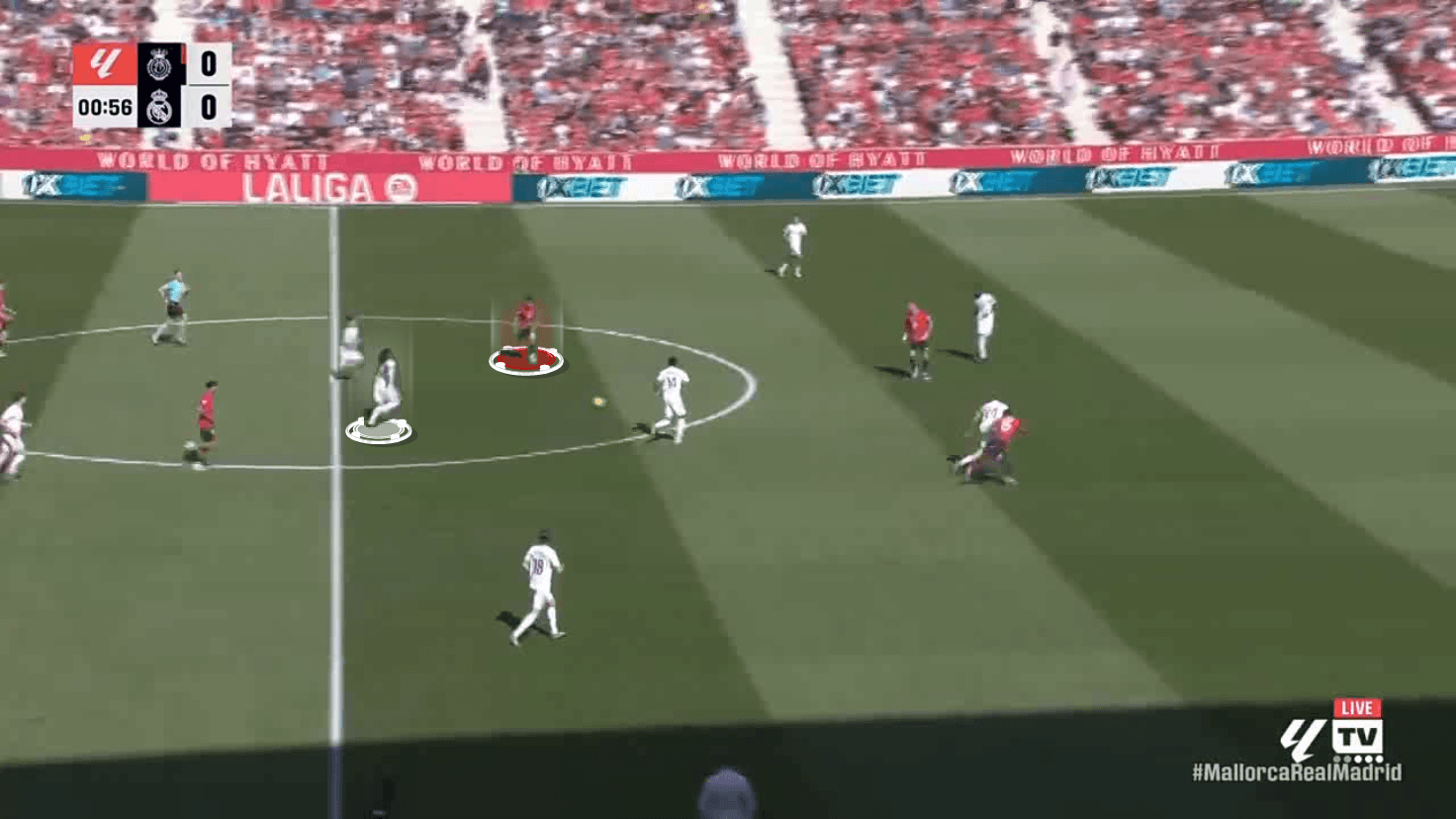
Eduardo Camavinga’s box-to-box playstyle is quite literally box-to-box.
The term is used for midfielders who cover both ends of the pitch, but Eduardo Camavinga is one of the few true midfielders who literally fit this name, playing a role in Real Madrid’s press, even if that means being in the opponent’s penalty box.
This is a representation of just how eager Eduardo Camavinga is to win the ball back and cover every blade of grass on the pitch.
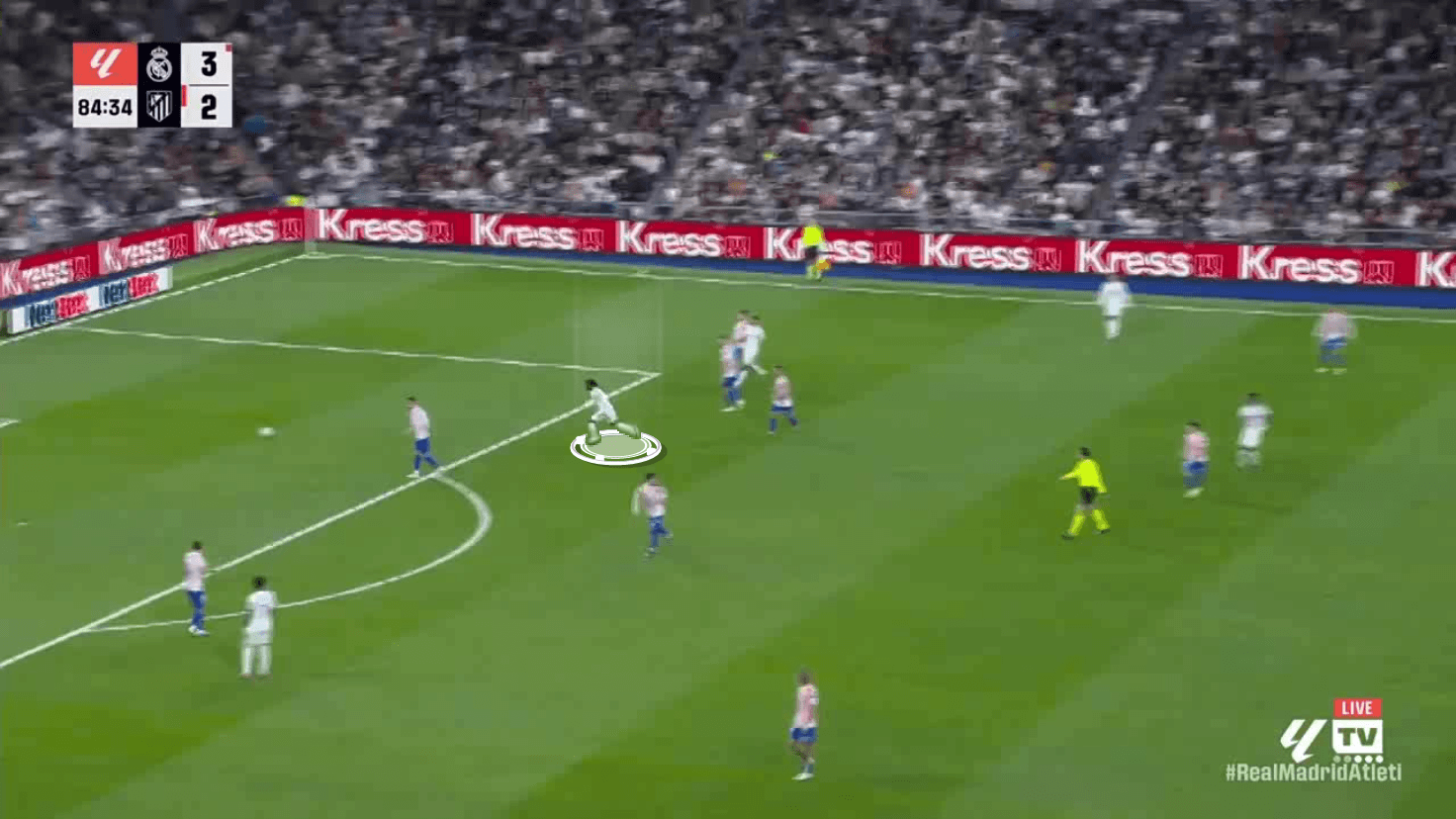
Part of a midfielder’s job is to cover the pitch with a high work rate, but the other part is being a key player on the ball.
Eduardo Camavinga is a very technical player, and as he makes those runs forward, he is often found looking to play a man in behind, given Real Madrid’s extremely fast-paced attacks.
Eduardo Camavinga On The Ball
Part of Eduardo Camavinga’s development at Real Madrid has been improving his understanding on the pitch and playing calmly under pressure, which he learned alongside Toni Kroos.
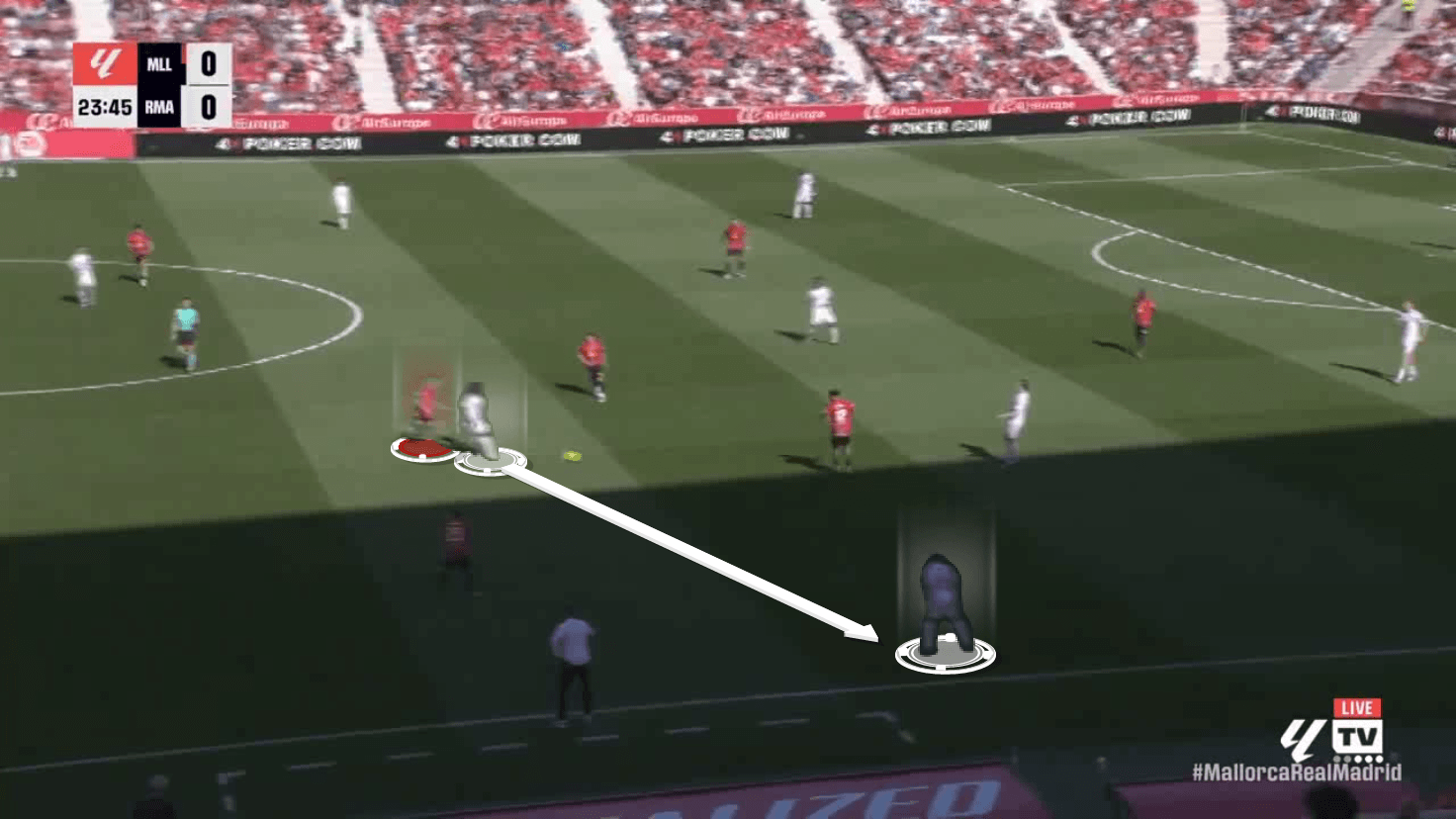
Eduardo Camavinga is very technical on the ball and plays with flair.
He is great at keeping the ball close to his level.
I would say that over his time at Madrid, his technical abilities have not improved much.
He was already a very technically gifted player when he first joined, and when you look back at footage from then to now, you see a marginal difference in quality.
What you can expect to see improve is rather other factors in his game.
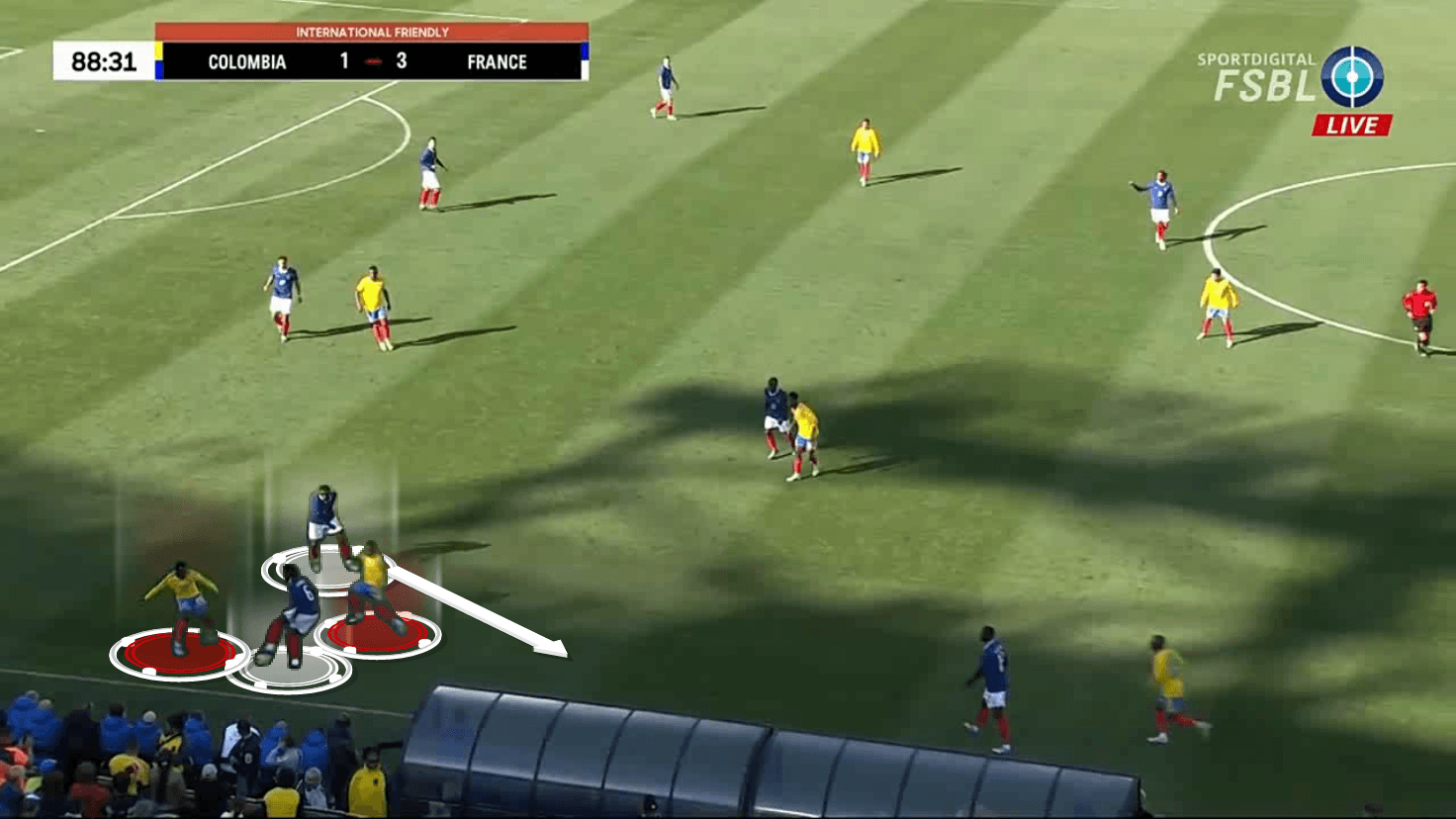
On the ball, Eduardo Camavinga is just as aggressive as he is in his defensive positioning.
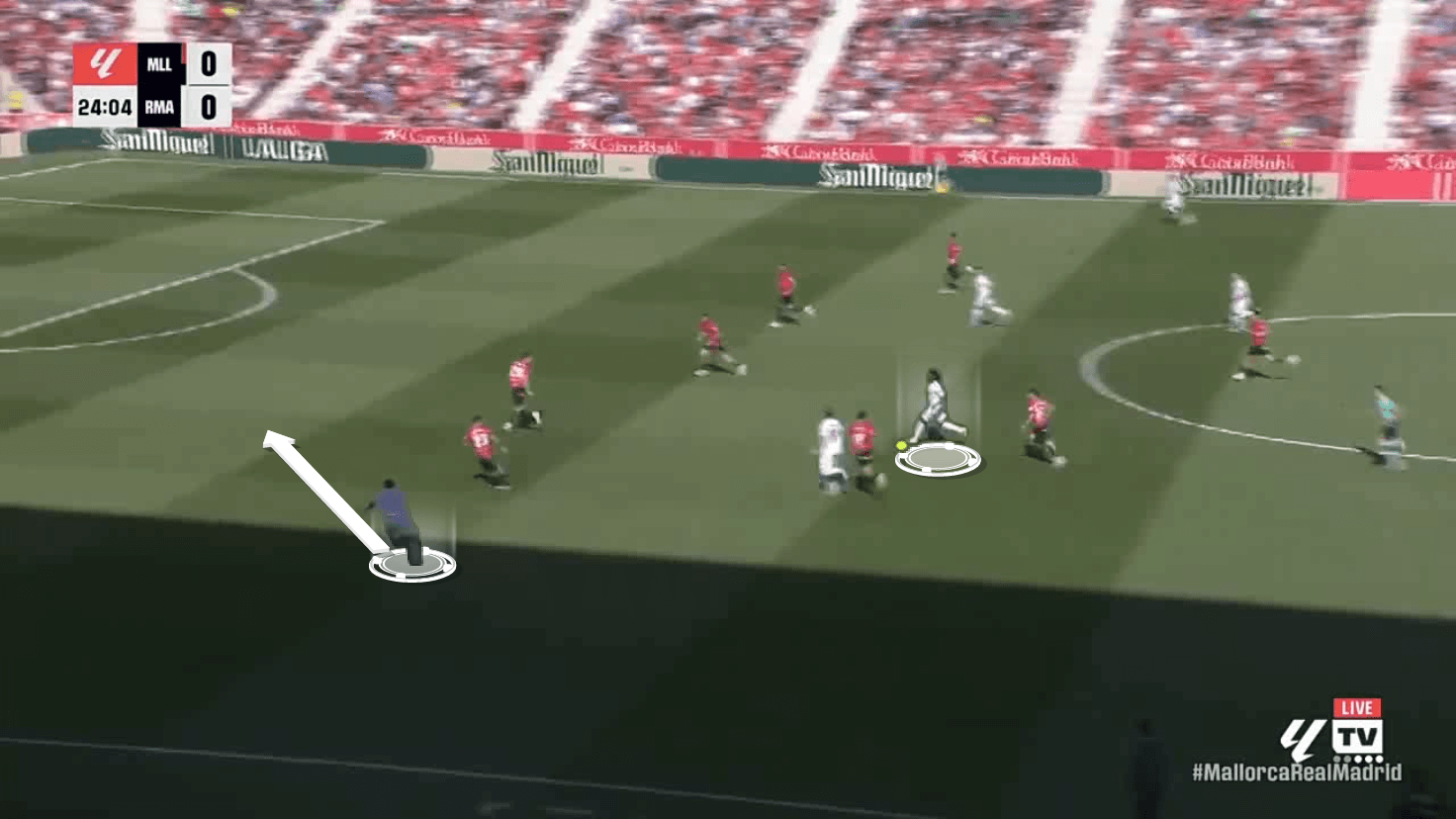
When he has the ball, he is very forward-thinking and looking to dart forward.
He is a quality ball carrier and is very fast in terms of the average midfielder’s pace.
A combination of these is what makes him so dangerous when carrying the ball forward.
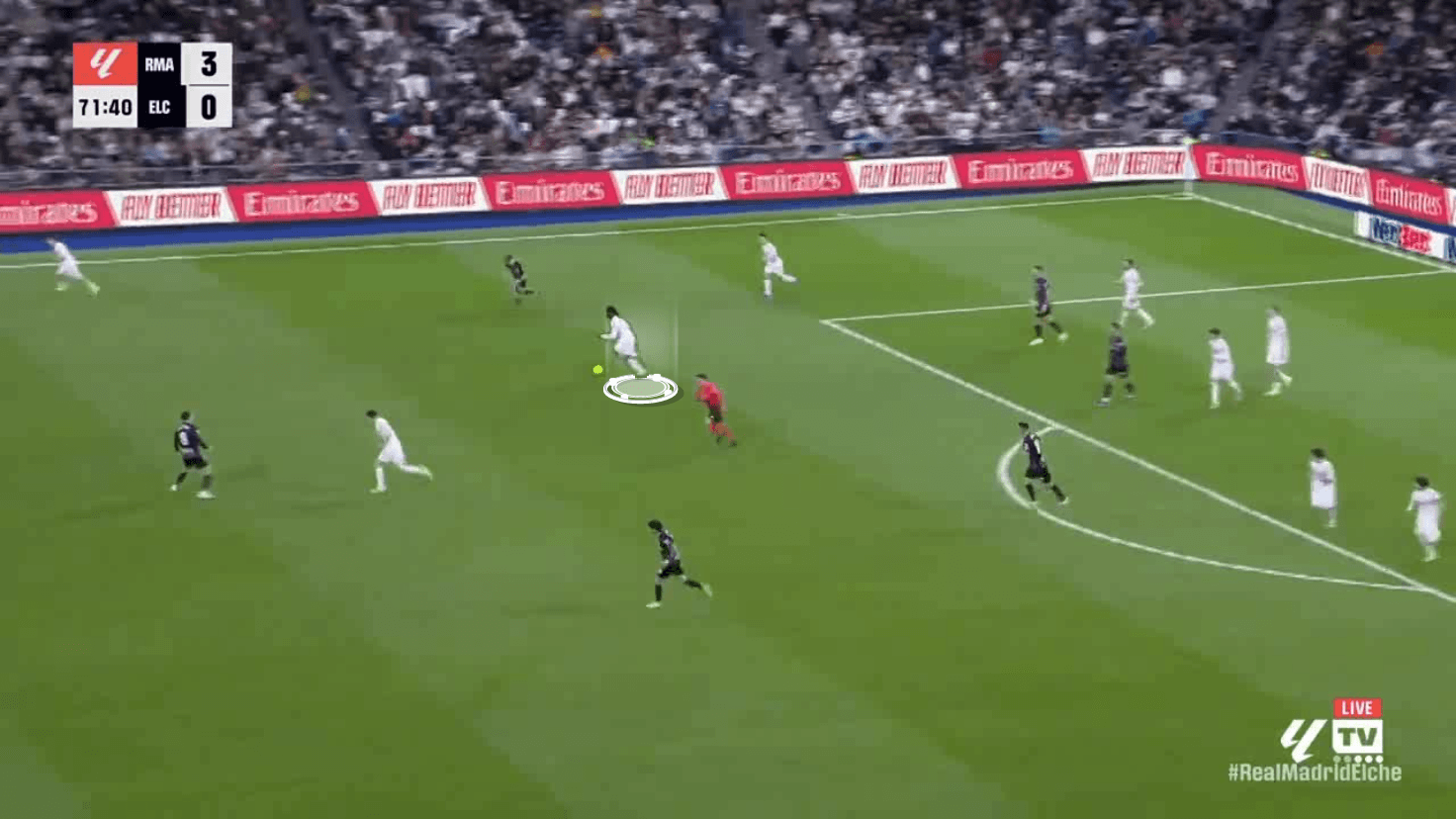
Like we see in the second half of the previous image, where he made the run across the full pitch, when he reaches this area of the pitch and has lots of time, he is often overwhelmed by the amount of available time and sometimes may make a small mistake in the end product, which is the final pass.
The intention is there; he is very dangerous in counterattacks and can initiate them fully on his own if given space.
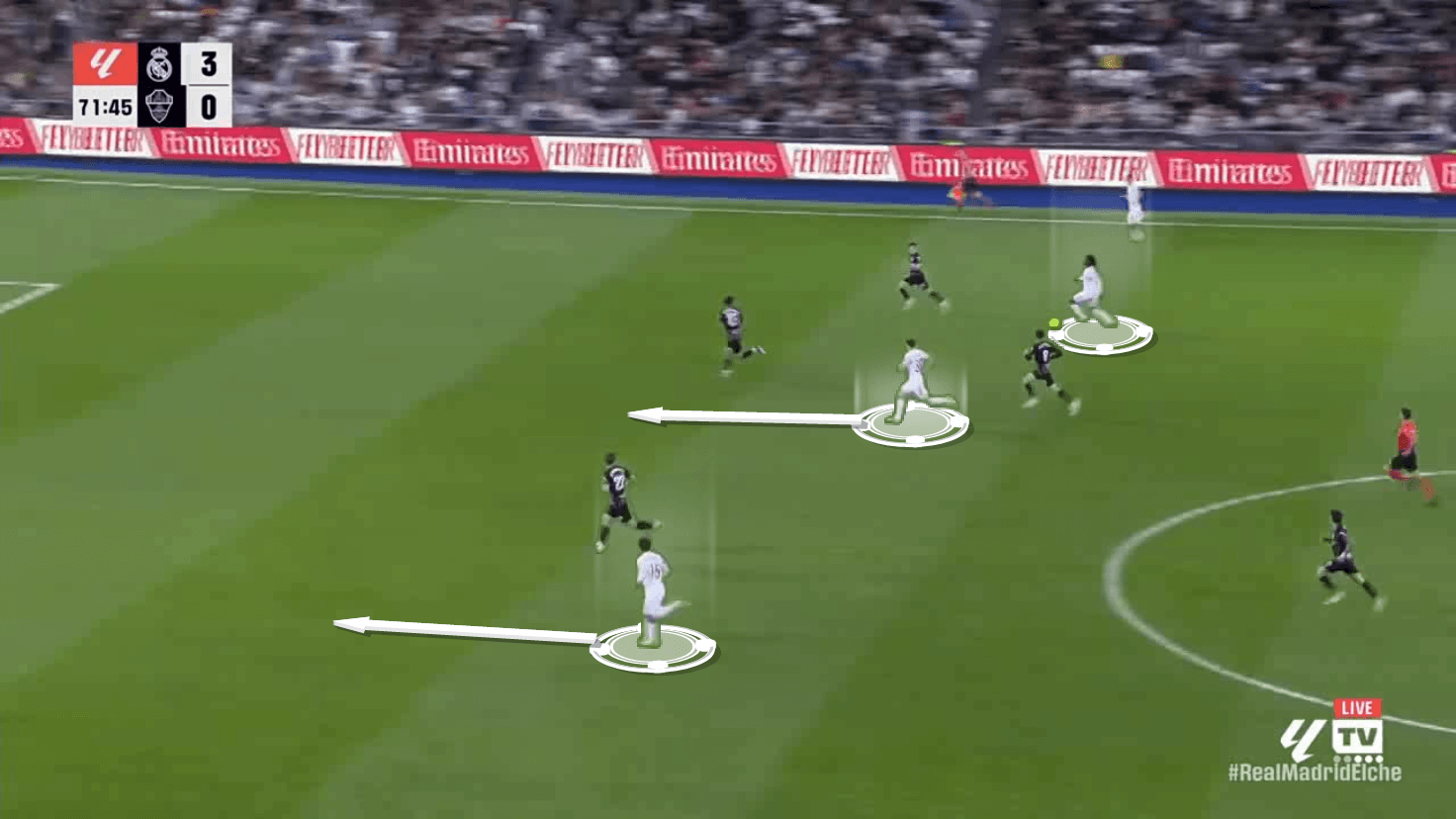
Here is an image of those small mistakes he makes in the final third near the penalty box.
There is often a second thought that forces an extra dribble and an extra step, and messes up the pass.
Either the pass is too obvious and intercepted, or its weight is off.
He is a smart player in the final third, placing himself in the right spots, but the end product needs work.
Eduardo Camavinga Off The Ball
His off-the-ball personality is the number one reason he was signed in the first place.
Making those last-ditch effort tackles, putting his body on the line to recover possession, but with this comes a slight problem.
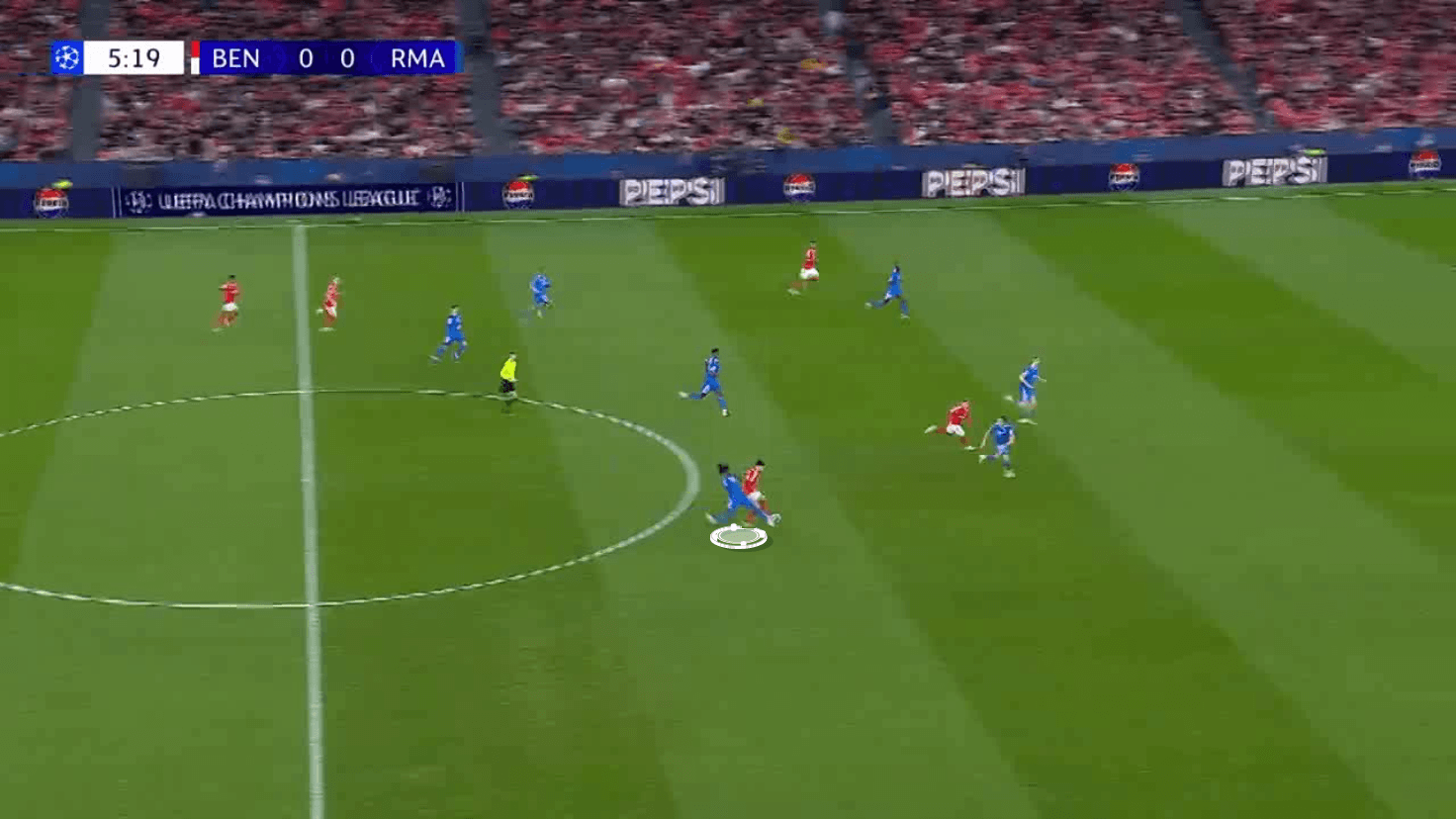
That slight problem is the fouls being committed.
Right now, he averages 2.09 fouls per 90 minutes, which is slightly better than in the 2023 to 2024 season, when he averaged 2.43 fouls per 90 minutes.
The over-aggressiveness at times could be too much, but it is the risk-to-reward being paid to have him in the midfield.
The reward is a player who is willing to fight for the ball until the end and run nonstop; the risk is a few fouls being committed in the act.
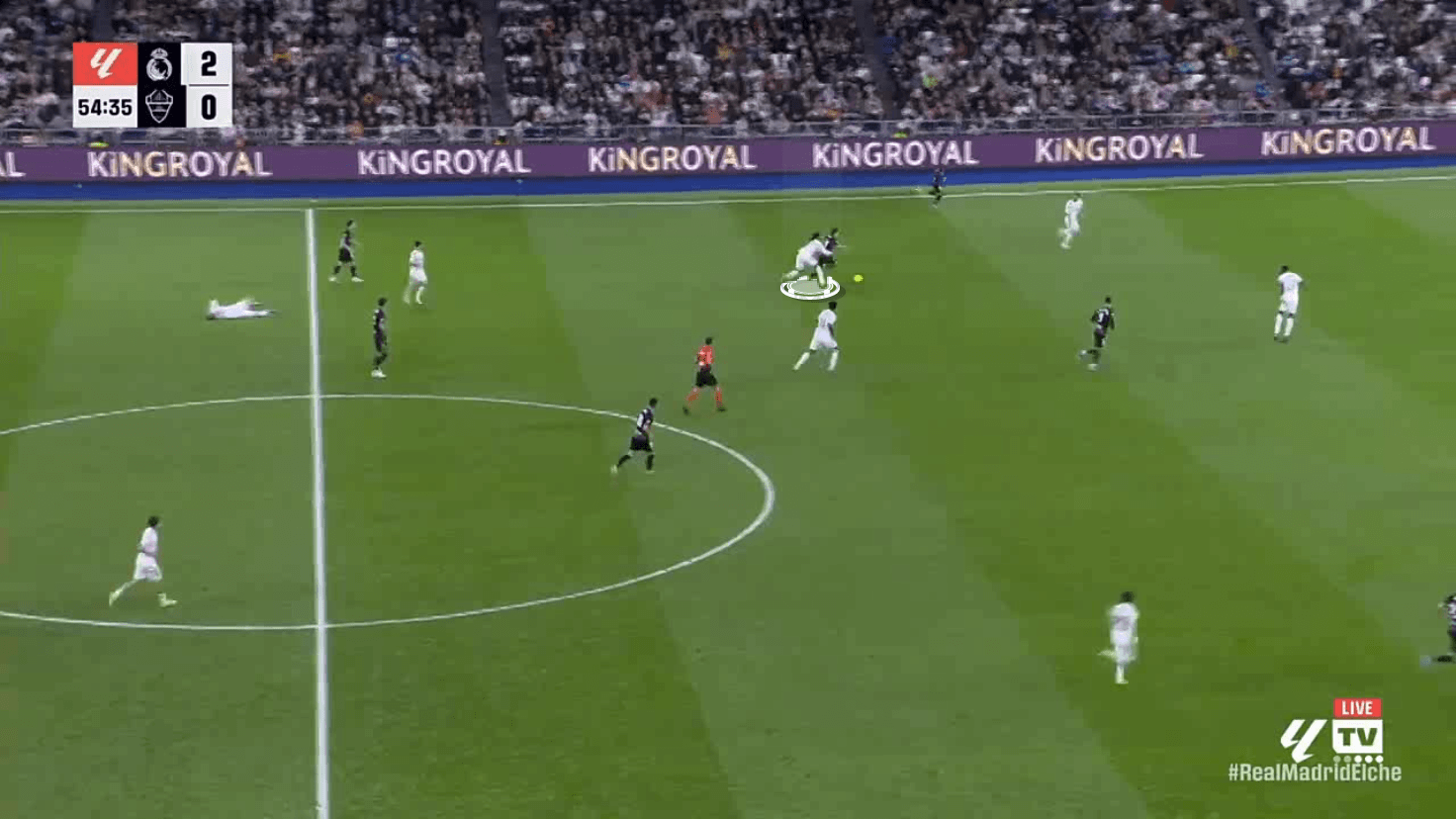
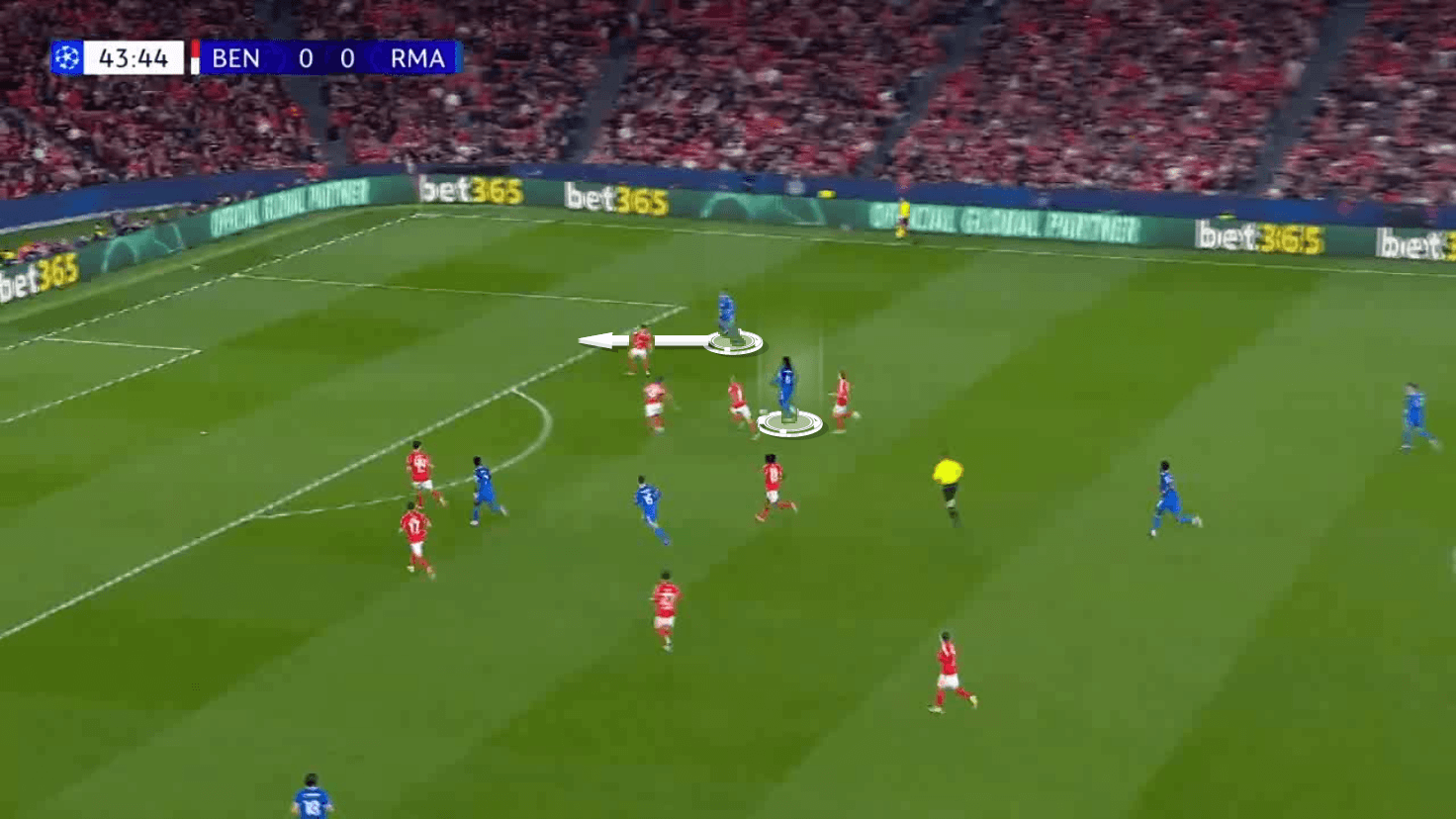
We looked at Camavinga in the ‘8’ and ’10’ zones, but in the ‘6’ role, he is just as good.
At times, he is used as a single pivot in Real Madrid’s build-up, as we see here.
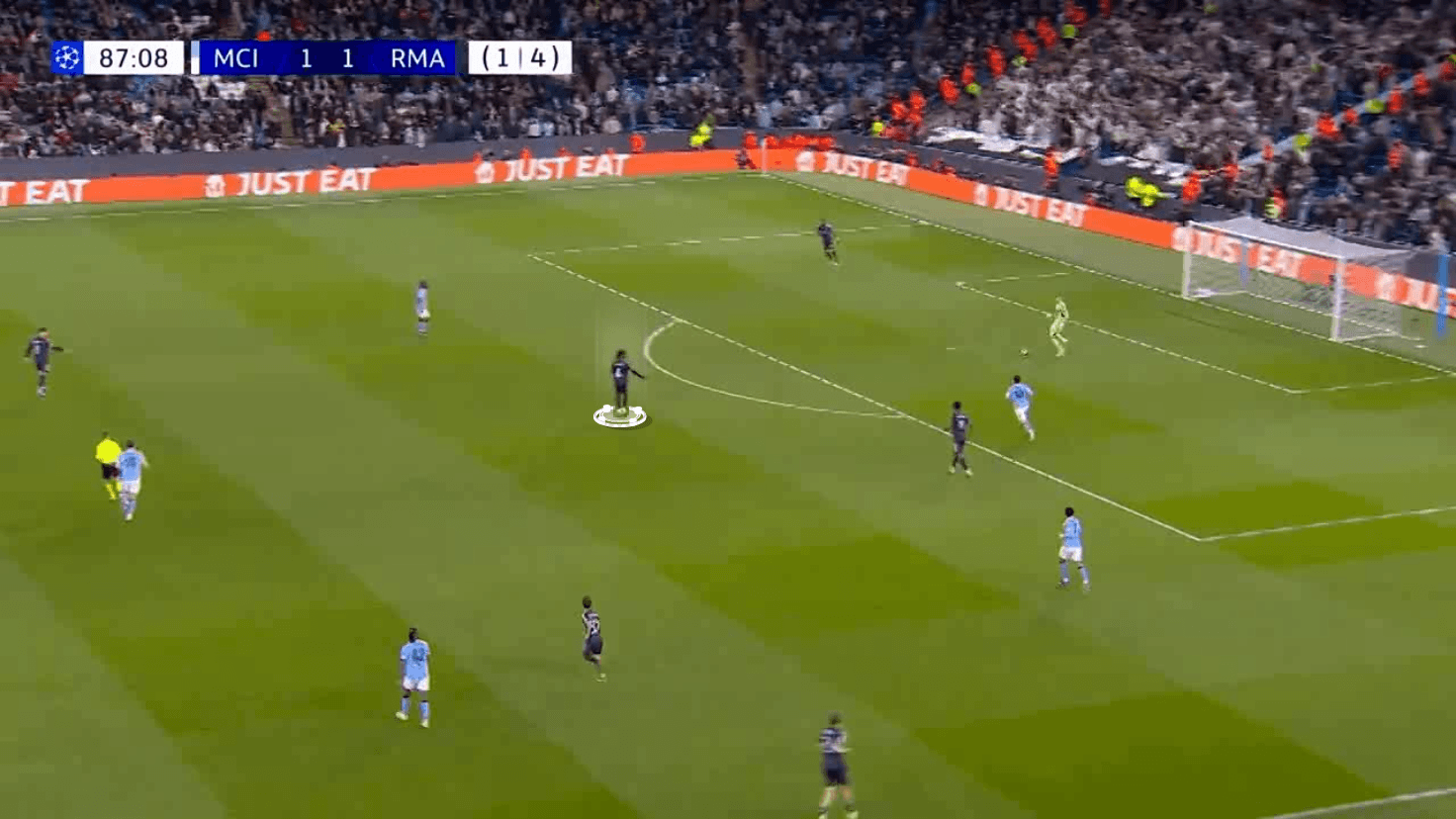
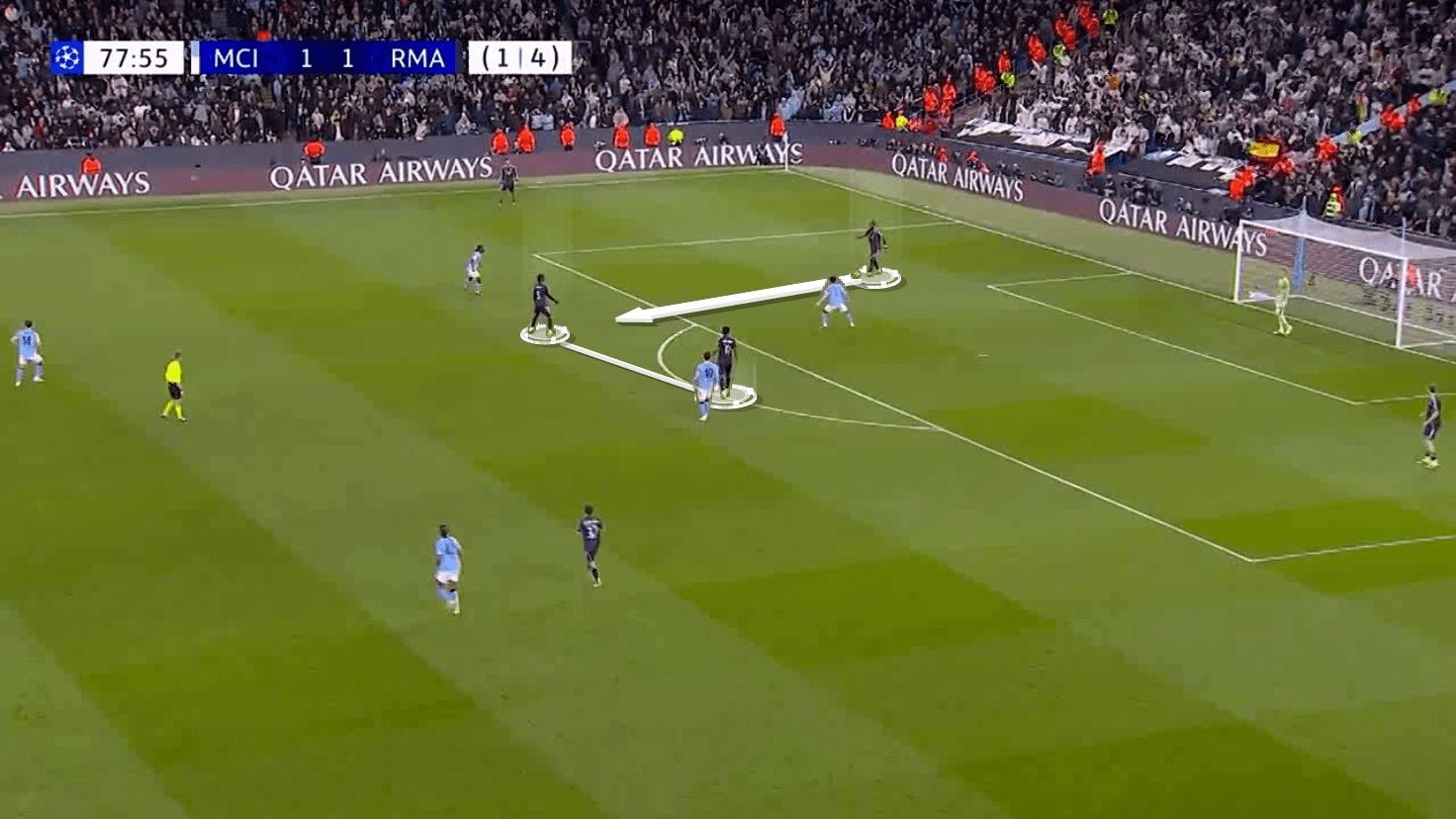
The second example you will see is him in the ‘6’ as a double pivot.
In the double pivot, he plays with more confidence when receiving the ball from the centre-backs, since he has a partner to play into on the side.
Best Club Fits For Eduardo Camavinga
There are a few clubs linked with the player recently, like PSG, Arsenal, Manchester United, and Liverpool.
The key thing Eduardo Camavinga needs to slot into a midfield and perform at his best is an Aurélien Tchouaméni-like defensive midfielder to hold down the fort, enabling his box-to-box qualities.
When you use these criteria, that list of clubs gets cut down fast.
The only remaining clubs that look like realistic, good options where he could best fit are Liverpool and Arsenal.
Eduardo Camavinga To Liverpool
For Liverpool, Ryan Gravenberch is a young player who could play as the ‘6’ for the club and is quite similar in terms of physique and playstyle to Tchouaméni; maybe not as good defensively, but he can get there.
This would place Liverpool’s midfield on another level, with a very quick and technically gifted Alexis Mac Allister and Dominik Szoboszlai ahead, and Camavinga and Gravenberch behind.
The trouble would be fitting the four into one midfield, but it could be done in a 4-2-2-2 formation.
Eduardo Camavinga To Arsenal
I would rank Arsenal as a worse option, as Declan Rice himself is more of a box-to-box player and does not carry the same defensive weight as Camavinga.
It would be a very jumpy midfield and may not be the best defensively minded pair, but once again, it would add another level to their box-to-box tactics at Arsenal.
Some may say to add him as depth behind Declan Rice, but it would be unlikely that a player like Camavinga would move to sit on the bench.
Conclusion
Liverpool have been linked with Camavinga a few times over the past few years, and with his market value dropping as he has struggled for playing time at Real Madrid, now could be the time for a club to swoop in and buy the player.
I think Liverpool is a great, realistic option for his career, and he would fit in very well at the club.
One thing is for certain: Eduardo Camavinga’s current level and potential are far better than those of a depth or rotational player; he needs consistent minutes.
