
VfB Stuttgart have made an important move in the winter transfer window.
It’s not about buying new players or selling off deadwood.
It is about the decision to extend Angelo Stiller‘s contract until 2028.
It’s no secret that Stiller, who’s recently been linked to Liverpool, is a key player for Stuttgart.
His presence is crucial to Sebastian Hoeness‘s team system.
He’s become the orchestrator of Stuttgart’s attack and the key to their vertical and direct style of play.
Obviously, Stuttgart don’t want to lose one of their best players, especially with rumours circulating that some of Europe’s biggest clubs are interested in signing Stiller.
By extending Stiller’s contract, Stuttgart are making it harder for him to leave and harder for any club to sign him.
It means that any club interested in signing him will have to pay Stuttgart a lot of money.
But is Stiller really worth that much money?
Well, in a nutshell, he is.
He is not yet at his peak age, but he has played in the top flight and the Champions League and has been very consistent over the last two seasons.
He also has a lot to offer as a midfielder, and his skills can be very useful to many clubs in this modern era of football.
Therefore, this tactical analysis and scouting report will examine Stiller’s strengths and weaknesses as a midfielder and what makes him special for Stuttgart or any other club looking to sign him.
Angelo Stiller Style Of Play
If you look for the top five players in the Bundesliga in the specific statistics of the most passes into the opponent’s final third and most progressive passes, you will find the name Angelo Stiller.
If you’re also curious to see who’s in the top ten for most shots-creation from live passes and most passes into the penalty area, you’ll find Stiller’s name there, too.
He is all over the passing stats in the Bundesliga.
This is hardly surprising, given that he excels in terms of both quantity and quality.
For example, the percentage of his short passes is above 90%, his medium passes is above 80%, and his long passes is above 60%.
He has made numerous attempts in those three categories.
Stiller is a dominant passer.
Thanks to the Hoeneß system, Stiller has the freedom to pass the ball whenever and as much as he wants.
Stiller is a deep-playing midfielder who plays in the number 6 position.
In this position and role, he can dictate and direct Stuttgart’s attack from a variety of positions, from deep in the centre of the field or in the opposition’s third.
With his foot, he can decide whether Stuttgart plays with short passes or long passes.
Angelo Stiller Progressive Passes Map

Angelo Stiller Special Long Passes
Stiller’s long passes are one of his strengths.
Opta records that he has averaged 9.02 long passes per 90 minutes, with 66.1% of them being successful so far this season.
In terms of attempts and succession, Stiller’s number is high in the league.
But that’s not the only point.
Stiller’s long passes are also special because they often mark the start of something good for Stuttgart, evolving into passes that create a chance.
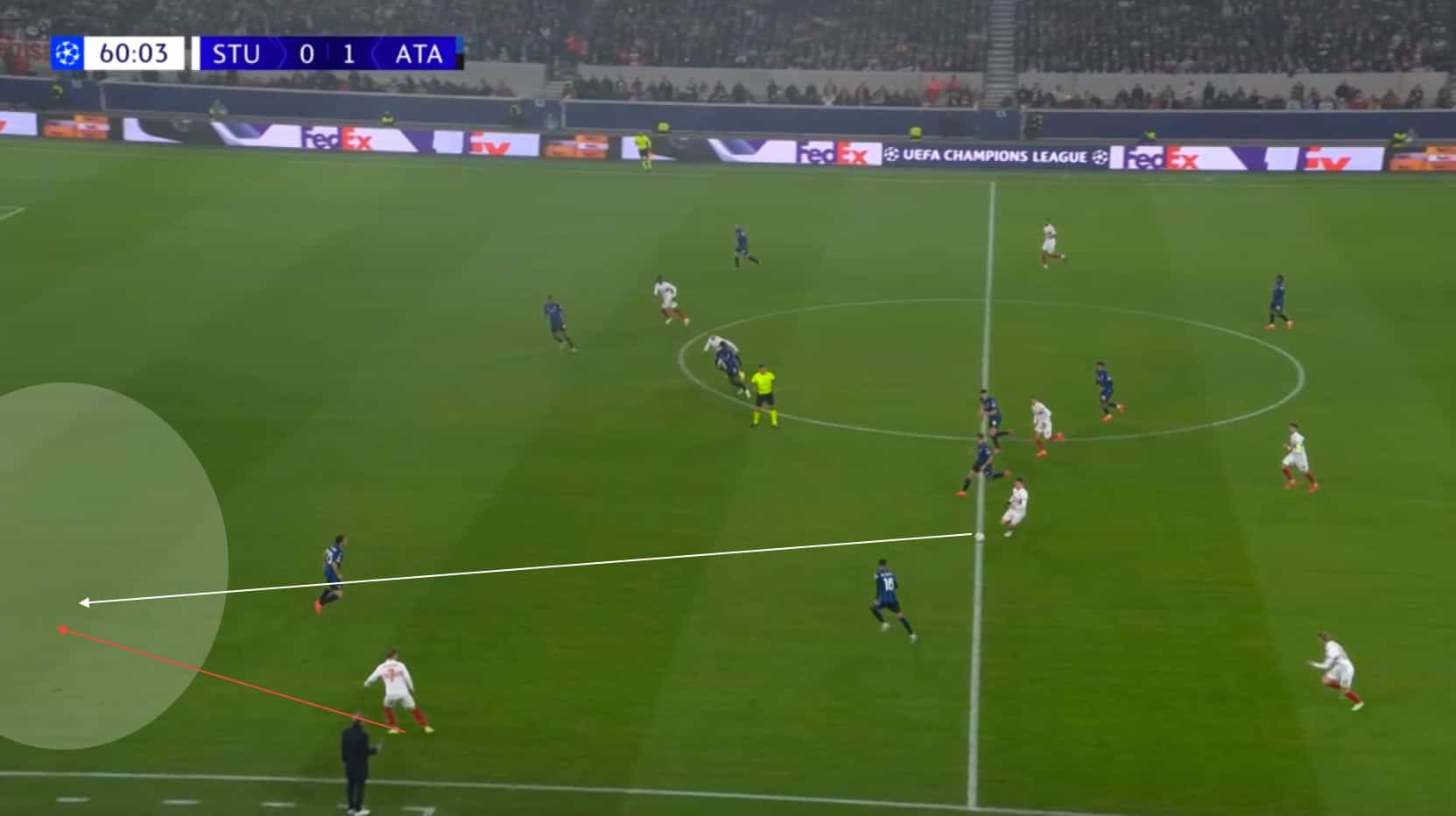
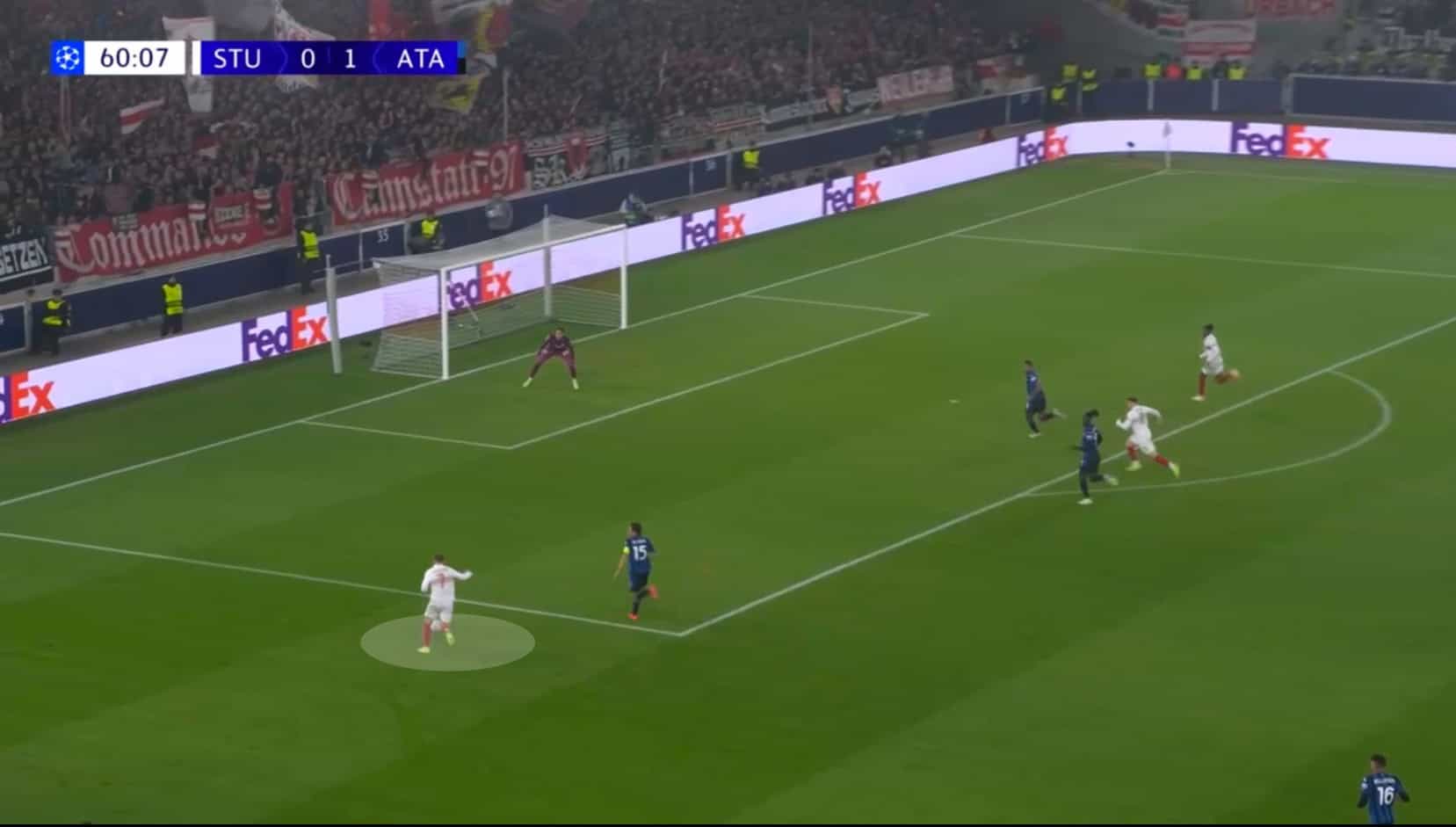
For example, Stiller spotted a gap in Atalanta‘s defensive line for Maximilian Mittelstädt to run to.
He then sent a long pass from his own field to Attalanta’s third.
Within seconds, Mittelstädt was in position to send a cross to the penalty box.
Mittelstädt is one of the main targets for Stiller’s long passes, which is no surprise when you think that 44% of Stuttgart’s attacks come from the left side.
They’re the team most left-dominant in the Bundesliga, and one of the reasons for that is the Stiller-Mittelstädt combination.
If Stiller spots a space for Mittelstädt, he’ll send the ball over, especially if that space is behind the opposition’s defensive line.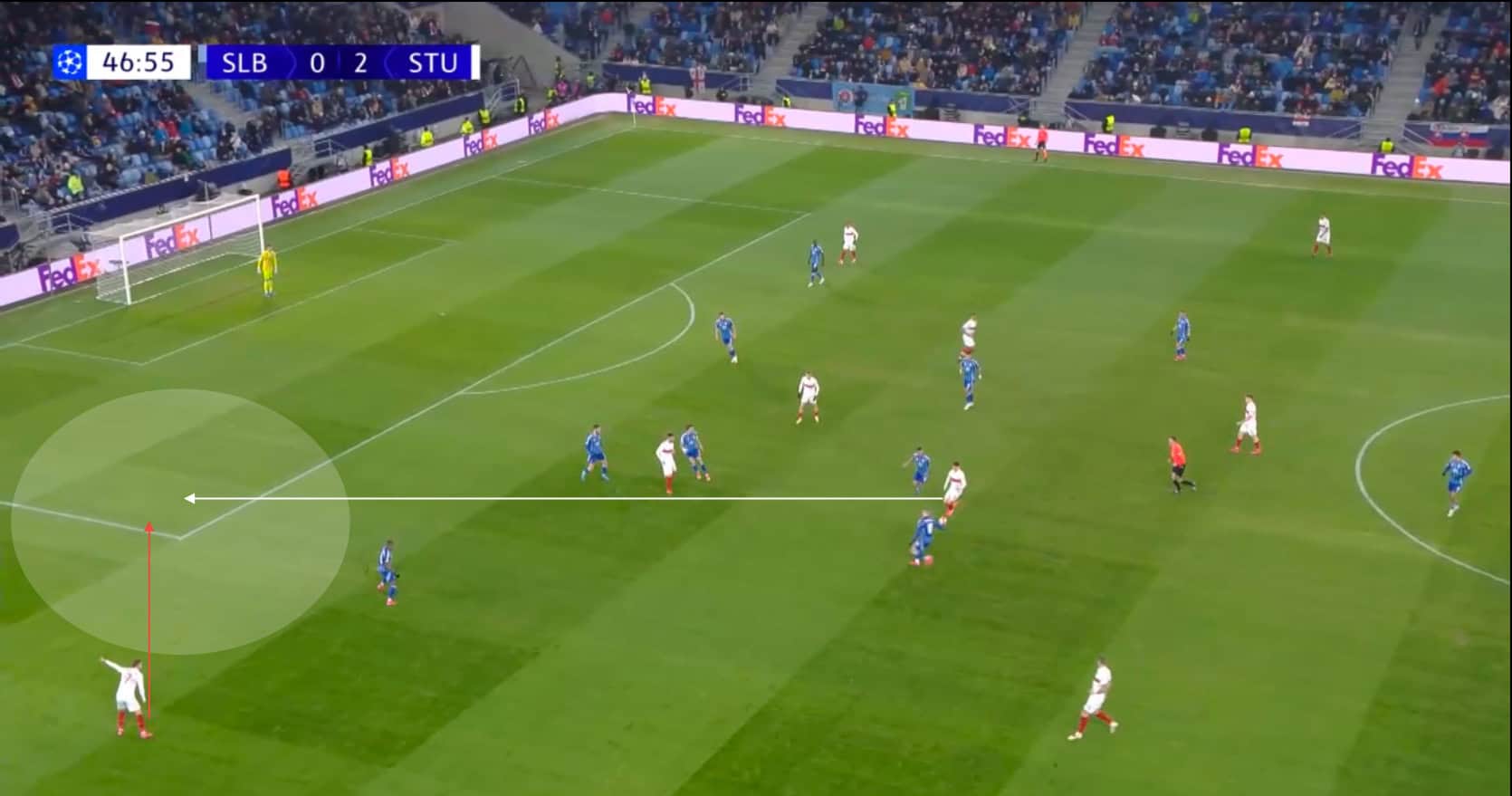
Stuttgart’s attack might sound a bit predictable, but Stiller’s long passes are often spot-on, and the momentum of that makes it challenging for the opposition to predict.
Plus, Mittelstädt has a knack for knowing when to run and how to make the most of that space, which just adds to the unpredictability.
In general, however, Stiller’s long passes can be both the pass before the key pass and the key pass itself.
His method is almost always the same: when he sees space behind the opponent’s defensive line, he sends his long passes straight into it.
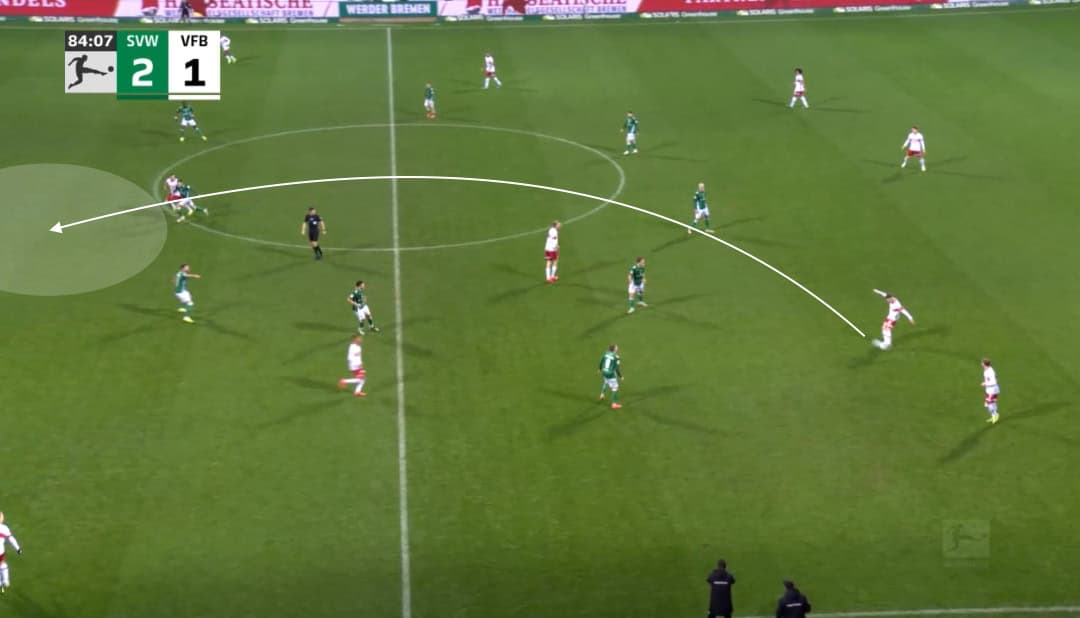
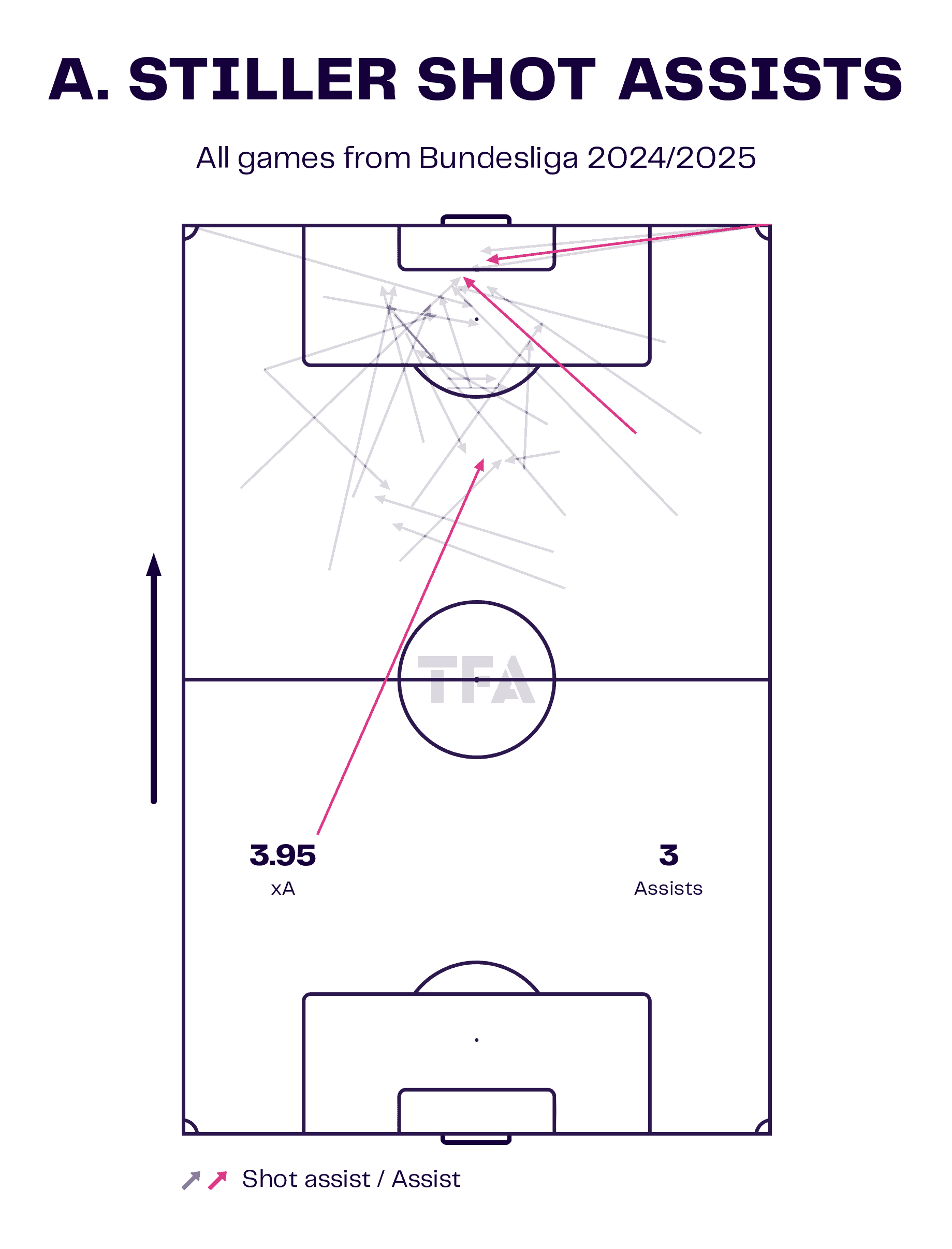
One of his assists this season, against Werder Bremen, illustrated this.
Stiller noticed that Bremen‘s defensive line was very high, leaving space for Ermedin Demirović to run into.
Stiller then sent a long pass, and Stuttgart scored their second goal to make it 2-2.
 Once again, Stiller’s ability to create chances in many areas of the pitch with not-so-simple passes is evident.
From this shot assist map, we can see just how valuable his long passes are.
Diagonal, vertical, it really doesn’t matter to him—he can do it all.
It is essential to have a player who can do what Stiller does because this means you have the secret weapon to break down the opponent’s block and get past them, as well as the machine to consistently create a vertical threat when you want to play directly.
Angelo Stiller Shot Assists Map
Angelo Stiller Ability To Find Space
One of the reasons why Stiller’s long passes are so good is because of what he does before sending the pass.
It is not rocket science to understand that long passes are difficult to deliver, especially when the player is under pressure.
If the accuracy of long passes is questionable without pressure from the opposition, it can be even worse with it.
But Stiller knows how to solve this problem.
I have watched him play live this season, and he has given the impression that he is very good at finding space to receive the ball, leaving himself unmarked and comfortable with the long pass.
He showed that ability in the other games as well.
He can make many moves to manipulate the opposition’s pressure.
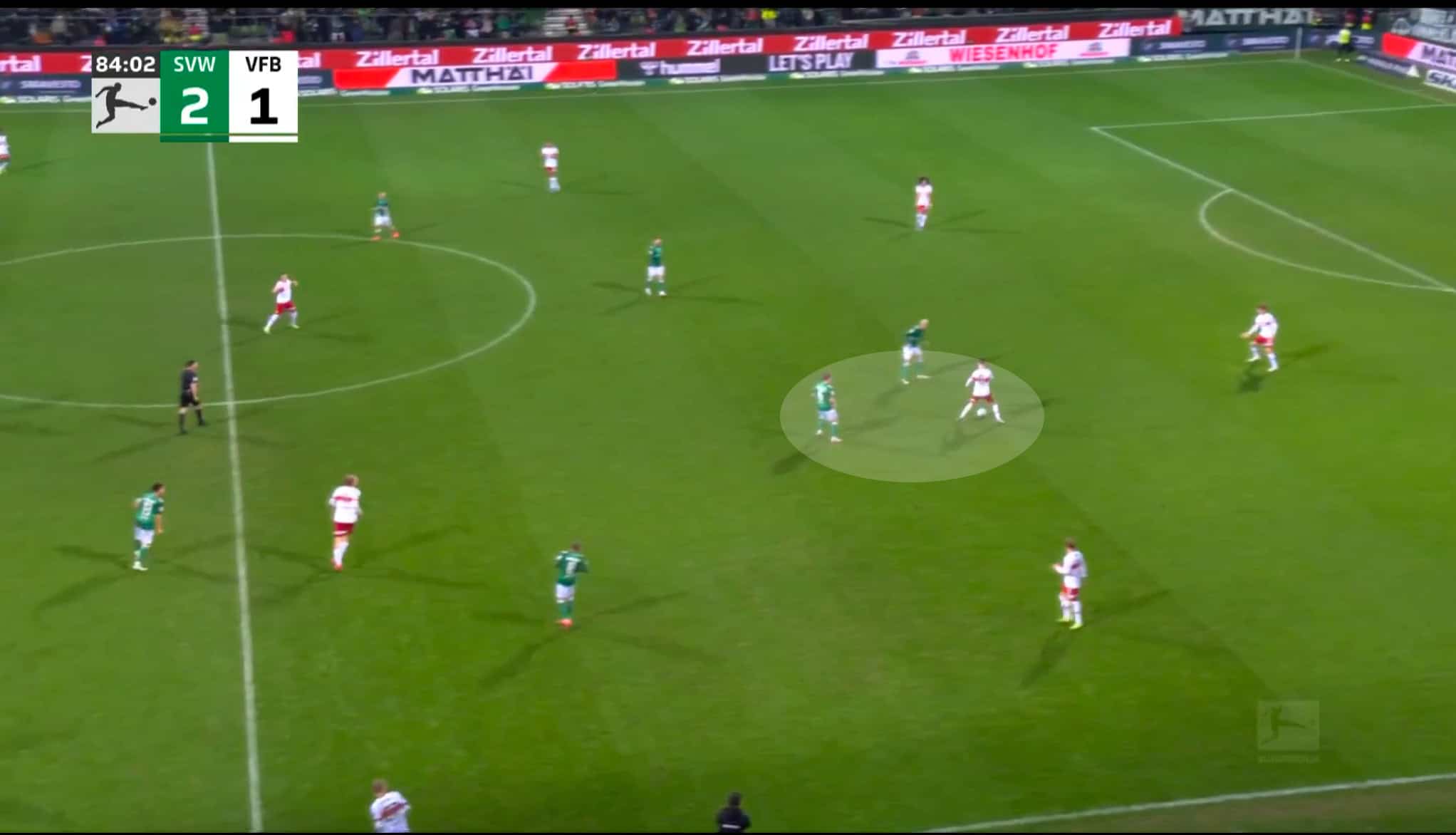
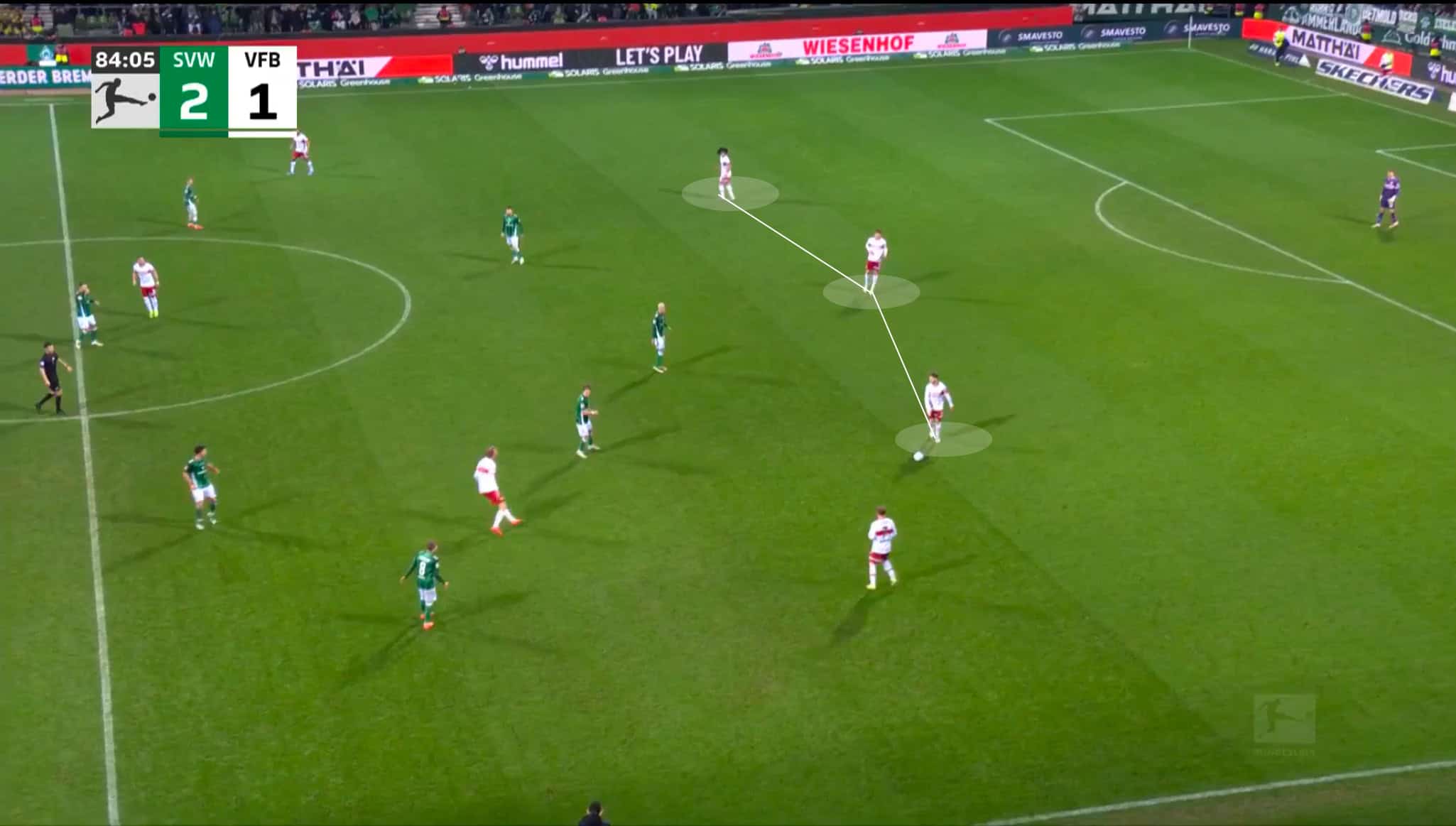
Consider what he did before his assist against Bremen.
After receiving the ball, Stiller noticed two Bremen players pressuring him.
In order to free himself from this pressure, he drops and gets in line with the centre-back.
This puts his marker in a dilemma: if he follows Stiller, he’ll leave the space behind him and disrupt Bremen’s shape.
So the marker doesn’t follow, leaving Stiller free to control the ball and play a long pass into the opponent‘s third.
It’s also fair to say that Stiller is a quick thinker when it comes to finding space to receive and pass the ball.
After passing the ball to his teammate, he rarely just stands still but always moves into space to break up the opposition’s press and create another passing option, allowing Stuttgart’s progression to run smoothly.
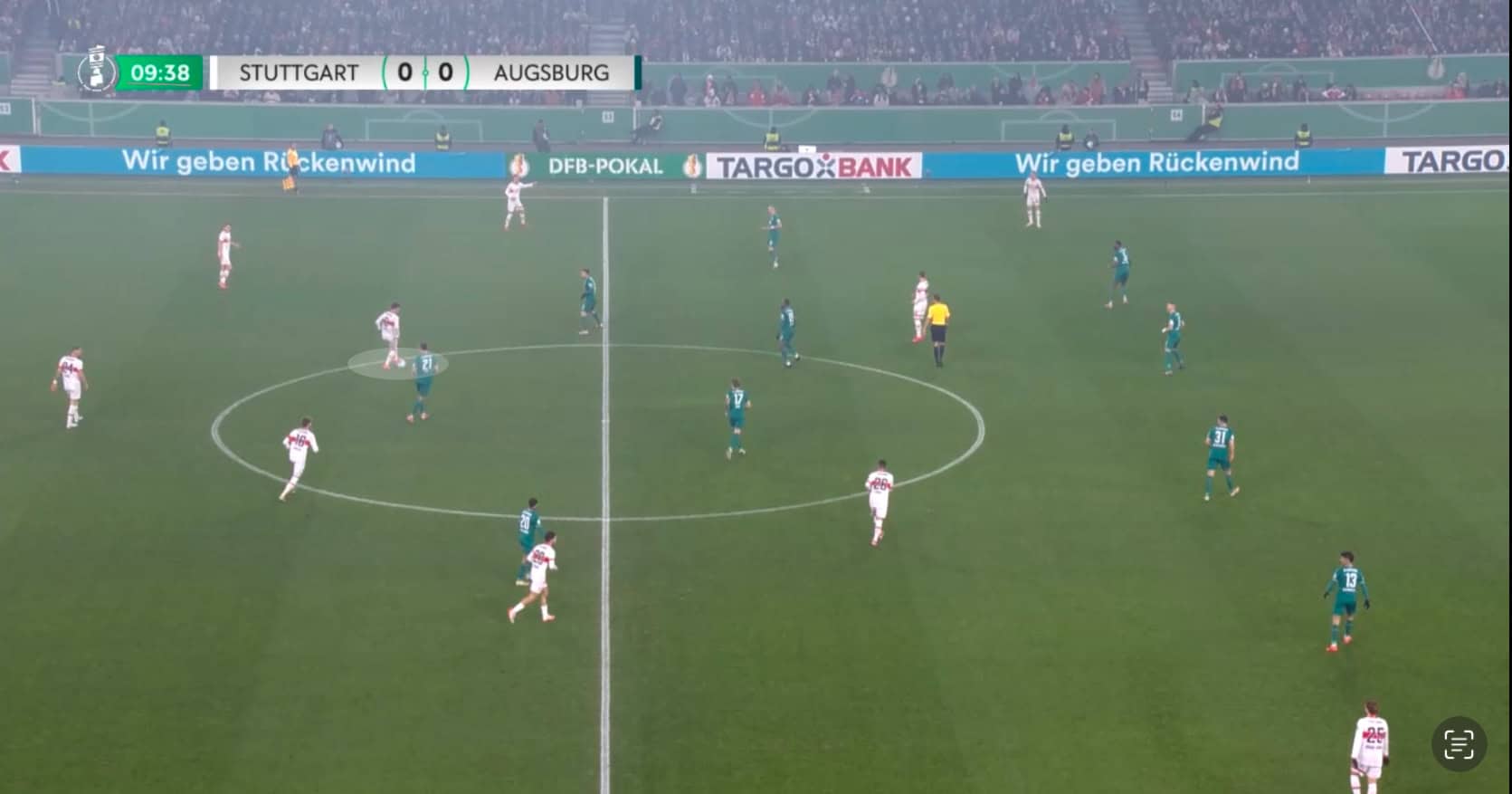
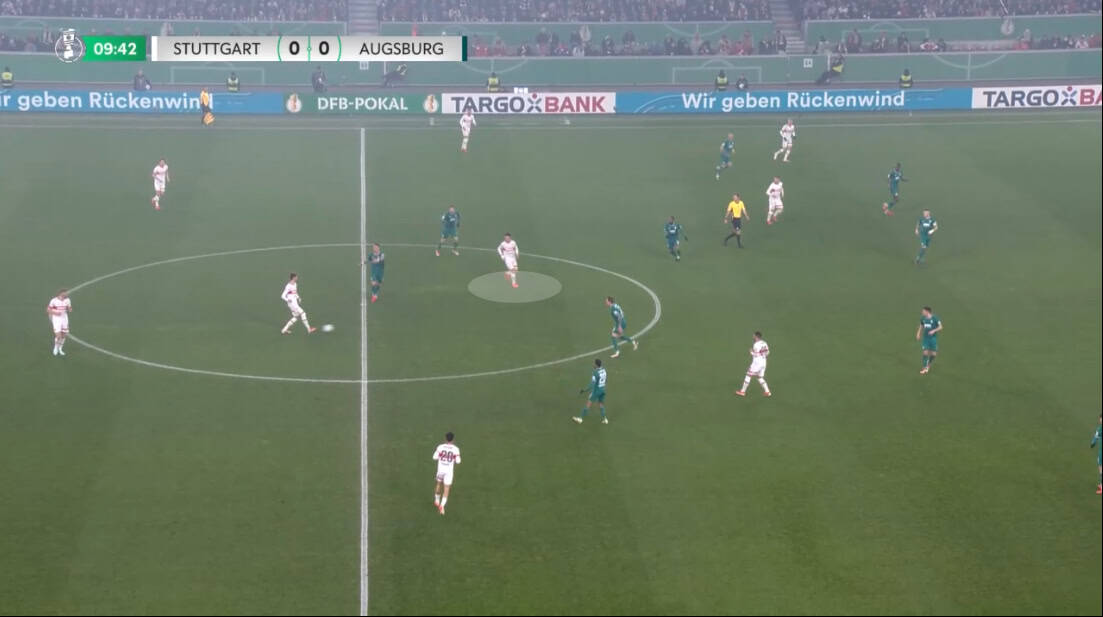
This understanding of time and space makes Stiller such a special passer.
He knows when to slow down and when to speed up his team.
Having this kind of player on the team is really important, someone who can play long in possession or go direct and vertical like Stuttgart.
Angelo Stiller Weaknesses
It’s fair to say that Stiller has no obvious weaknesses.
But it’s also fair to point out that as a number 6, Stiller doesn’t have a lot of defensive duties.
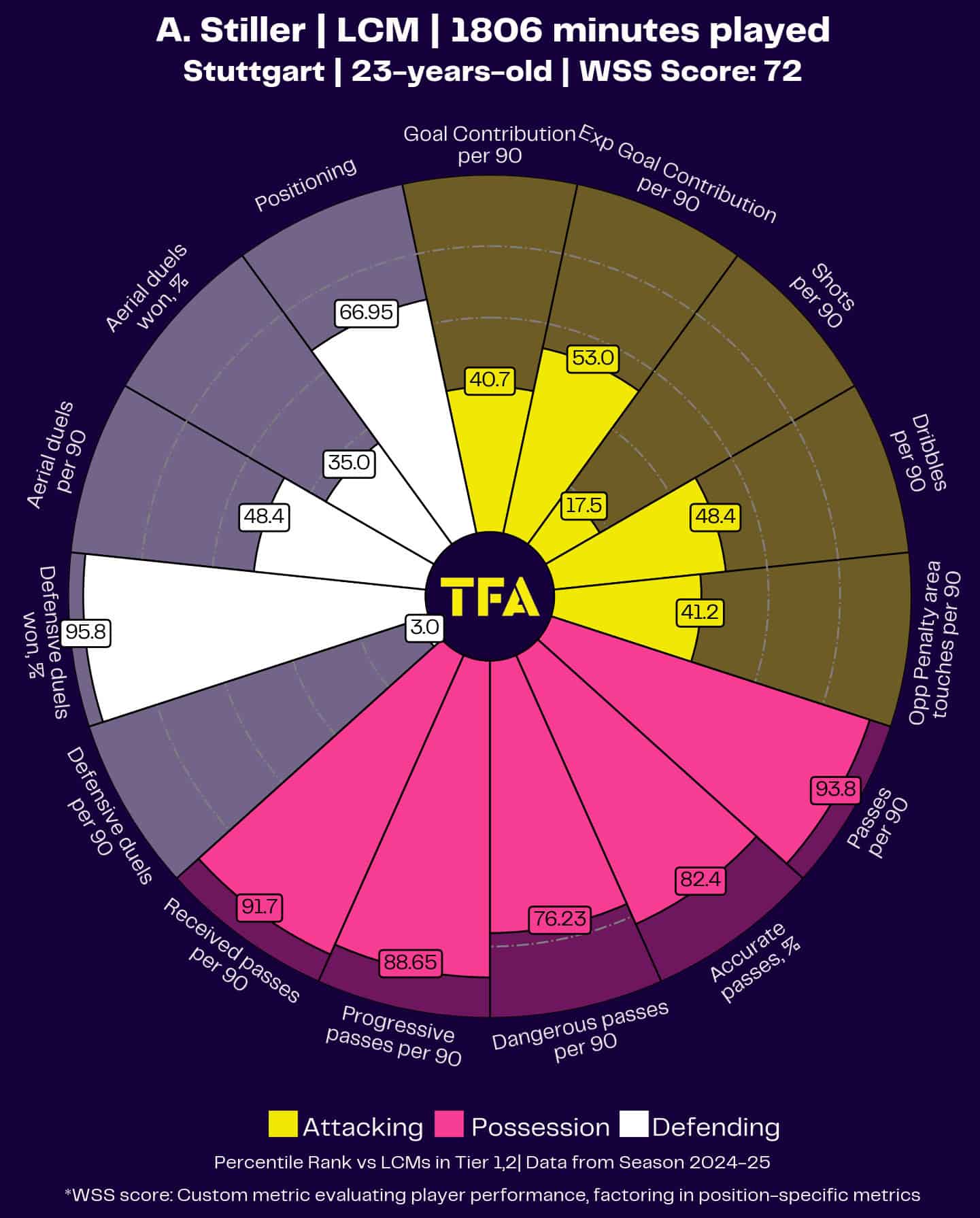
He can help the team to defend, as his defensive duels from the chart below show that his ability to win duels is high.
However, the amount of duels that he fights is very low.
Stiller also doesn’t participate much in other defensive actions, such as tackles and interceptions.
His numbers are lower than those of his midfield partner, Atakan Karazor.
Angelo Stiller’s physical strength also needs to be developed.
However, Stiller often shows his intelligence in defence.
He has a good sense of where he needs to be to block the opposition’s passing line and intercept a pass.
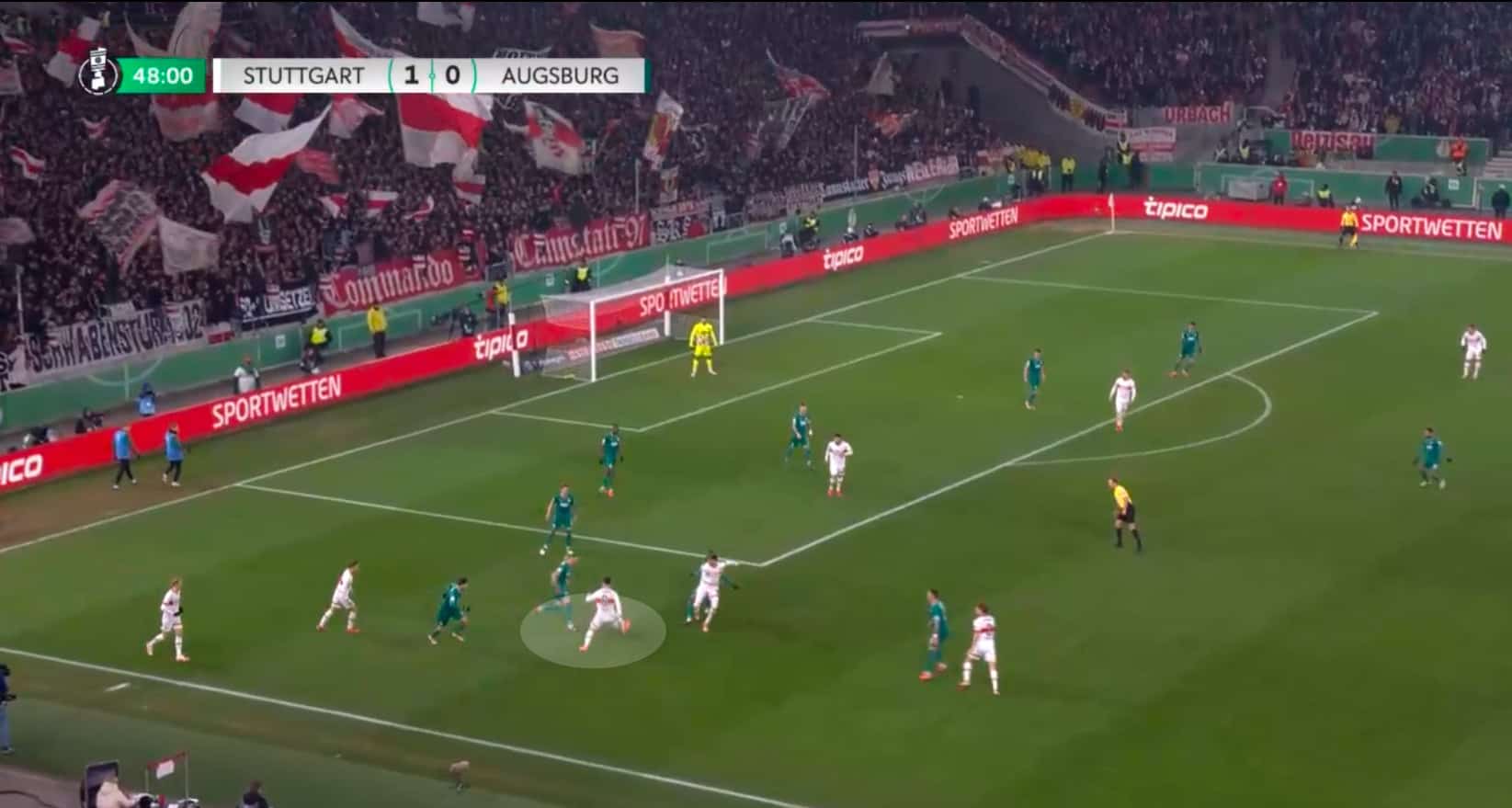
In short, with this style of defence, it is still questionable whether Stiller can survive as a lone holding midfielder (for example, in the 4-3-3 system).
In Stuttgart, he can thrive because he has a partner who can do more defensive work than he can, allowing him to concentrate more on distributing.
Apart from that, Stiller doesn’t take many shots.
This is forgivable, given that he often plays in a deeper position.
However, if he can develop his shooting ability and increase the number of shots he takes, Stiller will be a more complete and valuable player.
Angelo Stiller Radar Chart
Conclusion
Saying that Angelo Stiller could be Toni Kroos’s successor doesn’t sound like hyperbole.
In fact, Stiller is well on his way (at least for the German national team), as he possesses some of the same skills as Kroos.
Yes, he is an excellent passer who can play both short and long balls equally well.
Angelo Stiller’s passing ability can also help dictate the team’s tempo, as he can decide whether to play at a slow or fast pace (direct).
With his long passes, he can also create direct chances for his team or set up those chances, as his long passes often become a pass before a key pass.
And like Kroos, Stiller still needs his own Casemiro.
It looks like he needs a partner who can cover him defensively in order to take over the distribution.
Therefore, anyone who wants to sign Stiller will need to take this into account, as well as consider whether to play with a single or double pivot.
Speaking of transfer, Stiller’s price will surely skyrocket after his extension with Stuttgart, as well as another season of playing very decently at the Bundesliga level.
It is also possible that Stiller will stay in Stuttgart for a long time, but given his abilities, it would be surprising if no one calls Stuttgart’s sporting director to inquire about the price in the next or 2026 summer.
