
The newly crowned European champions and the reigning South American champions faced off in a duel that in the past would have determined the world champion in the Intercontinental Cup.
Luis Enrique’s Paris Saint-Germain arrived with a great streak of results and performances, and a brilliant start in the 2025 FIFA Club World Cup to boot, defeating Atlético Madrid 4-0.
The Spanish coach’s team entered the match with an excellently executed positional play system.
“It doesn’t matter who occupies the space, as long as someone does”
This was one of Johan Cruyff’s maxims, and Les Parisiens understand this perfectly.
In and out, up and down, lateral and vertical movements across the five lanes of the pitch—that is what Botafogo had to defend to have any chance against the 2024/2025 UEFA Champions League winners.
In full reconstruction after the departure of some key players in their 2024 Copa Libertadores triumph, such as Luiz Henrique or Thiago Almada, the Rio team had won their first match against Seattle Sounders 2-1.
It was a match that defined a lot for the group, and one in which Fogão showed a defensive performance worthy of world champions.
Difficulties In Shifting The Block
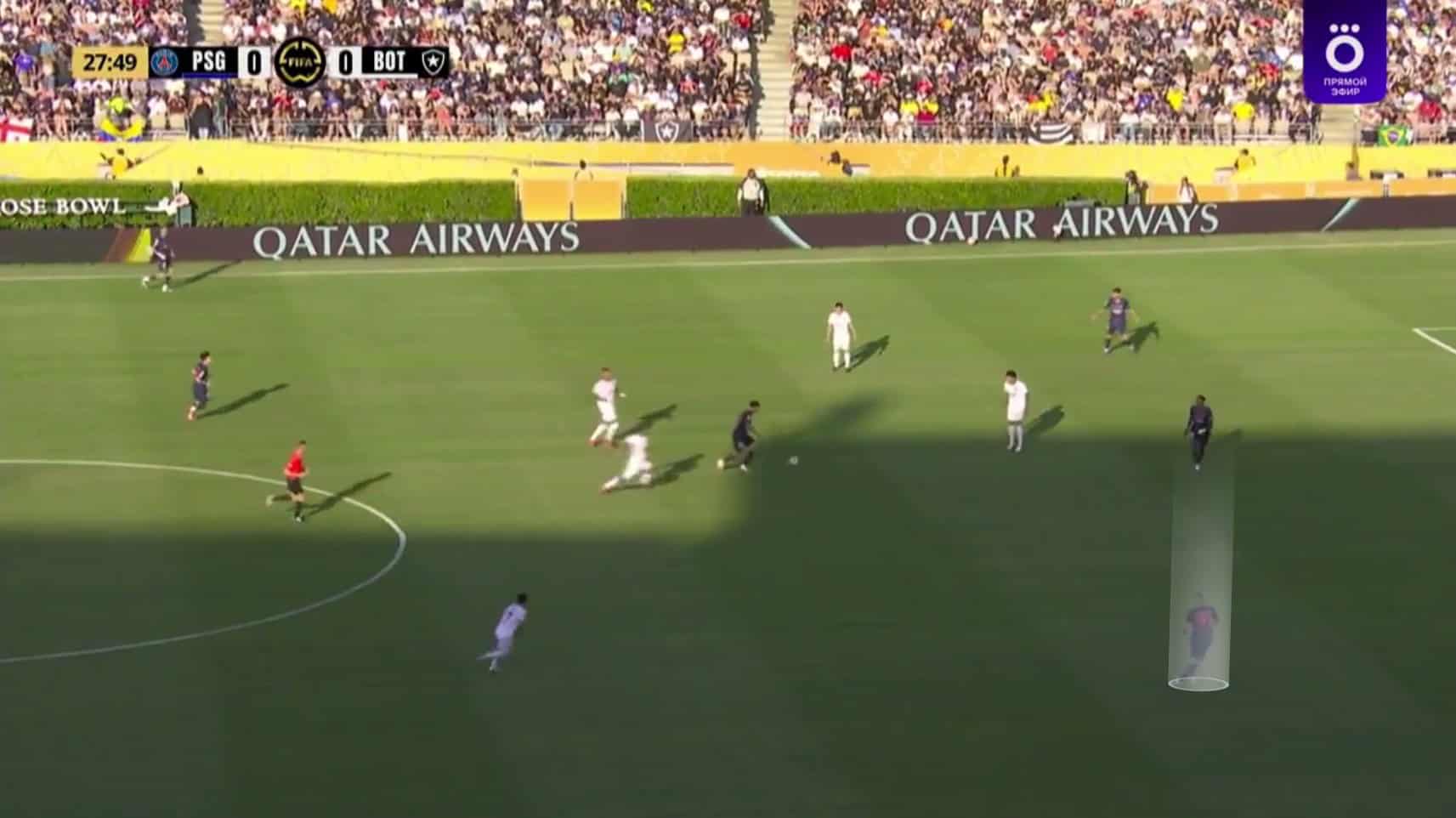
Renato Paiva‘s Botafogo initially set up in a 4-3-3 mid-block, with the clear intention of clogging the central channels, especially during PSG‘s first build-up phase, and trying to prevent positional superiorities between the lines.
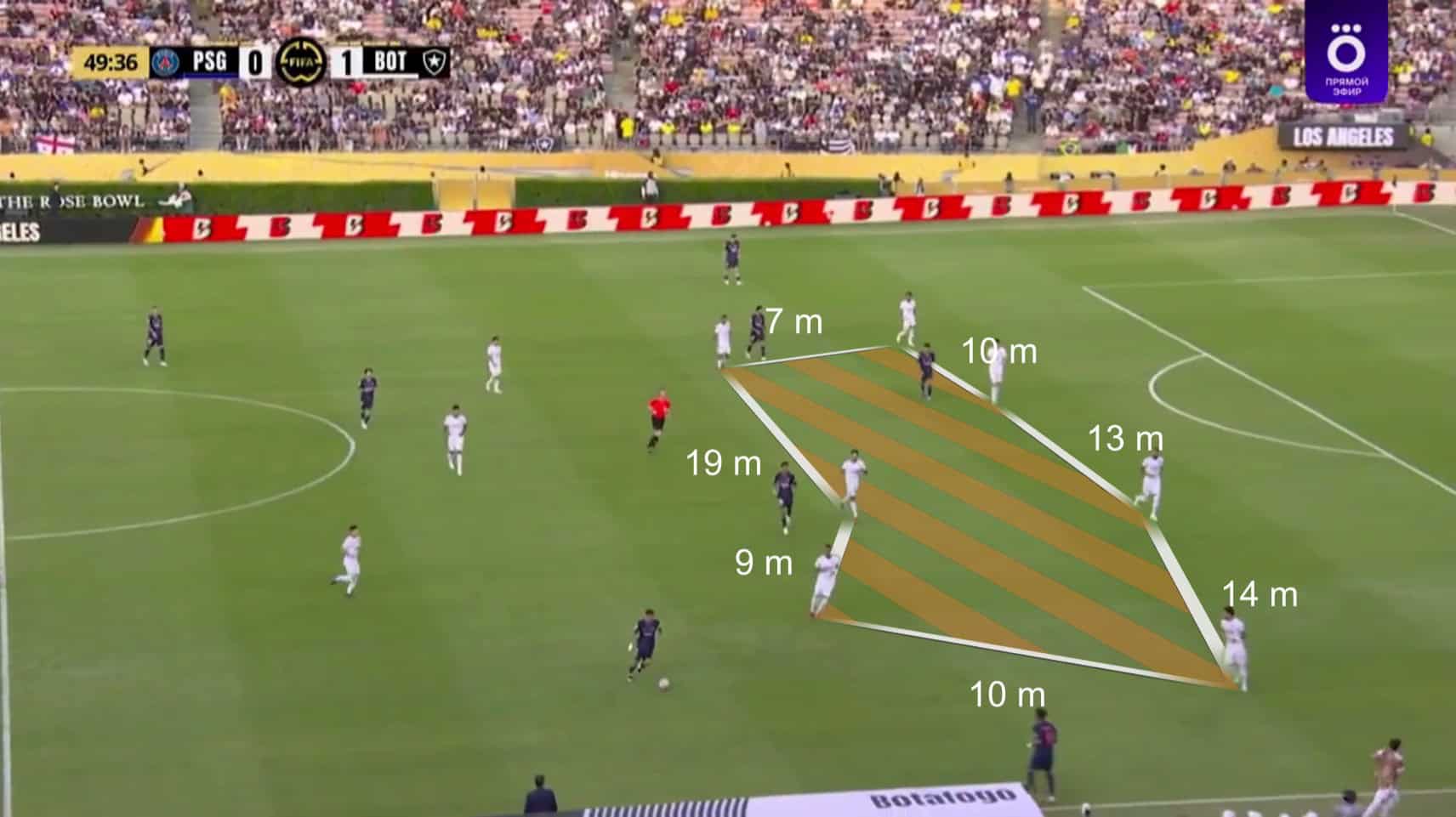
In Figure 1, Botafogo maintain a compact mid-block with minimal spacing between midfielders and defenders, leaving virtually no room for PSG to receive between the lines.
Given the constant threat represented by Khvicha Kvaratskhelia (lined up as a left winger), the Brazilian team initially planned to wait for his reception instead of anticipating or pressing him aggressively.
This decision caused initial imbalances in Botafogo’s backline once they had to shift laterally.
In 1v1 duels, the Georgian enjoyed a marked qualitative superiority after switching from the strong side, allowing him to turn or receive with space, initiating several of PSG’s dangerous attacks.
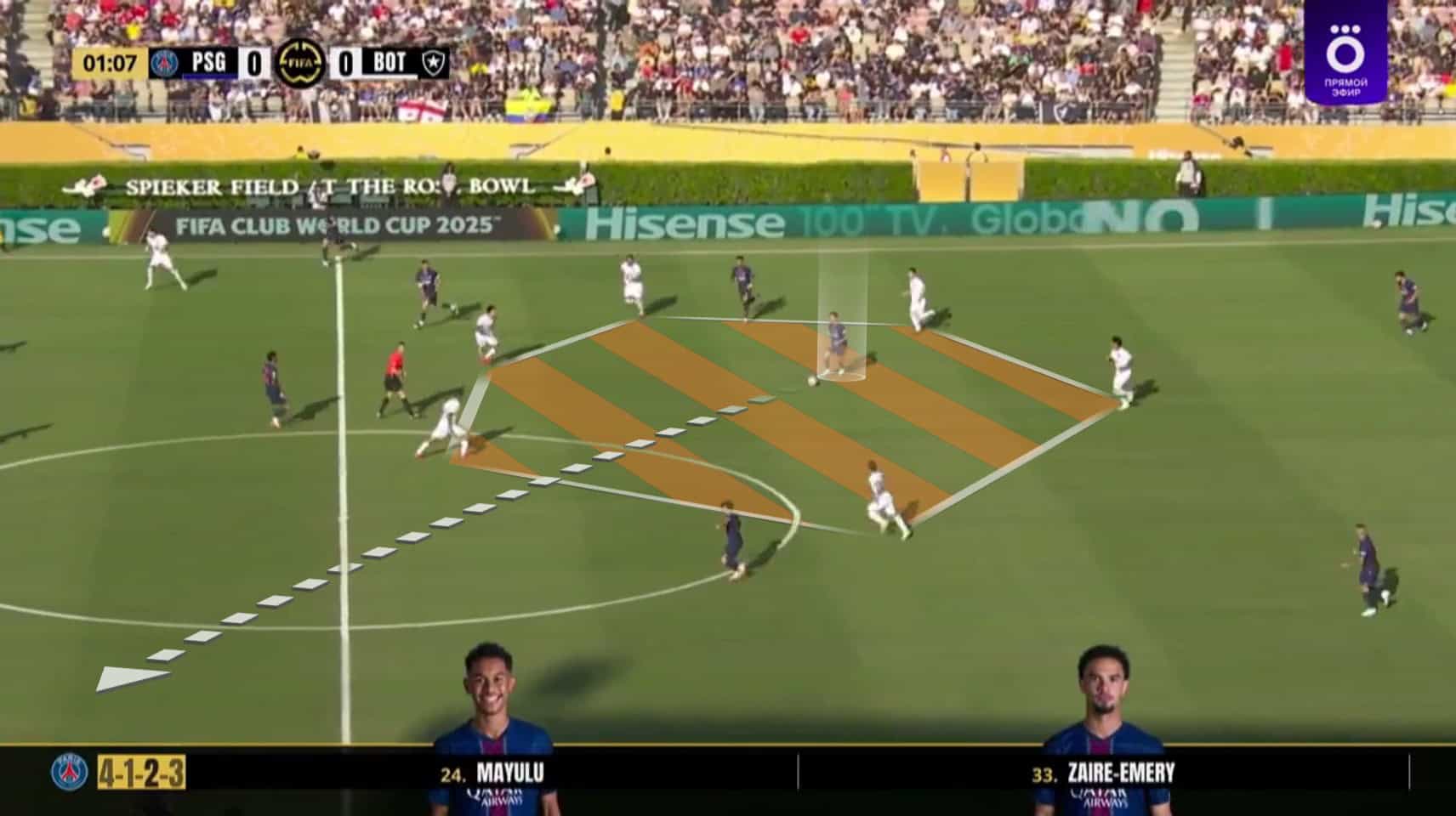
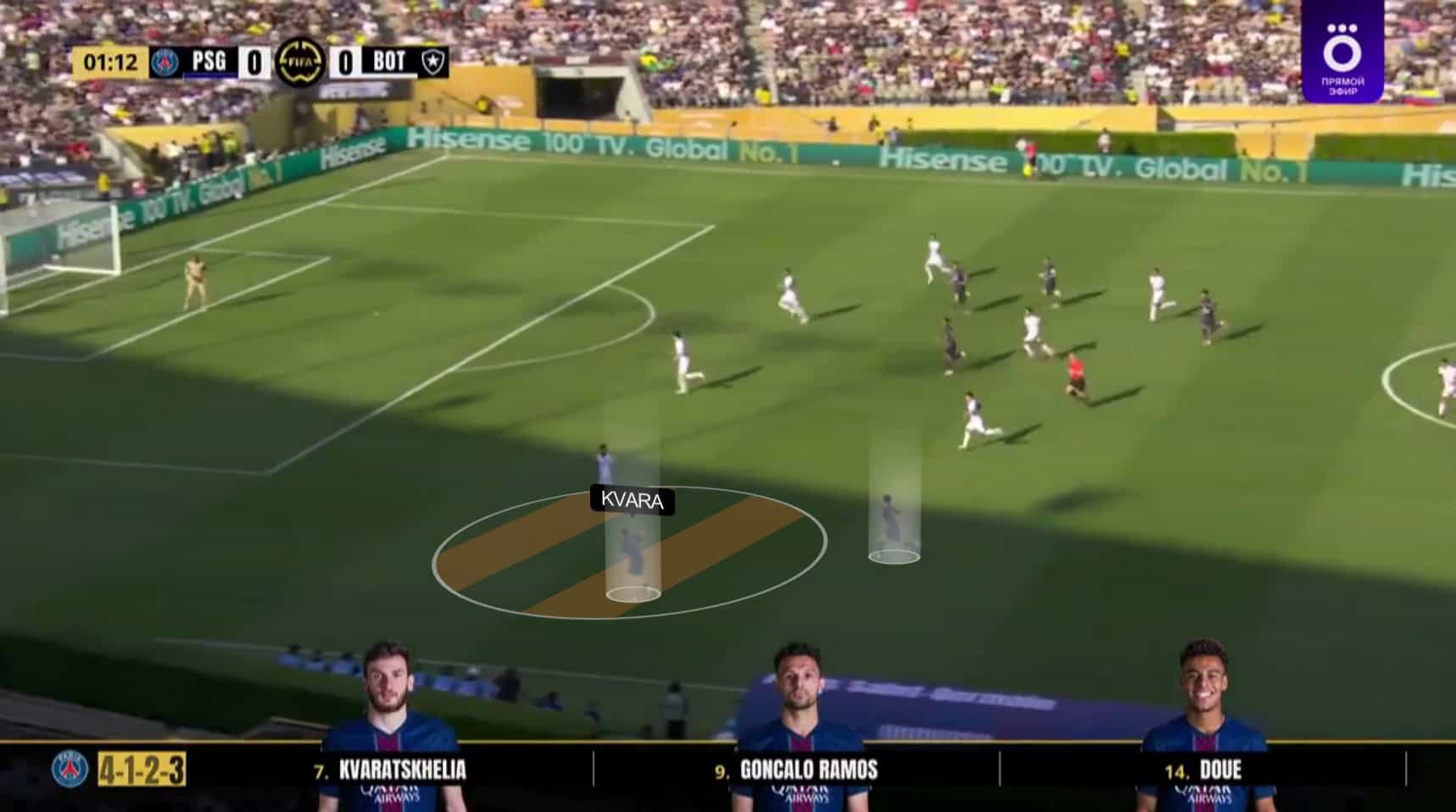
In Figure 2, a long switch sets up Kvaratskhelia to receive in a position of both qualitative and positional superiority; simultaneously, Vitinha creates a 2v1 numerical advantage against Botafogo’s full-back.
Botafogo’s logic was clear: close the middle, give up pressing high in the first line, and look to steal the ball in central zones to launch quick transitions.
The narrow block prioritised cutting off passing lanes to PSG’s central midfielders, who struggled to find line-breaking receivers fluently in the early minutes.
However, this approach had two negative consequences: on one hand, they conceded too much space on the wings, and on the other, they failed to activate their transitions fully after recovery.
PSG quickly recognised the defensive pattern: the Brazilian block suffered every time the circulation was wide.
With Botafogo’s interiors placed very high and far from the centre of the pitch, the shifts to the weak side were slow.
When Kvaratskhelia received wide, his direct marker often arrived late, which allowed 2v1s with support from a full-back or interior.
Attacking The Attacker
To mitigate this, Botafogo looked to stagger the marking on Kvara: one player blocked the passing lane, and another positioned himself behind to contain a possible turn.
In open duels, though, the sense was always one of inferiority.
Botafogo adjusted several key elements of their plan in the second part of the first half.
First, they recognised that pressing Vitinha wasn’t necessary: the Portuguese consistently dropped deep to receive, but rarely found clear options to progress with the congestion in the central lane.
The Brazilian side let him receive without opposition, but immediately cut the following passing lanes.
This manoeuvre avoided imbalances and allowed them to maintain structure in their own half.
Zonal compactness became a key principle: Botafogo stopped chasing men intensely in the first pressing line and began to organise better within their mid-block.
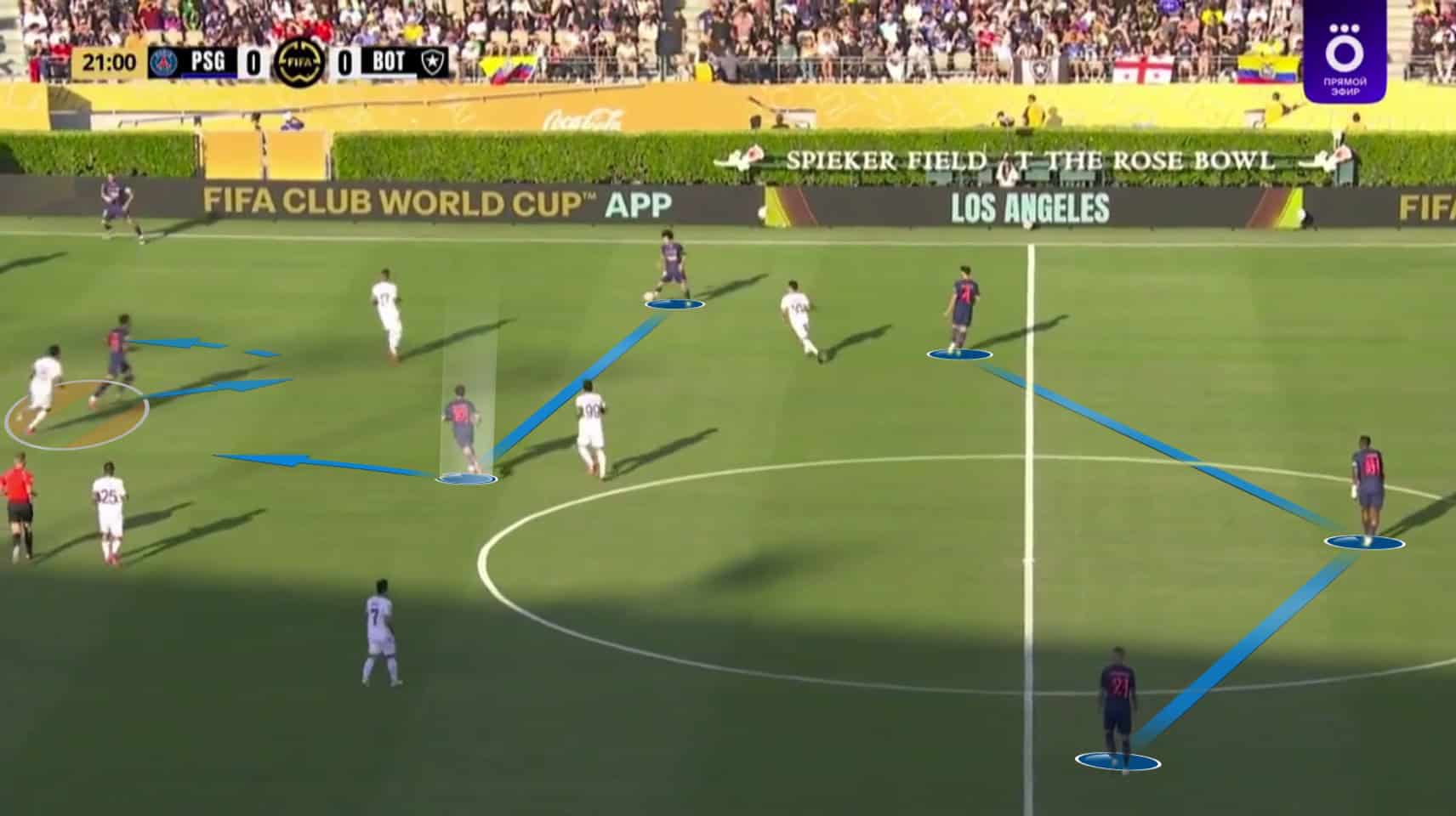
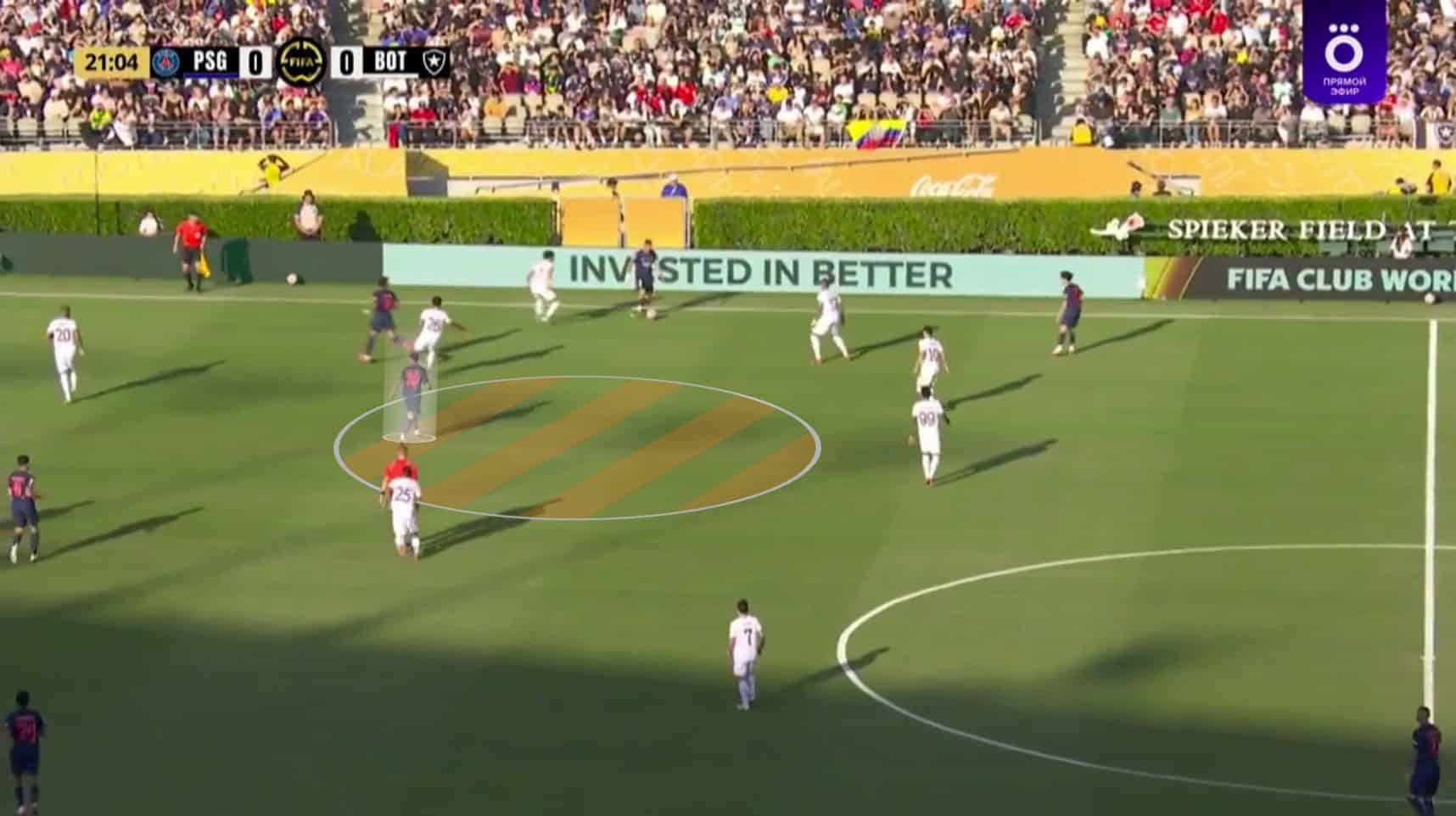
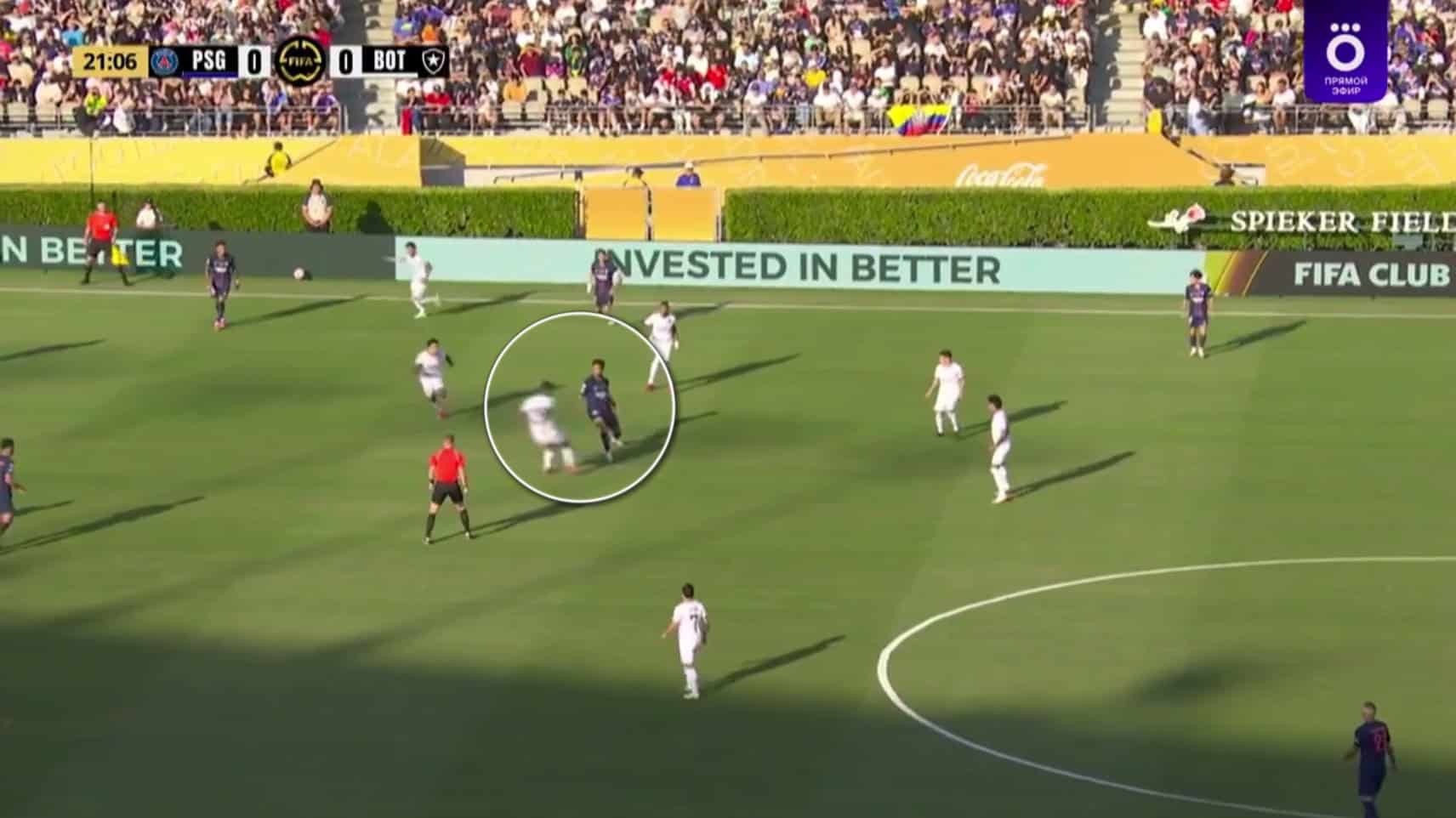
In Figure 3, PSG built out in a 3-2 structure, with Désire Doué offering support before making a run to drag his marker and open up the interior space; Botafogo consistently maintained numerical equality or superiority in the second line.
However, this did not mean passivity.
The team adopted a very characteristic South American principle: attack the attacker.
Each time a PSG player received between the lines or in wide areas, he was pressed aggressively to prevent him from turning on the first touch and was forced to play backwards.
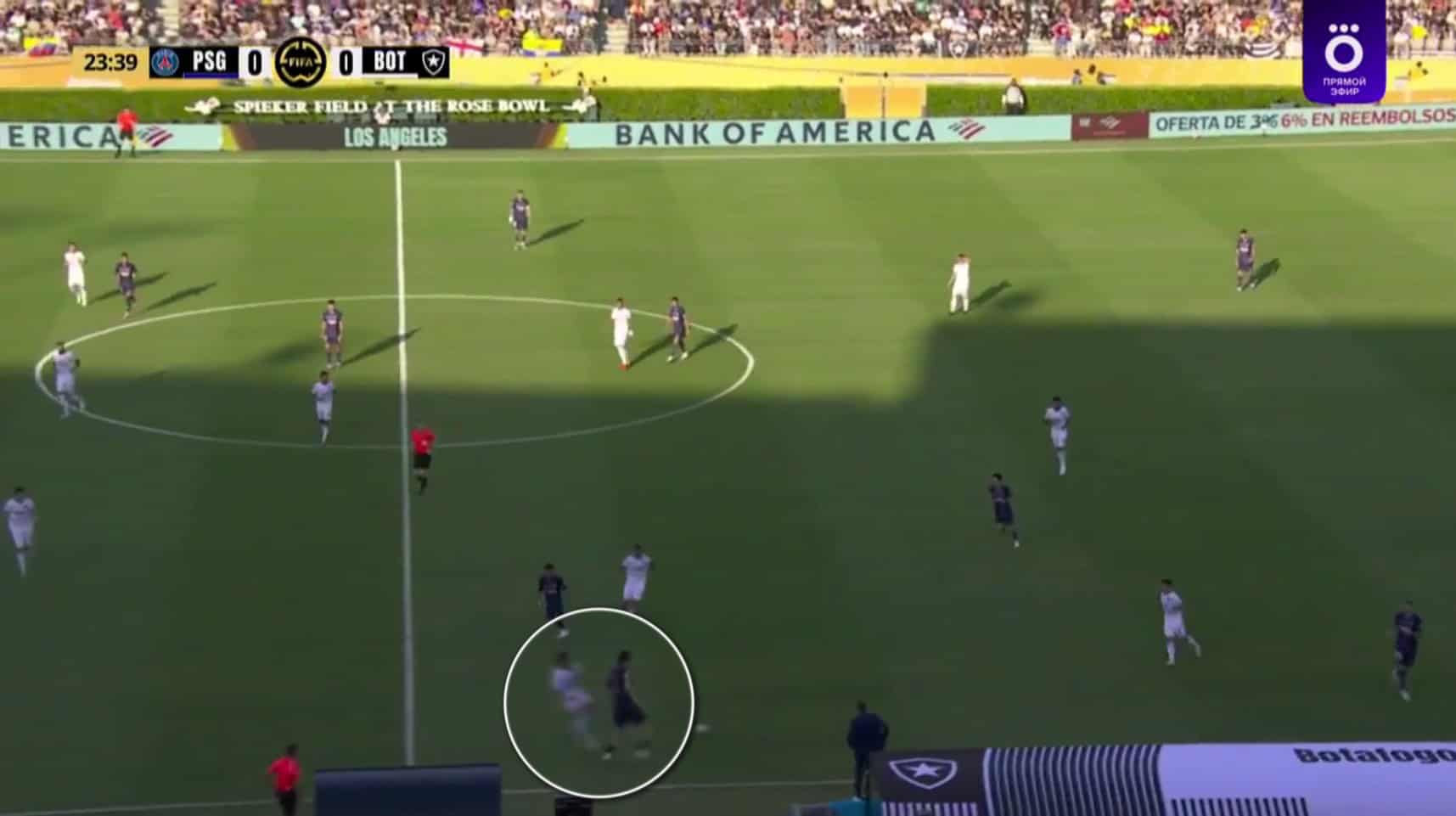
Figure 4: attacking the attacker; denying the first-touch turn and forcing the opponent to engage physically, relying on lower-body strength and arm work.
This especially occurred in the second third of the pitch, where Botafogo’s midfielders won several individual duels.
Varying Between High Press & Second-Line Pressure
Another key in this phase was the high pressure, which was applied sporadically but with great intent.
Botafogo designed pressing movements that forced PSG to redirect the build-up and shift the game toward the flanks.
The sideline also defended the ball, and the Brazilian team surrounded the ball carrier and forced turnovers or long clearances.
The trap was closed very effectively.
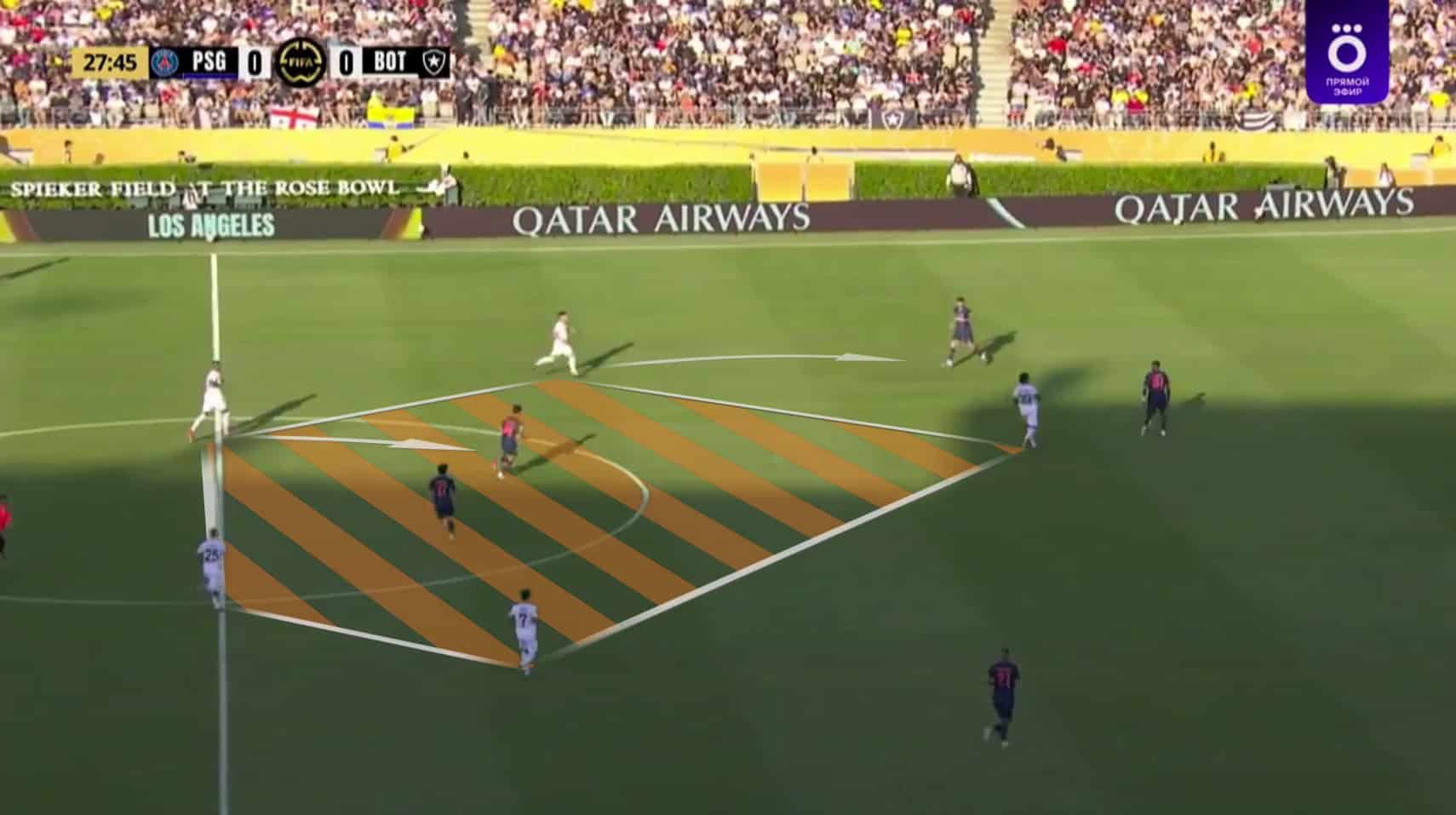
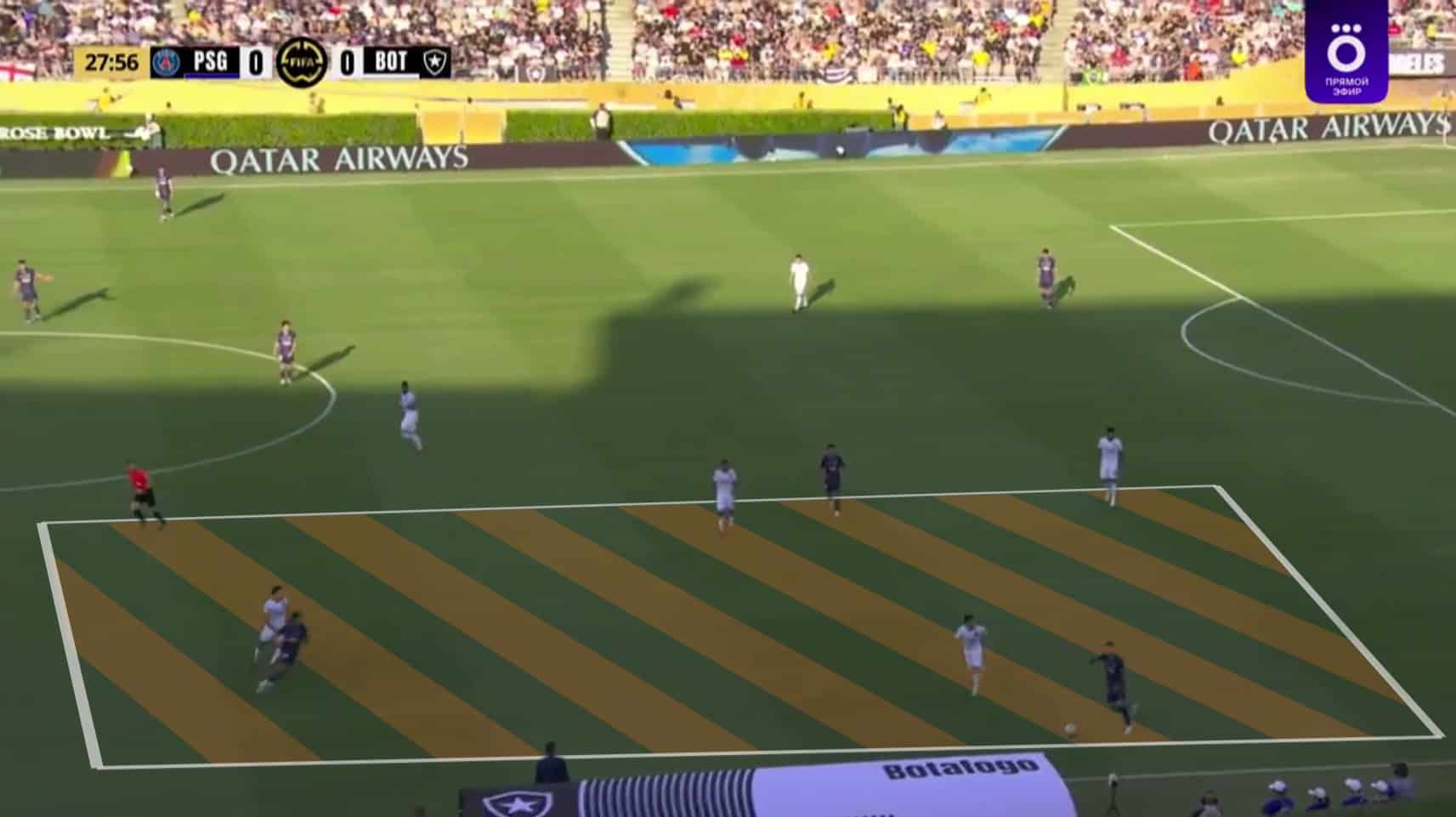
In Figure 5, Botafogo execute a high press as PSG looks to build down the right side; the Brazilian side achieve their goal by forcing a switch to the opposite flank, maintaining numerical equality and keeping the Parisians receiving with their backs to goal.
Moreover, there was a clear improvement in defending the half-spaces.
PSG’s interior off-the-ball runs no longer found as much free space, and Botafogo’s centre-backs or midfielders were able to anticipate or delay.
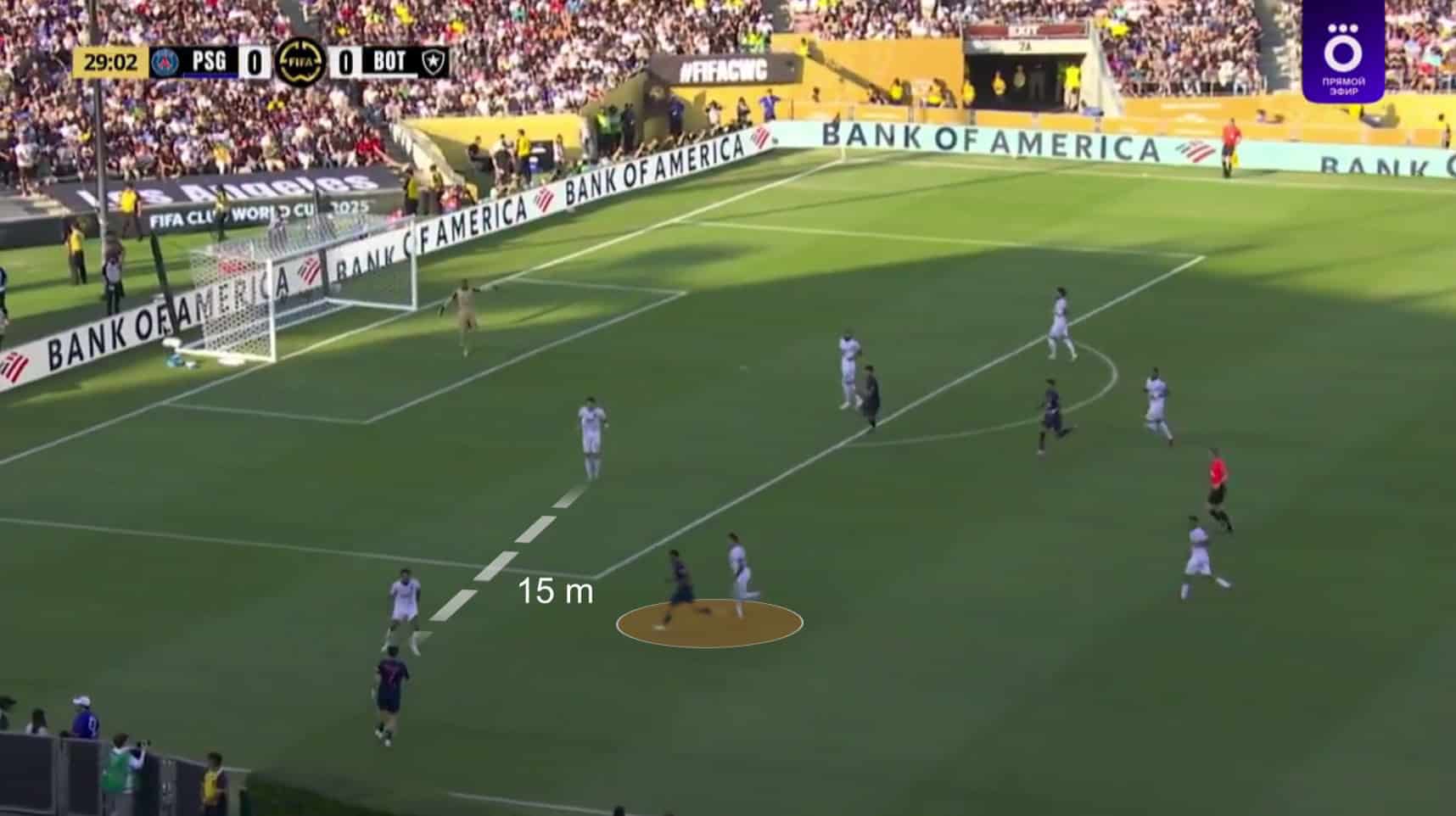
In Figure 6, we see blocking runs into the half-space in response to wide receptions from PSG’s wingers, particularly Kvaratskhelia.
The wingers also got more involved in defensive support, constantly generating 2v1s in the second line.
When PSG shifted the block side to side, Botafogo reorganised and maintained their zonal compactness.
The block moved without gaps, reducing space for Kvaratskhelia and forcing him to retreat or play sideways.
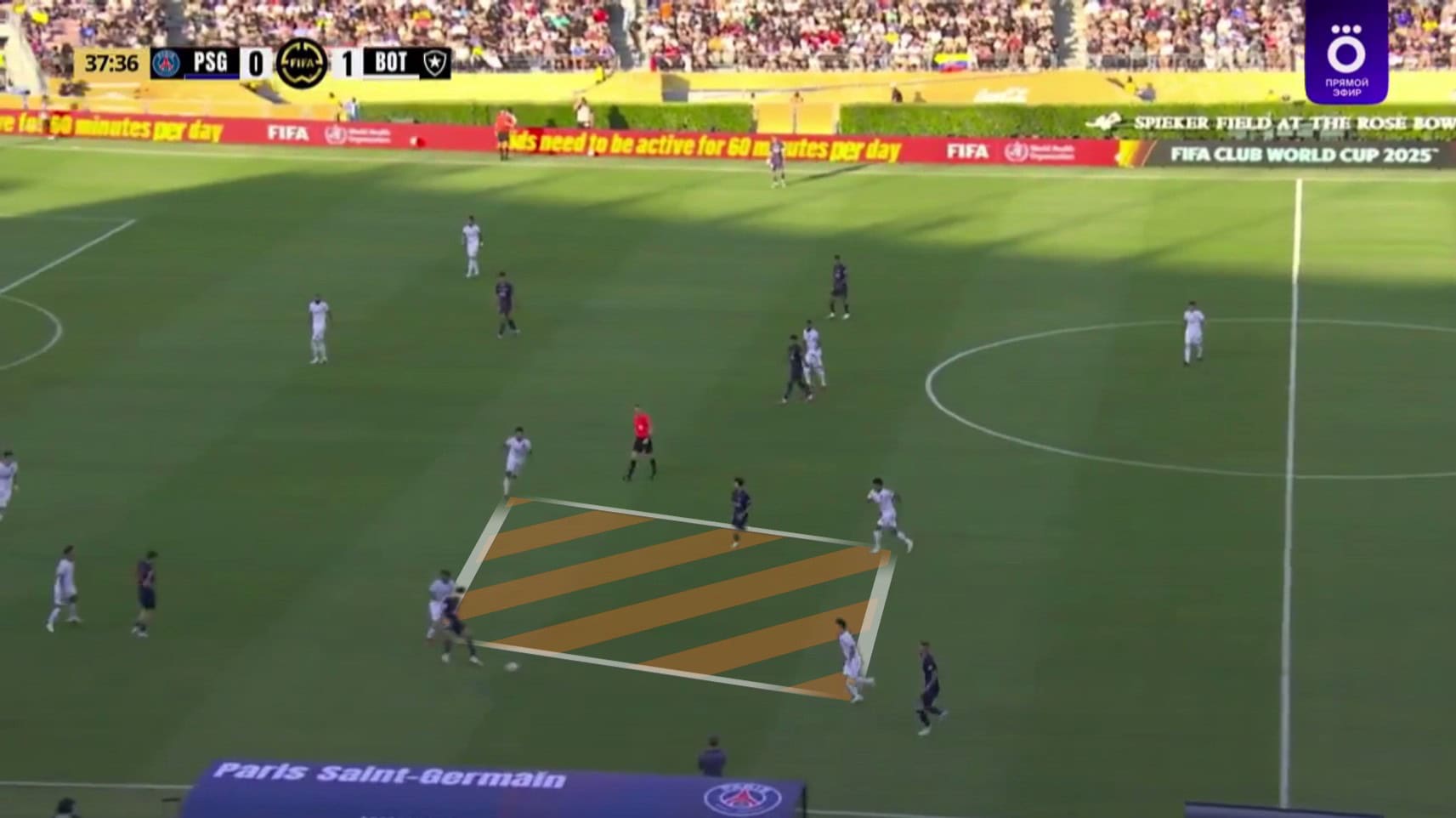
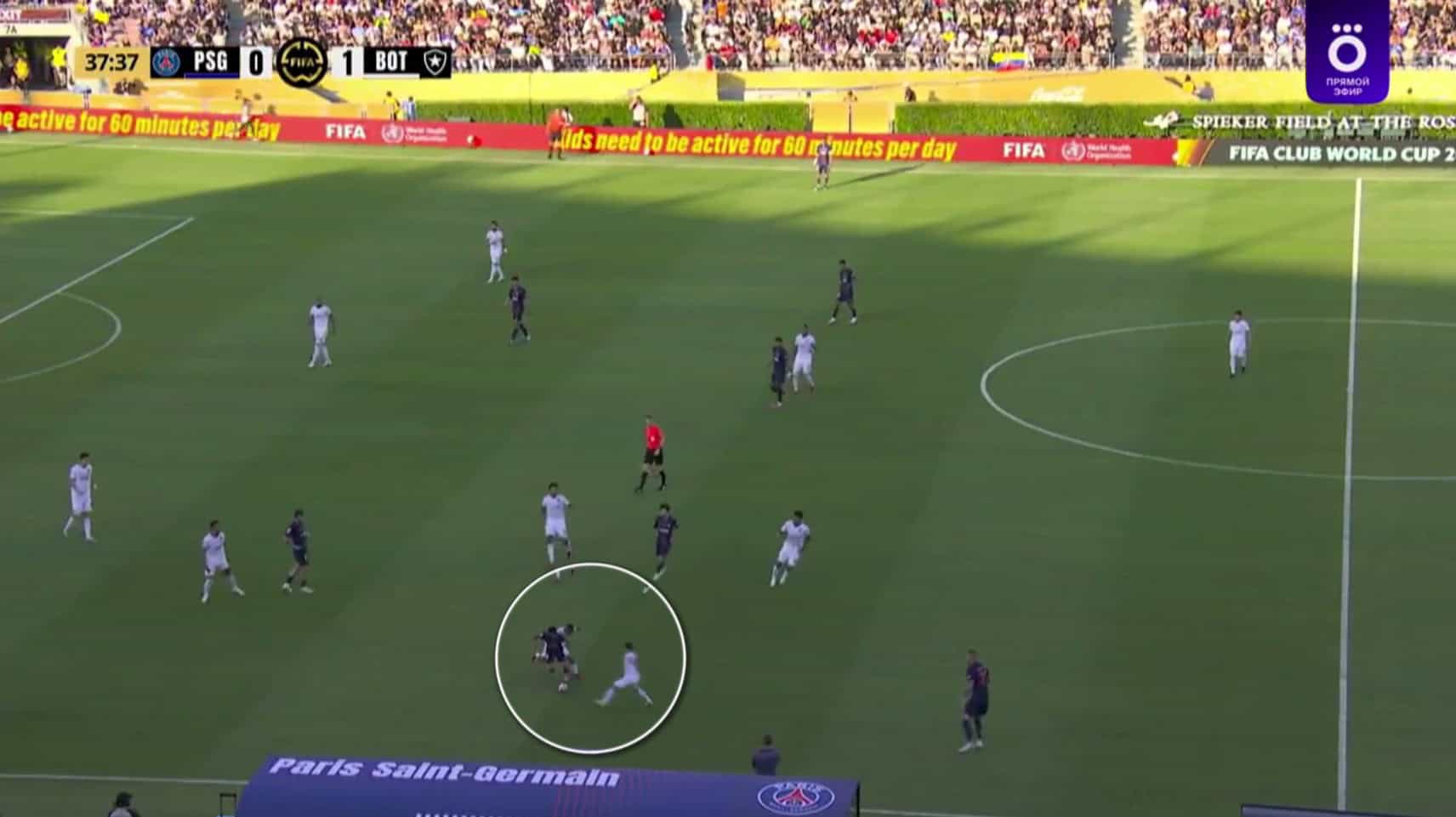
In Figure 7, we see the avoidance of triple width situations that may open up interior spaces by support from the winger to create a 2v1 against the pressured player.
The culminating moment was Botafogo’s goal.
At the end of the first half, Igor Jesus showed brilliant game reading in an isolated offensive action.
With a perfectly timed run in the interval between both PSG centre-backs, he capitalised on a minor defensive lapse to receive in space and score.
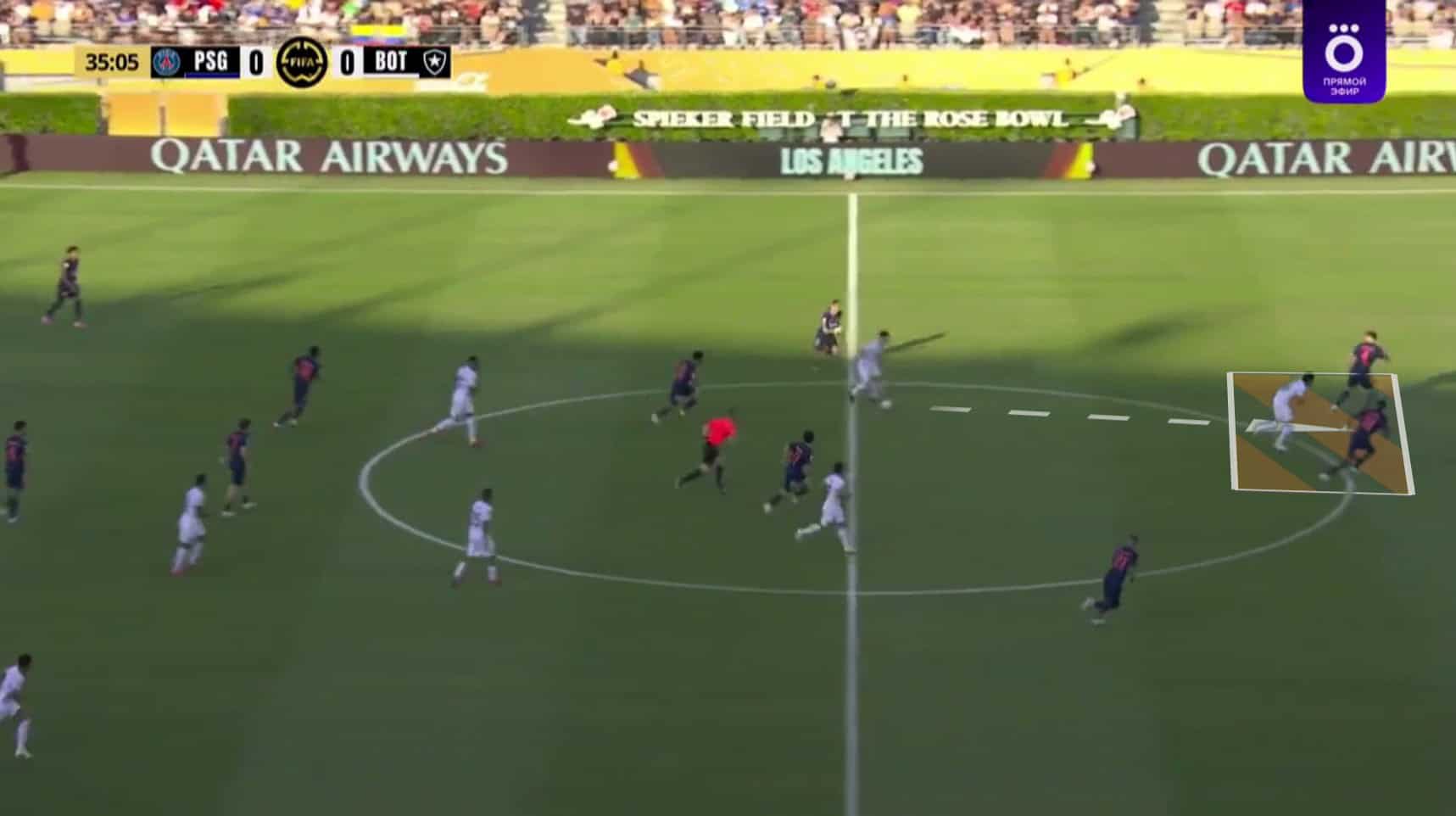
In Figure 8, we see a well-timed penetrating run by Igor Jesus between the two centre-backs; upon receiving the ball, he showcases all the brilliance of the striker from the Carioca side.
The movement was perfect: aimed at attacking the weak spot of PSG’s line and executed with excellent timing.
Beyond technical quality, it was a play that encapsulated the Brazilian team’s philosophy: collective work, positional intelligence, and decisive aggression in key moments.
Conclusion
Botafogo’s plan wasn’t perfect, but it was extremely brave and competitive against a rival of enormous technical quality.
The Brazilian team understood that against a PSG that offers constant off-the-ball threats both wide and centrally, it was essential to decide where to take risks and where to minimise damage.
In the early stage, that choice left them too exposed to 1v1 situations against Kvaratskhelia, something they gradually corrected throughout the first half.
From the 15th minute onward, the defensive structure gained solidity, combining zonal defence with individual aggression.
We saw organised pressing, well-executed coverages, and constant wide support.
There was also tactical maturity to accept certain “costs”: allowing Vitinha to receive in harmless zones, forcing PSG to go wide, and building favourable pressing contexts from there.
That contextual reading was key to neutralising, for long stretches, a team that usually finds advantages with great ease.
The goal came as a reward for discipline and the ability to attack spaces in transition when they appeared.
This Botafogo showed that, beyond the individual quality gap, it’s possible to compete through order, aggression, and tactical insight.
Against a PSG built on individual brilliance and technical quality, the Brazilian team delivered a masterclass in collective defence and intelligent play.
