
FC Juárez experienced a historic final semester, achieving their best performance in Liga MX since the club’s founding in 2015.
The team accumulated 24 points by the end of the Clausura, emerging as an unexpected contender for the Liguilla and qualifying for the final phase for the first time in their history.
They accomplished this under the guidance of Martín Varini, a 33-year-old Uruguayan manager in his fourth head coaching position.
Varini previously managed Rentistas, Defensor SC, and Athletico Paranaense, and had been the new Watford boss, Paulo Pezzolano‘s assistant at Cruzeiro and Real Valladolid.
Total Football Analysis had the pleasure of interviewing Varini to analyse his team in-depth and understand Martín Varini philosophy, methodology, and tactics.
Who Is Martín Varini?
After retiring as a player at the age of 22, Martin Varini returned to Defensor Sporting in 2017, the club where he had developed, to coach in the youth divisions.
On April 9, 2021, at just 29 years old, he took on his first role as head coach with Rentistas, becoming the youngest manager in Copa Libertadores history.
Following that experience and a stint as Paulo Pezzolano’s assistant at Cruzeiro and Real Valladolid, he became head coach of Defensor, where he won the Copa Uruguay — his first major title.
After a brief stint at Brazil’s Athletico Paranaense, he was appointed head coach of FC Juárez in November 2024, a position he continues to hold to this day.
Martín Varini Tactics
Foundational Identity
Before diving into explicit tactical details, Varini’s teams begin with a bold conceptual foundation that defines the entire model of play.
It revolves around three core principles:
- Short associative play – “to organise ourselves starting from the ball”
- High pressing
- A broad range of movement and decision-making freedom for players
“There is a clear identity in the behaviours we look for – it reflects how our coaching staff believes football should be played.
To implement a game idea, you need to be authentic.
Players will trust you only if they sense you genuinely believe in your idea, and that belief only comes through total commitment.
There’s a consistent pattern across all the teams we’ve managed: we want to be a team with a clear offensive structure, where players can identify behaviours and patterns and where the ball’s circulation helps create chances.
Our identity is rooted in the principle of always organising ourselves based on the ball.”
On the defensive side:
“The main idea is to recover the ball as quickly as possible.
Of course, pressing high might not be viable in some games, and you need to fall back into a mid-block and create defensive compactness.
But even then, the aim is still to win the ball back and attack the space left behind.”
He closes with a summary of his approach:
“There’s a recurring theme in the teams we’ve managed: high pressing, building from the back through associative play, and from there, adjustable tactical structures depending on the players available.”
Control Of Space
One of the core principles consistently observed in Varini’s teams is the rational occupation of space.
While his base system out of possession has varied, alternating between a 4-3-3, 4-2-3-1, 5-2-3, or 4-4-2, the in-possession structure typically shifts into a 3-2-2-3.
This allows his teams to effectively fill all five vertical lanes of the pitch with at least one player, including wide channels, half-spaces, and the central corridor.

It ensures both width and depth while simultaneously creating triangles and diamonds across different zones, facilitating short passing options.
“The rational distribution across the pitch allows us to maintain optimal relational distances — sometimes a bit closer, sometimes slightly wider — but always with a strong emphasis on short associative play.
This structure ensures we always have an extra pass available and helps us neutralise pressing schemes that opponents often use to force us into going long.
It’s all about having one extra player to find the passing lane.”
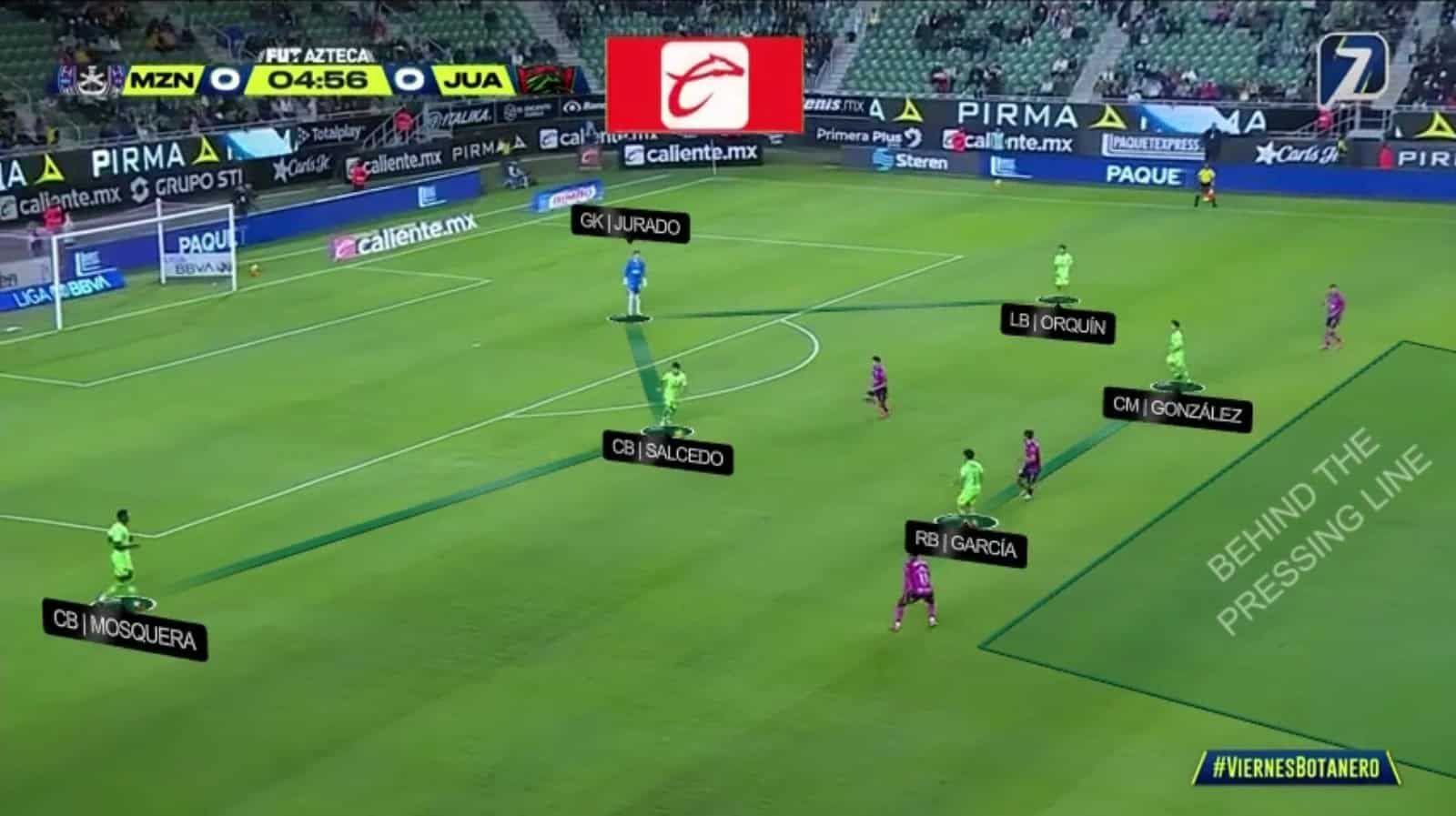
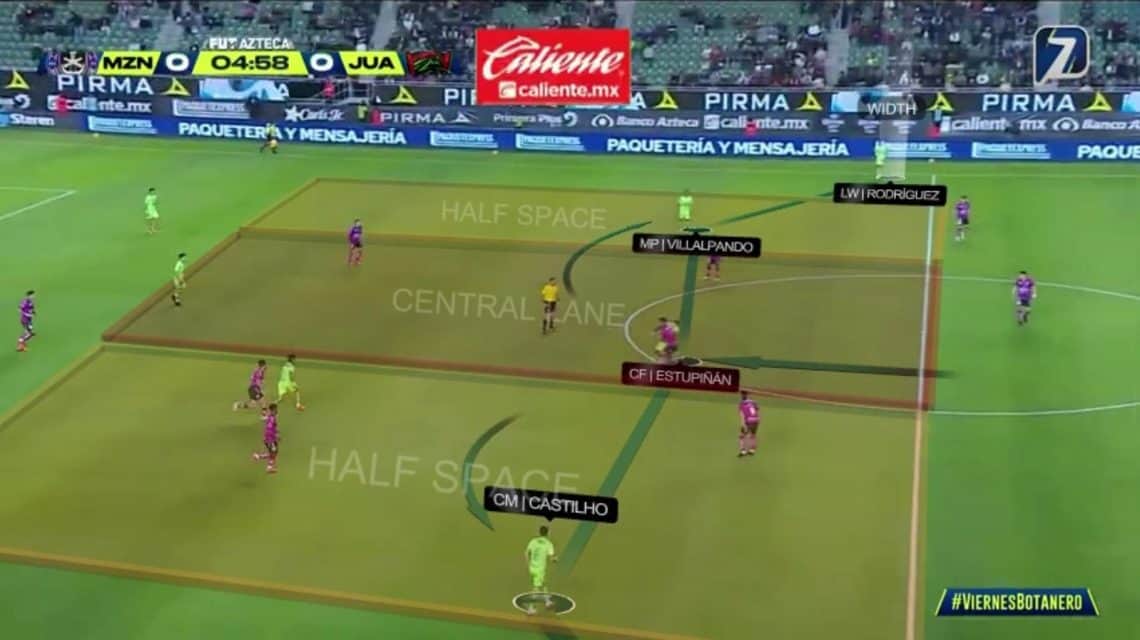 Figure 1: Rational occupation of the channels by FC Juárez.
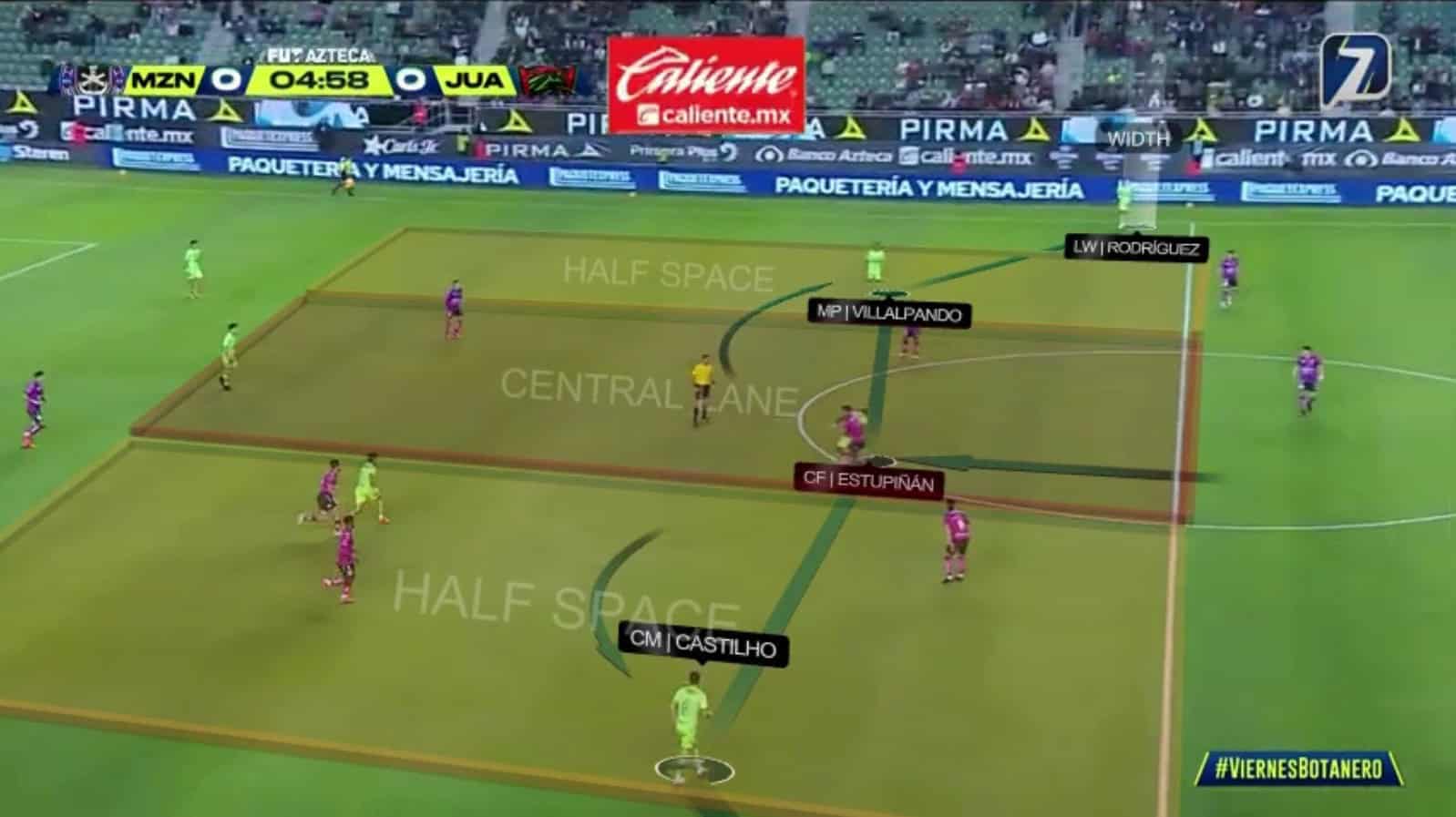
He also emphasised the importance of player interpretation, noting that “positioning goes beyond structure.”
“It’s about discovering complementary movements that respond to a teammate’s action.
For example, if we create a triple width, then a third-man run can emerge to attack the free space left behind.
These are various coordinated movements.
While our main objective is to achieve a rational distribution, we also like to give players the freedom to interpret space and identify the best sequence to progress the play.”
Freedom Within A Framework
In this regard, Varini emphasised the importance of granting players individual freedoms.
“As the years go by, I’m increasingly convinced that it’s the manager’s job to create a context — to design pre-established situations or scenarios.
The goal is for the player to recognise them quickly, which helps optimise decision-making.
But ultimately, the player’s quality always makes the difference: their decision, personality, and creativity, especially in the final third.“
These freedoms, however, are not given without structure.
Varini made it clear that they are granted within specific patterns and principles:
“It’s about the player knowing where they will receive the ball.
For example, if it’s a winger, he must know that the inside midfielder is going to make a run between the full-back and the centre-back; that the striker will either run in behind the second centre-back or come short for a one-two; that the holding midfielder will show for a short layoff; and that a cross could be delivered first-time.”
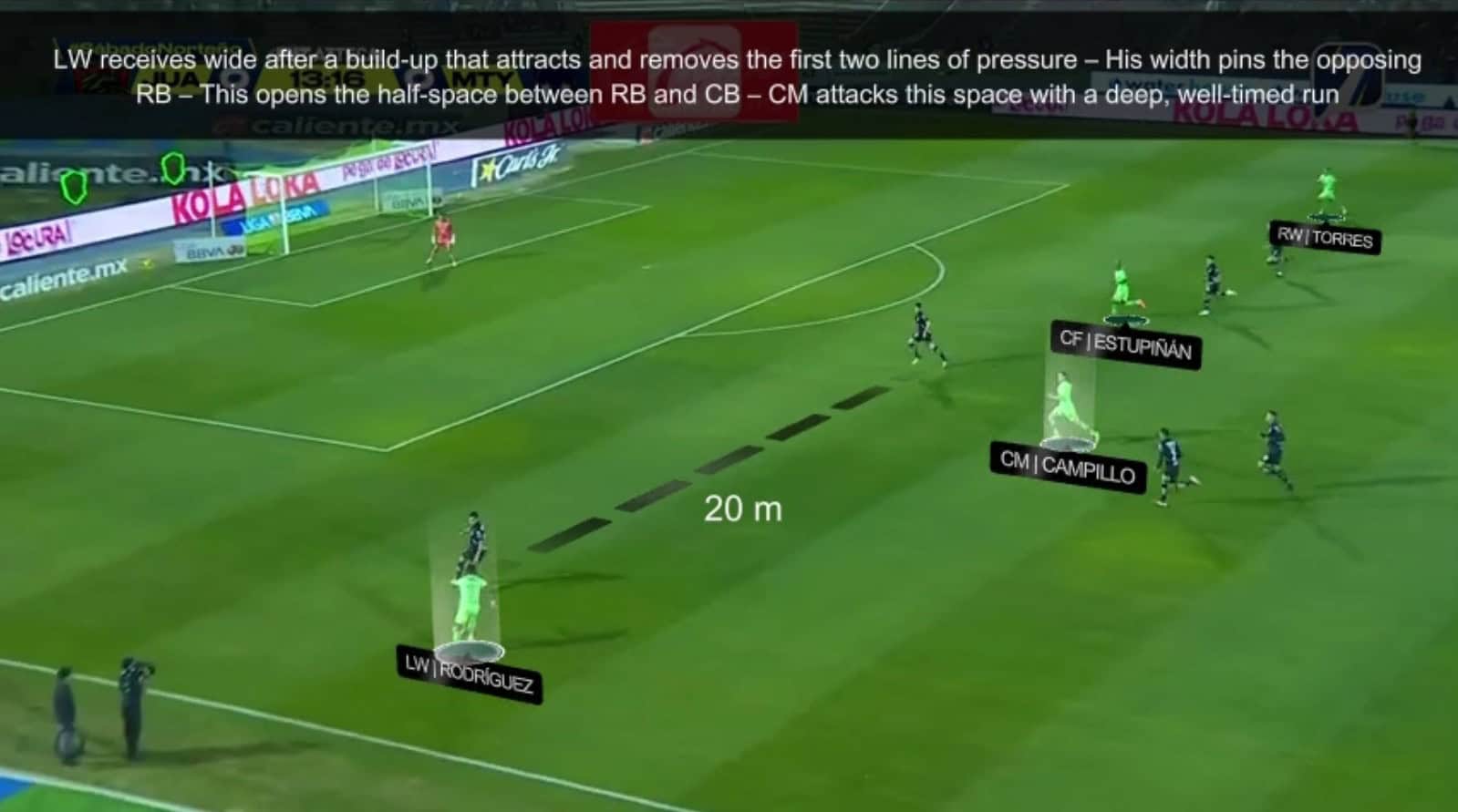
Figure 2: A winger receiving wide and a midfielder breaking into the half-space.
Off-The-Ball Movement: Pin To Free Elsewhere
A player repositioned from his usual zone was Joaquín Valiente during his time at Defensor.
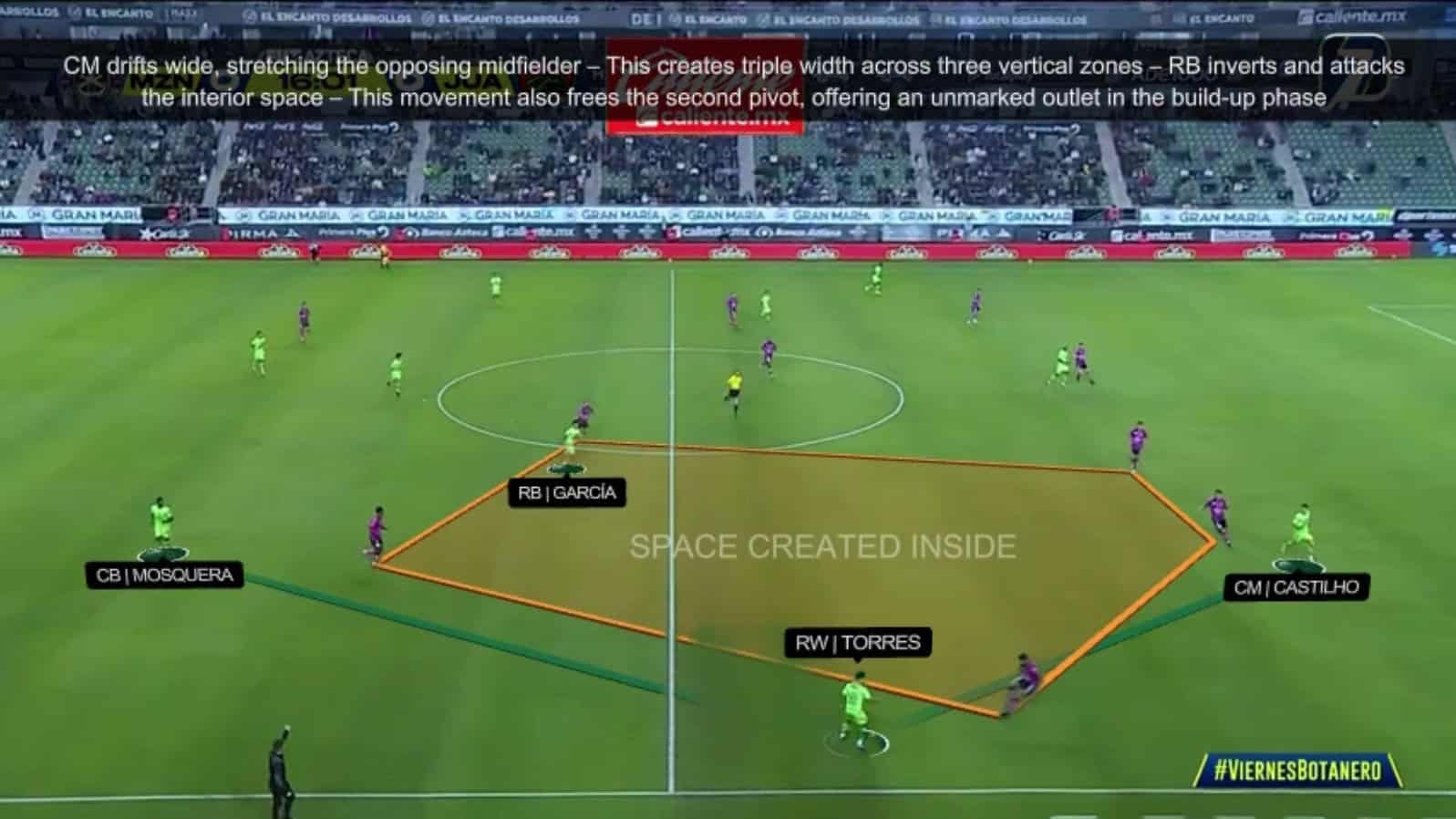
Originally a natural-footed left winger, Valiente transitioned to a right-sided interior under Varini, occupying the top-right vertex of the midfield square and playing on his weaker foot. (Let’s recall: “What always makes the difference is the player’s quality”).
This change expanded his range of movements and gave him the freedom to drift wide — a behaviour Varini has since replicated at Athletico Paranaense and Juárez.
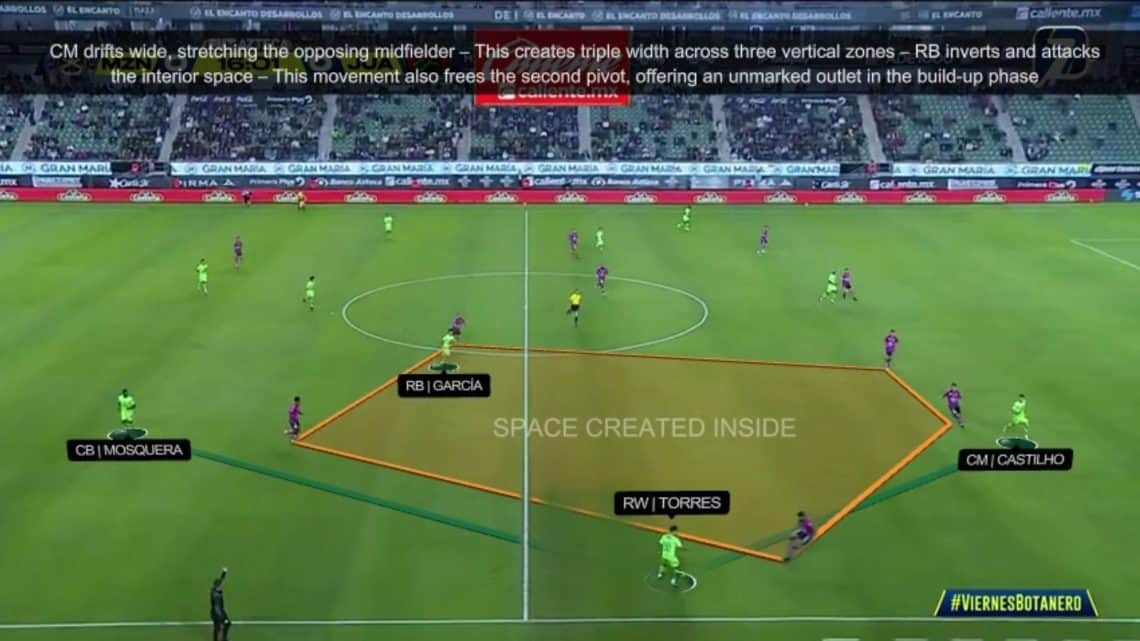
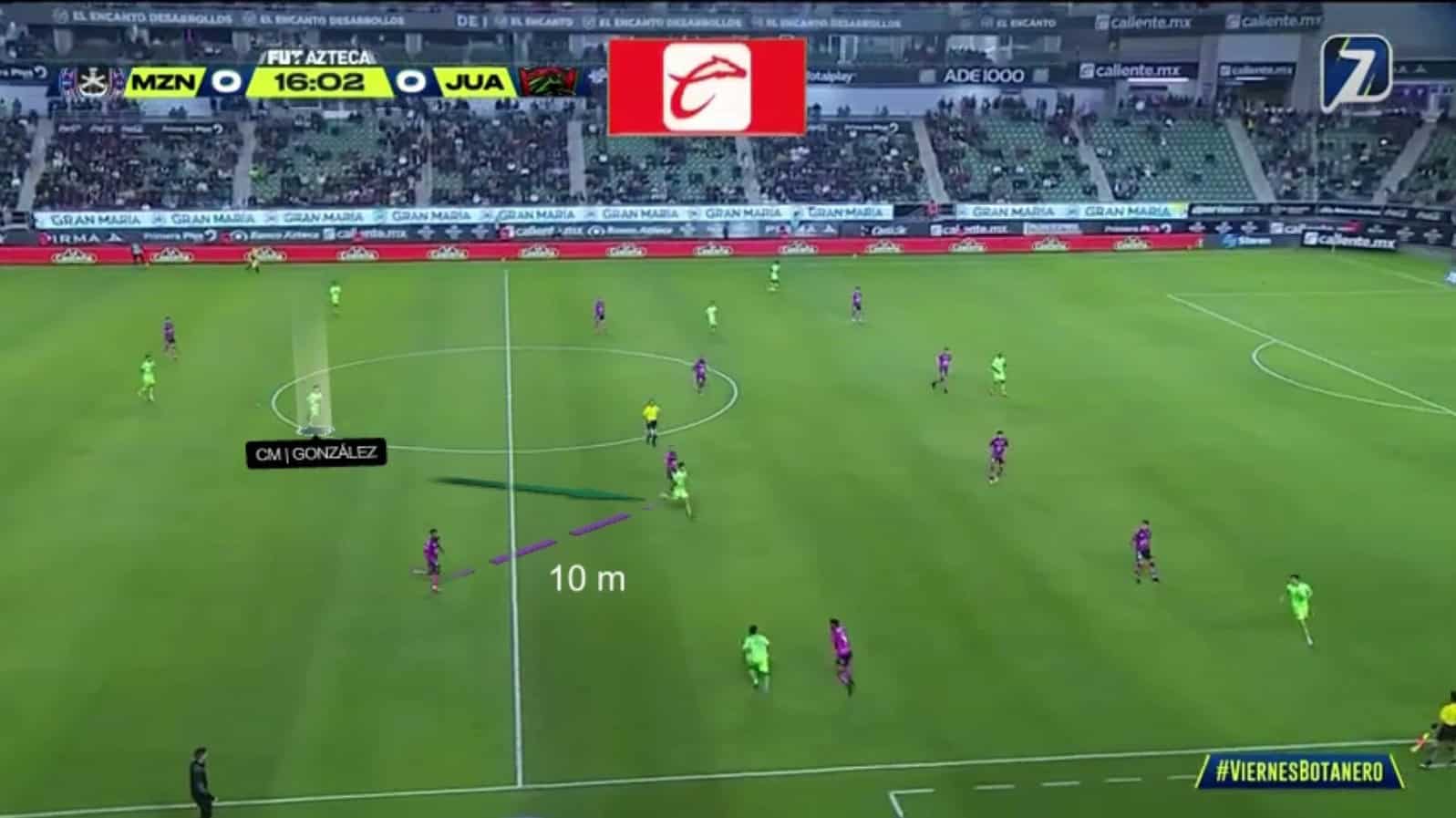
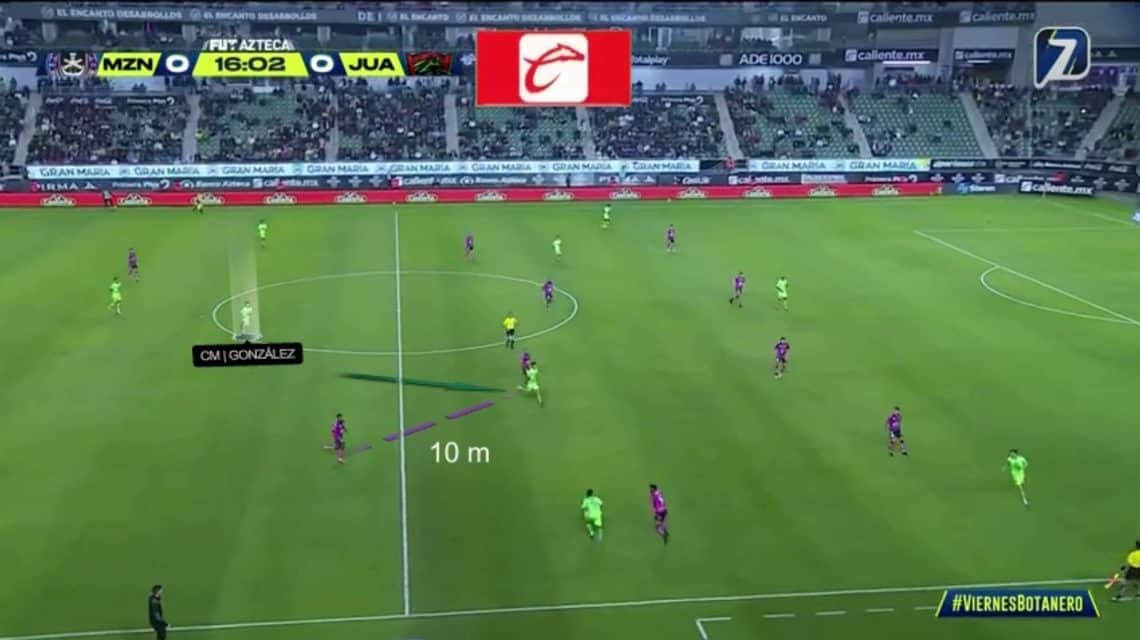 Figure 3: The interior breaks in behind and moves wide.
“Valiente will deliver wherever you play him — he’s a goal threat and arrives well in the box.
We felt that he’d offer great link-up ability within that central square as a right interior.
Playing him on his weaker foot also allowed him to shoot from mid-range, which he does very well.
I remember him hitting the post a couple of times against Danubio and scoring a great goal from distance against Racing.
When Octavio joined, they formed a powerful central trident, which freed up space for the wide players.”
He emphasised the value of off-the-ball movement and positioning, both inside and outside, as tools to create space in other zones.
“It’s all about this: drawing players inside to free space outside or going wide to open interline spaces and create interior advantages.
I don’t think there’s a single formula — what matters is mastering different attacking mechanisms to hurt the opponent”.
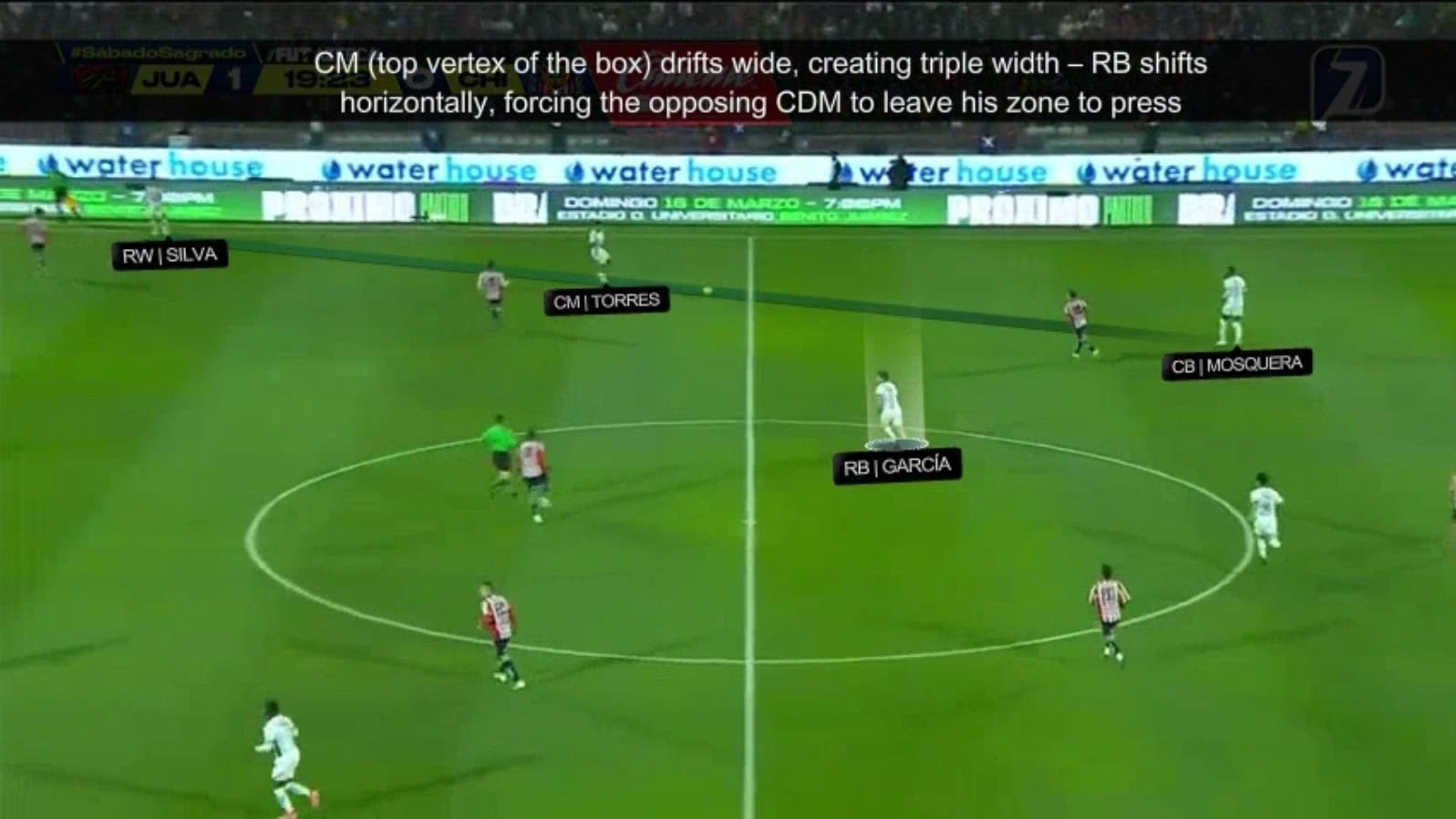
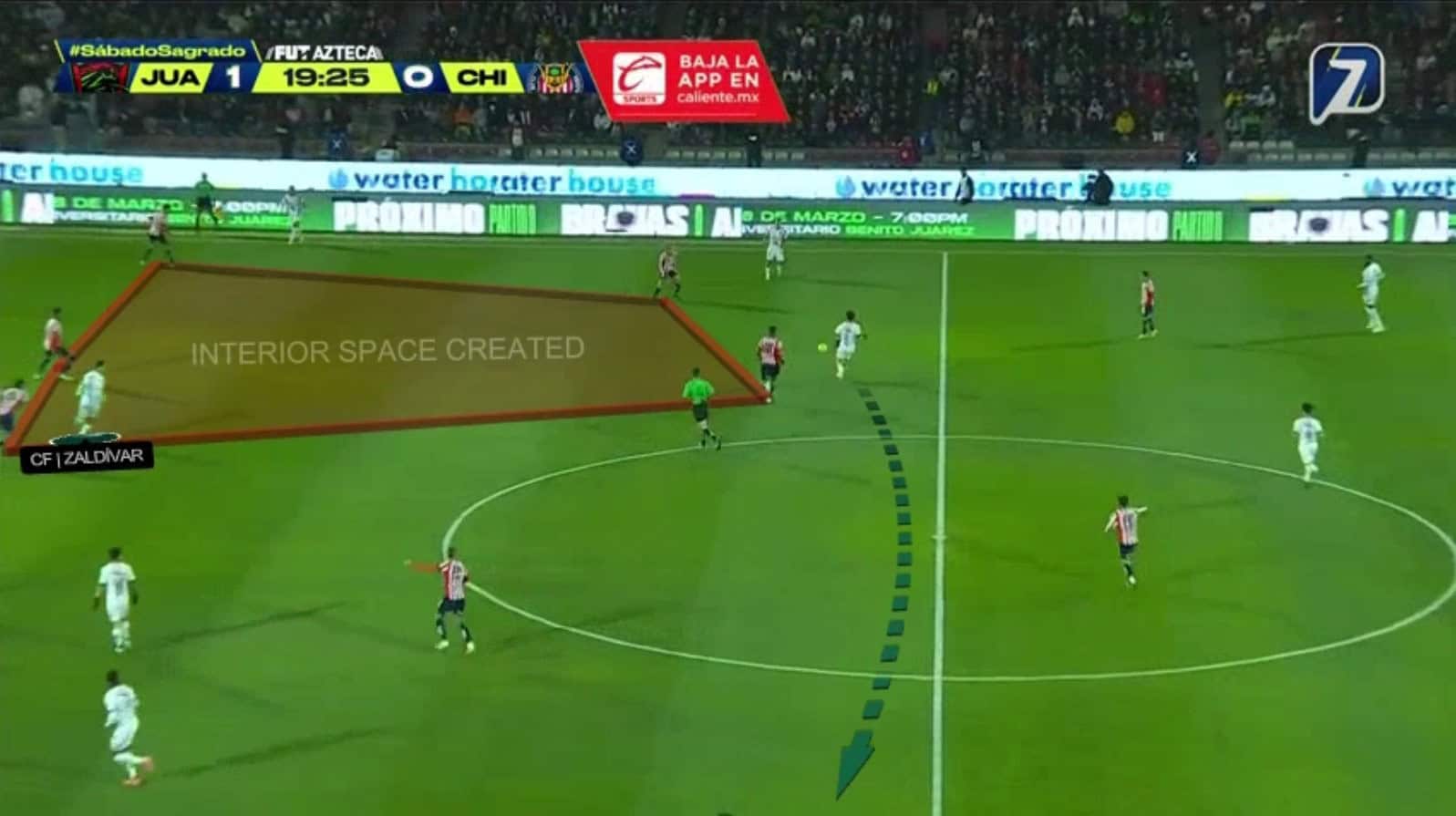
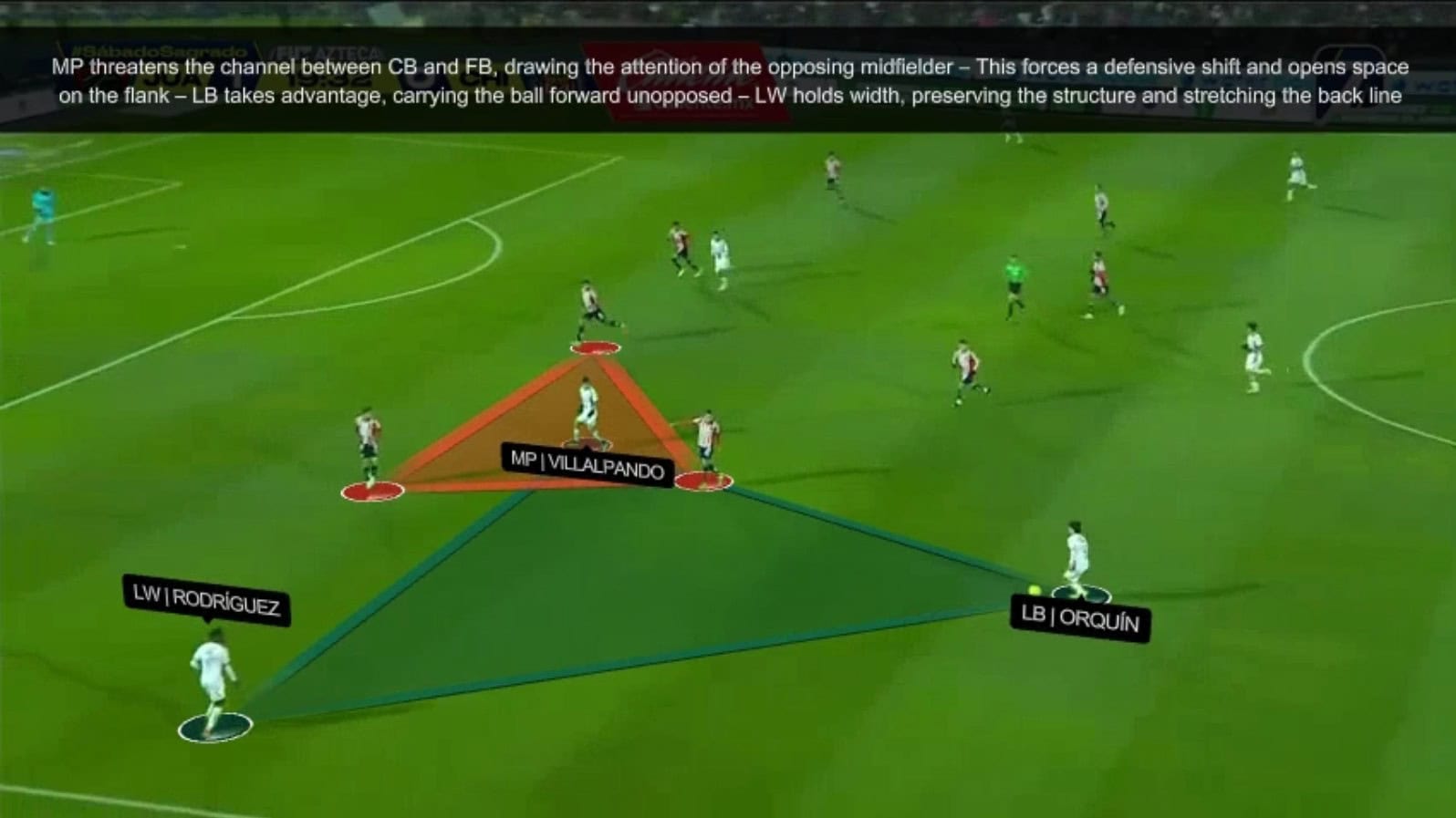
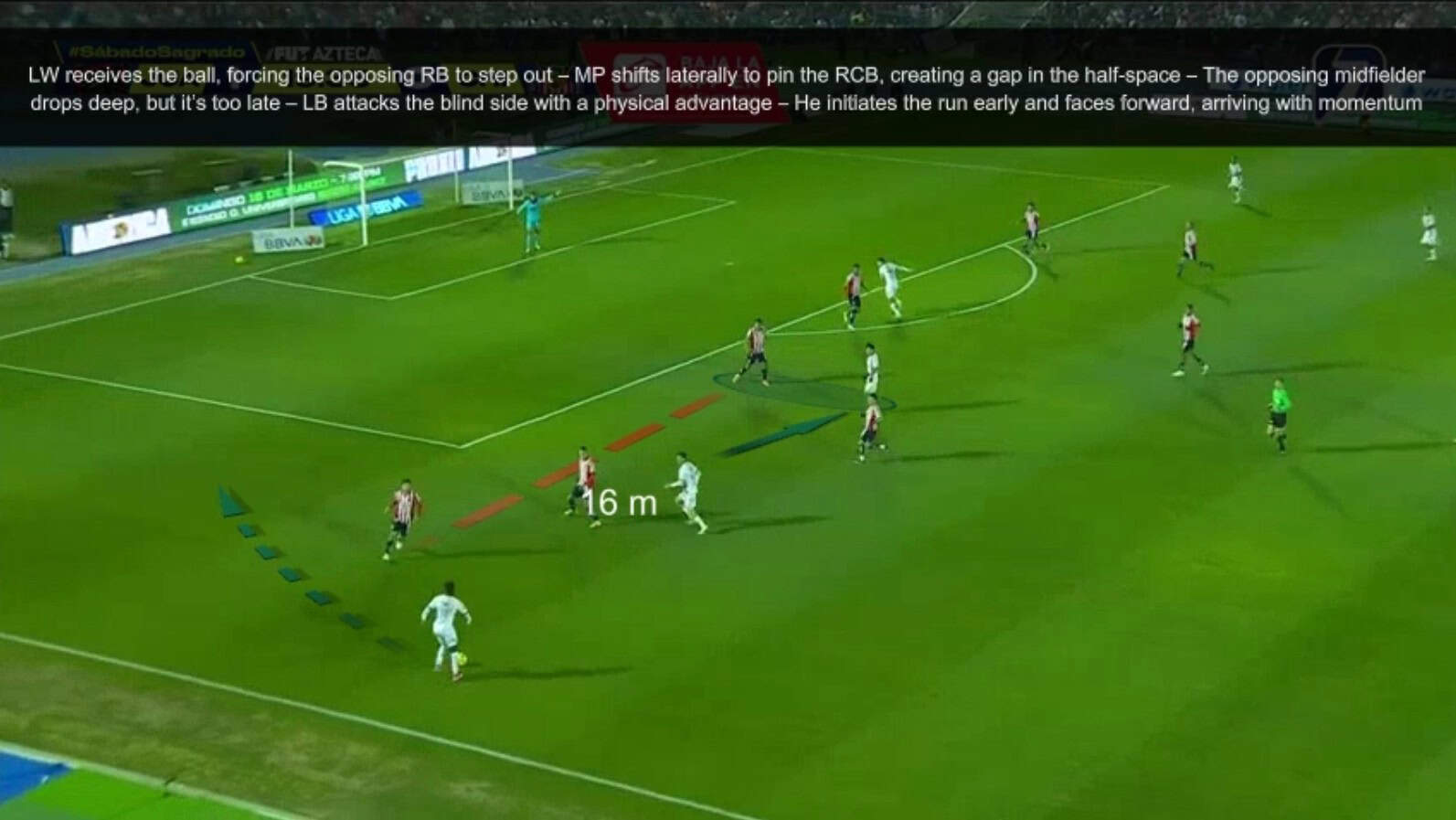
Figure 4: A sequence with triple width and a switch to the opposite side.
This is a cornerstone of Varini’s playing model.
“Usually, when we arrive at a club, it takes some time for players to understand the importance of off-the-ball actions.
Yes, we unite through the ball, but positional discipline creates space.
And that’s where values like teamwork, humility, and sacrifice come in.
Sometimes, a player must stay wide for 10 minutes without touching the ball just to hold width, or make an unselfish run inside, knowing they won’t receive, just to drag defenders and open space for a teammate.
These are traits the players need to internalise.
I believe we’ve done that well—we’ve instilled values of humility, generosity, and commitment to the collective idea.
Everyone wants the ball, everyone wants to be the protagonist — but what matters is making the team the true protagonist.”
The Inverted Full-Back
A recurring feature across the last three teams Varini has managed is the use of an inverted right-back, who moves into central areas to operate as a pivot in possession.
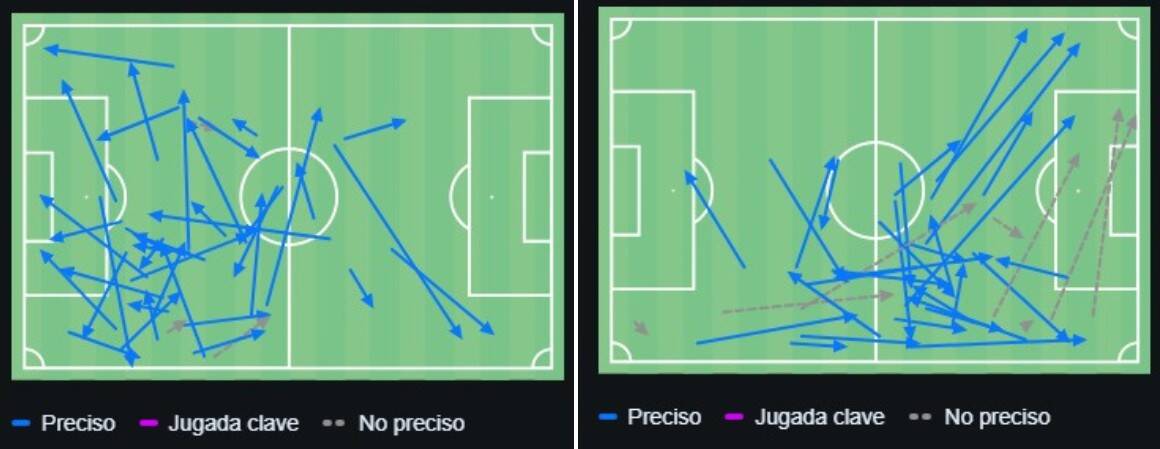
Figure 5: Passing map of Denzel García (left) and Nicolás Rodríguez (right).
This creates 3+2 or 4+2 build-up structures (depending on the goalkeeper’s involvement) and allows for numerical superiority in midfield through the formation of a square with the other midfielders.
“At Juárez, when we started preseason, we didn’t have a natural right-back in the squad.
So we explored the option of Denzel García, originally a holding midfielder, who had also played as a right-back, defensively.”
One advantage of this asymmetrical setup is that the left-back either becomes a third centre-back during build-up or pushes higher to provide width.
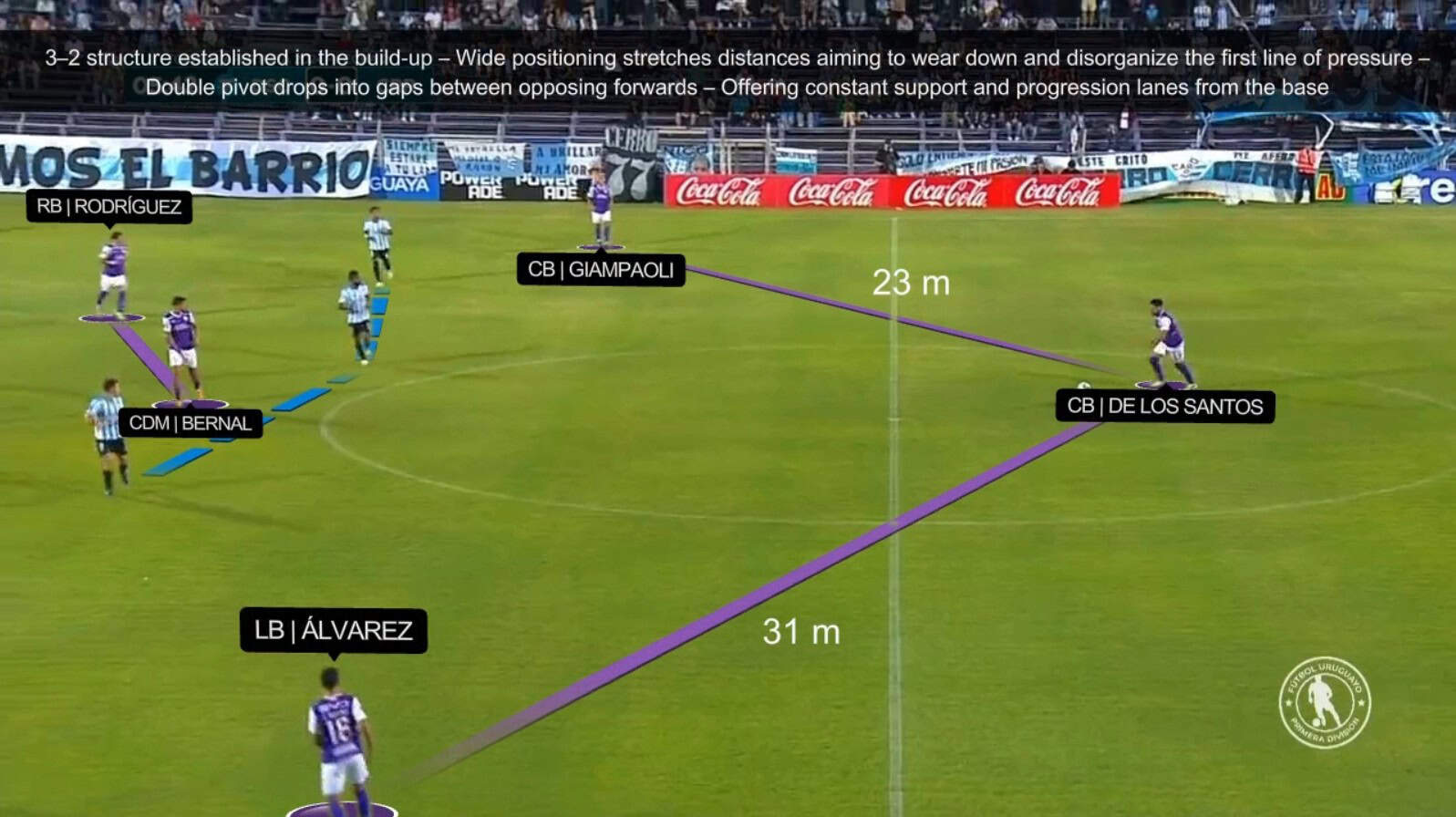
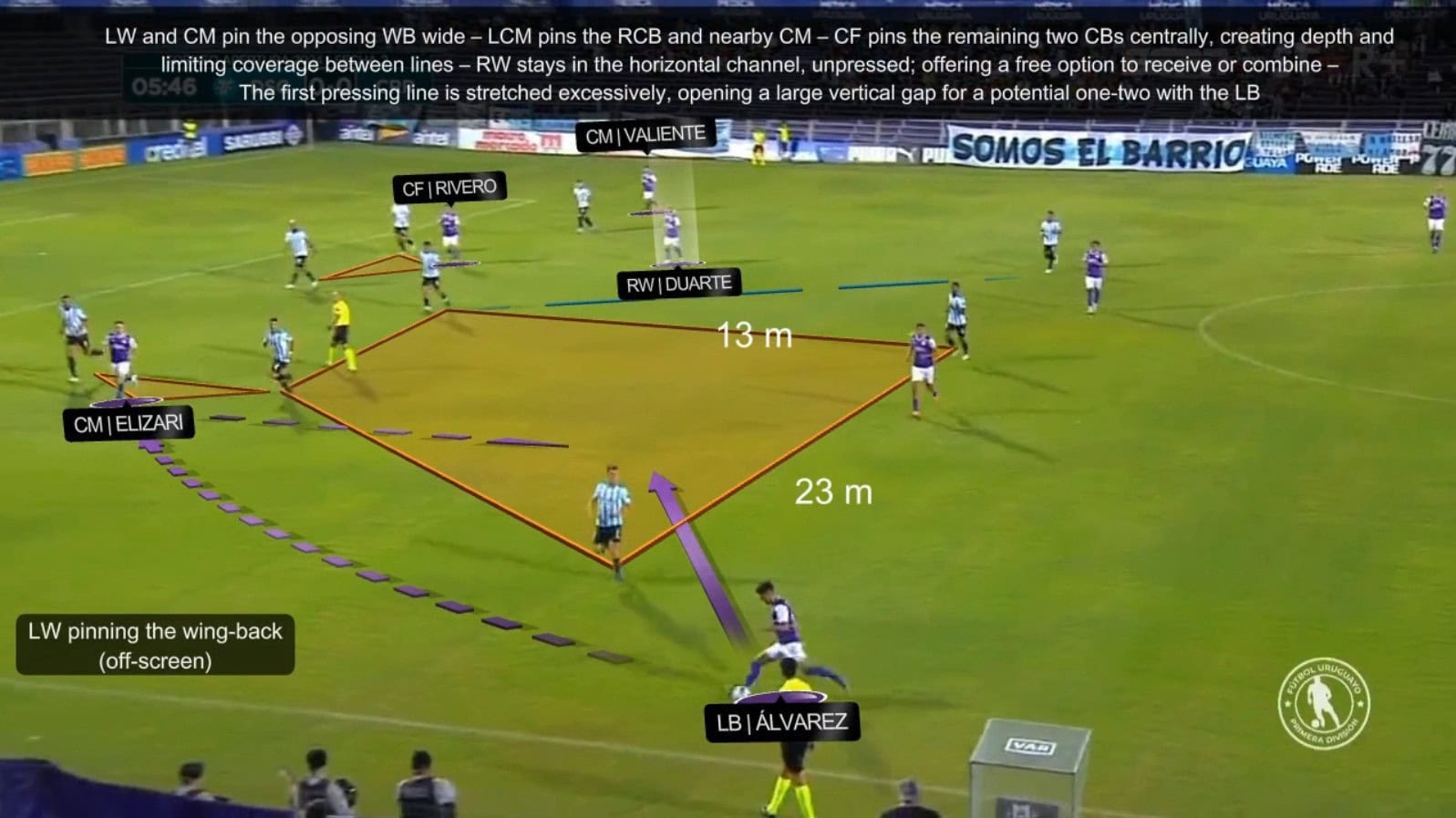
Figure 6: Defenders positioned wide (disorganising the first line of pressure).
“It allows us to create a flexible structure, shifting between a back four and a back three in the build-up phase.
It also helps us generate midfield superiority.
When opponents press higher, they leave space behind, which we can exploit with our interiors ready to receive.
And if they don’t press, we maintain a numerical advantage in midfield, enabling us to progress with control.”
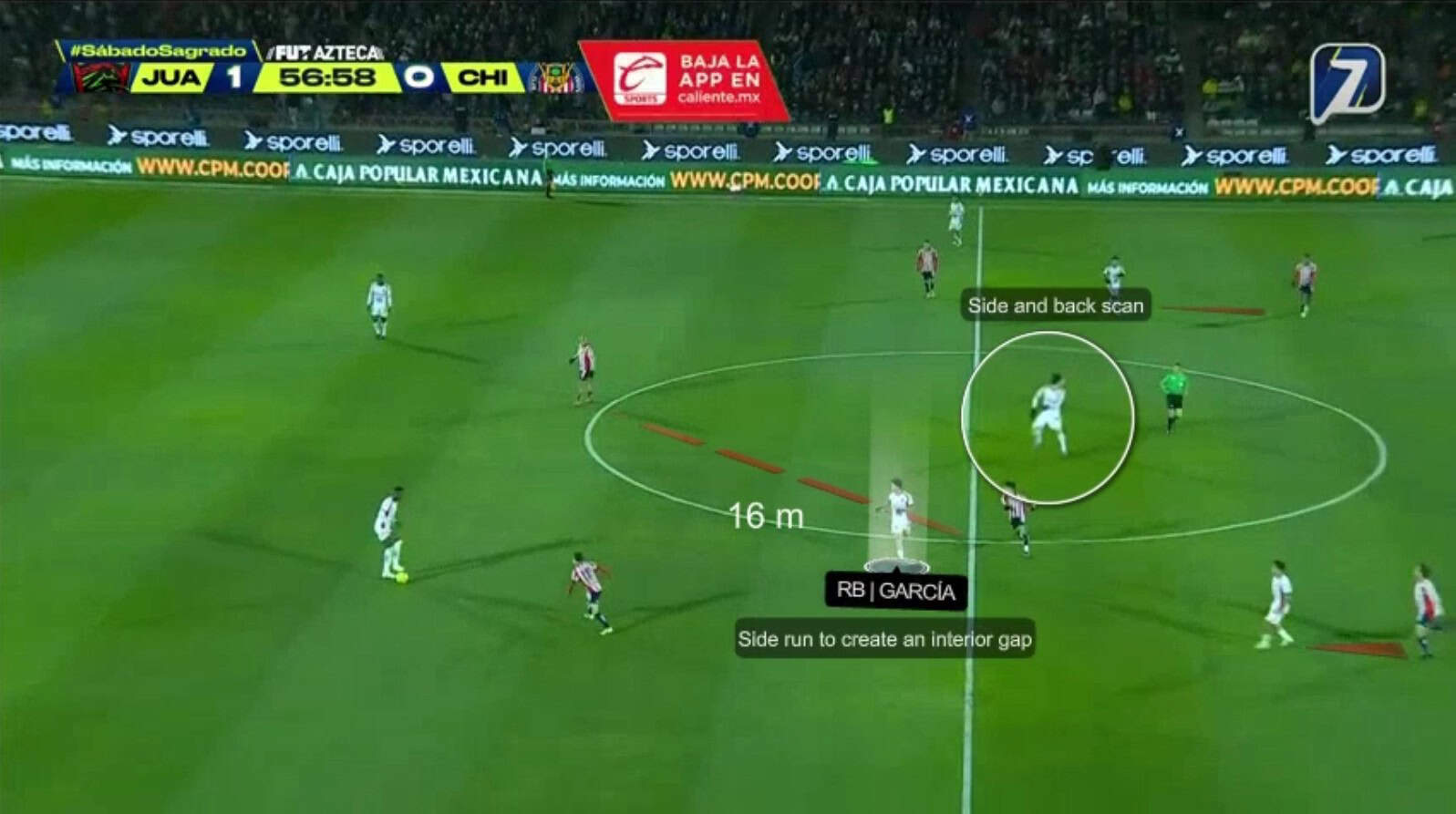
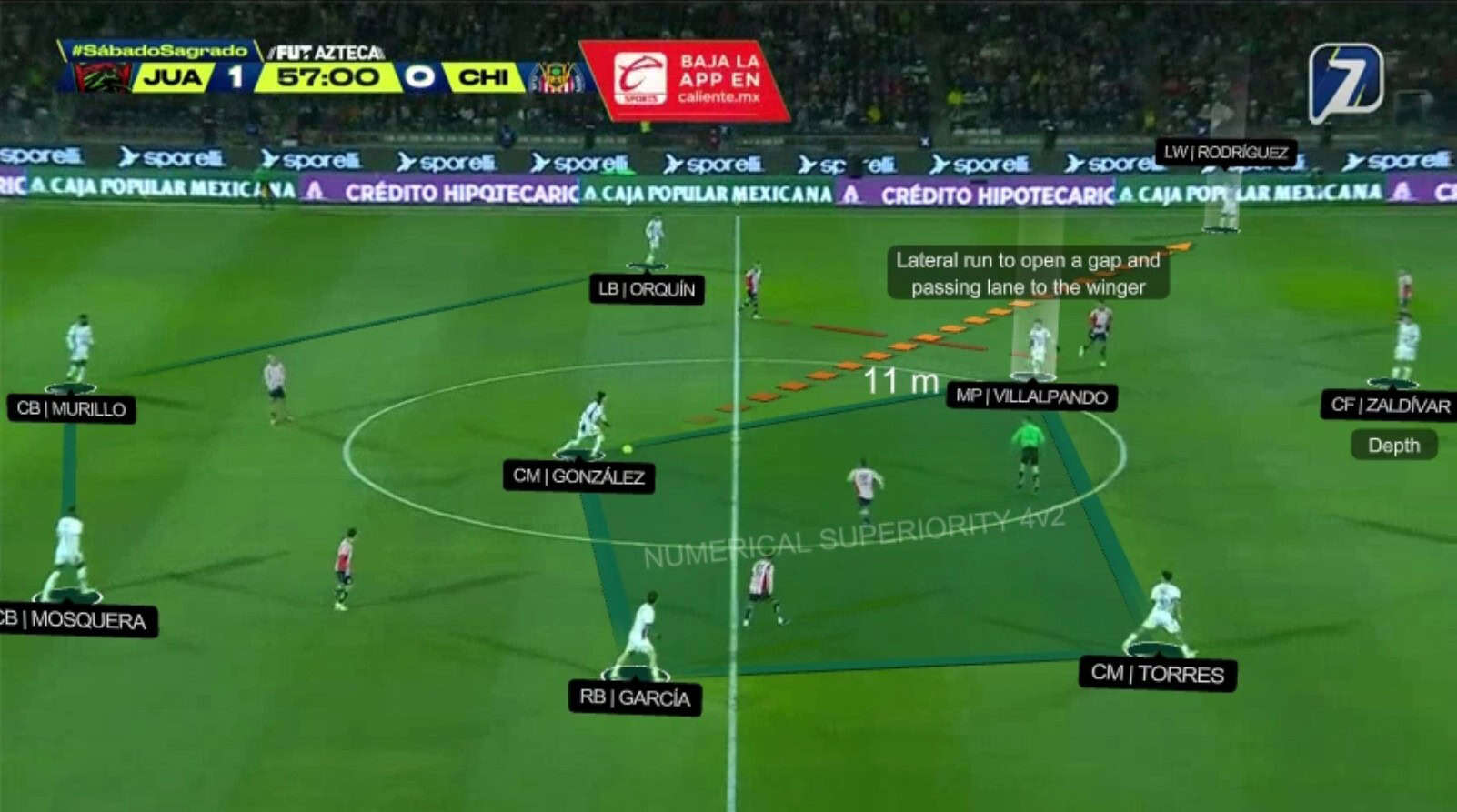
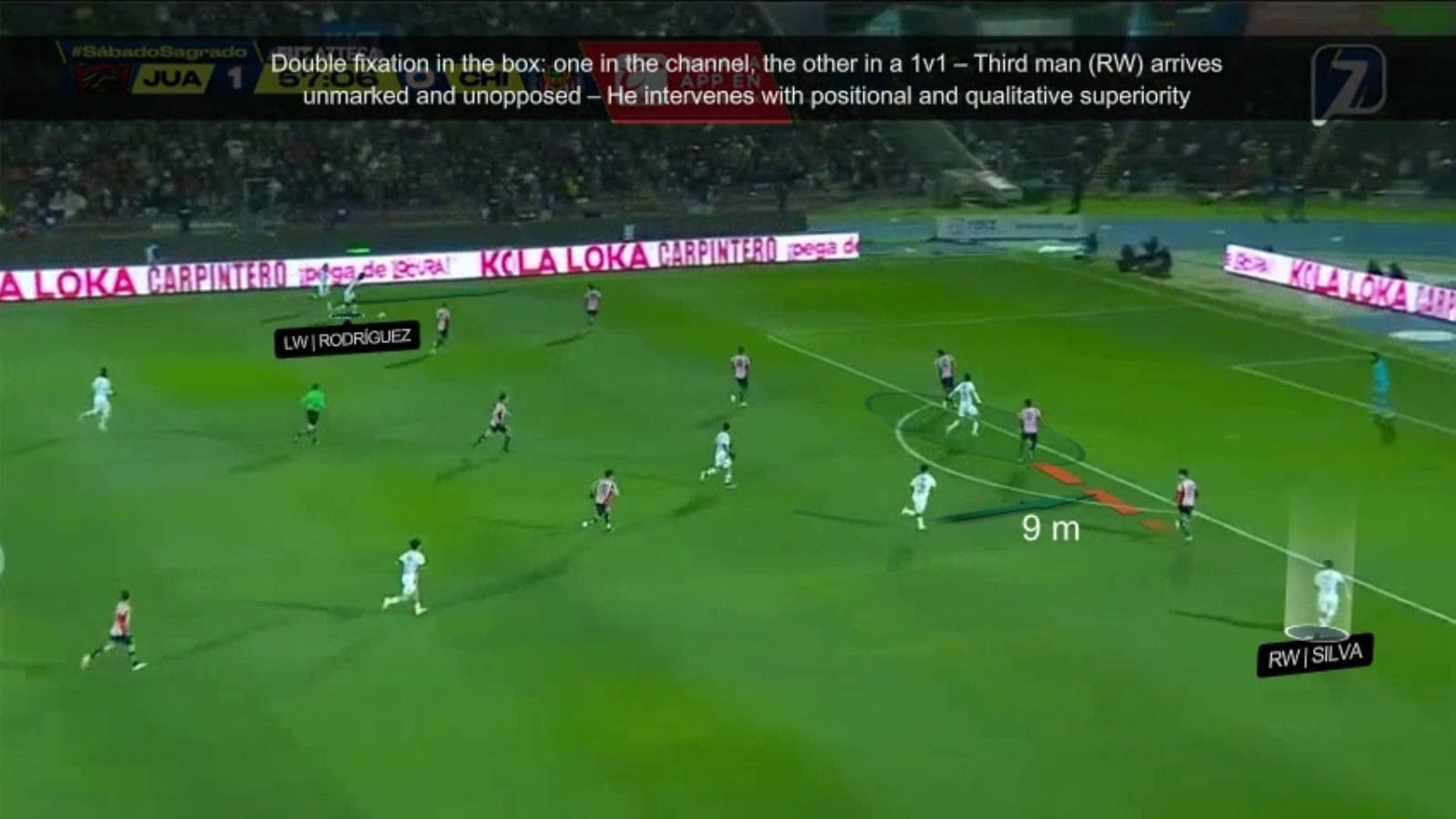
Figure 7: Scanning movements and lateral runs to pin inside and free the outside.
Mexico’s Challenge & The Goalkeeper As The Extra Man
It’s common to see man-to-man pressing in Juárez’s matches, especially during their build-up phase.
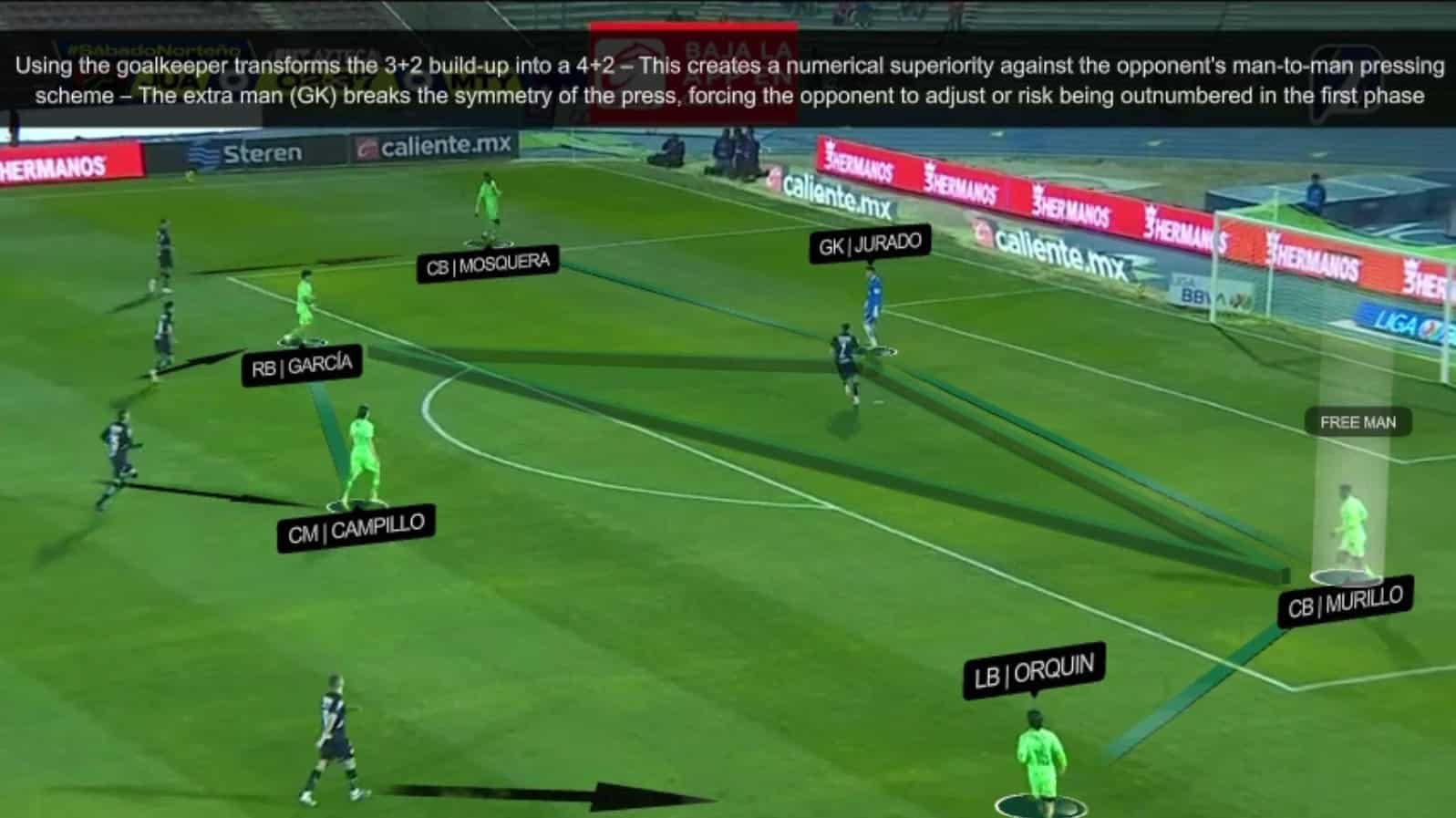
Figure 8: A numerical advantage via the goalkeeper under man-oriented pressing.
The manager explained:
“Mexican football brought us the challenge of man-oriented pressing.
Here, it’s very common for opponents to press directly player-to-player.
So, when you face man-to-man pressure, and you’re playing a positional game based on creating superiorities, the only superiority you have left is the goalkeeper and the space behind the pressing line, which becomes the new free man.
That’s why it’s crucial to have a goalkeeper who’s prepared to play with his feet, someone who’s confident enough to make decisions — and, of course, capable of playing long towards the No. 9, so he can lay it off, allow a third man to appear, and from there you can attack the open spaces.”
The Striker: Stretch & Link
One of the hallmarks of Varini’s teams is the striker’s ability to drop into intermediate zones, link play, and either play to a facing teammate or switch play to the far side.
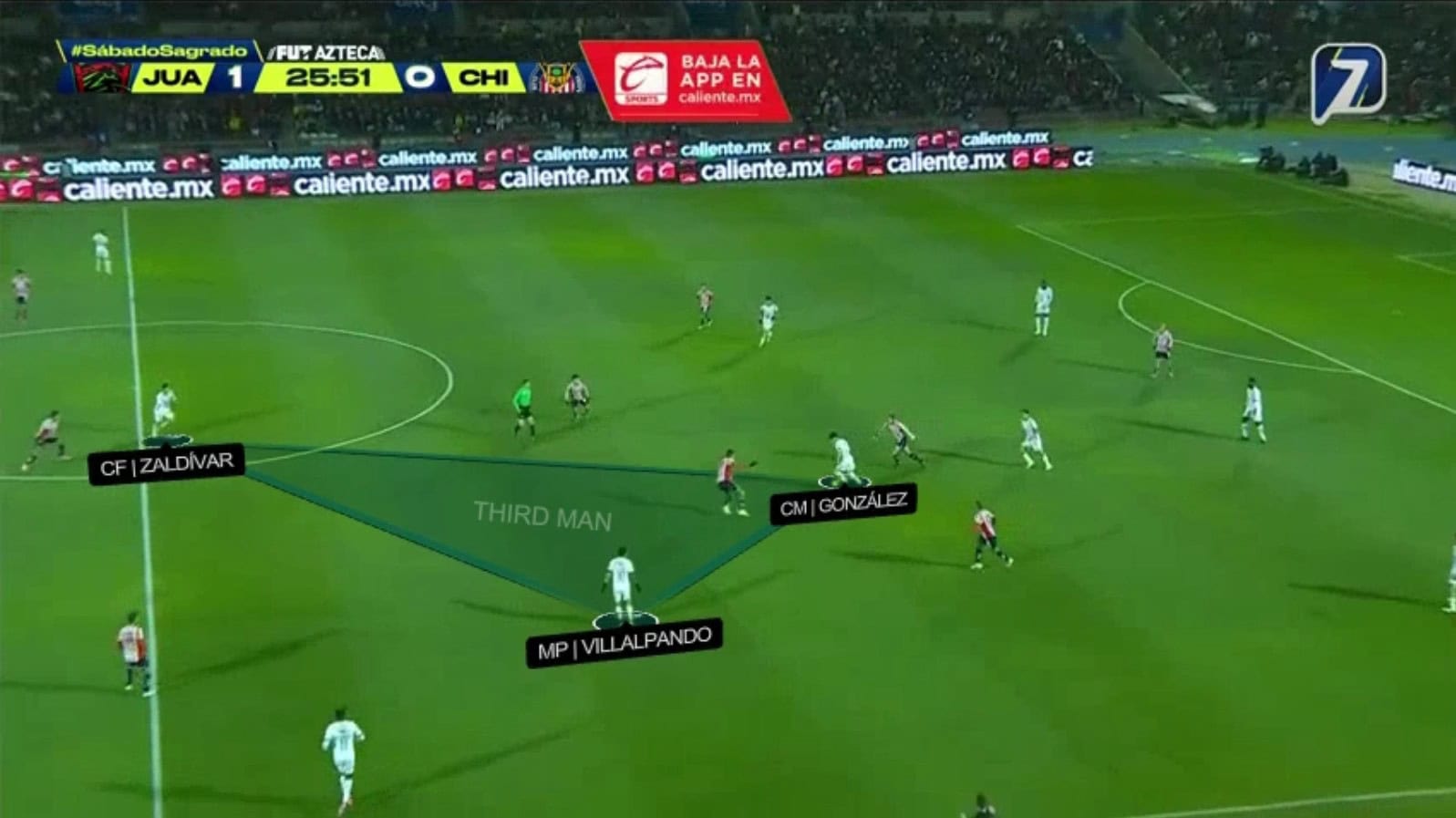
Figure 9: A striker posting up to connect with the facing player (the third-man concept).
“The player’s profile is always essential — it determines whether they can successfully do what we ask of them.
They won’t do it well if I ask players without combination skills to drop and link up.
It’s up to us as coaches to work on it, convince the players, and help them evolve into that role.
With Octavio (Rivero), aside from his goalscoring instinct, we found a striker with great quality to link play.
In Defensor, you’ll see many goals where Octavio drops to combine, and an interior or winger makes a run inside to finish.”
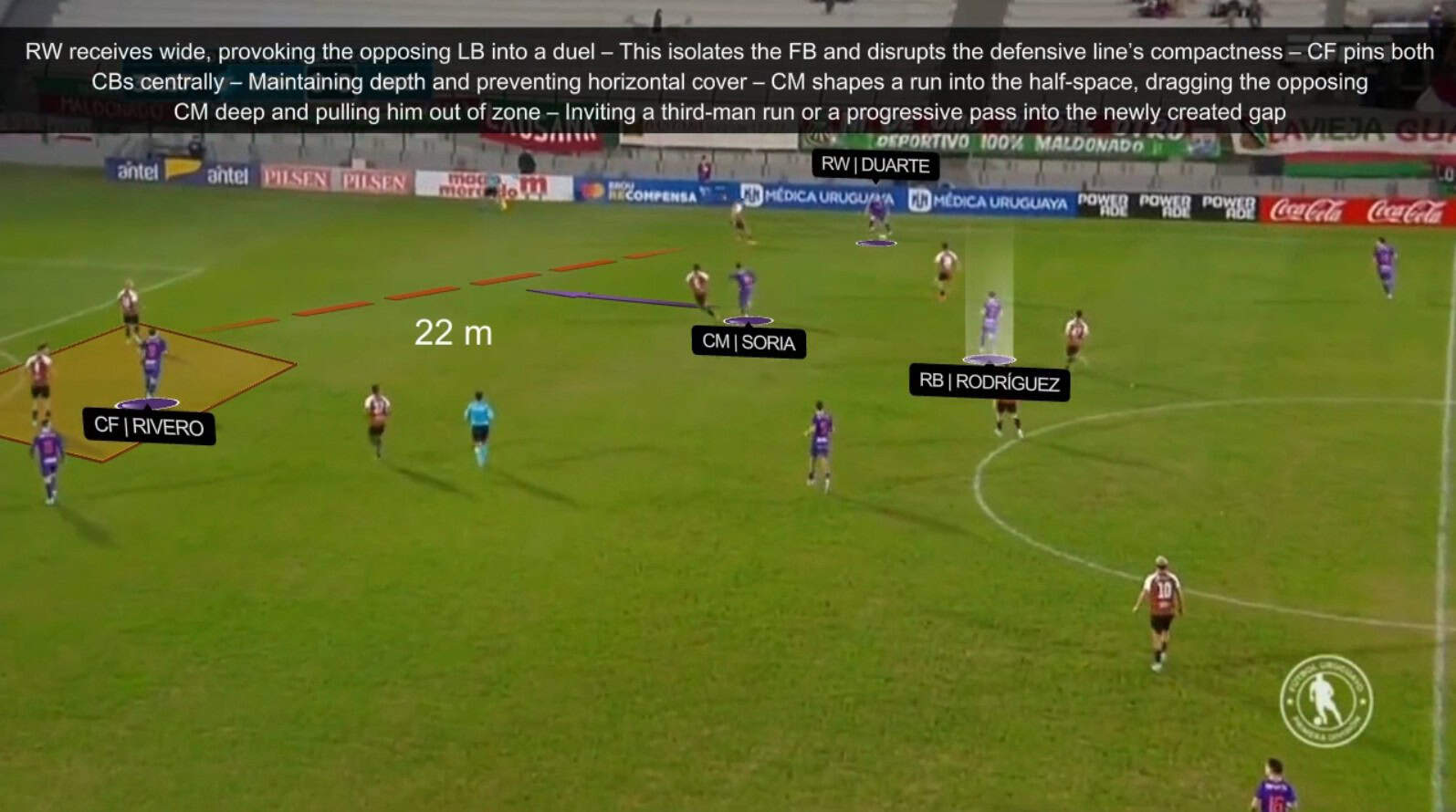
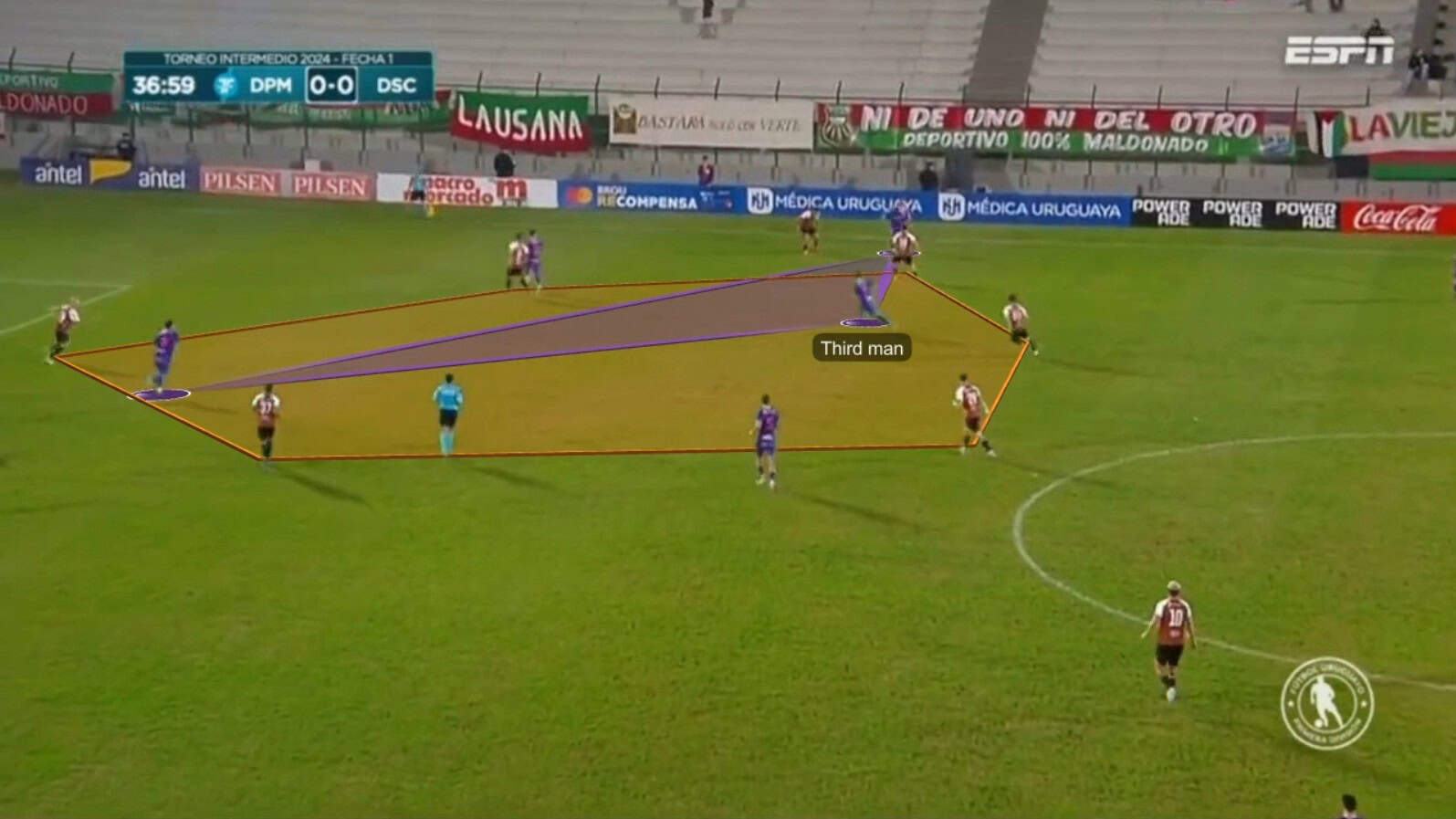
Figure 10. The winger receives a wide pass and makes an inside run to create a third-man situation.
He continued with comparisons from other teams:
“At Athletico Paranaense, we had Mastriani, who was more of a penalty box striker, very effective and in finishing from wide deliveries, but he was less comfortable in the build-up phase.
Now at Juárez, with Oscar Estupiñán and Chelo Zaldívar, we have box strikers who are also strong at linking up play.
With Oscar, in particular, we find many back-to-goal situations and the ability to activate the far side due to his physical presence, making it hard to anticipate him.”
A specific tactical behaviour was also outlined:
“We often use a movement we call ‘triple width’, where the interior drifts wide, opening space for the No. 9 to drop into.
From there, he can switch play to the far side, which we look to exploit immediately.”
Learning: From The Pitch To The Entire Club
Looking back on his career so far, Varini reflected on his growth as a manager.
He placed strong emphasis on his experience as Paulo Pezzolano’s assistant.
“I’ve matured a lot in terms of managing both the team and the institution.
I learned and experienced so much during the two years I worked with ‘Papa’ (Pezzolano).
Above all, I learned to manage the environment that surrounds a manager: the players, the club staff, employees, directors, fans…
There are so many areas where the manager has an impact and where alignment is needed to achieve success.
When I started coaching, I was much more focused on the pitch — all my energy went into what happened during training or games.
Today, I still love the pitch, but I also dedicate a lot of energy to the environment, to aligning with the club’s values and convincing people—not just the players, but the staff, the employees, and the board—of our purpose, of what we want to be as a team.
It’s just years, the journey, the experience; it’s about observing and learning.
So yes, there’s a big difference between the Martín who started at 29 and the one who’s now in Mexico.”
Regarding his game model and its evolution, he emphasised the importance of staying true to it:
“The model is constantly growing.
New players come in, and opponents study you, so you have to adapt and find new advantages.
We had a very good half-season at Juárez, and matching that level will be a challenge—we hope we can.
But above all, continued growth is what matters most.
Whether we win, draw, or lose, the goal is to maintain a strong identity; that when people watch a Varini team, they see something attractive, consistent, with a clear logic”.
Conclusion
F.C. Juárez had a strong season that surpassed their historical standards.
Yet, it’s crucial to remember Varini’s closing remark: the model is constantly evolving.
It’s a refreshing and well-executed interpretation of positional play, one that—paradoxically—pushes the paradigm into the background and re-centres actual tactics around the players themselves.
