
It’s been a rollercoaster of a season for Nottingham Forest, who find themselves in the relegation fight.
They were coming off a historic season in which they were in the top four until Matchweek 33, eventually falling to seventh place.
Nuno Espírito Santo did a masterful job tactically turning Nottingham Forest into one of the deadliest counterattacking sides in the Premier League.
This season, though, has been a different story.
Due to issues with the owner, Evangelos Marinakis, Nuno Espírito Santo was sacked after only three matches.
Marinakis went with a bold hire, bringing Ange Postecoglou to town.
Postecogolou tried to implement the same ball-dominant, high-pressing, build-out-of-the-back style of play that eventually caused his downfall at Tottenham Hotspur.
It was a complete disaster, as Nottingham Forest didn’t win a single one of the eight matches he was in charge and were outscored by 18 to 7.
After Postecogolou was out the door, Marinakis did what any team does when they are in relegation trouble: he called Sean Dyche.
Sean Dyche grew up in the Nottingham Forest youth system and spent one year in the early 1990s with the senior team before moving around to many different clubs throughout his career.
He recently saved Everton from relegation and is now trying to do the same with Nottingham Forest.
In this tactical analysis article, we will take a look at the two tactical systems he’s employed, depending on the opponent, along with his out-of-possession tactics that have made Nottingham Forest difficult to break down.
Nottingham Forest Vs Weaker Opposition
One of the things both Nuno Espírito Santo and Ange Postecoglou tried to change this season was to make Nottingham Forest into a team that could control matches.
The next step after laying the foundation of a solid low block, counterattacking team is to try to at least control and dominate the opposition below you in the table.
Nottingham Forest certainly has loads of talent throughout their roster.
Per Transfermarkt, Nottingham Forest have a squad value of £525.6m, the eighth-highest in the Premier League.
One thing that Dyche has done is not abandon what both of the previous managers were trying to implement, but do it against the right opponents.
Here, against West Ham United, you can see they are building up in a 3-2-5, with one of the full-backs pushing up the pitch.

The key to making all the build-up work is Elliot Anderson.
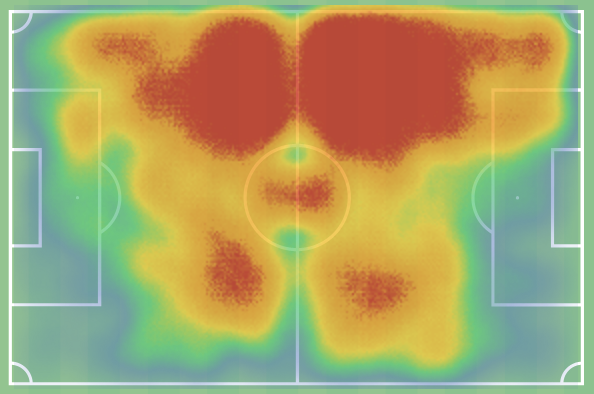
He is absolutely everywhere on the pitch, often the deepest midfielder, helping to aid the press, but he honestly is roaming everywhere, trying to find pockets of space.
You can see from his heat map that he tends to play on the left side of the pitch, but really goes anywhere there is space.
Elliot Anderson Heat Map At Nottingham Forest 2025/2026
When Nottingham Forest reaches the final third, the main goal is to get the ball out wide and send crosses into the box.
Nobody in the Premier League has attempted more crosses than Nottingham Forest, and there are two ways they create space to send in those crosses.
First, they will create four-man combinations out wide with Anderson and Morgan Gibbs-White shading to one side of the pitch to try and create space for one of the wingers to send in a cross.
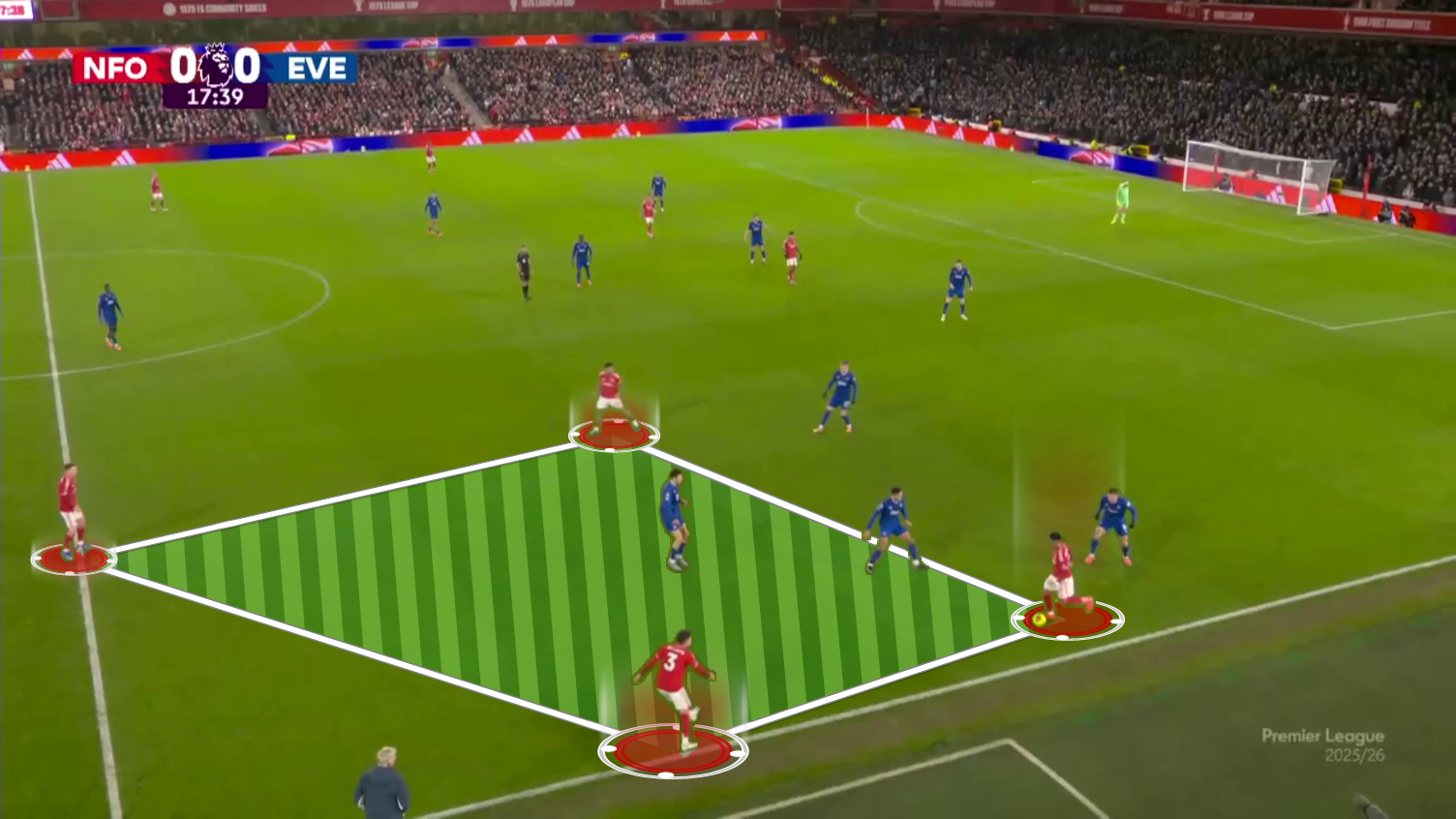
The other, which happens quite often, is crosses from the half-space.
Here, Callum Hudson-Odoi gets doubled and is able to pass it back for a cross.
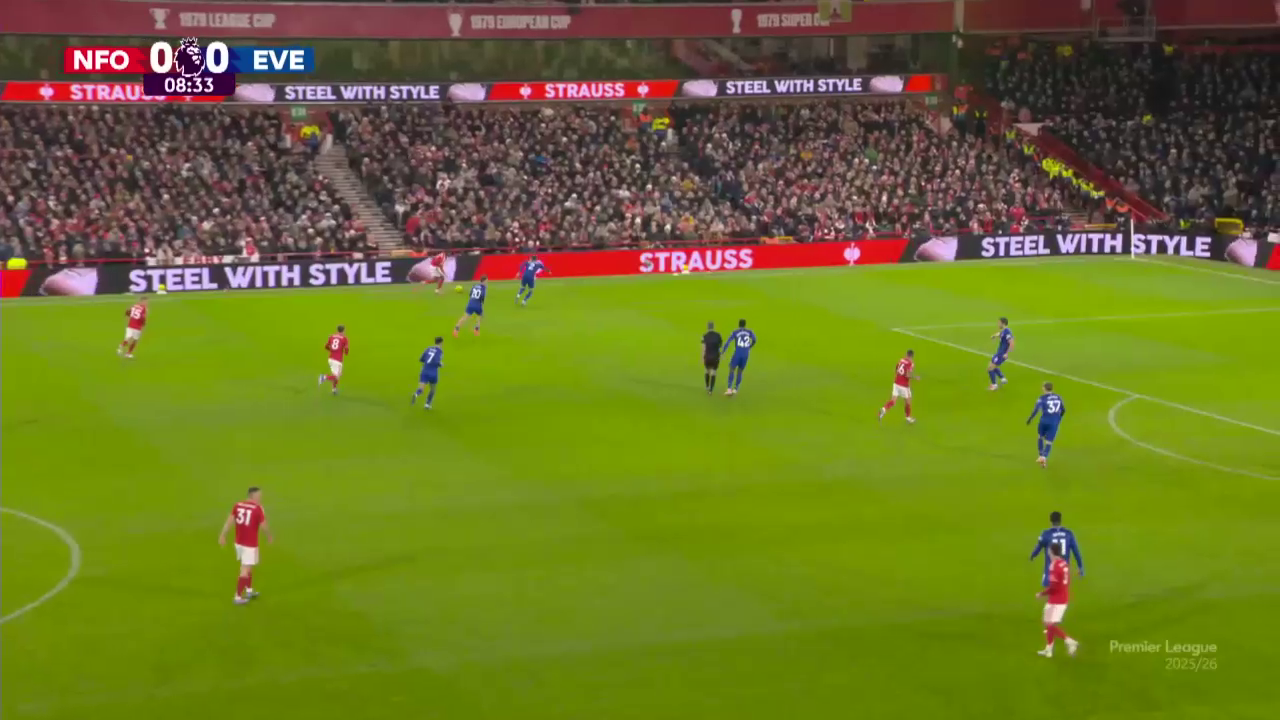
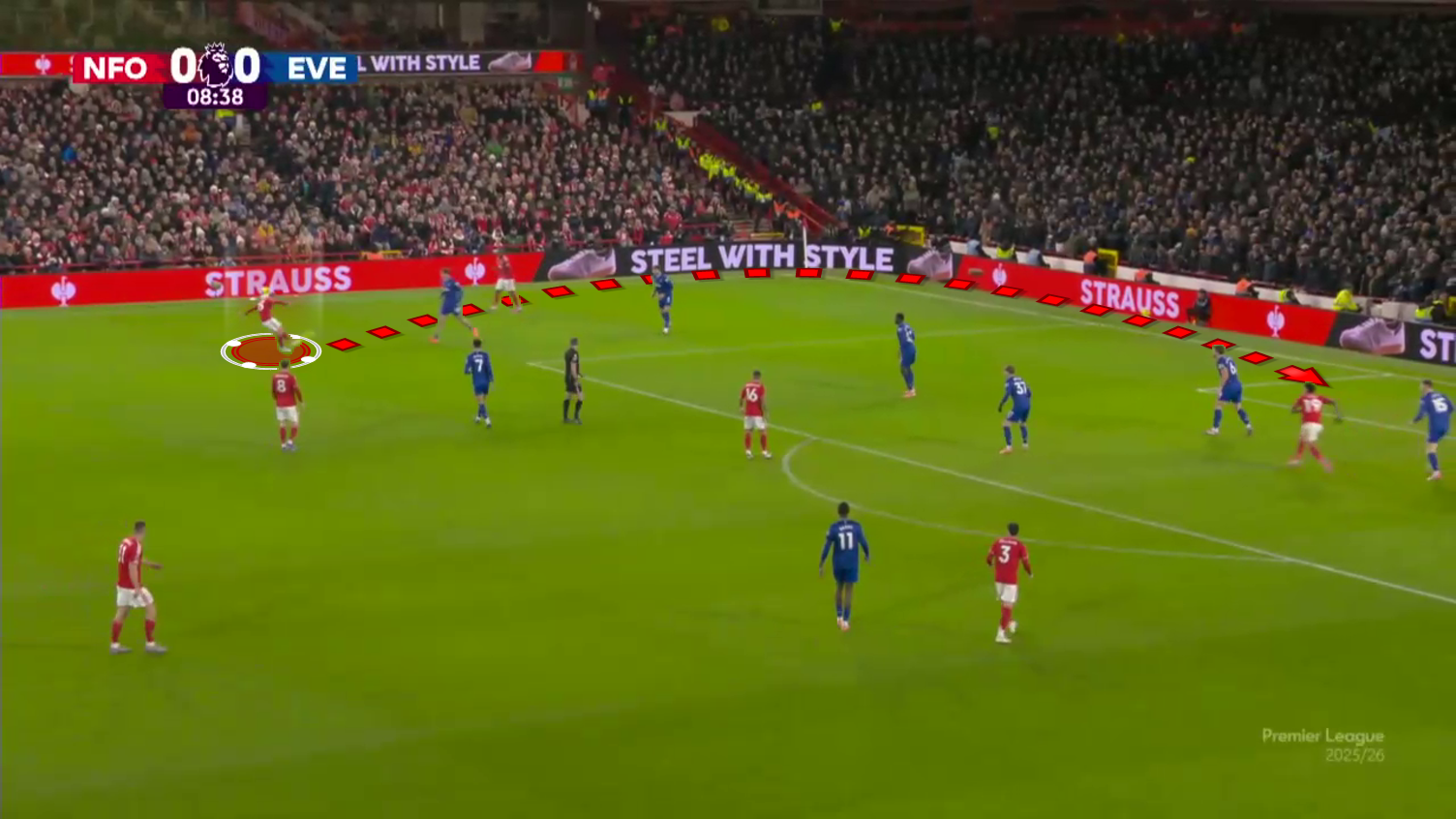
Same thing here against Arsenal, Anderson finds some space outside the box and fires in a cross.
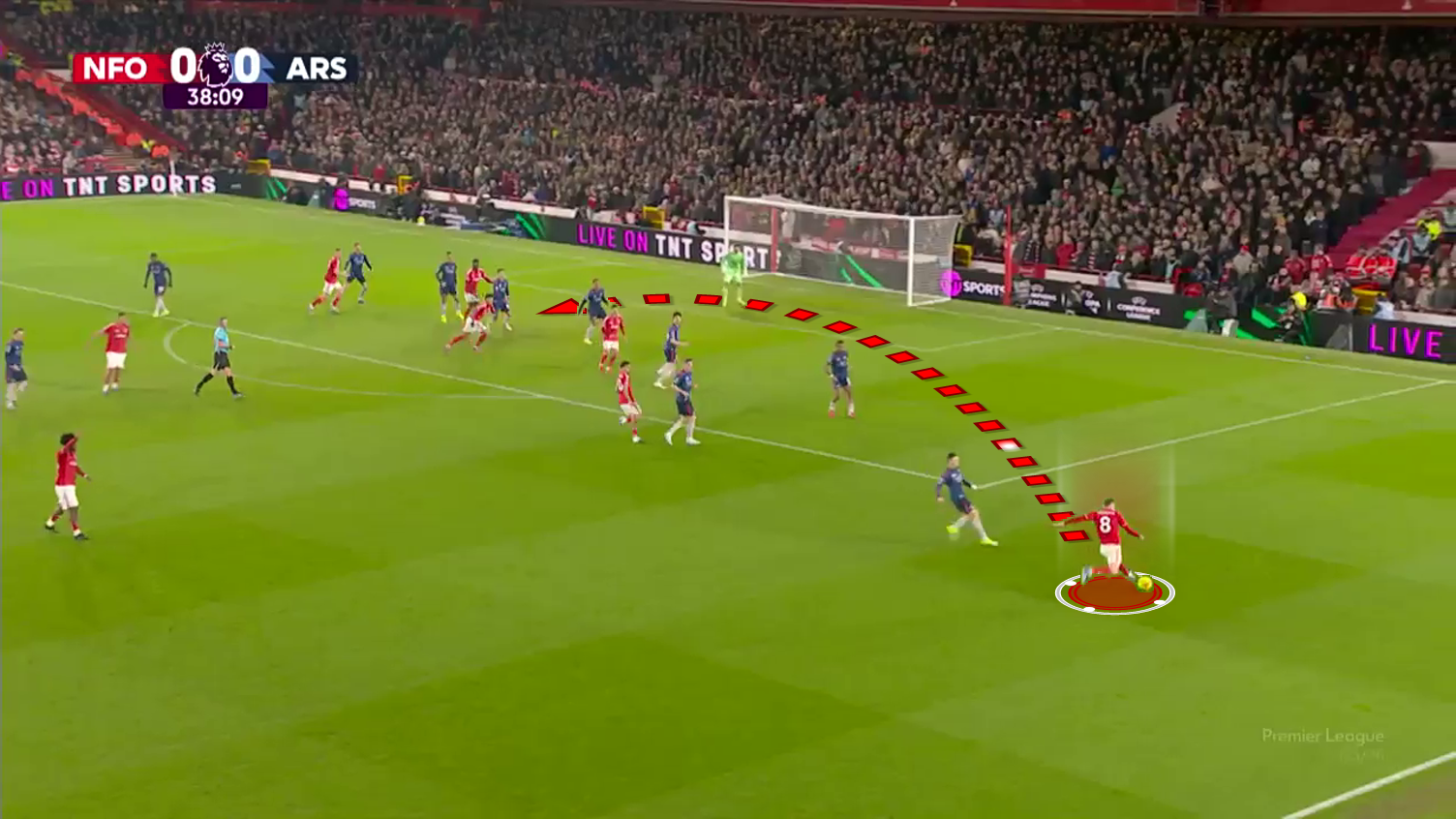
You can see that Nottingham Forest are really missing Chris Wood right now, who scored the most goals from headers last season in the Premier League.
Nottingham Forest have 54 shots from headers this season, which is sixth-most in the Premier League, but also quite low, given they have by far attempted the most crosses.
Nottingham Forest Vs Stronger Opposition
When Dyche was at both Everton and Burnley, he was known for what some called “archaic” tactics: his teams would play long from goal kicks, primarily look to hit opponents on the counter, and put a big emphasis on set-pieces.
It is funny to see now that many Premier League teams are adopting similar tactics, and many of them are finding quite a bit of success.
Dyche hasn’t lost that style of play when they’ve faced elite competition in the Premier League.
Their average possession against Arsenal, Liverpool, Manchester City, Aston Villa, and Manchester United was only 33.4%.
In those five matches, they haven’t been terrible offensively, creating 5.29 expected goals, but one of the biggest concerns is their inefficiency on set-pieces.
Per Opta, Nottingham Forest have scored only five goals, created 4.9 expected goals, and have 19.5% of those goals coming from set-pieces.
Only Liverpool and Manchester City have a lower percentage of their xG coming from set-pieces, which is really concerning for a Sean Dyche-coached team.
Nuno Espírito Santo established a fantastic foundation last season for Nottingham Forest, playing direct and being successful.
In some of their recent matches, despite the limited chances, they have done a good job of getting the ball up the pitch quickly.
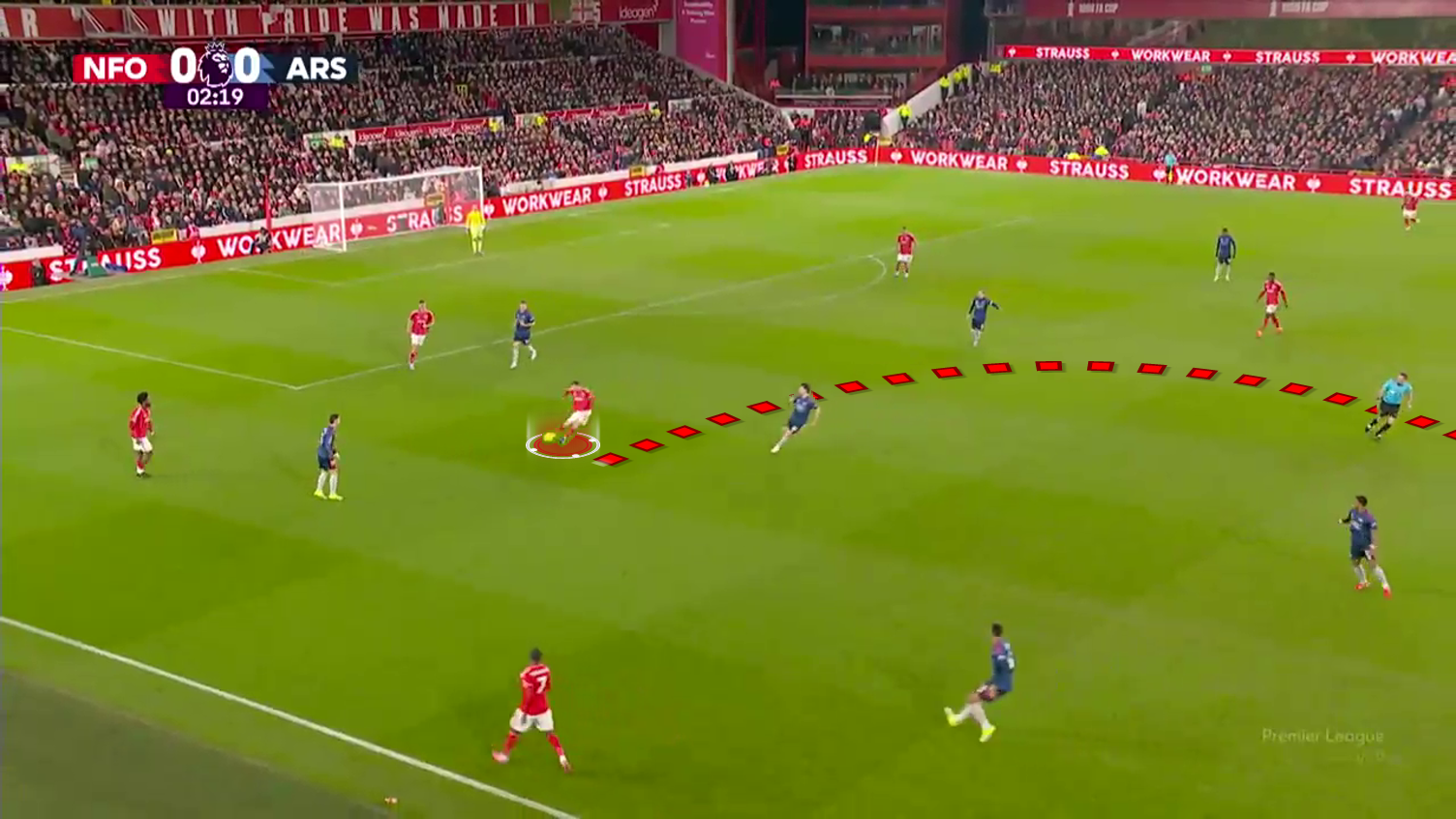
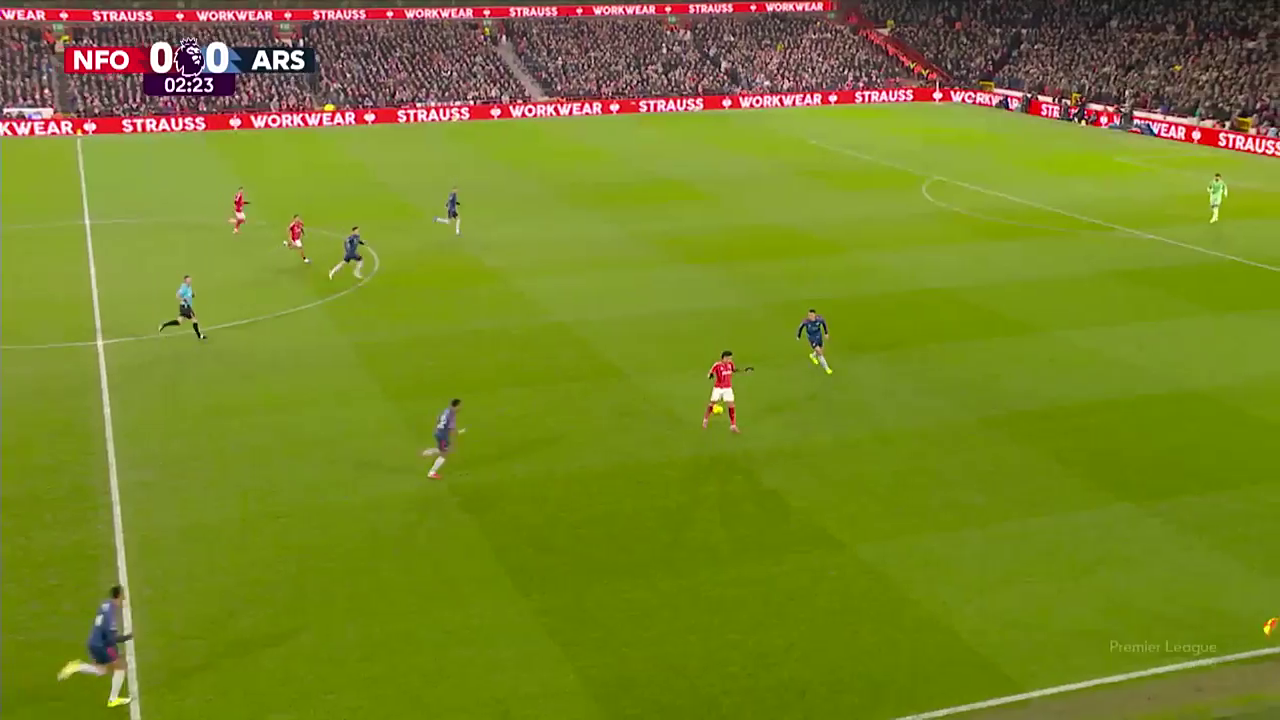
Even against Arsenal, they would initially try to build out of the back, but would look to play it directly once under pressure.
Sean Dyche Out-Of-Possession Tactics
What Sean Dyche showed when he was at Everton was that he was not going to have his team sit back in a low block for the majority of the match.
Instead, he had them press out of a midblock, and that is exactly what he is doing at Nottingham Forest as well.
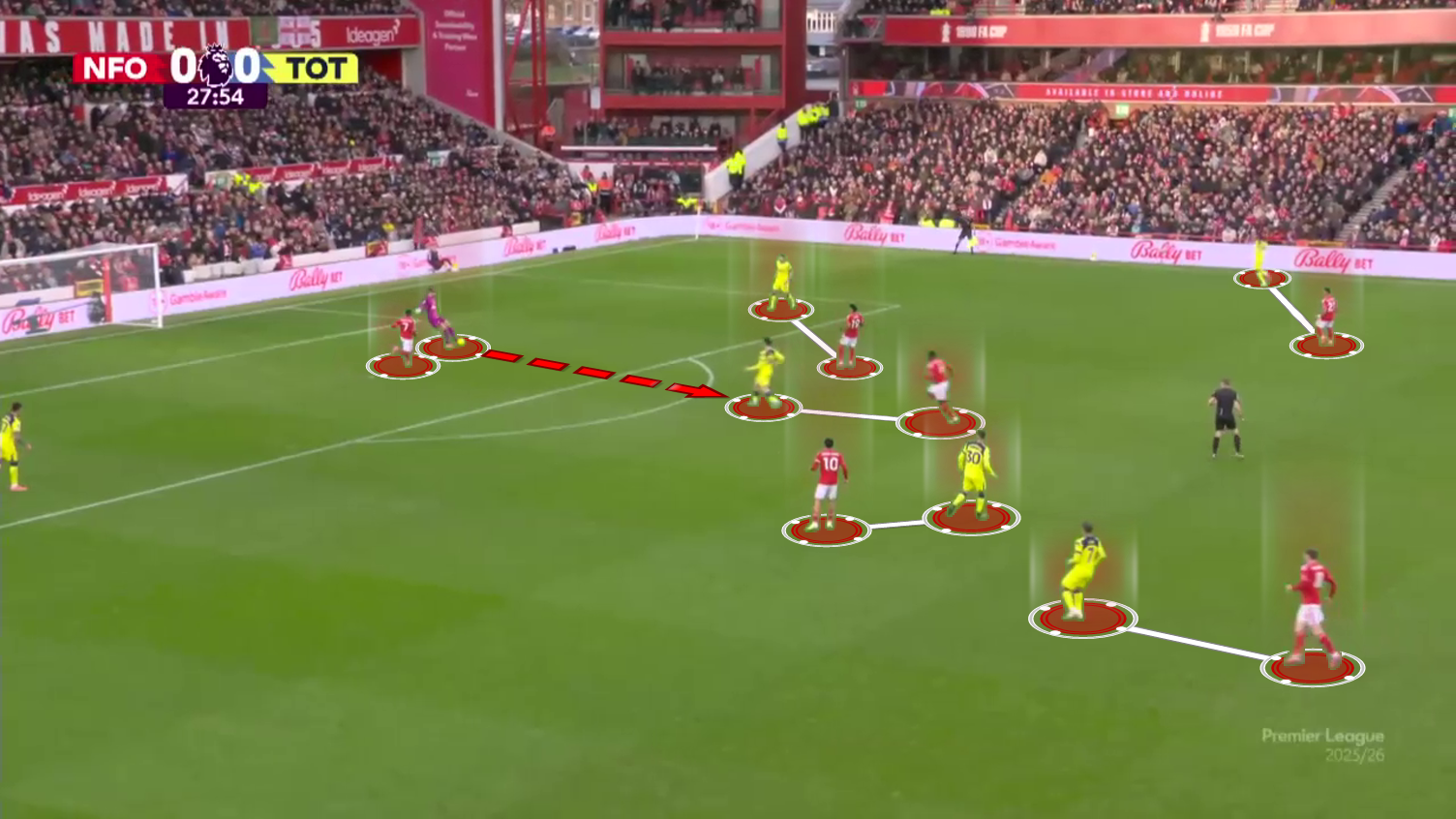
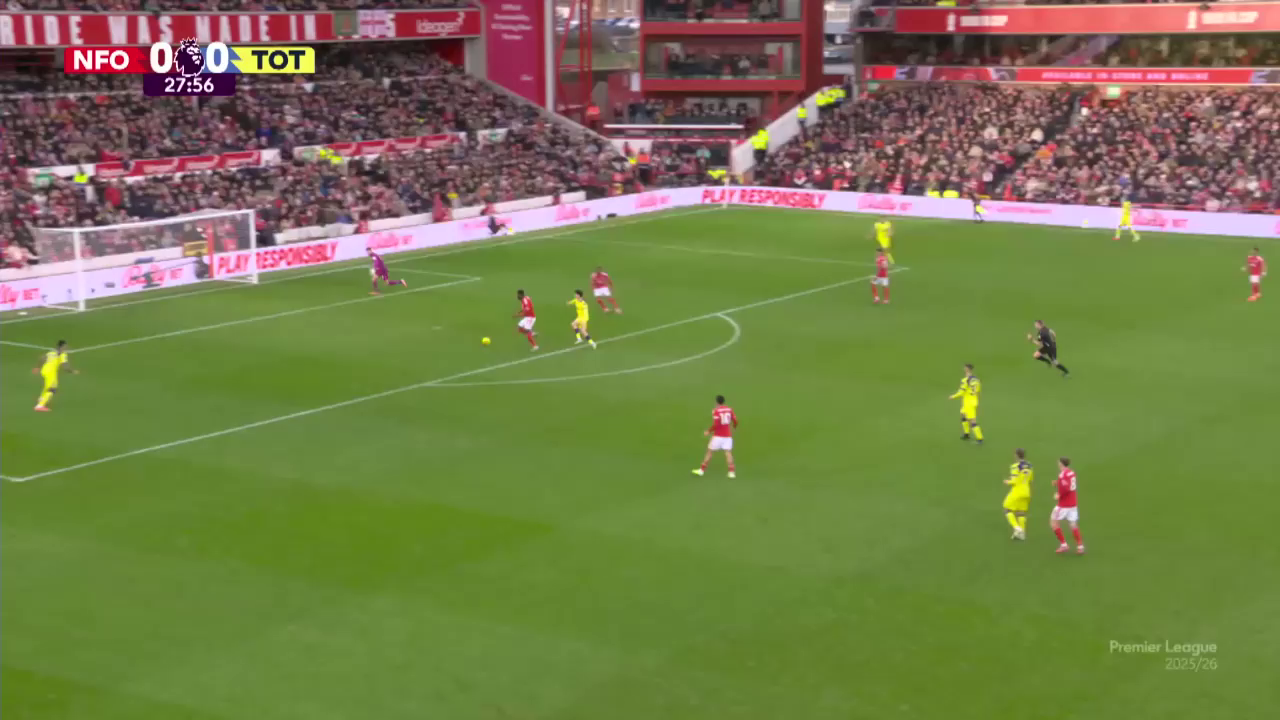
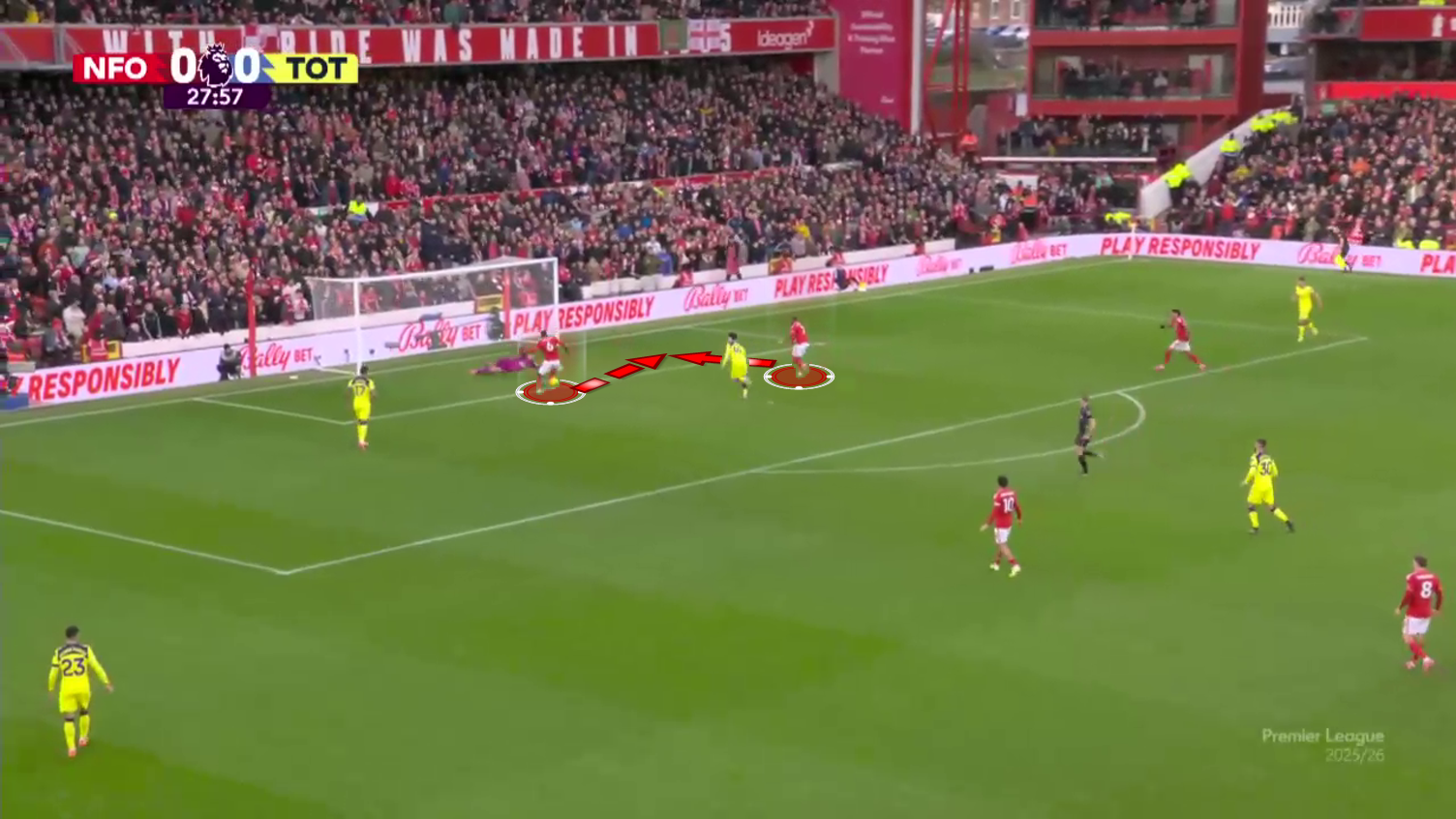
A perfect example is the first goal they scored against Tottenham.
Once the ball goes backwards, they jump into a man-to-man press, Ibrahim Sangaré picks off the central pass and lays it off to Hudson-Odoi for a tap-in goal.
The previous managers would have Nottingham Forest pressing high at all times, whereas Dyche is being selective when they press high.
Their PPDA has risen from 11.1 under the previous two managers to 13.3 under Dyche.
However, that has actually been a benefit because Nottingham Forest’s defensive numbers have gotten way better.
Under Nuno Espírito Santo and Postecoglou, Nottingham Forest allowed 2.13 xG per 90 minutes.
Now that Dyche is in charge, that average has dropped all the way down to 1.38 xG per 90 minutes.
That is because Dyche has gotten back to basics, defending in a very low, compact 4-4-2 that worked so well last season.
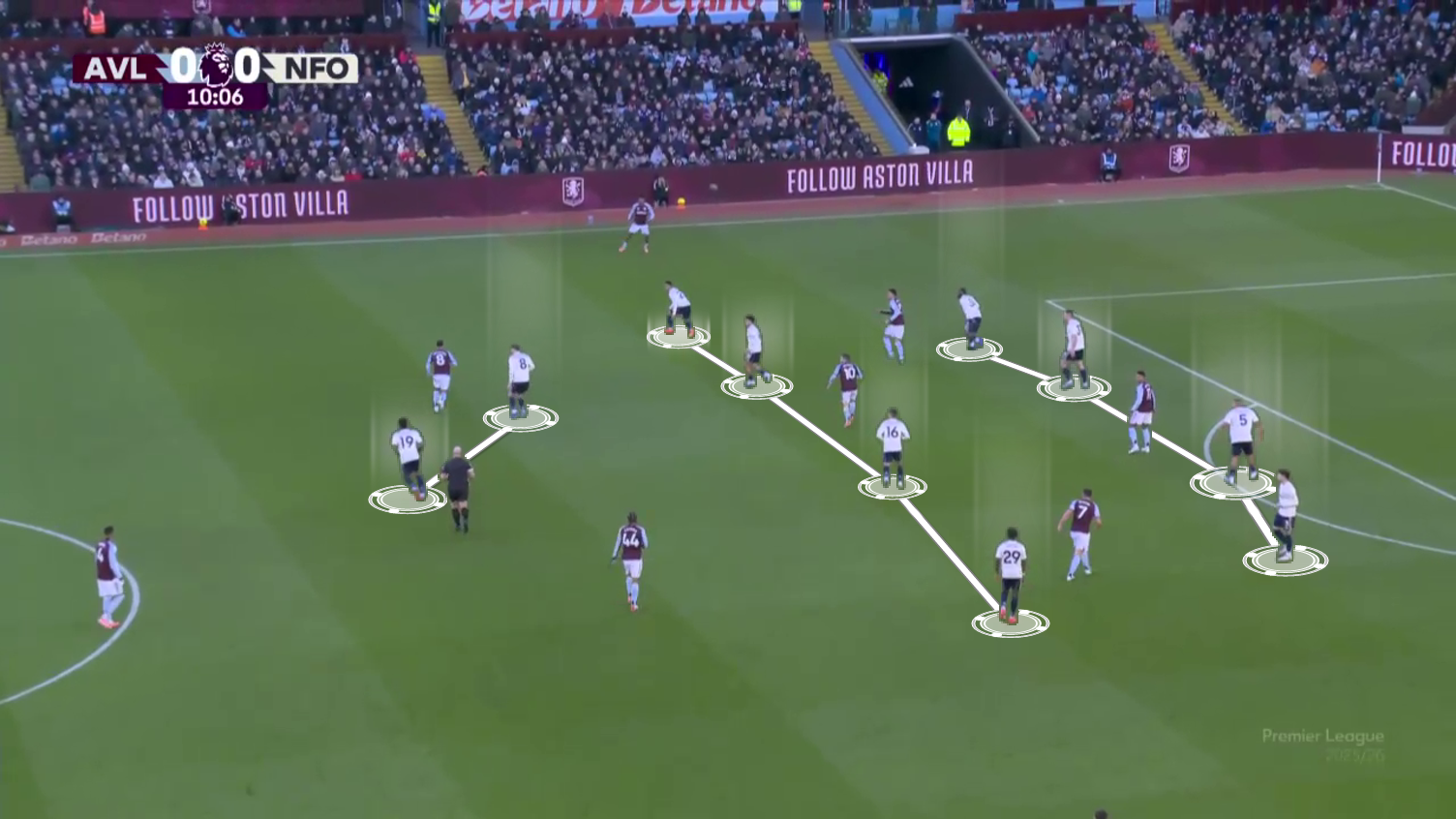
One of the great things about Nottingham Forest last year was that they didn’t really pressure the ball; instead, they took away every passing lane through the middle and forced the ball out wide.
What Dyche has done is provide the great tactical flexibility out of possession that he showed at Everton, and is finding a lot of success with it at Nottingham Forest.
Conclusion
Even though Dyche has taken a more moderate approach than the previous two managers, the results and underlying numbers are not good right now.
In his 14 matches in charge, Nottingham Forest has picked up only 17 points and has a -4.5 expected goal differential.
Nottingham Forest overperformed drastically last season, and it was clear they could not replicate their extreme low-block, direct style of play.
This is the struggle many teams in the middle tier of the Premier League are going through.
Many of them, which have been well established for many years, are trying to gradually become more possession-dominant teams that can play through the opposition rather than having to play directly.
That was Dyche’s downfall at Everton; they only knew how to play one way, and while it helped them pick up points against teams above them in the table, they had no control against teams they were favoured against.
It seems he is learning from his previous stops and trying to create some tactical versatility with Nottingham Forest.
Nottingham Forest sits five points above the relegation zone right now and has four very important matches to distance themselves from the drop zone, taking on Brentford, Crystal Palace, Leeds, and Wolves.
In addition, Nottingham Forest have fallen out of the top eight in the UEFA Europa League group stage and desperately need a win on Thursday in Hungary against Ferencváros.
The main question going forward is not whether Dyche will keep them from relegation, because they are far too talented a team to go down, but how much he will actually improve the squad with his tactics and, eventually, get them closer to the top half of the table.
Only time will tell, but if his previous stops are any indication, his time at Nottingham Forest is probably going to be short-lived.
