


In recent years, Belgium has become a popular destination for Japanese talent, and Rihito Yamamoto (born December 12, 2001) is one of the recent examples to make his mark in the Jupiler Pro League with Sint-Truiden.
The defensive midfielder’s rise has been steady and consistent.
A product of Tokyo Verdy’s academy, Yamamoto made his professional debut in 2019 while still in high school, quickly earning a reputation as a technically gifted and intelligent player.
His breakthrough came in the J2 League, where his composure on the ball and versatility across midfield drew attention from bigger J1 clubs.
In 2022, he secured a move to Gamba Osaka, gaining top-flight experience in the J1 League.
A year later, he took the leap to Europe, joining Sint-Truiden on loan for the 2023/2024 season.
Despite initially being used as a substitute, Yamamoto adapted quickly.
He featured in 33 league matches and proved himself a reliable presence in midfield.
His ability to read the game and contribute both defensively and offensively has made him an important part of the squad.
His performances convinced the Belgian side to make his transfer permanent in June 2024.
On the international stage, Yamamoto showcased his ability at the 2024 Paris Olympics.
There, he scored decisive goals against Paraguay and Mali, helping Japan progress to the knockout rounds.
Those standout moments underlined his knack for stepping up in big games.
In August 2025, Yamamoto scored his first goal as a full Sint-Truidense player in a win over Zulte Waregem, further proof of his growing influence in the side.
His consistency and work ethic continue to make him a player to watch in the Belgian top flight.
This Rihito Yamamoto scout report and player analysis will examine his style of play and tactical role at Sint-Truiden ahead of the 2025/2026 season and assess how he might continue to develop in the Belgian Pro League as he works toward becoming a mainstay for both club and country.
Rihito Yamamoto Stats
Rihito Yamamoto’s profile reflects a midfielder who contributes across multiple phases of play, with a clear emphasis on defensive work and reliable distribution.
His standout area is defensive involvement.
He ranks very highly for defensive duels per 90 (80.2 percentile), showing a willingness to engage consistently in regaining possession.
While his duel success (54.8 percentile) and aerial presence (43.4 percentile in aerial duels won) are more modest, his activity level highlights his importance in breaking up opposition play.
In possession, Yamamoto shows steady, if unspectacular, output.
His accurate passing (75.6 percentile) and dangerous passes per 90 (61.8 percentile) indicate he can move the ball effectively and provide progressive options.
His volume of progressive passes (55.2 percentile) is solid, though his received passes (35.0 percentile) suggest he is not always the main outlet in midfield build-up.
On the attacking side, Yamamoto offers very limited output.
His expected goal contribution (20.8 percentile), actual goal contribution (0.3 per 90, 39.1 percentile), and shots per 90 (32.9 percentile) show he is not a consistent threat in the final third.
Overall, Rihito Yamamoto profiles as a hard-working, defensively active midfielder who combines energy with safe passing.
While not a creative force or goal-scoring presence, his ability to cover ground, disrupt play, and keep possession circulating makes him a dependable option in midfield.
The next step in his development will be improving his positioning and involvement in possession, which will give him more influence beyond his defensive contributions.
Rihito Yamamoto Stats

Rihito Yamamoto Style Of Play
Yamamoto plays as a defensive-leaning central midfielder or a ball-winning 6/8 hybrid, active, disciplined, and reliable in possession.
He isn’t a major creative or attacking force, though he can occasionally find the net from the edge of the box or thread a smart through ball.
Rihito Yamamoto would be the one who brings balance and control to the centre of the pitch.
He keeps play ticking and provides structure while still being able to express himself in progressive zones with his fantastic work rate.
Defensively, he shows a high level of activity and aggression, often stepping into challenges and covering significant ground.
At times, this intensity can lead him to overcommit; however, overall, he disrupts opponents effectively and makes it difficult for them to progress through the midfield.
On the ball, his game is simple yet effective, short passes to recycle possession, finding teammates in better positions out wide, and occasionally sending line-breaking balls when space opens up on the wing.
He functions more as a connector than a creator, giving his team stability and allowing the attacking players around him to take risks higher up the pitch.
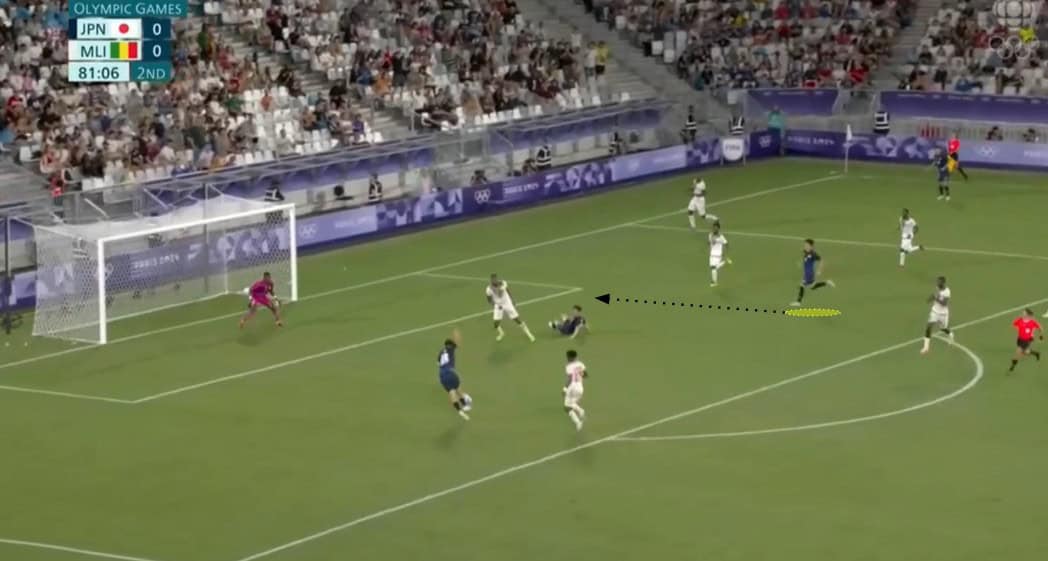
Rihito Yamamoto Box Arrival Instincts
While Yamamoto is primarily a defensive-leaning midfielder, he has shown a knack for timing his late arrivals into the box.
He reads attacking sequences well and often positions himself just outside the defensive line to capitalise on rebounds, second balls, or pockets of space left open.
Though not a constant goal threat, these intelligent movements allow him to add occasional attacking value, catching defenders off guard and providing an extra option in the final third.
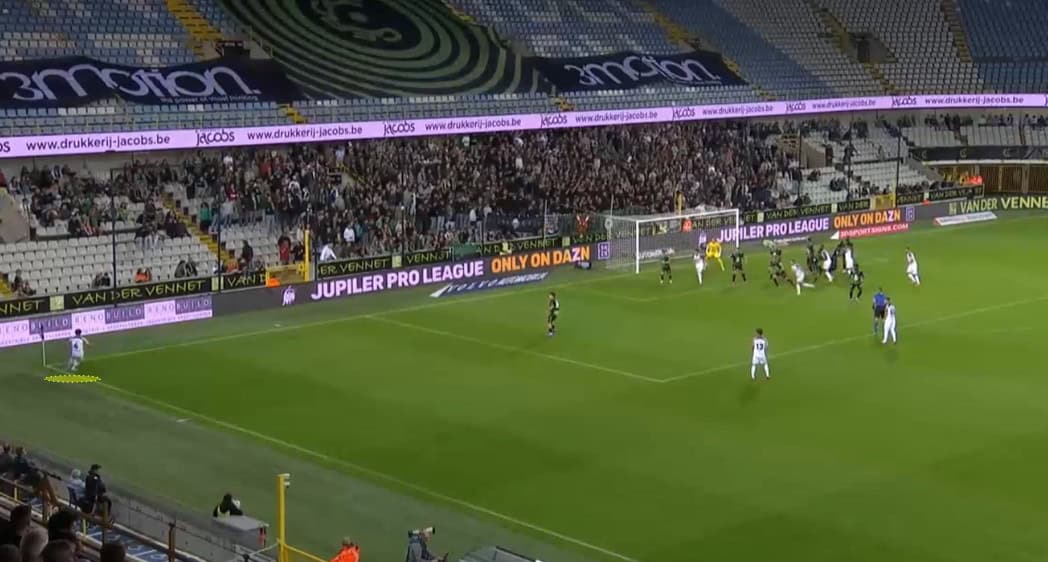
Rihito Yamamoto Corner Taking
Yamamoto contributes effectively on set pieces, particularly corners, although he doesn’t regularly take free kicks.
His deliveries are accurate and consistent, providing quality service in dangerous areas for his teammates.
This ability adds another dimension to his game, giving his team a reliable option from dead-ball situations.
While his primary focus remains defensive, his set-piece skills show that he can step up when needed and influence the game further up the pitch.
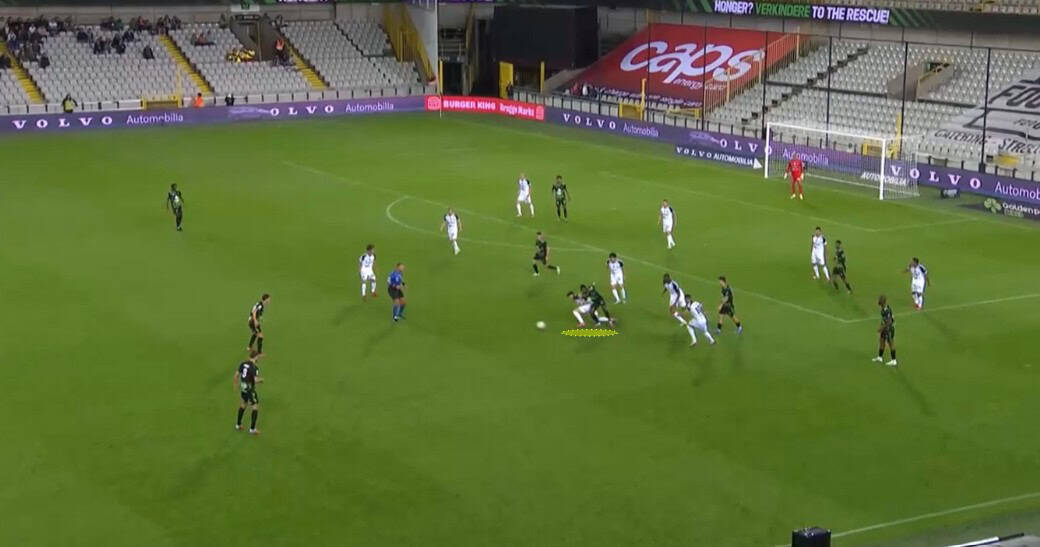
Rihito Yamamoto Recoveries
Yamamoto is effective at helping his defence through smart and effective recoveries.
He reads danger well, tracks back quickly, and positions himself to challenge for loose balls.
He stays calm under pressure when contesting second balls, showing good decision-making and composure.
These moments often go unnoticed but are key in stopping opponents and keeping the team organised.
His awareness and work ethic make him a reliable presence in front of the backline.
Rihito Yamamoto Passing & IQ
Yamamoto is a reliable passer who favours simplicity but executes it with precision.
He recycles possession efficiently, keeping the tempo steady and linking play between defence and midfield.
While not a frequent risk-taker in the final third, he shows good vision in picking out forward options when space opens up, particularly with sharp vertical passes through the lines.
— Footie Clips (@FootieClips) September 3, 2025
Rihito Yamamoto Weaknesses
The main limitations in Yamamoto’s game come in the attacking and aerial duels departments.
He offers little direct goal threat, with minimal shots, low expected goal involvement, and almost no end product in terms of goals or assists, as expected from a defensive-minded player.
His presence in the final third is limited, as he doesn’t make frequent touches in the opposition box and isn’t often used as a primary receiver.
Aerially, he can also be exposed a little, both in the number of duels he competes in and his success rate, which sits below average for his position.
These areas highlight that while he is dependable in possession and defensively engaged, he lacks the profile to consistently influence games in the attacking phase or dominate physically in the air.
Rihito Yamamoto Career Projection
Conclusion
Rihito Yamamoto is a disciplined and defensively reliable midfielder whose intelligence, work rate, and ability to maintain balance in midfield make him a valuable connector between defence and attack.
While his lack of consistent attacking output and limited aerial presence remain areas for improvement, his acceleration, defensive activity, and composure in circulation provide him with a strong foundation to grow into a dependable two-way midfielder.
With further refinement in his decision-making in advanced areas and continued development of his passing range, Yamamoto could evolve into a more complete midfielder capable of fitting seamlessly into possession-oriented systems or high-pressing structures.
I see him establishing himself first as a regular starter in a mid-tier European league, such as Belgium’s top clubs or the top half of the Dutch teams.
Should he adapt successfully, a natural next step could be a move to a higher-level side in leagues like Ligue 1 or maybe even a mid-tier side in the Bundesliga, where his tactical intelligence and defensive instincts could help him carve out a role as a stabiliser in midfield.
With the right progression, consistency in playing time, and a system that maximises his strengths, Rihito Yamamoto has the potential to become a high-level professional capable of anchoring a midfield and providing balance.

