
Sint-Truidense V.V. have built a reputation in recent years for their strong Japanese connection.
The club actively recruits talent from Japan, such as Rihito Yamamoto, and even involves figures like Tsuyoshi Takano, who helped shape their youth programs.
That network has paved the way for several players to establish themselves in Belgium.
Taiga Hata (born January 20, 2002) is the latest addition to continue that trend in the Jupiler Pro League.
The Japanese defender’s journey has been marked by steady development and an international pedigree.
A standout at Ichiritsu Funabashi High School, Hata represented Japan at the 2019 FIFA U17 World Cup, where he played an essential role in helping the team reach the Round of 16.
That same year, he was selected among the tournament’s best players at the All Japan High School Soccer Championship, underlining his early promise.
In 2020, he began his professional career with Shonan Bellmare in the J1 League.
He quickly earned first-team minutes and built a reputation as a hard-working, modern full-back.
Over five seasons in Japan’s top flight, Hata demonstrated his adaptability across various defensive roles, combining athleticism with a strong technical foundation.
His consistent growth at Shonan paved the way for his first move abroad, as he secured a transfer to Sint-Truidense in July 2025.
The move continues the club’s tradition of recruiting emerging Japanese talents and offering them a platform to establish themselves in European football.
This Taiga Hata scout report and player analysis will examine Hata playing style and tactical role at STVV under Wouter Vrancken tactics ahead of the new season.
We will assess how Hata qualities could help him succeed in the Belgian Pro League as he begins the next stage of his career.
Taiga Hata Stats
Taiga Hata’s 2023/2024 season with Shonan Bellmare highlights him as a possession-oriented left wing-back who thrives in build-up phases and advancing play down the flank, though his defensive game is still a work in progress.
In possession, Hata is heavily involved.
He ranks among the very best for received passes (94.6 percentile), passes per 90 (94.6 percentile), and progressive passes (88.15 percentile), showing his activity as a constant outlet and facilitator in circulation.
His passing accuracy (54.5 percentile) is solid but suggests room for improvement to match the volume and ambition of his distributions.
Going forward, he demonstrates a strong ability to support the attack.
He places highly in terms of touches in the opposition penalty area (78.6 percentile) and dribbles per 90 minutes (57.2 percentile), reflecting his willingness to push high and engage opponents directly.
While his expected goal contribution (44.35 percentile) and shot volume (54.0 percentile) indicate good movement into advanced areas, his actual goal contribution (20.3 percentile) shows that his end product still needs refinement.
Defensively, his impact is less pronounced.
His aerial duel success (51.3 percentile) is respectable, but both his frequency in aerial duels (32.6 percentile) and defensive duels per 90 (24.0 percentile) rank low.
Positioning (34.4 percentile) also suggests he can be caught out of shape at times, with defensive awareness a key area to improve if he’s to balance his attacking tendencies.
Overall, Taiga Hata profiles as a modern wing-back who can provide width, progression, and consistent link-up play down the left side.
His next step will be to tighten his defensive reliability and increase attacking output, which would make him a more complete option in higher-level systems that demand both sides of the role.
Taiga Hata Stats At Shonan Bellmare

Taiga Hata Style Of Play
Hata’s standout qualities come to the fore when deployed as a left wing-back, and he is even capable of playing on the wing at times, even though his Belgian spell initially saw him used more as a traditional full-back.
His true strength lies in his ability to cover the flank relentlessly, using his work rate and pace to contribute on both ends of the pitch.
In possession, he functions as a high-volume passer and a dependable wide receiver.
He positions himself well to receive and recycle the ball, keeping circulation fluid and linking play through short-to-medium combinations.
Comfortable driving progression, he looks to play forward with switches or incisive passes, though his efficiency can waver due to the sheer frequency of his involvement.
Going forward, Hata functions more as a support runner than a primary creator, although there are times when he creates real chances in the box with his deliveries.
He stretches opposition lines with well-timed advances into wide and high areas, providing width and helping overload the flank.
While he gets into promising positions, he also demonstrates that his end product remains an addition, although his expected goal involvement outweighs his actual output.
Defensively, he plays in a conservative manner.
He is disciplined with positioning and recovery, but is not particularly assertive in duels or aerial challenges.
He can handle direct wide confrontations, but his metrics suggest he prioritises keeping shape and possession over direct defensive interventions.
Hata profiles as a possession-oriented, link-up wing-back who adds rhythm, work rate, and width in attacking phases.
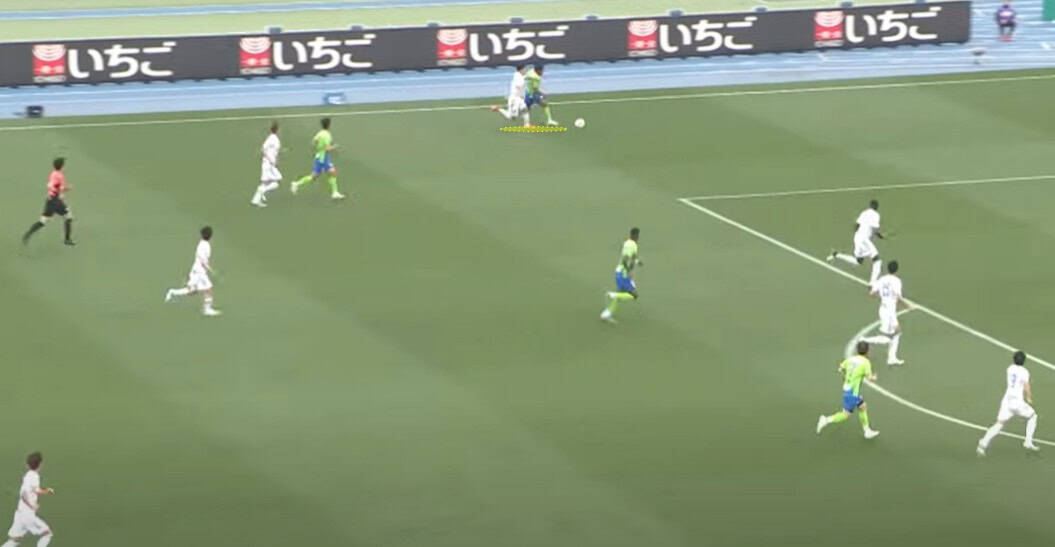
Taiga Hata Acceleration
Hata’s acceleration is one of his tools, allowing him to burst forward quickly and create separation in wide areas.
His combination of a low centre of gravity and well-developed physical frame makes him both agile and powerful at the same time, allowing him to maintain balance while driving past opponents.
This athletic profile suits the demands of a modern left wing-back, where repeated sprints and 1-v-1 duels are common.
Even when deployed as a more traditional left-back earlier in the season at STVV, his pace and tireless attitude gave him the capacity to beat markers and carry his team up the pitch.
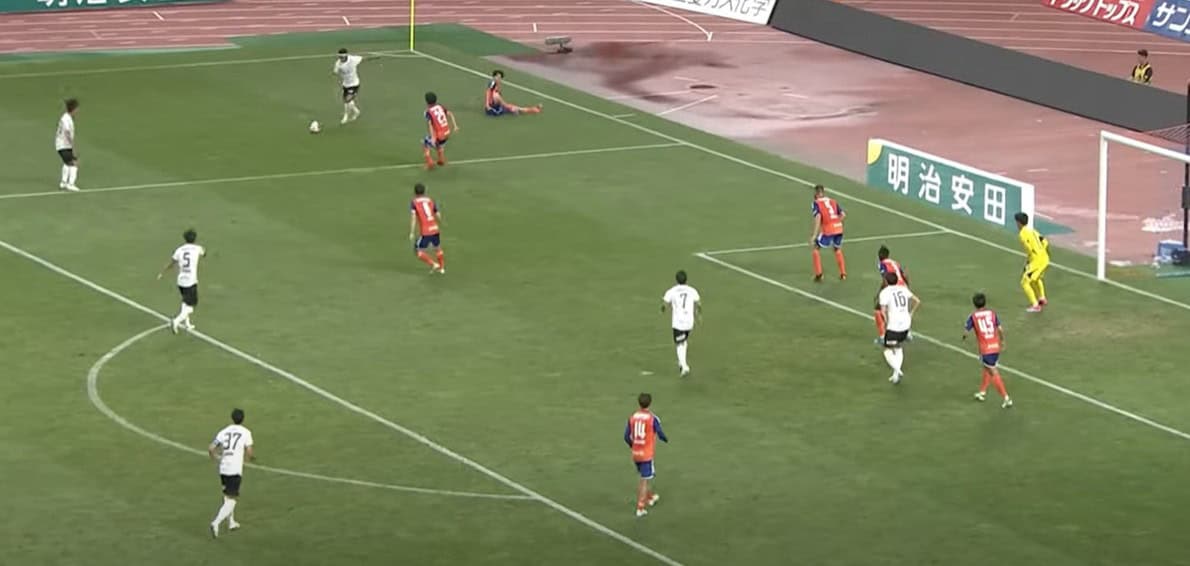
Taiga Hata Crossing
Hata demonstrates a strong understanding of creating and exploiting space on the flank, often timing his movement to arrive unmarked before delivering the ball into the box.
My preference is when he plays low, using driven crosses, which tend to be more effective than aerial deliveries.
By cutting balls across the face of goal or finding runners at the near post, he adds an element of unpredictability and efficiency to his team’s attacking play.
While his high crosses can still improve, his ability to consistently provide dangerous low deliveries makes him a valuable outlet in wide areas.
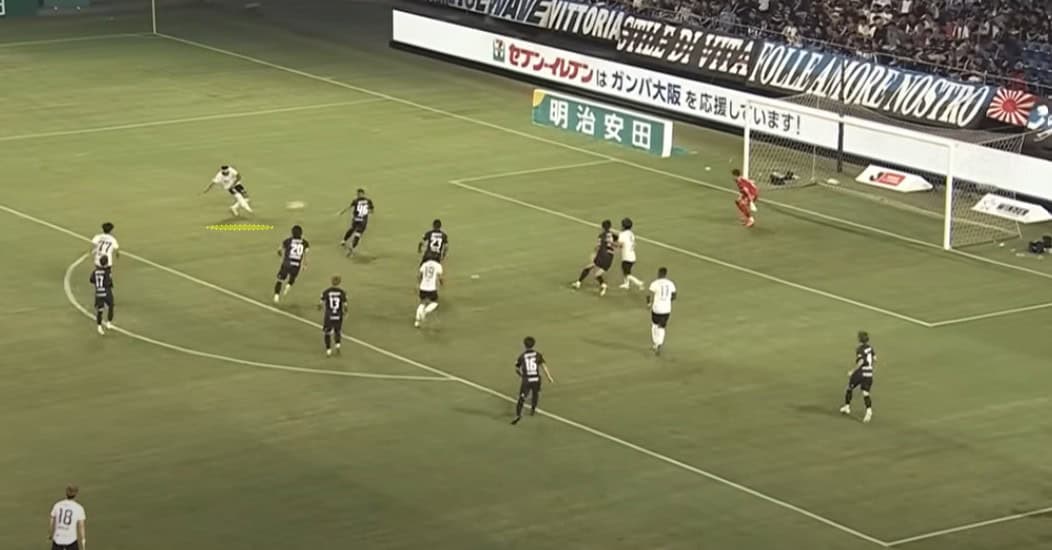
Taiga Hata Shooting
Hata also brings an underrated goal threat through his shooting ability, particularly inside the box.
He demonstrates sound technique when striking with the inside of his foot, favouring controlled, accurate efforts over power.
In addition, he demonstrates the ability to create his own shot by beating a marker and executing a precise finish under pressure.
Overall, this ability to combine good decision-making with composure in shooting positions elevates his profile.
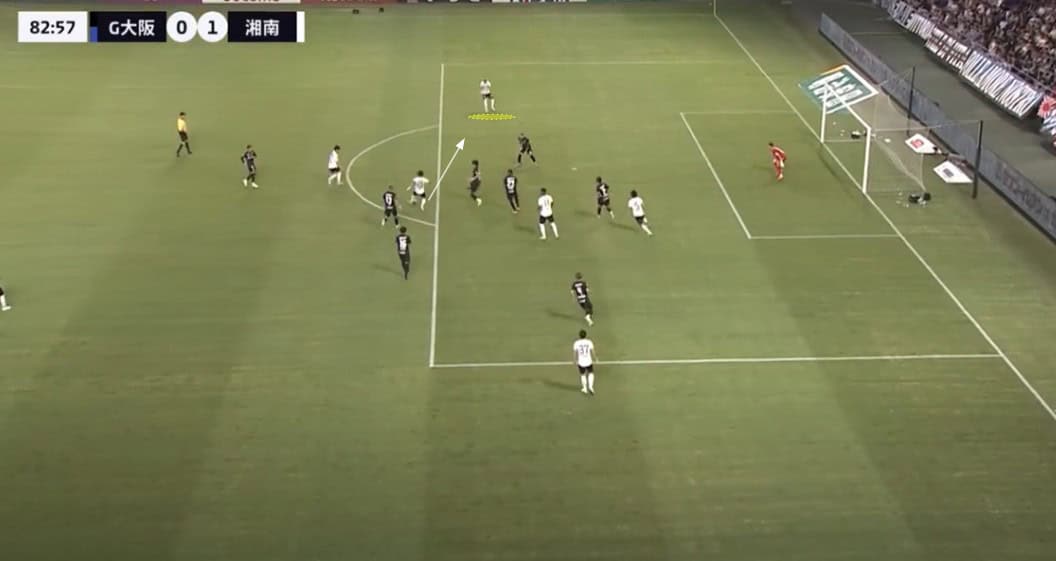
Taiga Hata Offensive Orientation
Hata’s attacking game is built on his willingness to push forward with energy and intent.
He thrives when overlapping down the flank, using his direct running to stretch defences and create openings in wide areas.
Once in advanced positions, he looks to deliver crosses or pick out teammates with smart passes, showing vision and awareness from the touchline.
His ability to combine pace, timing, and decision-making makes him a constant outlet in transition and structured possession, where he adds width and variety to the attack.
Taiga Hata Weaknesses
While he offers plenty going forward, his defensive game is still developing.
In 1-v-1 attacking situations, his take-ons can be a little untidy, with the ball occasionally bouncing loose rather than staying tight to his feet.
Still, his pace, strength, and persistence often allow him to force his way past opponents, even if the execution isn’t polished.
He could add another dimension to his attacking threat with more refinement in his close control and dribbling precision.
Defensively, he sometimes relies more on raw strength and determination than on clean tackling instincts, but with greater maturity in timing and technique, he can also become more reliable in that area.
Career Progression
Personally, I see Hata thriving far more as a natural left wing-back, where his attacking intent and freedom to drive forward are maximised, rather than as a traditional left-back.
In systems like a 3-5-2 or 3-4-2-1, his energy and forward runs become real assets, giving him the platform to impact the game higher up the pitch.
That said, I also value the experience he’s gaining now by developing the defensive side of his game in Belgium, where the physical and tactical demands are far greater.
Hata’s raw athleticism and attacking drive down the flank quickly made him a standout in the J1 League, where his pace, stamina, and willingness to run the full channel earned him recognition as a modern wing-back.
His move to STVV marked an important step in his progression, exposing him to a more structured environment.
Although he was initially deployed in a more conservative role, he’s adapting, showing that he can take on greater defensive responsibility.
Conclusion
Taiga Hata is a modern, dynamic left wing-back whose pace, work rate, and attacking intent make him a constant threat down the flank.
His ability to carry the ball forward, deliver low-driven crosses, and create chances in the final third highlights his offensive value, while his positioning and tactical awareness give him a solid defensive foundation.
I see Hata establishing himself at STVV this season.
His athleticism and attacking instincts should allow him to adapt to the flank and make an impact in games.
If he performs well, the next step could be a move to a side in a league like the EFL Championship, where his work rate and forward runs could make him a real asset.
With consistent playing time and staying injury-free, something that has held him back at times, Hata has the potential to become a high-impact wing-back.