


Adi Hütter’s AS Monaco finished a respectable third place behind Paris Saint-Germain and Olympique de Marseille in the 2024/2025 Ligue 1 season.
Going into his third season as head coach, the Austrian will have some high-profile signings at his disposal—Paul Pogba, who returns after serving his 18-month ban, was one of the biggest stories in recent weeks.
Hütter will also have Ansu Fati, who is on loan from Barcelona, and Eric Dier, who had a successful title-winning season at Bayern Munich.
A reinforcement in each of defence, midfield, and attack strengthens the squad and bolsters the club’s media presence.
But do these big moves address and alleviate any tactical issues in Monaco’s gameplay from last season?
In this tactical analysis for the Ligue 1 2025/2026 season, we will examine how Les Monégasques performed in the 2024/2025 season.
We will examine AS Monaco strengths under Adi Hütter tactics, areas for improvement, and how the new signings can support them in these areas.
AS Monaco Strengths In 2024/2025
Under Adi Hütter management, AS Monaco have showcased elite dynamism and a direct approach in attack, with an equally energetic defensive phase, as they are known to be an aggressively high-pressing side.
We first look at their strengths from the last season:
High Pressing To Suffocate Opponents
Monaco were among the top teams in Ligue 1 in terms of carrying out the high press.
They made 329 ball recoveries in the high zone, which was the most in the league last season.
This also contributed to their 14.7 shots per game, which is a commendable achievement.

Here, we can see Monaco high-pressing their opponent, which forces them to play long.
In situations where the opponent opts to play it wide and progress from there, Monaco perform a wide squeeze.
This suffocates the opposition players and very regularly results in Monaco intercepting or tackling.
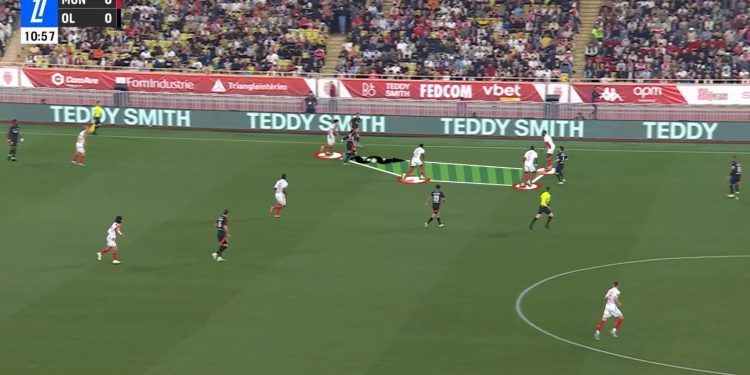
For example, four AS Monaco players are closing down an opponent in the wide area.
Eventually, he plays a pass that is intercepted.
Hütter’s side also recruited striker Mika Biereth from SK Sturm Graz in January 2025.
The Danish forward is aggressive with his pressing and could be seen pressing very high up, even on his own at times.
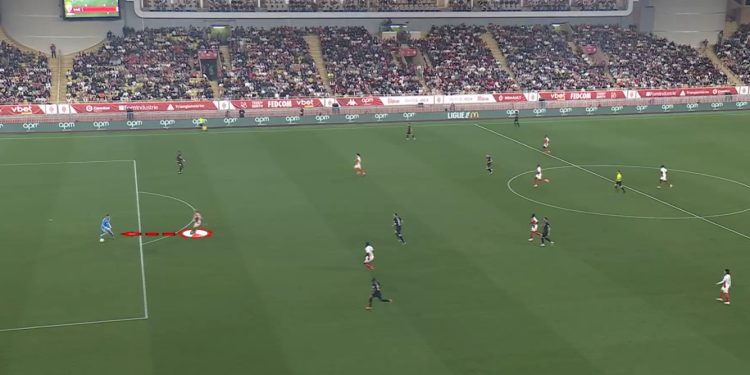
Here, we can see Mika Biereth pressing the opponent’s goalkeeper.
This is very common for young poachers with a striker’s instinct.
The Danish youngster gives an edge to Monaco’s press with his aggression.
AS Monaco Two-Striker Partnership
Biereth’s relationship with Breel Embolo, Monaco’s already-existing striker, was a notable feature of the 2024/2025 season.
Both of them offer different traits.
The Danish is direct, likes to make runs in behind, and relies on good service from the wide areas.
However, he is not very refined at dropping deep and linking up play.
Breel Embolo, on the other hand, is a physical and versatile attacker.
He can play as a lone striker as well as a second striker.
He is proficient at dropping deep to link play.
With these two at his disposal, Hütter was able to play a 4-4-2 formation with two strikers.
The 4-2-3-1 and 4-4-2 were the most used systems; it was common to see Embolo playing right behind Biereth in both formations.
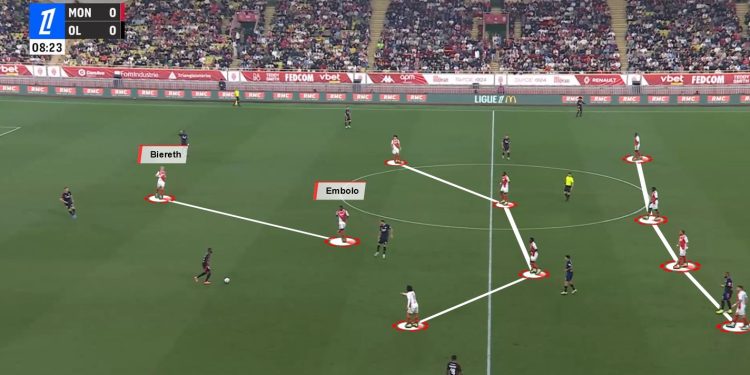
Here, we can see AS Monaco playing in a 4-4-2.
Embolo drops deeper to cover the space in front of the midfielders, allowing Biereth to stay higher.
How AS Monaco Wingers Operate
It was common to see Monaco’s wingers invert and play in the half-spaces.
At times, they would drop deep to increase their numbers in the build-up.
The most usual suspects were Takumi Minamino, Aleksandr Golovin, Maghnes Alkiouche, and Eliesse Ben Seghir.
Minamino was also seen playing centrally, as he was often deployed right behind the striker.
This is because they are inherently attacking midfielders who are deployed in the wide areas.
However, they are comfortable having a wider starting position and then drifting infield for combination play.
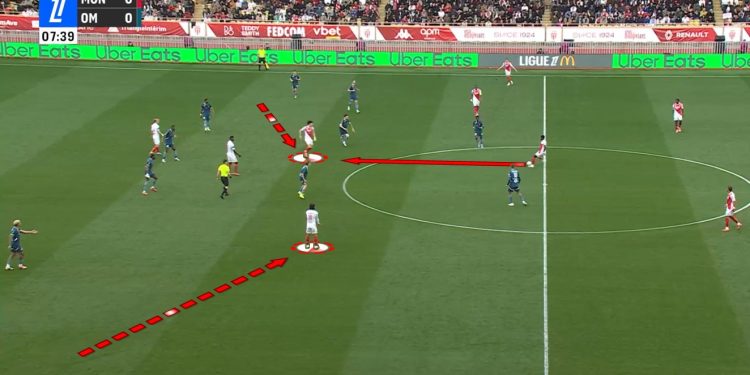
In this situation, Monaco are playing in a 4-4-2; both the wide midfielders (Alkiouche and Minamino) invert to provide more progressive options.
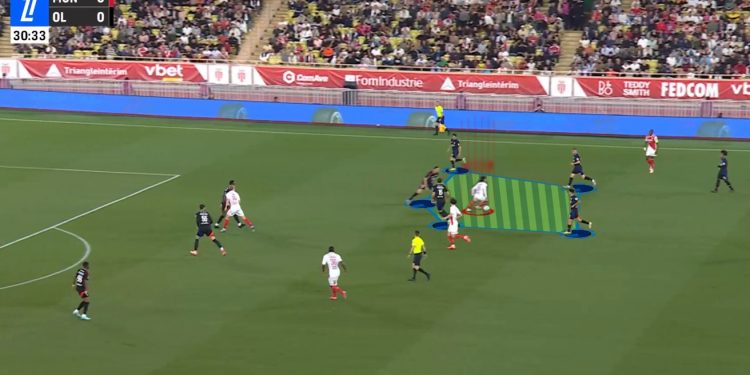
Here, Minamino is seen receiving in the half-space.
If he starts centrally, he tends to drift wide and receive the ball in the half-space, which is also the case when he is deployed as a wide midfielder, as he naturally drifts into half-spaces.
It is also very common for the Japanese to drop outside the opponent’s structure and help with build-up.
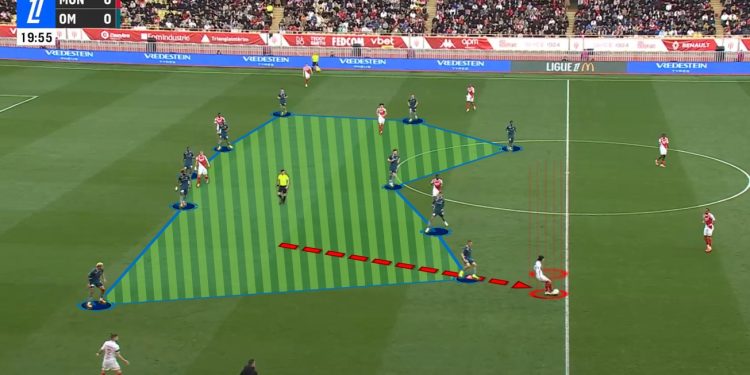
Here is a situation where Minamino drops outside the opponent’s structure.
Minamino was one of Monaco’s most consistent performers last season.
His incredible work rate, combined with his 13 goal contributions, was one reason Monaco reached impressive offensive numbers.
They had 47.9 progressive passes per match and 9.8 passes into the penalty area per match.
AS Monaco Structure In Build-Up
Denis Zakaria and Lamine Camara were the two most frequently deployed midfielders in Monaco’s structure.
The former was mainly seen holding the anchor and dropping between the centre-backs.
This, along with the wingers coming inside, allowed the full-backs to push high.
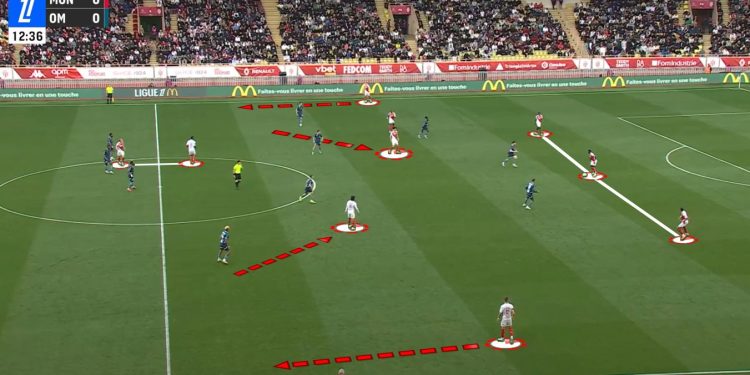
Here, we can see Zakaria positioned between the centre-backs, forming a back three.
The full-backs, Vanderson and Caio Henrique, push higher as the wingers, Minamino and Alkiouche, drift infield.
This creates a 3-5-2 structure in build-up, as we can see the strikers up top maintaining a staggering position.
With the fullbacks providing the width and depth, attacking through this medium was simple.
For AS Monaco, attacking through the wide channels was a routine tactic.
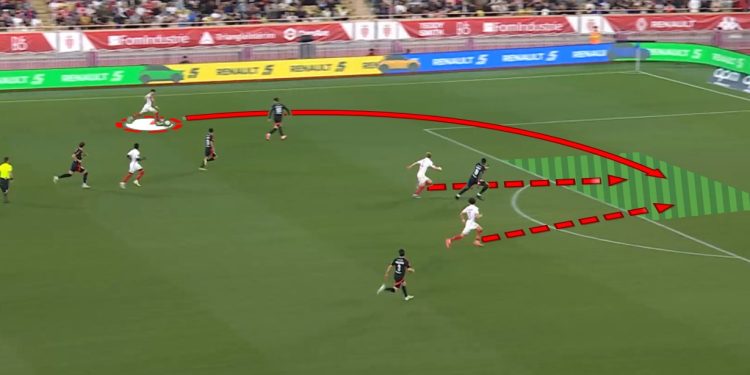
Here, Caio Henrique plays an early cross into the penalty area.
This was a common feature of Hütter’s attack in the 2024/2025 season.
AS Monaco Solutions To Get The Goals
Monaco have multiple attacking players who demonstrate mobility in possession, which is why there were a lot of fluid movements once they reached the attacking third.
The runs in behind from players like Minamino, Biereth, Embolo, and Vanderson helped tremendously with penetration.
Monaco were seen carrying out their attack in the final third with speed and creativity.
The above video shows an example of the AS Monaco players displaying creativity to penetrate the opponent’s last line of defence.
Through this, they end up getting a shot on target.
Hütter’s side was also proficient in attacking set-pieces, being among the leaders in headed goals from set-piece situations (nine).
Here is an example of an attacking set-piece from AS Monaco.
For a team that does not prioritise ball possession, it is common to rely on set pieces to bag a large chunk of their goals.
Along with set pieces, they also ensured they capitalised on positive transitions.
Zakaria and Camara have a good mix of dynamism, physicality, and ball-carrying abilities.
This helped them whenever they won the ball back, and the opponents were unsettled.
Monaco players could be seen driving quickly or playing short passes to progress the ball to the attacking third.
In this scenario, we can see Monaco breaking into a counterattacking situation; they use the space to progress the ball while the opponents are still tracking back.
AS Monaco Weaknesses In 2024/2025
Although Adi Hütter’s side were an exciting group of players to watch when they showcased their dynamism and energy, they had some lapses that need fixing for the next season.
Defensive Structure In Negative Transition
Since AS Monaco are a high-pressing team, it is natural for them to play with a high line and get caught out in transition.
The rest defence and the defenders’ positioning left a lot to be desired.
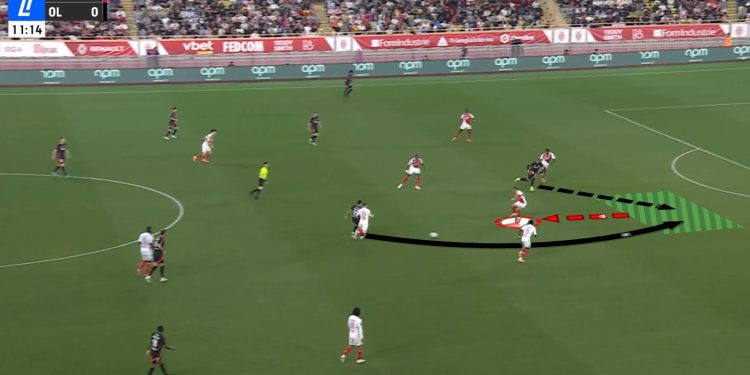
In this image, the left centre-back steps up, leaving space behind him, which is exploited by a runner on the shoulder of the deepest defender.
AS Monaco were also guilty of leaving space in between the lines during negative transitions.
The midfielders were inconsistent in tracking back to cover Zone 14, where many cut-backs ended up.
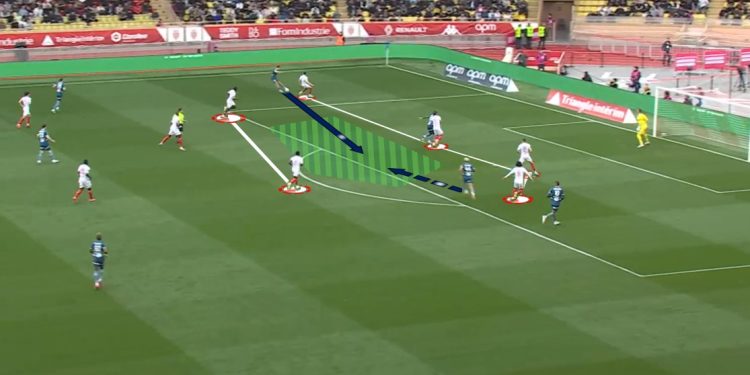
Here is a good example of Monaco leaving space between the lines in a negative transition.
The opposing attacking midfielder notices the pocket of space opening up and receives the ball to get a shot on target.
Progression In Midfield Third
Although Monaco’s attack in the final third was fast-paced and fluid, the same cannot be said about progression in the midfield third.
They were often seen not taking the central option when it was on.
Most of their central penetration came when they utilised the positive transition because they had more space to work with as the opponents were unsettled.
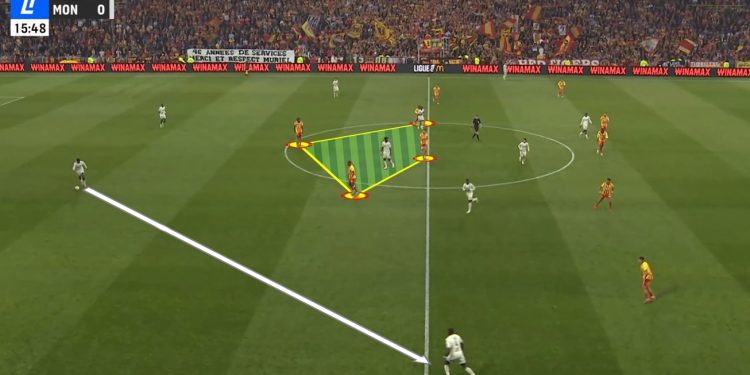
Here, the opponents are settled in their defensive structure.
Monaco’s centre-back plays it wide even though he has the option to drive vertically and find a midfielder in the half-space.
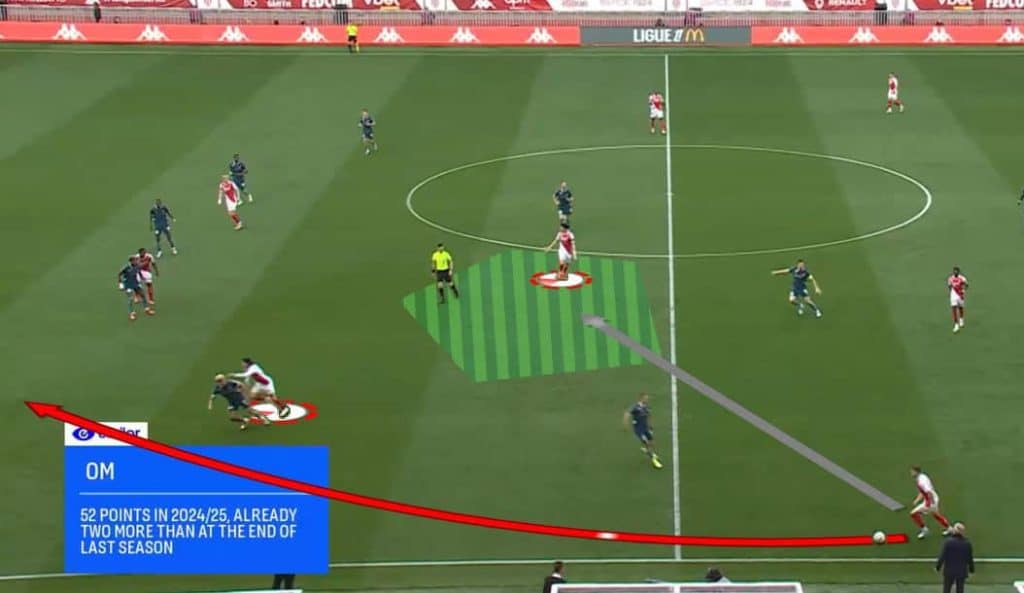
Here is another example: the left-back has a central option but opts for the wide choice, which results in Monaco being dispossessed.
This is because there was a lack of fluidity in the midfield third.
A technical midfielder operating in the half-spaces can address this issue.
Another solution is for a technical winger to drop into the half-space and have a deep-lying playmaker with an eye for vertical passes.
Possible Solutions To AS Monaco Problems
This is where the new high-profile signings come into play.
All three of them fit a profile that was missing at Monaco.
Eric Dier: Defensive Leader
With experience at Bayern Munich, Tottenham Hotspur, and the England national team, Eric Dier is a great candidate to solve the issues with defensive positioning.
The Englishman is adept at anticipating play and adjusting his position accordingly.
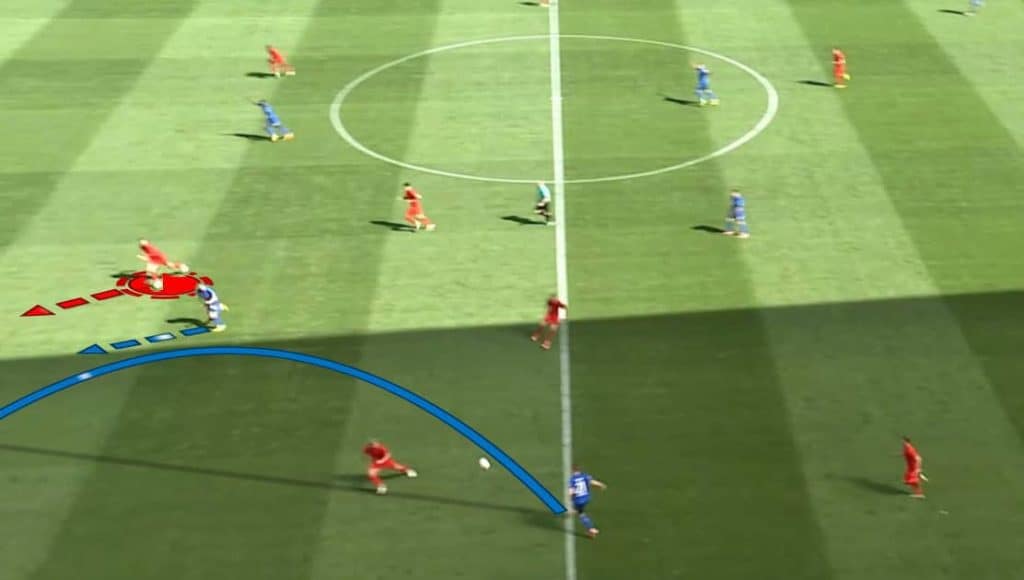
In this situation, Dier notices that the opponent is not being closed down well enough, which gives him enough space to play a through pass.
He adjusts his position and starts the defensive run earlier to get a head start on the runner.
He ends up cutting out the pass and playing it back to his goalkeeper.
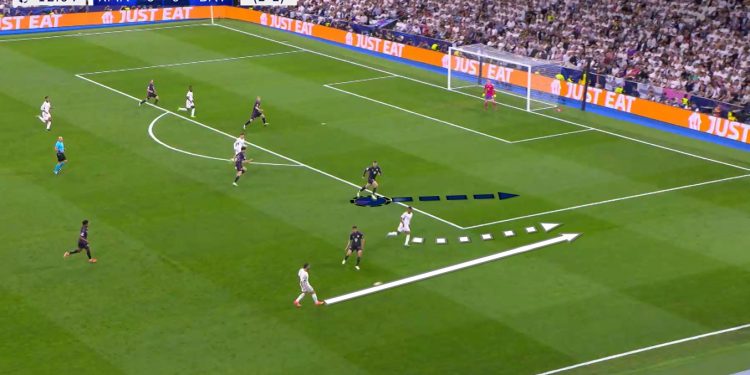
Here is another example of Eric Dier anticipating a through pass into a wide area.
He runs diagonally to reach there before the opponent, thereby making an interception.
AS Monaco already have Thilo Kehrer.
Although he is not very physical, he is comfortable playing the ball and keeping possession.
Eric Dier can potentially have a great partnership with him as he brings the steel.
Paul Pogba: The Creative Fix
The Frenchman is known to possess a wide range of technical skills.
One of his notable skills is his ability to play vertically from the tightest of spaces.
This will bring a lot of incisiveness to AS Monaco’s midfield.
Although Camara and Zakaria are good midfield duos, they did not collectively possess the calmness and creativity that Pogba can inject into the game.
If Zakaria is paired up with the Frenchman, it will give the latter enough freedom to control and influence the game according to his will.
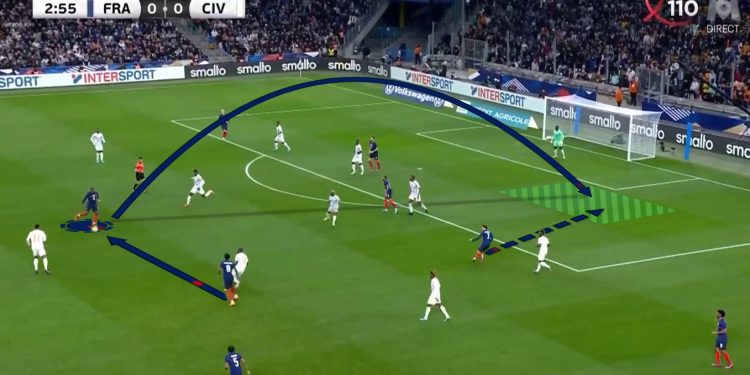
Here, Pogba plays a one-touch killer pass behind the opponent’s last line of defence.
If Hütter can use him regularly in these areas, this will unlock more space in-behind.
The anticipation of him playing a line-breaking pass out of nowhere will force the opponents to be very careful about when to press.
This will automatically open more space in the midfield third, allowing for more central progression.
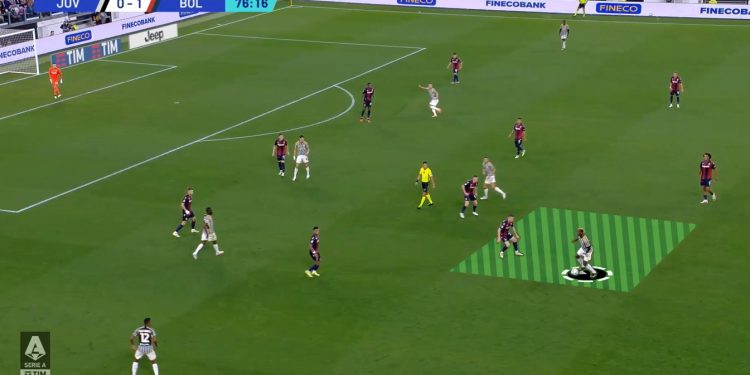
Pogba usually likes to operate in the left half-space.
He picks the ball up to either dictate from there or play a progressive pass and join the attacking move.
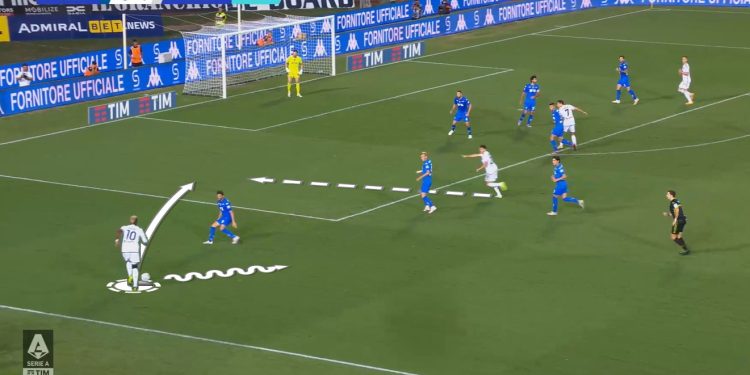
He will likely be seen operating in the wide zone when the wingers drift infield.
In some cases, he will move there for numerical superiority.
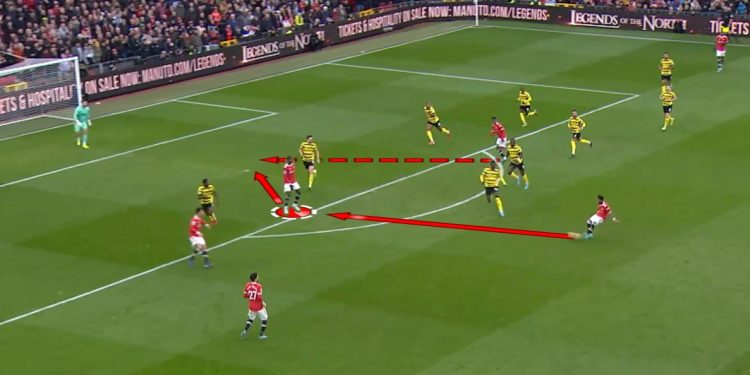
When paired with a defensive-minded midfielder like Denis Zakaria, Paul Pogba will have the freedom to get into positions like these.
In this example, he plays a one-touch lay-off to the striker, who is making a run in behind.
Ansu Fati Renaissance Season?
Ever since he broke onto the scene as a 16-year-old, Ansu Fati has been involved in conversations about the best upcoming wingers.
However, although the Spaniard is still only 22, he has yet to leave a lasting mark at the clubs he has played for.
However, his form is a different parameter from his quality; Fati can play as a left-winger or a second striker.
His strengths include his explosiveness to get past opponents and create space to shoot.
He has a knack for arriving in goal-scoring positions, likes to link up in tight spaces, and is adept at finding small pockets of space to receive and progress.
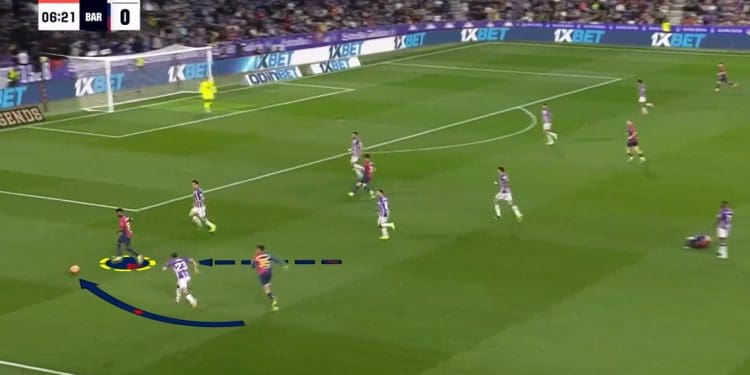
Here, Ansu Fati makes an underlap to receive in the wide area.
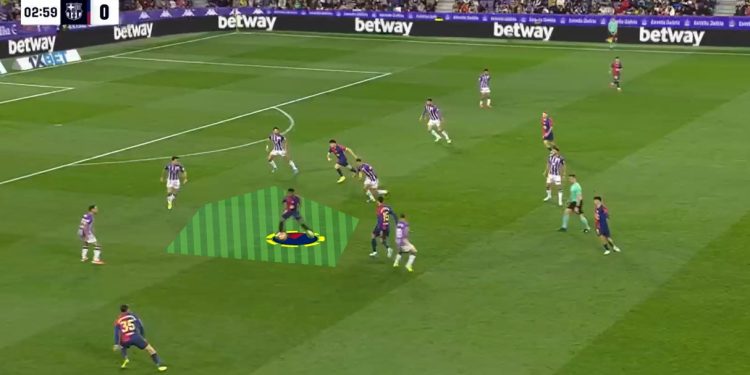
Here is an example of Fati drifting infield to receive in the half-space.
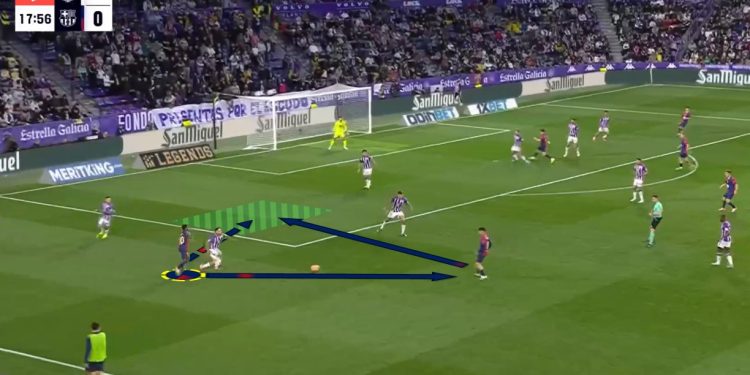
Here, Fati plays a one-two with Pedri to receive inside the opponent’s penalty area.
This can very easily be Pogba playing that pass to him at Monaco.
Ansu Fati’s relationship with Paul Pogba will be interesting to watch.
Both of them enjoy being involved in intricate play and can operate effectively in both wide spaces and half-spaces.
This will only contribute to the fluidity that Adi Hütter’s side already possesses.
Conclusion
Adi Hütter’s AS Monaco, although impressive in terms of dynamism and energy in attack and high pressing, needed that extra push to solve issues relating to midfield third progression and defensive stability.
With Paul Pogba, Ansu Fati, and Eric Dier on board, the Austrian has a potential solution to these lingering issues.
Provided that everyone stays fit, this could be regarded as one of the smartest AS Monaco transfer windows in recent years.

