The world’s eyes will be on the FIFA Club World Cup Final between Paris Saint-Germain and Chelsea on Sunday, July 13th, 2025.
Both teams have come a long way and faced many challenges to reach the CWC Final.
PSG led their exciting group, which ended with three teams on six points (PSG, Botafogo and Atlético Madrid)
After that, Luis Enrique‘s side went on a roll and knocked out Inter Miami, Bayern Munich, and then Real Madrid.
On the other hand, Chelsea finished second in their group, with six points, behind Flamengo with seven points.
After that, Enzo Maresca‘s side knocked out Benfica, Palmeiras, and then Fluminense to reach the 2025 Club World Cup Final.
Small details could be crucial in this match, so in this FIFA Club World Cup Final tactics preview, we will examine each side’s set pieces.
This tactical analysis is a set-piece analysis of the Blues and Les Parisiens‘ most essential tactics in set plays ahead of their Club World Cup Final showdown.
Chelsea Short Corners
The most significant thing to notice in Chelsea’s set pieces is how creative and diverse they are in attacking corners.
This paid off in their match against Palmeiras, as they scored the winning goal from a short corner.
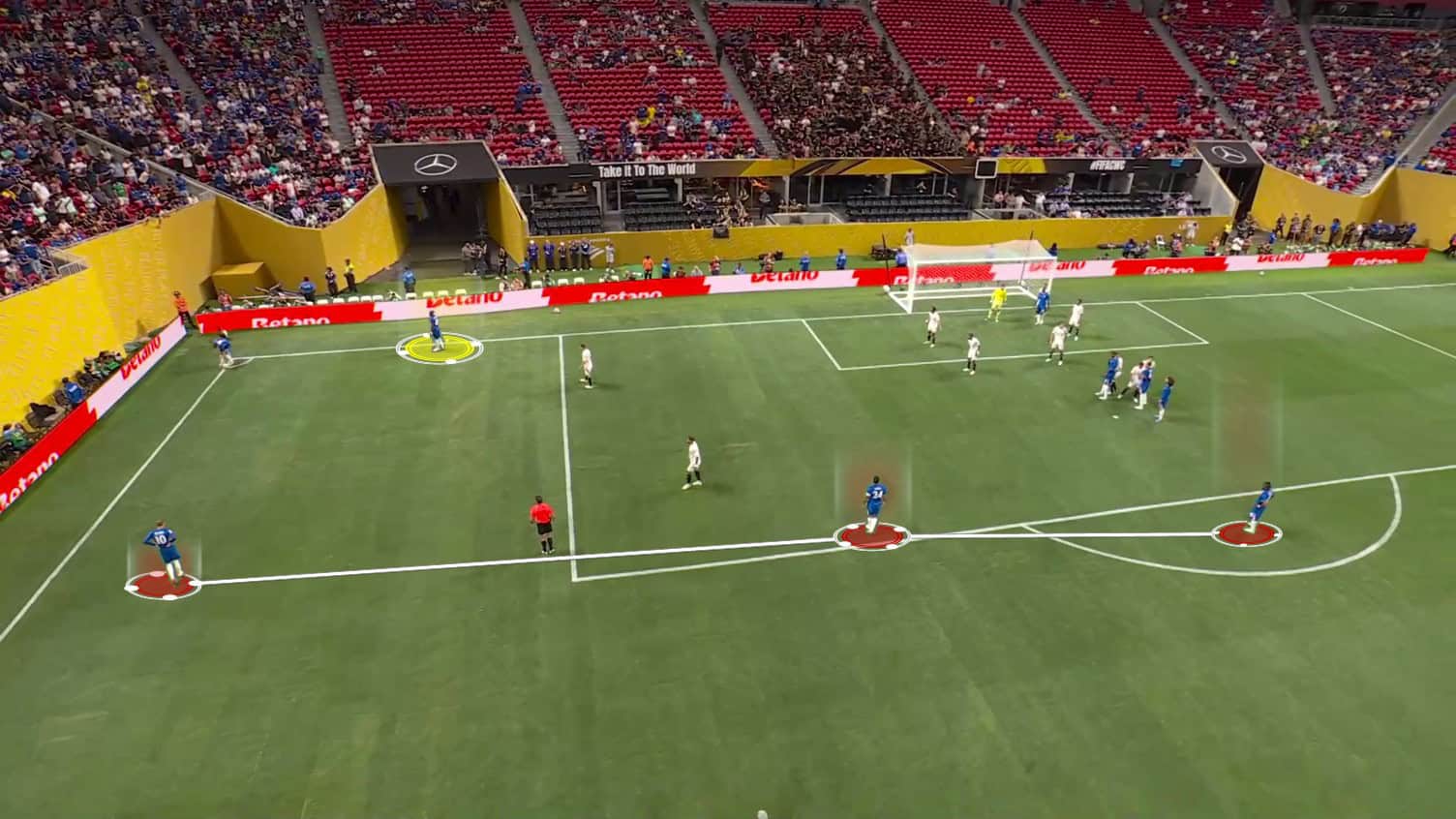
They may send just four players into the box, with five on the perimeter ready to participate in short-corner routines.
They use a short-option player on the goal line (yellow), another out wide in line with two edge-of-the-box players (red), and a deeper option, a little out of the shot below.
In this example, we can also notice that Los Angeles FC defend the short corner with the normal short-option defender and the edge-of-the-box player who joins him to help in this example from earlier in the Club World Cup.
Besides numerical superiority, they also make dynamic rotations.
As shown below, the taker passes the ball to the normal short-option player, who sends it backwards.
Meanwhile, the short option on the goal line (yellow) starts to run behind the two short-option defenders.
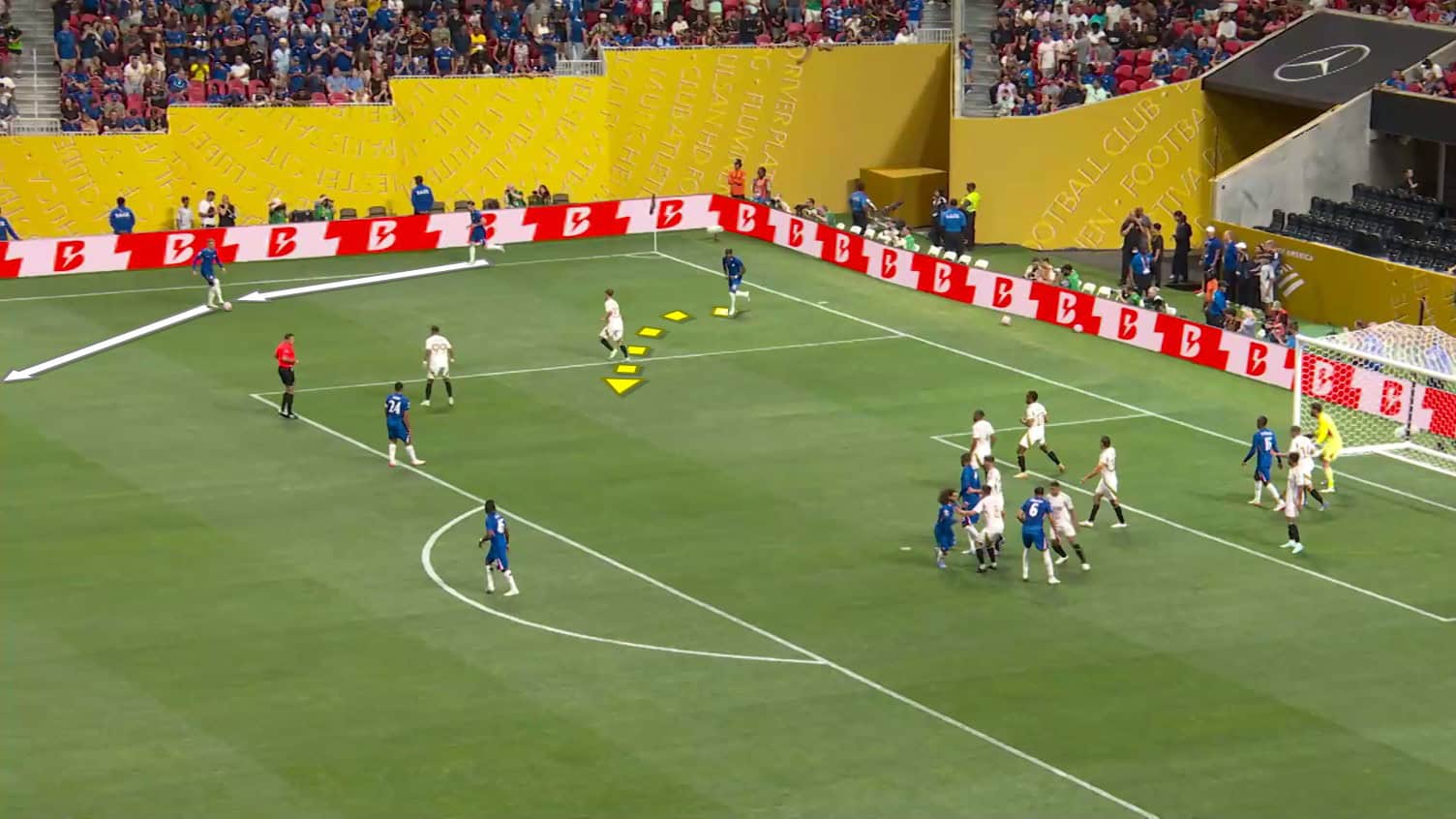
Here, the short-option defenders have two options.
First, to protect the area behind them against this run, as they already did in the photo below.
This will open the pass to the taker again or the pass to the other rebound player to shoot.
Second, to chase both sides, which will open a dangerous passing lane behind them.
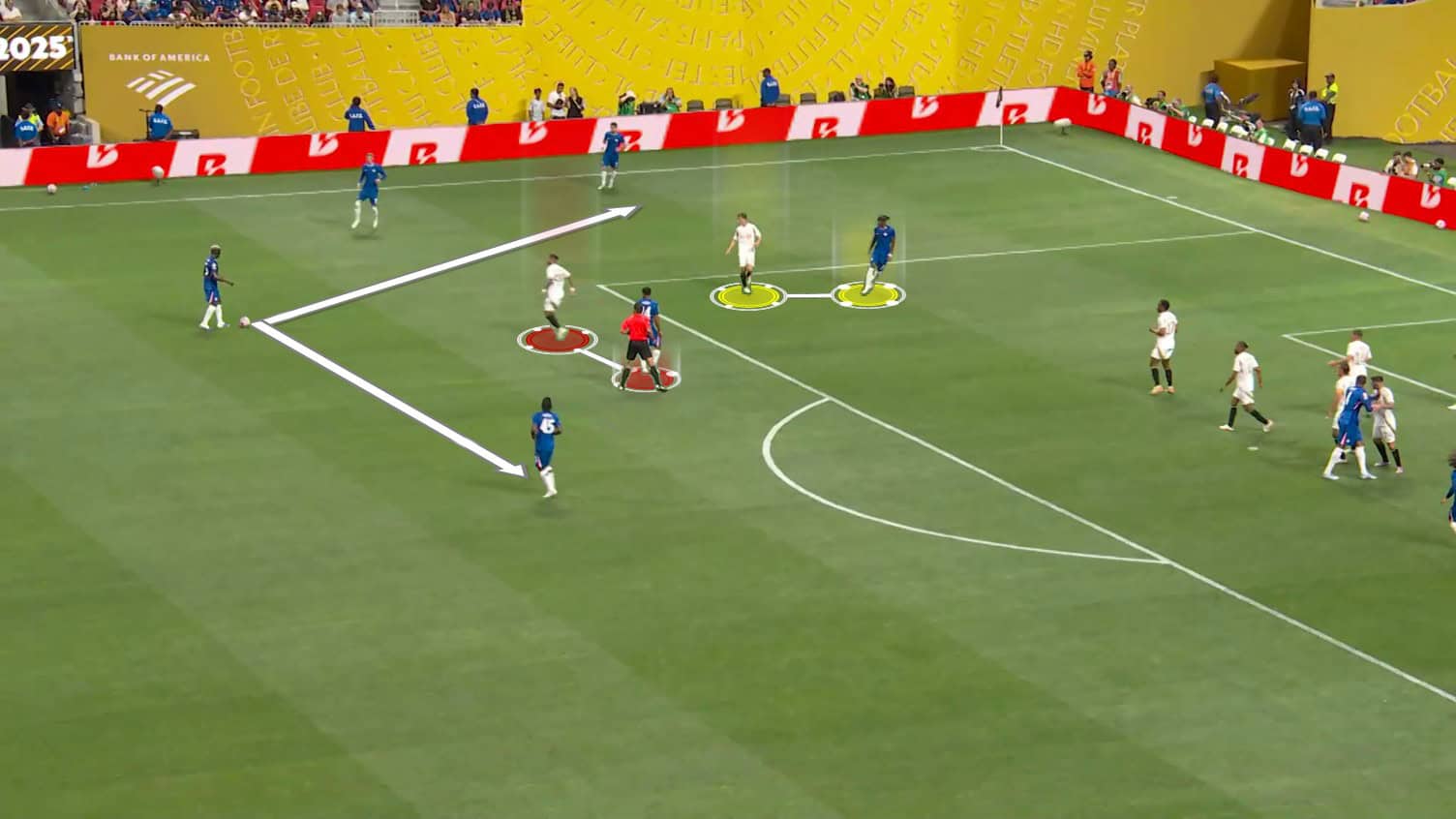
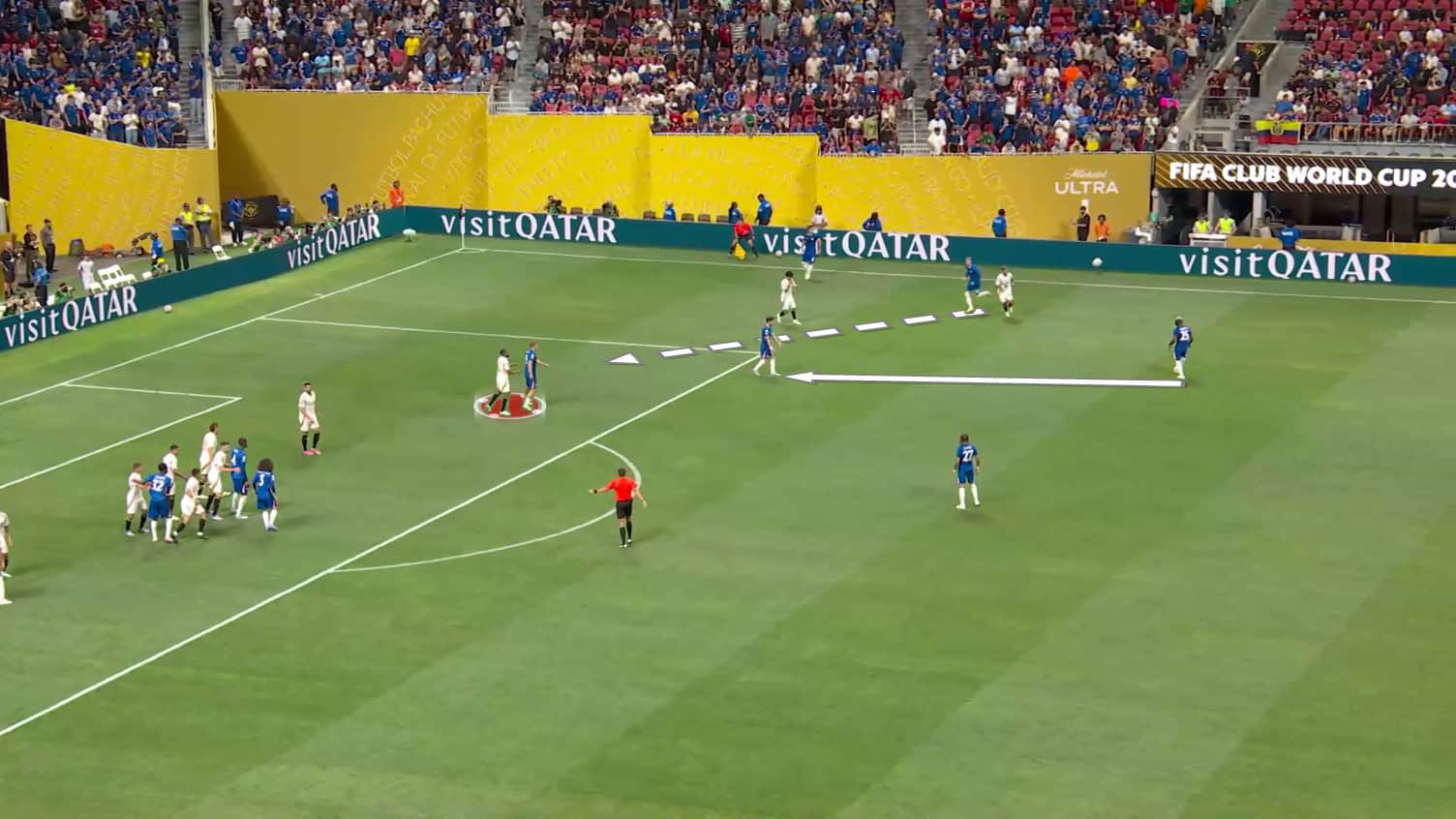
As shown below, the ball is passed to the taker, who can send a cross (as happened) or pass it to the player behind the pressing defender.
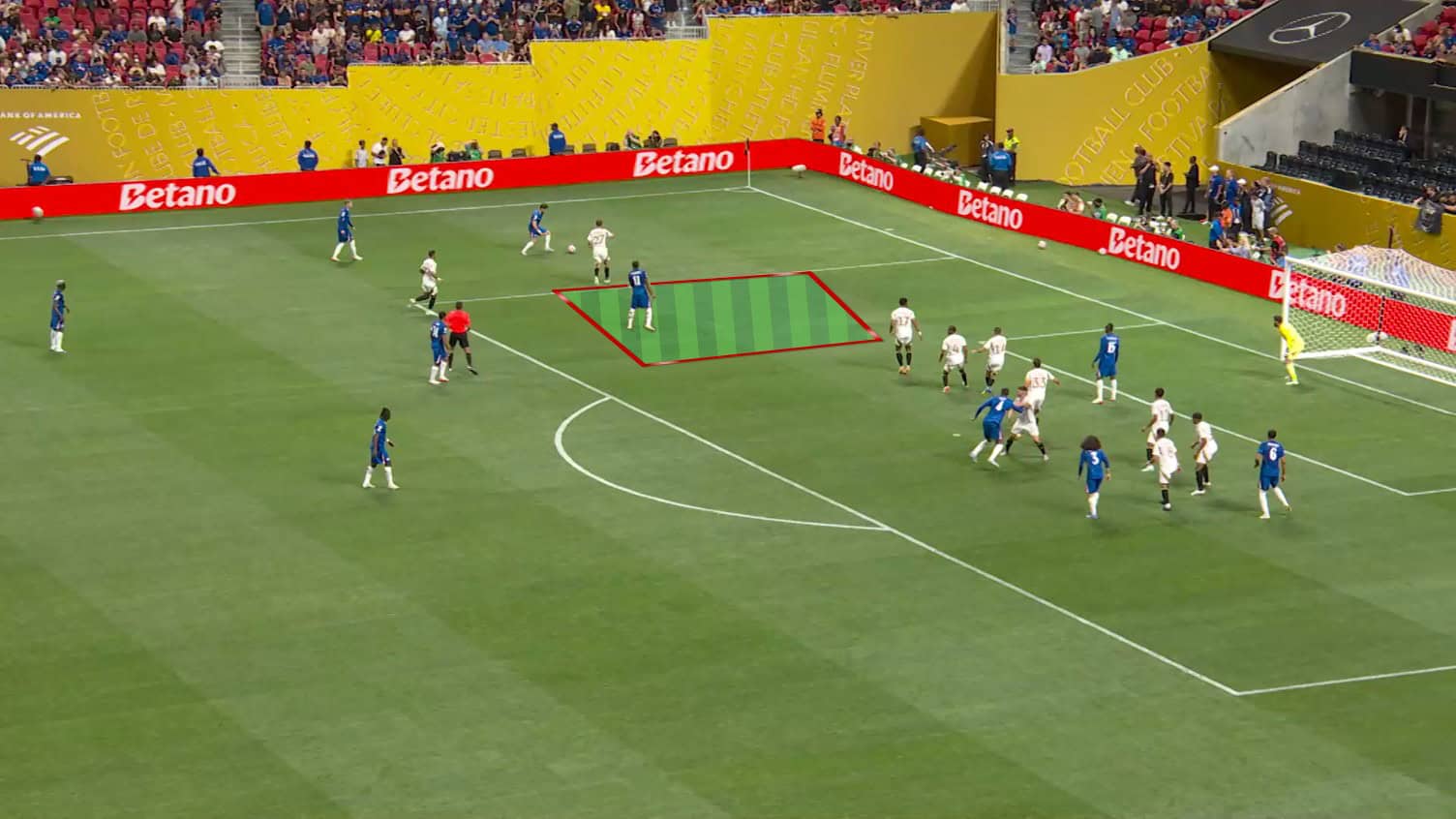
After that, the first zonal player pushes up to cover the area behind the two short-option defenders to prevent the pass to the attacker, who runs from the goal line behind the two short-option defenders, allowing them to press.
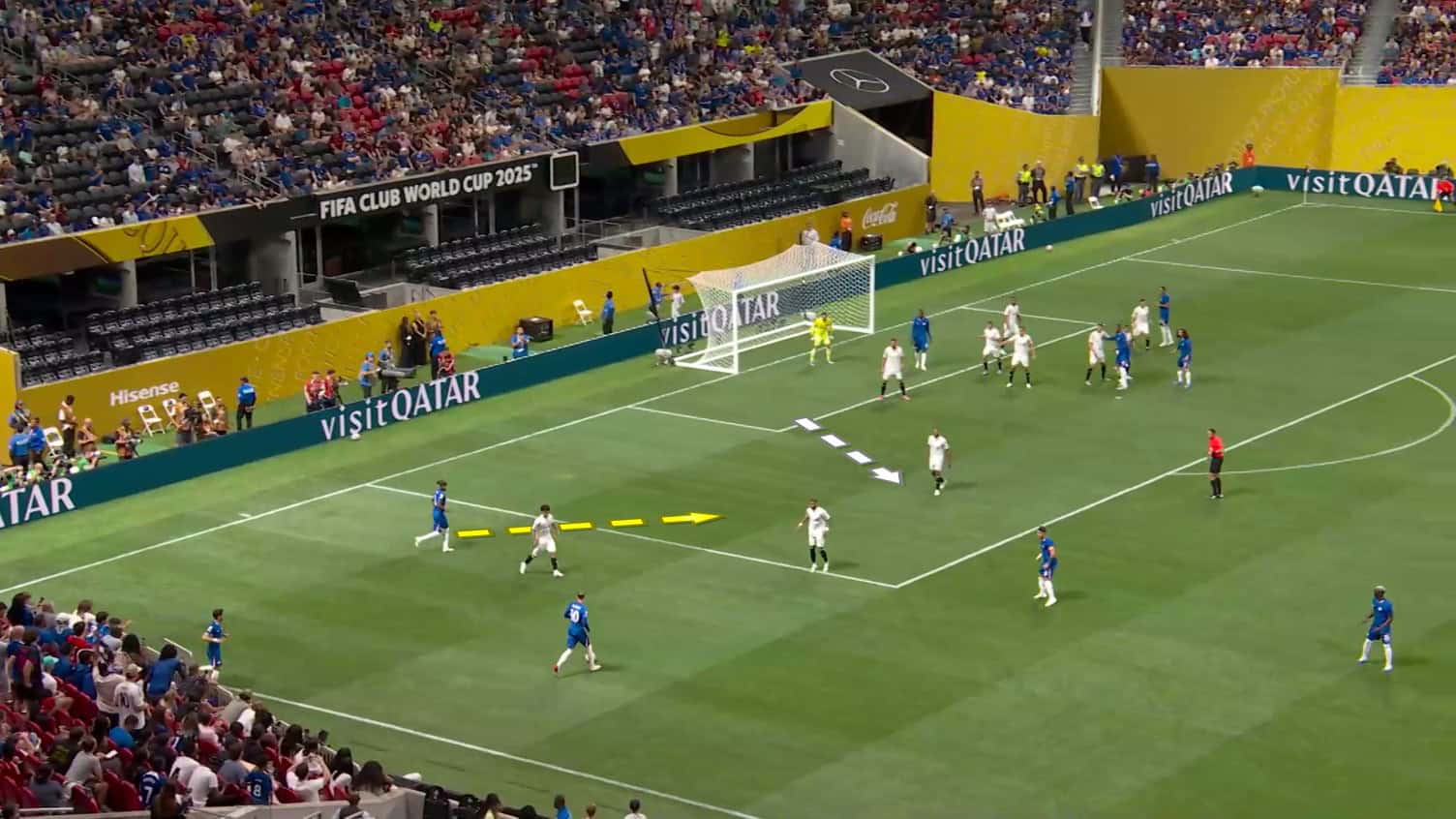
As shown below, the defender can now press with a curved run, closing the path to the right, while the other short-option defender is ready to follow the taker in case he receives a pass.
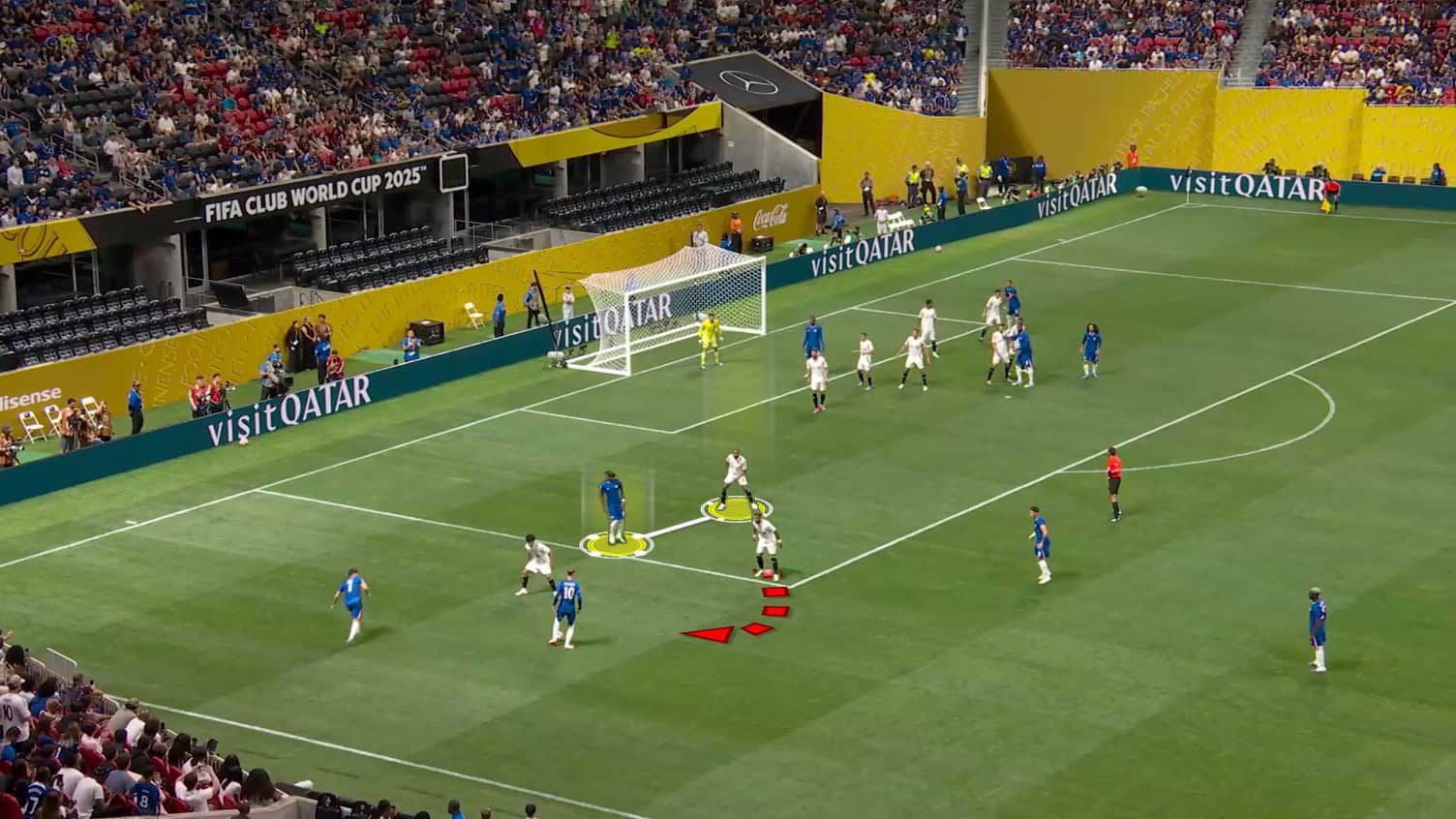
However, Chelsea have a numerical superiority in this area, so they could rotate the ball back, being so patient to send a dangerous cross from a nearer point.
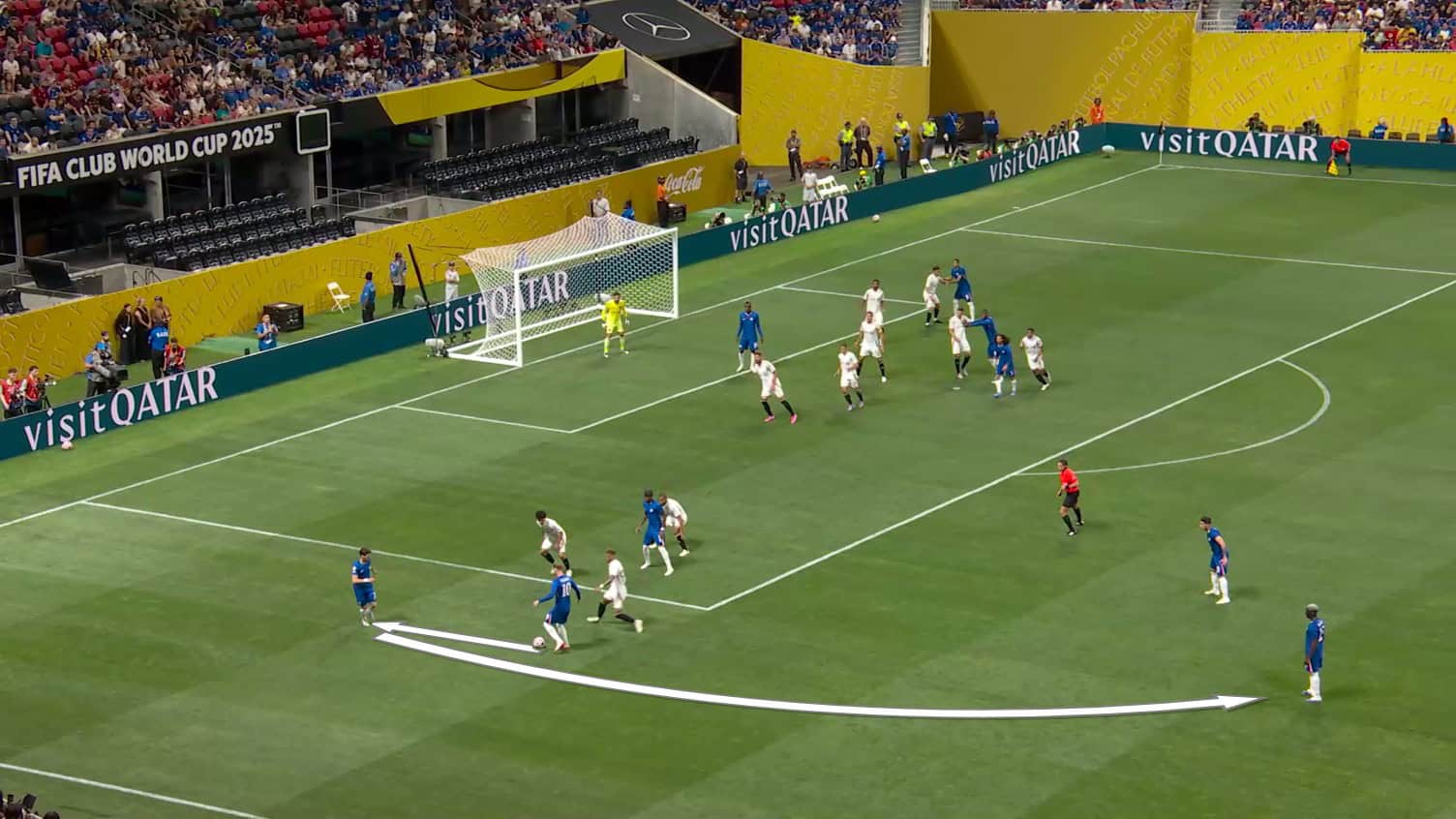
After that, they were ready with the solution: asking one of the edge-of-the-box players (red) to do another penetrating run behind the two short-option defenders (with the normal yellow run), as shown below.
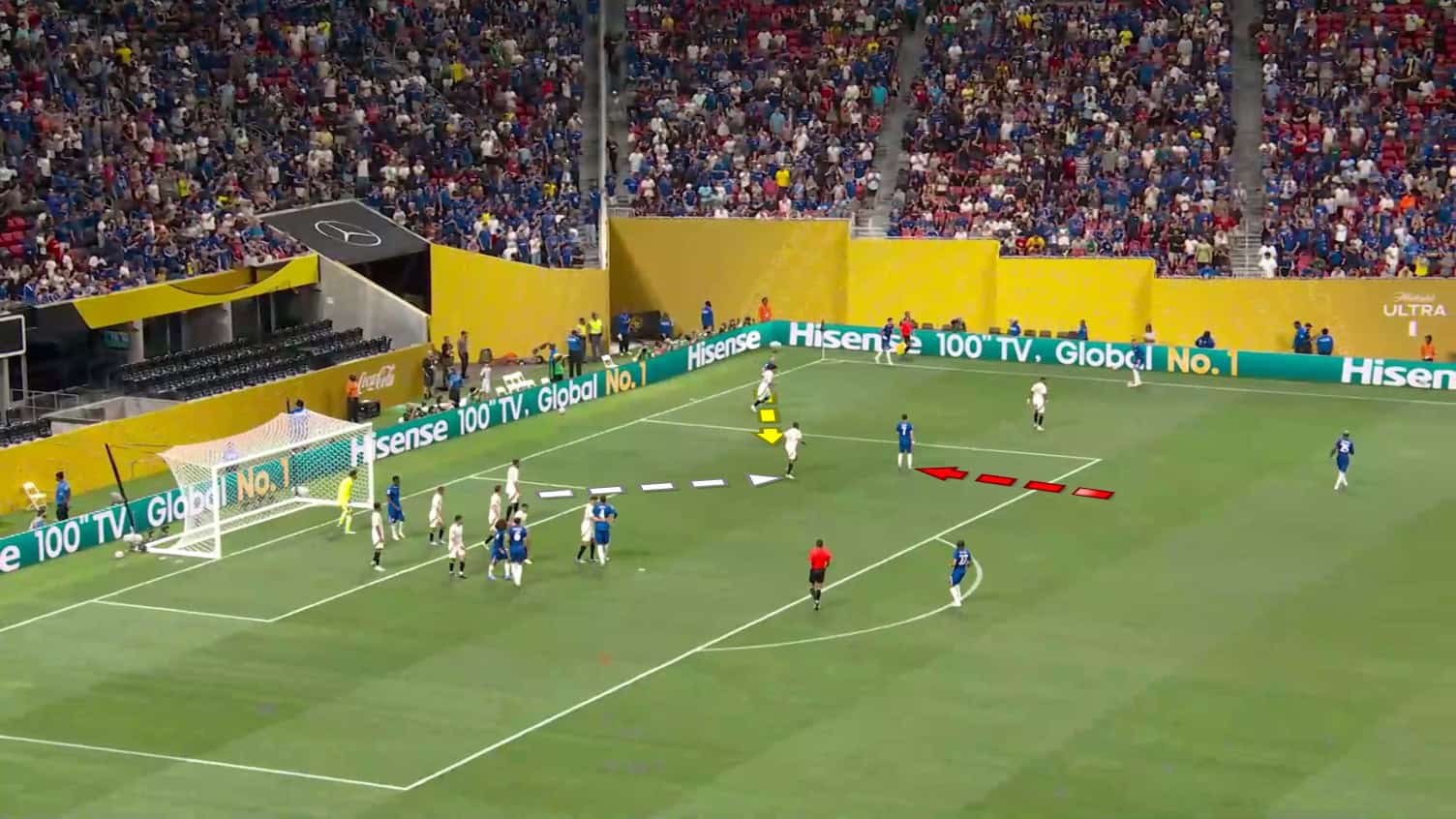
And here, the chess game started.
They had numerical superiority while also fixing two players who were afraid of a through ball in this dangerous area, so four attackers (white) were against only one player, as shown below.
In this situation, they have intelligent, skilful and innovative players with guided movements, which is the magic recipe for the success of any short corner.
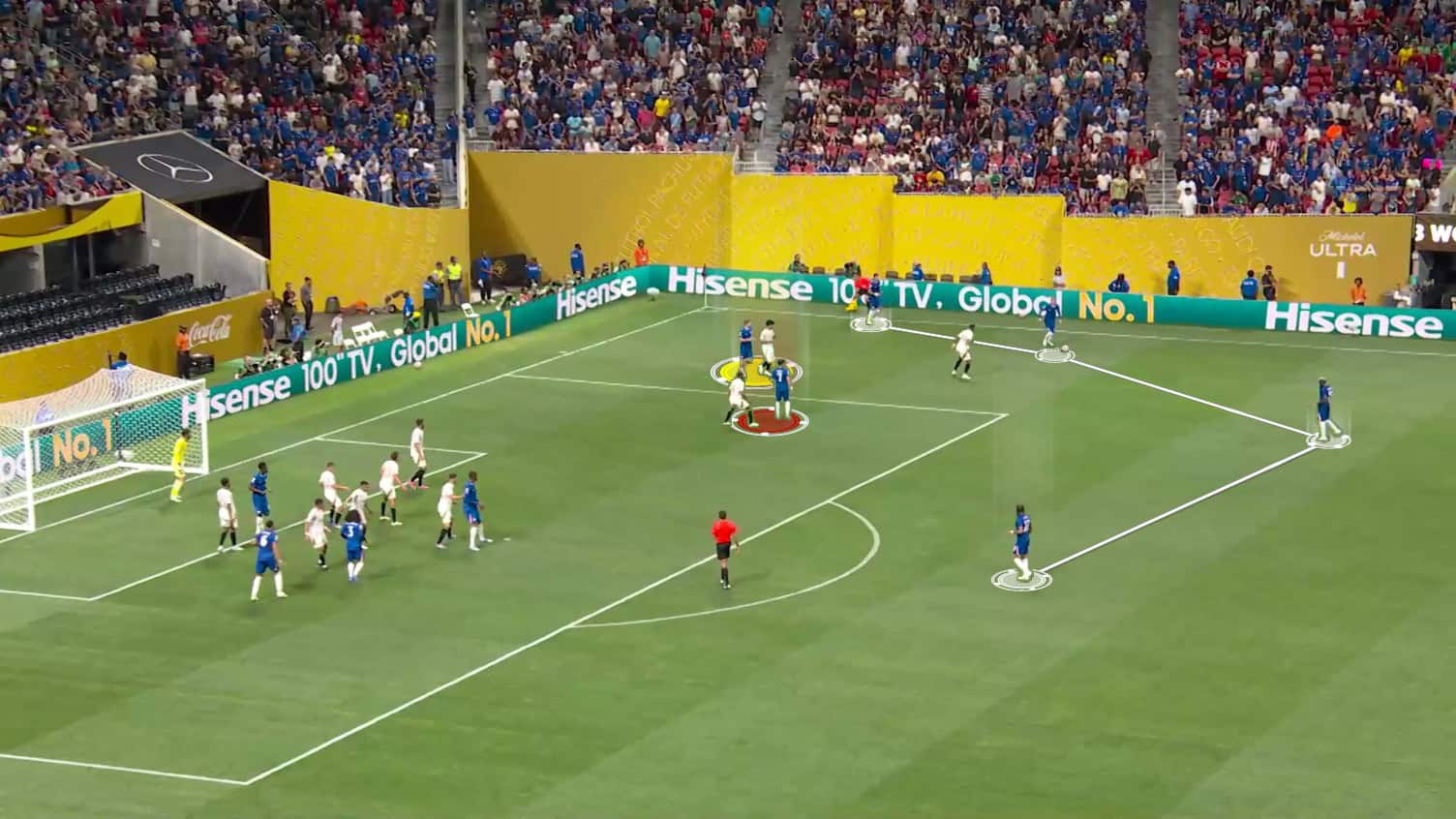
As shown below, the short-option player has the ball now while having two passing options (to the player at the back or to the taker), so one of the short-option defenders drifts wide to be ready to press the attacker, leaving his area uncovered.
The ball is passed to the back and then to the left area.
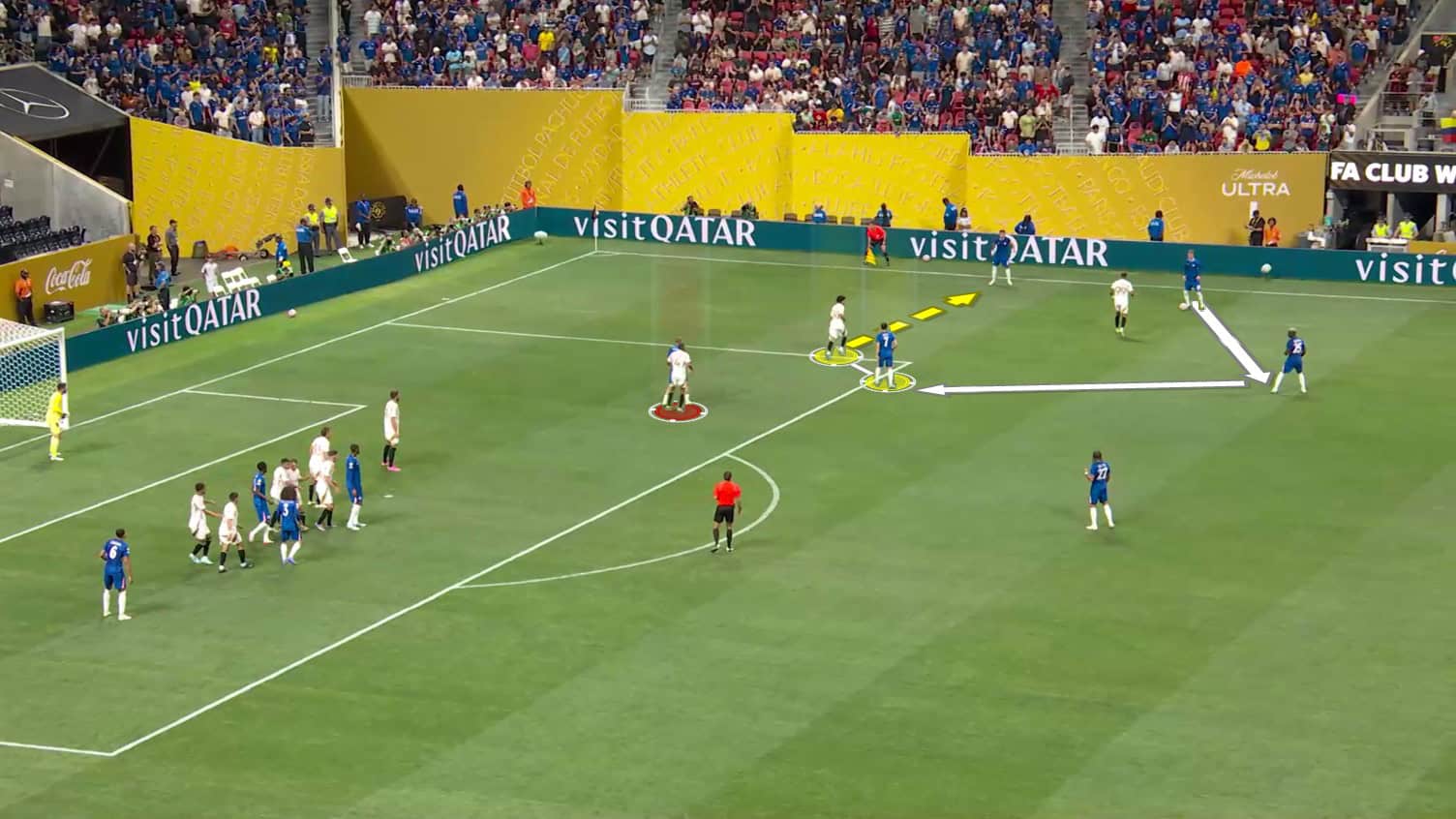
They don’t stop these penetrating runs behind the pressing short-option defenders.
This time, the short-option attacker starts to run after passing the ball.
As a result, he can receive a through pass, and we all know how third-man runs are very difficult to defend against.
The plan works, as shown in he two following photos.
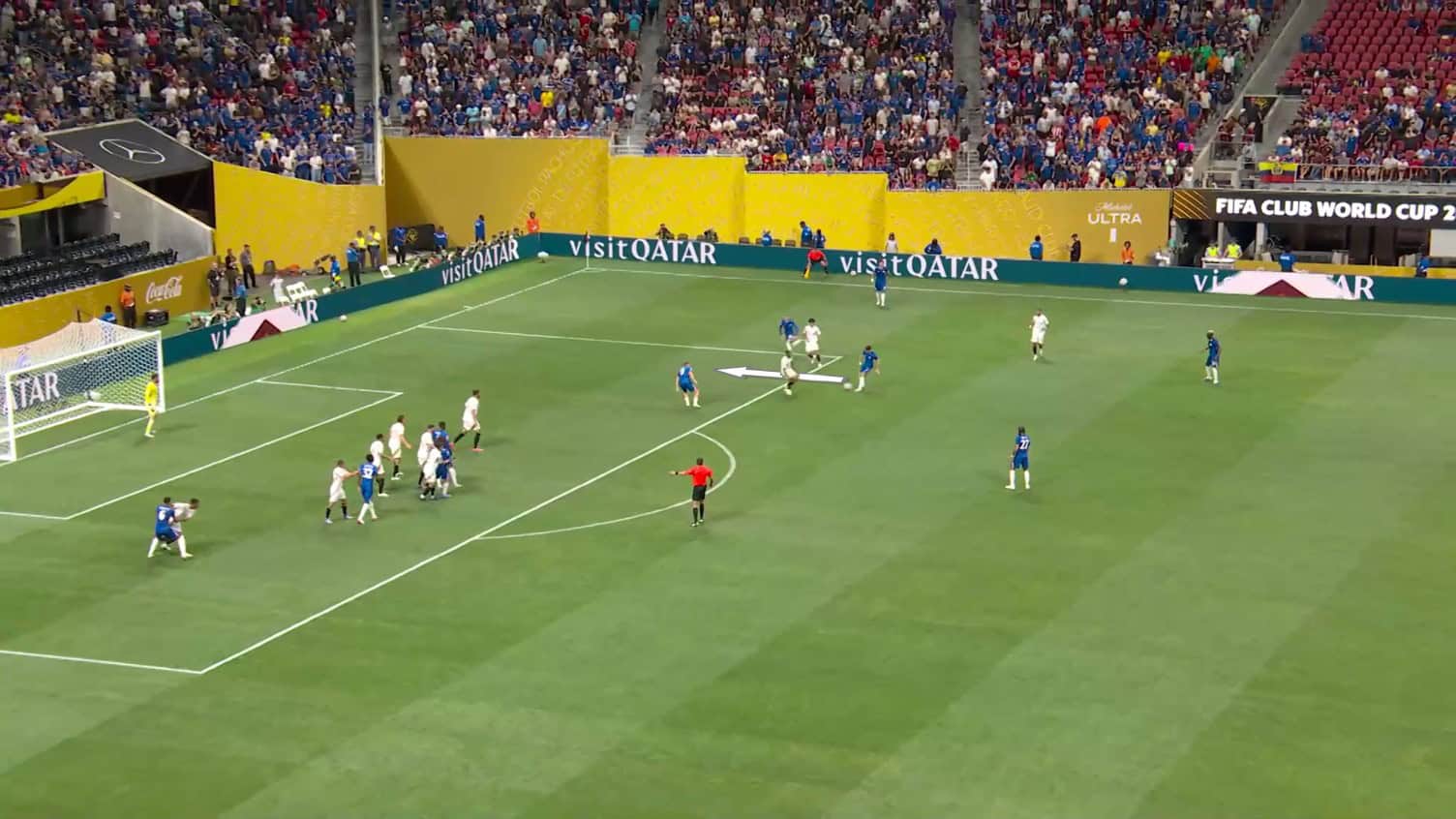
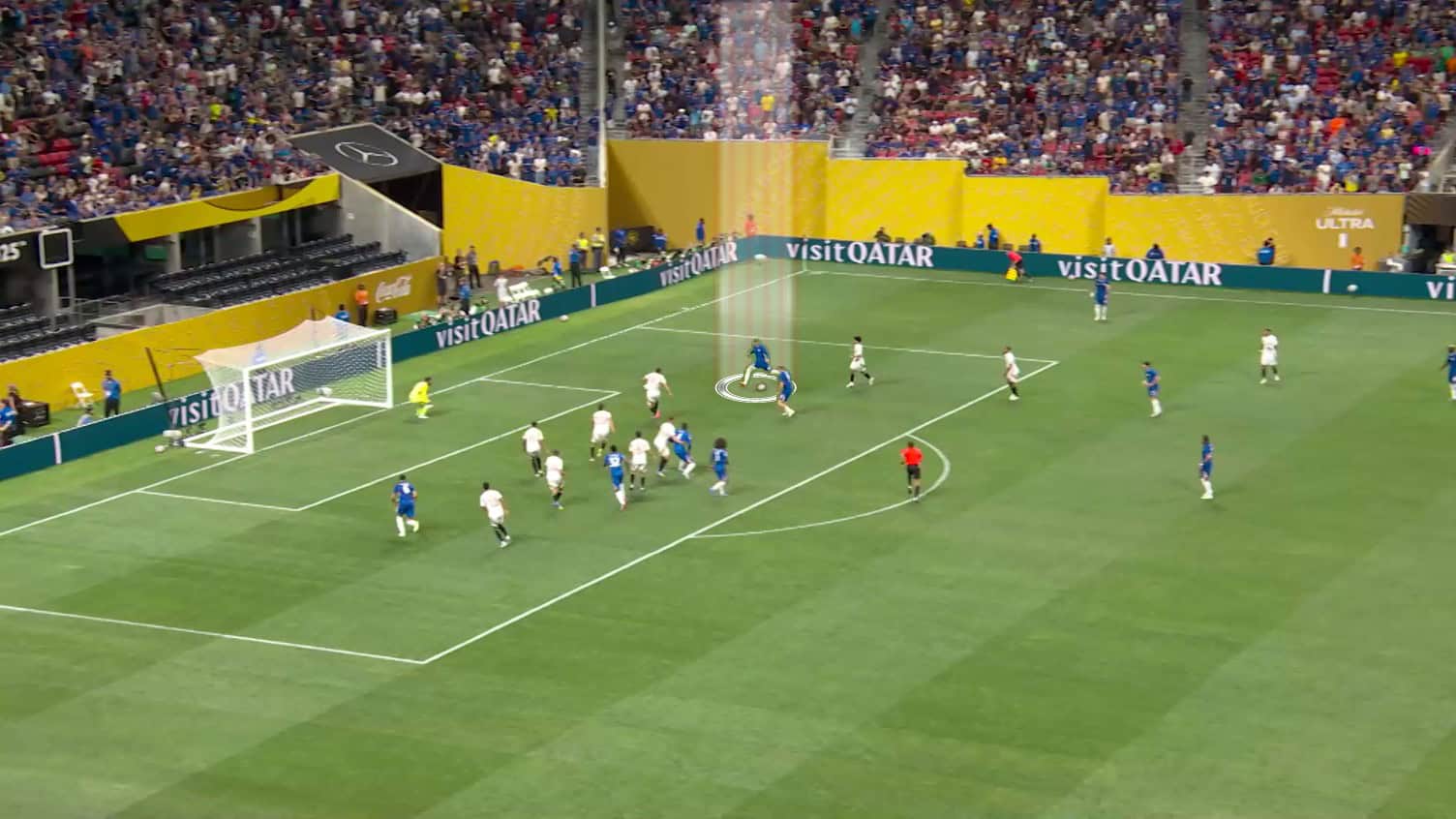
Hence, we can conclude that Chelsea have many solutions to ensure that they have penetrating runs to receive the ball via dangerous passes behind the short-option defenders.
At the same time, they can deal with any opponent trying to close the depth by circulating the ball to both sides, sending a cross, or making rotations to open a gap in this area.
Benfica had a different defensive approach to face them in their Club World Cup Round of 16 clash.
As shown below, they used two short-option defenders (yellow), asking the first zonal defender to push up to help and a rebound player (red).
Chelsea asked the same edge-of-the-box player to go inside the box behind the two short-option defenders (red), as they did in the previous match.
However, Chelsea passed the ball this time to the vertical short-option defender, who passed it back to the taker.
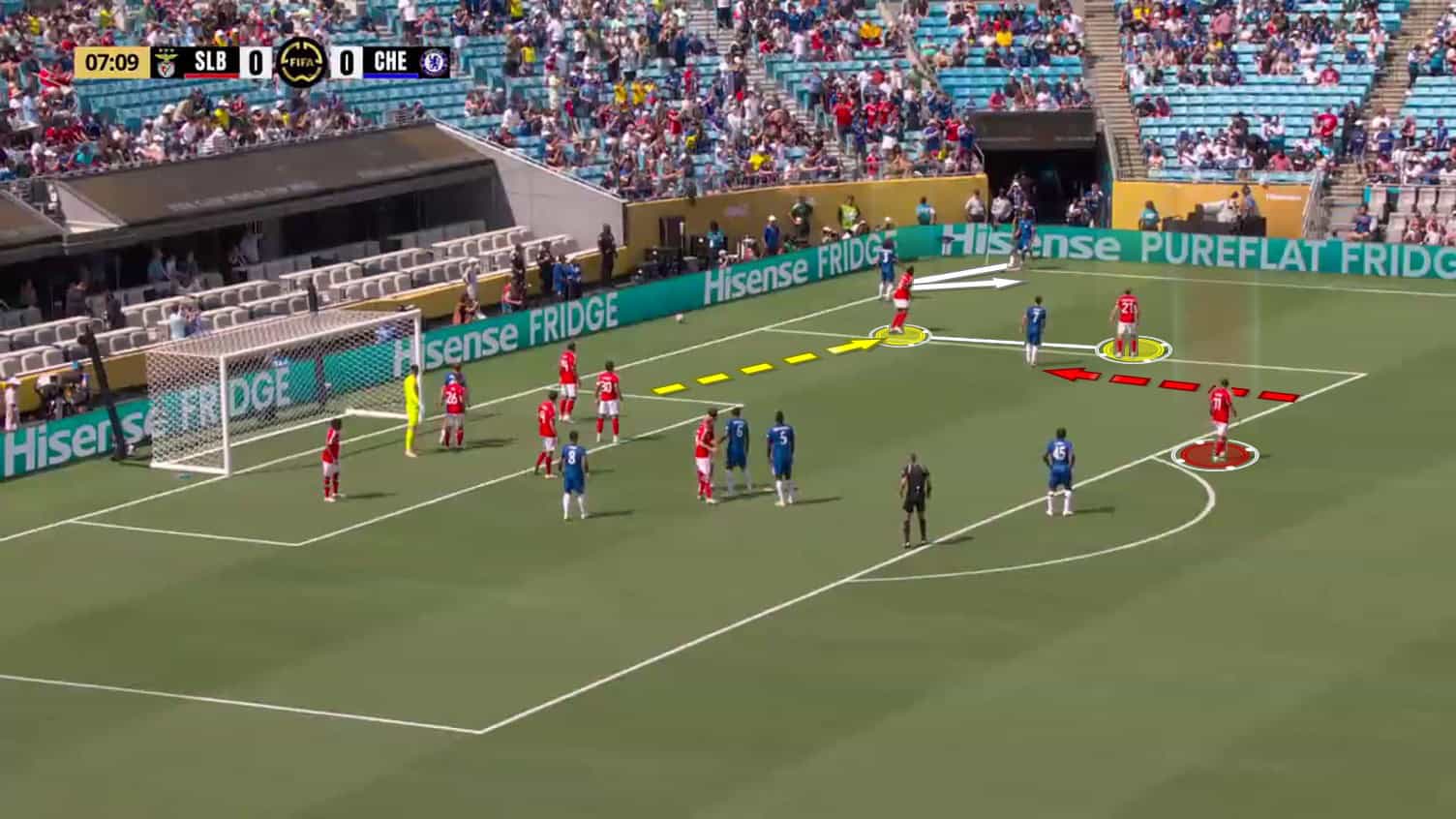
The taker passes the ball to the other short-option attacker, who easily finds a pass to the area they like, as shown below.
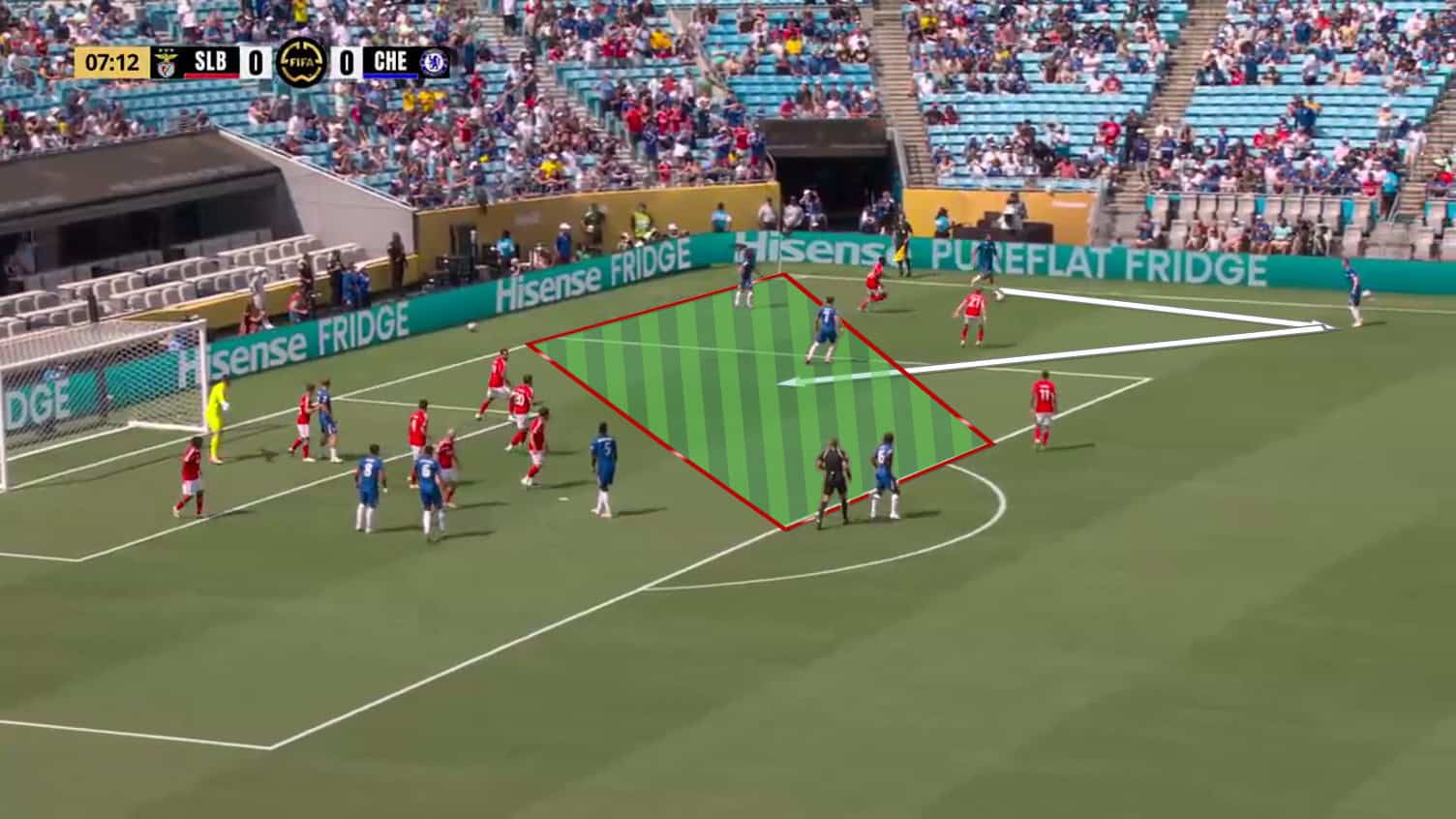
After that, Benfica’s edge-of-the-box player leaves his area to cover behind the two short-option defenders.
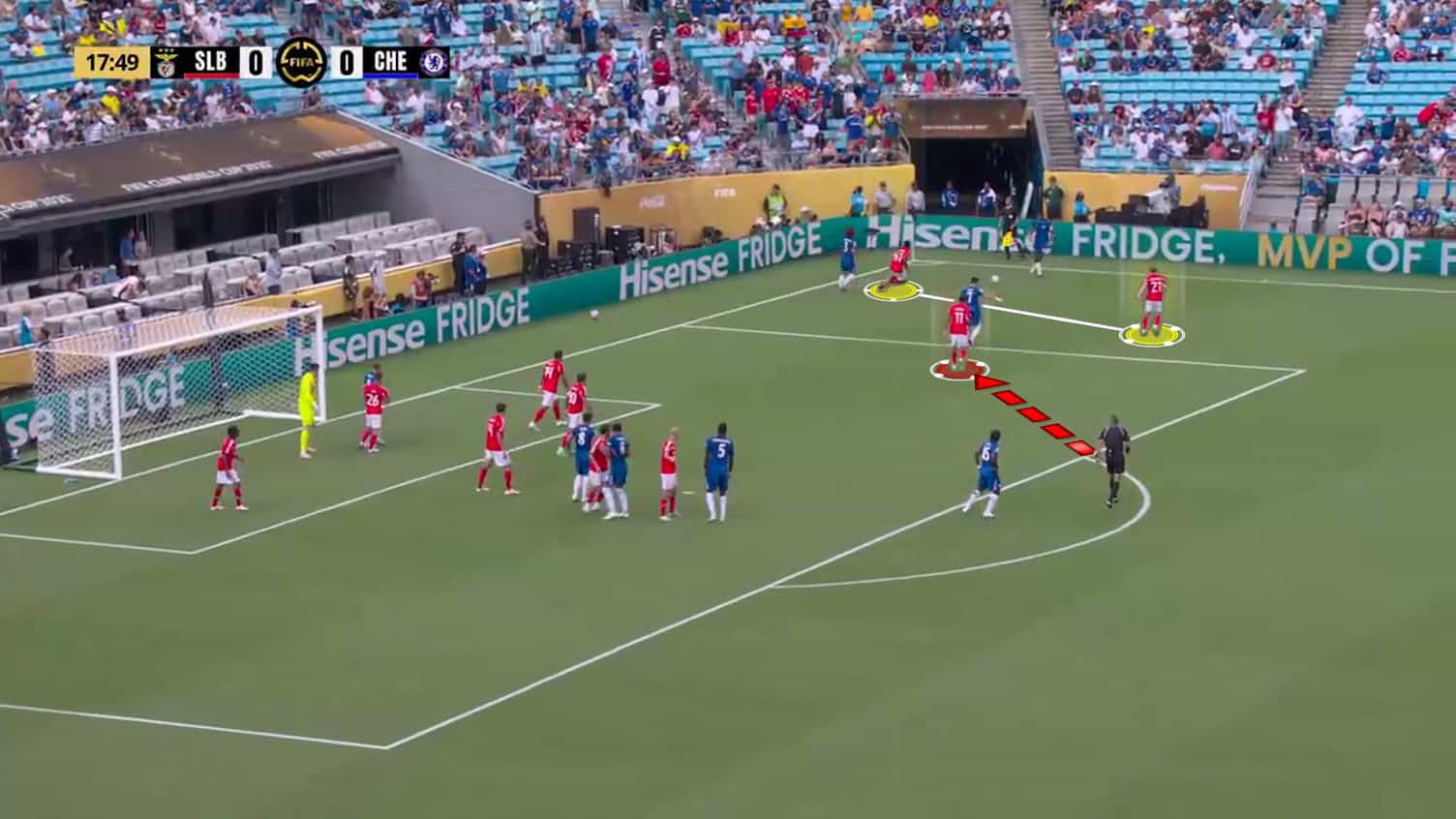
The result is the same as before: Chelsea can rotate the ball now.
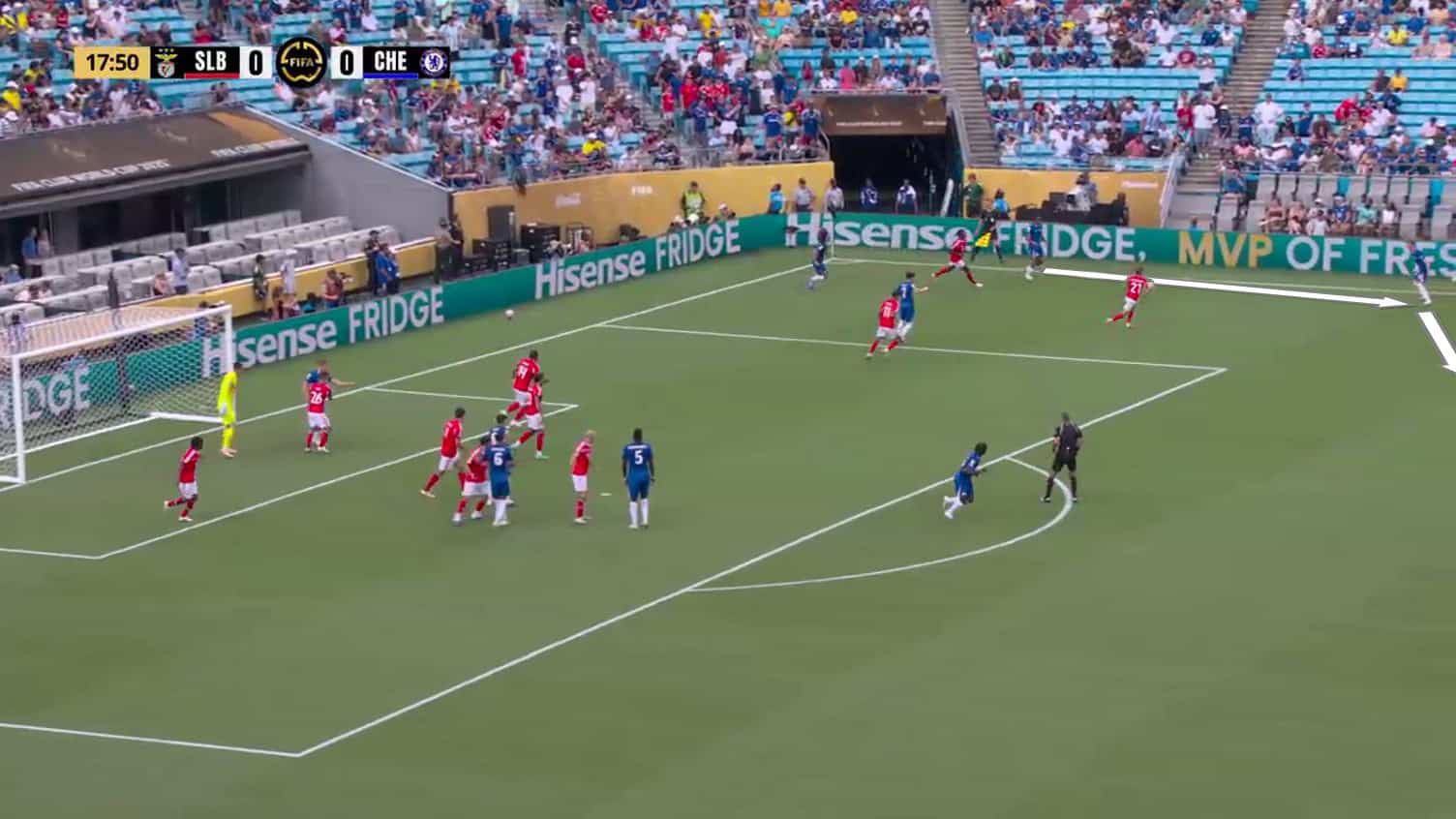
This photo below shows the situation where Benfica are sure that they can close the area behind them, but the ball can easily be passed in both directions until they find a better point from which to send a cross.
Usually, the cross to the far post (the blind side of the defence) is dangerous because the defenders focus on the ball while attackers try to escape from man markers, who sometimes decide to leave the attackers and join the line.
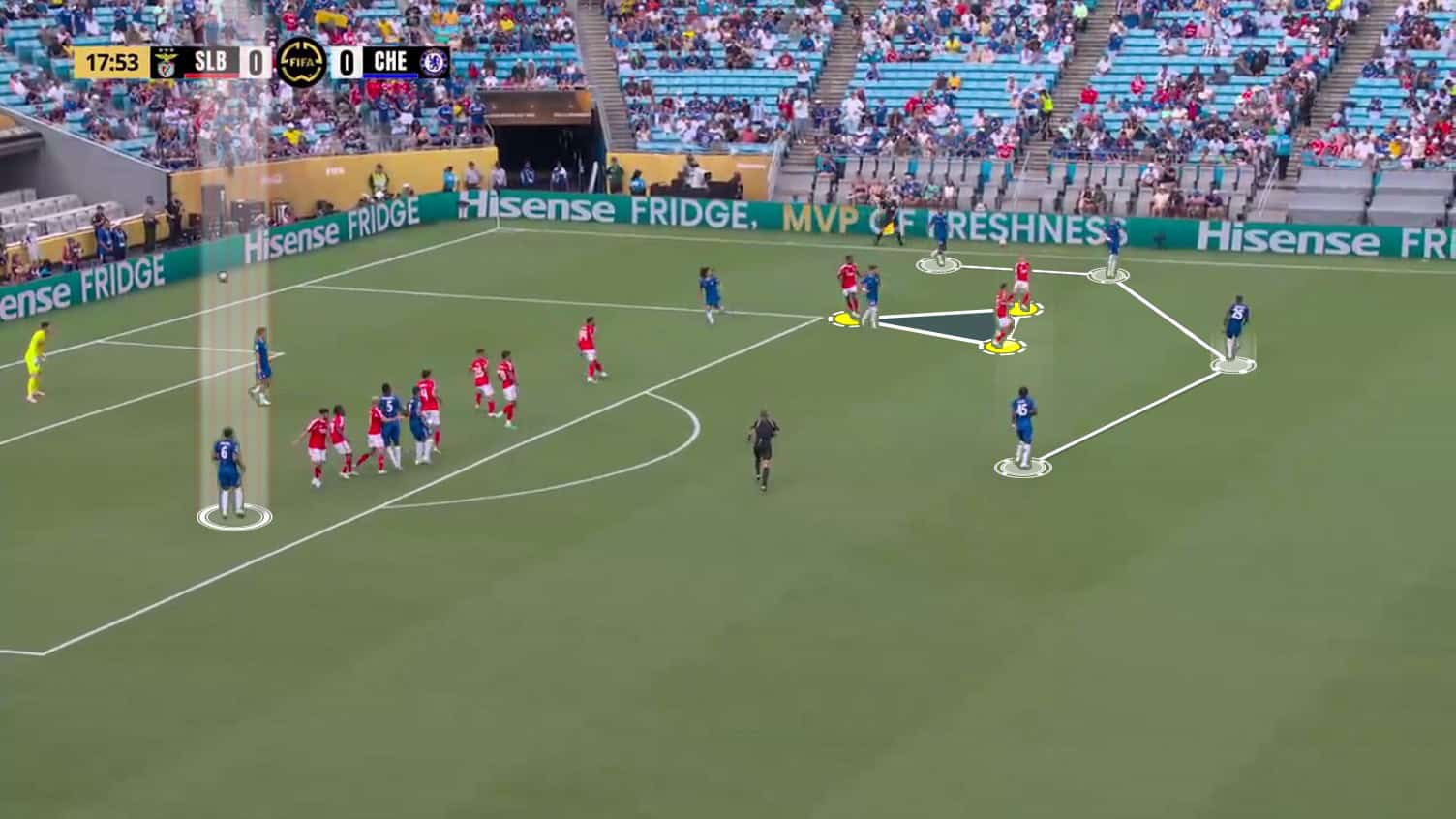
We said that they had two solutions for closing this penetrating area: circulating the ball to send a cross or doing some rotations.
In the photo below, we can find the rotation solution.
After passing the ball to the centre, the taker and the vertical short option try to receive the ball in the same area while the defenders push forward.
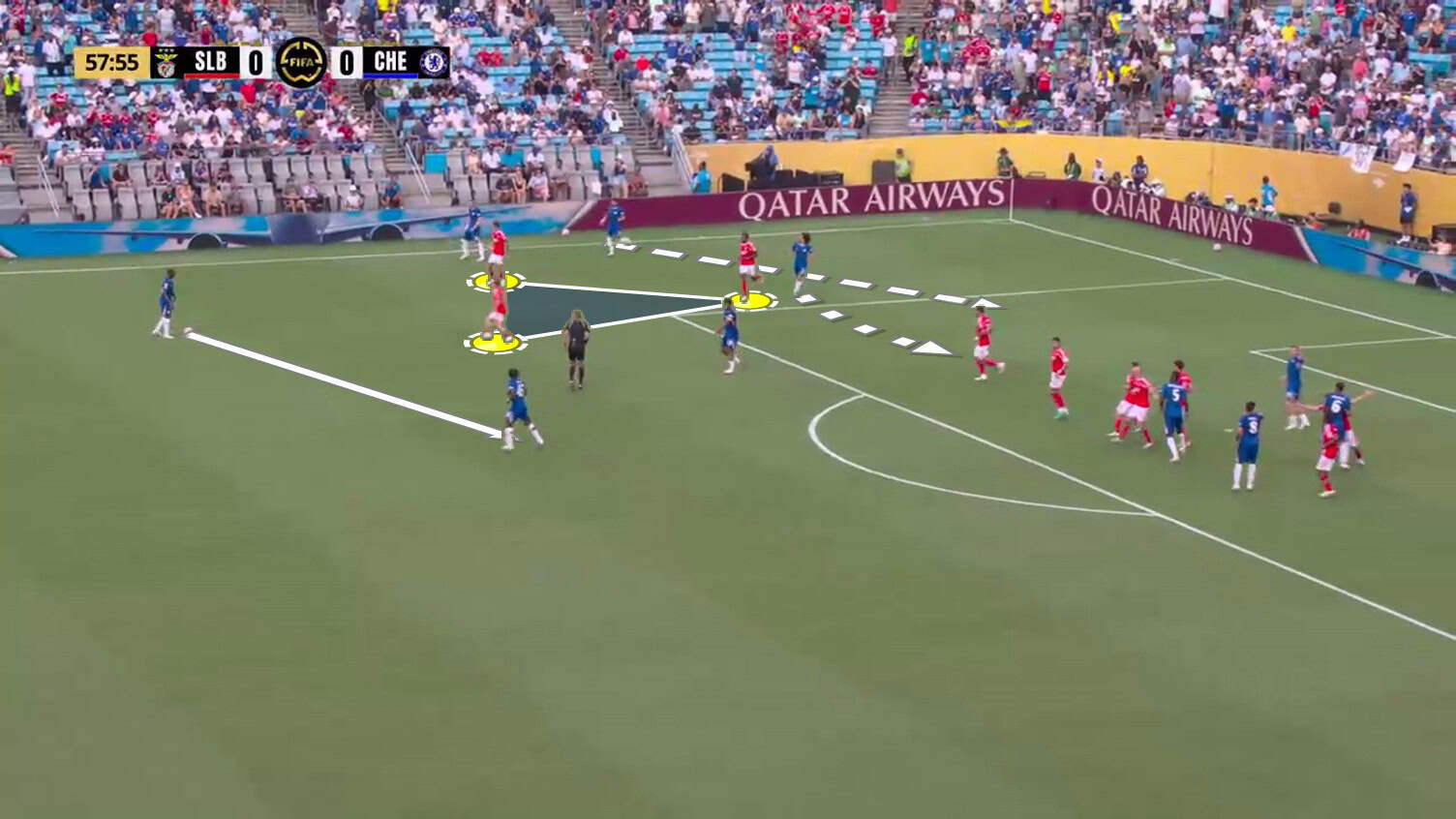
This idea was implemented while the players inside the box were ready to receive a cross, which led to a dangerous chance.
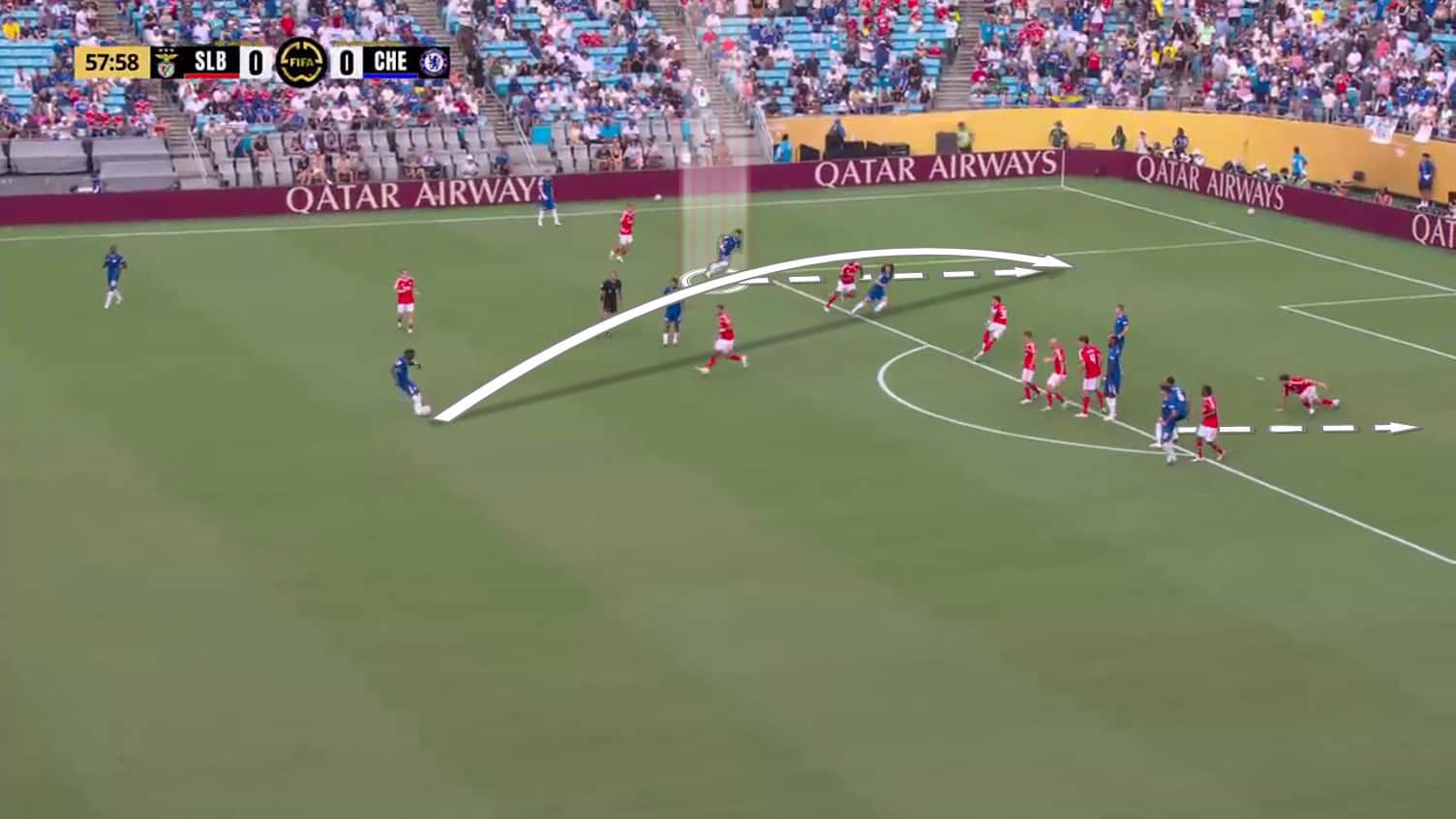
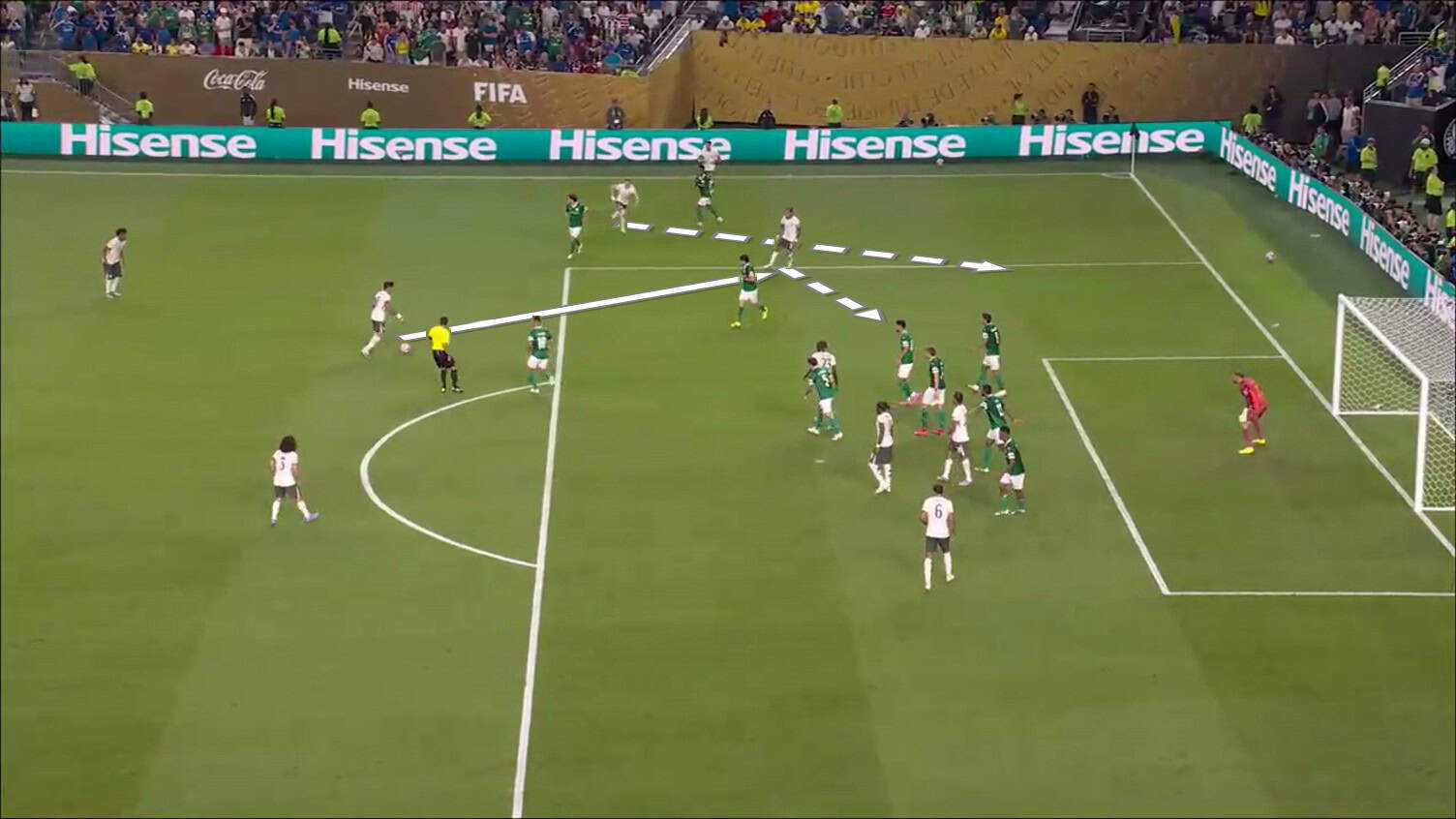
This idea helped them score the winning goal against Palmeiras in the Club World Cup quarter-final, as shown below.
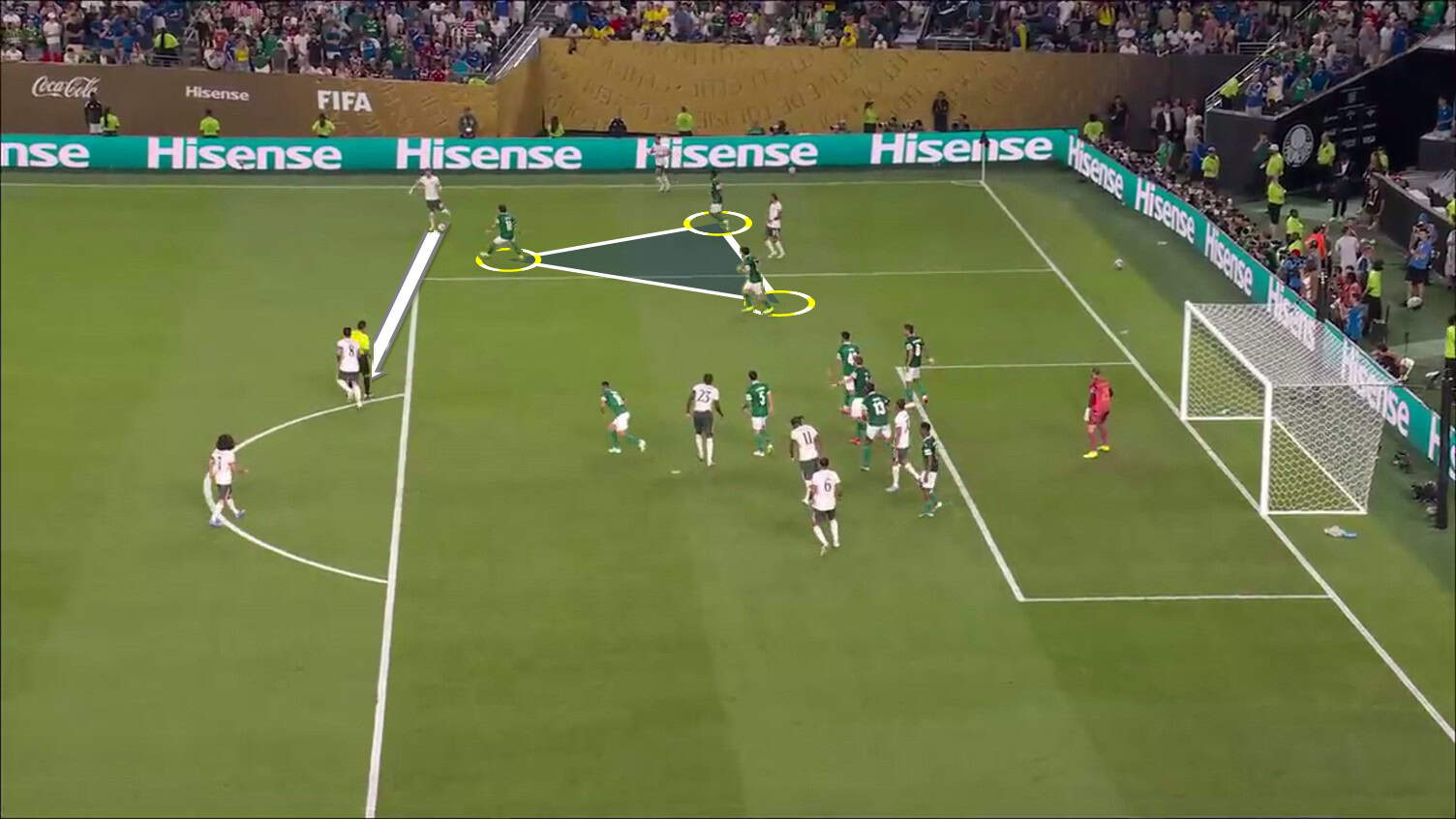
The same two penetrating runs to the defenders’ blind side are shown below.
The result was a goal after the cross hit a defender, leading to an own goal.
PSG Attacking Free-Kicks
The most significant of PSG’s set-piece tactics is targeting João Neves on the far post from attacking wide free kicks, though he isn’t a tall player or famous for good headers.
As shown below against Inter Miami in the Club World Cup Round of 16, João Neves (spotlighted) starts in a weird position where he may appear as a second-ball player, especially since Marquinhos takes the attention of the last zonal defender.
Two offside players play crucial roles: one blocks the last defender to make Neves’ task easier, while the other steps back to draw the second-to-last defender’s attention and then returns to take Marquinhos’ position as a rebound player.
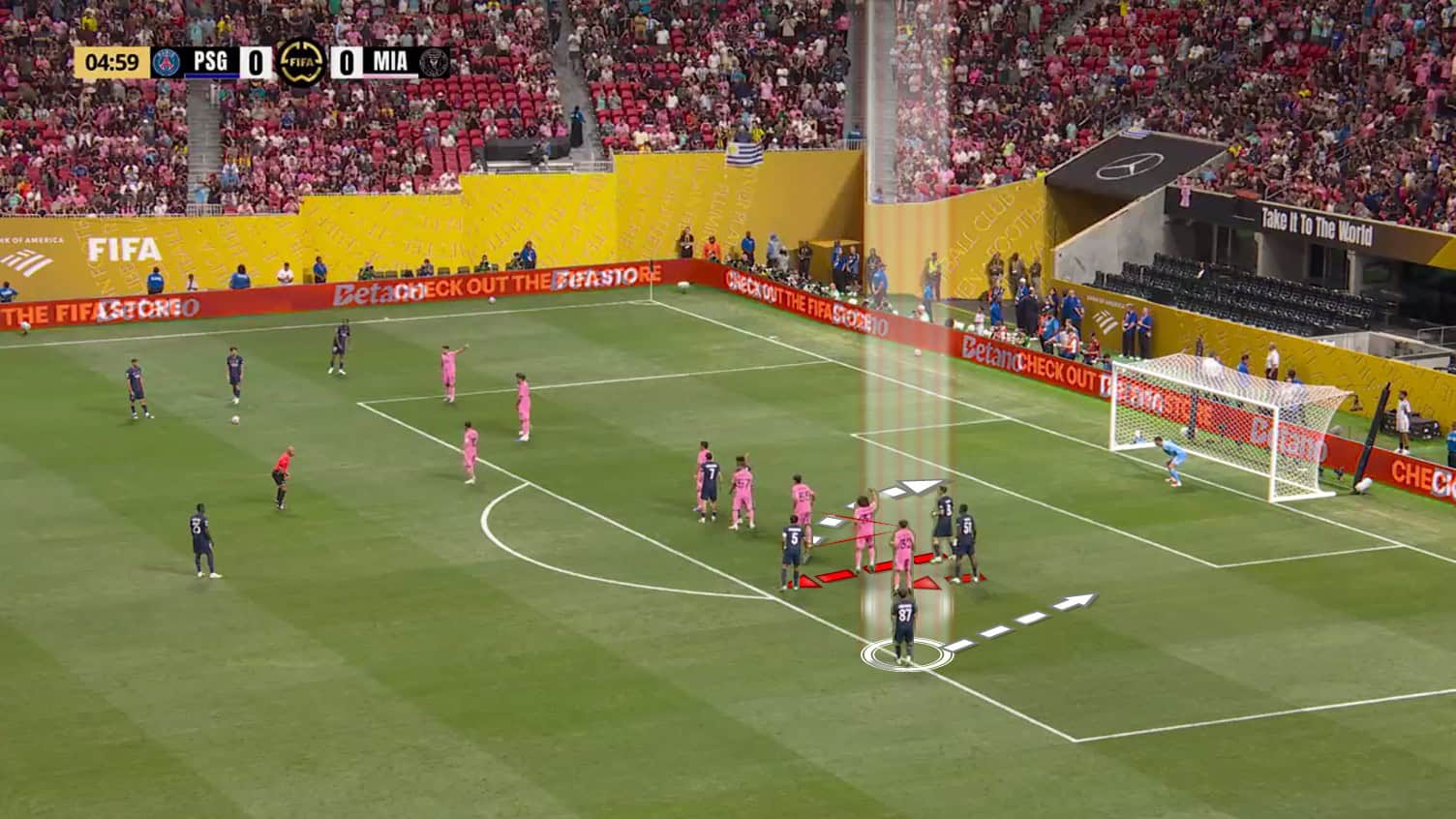
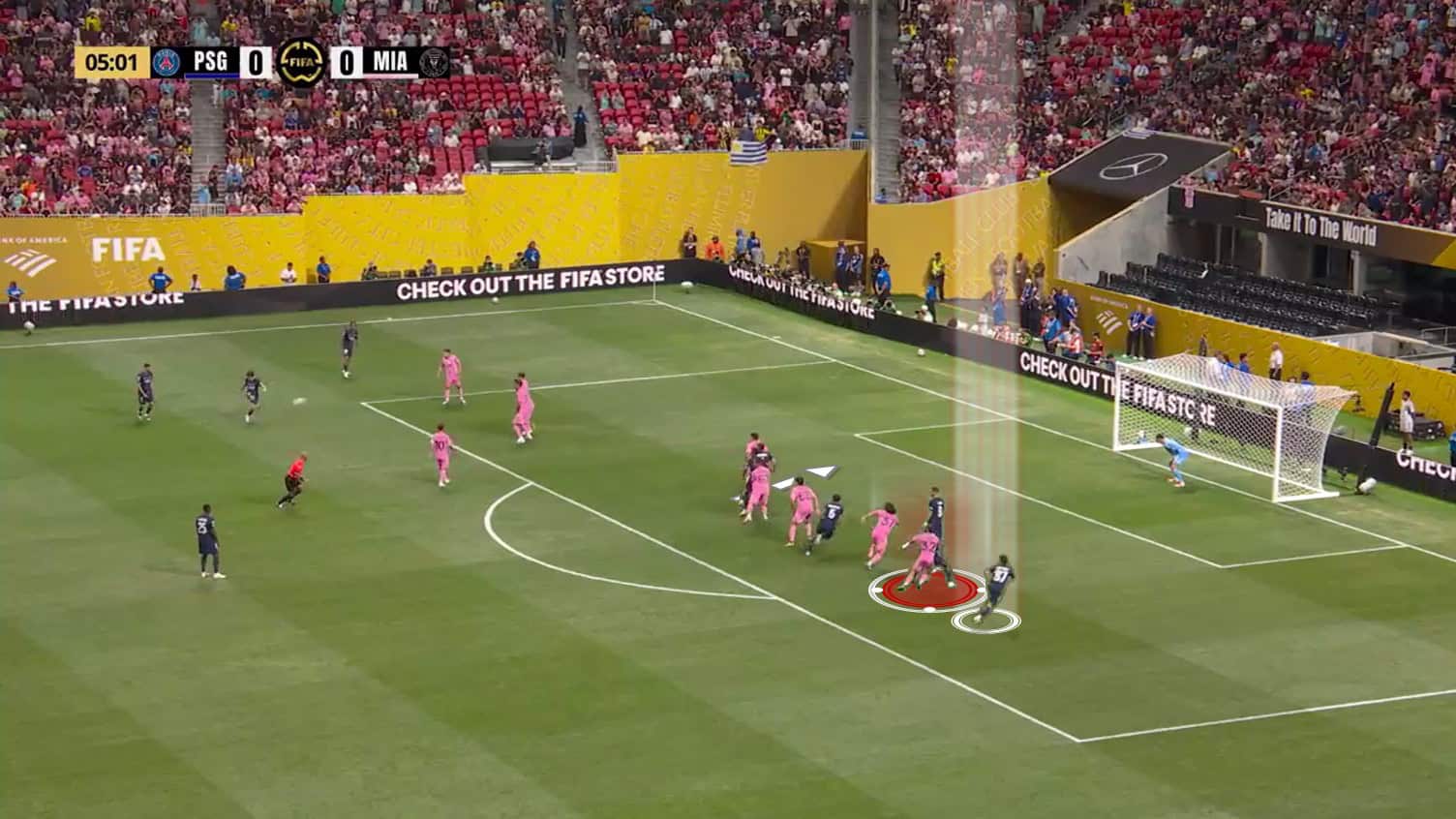
As shown below, the block is clear (red), and the result was a goal.
Here, we should also mention the role of the first attacker who runs to drag the first zonal defender, forcing him to drop earlier to make sure that the running Neves isn’t offside.
This goal wasn’t a coincidence, and we all remember the goal Neves scored in the same way against Manchester City in the UEFA Champions League.
As a counter solution, Arsenal asked the last-line player to stretch the line so that he could see both players (the offside blocker and Neves), allowing him to follow Neves and protect himself from blocking, as shown below.
PSG have the same plan while the other offside player (red) steps back in the same way.
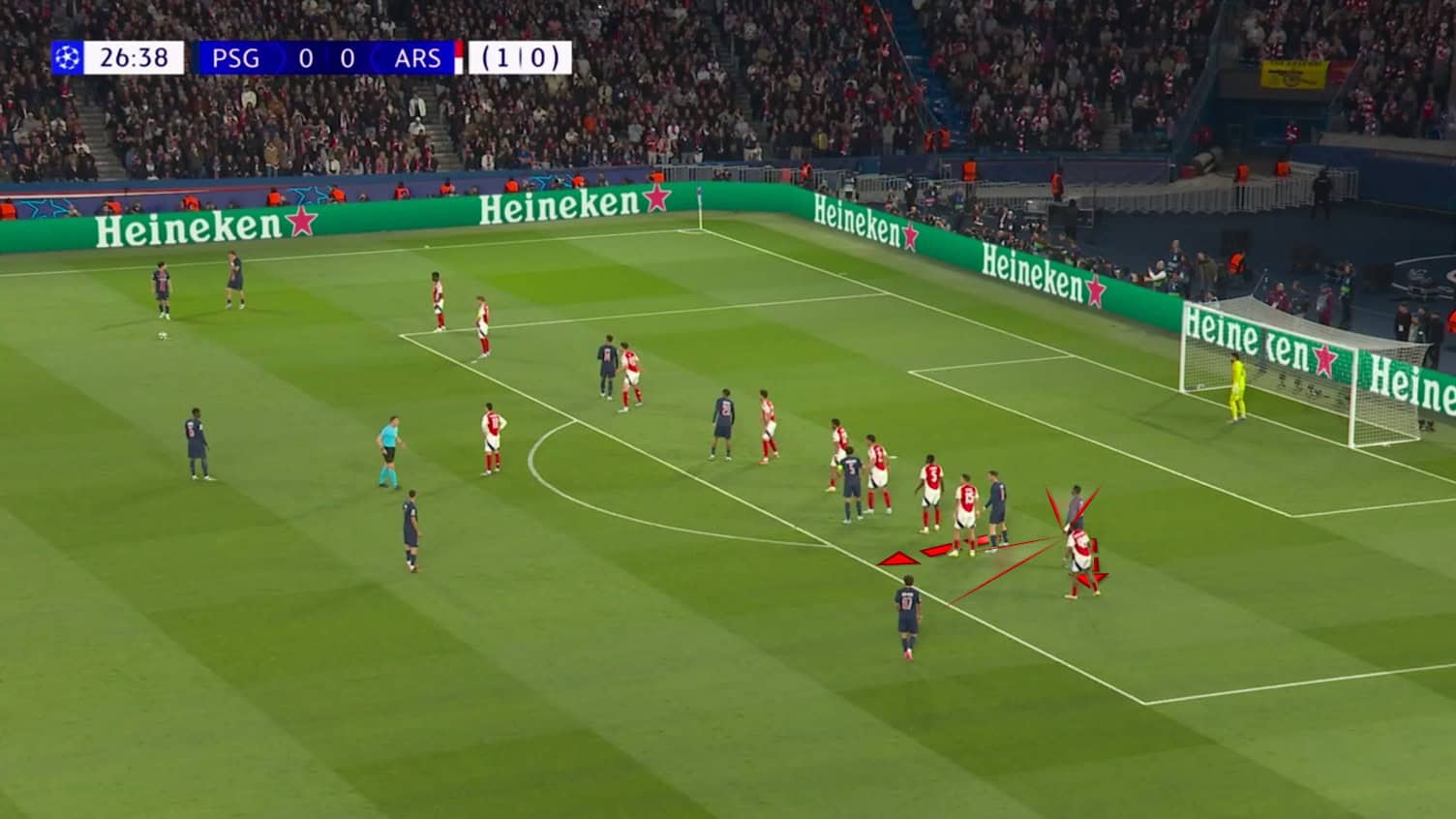
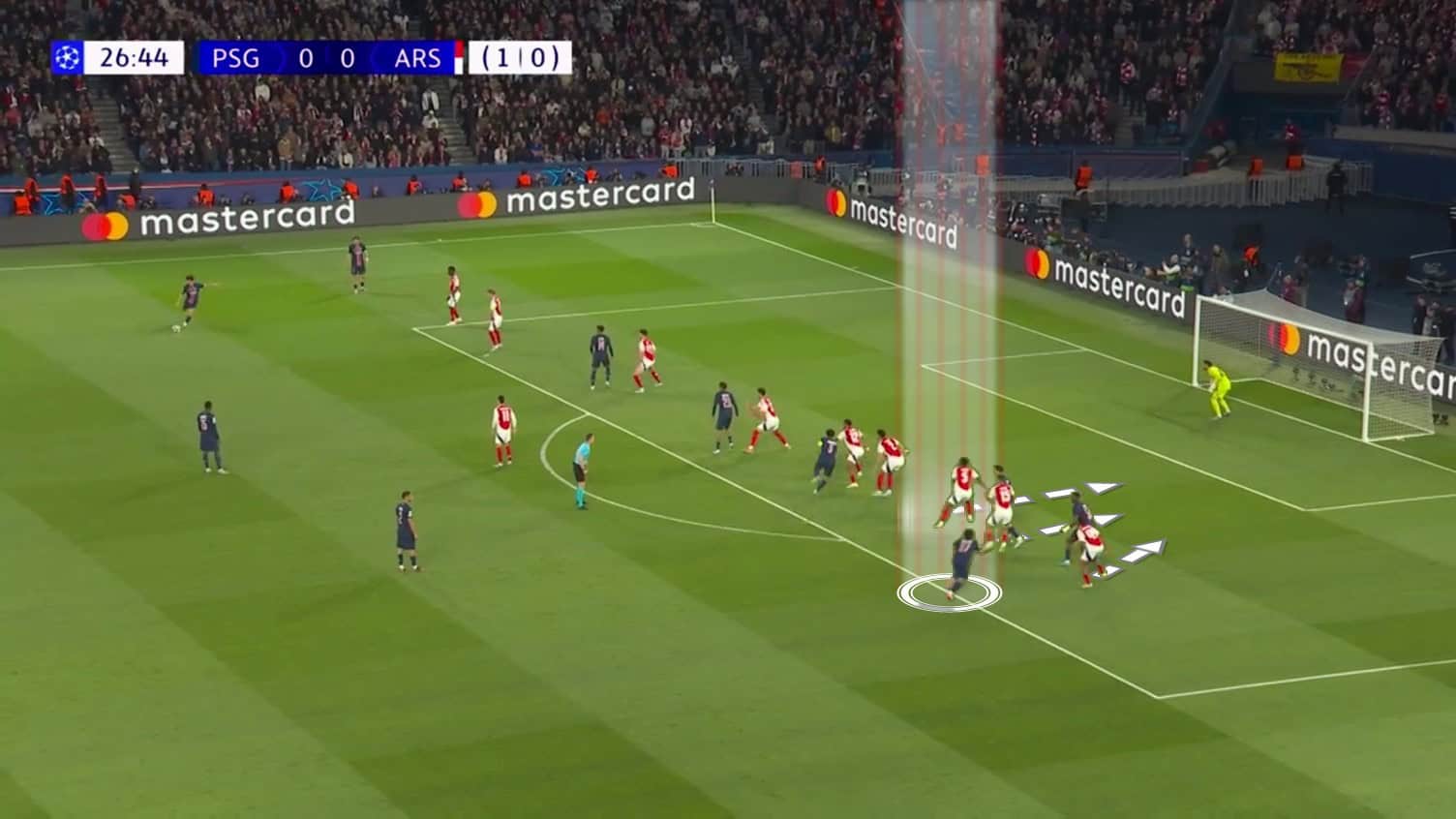
As shown below, the second-to-last defender moves to the offside player, prompting him to continue stepping back.
Meanwhile, the last defender can avoid the block because he has a clear view of the situation.
Arsenal also asked the third-last defender to retreat diagonally to help them, and he was the player who actually cleared the ball.
However, Chelsea should be aware of the second ball because the second offside player, who retreated as a rebound player, got the second ball and shot the ball into the net, scoring an important goal for PSG.
Conclusion
In this analysis, we have dissected the most commonly used tactics for both sides in the 2025 FIFA Club World Cup Final, Chelsea vs PSG.
In this set-piece analysis, we discovered that set pieces could be crucial in the FIFA Club World Cup Final because each side has attacking strengths.