
According to the latest Serie A transfer news, Croatian international midfielder Luka Modrić is reportedly set to sign for AC Milan at the age of 39.
Modrić will, therefore, be closing the longest chapter of his footballing career by swapping Real Madrid and Estadio Santiago Bernabeu for I Rossoneri and San Siro.
It is no secret that Modrić became one of Real Madrid’s best midfielders during his 13 years at the club.
He succeeded in winning everything possible with them and produced some outstanding midfield performances.
However, after this long period of success, it was crucial to know when to step back for a new challenge.
The confidence and determination to continue playing at the highest level deserve praise, as they highlight the player’s consistency, professionalism, and motivation to make significant contributions to football, even at the age of 39.
Many consider that such a move could be risky for Milan due to Modrić’s age.
Nevertheless, Milan are believed to urgently need someone like Modrić, who can organise their midfield and use his expertise to benefit the team.
This tactical analysis and scout report will examine Modrić’s recent form, playmaking, and goalscoring to assess how he can still contribute to Milan’s success.
The analysis will also shed light on Modrić’s possible roles within AC Milan tactics and where Massimiliano Allegri can use him in his lineup.
Luka Modrić Positions & Possible Roles At AC Milan
Modrić’s career started early in Croatia when he was 16 years old.
He joined Dinamo Zagreb and played for them until 2008, with two loans to Zrinjski Mostar and Inter Zaprešić.
His remarkable impact at Dinamo Zagreb attracted the interest of the Premier League’s Tottenham Hotspur, who signed him in 2008.
Even though Modrić had a hard time integrating Tottenham’s starting lineup and getting accustomed to their playing style at first, he quickly became a key player for Spurs, playing as a central midfielder and sometimes as a playmaker.
He was capable of silencing all the voices who criticised him while basing their arguments on his height and lack of physical strength.
As the years went by, he succeeded in demonstrating and confirming that he is a powerful midfielder who can withstand physical pressure and is very tough to beat in duels, even when using physical tactics.
Additionally, his intelligence, vision, passing skills, dribbling, and body feints mastery and ability to anticipate opponents’ next moves made it obvious to everyone that Modrić is one of the best midfielders on the footballing scene.
In 2012, Modrić moved to Real Madrid, where he won everything possible and established an even broader reputation as one of the most entertaining midfielders of all time.
His ability to adapt to numerous roles and positions is genuinely outstanding.
Under the management of numerous managers, Modrić was able to assume various roles, including deep-lying midfielder, central midfielder, right or left midfielder, and advanced playmaker.
Luka Modrić Heat Map & Positions Graphic
Although the following positional graphic indicates that Modrić has been playing predominantly as a right central midfielder recently, it would be unfair to state that Modrić cannot be at his best when playing in another midfield position.
He proved on numerous occasions that he can give more than 100% in each midfield position.
Limiting his traits to a defensive midfield position would be unfair for a player with Modrić’s playmaking and attacking talent.

The current Milan squad is remarkably lacking in quality midfielders, and Modrić will represent the solution to this lack of creativity and key passing failure, especially following the expected departure of Tijjani Reijnders to Manchester City as of this writing.
Reijnders was Milan’s most creative midfielder in 2024/2025.
Modrić will likely replace him in his absence with obviously more accurate and dangerous passes, yet with fewer progressive runs.
Allegri should, therefore, be very attentive to how to use Modrić in the most efficient way and not give him the exact same instructions given to Reijnders because the two players have different traits.
At the same time, it will be interesting to see Modrić play alongside Youssouf Fofana and form a central midfield duo, as both players complement each other well.
That idea would obviously avoid instructing Modrić to defend a lot, as Fofana will be there to cover.
That would also give Modrić a bit more freedom to advance and be more dangerous inside the final third, where he can be extremely central to Milan’s attacks.
In the build-up phase, the team can also rely on Modrić to receive the ball under pressure, evade marking, and execute intelligent vertical passes to advance and move away from the danger zone, thereby initiating a new attack.
It is sufficient to note that Modrić’s passing accuracy rate reached 91.2% this season, indicating that he remains very reliable in this regard.
Moreover, Modrić is still reliable when it comes to shooting from distance and scoring important goals, in addition to being a set-piece specialist, and that would help Milan a lot, especially during this transitional phase.
Building on the quality of Modrić to get out of the team’s current bad period is a wise idea, even though the player is old.
This idea is good enough not only because Modrić is a world-class midfielder but also because Milan will only play Serie A games without participating in European competitions.
This means that a player like Modrić will have significantly more time to rest than before; therefore, he is likely to be able to start most of the season’s games.
Luka Modrić Playmaking Mastery
Modrić provided nine assists and scored four goals last season, and the number of assists could have been higher if more of his key passes had been received better.
Modrić’s passing accuracy has always been exceptional, and such qualities do not decrease with age but actually improve if the player remains fit, as Modrić does.
The fact that Modrić provides 86.2% accurate passes to the final third highlights his exceptional passing skills, as that rate is quite rare for passes to the final third, even at the highest level.
Moreover, Modrić’s long-passing accuracy rate of 78.2% at the age of 39 proves that Modrić is among the best long-passing players at the moment.
Luka Modrić Through-Pass Assist
The following assist highlights Modrić’s vision and his ability to spot his teammates even before receiving the ball, which enables him to time the pass perfectly.
Furthermore, the finesse with which he provides these passes makes it much easier for strikers to deal with the ball and finish without thinking about how to control it in the best possible way, as such passes do not require a lot of effort to control.
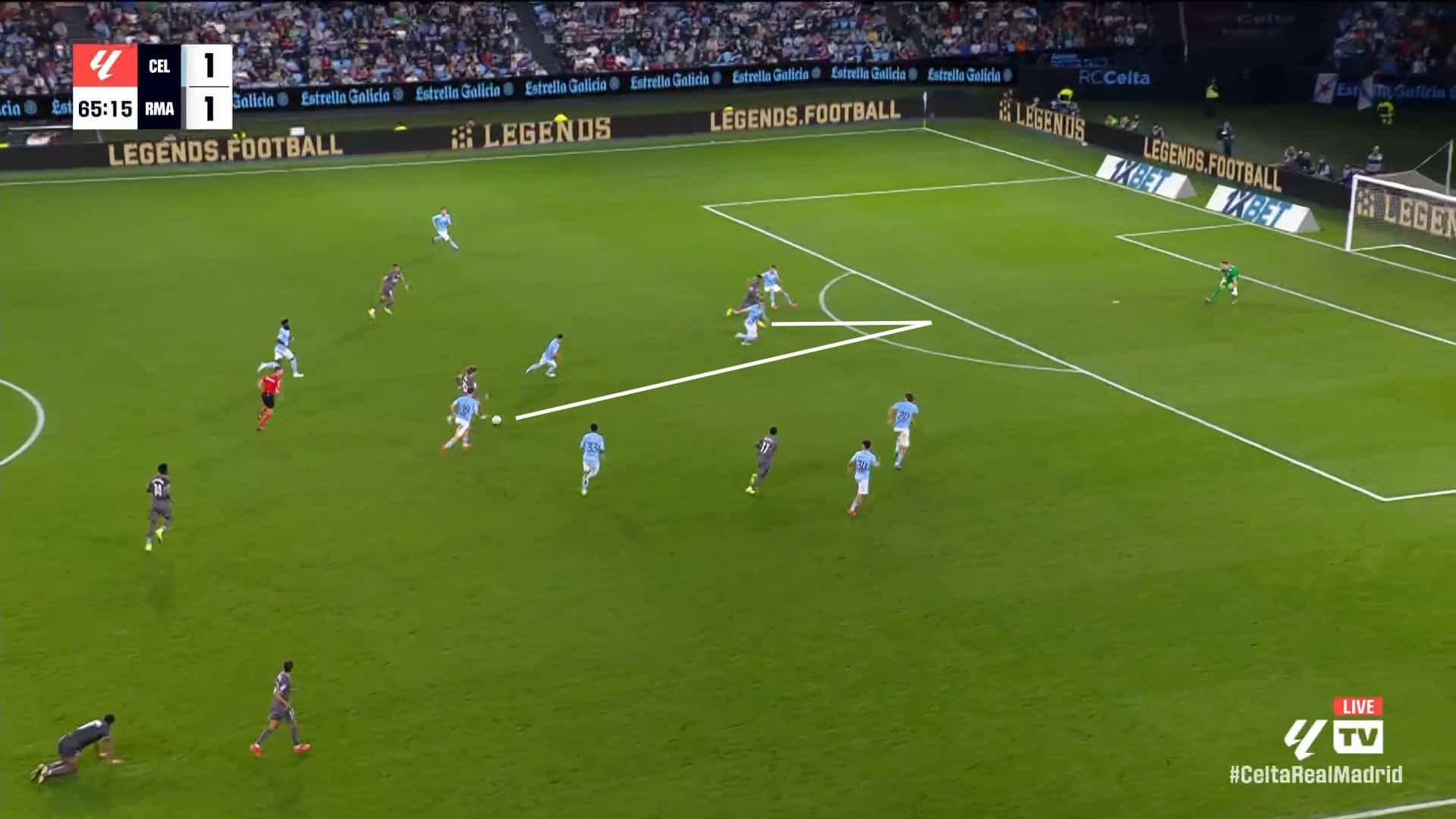
At the same time, Modrić’s key passing abilities can be beneficial for the team’s wingers, notably Rafael Leão and Christian Pulisic, who can benefit greatly from Modrić’s passes to create the danger needed.
Modrić played alongside key wingers previously and was always their best provider of key passes and assists, as he knows exactly how and when to provide such passes in a way that helps them cut inside at the right time, while also getting rid of at least one or two defenders thanks to his pass.
Luka Modrić Through Passes To The Wings
This assist to Vinícius Júnior highlights Modrić’s ability to break defensive lines and put the wingers in the best possible situations to penetrate towards the box and be as dangerous as possible.
These valuable passes are much needed in Milan, as the team has often suffered from a lack of key passing in the final third, which has contributed to the limited number of solutions in that key area.
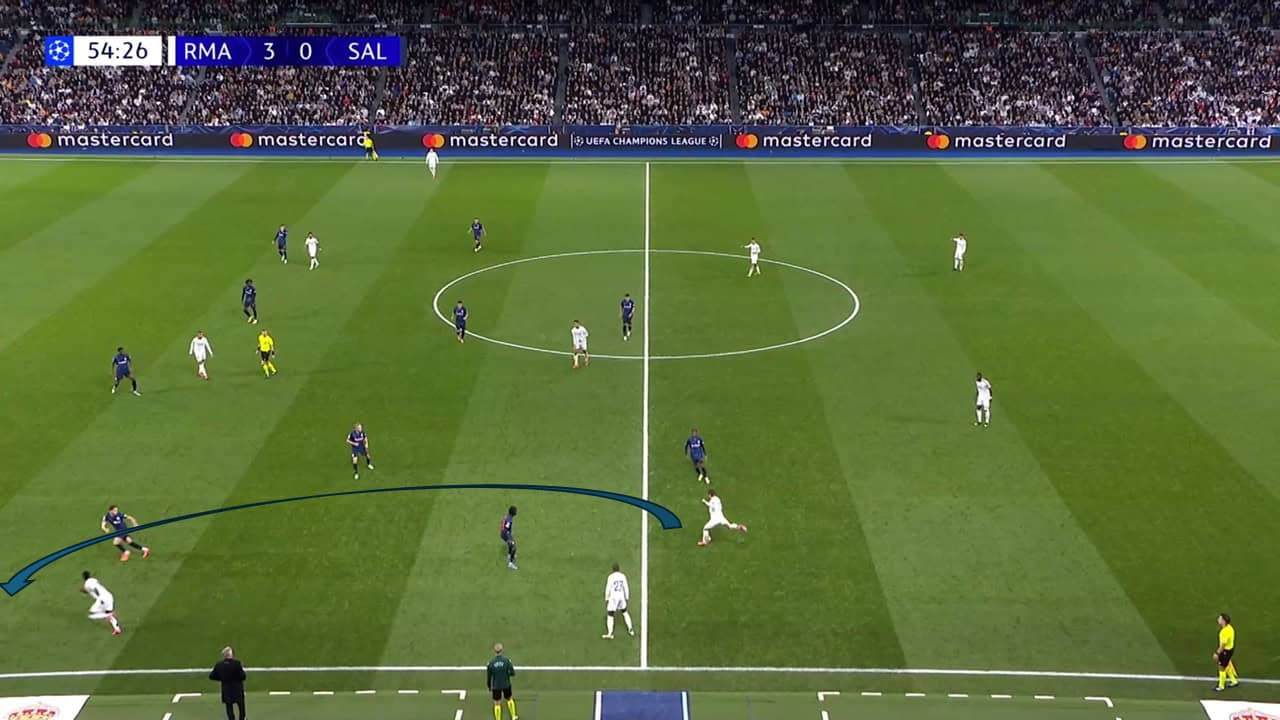
The presence of an experienced and talented passer like Modrić will definitely help solve such a problem.
More importantly, the unpredictability that a player like Modrić can propose with Milan will surely help surprise many defences.
Modrić can be very unpredictable in many situations, especially when using his landmark exterior part of the foot passes to provide key passes.
Luka Modrić Shooting Talent
Even at the age of 39, Modrić still succeeds in scoring outstanding goals from distance, whether for Real Madrid or Croatia.
This finishing mastery can be very valuable for a team like Milan, which lacks a goalscoring midfielder, especially with the departure of Reijnders.
Being the first to win second balls and handling them in the best possible way definitely represents a valuable addition to Milan.
Luka Modrić Shooting From Distance
Moreover, the element of surprise would surely favour Modrić against defences and goalkeepers as Serie A teams are not yet accustomed to his shooting style.
The following shot from distance is one of many scored by Modrić throughout his career.
He relied on power and accuracy to confuse goalkeepers.
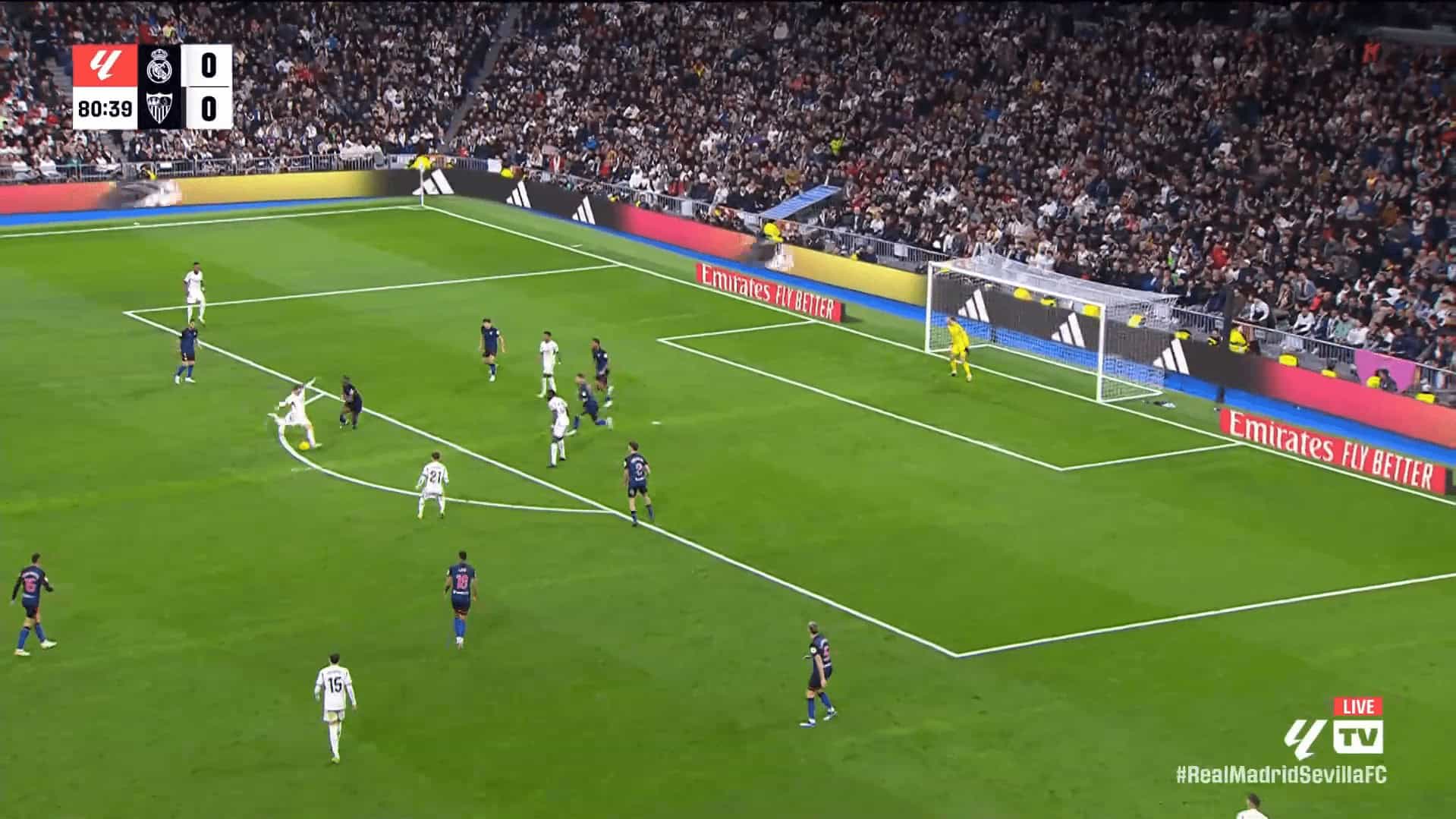
Furthermore, predicting the Croatian international’s shooting trajectory will be very complicated, mainly because he is intelligent enough to use various shooting styles on each occasion.
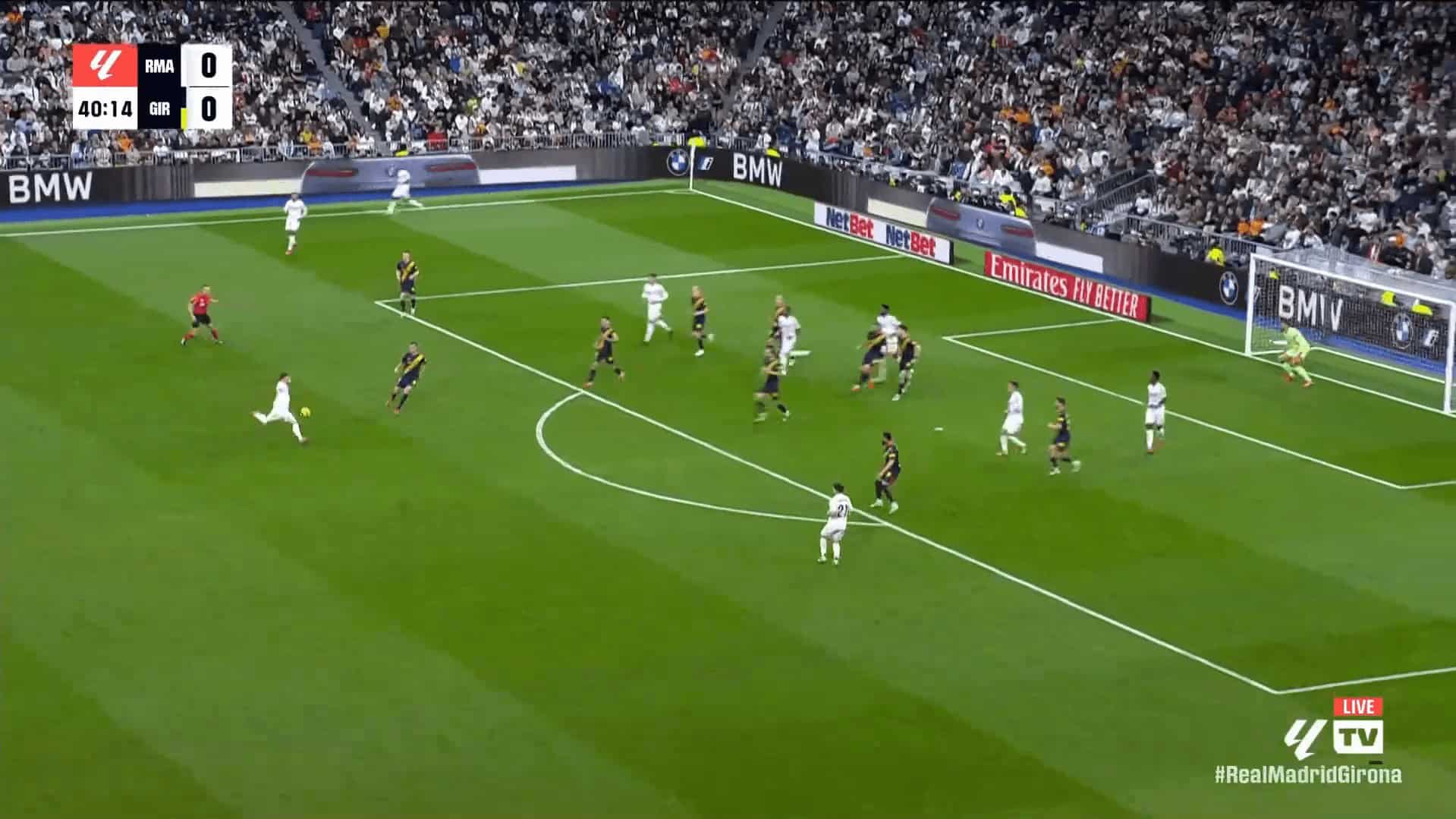
Luka Modrić Half-Volleys
Whether shooting after controlling the ball or using a first-time shot, he rarely shoots off target and usually succeeds in creating the needed danger.
This example highlights the variety of his shooting abilities, as evidenced by his success in scoring a half-volley that no one predicted would have such a trajectory.
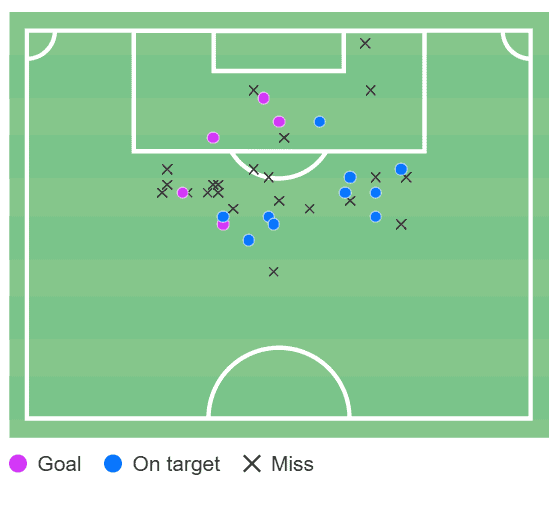
According to his statistics from last season, Modrić shoots more from outside the box than from inside the box, with a high number of shots on target per match when attempting shots from outside the box, as shown in the following graphic.
Luka Modrić Shooting Averages
Allegri needs to work with Modrić and the team to create suitable goal-scoring situations for Modrić, as having the ball in that area (near the edge of the box) helps him find the back of the net.
Conclusion
Modrić will surely be a huge asset to Allegri’s Milan, especially for the upcoming transitional season, when the team will need to regain its competitiveness for the top four spots following this season’s disappointing performance.
The playmaking and goalscoring abilities of Modrić can surely upgrade Milan’s attacking plans and strategies.
Utilising him intelligently and monitoring his playing time to avoid fatigue will be crucial in determining his impact on the Rossoneri next season.
