
In the high-stakes tactical laboratory of the 2025/2026 Bundesliga season, few narratives have been as compelling as the emergence of Karim Coulibaly at SV Werder Bremen.
At just 18 years of age, the left-footed centre-back has transitioned from a high-potential academy graduate into a fundamental pillar of Daniel Thioune’s defensive architecture.
It is a rise that has not gone unnoticed by the continent’s elite; scouts from Paris Saint-Germain and Chelsea have become permanent fixtures at the Weserstadion, with reports from Bild and Deichstube suggesting that Luis Enrique has placed the young German-Ivorian at the top of his summer shortlist for Les Parisiens.
For Chelsea, Coulibaly represents the quintessential modern defensive profile: a ball-playing specialist capable of anchoring a long-term project at Stamford Bridge and potentially filling the void left by Levi Colwill‘s long-term injury.
The intrigue surrounding Karim Coulibaly stems from the scarcity of his profile.
Elite-level left-footed centre-backs are the unicorns of the transfer market, serving as the essential building blocks for teams intent on building from the back.
Werder, currently navigating the treacherous waters of a transitional season under Thioune, have found in Karim Coulibaly a player who possesses the composure of a veteran and the technical ceiling of a world-class playmaker.
While a €35m-€40m price tag has been mooted, a figure that would shatter Werder’s transfer record, the reality is that for clubs like PSG and Chelsea, such an investment is a strategic necessity.
This Karim Coulibaly player analysis and scout report will dissect the specific tactical components that have made Karim Coulibaly the most sought-after young defender in Germany: his elite line-breaking passing, his sophisticated management of a high defensive line, and the physical dominance he exerts in the penalty area.
We are witnessing the birth of a defensive conductor whose game is as much about the mind as it is about the muscle.
The Left-Footed Architect: Playing Through The Lines
The primary reason Luis Enrique and other possession-oriented thinkers are enamoured with Karim Coulibaly is his ability to bypass the first two lines of an opponent’s press with a single stroke of his left foot.
In Daniel Thioune’s system, Werder often build in a staggered 4-2 or a flexible 3-4-2-1 structure, and Coulibaly is the designated trigger.
He does not merely recycle possession; he actively manipulates the opposition’s defensive block.
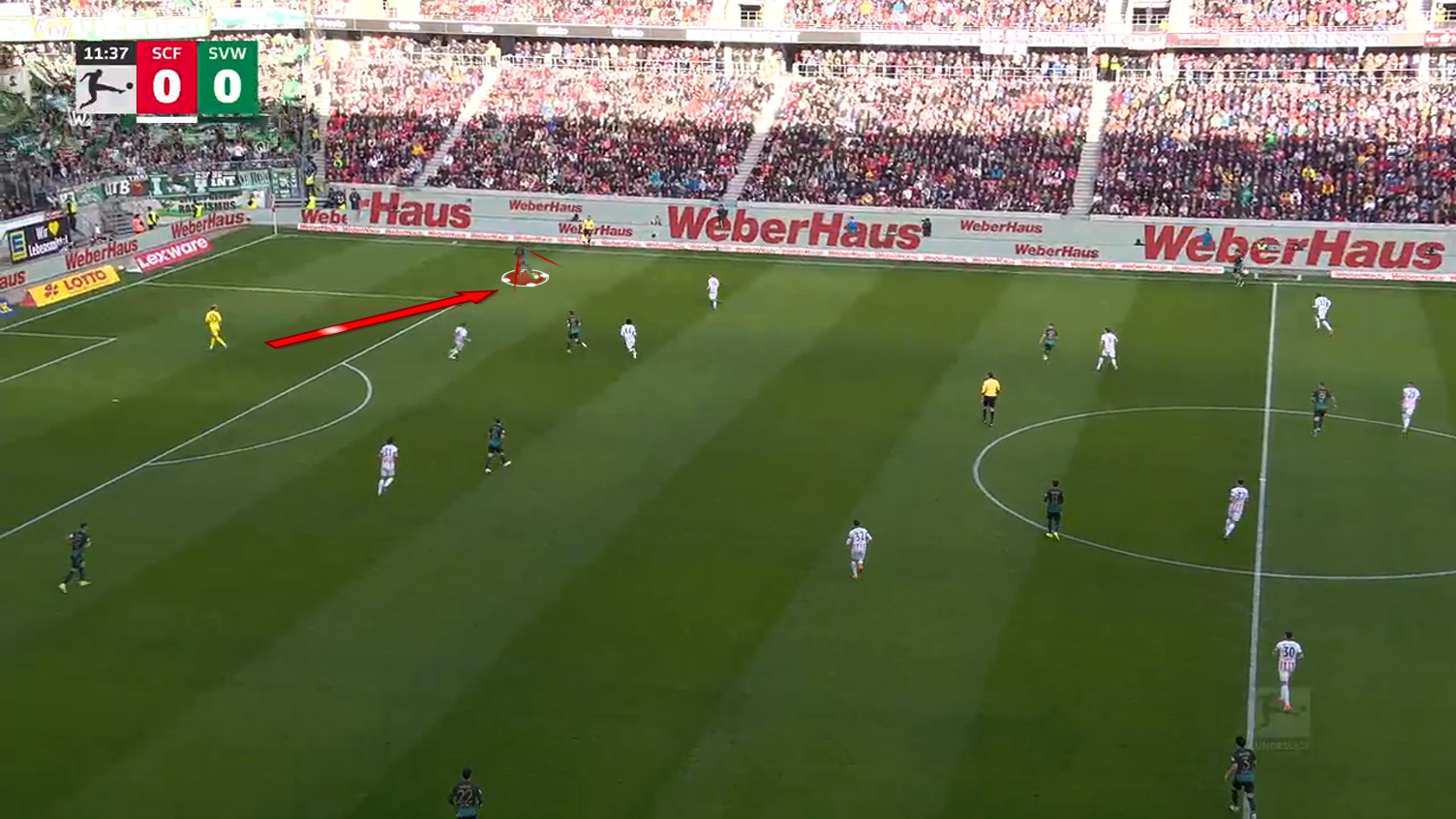
His scanning frequency before receiving the ball is elite for his age group, allowing him to take a first touch that immediately opens up a vertical passing lane.
This positive first touch is what separates him from standard ball-playing defenders who often require multiple touches to orient themselves toward the target.
Karim Coulibaly’s passing repertoire is defined by punch and precision.
He possesses the technical ability to play weighted passes into the half-spaces, the zones where creative players like Romano Schmid thrive.
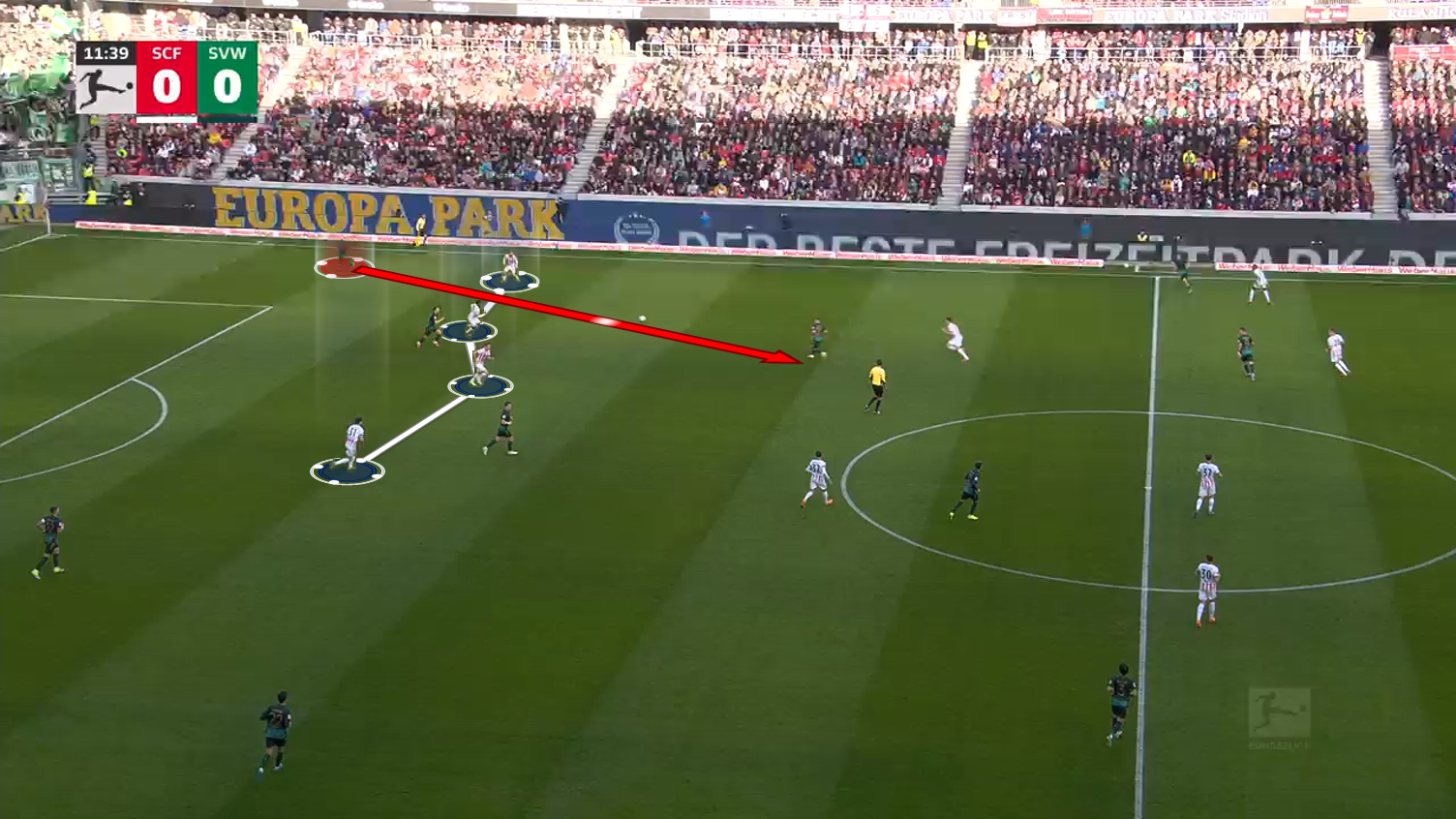
These are not speculative balls; they are calculated, high-velocity passes that demand the receiver take the ball in stride.
When opponents attempt to sit in a compact mid-block to deny the centre, Karim Coulibaly utilises his expansive diagonal range.
His ability to hit the opposite wing-back with a 40-yard cross-field ball is a tactical release valve for Werder, forcing the opponent to constantly shift their horizontal alignment.
This creates the very gaps in the centre that he later exploits with his verticality.
Statistically, his progressive passing metrics are staggering for a debut season.
Averaging high volumes of completed passes per 90, he ranks among the elite for Bundesliga centre-backs in terms of passing accuracy, often exceeding 88%.
What is more impressive is his calmness under duress.
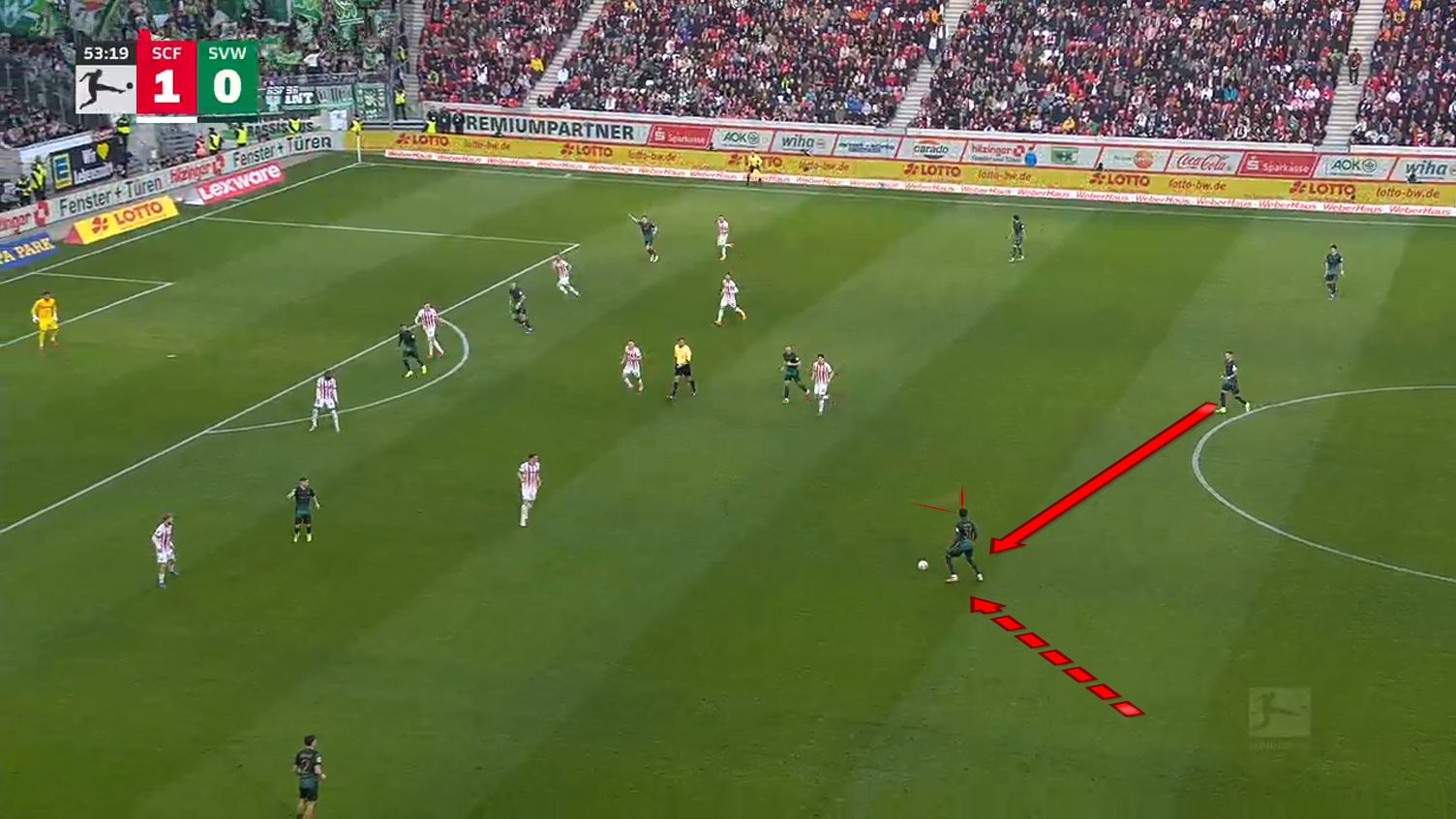
Even when a high-pressing side attempts to suffocate his space, he maintains a low centre of gravity, using his 191cm frame to shield the ball before finding the free man.
He rarely defaults to a long clearance unless absolutely necessary, trusting his technical security to find a solution through short passing, but his passing range is absolutely elite.
This bravery in possession is exactly why PSG see him as a potential cornerstone of their build-up play.
He is not just a defender who can pass; he is a playmaker who happens to operate in the defensive line.
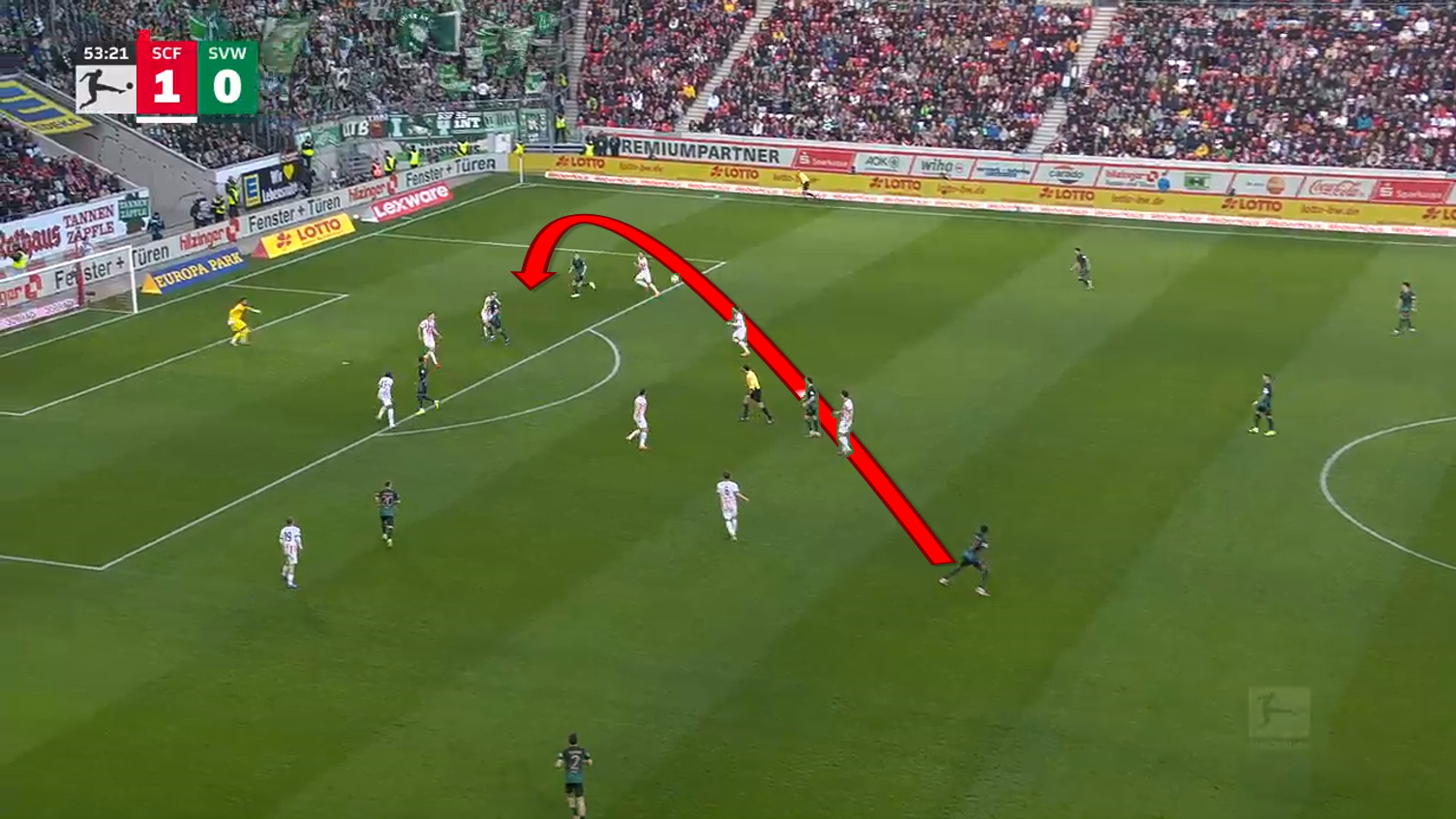
His role in the build-up is further enhanced by his ability to carry the ball forward.
When the midfield passing lanes are blocked, Karim Coulibaly is not afraid to drive into the middle third himself.
This ball-carrying forces the opposition’s midfield to commit to a press, which in turn vacates space behind them.
By the time the opponent reacts, Coulibaly has already released the ball to a teammate in a more advanced position.
This dual threat, the ability to pass through a block or carry the ball past it, makes him a nightmare for opposing coaches to plan against.
In a league defined by its tactical discipline, Karim Coulibaly provides Werder with a chaotic, creative element from the most unlikely of positions.
High-Line Management: Space, Pace & Anticipation
Defending in a high line is a high-wire act that requires a specific blend of recovery speed and spatial awareness.
For a teenager to excel in this role within the Bundesliga is a testament to Karim Coulibaly’s psychological maturity.
Werder Bremen under Thioune often commit to a front-footed press, leaving vast expanses of green grass behind their defensive line.
Karim Coulibaly serves as the primary insurance policy in these scenarios.
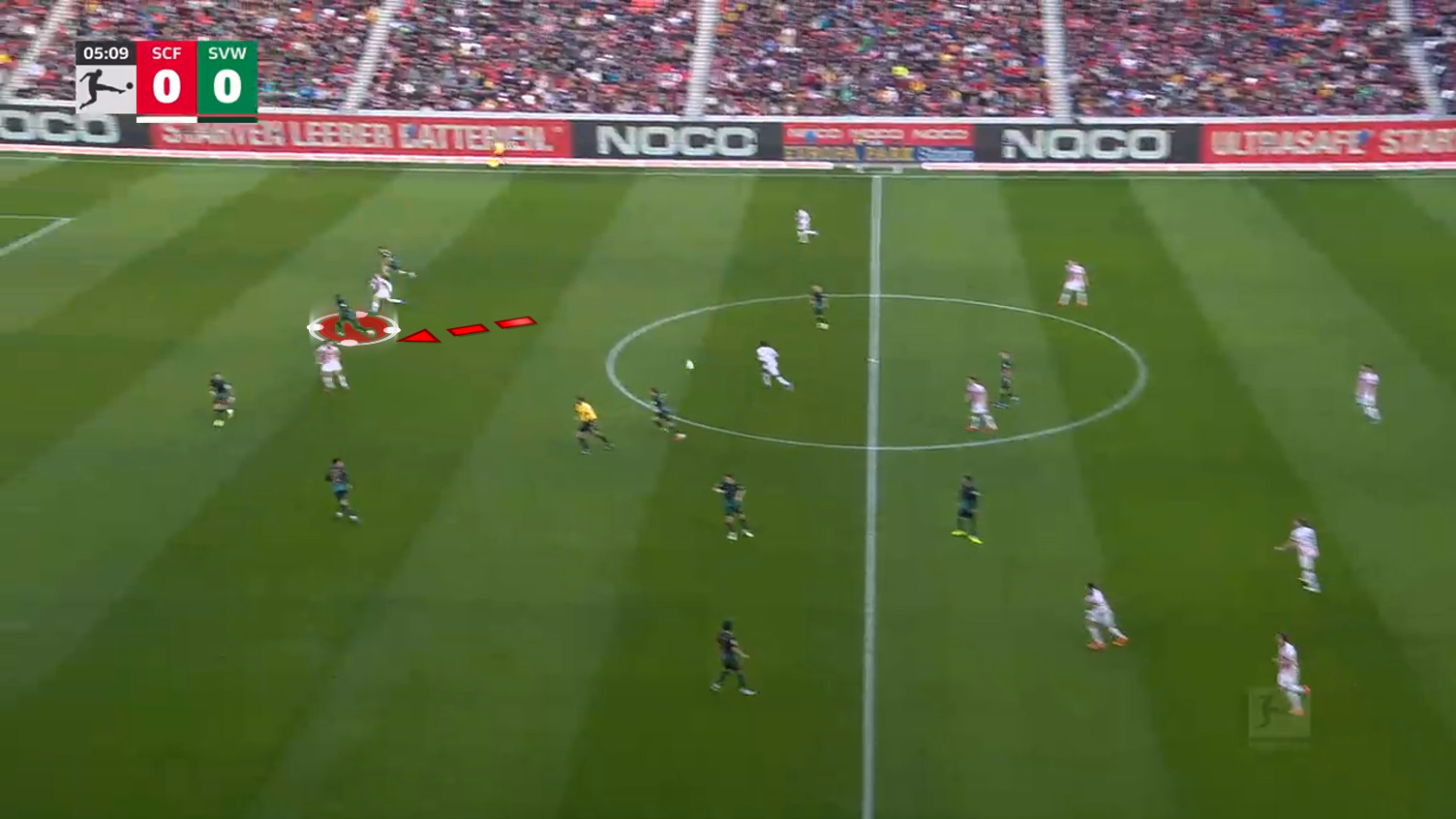
Standing at 191cm, he possesses a long stride that allows him to match most Bundesliga strikers for raw speed over 30 meters, but his true advantage lies in his pre-emptive positioning and his ability to read the game three steps ahead of the play.
Karim Coulibaly’s ability to read the body shape of the opposition playmaker is remarkable.
He anticipates the through-ball before it is even played, allowing him to begin his recovery run a split-second earlier than the attacking marker.
This anticipation negates the need for desperation tackles, which explains why his disciplinary record remains relatively clean despite the high-risk nature of his role.
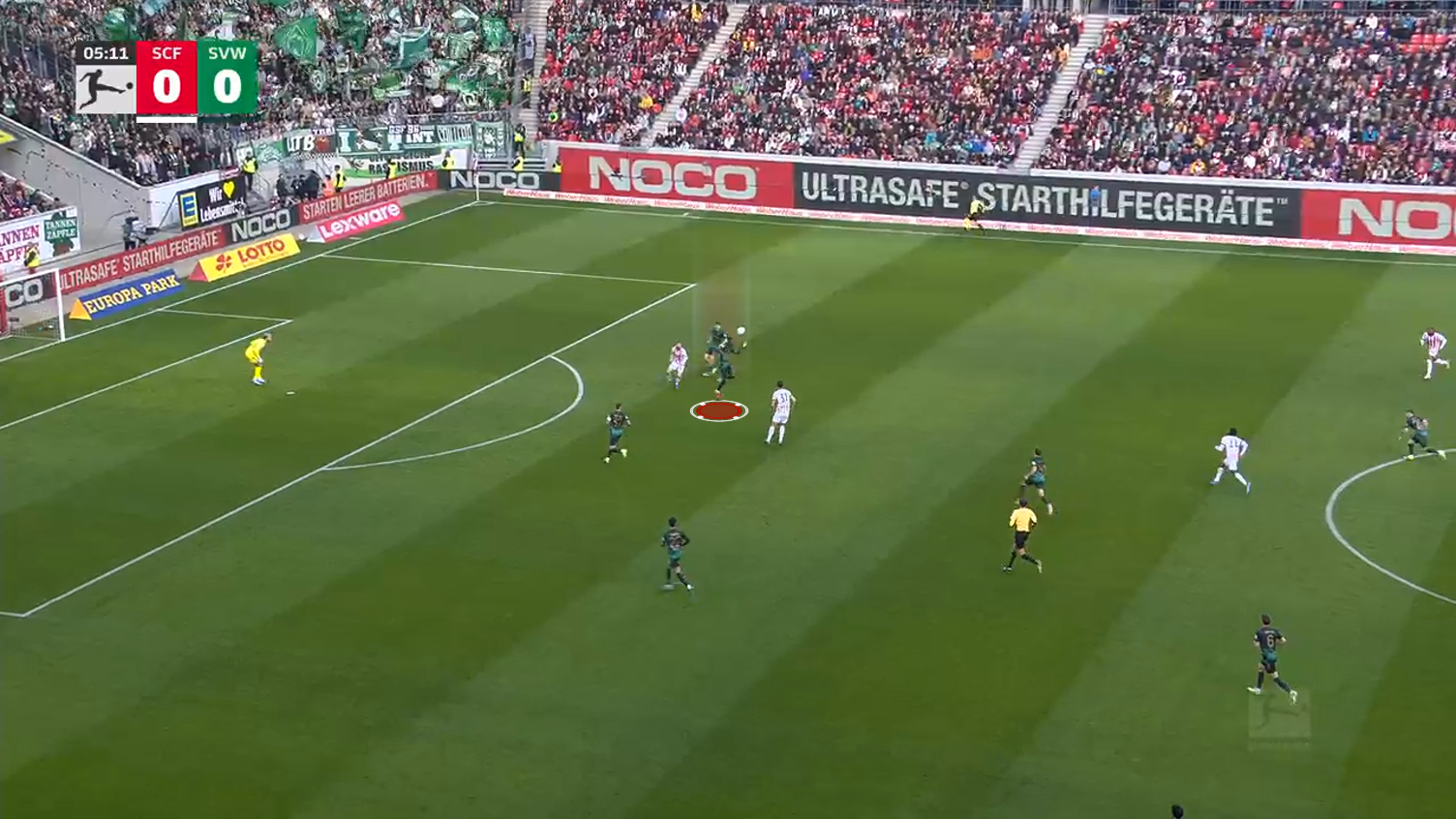
In 1v1 situations out wide, he utilises a jockeying technique that prioritises containment over immediate engagement.
He uses his massive frame to guide wingers into dead zones near the touchline, effectively neutralising the threat without having to commit to a challenge that might leave him bypassed.
Furthermore, his channel defending is a vital component of Werder’s tactical balance.
When the wing-backs push high, Karim Coulibaly is often required to cover the width of the entire pitch.
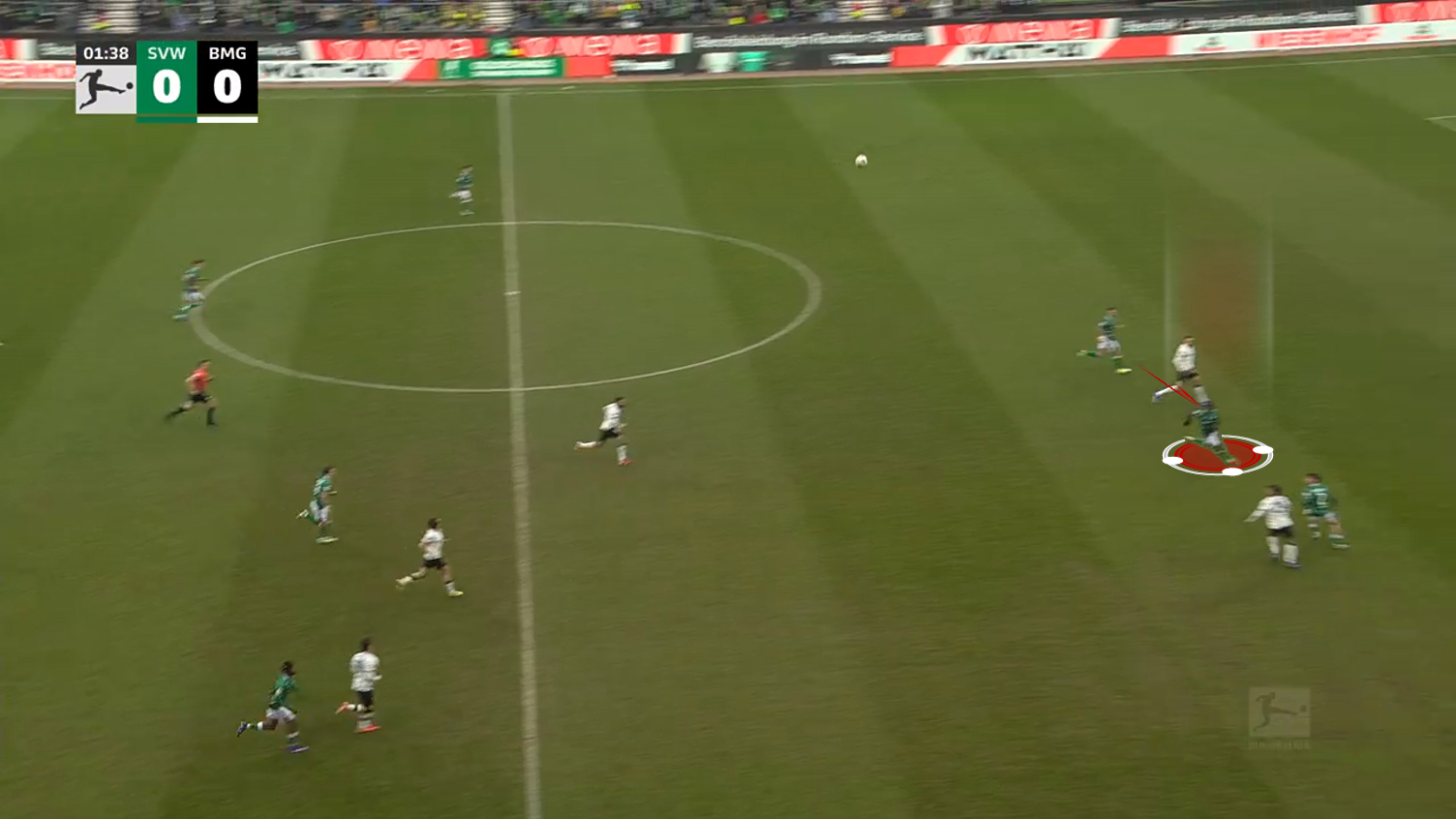
He excels at sliding across the backline to intercept diagonal balls into the corners.
His physical dominance also plays a role here; even when he is forced into a footrace, he is adept at using his strength to nudge attackers off-balance, winning the ball through superior body positioning rather than sheer velocity.
This mastery of space is non-negotiable for teams like Chelsea or PSG, who dominate possession yet remain vulnerable to the long ball over the top.
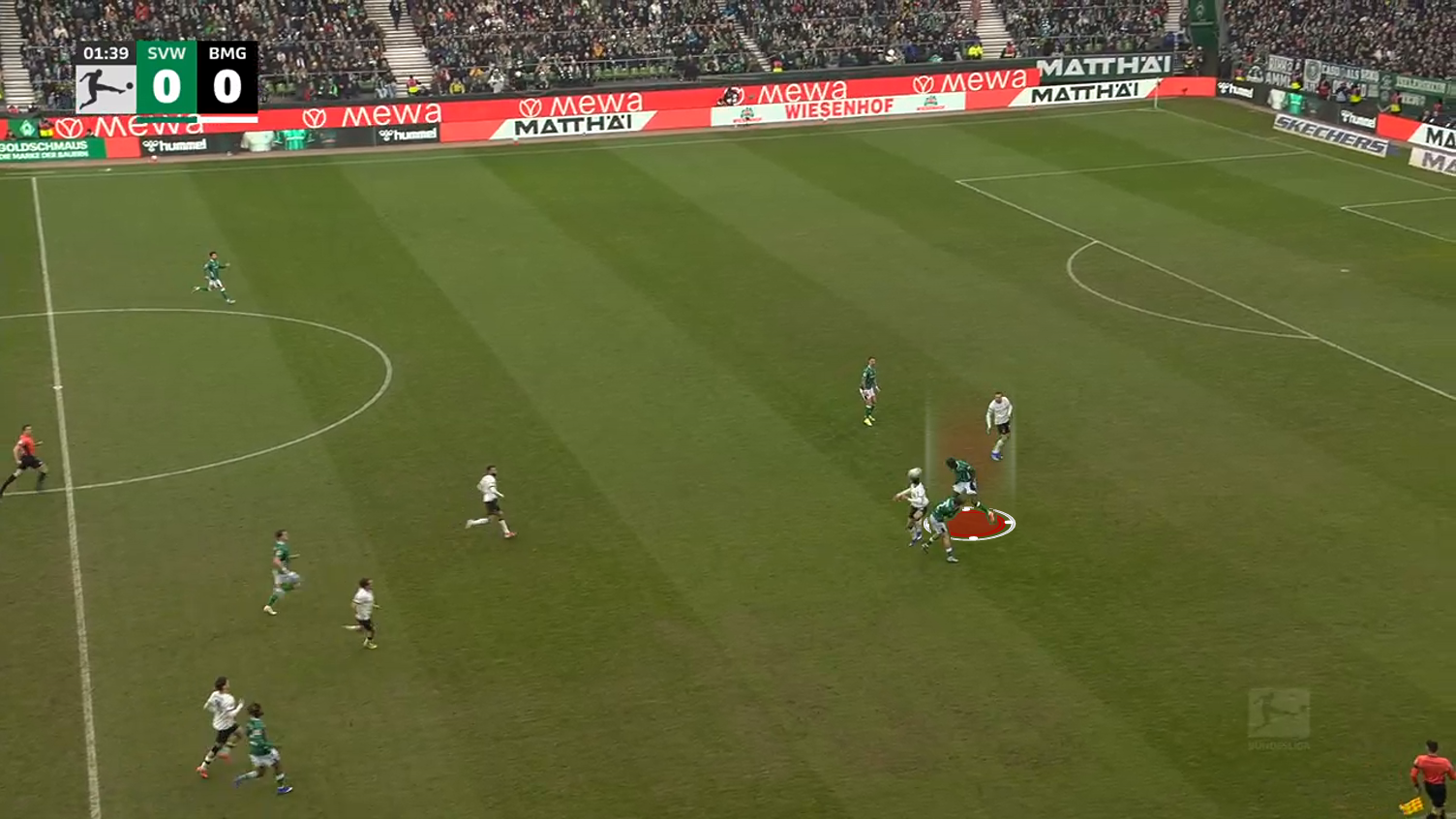
Karim Coulibaly does not just defend the space; he owns it, providing the security screen that allows the rest of the team to sustain a high-intensity attack without fear of a single turnover leading to a goal.
Another key aspect of his high-line play is his communication.
Despite his youth, he is often seen directing his older teammates, ensuring the defensive line remains cohesive.
This leadership is crucial when playing an offside trap, a tactic Werder has employed with increasing frequency as Karim Coulibaly has grown in confidence.
His ability to time the step forward to catch an opponent offside is a skill usually reserved for defenders with a decade of experience.
It is this combination of physical attributes and cerebral reading of the game that makes him such a coveted asset.
He provides the pace to cover mistakes and the intelligence to prevent them from happening in the first place.
The Penalty Box Sentinel: Physicality & Zonal Dominance
While the modern game prizes technicality and pace, the fundamental art of defending the box remains the ultimate litmus test for a centre-back.
It is here that Coulibaly’s 191cm, 83kg frame becomes his most potent weapon.
In deep-block scenarios, which Werder has encountered frequently in their battle for mid-table stability, Karim Coulibaly transforms into a traditional stopping centre-back.
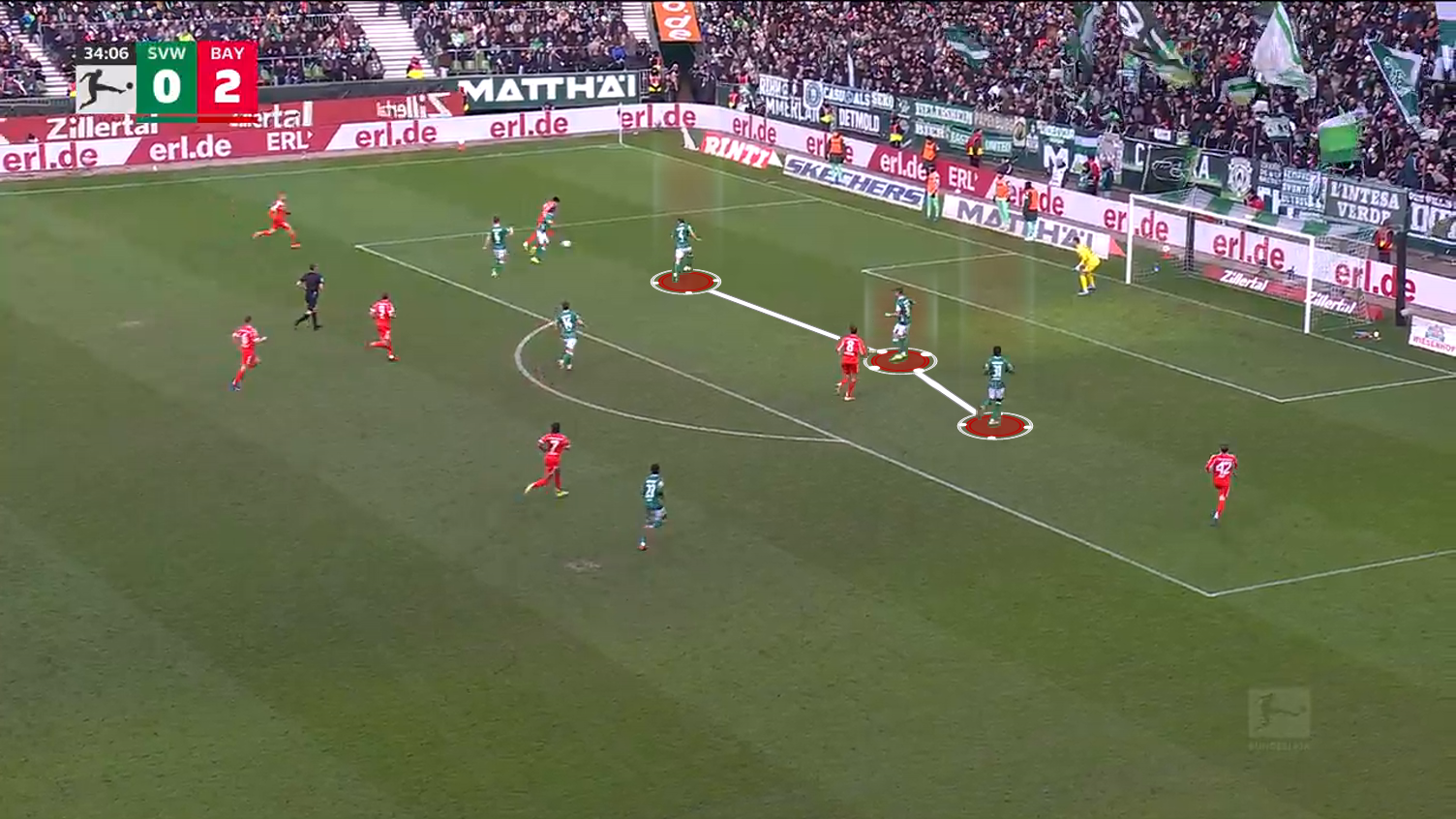
He possesses an innate sense of zonal responsibility, rarely being dragged out of position by decoy runs.
He stays goal-side and ball-side, ensuring he is always in the optimal position to clear a cross or block a shot before it reaches the goalkeeper.
His aerial dominance is not yet a statistical outlier for such a young player, but he will develop into a weapon there soon enough.
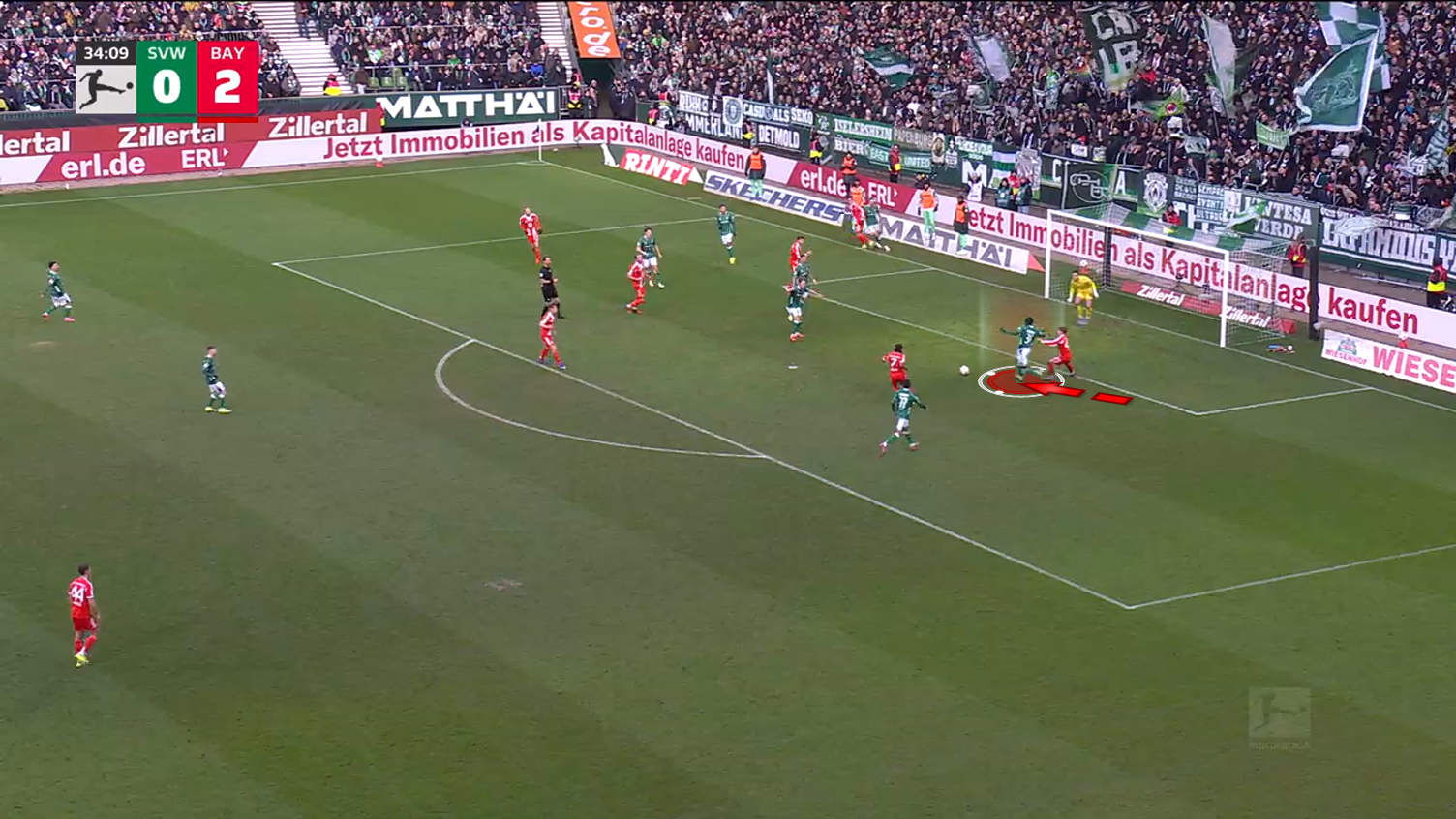
Winning a high percentage of his headed duels, he is a primary target-man for set-pieces and a formidable obstacle to open-play crosses.
He does not just jump; he dominates the air, using his reach to pluck balls away from strikers who are often significantly more experienced.
This physical bite is coupled with a high level of concentration.
Young defenders often suffer from mental lapses in the final 10 minutes of a match, but Karim Coulibaly’s focus remains constant.
He is a high-volume blocker, often throwing his frame in front of goal-bound efforts with a bravery that has made him a fan favourite at the Weserstadion.
His physicality is not clumsy.
He understands how to use his arms and shoulders to leverage opponents away from the ball without conceding fouls in dangerous areas.
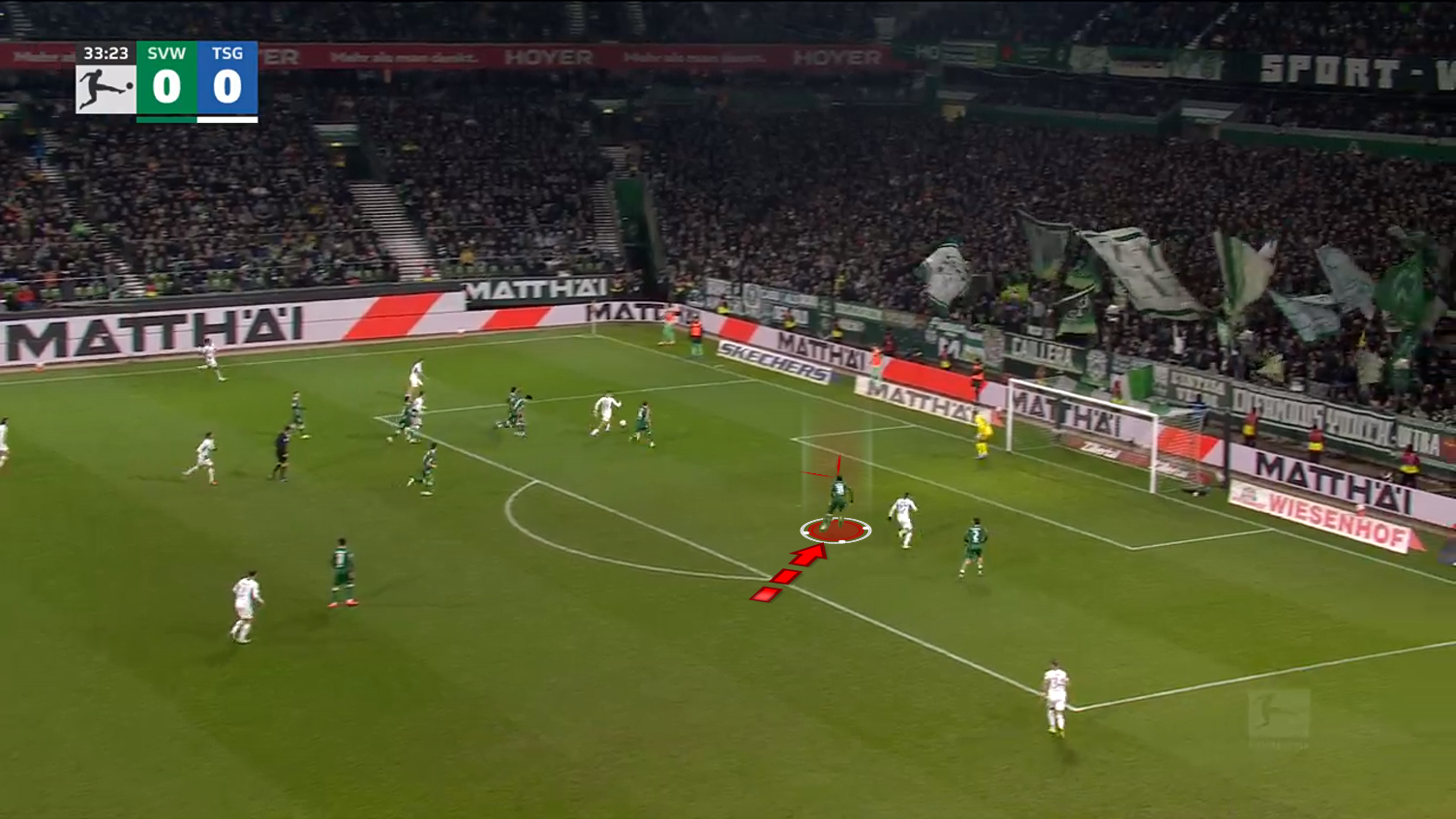
This controlled aggression is a trait that usually takes years to develop, yet Karim Coulibaly displays it with the natural ease of a veteran.
Whether it is a wrestling match with a physical target-man or a scramble following a corner, he consistently emerges with the ball.
This robustness makes him a versatile asset; he can thrive in a team that suffocates the opponent in their own half, but he is equally capable of rolling up his sleeves in a defensive dogfight.
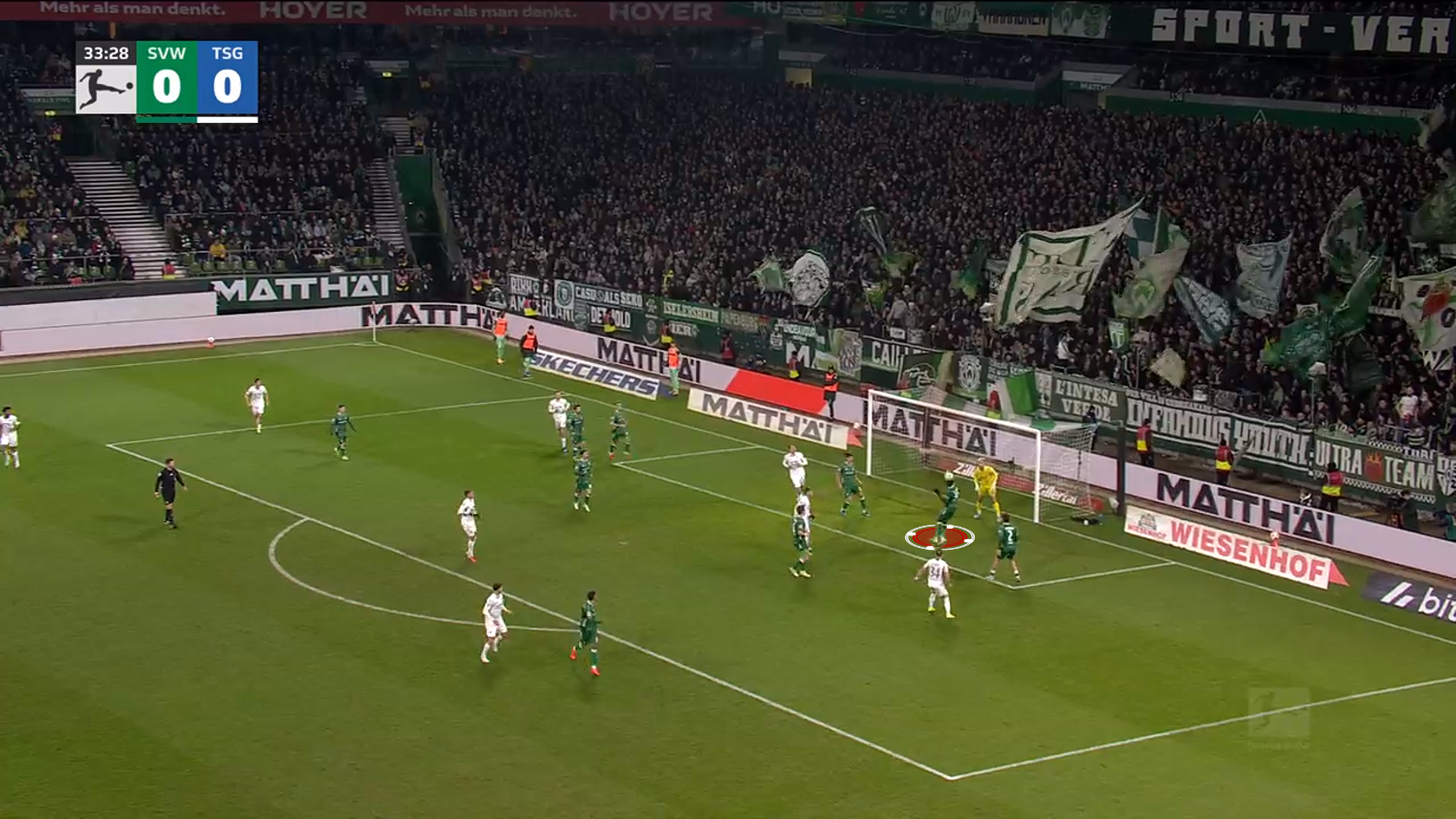
For a club like Chelsea, looking to add both height and technical quality to their backline, Karim Coulibaly represents the perfect hybrid: the ball-player who can actually defend his own box under sustained pressure.
Inside the penalty area, Karim Coulibaly also displays excellent decision-making regarding when to engage and when to hold.
He is rarely fooled by step-overs or body feints, instead keeping his eyes on the ball and his body in a position to react.
This calmness in the eye of the storm is what allows Werder to weather periods of intense pressure.
His presence in the box acts as a stabiliser for the entire defensive unit; when Karim Coulibaly is in position, the rest of the defence can focus on their specific markers, knowing the central zone is secure.
This zonal dominance is the final piece of the puzzle that makes him a complete defensive prospect.
Conclusion
The tactical autopsy of Karim Coulibaly’s game reveals a player who is already operating at a level far beyond his 18 years.
He is the embodiment of the modern defensive ideal: a technically gifted architect who can dismantle structures with his left foot, a rapid sentinel capable of policing a high line, and a physical powerhouse who provides zonal security within the box.
While interest from PSG, Chelsea, and Newcastle United will inevitably lead to a high-stakes transfer saga in the summer of 2026, the club that secures his signature will be acquiring more than just a defender; they will acquire a strategic advantage that defines how they play the game.
For Werder Bremen, the loss will be profound, but the expected €30m-€40m windfall will serve as the foundation for their own reconstruction under Daniel Thioune.
For Karim Coulibaly, the trajectory is clear.
He possesses all the hallmarks of a future mainstay in the German national team’s defence and a regular fixture in the Champions League.
His ceiling is not merely to be a good Bundesliga defender, but to redefine the role of the left-sided centre-back in the elite tiers of European football.
As he continues his development in Northern Germany, the world’s biggest clubs will be watching, knowing that they are witnessing the final months of a diamond before it is moved to the most expensive jewellery boxes in world football.
The Bremen breakout is complete; the European coronation is the next logical step in a career that promises to be nothing short of legendary.
