
Following a successful treble-winning season, Paris Saint-Germain are in the market to make upgrades to their squad.
The UEFA Champions League winners, who already boast a world-class group of players, will aim to enhance depth and build for the long term.
From this perspective, the centre-back position is one of the most important.
The pairing of Marquinhos and Willian Pacho was a major contributor to Les Parisiens’ success.
This is a great window to bring in a young reinforcement, as Marquinhos can still play at the top level for a few more seasons.
This would be helpful as the Brazilian can help refine his successor to fill the hole that he will eventually leave behind.
Adhering to this, the French champions are keen on signing Illia Zabarnyi from AFC Bournemouth.
But is he the right man for the job?
Does he fit into the Luis Enrique style of play?
In this scout report and player analysis, we will examine Illia Zabarnyi playing style, compare him to Willian Pacho and Marquinhos, and determine if they complement each other through tactical analysis and data analysis.
We will also determine if Zabarnyi will be a good fit to succeed Marquinhos in the long term at PSG.
Illia Zabarnyi Style Of Play

Illia Zabarnyi is a tall, strong, and aggressive centre-back who plays at Bournemouth.
The 22-year-old Ukrainian is known for winning aerial duels and being forward-thinking, as reflected in his number of attempted progressive passes.
Let us look at how he could tactically set up at Paris Saint-Germain.
Illia Zabarnyi In Defensive Phase
As mentioned above, one of Zabarnyi’s strengths is his ability to win aerial duels.
During his time at Bournemouth, he has frequently been seen getting the first contact.
Here is an example of the Ukrainian winning an aerial duel.
The opposing goalkeeper hits a long goal kick.
Zabarnyi gives his direct opponent a slight push before going for the leap.
The 22-year-old is also a dominant force in ground duels.
He uses his large frame to pressure opposition attackers physically, especially when they receive with their backs to goal.
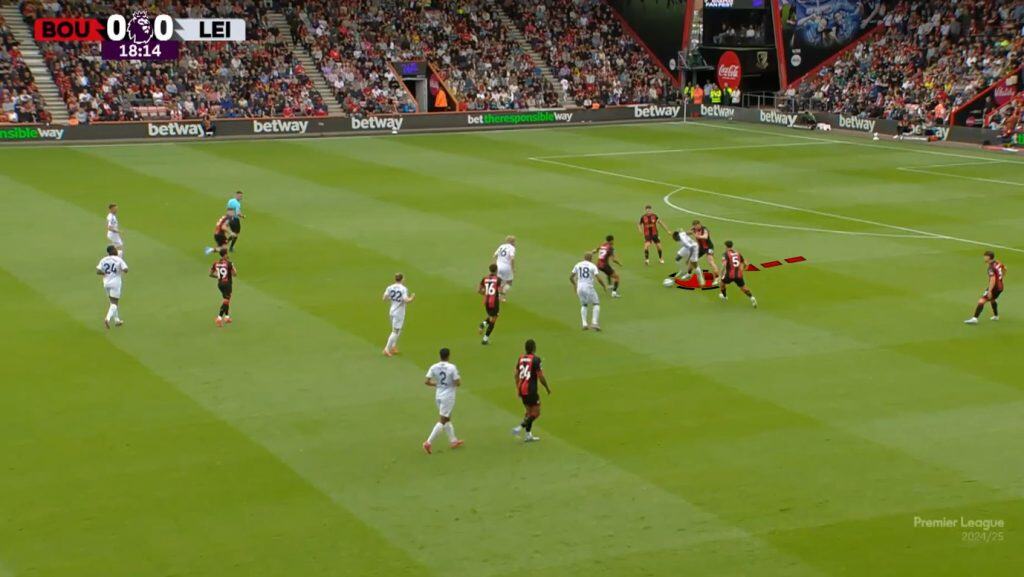
In this image, Zabarnyi steps into a ground duel.
He muscles off his opponent, who is facing his own goal.
A Bournemouth midfielder quickly steps in to collect the loose ball once the opponent is dispossessed.
Zabarnyi also contributed to his side with his interceptions.
Being on the front foot and anticipating play are qualities that helped him cut out passes.
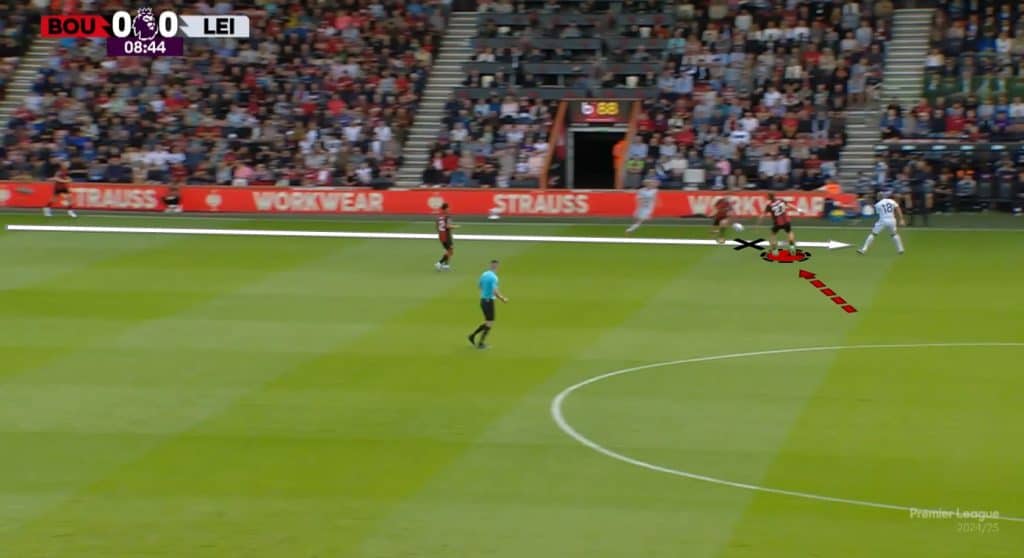
Here, Zabarnyi anticipates a pass into the opposition winger.
He steps wide to make an interception.
His ability to anticipate play will be a great addition to Luis Enrique, as teams of PSG’s stature expect their defenders to be organised and to anticipate more often than be reactive.
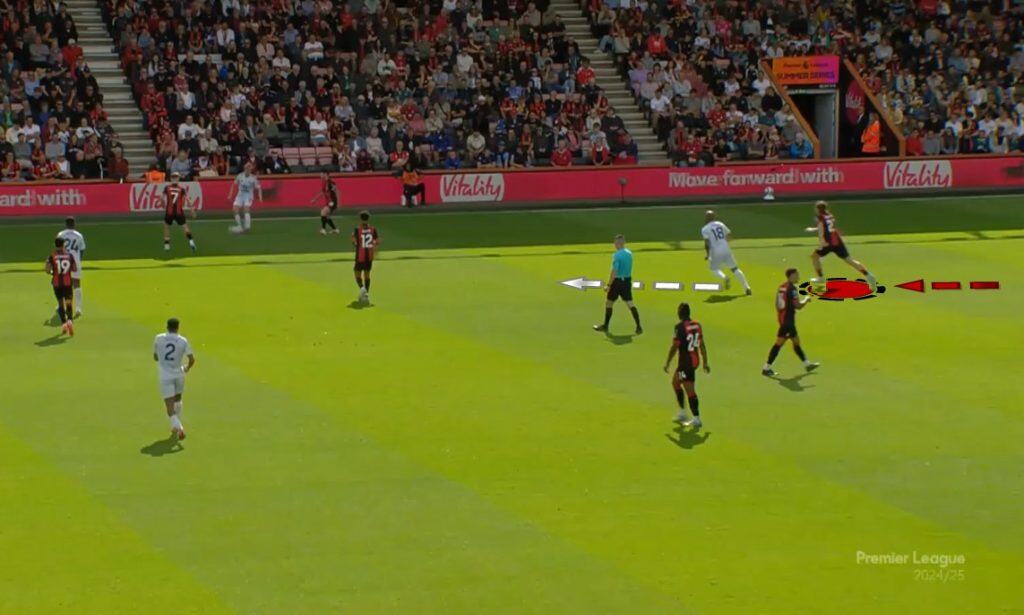
The Ukrainian was also seen marking his opponents closely, and even tracking them into midfield when there was space for them to get involved.
Zabarnyi stepped up to stay close to the opposition attacker, leading to the opponents playing sideways or backwards.
These movements to track opponents helped halt several attacks even before they became threatening.
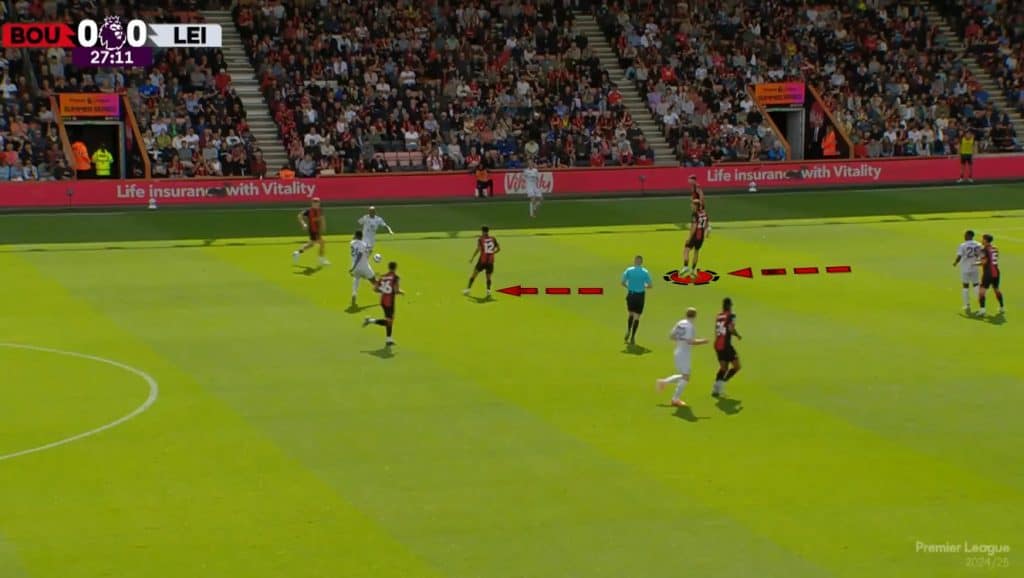
The action of stepping up was not just to track an opponent, but also to maintain vertical compactness.
Whenever a Bournemouth midfielder, right above Zabarnyi, stepped up to press or close someone down, the defender also stepped up to make sure the lines stayed connected and no opponents exploited the space in between.
These actions are essential for dynamic teams that press aggressively.
Ever since Enrique arrived, he has transformed the French side into an intensive pressing unit.
Zabarnyi’s ability to maintain compactness and cut out space between the lines will be key to PSG conceding fewer chances to their opponents.
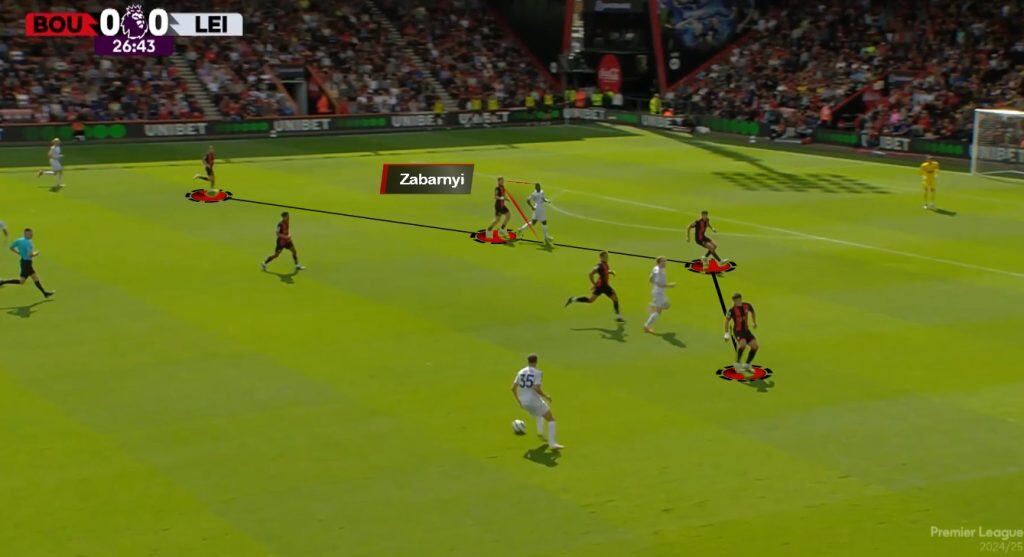
Here, we can see Leicester City attacking from the right side.
As the Bournemouth backline shifts across to engage, Zabarnyi makes sure to track the opponent on his fellow centre-back’s blindside.
By shifting across promptly, he can maintain horizontal compactness and track any runners in-behind.
Illia Zabarnyi In Possession
One of Zabarnyi’s standout attacking traits is his tendency to play progressive passes.
When offered the space and time, he can find teammates between the lines to progress the ball.
In this video, Zabarnyi plays a vertical pass.
When his holding midfielder rolls the ball to him, the opponent’s pressure is not quick enough to close off the passing lane.
This leads to the 22-year-old finding a progressive option inside the opponent structure.
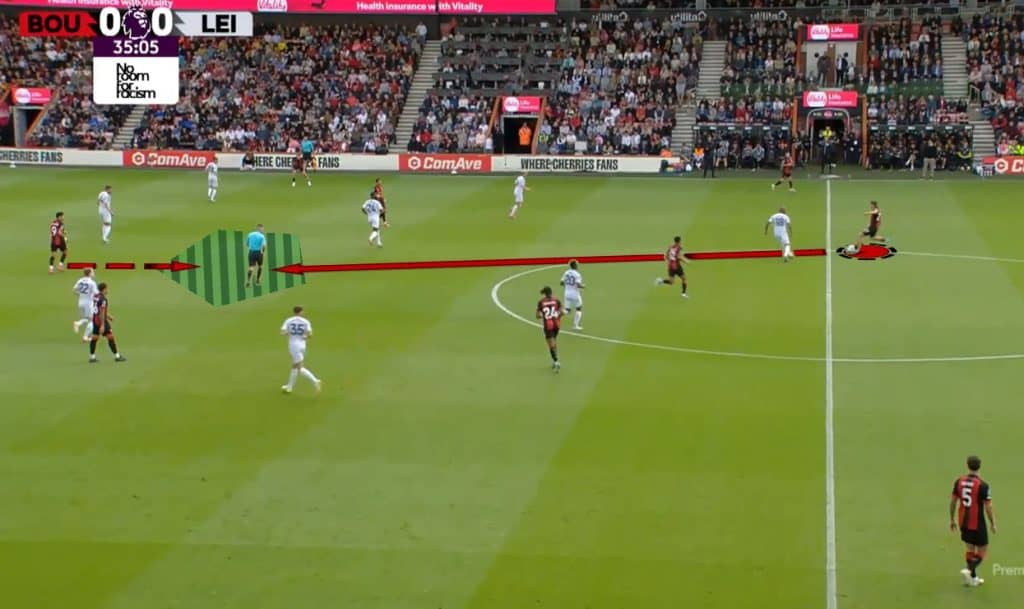
Given the time on the ball, Zabarnyi is also known to play long-distance passes into his attackers, especially to a striker dropping into midfield.
In the image above, we can see the Ukrainian playing a progressive pass to his striker.
The opposition leave space in the midfield, which opens the passing lane to the Bournemouth striker.
However, the tendency to play forward does come with a challenge.
The Ukrainian is not yet consistent with his pass completion, and is susceptible to misplacing it when pressed quickly to close down passing angles.
This was often the case when he was forced to his weaker left side.
Playing a pass longer than 10 yards with his weak foot at an uncomfortable angle might be a situation for which the 22-year-old is not yet refined.
In this situation, Zabarnyi plays as a left-sided centre-back.
He receives from his goalkeeper during the build-up.
His direct opponent presses him, forcing him to play with his weak foot.
He attempts to find his attacking midfielder.
The opponents read his intent, and they quickly step in to make the interception.
This inconsistency in pass completion affects psychology at the highest level.
When multiple progressive passes lead to a switch in possession, the players involved tend to switch to a safer route, even when a forward pass is on.
Zabarnyi is no different.
The Ukrainian is a brave and forward-thinking defender.
However, due to a lack of consistent action, he was often seen playing sideways or backwards when there was an opportunity to play forward.
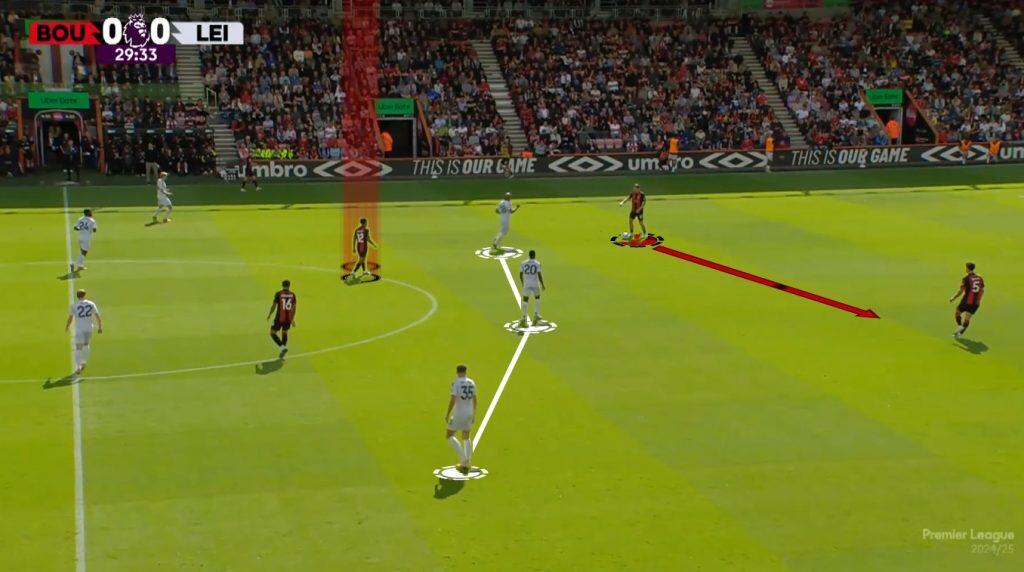
Let us look at an example of this.
Here, the opponents are applying pressure with their front three.
However, the second line of pressure is not tight enough, leaving space between the lines.
The highlighted Bournemouth midfielder has enough space to receive behind the pressure and progress the ball forward.
However, Zabarnyi opts for a sideways pass to his fellow centre-back.
Given his style of play, he would be expected to play these progressive passes at PSG.
Passes along the ground aside, Illia Zabarnyi can also hit long passes to find his teammates across the pitch.
This will come in handy for Luis Enrique, who has two of the quickest full-backs in Europe, Nuno Mendes and Achraf Hakimi.
The two are keen on exploiting space with their runs in the wide channel, especially when the opponents are concentrated on the opposite side of the pitch.
Here is an example of Illia Zabarnyi playing a long pass to a teammate in the wide area.
Paris Saint-Germain Centre-Backs Style Of Play
If Paris Saint-Germain sign Zabarnyi, he is likely to be paired up with Pacho in the long term, replacing the veteran Marquinhos.
In this section, we will analyse how Pacho and Marquinhos play, and compare them to Zabarnyi.
PSG Centre-Backs In Defensive Moments
One of Willian Pacho’s key traits is his intelligent positioning to stay in structure and make interceptions.
His anticipation in defending moments has helped PSG ward off goalscoring chances for their opponents.
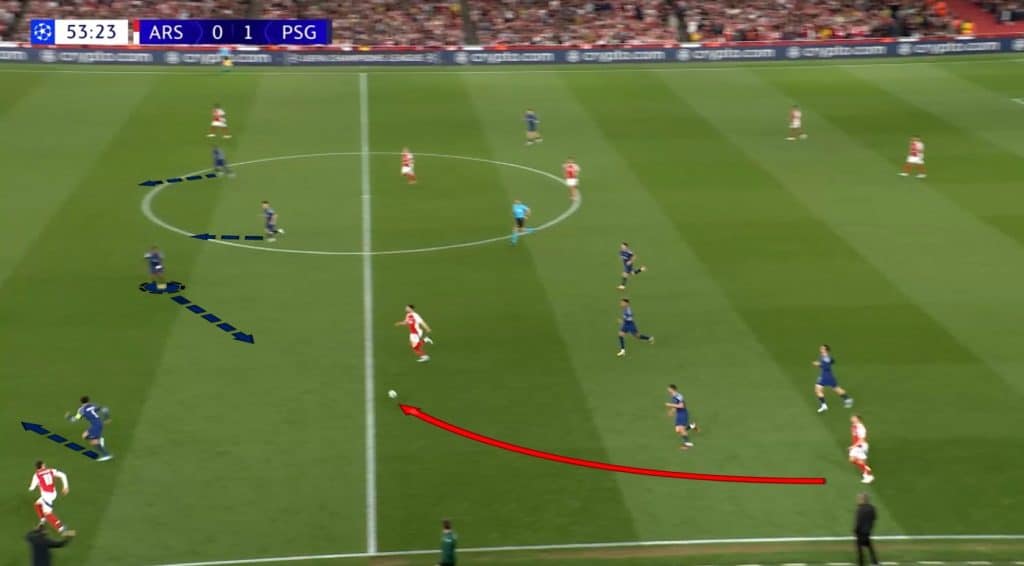
Here is an example of Pacho anticipating a through pass from the opponent.
This is a defensive transition moment for PSG, and the rest of the defenders are tracking back with him.
However, the Ecuadorian notices an opponent making a run into space and immediately steps in to make an interception.
This stops the Arsenal attack before it can reach the PSG defensive third.
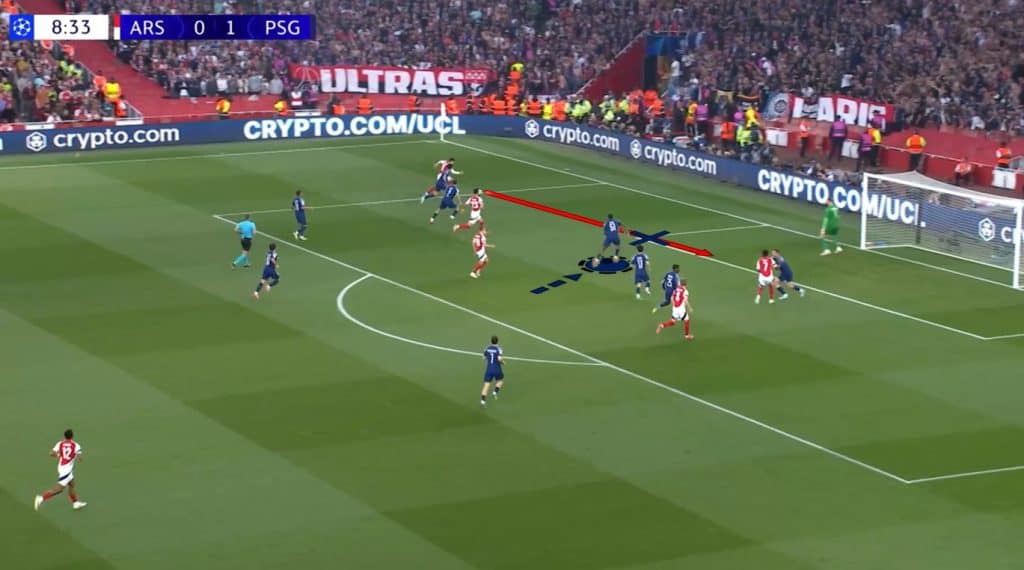
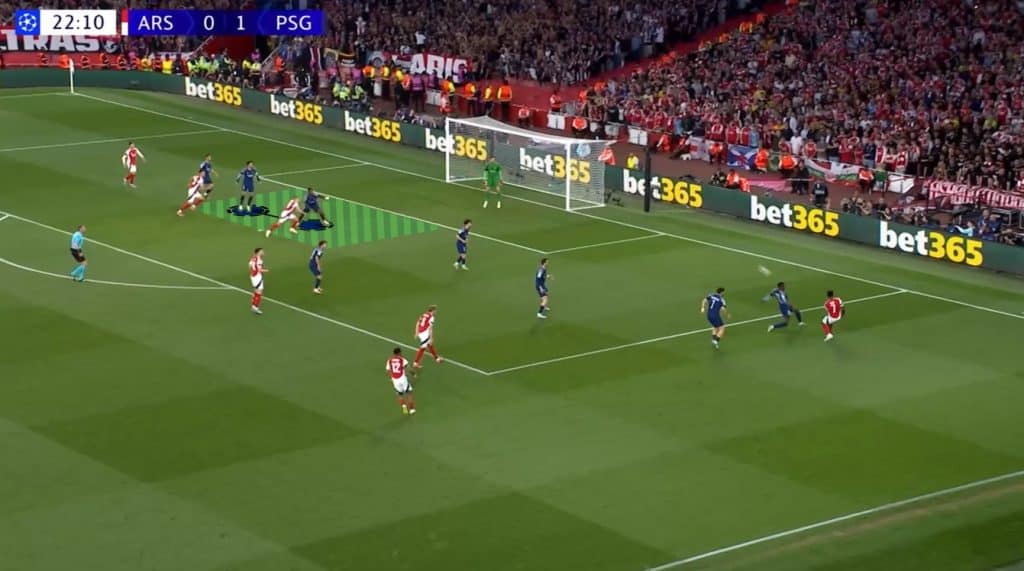
Another implication of Pacho’s positioning is his ability to cut passing and crossing lanes.
Here is an example of him stepping across to cut a crossing lane.
The Gunners are on the attack through their winger, who knocks the ball past the defender.
Pacho positions himself to cut the crossing lane to the striker, making a run behind him.
Here is another situation in which PSG are defending a cross.
Two opponents are positioned in the central zone inside the penalty area.
Hence, Pacho stays central and close to his defensive partner, Marquinhos.
In scenarios like this, they rely on their midfielders to defend the half-spaces.
It is a common mistake for centre-backs to get dragged wide in these situations to cover for their full-back.
However, the central zone is vulnerable, as late runners can crash the box to meet crosses.
These moments of intelligent positioning are what define the Ecuadorian as a centre-back.
Zabarnyi, who has a more aggressive style of defending, can take a leaf out of Pacho’s book in terms of positioning.
Pacho and Marquinhos worked as a solid defensive unit in the 2024/2025 season, owing to their mutual understanding in defensive moments.
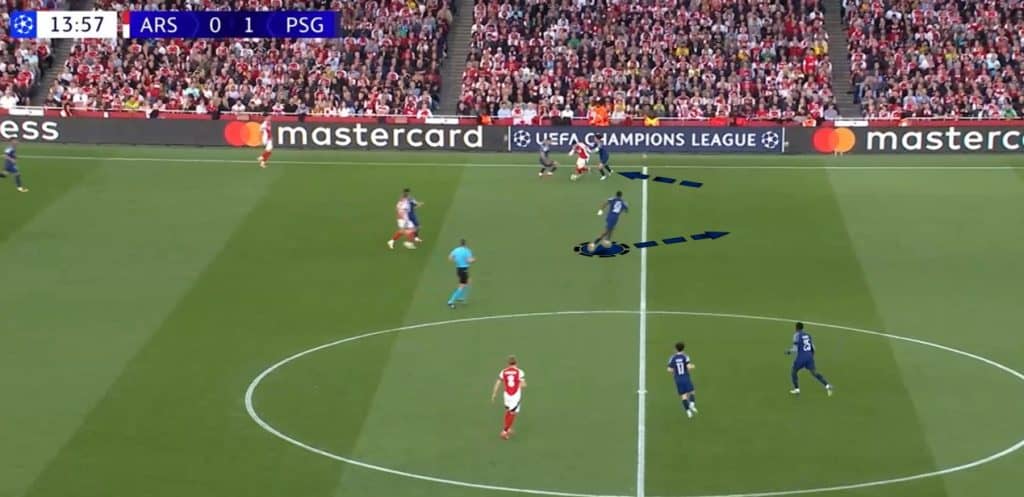
Here, an opposing winger receives in the wide area.
Marquinhos is quick to apply pressure as the winger is facing his own goal.
Pacho understands his role in this situation and moves into a covering position in the space left behind by the Brazilian.
Enrique will expect such chemistry from the potential Zabarnyi-Pacho duo.
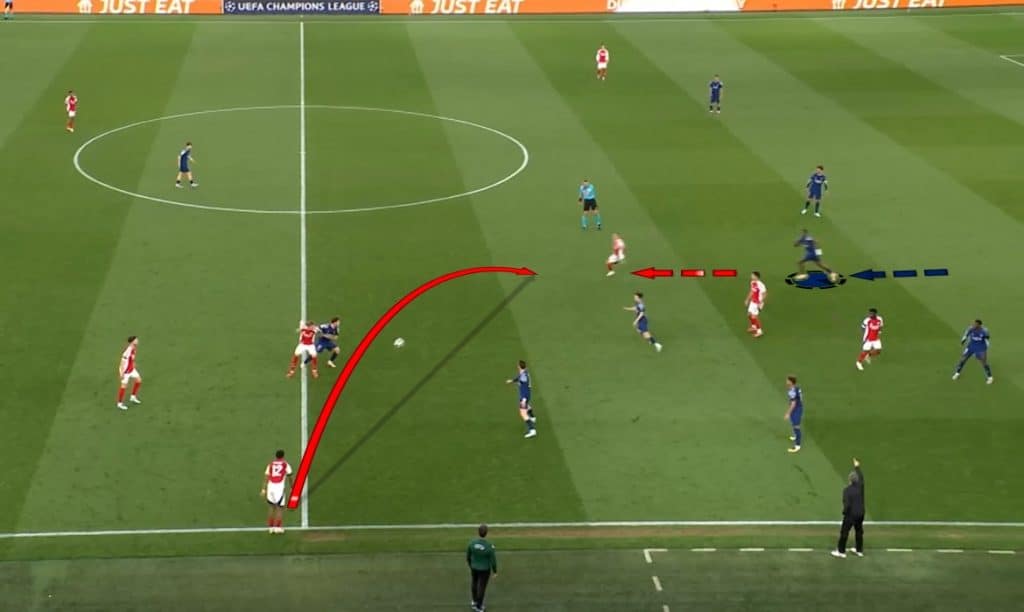
Although not the most aggressive centre-back, Pacho is proactive in tracking opponents’ movement, which includes attackers dropping into midfield.
In the example above, the Arsenal striker drops to receive from a throw-in.
Pacho steps up to track him into midfield to prevent him from turning forward.
The opponent ends up playing it backwards.
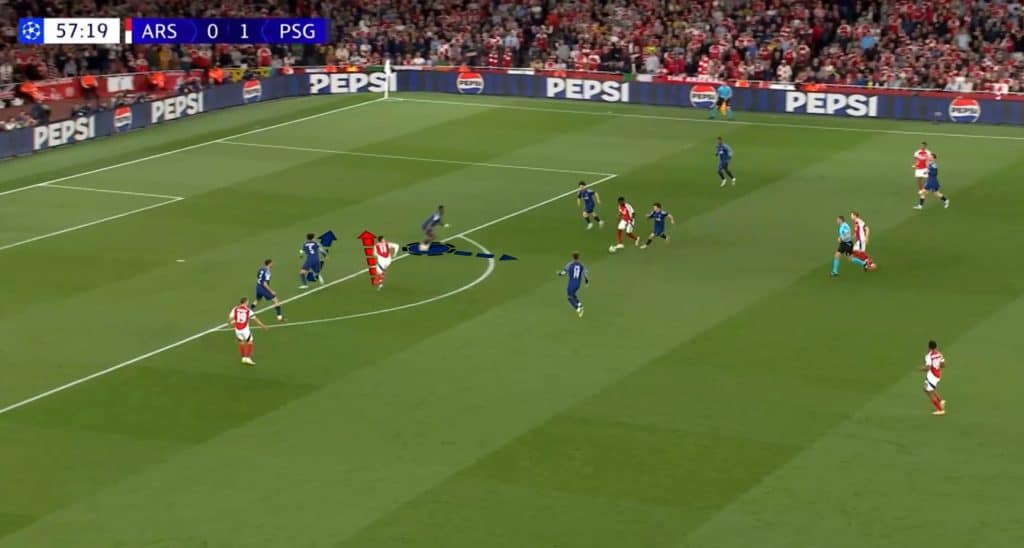
Here is another situation where we can see the understanding between Marquinhos and Pacho.
The Ecuadorian steps up to close down an opponent dribbling infield.
Noticing this, the opposing striker starts a run into the space behind Pacho.
Marquinhos anticipates this and is proactive in tracking the striker’s movement.
PSG Centre-Backs In Possession
Luis Enrique’s side are fast-paced, possession-oriented, and like to build out from the back.
This requires their centre-backs to be comfortable with the ball and show for it.
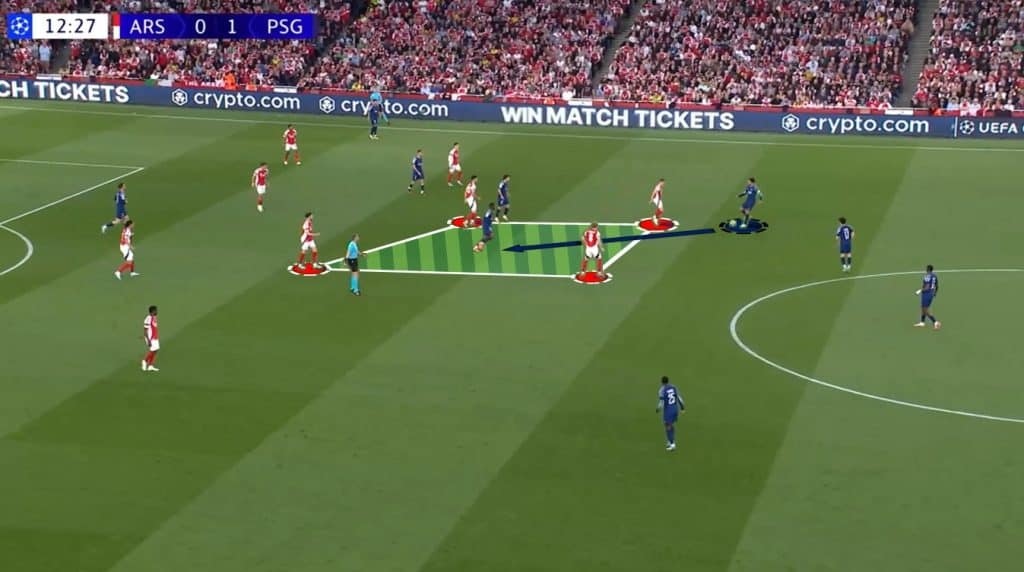
Here, we can see Marquinhos playing a progressive pass to Ousmane Dembélé into a pocket of space.
Zabarnyi will be expected to operate the same way.
PSG thrive on player rotations in the attacking half.
These rotations open space for them to drop and receive vertical passes from the deeper players.
Hence, the centre-backs will be key to building attacking moves from scratch.
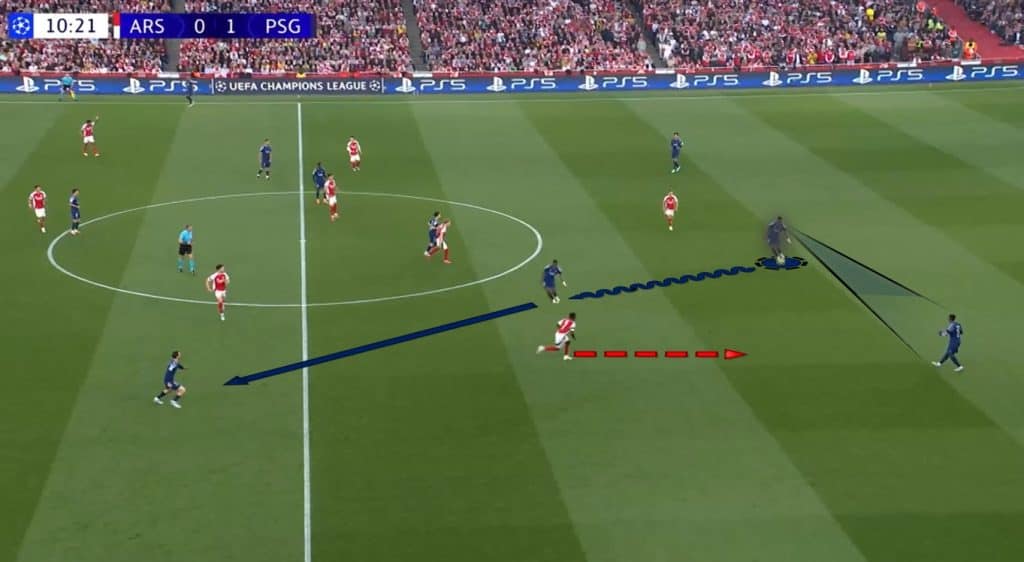 Pacho is known as a conservative defender who plays simply and completes most of his passes.
However, he carries the ball into space to progress the play whenever the opportunity arises.
His decision-making in possession makes him an elite centre-back.
In the example given here, Pacho carries the ball into space and plays a progressive pass.
He opens his hips towards Nuno Mendes (left-back) as he receives from the right side.
This leads the opposition right-winger to anticipate a pass to the left.
Once he commits to the press, Pacho knocks the ball into the space ahead of him to aggressively carry it and play it forward.
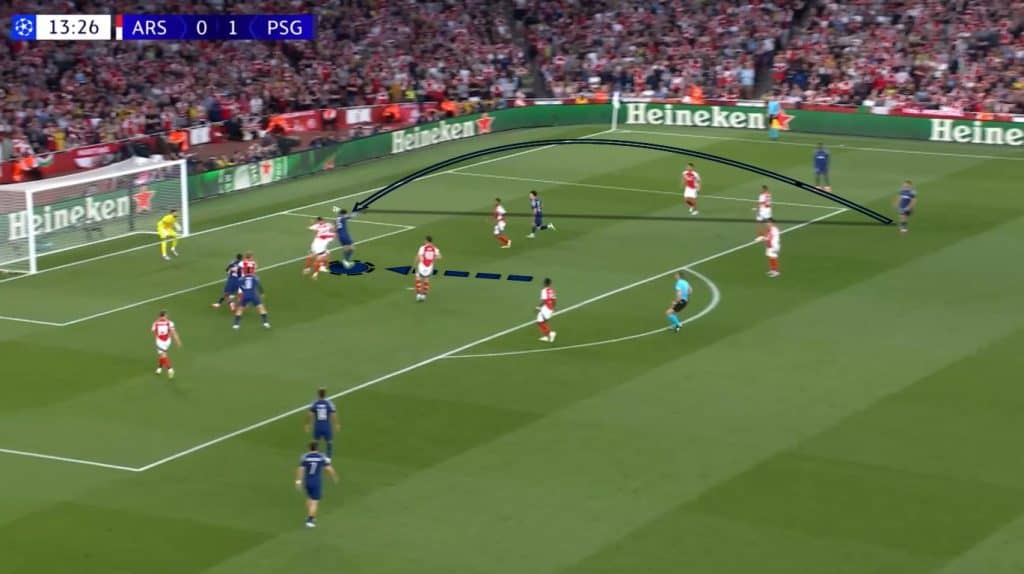
Along with on-ball actions, PSG defenders, especially Marquinhos, are confident in crashing the penalty area for attacking headers.
In the example above, Marquinhos makes a run into the box for a header in open play.
This is something to be expected from Zabarnyi, as he likes to be adventurous and step up in open play.
He is also dominant in the air, which the Parisians can exploit.
Illia Zabarnyi Vs Willian Pacho Stats
In this section, we will examine Zabarnyi and Pacho statistically to compare them and determine whether they would complement each other as a defensive duo.
Illia Zabarnyi Vs Willian Pacho Radar
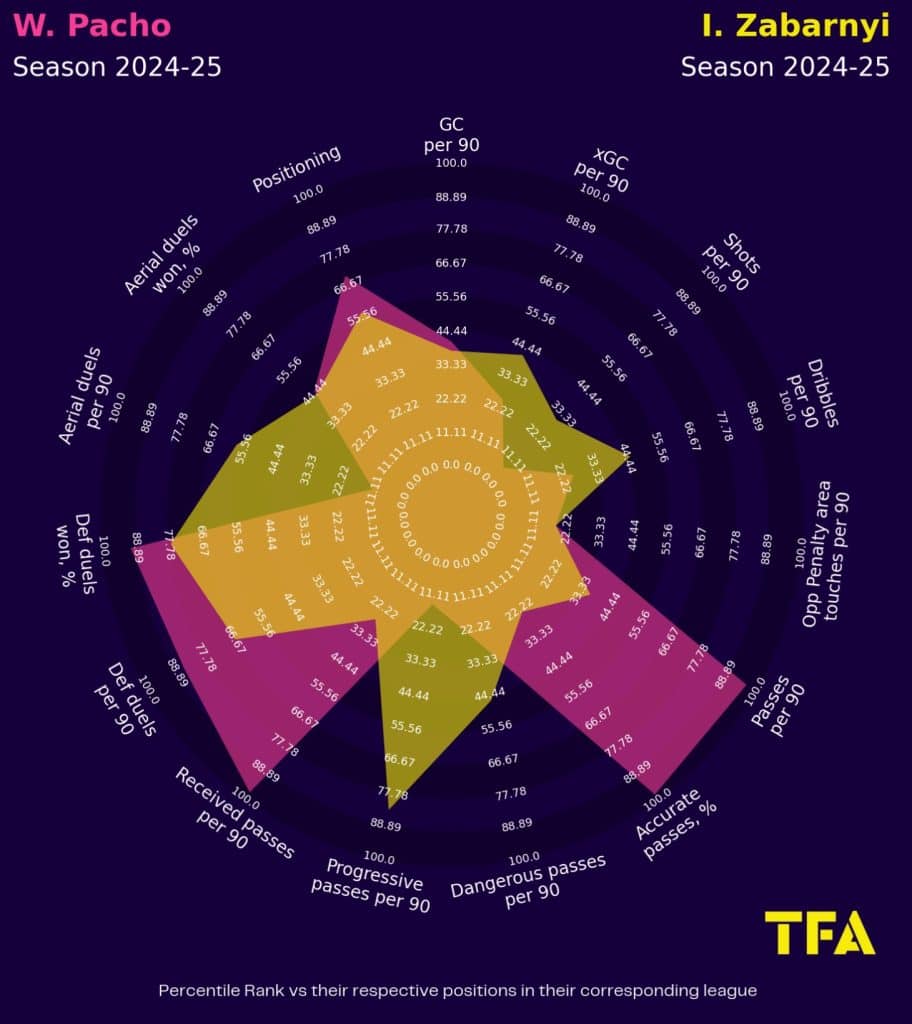
The above graph shows that Pacho drastically led in terms of accurate passes and received passes per 90.
This indicates that their respective teams have different styles of play, and can also signal that Pacho is slightly more refined to a possession-based approach.
The Ecuadorian also overtook in terms of positioning, which we have discussed earlier in the article.
Zabarnyi led in areas like aerial duels, progressive passes, dribbles, and shots per 90’.
This is a clear sign of the Ukrainian’s more adventurous and aggressive nature.
Defensive Actions
Willain Pacho made 2.36 tackles and 1.69 interceptions per 90 to Zabarnyi’s 1.51 tackles and 1.19 interceptions per 90.
According to the comparison graph, the Ecuadorian engaged in more defensive duels, which led to more tackles.
His intelligent positioning and reading of the game also helped him make more interceptions.
Pacho also made more blocks per 90 (1.48) than Zabarnyi (0.96), which again attests to his intelligence in defensive positioning.
The Ukrainian won more aerial duels (2.23) and clearances (5.27) per 90 than the Ecuadorian (1.22) and (3.84), respectively.
This shows that Zabarnyi is more aggressive and physically dominant.
Attacking Actions
Pacho led in terms of attempted passes per 90 (83.08) and pass completion (94.8%) compared to Zabarnyi’s 49.5 attempted passes per 90 and 82.1% pass completion.
This shows that the Ecuadorian is more conservative and keeps it simple, which is more reliable compared to the Ukrainian.
Zabarnyi had higher statistics for progressive passes (4.05) and progressive carries per 90 (0.78).
Pacho completed 2.24 progressive passes and had 0.13 progressive carries per 90.
This indicates that Zabarnyi is more adventurous and takes more risks in possession.
Conclusion
Illia Zabarnyi is a physically dominant and aggressive centre-back who likes to take risks by playing progressive passes and carrying the ball forward.
However, he needs to be refined in areas like positioning, decision-making, consistency, and anticipation.
The Ukrainian will complement Willian Pacho, as the Ecuadorian is more conservative, possesses intelligent positioning, and is consistent with his actions.
The defensive duo would be a good blend of aggression and composure, which will bring variety and an element of unpredictability to Paris Saint-Germain’s build-up.
A significant challenge for the future is the absence of a leader in defence; neither of these two is a natural leader.
This is why now is a good time to make the transfer happen, as Marquinhos’s inclusion in the squad will help with the transition.
