
It’s been a thrilling Africa Cup of Nations, and we have a heavyweight clash in the AFCON 2025 Final between two of the best teams in Africa: Senegal and Morocco.
Senegal made it to the final after a late Sadio Mané goal got them past Egypt a goal to nil.
They’ve been one of the best defensive teams throughout this tournament, conceding only twice.
Senegal have been so dominant in Africa that you have to go back to March 25th, 2022, for the last time they lost a non-friendly match in regular time on African soil.
The host nation, Morocco, survived penalties against Nigeria to get to the Africa Cup of Nations final.
Morocco have become one of the most dominant teams in Africa in recent years, but this title has eluded them.
They have only won the title once, in 1976, so winning it on home soil after reaching the World Cup semi-finals in 2022 would be a massive accomplishment.
These two have never met in the Africa Cup of Nations, and it should be a thrilling final with both teams among the pre-tournament favourites.
In this AFCON 2025 Final tactical preview, we will look at Senegal’s possession tactics throughout this tournament, how Morocco may struggle against Senegal’s mid-block, and the keys for each team to win the title.
Senegal In Possession Tactics
Senegal have racked up a lot of chances throughout this tournament because they’ve been so dominant with the ball.
They have taken 93 shots across their six matches, which is more than anyone else during the Africa Cup of Nations.
Most teams throughout this tournament have sat back against Senegal in a low block, so Pape Thiaw’s side have been controlling a lot of possession.
Senegal have averaged 63% possession across their six matches, the second-highest in the tournament, behind only South Africa.
Because most teams have sat back against them, Senegal have spent most of the tournament in the opponents’ final third.
When they are in the final third, the main aim is to overload the middle of the pitch to try and play right through the opponent’s low block.
Their build-up against Egypt was a 2-3-2-3, with Mané and Iliman Ndiaye often inverting into the half-space, giving both full-backs the option to push high.
 The result of that creates a central overload like the one you see here against Sudan.

From deeper build-up positions, Senegal will use a 4-1-2-3 formation very similar to what they use in the final third, but not many teams have pressed them high.
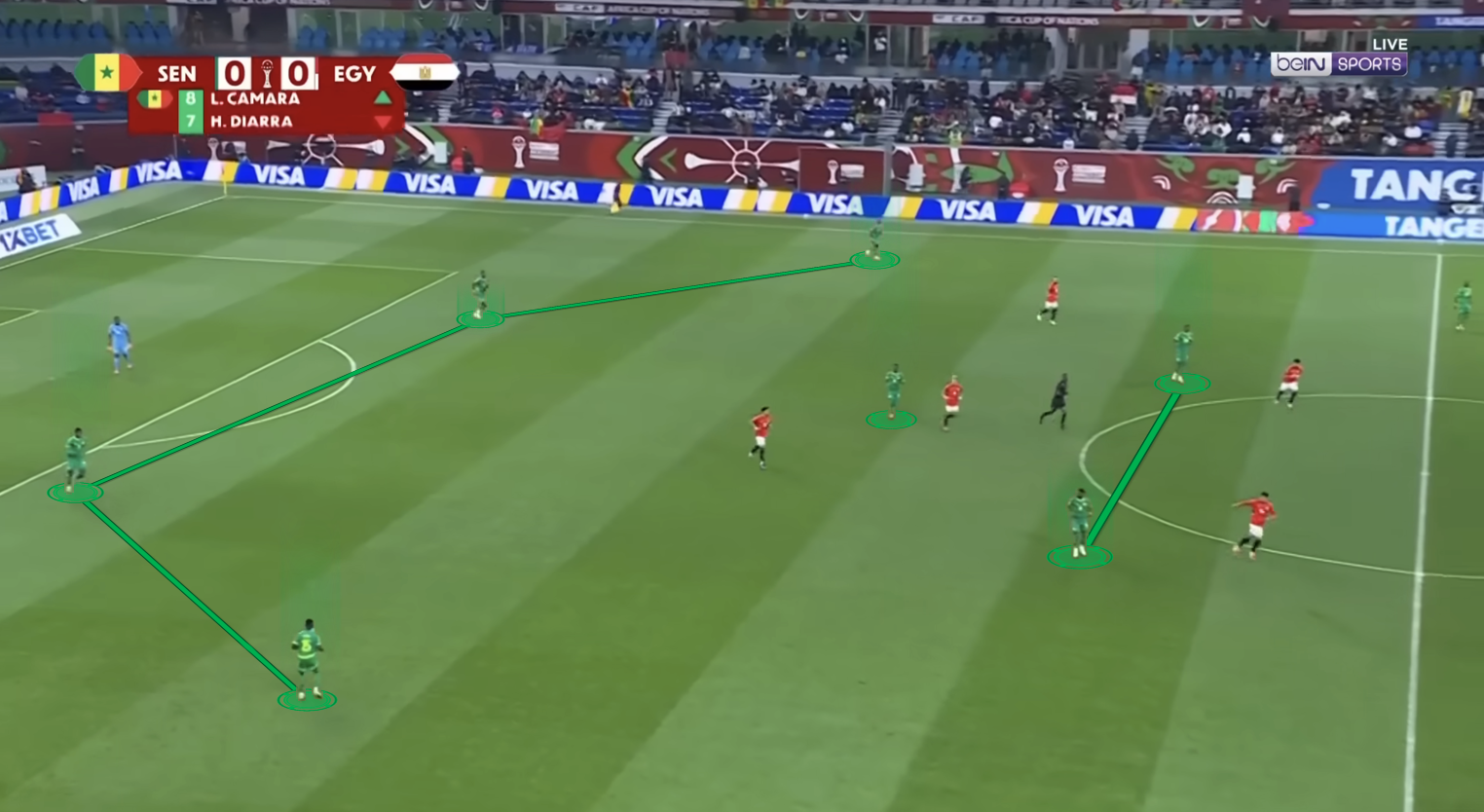
That means Senegal has rarely turned the ball over in their own end of the pitch, and the main focus during the entire tournament has been breaking down low blocks.
Even though they’ve scored 11 goals this tournament, when you look at how they’ve scored many of their goals, it’s really hitting opponents when they are out of position.
Take their first goal against Sudan as an example: they win the ball centrally, then quickly play a ball into Zone 14 for Pape Gueye to put it in the back of the net.
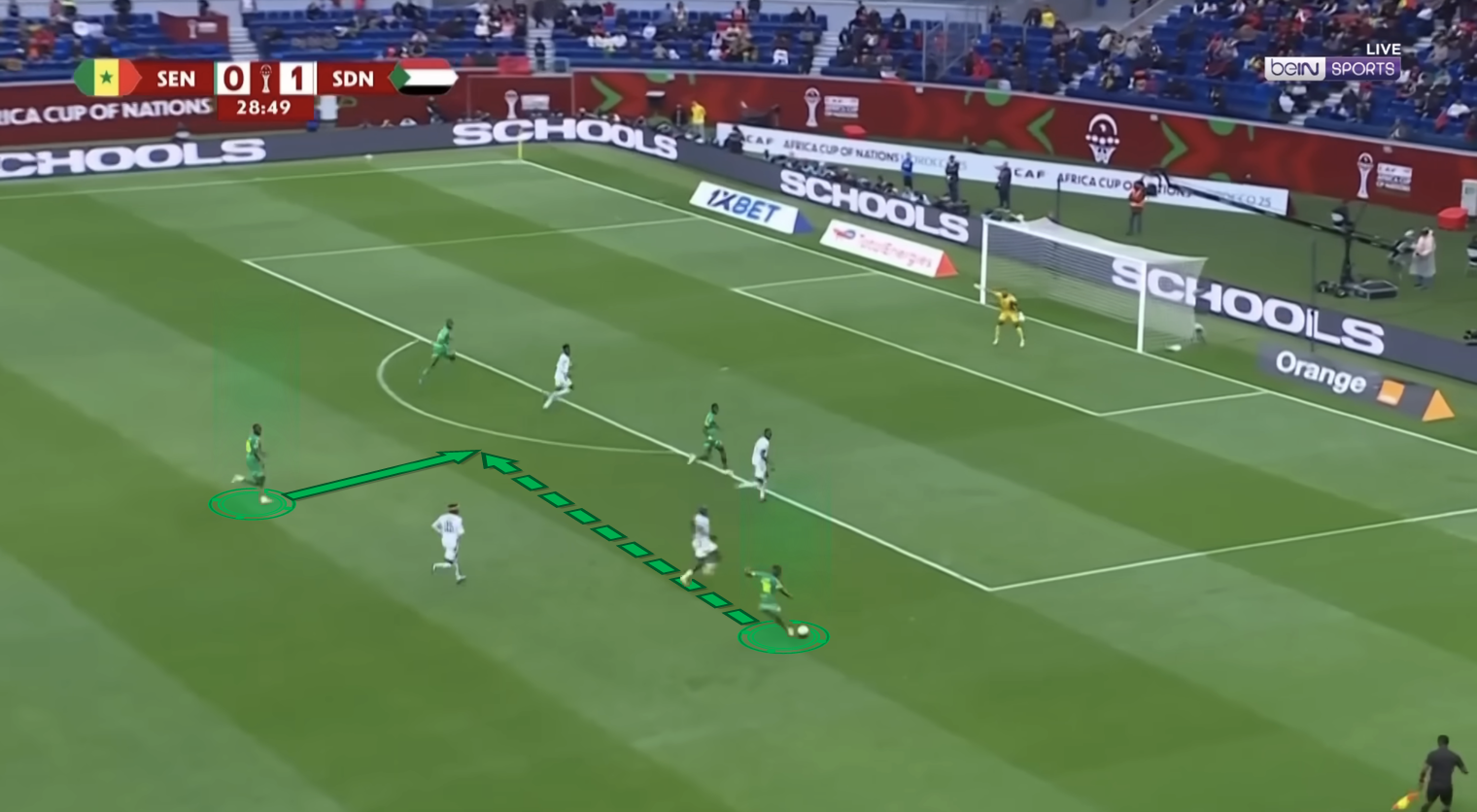
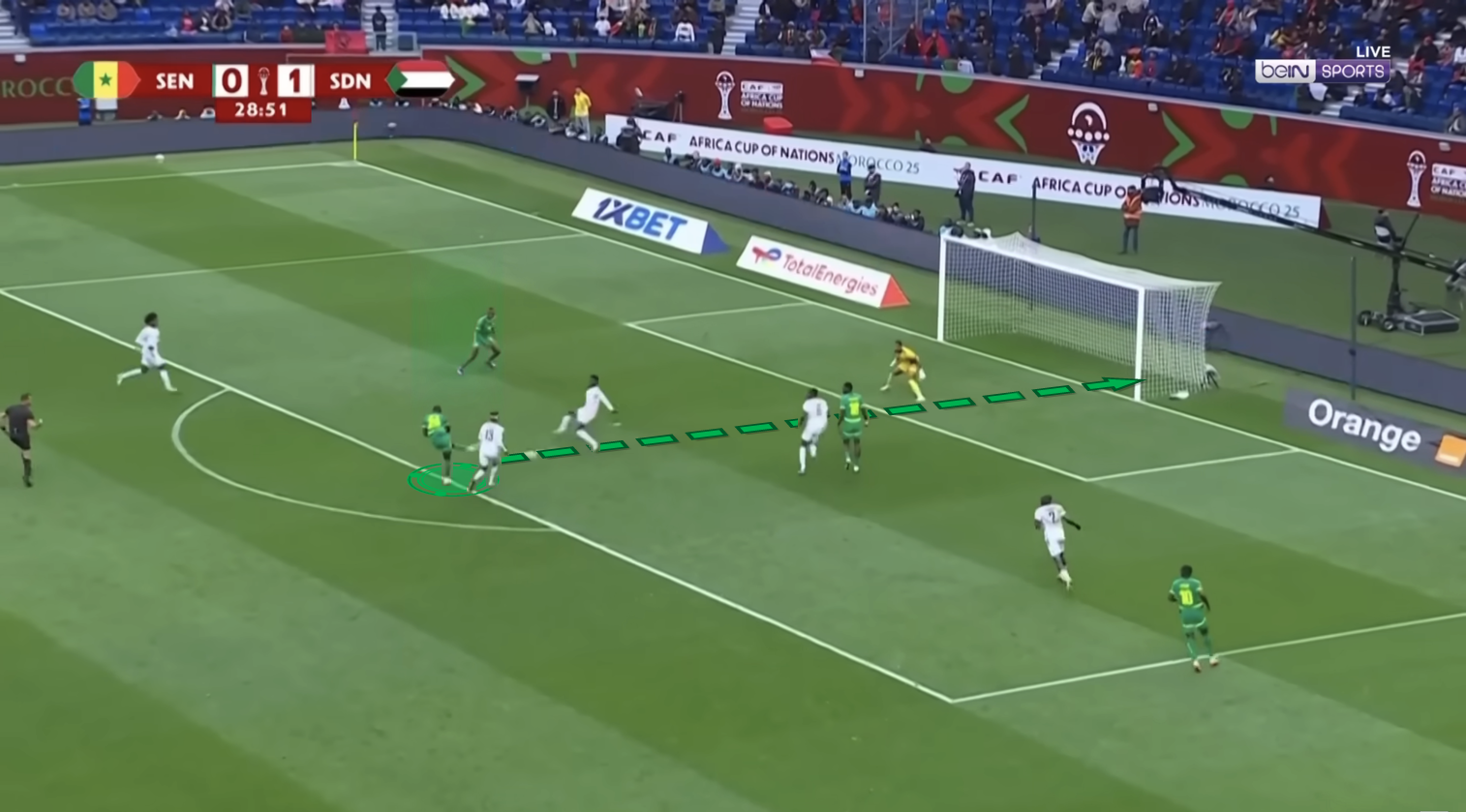
In their semi-final match against Egypt, they didn’t have many opportunities on the counter or in transition and were held to 0.33 xG from 12 shots.
In fact, nine of their 12 shots came from outside the box.
While Senegal has attempted a lot of shots throughout this tournament, their xG per shot during the knockout stage is only 0.08.
Morocco Vs Senegal Mid-Block
Morocco had been racking up chance after chance during the group stage, but they actually haven’t been that great offensively during the knockout stage.
They were held to 1.01 xG on 12 shots against Tanzania, 1.43 xG against Cameroon (1.04 of that was from set-pieces), and 0.86 xG on 16 shots over 120 minutes against Nigeria.
The issue is that, now that they’ve had to face better mid-to-low-block defending teams, they are having quite a few issues playing through the middle of the pitch.
Early on in the tournament, they tilted the field against every single opponent, building up in a 2-3-5 formation, trying to overload the opposition’s last line of defence and stay very narrow.
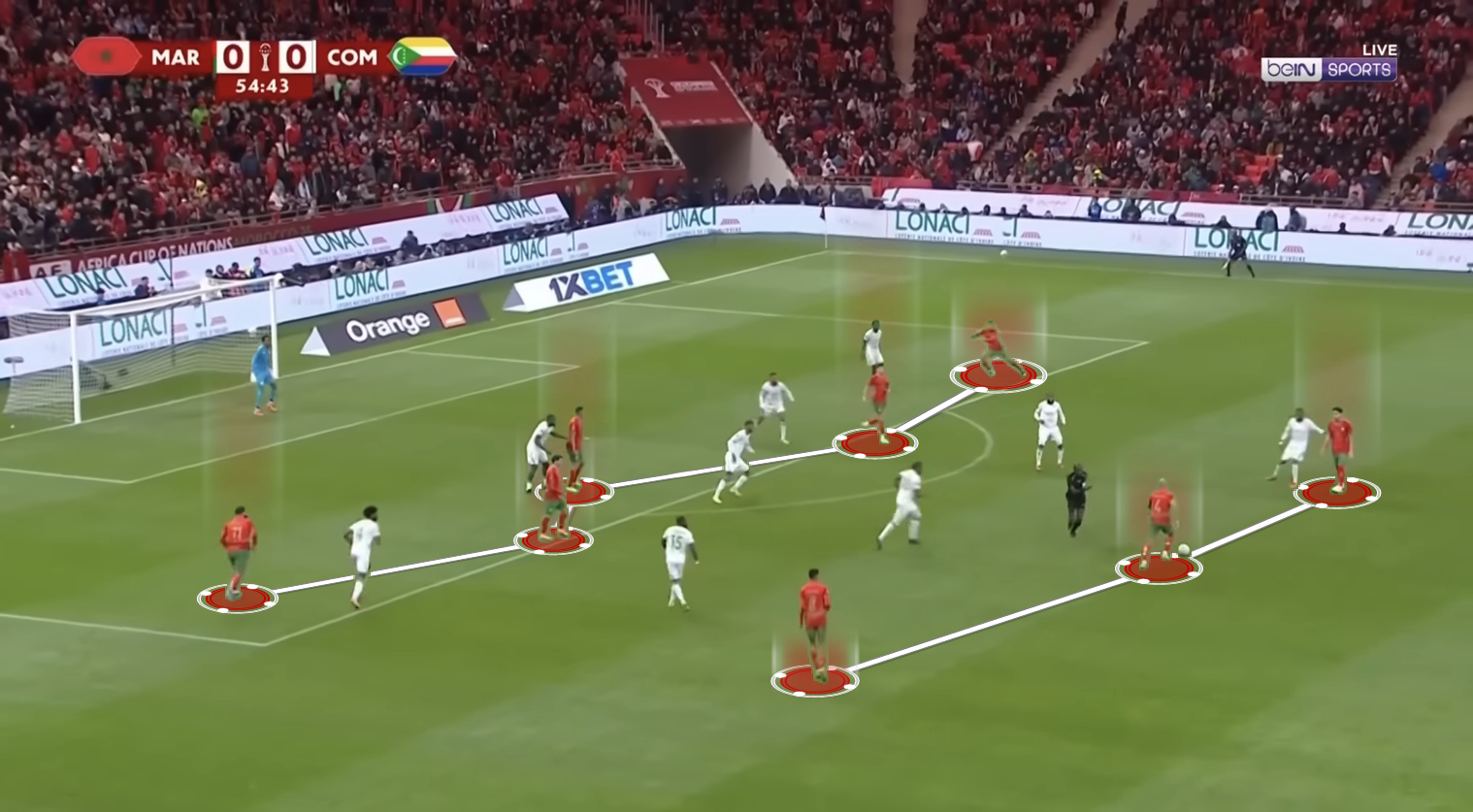
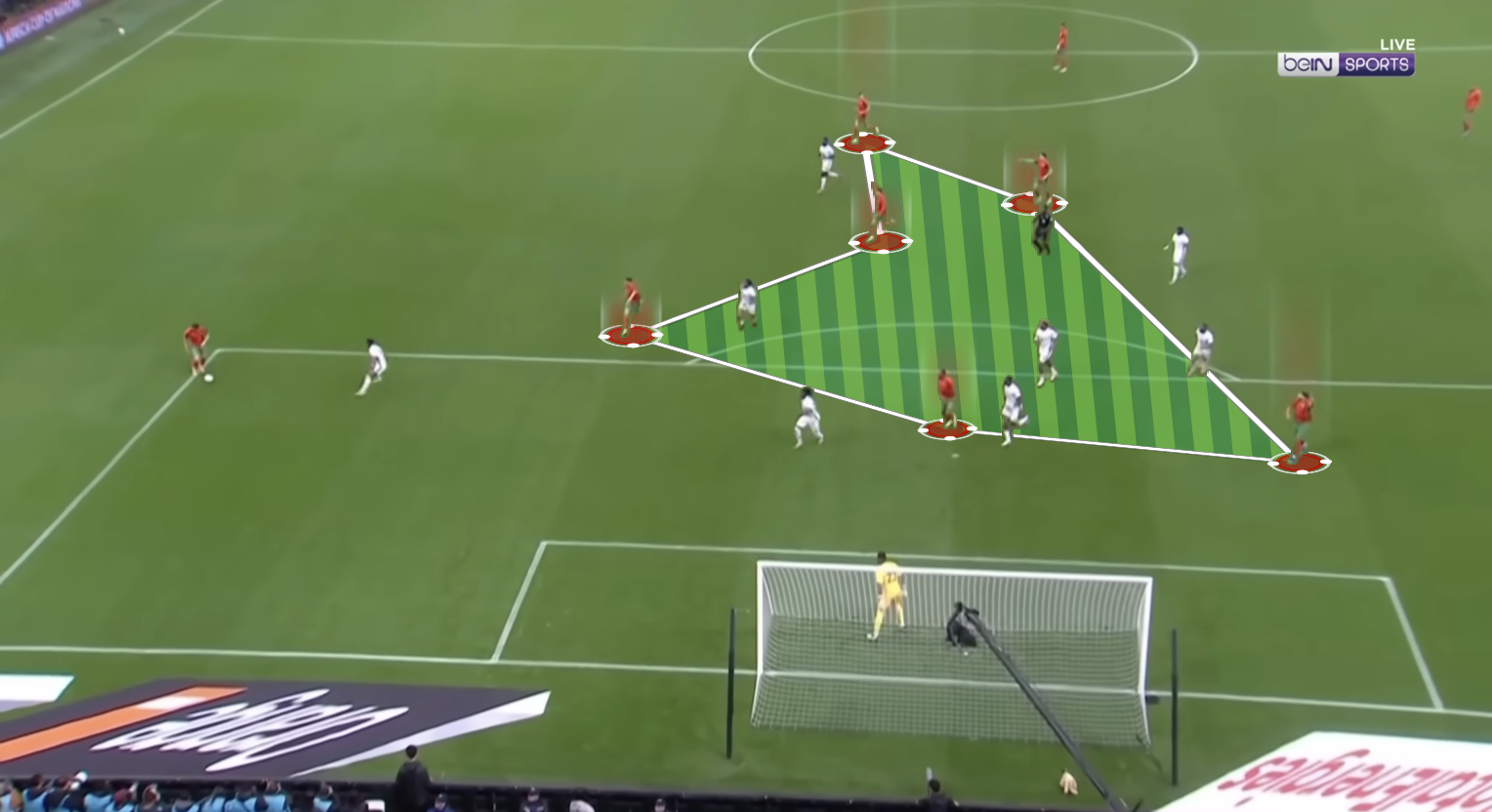
Even though they tend to play pretty narrow, one of the goals is to isolate their wingers out wide.
This behind-the-net camera shot is a good example of how many bodies Morocco commit to the middle of the pitch, and the space it opens up out wide for another best player, Brahim Diaz, to go 1-v-1 against the full-back.
Senegal has been pressing most of their opponents high up the pitch throughout this tournament, but have also been very effective at generating turnovers from their mid-block.
Nigeria sat in a mid-block against Morocco and gave them all sorts of problems, not only forcing turnovers, but also denying any passes through the middle.
In the last two matches alone, Senegal has forced 30 high recoveries, and they also have the second-best PPDA in this tournament at 8.2.
What also happened when Morocco was facing a lot of low blocks is because they tried to overload the middle and teams would not let them play through there, the ball would often drift wide where they would create passing triangles.
You can see here that Achraf Hakimi drifts wide to hug the touchline, not allowing Diaz to make a run into the half space, beat his man, and put the ball in the back of the net from a tight angle.
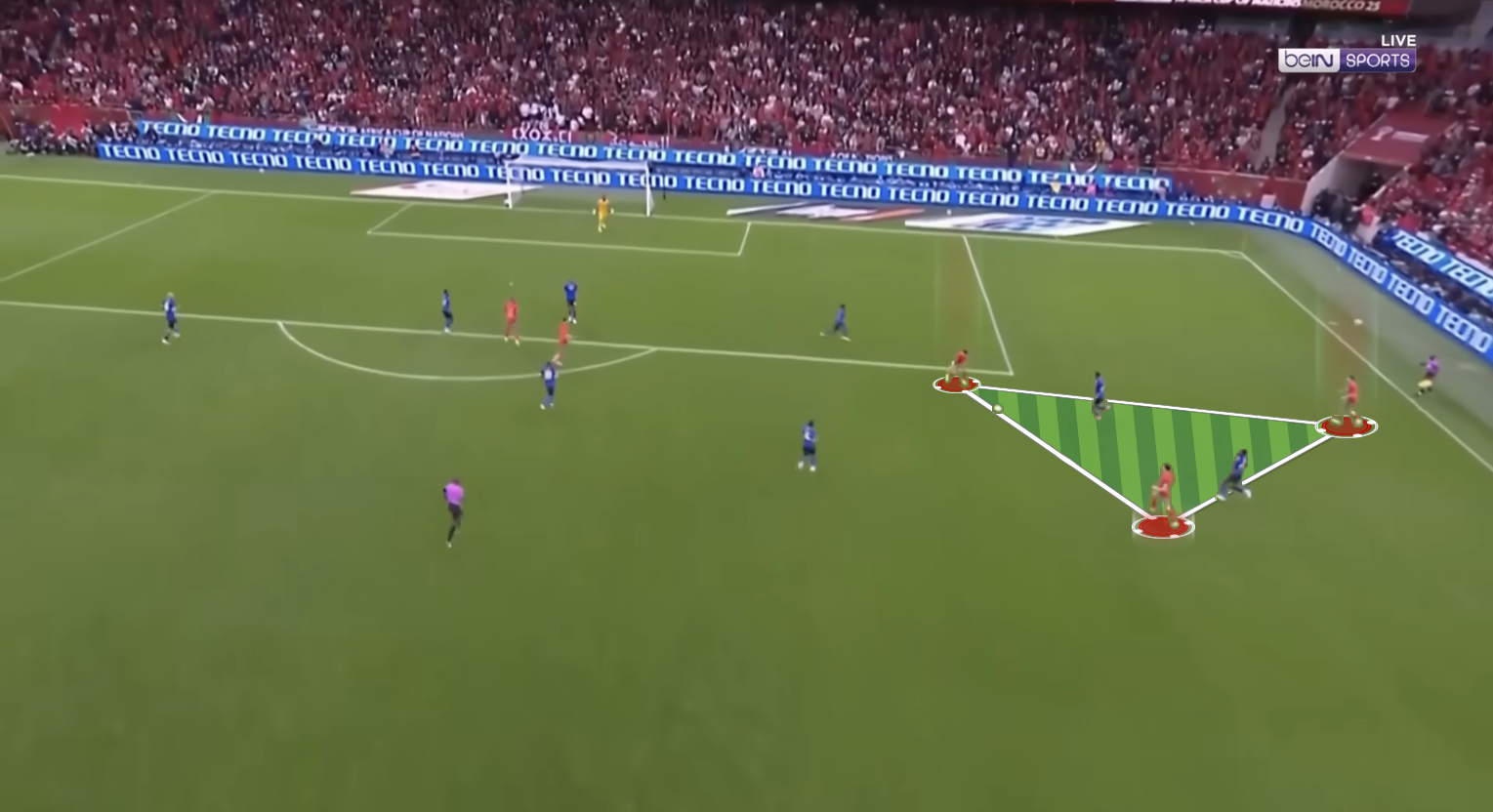
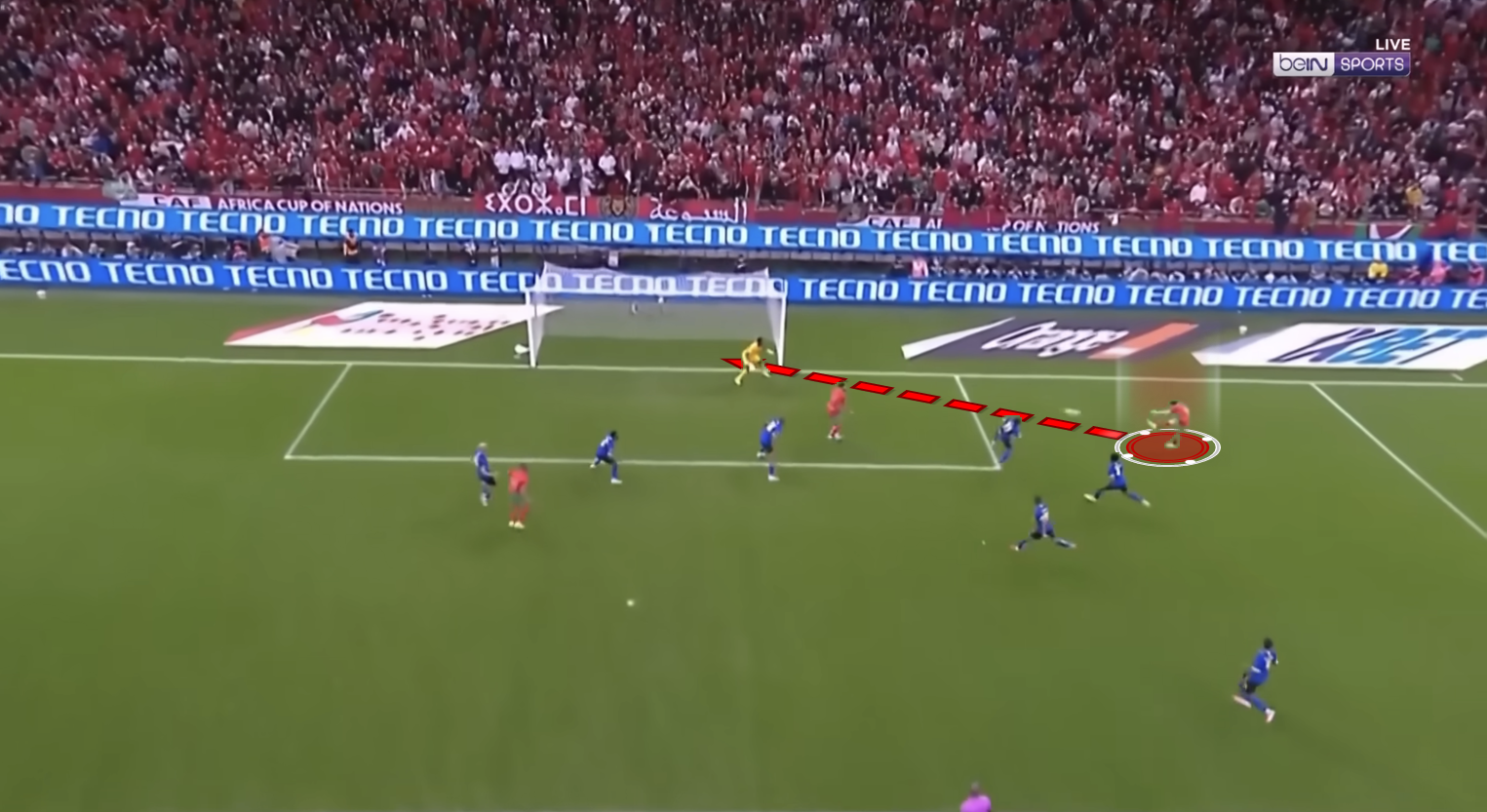
Once Senegal are sitting in their low block, Morocco are more than likely going to be forced to win these 3-v-3 matchups and try to create chances from out wide.
Keys To Victory
It’s going to be really difficult for Morocco to create much from open play if they can’t play through the middle and have to rely on crosses into the box.
Senegal is winning close to 55% of their aerial duels in this tournament and have allowed very few crosses into their penalty area.
Set-pieces are going to play a major part because it is a final, and both teams are likely not going to attempt many risky passes early on, fearing a counterattack.
Morocco have scored four goals from set-pieces (two versus Cameroon in the quarter-finals), mainly using an outswinging ball, with a majority of their players making a run from the top of the 18-yard box to the six-yard box.
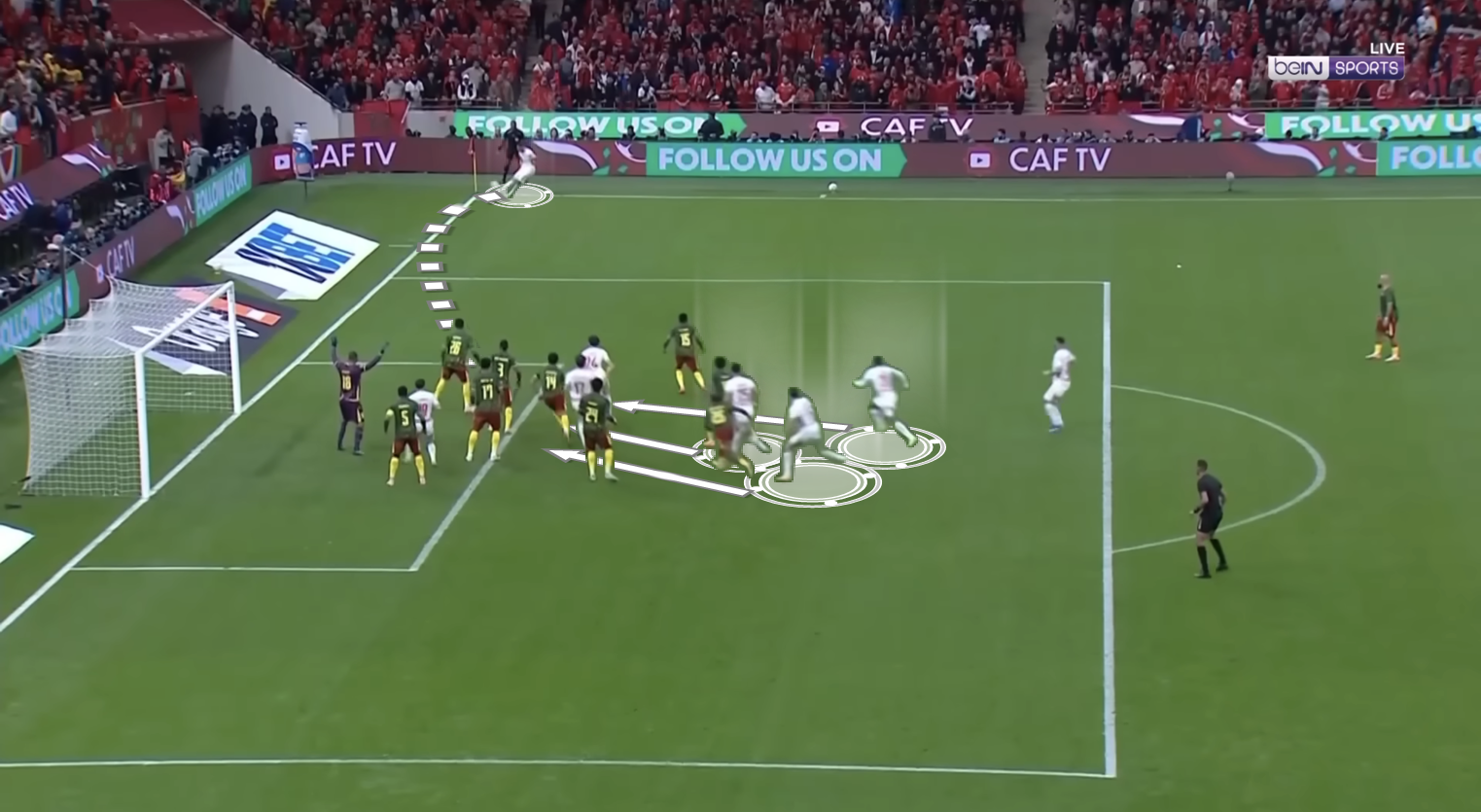
Senegal haven’t allowed a set-piece goal from 14 shots, but Morocco will likely put a big emphasis on scoring from one, considering they’re probably going to struggle from open play.
For Senegal, the key to victory is fastbreaks.
They lead the tournament with 10 fastbreak shots and need to quickly hit Morocco whenever they have the chance.
If Morocco get settled back into their defensive structure, it’s a very low and compact 4-2-3-1, allowing no space through the middle, but they do allow free passes out wide.
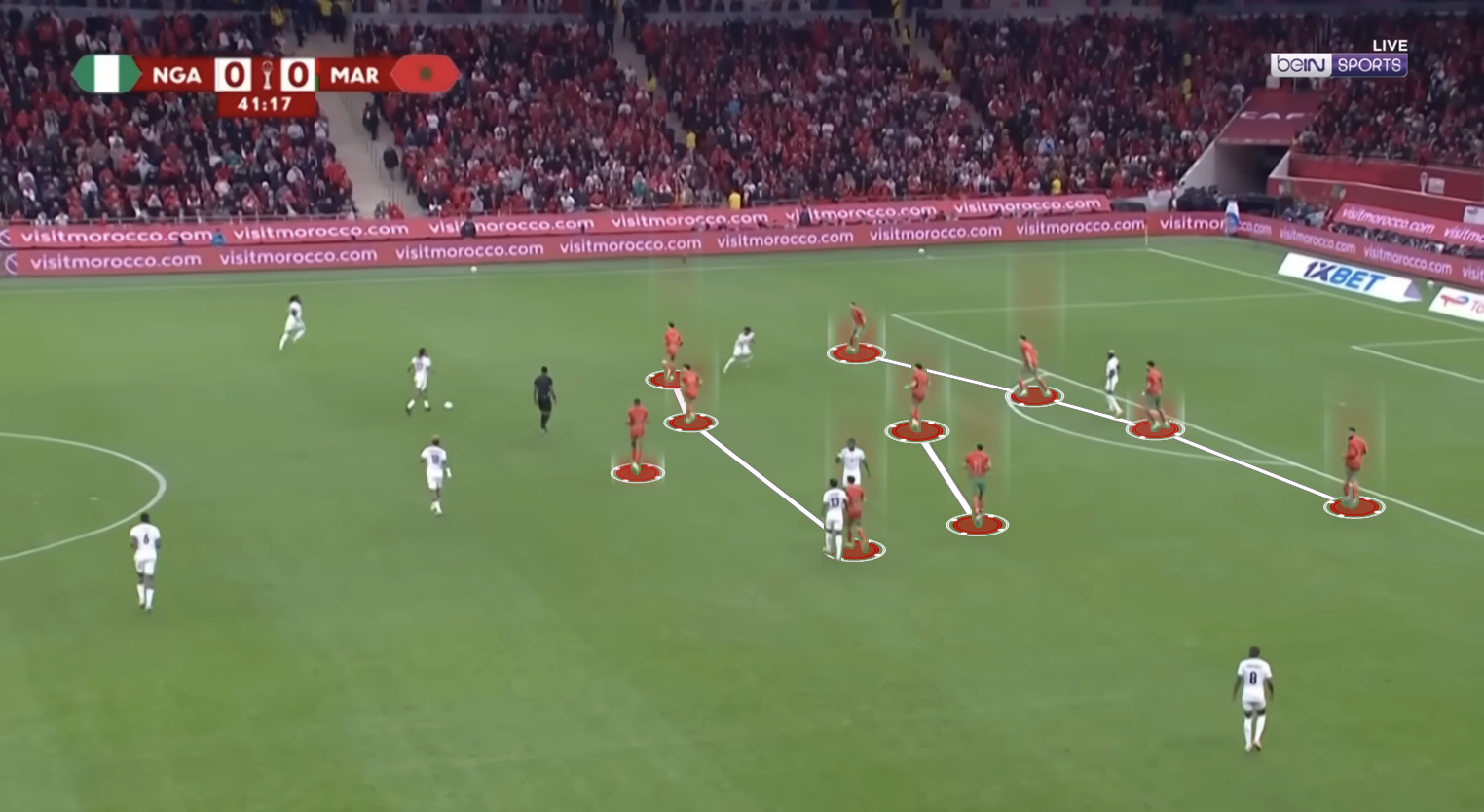
When Senegal get into the final third, you may see Mané and Ndiaye drift into wider positions if Morocco are going to play incredibly narrow to get them isolated 1-v-1 against Noussair Mazraoui and Hakimi.
Outside of transition moments, this will be Senegal’s best chance of creating chances because there isn’t going to be much space through the middle of the pitch.
Conclusion
What is very clear about this final is that the battle for the centre of the pitch is going to be vitally important.
Both teams want to play through their own, but Morocco, especially, defend in a very compact defensive block in the final third.
The other key aspect is who can hit the other in counterattacks or quick transitions, because when either team gets set in their defensive structure, they are virtually impossible to break down.
Senegal have allowed only 3.6 expected goals, and Morocco has allowed only 2.6 over the course of the entire tournament.
Much like the two semi-final matches, both teams will likely play very conservatively, looking for control and not taking too many chances with aggressive passes through the middle of the pitch, so it’s probably going to be a really low-event match.
In total, between the two semi-final matches, there was only one goal scored and 1.39 expected goals created.
It will be interesting to see who holds the majority of the possession because I believe both teams could benefit from not having as much control and looking for counterattacking opportunities.
It should be a really fun and interesting tactical battle between what are clearly two of the best teams in Africa.
Senegal are looking to take home their second Africa Cup of Nations after winning it 2021, while Morocco are looking for the dream ending of their first title since 1976 on home soil.
It’s likely going to be a nervy final with not a lot of high-quality chances, but it’s about as high-quality a final as you could have asked for before the tournament started.
