
Paris Saint-Germain brought home a victory from their UEFA Champions League trip to North London.
They beat Arsenal 1-0 in the first leg of their Champions League semi-final.
As Mikel Arteta pointed out in his press conference, it was a victory down to the small margin and the efficiency of PSG’s attack.
Well, Arteta will be hoping he has a full-strength side for the second leg.
He certainly may be hoping that one of Kai Havertz or Gabriel Jesus will be there, as Arsenal do not look particularly efficient up front.
In that game, Arteta used a front three of Gabriel Martinelli, Leandro Trossard and Bukayo Saka.
He couldn’t play Mikel Merino up front because he needed the Spaniard in midfield after Thomas Partey was ruled out of the first leg.
It wasn’t the ideal lineup to face PSG, who had young, energetic, and quick attackers in Ousmane Dembélé, Khvicha Kvaratskhelia, Désiré Doué, and Bradley Barcola coming off the bench.
However, if you examine the game, Arsenal’s defeat was not solely due to their attacking personnel.
It was more about how Luis Enrique was able to outsmart Arteta in certain aspects of the game.
Yes, the underlying numbers may favour Arsenal, as they had 1.63 expected goals (xG) compared to PSG’s 1.16.
However, if we take out Martinelli’s chance in the 40th minute, which was arguably offside, Arsenal only have 0.80 xG, and you can see why the exact score is 1-0 to PSG.
This Arsenal vs PSG tactical analysis examines the PSG tactics that defeated Arsenal and why Mikel Arteta was unable to outsmart Luis Enrique tactics for the entire 90 minutes.
Arsenal Pressing Vs PSG
From the outset, Arsenal tended to press PSG with five or six players.
They tried to overload PSG’s first phase of the build-up, or at least not be outnumbered there, to prevent PSG from moving the ball forward.

By trying to make it difficult for PSG to advance through the middle, Arteta may have hoped to force PSG to play long or move the ball to the side, allowing Arsenal to overload PSG there.
However, that’s not what happened.
PSG were able to take advantage of Arsenal’s pressing.
Knowing that Arsenal would press high with at least five players, PSG created an advantage up front, where they were also able to clear situations when outnumbered.
Enrique instructed one of his players to stay up in the build-up.
It could be one of his midfielders or one of his full-backs. It depends on the situation.
But the idea was clear: as he knows it’s challenging to get forward with short passes through the middle, he wants his team to move the ball up the pitch more quickly to gain an advantage up front, where they have the numbers.
And that is precisely what is happening in their goal.
PSG got the ball back to their centre-backs, and Arsenal directly jumped at them.
This created a 6v5 situation that favoured Arsenal in the PSG half.
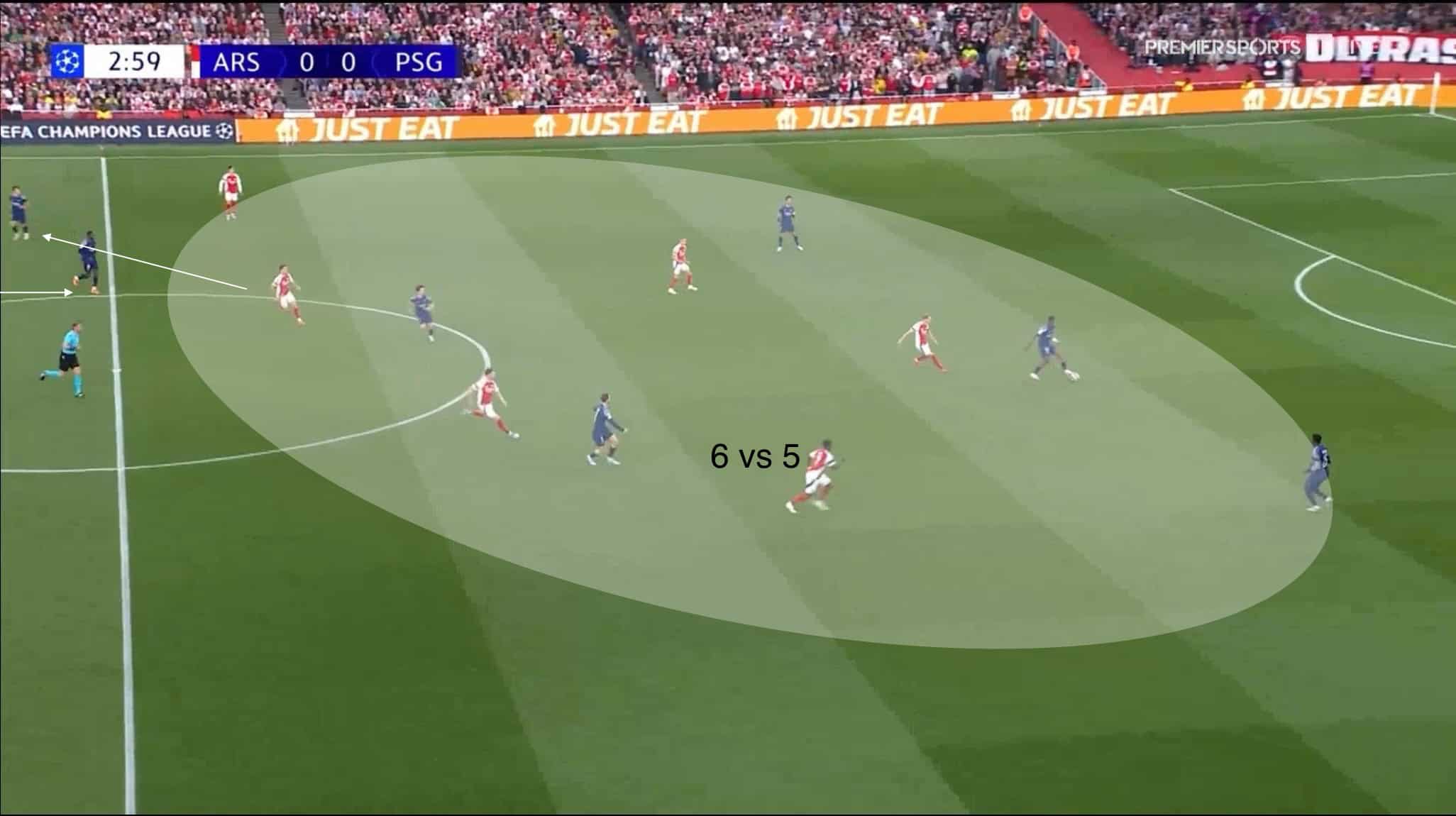
But it also created a space between Arsenal’s attacking unit and their rest defence.
Dembélé was clever enough to move into that space between the lines while João Neves moved up front.
Neves’ movement also helped to keep one of the Arsenal defenders from jumping into the space between the lines.
Soon, Arsenal’s defensive line was faced with a 6v4 situation.
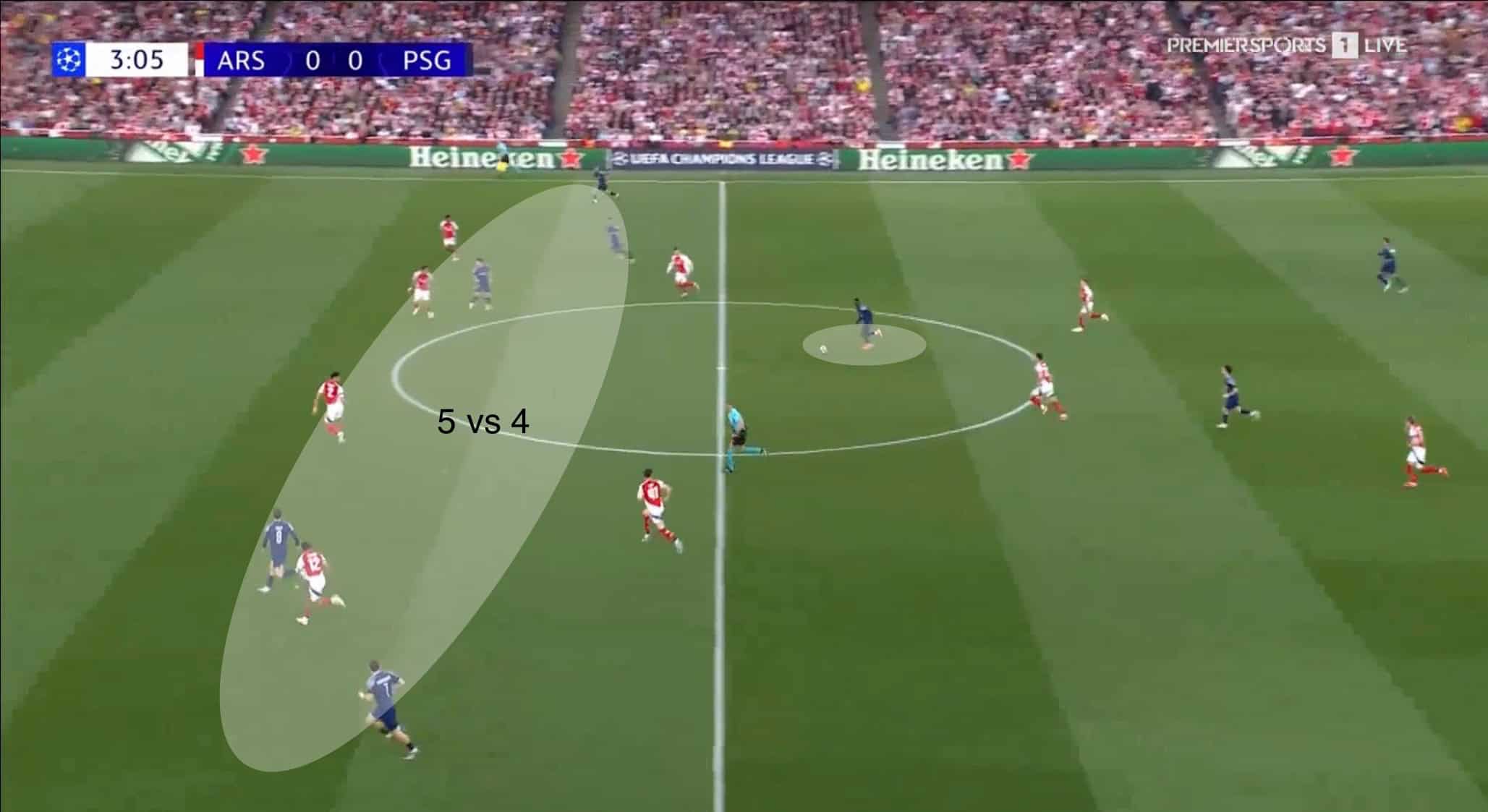
As Arsenal’s backline continued to drop, it caused disorganisation at the back and left Dembélé, who was late to arrive after the drop, free to receive the ball and take a shot.
Mikel Arteta Tactical Change Vs PSG
Arteta is a clever manager, and he has answers for what happened on the pitch.
Midway through the first half, he changed his team’s approach.
Firstly, he ensured that his four players (Martinelli, Trossard, Saka, and Martin Ødegaard) did not interfere in PSG’s early build-up sporadically.
Ødegaard, for example, changed his approach.
He didn’t run at PSG’s central defenders as aggressively as he had before; instead, he closed off the passing lane or marked Vitinha.
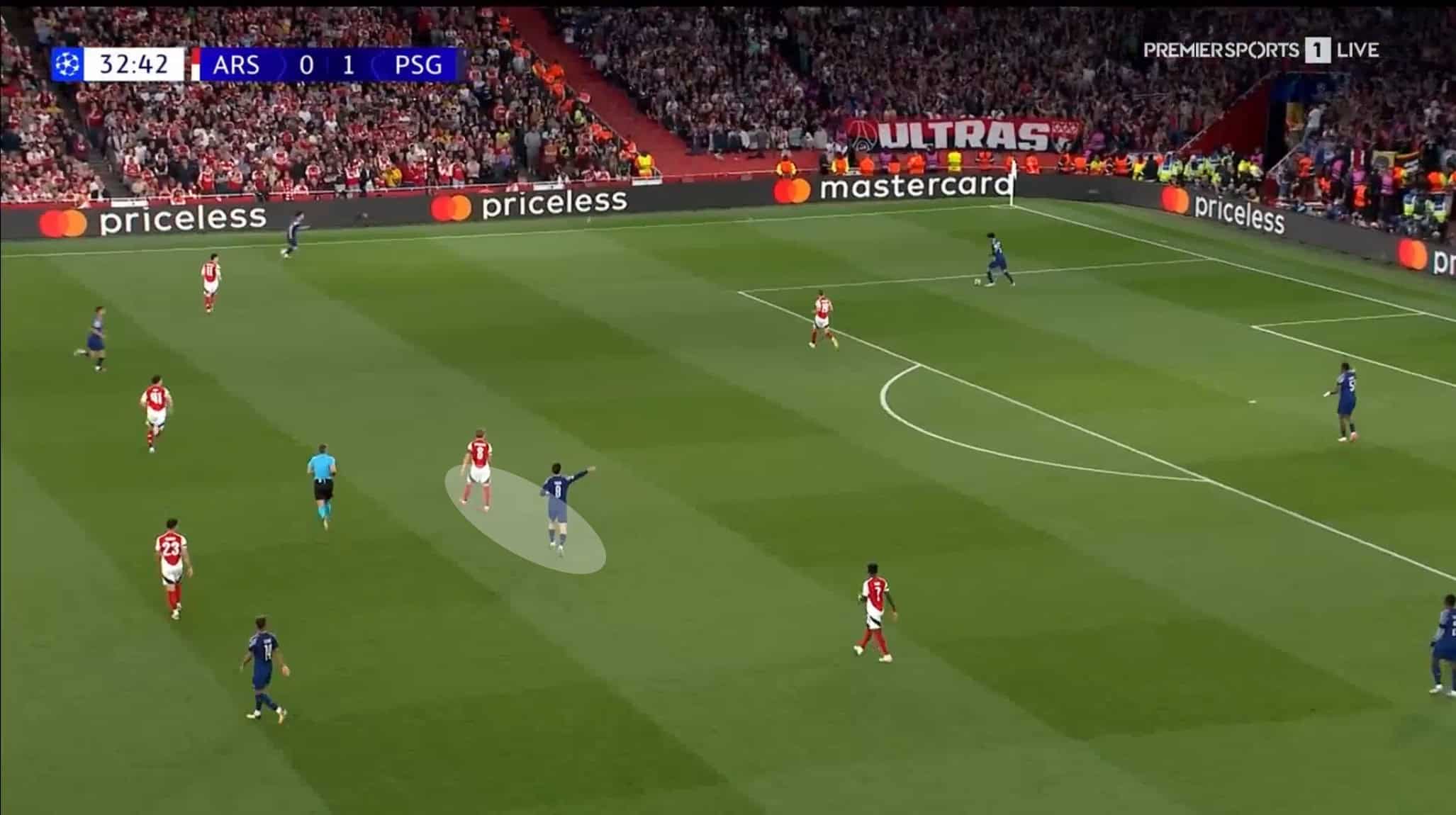
It was a sacrifice to have one of the PSG defenders in a position to receive the ball, but Arteta seems to prefer it to having his player jump and leave the space between the lines.
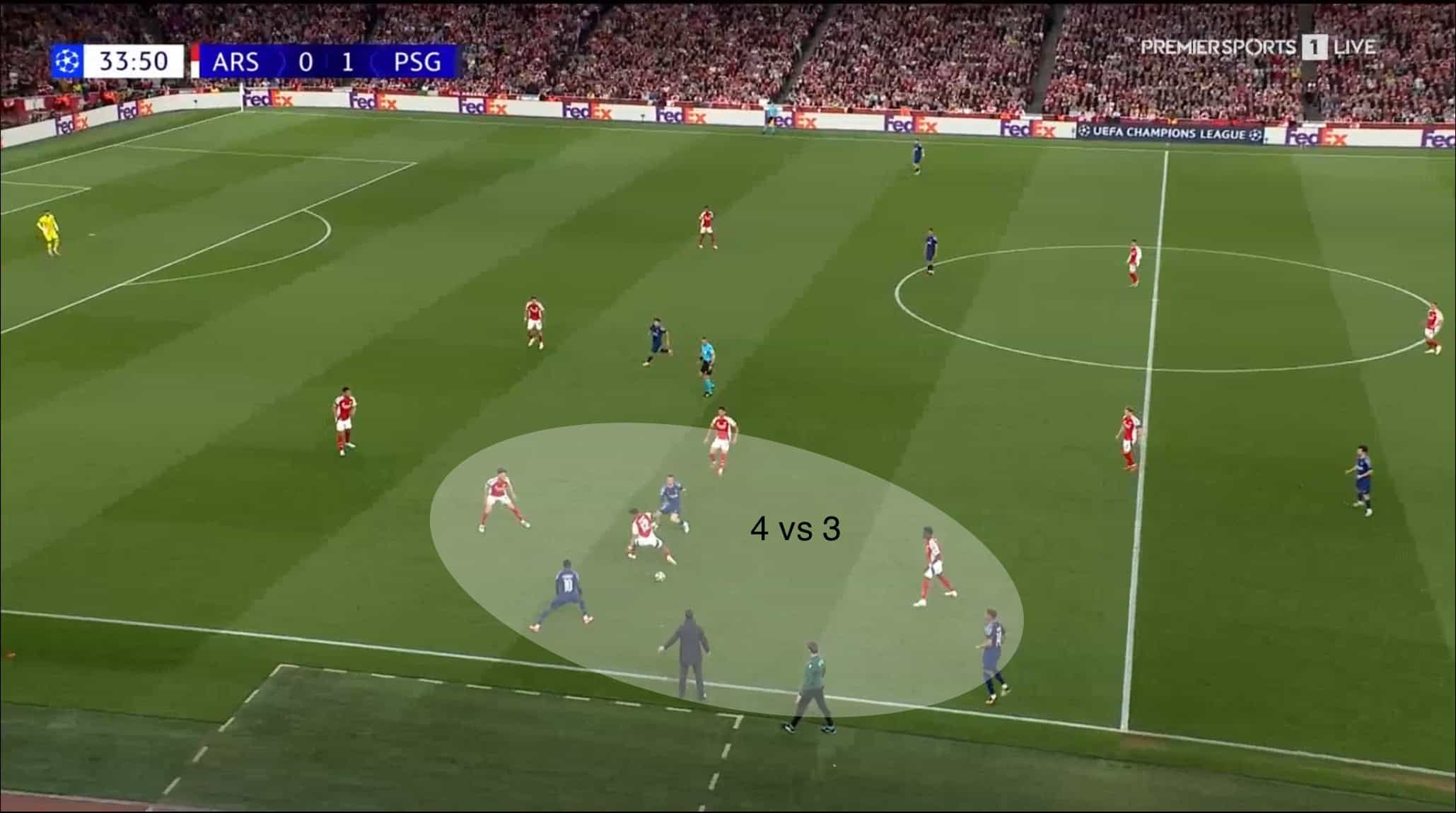
This adjustment also meant that Arsenal’s midfield duo of Merino and Declan Rice had two different roles to play.
One can help the four players jump, and one can stay between the lines to cover the space, protect the defenders, and track back Dembélé or any other PSG player who wants to exploit that space.
Look at this example.
Instead of helping Ødegaard to cover Vitinha, Rice and Merino didn’t jump and decided to stay in their zone.
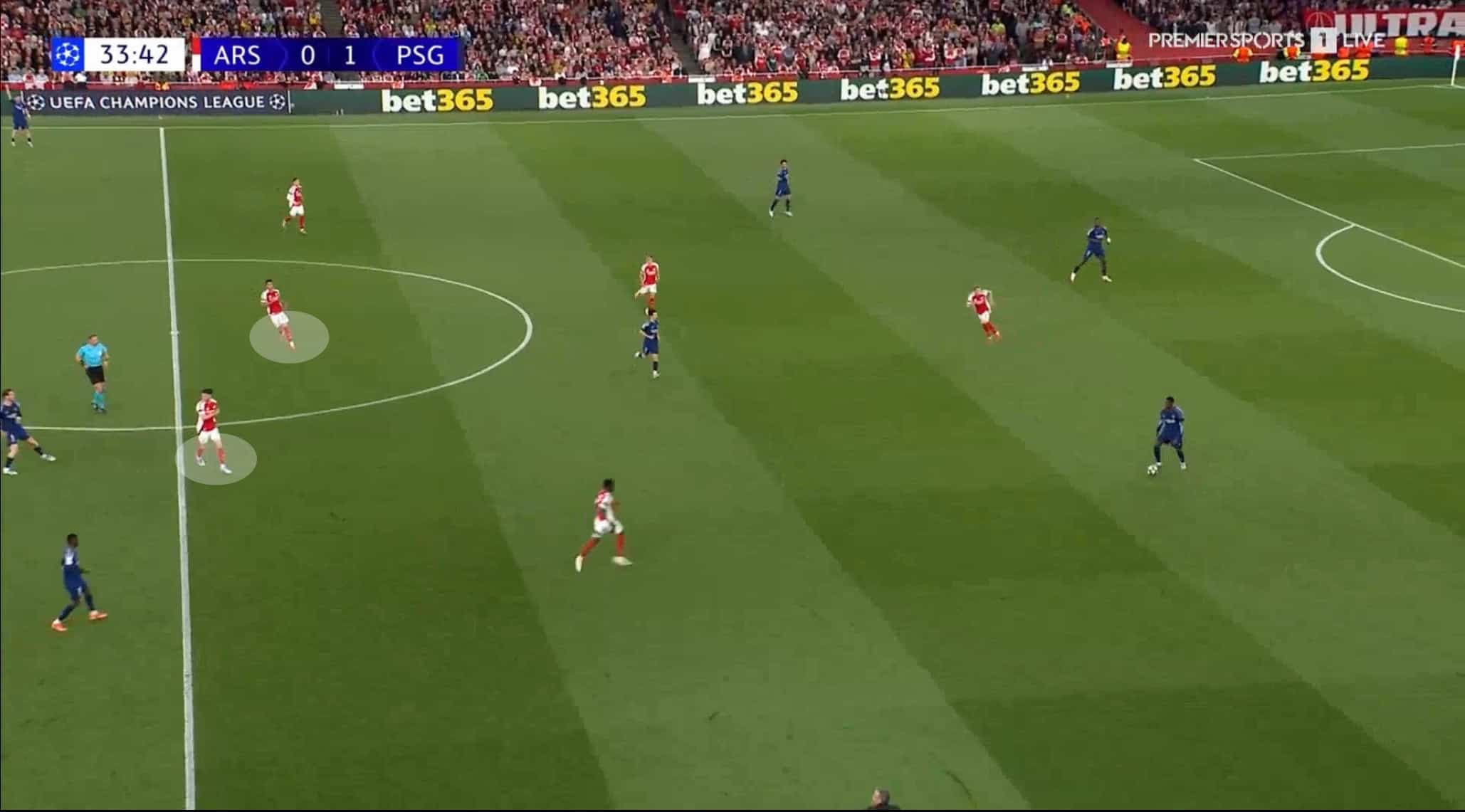
In Rice’s case, he even noticed that Dembélé was close to him, and then Rice decided to track him back.
The sequence ended with Arsenal regaining possession as they, with the help of Rice and Merino, also successfully overloaded PSG on the flank.
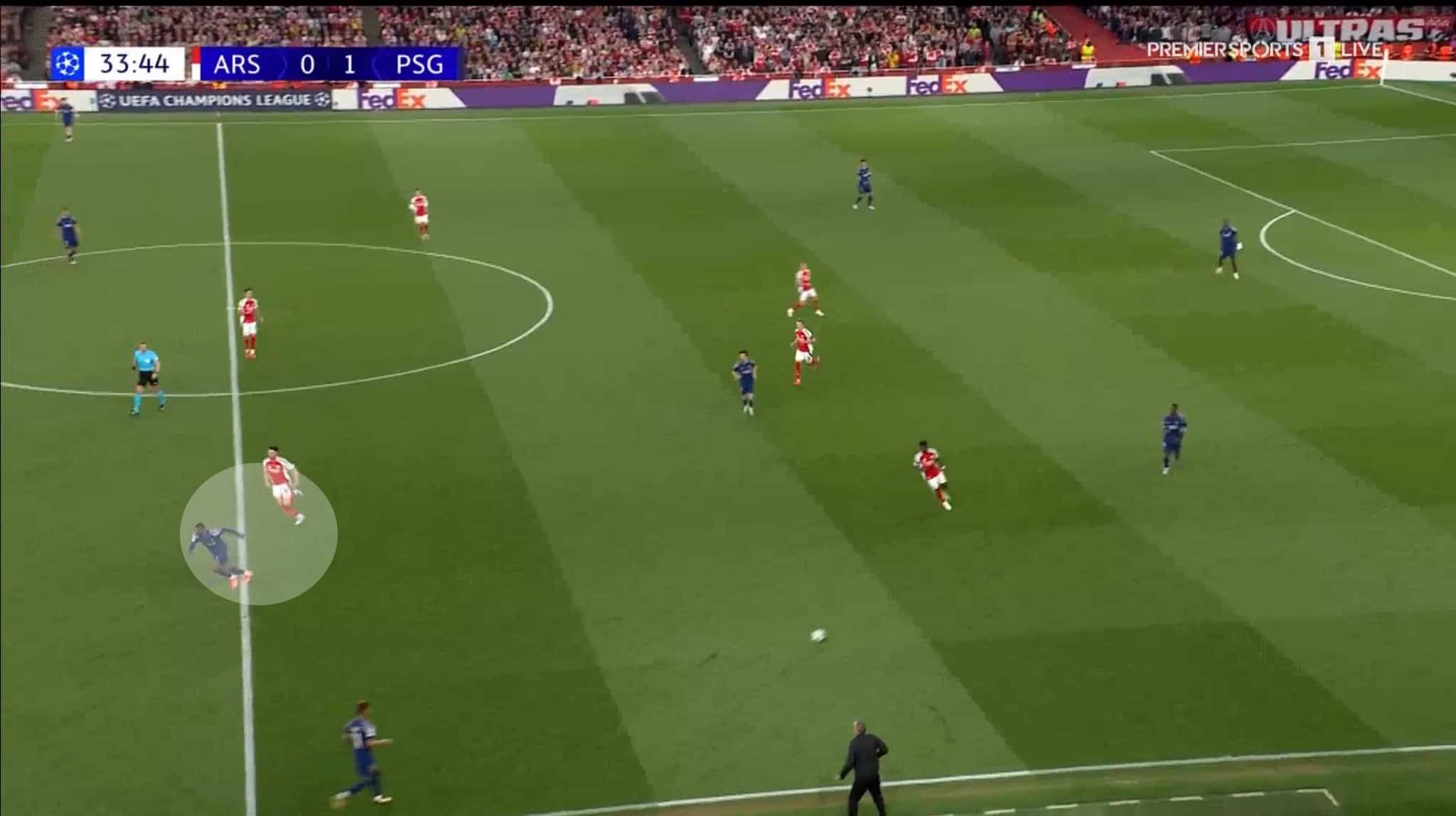
The change helped The Gunners take control of the game, neutralising PSG’s attack and even allowing them to go 40 minutes without a shot.
Mikel Arteta Exploiting Hakimi
In possession, Arteta also saw what he needed to exploit throughout the game.
One clear idea was the decision to target PSG’s right flank.
One of the reasons for this was Achraf Hakimi‘s sporadic decision to press the Arsenal players.
Whether it was his decision or Enrique’s, it didn’t look good.
It may also have been part of the effect that Hakimi often stayed up wide when Les Parisiens had the ball.
However, when the group fell back, Hakimi was sometimes caught out of position.
This created space on PSG’s right flank, often leaving Marquinhos one-on-one with Gabriel Martinelli.
It also left Vitinha with the dilemma of whether to cover Hakimi or stay in the middle.
If he moved to the right, he could create space for Arsenal to exploit in the middle.
And that Hakimi situation created two golden opportunities for Arsenal in this match.
The first came towards the end of the first half.
Hakimi decided to take on Myles Lewis-Skelly, who dropped to the centre to receive the ball.
This created a 3v2 situation on PSG’s right flank.
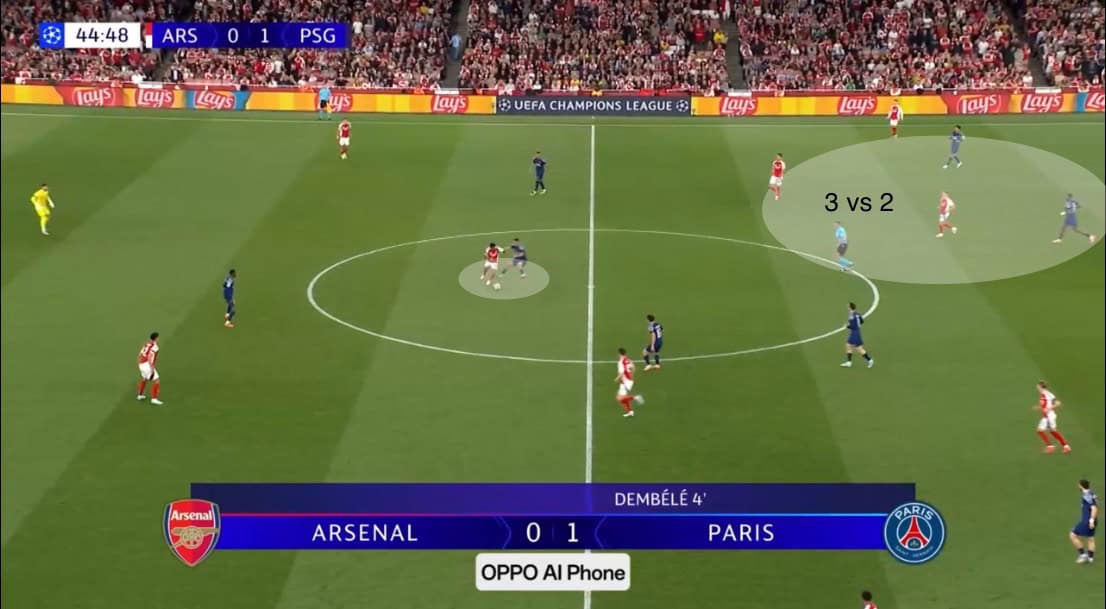
Lewis-Skelly moved into the space and later played the ball to Martinelli, who won the sprint against Marquinhos to the open space behind PSG’s defensive line.
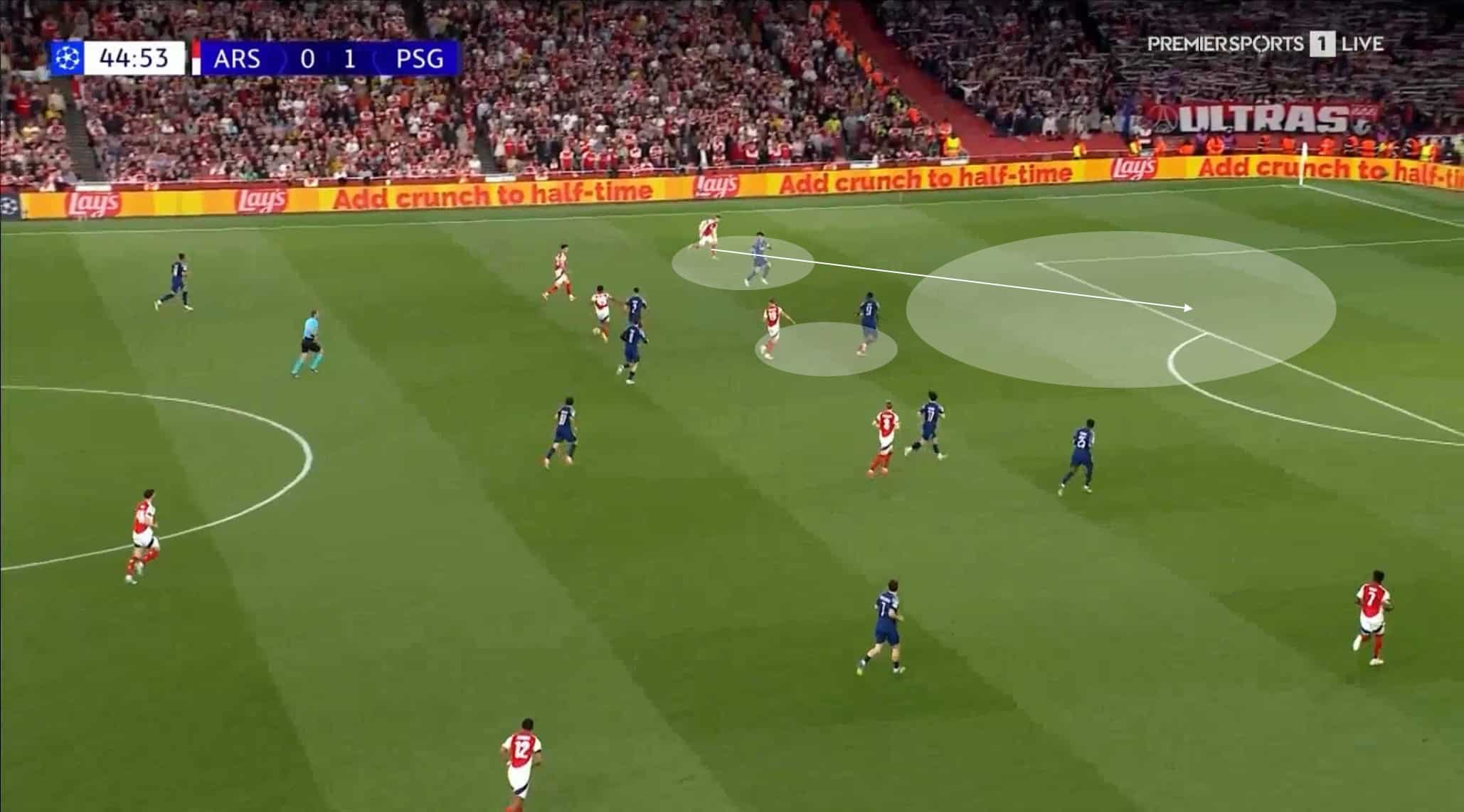
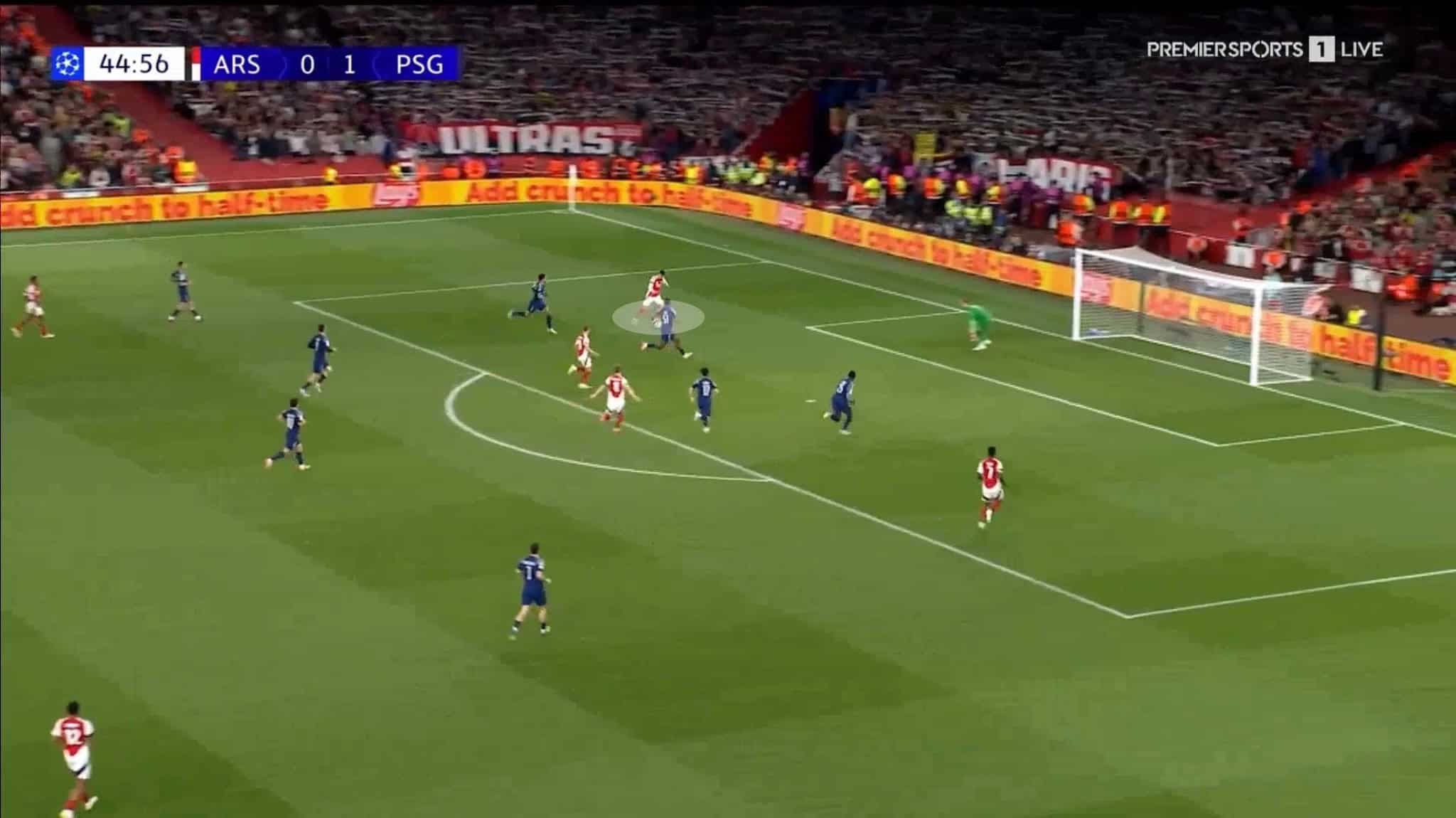
Unfortunately for Arsenal, Gianluigi Donnarumma was on hand to make a spectacular save.
The second was Trossard’s chance early in the second half.
It began with Declan Rice carrying the ball forward.
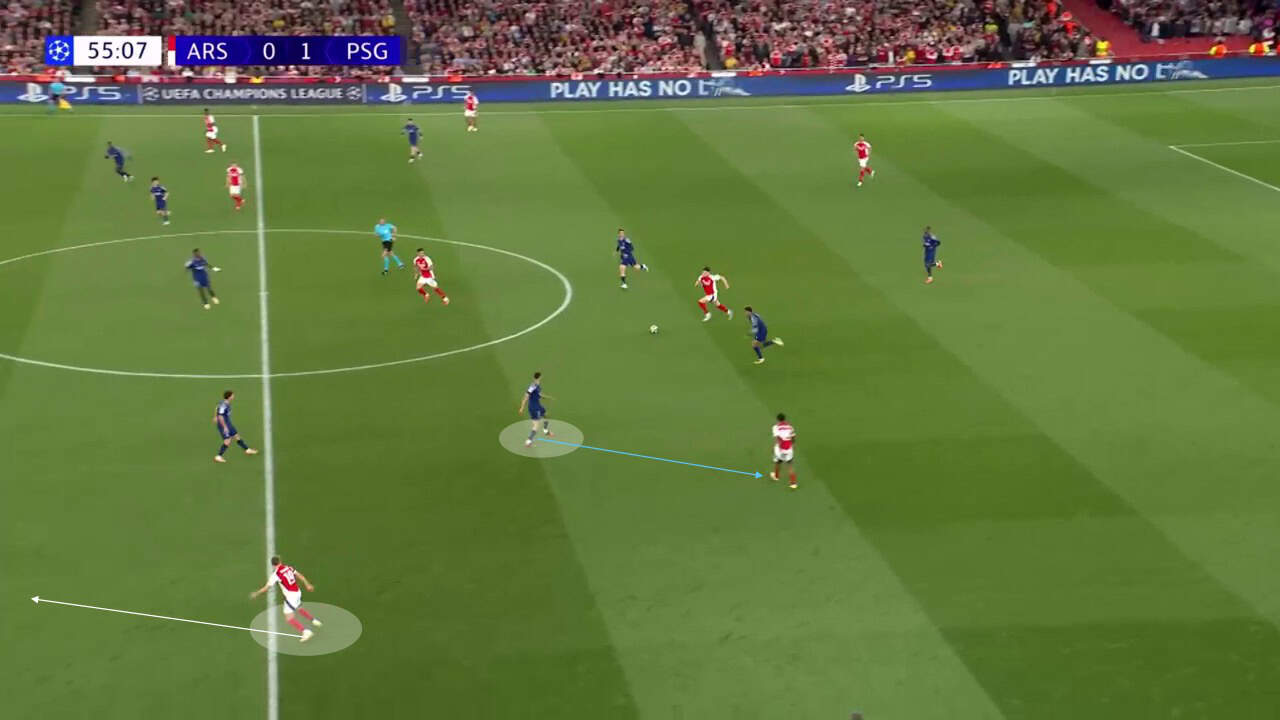
Instead of dropping back like the rest of the group, Hakimi decided to mark Lewis-Skelly, who was not technically in a dangerous position to receive the ball, as he was behind Rice.
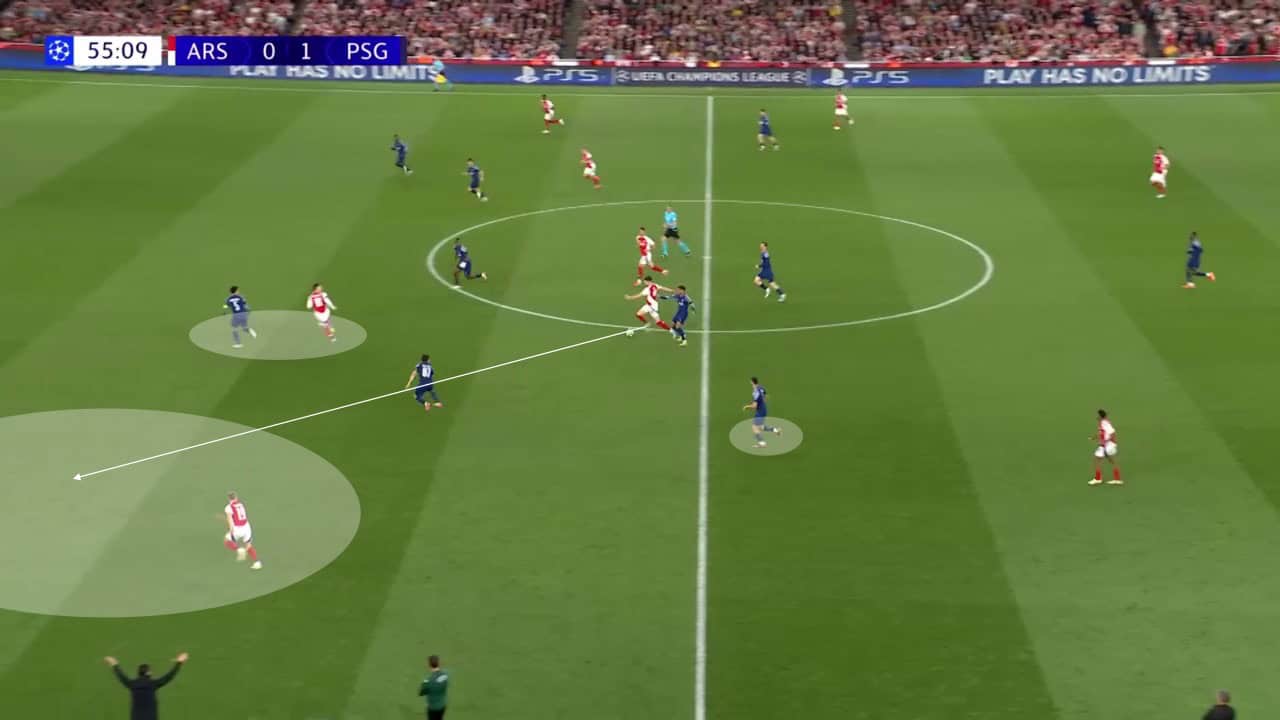
Hakimi’s decision put Vitinha in the aforementioned dilemma.
He opted to stay and protect the centre, leaving Trossard free on the right and allowing Martinelli to pull Marquinhos into the middle.
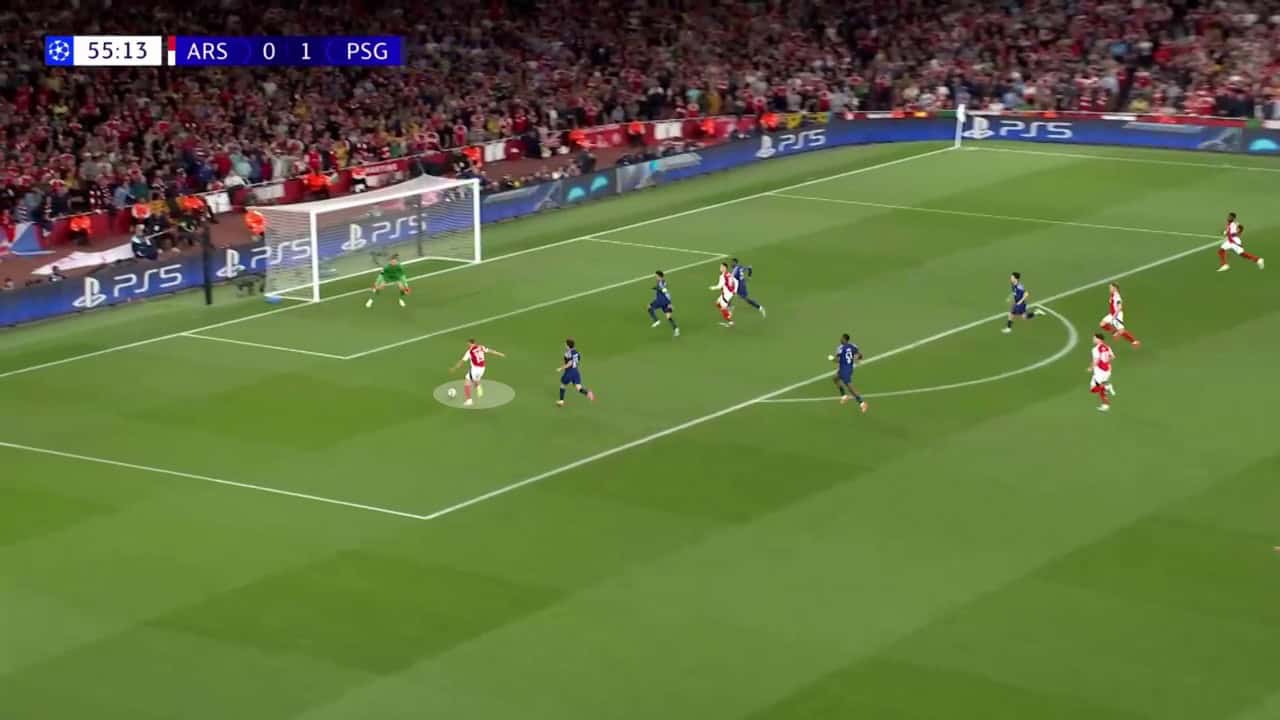
Trossard was left unmarked and ran into the penalty area.
Unfortunately for Arsenal, Donnarumma was again equal to the task.
Luis Enrique Tactical Changes Vs Arsenal
It was not only Arteta who made some good changes during the game in order to increase the team’s momentum.
Enrique also did his homework in the second half.
The interesting thing is that it started when Enrique had to take off Dembélé due to injury.
He replaced Dembélé with Barcola, and that changed PSG’s structure.
Enrique played Barcola out wide, which forced Hakimi to play in reverse.
Hakimi didn’t have to go up front as often, and it saved him travel, allowing him to stay on the right flank quicker.
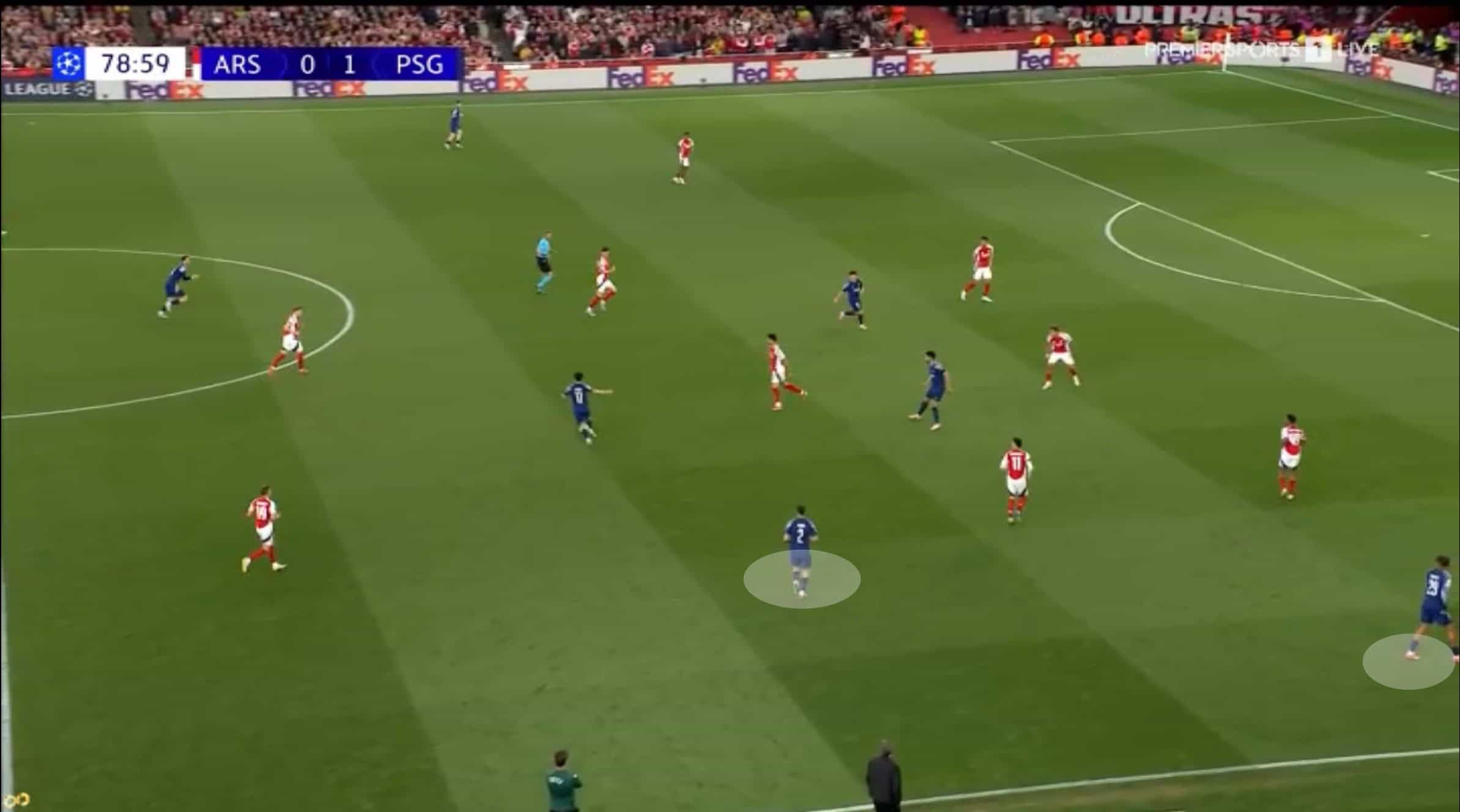
In general, Enrique also made Hakimi more defensively disciplined.
Instead of jumping sporadically, Hakimi was able to stay on the right flank and engage Martinelli in a fight.
It worked—after Barcola’s introduction, Arsenal managed just two shots, and that was in the closing stages of the game.
One even came from a free-kick, and both were only worth 0.10 in xG.
It was PSG who looked the more dangerous after 70 minutes.
Part of the reason for this was Enrique’s decision to bring on Gonçalo Ramos in the 76th minute.
For context, it was Ramos’ longest spell on the pitch in this Champions League knockout phase.
It means, of course, that Enrique brought him on for a reason.
And that was to make PSG more dangerous from the front.
Knowing that Arsenal successfully made his team’s build-up stuck, Enrique decided to go direct and fast again.
In order to do that, he needed a target man up front.
With Hakimi also playing inverted, Enrique was able to move one of his central midfielders to concentrate on the final third rather than the early stages of the build-up.
The result was another outnumbered situation against Arsenal’s resting defence.
Ramos even had a great chance after maximising a long ball that left PSG 5v4 against the Arsenal defence.
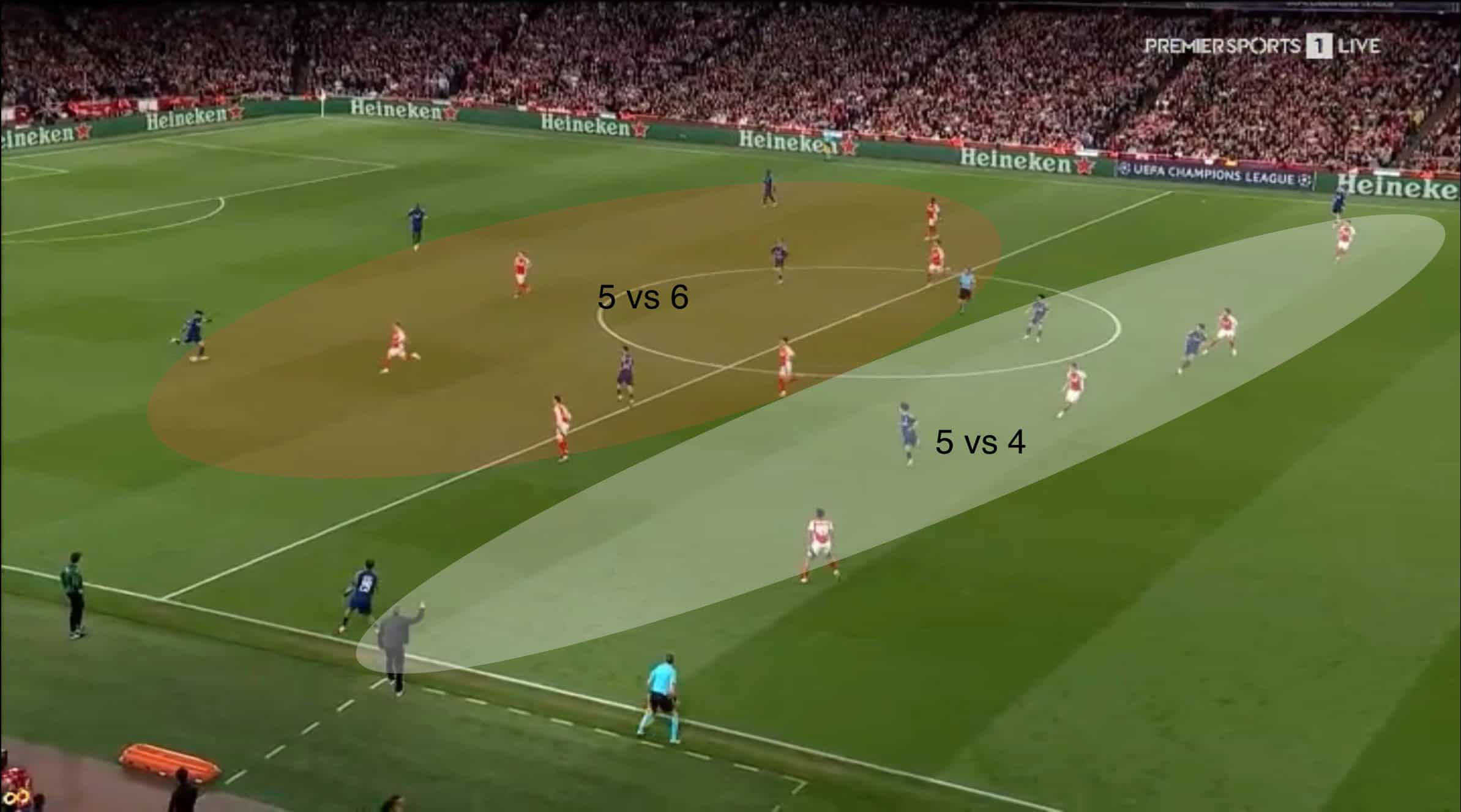
However, PSG’s finishing in the last 20 minutes was also inefficient, and the game ended 1-0.
Conclusion
Arsenal’s injury situation and some of the mistakes they made in the first leg could be the “what if” story of the first leg or this semi-final in general.
However, the game at the Emirates Stadium showed that Arsenal’s defeat was also due to Luis Enrique’s clever response to Mikel Arteta’s tactics.
When you have to deal with a clever manager like Arteta, you have to have different answers for different situations.
And that is what Enrique and his players had in the first leg.
The decision to bring on Ramos is just one example of Enrique having a Plan B in place.
At the same time, Arteta’s ability to find his opponent’s weakness was also demonstrated earlier in the game.
At the end of the day, both teams still have a chance of making it to the final, because in the Champions League, one goal doesn’t necessarily mean much.
And if one of the coaches can improve their team’s out-of-possession phase and be more clinical in the second leg, they will have booked their ticket to Munich.
