
An eventful AFCON final ended with a 1-0 win for Senegal over Morocco, thanks to a goal scored in extra time, following a very entertaining game that could have gone either way.
The Atlas Lions had an excellent tournament and were convincing in most of their encounters, but failed to finish it with ease as they faced one of the toughest opponents in Africa.
Morocco were not bad in terms of performance, as they had their chances to score but failed to be decisive in front of goal and were unable to deal with the heavy pressure put on them, especially during the first half, when they failed to shoot on target despite the inviting situations created.
Added to that, Senegal were intelligent enough to sustain their initial motivation and progressively become more dangerous in attack, as they have also come very close to scoring thanks to attacking transitions, high recoveries, and numerical superiority created inside Morocco’s half.
The Lions of Teranga lifted the trophy in the end and confirmed they are Africa’s team to beat.
They should not be overlooked or undermined during the upcoming FIFA World Cup, having convincingly beaten some of the toughest sides in this AFCON tournament, including Mali, Egypt, and Morocco.
In this tactical analysis article, we will look at both teams’ created actions, specifically their missed counterattacking efforts, how they were created, and why they were not scored.
Senegal Vs Morocco Lineups & Formations
Pape Thiaw preferred to start the match in a 4-3-3 formation, with Edouard Mendy in goal, and a defensive line comprising Antoine Mendy and El Hadji Malick Diouf as full-backs, with Mamadou Sarr and Moussa Niakhaté as centre-backs.
The midfield was made up of Idrissa Gueye as a defensive midfielder, with Lamine Camara and Pape Gueye as central midfielders.
In attack, Senegal relied on their star Sadio Mané on the left wing, Iliman Ndiaye on the right wing, and Nicolas Jackson as the team’s main striker.
On the other hand, Walid Regragui used a 4-1-4-1 formation with Yassine Bounou as a goalkeeper, Achraf Hakimi as a right-back, Nayef Aguerd and Adam Masina as centre-backs, and Noussair Mazraoui as a left-back.
The midfield was composed of Neil El Aynaoui as a defensive midfielder, Bilal El Khannouss and Ismael Saibari as central midfielders, with both Brahim Díaz and Abdessamad Ezzalzouli on the right and left wings.
Morocco opted for their starting striker in this tournament, Ayoub El Kaabi, at the expense of Youssef En-Nesyri, who was subbed on later on in the match.

Senegal & Morocco Counterattacking Issues
Morocco started the match with the right attitude and were clearly capable of scoring, but they lacked the finishing precision to convert their chances.
Senegal left a lot of space for Morocco in the middle of the pitch, and Morocco exploited that well, especially during Morocco’s attacking transitions.
Senegal used a defensive style that relied on pressing on the ball holder inside Morocco’s half and within Senegal’s own final third, but left too much space in between for Morocco’s players to use.
The idea was to avoid conceding dangerous counterattacks, especially because they knew Morocco’s strengths in quick attacking transitions.
Consequences Of Senegal Mid-Block
Securing the defensive line with a medium defensive block and limited defensive support to the team’s attacks left Morocco with fewer dangerous goalscoring attempts and more shots from distance.
Morocco, however, did not exploit the drawbacks of this defensive tactic effectively and failed to deal with the shooting situations it created inside Senegal’s half.
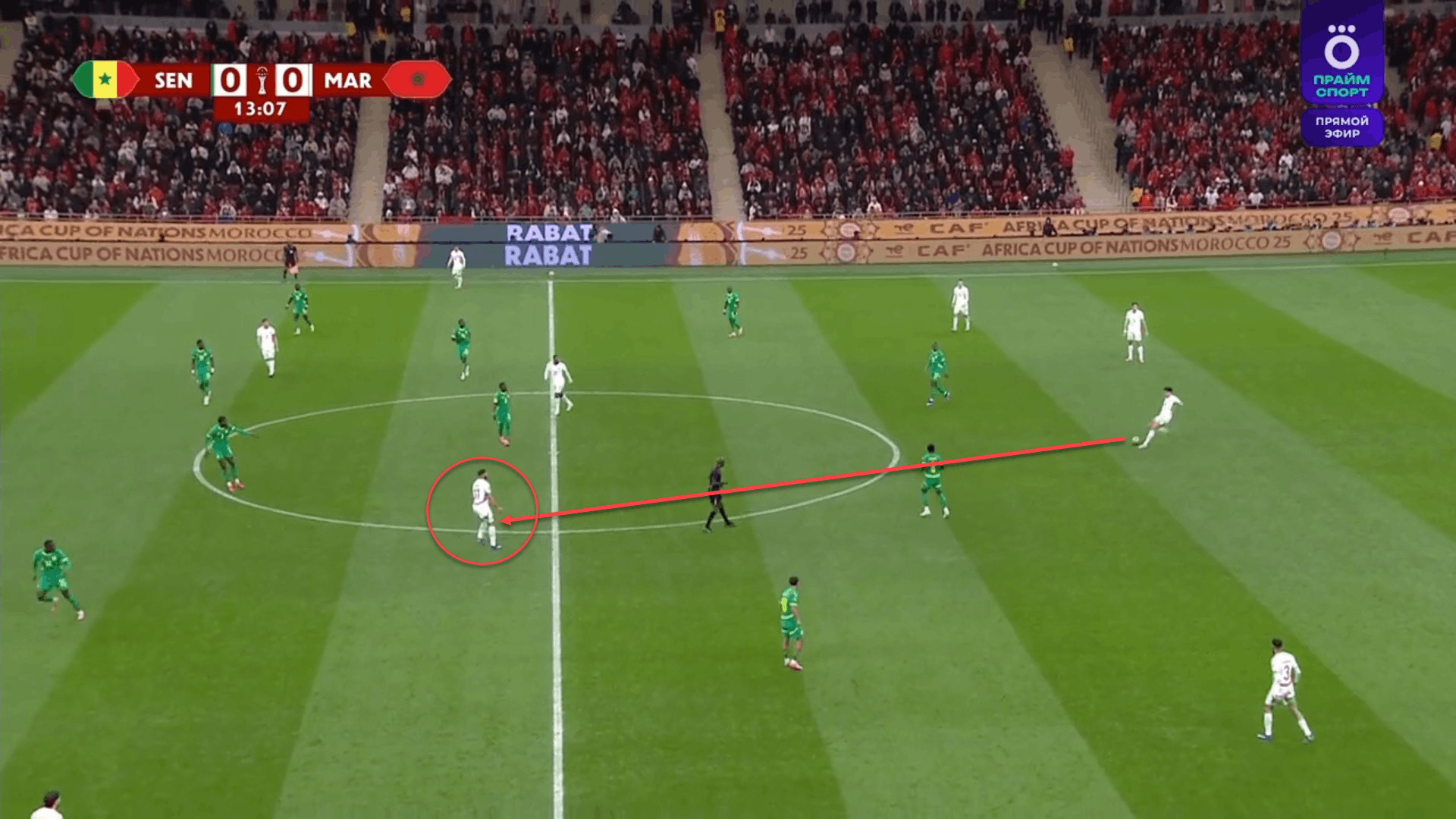
One of the first actions that highlighted the space given to Morocco in the middle of the pitch is the one shown below.
The action also shows Morocco’s ease in reaching Senegal’s final third, as the whole action was created from a pass between the lines from Morocco’s defender to Saibari.
The latter had plenty of space in front of him, and he used that to advance quickly and aim for shooting from distance despite the appealing striker’s movement without the ball, as the striker was marked attentively by Senegal’s centre-backs despite his dynamic movements.
Failing to shoot on target despite the inviting opportunity revealed the Moroccan players’ lack of confidence, heavy stress, and pressure at the start of the match, as they missed a few goalscoring opportunities that could have made the game easier for them.
Senegal Risk-Taking & Morocco Poor Decision-Making In Counterattacks
As time went by, Senegal started taking more risks and played with an even higher defensive block in an attempt to keep Morocco in their own half and oblige them to defend only.
This was a risky approach that Senegal got away with, mainly thanks to Morocco’s attacking players’ poor choices and decision-making during the counterattacks they created.
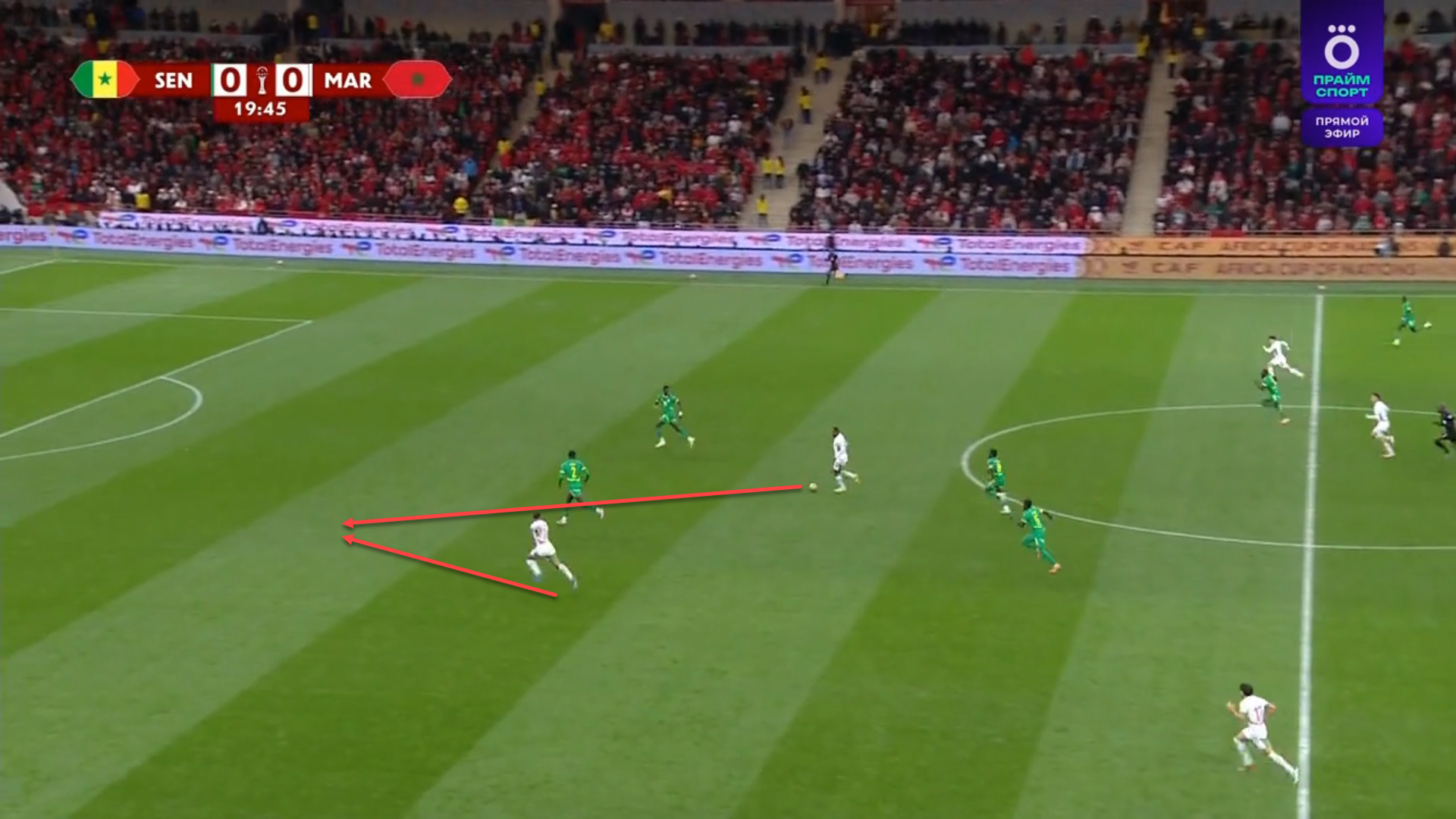
In particular, getting the ball intercepted in their own half and during the build-up from one of the best midfielders in Senegal is certainly unacceptable, as that could have led to conceding a decisive goal.
Losing the ball in that area meant Morocco would find themselves in a 2-v-2 situation, with the possibility of playing passes behind the defenders and getting into the goal quite easily.
Unfortunately for Morocco, El Kaabi was too slow in serving Saibari, who was excellent in intercepting Gueye’s pass and in moving forward quickly to provide a passing solution to El Kaabi.
Failing to provide that through pass (potentially behind that last defender) made Morocco lose a crucial goalscoring action, as the delay in providing that pass put Saibari in an offside situation.
However, these actions highlighted the drawbacks of Senegal’s playing system once again and proved that they can make some decisive mistakes at the back.
Morocco Key Passing To El Kaabi
One of Morocco’s successful attacking plans was the reliance on El Kaabi’s movements without the ball and providing through passes to his direction at the back of defenders.
El Kaabi showed strong reactions to such passes and often dealt well with the support he received from midfielders, despite a few passing errors, as in the example above.
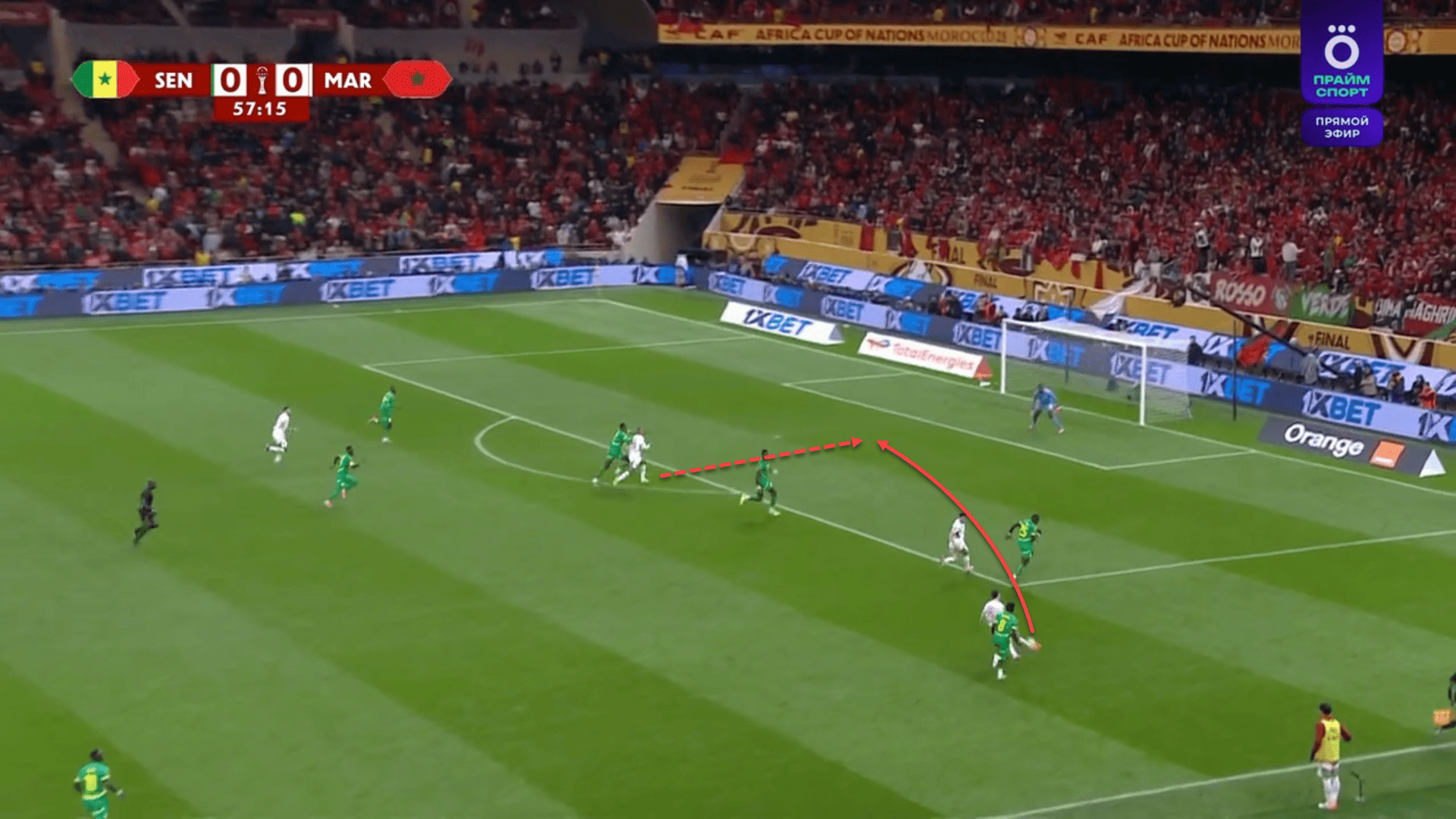
In the following action, Morocco launched an attack from the right flank by advancing with passes on that side and exploiting Senegal’s narrow defence to reach El Khannouss.
The latter was dynamic and intelligent enough to spot El Kaabi’s movement without the ball and serve him at the right time and with the needed accuracy.
El Kaabi was able to touch the ball despite tight marking, as he anticipated the pass before the defender and the goalkeeper.
However, both the defender and the goalkeeper’s reactions impacted El Kaabi’s finishing as they limited his time for shooting and obliged him to touch the ball very quickly, which led to missing a golden chance to score.
Senegal Key Passing & Poor Finishing
On the other hand, Senegal’s counterattacking attempts were remarkable as well because they resulted in dangerous actions that could have secured the win for Senegal much earlier than extra time.
In fact, Morocco were very attentive in defence initially, but as time went by, they started taking some risks as well and left some spaces at the back.
Senegal successfully absorbed Morocco’s initial attacking actions before they began threatening the goal with concrete attacks, mainly through attacking transitions.
They exploited Morocco’s advancing defensive line, anticipating attempts to create space on the wings and relying on through-passing to get behind Morocco’s players.
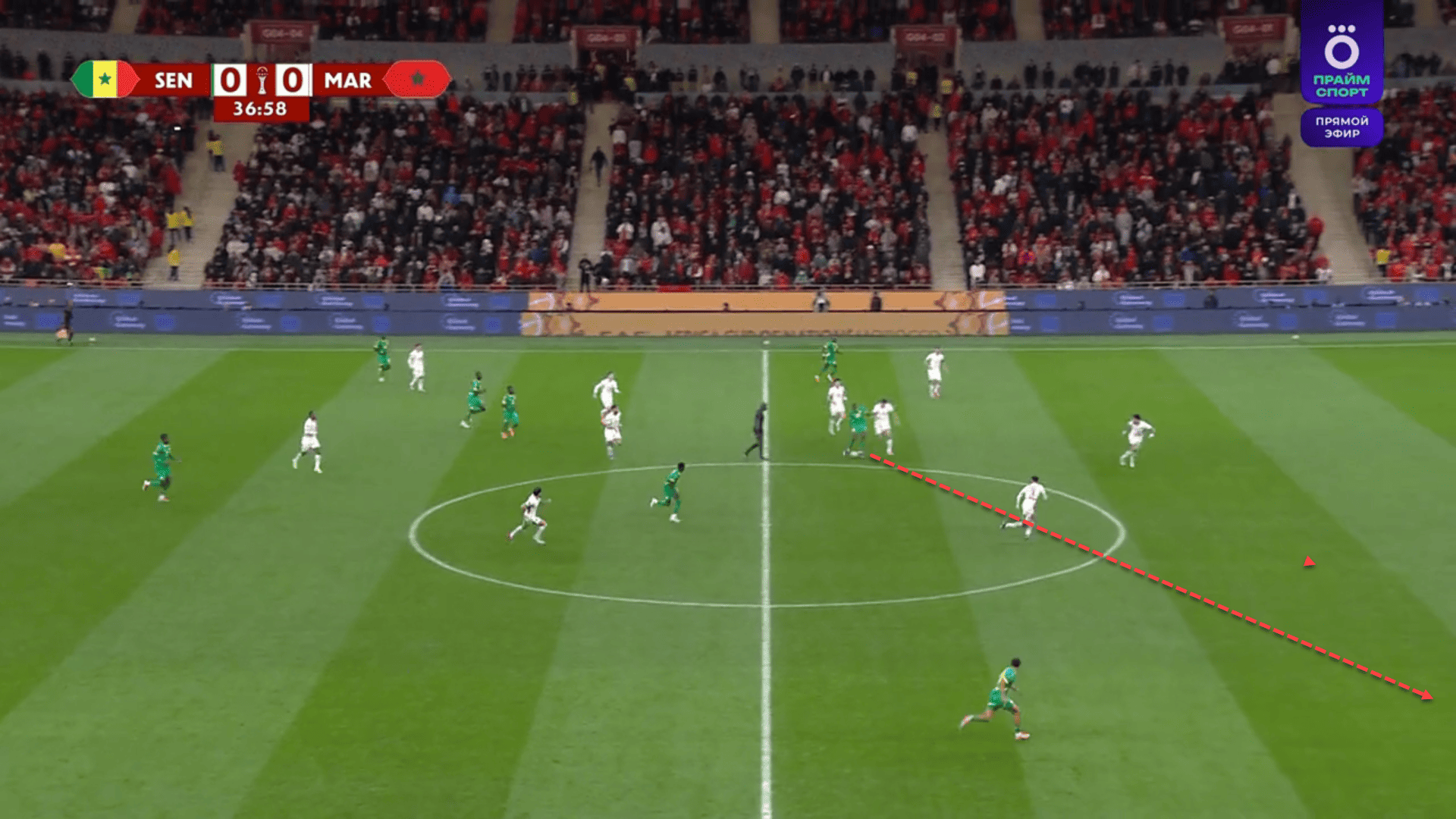
The occasion created at the 37th minute highlights the danger of defending on one side while leaving the wings uncovered, as Senegal showed they can exploit such defensive errors effectively.
With a single through pass at the back from Mazraoui, Senegal created one of the most dangerous chances of the match as Ndiaye found himself in front of goal as soon as he got the ball and advanced with it.
That said, this chance could have been scored if Ndiaye was less predictable in terms of his shooting choice, knowing that Bounou takes the credit for having the needed reflexes to save such a dangerous opportunity.
Senegal High Recoveries & Final Passing Errors
Senegal got progressively more dangerous and more powerful in their high pressing and in their attacking phase as time went by, as they got more confident and started pushing Morocco to make mistakes more frequently.
In particular, pressing high and making high recoveries within Morocco’s half was clever from Senegal, as it helped them push Morocco into committing passing mistakes, mainly thanks to Senegal’s high positioning of many of their players during the non-possession phase.
Advancing with six players to try and disturb Morocco’s build-up from the back in the following action was rewarding as Saibari was pushed to provide a wrong pass thanks to Senegal’s disturbance and good positioning to potentially anticipate any error in passing.
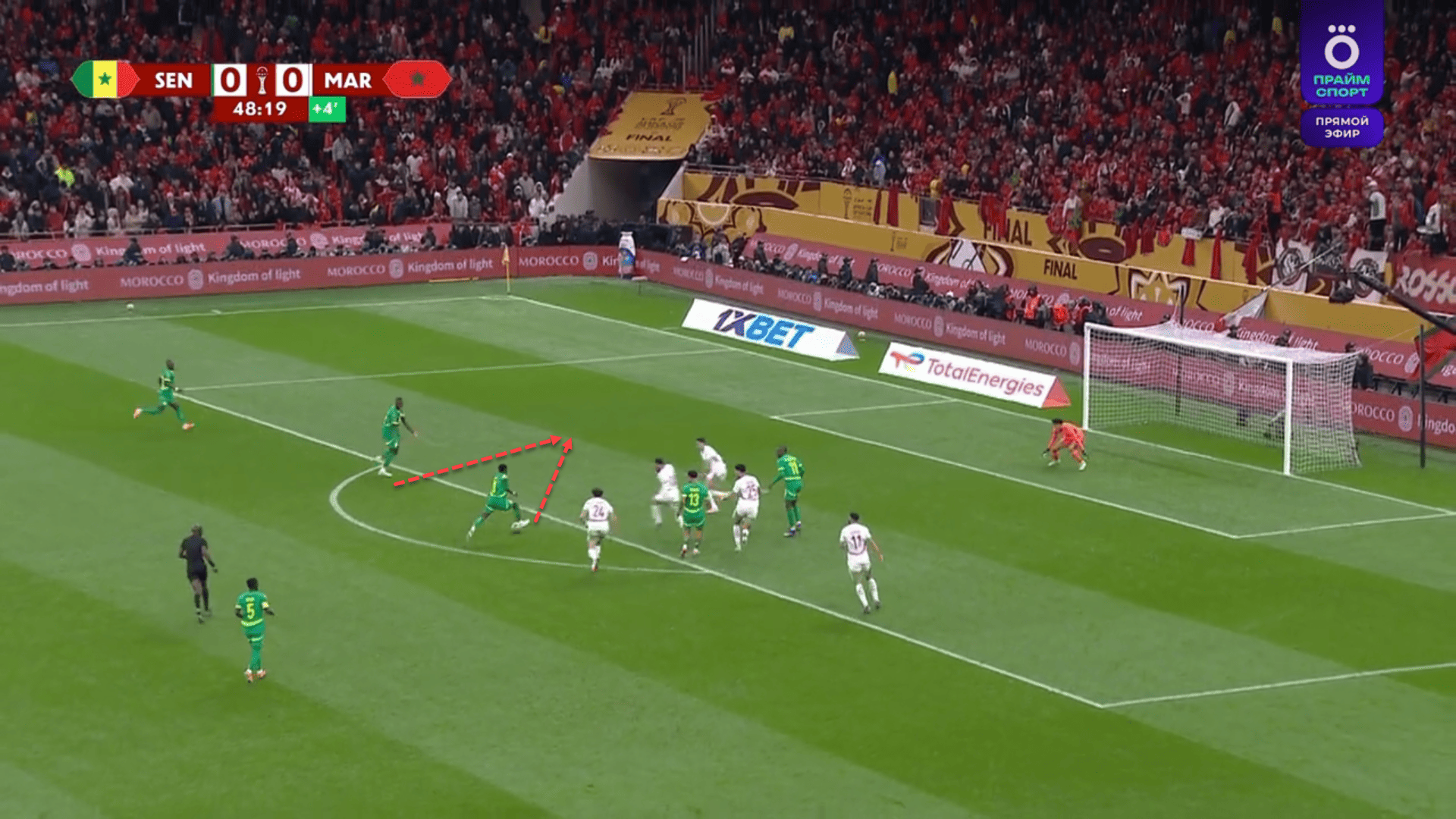
Although Ndiaye was excellent in dribbling past two opponents and creating a numerical superiority for his teammates, Camara’s decision-making after receiving the pass was not as intelligent as needed.
Camara was given the ball in an excellent position, well-suited to providing an assist to his teammate who was unmarked on the left side.
However, Camara quickly opted to shoot and did not consider the options around him, which led to his failing to convert this dangerous situation into a goal.
Conclusion
Senegal were better in the long run as they remained more concentrated than Morocco, and that’s what led them to succeed in scoring the tournament goal at the start of extra-time.
It is true that differences in physical ability played a role in the goal action, but the perseverance and powerful shooting of the goalscorer only highlight the outstanding qualities of most Senegal attacking players.
On the other hand, Morocco can only blame themselves for missing several goal-scoring opportunities, especially during the first half, when they were more dynamic and dangerous in front of Senegal’s goal, especially through counterattacks.
