


Since his return, David Moyes has done a brilliant job at Everton.
He has stabilised the side, restored a clear structure, and given the club its identity back.
The Toffees now look organised, competitive, and difficult to play against with a much clearer understanding of what they are trying to do on and off the ball.
But if Everton want to push on rather than simply remain stable, the next steps are obvious.
Looking at Moyes’ past spells gives us clear clues as to where those improvements will come from: the full-back positions.
Across both his Everton and West Ham United tenures, the same positional profiles appear again and again.
This is no coincidence; it is a pattern.
This Everton recruitment analysis aims to use those clues in David Moyes’ history to assess what Everton need to do next in the transfer market.
The Past Leaves Clues In David Moyes Recruitment
David Moyes knows exactly what he wants his teams to look like.
He does not radically change his ideas when he moves clubs.
Instead, he looks to replicate the same structures, relationships, and profiles with the right players.
This is especially clear when you look at how his teams are built through winger and full-back dynamics.
Moyes places enormous importance on those relationships.
He wants balance, repeatability, and clarity of roles.
When he finds something that works, he trusts it, and he looks to reproduce it wherever he goes.
Understanding this is key to projecting Everton’s next recruitment steps.
Why Full-Backs Matter In A David Moyes System
In a Moyes system, full-backs are central to attacking output.
They are not there to dominate possession or drift into midfield.
They are there to deliver quality into the box and create space for the wingers to come inside.
Moyes likes specific profiles at right-back and left-back because those roles are key to chance creation.
The full-back provides width, overlaps or underlaps depending on the winger’s movement, and consistently delivers crosses into dangerous areas.
In return, the winger is given more space to operate inside.
It is a symbiotic relationship.
Moyes places huge value on developing these partnerships, and they are fundamental to how his teams attack.
The Right-Back Profile David Moyes Trusts
At Everton, first time around, Séamus Coleman set the standard.


This sequence shows prime Séamus Coleman in a nutshell.
The overlap creates space for Romelu Lukaku to come inside, a quick reverse pass follows, and Coleman delivers a delicate ball back into the box.
Simple actions, executed at the right moment, create a consistent threat.
At West Ham, Vladimir Coufal filled almost the exact same role.
Both were aggressive, relentless runners who constantly overlapped or underlapped depending on what the winger was doing.
Their value came from repeat actions and physical reliability.
They delivered a high volume of crosses into the box with quality and intensity.
They did not need to be creative playmakers.
They needed to be dependable, durable, and relentless.
That profile is currently missing at Everton.
Everton Right-Back Recruitment Options
Jake O’Brien has filled in well at right-back, but he is naturally a centre-back.
Defensively, he offers real benefits.
He is solid positionally, adds aerial presence to Everton’s backline, and helps significantly when defending crosses and set-pieces.
When Everton has teams pinned back, he can also arrive late into the box on the right side and provide an additional threat.
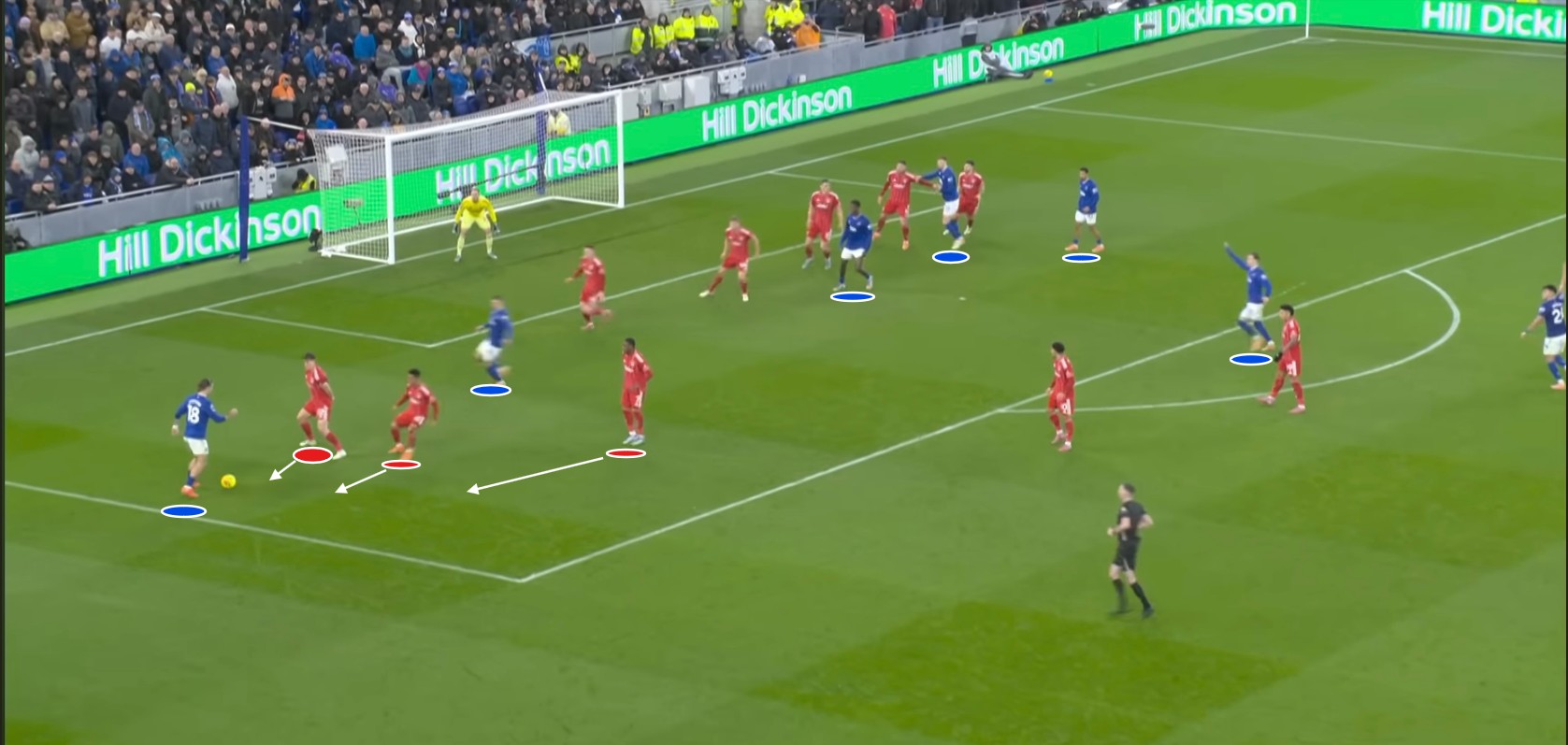
Here, you can see Jack Grealish drawing multiple defenders towards him, which helps Everton get bodies into the box.
Jake O’Brien’s main attacking contribution comes from his sheer size, arriving late and offering an aerial presence rather than providing width or overlap.
However, the trade-offs are clear.
Everton loses overlapping width, crossing volume, and a constant wide outlet.
Because O’Brien is not a natural attacking full-back, opposition teams do not need to worry about covering runs in behind.
That makes it easier for them to stay compact and limits the natural separation for players operating wide.
Two profiles stand out as realistic solutions.
Harry Clarke is an exciting option.
He is tall, physically strong, and relentless in his running.
At Ipswich Town, he was a key part of Kieran McKenna’s side that won promotion, offering constant overlaps and underlaps with real intensity.
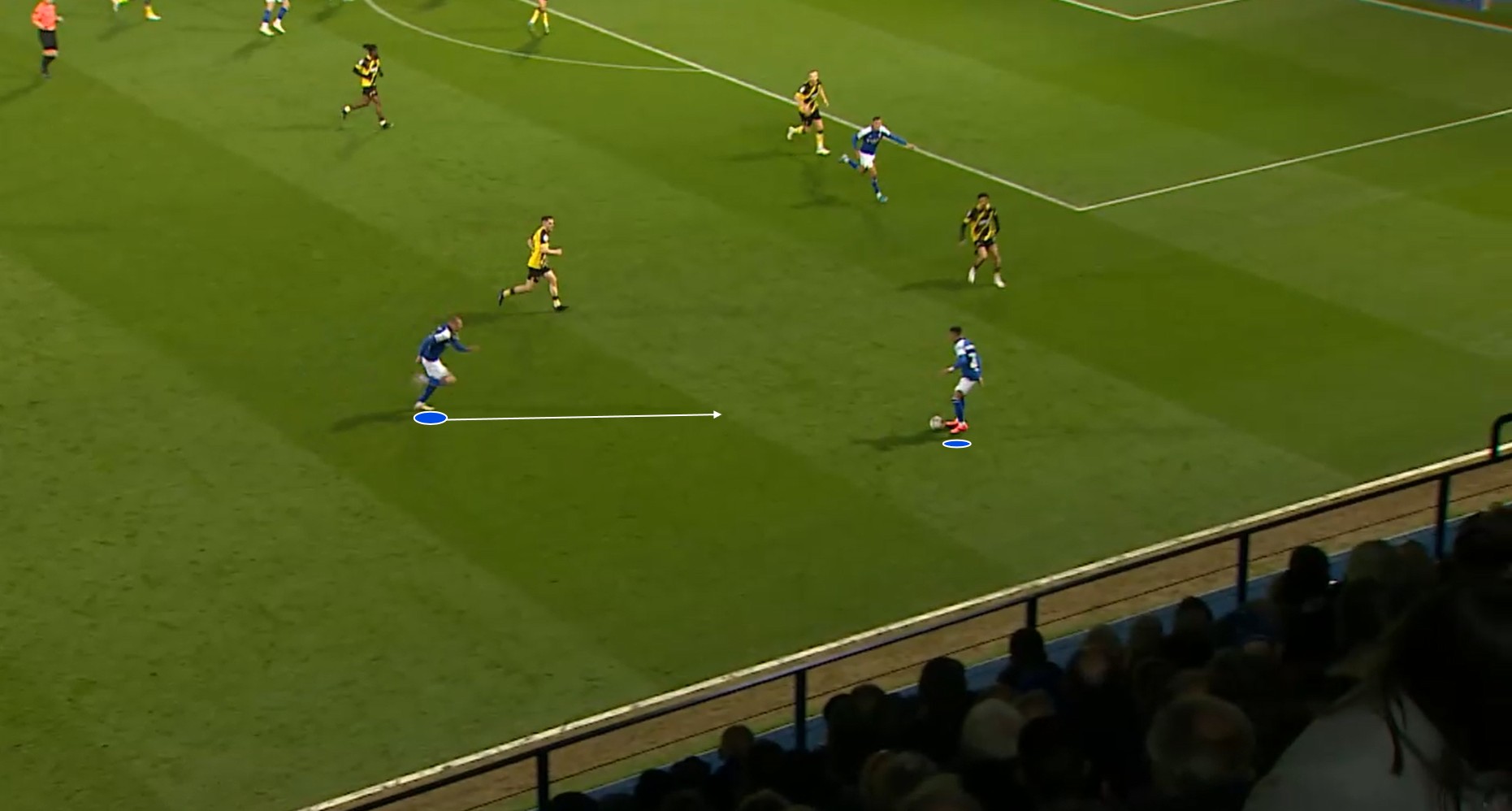
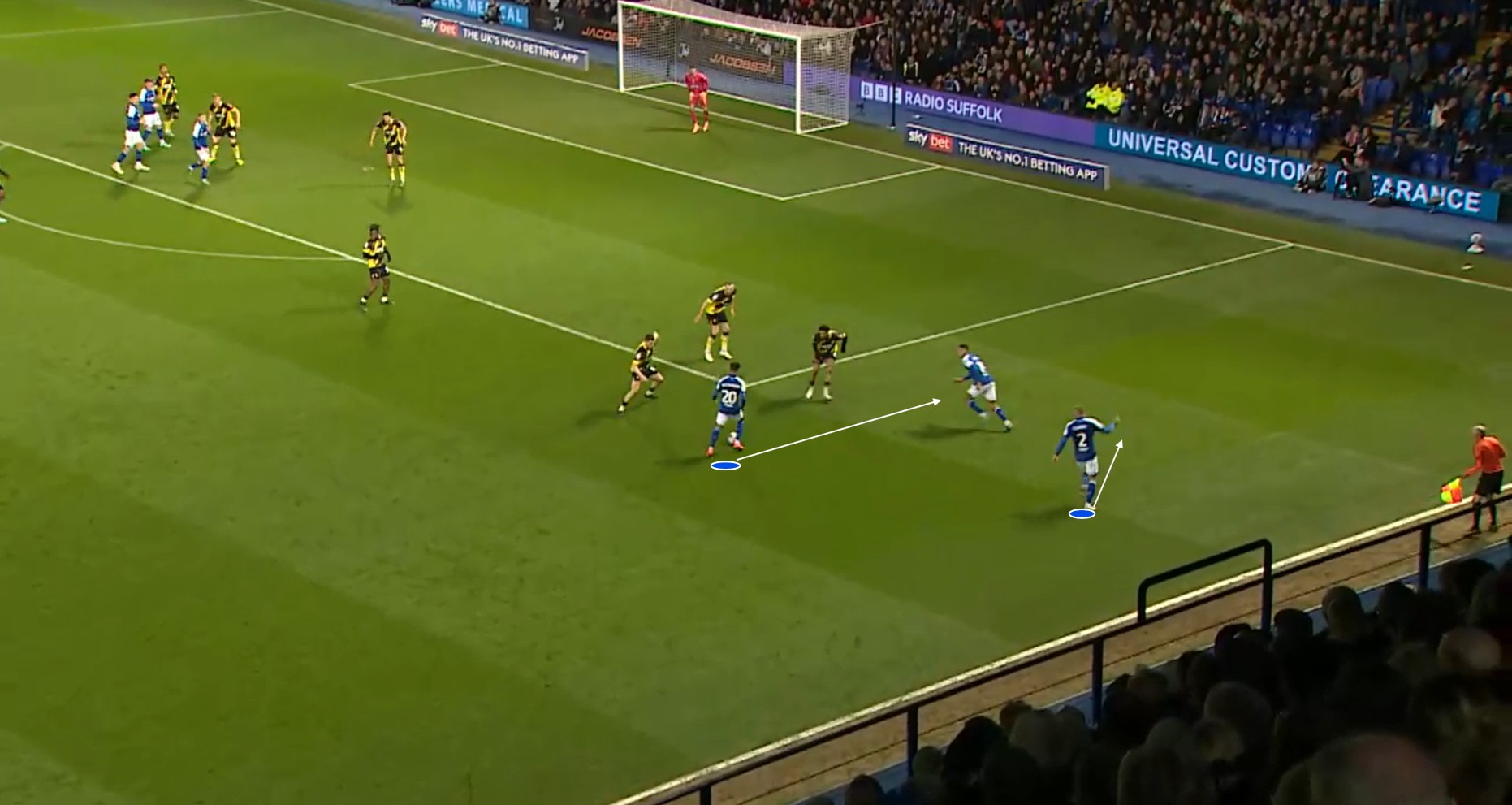
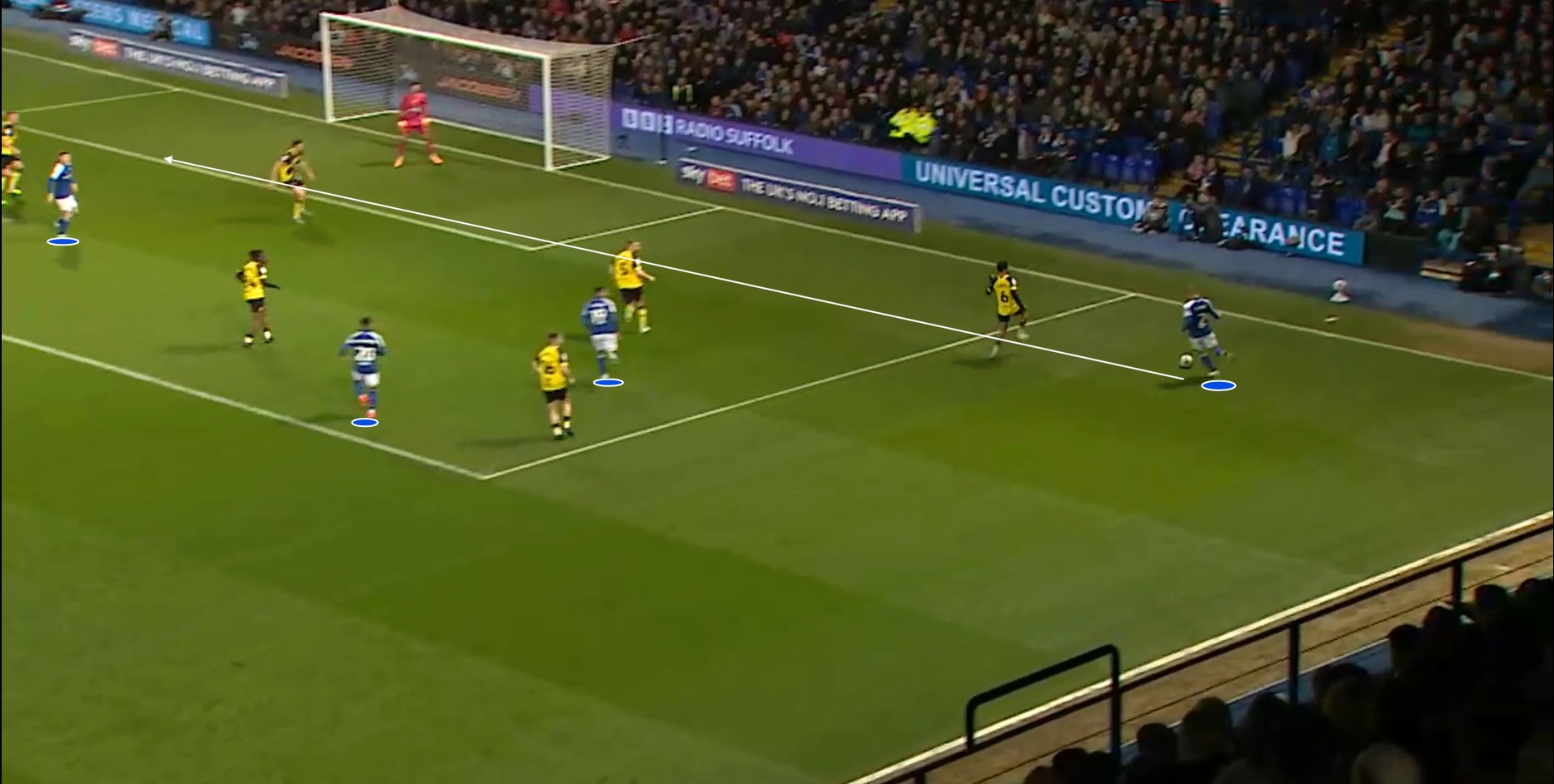
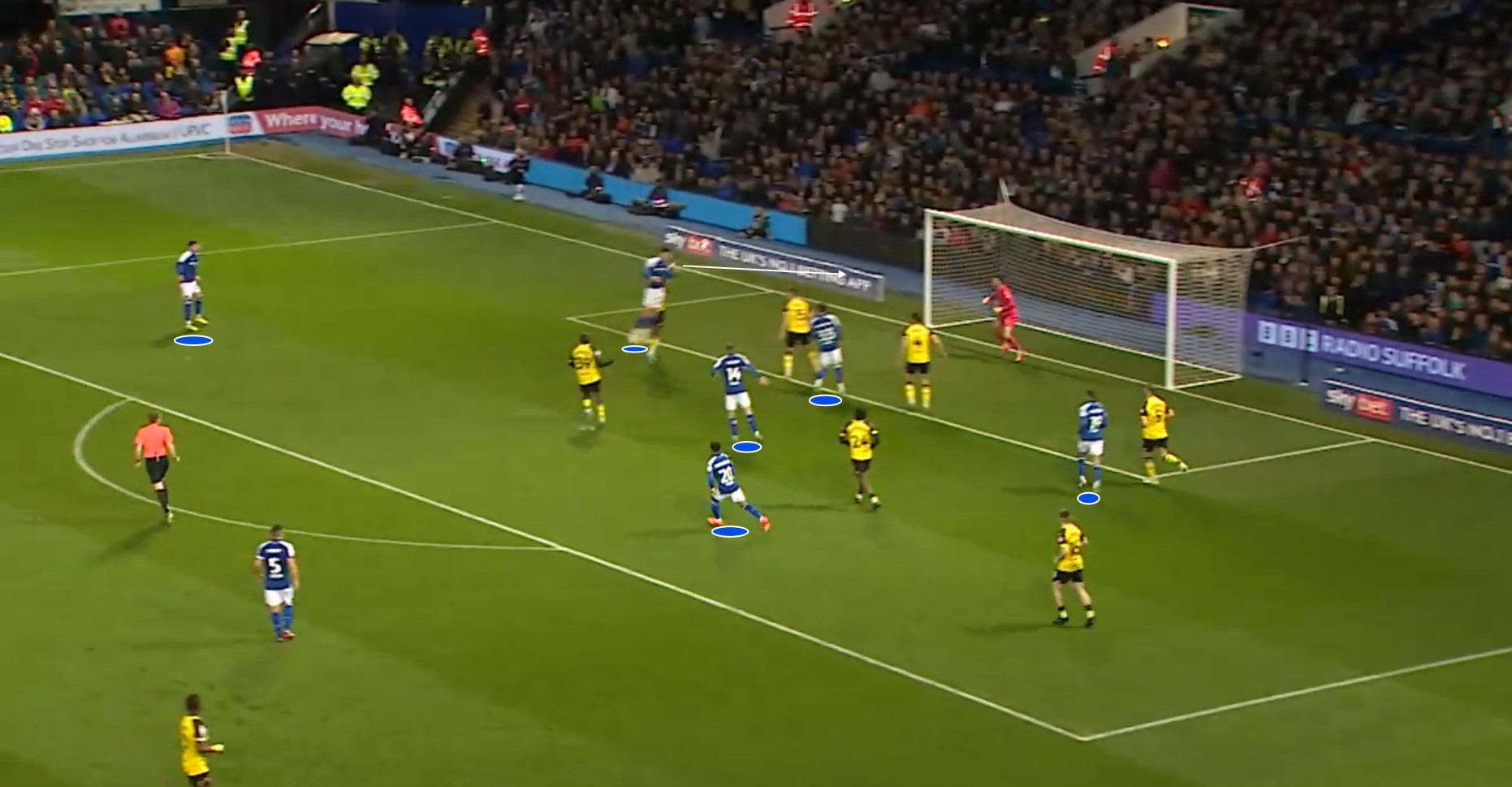
You can see Harry Clarke’s intensity clearly here.
He plays the pass wide and immediately overlaps at full speed, receives it back, and clips a delicate ball to the back post.
The winger drawing defenders inside mirrors the role Iliman Ndiaye would play, making this a very Coleman-like action.
His Premier League output dropped, partly because McKenna prioritised more defensive security through Axel Tuanzebe, but Clarke’s strengths remain clear.
He is aggressive, intense in his actions, and has a good delivery from wide areas, whether that comes from an overlap or from the half-space.
Defensively, he is decent in 1-v-1 situations, though he can improve there.
That is not a major concern under Moyes, who has a long history of improving players’ defensive play and structurally protecting them.
Clarke would also be a cost-effective option, which matters given Everton’s financial situation.
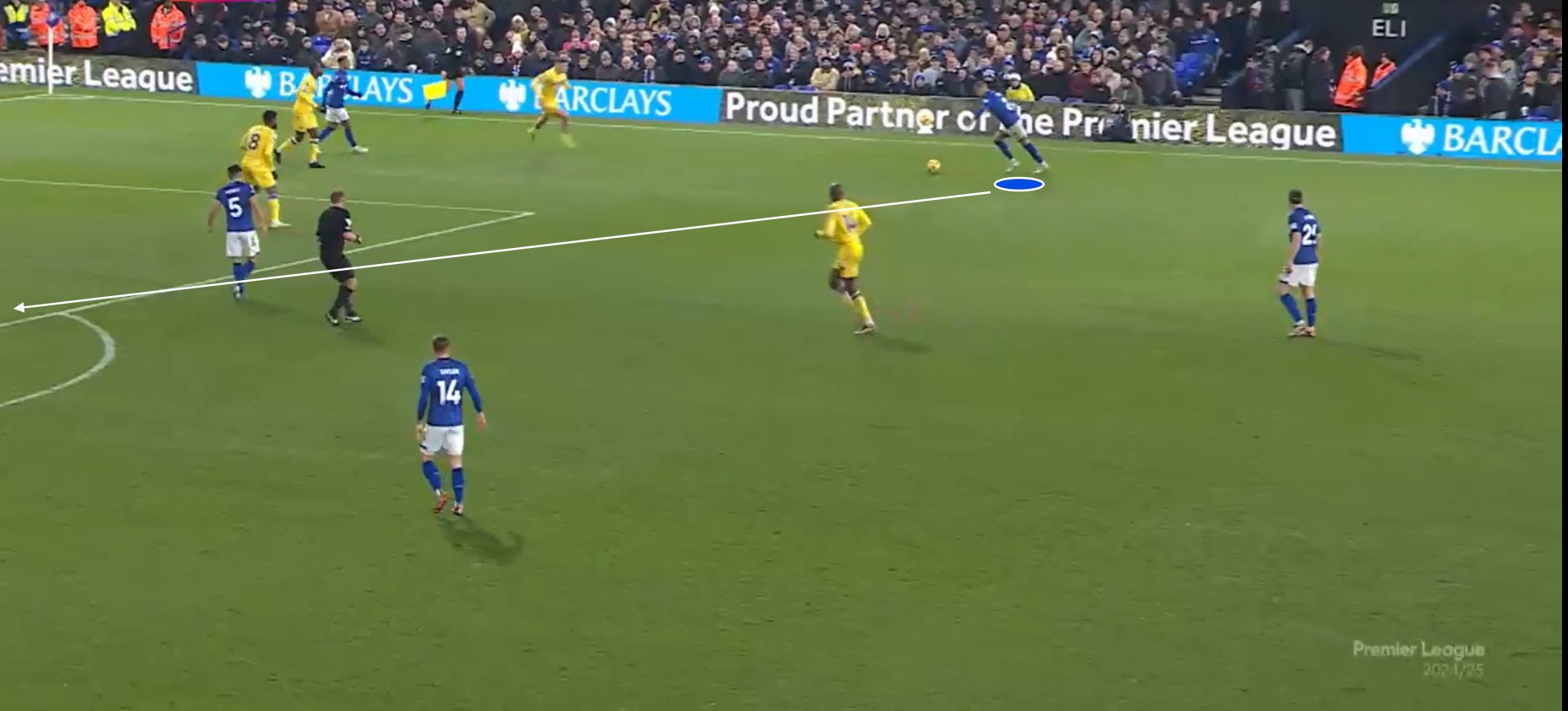
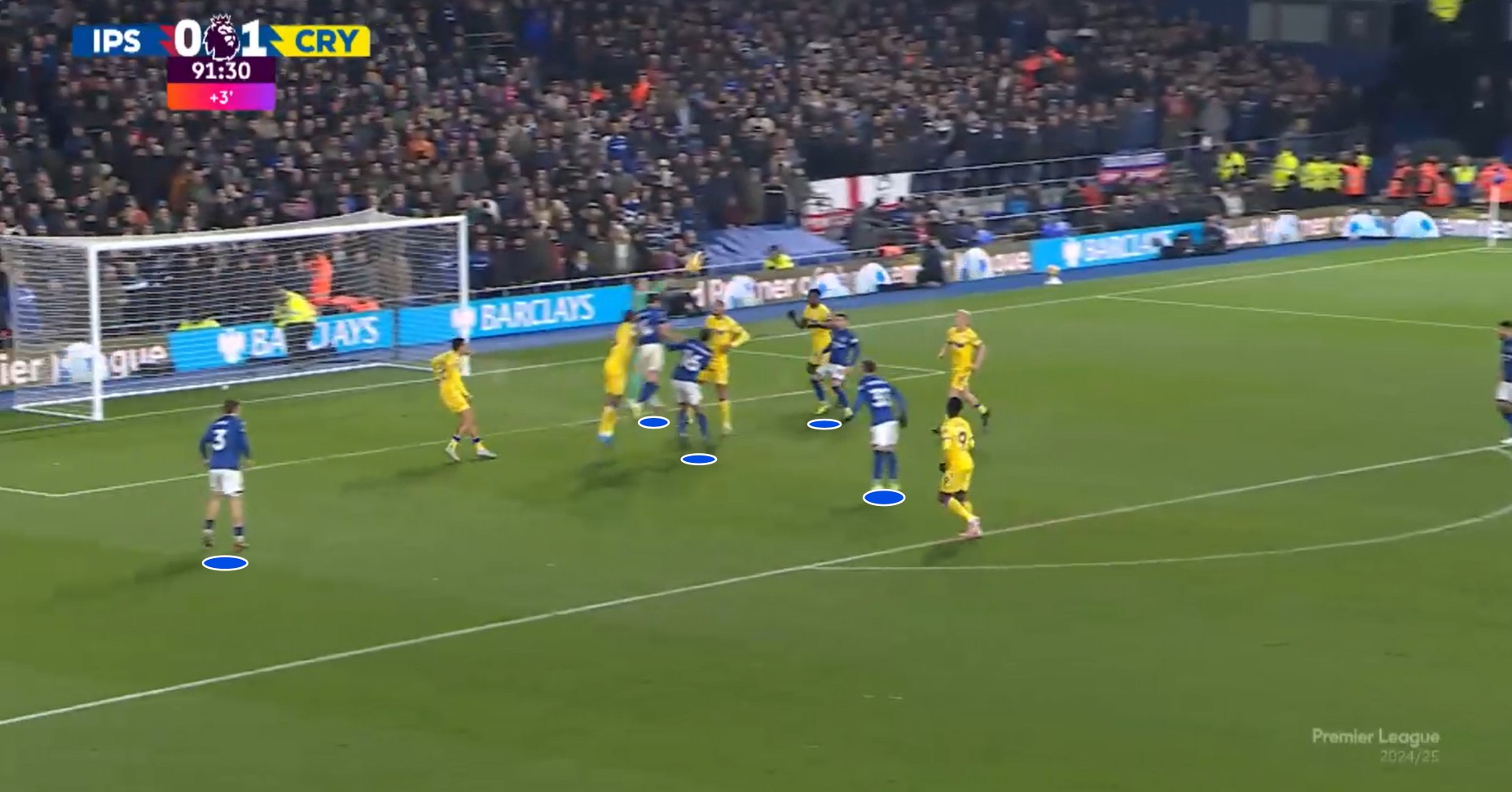
When the winger hits a dead end, Clarke becomes the outlet.
He receives the ball deeper and still delivers a clean cross into the box.
His ball striking allows Everton to maintain pressure and keep attacks alive.
Tariq Lamptey represents a different type of option.
He is extremely quick, an excellent overlapper and underlapper, and a very good striker of the ball when crossing.
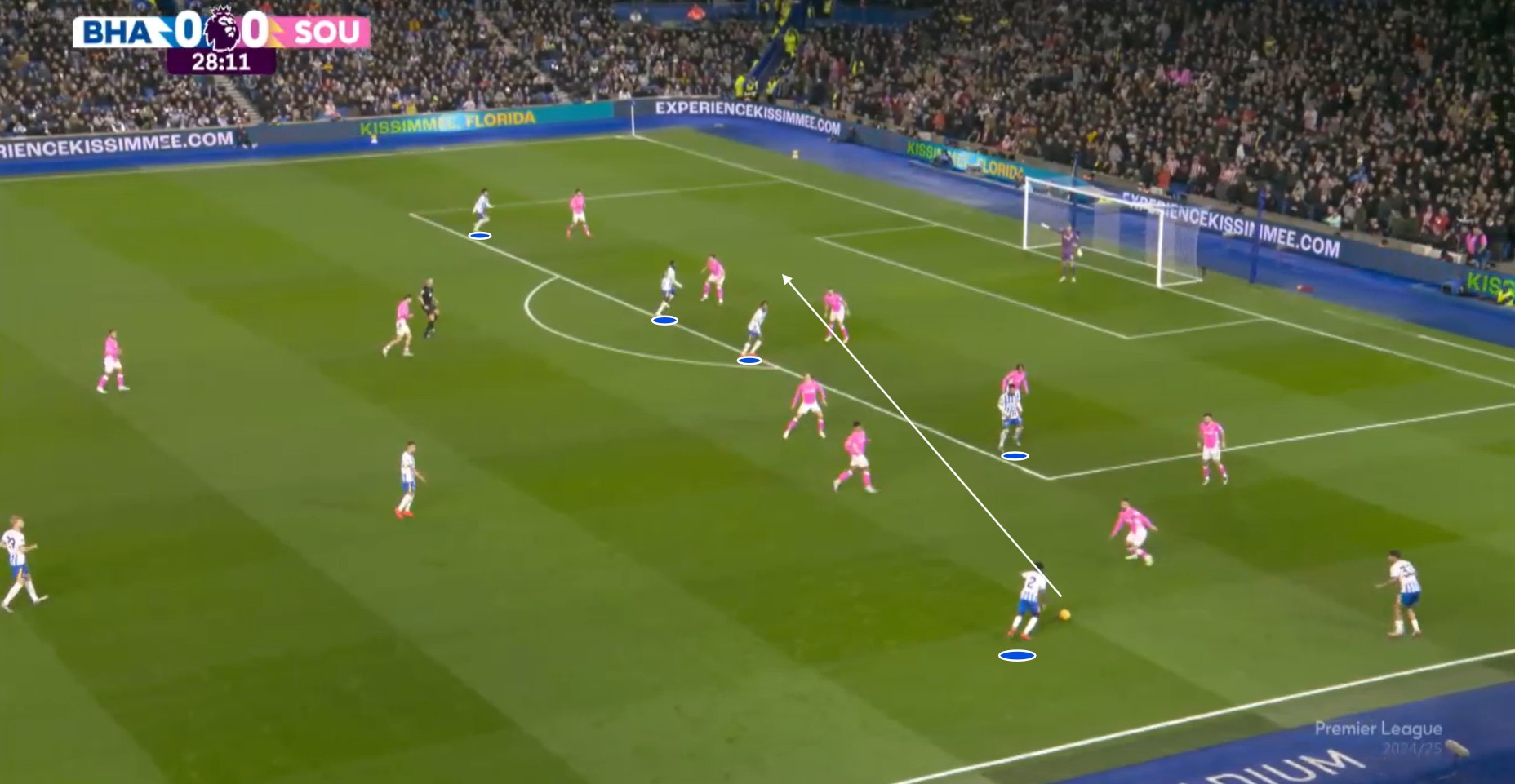
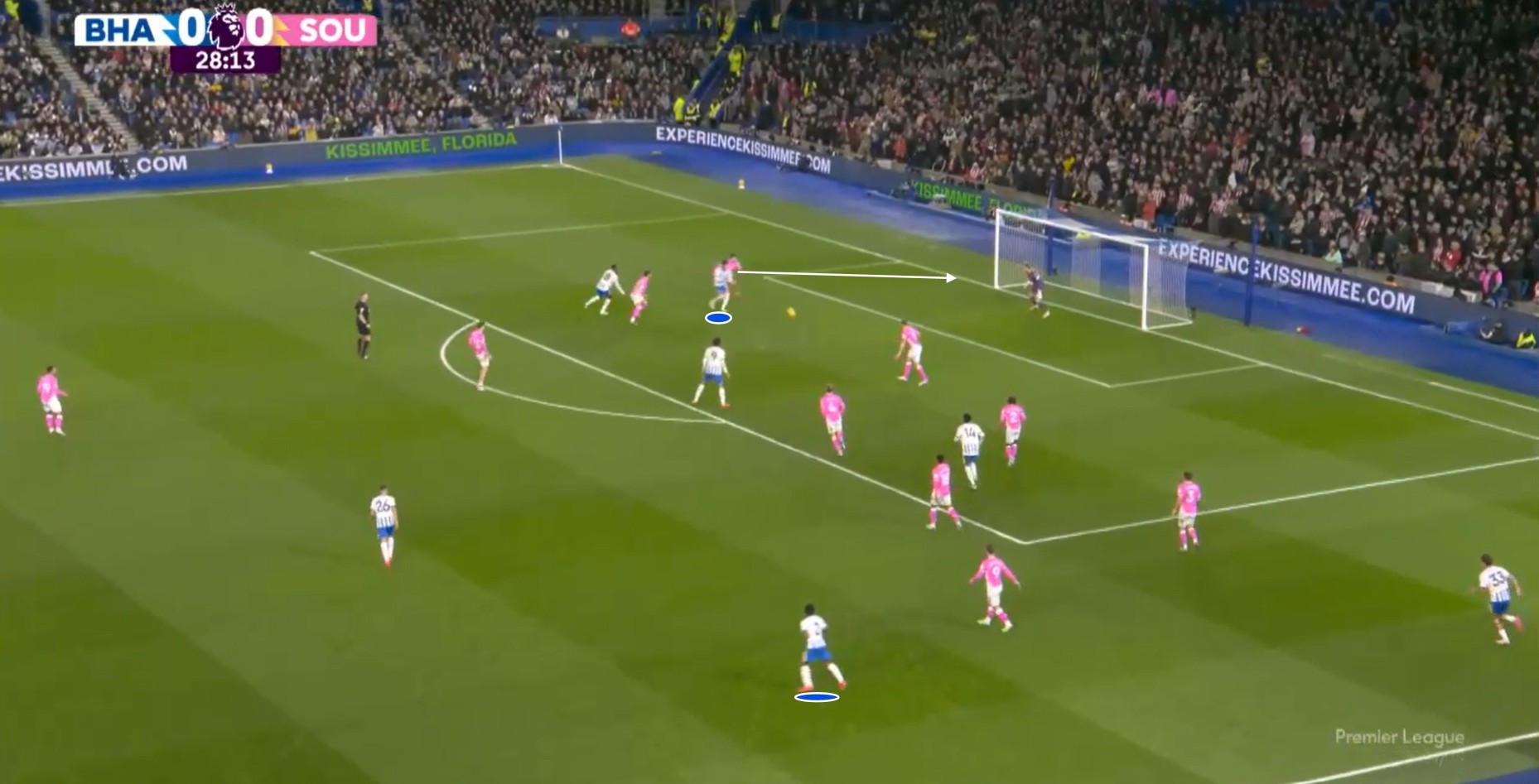
You can see Lamptey receiving the ball in a deeper crossing position here, and the quality of his delivery stands out.
He strikes the ball cleanly into the box, allowing Mitoma to attack it and head home.
That ability to deliver danger even without reaching the byline is a real strength of his game.
He is also comfortable in tight areas due to his background at Chelsea, which allows him to link up well with technical wingers in ways Clarke would not.
Defensively, Lamptey can be rash in 1-v-1 situations and lacks height, which can be an issue at set pieces.
However, in certain games, particularly at home when Everton are expected to pin teams back, his profile would be invaluable.
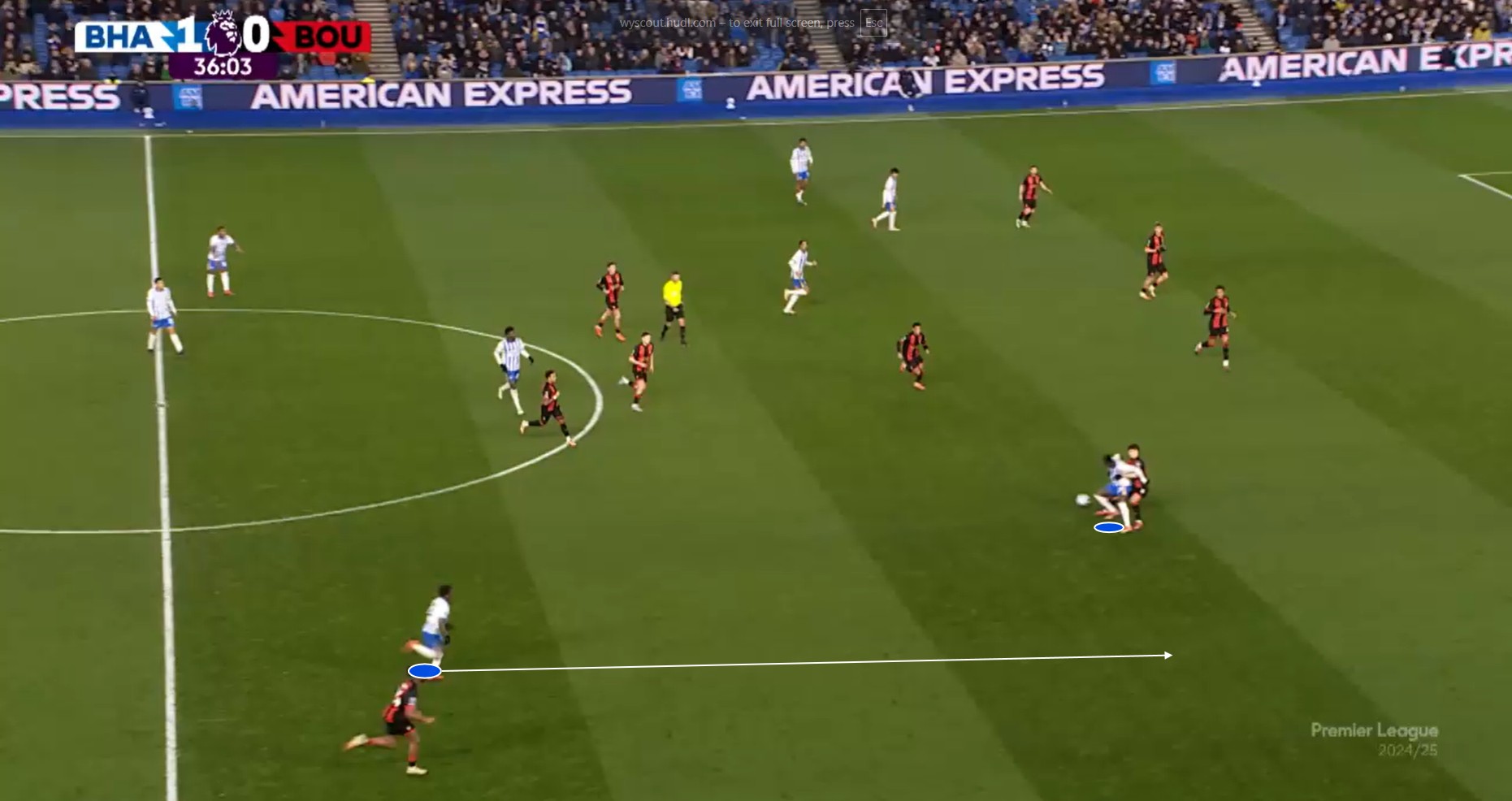
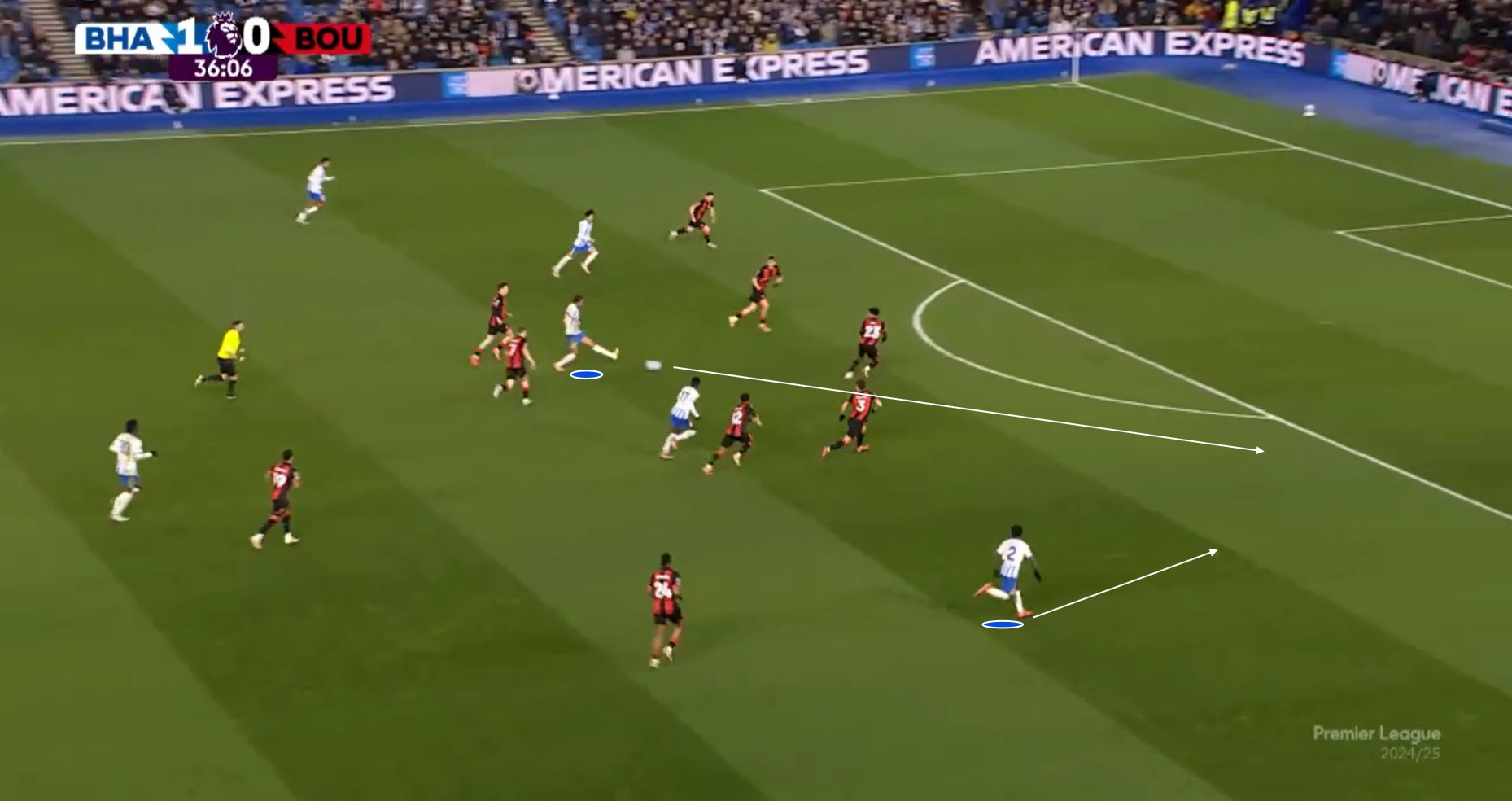
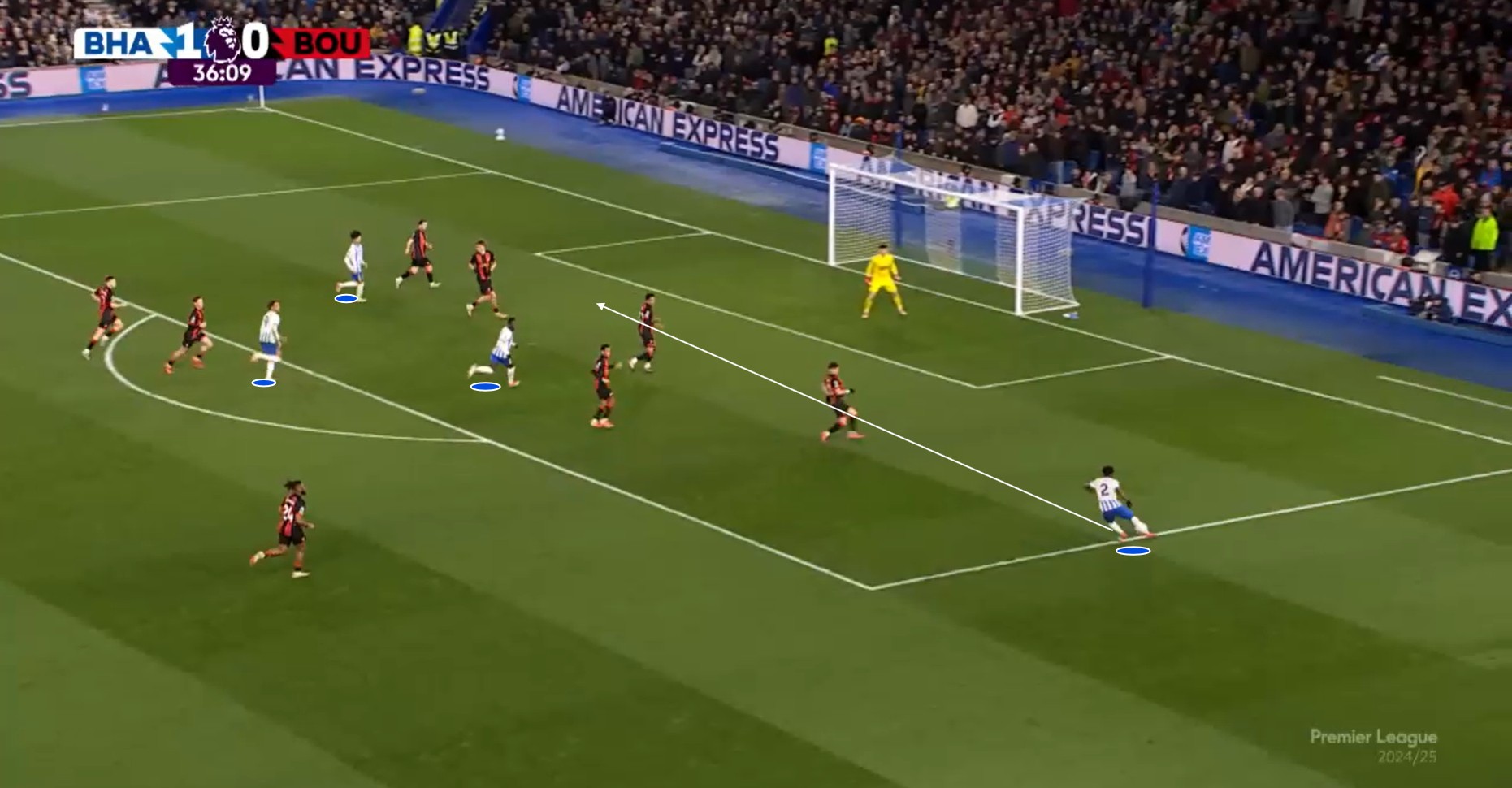
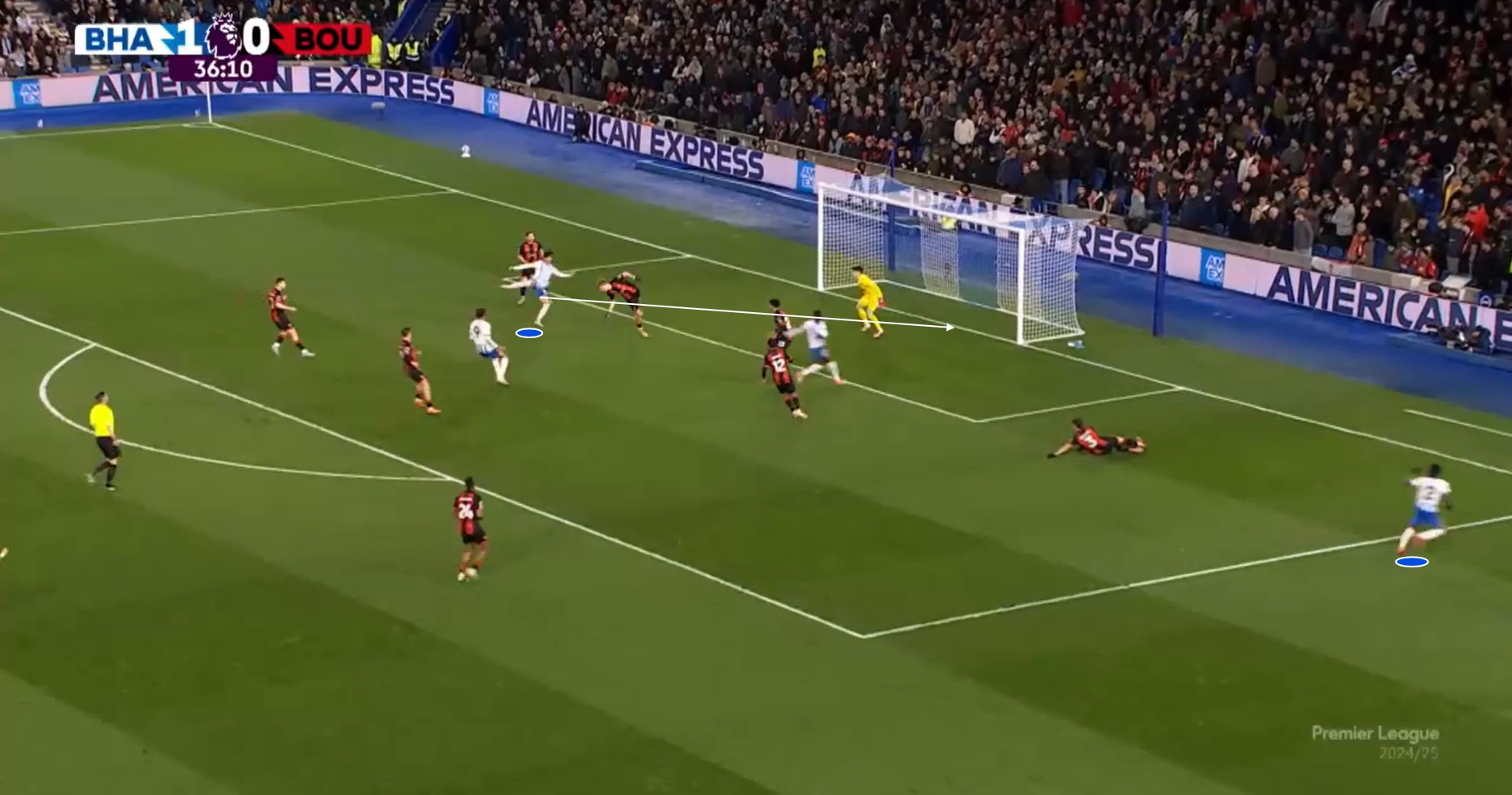
This clip shows Lamptey’s intensity and pace.
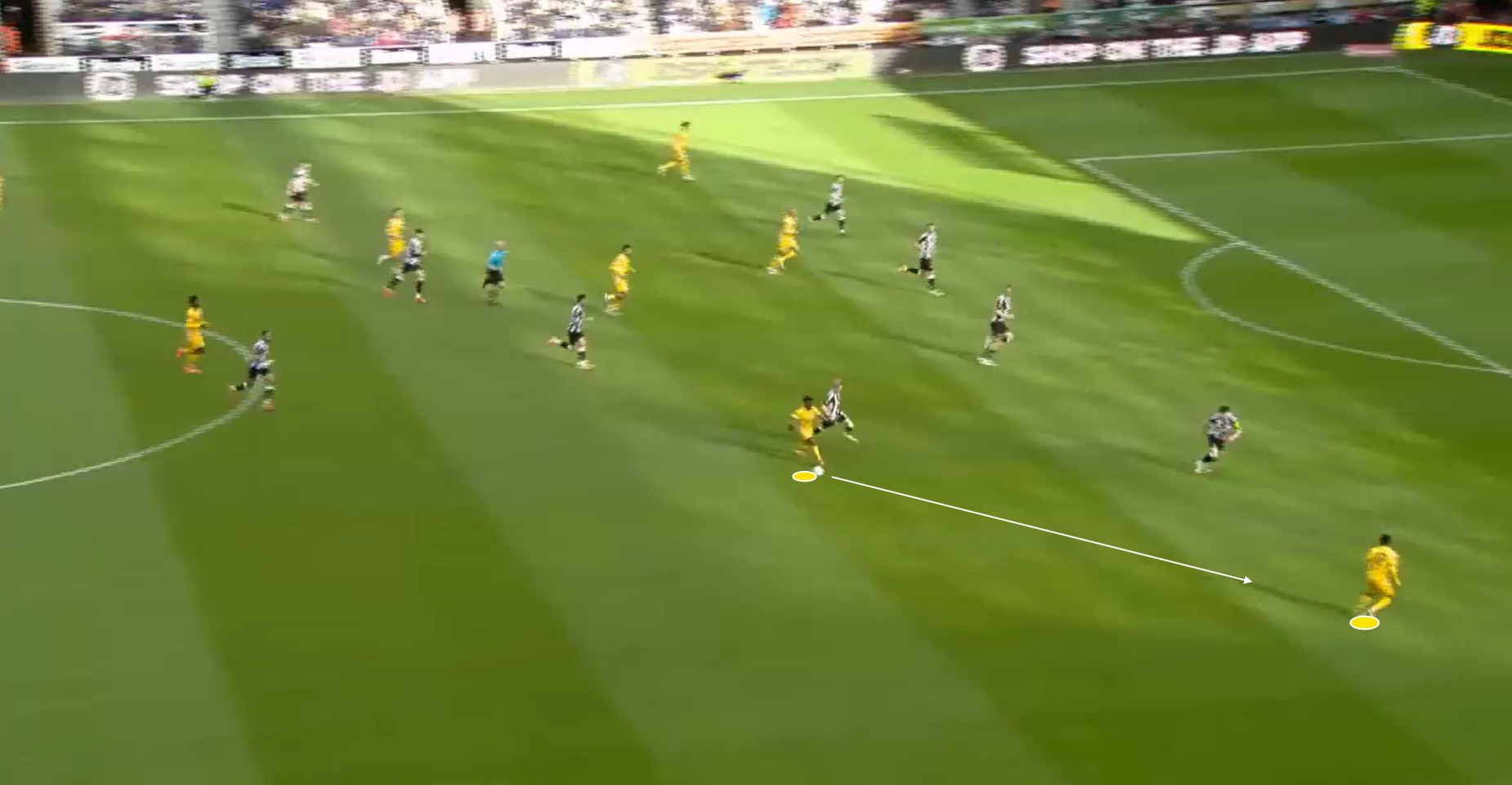
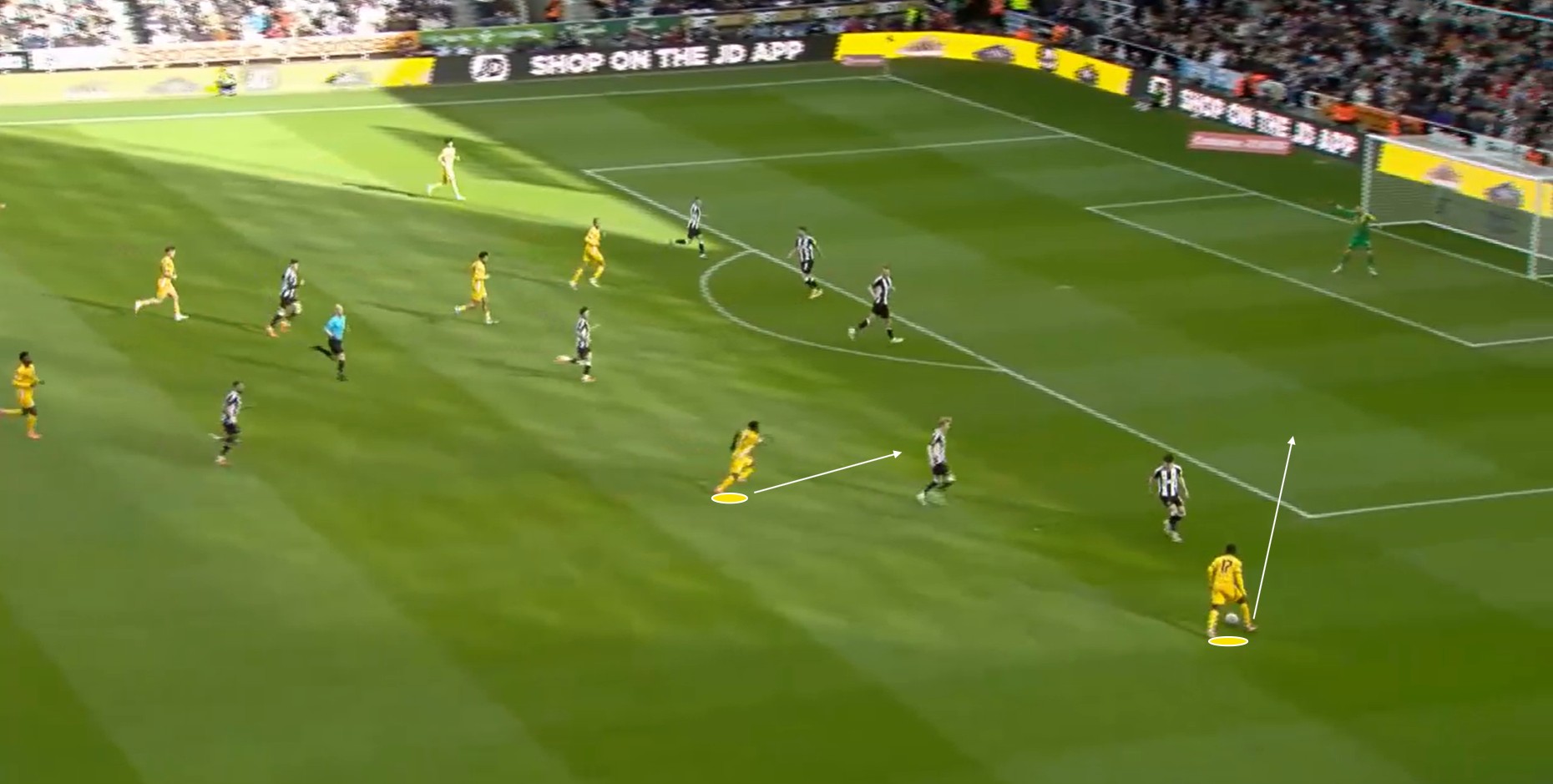
After the initial hold-up, Minteh releases the ball to João Pedro, who spots Lamptey bursting beyond on the overlap.
Lamptey is moving so quickly that the ball runs slightly ahead of him, but his quality allows him to wrap his foot around it and dink a perfect ball into Mitoma, which comes back off the post.
He would create constant separation for the winger and stretch defences.
It is not just overlaps where Lamptey is effective.
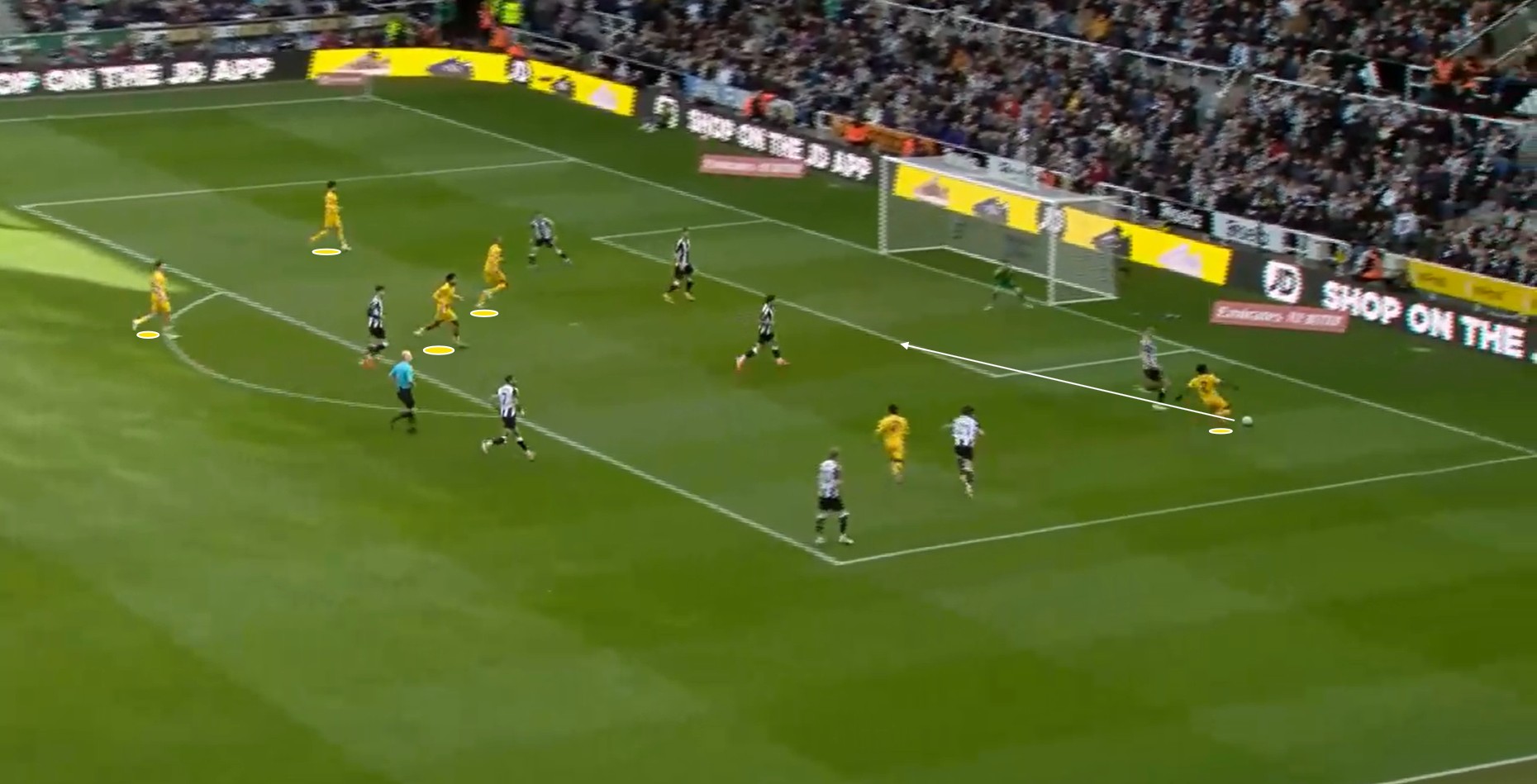
Here, he plays wide to Minteh and continues his run through the half-space on the underlap.
Minteh finds him, and Lamptey reaches the ball purely through his pace before delivering a dangerous cross into the box.
The drawback to Lamptey is that Moyes would need to harness his defensive potential, but the attacking upside is obvious.
Both players offer Everton something they currently lack.
The Left-Back Blueprint Under David Moyes
On the left side, the blueprint is well established.
Leighton Baines and Steven Pienaar formed one of the most effective partnerships in the league during Moyes’ first Everton spell.
Baines provided intelligent overlaps, quality delivery, and balance, while Pienaar thrived in the half-spaces.
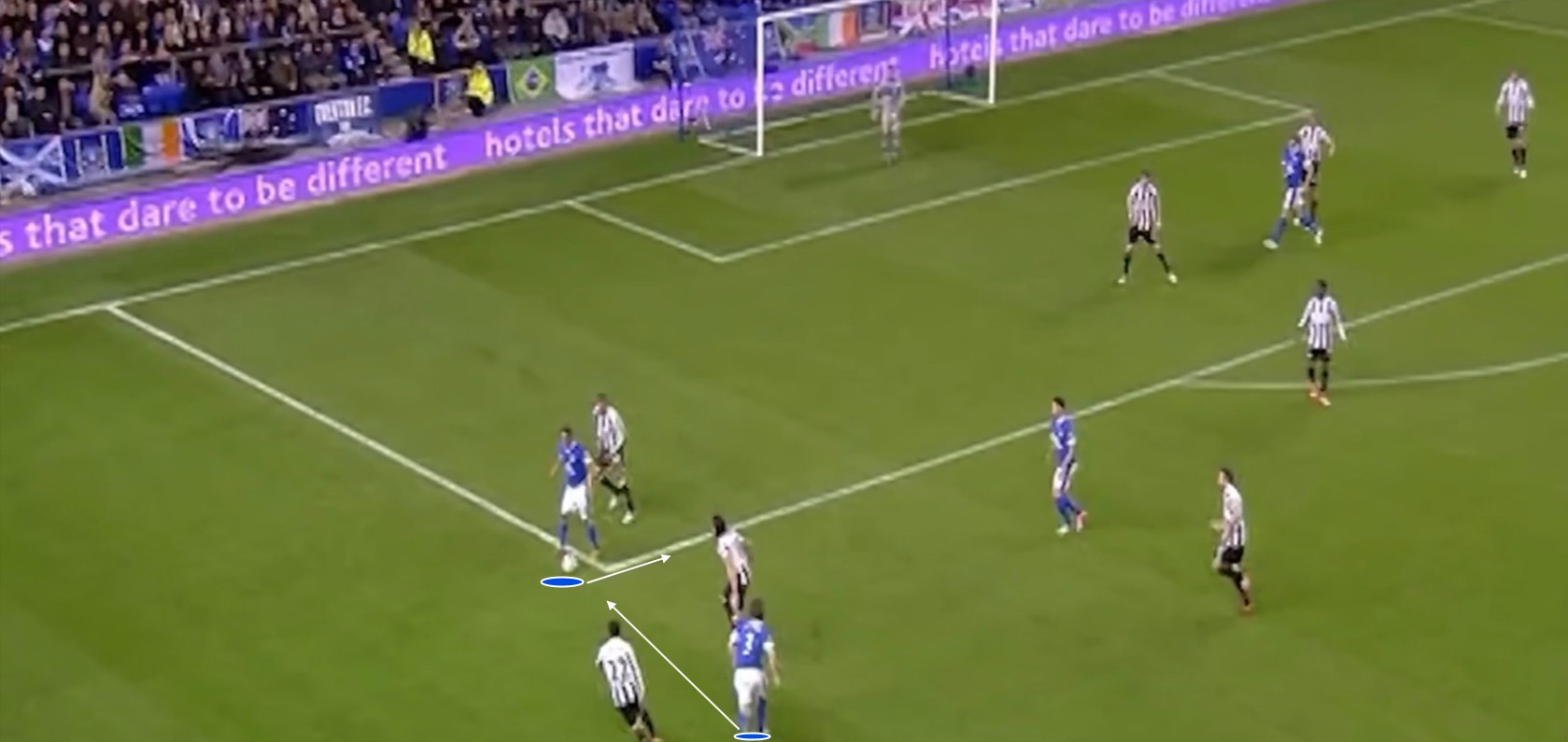
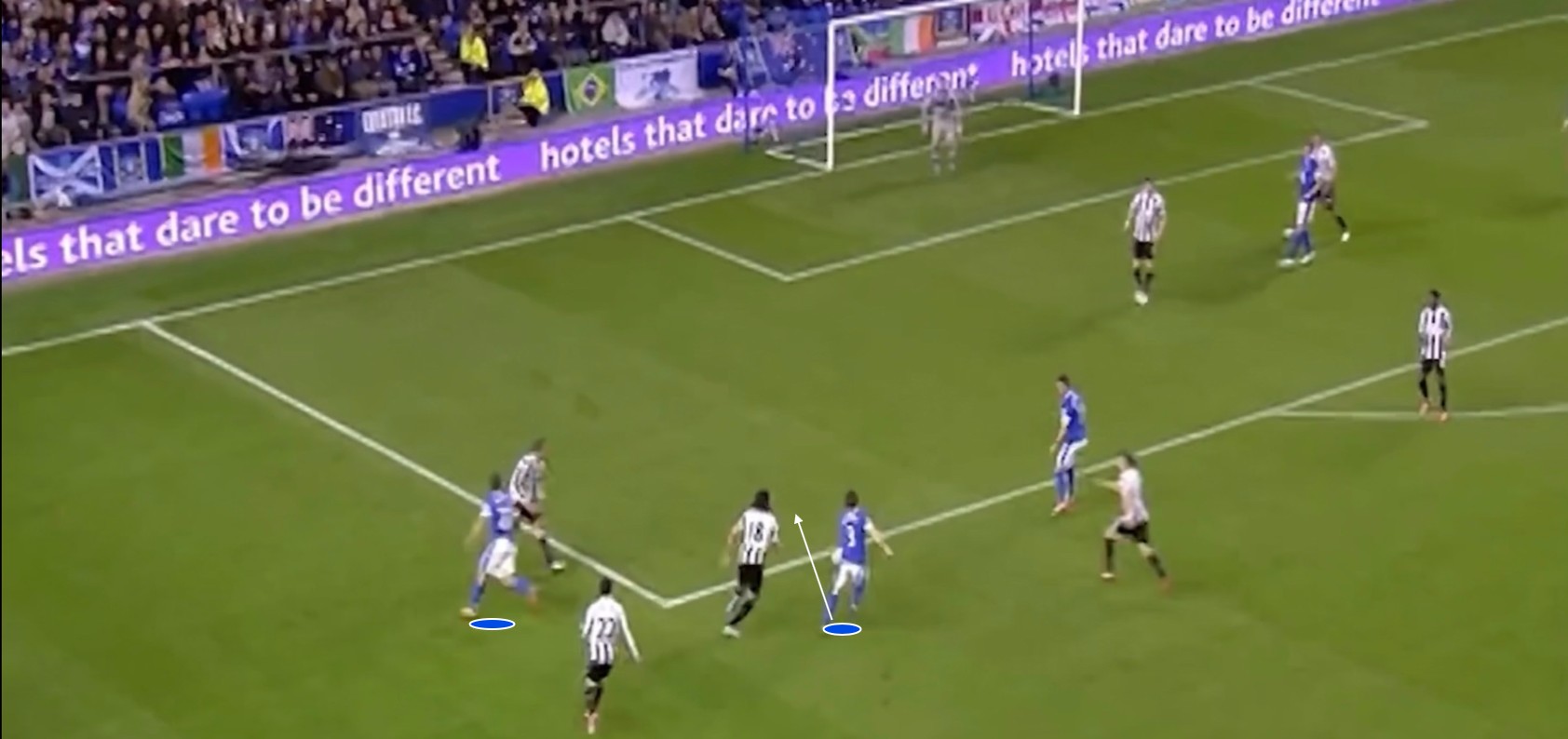
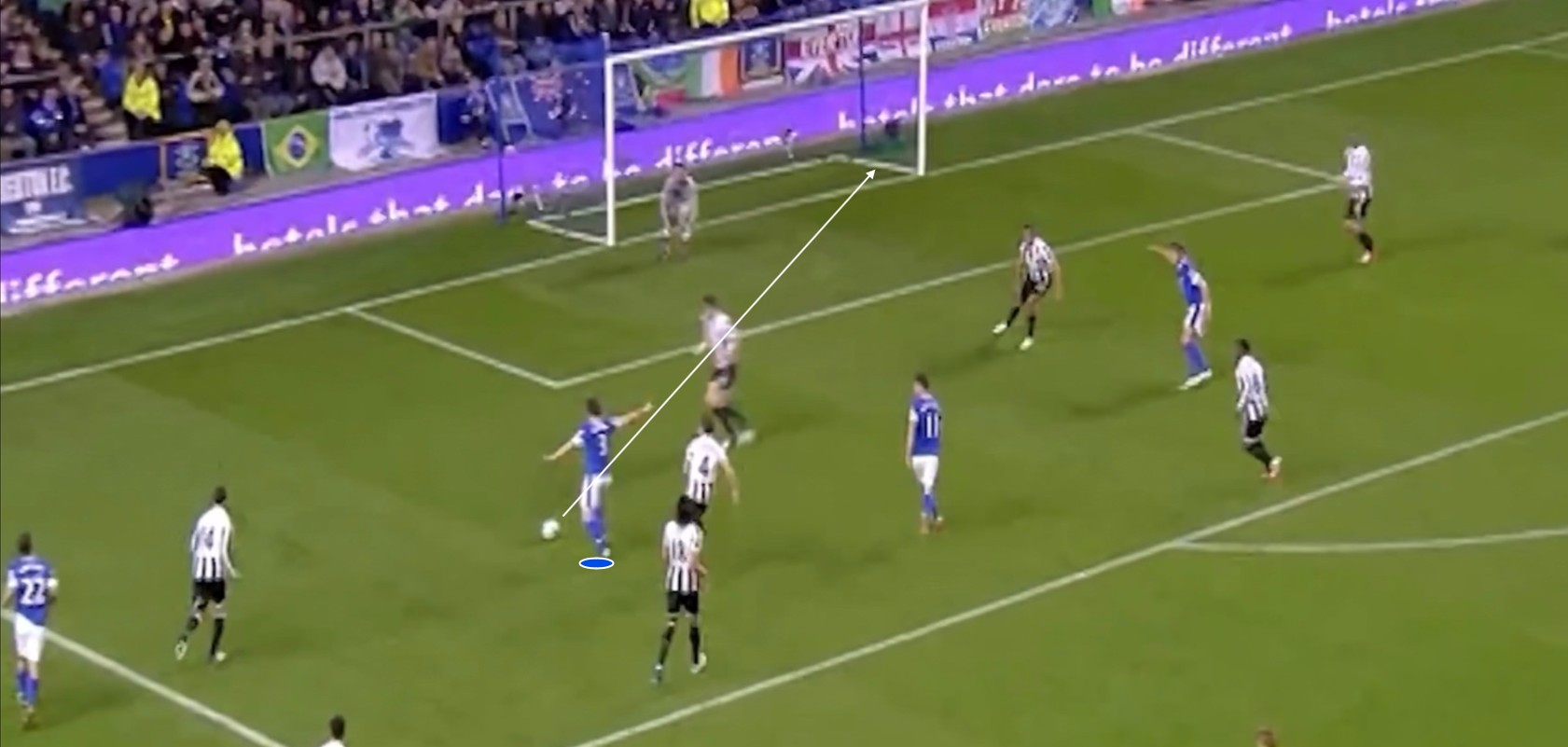
This clip perfectly illustrates the Pienaar–Baines relationship under David Moyes.
A simple one-two, Baines driving into the box, and a top-class left foot finding the bottom corner.
You could find countless examples of this pattern during Moyes’ tenure, which is exactly why that pairing became so dangerous.
At West Ham, Aaron Cresswell played a very similar role.
Strong left foot, excellent delivery, and set-piece quality, all while being protected defensively by Moyes’ structure.
This remains the template.
Which Left-Back Profiles Fit The David Moyes Mould
Leif Davis fits this profile extremely well.
His left foot is outstanding, his delivery from wide areas is top class, and he is an excellent one-touch passer who can link up in tight spaces.
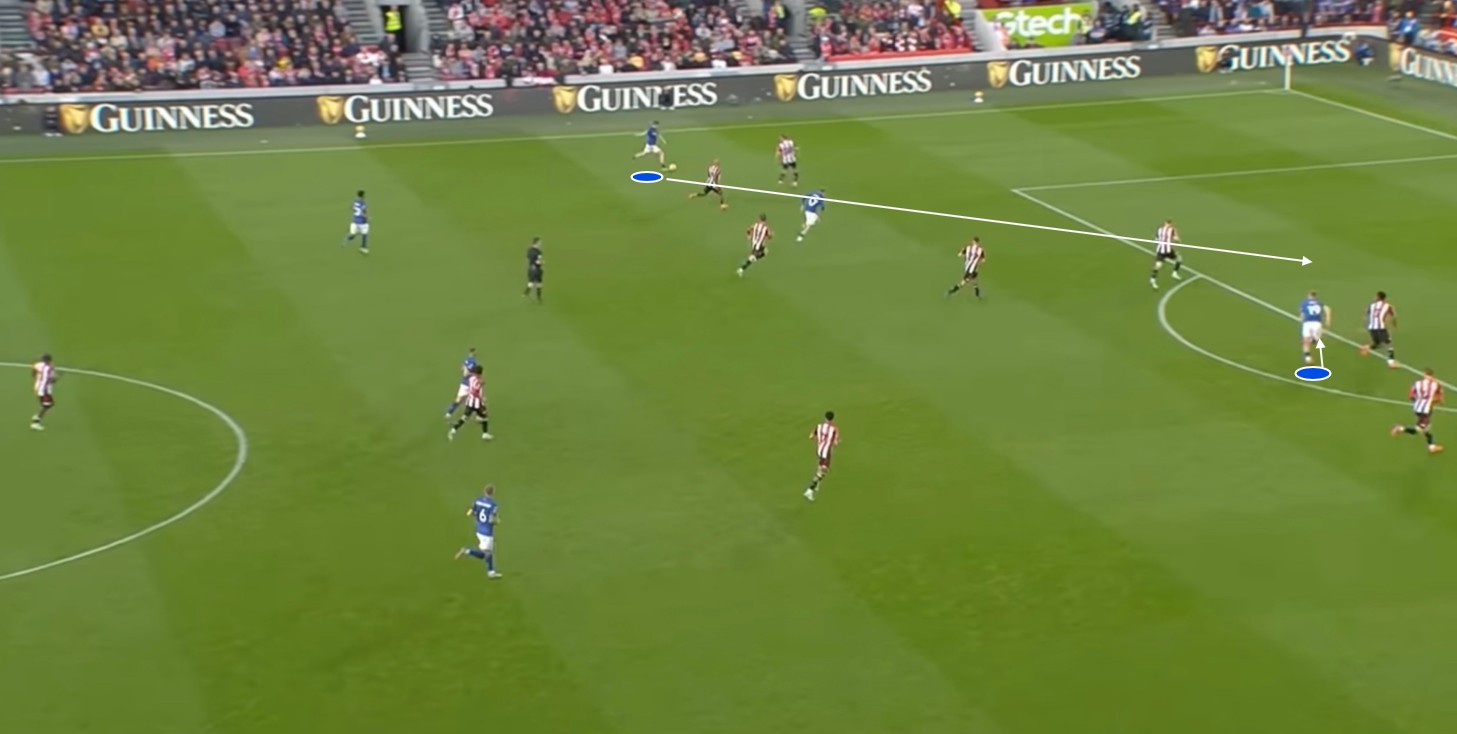
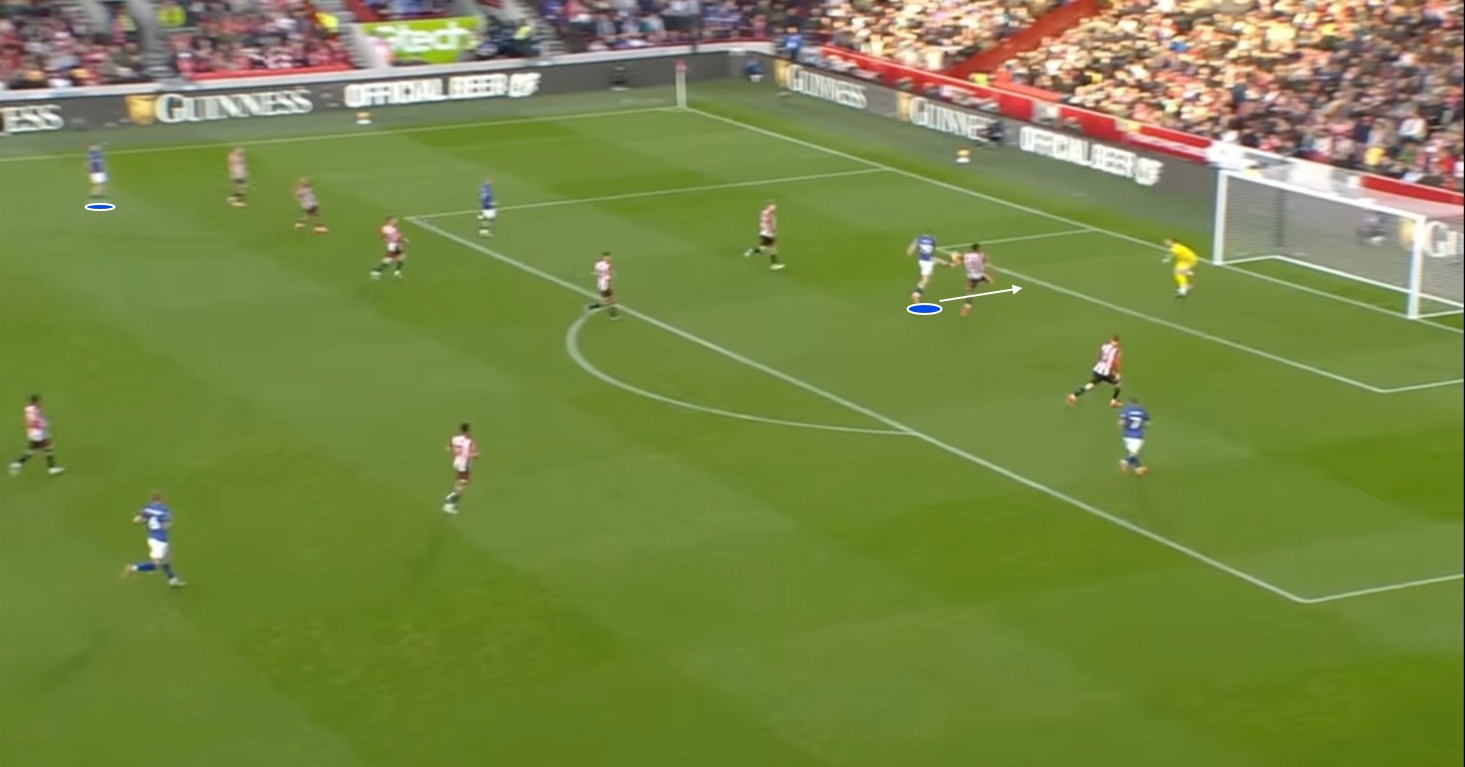
Here, you see Davis receiving the ball in a deeper crossing position.
His technique is excellent, and even his stride pattern shows how comfortable he is striking the ball cleanly.
Spotting Liam Delap’s diagonal run across the box, Davis puts the cross right on the money for a brilliantly taken finish.
This shows his ability to deliver from deep areas with real precision.
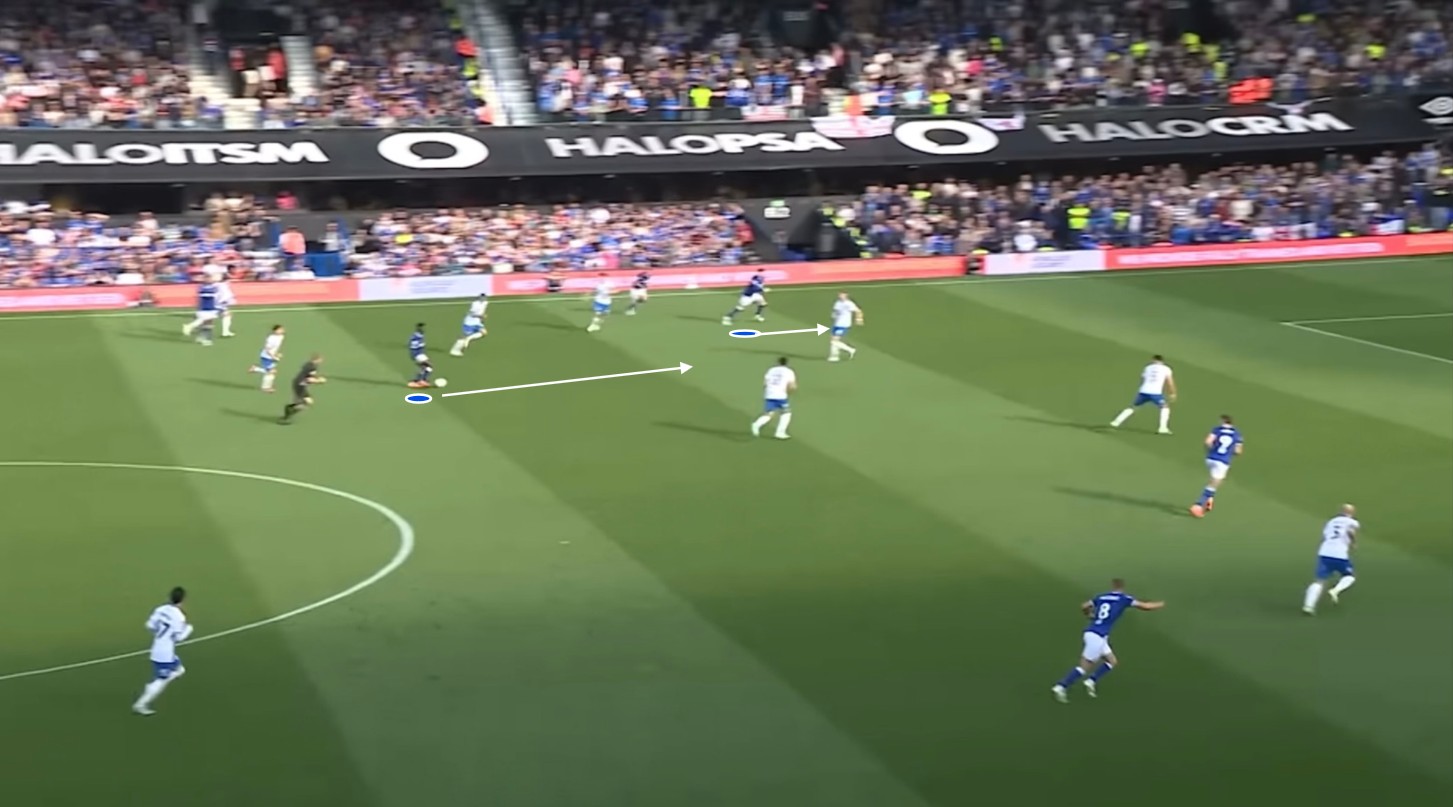
Davis is comfortable overlapping, can cross from the half-space, and is a brilliant set-piece deliverer.
That makes him a strong fit alongside players like Jack Grealish or Kiernan Dewsbury-Hall, who like to drift inside and combine.
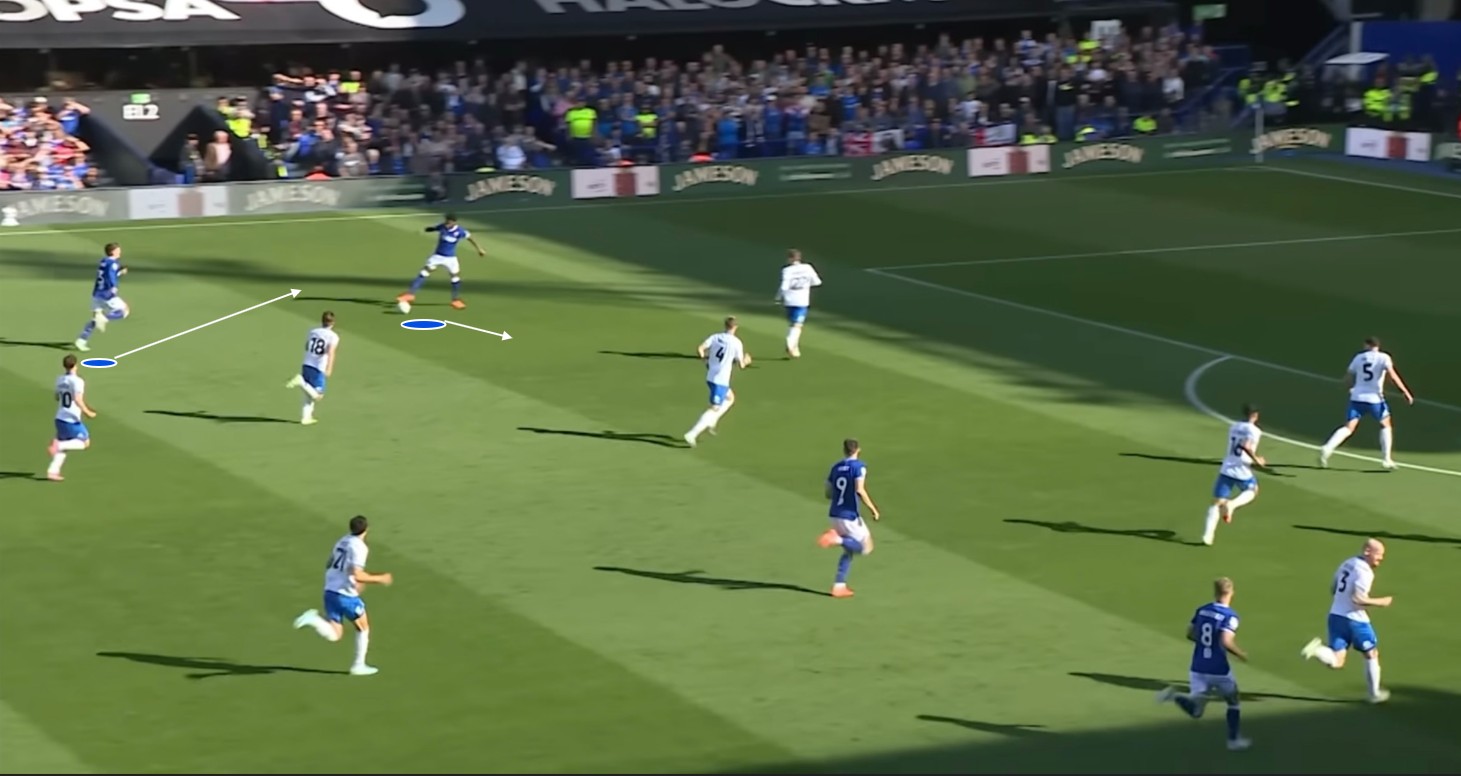
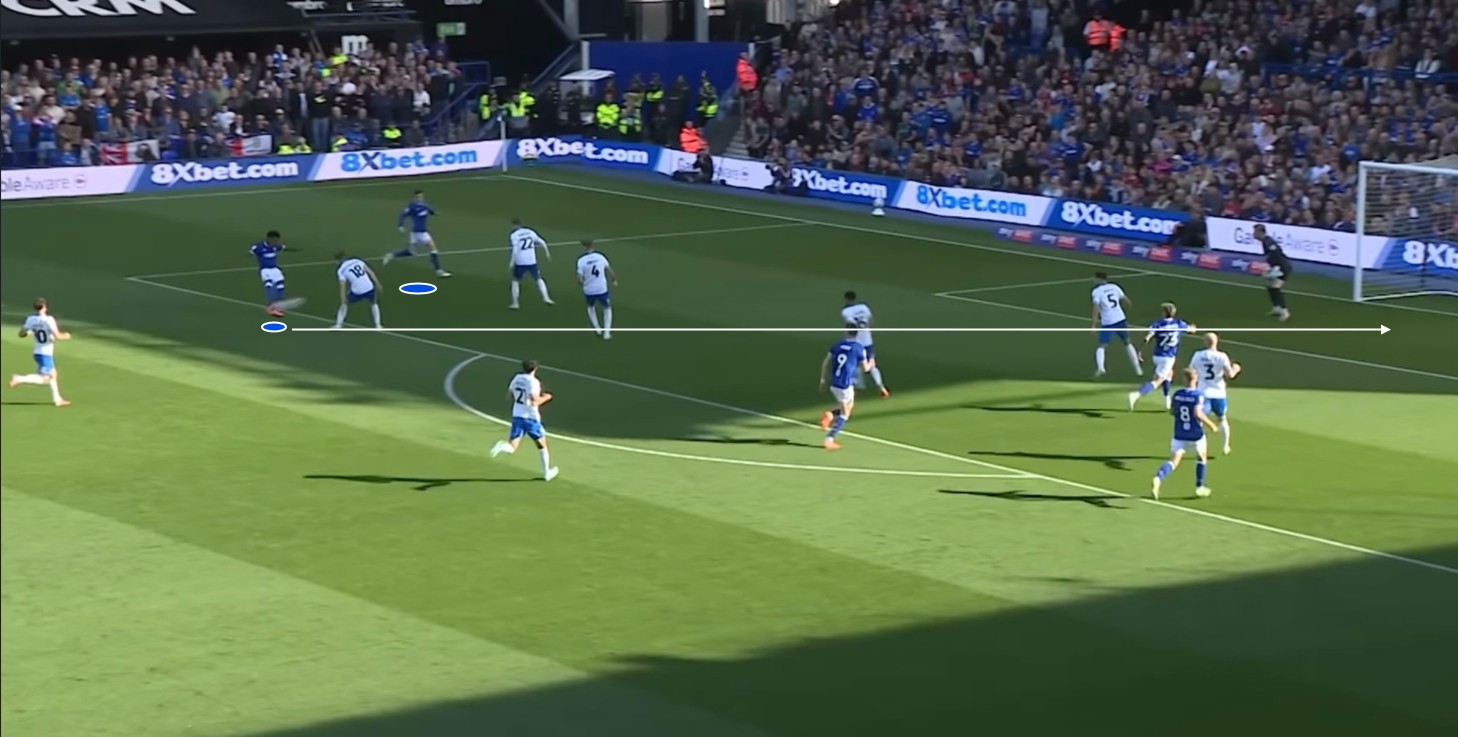
When the ball is switched wide, Davis immediately overlaps with pace, a clear pattern under Kieran McKenna.
That intensity forces the defender’s decision, allowing the winger to cut inside and score.
It is exactly the type of movement Davis could replicate alongside Jack Grealish, creating natural separation.
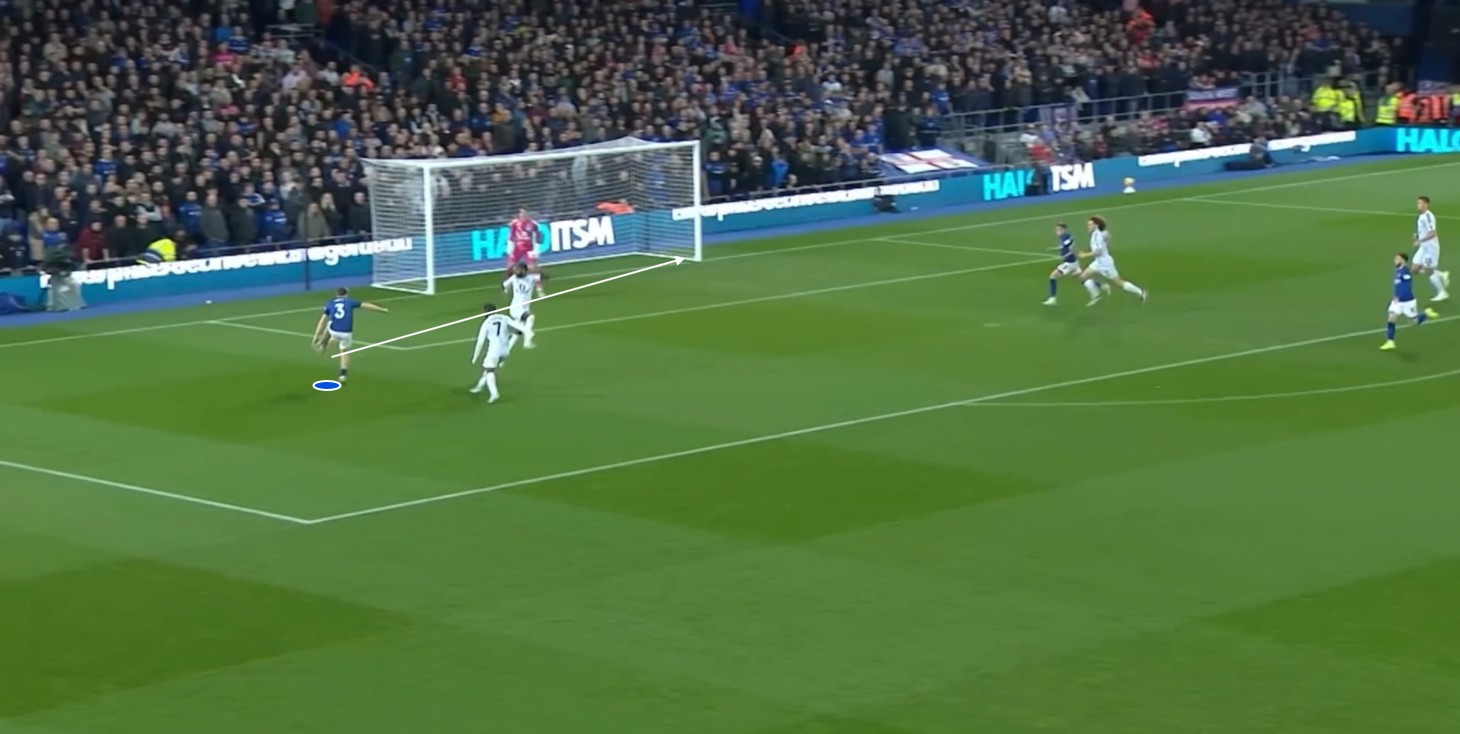
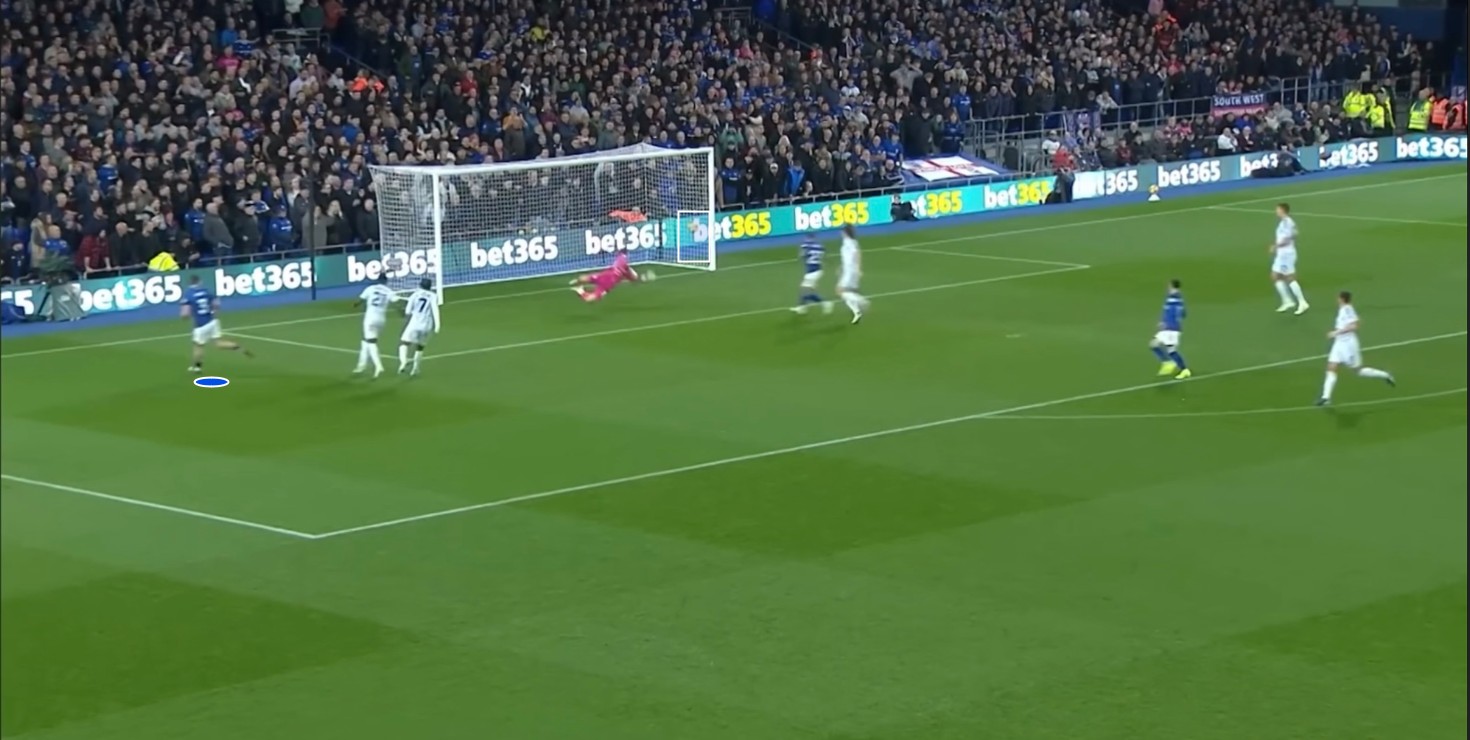
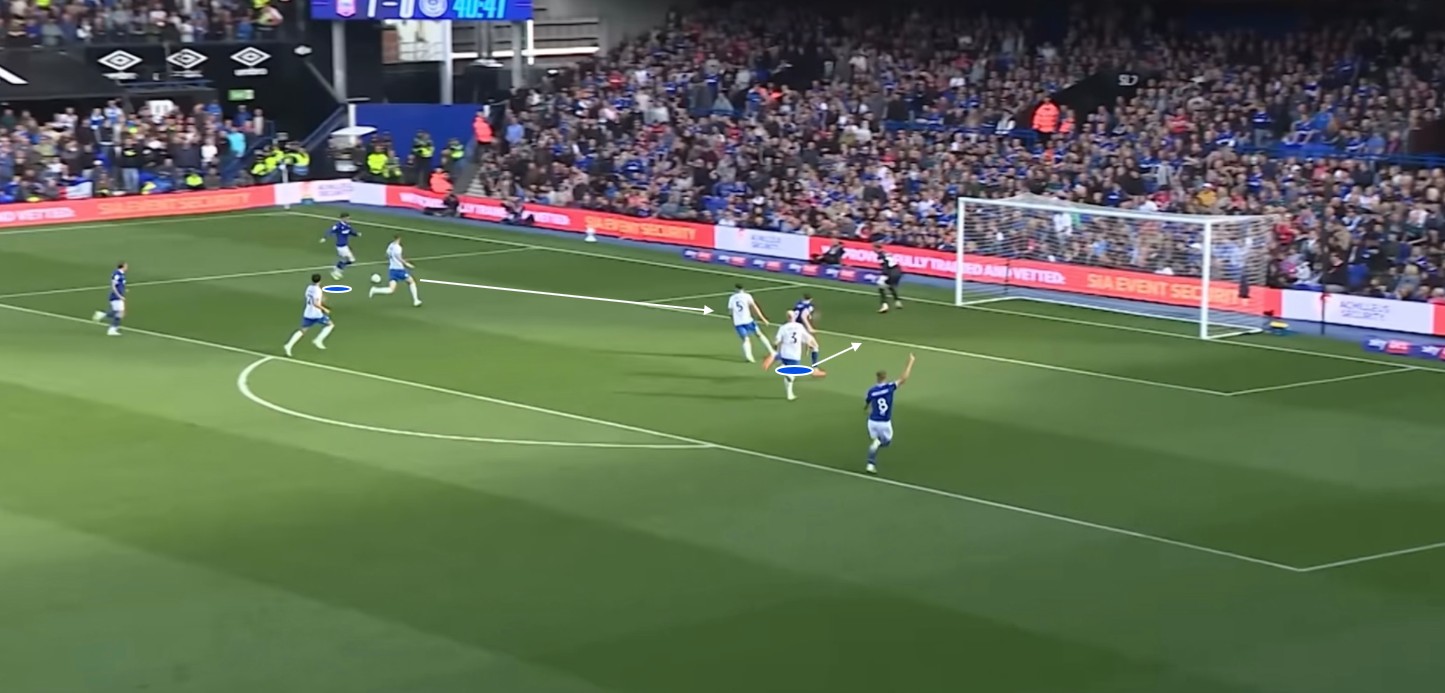
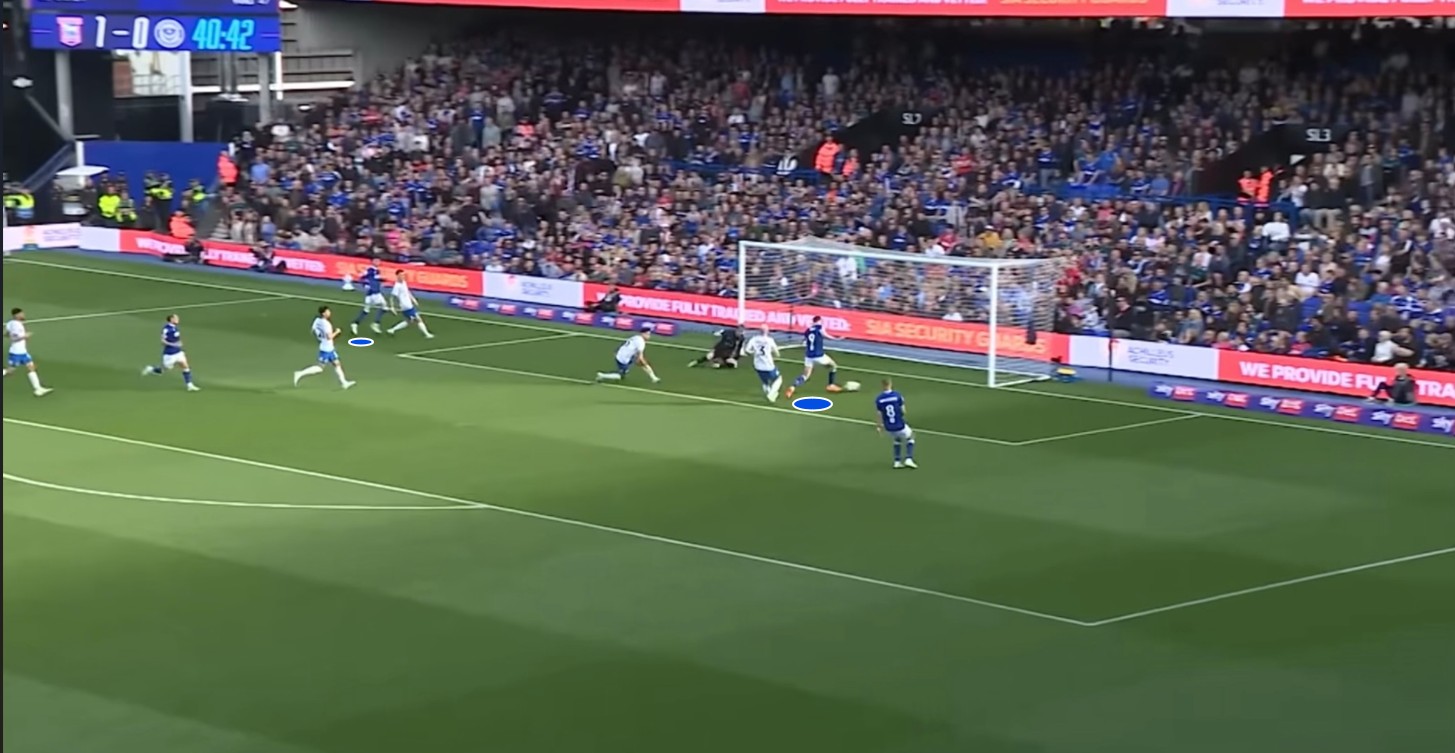
This clip shows Davis’ quality in front of goal.
He recognises the space, times his run into the box flawlessly, and meets the pass with a clean strike on his left foot, driving it into the bottom corner.
It is a top-class finish and underlines that he is not just a creator, but also a goal threat.
Defensively, he is not a strong 1-v-1 defender and can lack physicality at times.
But that has not stopped similar profiles from thriving under Moyes.
Both Baines and Aaron Cresswell benefited from structural protection and defensive coaching, and the same would apply here.
At Ipswich, Davis was occasionally exposed in one-on-one situations, such as against Mohamed Salah early last season.
That was largely due to McKenna’s aggressive pressing structure, which often leaves full-backs isolated.
Moyes does not operate that way.
He protects his back four, which is why Everton’s full-backs are rarely left exposed in wide open spaces.
Harry Amass represents a different pathway but fits the same mould.
He is left-footed, excellent in one-touch combinations, and very comfortable linking in tight areas.
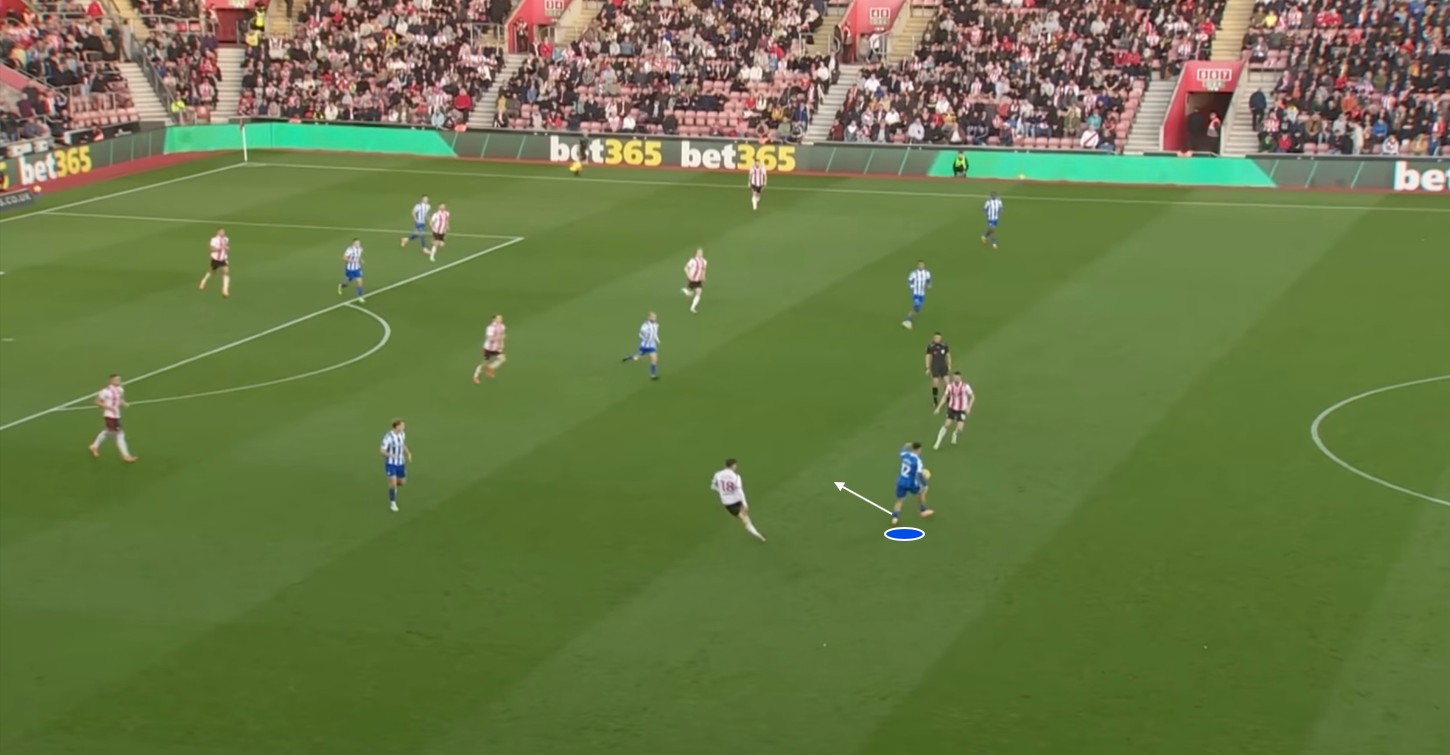
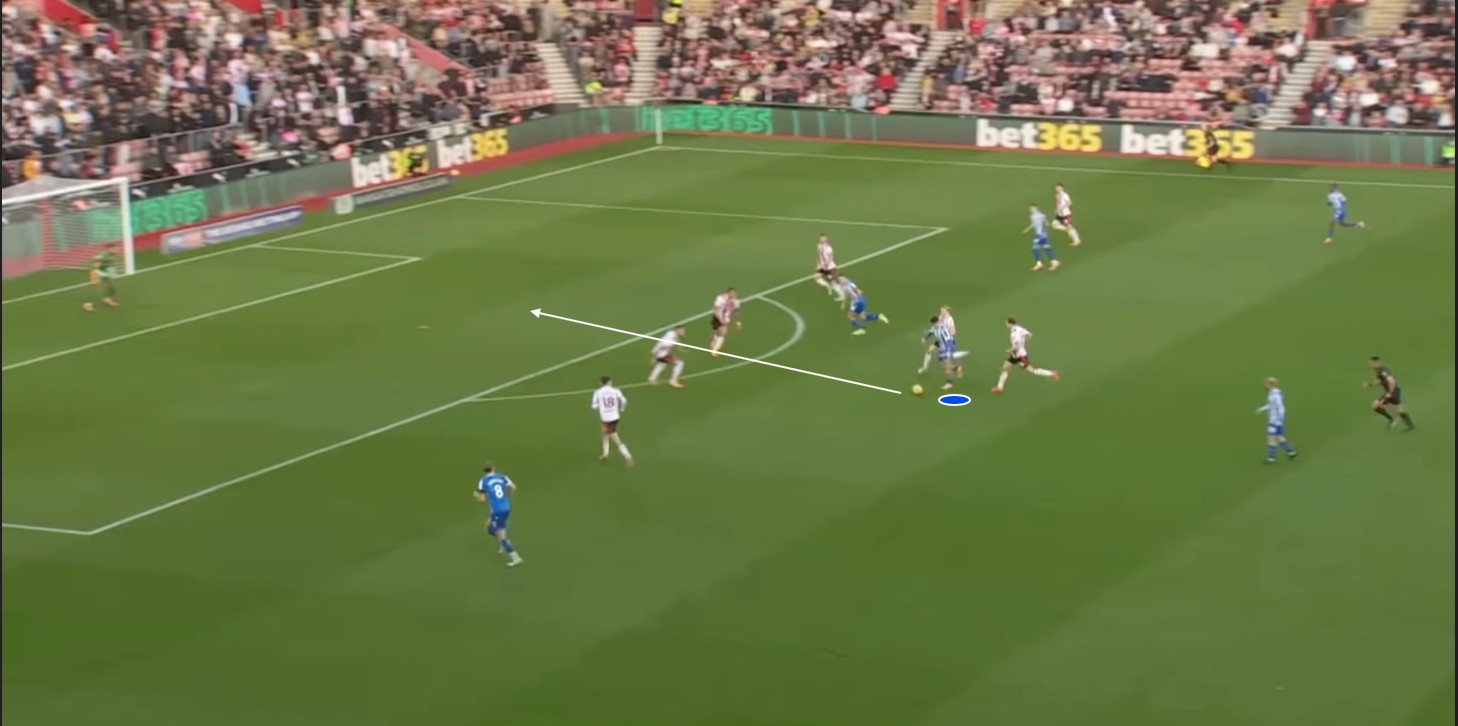
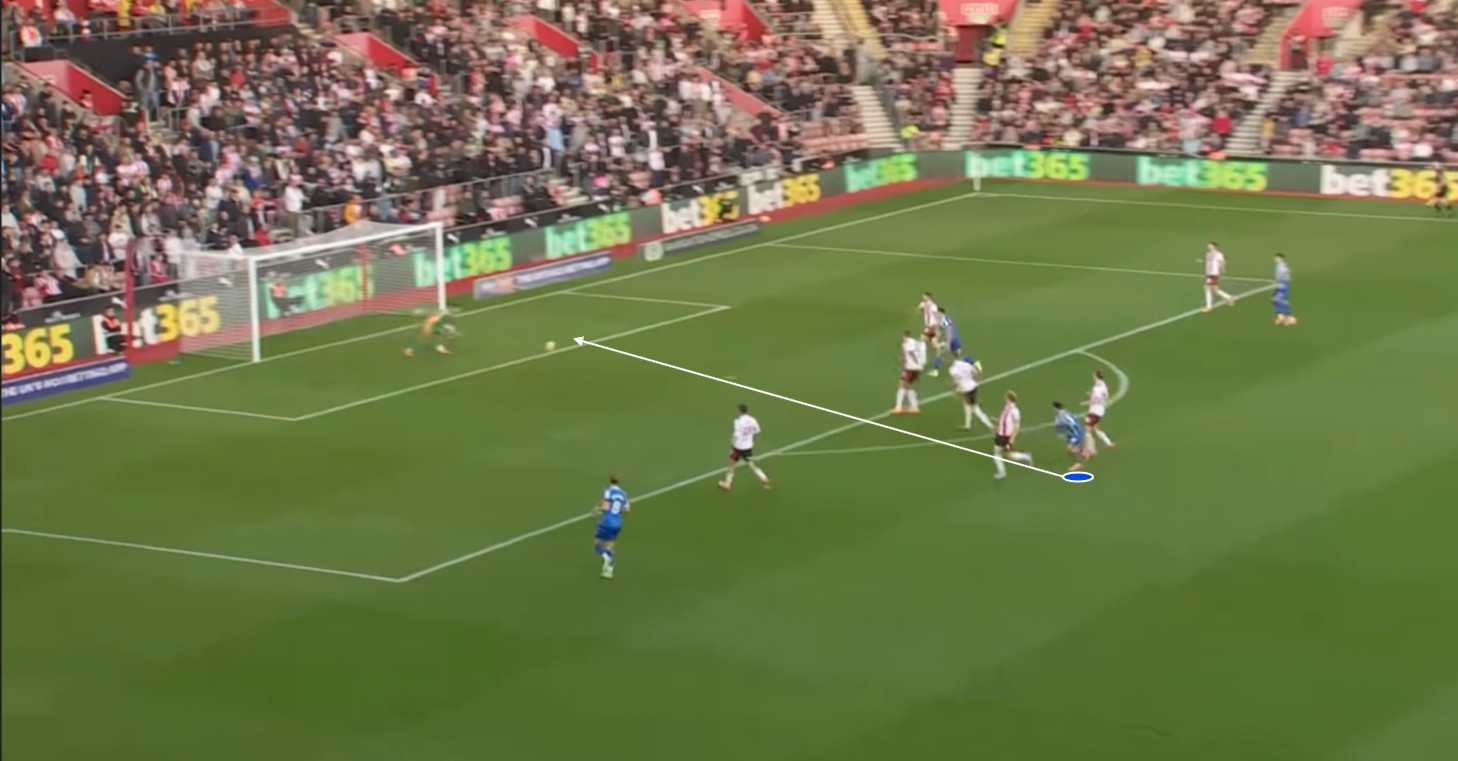
This clip underlines Amass’ confidence and technical quality.
He picks up a second ball in midfield, body feints past his man with ease, and drives towards the edge of the box.
Lining up his shot, he strikes cleanly with his left foot, producing a beautiful finish.
The technique is very reminiscent of Leighton Baines, and it shows how Moyes could exploit that left-footed quality in advanced areas.
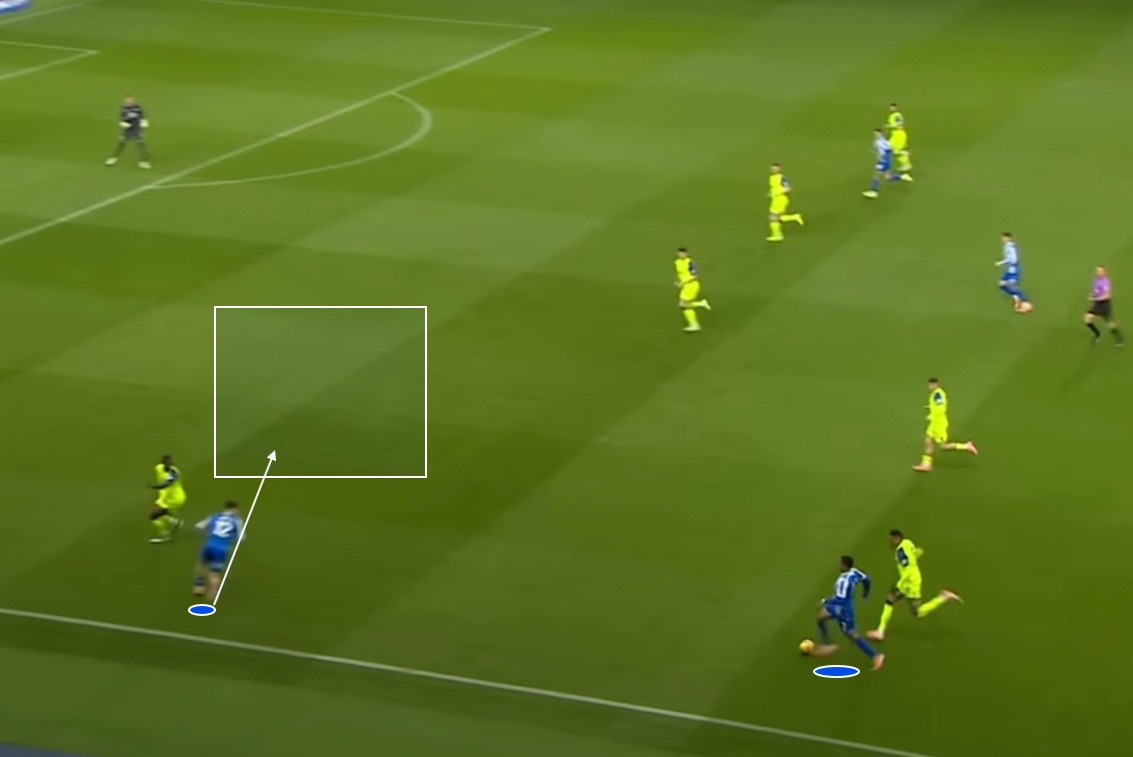
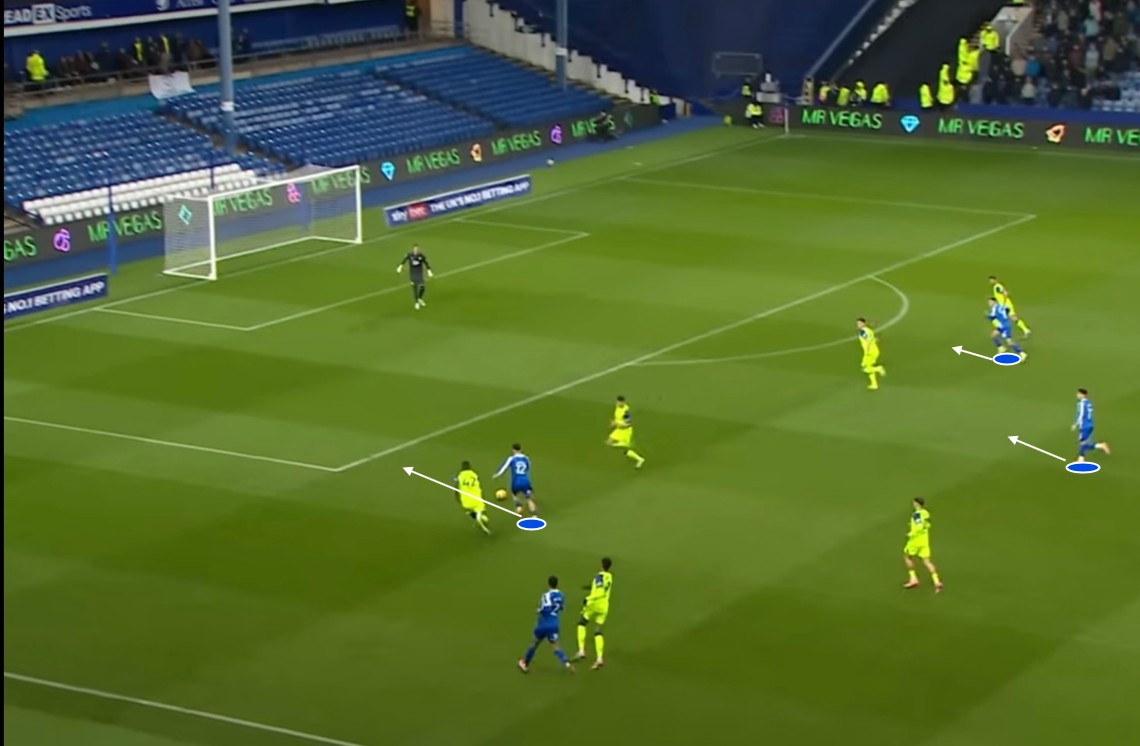
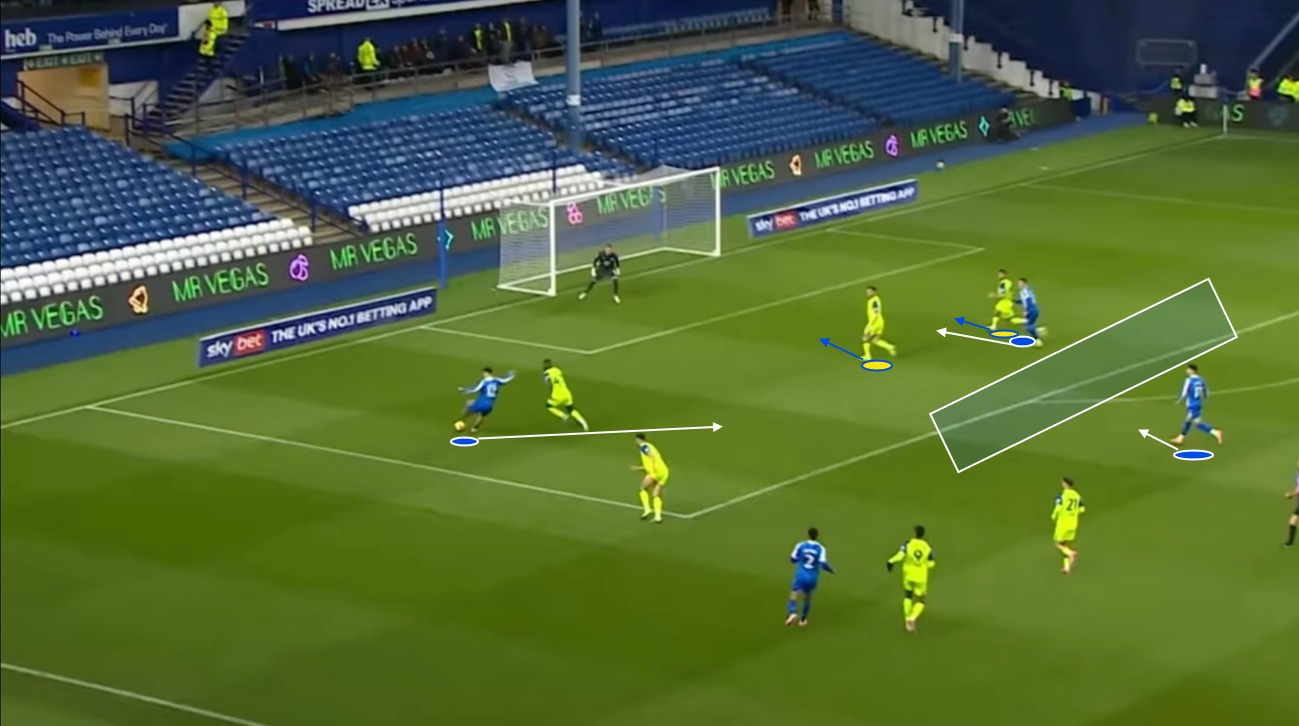
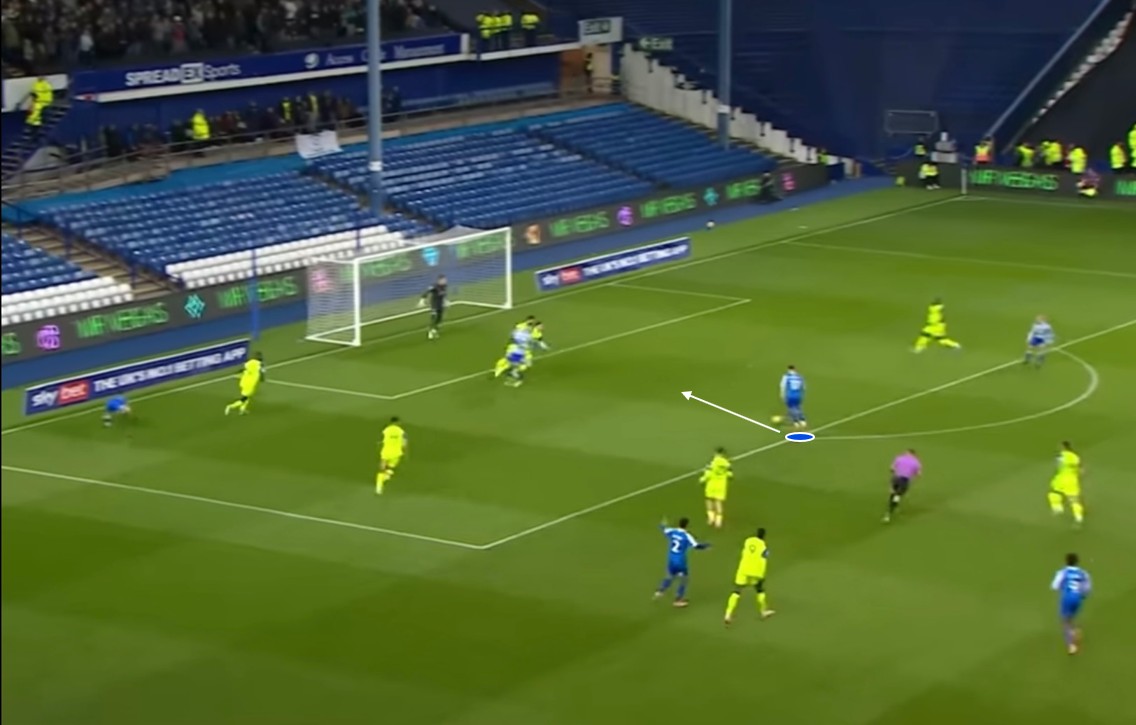
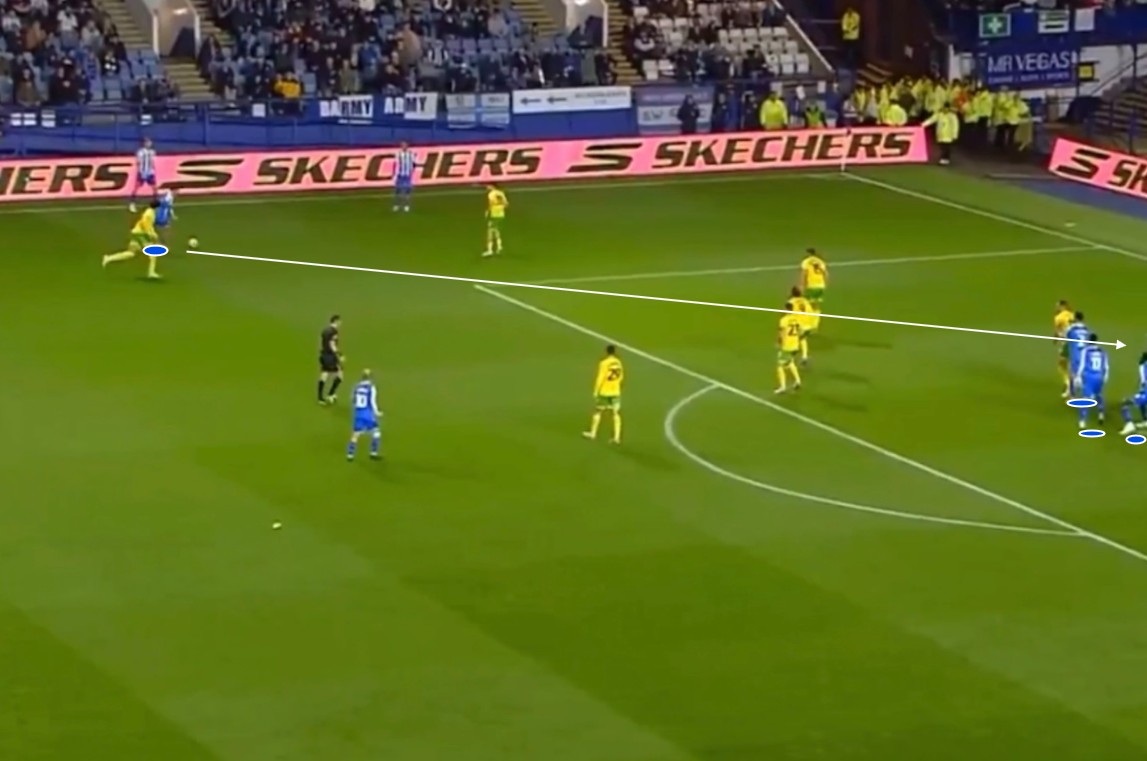
This clip shows Amass’s intelligence and composure in transition.
As Sheffield Wednesday break forward, he makes an in-to-out run like a winger, receives the ball in space, and drives down the byline.
When he reaches the end of the run, he slows himself down and spots the striker’s movement into the six-yard box, which drags the centre-backs with him.
That movement opens space at the edge of the box, and Amass cuts the ball back perfectly for a teammate arriving with time to shoot.
His crossing quality is high, and he can overlap and underlap effectively.
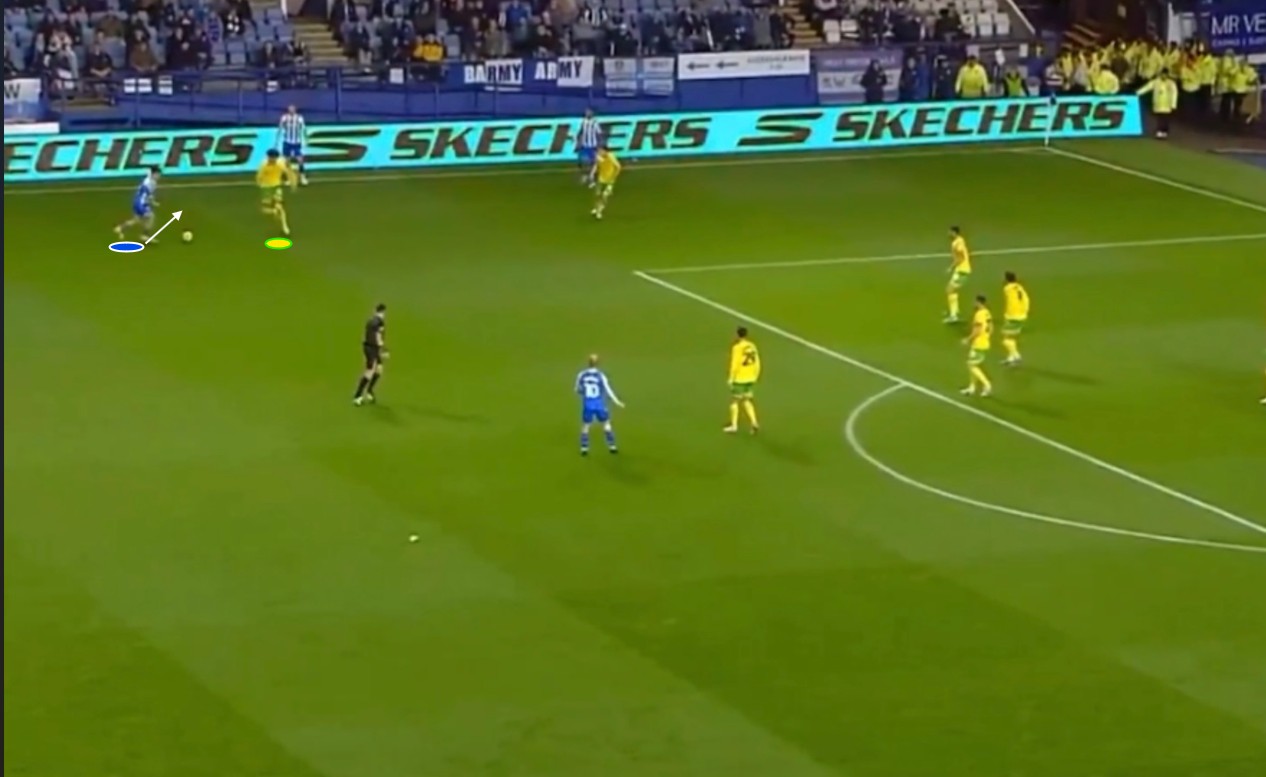
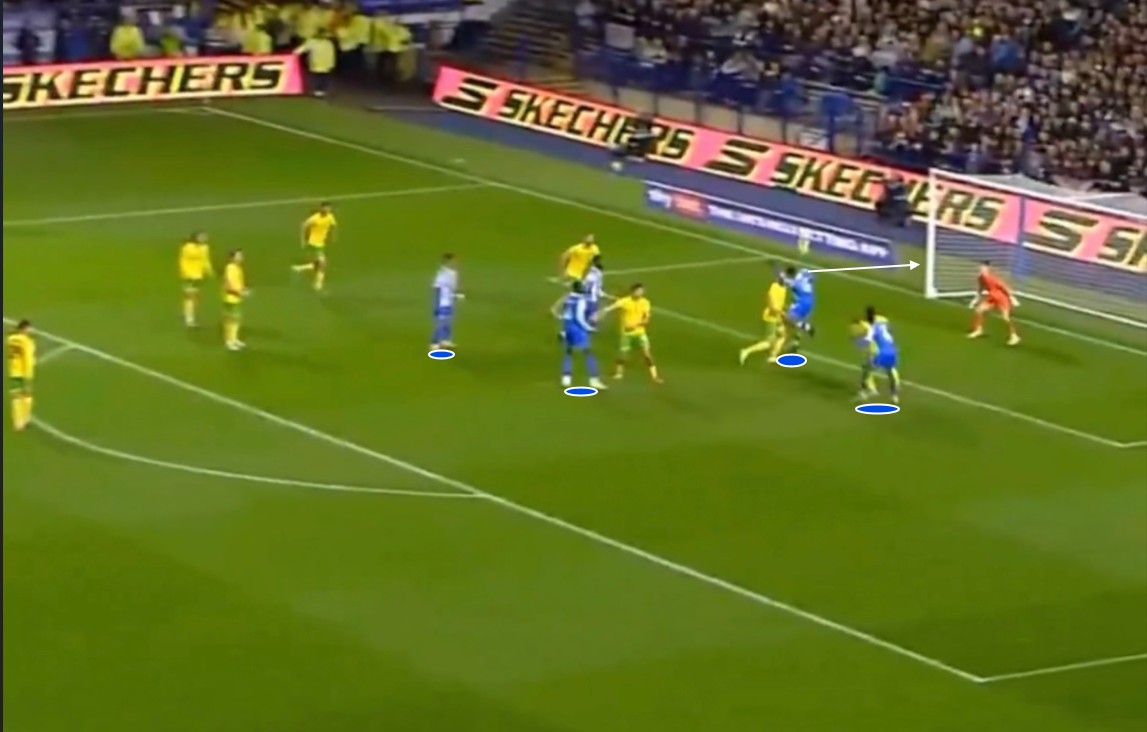
Here, Amass shows his agility and tight dribbling.
He uses the Norwich City defender’s momentum against him, sells a dummy, and shifts back onto his stronger left foot.
From there, he delivers a dangerous ball into the six-yard area, right where Sheffield Wednesday have bodies attacking the box.
The chance is not converted, but it highlights the variety and quality of his left-footed delivery.
Physically, he lacks height and can be overpowered at times, but there is a clear pathway for this type of player to succeed under Moyes.
Cresswell showed it, and Amass has already demonstrated his composure in high-pressure moments, including his involvement in Manchester United’s dramatic win over Lyon, where he played a key role late in the game.
Why Fullbacks Are Everton’s Biggest Opportunity For Progression
Upgrading the full-back positions would transform Everton’s attack.
It would increase width, crossing volume, and attacking balance.
It would allow wide players to operate more freely inside and provide more consistent service into the box.
The foundations are already in place.
What Everton needs now are the right tools.
Conclusion
David Moyes has proven time and time again that if you give him the right profiles, he will deliver.
He did it at Everton before, and he did it again at West Ham.
Everton now have their identity back.
The next step is to double down on it.
By investing in the right full-back profiles, Moyes can take this team from stability to genuine progression up the table.
Give him the tools, and he will take Everton where they need to go.

