


The signing of Kwame Poku by Queens Park Rangers (QPR) stands out as a sensible move.
Poku arrives at Loftus Road as a high-ceiling individual, as well as a tactical maverick with rare adaptability.
New QPR manager, Julien Stéphan, hijacked a near-complete move of Poku to Rangers, which speaks to the suitability of the player’s profile and the manager’s game model.
This player analysis and scouting report will focus on Poku’s technical and tactical profile, map his optimal utilisation within Julien Stéphan tactics, and explain how he can elevate QPR attacking and defensive phases.
Kwame Poku Background & Developmental Context
Poku’s development diverges from the orthodox academy to pro-pipeline.
His formative years in non-league football with Cray Wanderers and Worthing developed a toughness and adaptability often lacking in players who are over-coached from a young age.
His rise at Peterborough United, which culminated in 12 goals and eight assists from just 27 League One appearances (0.87 G+A/90) in the 2024/2025 season, is an excellent return given the context: He contributed to a side with suboptimal possession structures and limited access to the final third zones.
Poku’s impact did not go unnoticed; he was named both in the EFL League One Team of the Season and as Peterborough’s Player of the Season—a recognition of his influence in an otherwise brutal campaign.
Poku is a multi-positional attacker (right winger, left winger, central attacking midfielder, and second striker in a two-player partnership).
This makes him a tactical chameleon, a player whose role can change in response to game state, phase of play, and opposition structure.
The radar chart below provides an overview of Kwame Poku’s performance metrics from his time at Peterborough United (2024/2025), compared against other right-attacking midfielders and right-wingers in EFL League One.
Kwame Poku Radar Chart

The average league performance for each statistical category is marked at the 50 line, making it easy to see where Poku excels or lags relative to his peers.
Poku’s data is excellent in attacking metrics: he is well above average for shots per 90, dribbles, opposition penalty area touches, and dangerous passes per 90, all of which are vital for a creative attacking player.
His percentile ranks in these areas are consistently above 77, indicating he is among the league’s elite in chance creation and direct attacking threat.
His xGC (expected goal contributions) and GC (goal contributions) per 90 are also well above the league average, underlining his effectiveness in final third actions.
He also has a high percentile for received passes per 90 and progressive passing shows, which means he is actively involved in build-up play.
Kwame Poku Ball Progression & Attacking Versatility
Technically, his ball progression via dribbling is outstanding.
He is a relentless ball carrier, utilising high-frequency touches, body feints, and rapid tempo changes to evade defenders.
Kwame Poku excels in isolation scenarios where he is set up 1v1 against a full-back.
He uses his ability to fix his direct opponent and create overloads in adjacent zones.
This is a functional, high-value attacking play that consistently generates entries into the penalty area or the half-spaces.
His comfort both hugging the touchline and invading into the half-space to lay off to runners makes him a constant attacking threat.
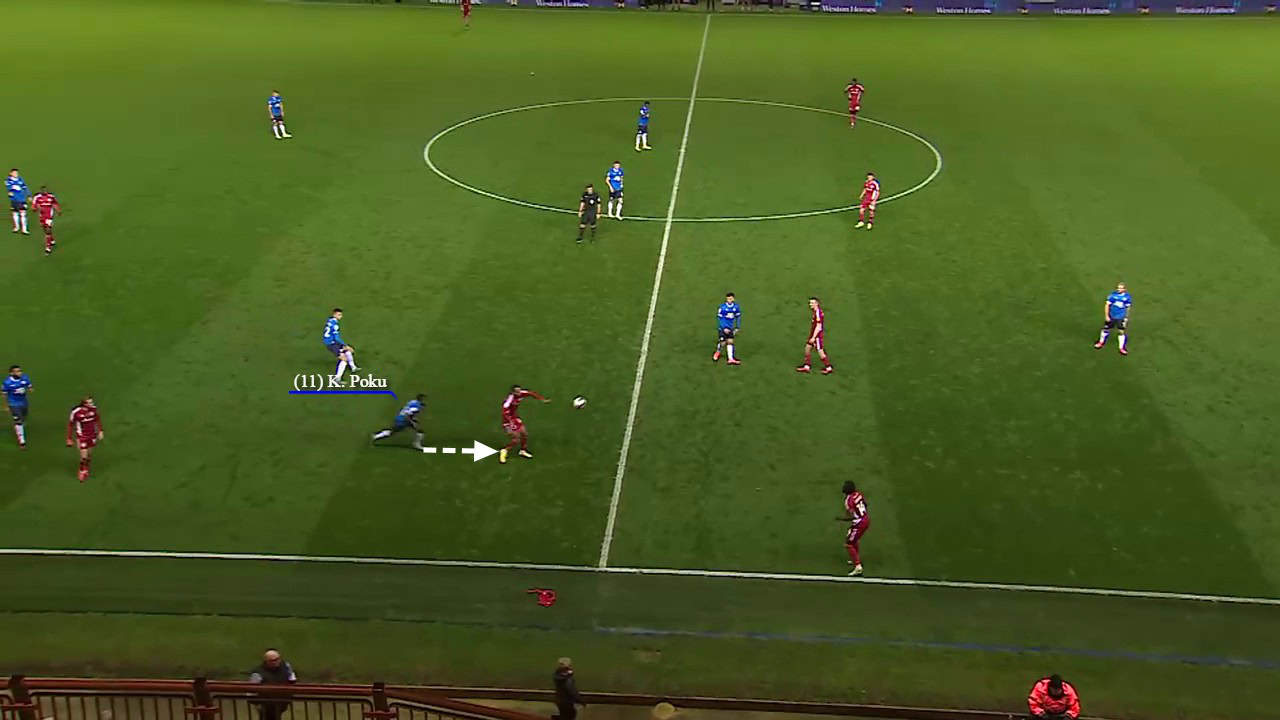
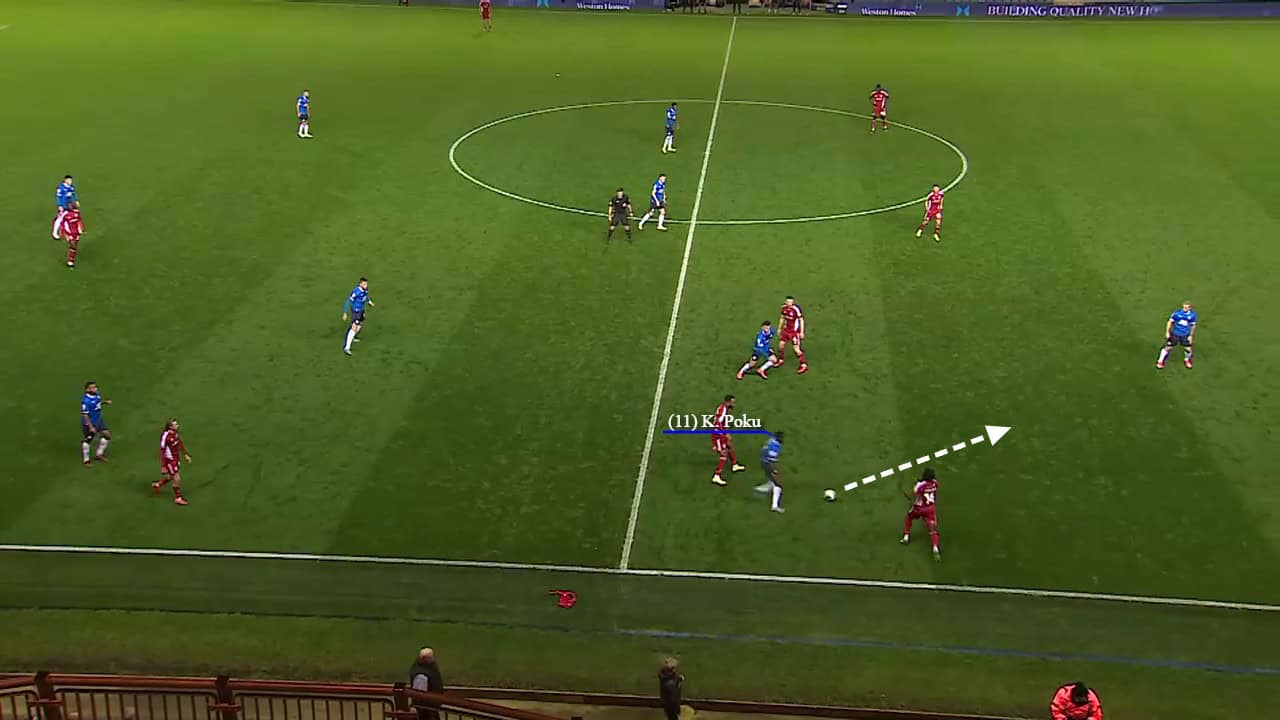
In a league match against Accrington Stanley, Poku demonstrates sharp anticipation to win the second ball, quickly skips past one defender, then drives forward to engage his marker.
He then disguises his intent and threads a through ball to an advanced teammate in a better position.

Kwame Poku Decision-Making
Kwame Poku’s spatial awareness and timing, particularly his third-man runs and comfort receiving on the half-turn, are at a good level.
These qualities disorganise man-oriented marking plans and create the separation needed for decisive actions in the final third.
His progressive carries and passing regularly break lines, bypassing opposition.
He is a creative force, and disguised passes and cutbacks from the byline to onrushing teammates make him a good chance creator at the League One level.
Statistically, his expected assists and shot-creating actions per ninety are both in the top decile for his age and position.
His mature shot selection, favouring high-probability locations and late box arrivals, which are traits of a modern wide forward.
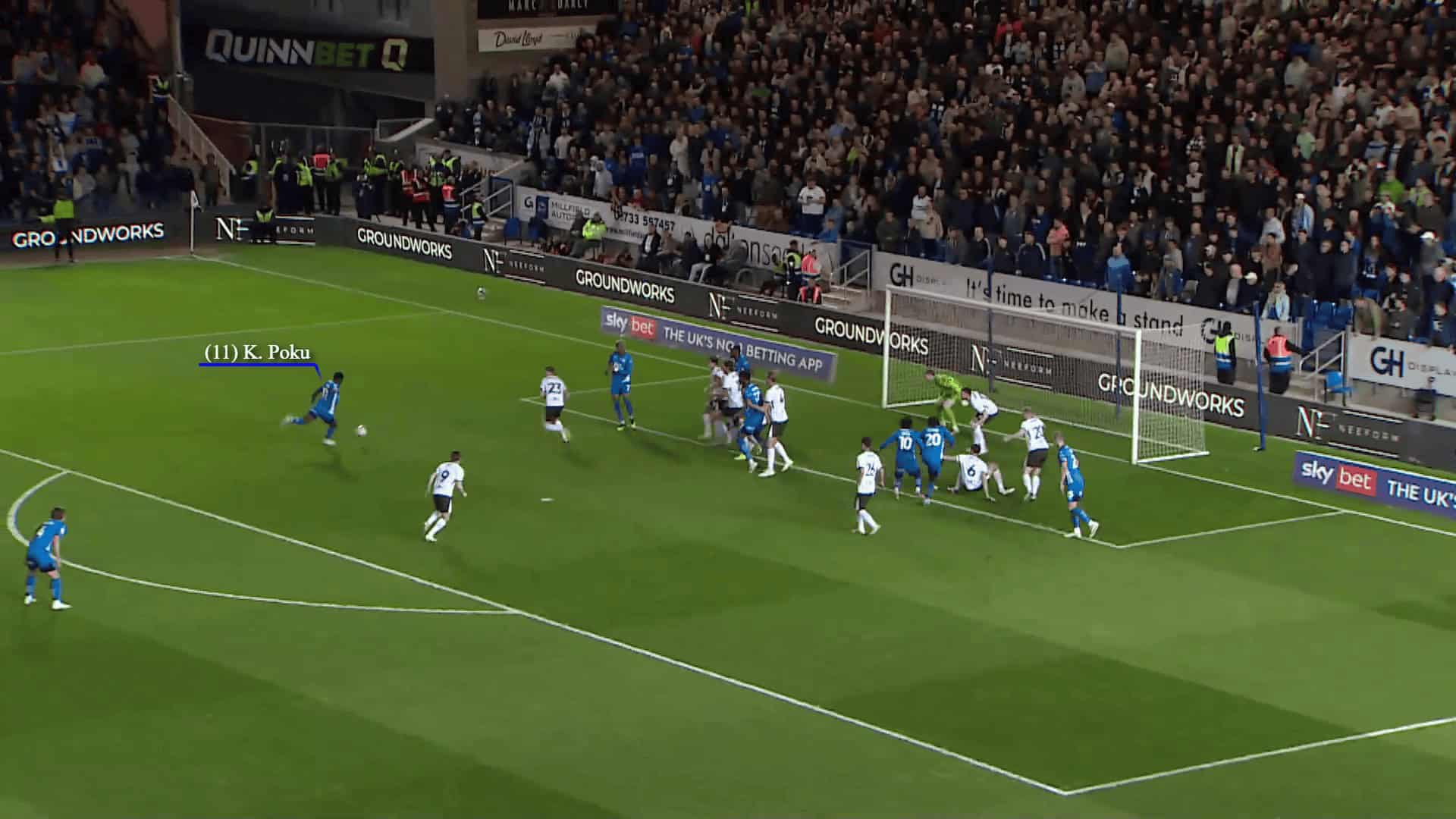
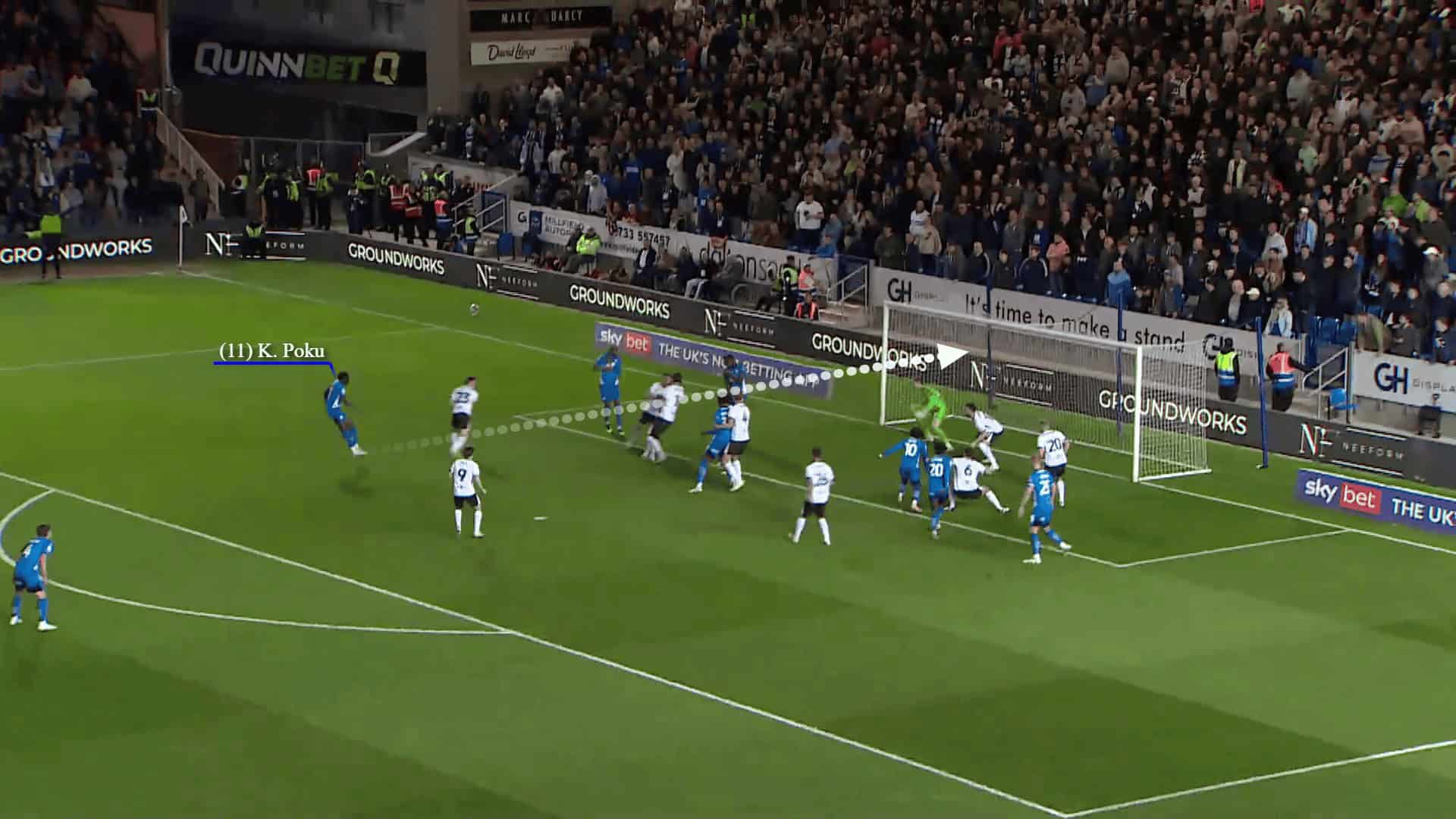
In a league fixture against Birmingham City, Poku positions himself intelligently on the edge of the box, just outside the congestion created by the corner.
When a defensive header directs the ball into his path, he maintains optimal body posture (upright and balanced) and strikes cleanly through the ball.

Kwame Poku Off-The-Ball & Areas For Growth
Defensively, Kwame Poku is proactive and tactically mature.
He understands the principles of counterpressing, applying immediate pressure after possession is lost to regain the ball high up the pitch.
His awareness of pressing triggers and ability to make curved pressing runs while pressuring the ball carrier and cutting off passing lanes are known as cover shadows.
In transition, he tracks back and supports his full-back, a habit likely forged in his non-league years, when defensive responsibility was ingrained.
However, there remains room for development, particularly in his physical robustness.
While agile and quick over short distances, Kwame Poku has yet to fully develop the core and lower-body strength needed for the Championship.
He can be shrugged off the ball in duels, particularly under pressure in congested areas or when contesting aerial and second balls.
He will need to improve his body orientation under contact, maintaining balance and control when faced with challenges.
Kwame Poku Under Julien Stéphan Tactics
Overlaying Kwame Poku’s individual qualities is the tactical philosophy of Julien Stéphan, a manager recognised for his blend of flexibility and pragmatism.
Stéphan was willing to adapt his tactical shape at Rennes, whether using a 4-3-3, 4-2-3-1, or 3-4-2-1 formation, depending on the opposition and available personnel.
His methodology is led by principles such as verticality, exploiting space behind opposition lines upon regaining possession, positional play, and creating superiority by occupying optimal zones.
Automatisms, or pre-rehearsed passing and movement patterns, are a hallmark of his teams, as are asymmetric structures that create unpredictability and facilitate dynamic positional rotations.
In this context, Poku’s versatility will be useful.
He can operate as a touchline winger in a 4-3-3, stretching opposition defences and creating isolation scenarios, or invert into the right half-space as an auxiliary playmaker, creating underlapping runs and creating staggered lines.
In a 4-2-3-1, he is comfortable as the right-sided ten, exploiting intermediate spaces and linking play on the half-turn.
If Stéphan employs a 3-4-2-1, Poku’s ability to function as an inside ten adds further flexibility, particularly in matches requiring central overloads and interchanges.
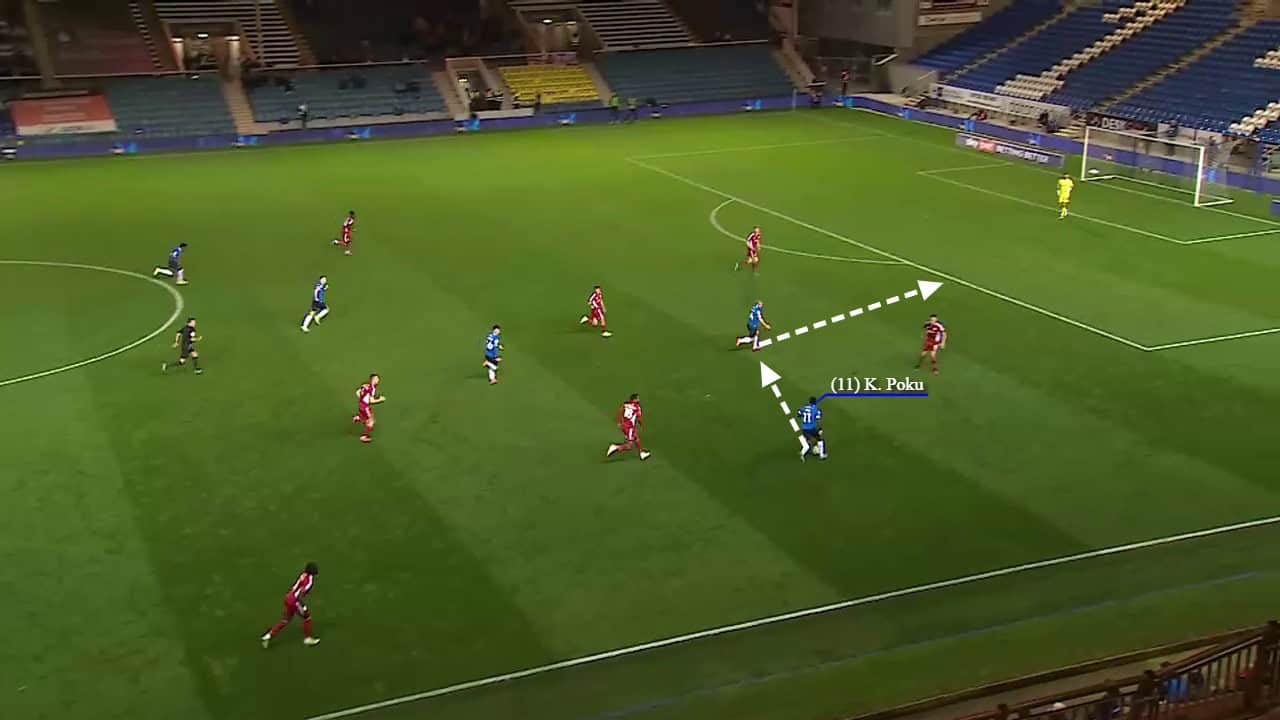
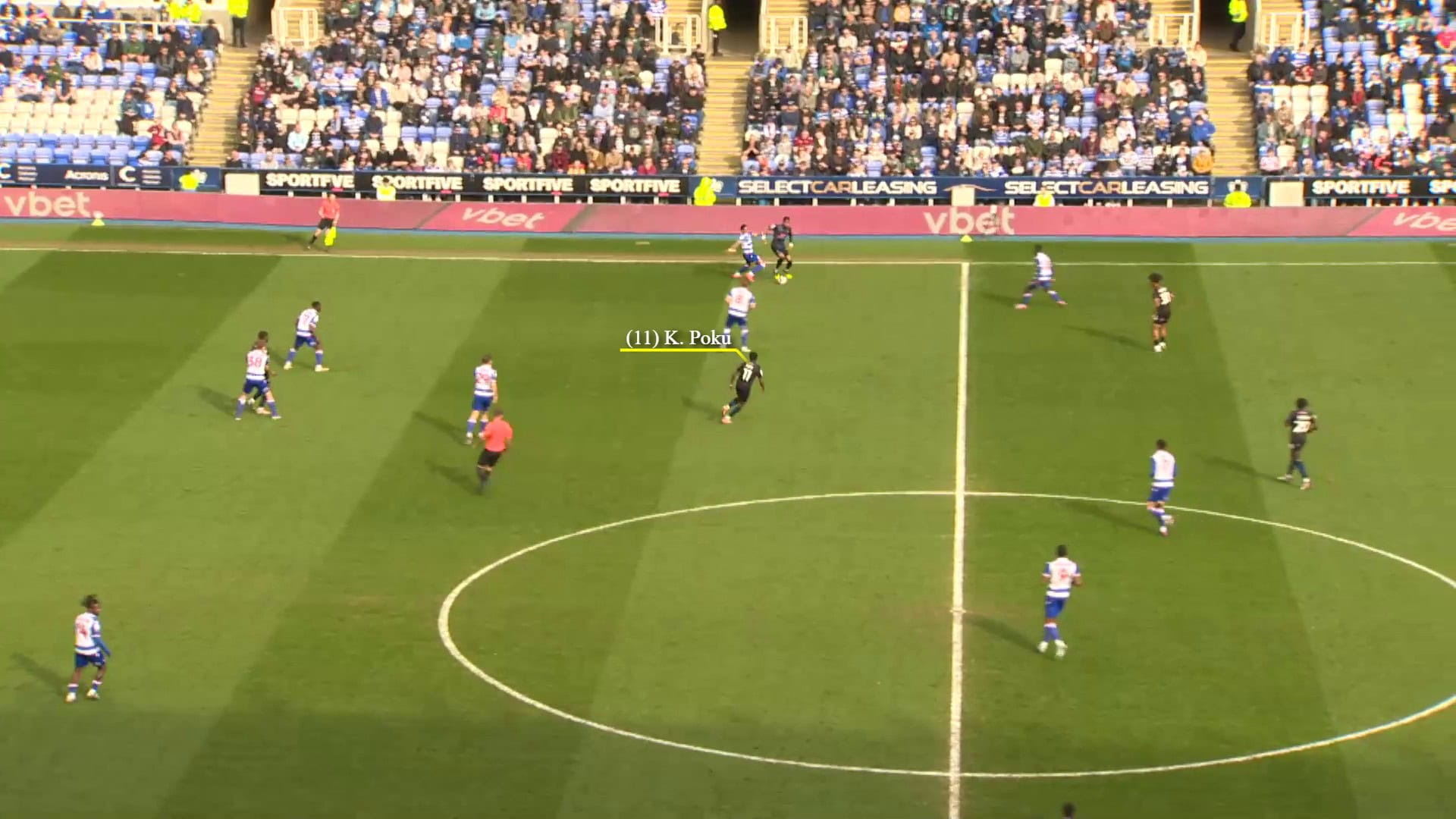
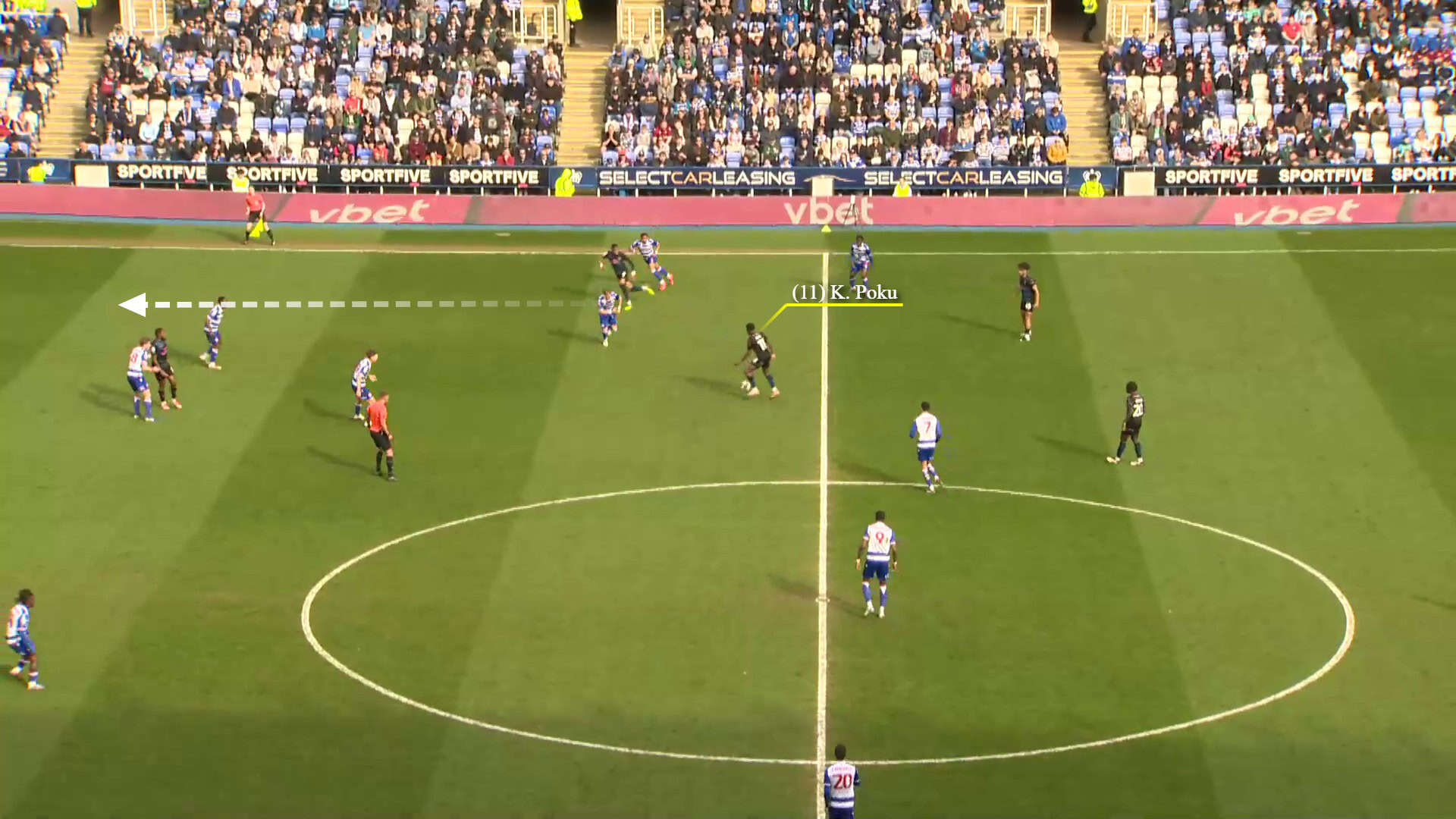
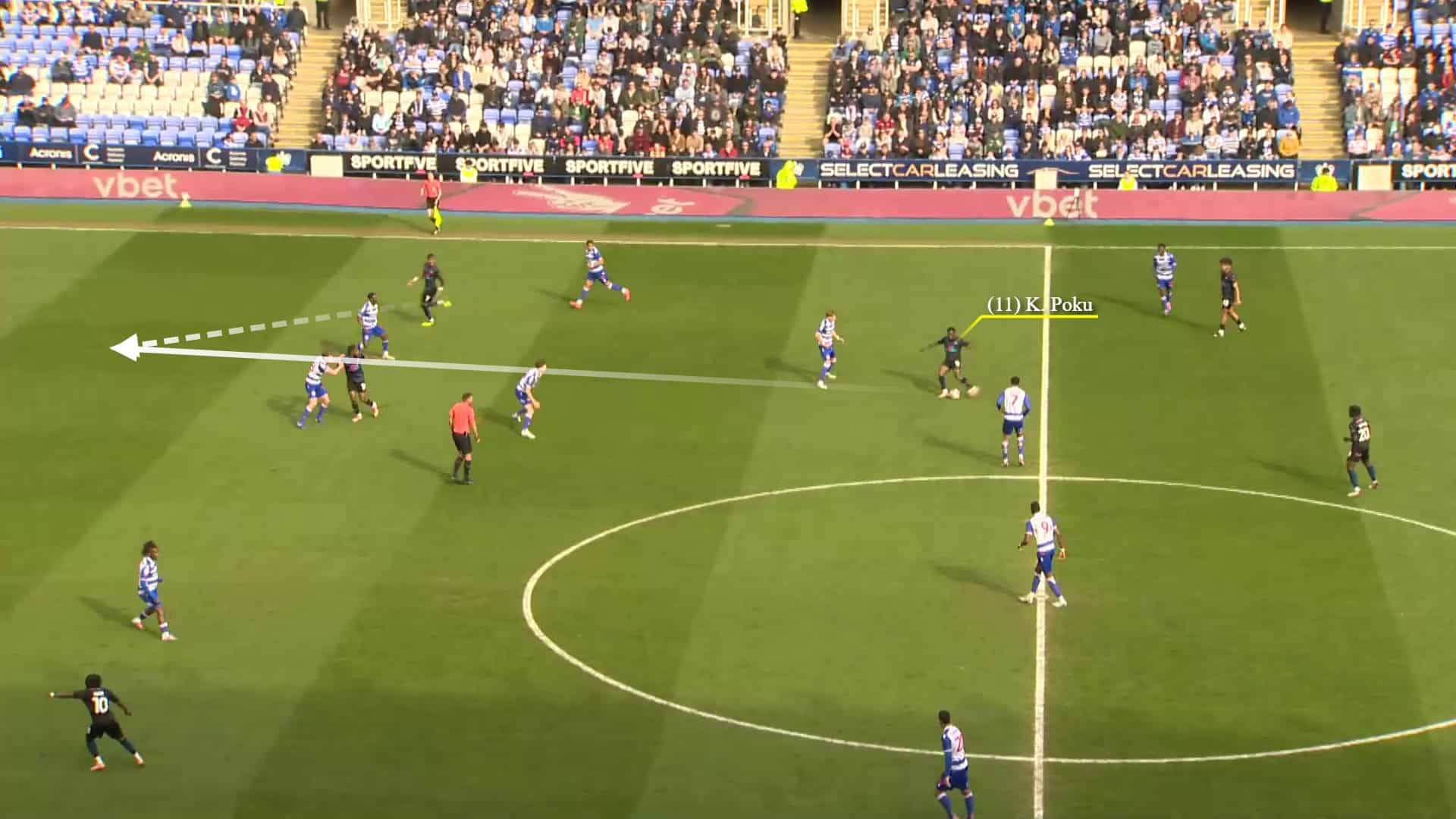
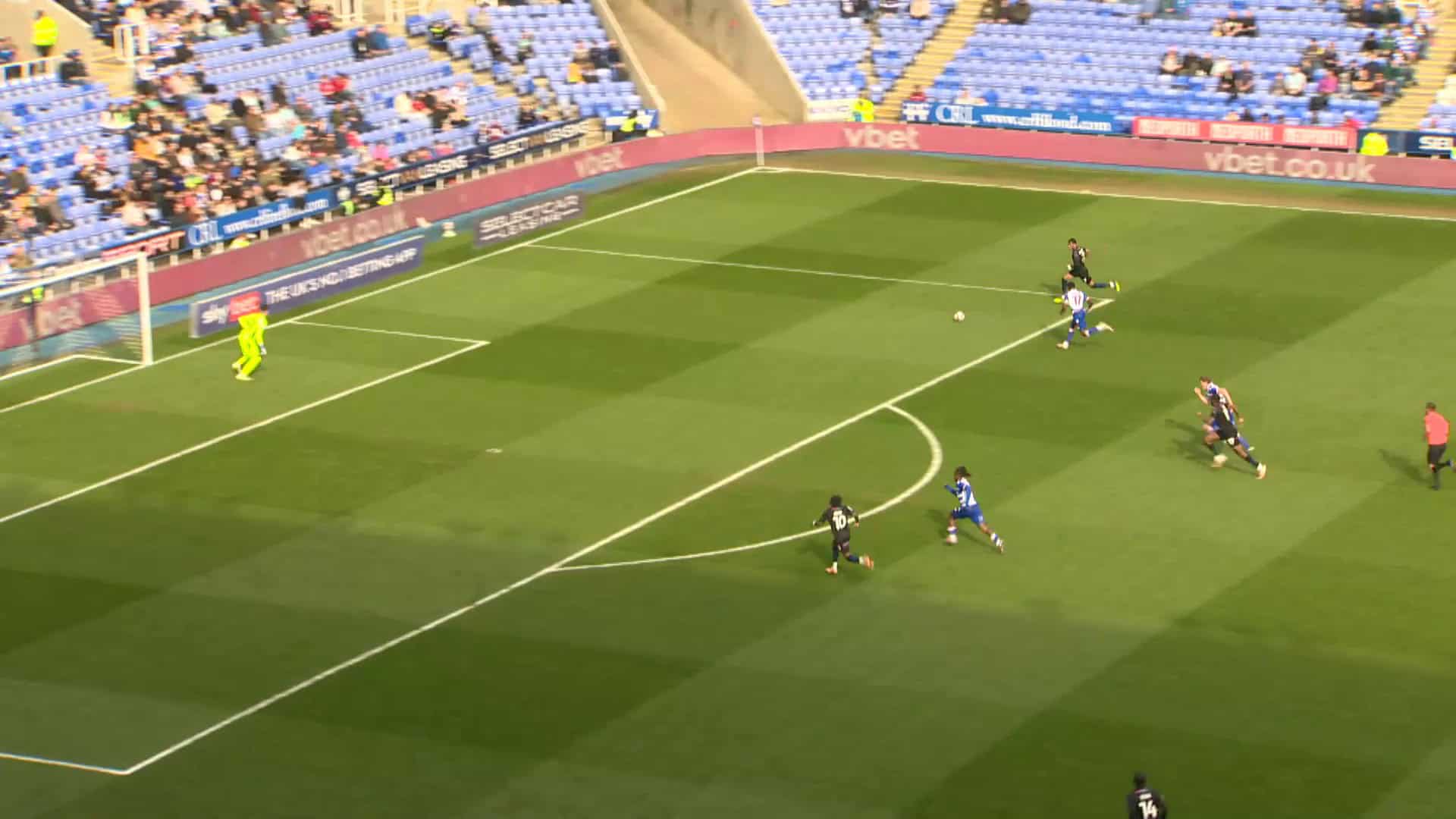
As shown in a match against Reading, Poku receives possession on the right side in the half-space.
This is some distance from the goal, and he plays a through ball that bypasses five Reading players, releasing his teammate through on goal.
Kwame Poku Transitional Play
Transitions are central to Stéphan’s philosophy, and in these moments, Poku becomes important.
He is the primary route for the first vertical progression upon regaining possession, whether by carrying the ball at pace, releasing a runner, or attacking depth himself.
His acceleration and directness create an immediate threat, often forcing defences to retreat and opening opportunities for central runners.
Conversely, he operates in the counter-pressing ring in defensive transitions to prevent the opponent’s first forward pass and funnel play into wide areas where pressing traps can be set.
Kwame Poku Synergy & Movement
Tactical mechanisms further highlight the synergy between Poku and Stéphan.
Rotational overloads, where players exchange positions to create temporary superiority, suit Poku’s intelligence and dynamism.
He can act as the free man in possession chains, exploiting weak-side spaces that are structurally vulnerable.
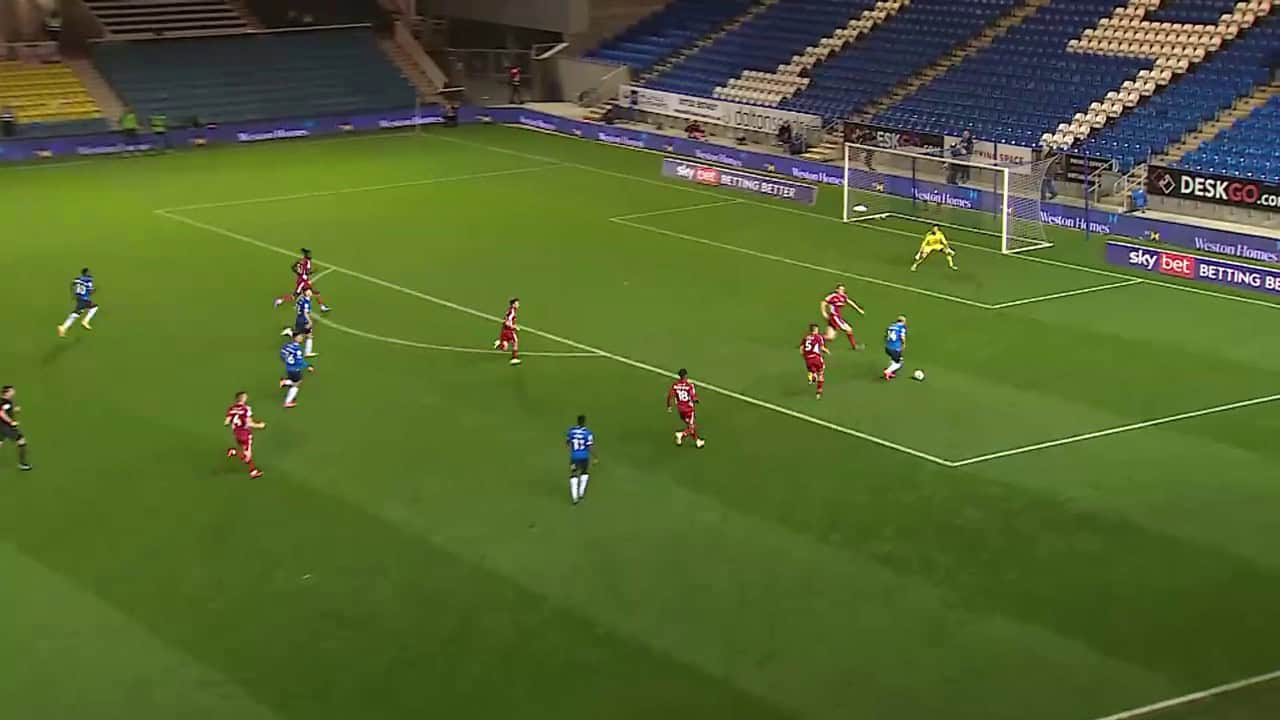
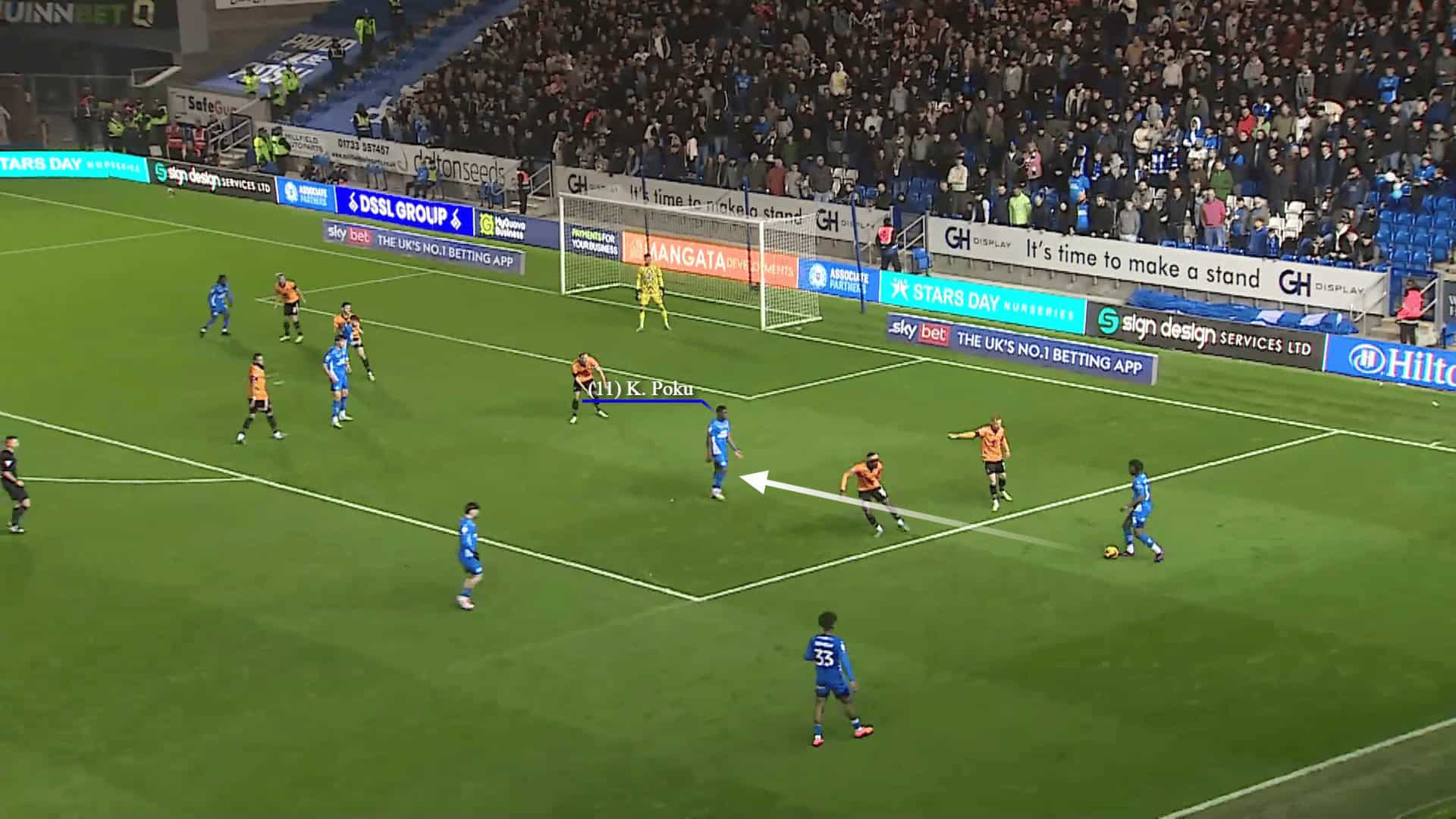
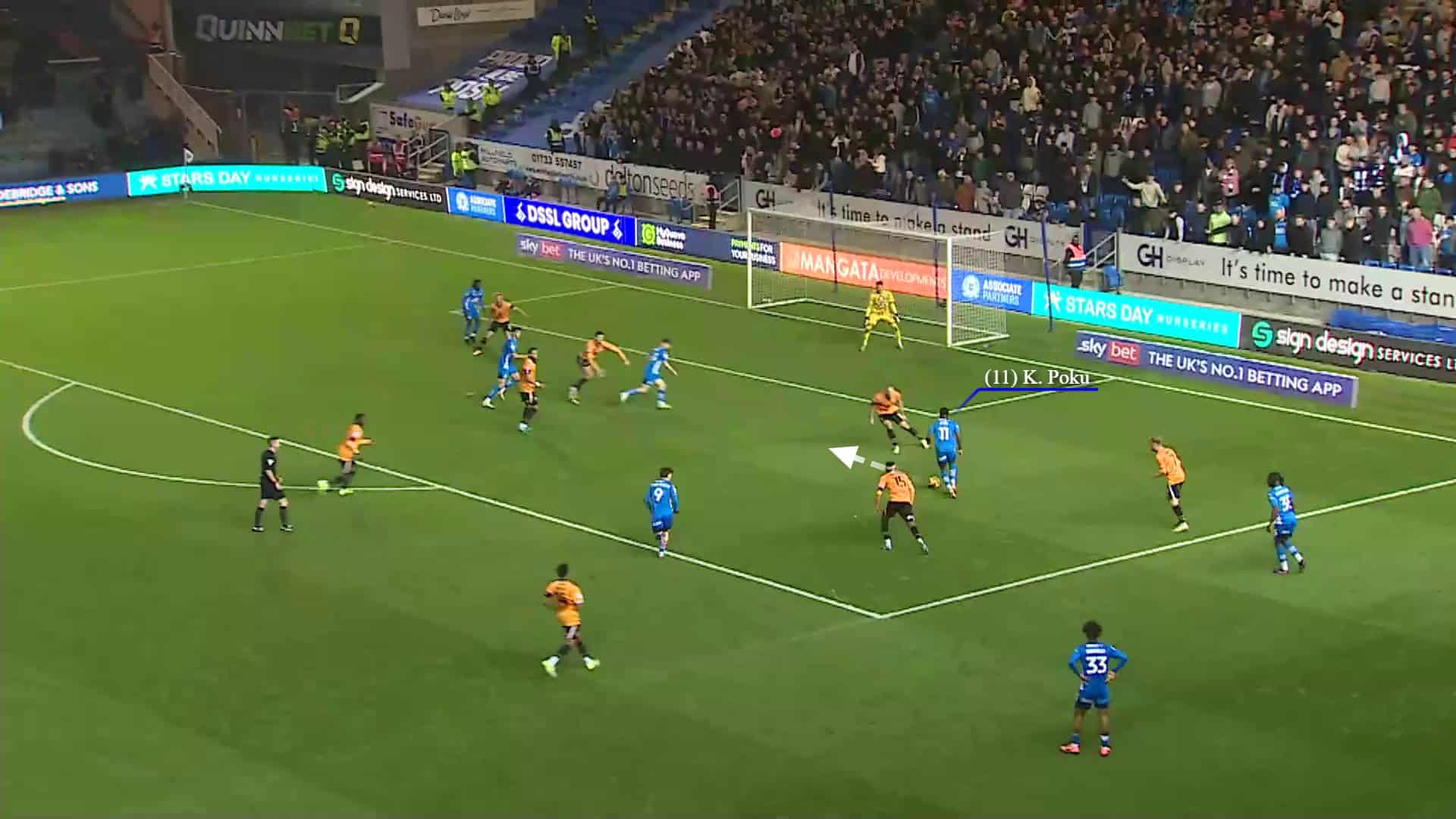
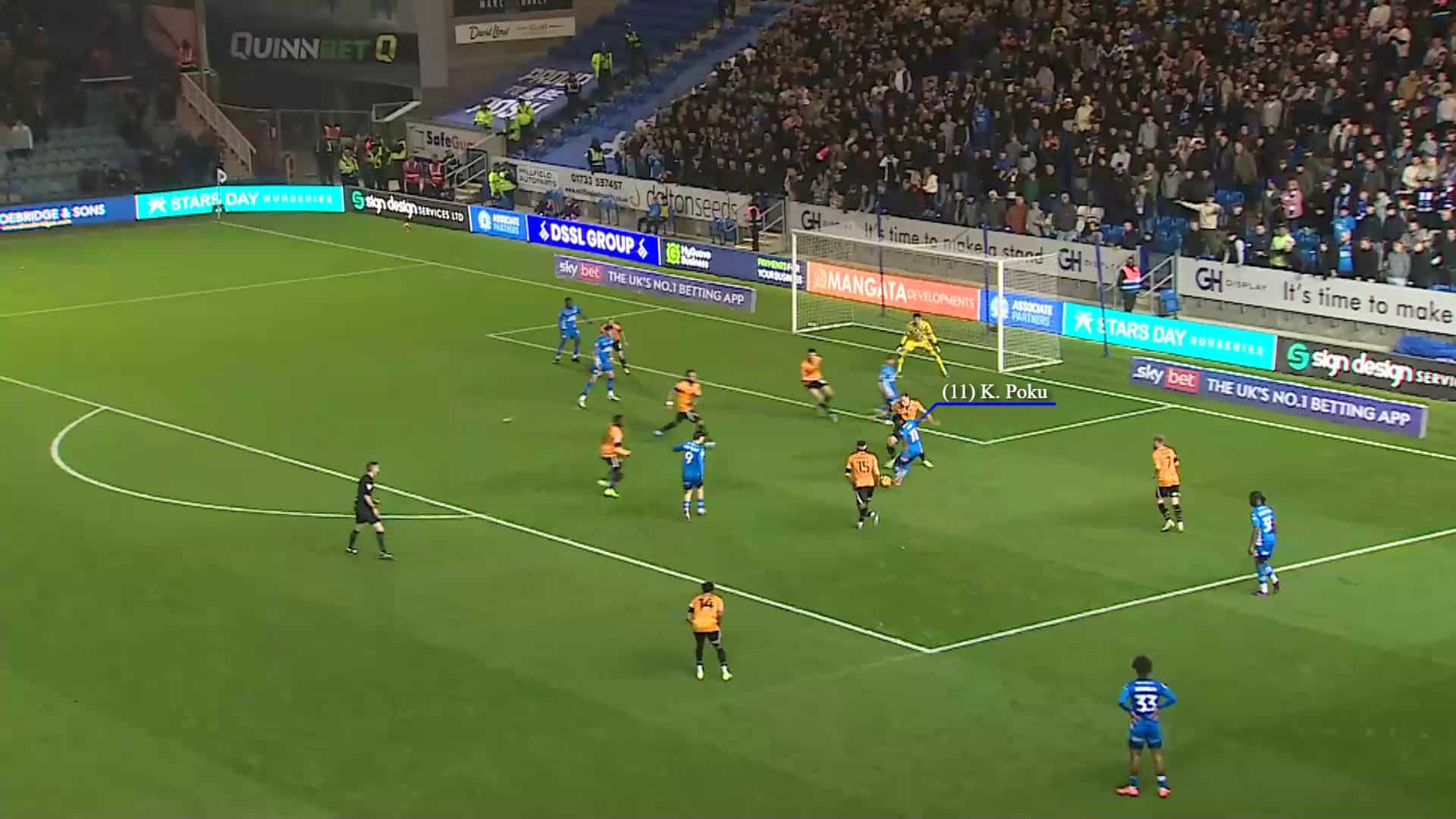
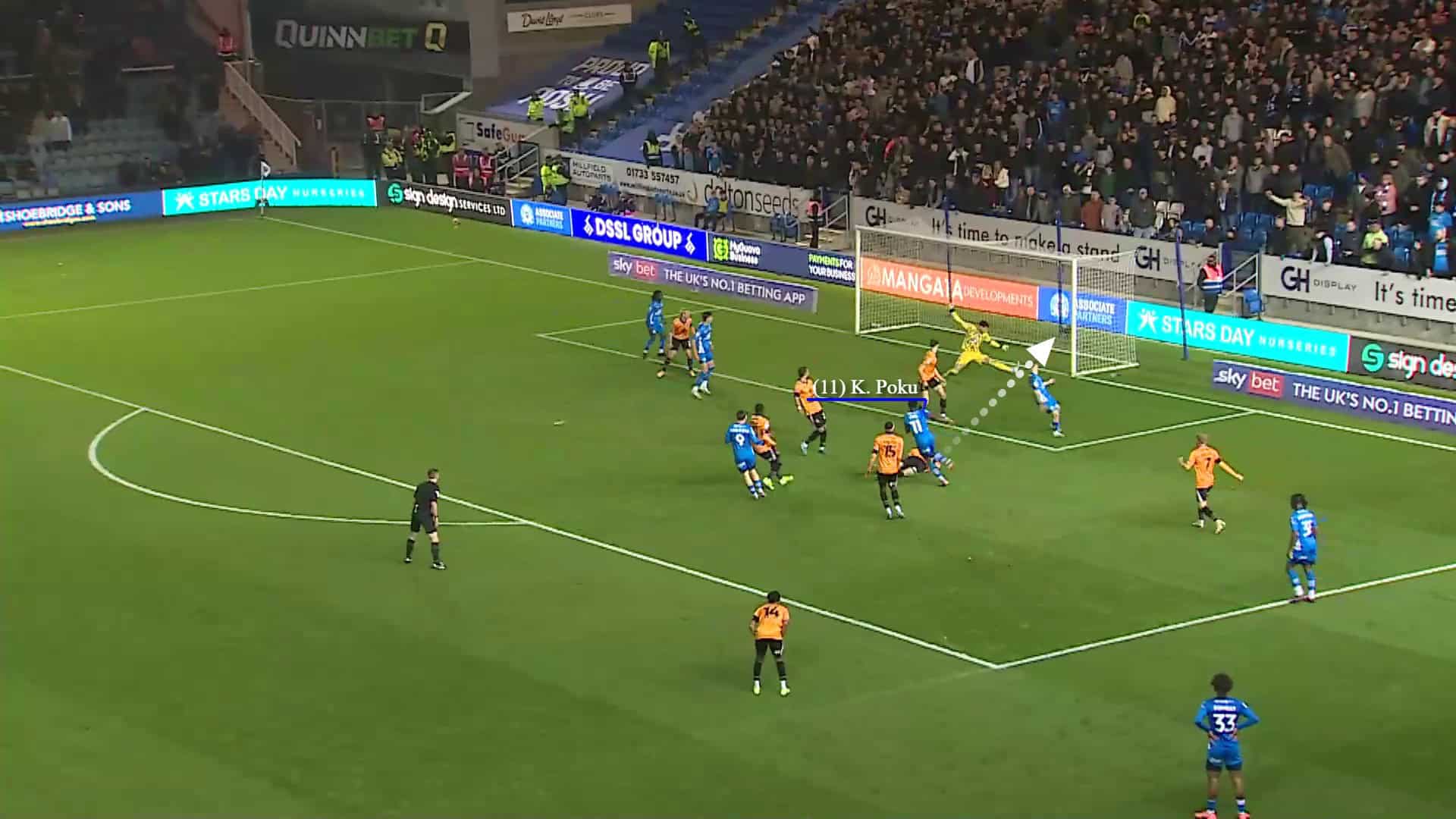
In a league match against Cambridge United, Poku receives a well-weighted pass that bypasses two defenders, placing him in a one-on-one scenario.
Noticing his direct opponent’s poor, front-on body positioning (failing to adopt a proper jockey stance), Poku takes advantage by quickly shifting the ball with a subtle touch.
He then exploits the defender’s vulnerability by shooting through their legs, resulting in a goal.
Kwame Poku’s movement pins defenders and opens central corridors for runners from midfield.
He adds unpredictability to QPR’s attacking play by alternating between depth and support runs.
Conclusion
In summary, Kwame Poku’s arrival at QPR under Julien Stéphan coaching is a case study in aligned recruitment and tactical fit.
For QPR, Poku is not just a new signing but a positional weapon, capable of filling multiple roles, impacting both attacking and defensive phases, and raising the team’s collective ceiling.
For Stéphan, he is a force multiplier, helping fulfil pressing traps, rotational overloads, and devastating transitions.
For supporters, Poku represents a player with the skill set to break lines, press intensely, and generate consistent chances against even the most organised defences.
If integrated with care and developed physically, Poku could emerge as a Championship standout and a benchmark for wide attacking play at this level.

