
QPR suffered a massive fall from grace in last season’s EFL Championship.
Having started the season as promotion contenders, they eventually slumped to a disappointing 20th-place finish.
Unfortunately for Queens Park Rangers fans, their side has started this campaign similarly to how they ended last season and has been confined to the relegation places for the majority of the season.
A run of six straight defeats put an end to Gareth Ainsworth‘s time in charge at the end of October.
His replacement, Martí Cifuentes, was swiftly brought in and tasked with halting the slide.
A relatively unknown coach in the English game, the Spaniard arrived from the Swedish outfit Hammarby, having guided them to qualification for the Europa Conference League.
At the time of writing, Cifuentes has been in charge at Loftus Road for six league games and has already had an immediate impact.
QPR have won three of the six games and are unbeaten in five of those matches.
Such impressive results leave them fifth in the division’s form guide for the last six matches.
In this tactical analysis and scout report, we will assess Cifuentes’s instant impact at Loftus Road.
We will analyse the Spaniard’s tactics to highlight how his side is currently reaping the rewards of adopting a different style of play.
The Martí Cifuentes effect
Until Cifuentes arrived at QPR, there seemed a very real threat of relegation to England’s third tier.

The graph shows QPR’s rolling points tally per match as the season has progressed.
The vertical white line indicates the appointment of Cifuentes.
The graph shows that since Cifuentes’ arrival, there has been a positive trend in results.
Immediately before his appointment, QPR were on a downward spiral.
Even more encouraging for the Loftus Road faithful is that such form stands them in good stead to beat the drop.
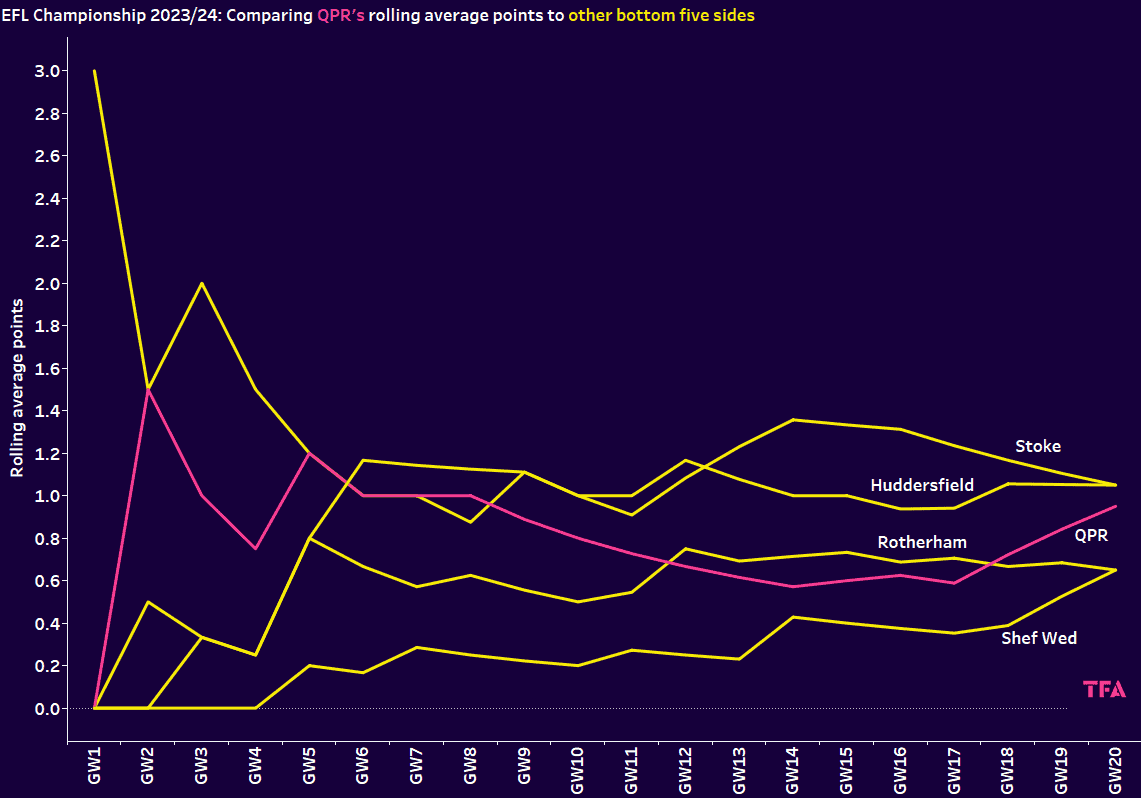
The graph shows the bottom five teams rolling points tally per match this season.
Whilst QPR and Sheffield Wednesday are on the up, Huddersfield‘s and Rotherham‘s results are stagnating.
Moreover, Stoke City‘s results are declining.
The graph shows that Stoke’s points per match have been trending negative since game week 14, likely contributing to Alex Neil‘s recent dismissal.
The Potters have lost their last four league games, whereas QPR have won three in a row.
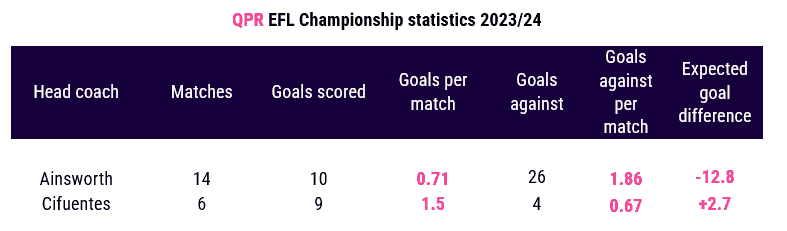
The table shows that QPR have improved in all departments since Cifuentes was appointed.
Under the Spaniard’s leadership, they have more than doubled their goal return per match in the league and conceded 64% fewer goals per match.
The statistics presented are no fluke either.
Under Ainsworth, QPR’s actual goal difference was -16, only slightly more than their expected -12.8 goal difference.
This highlights their performances did not warrant results during this period.
In contrast, under Cifuentes tactics, QPR’s actual goal difference is +5.
Although this value is slightly higher than the expected goal difference of +2.7, not much separates the values.
This suggests that the performances of the West London side are worthy of the points they are currently accumulating.
Trust in possession
For the majority of league games this campaign, Ainsworth used a 3-4-3 formation and preferred a direct playing style.
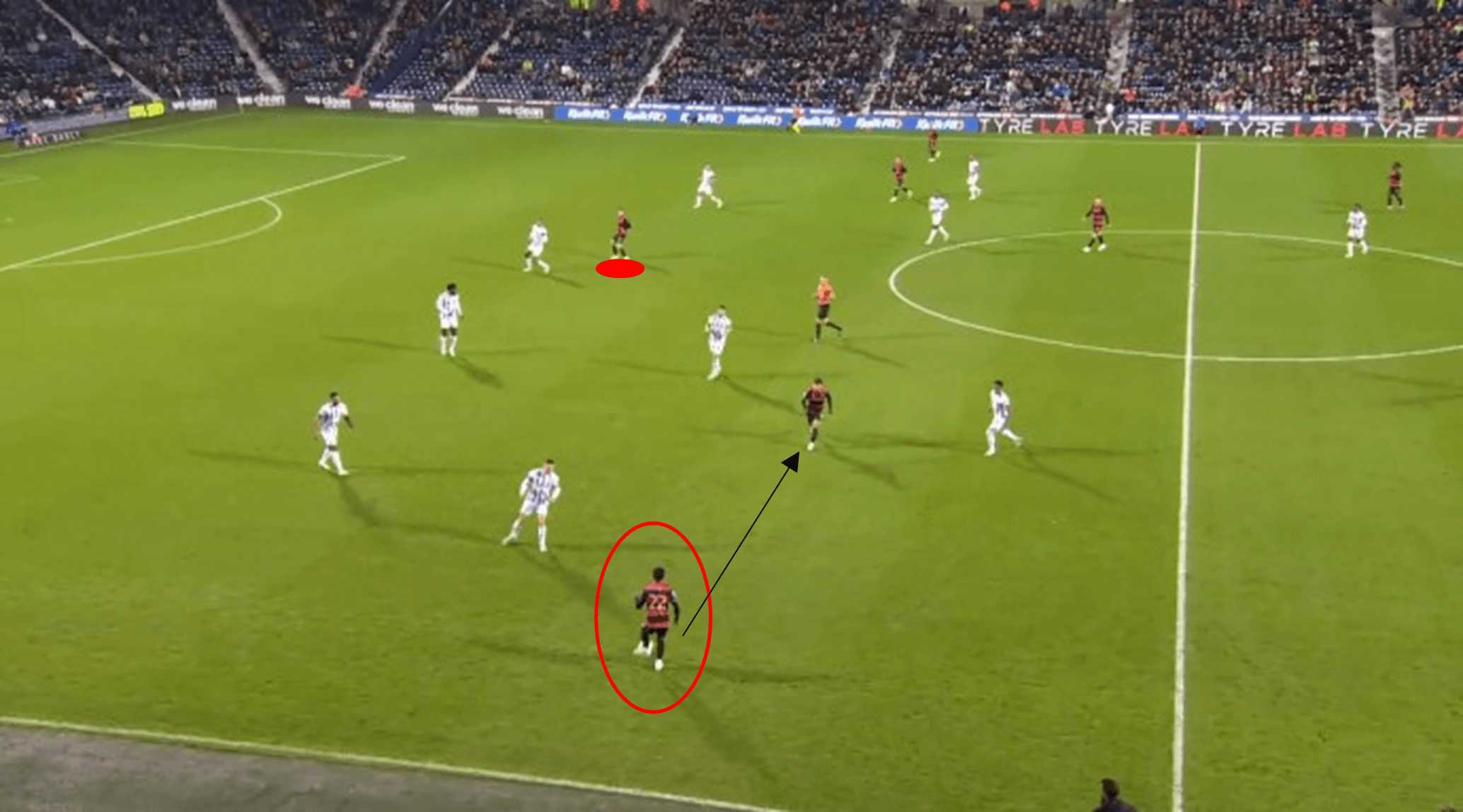
QPR would look to utilise the width of the pitch, but once in these positions, they struggled to advance in the attacking third.
The above image shows there is only one passing option, as there are five West Brom players between Kenneth Paal, who has possession, and the lone striker.
Once Paal recycled possession, however, there was a lack of movement, and the ball ultimately ended up being played behind, back to the defence.
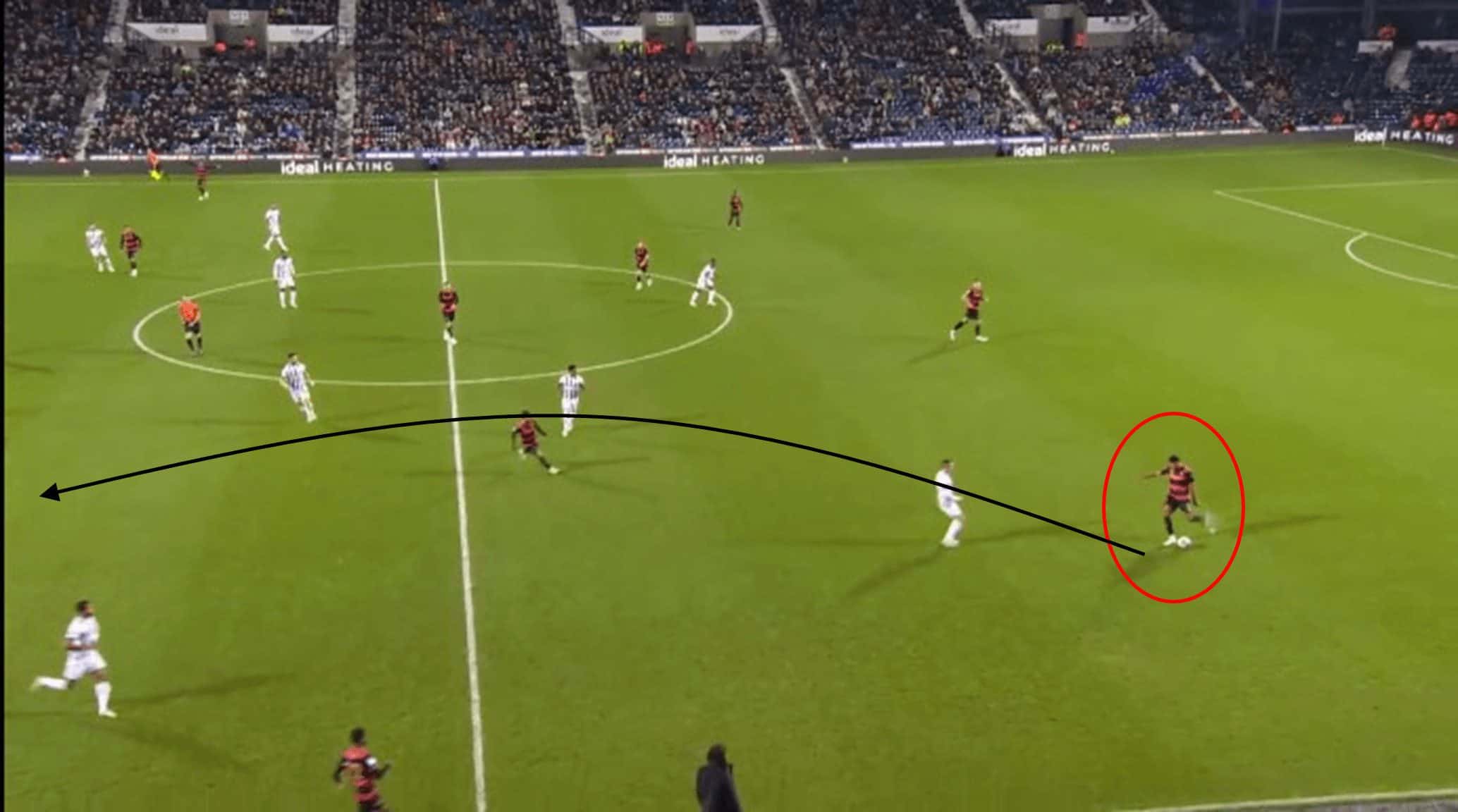
The lack of off-the-ball movement by QPR and the opposition press led to the ball being played for a long time.
QPR subsequently lost possession.
Such long balls were a theme during Ainsworth’s reign.
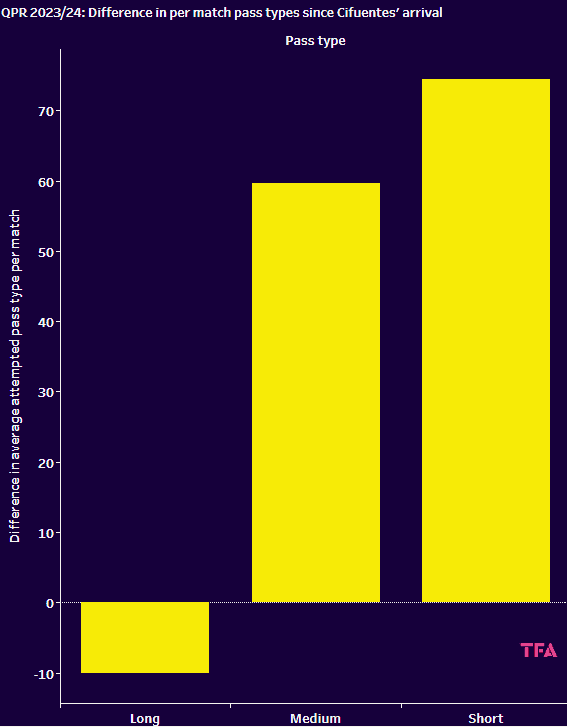
However, Cifuentes has implemented a different playing style.
The bar chart shows that QPR play 10.1 fewer long balls per match under the Spaniard than during his predecessor.
Furthermore, the West London side are now playing much more short passes, averaging 74.5 more short passes per match.
Although the switch to a possession-based game may seem odd, given the lack of off-the-ball movement that QPR showed in the earlier stages of the season, Cifuentes has encouraged playing out from the back.
He has instilled confidence in his side’s passing abilities to transition through the thirds of the pitch.
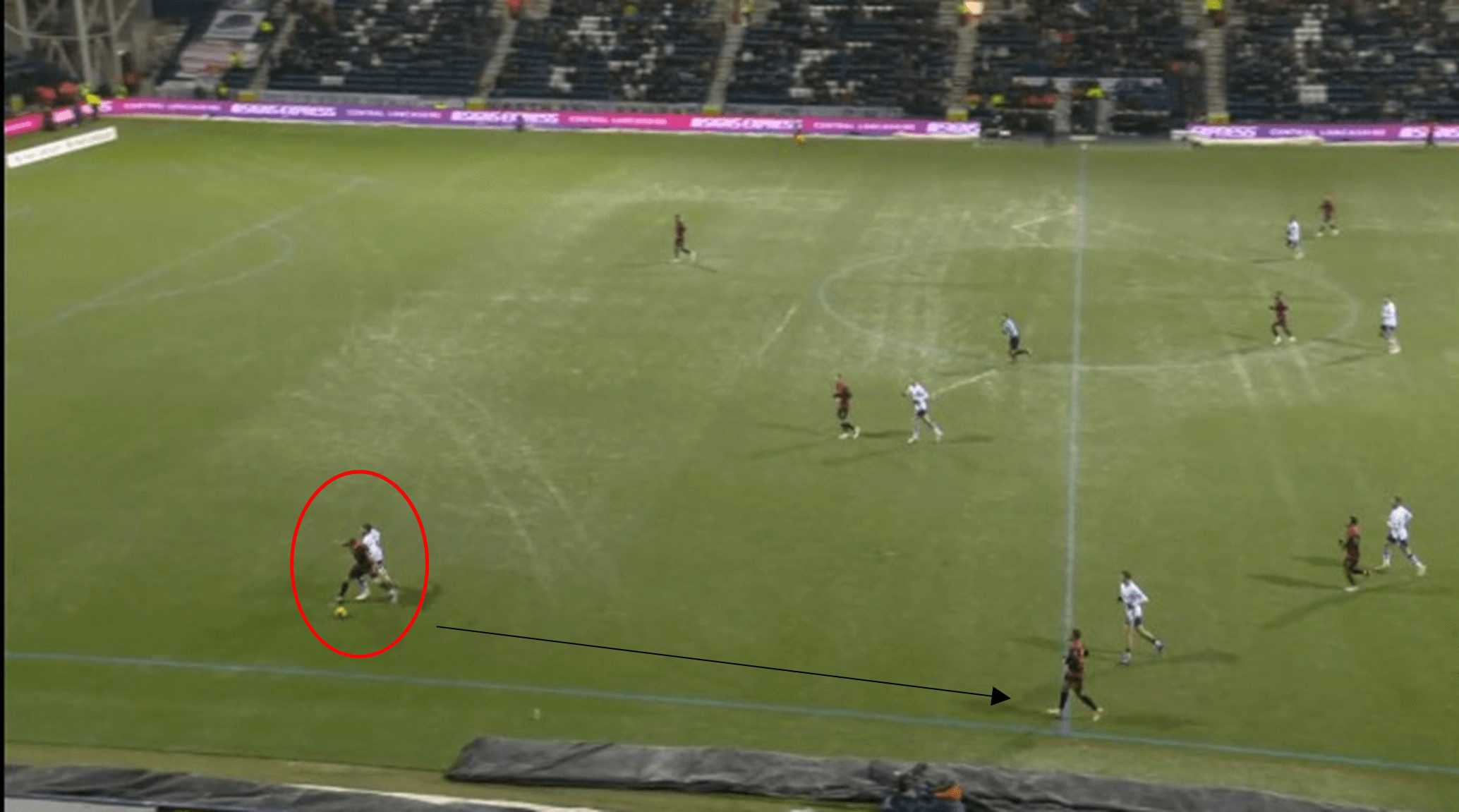
The QPR defender is under pressure near the touchline.
Whilst the easiest option would be to put the ball out for a throw, the pass is made forward along the line to keep possession.
This is despite the defender being off-balance.
It demonstrates the level of confidence.
QPR play a 4-3-3 under Cifuentes’s coaching style, and the new manager’s philosophy is to ensure his side always has options when in possession.
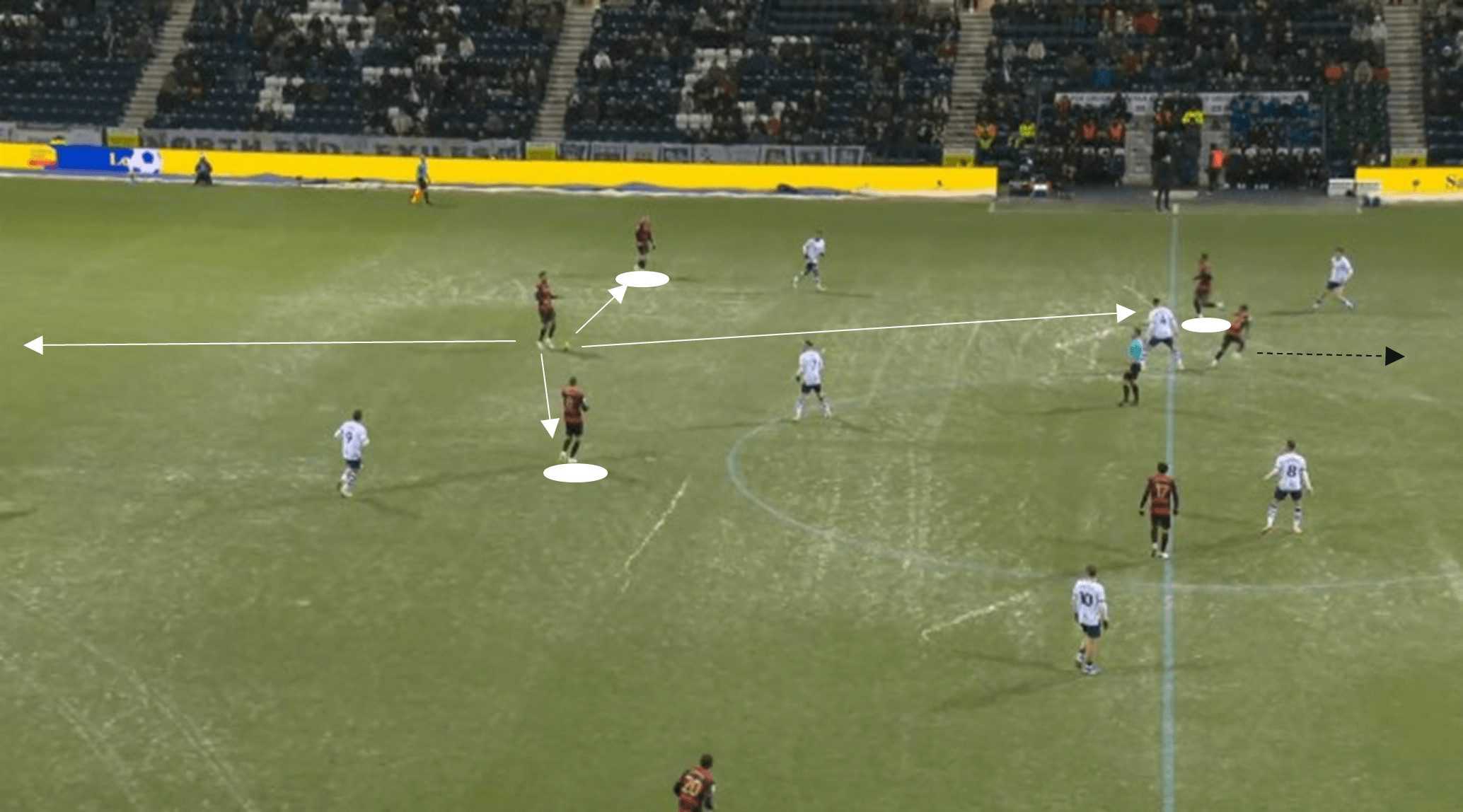
The image shows that Jake Clarke-Salter has a teammate to pass towards in any direction.
Preston do not put pressure on Clarke-Salter, giving the defender time to assess his options.
As the former Chelsea player looks for options ahead, the right of the above image shows his teammate advancing further up the pitch.
This movement suggests a well-drilled side as QPR know when to go forward in anticipation that they win the long ball played forward.
Although Preston heads the ball clear, QPR immediately regained possession and returned to their patient build-up play.

The above match still shows once again, as QPR has possession, that there are options to play the ball in all directions.
The ball is played forward, and QPR win a corner.
The off-the-ball movement is in stark contrast to the opening stages of the season, as is shown by the willing runner into the left-hand channel.
QPR have subsequently been creating more chances following the change in playing style.
They had previously averaged 0.75 expected goals per match, but this has since increased to an average of 1.05 expected goals per match.
QPR’s pressing statistics have also improved recently.
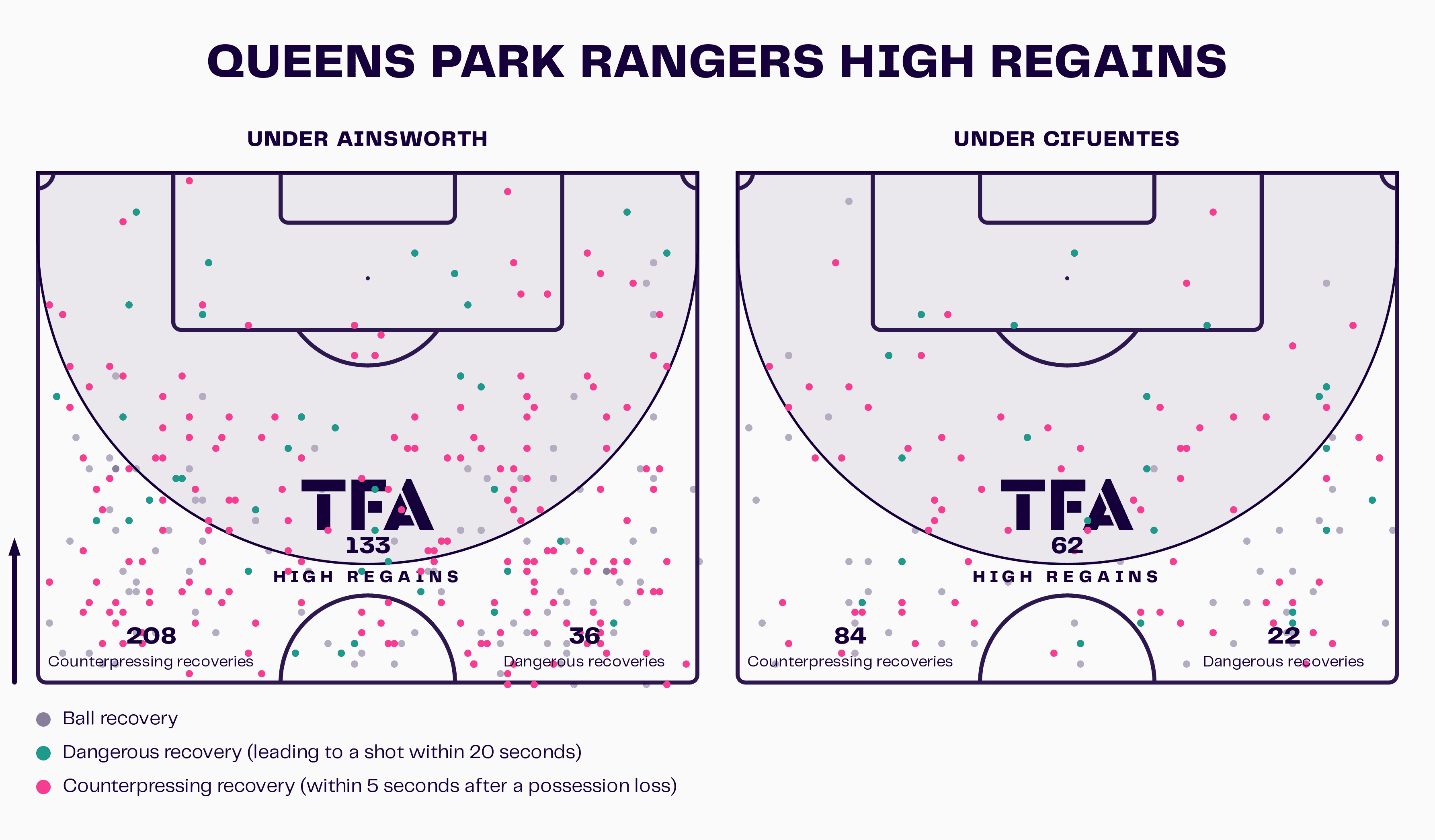
The West London side have completed 15.7% more high regains per match under Cifuentes as well as 0.7% more counter-presssing recoveries per match and 54.2% more dangerous recoveries per match.
Cifuentes prefers out-of-possession to utilise a mid-block such that only one forward engages in a high press.
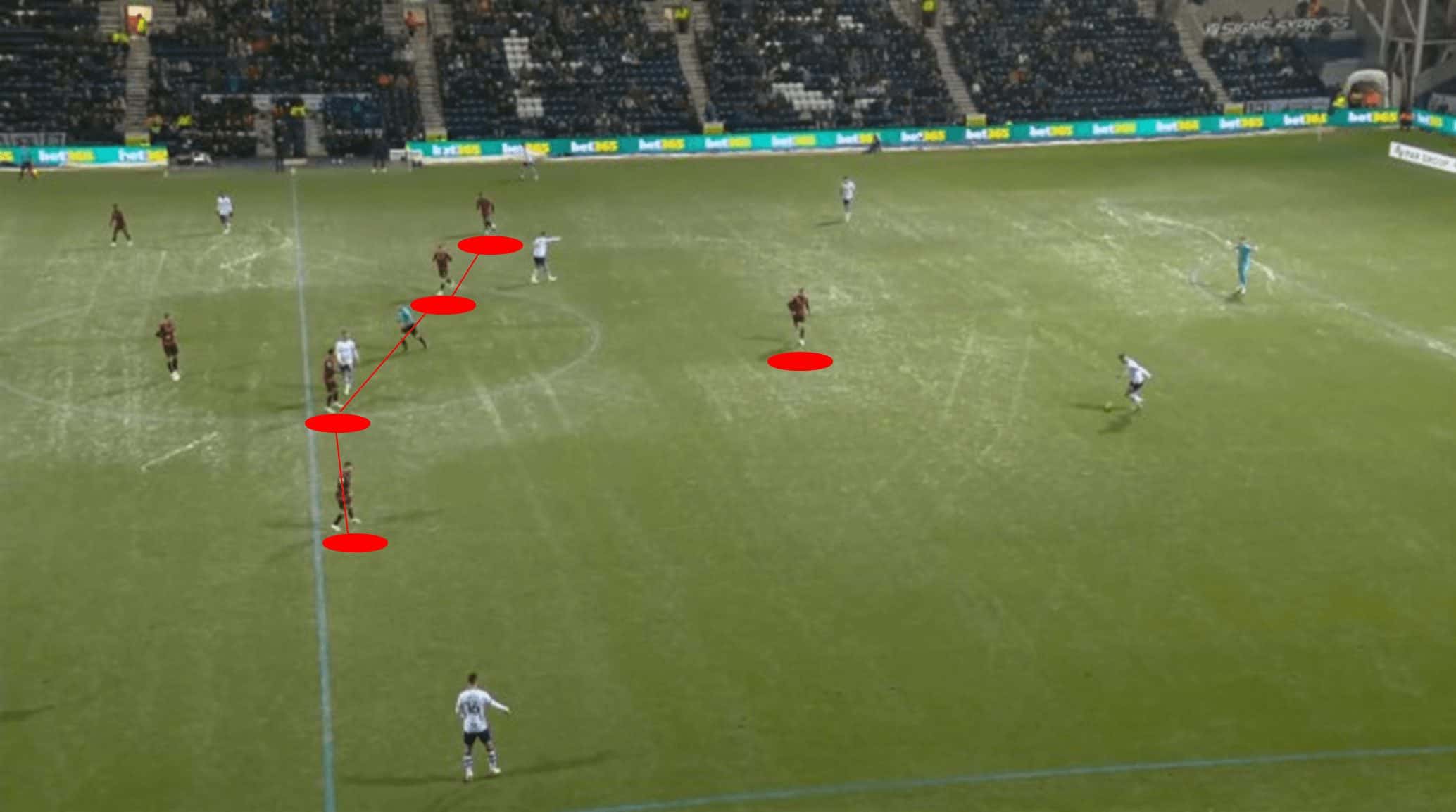
A four-man block in the middle third of the pitch then ensures a congested field in the centre.
The onus is then on the opposition to break them down.
This tactic has also been helpful in slowing down the pace of the game.
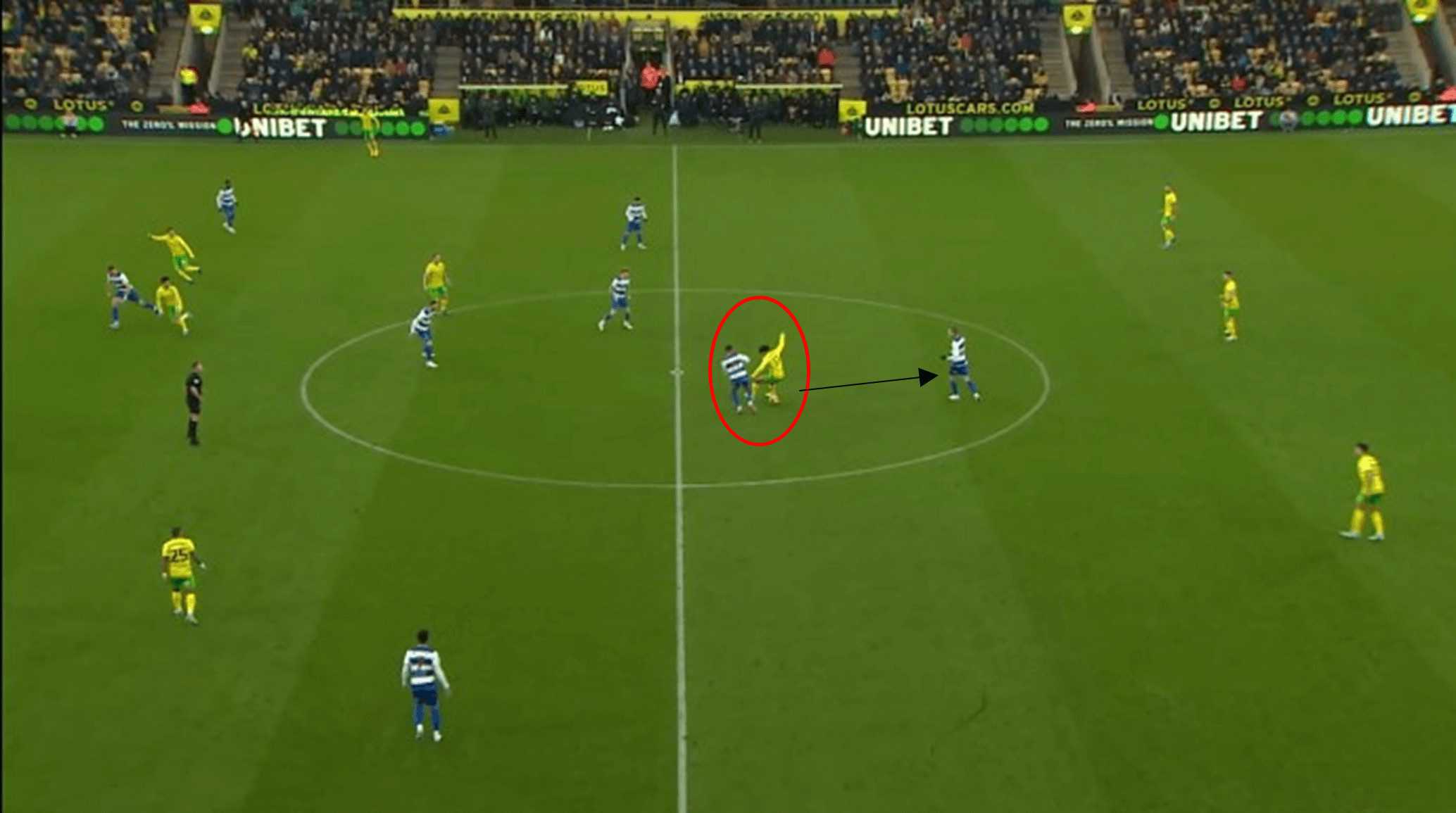
In the image above, Norwich attempt to play through the mid-block but are caught in possession.
Following a one-two combination, QPR subsequently counter-attacks at pace.
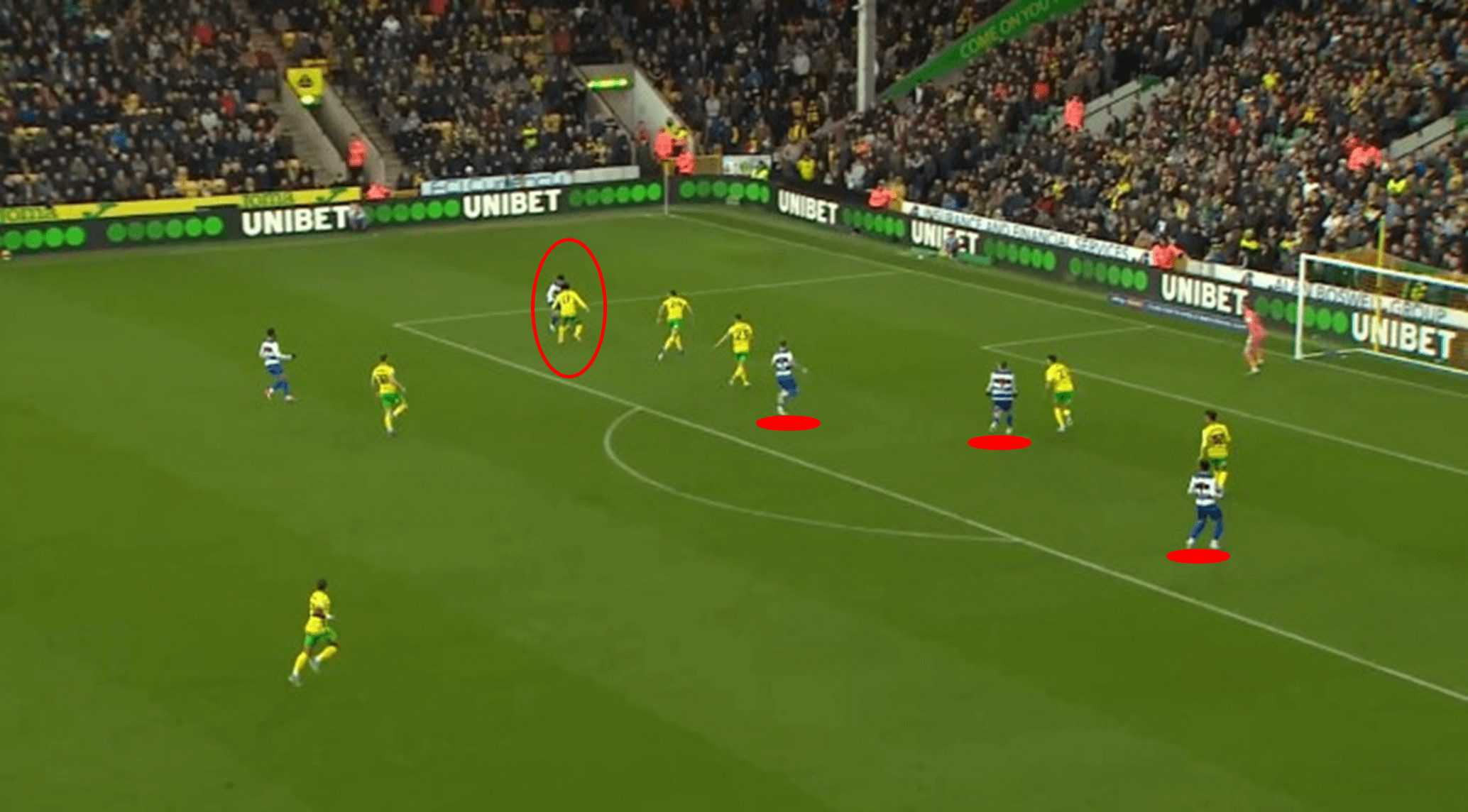
Poor decision-making lets QPR down here, though.
Instead of playing the ball across the box, they opt to take a shot that misses the target.
Nevertheless, it demonstrates the opportunities they have created using this particular tactic.
However, a disadvantage of the mid-block is being exposed to long balls over the top.
This caught them out against Norwich.
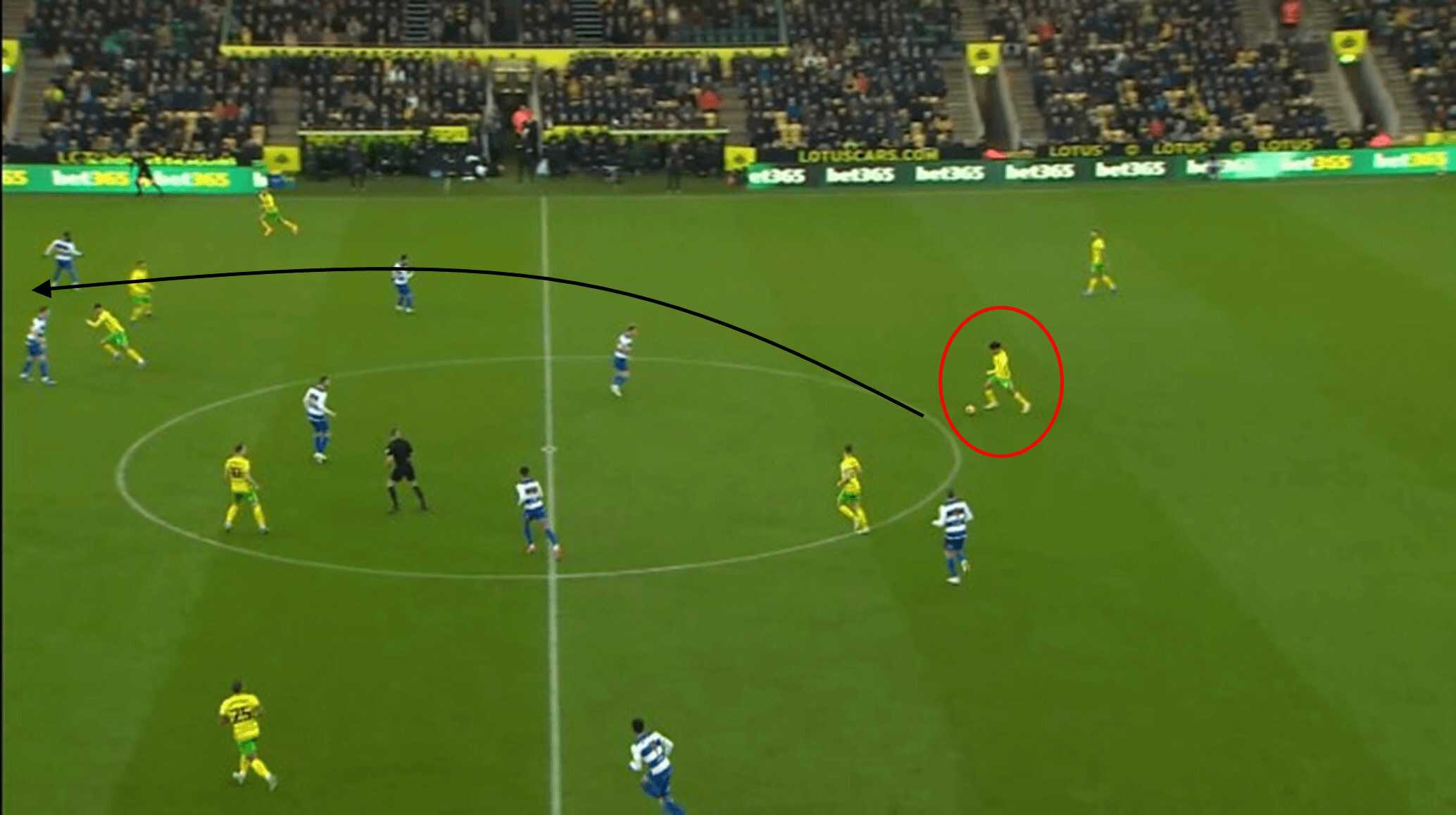
Hwang is shown advancing as Gabriel plays the long ball, which bypasses the QPR midfield.
Hwang goes on to score the only game of the game.
This demonstrates there are improvements still to be made, although this match was Cifuentes only defeat in charge so far.
However, QPR do adapt their off-the-ball press at times.
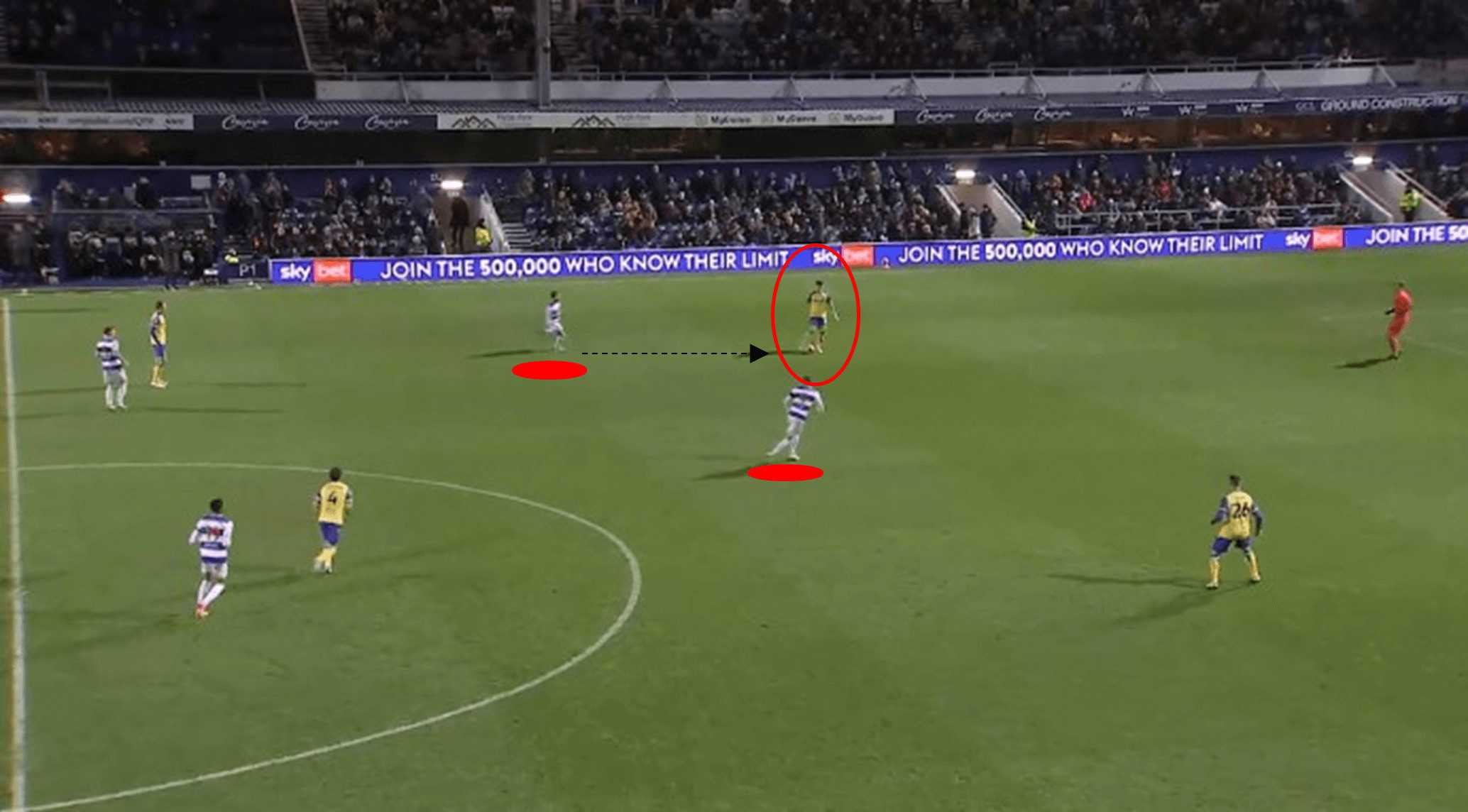
At times, a player from the four-man mid-block will join the lone forward in the press, as seen above.
It is a measured approach that ensures the opposition aren’t always comfortable in possession and feeling in control.
QPR appear to be a much more organised team as a result.
Getting the best out of Chris Willock
In the recent fixture against Preston, question marks were raised over Cifuentes’ decision to drop Ilias Chair to the bench.
However, the decision paid off as he came on as a second-half substitute to provide two assists as QPR ran out 2-0 winners.
The Spaniard has since expressed a desire to utilise all of his squad due to the demanding nature of the Championship.
He has also been keen to return certain players back into the first-team fold on a more regular basis.
One of those players is Chris Willock.
The former Arsenal man has been reaping the rewards of Cifuentes’ possession-based approach.
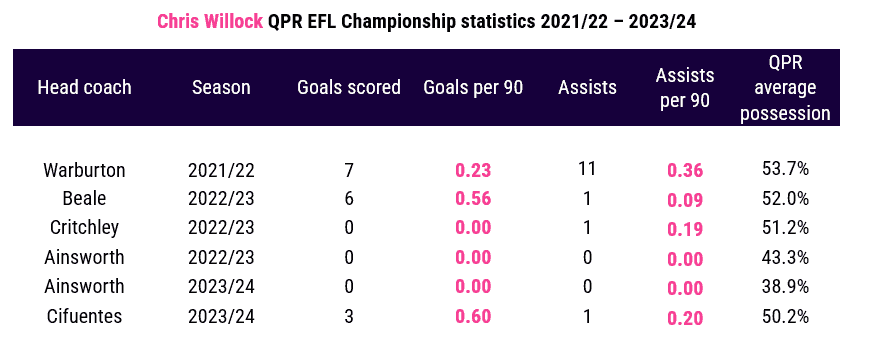
The table shows that Willock did not score a single goal or make an assist during Ainsworth’s tenure.
Although he was not a regular starter during this time, he still featured for plenty of minutes to make some impression in matches.
However, this was not the case.
Willock appears to perform better with possession-based football and is currently producing his best form in recent seasons under Cifuentes.
The table shows that with the Spaniard’s guidance, he is scoring more goals per 90 than under Cifuentes’ predecessors.
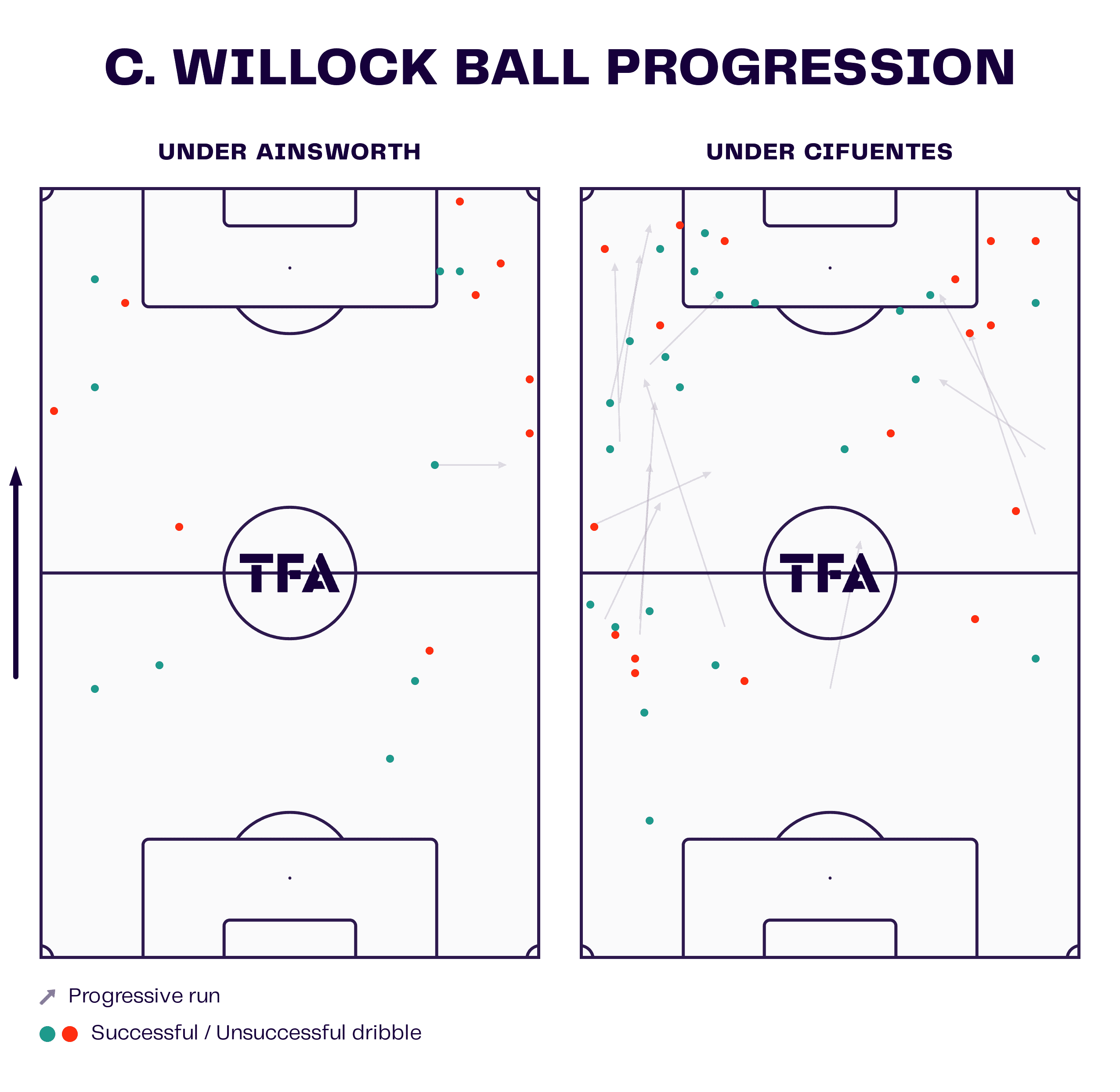
The graphic shows that Willock has been given much more license to go forward in the league this campaign since Cifuentes’ arrival.
He has particularly been effective in making runs down both channels, providing width for his side.
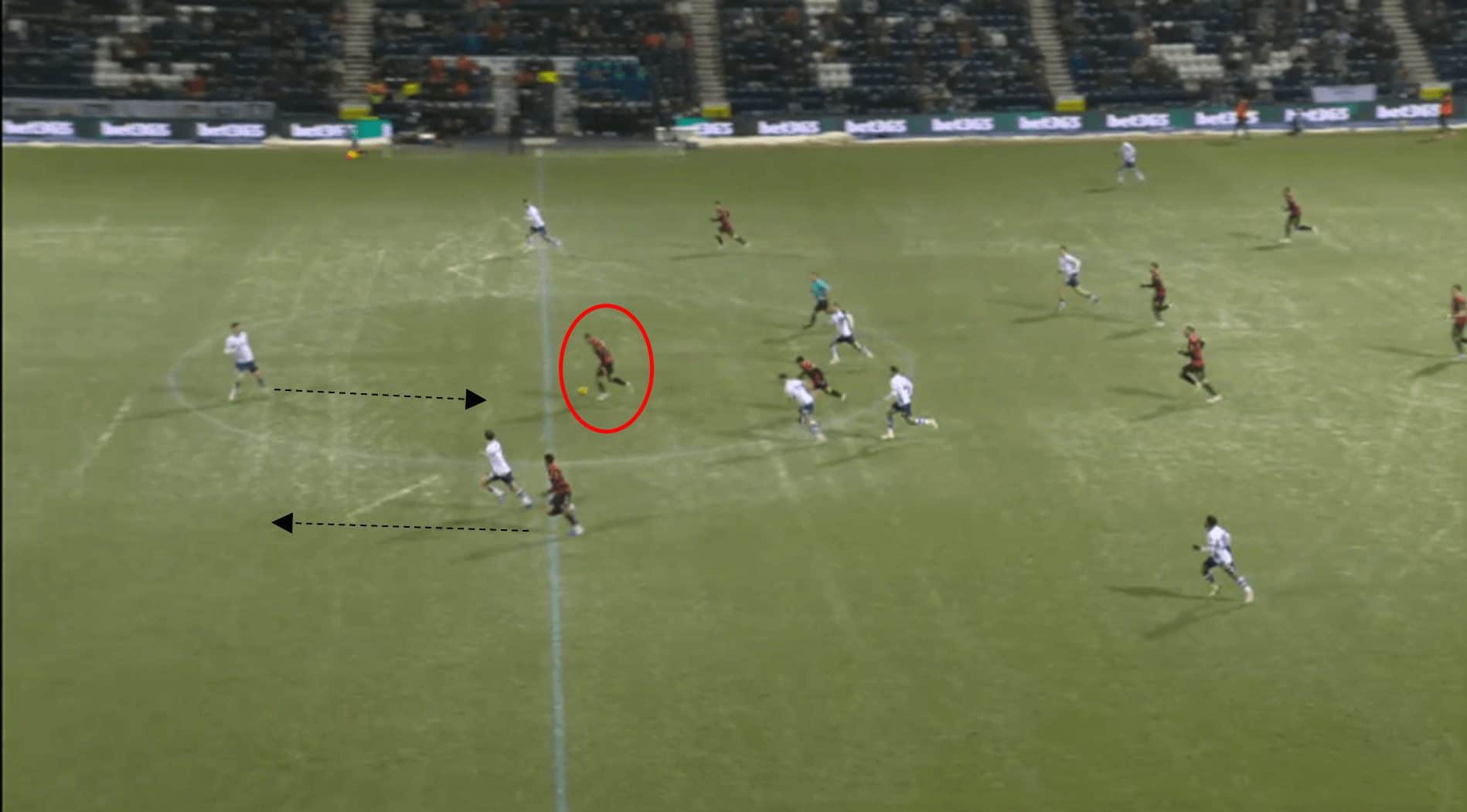
As QPR win the ball back, Willock’s instinct is to go forward.
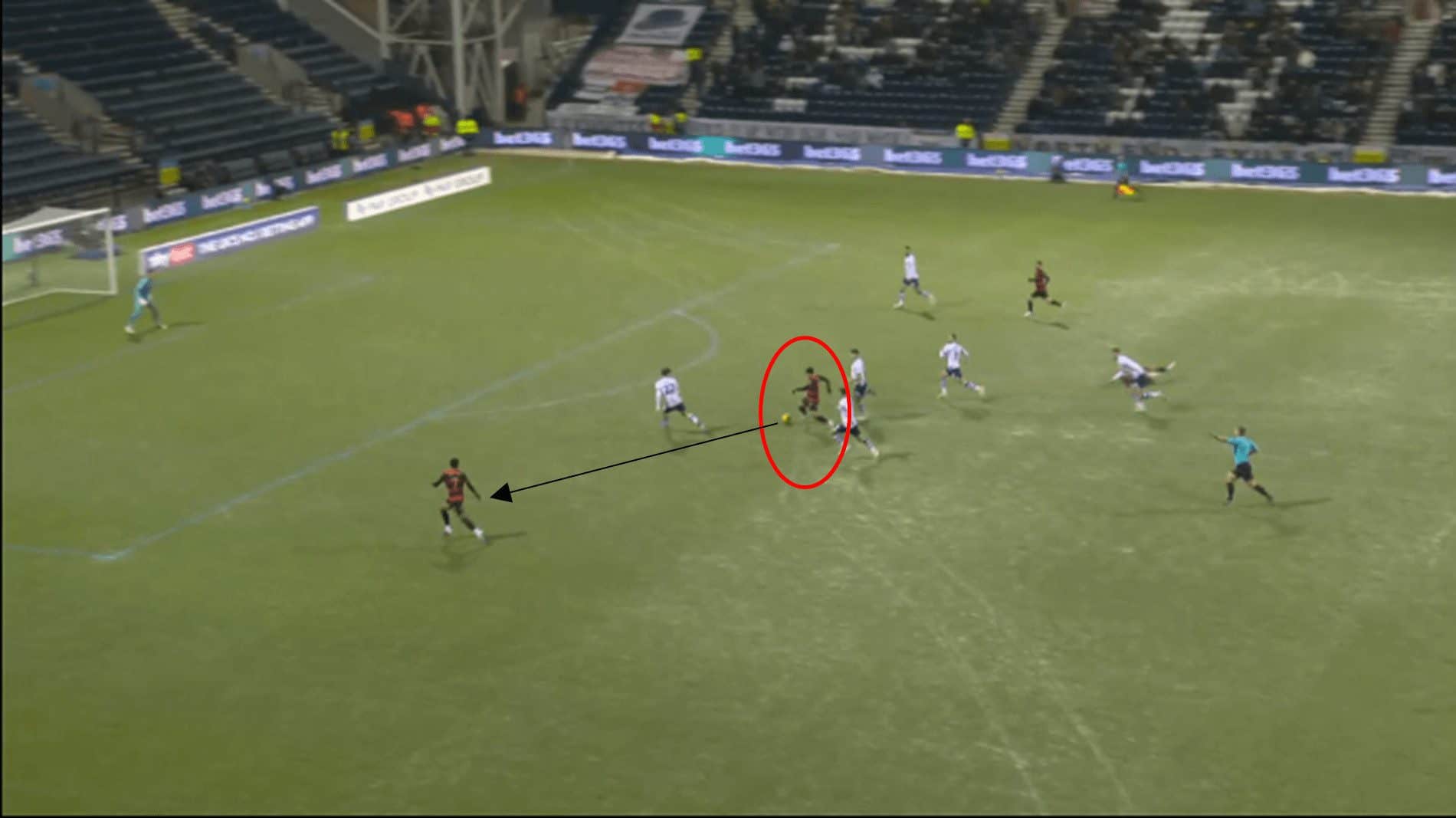
His off-the-ball movement ensures the Preston defender is caught between Willock and the ball.
This leaves Willock with space on the left to assist in the attacking phase.
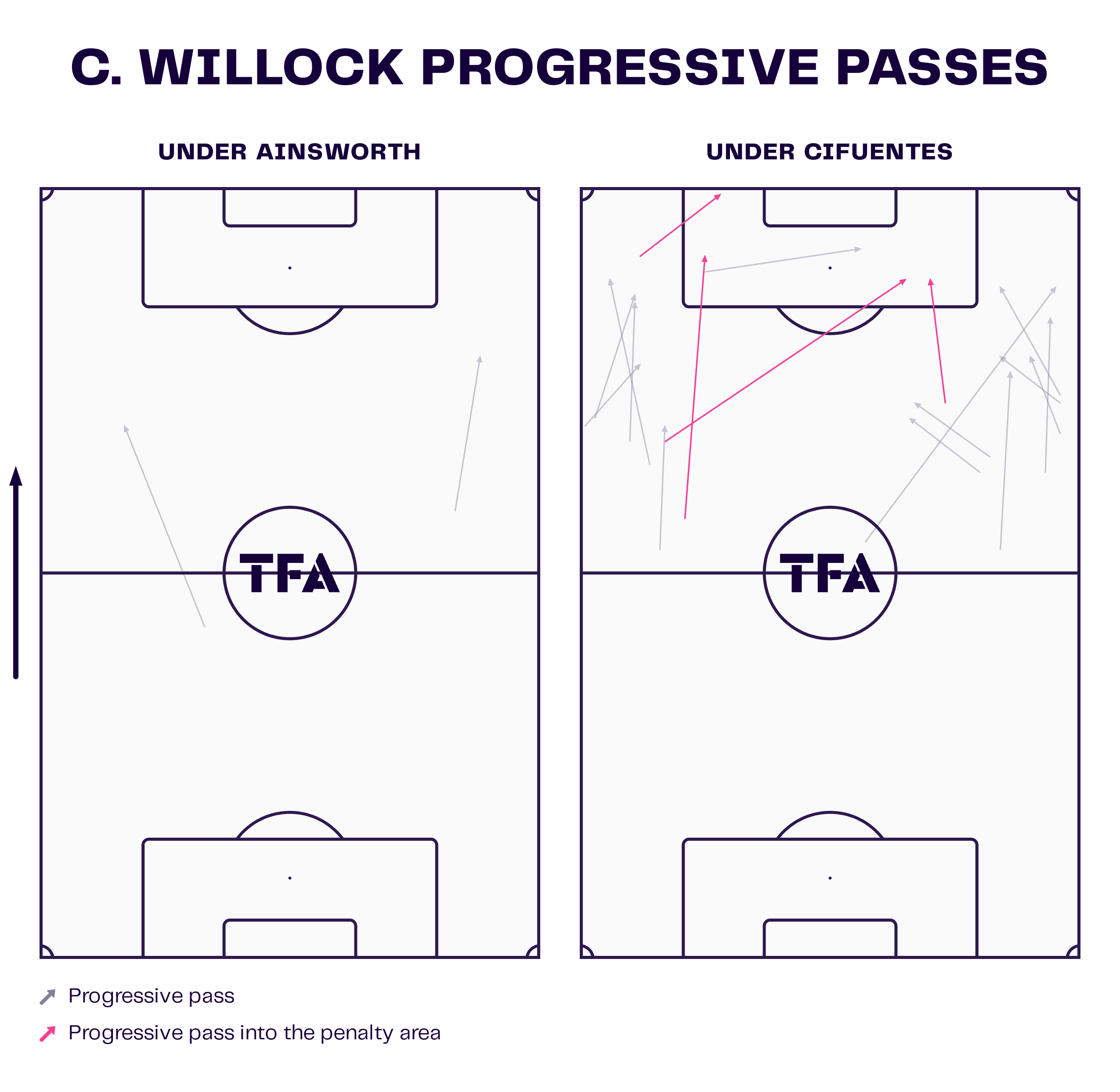
Willock has also been effective in progressing play with his passes recently.
In the league this season, despite playing 234 minutes under Ainsworth, equivalent to 2.6 90-minute games, Willock successfully made only two progressive passes.
This is in stark contrast to the number of progressive passes he has made during Cifuentes’ time.
The graphic shows that Willock has been particularly adept at playing dangerous passes into the penalty area.
Such positive play is helping QPR in their current good form.
Conclusion
In this tactical analysis and scout report, we have demonstrated the positive impact that Cifuentes has had on QPR’s results since he arrived from Hammarby IF.
If QPR can continue in such fine form, they will likely secure their place in the league.
We have seen that Cifuentes has adopted a more possession-based philosophy compared to his predecessor.
The West London side are looking like a well-drilled side, playing much more fluid football that is aiding more successful transitions into the attacking third of the pitch.
This analysis has further shown that the Spaniard’s philosophy has tightened the defence.
Furthermore, we have demonstrated how Cifuentes has improved Willock’s game.
The former Arsenal academy graduate is enjoying his best goals per 90 rate in the past few seasons.
Willock’s overall positive attacking play is undoubtedly helping his side at present.
He will undoubtedly be key in the future.
There’s reason for QPR fans to start looking up the table for a change.