
Japanese players have a storied recent history in the German Bundesliga.
The East Asian nation is one of the most represented foreign countries in the league currently going into the new campaign, unsurprisingly given the amount of success players from Japan have had in the country over the last decade and a half.
From the likes of Shinji Kagawa, Makoto Hasebe, and Shinji Okazaki in the past to Ko Itakura, Ritsu Doan, and Daichi Kamada as more recent examples, there seems to always be a Blue Samurai doing well in Germany.
The latest one to make his mark in the Bundesliga is Shūto Machino, who has just earned a move to Borussia Mönchengladbach for €8m from Holstein Kiel, who have turned a sizable profit on a player they signed for €700k just two years ago.
Machino makes this move on the back of an impressive campaign for his recently relegated ex-employers, where he netted 11 times which saw him just miss out on the top 10 scorers in the league despite playing for one of the worst sides in it all season.
It seemed unlikely, then, that he would take his services back to the second-tier, with suitors likely to arrive, but in the end, Gladbach brought him in to bolster their frontline following a disappointing season in which they finished in 10th place.
This player analysis and scout report will look at Shūto Machino style of play in 2024/2025 and what the striker will bring to Gladbach this upcoming term.
Shūto Machino Player Profile
Shūto Machino is a right-footed 25-year-old forward who stands at 6’1″ (1.85 m or 185 cm) and most recently weighed 178 lbs (81 kg).
Machino predominantly operates as a centre-forward who can lead the line alone or play alongside another striker, which he often did for Holstein Kiel last season.
He can also play in other positions, as an attacking midfielder behind a recognised striker or as a left-winger cutting in on his favoured right foot.
He’s also comfortable with using his left foot, which makes him a complete attacking player who can add a great deal of versatility and flexibility to the Gladbach offence.
Let’s take a look at his forward map from the 2024/2025 season with Holstein Kiel and see how he performed across a few key attacking metrics, before diving deeper into his strengths and areas of improvement going into this new chapter of his career.
Shūto Machino Pizza Chart 2024/2025
 This pizza chart compares Shūto Machino with other centre-forwards from Europe’s top-five leagues in key attacking metrics based on 2024/2025 data.
Two metrics that immediately jump out, in a positive way, are his goals per 90 and goal conversion percentage.
Despite ranking low in the 46th percentile when it comes to expected goals (xG) per 90, he ranks nearly twice as better among other forwards of his level in the 82nd percentile when it comes to actual goals.
Double that with his high 85th percentile rank in goal conversion percentage, and it’s clear that Shūto Machino is a highly efficient forward despite the low volume of opportunities he got in comparison to other strikers, largely because he often operated further from goal and in a weaker side as well.
That’s also made further clear by his very low opposition penalty area touches per 90, which is enough for only the 11th percentile among his peers.
His progressive runs per 90 and dribbling success are solid for a forward, making him a valuable addition to the Gladbach offence.
Next, we will dissect some of Machino’s strong points as well as some aspects he could work to improve.
Shūto Machino Strengths
Coming up with a list of strengths for Shūto Machino is a pretty straightforward task for anyone who’s ever watched him.
A mobile forward who can play across the line, adept at using both feet, has a strong defensive work ethic, is efficient in front of goal, and is technically and physically strong, and at age 25, is heading into the prime years of his career.
A complete attacking talent and overall package.
Of all those strengths listed, it makes sense to start off by looking at what makes him efficient in front of goal, including his shooting, movement, and instinctual abilities in the box.
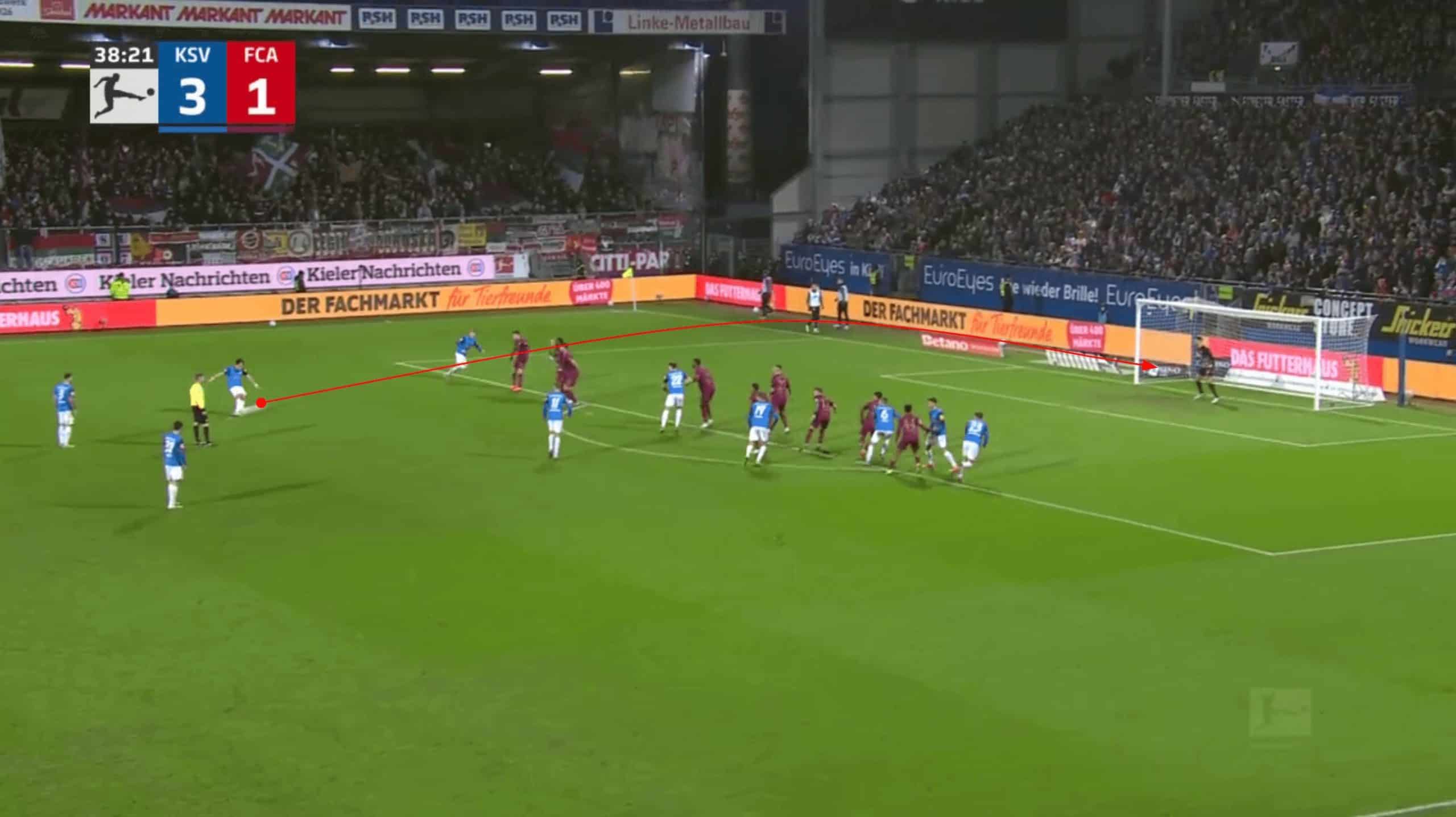 Shuto Machino showcased an impressive range of scoring methods throughout the last season, whether using his right or left foot or his head.
He also demonstrated that he could threaten the opposition goal even from a distance, as with the above free-kick example against Augsburg.
Although he doesn’t often score in this fashion, his ability to get the ball up and down over the wall and into the back of the net at pace was impressive, and highlighted that he can score even from less obvious situations, which is an essential trait for any forward to have.
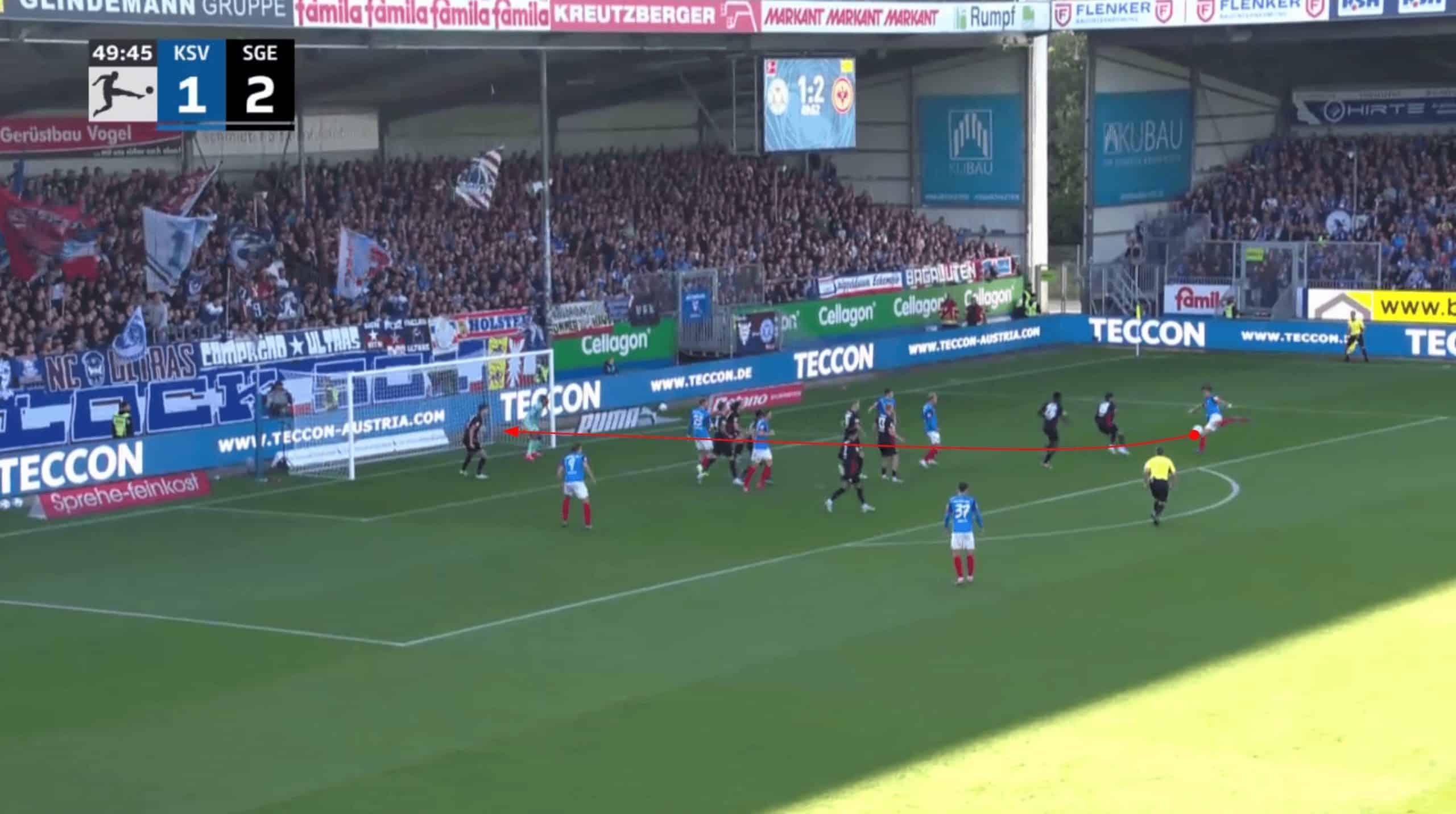 Here’s another example of his ability to carve something out of little in a situation that led to a goal: the home tie against Eintracht Frankfurt last September.
Like the earlier free-kick, it’s a very low xG opportunity given both the distance from goal and the degree of difficulty to score, especially on the half-volley with his ‘weaker’ foot.
He has to adjust his body quickly and also manage to beat two onrushing defenders trying to close him down.
But Shūto Machino managed to find a way to score anyway, hitting the ball into the ground.
The ensuing bounce and pace off the floor made it difficult for the goalkeeper to stop as it went past him.
These goals illustrate why Machino’s xG value was quite low, yet his goalscoring output was so high.
He had a penchant for scoring goals that were more difficult than simple tap-ins from close range.
And given that he’s joining a side now that ranked in the top half of the league in goals scored, he should be able to get on the end of even more quality opportunities, which should, in theory, lead to more goals for himself, given that he outperformed his xG for the season at Kiel.
Another aspect that should benefit his new employer is his intelligent movement off the ball, even when the ball is far away from the opposing goal.
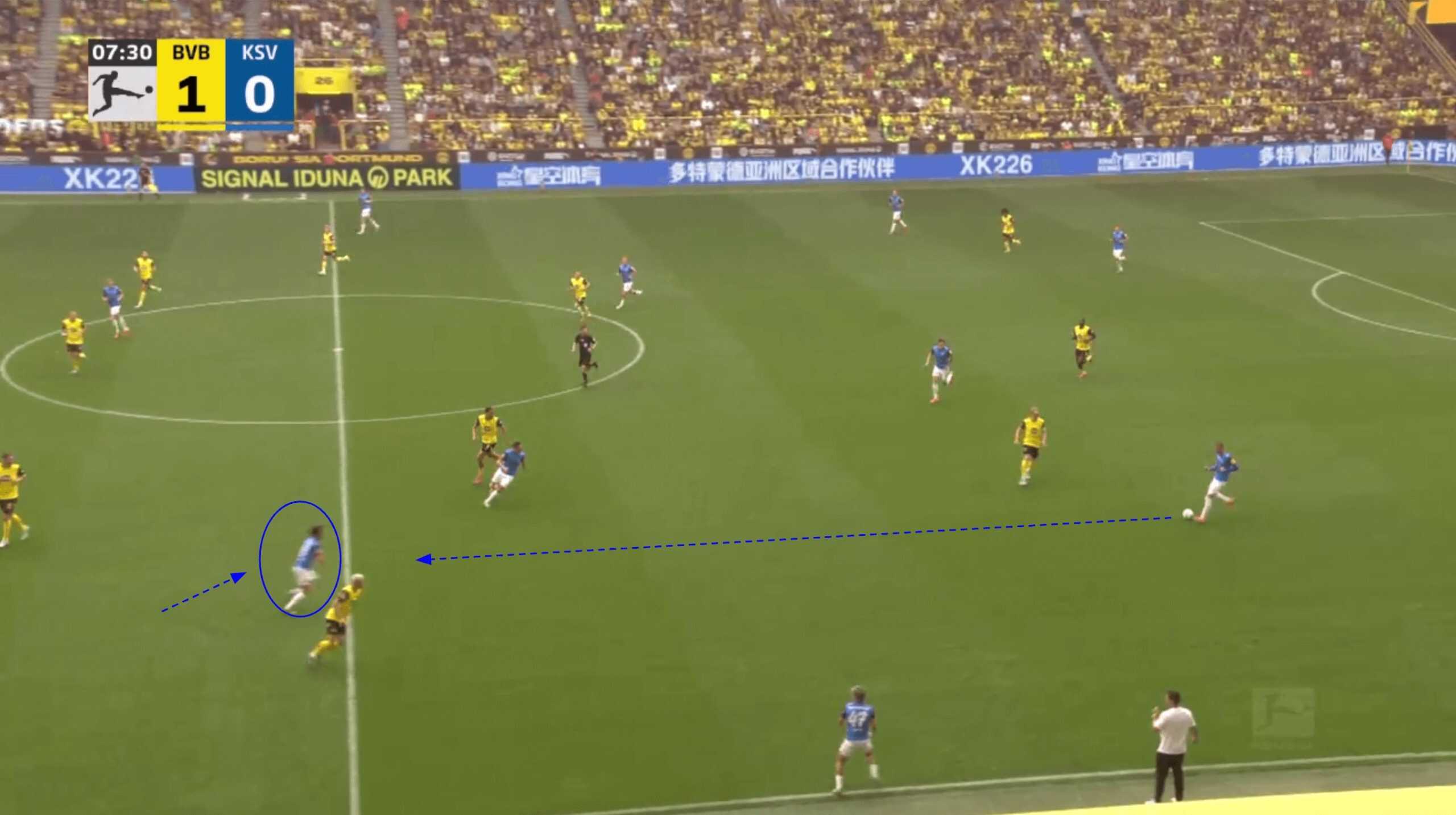 For example, this situation early on against Borussia Dortmund away, his final game for Kiel, where he can be spotted in the blue circle.
With Kiel’s midfielders being either shadow-blocked or covered man-to-man, Shūto Machino’s underlap from a forward position offers a passing option to the defender playing out from the back, allowing Kiel an avenue to progress forward.
He receives the ball and cleverly takes a first touch that takes him towards goal.
While the final pass was off, it exemplified what he had been doing all season for Kiel as an attacker who can drop deep or find spaces in between opposing lines to receive the ball before taking it forward.
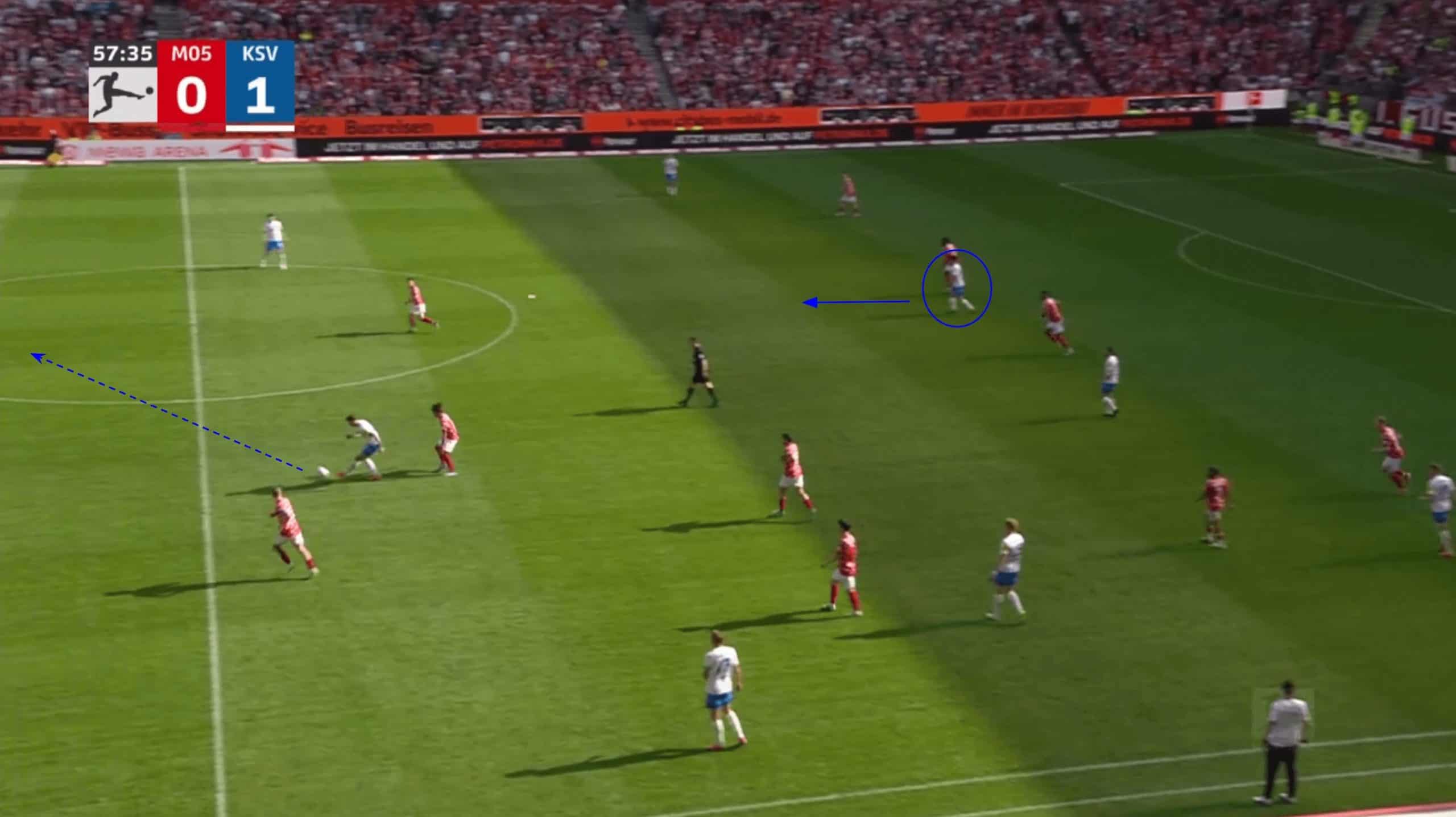 Another example of this willingness to drop off the offensive line to get involved and help his team is from the away game against Mainz in April.
Initially, we can see that as the ball is going backwards to a Kiel defender, Shūto Machino is already scanning his surroundings and making an early decision to come deeper and potentially find a position where he can receive the ball from the defence when it’s played forward.
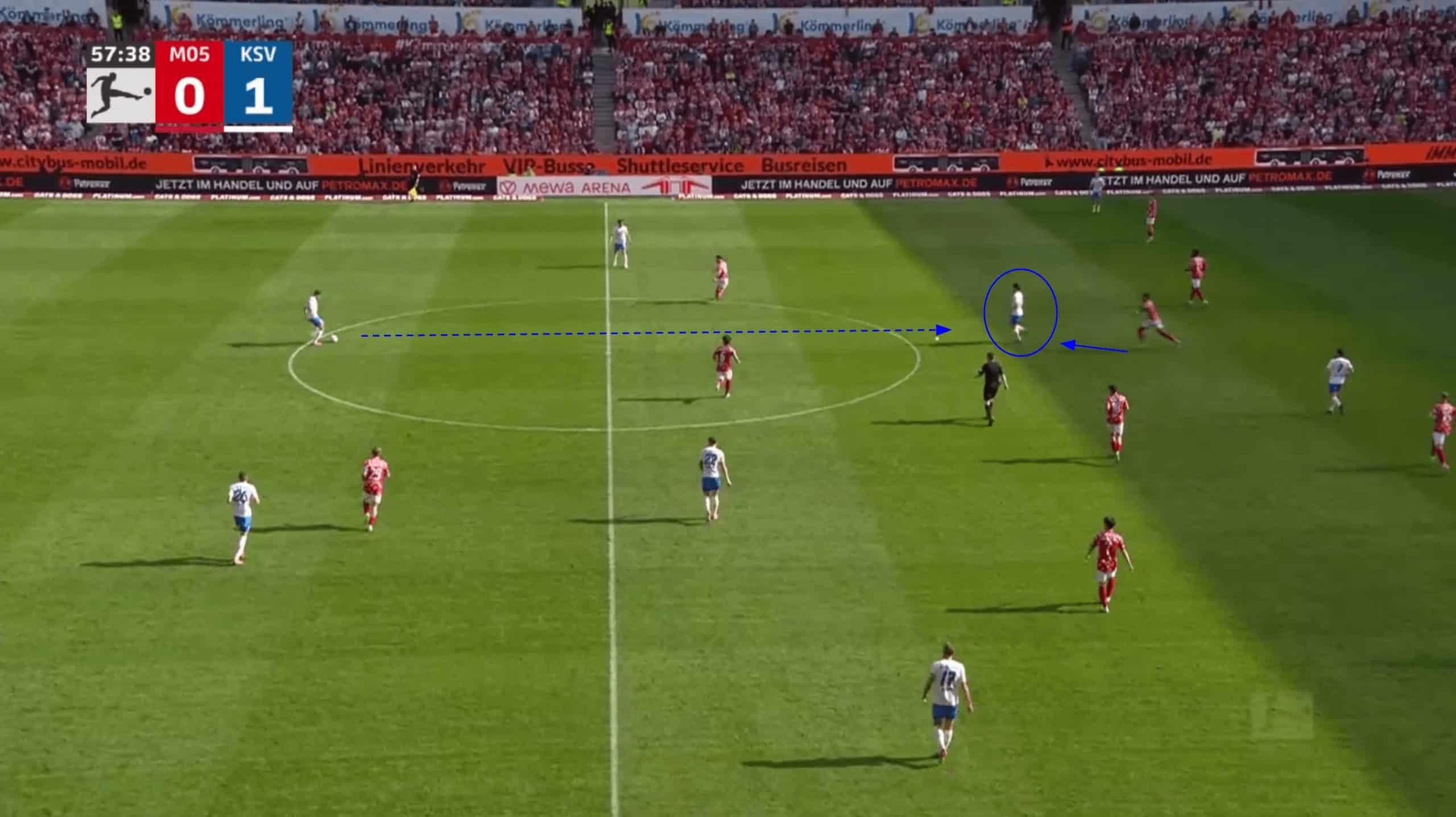 Just three seconds later, he receives the pass that comes his way, allowing Kiel to move higher up the field.
Although Shūto Machino was Kiel’s top scorer and is a centre forward on paper, his game offers much more than just waiting for service up front, as some of these movements have shown.
Shūto Machino Heat Map 2024/2025
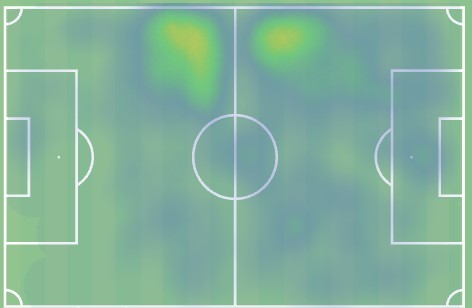
His heat map above highlights that very well.
His most active areas are on the left side, even though he started most games in a central attacking role.
He was the engine of the Kiel attack in more ways than just scoring.
His willingness to drop deep, his ability to link with others, and his ability to carry the ball forward himself were very important to the team’s offensive success in the Bundesliga last term.
In addition to his contributions on the attacking side, he also proved that he was willing to make significant sacrifices to help out defensively when called upon.
Shūto Machino’s high activity on the left wasn’t just due to his contributions to the team in possession, but also because he supported that side defensively, as we can see in the example below.
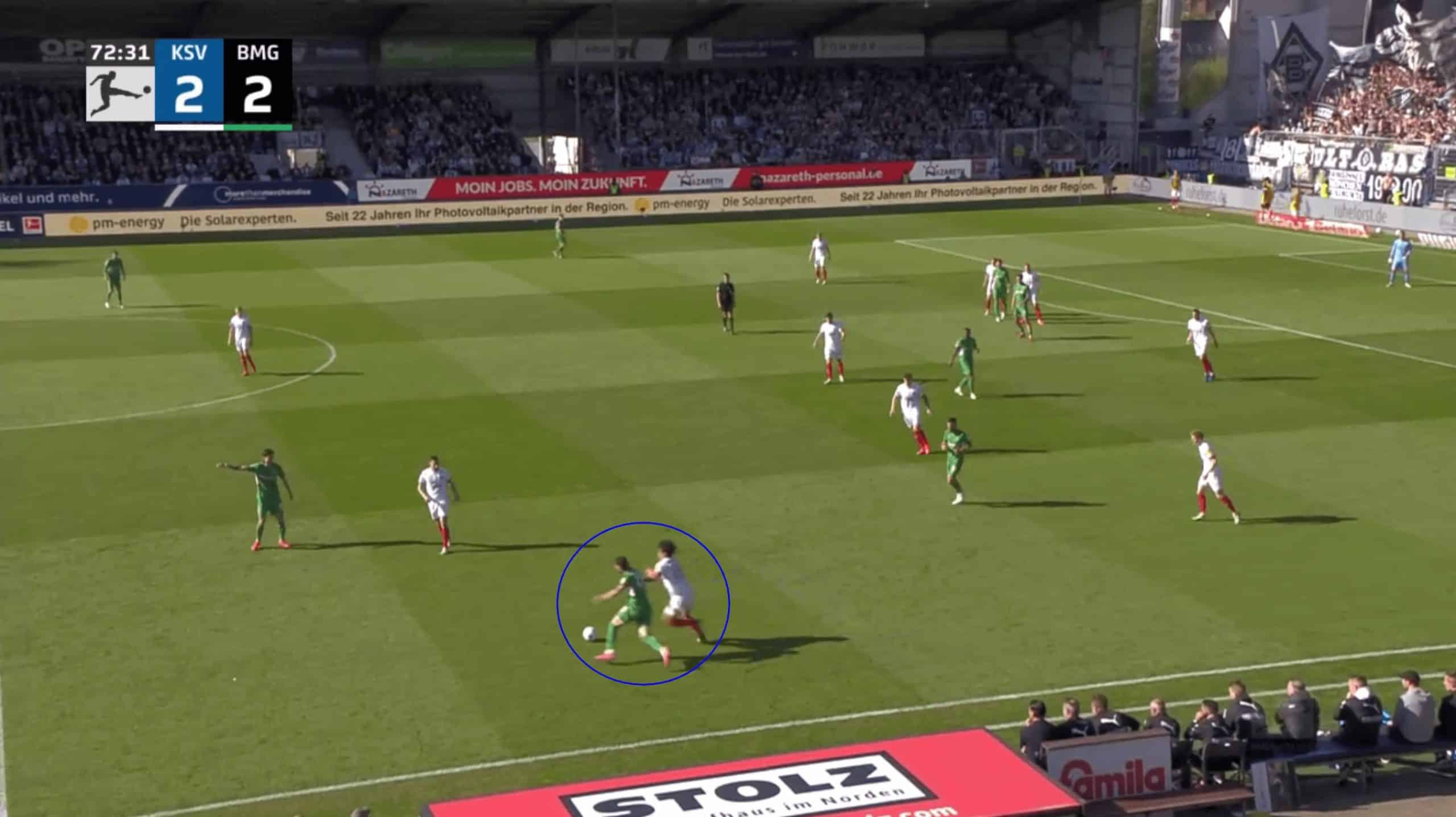 In the home game against his now new side, we can see Machino pushing up against the Gladbach player on the ball to try to win the ball rather than allowing him to pass it backwards and reset the away side’s build-up play.
He actually ends up winning it cleanly, which allows Kiel the opportunity to attack in transition.
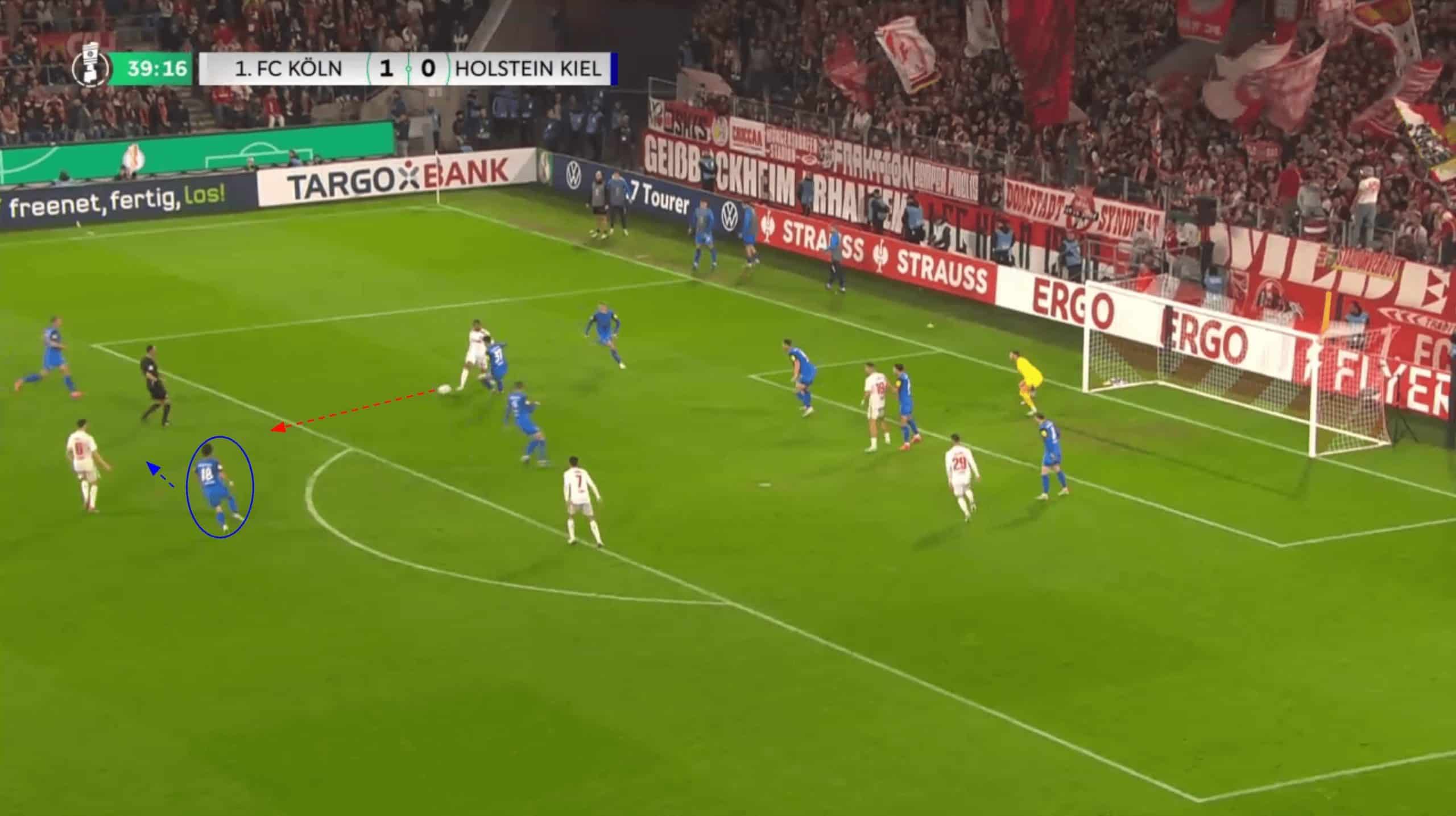 Shūto Machino was very willing to offer himself to support his defence in any way he could, even coming back to the edge of his own box to thwart a good look for the opposition, as he did above in the DFB-Pokal away to Köln.
While his ability to find a route to goal even from very little and his intelligent movement, as well as his tactical understanding and technical skills, will be very important to Gladbach, his selflessness to help the team’s cause on the other end is also a strength that no doubt could prove beneficial, particularly depending on how he ends up being utilised by his new club.
Shūto Machino Areas Of Improvement
In more ways than one, Shūto Machino was a vital cog in Kiel’s attack last season.
Aside from scoring goals and linking up with others, he was also often tasked with taking set-pieces and carrying the ball forward in transitions through his dribbling.
Although he found moderate success in both, if aspects in his game didn’t match the quality of others, it’d be his deliveries into the box, from dead-ball situations and in open play, as well as his consistency in dribbling.
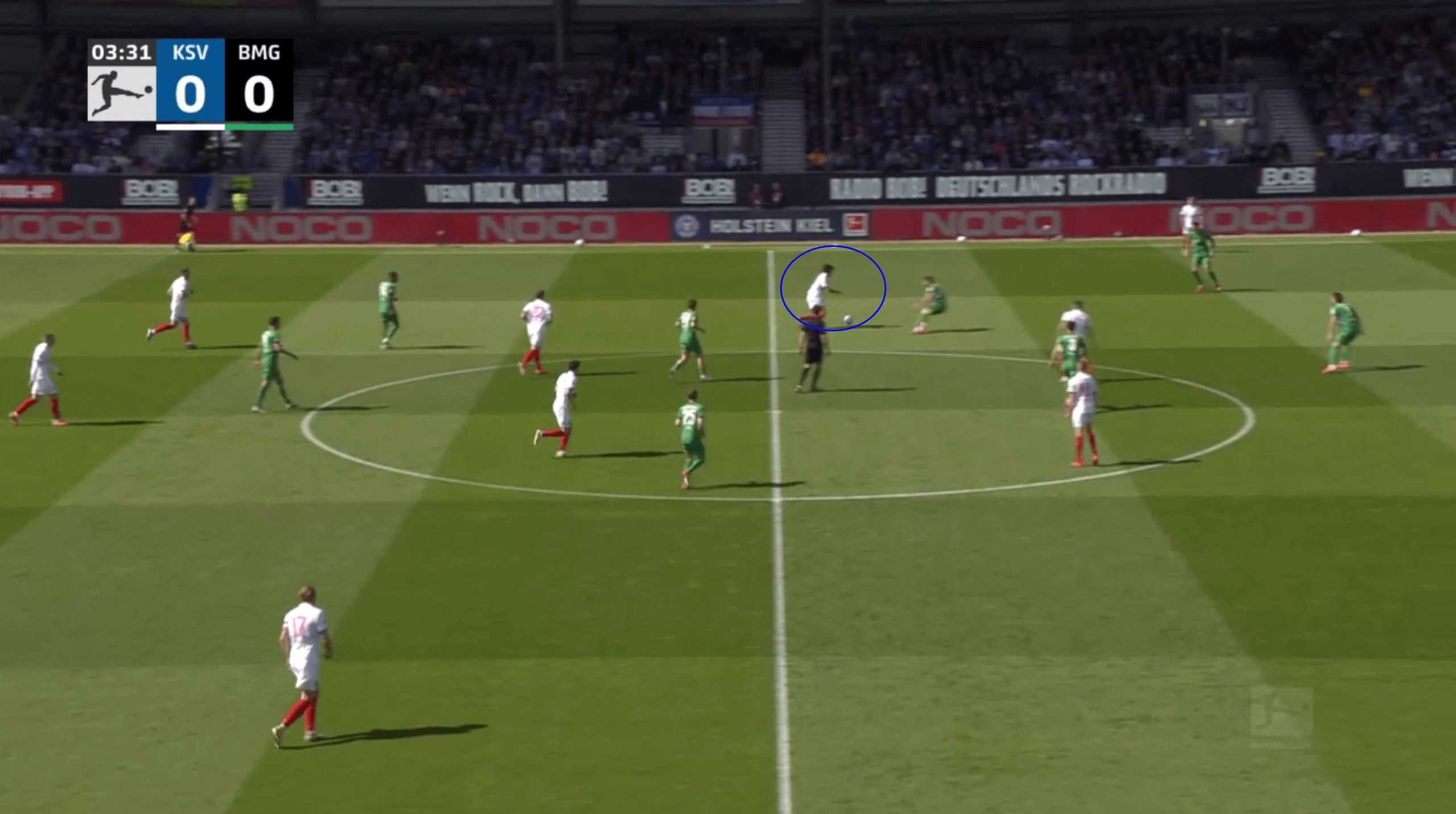 Shūto Machino is an athletic player who has good technique and pace, but while his dribbling statistics look solid enough, upon examining where he’s found his success in beating players on the pitch, it’s clear that most of them come over short distances in the attacking half.
Given that he likes to drop deep and receive the ball, as in the example above against Gladbach, before carrying it forward, being able to ghost past players would come in handy for a player of his profile.
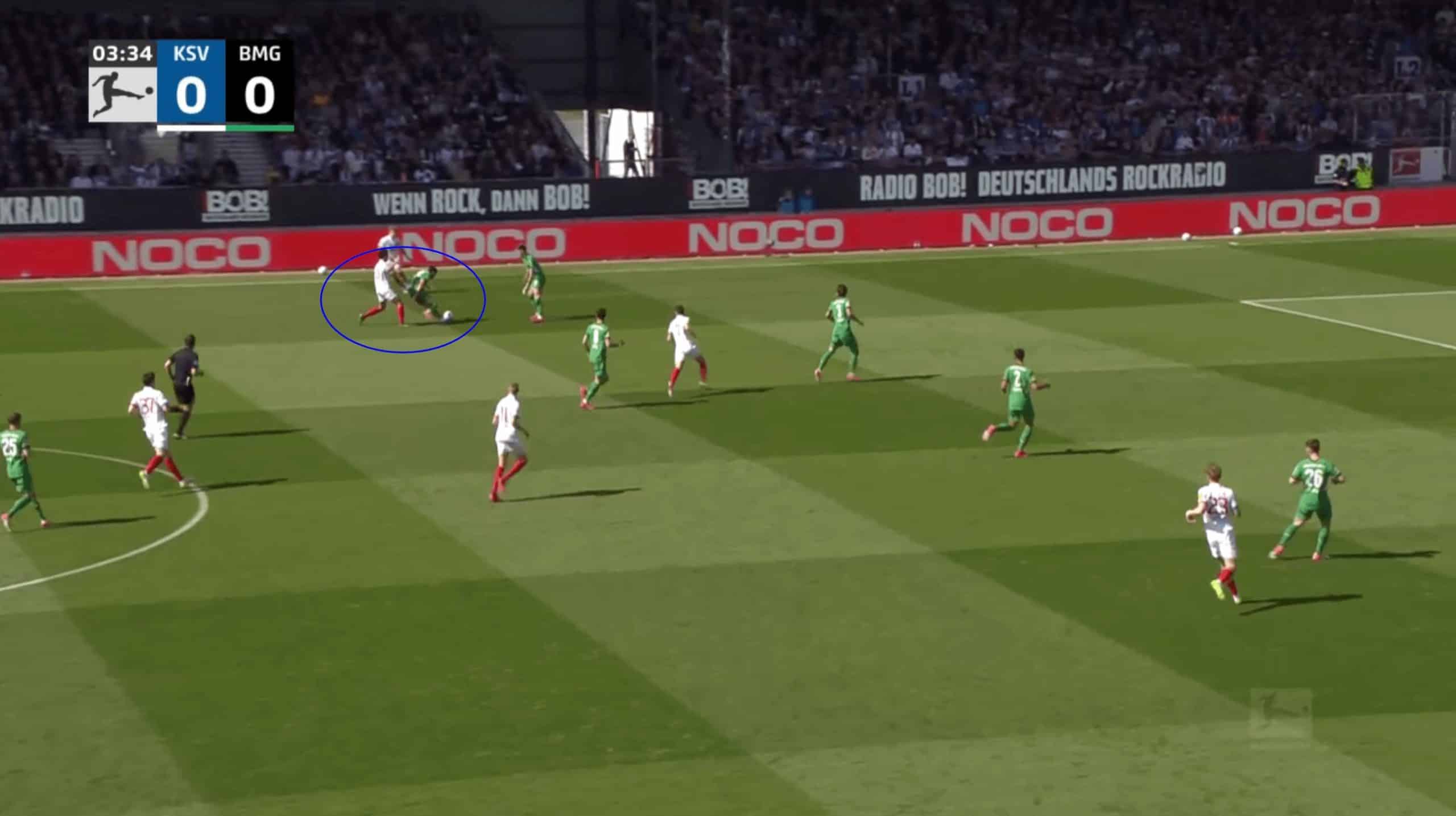 In this situation, he showed too much of the ball to the defender, who tracked his run with it from deep, and lost it too easily, which led to his being dispossessed.
While losing the ball is a natural part of the game for players who like to take risks, like Shūto Machino, what’s still clear in examples like this is his lack of invention or skill in beating a man off the dribble, especially when carrying the ball over long distances.
It doesn’t mean he’s a bad dribbler, which the numbers suggest he isn’t, but it’s not one of his bigger strengths and something that doesn’t come naturally to him like it may for others.
And even when he does beat his man and finds himself in a wider area, his crossing has let him down a fair few times in his end product.
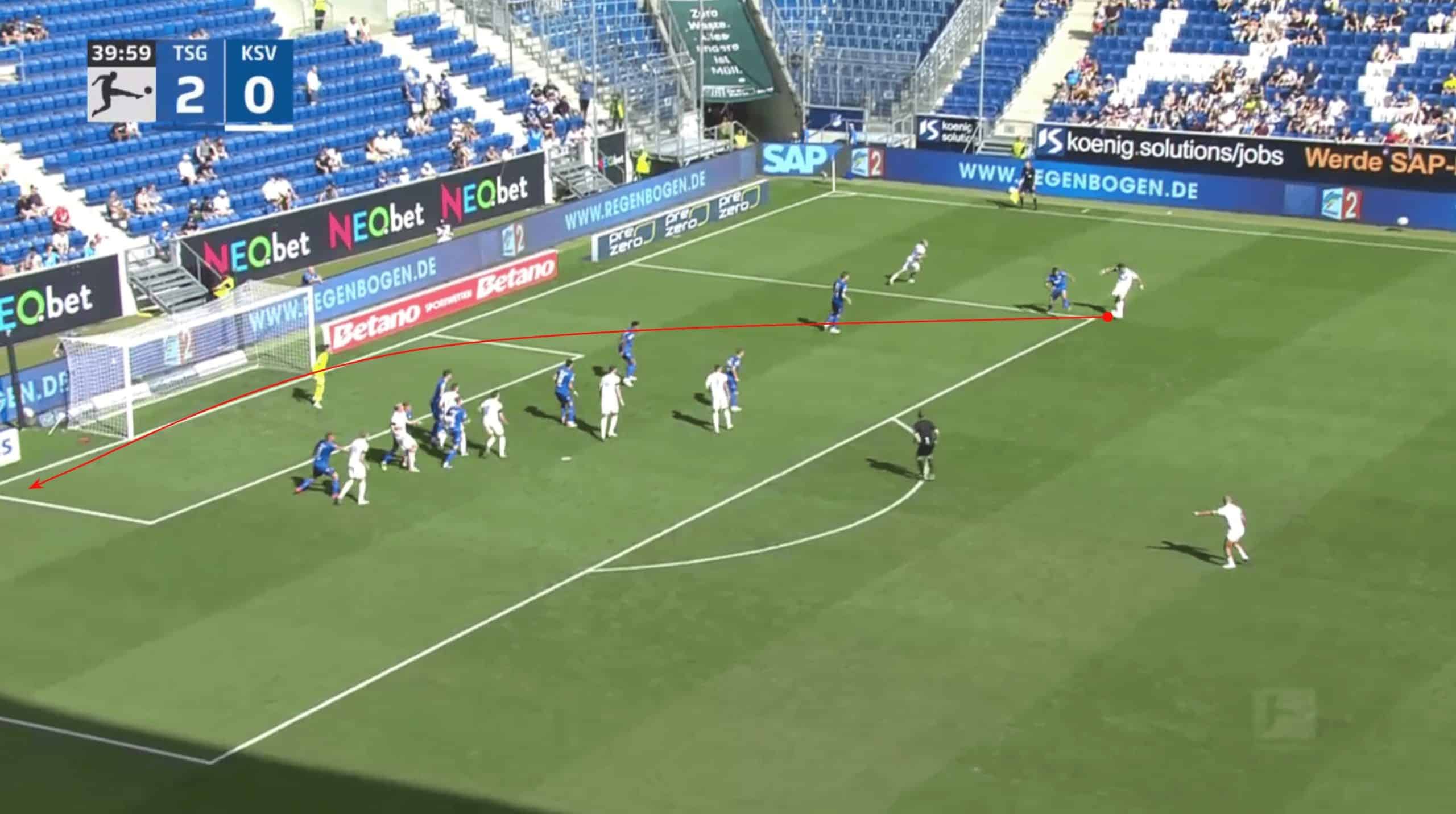 Usually, that happens in situations like this against Hoffenheim, where he tries to bring the ball onto his left foot and lift it into the box, only to be over- or under-hit.
This is how it looks when he cuts in from the right.
On the left, it comes off as a lack of confidence to bring the ball back onto his favoured right foot, instead opting for an ambitious attempt to play the ball on his weaker side, which often results in a similar outcome.
Although he has assisted a few times from crossing and dead-ball situations, it’s clear that his deliveries are inconsistent and often don’t even beat the first man or are sent over everybody.
The numbers tell the story when it comes to his inaccurate balls into the box.
Last season, on average, he had just a 38.5% success rate from 1.65 crosses and 53.7% from 1.73 passes into the penalty area per game.
For someone who finds himself in the channels or wider areas naturally with his movements into those spaces, perhaps working on his final ball when trying to set up others could be something to work on as he furthers his career at the top level.
Potential Fit At Gladbach
Under Swiss manager Gerardo Seoane over the last two seasons, Gladbach have mainly used a 4-2-3-1 formation.
While they have occasionally experimented with other tactics, this has been their primary structure and has continued to be in pre-season this summer.
Shūto Machino has not played in any of the friendlies since signing due to a calf injury he’s been nursing since early on in pre-season, so we haven’t yet had the opportunity to get a glimpse into how Seonae plans to incorporate him into his tactics.
There are three options within Seoane’s 4-2-3-1 that Machino could find his place in the team.
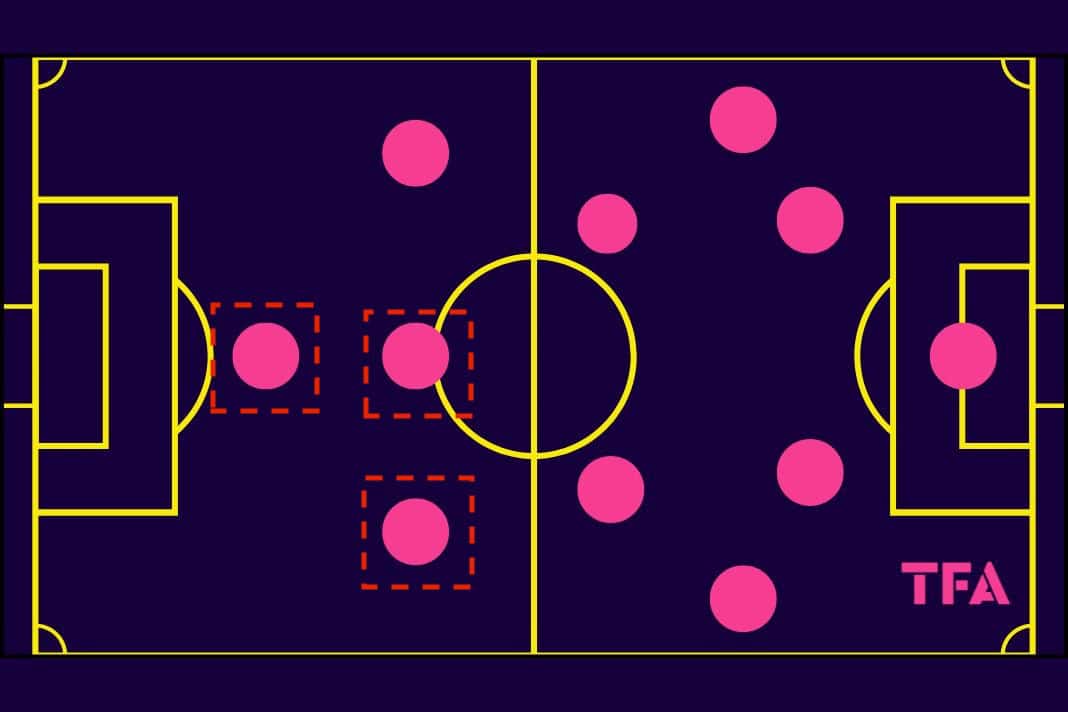 Firstly, there’s the centre-forward position, which would be the most natural fit for the Japanese striker, but there is the small issue of German international Tim Kleindienst to contend with there when he returns from his own injury in the fall.
So while Shūto Machino could well start his Gladbach career in that role, he may not remain there once Kleindienst is back, unless, of course, the system changes to accommodate both as central strikers.
The second option is for him to play slightly more withdrawn as an attacking midfielder and support Kleindienst as a second striker from there, which could be more probable in the long run.
Lastly, he could also play left wing in the spaces that he most frequently occupied at Kiel, but, like at centre-forward, there is a German player who has made that position his own over the last couple of years, 26-year-old Robin Hack, and it’s unlikely that he’ll be displaced either.
So, with a fully fit and available Kleindienst and Hack, Machino’s best bet for finding a place in the team in the existing structure is in that role behind the striker, unless, of course, Seoane tries out a new system that fits two strikers at once.
Conclusion
Shūto Machino was at the heart of Holstein Kiel’s attack in a season that ended in relegation, but one in which he still managed to impress, which helped him earn this summer move to Gladbach.
While we have yet to get a glimpse of him in Seoane’s team due to injury, there’s no doubt that his new club are getting a well-rounded, complete attacking player in their ranks going into the 2025/2026 season.
Given that he’s capable of playing in a number of different offensive roles and systems, his adaptability and versatility will offer his new boss plenty of room to manoeuvre tactically as he looks for how to get the best out of his team and the Japanese forward alike on the attacking end.
From the J1 League to the Bundesliga in just two years, it’s been a quick climb for Shūto Machino to the highest level.
Given that he’s still to go into his prime years, with a World Cup on the horizon for his country as well, he has plenty more to offer and is a name that football fans can expect to hear more of in the coming seasons.
