
We are edging closer to the Champions League group stage as the teams have gone through the third qualifying round. While we have seen surprises when big names crashed out of the competition, the attention was focused on the tie between LASK Linz and Basel.
After a terrific season in the Austrian Bundesliga saw them finished second, LASK entered the Champions League with a new manager in Valérien Ismaël. He kept the core that Oliver Glasner built during a few recent seasons that witnessed João Klauss and Samuel Tetteh’s returns. With some of the new names like Rene Renner and Valentino Müller, they were confident in advancing further in the competition.
Basel also finished with the same record as LASK but they were left far behind by Young Boys. They qualified for the second qualifying round and beaten PSV with a very impressive style. As a constant participant in the group stage, their fans also expected them to do the same this time. But they couldn’t turn the tie around after losing 2-1 at home. Three goals from Reinhold Ranftl, Thomas Goiginger and Marko Raguž stole the headlines for Ismaël’s side.
This tactical analysis will provide an analysis of LASK’s dominant win over Basel. Meanwhile, using statistics, we will point out the tactical points from Basel’s tactics that formed their loss over LASK’s tactics.
Lineups
Ismaël used a similar 3-4-3 lineup to how Glasner filled his side. His back three consisted of veteran Emanuel Pogatetz, captain Gernot Trauner and Philipp Wiesinger positioned in front of goalkeeper Alexander Schlager.
Providing the width for them were wing-backs Rene Renner, Reinholf Ranftl and wingers Samuel Tetteh and Thomas Goiginger. Centrally, Peter Michorl and James Holland played as central midfielders while João Klauss would provide the goals.

Noah Okafor, Luca Zuffi and Valentin Stocker completed the midfield line with Éder Alvarez Balanta played slightly off his original position as a centre-back. Fabian Frei shifted between the lines and Kemal Ademi led the line.
Basel’s style of play
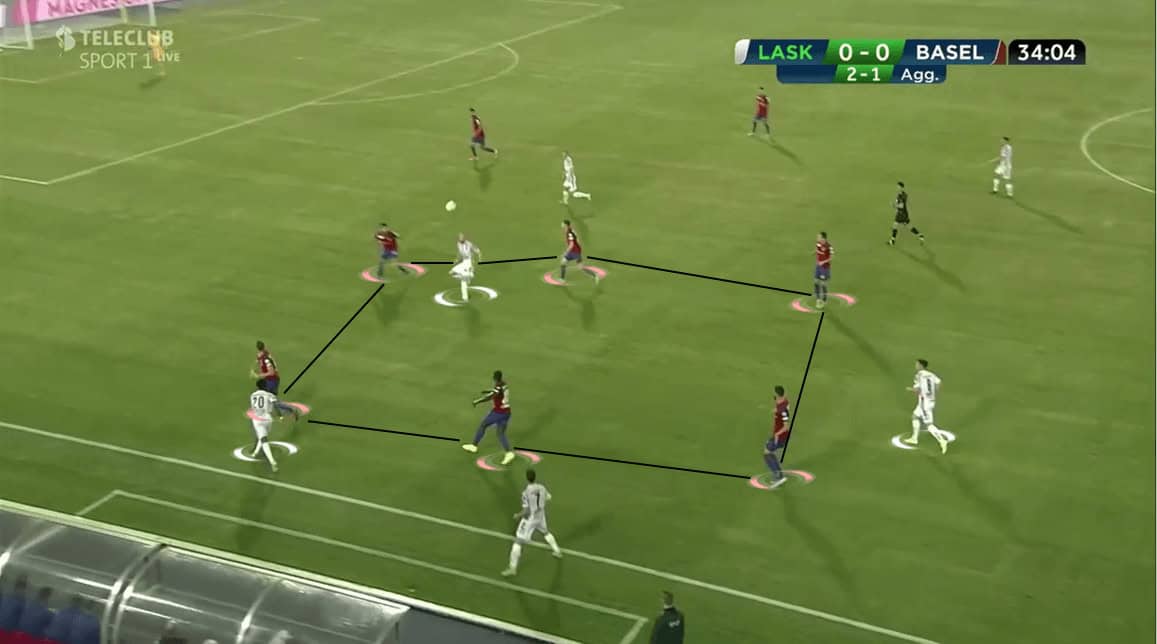
Basel entered this game not having the aggregate advantage and they were forced to attack from the beginning. In the attacking transition, they tended to play out from the back with four defenders and Frei. Five players formed a passing block inside their half and were able to create at least five passing triangles.
This allowed them to circulate the ball with ease and countered LASK’s press at the same time. With only three attackers involved in the press, the home side didn’t have numerical superiority and struggled to recover possession. If they attempted to push either their wing-backs or central midfielders up, it would create spaces for Basel attackers to capitalise.

When they got the ball into the opposition’s half, they usually distributed it to both flanks. By using quick combinations and positions interchanging, the players found their way of approaching the 16-yard box. Petretta and Widmer overlapped constantly while Stocker and Okafor moved a bit inside.
Their movements dragged LASK’s wing-back and central midfielder out wide, again, creating free spaces. Zuffi was the type of player that liked to utilise those spaces with his runs and brought the teammates into play. He would pick up the ball inside the area, scanning for a potential receiver and make a through ball for him. These type of situations constantly allowed Ademi to sit on the shoulders of defenders and received the ball for his chances.
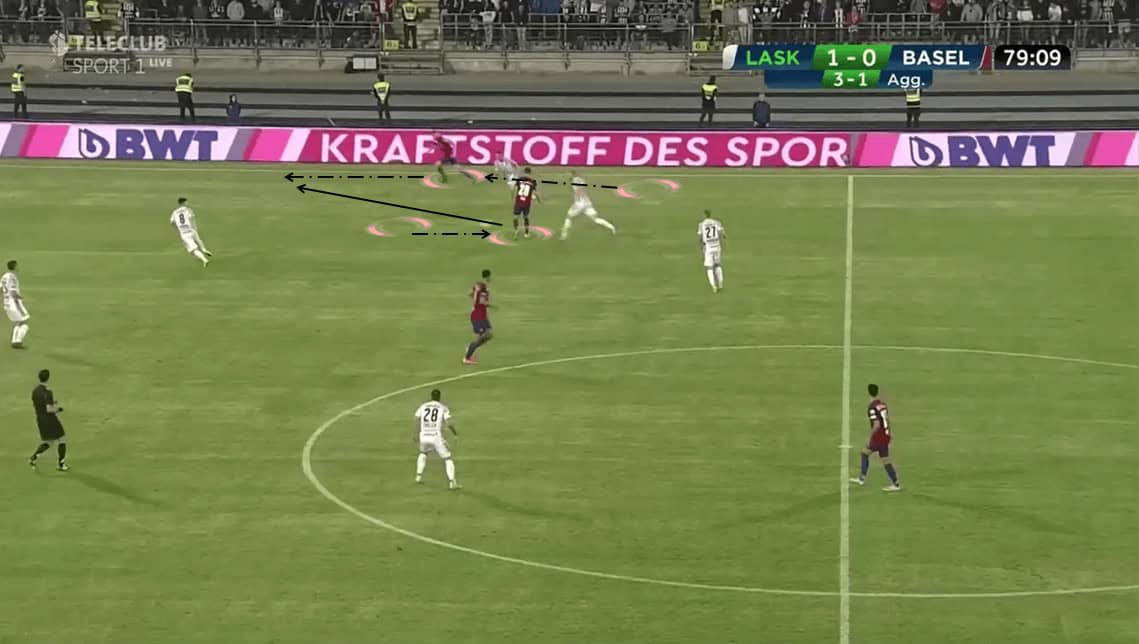
Another method that also came from both flanks were crossed into the box. Using Ademi’s physicality, the wing-backs and wingers occasionally picked him out with whipped crosses. Most of them usually came from the right-hand side of former Udinese defender Widmer and Stocker.
Same as the mentioned way of bypassing LASK’s defensive line, overlapping runs from Widmer and Stocker’s positioning helped them reached the 16-yard box. Statistically speaking, half of the Swiss defender’s crosses found its destinations and two of them were in the area near the box.

But besides from Ademi, who created six of Basel’s total of thirteen chances, other players couldn’t force Schlager to show his full ability. Although they performed as the numbers expected them to (their xG rating was 1.64), surely they could have done better with the other seven.
Stocker did have a chance rated 0.15 and Kevin Bua’s blocked chance was even rated 0.2. But it was not until Ademi’s close-range tap-in at the 80th minute that they had the equaliser. From one of Widmer’s whipped cross near the box, he immediately found Ademi who positioned at LASK’s near post. He sent it in and the Kosovan striker finally beat Schlager.

With the players didn’t tend to press LASK’s build-up, most of their defensive duels were occurred inside of their defensive third. And it doesn’t come as a surprise when their defenders were the most efficient players in this subject. They constantly intercepted and tackled the ball from counter-attacks while remained stubborn in positional attacks. That is why LASK faced many troubles in their attempts of moving the ball into Basel’s 16-yard box.

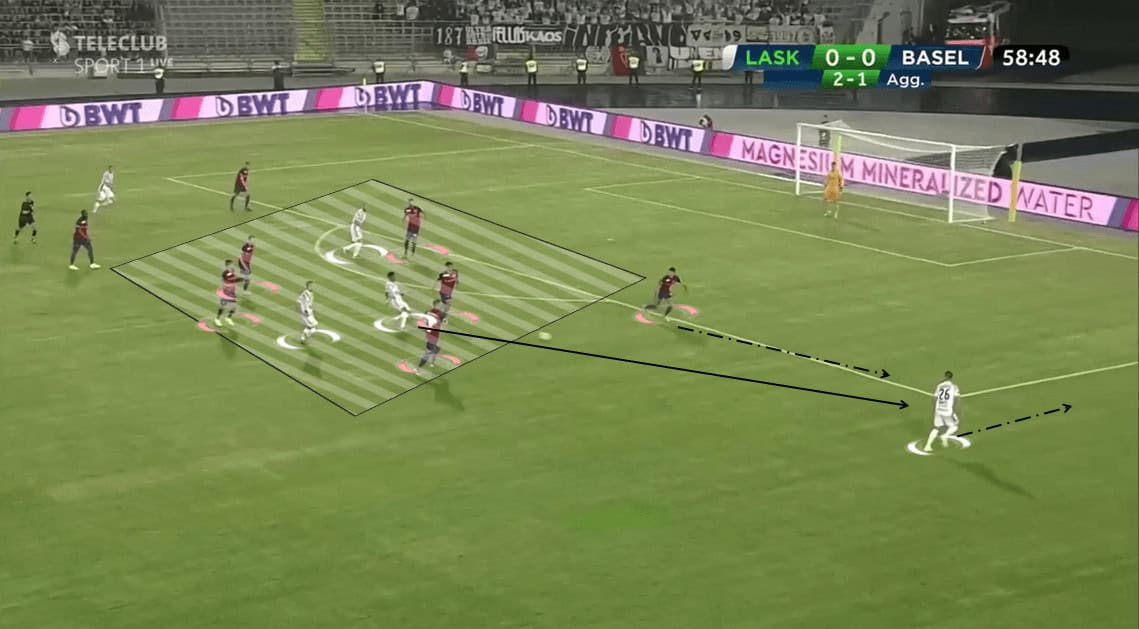
But creating overloads didn’t always work for them, as shown in Ranftl’s opening goal. As they tried to win the ball with five players inside the overloaded area, Tetteh noticed Ranftl was overlapping. The Salzburg loanee found him with a through pass and opened up space for him. Although Petretta ran out of that area to mark him up, his cross deflected his feet and went into the goal.
LASK’s style of play
Ismaël and his players have had a very decent first half, created chances and kept things tight at their end. But while doing what they have done best, luck still hadn’t come when it came to converting the chances.
In attack, they were a wing-oriented side as they had the tendency of using Renner and Ranftl’s overlaps. These two occasionally made runs into Basel’s final third while Goiginger and Tetteh occupied the half-spaces. Klauss would roam in between the lines and willing to play in the role of a target man. He dropped a bit deeper to bring his teammates into play while fancy of creating chances for himself by positioned on the shoulder of Basel’s defenders.
Below, Holland didn’t get involved much in the team’s attack as he had to screen the defence. Meanwhile, Michorl usually capitalises on free spaces and links up the play. He acted as the link between the wing-backs with the strikers, allowing the trio upfront to find a space where they could pick up the ball. Furthermore, he could also offer a threat from outside the box with his long-range shooting.
Surprisingly, the second half witnessed a dramatic change from the Austrian side. Not mentioning about Ranftl’s lucky goal, they only had four chances. But three of those were highly-rated and two of the latter did turn into goals. Another thing that LASK were better at was their expected goals (xG) rating. In total, they should have scored only 1.6 goals and that means the match would have ended with a draw if we combine with Basel’s total xG. The outcome, as we saw, was that they had three goals inside the second half.

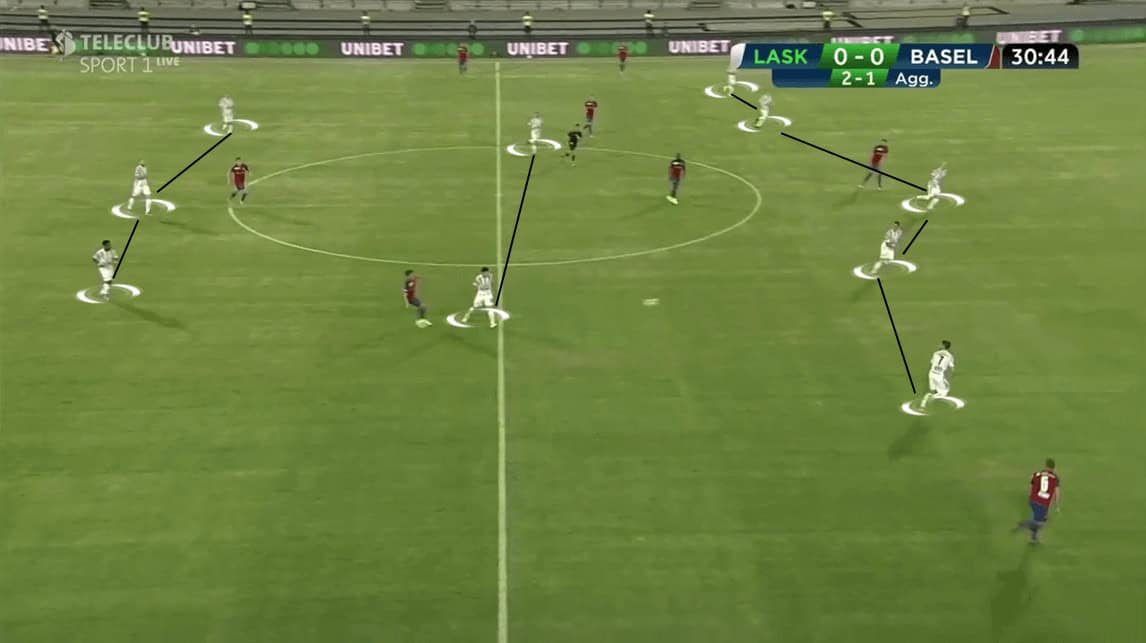
Not only they were good in attack, their defending and pressing was also impressive. When not in possession, they attempted to win the ball high up the pitch. They formed two pressing lanes that constantly supported each other. The front three pressed Basel’s build-up and prevented the defenders from linking up with Frei.
Below, two central midfielders supported them by creating a shield just behind. In case the trio’s press was bypassed, Michorl and Holland would push up and form a cage with two wingers. This prevented Frei from making progressive passes and forced him to restart the build-up. The pressing shape would follow Basel players until they reached the halfway line and attempted to recover possession at any times.
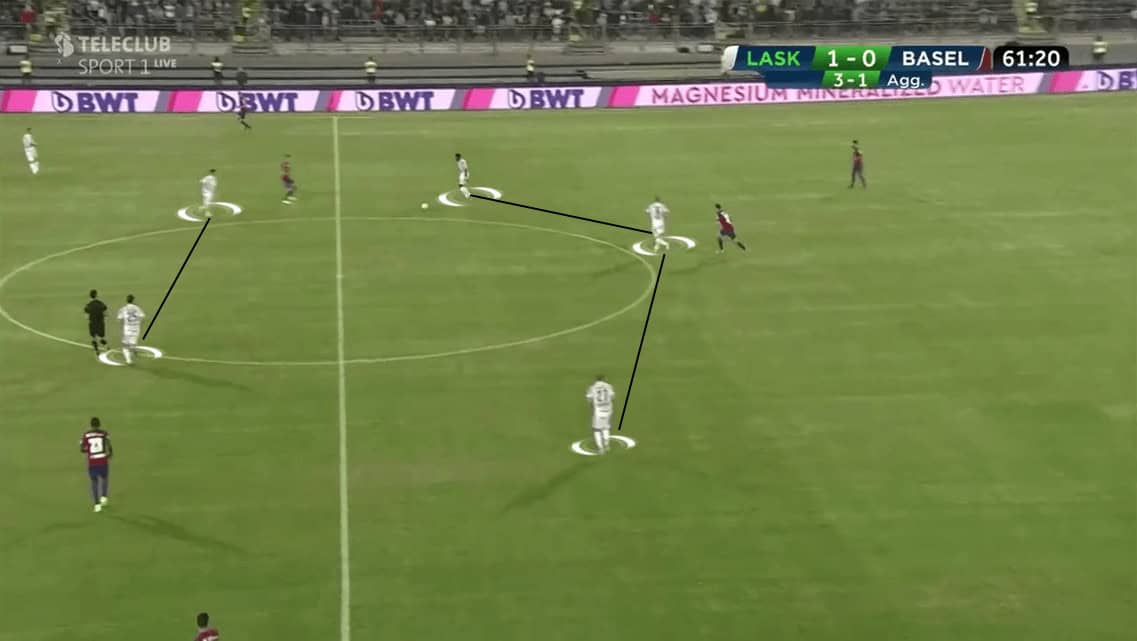
But the press didn’t stop there. Michorl and Holland continued their role of supporting the teammates as they would intercept passes that could come through between the channel. Meanwhile, the defensive line positioned themselves high up the pitch. Their aim was similar to the general press’ intension, recovered possession as soon as possible. They wanted to do so as it would reduce the attacking transition time and hitting the opposition when they were surprised usually caused a lot of damage.
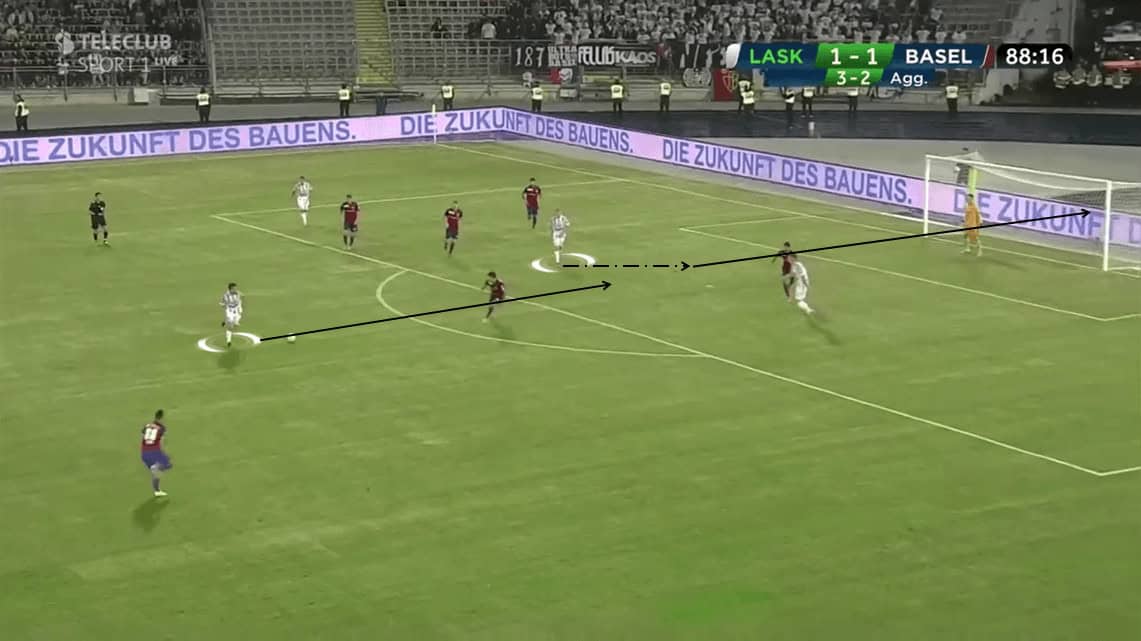
Similar to how Glasner wanted his side to play last season, if the ball approached their penalty area, the defenders had the license to be aggressive. As long as they could stay away from dangerous fouls and vulnerable free-kicks, they were free to win the ball in any way that they wanted. But, their intensive and aggressive press left a problem. With just a through ball, Basel attackers could easily be deployed in the spaces behind LASK’s defensive line.
In the shot below, Frei managed to escape the pressure from Michorl and made a through pass towards Widmer. He noticed the space between Renner and Pogatetz which was enough for the Swiss right back to move in. Fortunately, Renner managed to close down early and intercepted that ball.
Conclusion
Every fan that has followed LASK since last season would have hoped that the Austrian-based side could advance through. With Ismaël elevated Glasner’s fascinating tactics and their aggregate advantage, they have capitalised those perfectly and sealed the match with three goals. Their journey will continue as they will welcome Club Brugge, another regular presence in the group stage. A journey to Belgium would be interesting and it will be the final test to show what they are made of before the group stage.
Impressive as they were against an energetic PSV, Basel didn’t show the qualities needed to advance further. Against a relatively unknown side in LASK, they struggled in converting their chances, which ultimately cost them the tie. Although they might lay the blame at the injured players’ door, Basel surely need a rethink and learn from this loss as they come back to the Swiss Super League and enter the Europa League.

If you love tactical analysis, then you’ll love the digital magazines from totalfootballanalysis.com – a guaranteed 100+ pages of pure tactical analysis covering topics from the Premier League, Serie A, La Liga, Bundesliga and many, many more. Buy your copy of the August issue for just ₤4.99 here.
