
After sacking club legend Mark Robins in November, the Coventry City board sought to appoint a manager with fresh ideas who could rejuvenate and provide the squad with much-needed energy.
Back-to-back promotion near misses had hurt the morale, and the idea of going again seemed distant.
Sitting 17th in the table, many fans hoped for experience, and there was lots of scepticism when English icon Frank Lampard was given the role.
Lampard came into the job after disappointing times at Everton and Chelsea, and many felt he lacked a clear style of play and was stubborn in his team selection.
To Lampard, however, Coventry felt like the perfect proposition: a club with newfound stability, a huge fanbase, a great stadium, and, most importantly, a top-quality squad.
Despite the initial queries, Lampard has since taken Coventry from 17th in the table to a comfortable fifth, having won 13 from 21.
The rise in form and exciting football on show has quickly shifted the question from whether he is the right man to whether he could be the man who finally takes them back to the big time.
This tactical analysis will examine the changes Frank Lampard tactics have implemented and what he has done to transform his side from a relegation candidate to a promotion contender in a matter of months.
Frank Lampard Coventry City Formation
Having previously been set on his preferred 4-3-3 at Chelsea, Lampard’s Coventry are much more flexible in their setup.
They comfortably switch between their favoured 4-2-3-1 and a 3-4-3 or a 3-5-2, depending on the opposition.
Lampard has shown a keen willingness to adapt to the needs of the fixture ahead, which is vital in a tough Championship season.
In the majority of home fixtures and away games, Lampard feels control is required, and Coventry is set up in a 4-3-3.
This allows more men higher up the pitch to press win back possession, as well as providing more men to keep the ball in midfield.
It also provides his side more ability to exploit width, giving his full-backs the opportunity to overlap down the lines.
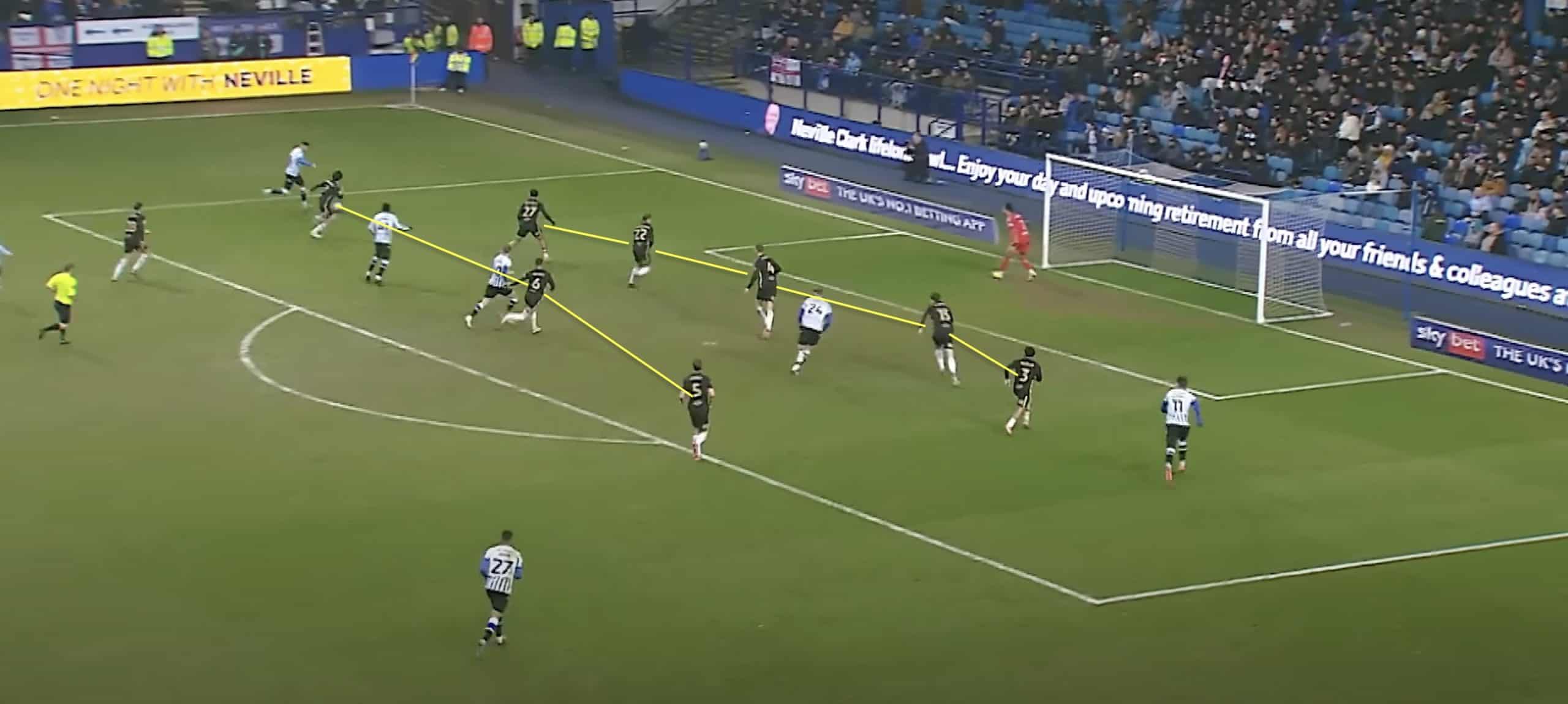
In games demanding more defensive stability and aerial ability, such as tough outings to Hillsborough and Ewood Park, they have switched to the system that allows three central defenders.
In these games, they are willing to concede the majority share of possession to the opposition and play more directly on the counter.
Frank Lampard Principles Of Play At Coventry City
Despite this flexibility in shape and approach, certain fundamentals and principles of play remain the same throughout.
Lampard looks to play attacking, risk-taking football with width in offence and aggression in the press.
His team consistently plays with unmistakable energy and passion, with constant runners on and off the ball looking to cause the opponents problems.
The style of play is very demanding of certain positions.
The wing-backs, in particular, are demanded to cover huge amounts of distance throughout the game.
They are instructed to push high and wide on the ball, but then also have to retreat to defend deep.
When playing with wingers, they are also expected to track back heavily.
Sakamoto is a shining example of this, always tracking back to help Van Ewijk in defence, and the right back also helps hugely in attack.
The club ethos is very visibly to defend and attack, all together as a team.
So far, Lampard has done a great job ensuring each player buys into it.

Coventry City Build-Up Play
Coventry initially look to build out patiently from the back, and feel comfortable having their defenders stand on the ball until they have the necessary support.
They set up at the start of their build-up with their full-backs high and wide.
One of the central midfielders, Matt Grimes primarily, then drops deep to collect possession.
In a 4-3-3 system, Grimes forms a back three on the ball with the other centre-halves, providing more defensive cover and allowing the full-backs to play wide and high.
It also gives him more time to pick the right pass and execute effectively.
From here, Coventry looks to play wide, either to the full-backs or wingers who have pressed up the pitch.
Mason Clarke, in particular, is a regular longer outlet, as his physicality and pace make him a hard player to dispossess.
Van Ewijk and either Dasilva or Bidwell are also looked for to collect and progress the ball down the channels.
When in a 4-2-3-1 shape, Coventry has one central midfielder drop to defence in the set-up, while the central attacking midfielder plays just off the striker.
This can leave them with a very vertical midfield three, encouraging vertical passing rather than horizontal recycling of the ball.
This leaves the midfield zone reasonably vacant, allowing for overloads on the wings and up top, which helps Coventry play directly once they bypass the midfield third.
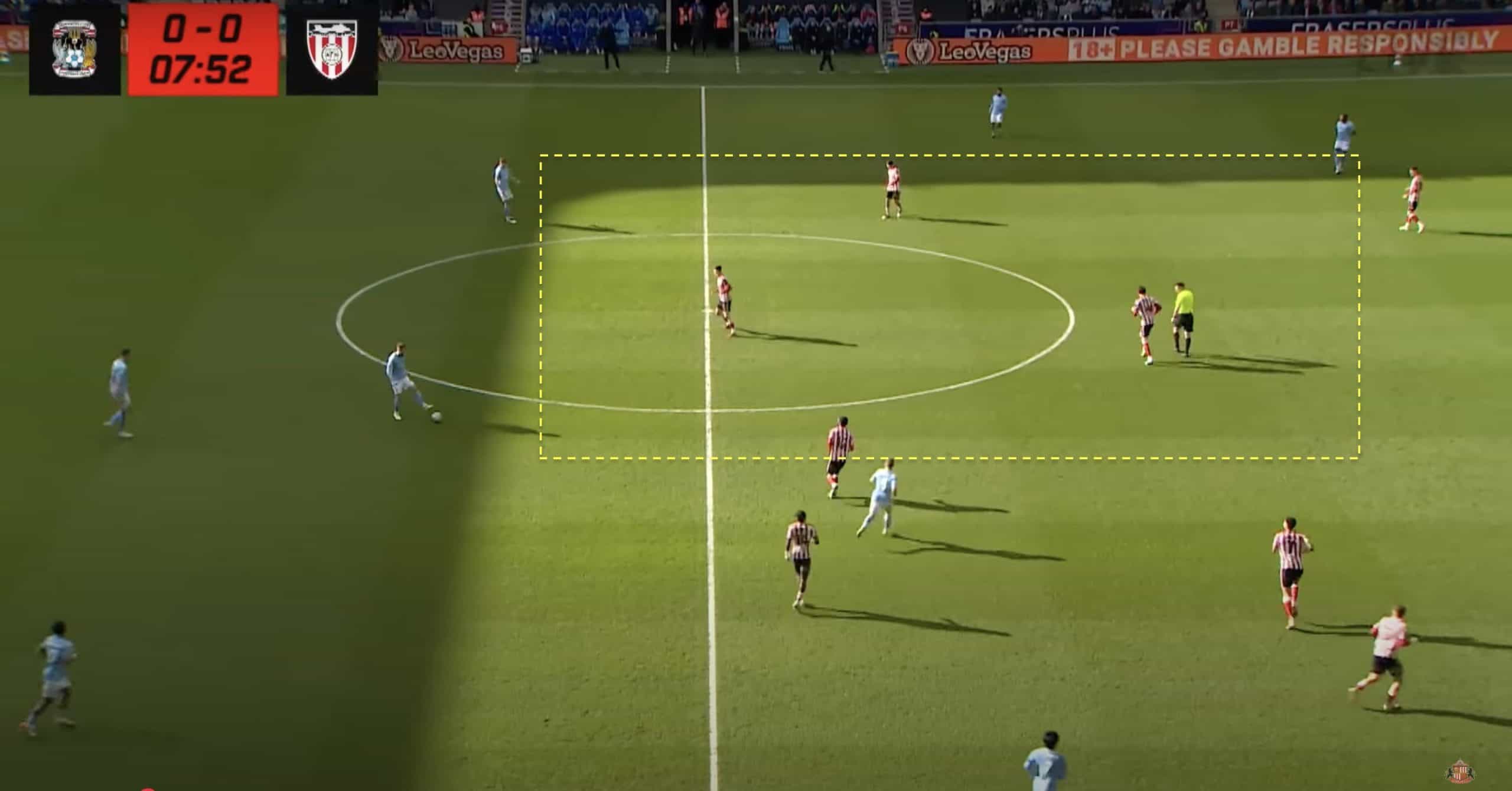
Despite this preference, a key progression of Lampard’s playing style from his previous jobs is the flexibility on show at Coventry.
If the pass is not on straight away, Allen will drop deep to offer a one-two with Grimes to buy more time for space to be created further up.
Furthermore, if the defensive line assesses trouble in front of them, they are happy to go directly into the centre forward and get runners off him in support.
Both Simms and Wright are effective target men and hold the ball well, allowing this approach.
Lampard has well-coached this flexible outlook, which makes Coventry a much more multidimensional and challenging outfit to face, as they are no longer easily pressed.
Coventry City Ball Progression
Once Coventry turn the ball over or enter the attacking phase, there are clear instructions for their play to be direct and to exploit any openings at first sight.
Unlike many modern tacticians who prefer ball retention and recycling the ball, Lampard’s style focuses much more on opportunity creation and testing the goalkeeper.
The wingers will regularly look to cross and take on their man, while the central midfielders will quickly attempt to play an incisive pass or take a shot.
This is clearly what Lampard thrived at throughout his playing career and is what he wants his players to emulate.
They are very impactful at quick releases from the midfield behind the opposition defence and look to utilise their forward runners as soon as possible.
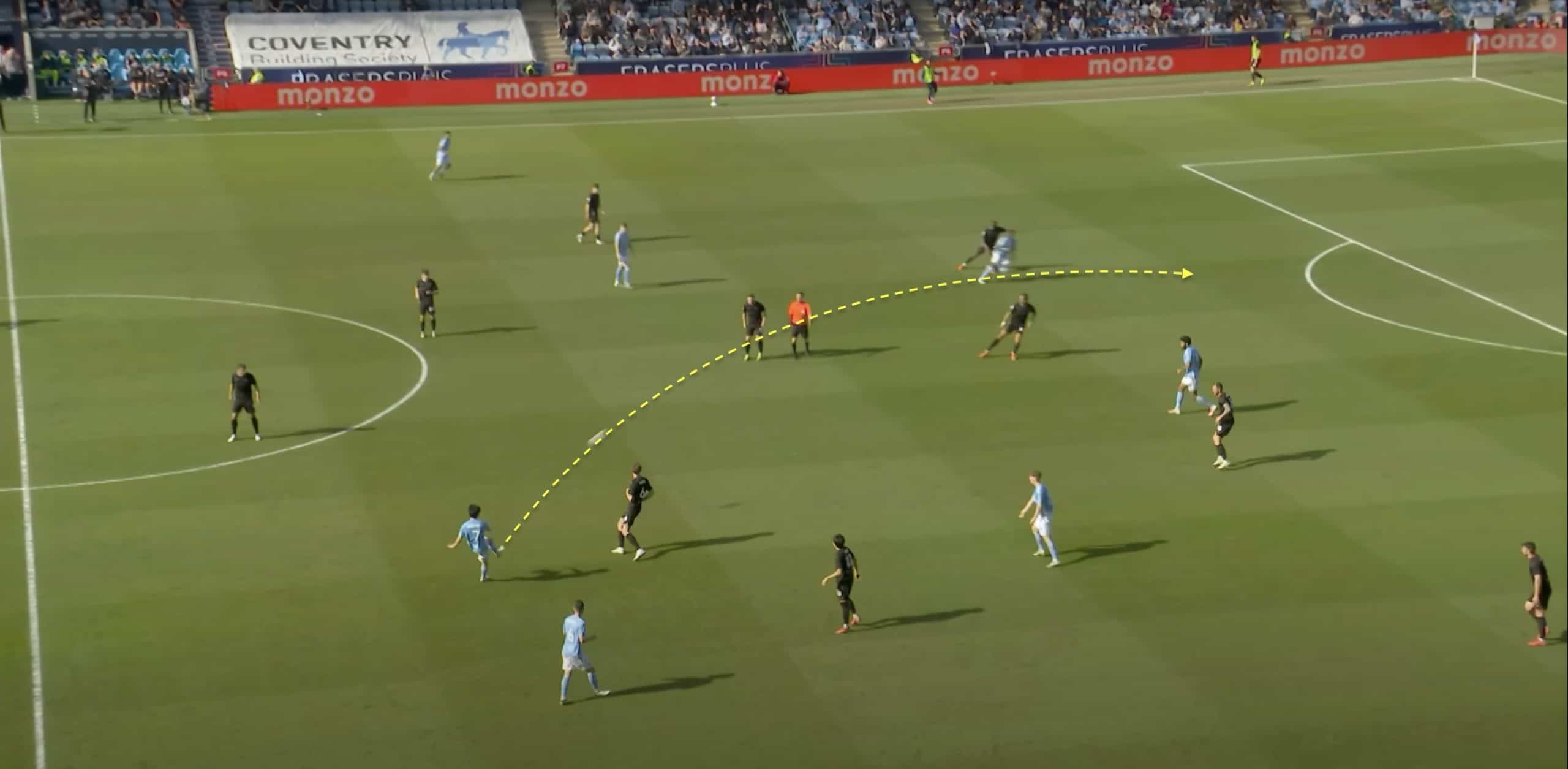
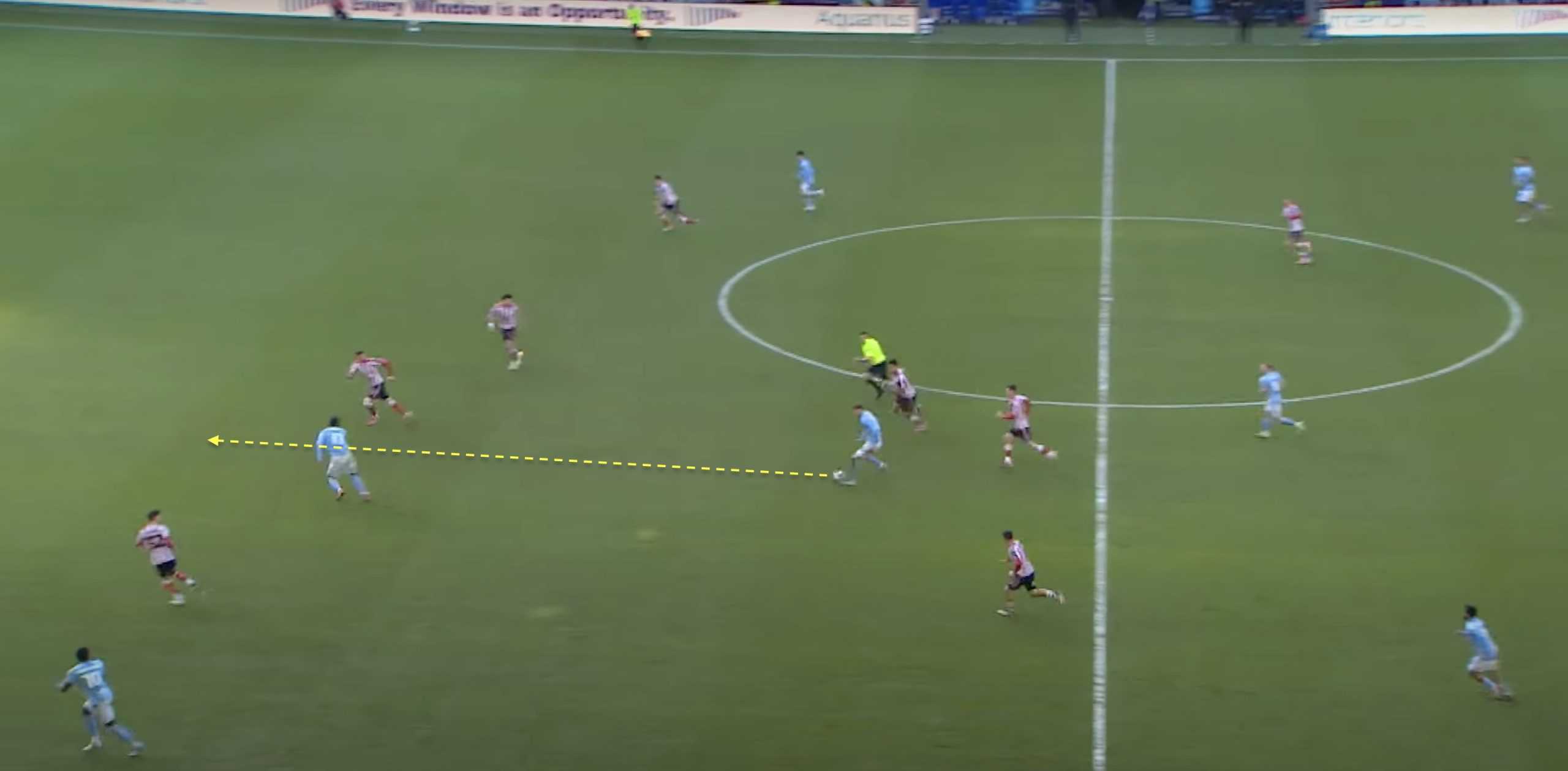
Coventry’s squad is highly suited to this style of play, and they have a great wealth of individuals who benefit from a direct approach on the ball.
Mason Clarke, Sakamoto, and Paterson are all impactful in one-v-ones with defenders, and they have a great final ball.
Furthermore, Wright, Asante and Simms are all traditional, physically gifted strikers who benefit from quick service and direct play.
Over the season, this approach has paid off, as they have now created the most big chances in the league (99), sit third for shots on target per 90 (4.6) and average the most successful crosses per match in the league (5.7).
They also rank first for missed big chances, highlighting the huge potential of this Coventry attack and the system they use.
Coventry City Defensive Tactics
Coventry plays a very high-pressing style and looks to turn over possession as high up the pitch as possible.
They will press in a compact central shape, and when in a 4-2-3-1, they will go with two players pressing up front together and the two deep central midfielders pressing their outlets behind.
This allows them to go man-to-man in the press, and midfielders can cut passes into their counterparts, while the wingers focus solely on cutting passing lines to the full-backs.
This style of pressing makes it very hard to play out and forces the opposition to be long and direct.
With Thomas and Binks in central defence being extremely strong in the air, this plays straight into Coventry’s hands, allowing for a fast turnover.
This approach allows Coventry to remain in control of the game and keep possession despite also being direct and risk-taking when on the ball in the final third.
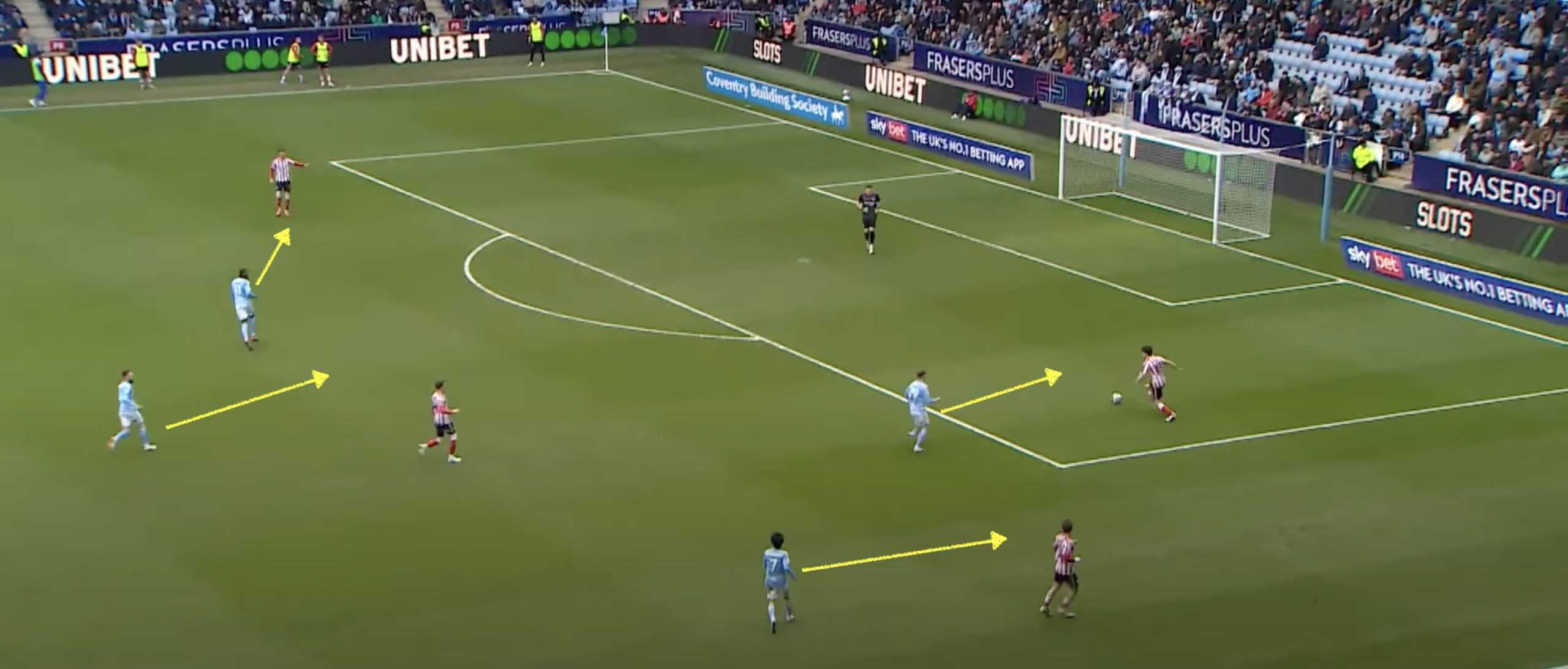
Nevertheless, in tough games away Coventry are much more calculated in their press and are willing to shift from their favoured approach.
They look to sit deeper and absorb pressure, picking their moments to take risks more carefully.
In these Championship games, managing the crowd and tempo of the game are key to getting a result, and Lampard’s experience as a player has maybe helped his recognition of this.
Frustrating away crowds with a denial of any real opportunities has become a skill of his side in recent months, showing another progression from his previous managerial tendencies.
Frank Lampard Coventry City Squad Improvements
In the mid-season window, Lampard bought in central midfielder Matt Grimes from Swansea in a deal believed to be worth up to £4 million.
He also signed free agent Jamie Paterson, his first real stamp on the team.
Whilst Paterson is still building up to more minutes, Grimes has since become a crowd favourite.
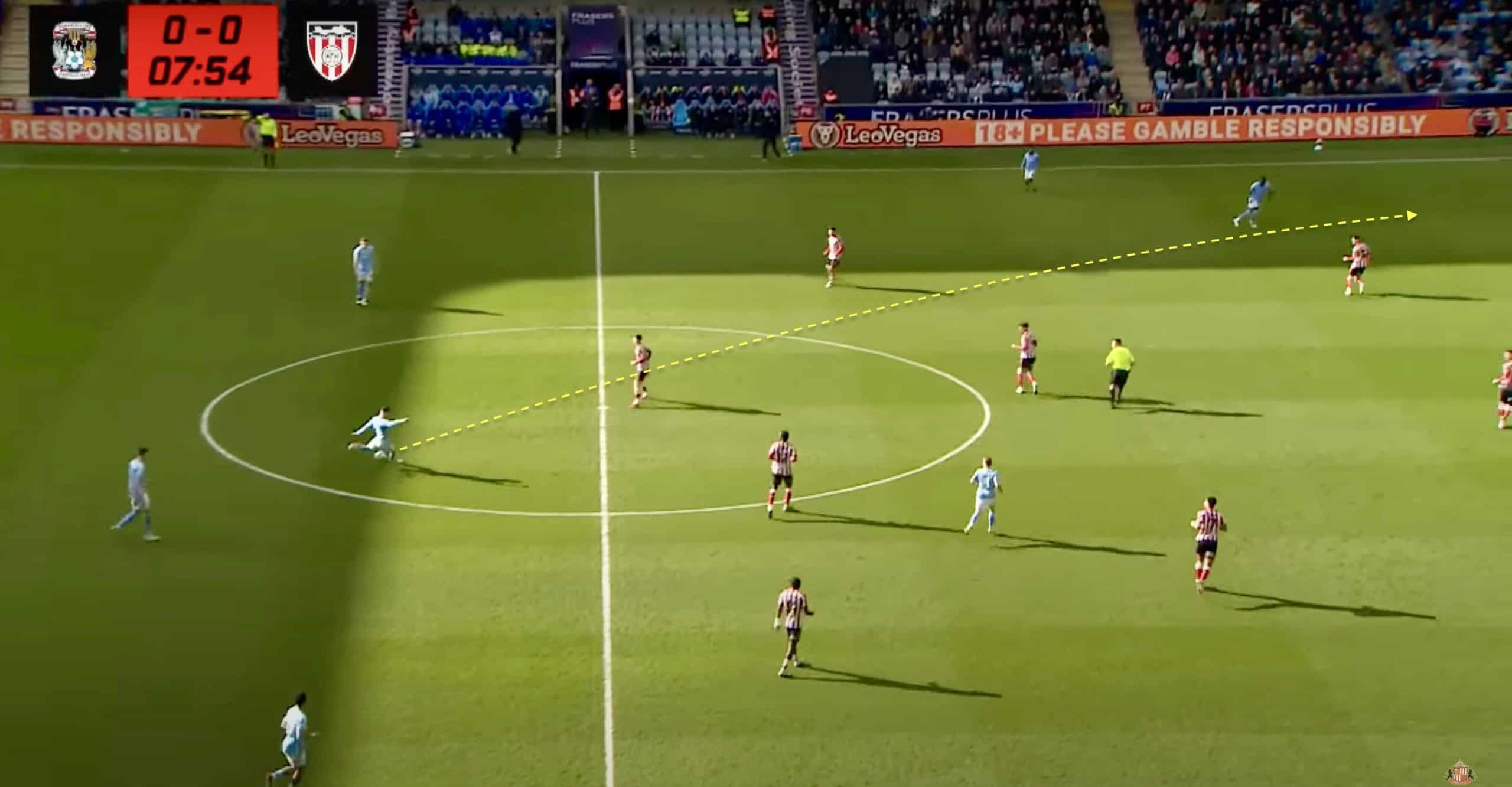
He is absolutely integral to their build-up play and is the centrepiece for the start of most attacks.
When the central defenders are on the ball, Grimes drops deep to collect, yet he is also very present in the later stages of most attacks.
His passing accuracy and range of balls are arguably Premier League level, ranking in the top 10% of Championship players this season for successful passes, expected assists, chances created, and successful crosses per 90.
On top of this, he averages 5.78 recoveries PG, highlighting how complete of a player he is.
His deep positioning in possession really opens up the game.
It gives them the option to go direct to the forwards whilst maintaining accuracy, or to play intricate passes into the midfield or full-back areas.
He also specialises in set pieces, taking corners and free kicks, which is another aspect Coventry has improved upon since the turn of the year.
Matt Grimes Leadership
What’s more than his technical excellence, Matt Grimes has been touted as a leader on the pitch.
He can be visibly seen dictating the game by coordinating players’ positions around him, very similar to how Rodri dictates Manchester City.
This profile is extremely rare at this level and is invaluable to Coventry, which previously lacked this calibre of personality Grimes offers in abundance.
If Coventry is to go up this season, a large part of that success would be down to his arrival, and keeping him fit could be the secret to competing with the bigger spenders they may come up against should they reach the playoffs.
Coventry City Weaknesses
Looking at Lampard’s time so far, the positives hugely outweigh any weaknesses, and not many will be able to criticise his outstanding points return or his style of play.
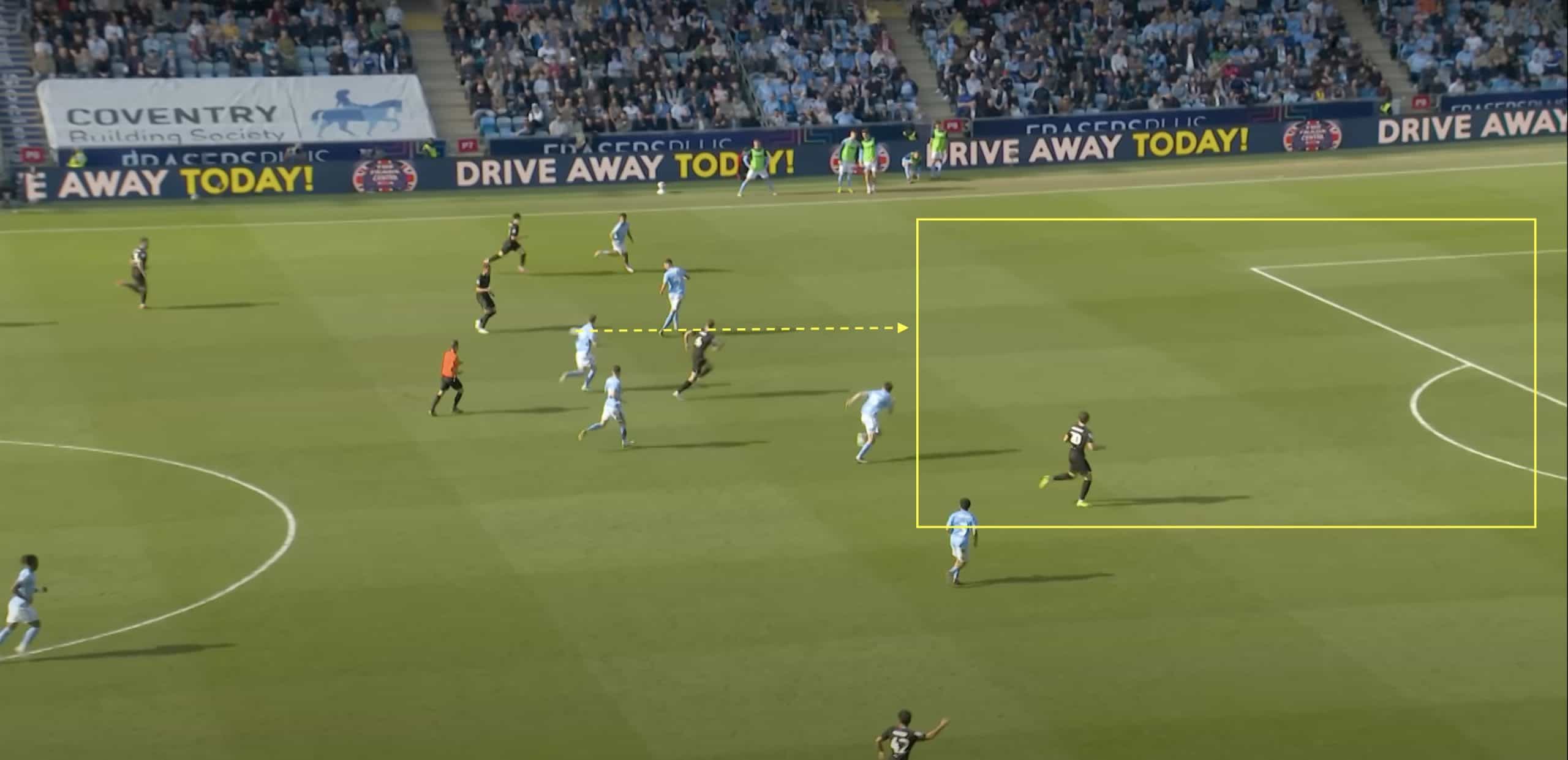
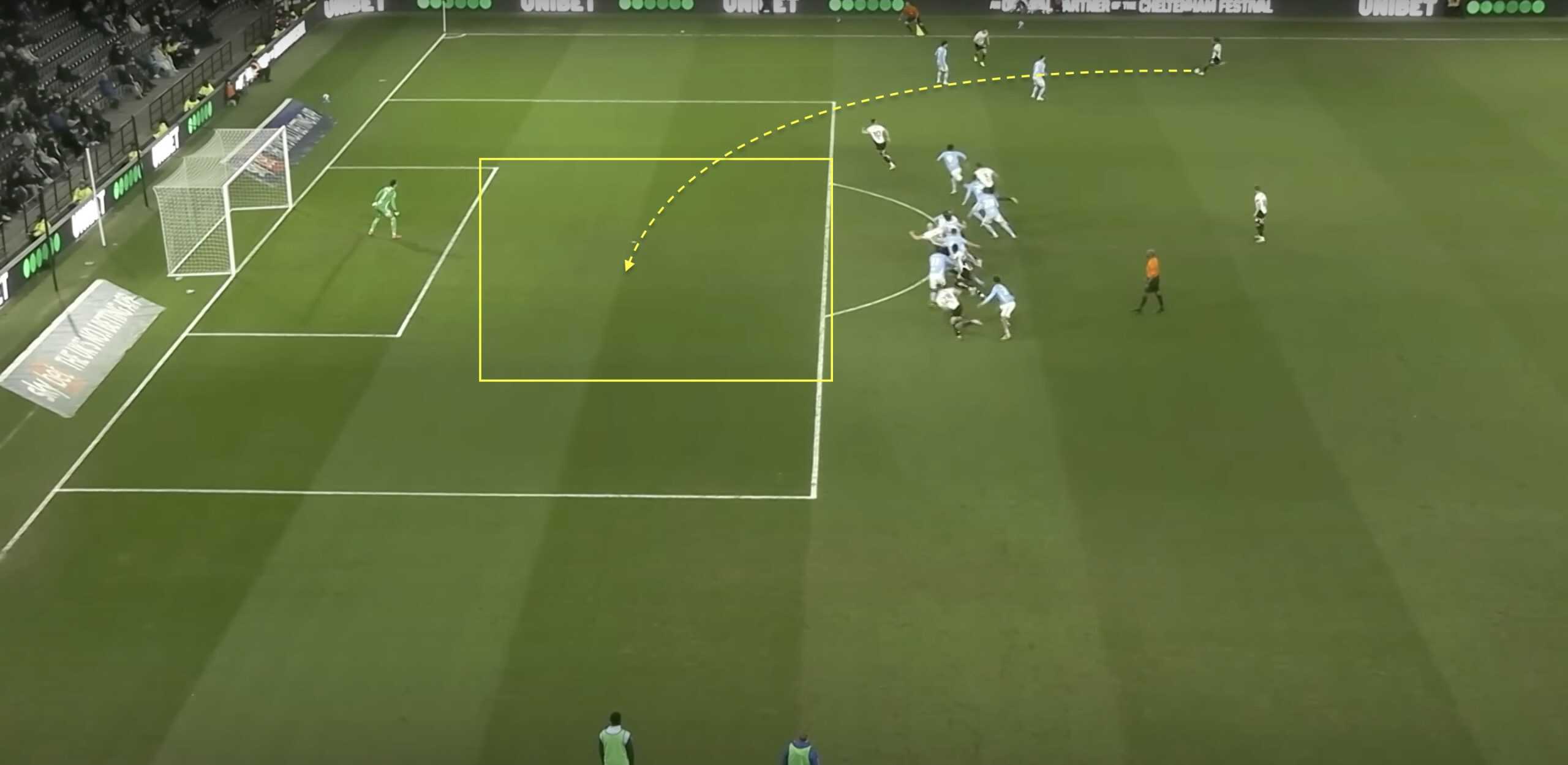
However, if one alarm bell was ringing, it would be regarding their high line.
The ambitious front-footed approach is high reward but also high risk.
In recent weeks, Derby County, Stoke City, Oxford United, and Leeds United, in particular, have all looked to exploit this.
They are vulnerable to pace in behind and have also seen organisational struggles and glimpses in concentration.
Binks and Thomas lack pace, and whilst Latibeaudiere can help with this, it would require them to split up their preferred central defence or terminate their four at the back.
Rather than just looking at the high line, this may also be hindered by the ability to win the ball when they do press, which has worsened recently.
The Sky Blues sit just 17th in the table for final-third recoveries.
This high-risk approach may be something that Lampard may be willing to accept moving forward due to its benefits in an attacking sense.
However, Coventry fans will have to hope they continue scoring at such an impressive rate, or their fine form may encounter a slight downturn.
Conclusion
Since his arrival, Lampard has brought energy, aggression, and passion into Coventry and, in the process, has brought a sense of much-needed feel-good back to the club.
He has stuck by his commitment to direct, attacking football while adding flexibility and game intelligence.
The rise in confidence and freedom of players already at the club is evident, and the intelligent signing of Matt Grimes has taken the midfield to another level.
Whilst minor weaknesses have started to appear defensively, if the current form can continue into the coming months, then no team would want to face this high-quality, multifaceted team in the playoffs.
