


As we look ahead to the start of the 2024/25 Premier League season, the latest iteration of Pep Guardiola’s coaching tree is ready to step into one of the most scrutinised jobs in world football.
After just one season, Chelsea parted ways with Mauricio Pochettino and has been on the hunt for his successor.
They cite a desire for a young, progressive manager who could contrast Argentina’s ‘antiquated’ tactical style.
Therefore, the Blues have appointed Enzo Maresca as the man to rectify Chelsea’s future.
The Italian is coming off a successful EFL Championship-winning season with Leicester.
Coming from the Guardiola school, Maresca has cemented his own tactical style as one of positional play and possessional dominance.
His ability to completely overhaul a relegated Leicester side before propelling them to promotion at the first attempt will certainly put him in great stead when tackling the balance of this Chelsea team and accommodating its key figures.
The most interesting aspect of this appointment would have to be the speed at which Chelsea’s current squad can adapt to his nuanced and rigid tactics.
Maresca is expected to be under hierarchical pressure from the outset.
Their inability to find the winning formula until the turn of the year ultimately cost Pochettino his job.
This Enzo Maresca tactical analysis and scout report will begin to highlight how we could expect Maresca to set up with Chelsea next season, highlighting key tactics both in and out of possession.
Our analysis will also delve into the dangerously inflated Chelsea squad to determine which players may be sacrificed and who could potentially come in to support the Maresca rebuild.
Enzo Maresca Tactics In Possession
Taking inspiration from his tactical systems at Leicester, Chelsea would be expected to line up in the 4-3-3 on paper, with a single pivot used to allow the two advanced eights to invoke chaos between the lines and attacking the final third.
However, on the pitch, Maresca’s formation has deployed one of his wide defenders in the inverted full-back role, supporting the single pivot and promoting his idea of dominating and controlling the middle third.
This creates more of a 3-2-5, which we have seen utilised greatly amongst modern progressive managers.
Seeing how Maresca tackles these tactical decisions in pre-season will be interesting.
Will he aim to instill his philosophies immediately or conform to a more familiar and basic tactical setup to avoid a disappointing start?
Enzo Maresca’s style of play, which introduced the inverted role, will certainly delight and disdain those vying for the starting berth in a squad riddled with full-backs.
In previous seasons, Chelsea’s overlapping full-back tactics have suited the likes of Ben Chilwell and Malo Gusto, but will they be able to quickly adapt ahead of those already more suited to playing further infield?
Reece James‘s versatility places him in good stead.
He inverted frequently at Wigan and additionally operates well as a right-sided central defender should he be asked to offer a more reassuring defensive presence.
It would, therefore, lead us to suggest that we could expect Chelsea’s inverted full-back coming from the left-hand side, with both Marc Cucurella and Ian Maatsen growing into the role in 2024.
Having propelled Dortmund to a spot in the Champions League final, Maatsen’s comfortability in the double pivot could see Chelsea lose the Dutchman permanently should the German side exercise the necessary clause in his loan agreement.
This leaves Marc Cucurella to assume the starting role, having developed the necessary traits and qualities in a late resurgence under Pochettino when partnering with Moisés Caicedo in midfield.

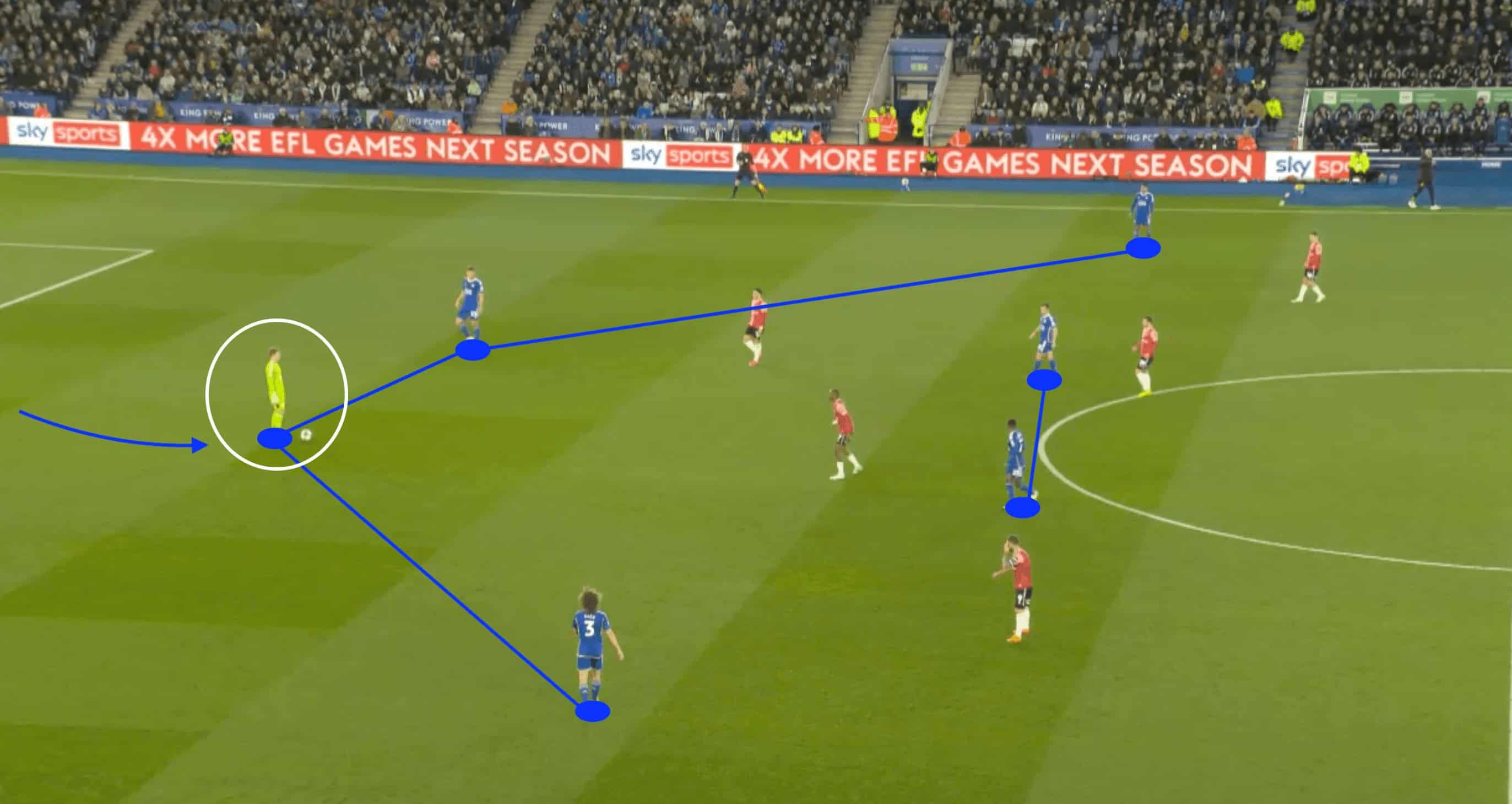
One of Maresca’s standout traits would be that his sides are incredibly press-resistant in their early build-up due to the unpredictability of their movement and ability to find passing lanes.
When there are three central defenders in the 3-2-5, the goalkeeper often steps up to create an additional outlet and briefly creates a four-man defence.
This ties into the key deep-lying playmaker role that will certainly create a hot debate between Chelsea’s two 100 million-pound midfielders.
Even though Caicedo offers a more stable defensive presence, we would suggest that it will be hard to look past the distribution and dynamism of Enzo Fernández, who would be more than comfortable dictating the game under Maresca.
Romeo Lavia offers an interesting profile for the future, having found success under Maresca at the youth level.
However, his injury-related inexperience suggests that he may not be able to make the necessary impact right away.
Enzo Maresca Attacking In The Final Third
Once Maresca’s side progresses into the middle and final thirds, the movement of the two advanced midfielders is crucial to their attacking success.
In a team full of preconceived rotations and rigidity, the freedom and fluidity of the number eights led to Kiernan Dewsbury-Hall‘s becoming the key player in Maresca’s system.
Therefore, it is not completely outrageous to expect Cole Palmer to pick up those positions between the lines and enjoy bouts of ball dominance compared to a much more isolated role on the right flank.
Conor Gallagher stands out as an excellent choice for an impactful partner who can provide support across the pitch due to his energetic nature and well-rounded skillset.
Having been consistently linked away from Stamford Bridge due to FFP constraints, Maresca could certainly lean on Caicedo to fill the role, but could Gallagher be convinced to stay?
Maresca’s wingers have consistently been asked to maintain their width and look to wreak havoc with explosive movement and dribbling abilities.
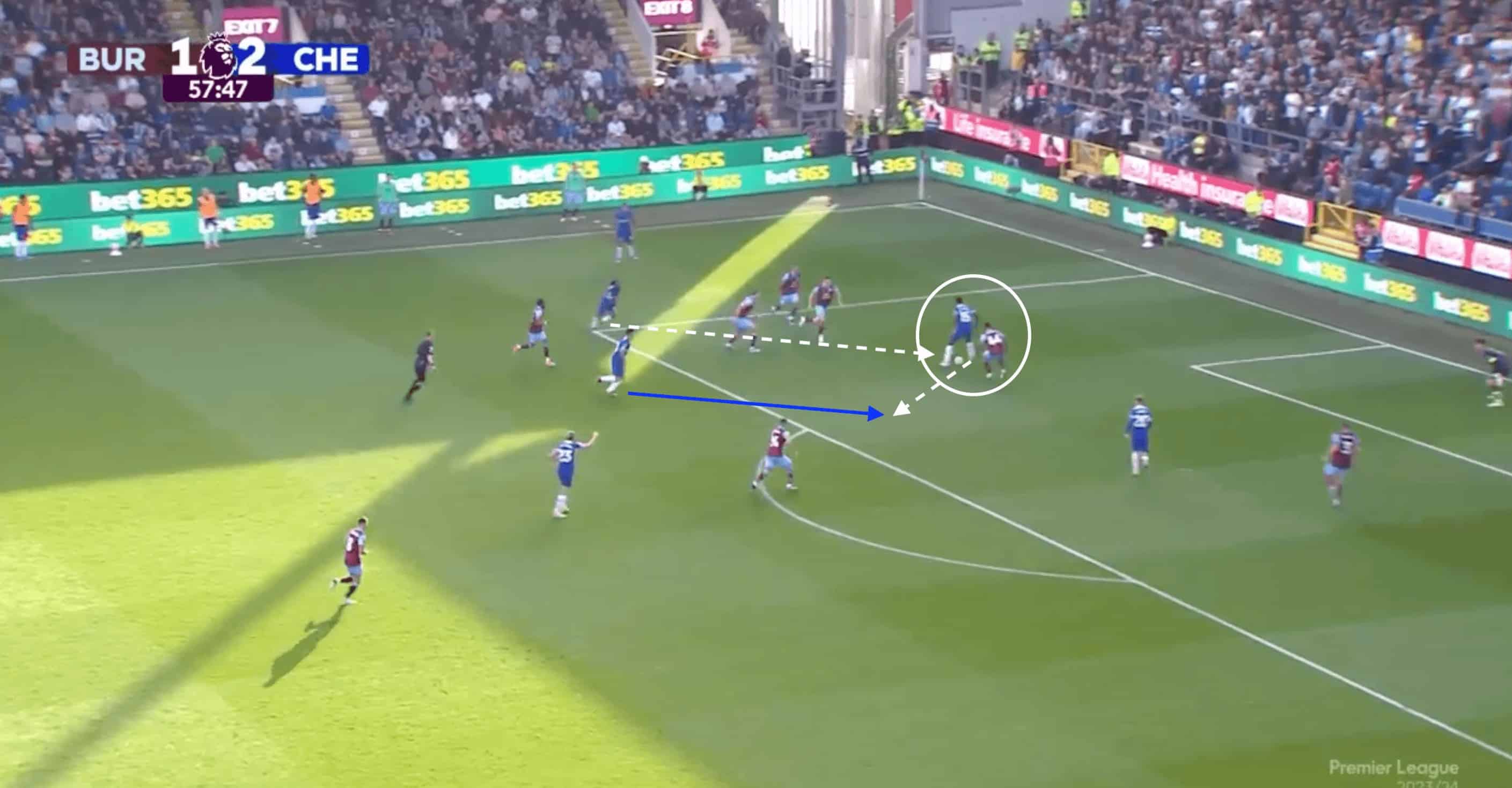
Due to the absence of consistently overlapping full-backs, a greater emphasis is placed on their ability to succeed in the isolated 1v1 scenarios created by Maresca’s ability to undo the opposition’s pressing structure.
Both Noni Madueke and Mykhailo Mudryk will benefit from the license to run at the defence and act as key creative outlets from the flanks when breaking into the penalty area.
Raheem Sterling’s ability to navigate the penalty area and find key attacking positions is also invaluable to Maresca, with the Englishman expected to fight for his spot on the left wing.
Chelsea’s number nine has been a hotly debated topic for years, but Maresca’s striker must provide a supportive presence to help unlock the defence when building from the back.
Jamie Vardy‘s deeper movement helped Leicester create 5v4 scenarios and offer an extra midfield presence, something well-suited to Nicolas Jackson due to his physical presence and ability to be inventive with his build-up.
The Senegalese striker represents the best of both worlds.
He has also shown how impactful he can be when stretching the verticality of his team by occupying the space between the central defenders, allowing more unopposed attacking movement behind him.
Having missed a large proportion of the season with injury, Christian Nkunku has also highlighted his expertise as a false nine at RB Leipzig, creating another tricky dilemma regarding squad selection.
Enzo Maresca Defensive Structure
Out of possession, Maresca’s coaching style prides itself on a solid defensive structure that can jump into action once the ball has been lost in transition.
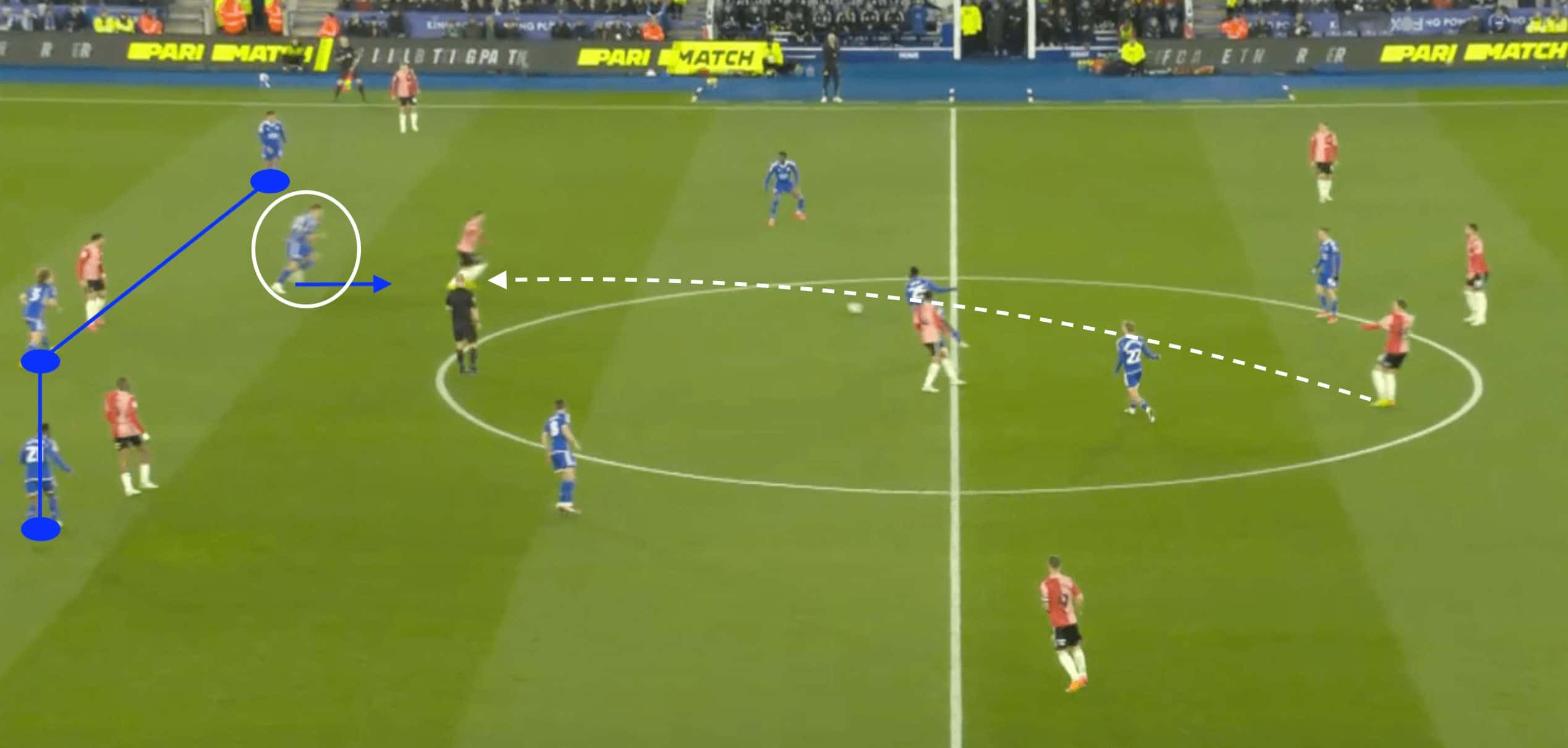
Leicester’s rapid counter-pressing stemmed from their persistence in remaining in the 3-2-5 when the ball was lost. They were confident that they had five defensive figures ready to protect against the threat on the counter.
In fact, Maresca promotes the fact that his team must maintain its offensive shape despite losing the ball, as this will provide a killer platform to attack should it quickly regain possession.
When pressing in the initial phase of the opposition’s build-up, Maresca’s sides assume a 4-4-2 pressing structure.
One of the central midfielders advances to support the striker, who will look to cut out passing lanes through the centre to force play down one of the flanks.
This can then regress into a 4-1-4-1 should Chelsea look to increase their personnel in the middle third and apply that extra holding midfield barrier in front of the defensive line.

However, as we previously suggested, Enzo Fernandez could be expected to play that role.
This would create alarm bells regarding his ability to win aerial duels, which would happen as a consequence of Chelsea’s high pressing and denial of short distribution.
This is when Maresca allows one of his aerially dominant central defenders to step forward and momentarily create a 3-1-1-4-1, allowing the central defender to mop up any danger with the single pivot, focusing on the redistribution when they win the ball back.
Tosin Adarabioyo was Chelsea’s first player through the door, probably because Maresca appreciated his 66.7% success rate in aerial duels and ability to cover ground should their high defensive line become exposed.
Potential Chelsea New Signings
Whilst the thought of adding to an already inflated Chelsea squad would seem like lunacy, Chelsea is expected to be ruthless in their outgoings this summer, with financial fair play regulations looming over their heads.
The sale of academy graduates will help them comply with the Premier League’s rules, but most importantly, it will raise much-needed transfer funds, which Maresca can reinvest in his most desired profiles.
Michael Olise Radar Map
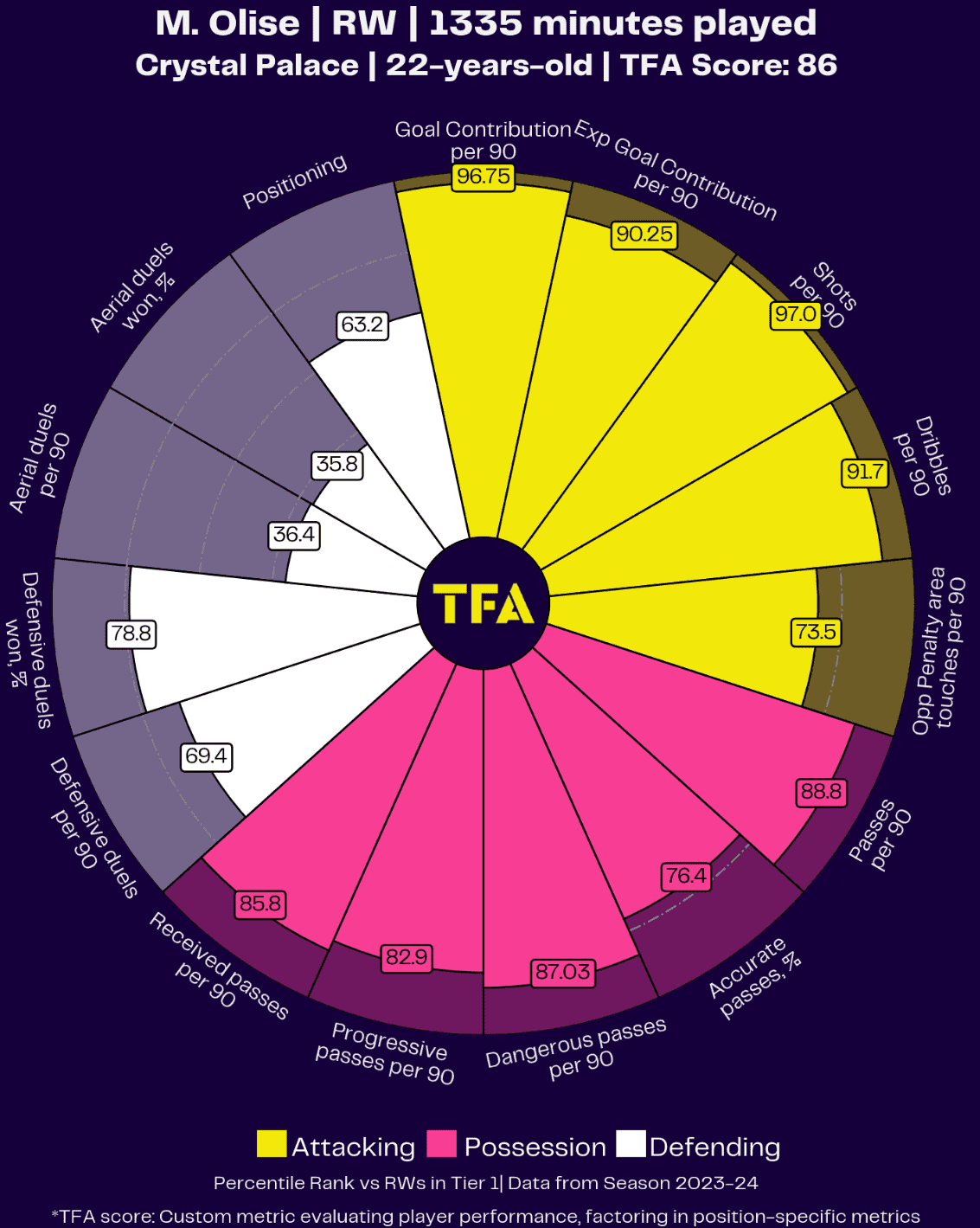
Olise is a player who found his best form towards the end of the season with Oliver Glasner’s Crystal Palace resurgence.
Even though Noni Madueke fits the bill of a Maresca winger with proficiency in dribbling and taking on the opposing full-back, Michael Olise stands out as a clear upgrade, potentially becoming Maresca’s marquee signing of the summer.
The Frenchman has attracted the interest of elite European clubs with his 5.79 shot-creating actions and 2.82 successful take-ons last season.
Olise’s well-rounded play is capped off by his ability to invert and attack space inside the pitch.
This could potentially allow an intelligent partnership with the free-roaming Cole Palmer through the right half-space—a nightmare for defences next season.
Riccardo Calafiori Radar Map
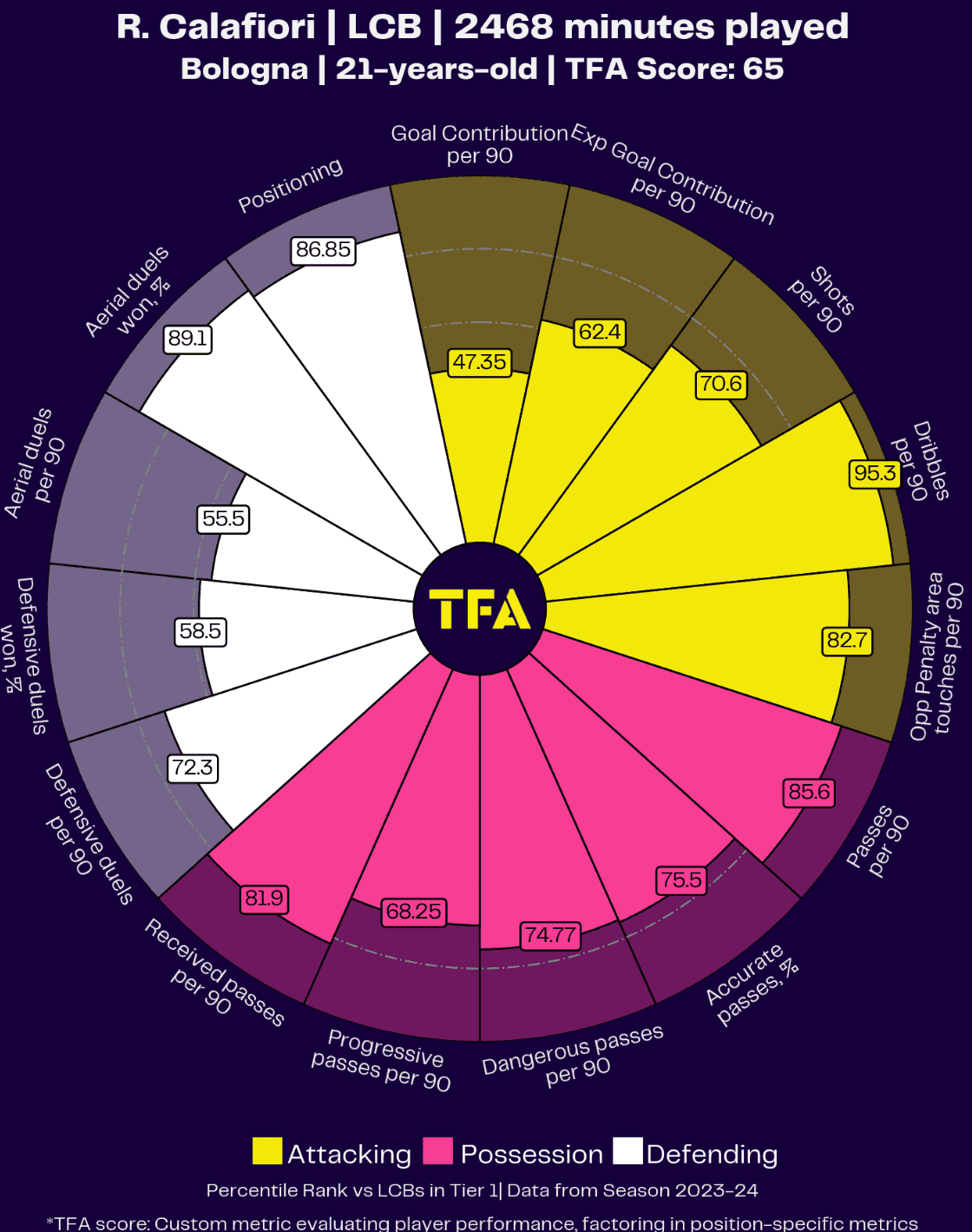
After an amazing season clinching Champions League football with Bologna, Riccardo Calafiori stands out as an excellent left-footed defensive option for Enzo Maresca.
Especially with Chelsea expected to use Marc Cucurella as the inverted full-back, Calafiori would be a great option as the acting left-back.
Chelsea’s current left-footers have performed poorly when looking at their progressive metrics.
With the space created by Cucurella joining the pivot, the Italian would be a perfect addition to carry forward and feed Mudryk on the left wing.
For Bologna last season, Calafiori ranked in the 89th percentile for carries into the final third per 90 (1.07) and willingness to maintain possession, having 80.54 touches per match.
His ability to maintain these elite levels without the ball meant that Calafiori also performed 7.43 ball recoveries per 90, implying that the Italian might be the full package.
Even though it may be difficult to remove Calafiori from Serie A, Chelsea would be stupid not to enquire.

Jordan Pickford Radar Map
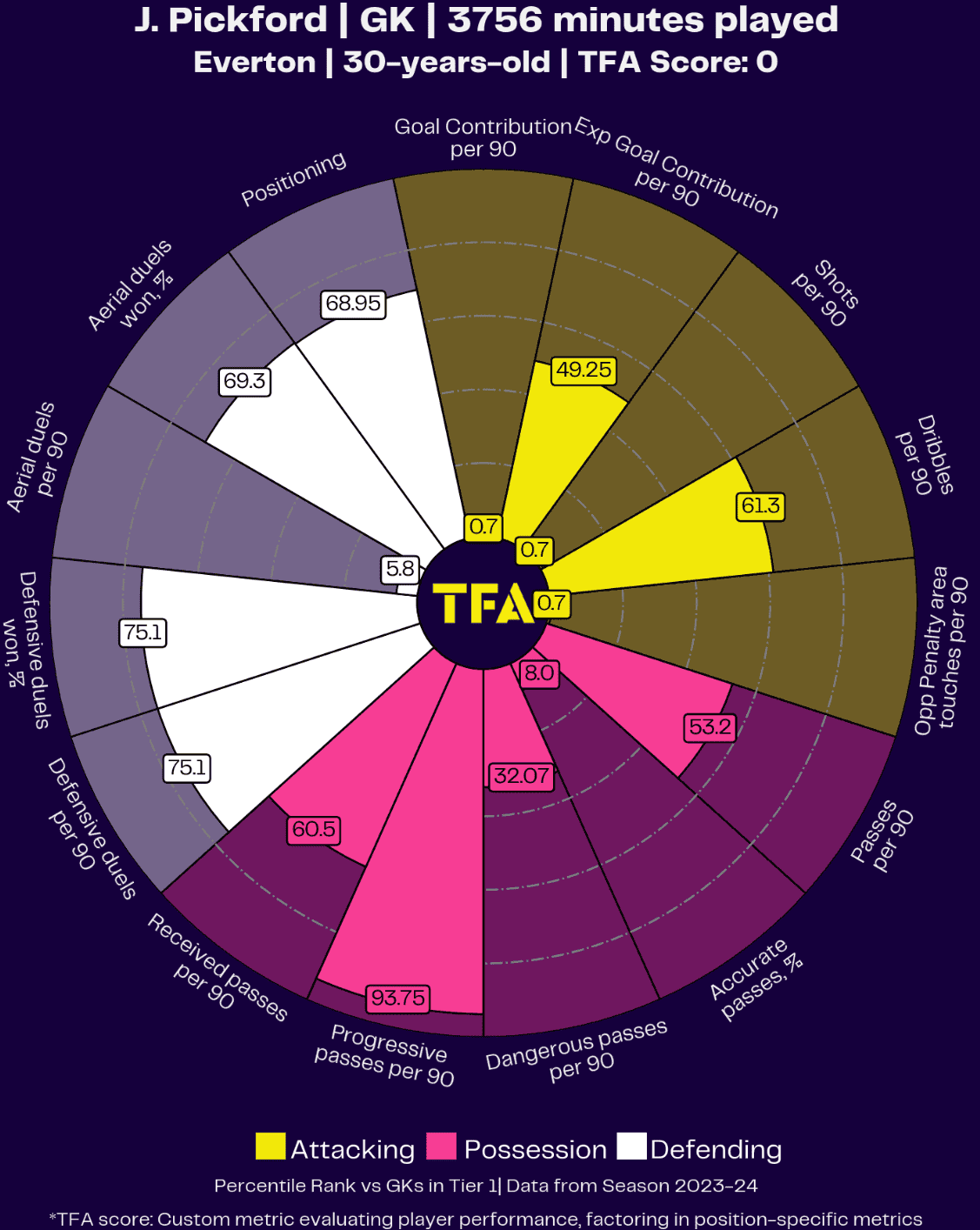
Chelsea’s goalkeeper department needs an overhaul, as both Sanchez and Petrovic shared minutes last season.
With the introduction of Maresca, Chelsea will probably look to find a replacement who possesses the necessary comfort on the ball, which is integral to their deeper build-up play.
At Leicester last season, Mads Hermansen ranked in the 95th percentile across Europe for touches per match, so it would be expected that Maresca would want a similar profile with experience at the highest level.
Jordan Pickford has emerged as a key target after another excellent season with Everton, where he recorded a 34.2% clean sheet percentage.
A Dyche system has hurt Pickford’s distribution figures, who are focused on a more direct approach, but he maintains the passing range to slot nicely into the new-look Chelsea.
Las Palmas’ Álvaro Vallés represents an even more progressive option with familiarity in a possession-based system, providing multiple options for Maresca to ponder.
Conclusion
To conclude, the appointment of Maresca would appear to target some of the deficiencies Chelsea had experienced under Pochettino’s reign.
The introduction of a clear and rigid playing style should allow them to boast a more controlled system, which should give Blues fans plenty to be excited about.
Whilst still growing as a manager, Enzo Maresca arrives at Stamford Bridge on the back of title success with Leicester – but will the move to the European giants be too much to handle with his head coaching career still in its infancy?

