
The tectonic plates of the Bundesliga’s bottom half shifted this past weekend violently as VfL Wolfsburg officially terminated the tenures of head coach Daniel Bauer and managing director Peter Christiansen.
The decision follows a gut-wrenching 1-2 home defeat to Hamburger SV, a result that served as the final indictment of a tactical project that had devolved into structural paralysis.
Bauer, a clubman who ascended from the U19s to stabilise a sinking ship, found himself caught in a geometric trap of his own making.
While his 4-2-3-1 was intended to provide a platform for control, it instead became a cage, characterised by a staggering lack of verticality and a defensive line that seemed to shrink under the weight of the Volkswagen Arena’s expectations.
With nine games remaining and the club languishing in 17th place, four points adrift of safety, the hierarchy has turned to a ghost of successes past: Dieter Hecking.
The appointment of the 61-year-old veteran is a clear pivot from Bauer’s experimental, youth-oriented pragmatism toward a more robust, Bundesliga-proven structuralism.
This Wolfsburg tactical analysis will not dwell on the boardroom discord or the fans’ pyrotechnic protests; instead, we will focus on the tactical decay that necessitated this change.
We will examine the specific mechanics of Wolfsburg’s offensive impotence, the fundamental collapse of their box-defending protocols, and finally, the tactical blueprints Hecking is likely to deploy to save Die Wölfe from their first-ever top-flight relegation.
We see here a team that has lost its orientation in the half-spaces, a team where the positional rotations have become a hindrance rather than a help, and where the lack of a clear offensive trigger has led to a complete stagnation of the creative process.
The Vacuum Of Intent: Structural Impotence In Attack
The primary symptom of the Bauer era’s terminal phase was an almost complete absence of progressive intent in the final third.
Statistically, Wolfsburg’s offensive output in the last two matches, a 0-4 dismantling by Stuttgart and the 1-2 loss to HSV, unveiled a team that had forgotten how to manipulate an opposition block.
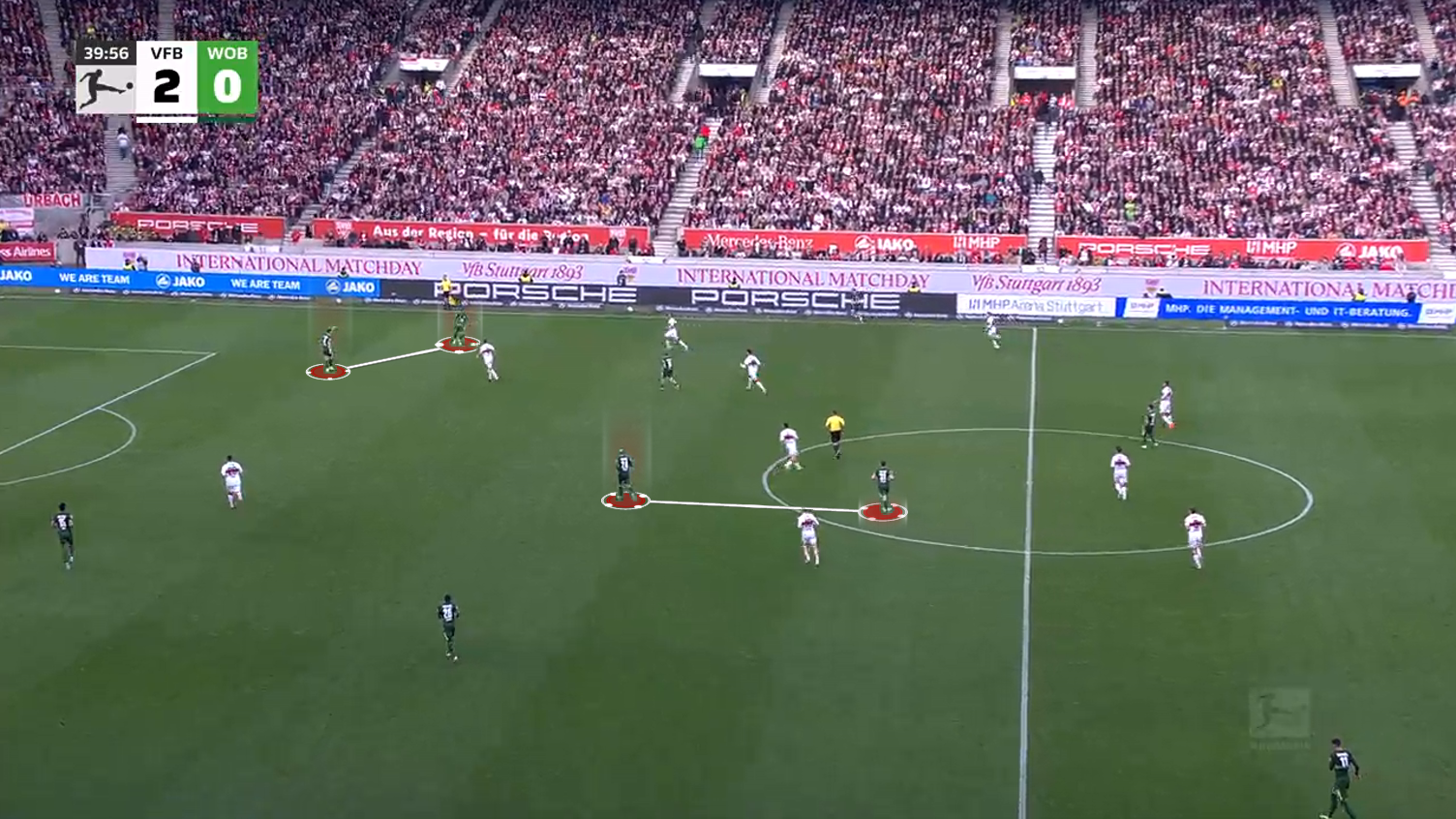
Under Bauer, the positional play focused heavily on a U-shaped circulation.
The centre-backs, Konstantinos Koulierakis and Moritz Jenz, would shuttle the ball laterally to the full-backs, who would then find the double pivot of Maximilian Arnold and Christian Eriksen.
However, the connection between this deep construction and the attacking quartet was severed by a lack of central presence.
Bauer’s insistence on playing through the thirds became predictable because the movements of the front three, Adam Daghim, Lovro Majer, and Mohamed Amoura, were rarely synchronised with the ball-carrier’s line of sight.
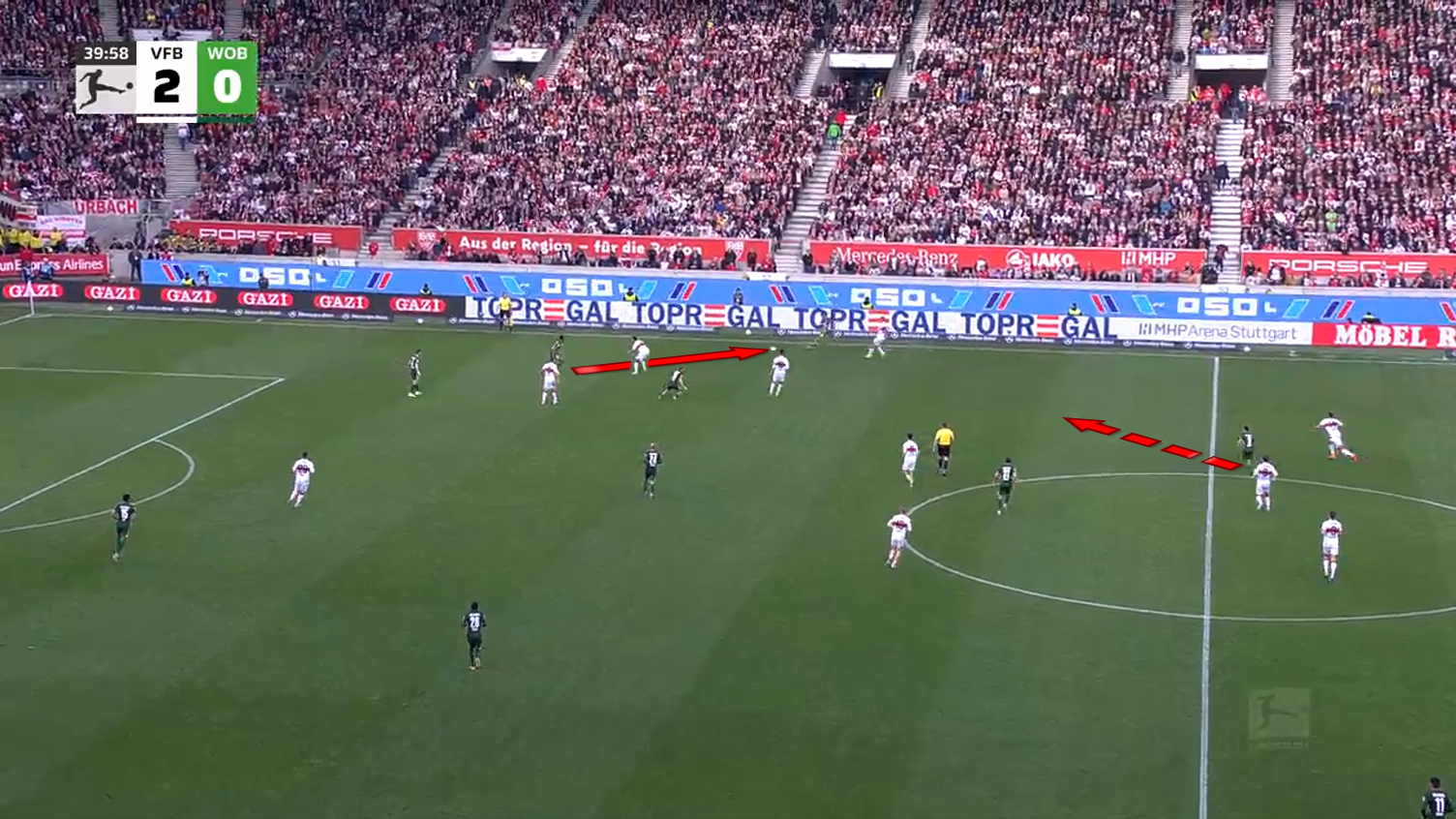
Against Stuttgart, Majer frequently dropped into the same vertical lanes as Eriksen, effectively occupying the same space and removing a passing option rather than creating one.
This lack of staggered positioning meant that when Wolfsburg did enter the middle third, they were met by a compact defensive screen that they could not penetrate.
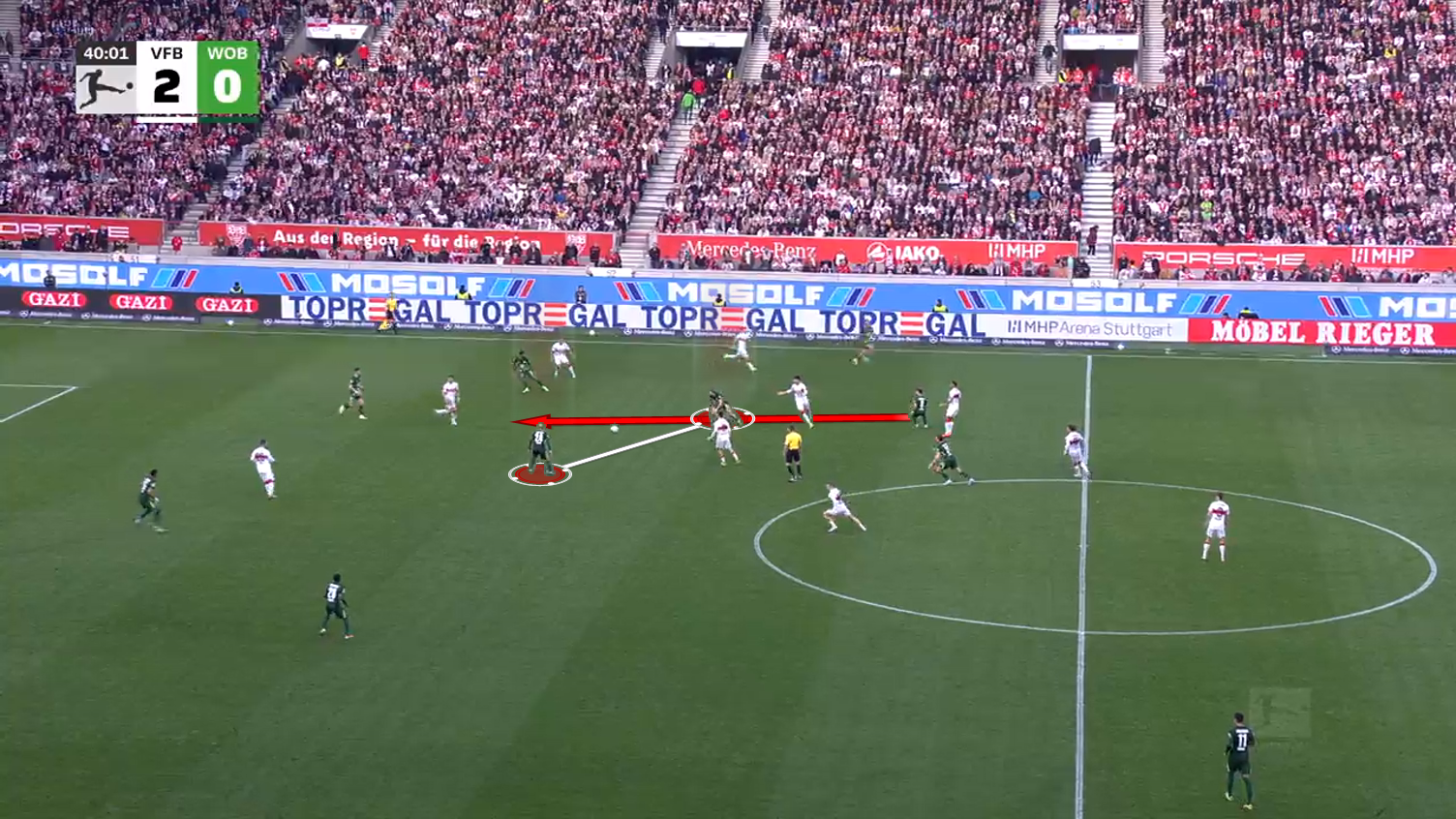
The long ball tactic, as seen in the Stuttgart match, was a desperate response to this failure, but without a dedicated target man to secure the first ball, as Jonas Wind remains injured until the next international break, these long passes merely functioned as a turnover mechanism, gifting the ball back to the opposition.
Furthermore, the team’s failure to generate high-value xG opportunities was not just a matter of poor finishing, but a systematic failure of positional play.
In Bauer’s system, the wingers were often instructed to stay high and wide to stretch the defence, but this left the central striker completely isolated against three or four defenders.
There was a distinct lack of third-man runs, which characterise successful Bundesliga offences.
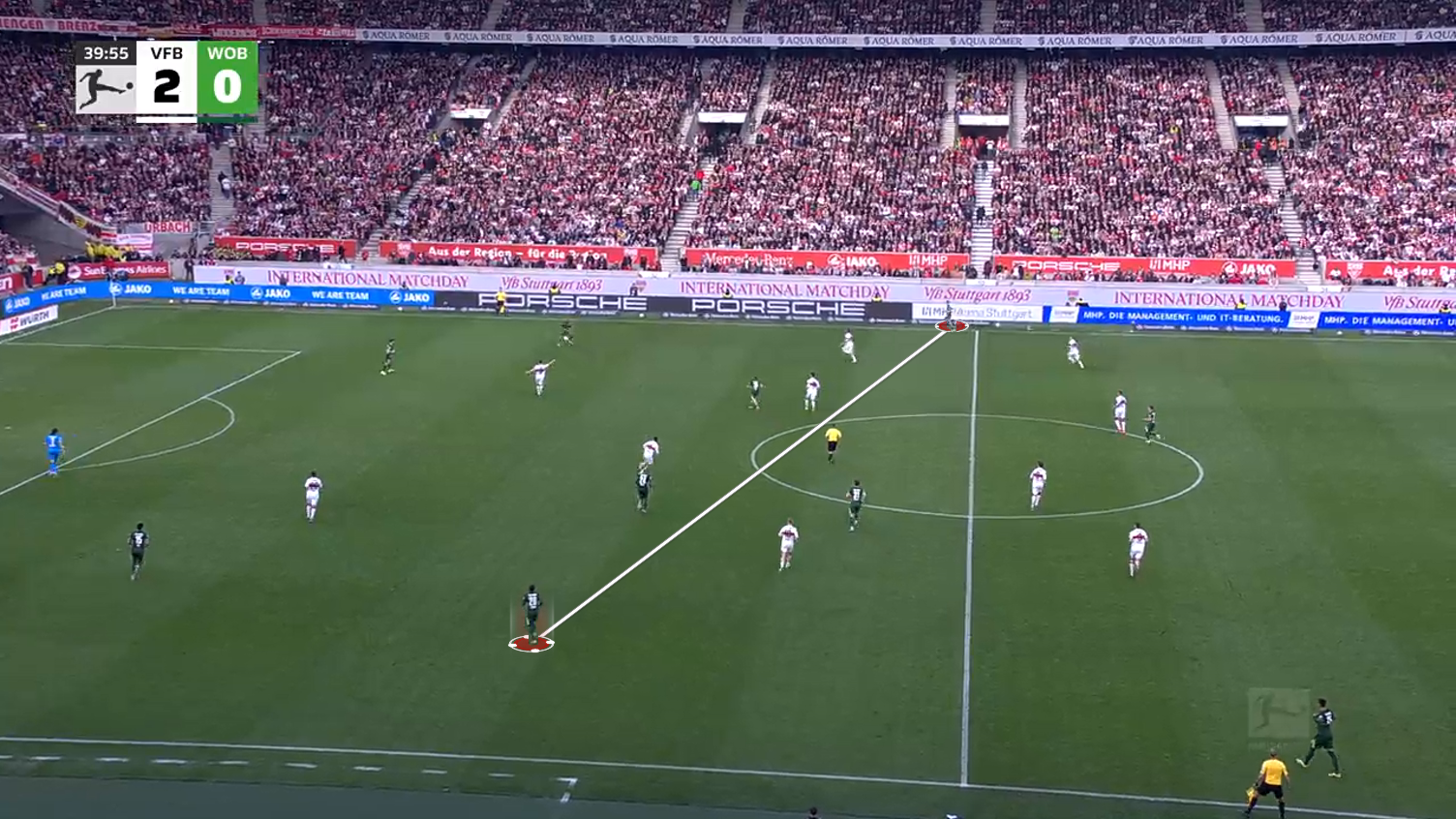
When Arnold looked to punch a ball into the half-space, there was no runner to receive it because the attacking players were static, waiting for the ball to be delivered into their feet rather than moving into the space where the ball was going to be.
This static nature allowed opponents to stay in their defensive shape with minimal exertion.
The lack of rest-defence positioning also meant that whenever Wolfsburg lost the ball in these futile attacking phases, they were immediately exposed to a counterattack.
The structural flaw was further exacerbated by a lack of Steil-Klatsch (vertical-layoff) combinations.
In a functional 4-2-3-1, the number ten should act as a wall player, drawing centre-backs out to create space for the inverted wingers.
Instead, Wolfsburg’s wingers stayed on the periphery, essentially isolating themselves from the build-up.
Mohamed Amoura, a player whose greatest asset is his explosive pace in behind, was often found standing still, waiting for a ball that was being recycled safely 30 yards behind him.
This produced an attack that was high on theoretical possession but zero in actual threat.
The failure was geometric; the team could not place their best players in dangerous zones with the ball facing forward.
They were playing a game of horizontal safety in a sport that rewards vertical aggression.
The absence of a clear offensive trigger, such as a designated playmaker or a dominant target man, meant that every attacking move felt improvised and disjointed.
By the time the ball reached the final third, the opposition had already organised their low block, leaving Wolfsburg with no choice but to recycle the ball back to the centre-backs.
This repetitive cycle of ineffective possession became the hallmark of the Bauer regime, leading to a total loss of confidence in the attacking phase.
The Fragile Core: Box Defending & Positional Drift
If the attack was stagnant, the defensive phase was chaotic.
Wolfsburg’s struggle to defend their own penalty area has been the defining characteristic of their slide into the relegation zone.
In their last two outings, Die Wölfe conceded six goals, many of which were the result of fundamental errors in zonal marking and a complete loss of defensive horizontal compactness.
Bauer’s defensive block was ostensibly a 4-4-2, but the distances between the midfield line and the defensive line were often in excess of 15 metres, providing opponents like Stuttgart’s Deniz Undav and HSV’s strikers with enormous pockets to exploit.
This lack of vertical compactness meant the centre-backs were constantly exposed to runners from deep, with no protection from the midfield pivot.
The most damning indictment of their box defending is their vulnerability to crosses and second balls.
In the HSV match, both goals the team conceded came from penalties, when the defenders were not able to properly mark Luka Vušković.
Wolfsburg’s defenders have developed a tendency to ball-watch, gravitating toward the ball-carrier while losing track of the runners in their blind spots.
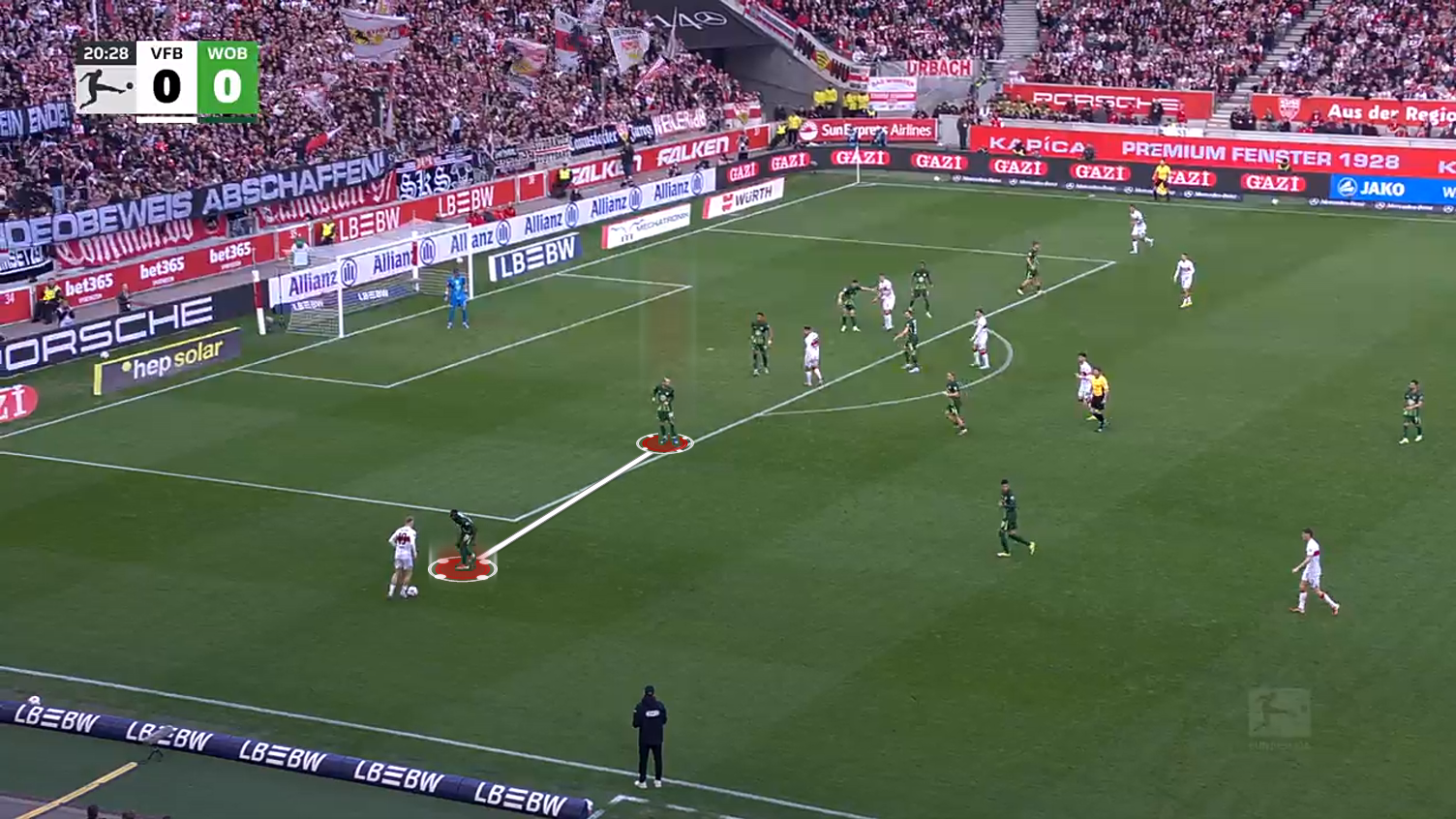
This positional drift meant that Koulierakis and Jenz were frequently occupied by a single striker, leaving the opposite flank wide open for late-arriving midfielders.
Bauer himself described the performance against Augsburg as schoolboyish, and this lack of maturity was evident in how they handled high-pressure moments in the box.
The issue was not merely individual error but a breakdown in the defensive hierarchy.
There was no clear leader in the backline to organise the push-up or the drop-back during transitional moments.
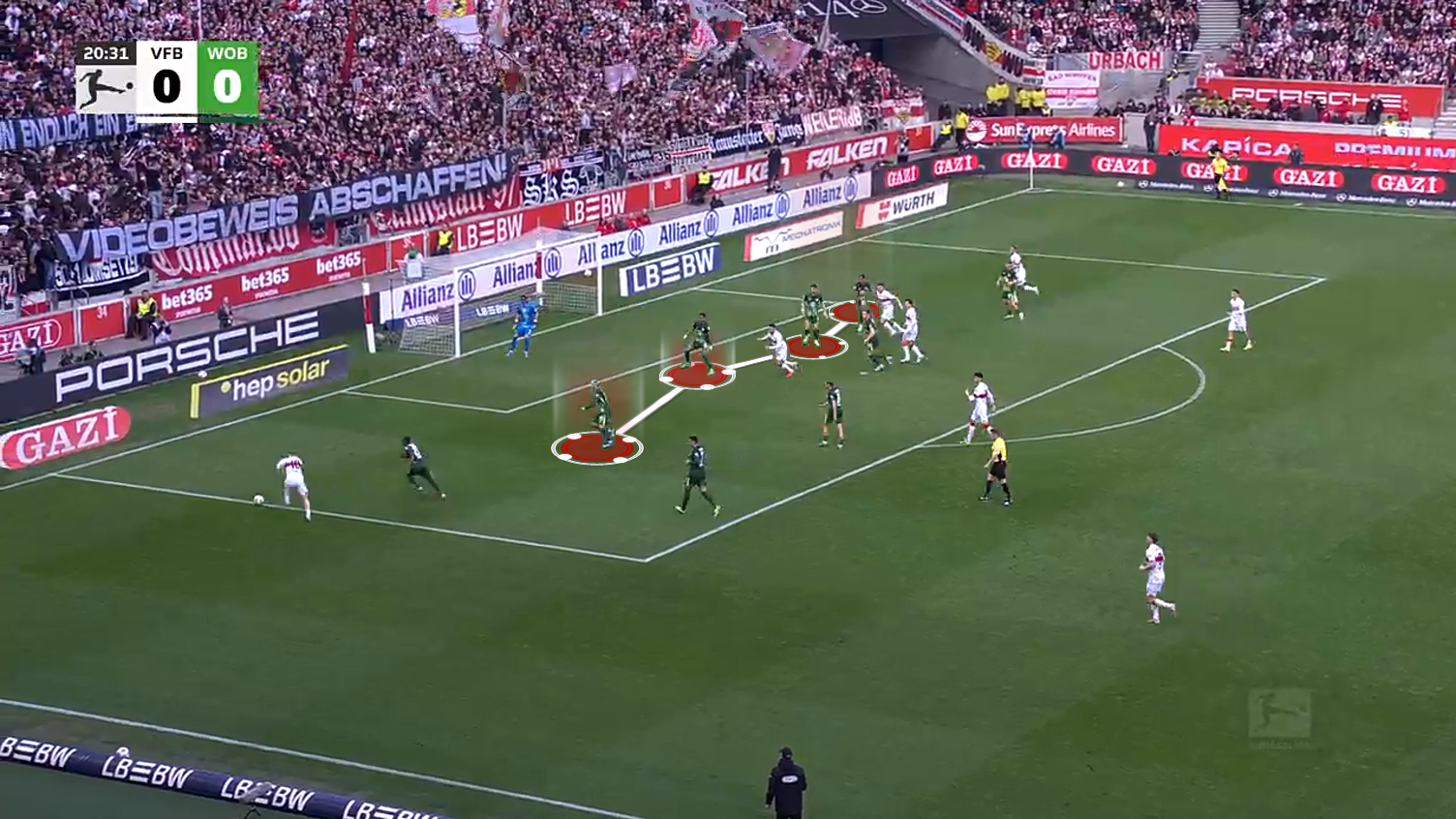
When the ball entered the final third, the defensive line often retreated too quickly, inviting pressure and allowing the opponent to condense the play around Wolfsburg’s goal.
Furthermore, the team has conceded an alarming number of goals from set-pieces this season.
This points to a breakdown in the communication hierarchy during dead-ball situations.
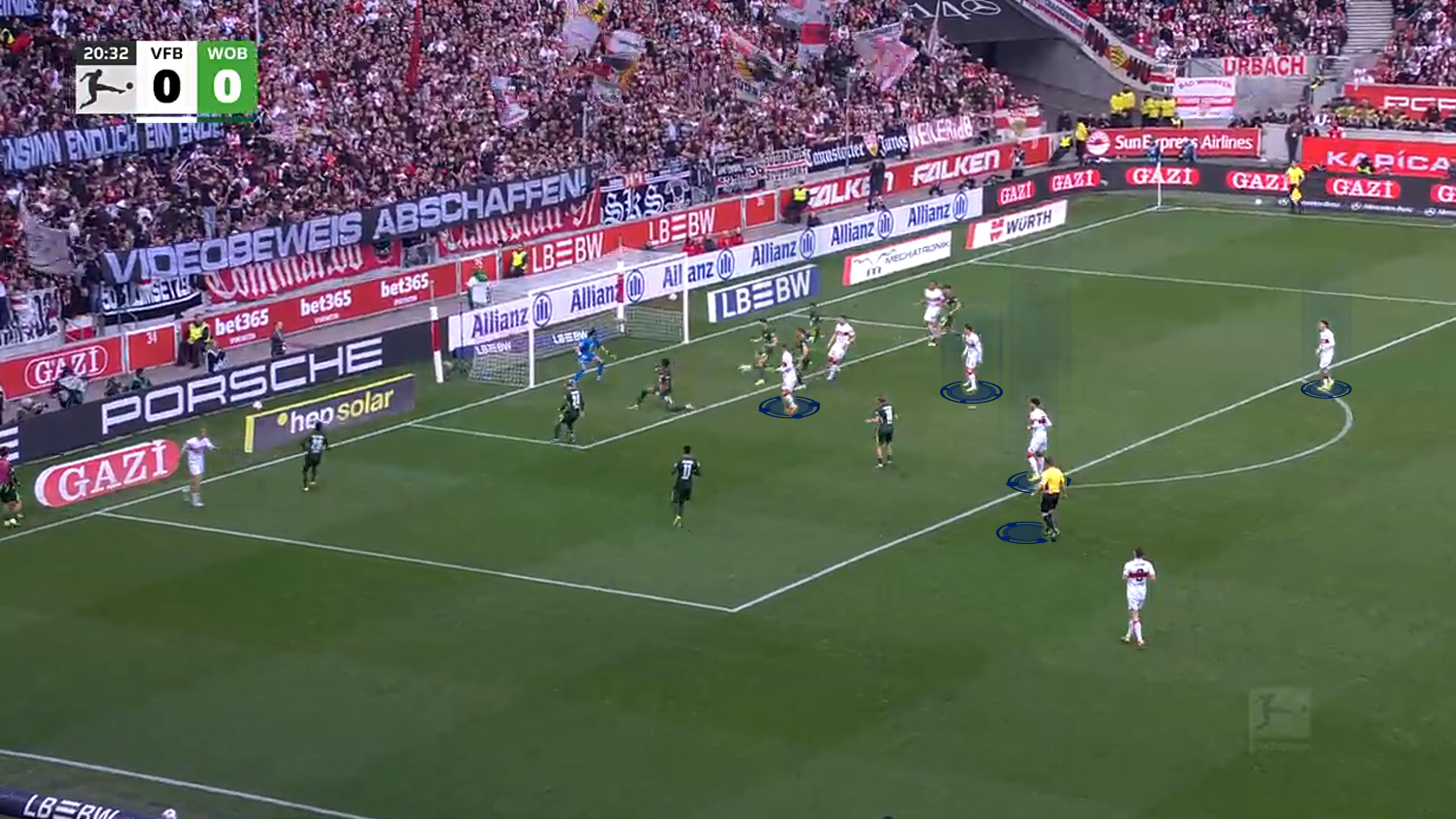
Whether utilising a man-marking or zonal system, the primary objective is to maintain contact with the danger, yet Wolfsburg’s players often found themselves in no-man’s land, neither attacking the ball nor blocking the runner.
The psychological weight of the relegation battle has clearly impacted their decision-making in high-leverage defensive moments, leading to a shock-induced paralysis where players fail to react to loose balls in the six-yard box.
For a team backed by Volkswagen’s resources, the lack of basic defensive robustness was the ultimate tactical failing of the Bauer regime.
The full-backs, too, were caught in a tactical dilemma; instructed to provide width in the build-up, they were often too high to recover during a defensive transition, leaving the centre-backs 2v2 against mobile strikers.
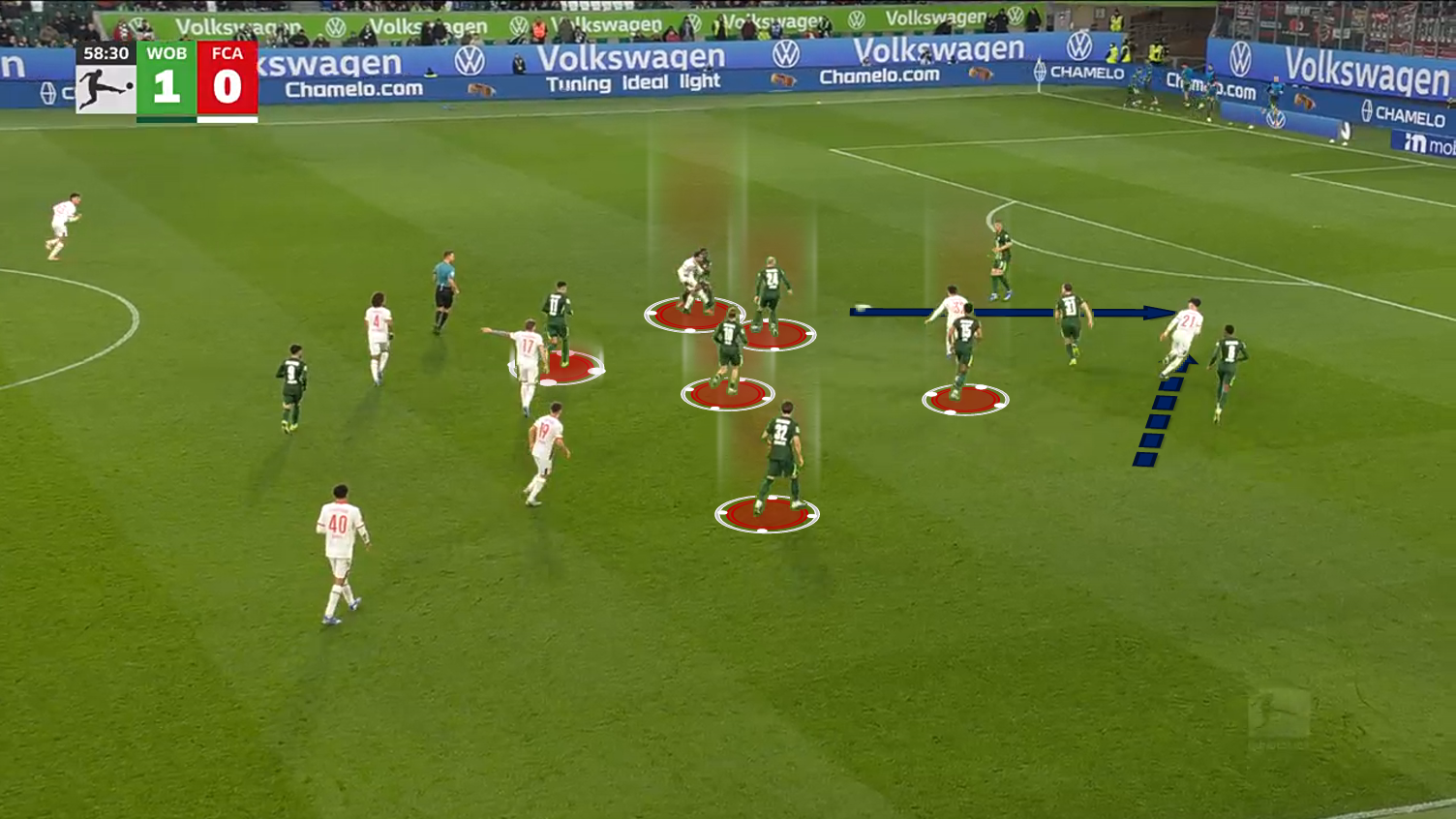
This lack of defensive balance meant that even when Wolfsburg had superior numbers in the box, they lacked the spatial awareness to neutralise the threat.
The rest-defence was virtually non-existent, meaning any loss of possession in the middle third resulted in a high-quality chance for the opposition.
The fundamental principles of box defending, maintaining visibility of both the ball and the opponent, and protecting the danger zone in front of the goal, were ignored in favour of a disjointed zonal system that left huge gaps in the most critical areas of the pitch.
This defensive fragility made it impossible for Wolfsburg to sustain any momentum, as every offensive effort was undermined by a soft goal conceded at the other end.
The Dieter Hecking Blueprint: Pragmatism & Stability
Dieter Hecking’s return to the Volkswagen Arena represents a total tactical recalibration.
While Bauer was a proponent of a more fluid, modern positional game, Hecking is a staunch advocate of Stabilität (stability).
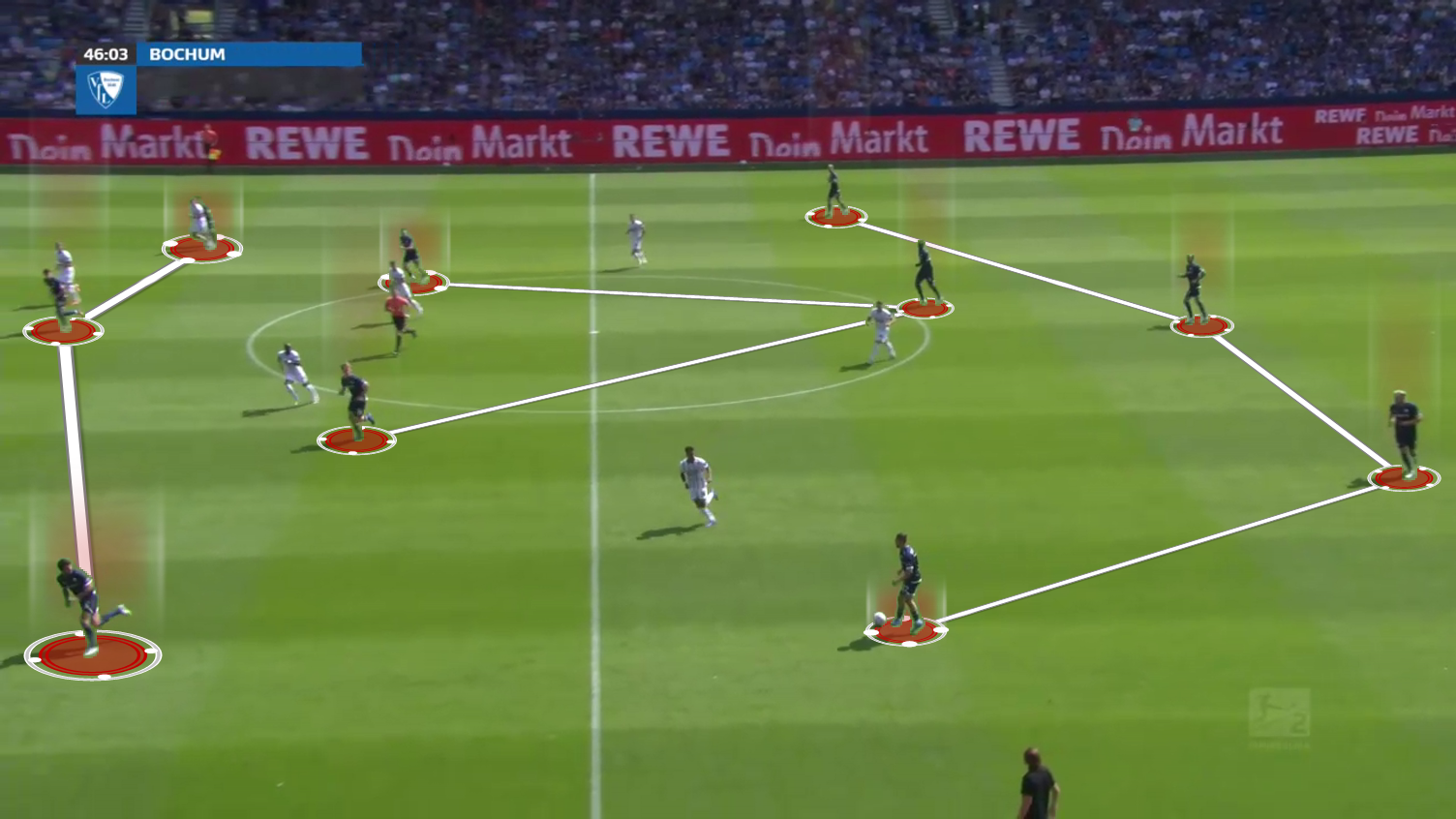
We can expect an immediate shift back to a more rigid, disciplined 4-2-3-1 or a 4-3-3 that prioritises a compact low-to-mid block.
Hecking’s primary objective will be to reduce the vertical distance between his lines, ensuring that Wolfsburg is no longer easy to play through.
He will likely demand a nastier defensive posture, a sentiment echoed by Bauer in his final weeks but never successfully implemented.
The focus will move from aesthetic ball retention to defensive resilience.
Hecking will prioritise a safety-first approach in the first two phases of the build-up, likely instructing the centre-backs to bypass the midfield press with more direct balls toward a centralised target man.
Offensively, Hecking will simplify the instructions.
Expect a move away from the intricate, slow build-up in favour of more direct, wide-oriented attacks.
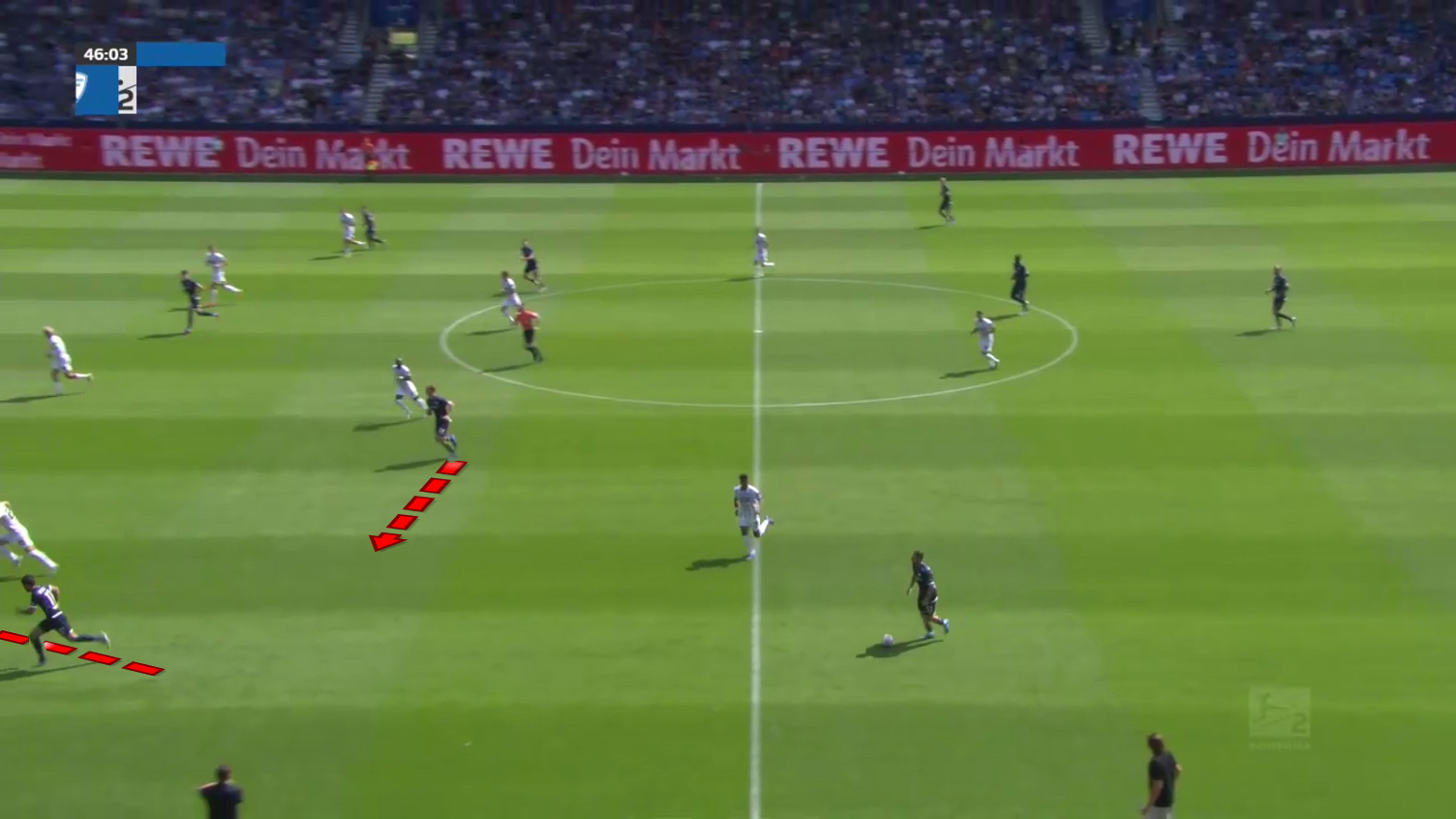
Hecking’s previous success at Wolfsburg was built on the prowess of powerful wingers and a clinical target man.
In the current squad, this means rehabilitating Jonas Wind as the focal point of the attack.
Under Hecking, Wind will likely be instructed to stay central and act as a primary wall, allowing players like Amoura and Wimmer to make vertical runs off him.
The role of Maximilian Arnold will also change; instead of being a deep-lying playmaker tasked with constant recycling, he will likely be encouraged to use his long-range passing to initiate quick transitions, bypassing the middle third entirely.
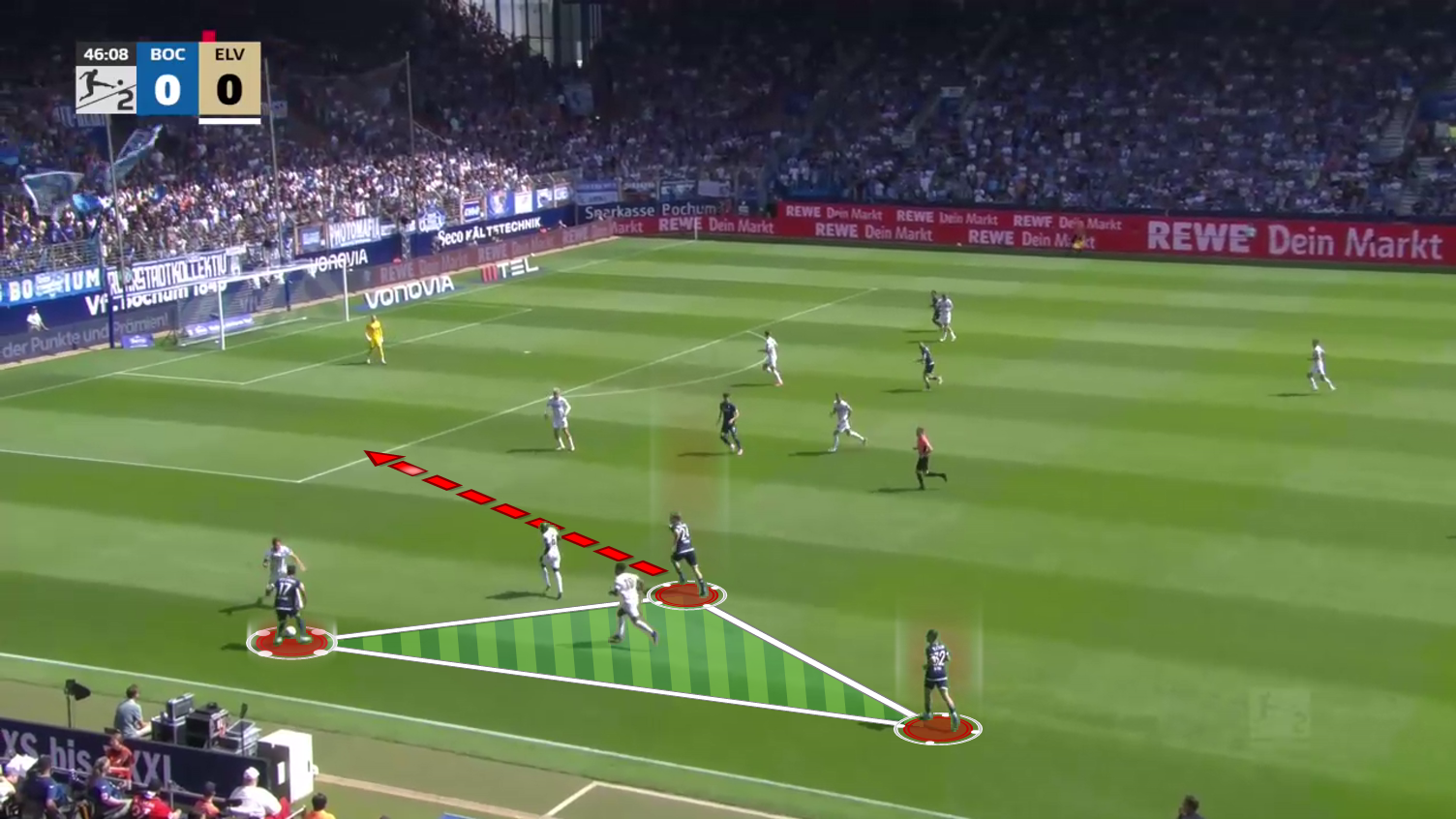
The Hecking Blueprint is not about aesthetic brilliance; it is about “Ergebnisfußball” (result-oriented football).
He will focus on the rest-defence, the positioning of the players not involved in the immediate attack, to prevent the counterattacking goals that plagued the Bauer era.
By ensuring that at least five players remain behind the ball at all times, Hecking will provide the safety net that has been missing.
His vast experience in relegation battles has taught him that survival is won in the duels and the second balls.
Wolfsburg will become a team that is tough to play against, compact, physical, and utterly focused on minimising errors in their own half.
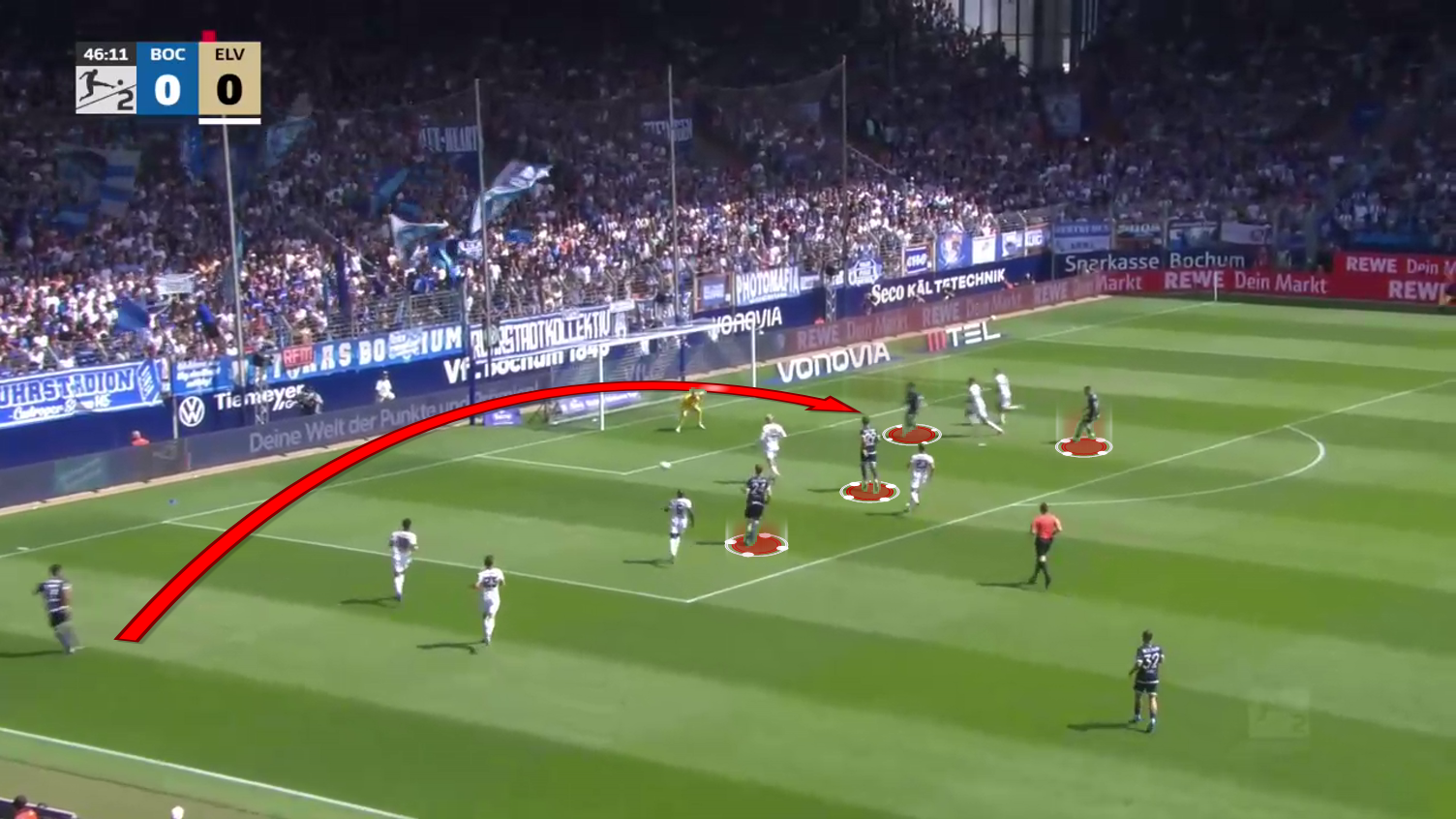
Hecking will likely emphasise set-piece training and crossing, turning a current weakness into a potential weapon for a team that struggles to score from open play.
The training sessions will shift from positional rondos to defensive organisation drills and box-clearing exercises.
He will appoint clear leaders on the pitch, likely Arnold and a restored Wind, to manage the game’s tempo and ensure the team remains structurally sound under pressure.
This transition from a coaching-heavy youth approach to a management-heavy veteran approach is designed to stop the bleeding and grind out the points necessary for survival.
Hecking knows that in a relegation fight, a clean sheet is worth more than a thousand progressive passes.
His tactical simplicity is a direct response to the overcomplication of the previous regime, providing players with a clear, actionable framework that reduces cognitive load during high-stakes matches.
Conclusion
The hiring of Dieter Hecking is a clear admission that the VfL Wolfsburg project has failed and that the club is now in emergency mode.
The tactical shift from Bauer’s idealistic positional play to Hecking’s battle-hardened pragmatism is the only viable path forward for a squad that has lost its way.
With nine matches remaining, the objective is no longer to play the right way, but to simply stay in the Bundesliga.
Hecking’s ability to instil a sense of calm and structural discipline will determine whether the Wölfe can claw their way out of 17th place or if they are destined for the 2. Bundesliga for the first time since their promotion in 1997.
The relegation battle under Hecking will be a war of attrition.
The fans’ frustration has reached a breaking point, and the players are clearly suffering from a lack of confidence.
However, if Hecking can successfully implement a compact defensive block and find a way to make the attack more direct and purposeful, the quality within this squad, the individual class of players like Arnold, Wind, and Kamil Grabara, should be enough to secure the points needed.
Will this coaching change salvage their season?
Multiple players have come out over the last couple of weeks saying that the team has wasted a bunch of managers now, but the problems have stayed the same.
Therefore, I have my doubts about a new coach solving all the problems currently surrounding the club, but with Hecking at the helm, the club might at least have a chance again.
